Sam Rockwell wants to dance. He’s having his photograph taken in a 120-year-old warehouse in Brooklyn but it’s a warm day and he’s starting to feel lethargy creep through his bones. “What music have we got?” he asks. “We need to wake up. Have you got any James Brown?”
Somebody fiddles with an iPhone and soon the godfather of soul is echoing off the exposed brickwork. This is Rockwell’s jam. He starts rolling his shoulders and then his feet follow, moonwalking him across the dusty floor. If you’ve seen a Sam Rockwell film in the past 20 years you’ve probably noticed the way he moves. He danced his way from his indie breakthrough in 1997’s Lawn Dogs to blockbusters such as Iron Man 2. He danced to wind-up Nicholas Cage in Matchstick Men and to impress George Clooney in Confessions of a Dangerous Mind. Even when his character was sick and depressed in Moon he still managed to throw some shapes to Walking on Sunshine.
Like a lot of teenage boys, he started dancing to impress a girl. Her name was Michaela, and he met her at a school dance. Until then he’d been a shy kid who smoked a lot of weed, but that changed when his friends Leroy and Charles started taking him to parties. “I tried to get over my shyness by dancing, and that’s what happened,” he says. He runs a hand through his beard and smiles at the memory. “I’ve been dancing ever since.”
—
Acting was the family business. When Sam Rockwell was born on 5 November 1968 in Daly City, just south of San Francisco, both his parents Pete and Penny were actors. “It was in the blood,” he says.
After his parents separated, when he was five, their lives took different paths on opposite coasts. His father, raising his only son in San Francisco, took a series of blue collar jobs to support them. He was a postman, a taxi driver, a union organiser and finally a printer. Years later, when he started acting again, it was in small roles in his son’s films like Frost/Nixon and Better Living Through Chemistry. His mother lived in New York and entrenched herself in the city’s bohemian theatre scene. Her son would visit during the summers and his first appearance on the stage, aged 10, was playing Humphrey Bogart opposite his mother in a skit that riffed on Casablanca at a small theatre in the East Village.
Back west, Rockwell attended the San Francisco School of the Arts where he joined an improv group called Batwing Lubricant along with Margaret Cho, who would become a stand-up, and Aisha Tyler, who Rockwell dated for a while and who now voices Lana Kane in Archer. There’s video online of them all making their first tentative steps into performance and even a moment where they must sit and tell the camera what they want from life. A voice echoes over the tannoy: “Sam, what do you want to be?” Rockwell – 18 years old, a long earring dangling from his left ear – shrugs. “I want to go out and, I don’t know, seek adventure,” he replies.
Thirty years later, he winces at his wide-eyed younger self. “Oh my God, so terrible,” he mutters, but he concedes he got what he wished for. “Oh absolutely, there’s been a lot of adventures.”
—
The adventures began with a move to New York to enrol at the William Esper Studio in Manhattan, met he Terry Knickerbocker, the acting coach he still works with to this day. It was there that Rockwell really began to approach acting as an art and to think seriously about his craft. “That was when I got it,” says. “When I studied Meisner that’s when it kicked in.”
The Meisner technique is an approach which focuses on getting actors out of their own heads so they can react instinctively to the scene. It’s something Rockwell still applies to his roles, and so that I can understand his process he guides me through a simple Meisner exercise.
“You’re wearing a grey shirt,” he says.
“I’m wearing a grey shirt,” I reply.
“You’re wearing a grey shirt?”
“I’m wearinga grey shirt.”
Through this repetition we’re quickly responding simply to tone of voice, inflections and emphasis. “It’s a very naked exercise,” he explains. “You have to just be. Everything percolates to the surface. It’s peculiar. It’s about listening to your subtext and staying in tune with what your vibe is. It’s great training for life.”
Armed with a newfound confidence in his ability to act and live in the moment, Rockwell began to win small parts in films like Last Exit To Brooklyn and Teenage Mutant Ninja Turtles. He illegally sublet a room on Thompson Street in Manhattan from some other actors, paying them $484 a month, and supported himself working as a waiter, or delivering burritos by bicycle, and briefly as an assistant to a private investigator. In 1992 he became one of the founder members of the Labyrinth Theater Company. He was part of a scene of up-and-coming actors that included Mark Ruffalo, Liev Schreiber, Ethan Hawke and, most influentially, Phillip Seymour Hoffman.
“Phil directed me in a play and I learned a lot from him,” says Rockwell. “In the theatre, it has to cost you something. You have to get up there and lose a little piece of yourself every night. He demanded a lot of us, but you knew that he could walk the walk.”
Although they were the same age, Rockwell considered Hoffman a mentor. He took the actor’s death in February 2014 hard. “We all miss Phil,” he says. “Phil was the guy. It was really a big hit for me.”
I apologise for making him talk about something that’s clearly still so raw, but he waves his hand. “That’s alright. That’s real,” he says. “What are you going to do? You’ve got to keep living, and doing it the way Phil used to do it. He didn’t phone it in, that’s for sure.”
—
Rockwell got his break with stand-out roles in 1996’s Box of Moonlight and 1997’s Lawn Dogs which led to a part in his first major production, The Green Mile, in 1999. “It took me 10 years before I started to make a living,” he says. “It can be tough. Even when you’re successful it’s always precarious. Everybody has goals. Hopefully they’re more artistic goals rather than being famous or being big on Twitter or whatever the hell else.”
Immediately after The Green Mile Rockwell was cast in Galaxy Quest, but he was initially hesitant to take a role in a comedy. “I was reluctant because I really wanted to do what Sean Penn or Daniel Day Lewis were doing,” he says. “Then I realised: Sean Penn did Fast Times at Ridgemont High. It was an amazing movie, and it meant I met Alan Rickman and Sigourney Weaver.”
Those contacts paid off when he was cast as the villain in the 2000 remake of Charlie’s Angels. With the script going through constant rewrites, Rickman was one of the actors Rockwell asked help him punch up the role. Another was Kevin Spacey: “I had this cheesy line, and he said: ‘Why don’t you put the gun to your head when you say it?’ That really helped. Liev Schreiber came up with a funny line, and Mitch Glazer, Bill Murray’s writer, helped too.”
This is a theme Rockwell returns to when talking about building his characters. He’ll soak up as many influences as he can. He’s not afraid to ask for help. As he puts it: “Sometimes it takes a village, you know?”
—
Rockwell will also totally immerse himself in his subject, as he did before playing former The Gong Show host Chuck Barris in 2002’s Confessions of a Dangerous Mind. “I hung out with Chuck all the time,” he says. “I had him tape my lines and I learned a Baltimore accent.”
It was a perfect lead role for Rockwell, a chance for his irreverent energy to shine where another actor might have turned in a mechanical impersonation. However, it nearly didn’t happen. Rockwell was director George Clooney’s first choice but studio boss Harvey Weinstein wanted somebody else.
“I was at the Chateau Marmont and bumped into Ben Stiller,” recalls Rockwell. “He was a little shy around me. He said: ‘You’re going in tomorrow, right?’ I said: ‘For what?’ ‘For the movie, for George, for Confessions.’ I said: ‘Yeah, how’d you know?’ He went: ‘I went in today.’ So I found out the night before my screen-test that Ben Stiller was up for it too. I freaked out. I couldn’t sleep.”
Rockwell dealt with his nerves the same way he’s done since that school dance all those years earlier. “George had a boom box and we put some James Brown on,” he remembers. “I started dancing to try and shake out the nerves. George filmed it, we started improvising and he kept it in the screen test. I’ve always danced to relax.”
Rockwell won the part, although only after Clooney embedded his golf club in an office wall arguing with Weinstein. Clooney’s passion was well-founded: Rockwell shone, and his dancing stayed in the picture.
—
Rockwell could now take his pick of roles. Having grown up on a diet of movies like Taxi Driver, Badlands and Midnight Cowboy, his taste led him towards darker independent films like Choke and Moon. The latter, featuring his bravura performance as a pair of lunar-mining clones, came about after director Duncan Jones offered him the role of a child molester in a film he was trying to get made called Mute. Rockwell turned the part down but the two fell into conversation about their favourite science-fiction films.
“We talked about the working-class aspect of Alien and Outland,” Rockwell remembers. “In Alien, Harry Dean Stanton rolling cigarettes in a Hawaiian shirt grounds you, so when the monster shows up you sort of believe it. Duncan took that conversation and had Nathan Parker write this script about these clones. Then we infused a little humour into it, because it’s such a dark story.”
To build his cloned characters, Rockwell decided the film needed a touch of De Niro. He often incorporates his favourite films into his own performances. “Taxi Driver is very prevalent in Moon,” he says. “And also very much in Seven Psychopaths, where there’s a conscious nod to Travis Bickle.”
—
When we see Sam Rockwell on screen, his performances look as effortless as his dancing. What we can’t see is the work that has gone in to crafting every moment. For Rockwell, work starts with his coach Terry Knickerbocker and then he’ll look for great performances to incorporate. Moon, for example, blends not just Taxi Driver but also Dustin Hoffman in Midnight Cowboy and Jeremy Irons’ dual role in Dead Ringers. Then he’ll immerse himself in the knowledge and skills his character needs, whether riding with police for his upcoming role as a cop in Three Billboards Outside Ebbing, Missouri or learning to speak the Sioux language Lakotafor this year’sSitting Bull drama Woman Walks Ahead. What ends up on screen is his unique take on everything he’s absorbed, brought to life with his own sense of adventure.
In 2014 Rockwell played a cowboy stuntman on stage in Sam Shepard’s Fool For Love and had to lasso a chair every night. He thinks of this when I ask him to place his finger on what it is that makes him so good at what he does.
“I would hope it’s a little bit of talent, but mostly hard work,” he says. “I think it’s true that if you do something over and over again then practise makes perfect. There were some days with the lasso where I’d be lassoing like shit. I’d take a break, come back to it, clear my mind. If you put in that time, an hour a day, it does pay off. It’s got to pay off.”
We live in a “post-truth” world now, don’t we? You know it, Donald Trump knows it, even the lexicographers charged with keeping dictionaries hip know it. But while we might know it, many of us still don’t fully understand it. How can such a large chunk of the voting population just not give a fuck about the facts?
One lucky set of people who’ve at least had a little more time to comprehend this concept are those who follow British law. Drug legislators were “post-truth” before it was cool, very much leading the way when it came to ignoring experts and just reacting to whatever the red tops were making a fuss about. And this year was a big win for the tabloids: when the Psychoactive Substances Act came into force on the 26th of May, making it illegal to sell hitherto “legal highs” or nitrous oxide, it was a direct result of the moral panic they’d started themselves.
A lot of us have had a rough time in 2016, but spare a thought this Christmas for the families of the poor men and women of the once proud legal highs industry. There’ll be no presents under the tree for their kids this year, not since the Roflcopter factories were shuttered and all the Meow Meow labs closed down. Things just haven’t been the same since the 26th of May this year, when the Psychoactive Substances Act came into effect, banning the sale of legal highs in the UK.
When the law was introduced, some police chiefs said it would be impossible to enforce. And at first glance it looks like they were right. Go online and you’ll still find products being sold that look very similar to all of the formerly legal party powders that are now illegal to sell in the UK. However, my first thought is that, to be sold, they must be legal, meaning they also must not have any kind of “psychoactive effect” on the human brain, because otherwise they’d be blocked under the act.
There was only one way to find out: buy a load of them and review them one by one. So I set off for Camden, spiritual home of the British head shop, to find out what had managed to slip through the ban.
“We don’t sell that stuff any more – all banned now,” one shopkeeper on the high street told me. “Stop taking that shit!” shouted another, which was a bit rich considering his shop was 90 percent bongs. I think they thought I was a narc, and you can’t blame them for being wary given that police raided those same shops as the ban was coming in.
The last place still promising you “a one stop shop for all your party needs” this side of the dark web is the online ICE head shop, which will still deliver a range of “research chemicals” straight to your door. I ordered the lot.
Because of you I grew up wanting to drink martinis in exotic locations. Was being James Bond as much fun as it looked?
I’ve been lucky all my life. From the time I started making movies and television I played heroes. Never had to say too much, got the girl, won all the fights, got to keep the clothes. What more can you ask for?
Not a lot. What is being a man all about, in your book?
It occurs to me that the first three letters of ‘manners’ is ‘man’, and manners maketh the man. It’s about how you’re brought up. Don’t be afraid of people thinking you’re too nice. If people mock you, well, as my friend Tony Curtis would say: ‘Fuck ’em, feed ’em fish.’ That’s a great philosophy in life.
What’s the best piece of advice you ever got?
My first week in theatre when I came out of the army, the director said to me: ‘You’re not very good. Smile when you come on.’ So I smiled, and I’ve spent my life smiling.
You’ve said your favourite of your Bonds is The Spy Who Loved Me. Why?
Obviously the song: ‘Nobody Does It Better’. I mean, modesty forbids me…
It was your idea to drop the fish out of the window of the Lotus after you drive out of the sea, wasn’t it?
That’s right. Cubby [Broccoli, Bond producer] said: ‘Roger, you’re in a car that’s underwater and watertight. How does the fish get in there?’ I said: ‘It’s a movie, Cubby.’ It stayed in, and it gets a big laugh.
You’re always self-deprecating about your acting but there’s a great scene in that film where you tell Anya you killed her boyfriend. You quickly turn from charming to ice cold.
It’s funny you say that, the director Lewis Gilbert always mentioned that scene. Maybe it was lit right! It’s easier to joke about yourself than to go on about having to work hard as an actor. Bullshit. Get up, say the line, don’t bump into the furniture. In the 70s there was an article criticising Laurence Olivier and Marlon Brando for thinking of themselves as ‘great artists’. It finished by saying the only actors who made the profession acceptable, through their self-deprecating humour, were David Niven and Roger Moore. The next morning there was a letter from Niven with the article attached. Across the top he’d written: ‘It pays to be a cunt!’
You got all the best lines as Bond: ‘Sheer magnetism’, ‘Keeping the British end up, sir’. Which was your favourite?
In The Man With The Golden Gun when I’m – when Bond – is asking the gunsmith where something or other is. I line up a rifle right at his balls and say: ‘Speak now, or forever hold your piece.’
What’s the key to delivering a one-liner?
Timing. A great example of that is Jack Benny. The villain says: ‘Your money or your life!… Well?’ ‘I’m thinking it over!’
Forget ‘shaken, not stirred’, how do you make a perfect vodka martini?
I prefer gin. The way to make a proper gin martini is you take a martini glass and rim it with the zest of a lemon. As much zest as you can get. Then put it in the deep freeze. Take a teaspoon full of Vermouth, Noilly Prat, put it in a glass, shake it around and then throw it away. Into that glass you put two jiggers of gin. Take that, put that in the deep freeze. When the time comes, take the glasses out and pour the liquid into the martini glass. There should be a slight film on it, like oil. Put it to your lips and drink it, with three olives on the side.
That sounds quite time consuming, frankly.
If a drink’s worth having it’s worth doing properly. If you’re going to have vodka, by the way, have Grey Goose.
Are you on commission?
No. Jesus, I wish I were. With gin, I like Gordon’s.
You’re a British icon – the spy with the Union Jack parachute – but since Brexit we seem to be a country struggling to figure out who we are. How do you see Britain’s place in the world?
I hope we continue to be important contributors to alleviating the effects of poverty. I don’t like the newspaper campaigns taking the government to task for the amount of money it gives other countries.
Should we be taking in more refugees?
I drive around England quite a lot. We have an awful lot of space, we really do. It’s because we’re a fortunate society that people want to come here. If they’re coming here for non-economic reasons then that’s all the more reason to take them. If they’re coming for economic reasons and have something to contribute then I don’t blame the poor bastards for getting out. They’re doing exactly what the British did 400 years ago.
You recently turned 89 – what’s the secret of your longevity?
George Orwell once wrote: “If you want a vision of the future, imagine a boot stamping on a human face – forever.”
Now we know that’s a GIF, endlessly looping.
I’ve heard about another guy cursed with visions of the future so I’ve come to a haunted house to find him. It looks like the one you probably had nightmares about as a kid: gothic architecture, vines creeping up the walls and floorboards that creak like escaping ghouls. Bad news, friend. That nightmare haunted house is real and it’s in Henley-on-Thames.
In the dimly lit hall is one of those eerily realistic paintings of the house itself that you keep peering at, half expecting to see yourself trapped in a window. Beneath it stands the man I’m looking for, supervising as one of his stories is brought to life. “I suppose you’re like a guide,” he says of his role here. “Like someone who’s seen these fabulous visions, and then the people from the village are asking: ‘What did you see beyond the mist?’ And you’re telling them.” Charlie Brooker pauses for a beat. “That’s the cuntiest way I could think of to describe it.”
In its five years on our screens Charlie Brooker’s Black Mirror has given us a string of dead-on predictions. They range from the expected – people filming their entire lives in 2011 episode The Entire History of You two years before Google Glass – to the rather less expected. “Who would have thought,” asks Brooker, “That the [prime minister] pig-fucking episode would be the most accurate one?”
After two series and a Christmas special for Channel 4, Brooker and fellow producer Annabel Jones will premiere the third series of Black Mirror exclusively on Netflix tomorrow. It’s a move that granted the pair an increased budget, which Brooker says has all been put to good use. “There’s more things you can do with it,” he says. “We have episodes set in California, and a bit of CGI. The scale of it is different. The fact that the actors are clothed and have shoes. That it was written on a golden typewriter…”
Our supposed soothsayer is taking the absolute piss. What they’ve actually been spending the money on is stars like Bryce Dallas Howard and Kelly MacDonald and directors like Atonement’s Joe Wright and 10 Cloverfield Lane’s Dan Trachtenberg. In fact, Trachtenberg is hard at work right now upstairs in this haunted house. We can hear the echoing screams of Wyatt Russell – son of Kurt, last seen in Richard Linklater’s Everybody Wants Some – being dragged around unsure of what’s real and what’s not.
When the scene is over, Trachtenberg explains how Brooker has managed to become so attuned at bringing our fears to life. “You can see the show in his personality,” he points out. “He’s observational, and he’s always finding the irony in things. He’s a concerned guy but his worries are often very funny. They’re not funny to him! He’s really worried, but the way he expresses them are funny for us.”
Trachtenberg is directing an episode called Playtest, which sees Russell’s character thrown into a terrifyingly immersive computer game. It’s one of six new episodes and, as Brooker explains on-set, he’s relished the freedom the new format has afforded him:
Now that you’re off conventional TV, were you tempted to indulge yourself in sprawling episodes?
Brooker: “We could make it eight hours long! If I could come up with a story where someone is stuck in a short time-loop we could keep them there for eight hours.”
Like those LPs with a circular groove at the end?
“Exactly. You could do that with ‘White Bear’. You could loop that episode again and again and again and just change the date that he crosses off. I’ll have to do that sometime… a little art installation for someone…”
Have Netflix been hands on?
“They’re very supportive and they’ve been very involved in that they’ve got an opinion on everything. I would say 99% of the time I agree with what they say, but they don’t impose things or give you instructions, it’s more suggestions. Most of the time what they’re saying is irritatingly well thought out and cogent and clever. You can’t go: ‘Bloody execs coming in and tinkering with my art!'”
Having six episodes this time must’ve given you more scope to explore different genres?
“Yeah, you kind of have to. Over six you need a wider variance in tone, otherwise it just becomes predictable. We’re not always necessarily going to have bleak endings, which is historically what we have had.”
So are we in for happy endings?
“Well, this is Black Mirror so… we don’t want people getting up and showing shoes at the screen because…”
Because you’ve made them happy and they’re furious?
“…because they smiled. Well, hopefully they will smile, occasionally, through the anguish. It’s a weird one. What people think the show is slightly depends on which episodes they’ve seen, obviously. If you’ve watched ‘Entire History Of You’ it feels like its commentary on personal relationships and technology, if you’re looking at ’15 Million Merits’ it’s more a satirical, cheerful dystopia. That’s a sarcastic version of now.”
Was that episode autobiographical?
“It turned out that way. We did jokingly refer to it as ‘The Screenwipe Story’, just in that the guy is railing against stuff and then ends up on TV. The original ending was slightly different, and I thought it was quite neat. Because he was constantly having to look at how many merits they were generating, in the original ending he ended up looking at how many ratings his show was generating. It was difficult to shoehorn that in, although it’s implied. It’s all allegorical. I was thinking of weird old Plays for Today that used to be on in the 80s, which probably happened by accident and wouldn’t be on today anywhere. There was this thing called ‘The Year of the Sex Olympics’, which was by Nigel Kneale, who did ‘Quatermass’. It’s not what it sounds like!”
That’s on Channel 5 now, I think.
“It probably is! It’s from 1968 and it’s got Leonard Rossiter in it and Brian Cox, not the physicist the actor, obviously. It predicts reality TV with quite a bizarre degree of accuracy. I watched it with my wife and we were going: ‘This is… now?’ There’s a bit of it which sort of predicts TV execs looking at Twitter, in a weird way. The entire population is kept dull by watching shows called things like the Tittedy Bum Dance Hour, and The Sex Olympics, and Fat People Falling Down, and that sort of thing… or is that our world? I’m getting mixed up. Anyway, to gauge how the shows are going down the producers have a panel of viewers who are sitting there constantly with a camera on their face, there’s about nine people on this panel, and they look at their facial expressions and go: ‘Oh no, they’re not liking it!’ That’s people looking at Twitter! Then they basically invent Big Brother in it. They say: ‘What we need is a show that’s completely unscripted. We’ll just get some people and put them in a house.’ It’s a bit like Survivor because they say: ‘Let’s put them on an unihabitated island and just have cameras on them 24 hours a day.’ They do that within the show. Obviously, there are all sorts of elements that seem quite clunky or old and creaky by today’s standards, but it was really ahead if its time. At the time I saw it I was thinking that you don’t really get those weird, one-off Plays for Today anymore where it’s just set in a giant onion because someone’s had the notion of doing that. You don’t get that sort of weirdness happening so much anymore, certainly not for one episode. So it was a very deliberate attempt to make something set in a bizarre universe that doesn’t really make sense and is just sort of ‘allegory land’. It felt like a statement of intent to do that early on. Some of these new episodes are set in quite odd environments.”
Does having a bit more budget help with that?
“Generally you can although often restrictions are quite good. You still have to approach it practically. We don’t have $50 million, but there’s definitely more you can do. There’s an episode called ‘Hated In The Nation’, which is a 90 minuter… roughly, we haven’t seen the first cut yet. It might be six minutes! It won’t be six minutes… That’s got a relatively large cast and lots of locations, and is on a scale that we probably couldn’t have done before. It’s got a pain-in-the-arse driverless car in it. It’s about two female police officers, not Cagney and Lacey or Rosemary and Thyme. They’re played by Kelly Macdonald and Faye Marsay.”
Is that your crime procedural episode?
“Kind of. It’s might start off like that. It’s closer to Scandi-noir than it is to… Rosemary and Thyme, for instance. It’s Scandi-noir meets Black Mirror, set in Britain. It becomes apparent quite quickly that it’s a bit odd. All the new episodes are atypical, but that one in particular is very different to anything we’ve done before because doing a police procedural is different. It’s sort of plot-driven rather than character-driven. You’re not focusing so much on a protagonist, which I guess is where the ‘procedure’ comes in.”
Is it strange for you to be on set like this and just oversee the director?
“I’m not always on set, but when I am I often tend to be chipping in on a logic point. Sometimes I’ll notice something and think: ‘Oh shit, I should change that line.’ Sometimes I’ll watch something and think: ‘That’s not how I interpreted it’ so you’ll go and have a conversation with the director. Generally if I’m here and there’s an issue it’s to do with logic. ‘We can’t do that, because this is a world where no-one has a phone!’ or that sort of thing. In this episode there was a debate about the level of reality that was going on. It was to do with whether an object would break. Could that object break? We worked out that it couldn’t, then we decided that actually, given the wider logic, it could. I can’t really explain it better than that! It’s ‘Inception’ levels of… hang on, that wouldn’t happen because that person isn’t really there. It’s that sort of thing, which is always the case. It was the case on ‘White Bear’, and the Christmas special was a nightmare in terms of the fucking levels of reality going on in that. It was imperative in that episode that you could see the blocking when you jumped in to someone’s head to see their point of view. It quite quickly became a mindfuck. There are scenes where people are walking around as blurred out silhouettes, and to do that we had to get all the extras to wear replicas of the clothes they’d worn in the other scene but in chroma key blue.”
Chroma key blue replicas of everything they’re wearing?
“Yeah. There’s a guy in a turban so he had to get a blue one. They were all wearing blue masks and gloves. Then we also had to have John Hamm for the reverse, so we had a blue John Hamm wandering around. It was quite a headache, and that tends to happen a lot.”
I’m sure someone will be swiftly along on Twitter to point out any logic errors
“They quite often do. Sometimes they identify a plot hole and they genuinely have and you think: ‘Oh, shit’ but sometimes they’re identifing something that you knew but went: ‘Oh, fuck it. Most people won’t notice or care and if they do it won’t matter.’ That happened with ‘The National Anthem’ a lot. There are a few little plot holes, which I think are addressed within it, but that are kind of implausible. Broadly it works, but that’s probably the most divisive episode we’ve done, I’d say. That’s why we’re going to do a sequel where he has to make a pig cum. No, we’re not going to do that.”
Do you write with an audience in mind, particularly now that the show has become an international success?
“No, I don’t really know who they’re aimed at. Sometimes you sort of think… well, the cliche is that you aim it at yourself, because you can’t really second guess who’s going to watch it. I don’t know that people are different around the world. I always concentrate more when I’m watching a show with subtitles, so I think lots of foreign TV is brilliant. That’s just because you can’t get distracted and go on Twitter when you’re reading this book that just happens to have people and furniture behind it.”
How do you think this series will be received?
“I can’t work it out. It’s the same but different. You don’t want it to be ‘the same’ because that’s the same, but you don’t want it to be too different. I’m probably not the best judge of how different it is. We’ve got more playful episodes than we’ve done before, and we’ve got heavier episodes than we’ve done before as well. We haven’t seen the final cut yet, so God knows what they’ll be like!”
As a writer, do you feel like you’ve already seen the episodes?
“You see them when you’re writing them, weirdly. I always think of writing as a bit like programming, which is a really unromantic way of looking at it, but it’s similar, I think, not that I’ve ever programmed anything, in that I’ll sometimes notice bugs later and think: ‘Oh fuck!’ Quite often I’ll slightly overwrite it and then when I go back and edit it and start hacking away at the stage directions I’ll realise I forgot to mention something and I’ve broken the logic of something completely. When I’m writing things, when you get on a roll with it, you tend to be seeing it so you’re sort of describing what’s happening, in some way. Getting to that state is the tricky bit. I tend to write very quickly once I know what I’m doing, and generally speaking… one of them this time round was a real pig to do. I kept rewriting and rewriting it, but otherwise they’ve come out relatively easily. I tend to now plans things a bit more than I used to, because it saves you time in the long run. I’ll write up the treatment firstwhere I broadly outline what’s going to happen, kind of the bullet point version of it. Then I’ll plot it out and write the scenes. It always massively changes, but if you didn’t have that road map to start with you’d go mental. I tend to go nocturnal when I’m writing. I tend to write at night… standing up, now, which is probably the biggest change!”
Didn’t Donald Rumsfeld have a standing desk?
“I don’t have a standing desk, I just got a cheap thing off Amazon which is like a stand that you put a laptop on because I wasn’t sure if I wanted to commit to the whole standing desk thing. What’s good about it is you just waste less time. You don’t sit there and think: ‘I’ve got to write a scene with a helicopter in it’ and then go on Wikipedia and look up helicopters, and then before you know it you’re watching episodes of Airwolf on YouTube.”
So you’re tricking yourself into writing quickly because you want to sit down?
“Yeah, you’re slightly uncomfortable the whole time but nowhere near as uncomfortable as you’d think. You’re writing, and then you go and sit down for a little rest.”
Do you have to unplug the internet?
“I tried that for a while. Standing up is better. It’s when you’re sat there slouching that you end up going on the internet constantly. I tried it before. I had a bit of software called Freedom that cuts off your internet connection. I discovered that it would work but a bit, but what’s terrifying about it is how often you would forget. You’d go to check your email and it would say: ‘Connection Error’ and you’d think: ‘What? Oh yeah, of course, I switched the internet off’ and then later you’d go back to it again, like a lab rat. You’d keep going back looking for that little dopamine hit. So I was using it for a bit, and it just cuts off your internet connection, so then I’d just start using my phone. I’d be sitting there staring at my phone, so that didn’t work either. I was talking to the novelist Ned Beauman, who might be doing something with us for the second season. He locks his phone in a kitchen safe, which is a perspex box with a timer on it. He locks it in there for hours and then goes off and works, so he can’t get to it. I haven’t tried that because I worry there’ll be an emergency.”
Ned’s also an advocate of wearing ear plugs to help you work.
“That’s a bit much. I’ll play music, but I can’t listen to anything with lyrics. I suppose it’s a similar thing to going nocturnal. There’s just fewer distractions. During the day you slightly feel like you should be outside, or you feel that time is ticking away, whereas at night you should either be asleep or doing that. I plot things out using Scrivener. I’m evangelical about using Scrivener to start with, and then I somehow segue into using Final Draft at some point in the process. I don’t do any of those things like having a system… I scarcely know what the first, second and third acts are, but I guess when you look back you go: ‘Oh, that’s adhered to that structure.’ I can’t keep all that stuff in my head about the hero’s quest or whatever. I think it’s masturbation, basically, or it’s interesting but it’s like music theory. Being told why a song is catchy isn’t the same. You kind of intrinsically know when something has gelled. Where we are in the cycle at the moment is that after we’ve done the last few days of shooting I’m about to start getting back into the writing process.”
Have you written the next six episodes yet?
“No.”
Not at all?
“I know what some of them are. I know what quite a few of them are. It’s partly balancing. There was one that I wanted to do in this series but there was a similarity with something we’d done in the second season. Now I think enough water has gone under the bridge that we can do it. There’s quite a few ideas that have got the same sort of technological underpinning, so I know I can’t do all of those unless I come up with something like the Christmas special which is a portmanteau. That was a clearing house for lots of ideas I’d had that weren’t long enough to sustain a full episode, but I realised they could fit together. I’ve got a clear idea of what quite a few of them are. As for the others, they often start from a germ of an idea that it would be good if there was something a bit like this… but I don’t know quite what it is. Here’s a thing I’ve noticed, and then extrapolate from that. That’s slightly terrifying, because if it doesn’t happen we’re fucked!”
You’re not tempted to bring in other writers?
“Well, I said about Ned. For this run of six, two of them were written with other writers. There’s a guy called Will Bridges, who’s been writing on one of the episodes, and Mike Schur and Rashida Jones writing on one of the other ones. We’ve done that, and we’ll do that again for the second batch. It’s a difficult one for people to come in and slot into, because it’s probably a more idiosyncratic show than I realised when I first set it up. They are all different, and you could have almost anything happen in it, and it does have technology, but it doesn’t tend to be… I find it hard to articulate what a Black Mirror story is, but I know it when I think of it. The thing that lets me know I’ve hit on a good idea is when I start getting worried that someone else is going to do it. We’ve been quite lucky that that hasn’t quite happened yet. I start getting a real panic that I’ll see a trailer for a film with the same premise. It’s all a very different muscle to doing comedy stuff. It’s a completely different mode of thinking.”
Have the episodes you’ve made before measured up to how you first imagined them?
“Generally they’re better. It’s weird because they’re often really similar, but better because along the way you work out all sorts of ways of doing things. Sometimes things happen which are not what you envisioned at all, but which turn out to work and be a better idea. Generally speaking, bits that don’t work are things that didn’t work on the page, I always find. It’s pretty close. We’re involved in every aspect, including the edit, dubbing, all the designs… I get very nerdy about the typeface used on the phones, and all that sort of stuff. We don’t tend to do too much of that stuff that you get in Hollywood movies, which is getting better, but it always used to be that if the hero received an email there’d be a giant animation of an envelope spinning around. We don’t tend to do those kind of histrionic computers. We want our technology to feel real, or basically magic. In that respect, because I’m chipping in at every stage, it’s close to what I envisioned. That’s really what you’re being asked about: is this what you pictured? It’s amazing what difference things can make. Even at the stage of the audio mix you can alter something which massively affects a scene, for better or worse. Continuing to be involved in that stage does make a difference. That’s the thing I always forget about how long the gestation period is. From the inception of the idea through pre-production, production, post-production there’s a constant barrage of questions and decisions. Then people watch it and go: ‘Huh!’ It’s very different to doing topical comedy shows. That’s very intense for a very short period of time, and then its done and nobody is ever going to watch it again. Who’s still watching 2013 Wipe now? No-one. It’s a very different discipline.”
Does that make a difference to how much pressure you feel?
“It’s the same amount of pressure compressed into less time. The pressure is about the same. When you’re doing topical stuff… the weirdest one was when I was doing the live thing. That was immense pressure in an afternoon. Terrifying, and then it would be over in three or five minutes, my chunk. Then there’d be another fifty minutes on air. It was always a bit surreal when it finished. I was done for the week. I didn’t know what to do with myself. With this, it’s a constant low-level pressure. It’s enjoyable. It’s problem solving, a lot of the time.”
Has Black Mirror become your main job now?
“Certainly at the moment. We’ve postponed doing Weekly Wipe and stuff like that because you can’t really do it at the same time. We’ve postponed that for a bit. I’m doing the end of year show. It’s all-consuming, which means you can’t consume anything else…”
Is this what you feel happiest doing?
“I’m not happy doing anything. What is happiness? No… um… yeah, I think so. It’s a constant challenge.”
[Someone comes to announce that catering has arrived…]
“Shall we go and get some soup? He said, hungrily. We’ve set up a soup kitchen outside. I’d say it’s… It’s fucking cold. Jesus. Who broke the bloody weather?… I’ve got to stop swearing. I swear all the time… In terms of what I’m happiest doing, I like variety. Which is stupid, because generally all the things I’ve ever done have either been short runs or… Dead Set was one story, but it was a short one. Black Mirror is a different story each episode. Topical shows again are different every week. It’s bloody stupid, really, because it’s difficult! It means you don’t get many recurring characters… Philomena Cunk, I guess would be one. It seems to be the way I’m wired, for whatever reason.”
Even TV Go Home had that variety.
“Yeah. I started doing that specifically because I wanted to do something with comic strips. I did a website where I put comic strips up. But comic strips take so long to do, and are such a pain in the arse, and I wasn’t the world’s greatest cartoonist, so I thought that I should be doing something that I could just regularly update. So I started doing that because it was easy and bitty. I set myself the goal of doing it once a fortnight. At the time it was probably the most disciplined I’d ever been. It became quite popular, and that was what got me the job on The Guardian and things like that.”
What made you decide to do spoof TV listings?
“It wasn’t really my idea. It’s a thing that’s been done in novelty comedy books since year dot. I’d forgotten but rediscovered recently that when I was about 16 I was doing stuff for a comic called Oink and I’d written a Radio Times parody for that. So I’d been doing it for yonks. That was the prototype, I suppose. At the time I started doing TV Go Home it felt like TV was in a slightly transitional period. There were things that overtook the listings, like Touch The Truck. Also, if you think about… it was pre-I’m A Celebrity. When you’ve got Matt Willis from Busted eating a kangaroo anus on TV, what’s the point of writing a satirical listing? You can’t really outdo that.”
Does Donald Trump make you feel the same way about political satire? Where can you go?
“Hes terrifying, because he’s shameless. Literally shameless, in that you cannot shame him. He’ll just come out with a blizzard of lies. There’s that old saying that the bigger the lie, the more people will believe it. What he does is comes out with a constant confetti of little lies so he never really gets called out, because there’s always another one… as soon as you start to go: ‘Hang on a minute, that didn’t happen you fucking liar!’ he’s come out with another ten lies. What do you do when it’s someone who just lies all the time? You’ve got no idea what he really believes, or really represents. He’s a terrifying, weird, comb-overed blank. He’s kind of like the nightmare vision of a President. He’s the guy from the fucking Deadzone, but you can also see that he’s appealing because he’s none-of-the-above. He’s the anti-candidate, but he’s the worst possible person to step into that role. Maybe it’s all a situationist art prank, I don’t know. I feel like I won’t sleep soundly until after November, even though the election is nothing to do with me. It may be happening overseas, but you kinda feel like… I don’t really want to have to start digging a bunker.”
How do you feel about Hillary Clinton?
“I don’t know much about her, but I know she’s not particuarly popular. It’s almost a perfect storm. There are few people I can imagine would do a worse job than Trump, so I would be inclined to look at it in that reductive way. I don’t know too much about her, but I understand that she’s not well liked in the States, to put it mildy. It’s not exactly a popularity contest. I keep telling myself that sanity and pragmitism will prevail, and people will go: ‘I hate Hillary, but at least she’s not him.’ I read PJ O’Rourke say he’ll vote for Hillary, because he thinks she’s wrong on every issue, but she’s wrong within normal parameters. I feel like I won’t be able to watch the news on the night of the election, because I’ll worry too much about it. I’m nothing if not a worrier. The Black Mirror version of that reality is that you wake up and Trump’s won, so maybe it’s good for business.”
How do you rate Nathan Barley, looking back now?
“I think, apart from anything else, the fucking cast we had on it… Benedict Cumberbatch is in it, Ben Whishaw… And it was weirdly prescient. It was slightly informed by my experiences writing in the video games world in the 90s. I wanted to transition from that to writing for newspapers but I didn’t know how to do it.”
“Dutch wine”?
“Dutch wine. That was what I felt like. I wouldn’t know how to begin writing for a Sunday newspaper because I don’t have that whole… It’s like everyone else knows something I don’t. Dan Ashcroft’s desperation was informed by that lack of a sense of direction. We predicted a lot of things by accident. In Nathan Barley he’s got that phone he carries around with him all the time, the Wasp T12. I remember at the time we thought it should have all sorts of different functions. It’s sort of got apps, but they’re physical. He could open it up and it had DJ decks, and it could project things. If we’d thought of apps you could use on a screen we could have made a fortune. It basically is an iPhone isn’t it. At the time it came out I remember people going: ‘Oh, this is a bit two-years-ago. The dot com bubble has burst. That moment’s passed. Now it looks like an alternate reality where everyone has slightly older technology.”
Do you find yourself reading and watching a lot of near-future satire? Have you read things like Super Sad True Love Story?
“No. I try not to read things or watch things, generally. Don’t get me wrong, I’ll watch and read things that are not in the same ballpark, but for instance I haven’t seen the film Her because loads of people have said to me: ‘That’s quite Black Mirror, you should watch that.’ I don’t want to watch it because I’ll be too angsty. If it’s brilliant I’ll get twisted up. If I think it’s rubbish I’ll get twisted up. If I think it’s just okay I probably won’t like that either. I kind of can’t. Although I did watch Ex Machina, which I enjoyed. I tend to avoid sci-fi near-future things if I can, partly because I’ll see something and go: ‘We’re trying to do something like that!'”
Do you worry it would end up in your writing?
“Not so much. We’ve done episodes that are ostensibly in a similar world to other things. There have been stories before about nightmarish Orwellian futures, so I don’t worry too much about overlap. Her came out around the same time as our episode Be Right Back, but they’ll have been in production for ages. People always gleefully tweet me these things, and horrible news stories as well. ‘Someone was killed by an iPhone falling on their head, that’s a bit Black Mirror isn’t it?’ I’m the first to be informed of all of that shit. Increasingly it’s product launches. People tweet me saying: ‘Apple have launched a thing that’s just like the home-controlling egg from the Christmas special!’ or the Samsung contact lenses. I think a lot of our stuff is quite out there, so I don’t think anything like that will happen this time…”
You say that now…
“I say that now. That’s true. Who’d have thought the pig fucking episode would be the most accurate one? I didn’t know anything about that. It’s the one thing people always ask me. I didn’t. I’d never heard that rumour. When that story broke I was quite weirded out. I was quite worried, for a short period, that maybe reality is a simulation designed to confuse me. It was so weird. It was such a weird thing. The day before someone had sent me a link to an article that was: ‘Look at all these things Black Mirror predicted’ and it said in the article: ‘Obviously not the prime minister one…’ I genuinely thought it was too weird a coincidence. It was too specific. If I’d known about it I wouldn’t have bothered writing a thing about it, I’d have just run around yelling it at people.”
What do you think really happened with Cameron? Did they just want to make him deny it?
“It was a weird old story, wasn’t it? There was supposed to be one source. You would think, that if the logic follows that he always felt he was born to rule even at Bullingdon, then you’d think he would have the wherewithal to think: ‘Maybe I shouldn’t fuck a pig’s head in front of everyone.’ I could imagine some tomfoolery, but actually putting your knob in a pig’s mouth? I find that hard to believe. I would image it’s an embroidered version of something. God knows. It seemed to be motivated as a revenge story. I felt quite sorry for him, although it was funny. In The National Anthem the Prime Minister is the most sympathetic person in it. It was too funny for people not to enjoy. It was like a carnival on social media. It was eerie how it did play out on the news as it did in our episode, in that they pussyfooted around it and how they would even manage to describe it. That really did play out exactly as it did in the episode, which is bizarre because they must have been having the same conversations in the newsrooms. ‘Everyone on the internet is talking about, how do we describe it? It’s breakfast, we can’t have people choking on their bacon.’ I don’t know. I’m hoping that doesn’t happen again. I don’t want to predict more things. It would be quite bleak.”
Do you ever get those tweets about things being a bit Black Mirror and think: ‘God that is quite a good idea’?
“Occasionally, but it’s easy to lose sight of the fact that originally the point of the series wasn’t to be technological. I’ve discovered that if we sit there trying to think of stories on the basis that: ‘Oh, Google are doing a thing…’ it’s hard to come up with. It tends to be more broad ‘What if?’ ideas that lend themselves to some sort of technological element. Really, we use technology in this show in the same way that The Twilight Zone would use magic or the supernatural, it’s a means by which magical things happen. Which is sort of how it happens in real life. When the show first came out there was a period when I’d have believed anything. The first time you use Uber it’s like magic. What I just do this and the car appears? That’s amazing. I did a show a couple of years ago for the BBC called How TV Ruined Your Life. As part of that, one of the things we did was went out and vox-popped people. One episode was on progress. We went and showed people a promotional video we’d mocked up for a mobile phone that let you call through time so that you could ring yourself in the future so you could remind yourself of something. We showed it to people and a surprising number took that at face value, because you’re so accustomed to believing miracles. The Time Phone allowed you to call through time and it also had a laser so you could boil a cup of tea in seconds. People went: ‘That’s clever, when’s it out?’ because why wouldn’t it be? In fact, you could ring yourself in the future. I could imagine a service that you call and record a voice message and then it’s timed to call you back in the future: ‘Hey Charlie, remember that you’re living in a dystopian nightmare?’ So the ideas for Black Mirror either tend to be a funny ‘What if?’ about a situation or things like The National Anthem that take a ridiculous scenario and treats it seriously. All the thematic layers were secondary. You realise that if you commit to it then there’s all sorts of other things you can be saying. When people talk to me about Black Mirror ideas they’re often coming at it from a worthy, issues point of view, whereas I usually start with a popcorny idea, a hooky premise, that means people will say: ‘I’ve just watched this mental thing where a man fucked a pig.’ Well, hopefully not that, that’s a spoiler. Hopefully we’re adhering to that. It’s weird when you look at the episodes across the series. You go: we’ve got a poignant one, we’ve got a lighter one… now we need an absolutely devastating one.”
‘What’s the worst thing you can possibly imagine?’
“Yeah, often it’s that kind of thing. Here’s a set-up, now what’s the worst thing that could happen now? What’s the worst thing that could possibly happen to anyone? We’ve had a couple of examples of that. In White Christmas, what happens to Raph Spall’s character is pretty much the worst thing that could happen to anyone. Living for eternity experiencing Christmas Day in a house that isn’t there, on your own, with the body of a child whose death you were responsible for, while Wizzard’s ‘I Wish It Could Be Christmas Every Day’ plays on an eternal loop and every time you smash the radio it gets louder.”
“LOL!”
“Yeah, it always makes me laugh. Whenever we come up with an endpoint like that I always fucking piss myself. That’s when you know it’s perfect. That would be horrendous! Let’s have a good laugh about it!”
In Imperium you play an FBI agent undercover with white supremacists. What’s the most disturbing thing you learned?
It’s all fairly disturbing. I was more surprised by the mundane stuff. I imagined that white supremacists would go on internet forums and say horrible things about black people and Jews. I didn’t imagine they’d be swapping poems.
Which conspiracy theories are you a fan of?
I love the idea that aliens might have built the Pyramids or interceded in our progress as a civilisation. I don’t believe that, but I love hearing people talk about it.
What did you think when you read the Swiss Army Man script and realised you’d be playing a flatulent corpse?
That it was, yeah, kinda weird, but mostly what struck me was how funny and inventive it was. There was something really exciting about the levels of imagination at work. I immediately thought: “Holy shit, this is going to be something cool.”
Lauri Love will be extradited to the US to face charges related to his alleged involvement in #OpLastResort, a UK judge has ruled today.
Speaking at Westminster Magistrates’ Court this afternoon, Judge Nina Tempia said: “I will be extraditing Mr Love, by which I mean I will be passing the case to the Secretary of State.”
The ruling, which lasted under five minutes, was attended by Love, his parents, and around 40 supporters. Leaving court, some of his supporters derided the decision, shouting: “Bullshit, kangaroo court!”
Love, a 31-year-old electrical engineering student, is set to face three separate trials in New York, New Jersey, and Virginia. #OpLastResort was a series of online protests that followed the death of Aaron Swartz in early 2013. Love is accused of hacking US systems including some belonging to NASA and the FBI and could face a prison sentence of up to 99 years in the US.
Love was advised that he has a 14-day leave to appeal, which would see the case go to the High Court. Outside court, Love’s legal team confirmed they would be lodging an appeal.
Love himself said, “I’m not going to comment too much, because I haven’t read [the full ruling], and I have to. I want to thank everyone for their support, and to thank the judge for giving us the opportunity to win at a higher court and set a stronger precedent. I think this only helps the cause of supporting better justice, but it’s unfortunate for me and my family that we have to go through another six months or a year of legal stuff, but it’s what we have to do.”
There are dark storm clouds gathering…F-16 fighter jets boom overhead, the thunderous sound of their engines interspersed with all-too-real thunderclaps. Johnny Depp is locked in a chain gang, scuttling sideways across the stark desert of the Bardenas Reales, in north-eastern Spain, but the microphones can’t pick up what he’s saying over the noise. The group approach the veteran French actor Jean Rochefort, poised atop a horse that refuses to move even when a member of the film crew gives a weighty push to its buttocks. Rochefort shifts uncomfortably in the saddle, feeling pain shoot through him from a herniated disc in his back. Finally, the storm breaks. It’s the only thing on this film set working on cue. As the rain lashes down, transforming the desert into a pit of quicksand, the director tilts his head back and roars into the heavens. “Which is it?” Terry Gilliam demands of the storm, “King Lear or The Wizard of Oz?”
That was just the second day of shooting during Gilliam’s attempt to film his epic The Man Who Killed Don Quixote in September 2000. Although millions of dollars had already been spent on the film-maker’s adaptation of Miguel de Cervantes’s classic Spanish novel, the hobbling production didn’t last much longer.
Two men who saw the whole sorry mess unfold were Keith Fulton and Lou Pepe. They thought they’d be working on a behind-the-scenes ‘making-of’ feature about Gilliam’s film and instead ended up making Lost in La Mancha, an excruciating documentary about a film falling apart at the seams.
“We were slow on the uptake, because it was hard to believe a production of that scale was going to come to its knees,” says Fulton now and Pepe agrees: “We were somewhat blinded to it, because Terry was a bit of a hero to us. As a young film-maker, you’re not taught about all the movies that don’t get made.”
Since that time, Lost in La Mancha has itself become a cult classic, while Gilliam’s pet project has become a byword for blighted film productions. But, 16 years on, he may finally turn his Quixotic dream into a reality. In May, at the Cannes Film Festival, the director announced he was going at it again with an all-new cast featuring Star Wars villain Adam Driver as his lead and his old Monty Python compadre Michael Palin as Don Quixote. He vowed to return to the festival next year with the finished film.
If he does, it will be a Herculean achievement. Indeed, Gilliam’s attempts to bring Quixote to the screen has been a story almost as epic as that of Cervantes’s protagonist. In total, he has now been working on The Man Who Killed Don Quixote for 27 years, over twice as long as the 12 years it took Richard Linklater to make Boyhood – and that featured a boy growing up in real time. In that period, Gilliam has found and lost a galaxy of stars – Depp and Rochefort, Ewan McGregor and Robert Duvall, Jack O’Connell and John Hurt – and seen seven iterations of the story ground into the dust. If he finally pulls it off this year, he may at least avoid the unwanted record of overtaking the 28 years it took Canadian animator Richard Williams to make his passion project, The Thief and the Cobbler.
He’s not even the first director to struggle to bring Don Quixote to the screen. Orson Welles began filming test footage for his own film version back in 1955, yet was met with so many setbacks along the way that the film remained unfinished at the time of his death in 1985, although a version of it was cobbled together by the Spanish director Jesús Franco and released in 1992.
Gilliam’s own journey began when he was still a wide-eyed 48-year-old in 1989, fresh from steeringThe Adventures of Baron Munchausen through its own wildly overbudget production. He’d called producer Jake Eberts, of Goldcrest Films, and said: “I’ve got two names for you and I want $20 million. One of the names is Don Quixote and the other is Terry Gilliam.” Eberts replied, “You’ve got your money.”
It seemed like a natural fit. Miguel De Cervantes’s sprawling 1605 novel, The Ingenious Gentleman Don Quixote of La Mancha, is concerned with the same questions of madness vs sanity, and fantasy vs reality, that have defined Gilliam’s films. The book tells the tale of an old man so obsessed with reading romantic stories about brave and noble knights that he sets out to live as one, gathering together a suit of armour from the things he finds around his house. His helmet is a shaving basin. His horse, Rocinante, is an old nag. His squire, Sancho Panza, is a fat peasant. Undaunted, Quixote sets off in pursuit of adventure and believes he finds it, regardless of what’s really going on. Where others see windmills, he sees giants to battle. Instead of whirling sails, he sees flailing arms.
“I think he’s heroic because he refuses to accept the limitations of reality,” explained Gilliam in Cannes. “He’s determined to see the world in a heroic, magical, spectacular way.”
Faced with the challenge of adapting the whole of Cervantes’s 900-page work for the screen, Gilliam decided instead to write a new story which would bring Quixote into the contemporary world – or at least send a representative back into his. Inspired by Mark Twain’s A Connecticut Yankee in King Arthur’s Court, he wrote a screenplay with his collaborator, Tony Grisoni, in which an advertising executive also named Toby Grisoni was sent back to the 17th century and mistaken by Quixote for Sancho Panza – and thus The Man Who Killed Don Quixote was born.
The first disaster struck quickly, when Eberts’s promised $20 million fell though. It would be 11 years before filming began, a period in which Gilliam made The Fisher King (1991), Twelve Monkeys(1995) and Fear and Loathing In Las Vegas (1998). It was on the latter that Gilliam believed he’d found his leading man. After his Gonzo odyssey as Raoul Duke, Johnny Depp was lined up to play Grisoni. His then partner, Vanessa Paradis, was cast as his love interest and Rochefort was Gilliam’s Quixote. With Depp as the lead, the film secured a budget of $32.1m and began shooting in Spain.
Everything that could go wrong went wrong. Preproduction was dogged by financial and scheduling problems and then, on the day that filming was due to start, Rochefort, who has been learning English for seven months in order to take this role, failed to board his flight to the set. He had severe prostate pain, with it only later emerging that he had an infection that would prevent him riding a horse – crucial for playing Quixote. They weren’t helped by their choice of location. The desert of the Bardenas Reales was chosen by Gilliam to double for La Mancha, but the storm that halted filming also transformed the sun-bleached location he’d picked into a quagmire. As the delays piled up and the money disappeared, first assistant director Phil Patterson told Gilliam, “We can’t make the film – not the film you want to make.”
After the collapse of that production, the film’s screenplay ended up in the hands of the insurance company. Some directors would have written off the project then and there – and for a time, Gilliam did, working on The Brothers Grimm and Tideland, both released in 2005. Yet behind the scenes, he refused to give up on Quixote and by 2008, he had won back legal ownership of his story. With Depp still attached and Robert Duvall replacing Rochefort, it seemed the project was back on. The film went back into preproduction and in an interview with The Independent, Gilliam said, “We’re going to completely reshoot it. The intervening years have taught me that I can actually write a much better film. I’m so excited it’s going to get done at last.”
It wasn’t to be. The money evaporated once more, leaving Gilliam clutching at air. As the years slid by, Depp was himself replaced by McGregor, but once again funding fell through. In 2013, Gilliam was still struggling along with his quest. He told Deadline, “Certain things just possess you and this has been like a demonic possession I have suffered through all these years. The very nature of Quixote is that he’s going against reality, trying to say things aren’t what they are, but how he interprets them. In a sense, there is an autobiographical aspect to the whole piece.” In November of the following year, Gilliam announced he was trying to drum up support once again with a whole new cast attached: Jack O’Connell as Grisoni, and John Hurt as Quixote. By now, the sound of the sky falling in must have been as familiar as birdsong.
You could be forgiven, then, for taking this May’s announcement that production is back on with a spadeful of salt. Yet Gilliam is more positive about the film than at any point since 2000. This seems to be down to Portuguese producer Paulo Branco, a frequent Wim Wenders collaborator who is known in the European film industry for being the man who can make the impossible real.
“I first met Terry in February and very fast we decided to do the film together,” Branco tells me from his base in Lisbon. “It’s a real pleasure to take on this mythic project. Terry, like all artists, is a dreamer. That’s why he’s completely fascinated by Don Quixote. I think the dreamers of this world sometimes want their dreams to come true. That’s why he’s so keen to make this film a reality.”
Working together, the pair have raised a budget of €17m and secured what Gilliam calls “the perfect cast”. He says lead Adam Driver is “the first actor involved in this project who’s actually reading the book”, while adding, “Thank God for Star Wars”, for transforming the former Girls actor into a bankable leading man. He adds that Palin will be ideal for Quixote because, while the character is “old, ridiculous, foolish [and] a pain in the ass… You’ve got to love him…”.
Wisely, filming – scheduled to begin this month – will move from the blighted location in La Bardenas Reales to new ones in Portugal, Spain and the Canary Islands. “In Spain, we’ll shoot near Madrid, in La Mancha and near Toledo,” says Branco. “In Portugal, in Tomar, near the Convento de Cristo. It’s a beautiful place and when the film opens, I hope people will want to come and see the places we shot.”
Will the curse of Don Quixote finally be lifted in 2016, exactly 400 years since the death of Cervantes? Gilliam is now 75, nearly 30 years older than he was when he began his quest, but his refusal to abandon his dream has not surprised those who’ve worked with him. “I hope he can pull it off,” says Lou Pepe, “but at the same time, pulling it off isn’t the point. The striving is the point. In the larger human context, the fact that there are people out there like Terry, who don’t give up on big visions, is important for inspiring the rest of us.”
Tellingly, Gilliam has now written his own struggles into the story. The latest synopsis reveals that his protagonist Toby Grisoni once shot his own film version of Don Quixote in a pretty Spanish village as a young and idealistic film student, and it is only when he returns as a jaded publicist that his strange journey begins.
“People used to say I was Don Quixote, because I was a fantasist and a dreamer and I’d go up against reality, fail, and then get up again,” reflected Gilliam in Cannes. “I don’t think I’m Don Quixote. I’m actually Sancho Panza. Don Quixote is the film and I’m following it. It’s like one of those dream-nightmares that never leaves you until you kill the thing.”
Early in the evening of 25 October 2013, a man dressed as a UPS delivery guy arrived at Lauri Love’s family home in Suffolk holding a box. When Love’s mum answered the door, she was told that only her son could sign for the delivery. She called him downstairs, and when he emerged wearing his dressing gown, he was told that the man was in fact an officer of the National Crime Agency, and that he was being arrested on suspicion of hacking into a long list of systems, including those controlled by the US Federal Reserve, NASA, and the FBI. Love asked if he still got to keep the box.
Almost three years later, on 25 July 2016, 31-year-old Love and his parents were at Westminster Magistrates’ Court in London for the final arguments in his extradition hearing. Judge Nina Tempia is hearing the case, and will rule on 16 September as to whether the UK will allow Love to be extradited to the US where he would face three separate trials in New York, New Jersey, and Virginia.
“It’s been harrowing, this whole process,” said Love, speaking to me a couple of days later. “The US didn’t even really make any arguments, they were just casting doubt on the evidence from us.”
Most lines of work would reward sending live rats, anal beads and “used condoms” to your colleagues with a chat in a quiet room with Jane from HR as she slowly reads you your rights.
If you are Jared Leto, and your job is to play The Joker, normal rules do not apply. The world simply imagines Margot Robbie letting out a shrill scream as she drops the little package with protruding claws and whiskers and thinks: “Well, what do you expect?”
The Joker is the defining comic-book villain, cruel and unhinged – and from the actors who play the part we also demand a certain mad intensity. Jack Nicholson had it, Heath Ledger had it and Jared Leto has it, too.
The first time I meet him we’re in Las Vegas, in a suite at Caesars Palace along with Will Smith, Margot Robbie, Cara Delevingne and half a dozen other people who are also in Suicide Squad. There are some big personalities in the room, but Jared Leto isn’t one of them. While Smith whoops and hollers, Leto almost melts into the sofa. He’s dressed in all black, down to the North Face hiking shoes on his feet. His short hair, also black, is scraped sharply back.
The press has been full of stories about all those weird gifts he’s been sending his cast-mates, and how he never broke character on set, so I ask him if he knows that old actor’s story about Laurence Olivier and Dustin Hoffman on the set of Marathon Man, where Hoffman has gone full ‘method’ and Olivier turns to him and says…
“Why don’t you just act?” says Leto, finishing the story. He nods, then says: “I don’t use the term ‘method’. I think it’s kind of a polluted word. What I do is just try to focus and commit as much as possible so that I can do the story, the film, the character and everybody else justice. That’s it.”
But is there something about playing The Joker – I ask, trying to get him to open up – that demands this intensity from you?
“Yes,” he says.
There’s nervous laughter around the room at this monosyllabic reply. We all wait for him to continue but he eyeballs me and says: “What d’you think?”
This is too much tension for a pro like Will Smith to bear, so he breaks in with that 1,000-watt Fresh Prince charisma and starts going: “I mean, I didn’t meet him until two days ago! I literally did not! We worked together for six or seven months, and two days ago was really the first time we ever had a conversation!” It’s a line that Smith has wheeled out to the world’s media several times recently, probably in an attempt to defuse similarly awkward silences.
Leto is still quiet, so I turn and ask: “How did you feel when you got the live rat, Margot?”
“I was… surprised,” says Robbie, and Smith claps and laughs and quotes her back: “’I was surprised!’ There’s an understatement!”
“I loved that stuff,” continues Robbie. “Jared was doing half my work for me. Harley is very much a part of a relationship. To have such commitment from the other half made my job a thousand times easier, and a thousand times more fun. I didn’t know what was going to happen when we got on set. It’s exciting to act opposite that.”
Then Joel Kinnaman starts telling this story about the day Leto had one of his henchmen deliver a dead pig to their rehearsal, so the rest of the cast kidnapped the henchman and tied him up and sent photos back to ‘Mr J’, as they call Leto, or The Joker, or both. Everyone starts piling in with extra details, until Kinnaman gets to the punchline where Robbie scrawled ‘SS’ on the guy’s head with a marker pen and someone had to point out the Nazi connotations. By this point everyone’s howling with laughter, all except Leto who’s just sitting back listening and slightly smirking at the chaos he unleashed.
Later on, just before I leave, Leto comes over to me again. He doesn’t say a word, just extends his fist and waits for me to bump it, which I do in awkward silence. Is this because he froze me out earlier? His face is unreadable. He’d make a killing at the poker tables downstairs.
The next time I speak to Leto, he’s much more forthcoming. There’s a lot to talk about. Since we first met, the US has seen Donald Trump confirmed as the presumptive Republican presidential candidate, while in Britain we’ve voted to leave the EU and the prime minister has resigned. Nobody seems to have the faintest clue where we’re all heading. The return of a villain like The Joker, who deals in the terror of chaos, couldn’t be better timed.
“I understand what you’re saying,” says Leto when I put this to him. “The Joker doesn’t have any rules. He says and does whatever he wants. I had a lot of fun having that freedom to say and do anything and everything. I think that’s compelling, because a lot of us are so restrained in life.”
When he first won the part, Leto made the decision not to rewatch Heath Ledger’s Oscar-winning turn in The Dark Knight, but instead delved into the comic-book source material and researched Mexican narco gangs. “There was some consideration to the times we’re living in,” he says. “Cartel leaders are the closest thing we have, on this side of the pond at least, to complete anarchy and chaos. They’re people who have – or feel like they have – ultimate power. If you look at El Chapo, he probably has as many fans as he does enemies. It’s a similar kind of thing with The Joker.”
Having painstakingly built his own take on the character, Leto lived inside it for so long that he still finds himself “making jokes with The Joker’s sense of humour”. While he won’t be drawn on whether he’s signed up to play the part again, he does say it’d “be a blast if it happens”.
The Joker could become the defining role of a career that’s so far refused easy categorisation. Leto is 44 and has been famous for exactly half his life. In 1994 he was pretty-boy Jordan Catalano in My So-Called Life, but by the end of the decade Ed Norton had destroyed his beautiful face in Fight Club, and Christian Bale had introduced him to both Huey Lewis & The News and the sharp end of an axe in American Psycho.
In 2002, 30 Seconds To Mars, the band he formed with his older brother Shannon, released their self-titled debut record to little fanfare. Their 2005 follow-up A Beautiful Lie went platinum and made Leto one of the very few who’ve had real success as both an actor and a rock frontman.
If you ever want a reminder that you’re wasting your life, consider that Jared Leto has both an Oscar and the Guinness World Record for ‘Longest Concert Tour By A Rock Band’.
He’s been so busy with the band, not to mention extra-curricular activities such as interviewing Edward Snowden for his documentary series Beyond The Horizon, that Leto’s only acted in two films since 2009. One is Suicide Squad, the other was Dallas Buyers’ Club, which won him that Oscar for Best Supporting Actor in 2014.
“You know, the Oscar was unexpected. A total surprise,” he says. “I hadn’t made a movie in almost six years and I almost didn’t do that film. I remember we were on tour in Berlin. The last thing I was thinking about was making films. I wasn’t sure that I would ever make a film again.”
This is the key to Leto. He’s all or nothing. He’s either never going to make a film again, or he’s going to win an Oscar and then so immerse himself in The Joker that he finds himself Googling postage prices for live rodents. He’s not content to form a band as a side-project, he’s going to push it so hard that they end up spending a record-breaking two years solid on the road.
When I ask him what he does to unwind, he says he’s just come back from Majorca where he was doing a type of rock climbing known as deep-water soloing, or psicobloc, where, as he explains: “You climb over the water so you don’t need ropes. If you fall you just jump into the ocean. You can really fuck yourself up badly.”
Not exactly Netflix and chill, is it? The time I’ve spent with Leto, and the stories I’ve heard, have left me with a question. I try to phrase it as delicately as possible.
“Jared,” I say, “are you a bit weird?”
He pauses, mulling this over, then gives an answer about how “we’re all probably a little weird” then stops and really considers it.
“I’m aware that a lot of people don’t approach their work in the same way I do,” he says finally. “But that’s OK. Everybody has a different process, and I respect other people’s processes. I guess when you get the call to play The Joker, or certain other roles I’ve
played, it’s kind of great that you’re getting thought about for these transformational opportunities, these roles that are really challenging… I don’t think I’m at the top of anyone’s lists for the next romantic comedy…”
Which is why they’ll never make You’ve Got Anal Beads. Not that you’d want him to
be any different from how he actually is. Gloriously and intensely weird with an unnerving (and occasionally inappropriate) sense of commitment to his roles. In a world of conformity and uncertainty, Leto’s Joker could be the villain we need.
Ed Harcourt returns this year with ‘Furnaces’, the most ambitious and fully-realised album of his career. It’s a record shot through with an eloquent fury that stares deeply into the modern world and asks where we’re all heading.
“These are songs about the menace and the threat that men in general pose to everything and everyone: women, children, nature,” says Harcourt. “We’ve tried to mess with Mother Nature and completely plunder it and destroy it, but it will always come back and bite us on the arse. The earth will be around forever, but we won’t. We’re just so arrogant. That was my catalyst for this album.”
The record was produced by Flood, a long-time ally of Harcourt, who has previously worked with the likes of Nick Cave & The Bad Seeds, PJ Harvey and Nine Inch Nails. “He’s an unbelievable producer, he totally made me up my game,” says Harcourt, who explains that the pair would volley songs and ideas back and forth as they changed and warped into unexpected shapes. “That’s how we worked,” he says. “We were violently courting each other.”
The first songs Harcourt wrote for this record were ‘The World Is On Fire’, which now opens the album, and penultimate track ‘Immoral’. “I played those two songs to Flood and he said: ‘I see where you’re going with this, I think I can help you,’” says Harcourt, who says this album is intended as a broadside to the contemporary status quo: “I think someone needs to come along with a record like this. It feels like there are a lot of very bland, dull, safe artists out there at the moment. They could be the CEOs of record companies. I’m looking out at this world and not really liking what I’m seeing.”
Harcourt will tell you that the album isn’t a personal one, yet in writing an album of savage social commentary he’s also bared a little of his own soul. When he writes about protecting the environment, he’s also thinking about his own role as a father. When he writes about the male ego, he’s turning his forensic gaze on himself. It’s as if the prism he’s constructed to see the world has also allowed him a better view of himself.
Take for example the exuberant second track ‘Loup Garou’, which is named for the French legend of the werewolf and was inspired by Charles Mackay’s 19th century book ‘Extraordinary Delusions & The Madness Of Crowds’. “I guess I feel like the Loup Garou sometimes,” says Harcourt. “I’m a red-blooded male and have a tendency to be aggressive without meaning to be. Men like me should try to be less reactionary. I’ve always felt women shape the world — they can save it from the pugnacious man.”
The title track, ‘Furnaces’, is a satirical portrait of the havoc that mankind is wreaking on the environment, and takes issue with fracking and society’s seemingly unquenchable thirst for oil. “That song came from looking back at the speeches Cameron was making before he was elected, when he was talking about renewable energy,” explains Harcourt. “He was like a Pinocchio made of spam. He said all these things to get elected and then did a massive U-turn. I think the older you get, and once you have children, you bring them into the world and you realise: ‘We’re destroying the future.’ I think writing songs is my way of dealing with that stuff.”
While certain themes and ideas run through the album like red cords, Harcourt laughs that the protagonist of ‘Nothing But A Bad Trip’ is “purely on his own… probably grabbing at imaginary bats in the desert.” The song was inspired by the titular ‘bad trip’, and it rings with the experience that can only be gained through perpetually being the last man standing after long nights of excess. “I decided to turn it into a nightmarish joke,” he says, “because what happened wasn’t very fun at the time.”
While the issues that the album deals with are very real, it’s a canvas painted with vivid and hallucinogenic language. “In ‘Last Of Your Kind’ all of London is just falling into the river,” says Harcourt. “There are these fires going up everywhere, but you’re with the person who you’re so into that you’re just unaware of anything that’s going on around you. There’s mayhem and chaos, and there’s a thousand white horses running through, knocking over the Royal Family, and David Cameron is hiding in his bunker. It’s what I imagine would happen in the apocalypse. It’s very hopeful, in a screwed up way.”
Fittingly, the album’s artwork was created by the legendary Gonzo artist and Hunter S Thompson collaborator Ralph Steadman. “It’s a dream come true,” says Harcourt. “I went down to his house and he said: ‘What do you want?’ I looked through all his books, and the weirdest thing is he has an actual painting called ‘The World Is On Fire’, which was so bizarre. Sadly it was too dark to use as the cover, but I asked him for something like that. I think maybe he heard the line in ‘The World Is On Fire’ where I say: “I think I’m spitting out my heart.” It looks like a cross between a tsunami of fire and someone coughing up blood.”
As well as working with Steadman, Harcourt was also able to put together a dream line-up to record the album. Joining him and Flood in the studio were drummer Stella Mozgawa, of Warpaint, bassist Tom Herbert, of The Invisible, vocalist Hannah Lou Clark and percussionist Michael Blair, a frequent Tom Waits collaborator. “It was so much fun watching him,” says Harcourt. “I could see and hear why ‘Frank’s Wild Years’ sounds like it does. I’ve been very lucky with this record, everything I’ve wanted to get I’ve got.”
The result is an album that, for all it’s fire and brimstone, is also euphoric and celebratory. “I said to Flood: ‘Let’s make a record that people can cry and f*ck and fight to,’” says Harcourt. “I don’t think there are many records out like that at the moment, but all my favourite records have that, whether it’s Prince or Nine Inch Nails or Tom Waits. I hadn’t made a record before that has this kind of danger to it.”
‘Furnaces’ is Harcourt’s seventh album, and arrives 15 years after his Mercury Prize nominated debut ‘Here Be Monsters’. As well as his own records, Harcourt has produced and co-written for artists including James Bay, Paloma Faith and Sophie Ellis-Bextor, and played live with The Libertines in 2015 at Glastonbury and Reading & Leeds and with Marianne Faithfull on her recent European tours. His single ‘The Way That I Live’ soundtracked Burberry’s Christmas campaign in 2014 and amassed 25 million YouTube views and 1 million Spotify streams.
“I feel like everything else before this record has just been a dress rehearsal,” says Harcourt. “Someone said that this record sounds truly like me, like the record I’ve always wanted to make, and I think that’s true.”
‘Furnaces’ is an album unlike any other you’ll hear this year. It is pure and true, and Harcourt performs it with a fierce kind of joy in his heart. “I don’t want to give too much else away,” he concludes. “Just dive in, I hope you enjoy it.”
If a riot is the language of the unheard, as Martin Luther King Jnr put it, then what happened across England in August 2011 needs to be listened to and understood. The violence, looting and arson that spread across the country resulted in five deaths and caused some £200 million worth of damage to businesses and property, but the police argued that it was first instigated by one man: Marcus Knox-Hooke.
Knox-Hooke and his friend Kurtis Henville grew up on the Broadwater Farm estate in Tottenham along with Mark Duggan, who had been shot dead by police on 4 August. Two days later they were attending a protest outside Tottenham Police Station asking for answers and justice for their friend when violence broke out. Their story is now being told in a new documentary called ‘The Hard Stop’. Filmmaker George Amponsah first met Knox-Hooke and Henville in 2012, and he followed them over the next two years as Knox-Hooke faced trial.
“When I first met Marcus, he had an electronic ankle tag and was being accused of being the man who started the riots,” explains Amponsah. “Given that at the time people were being sentenced to two years in prison for stealing a bottle of water in the riots it looked like they were going to throw the book at him. It felt like I was filming the last wishes and confessions of a condemned man, and he really wanted to set the record straight before he went and did his time.”
In the end, the accusation that Knox-Hooke started the riot was eventually dropped but he was found guilty of four other charges, including burglary and robbery, and sentenced to 32 months in prison. As well as following his trail, Amponsah the film was motived by trying to understand more about the life of Mark Duggan. Amponsah’s background is in making documentaries about ‘hard men’, like Danny Dyer’s Deadliest Men, Macintyre’s Toughest Towns and Ross Kemp’s Extreme Gangs. However, he says that meeting people like Knox-Hooke and Henville was a very different experience. “The first time I met Marcus and asked him to tell me what happened when Mark died he started crying,” he says. “My question was: if Mark Duggan was such a menace to society, so much so that the police had to use lethal force, then how come he was loved so much by his community?”
In the film, Knox-Hooke himself describes most of the rioters and looters as “opportunists”. What becomes very clear though is that those who were there on the initial protest had legitimate grievances about the way Duggan’s death – during the ‘hard stop’ by police that gives the film its title – and its aftermath was handled. Initially the police told the press that Duggan had died while shooting at them, which was not true. While an inquest later decided that he did have a gun in his possession when he was stopped, it was inside a sock and did not have any trace of his DNA on it. They concluded that he was unarmed at the time of his death.
“The police simply need to say they made a mistake,” says Amponsah. “Two things were concluded by the jury on that inquest: that he was unarmed, and that he was lawfully killed. It’s that ‘lawfully’ part that a lot of people have a problem with, including the coroner. That was why people took to the streets in Tottenham in 2011, and that was the spark that ignited a feeling that a lot of people had even if didn’t know Mark Duggan at all. They had all sorts of grievances about the state of the nation, the state of their lives and the state of society.”
In ‘The Hard Stop’, Amponsah traces the history of distrust between the police and the Broadwater Farm community back to the riots that happened on the estate in 1985, when Duggan, Knox-Hooke and Henville were all still children. Those riots occured a week after a woman named Dorothy ‘Cherry’ Groce was shot by police in Brixton, and were themselves sparked by the death of Cynthia Jarrett of heart failure during a police search of her home. In the resulting violence, PC Keith Blakelock was stabbed to death at Broadwater Farm.
It took until 2014 for the Metropolitan Police to apologise for the shooting of Cherry Groce, and Amponsah argues that Mark Duggan’s case needs to be handled much more swiftly if there’s to be any hope of resolving the breakdown between the police and the community they’re supposed to serve. “Can we wait 20 years for that apology?” he asks. “These events are cyclical. History repeats itself. What are we facing in terms of potential escalation when the next riot happens in five, ten or fifteen years time? My question is, can we afford to wait that long for the police to apologise?”
The larger issue is that even if it was Duggan’s death that sparked the protests that led to the riots in 2011, they could well have happened anyway. The kindling was already there, built by years of anger, frustration and resentment about the perceived unaccountability of the police. ‘The Hard Stop’ concludes with the statistic that in Britain since 1990 there have been over 1500 deaths either in custody or following police contact, but not a single conviction related to them.
It will take real change to restore trust in the police, and in a Britain now divided even further by the result of the EU referendum it’s more important than ever than we listen to the voices of the unheard.
“In 2011, there was a community in Tottenham who saw a member of their community killed in highly contentious circumstances by the police and it reopened a psychic, emotional scar that goes back to 1985 and the Broadwater Farm riot,” says Amponsah. “But then, after that happened in Tottenham it spread across London and then to other cities in England. Those people who were rioting had no knowledge of Mark Duggan. My point is, there were a lot of people rioting who were just pissed off with things in Britain, and with their lives in Britain. They felt a sense of unfairness and injustice and inequality and disillusionment. As of last week and our decision to exit Europe, I think we can clearly see that that is a widespread feeling. If you voted to leave, you’re very dissatisfied with the situation. If you voted for remain, you’re now very dissatisfied with the situation. So we’ve got a lot of very dissatisfied and disillusioned people in Britain, which are the same adjectives I was using to describe the people who took to the streets in 2011. It just takes a spark.”
I meet Craig David on a Monday, but there’s no offer of a drink on Tuesday. He may have promised as much on 2000 single “7 Days,” one of a string of hits that polished the U.K. garage sound into a winning chart formula, but he’s a busy guy these days. Too busy for week-long dating sprees, sadly. When I first see the British artist in a conference room at Sony’s offices the 35-year-old is sorting through boxes of promotional headphones, but stops and greets me with a lottery-winner smile. He’s wearing black jeans and a plain white T over his famously gym-built physique. On his wrist is a watch that doesn’t tell the time, it just says “now.” It’s as if he has taken the philosophy of mindfulness and made it into a tangible, wearable object, and he tells me it reminds him to “align himself” and that life is “not about the destination, it’s about the journey.”
No one could have predicted the journey Craig David has been on in the past 12 months. Ever since a video of him freestyling his 2000 hit “Fill Me In” over Justin Bieber and Jack Ü’s “Where Are Ü Now” instrumental on BBC Radio 1Xtra went viral in September 2015, David has been all over your timeline. It’s a level of fame that harks back to his breakout moment in 1999, when his debut single, the Artful Dodger collaboration “Re-Rewind,” made him the face of U.K. garage’s mainstream crossover. That single marked the point when 2-step garage announced itself as a genre with the potential to cross over from being a pirate radio staple to a serious Top 40 concern, with David as both its leading MC and poster boy. His debut album Born To Do It, released in 2000 when he was still just 19, sold seven million copies worldwide, and subsequently earned him two Grammy nominations for Best Male Pop Vocal Performance. It opened the door for garage acts like So Solid Crew and DJ Pied Piper to break through with U.K. number one hits of their own, and it made David seriously famous — the focal point of what he retrospectively calls “Justin Bieber pandemonium.”
But the hype didn’t last. David’s second album, 2002’s Slicker Than Your Average, was led by the single “What’s Your Flava?,” which made a play for American audiences with it’s millennial R&B snap and the repeated lyric, It cost me 20 bucks. The track failed to connect in the U.S. though, and before long, his star was on the wane. Some have put this turn of fate down to David being caricatured on the U.K.’s toilet humor sketch show Bo’ Selecta!, which first aired in 2002. But, as “What’s Your Flava?” had proved, he was also less sure of his own musical direction. In the following years, he drifted further away, buying a palatial all-white pad in Miami in 2009, bulking up at the gym, and flying to Dubai to play private functions for lucrative fees. For a time, it seemed his career as a hit-making musician was over.
Yet, the love for Craig David never went away. For a generation now in their late 20s, whose first nights out were spent listening to U.K. garage in the early ‘00s, David’s music is a welcome breeze of nostalgia. For many contemporary British artists, he’s a trailblazer who set a blueprint for how to take underground sounds mainstream — which might be one reason why grime’s heavy hitters like Stormzy and JME are paying respect to him, and why scene stalwart Big Narstie was keen to collaborate with him on “When The Bassline Drops” in November 2015. David followed that in May by dropping the U.K. garage-celebrating solo single “One More Time,” and appearing on a stand-out track on Kaytranada’s debut album. He’s now gearing up to release his sixth album, Following My Intuition, later this year.
When we sit down to talk, David gives me his completely undivided attention, barely turning his face away for the hour, coming across as both gracious and slightly intense. His excitement about his recent return to music and the limelight is tinged with relief, giving him the air of a man who was convinced all his mates had forgotten his birthday, but has just walked into the mother of all surprise parties.
For almost a century, our screens have been filled with wise guys and goodfellas. Whether it’s The Godfather or Tony Soprano, we love to watch guys in Italian restaurants taking care of business; the Mafia film becoming a trope as well-worn as the Western.
But, these days, is any of it still true to reality? In 2016, are Italian family men actually putting decapitated horses’ heads in the beds of their rivals and making offers you can’t refuse?
To find out, I’ve come to Italy to a visit an area of Rome that, in Roman times, was known as Suburra. It’s where the wealthy would come to mix with the lower classes in taverns and brothels, often looking for prostitutes or professional killers. It’s also the name of a new film by Gomorrah director Stefano Sollima, because it turns out that 2,000 years later, the city’s political classes still like to come here to make deals with the illegal underworld.
Moh Kouyaté’s chic, white-walled apartment in Paris’ 10th arrondissement contains a treasure trove of West African instruments brought from his home in Guinea. Among the 39-year- old singer and guitarist’s prized possessions are a ngoni, a centuries-old forerunner of the banjo; and a kora, a type of 21-string harp. He cracks a wide smile as he shows me his beautifully crafted toys. “I might live here now,” he says, “but I keep my traditions.”
There are also, of course, a couple of guitars and an iMac. The key to Kouyaté’s music is that – like his home – it effortlessly combines rich musical history with the very modern. His debut album Loundo, which was released this February, blends blues, Afrobeat, funk and jazz with the Mandingo tradition that has been passed down in his family from generation to generation. “I love to make people dance, and then in the next moment to take my acoustic guitar and give them something spiritual,” he says.
The most impressive instrument Kouyaté shows me is a full-size balafon: a long wooden xylophone made from bamboo and dried calabash gourds. It’s an instrument that’s been around since at least 1352, and learning to play it was Kouyaté’s inheritance. “My father’s father was a very good player,” he explains, “And my father too.”
As he says this we’re being watched over by a black and white photograph of the man in question, Bambo Kouyaté, playing guitar on the streets of the Guinean capital Conakry. The Kouyatés are from a long line of travelling musicians and story-tellers known as griots, although they prefer a different term.
“I like the word ‘djéli’,” Kouyaté explains. “Griots is a colonial word. ‘Djéli’ means ‘blood’. You have to be born djéli, you can’t become djéli. We’re keepers of a tradition which goes a long way back. My father taught me our history and our stories, and I have a responsibility to pass them on to my son and my brothers. I have many sisters and brothers who sing and play guitar, and because I’m the oldest I was their teacher. I taught them guitar and balafon to keep that tradition going.”
Kouyaté has been playing guitar since he was big enough to hold one. Born in Conakry, by 16 he had formed his first band in order to play sabar parties – the idea of which is the same as teenage parties all over the world: making music that girls want to dance to.
It was a local guitar hero named Amadou Sadio Diallo who recognised Kouyaté’s burgeoning talent and persuaded him to turn his attention to more highbrow pursuits. “He said: ‘Hey, small brother, come here. You play very well, but try to learn more. Come to my home, I’ll show you something.’ I was very happy about that, so I took my guitar to his home.”
What Diallo wanted to show him was George Benson’s 1989 record Tenderly. At first, Kouyaté wasn’t sure what to make of it. “I said to him: ‘This music is difficult, I can’t understand anything’,” he remembers. “He said: ‘This is jazz! George Benson is a master guitar player!’ I kept trying to understand, and in one or two months I became a fan. I learned just by listening to him and playing.”
Hearing Benson sent Kouyaté on a journey of musical discovery through the greats of blues and rock from BB King to Jimi Hendrix. It’s a journey he’s still on today. “That’s my history,” says Kouyaté. “I try to take things from modern guitar players and put it into my traditional guitar.”
After making a name for himself playing in the bars and hotels of Conakry, Kouyaté was invited by the Guinean singer Doura Barry to join him on a tour of Europe in 2003. It was on tour with Barry that his talent impressed the American bluesman Corey Harris, and soon Kouyaté found himself being invited to join further tours of America and Europe.
He met and married a Frenchwoman, and together they decided to settle in Paris in 2007. Living in France has finally given Kouyaté the chance to record his own album, and to play with a host of talented musicians. On Loundo, his collaborations include ‘Darré’, a sublime duet with the Sierra Leonean singer Mariama, and the beautiful ‘Gassata’ with Ango-Italian singer Piers Faccini.
However, Kouyaté’s home will always be Guinea. “I go back every year,” he says with a grin. “I’m from a big family so I have many small brothers who are waiting for me. I go back every year. I have to be in Conakry because it’s the place where I get my inspiration. I start everything there.”
As we sit at his kitchen table sipping espressos, he turns and indicates the grey skies that we can see gathering over the city. “When I’m here in Paris it’s good, but I miss the sunshine,” he laughs. “I’m a sunshine boy!”
His family’s djéli heritage is still present in the topics he chooses to write and sing about. “In Mandingo society, the djéli is there to say if something is good or not,” he explains. “They give inspiration and direction to people so they know what is good and what is not.”
For that reason, Kouyaté’s songs are more than romantic ballads. “I do write about love, but I also write about society and the problems we face,” he says. “In Guinea, we have many problems that come from political instability. Sometimes you can hear about that in my songs, and also about racism. We can find racism everywhere – even in Africa. I write about how people must stay together. We all have the same blood.”
When he returns to Guinea, he sees a country that has been changing, slowly, for the better since Alpha Condé became the country’s first freely elected president in 2010. Last year, Condé was re-elected for a second term with almost 58% of the vote.
“We’ve had problems with instability, but people from Guinea want now just to be happy and live good lives,” says Kouyaté. “We’re a little bit happier because the new President is trying to do something good. At least now with democracy we have the opportunity to say: ‘This has been good, this has not been good, try to do more.’ The people are very tired. They just want the opportunity to progress.”
For Kouyaté himself, progress means taking Guinea’s music to as many listeners as possible. As well as his own album and tours, he’s currently working to establish a cultural association which would give young Guinean musicians the benefit of his experiences and help them to record and tour around the world. “I’m not just a guitar player,” he says.
“I’m a brother too. When I go back to the village, they have another vision of me and I have to live up to that responsibility!”
Spoken like a true djéli. You can take the musician out of Guinea, but Moh Kouyaté is set on taking Guinea’s music to the world.
London is a city at war with its poor, governed by a political class apparently bent on demolishing enough social housing that oligarchs, bankers and property developers might be left alone to carve it up for their own savage, greed-crazed reasons.
So last week, sitting with almost 100 people gathered at the Osmani community centre in Whitechapel to launch a manifesto crowd-sourced from some of the city’s most marginalised people felt like a fundamentally different way of doing politics.
Take Back the City are a group loosely modelled after the Spanish socialists who were so successful in their country’s municipal elections last year. In Barcelona, housing activist Ada Colau was elected Mayor as part of the citizens’ platform Barcelona en Comú, while in Madrid a similar group named Ahora Madrid took 32 percent of the vote, becoming their council’s second-largest party.
Although Take Back the City were publicly endorsed by Barcelona en Comú yesterday, they cannot hope to match those victories. For a start, they’re only running one candidate for the London Assembly, in the City and East constituency. She is Amina Gichinga, a charismatic 26-year-old singing teacher who says the fact that Spanish activists are now in city hall at least tells voters the model can work.
It’s a cold, miserable Tuesday in London’s West End, but the crowd clustered around the red carpet outside the Shaftesbury Theatre doesn’t seem to notice. Tonight is the opening of Motown: The Musical and a flashbulb chorus greets stars including Mary Wilson, Smokey Robinson and Motown founder, Berry Gordy.
“I’ve had, and Motown has had, a love affair with the UK for many years,” says Gordy, as explanation for why he brought his musical over from Broadway, where the Tony-nominated show enjoyed a run of nearly 800 performances, but that’s not the only reason he’s here.
The West End is as synonymous with London as the drizzle in the air and it’s also seriously big business. Last year, almost 15 million people bought a ticket for a West End performance. The 47 venues that are members of the Society of London Theatre (SOLT) grossed over £630m (€790m) in 2015 and SOLT estimates that 41,000 jobs depend on the industry, which contributes over £2bn to the economy.
West End theatres may combine grand traditions, beautiful venues and decades of history but at work is a shrewd, modern business model that has moved with the times – and it’s one that everybody wants a piece of.
Paul Ibell, author of Theatreland, a history of the past five centuries of London theatre, argues that West End shows have remained popular – even during both world wars – because they offer us entertainment, education and escape. “Noël Coward’s play Blithe Spirit, which opened in 1941, was a hit partly because the theme – a comedy about ghosts – enabled audiences to laugh at death at a time when they were experiencing it all the time in their own lives,” he says. “Much the same applied to the Depression between the wars, so it’s perhaps not surprising that at a time of economic and political upset, people flock to see shows like The Lion King, Mamma Mia! or The Phantom of the Opera. As a result, the West End has sailed through the recession, despite predictions of disaster.”
However, despite the thriving scene, launching a new show remains a risky business. Last year, 278 new productions opened in the West End, but some only remained open for a few weeks. While Agatha Christie’s The Mousetrap has famously run continuously since opening at St Martin’s Theatre in March 1974, others are not so lucky. Harry Hill’s X Factor parody, I Can’t Sing, closed in 2014 after just six weeks, losing its backers much of their £6m (€7.5m) investment.
What makes predicting the success of a new venture so difficult is also one of the West End’s greatest strengths: its variety. On any given night, you’ll find a mix of high-camp musicals, serious psychological dramas and, in the case of Stomp, lots of people clattering about with bins.
Beautiful is one recent success and this biography in musical form of the singer-songwriter Carole King, recently celebrated a year at the Aldwych Theatre. “It’s weird. Either a show runs for decades or it seems to close within three months,” says Cassidy Janson, who plays King. “There are big, big shows which close, so it’s a relief when you make it to a year.”
Alan Morrissey, who stars opposite Janson in Beautiful, agrees: “Particularly with new musicals, it’s really hard to survive in the West End. The majority don’t last a year, but these days six months is a great run.”
For Morrissey, as for many of those who perform in the West End, acting here is the realisation of a childhood dream. “Doing this job, London is totally the best place to be,” he says. “You’ve got New York, obviously, but Broadway has its own challenges. I love being a British actor and I love the quality of work we get over here.”
He says his most important motivation is remembering how inspired he was the first time he travelled down from Stockport as a child. “My first West End show blew me away and it’s someone’s first one tonight. That’s a beautiful pressure that we give ourselves as a show.”
Those looking for an illustration of the breadth of West End audience’s palates should look no further than The Curious Incident of the Dog in the Night-Time. Having started life at the National Theatre, adapted by acclaimed playwright Simon Stephens from Mark Haddon’s book, it’s told from the perspective of a teenage boy with Asperger’s syndrome. It’s a remarkable play that has become a West End hit at the Gielgud Theatre.
Bunny Christie, who designed Curious Incident’s wildly inventive, set, argues that West End shows don’t have to fall into pre-existing moulds. “I think it’s a mistake to think, ‘Oh, that’s not very commercial’ or ‘That’s not very West End’,” she says.
Christie is passionate about theatre’s ability to ask more of its audience than a television or iPad screen can. “If you imagine a film of Curious Incident, chances are it would be quite a straightforward narrative with lots of locations,” she says. “Of course, we can’t do that in theatre. What’s fantastic is that we ask people to use their imaginations and fill in the bits that we miss. It feels more sophisticated, in a weird way, because it’s about using our creativity. It’s a lovely thing that we all do as children really naturally and then kind of forget about later in life.”
There’s certainly something childlike about the awe and wonder of seeing a great performance, but following the premiere of Motown: The Musical, the producers, cast and crew make the short journey to a very grown-up opening-night party at 100 Wardour Street in Soho. It’s attended by the likes of former Friends star Matthew Perry, who’s in town with his playwriting debut, The End of Longing, at the Playhouse Theatre. While the live band couldn’t go wrong with a string of Motown hits, including Superstition, You Can’t Hurry Love and My Girl, the cast are avoiding the stream of free cocktails.
“If you’re a lead in a West End show, you get membership to the Ivy Club and the Groucho, but it’s one of those things where, when you finally get it, you can’t really enjoy it,” laughs Janson. “You don’t go out and get hammered at the weekend.”
Performing eight high-intensity shows a week doesn’t exactly lend itself to the sort of bacchanalian debauchery the likes of Peter O’Toole and Oliver Reed once enjoyed. Working from 5.30pm until 10pm six nights a week would wreak havoc on anyone’s social life.
Away from the private-members bars, where performers might enjoy a mocktail, there’s at least one pub that can count on a regular theatre crowd: the Nell of Old Drury, on Catherine Street. It’s named after Nell Gwynn, the actress and mistress of King Charles II, who was recently the subject of an eponymous play at the Apollo Theatre. The pub, once known as the Lamb, has attracted thespians since 1663, when the Theatre Royal was built opposite and is connected to it by an underground tunnel, by which Charles is said to have visited his lover. “If you say you’re going to the Nell,” says Janson, “everyone knows where it is.”
“We cross paths with actors from other shows all the time,” adds Morrissey. “You meet at the same places, but there’s no rivalry. Everyone’s in it together.” That goes for all involved – playwrights, actors, crew, wardrobe, make-up.
“You’re working with the best of the best. It feels lucky to be here.”
No wonder, then, that shows and fans in their millions continue to be drawn to the West End, regardless of modern distractions, wider economic gloom or grey London skies.
“The West End feels more successful than ever,” says Christie. “There’s just something about sitting together in a theatre with people around you laughing or gasping that works. I think we really miss that, because many of our lives are quite solitary or insular. Going to the theatre is a communal experience and, as human beings, we like that.”
Soulwax, it’s fair to say, don’t like labels. “There’s this misconception about us that we invented the mash-up,” said Stephen Dewaele, when I got a brief audience backstage before a gig at London’s Brixton Academy. “It’s weird, because with everything we do, that becomes the anchor to hang it on. Even if it’s an hour of ballads the press will call it a mash-up. We’re like: ‘Have you not listened to it?’ It’s weird that people need that label.”
You can see the temptation. Soulwax, which is primarily made up of brothers Stephen and David Dewaele, are still best known for blasting Dolly Parton and 99 Luftballons at ravers with their 2002 mash-up album, As Heard on Radio Soulwax Pt.2. The incongruous mishmash of styles – called “bastard pop” by some – sold half a million copies, was named the best pop album of the year by the New York Times and became a near-eternal student party staple.
But Soulwax’s career has been as varied as their mashups, taking in everything from Beethoven to Belgian film scores. Indeed, when they released their debut album 20 years ago this month, it was a piece of mid-1990s post-grunge. Leave The Story Untold received only limited notice, and there was little expectation that its creators would become arguably the most influential Belgian musicians since Jacques Brel stubbed out his final cigarette.
By the time another grunge album came and went in 1998, the Dewaele brothers had started DJ-ing themselves, having realised that the techno clubs of Belgium weren’t playing any of the music they’d grown up listening to. When they first DJ-ed together by chance in 1997, they played Michael Jackson’s Billie Jean and New Order’s Blue Monday in quick succession. It shouldn’t have been much of a surprise that the Dewaele brothers had a certain something behind the decks. Their father Jackie Dewaele, better known as DJ Zaki, was one of Belgian radio’s biggest stars in the 1960s. But they had no intention of following him until, under the guise of 2manydjs, they started putting together a show for alternative music station Studio Brussel.
They made 12 unofficial compilations for Studio Brussel, the first of which was turned into the official album that went global fast (it was the only one they could clear all the rights for). Mash-ups weren’t new, but the genre had been largely dormant – and no one had ever quite thought that American country singer Dolly Parton and Norwegian electronic duo Röyksopp would make such perfect musical bedfellows.
“We don’t have a problem being called ‘mashup pioneers’ or whatever,” says Stephen, “but it’s something we only did for eight or nine months of our lives, and for the rest we’ve been remixing, producing, playing Soulwax, DJ-ing as 2manydjs, making Radio Soulwax. A lot of it has nothing to do with mash-ups, but that word is always in there!”
After As Heard on Radio Soulwax Pt.2, the brothers performed a typical volte-face, creating electronic rock album Any Minute Now in 2004, and then remixing their own work for the dancefloor on 2005’s Nite Versions.
With their own hits such as E Talking gaining traction, they started doing official and unofficial remixes for other bands, from Gorillaz to Daft Punk and their friends LCD Soundsystem.
Their stock in trade was a distinctive, populist take on club culture, and their persona has always been at once idiosyncratic and carelessly matter-of-fact. In 2007, they released a compilation of their remixes that at the time had the longest title ever: Most of the Remixes we’ve made for other people over the years except for the one for Einstürzende Neubauten because we lost it and a few we didn’t think sounded good enough or just didn’t fit in length-wise, but including some that are hard to find because either people forgot about them or simply because they haven’t been released yet, a few we really love, one we think is just ok, some we did for free, some we did for money, some for ourselves without permission and some for friends as swaps but never on time and always at our studio in Ghent.
That studio was rebuilt and retooled over three years at the beginning of the 2010s, and is now home to an Aladdin’s cave of decades-old analogue gear alongside state-of-the-art digital equipment. Indeed, they’ve become something of connoisseurs of audio installations. In July 2013, they teamed up with LCD Soundsystem’s James Murphy to build every audiophile’s dream nightclub: Despacio, a custom-built 50,000-watt system that only plays vinyl. They’ve spent the intervening years taking the system on tour.
Meanwhile, they’ve still found time to get back to the studio themselves to make genre-bending music. Their most recent project is the soundtrack for the Belgian film Belgica, which follows two brothers who run a nightclub. Each of the 16 bands who appear on the soundtrack are fictional, with the music – which ranges from Kraut-techno to psychobilly and hardcore – written and recorded by the brothers themselves.
The Dewaele brothers are almost impossible to pigeonhole. At times it seems like they’re basically the world masters at creating mixtapes of the music they love. As Stephen says: “We’ve been called many things: ‘electropioneers’, ‘a punk funk band’, ‘an electronic rock band’, many, many things. It’s nice to survive those names. We just keep doing music we like.” After two decades, that simple approach seems to have worked out quite well.
Tyrannical despots, vast quantities of narcotics, women seen as second-class citizens: it’s hard to imagine how reporting on the war in Afghanistan could have prepared Kim Barker for Hollywood. But since her 2011 memoir The Taliban Shuffle was adapted by Tina Fey for her new film Whiskey Tango Foxtrot, Barker has been getting a taste of the Hollywood lifestyle.
Barker’s book is a frank, funny account of her time as a foreign correspondent in Afghanistan and Pakistan for the Chicago Tribune, and is a world away from traditionally macho blood-and-thunder frontline stories. Barker was always an unconventional war reporter, already in her thirties when the 9/11 attacks first inspired her to head overseas. She eventually worked her way up to the position of south Asia bureau chief, reporting on the resurgence of the Taliban and painting a nuanced portrait of life in the two countries that took her from maternal health clinics to interviewing notorious warlord Pacha Khan Zadran. The book contrasts these scenes with the adrenaline-lust of journalists working in war zones and the manic lives they lead there. She describes wild parties at the “Fun House” where she lived and at the notorious L’Atmosphere bar.
These debauched nights are exuberantly recreated in Whiskey Tango Foxtrot. The film wears a thin veil of fiction: Fey’s character is a TV news anchor; her surname is “Baker” rather than “Barker”; Barker’s friendship with documentary maker Sean Langan inevitably becomes a romance with a Scottish photographer played by Martin Freeman. But the absurd theatre of war it portrays is drawn directly from Barker’s real-life journalistic experiences. As it becomes increasingly hard to get editors interested in Afghan stories, we see reporters go to ever more life-endangering lengths in search of an attention-grabbing scoop. It’s a comedy with something serious to say about America’s lack of interest in how its own wars are fought.
Here, Barker tells us how a prophetic New York Times review hooked Fey, what it’s like watching a movie about your life and what donkey porn can tell us about democracy.
Inhale. Take in as much air as you can and hold it until I tell you to stop. This is a story about how deep a single breath can take you.
The idea that we as humans don’t yet fully understand where our limits lie is an enticing one, and one that binds freedivers together. For his recent book One Breath, Adam Skolnick interviewed most of the world’s best. “I learned that humans have these capabilities that we’re not tapping into,” he tells me. “That’s what freedivers love to do: tap into this reservoir of human ability that most people don’t even approach.”
At some point during my first freediving lesson I found myself sinking through clear water with weights attached to my neck and hips, like a corpse dumped by mobsters. I was trying not to think about the phrase ‘he sleeps with the fishes’. I was trying not to think about anything at all. The first thing you have to learn is not to panic.
When you’ve been holding your breath for a while soon enough a thought will cross your mind: ‘I wonder how long that’s been?’ Just after that your muscles will start to tense up. There are sensors called chemoreceptors in your heart and skull and they’ve clocked there’s too much carbon dioxide building up in your system. Your body’s natural alarm is screaming at you to breathe. Ignore it. This is just your internal ‘20% battery remaining’ warning. Despite how it feels you still have oxygen left, so tell yourself to relax.
The other thing I was trying not to think about is how dangerous freediving can be even for those at the very top of the sport. Last August, one of the world’s best freedivers Natalia Molchanova died off the coast of Formentera in the Mediterranean. She lost touch with her group and never resurfaced. It wasn’t the first freediving tragedy. In November 2013, another diver named Nick Mevoli died while competing in the Vertical Blue competition in the Bahamas when fluid filled his lungs. These are not good things to dwell on while ten foot underwater
Okay, take a breath now. Did you notice what you just did? You exhaled for a long time before breathing in. This is your body flushing out the carbon dioxide. It’s a natural reaction, but it’s also bad news because what you need is to get oxygen into your system. Freedivers learn to perform just a short exhale, then a smooth inhale when they surface. This is important, because if you’re spending a long time underwater it’s often when you come back up that you can blackout or have what freedivers refer to, with a certain dark humour, as a ‘samba’. The medical term for this is an LMC (loss of motor control) and it’s marked by violent convulsions of your head, arms and legs. You know, like dancing a samba.
Because of the dangers of blacking out or drowning, you should always freedive with a buddy. Fortunately for me my buddy is Liv Philip, the British women’s freedive champion six times over and a woman capable of diving 65 metres (213ft) on a single breath.
Philip teaches freediving at a pool in Richmond, and she tells me that the sport is now attracting a broad swathe of people with different motivations, from triathletes who want to improve their ability in the water to high-flying city types just looking for a way to switch off. That’s one of the things about freediving: for an extreme sport, it’s remarkably zen. Becoming a serious freediver requires the ability to lower your heart rate and clear your mind of distractions.
“There’s a lot in the media at the moment about mindfulness and we get quite a few people coming at it from that angle,” explains Philip. “It’s about not trying to do something, but just being in the moment.”
As well as being responsible for attaching those weights to me, Philip also takes me through the basics of freedive breathing. She teaches me to prepare for a dive by fully exhaling for eight seconds, inhaling for four, and then repeating the process three times over. The difference is notable. My first time under the water I barely last sixty seconds, using her methods I can stay down for more than two minutes. Try it for yourself, it will be easier than last time.
The speed at which it’s possible to tap into potential you didn’t realise you had is a big draw for new freedivers, especially when you realise it’s actually possible to dive deeper than most scuba divers. Beyond around 60 metres, breathing in air is lethal. Freedivers can go deeper.
How much deeper nobody really knows. Records are being broken all the time. In the 1950s, scientists believed that the deepest a human could dive was about 30 metres (100 ft). After that, it was assumed the pressure would crush your ribcage and kill you.
The reason the pressure doesn’t kill you is thanks to an evolutionary trait known as the ‘mammalian dive reflex’. You have more in common with your average sea otter than you might think. As soon as you enter cold water, your body naturally lowers your heart rate and moves blood from your extremities into your core to protect your vital organs. This is why you’ll find you’re able to hold your breath much longer underwater than you could on land.
Freedivers never listened to the scientists anyway, and have gone on to beat their predicted maximum depth many times over. Some, like “the deepest man on earth” Herbert Nitsch, use a watersled to dive and a balloon to surface, allowing him to reach a staggering 831 feet in June 2012. Others, like Aleix Segura, inhale pure oxygen from cans before they go underwater. He smashed the Guinness World Record for the longest underwater breath-hold this February with a time of 24 minutes 3 seconds.
However, most purist freedivers eschew the use of oxygen canisters or watersleds. One of the appeals of the sport is that it can be done without any equipment at all.
William Trubridge is the current world record holder for the deepest dive without equipment or fins, having reached a depth of 101 metres (331 ft) in December 2010. “It’s an idyllic sport because it’s a pure expression of human potential,” he tells me when I ask what spurs him to keep breaking records. “We’re exploring our own depths and the depths of the planet. Being a part of that process is exciting. There aren’t too many frontiers left on our planet, so if you’re part of that discovery of human limits it’s actually a really privileged place to be.”
For all the dangers, it’s that plunge into the unknown that keeps pushing freedivers deeper.
Now breathe.
WHAT EXTREME DEPTHS DO TO YOUR BODY
Heart As soon as you so much as put your face into cold water, receptors on your skin instigate the mammalian dive reflex, the same reflex found in otters and dolphins. The first effect is to lower your heart rate, which means less oxygen is required in your bloodstream.
Fingers and toes As you continue to dive, capillaries in your extremities start to close, stopping blood circulation to the furthest reaches of your body. This starts in your fingers and toes, then hands and feet, and eventually even arms and legs. It will give you cramp, but it also leaves more oxygen for where it’s most needed: your heart and brain.
Chest Eventually, you will experience something known as ‘blood shift’. The blood from your extremities is now rushing into your core to support your lungs and prevent your chest from collapsing under the increased pressure.
Lungs For the first few metres of your dive, you’ll have had to paddle down because your air-filled lungs will be buoyant, and trying to pull you towards the surface. At the 10 metre mark (33ft) the pressure on your body doubles and the contracting air shrinks your lungs to half their normal size. At 12 metres (40ft), you hit ‘negative buoyancy’ and will be able to fall without paddling.
Brain Remarkably, your brain appears to survive this process unscathed. Freedivers below 30 metres (100ft) have recorded heart rates as low as 14 beats per minute, which is roughly a third of that of a person in a coma yet, thanks to the mammalian dive reflex, they’ve remained conscious and kept swimming.
Andy Ford’s South West Underground project captures the furious energy of Devon and Cornwall’s thriving DIY punk scene, yet he began it with modest expectations.
“My intention was just to get a cool live shot to put on my wall,” says Ford. “I was into the music, so I was going anyway as a fan. It’s one of those things that started to just build and build.”
Ford shot the bulk of the project between 2010 and 2013, at venues like the White Rabbit in Plymouth, the Studio Bar in Penzance, the Live Bar in Truro and the Cavern in Exeter. As a fan and a part of the community, he knew the bands involved, but more importantly he also knew exactly how it felt to be a member of the crowd.
“I think in photography your strongest work always comes from what you’re passionate about,” he says. “I’d been that kid in the middle of a mosh pit. What I wanted when I first started taking these pictures was to try and capture these unbelievable shows and their real raw energy. That’s why kids go to these things. It’s the total opposite of your everyday life, where you’re working at a crappy job or something like that. You can go to this and lose your mind.”
It was also his experience of being a body in the crowd that allowed him to get so close to the action without destroying his equipment. “Touch wood, to date the only things I’ve knackered have been one or two flashes,” he laughs. “You definitely develop your peripheral vision for any bodies coming out of leftfield. I’d go early and scope out a little nook or something I could cram myself into. You develop a sixth sense for someone coming flying over your head.”
Inspired by Glen Friedman’s classic punk rock photography to display his work in black and white, it was only when he began studying at Plymouth College of Art that he began to think of his project as a way of documenting a subculture. “I was looking at a lot of documentary work, and photo books of Teddy Boys and Mods,” he says. “I started to think about my photos from a more cultural perspective, and realised that this DIY movement was an interesting subculture and a reaction against Simon Cowell and the mainstream of 2010.”
This realisation changed Ford’s approach, and encouraged him to shoot the portraits which form his Duct Tape Empire series. “After looking at a lot of documentary work I realised that this, as a culture, was an interesting thing. In twenty years time it could be as interesting as portraits of Skinheads are today. Also, I realised that when you look at all these energetic, violent live shots you might assume certain things about the people in them, yet they’re often vegan or straight-edge, or are parents to kids. The portraits were a way to counter people’s preconceptions.”
Having been a part of the scene himself, Ford is well placed to understand both the quiet home life of his subjects and the cathartic release of the live shows he photographs. “There’s definitely something to do with testosterone and hormones running wild in young guys,” he points out. “That’s the same whether you’ve had a few drinks and are going crazy, or you’re straight-edge. Either way there’s a need for a release.”
Fortunately, his years of experience as a fan have left him able to read a crowd in the way a buffalo understands a herd. “I’d compare it to coming to a big city like London,” he explains. “When you first arrive at Victoria station it just looks like absolute chaos. When you’ve been here for a while you learn how it works. That’s how it feels in a mosh pit. From the outside it looks like pure chaos, but when you’re in it there are all sorts of ethics and a mutual understanding of what it is. It’s a release, but people aren’t trying to hurt one another. It’s a mad modern dance. There’s a tribal edge to it, with a weird unwritten set of rules.”
What stands out about South West Underground, and about Ford’s music photography in general, is his understanding that the crowd are just as important as the band onstage. “I shot this stuff on a really wide lens, so I could be right in the thick of it and still get the context,” he explains. “When you go to an amazing live show, there’s an intensity where it’s on the verge of absolute chaos. I was always trying to find those perfect shots where everything came together. It’s about the crowd, and the energy. The one thing a music photograph shouldn’t be is boring.”
Published in The Royal Photographic Society Journal, April 2016.
Einstein predicted gravitational waves in 1916, but it took us a century to find them. Astrophysicist Janna Levin’s new book explains how.
What are gravitational waves?
Gravitational waves are motions in the shape of spacetime. Just as mallets create waves in the shape of a drum, black hole collisions create waves in the shape of spacetime. By recording the ringing of spacetime, we can reconstruct the motion and size and shape of the mallets.
How was LIGO able to detect them?
LIGO suspends mirrors so that they’re free to bob on the passing gravitational wave. By measuring the distance between mirrors, the machine records changes in the shape of spacetime of less than one ten-thousandth of the width of a proton over 4 km’s.
What was the atmosphere like at LIGO when they were found?
People were incredulous – then ecstatic.
What are the implications of Einstein being proved right?
Not exactly a surprise. More important are the astronomical discoveries this new era will make possible. We have already heard the first gravitational wave sounds, observed the first black hole pair, and discovered black holes a few times bigger than expected. Who knows what’s next.
As Bowie tributes go, it’s extravagant: this Monday, the European Space Agency will launch the Trace Gas Orbiter on a seven-month mission to answer his enduring question: is there life on Mars? Or, as the ESA rather more scientifically puts it, “to search for evidence of methane and other trace atmospheric gases that could be signatures of active biological or geological processes.” It’s a triumph for scientists who’ve overcome 11 years of technological, political and financial problems since the mission was first approved back in 2005. So much for a god-awful small affair.
It’s the opening day of the Don DeLillo Conference at the Diderot University in Paris and the guest of honour stands at the back of the Buffon lecture hall. He wears a leather jacket, burgundy sweater, black jeans. He is 79 years old. I ask him: “Is it strange to attend a conference dedicated to yourself?”
DeLillo says: “Very strange. The truth is I’m not sure why I’m here.”
I mumble something excruciating like “Well, I’m glad you are” like we’re on an awkward first date. I don’t tell him that I spent a not insignificant amount of my own money to get the first Eurostar from London this morning just to see him, or that I think it’s his clarity of thought and heart which makes him the world’s greatest living novelist. It’s a brief encounter but hey, we’ll always have Paris.
Being accused of worshipping Satan is bad enough when your sixth form art teacher takes exception to your Mayhem-inspired pentagram mural, but it’s rather more serious when the people pointing the finger are conservative Islamists with a national TV channel. That’s the position metal fans in Algeria found themselves in last August when they flipped on local network El Bilad to see an hour-long special casting those about to rock as enemies of the state.
“The media always paints a bad picture of us, showing Satanism and diabolic rituals,” says YoRi, singer and guitarist with Algerian progressive death metallers Predothia: “That can force the scene underground. This time, however, they chose not to go into hiding. Slogans like ‘Save Algerian metal’ and ‘I’m a metalhead and Muslim’ spread across Facebook, propelled by the popular Algerian Metal Community page, which boasts just under thirty thousand fans.
Turning their defiance up even louder, in November the north-eastern city of Constantine hosted 213Fest: Reach For A New Horizon, a two-day festival celebrating the best of Algerian metal. Organised as part of Constantine’s celebration of its status as Capital of Arab Culture 2015, it was perhaps the clearest sign yet that metal in Algeria is beginning to find some sort of mainstream acceptance.
The festival was organised by Harrag Melodica and Hichem Kikai, who help run the Algerian Metal Community page and originally met at a gig by the Tunisian band Myrath.
“The first edition of the festival went really well,” says Melodica. “Our aim was to put together a programme with excellent Algerian bands, and then to put on a production fit for head-banging. We received congratulations from all those present, and there were positive articles in the national press.”
Foued Moukid played the festival with his band Arkan. “It was great,” he says. “The organisation was very professional, and what about Algerian metal heads? They’re crazy! They don’t stop head-banging from the first note until the end of the show! Imagine you’re a metal fan but you don’t have the chance to attend concerts regularly. After months of frustration, you make sure you have a blast. That’s what a metal concert in Algeria looks like. Guys and girls who head-bang and enjoy the moment. During the festival we even got a wall of death!”
Moukid was born in Morocco before living and playing in Algeria in the 90s. Arkan are now based in Paris. “For me, the festival was particularly special because the last show I had played in Algeria was in 2003,” he says. “I’d been waiting to play there with Arkan for a long time. We knew that we have a lot of fans in Algeria, and they came from faraway to see us!”
The 90s metal scene in which Moukid and others cut their teeth was particularly significant in north Africa. At the tail end of 1991, around the time that on the other side of the world Metallica were releasing The Black Album and helping metal to a commercial peak, civil war was breaking out in Algeria. The ten years that followed, from December 1991 to February 2002, became known as the ‘black decade’, a period of terrorism and fratricidal war which claimed some 200,000 lives and displaced more than a million people. Yet somehow the chaos of war, and the lack of government interference, allowed the country’s burgeoning metal scene the space to grow. “In the 90s the government was focused on terrorism, and the Algerian metal scene prospered,” says Moukid. “Lots of bands played in the biggest cities of Algeria.”
“We also had a legacy of big brothers passing on tapes or vinyl of ands like Motorhead, Iron Maiden, Scorpions and Accept,” adds Melodica. “One day, young people began to buy instruments and put into practice what they’d heard. That’s how the first Algerian heavy metal bands were born, like Rascass, Neanderthalia and Litham.”
Litham, who formed in 1996, released their debut record ‘Dhal Ennar’ in 1999. It’s referred to as ‘the first metal album from Algeria’, and the band are still cited as a major influence by many of today’s emerging metal bands. Mustapha, drummer with melodic death metal band Traxxx, says: “The metal scene in Algeria started in the 90s with the legendary Litham. Sure, there were other bands but Litham were the most famous at this point in time.”
These days, many Algerian bands have become proponents of ‘Oriental’ or ‘Eastern’ metal, a sound which mixes heavy guitars with darbuka drums. Arkan’s Facebook page describes their sound as: “A concentrate of violence, twenty minutes of pure Death Metal mixed with Chahbi and other Eastern moods.”
That is, when they can find a place to play. While Traxxx were one of 213Fest’s success stories, Mustapha points out that outside of the festival it can be hard to find a venue. “The biggest problem for the scene is having a place to do it,” he says, “Because all the theatre and concert halls are handled by the government, and as you know the government don’t give a fuck about any underground movement, music or otherwise.”
The success of 213Fest suggests that Algeria’s metallers may at last shake off the Satan-worshipping tag given to them by a fear-mongering media. Melodica says the organisers steer clear of religion (“Faith is something very personal, we avoid mixtures.”) but his belief in metal is unbreakable. “The road to reach maturity is still long, but metal in Algeria is growing seriously,” he says. “A new generation of musicians like Acyl, Traxxx, Numidas, Fingerprint, Vomit Gore, Lelahell and Jugulator are getting their music out there on Facebook, Soundcloud and YouTube and I’m confident about the future artistically. It’s a very promising time.”
Savages have a reputation for being about as funny as breaking your spine while trying to turn off an episode of The Big Bang Theory, but singer Jehnny Beth is laughing her arse off.
We’re sitting in a café in London, and I’ve only asked why T.I.W.Y.G., a recent single from the usually morose post-punk outfit’s second record, ends with a laugh track.
“What can I say?” she asks, composing herself. “We thought it would be surprising.”
Surprising is putting it mildly. Since the release of ferocious 2013 debut Silence Yourself, Savages have carved themselves a niche as Britain’s most confrontational band. To see them live is to witness raw power, with Fay Milton beating the drums of hell, while guitarist Gemma Thompson and bassist Ayse Hassan whip up a storm to back Beth’s snarl. Their return this month with album Adore Life sees them square up to the world again.
Sometimes you have to unlearn the rules. While growing up near Totnes in Devon, Rosie Lowe started learning piano and violin at the age of five. Later she picked up guitar as well, and did her musical apprenticeship in a jazz band. Yet it was only when she cast her instruments aside that she started writing from the heart.
“After I moved up to study at Goldsmiths I abandoned the piano and the guitar,” she remembers. “I got a computer with some Logic software and just started recording everything with my voice. I sang what was going on in my head: the drums, the bass and everything. It was the first time I was creating something that felt really ‘me’.”
Just like her music, her lyrics too come straight from her subconscious. Perhaps that’s why she can deal with topics as weighty as feminism and therapy with such a light touch. “I never know what I’m about to write about until I’ve written it,” she says. “I can’t really remember writing my songs. When it’s something I’m really feeling, I write it quickly – usually just over a couple of hours. When I’m on a vibe, I’m on it.”
Her debut record, ‘Control’, is full of these heartfelt moments, but she has no worries about letting people into her world. “This record is so personal to me, and I’ve lived with the music for so long,” she says. “I don’t want it to just be mine anymore, I want it to be other people’s too.”
Baaba Maal has a bed big enough to sleep six people in either direction. We’re at his house in Podor, his hometown at the northernmost point of Senegal, and he’s giving me the tour. If they made MTV Cribs in West Africa this is the part where he’d sweep in and say something faintly embarassing like: ‘This is where the magic happens’, but instead he just laughs and tells me it’s actually only a guest room, and the oversized bed is “just to be a little bit exotic.”
We’re here for Blues Du Fleuve, Baaba’s annual celebration of music drawn from the four countries connected by the Senegal river: Guinea, Mali, Mauritania and Senegal itself. The festival opens with Baaba arriving on a multicoloured fishing boat regatta, oar symbolically aloft, and sees performances from the likes of Orchestra Baobab, Petit Yero and the spellbinding Mauritanian singer Noura Mint Seymali. Baaba makes a cameo appearance during Noura’s set, treating us to a coming together of two of Africa’s finest voices.
This time two years ago, Baaba’s guests here included Johan Hugo Karlberg, of The Very Best, and Mumford & Sons guitarist Winston Marshall. After the festival, they stayed behind to work on songs for what would become Baaba’s new record The Traveller, his eleventh album and first since 2009. It turns out this guest room with the big bed, converted into an impromptu recording studio, really was where the magic happened.
A long time ago, in a galaxy not far away, a battle began between toy makers to win big on Christmas day. Today, using high-tech methods and Jedi marketing mind tricks, the industry is as far removed from an elf whittling away in Santa’s workshop as can be… But whose year will it be?
Picture the scene. It’s Christmas morning 2014 and parents across the world are being woken, bleary-eyed in the far-too-early hours, by their excited, expectant children, all with but one thing on their minds. What’s wrapped up underneath the tree – and soon to be ripped open – will have a greater bearing on the outcome of the day than whether Mum has decided to follow the year’s hot-chef advice of pre-brining her turkey or which box set Dad will fall asleep in front of. For a fairly large proportion of little girls in the UK, that item is a doll called My Friend Cayla.
Earmarked as the year’s hottest toy by retailers such as Hamleys, Cayla talks. Of course, talking dolls are nothing new – Edison first invented one back in 1890 – but Cayla’s wi-fi internet connection means that she can check Wikipedia in the blink of a plastic eye and answer pretty much anything you throw at her. Think of her as Siri with brushable hair. Cayla proved so successful that this year her maker, Surrey-based Vivid Imaginations, is expanding the range to include My Friend Freddy Teddy for younger children and a robot called i-Que that’s aimed at boys, both of which employ the same sort of cutting-edge technology.
It’s fair to say that the days when children would be satisfied with a puzzle or a painted wooden figure are long gone – and the stakes for toy makers are immeasurably higher, as a result. In fact, you could say that, as we go about obliviously eating, drinking and indulging, a turf war is being played out every year for supremacy beneath our Christmas trees. And every toy company on Earth wants to come out on top.
According to trade group Toy Industries of Europe, Europeans spend over €16.5bn on toys each year and over half of those sales are in November and December in the run-up to Christmas.
Now, companies pour their resources into spotting trends years in advance and into harnessing new technology. Yet, predicting and producing the year’s must-have toy remains a Jedi mind trick made even tougher by the fact that new products have to win over not one, but two of the most fickle, critical and discerning audiences on the planet: children and their parents.
Probably the safest bet is to ride in the wake of a wildly popular film franchise. Scan a list of the predicted top sellers for 2015 and you’ll see Minions, Disney’s Frozen and, inevitably, Star Wars featuring highly.
But what if you’ve an entirely new idea? Then you need to start thinking smart. To this end, companies like Vivid employ in-house research and development teams; they also look for help from external sources. Eric Rossi, Vivid’s European Managing Director, says Cayla was actually created by someone outside the company. “We have to be humble,” he says. “The idea for Cayla came from an inventor. We work closely with the inventor community and when we like an idea, we’ll enter into an agreement. Then we help with development and apply our marketing expertise. You can have a good product, but if it doesn’t connect with an audience then your job isn’t done.”
If there’s one toy that’s never had trouble connecting with an audience, it’s Thunderbirds’ Tracy Island. It’s been one of the toys most associated with Christmas in the British popular imagination ever since 1991, when short supply led to the BBC reporting on fights breaking out between parents in shops and a flourishing black market in secondhand sales. After more toy sets were produced to meet demand the following Christmas, it went on to be that year’s top seller. By then, Blue Peter presenter Anthea Turner had staked her claim for immortality by showing those who’d missed out how to build their own out of shoeboxes and sticky-backed plastic.
In 2000, a revamped Tracy Island play set again became the Christmas bestseller, so perhaps it’s no surprise that with new CGI series Thunderbirds Are Go on TV at the moment, a new iteration of the toy is enjoying yet another lease of life. Now also manufactured by Vivid, this year’s much-expanded version, complete with more sounds, bells and whistles, was named at the top of Hamleys list of predicted top sellers this Christmas.
Jamie Anderson, son of Thunderbirds creator Gerry Anderson and Managing Director of Anderson Entertainment, believes that Tracy Island has a timeless appeal. “The show itself was put together by people who were fascinated by stuff like space, aeronautical engineering, gadgets and where the future might take us,” he says. “With Tracy Island, we all know that making secret bases, even if it’s just a fort between a couple of chairs under a duvet, is the kind of thing kids love.”
It’s a testament to the invention and ingenuity of Gerry Anderson and special-effects designer Derek Meddings that their creations still inspire children 50 years after Thunderbirds first aired – and also to the legacy of Keith Shackleton, who was the man who masterminded the toy side of the company.
“I don’t think it’s unfair to suggest that Dad’s production company, Century 21, basically invented merchandising to the degree that we know it now,” says Anderson. “In the 1960s, Century 21 was putting together a magazine that had a circulation of a million copies a week – which now seems bizarre for a kid’s comic or any magazine. They also had a toy division, a publishing division and even a music division featuring Penelope and Parker singing stupid songs. By the end of the 1960s, it was established that you could make a huge amount of money on the merchandising side. Some of the same people went on to work on the Star Wars toys in the 1970s. They kind of changed the world in that way.”
Which brings us right back to this Christmas. The fact that Tracy Island is competing for shelf space with toys from the new Star Wars film is, in fact, a battle between teacher and student – a plot fit for a space opera.
“It will be very interesting to see how well Thunderbirds does after the Star Wars release [on 18 December],” says toy designer Stefan Knox. “It’ll be the same boys playing with those toys. In the past few months, they’ve all been playing Thunderbirds in the playground. I bet by January, when Star Wars is out and it has a slick machine like Disney behind it, they’ll all be playing Star Wars. What do retailers do then? Do they fill their shelves with all Star Wars toys – or 50% Star Wars and 50% Thunderbirds and other boys’ toys? If you don’t have the deep pockets of Hasbro to afford the Star Wars licence, then that really makes it difficult for other toy companies.”
Knox worked with both Hasbro and Vivid before leaving to form his own design company, Bang Creations, in 2000. On his desk in his design studio in Haslemere, Surrey, he carefully unwraps a few mementos of his time working on the last range of Star Wars toys. Along with Luke Skywalker and Darth Vader, his prized possession is a Boba Fett figurine, which was doomed long before it made it to mass production. “It’s too expensive,” he says, pointing to the grappling hook hanging from the prototype’s backpack. “The amount of detail you need just costs too much.”
This is one of the key challenges facing toy designers in 2015: they have to create products interesting enough to distract a child’s attention away from their phones or iPads, but simple enough to produce cheaply on a mass scale. “The word ‘toy’ implants in people’s minds that it’s just a bit of fun and that it’s easy,” says Knox. “Actually, it’s a really difficult product to design. You’ve got to capture two markets: kids and parents. Then you’ve got the fact that it’s the most safety-cushioned industry in the world and it’s the most litigious. Then you have to plan ahead to realise that your product, which costs $5 [€4.50]to make, will end up selling for £25 [€34.65] at retail. How do you make something for $5 that is so magical it looks like it’s worth £25?”
For maverick inventors and independent designers, figuring out how to fit their toys into existing worlds can make or break whether one of the bigger companies will help them take it to market. This year, Disney are marketing a Millennium Falcon drone – a good example of taking a new piece of technology and fitting it into a world of toys that children (and their parents) are already interested in.
“If you’re a toy inventor, the wise thing to do would be to look at a company’s portfolio,” says Knox. “For example, Hasbro has the Star Wars licence. If you’ve got an idea that could be moulded into the Star Wars property, spend your money on that and try and get it in. Starting a new brand needs a lot of marketing and you’re then competing against the films and the licences in this world. It’s a very hard sell.”
Star Wars is such a powerful force in the toy market that it even had a little-heralded impact on the survival of one of the world’s most successful toy companies. Back in the late 1990s, LEGO was floundering and dicing with bankruptcy. While it was struggling to modernise, it did have one big-selling product line keeping it afloat: Star Wars, its first outside licence. As the company rebuilt in the 2000s, they went on to licence a whole host of other franchises, including Harry Potter and Pirates of the Caribbean, but it’s Star Wars that has remained the biggest seller, even as the brand diversified into computer games. The LEGO Movie has also helped the Danish company to a stunning recovery and annual global sales approaching 28.6DKK (€3.83) billion.
Warren Elsmore, a professional LEGO builder and the man behind London’s Brick 2015 exhibition, believes that its recent success is down to finding a way to integrate modern interactivity with its physical toys. “They’ve kept their finger on the pulse of what people want,” he says. “The video games are huge sellers, but I think what’s really nice, especially with their new game, LEGO Dimensions, is that they’re melding the two together. There’s something visceral about playing with something with your hands.”
While LEGO has been successful in bringing together physical toys and computer games, one new technology that still isn’t quite up to scratch is 3D printing. Elsmore says that printers aren’t yet accurate enough to print bricks with the precision that LEGO requires. “LEGO bricks are made to the tolerance of one-fiftieth of a millimetre, 10 times finer than a human hair,” he says. “That’s way beyond what most 3D printers can cope with at the moment. It’s something that can be used in design, but it won’t take over from moulding LEGO bricks any time soon.”
Meanwhile, as battles rage between companies competing to create the newest tech and bid for the biggest film franchises, other toy companies still exist in a rather more sedate world, where they know their tried-and-tested formula works. Germany’s Playmobil, for instance, is targeted at younger children and pulls in an annual revenue of over €552m, without plastering any famous faces or brands on their boxes.
“Most of our toys are classics that we’ve been making since the beginning, like knights, firefighters and police. There’s no need to license things,” says Uwe Reuter, head of Playmobil’s product-development department. He says they get their inspiration for new toys from a more traditional source: “We receive 150 letters per month from children commenting on our products. They send us sketches and ideas. That’s what tells us which direction we should take.”
Come 25 December, when children across Europe dive underneath their Christmas trees to find out what Father Christmas has brought them, they’ll be holding in their hands the end result of a design, development and marketing process years in the making. Whether it’s brand-new technology or a timeless classic, it’s their parents who’ll be crossing their fingers behind their backs and asking: “Are these the toys you were looking for?”
Having created both Gorillaz and Tank Girl during almost 30 years as a graphic artist, Jamie Hewlett has finally been tempted into a gallery for his debut art show. He was inspired, like so many before him, by Googling “tramp sex”.
“I was talking to someone in my studio about online pornography,” explains Hewlett. “I said to him, jokingly, “Whatever you tap in, it will be there”. He didn’t believe me. I said, “Ok, let’s think of something… tramp sex”. Sure enough, he tapped it in and there was a website about that. I didn’t really want to see that, and I’m not sure many people do, but my point was that it’s all there. Nothing is left to the imagination at all. I don’t like that. I prefer the power of suggestion.”
So “The Suggestionists” – his first gallery exhibition – was born. The show brings together three different styles of Hewlett’s work. Fans of his cartoons will immediately recognise the “Tarot” pictures, inspired by magical-realist Chilean film director Alejandro Jodorowsky’s reconstruction of the original Tarot de Marseille. Hewlett’s wife Emma de Caunes stars as “Honey” in his tribute to 70s sexploitation movie posters and “Pines”, a series of drawings he did in the south of France, provides a bucolic counterpoint.
“They’re very different in style and medium, yet they’re connected by the idea of the power of suggestion,” says Hewlett. “Having taken so long to do an exhibition, I wanted to show three different sides of what I do.” Here, he talks us through some of the images from the collection…
“Why is it that all the writers one admires are always arseholed?”
Bruce Robinson and I are already a bottle of wine each in when he asks this, which sort of proves his point. Since writing Withnail and I, Robinson has had plenty of admirers – not least Johnny Depp, who painted the oil portrait of Keith Richards smoking a joint hanging above us on Robinson’s living room wall. The canvas is made – and hopefully you can see the subtle motif here – entirely from Rizla papers.
There are, as Robinson points out, “no books in booze”, although that never stopped him looking. “I’ve been so drunk working I’ve typed with my nose,” he says. “But the point is, if you’re typing something worth reading, no one knows you typed it with your nose.”
When it works, it works. As well as Withnail, Robinson is best known for writing the BAFTA-winning, Oscar-nominated The Killing Fields in 1984, and for writing and directing – at Depp’s insistence – The Rum Diary in 2011. What’s less well known is that he’s spent much of the last 15 years on the trail of the true identity of Jack the Ripper – and he reckons he’s finally got his man.
“I still get nervous. When I first started I thought it was just me. I’d watch other bands and think: “What confidence these singers have got!” Gradually you learn it’s normal. What you don’t learn is how to deal with it. I read books by actors on stage fright. I learned that nerves are an important gift. That’s what you need to get your adrenaline.”
“Laurence Olivier was one of the fellas I studied. People used to say: “Johnny Rotten, where did you get that image from?” I said: “Him as Henry V!” I wasn’t joking. It wasn’t based on the characters he portrayed as Henry V or Richard III, but how he dealt with stage fright. Alec Guinness was another one. It didn’t quite solve the nerves, but it taught me that they’re useful once you’re on stage.”
Men often think of themselves as lone wolves. Lone wolf being ambitious in the office. Lone wolf on Tinder. Lone wolf playing Fallout 4 alone in a flat, eating lasagne out of the microwave carton. As we get older and life inevitably starts flinging shit at us, we might start to wonder whether there’s a reason most wolves hunt in packs.
While we’re typically sociable beasts during school and university, when the pressures of work start beating down, faces that were once familiar to us can start falling away, making us realise just how alone in the world we truly are.
This month, a YouGov poll carried out by The Movember Foundation found that 12 percent of men over the age of 18 don’t have a close friend they would discuss a serious life problem with. That’s two and a half million men across Britain. Over a quarter of men said they got in touch with their mates less than once a month, and 9 percent said they don’t remember the last time they made contact with their friends.
This can develop into a serious problem in later life. Research by the World Health Organisation has shown that a lack of close friends has a significant impact on men’s health in the long term, leaving us at risk of depression, anxiety and suicide.
Sarah Coghlan, head of Movember UK, tells me: “Many men we’ve spoken to don’t actually realise how shallow their relationships have become until they face a significant challenge, such as bereavement, breakdown of a relationship, fatherhood or loss of employment – and yet that is of course when good friends are needed most.”
So what happens to our friendships as we get older? Here, six men at different stages of their lives discuss their relationships with their friends.
Don’t like flying? How does being fired the length of the country at over 700mph in something not entirely dissimilar to Futurama’s vacuum tubes sound? Incredibly, this could soon be a reality. Hyperloop Transportation Technologies (HTT) have announced that they’ll start work on building a $6bn track in California this month which should be open by 2019 – and they want to bring it to Britain.
HOW DOES IT WORK? The Hyperloop concept, dreamed up by Telsa and SpaceX entrepreneur Elon Musk in 2013, involves individual ‘pods’ running in sealed tubes. The air in the tubes is kept at very low pressure, while a cushion of high-pressure air supports the pods. This does away with the need for conventional rails or magnetic levitation. The pods are then fired along the tubes by linear induction motors in a system that Musk himself has described as “a cross between a Concorde and a railgun and an air hockey table.”
JUST HOW FAST CAN IT GO? When HTT get their first track up-and-running in California they’ll be sending passengers down it at 160mph, slightly slower than Eurostar speeds. However, they’ll be testing empty carriages at up to 780mph. The aim is that eventually they’ll be able to move people at those speeds too.
COULD IT REALLY COME TO BRITAIN? HTT have said that the UK is a candidate for the first ever construction of a full length Hyperloop, connecting London to Glasgow in as little as 30 minutes. While they’re confident their technology works, the bigger problem for HTT will be actually constructing the tubes. Given the speeds the pods will be travelling at, Hyperloop tubes need to be as flat and straight as possible. HTT have said they’d build the tubes on raised legs, and CEO Dirk Ahlborn argues they could be built over existing railways to reduce the cost of buying new land. Ahlborn tells Shortlist that he believes Hyperloop could end up replacing the government’s current High Speed 2 project.
“Our system produces more energy than we’re using, thanks to solar panels, wind and kinetic energy,” he says. “High Speed Rail doesn’t make sense economically. Once you have a system that generates income versus one that doesn’t recover your initial investment, I think every government will be switching over to the better system. For High Speed Rail projects that are starting now, there’s a huge possibility that they’re not going to be finished.”
A live show by grunge siblings Drenge is an all-out assault on the senses, but don’t just take our word for it. “We met Kanye West when we did Later… With Jools Holland and he told us he liked the aggression in our music,” says drummer and younger brother Rory Loveless. “He was talking about wanting to put more aggression into his own music. Yeezus was out by then, but I’d be interested to hear what his next album sounds like. Maybe there’s a sprinkling of Drenge inspiration in there. Drengespiration.”
When Tom Wolfe called Hunter S Thompson the “greatest American comic writer of the 20th century”, there’s no way he could have seen this coming. It’s been 44 years since Fear And Loathing In Las Vegas was first blasted into ink, and it’s now been reimagined as a graphic novel by Canadian artist Troy Little.
Thompson’s drug-twisted Vegas odyssey lends itself to the comic format. “Things can be much more plastic and malleable in this medium then in real life, which suits the story” says Little.
The comic’s been critically praised, but the jury’s out on whether Thompson himself would‘ve warmed to it. He fired director Alex Cox from the Fear And Loathing film for trying to animate a particularly righteous passage known as ‘the wave speech’. “Write your own story,” Thompson barked, “just don’t fuck with mine and make it into a cartoon.”
Little was well aware of that exchange. “I can see his concern about having his work ‘Mickey Moused’,” he says. “I was careful to stick to the source material. That said, I fully expect nothing less than a savage haunting foisted upon me.”
Originally published in Shortlist, 5 November 2015.
Like money, oil and funny cat gifs, music is such a basic part of our shared culture that it’s hard to imagine what society would feel like without it.
Yet in Mali in 2012, music was banned outright in the north of the country. Following a presidential coup, Islamist extremists took control of some regions and swiftly set about implementing an extreme version of Sharia law that outlawed all forms of music. They destroyed radio stations, burned instruments and tortured musicians. Yet as they were spreading their darkness, the jihadists could have had no idea that they would end up inspiring one of the most visceral bands to emerge this year: Songhoy Blues.
Today, Johanna Schwartz’s remarkable documentary ‘They Will Have To Kill Us First’ is released in the UK. The film follows the stories of Songhoy Blues as well as fellow musicians Kharia Arby, Fadimata “Disco” Walet Oumar and Moussa Sidi as they fight to keep their music alive and perform the first public concert in Timbuktu since music was banned.
Oumar Toure, one of Songhoy Blues’ guitarists, tells me he believes the Islamist mujahedeen feel threatened by music. “The mujahedeen hate the influence that Western music has,” he explains. “The philosophy behind it, the entertainment and leisure it promotes. For them the only way to control the city is to control the media and to put their propaganda on the radio.”
Oumar points out that it was only after the band members were forced to flee to the Malian capital Bamako, in the south of the country, that they even thought about starting to make music together. “The band started after the meetings we had during the occupation of the northern in 2012,” he says. “In those meetings we were asking what we can do for the north and the idea came about to create a band to express ourselves and what is going on here.”
His bandmate, Garba Toure, adds that it remains too dangerous to return to their homes in the north, although they’d like to. “”To return whilst there are still weapons and attacks that are increasing day by day and there is no stability?” he asks rhetorically. “Right now, it’d be difficult to return.”
However, he adds that their dream is to see music return to all the places where the extremists have banned it. “Of course!” he says. “Music is one of Mali’s greatest cultural resources and without it we can’t celebrate weddings, baptisms, birthdays, every day life, like we want to. Conflict needs music for resolution, that’s why we play.”
For Oumar, it’s through continuing to perform and by refusing to be silenced that Songhoy Blues can help music return to their hometowns. “Our music denounces the justification which various groups use when hurting people,” he says. “The rebels have their Kalashnikovs. For us, our guitars are our Kalashnikovs. It’s how we can fight back.”
It was only a matter of time before Iceland went bust. For decades, the people on this volcanic island in the middle of the Atlantic had made their money from fishing and aluminium smelting. Then, in the 2000s, they started making money from international finance. Lots of money. By 2007, Iceland’s three biggest banks were worth $140bn, 10 times the size of the country’s economy. The banks pulled this off by promising unrealistically high rates of return to foreign clients and buying up companies, real estate and even football clubs around the world. There was no way they could keep paying their bills and so, on 6 October 2008, the whole house of cards came crashing down overnight. Billions were wiped out in the flicker of a computer screen as the global financial crisis took hold.
Not that you’d notice walking around Reykjavik today, where an army of cranes pluck the city into new shapes. On Laugavegur, the main drag, tourists pose with Vikings and trolls, while restaurants lure in hipsters with gourmet hot dogs slathered in pulled pork. At night, the bars throng with Icelanders taking great pleasure in introducing their visitors to Brennivín, the powerful local schnapps. Clinking glasses punctuate spirited chatter.
And the reason for the cheery scenes? Instead of licking their wounds, this country of 329,000 people took it upon themselves to find a fix, creating a blueprint for how to plot a 21st-century economic recovery in the process.
Magnús Sveinn Helgason is a great example. As a financial journalist and member of Iceland’s Althing Special Investigative Commission on the Collapse of the Financial System, Helgason has had a front-row seat for the whole ride. Nowadays, he gives ‘Walk The Crash’ tours of Reykjavík, where he helps visitors understand how the banks went down and how the country got back up again.
“I started the tour because every other tourist I meet is interested in hearing about either the collapse or the recovery,” he says. “They want to hear about the fall of our corporate Vikings, the marauding financiers who went around the world, not robbing monasteries, but buying up department stores.”
Tourism has played a huge part in this success story. In fact, last year, it became Iceland’s biggest industry – overtaking fishing – and you can see the results in the place we’re staying. Slap-bang in the business district, the Fosshotel Reykjavik is the city’s biggest hotel, with 320 rooms. Since opening in the summer, its been operating at near full capacity.
So, what caused the boom? Helgason attributes it – perhaps counterintuitively – to the impact of the crash and to the island’s volcanic eruptions in April 2010. “You had the currency collapsing, making it cheaper to visit, then you had the Eyjafjallajökull eruptions,” he says. “For the country, this was massive, free, international advertising.”
While Helgason’s tour is the most direct example of Icelanders turning their economic disaster into a tourism opportunity, the country abounds with specialists who’ve used their knowledge to offer visitors something they won’t find anywhere else. Take Hreinn Elías, who cofounded Arctic Surfers in 2010 and was thus perfectly positioned to benefit from the tourism swell. “Iceland is a unique location for surfers,” he says. “We have world-class waves and scenic locations, but it’s not enough to just know the spots. Here, you have to be on the move to find the best surf. That’s what people come to us for.”
Established destinations, like the Blue Lagoon, have also benefitted from this upswing in attention. Founder and CEO, Grimur Saemundsen, who’s currently building a luxury hotel at the lagoon, to open in 2017, says: “The last five years have been an adventure for us. It’s undisputed that the growth in tourism since 2010 has played a major role in reestablishing the economy of Iceland. We’re now the biggest sector in the economy and the biggest employer. The banking crash created a vacuum that the tourism industry stepped into.”
While the island’s unique geography is part of its draw, the country also has a busy cultural calendar. Here, its small size is a definite advantage. Halla Helgadóttir, who runs Iceland’s design week in March, says that designers from a variety of disciplines come here to share ideas; while Stella Soffía Jóhannesdóttir, of the Reykjavik International Literary Festival, tells an anecdote that illustrates just how intimate their events are. “When David Sedaris spoke here, he said he was used to audiences of 3,000. Here, he spoke to 100 people,” she says. “That makes our festival an opportunity to meet your favourite authors in very unusual circumstances.”
Mingling among the tourists heading to Iceland since the crash have been some of Hollywood’s top directors. Prior to 2006, only three foreign films had been shot in the country. Since then, it’s provided locations for almost 20, including Christopher Nolan’s Batman Begins and Interstellar, Ridley Scott’s Prometheus and several seasons of Game of Thrones.
“More than 14% of visitors come here because they saw Iceland in a foreign film or TV show,” says Iceland’s film commissioner, Einar Tómasson. “With things like Game of Thrones filming here every year, I think people see the great landscapes and think, ‘Let’s go there. It’s so different’. One of our strengths is that our locations are so diverse. Within two hours, you have glaciers, lagoons, waterfalls, rivers, lakes, green valleys, black deserts and lava sculptures. It’s all packed together.”
As well as the locations, film studios also come in search of technical expertise. Daði Einarsson opened a division of visual-effects studio Framestore in Iceland shortly before the crash in 2008 and was able to buy the company out to form independent studio RVX in 2012. They’ve since provided effects for films including 2 Guns and this year’s mountaineering epic, Everest.
Einarsson says that, in the years following the crash, Icelandic companies benefited from a surge of talented workers returning to the labour market. “There had been a huge brain drain into the banking sector from basically everything else,” he says. “Nobody could compete with it in terms of wages or the sexiness of the industry at that time. Obviously, the crash was a catastrophe in many ways, but on the other side, it’s caused an influx of talent back into the workforce to do new things. After a year or so, there were a bunch of new entrepreneurs and start-ups. In some ways, we tried to create our way out of trouble.”
One of those new start-ups was Plain Vanilla, an app company that created QuizUp, the fastest-growing iPhone game ever. Thor Fridriksson founded the company in 2010 and agrees with Einarsson that the crash created the incentive for people like him to follow their dreams. “If the crash hadn’t happened, and I was coming back from Oxford with student debt on my back, and had the option to go into a well-paid job at a bank, I probably would’ve done that,” he says. “It wasn’t on offer, so I did something else. The worst thing for entrepreneurism is if there’s too much luxury. It’s almost always born out of some sort of need.”
It’s not just in entertainment and arts that Iceland’s entrepreneurs have flourished. The country already generates all of its electricity from renewable sources, like hydropower and geothermal power, so it’s no surprise it’s also leading the way in carbon-capture innovation.
In 2012, Carbon Recycling International started producing liquid fuel at the first commercial carbon-dioxide recycling plant in the world, located in Reykjanes. This technology could have a huge impact on climate change and may even one day be used to help astronauts make the fuel they need to return from Mars. The company’s director of business development, Benedikt Stefánsson, argues that it was the crash that helped them secure the support they needed. “Before the crash, nobody bothered to think about making our own fuel, because it was easier and cheaper to buy oil,” he says. “Afterwards, people realised that maybe we should start thinking long term about investing in this sector.”
Iceland’s entrepreneurial spirit led them into even more unlikely arenas. Out near Keflavik Airport sits a unique factory belonging to Algalif. Each week, it harvests 45kg of algae in 12,000 litres of water, from which they can extract 1.6kg of astaxanthin, a substance which is used as a food additive for salmon (it makes them pinker) and as a dietary supplement for humans (it’s an antioxidant – their pinkness remains unchanged). This may seem like a niche business until you consider the returns. “The retail price of astaxanthin is between $150,000 and $250,000 per kilogram,” points out COO Orri Björnsson as he shows me around the algae-filled pipes. “It’s more expensive than cocaine.”
What lessons can other countries learn from Iceland’s phoenix-like rise? Economist Ásgeir Jónsson believes it’s about toeing the line. “When the IMF came to Iceland, we did everything they asked us to do,” he says, when we meet in his book-lined office at the University of Iceland, where he’s an associate professor of economics. Iceland didn’t owe money either: “The Icelandic government had almost no debt when it got into the crisis. We kept the debts private. That’s what the IMF said: ‘No socialisation of losses’. Sovereign debt is not the same as private debt.”
For struggling economies, Nobel prize-winning economist Paul Krugman strongly recommends ‘doing an Iceland’. For Krugman, that entails allowing your banks to collapse, devaluing your currency (if you have your own), introducing capital controls on money leaving the economy and trying to avoid paying back foreign debts. Though, of course, not all nations have the same circumstances.
However, back on the ‘Walk The Crash’ tour, through the quiet streets of Reykjavik, Magnus Sveinn Helgason is arguing that Krugman has missed the most critical element in Iceland’s recovery. It’s the thing that binds together everyone from Arctic surfers and location directors to app designers and algae farmers. “The basis of Iceland’s prosperity has always been our human, social and cultural capital. That was not destroyed in the crash,” says Helgason. “You could have destroyed that if you had ripped apart the social contract and imposed brutal austerity measures. Icelanders got through because we really did feel that we were all in it together. That’s what other countries should learn from this recovery: the importance of society. If you’re in it together, you can get through it together.”
Something huge is happening where I am in Guatemala right now, and it’s good news if you’re in the vuvuzela business. Before the weekend some 70,000 protestors were making an earth-shaking racket in Constitution Square in the capital of Guatemala City, calling on their President, Otto Pérez Molina, to resign so that he can be arrested on corruption charges. It was just the latest in a series of demonstrations that have been going on every Saturday since April.
The president will be gone by the end of the year anyway, as there are elections planned for September 6 and Molina can’t run again. But that’s not enough for the protesters, who call themselves, simply, ‘The Movement’. They want him arrested to prove that the country can take corruption seriously. The problem is that Guatemala’s political class are so crooked they need servants to help them screw their clothes on every morning. The demonstrators are calling for a total overhaul of the system. One of their chants is: “En estas condiciones no queremos elecciones” – “In these conditions, we don’t want elections.”
When I was in the square last Saturday I bore witness to quite a surreal scene, as a band turned up to play an impromptu guerrilla gig right at the centre of the protests, dragging their kit into the midst of the demonstration on a wooden donkey cart. They were handing out hymn sheets as they set up, which named them as El Suchi. The protests have drawn a broad cross-section of Guatemalan society, but everyone from businessmen to elderly street-traders seemed to be united by the anger and frustration that was channelled in this band’s performance – which, as contemporary protest music bylaws decree, sounds a bit like Rage Against The Machine.
When they finished their set, I grabbed frontman Daniel Garcia to thank him for drowning out the vuvuzela and to ask him how he and his band came to contribute the righteous soundtrack to Guatemala’s uprising:
‘We used to squat around here,’ says Pete Doherty, gesturing out of the window. ‘Albion Towers. There, the place opposite the Scala.’ ‘That was my little belfry,’ adds Carl Barât. ‘There’s a tiny little room at the top.’ We’re in the St Pancras Renaissance Hotel. It’s the perfect place for The Libertines to complete the circle: a London gothic fantasy. The Sir John Betjeman suite bears the stamp of its current occupants: the table is covered in empty cocktail glasses, one of which serves as a mausoleum for a steady stream of dead Marlboro Lights.
Barât picks up a book of the late poet laureate’s and reads from ‘A Child Ill’: ‘Oh little body, do not die…’ as we wait for our drinks; they’re called Ring of Roses, a potent concoction of vodka, champagne and elderflower. The summer evening is falling outside: all the scene needs is Chatterton dead on the couch. You can never accuse The Libertines of not staying in character.
A lot has happened since Doherty and Barât, along with drummer Gary Powell and bassist John Hassall, first stuck a needle in the arm of British rock ’n’ roll. Among music’s millionaire rappers and business-class casuals, the Libs wore their wit and mercurial intelligence on their sleeve. The press loved them: in 2002 the NME put them on the cover before they’d had a record out. Their vision of an English ‘Albion’ was a composite of Pete & Dud, ‘Steptoe and Son’ and ‘Oliver!’, with a distinctive London seediness and swagger. At their heart was the singular relationship between Doherty and Barât: loving, co-dependent, doomed. If Britpop had looked to the ’60s, the Libs were the Romantic poets, more Keats than Kinks.
And like the Romantics, they carried the shadow of their own destruction. They were – initially in the best possible way, subsequently in the very worst possible way – a shambles. Within two years of the release of their acclaimed debut, ‘Up the Bracket’, they had disintegrated in a mess of drugs, amateur burglary and prison. Doherty was appointed artist-in-residence to the tabloid media. A reunion looked unlikely.
But now they’re back, with a third album, ‘Anthems for Doomed Youth’. Recorded at Karma Sound Studios in Thailand, close to where Doherty recently completed rehab, the record represents a chance at redemption. After a triumphant set at Glastonbury, they’re headlining Reading Festival and Leeds Festival, and their return is a breath of smoky air to 2015’s clean-living music scene. Maybe we need their uncompromising devotion to the spirit of rock ’n’ roll more than ever. As new single ‘Gunga Din’ snarls: ‘It feels like nothing’s changed/Oh, fuck it, here I go again…’
Does this city inspire you? Carl: ‘It’s endlessly a source of inspiration. It’s home, isn’t it?’ Pete: ‘My girlfriend has never lived in London, so all the time, when I take her out, I’m telling her stories and reliving things. It must get a little bit annoying for her after a while – “You worked there as well?”’
Was there a moment when the band’s relationship clicked again after the initial awkwardness of getting back together? Carl: ‘By the time we were in Thailand there was no awkwardness. We were just really eager to get on with [recording the album]. I guess it all clicked when we pressed record and started playing “Gunga Din”…’ Pete: ‘Yeah, that’s true. Just playing together in a room like that.’
Have you noticed changes in each other? Pete: ‘I never really used to take much notice before, but now we’re being asked to analyse the changes and the differences, just to placate the naysayers. I’m scared to share a microphone with him now because people say it’s a gimmick. Sometimes I do rush over [to the mic], but that’s only because after you’ve had a few drinks and smoked a certain amount you get that really nice smell on your breath. You know, like when your lover has got that winey, smoky taste. Not that Carl’s my lover… I’d rather toss off a frog.’ Carl: ‘That’s why he moved to France.’
Speaking of the two of you as lovers, have you read any Libertines fan fiction? Pete: ‘Don’t mention that! He gets really annoyed.’ Carl: ‘I wouldn’t even know where to look for it.’ Pete: ‘He’s lying. Someone pointed us in the direction of it. It’s fucking weird, man, isn’t it? A lot of effort has gone into it. There’ll be a poetic stream of consciousness and then suddenly, BANG! My cock will appear in Carl’s ear. I think it must be written by someone close to us, because apart from the actual sex side of things, which obviously isn’t true, some of it’s quite close to life.’
You seem to be getting on better now. Are you older and wiser? Carl: ‘I think we just understand things a bit better. We called down the thunder, and by fuck did we get it: like a piledriver that squashed the four of us. Now we’re realising a bit what things mean. How little time there is.’ Pete: ‘Maybe it’s the opposite. Maybe we really understood what things meant then, but things are different now in all our worlds. Carl’s got two little children who he loves. They call him daddy, because, well, that’s what he is. He’s a different person. There’s something in his eyes that wasn’t there before. Something fast approaching happiness.’
Now you’re back together, I see you’re still finishing each other’s… Carl: ‘…Sandwiches.’
Exactly. How did you deal with being in the tabloids all the time? Pete: ‘To be honest I’ve always been more of a TLS reader myself. I never really bothered. Sometimes you can’t avoid it, when it’s in your face when you’re buying milk.’ Carl: ‘I’m more interested in the crossword.’ Pete: ‘Or you find yourself in the fucking dock because someone’s taken a picture of you from a funny angle that makes it look like you’re doing something you’re not. The tabloids can fucking kiss it, man. As soon as I get 12 Number Ones I’ll buy them out and have a huge bonfire. All the fucking journalists will be tied up, gagged and bound in flammable gaffer tape. All the people saying “Pete Doherty’s put on weight”: they’ll see! I’ll lose a stone as the sweat pours from me while their carcasses go up in flames. The squeals of their last breaths…’ Carl: ‘It’s been a long day.’
You’re headlining Reading Festival. Will that feel like a homecoming? Carl: ‘Reading is always a homecoming. It’s where I first stood in the mud and didn’t understand why someone was shouldering me to the ground. I got up with a bloody nose and realised that it was fun. It was abrasive love, and that’s what people do in front of a band that they love.’
Is there a pressure on you returning to the fans after ten years? Carl: ‘A lot of them weren’t there then. You see a lot of 15-year-olds in the front row. We’ve just got to do what we do. If what we do is true but it isn’t good enough, then that’s a whole different issue.’ Pete: ‘Pressure really only exists when you have two opposing forces. If all the forces are pushing in the same direction then you just let the energy flow, and utilise it. There’s no one out there now to prove anything to.’
Does it feel more permanent now? Carl: ‘We’re forever in the moment. There never has been any permanency to our state of mind.’
What advice would you give to a young band just starting out? Pete: ‘You should start that question “Is there any advice…”’
Is there any advice…? Pete: ‘No.’ Carl: ‘Nothing apart from “Keep the faith!” It’s the hardest thing in the world, and the easiest.’ Pete: ‘Just don’t listen to the naysayers who say that it’s a crap idea to put on this certain event at this certain place. Just do it. Play the really dodgy pub at the end of the street. You could meet a songwriting partner. You could get a blowjob. I don’t know.’ Carl: ‘You could get both, if you read the fan fiction.’
Do you still get nerves before big shows? Pete: ‘That ain’t even the word, mate. “Nerves” ain’t even the word. Heebie-jeebies.’ Carl: ‘Fucking fear. Terror.’
It hasn’t changed with age? Pete: ‘The day we just skip on [stage], we’ll knock it on the head.’ Carl: ‘That is the metaphor of “The Elves and the Shoemaker”. At the end, they’re given clothes and they all go away happy.’ Pete: ‘That’s what we’re looking for. The day the demons go away.’ Carl: ‘Then we won’t need to play songs any more.’
So that’s The Libertines in 2015: the same but different, as vital as ever. How long they will hold it together this time is anyone’s guess. ‘Gunga Din’ also contains a warning: ‘The road is long/If you stay strong/You’re a better man than I.’ What makes The Libertines unique also makes them uniquely fragile. The Ring of Roses cocktails arrive. ‘Chew the elderflower,’ advises Doherty. Then: ‘How old are you?’ ‘Twenty-nine,’ I reply.
In England, all we really ask of a festival is that it gives us somewhere to get fucked, dance like twats with our mates and enjoy a few days escape from confronting the essential futility of all human endeavour.
In the countries of the former Yugoslavia, however, festivals can mean something rather more revolutionary. Here in the Balkans nobody has forgotten that just 16 years ago NATO planes were dropping bombs over Belgrade. Saturday July 11 this year marked the 20th anniversary of the Srebrenica massacre in Bosnia and Herzegovina, the most horrific act of genocide in Europe since the end of World War II. At the memorial this year, Serbian prime minister Aleksandar Vucic, who once claimed that for every Serb that was killed in the war they would kill 100 Muslims, was pelted with stones by an angry crowd. Deep wounds don’t heal easy.
Which is what makes it so remarkable that the following weekend, on a beach in Montenegro, the Bosnian band Dubioza Kolektiv could stand on stage and ask: ‘Who’s Serb?’, ‘Who’s Croat?’ and ‘Who’s Bosnian?’ and get nothing but cheers from an audience drawn from all over the region who wanted nothing more from each other than to drink, dance and maybe have a cheeky snog sometime late during Gramatik’s set.
Tink, real name Trinity Home, was 19-years-old and watching TV in her parents’ basement in Chicago suburb Calumet City when she got the call from Timbaland. “I thought my manager was playing with me,” she remembers. “But then she put him through. He said: ‘I like your song, you’re talented. I want to meet you.’ How crazy is that?”
The song in question was ‘Don’t Tell Nobody’, which Timbaland was being played by its producers Da Internz. Two days later, Tink was on a plane to meet him. “I was nervous as fuck,” she says. “But he was humble to me! That blew my mind. He told me he started in his basement. I was like: ‘Damn! I record in my basement too right now!’”
In fact, Tink had already recorded and released five mixtapes from her parents’ basement, starting with ‘Winter’s Diary’ when she was 17. She had been singing in a church choir since she was a child, but got the confidence to perform when she posted a clip of herself freestyling over Clipse’s ‘Grindin’ to her brother’s Facebook page. Her mixtapes showcased the two sides of her: the soulful balladeer and the rapper with Minaj-like flow.
What she didn’t have yet was one coherent sound. That’s where Timbaland, who’s producing her debut LP in Miami, comes in. “For a long time I was searching,” she says. “The music I’m doing with Tim now is still my voice and message, but his production has a sound nobody can duplicate.”
Serbia’s Exit Festival celebrated its fifteenth birthday this summer with its biggest ever year. When John Newman and Manu Chao headlined on Saturday night there were 52,000 people inside the Petrovaradin Fort in Novi Sad, breaking the event’s previous attendance record set back in 2007. This year’s festival was a particularly memorable one for its founder Dušan Kovačević, who proposed to his girlfriend onstage midway through Capital Cities’ covers-filled set on Sunday night. The main stage also witnessed an exemplary greatest hits performance from Faithless, Motörhead’s Lemmy growling his way through ‘Ace of Spades’ and a Hudson Mohawke set whose basslines threatened to shake the very foundations of the 18th Century fortress.
The festival’s famed dance arena, which runs past 8am each day, drew crowds equal to the main stage. The weekend saw huge sets from the likes of Hardwell and Oliver Heldens on Friday night, Martin Garrix, MK and local hero Marko Nastić on Saturday night and Leftfield live and Dixon on Sunday night. The wildest party of the festival though was saved for Simian Mobile Disco and Roman Flügel’s back-to-back set at sunrise on Monday morning. They were joined by dancers dressed as roman centurions as they gave Exit 2015 a euphoric send-off. You won’t find many better dance arenas in world music – believe us, we’ve looked.
Back in the annals of time when we all lived in tiny hamlets, young men would have to set off on arduous quests towards the bright lights of the big cities just so they could find a wife who wasn’t either their sister or their cousin. These days you just have to reach into your pocket to be presented with a local selection of some of Tinder’s 50 million active users, 1.2 million of them in London alone.
Every day, Tinder users swipe 1.5 billion times and create 21 million matches. If you can’t get a life partner, on-off casual lover or awkward late-night hook-up out of that lot you should probably just call it a day and head back home to the hamlet.
The media loves a good death of technology story – just look at the way the demise of Facebook has been being confidently predicted ever since your parents discovered it – yet in Tinder’s case, as in Mark Twain’s, the reports have been greatly exaggerated. While the papers have been predicting rival app Happn could be the one to assume Tinder’s crown, it remains the fact that in London less than a quarter of the number of people have used it as are on Tinder, and many of those won’t have returned when they spotted the lower levels of activity. It’s the same as dating ever was – if you’re looking to meet someone, you head to the busiest club, not the quiet pub with the old men playing backgammon in the corner.
Tinder has recently tried to monetise its massive market dominance by introducing some paid features, but the great advantage it maintains over its rivals is its simplicity. Apps like OkCupid and Hinge rely on you creating an extensive profile, while Happn has actually taken a step backwards by allowing you to attempt to ‘charm’ people who haven’t already matched with you.
On Tinder, every conversation is predicated on the fact that there’s already at least a passing mutual attraction. That means it all comes down to how you present yourself and what you have to say for yourself when someone sparks up a conversation. As long as you can delete the cheesy pictures of you next to a sedated tiger, drop the sleazy chat-up lines and never, ever talk about your penis, Tinder is still very much the place to be for one simple reason: it’s where everyone else is too.
In the last five years, Greece has become as synonymous with their interminable financial crisis as it has always been with democracy, philosophy and yogurt. Just last week, the left wing government lead by Syriza put two fingers up to the International Monetary Fund and told them that they’re not going to pay them back the €300m they were supposed to until at least the end of June, when they absolutely promise they’ll come up with the full, erm, €1.5billion they now owe them.
Even the world’s sharpest economists seem unsure about what the future holds for the country. This cloud of uncertainty that hangs over Athens really sucks for young people, because they just want to do the same things young people everywhere want to do: get drunk, smoke cheap cigarettes, buy inexplicably pricey trainers, and awkwardly make out to Perfume Genius.
That’s why this weekend some four thousand of them headed to Plisskën Festival at the Hellenic Cosmos Cultural Centre in downtown Athens. There they moshed to Savages, lost their shit to Evian Christ, and generally tried to ignore the endless headlines telling them how monumentally fucked they are. That was, until I turned up with my dictaphone and started reminding everyone about it. Here’s my conversations with the kids and performers on site, about what it’s like trying to have a good time when your entire country is, like a geopolitical Azealia Banks, broke with expensive taste.
A couple of weeks ago I found myself sat outside a bar in Marseille’s Panier district, the old town, waiting for the daughter of the man who I’d been told was the city’s “last Godfather”. Before he died in his cell in Baumettes Prison in 1984, Gaëtan Zampa was so feared and respected in the south of France that even some of the police who pursued him were reluctant to actually catch him. “You don’t like to put a lion in a cage,” they’d say.
James Ellroy has a habit of introducing himself as “the demon dog, the foul owl with the death growl, the white knight of the far right, and the slick trick with the donkey dick” – which must be time consuming at parties.
The 67-year-old is the author of over a dozen novels – including LA Confidential and The Black Dahlia– which put him in serious contention to be considered the greatest living crime writer of our time. He’s also a scholar – and a fierce defender – of the LAPD.
His latest work, LAPD ’53, is a nonfiction collaboration with Glynn Martin of the Los Angeles Police Museum. The pair had planned a photographic history of the force but, having combed the archives, they realised that 1953 alone provided enough disquieting crime scene photography and lurid stories to fill their book. As he tells the story of each of the featured crimes, Ellroy’s prose is wildly entertaining and frequently hilarious, full of wisecracks and hepcat affectations.
However, the book is also shot through with what he calls his “reactionary nostalgia”: his unshakeable belief that America’s current ills could be solved by returning to the social conservatism of the 1950s.
We called up Ellroy at the Los Angeles Police Museum where the author, who speaks with same shit-talking, machine-gun wit as his characters, was in pugnacious form. We asked him whether poring over sixty-year-old photos of mutilated corpses got his creative juices flowing, whether LA is still a “perv zone” and if he really thinks that the American police can go on without reform after the deaths of Michael Brown, Eric Garner and so many others.
Rudimental are one of London’s great homegrown success stories. Their Mercury Prize-nominated 2013 debut album ‘Home’ spawned a slew of massive hits including ‘Feel the Love’, which launched the career of John Newman, and ‘Waiting All Night’ which did the same for Ella Eyre. Fresh from touring America in the company of their old mate Ed Sheeran, this summer sees Piers Agget, Amir Amor, DJ Locksmith and Kesi Dryden return to the UK to take the Friday headline slot at this year’s Lovebox festival in Victoria Park. They also have a brand new record primed for imminent release. We caught up with Amir Amor to find out how they’re handling their swift rise.
Kevin EG Perry is a writer for The Independent, The Guardian, GQ, NME, Empire, Wallpaper*, Vice, Lonely Planet Traveller and other reputable publications

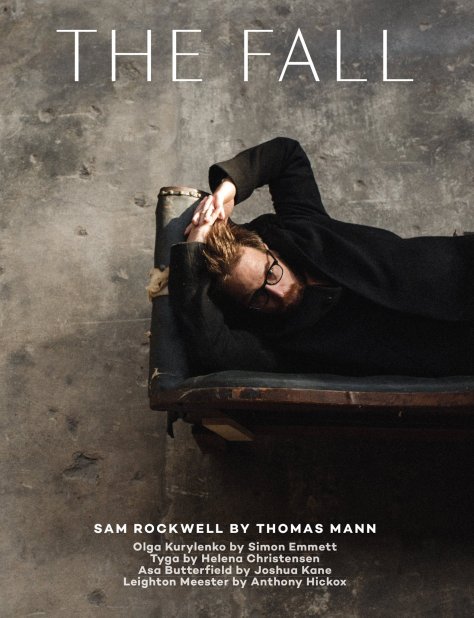


 We live in a “post-truth” world now, don’t we? You know it, Donald Trump knows it, even the lexicographers charged with keeping dictionaries hip know it. But while we might know it, many of us still don’t fully understand it. How can such a large chunk of the voting population just not give a fuck about the facts?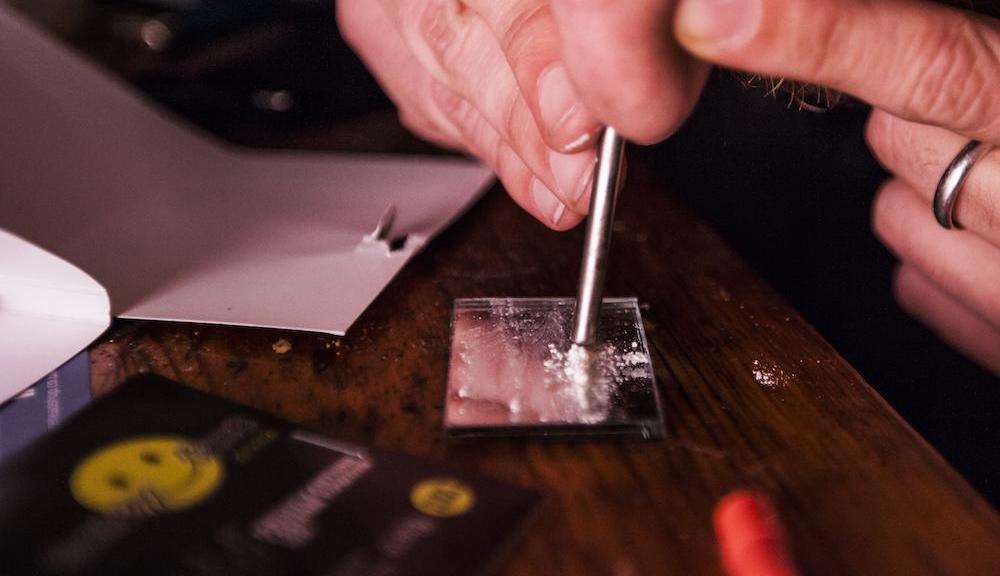
 A lot of us have had a rough time in 2016, but spare a thought this Christmas for the families of the poor men and women of the once proud legal highs industry. There’ll be no presents under the tree for their kids this year, not since the Roflcopter factories were shuttered and all the Meow Meow labs closed down. Things just haven’t been the same since the 26th of May this year, when the Psychoactive Substances Act came into effect, banning the sale of legal highs in the UK.
 Because of you I grew up wanting to drink martinis in exotic locations. Was being James Bond as much fun as it looked?
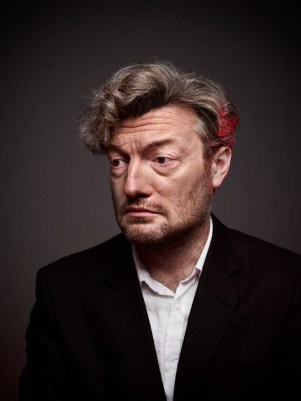 In its five years on our screens Charlie Brooker’s Black Mirror has given us a string of dead-on predictions. They range from the expected – people filming their entire lives in 2011 episode The Entire History of You two years before Google Glass – to the rather less expected. “Who would have thought,” asks Brooker, “That the [prime minister] pig-fucking episode would be the most accurate one?”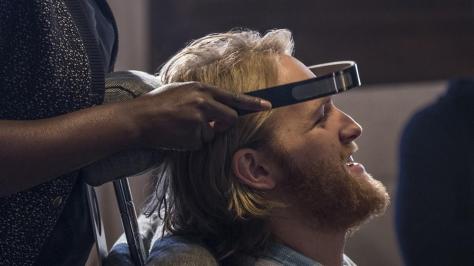

 In Imperium you play an FBI agent undercover with white supremacists. What’s the most disturbing thing you learned?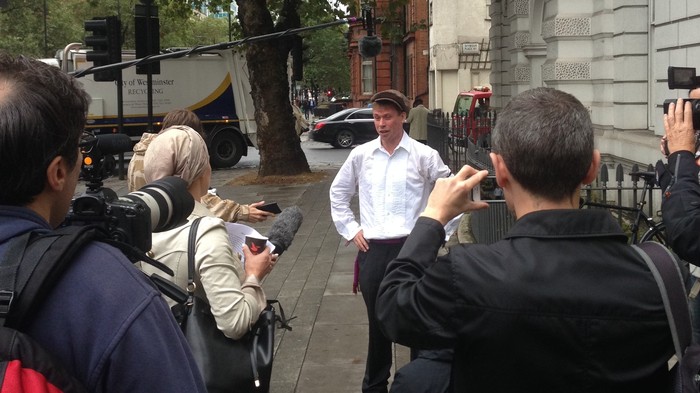
 Lauri Love will be extradited to the US to face charges related to his alleged involvement in #OpLastResort, a UK judge has ruled today.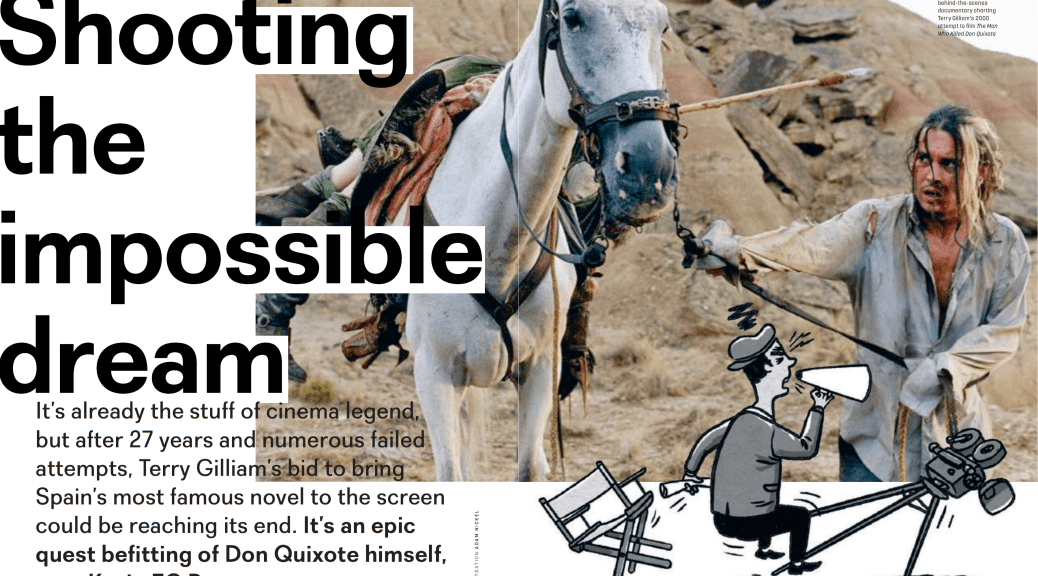
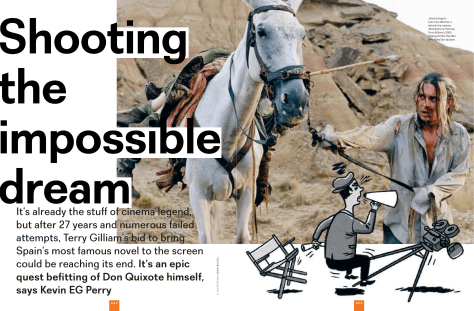
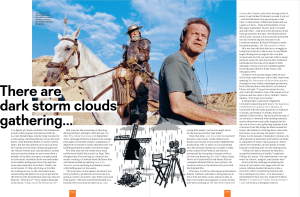 There are dark storm clouds gathering… F-16 fighter jets boom overhead, the thunderous sound of their engines interspersed with all-too-real thunderclaps. Johnny Depp is locked in a chain gang, scuttling sideways across the stark desert of the Bardenas Reales, in north-eastern Spain, but the microphones can’t pick up what he’s saying over the noise. The group approach the veteran French actor Jean Rochefort, poised atop a horse that refuses to move even when a member of the film crew gives a weighty push to its buttocks. Rochefort shifts uncomfortably in the saddle, feeling pain shoot through him from a herniated disc in his back. Finally, the storm breaks. It’s the only thing on this film set working on cue. As the rain lashes down, transforming the desert into a pit of quicksand, the director tilts his head back and roars into the heavens. “Which is it?” Terry Gilliam demands of the storm, “King Lear or The Wizard of Oz?”
 The first disaster struck quickly, when Eberts’s promised $20 million fell though. It would be 11 years before filming began, a period in which Gilliam made The Fisher King (1991), Twelve Monkeys(1995) and Fear and Loathing In Las Vegas (1998). It was on the latter that Gilliam believed he’d found his leading man. After his Gonzo odyssey as Raoul Duke, Johnny Depp was lined up to play Grisoni. His then partner, Vanessa Paradis, was cast as his love interest and Rochefort was Gilliam’s Quixote. With Depp as the lead, the film secured a budget of $32.1m and began shooting in Spain.
 Working together, the pair have raised a budget of €17m and secured what Gilliam calls “the perfect cast”. He says lead Adam Driver is “the first actor involved in this project who’s actually reading the book”, while adding, “Thank God for Star Wars”, for transforming the former Girls actor into a bankable leading man. He adds that Palin will be ideal for Quixote because, while the character is “old, ridiculous, foolish [and] a pain in the ass… You’ve got to love him…”.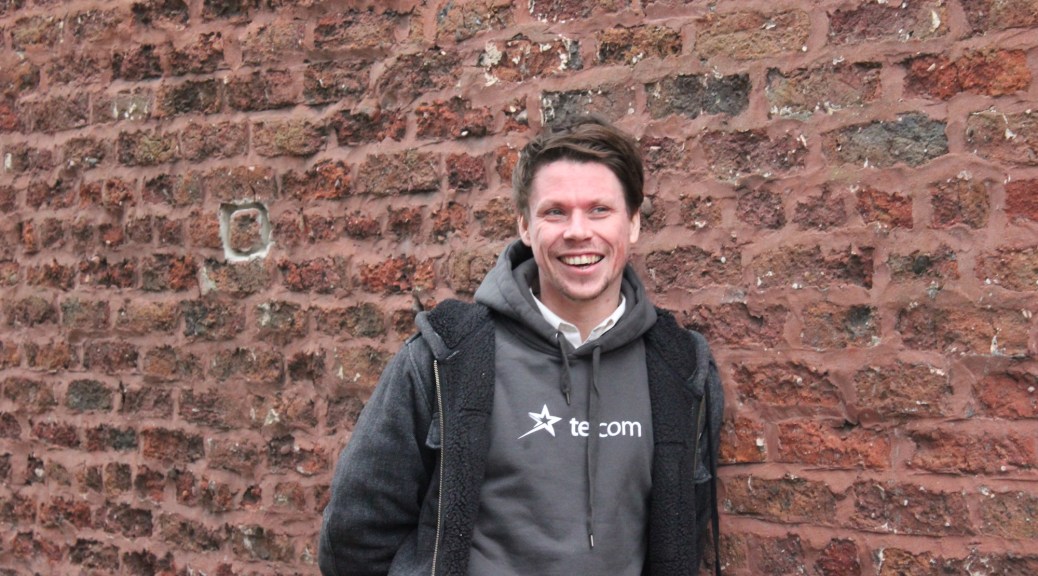
 Early in the evening of 25 October 2013, a man dressed as a UPS delivery guy arrived at Lauri Love’s family home in Suffolk holding a box. When Love’s mum answered the door, she was told that only her son could sign for the delivery. She called him downstairs, and when he emerged wearing his dressing gown, he was told that the man was in fact an officer of the National Crime Agency, and that he was being arrested on suspicion of hacking into a long list of systems, including those controlled by the US Federal Reserve, NASA, and the FBI. Love asked if he still got to keep the box.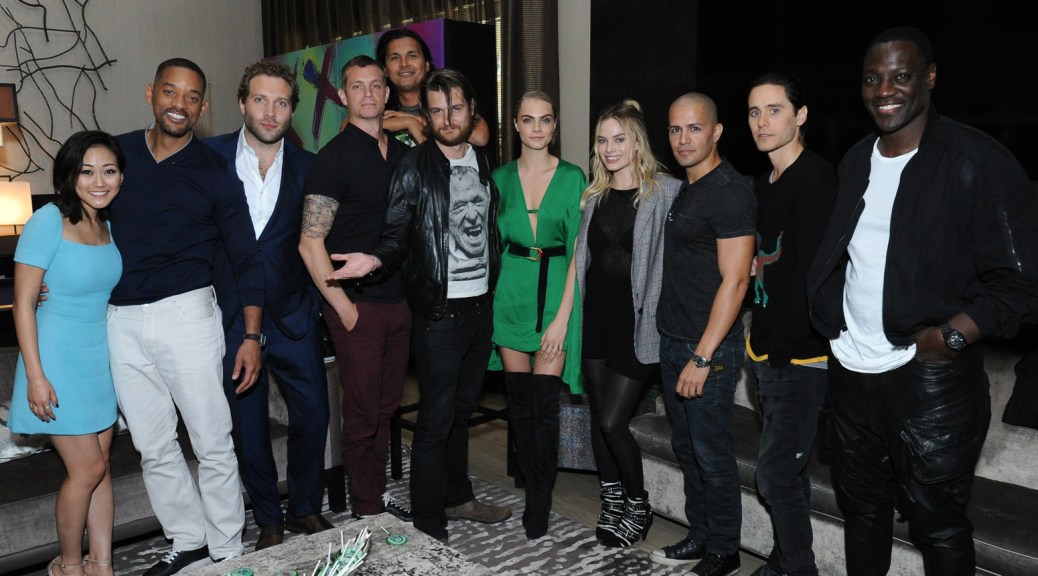


 The next time I speak to Leto, he’s much more forthcoming. There’s a lot to talk about. Since we first met, the US has seen Donald Trump confirmed as the presumptive Republican presidential candidate, while in Britain we’ve voted to leave the EU and the prime minister has resigned. Nobody seems to have the faintest clue where we’re all heading. The return of a villain like The Joker, who deals in the terror of chaos, couldn’t be better timed.
 When he first won the part, Leto made the decision not to rewatch Heath Ledger’s Oscar-winning turn in The Dark Knight, but instead delved into the comic-book source material and researched Mexican narco gangs. “There was some consideration to the times we’re living in,” he says. “Cartel leaders are the closest thing we have, on this side of the pond at least, to complete anarchy and chaos. They’re people who have – or feel like they have – ultimate power. If you look at El Chapo, he probably has as many fans as he does enemies. It’s a similar kind of thing with The Joker.”
 He’s been so busy with the band, not to mention extra-curricular activities such as interviewing Edward Snowden for his documentary series Beyond The Horizon, that Leto’s only acted in two films since 2009. One is Suicide Squad, the other was Dallas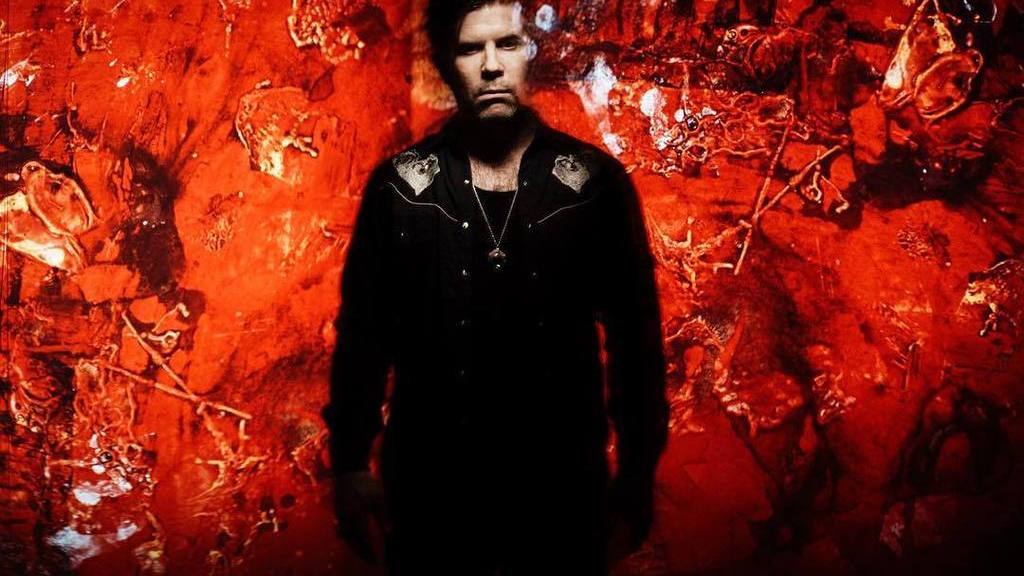
 Ed Harcourt returns this year with ‘Furnaces’, the most ambitious and fully-realised album of his career. It’s a record shot through with an eloquent fury that stares deeply into the modern world and asks where we’re all heading.
 If a riot is the language of the unheard, as Martin Luther King Jnr put it, then what happened across England in August 2011 needs to be listened to and understood. The violence, looting and arson that spread across the country resulted in five deaths and caused some £200 million worth of damage to businesses and property, but the police argued that it was first instigated by one man: Marcus Knox-Hooke.
 I meet Craig David on a Monday, but there’s no offer of a drink on Tuesday. He may have promised as much on 2000 single “7 Days,” one of a string of hits that polished the U.K. garage sound into a winning chart formula, but he’s a busy guy these days. Too busy for week-long dating sprees, sadly. When I first see the British artist in a conference room at Sony’s offices the 35-year-old is sorting through boxes of promotional headphones, but stops and greets me with a lottery-winner smile. He’s wearing black jeans and a plain white T over his famously gym-built physique. On his wrist is a watch that doesn’t tell the time, it just says “now.” It’s as if he has taken the philosophy of mindfulness and made it into a tangible, wearable object, and he tells me it reminds him to “align himself” and that life is “not about the destination, it’s about the journey.”
 For almost a century, our screens have been filled with wise guys and goodfellas. Whether it’s The Godfather or Tony Soprano, we love to watch guys in Italian restaurants taking care of business; the Mafia film becoming a trope as well-worn as the Western.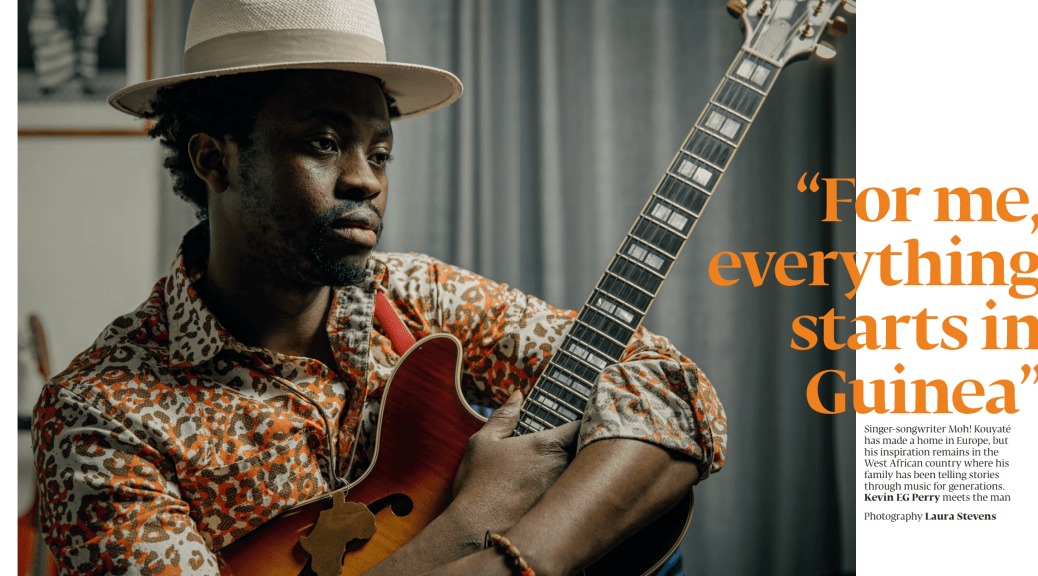
 Moh Kouyaté’s chic, white-walled apartment in Paris’ 10th arrondissement contains a treasure trove of West African instruments brought from his home in Guinea. Among the 39-year- old singer and guitarist’s prized possessions are a ngoni, a centuries-old forerunner of the banjo; and a kora, a type of 21-string harp. He cracks a wide smile as he shows me his beautifully crafted toys. “I might live here now,” he says, “but I keep my traditions.”
 London is a city at war with its poor, governed by a political class apparently bent on demolishing enough social housing that oligarchs, bankers and property developers might be left alone to carve it up for their own savage, greed-crazed reasons.


 Soulwax, it’s fair to say, don’t like labels. “There’s this misconception about us that we invented the mash-up,” said Stephen Dewaele, when I got a brief audience backstage before a gig at London’s Brixton Academy. “It’s weird, because with everything we do, that becomes the anchor to hang it on. Even if it’s an hour of ballads the press will call it a mash-up. We’re like: ‘Have you not listened to it?’ It’s weird that people need that label.”
 Tyrannical despots, vast quantities of narcotics, women seen as second-class citizens: it’s hard to imagine how reporting on the war in Afghanistan could have prepared Kim Barker for Hollywood. But since her 2011 memoir The Taliban Shuffle was adapted by Tina Fey for her new film Whiskey Tango Foxtrot, Barker has been getting a taste of the Hollywood lifestyle.
 Inhale. Take in as much air as you can and hold it until I tell you to stop. This is a story about how deep a single breath can take you.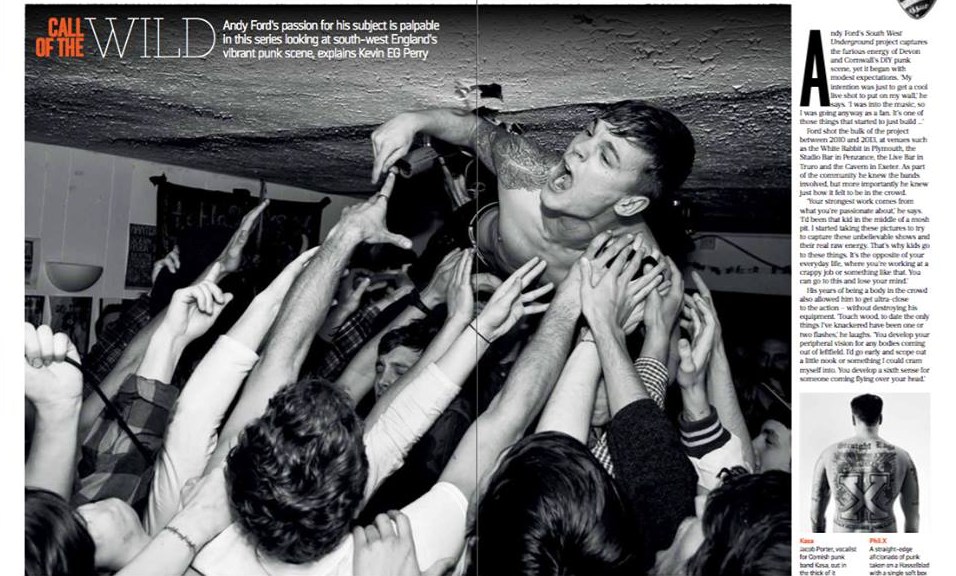
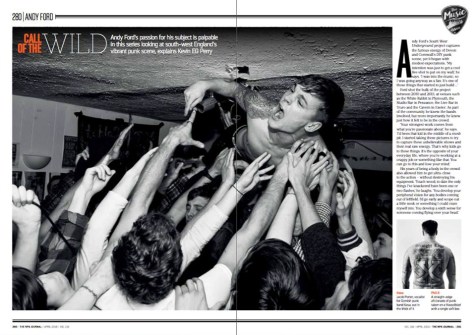
 Inspired by Glen Friedman’s classic punk rock photography to display his work in black and white, it was only when he began studying at Plymouth College of Art that he began to think of his project as a way of documenting a subculture. “I was looking at a lot of documentary work, and photo books of Teddy Boys and Mods,” he says. “I started to think about my photos from a more cultural perspective, and realised that this DIY movement was an interesting subculture and a reaction against Simon Cowell and the mainstream of 2010.”
 Einstein predicted gravitational waves in 1916, but it took us a century to find them. Astrophysicist Janna Levin’s new book explains how.
 As Bowie tributes go, it’s extravagant: this Monday, the European Space Agency will launch the Trace Gas Orbiter on a seven-month mission to answer his enduring question: is there life on Mars? Or, as the ESA rather more scientifically puts it, “to search for evidence of methane and other trace atmospheric gases that could be signatures of active biological or geological processes.” It’s a triumph for scientists who’ve overcome 11 years of technological, political and financial problems since the mission was first approved back in 2005. So much for a god-awful small affair.
 It’s the opening day of the Don DeLillo Conference at the Diderot University in Paris and the guest of honour stands at the back of the Buffon lecture hall. He wears a leather jacket, burgundy sweater, black jeans. He is 79 years old. I ask him: “Is it strange to attend a conference dedicated to yourself?”
 Being accused of worshipping Satan is bad enough when your sixth form art teacher takes exception to your Mayhem-inspired pentagram mural, but it’s rather more serious when the people pointing the finger are conservative Islamists with a national TV channel. That’s the position metal fans in Algeria found themselves in last August when they flipped on local network El Bilad to see an hour-long special casting those about to rock as enemies of the state.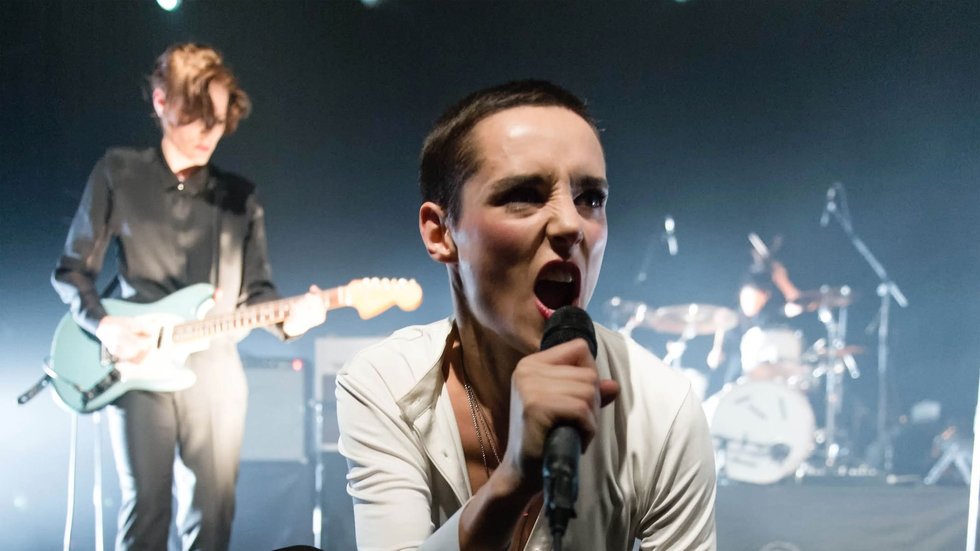
 Savages have a reputation for being about as funny as breaking your spine while trying to turn off an episode of The Big Bang Theory, but singer Jehnny Beth is laughing her arse off.
 Sometimes you have to unlearn the rules. While growing up near Totnes in Devon, Rosie Lowe started learning piano and violin at the age of five. Later she picked up guitar as well, and did her musical apprenticeship in a jazz band. Yet it was only when she cast her instruments aside that she started writing from the heart.
 Baaba Maal has a bed big enough to sleep six people in either direction. We’re at his house in Podor, his hometown at the northernmost point of Senegal, and he’s giving me the tour. If they made MTV Cribs in West Africa this is the part where he’d sweep in and say something faintly embarassing like: ‘This is where the magic happens’, but instead he just laughs and tells me it’s actually only a guest room, and the oversized bed is “just to be a little bit exotic.”


 Having created both Gorillaz and Tank Girl during almost 30 years as a graphic artist, Jamie Hewlett has finally been tempted into a gallery for his debut art show. He was inspired, like so many before him, by Googling “tramp sex”.
 “Why is it that all the writers one admires are always arseholed?”


 Men often think of themselves as lone wolves. Lone wolf being ambitious in the office. Lone wolf on Tinder. Lone wolf playing Fallout 4 alone in a flat, eating lasagne out of the microwave carton. As we get older and life inevitably starts flinging shit at us, we might start to wonder whether there’s a reason most wolves hunt in packs.



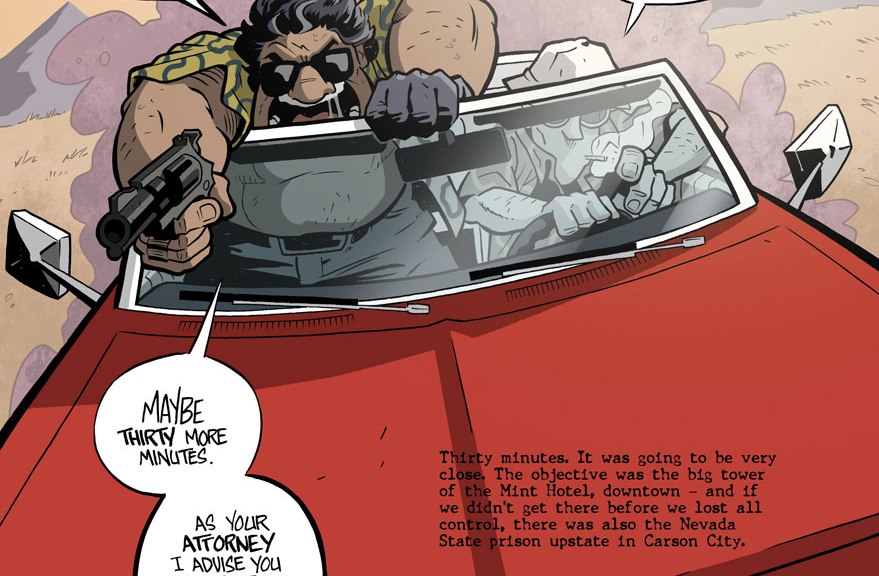


 While the island’s unique geography is part of its draw, the country also has a busy cultural calendar. Here, its small size is a definite advantage. Halla Helgadóttir, who runs Iceland’s design week in March, says that designers from a variety of disciplines come here to share ideas; while Stella Soffía Jóhannesdóttir, of the Reykjavik International Literary Festival, tells an anecdote that illustrates just how intimate their events are. “When David Sedaris spoke here, he said he was used to audiences of 3,000. Here, he spoke to 100 people,” she says. “That makes our festival an opportunity to meet your favourite authors in very unusual circumstances.”









 Back in the annals of time when we all lived in tiny hamlets, young men would have to set off on arduous quests towards the bright lights of the big cities just so they could find a wife who wasn’t either their sister or their cousin. These days you just have to reach into your pocket to be presented with a local selection of some of Tinder’s 50 million active users, 1.2 million of them in London alone.
 In the last five years, Greece has become as synonymous with their interminable financial crisis as it has always been with democracy, philosophy and yogurt. Just last week, the left wing government lead by Syriza put two fingers up to the International Monetary Fund and told them that they’re not going to pay them back the €300m they were supposed to until at least the end of June, when they absolutely promise they’ll come up with the full, erm, €1.5billion they now owe them.


 Kevin EG Perry: Collected Works