All posts by Kevin EG Perry

I Dreamed Of Being An Olympic Dancer

I am not a dancer. Not even for fun. I’ve been seen to twitch in darkened rooms to pounding basslines but that was just a trick of the strobe light. Mine is a largely sedentary life, aside from the odd unavoidable flight of stairs.

I’ve hiked to the top deck of the bus on occasion. I climb in and out of bed several times each day. I can only imagine that any more strenuous exercise would feel roughly like a hangover, and knowing how much they take it out of me I’ve done all I can to avoid it.

Continue reading at The Quietus.

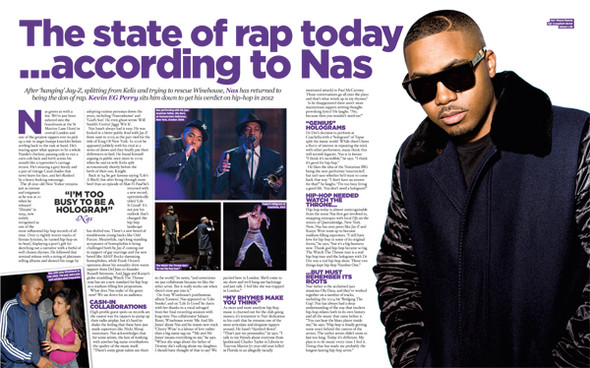
The state of rap today… according to Nas

Nas greets us with a fist. We’ve just been ushered into the boardroom at the St Martins Lane Hotel in central London and one of the greatest rappers ever to pick up a mic in anger bumps knuckles before settling back to the task at hand. He’s tearing apart what appears to be a whole Nando’s chicken, pausing only to run a corn-cob back and forth across his mouth like a typewriter’s carriage return. He’s wearing a grey hoody and a pair of vintage Cazal shades that never leave his face, and he’s flanked by a heavy-looking entourage.

The 38-year-old New Yorker remains just as intense and enigmatic as he was aged 20 when he released ‘Illmatic’ in 1994, now widely recognised as one of the most influential hip-hop records of all time. Over ten tightly-woven tracks of literate lyricism he turned hip-hop on its head, displaying a poet’s gift for sketching out a narrative with a fistful of well chosen rhymes. He followed that seminal release with a string of platinum-selling albums and showed his range by adopting a string of personas down the years like ‘Nastradamus’ and ‘God’s Son’. He even ghost-wrote Will Smith’s ‘Gettin’ Jiggy Wit It’.

Despite his talent shining through from a young age, Nas hasn’t always had it easy. He was locked in a bitter public feud with Jay-Z from 1996 to 2005 as the two great rappers vied for the title of ‘King of New York’. In 2006 he appeared publicly with his rival at a series of shows and they finally put their differences to bed. He found himself arguing in public once more in 2009 when he and ex-wife Kelis split acrimoniously shortly before the birth of their son, Knight.

Back in ’94 he got famous saying: ‘Life’s A Bitch’, but after living through more beef than an episode of ‘Man Vs Food’ he’s returned with a new record optimistically titled ‘Life Is Good’. It’s not just his outlook that’s changed: the hip-hop landscape has shifted too. There’s a new breed of troublesome young turks like Odd Future setting their sights on offending everyone all the time, while in contrast A$AP Rocky has taken a stand as a voice against rap’s homophobia. Meanwhile Jay-Z and Kanye’s all-conquering, globe-straddling ‘Watch The Throne’ tour has set a new standard for hip-hop as a stadium-filling live proposition. Having been there in the crucible of New York from the very beginning, Nas is ideally placed to pass judgement. To get a real sense of the state of hip-hop in 2012, we sat down for an audience with the Don.

Collaborations should mean something: like Nas and Amy Winehouse

High-profile guest-spots on each other’s records are the easiest way for rappers to pump up their radio airplay, but it’s hard to shake the feeling that these have just made superstars like Nicki Minaj increasingly mercenary. Nas acknowledges that for some artists, the lure of working with another big name overshadows the quality of the music itself. “There’s some great talent out there in the world, and sometimes we just collaborate because we like the other artist. That’s cool, but it really works out when there’s time put into it.”

On ‘Life Is Good’ he duets with Amy Winehouse thanks to a vocal salvaged from her final recording sessions with long-time Nas collaborator Salaam Remi. Winehouse wrote ‘Me and Mr Jones’ about Nas and it’s clear that for him new track ‘Cherry Wine’ is both a labour of love and that song’s spiritual successor. “‘Me and Mr Jones’ means everything to me. I love that record. When she sings about the father of Destiny she’s talking about my daughter. I thought that was a clever line. I should have thought of that to say! We partied here in London. She’d come to my show and we’d hang out backstage and just talk. I feel like she was trapped in London.”

“My rhymes make you think”

As more and more anodyne hip-hop music is churned out for the club-going masses, it’s testament to Nas’s dedication to his craft that he remains one of the most articulate and eloquent rappers around. He hasn’t “dumbed down”. “That’s just my personality,” he says. “I talk to my friends about everyone from Charles Taylor in Liberia to Trayvon Martin to Paul McCartney. Those conversations go all over the place and that’s what winds up in my rhymes.”

Is he disappointed there aren’t more mainstream rappers writing thought-provoking lyrics? He laughs: “No, because then you wouldn’t need me!”

“Genius” Holograms

Dr Dre’s decision to perform at Coachella with a “hologram” of Tupac split the music world. While there’s been a flurry of interest in repeating the trick with other performers, many think this will tarnish the legacy of the greats. Nas, however, is very much in favour. “I think it’s incredible. I didn’t see it live but I think it’s good for hip-hop music. It was amazing.”

He likes the idea of the Notorious B.I.G. being the next performer ‘resurrected’ with the technology, but isn’t sure whether he’d want to come back that way after he’s gone: “I don’t have an answer for that! I’m too busy living a good life. You don’t need a hologram, I’m here!”

“Hip-hop needed Watch The Throne”

Hip-hop as it is today is almost unrecognizable from the scene Nas first got involved in, swapping mixtapes with local DJs on the streets of Queensbridge, New York. Now, Nas has seen peers like Jay-Z and Kanye West team-up to become stadium-filling superstars. He likes what he sees. “I still have love for hip-hop in some of its original forms, but it’s a big business, a big industry now. Thank God hip-hop became so big. The ‘Watch The Throne’ tour is a real hip-hop tour and the hologram with Dr Dre was a real hip-hop show. Those two things kept hip-hop number one.”

But it should also remember its roots

Nas’s father is the jazz musician Olu Dara and they’ve worked together on a number of tracks including the 2004 hit ‘Bridging The Gap’. Nas has always had a deep understanding of the way that modern hip-hop relates both to its own history and the music that came before it. “You can hear the blues player inside of me. Hip-hop music is finally getting some years behind the careers of the artists. For whatever reason the earlier artists didn’t seem to last too long in this crazy business. Today it’s different. My plan is to do music every time I feel it. Doing that has made me probably the longest-lasting hip-hop artist.”

“Homophobia is not hip-hop’s concern

There’s an ongoing debate about homophobia in rap, most recently sparked by the deliberately provocative and offensive lyrics spouted by Odd Future’s Tyler, the Creator. In contrast, fellow young upstart A$AP Rocky recently told NME that he respects gay men and women. Nas, however, dismisses the idea that sexuality is a major issue. “Do I think rap music is homophobic? I don’t think that’s the concern of rap music at the moment. Rap is the street, rap is sex and money. They don’t have time to think about homophobia or anything like that. It’s about ass, ass, ass – female ass! It’s about women, money, it’s about being the flyest of the fly- that’s hip-hop.”

On ‘Back When’, from his new record, Nas points out that some rappers use offending others due to their sexuality or race as a mask for their own weaknesses: “I say: “You seem to blame all your shortcomings on sex and race, the Mafia, homosexuals and all the Jews. You might as well blame all your shortcomings on your foes the Jews, it’s hogwash point of views, stereotypical, anti-Semitic like the foul words Gibson spewed.” That’s Mel Gibson. That’s me just saying to let go of the illusions of someone holding you back.”

“Game-changing” artwork

Nas wants to be known as the man with “the best album covers in rap”, and for new record ‘Life Is Good’ he’s taken the tabloid-baiting decision to pose with ex-wife Kelis’ wedding dress slung over his knee. “People have heard about my divorce. I’ve always had a private life but if people today want to get on the internet and talk then it’ll happen. For me, the cover was very therapeutic. I’m a storyteller, and it has that old bluesman vibe to it. I have so much to say on this record about myself personally. It feels like a record close to my soul. That’s the blues. My record cover: that’s the blues.”

He’s fiercely proud of the influence his ‘Illmatic’ artwork has had: “Think about how many album covers since then have been like that: Notorious B.I.G. and U2 all the way to Lil’ Wayne and Jill Scott. It changed the game.”

Regrets? I’ve had a feud

Rivalries like Tupac vs. Notorious B.I.G. have long been a feature of the hip-hop world, and Nas had his own ongoing feud with Jay-Z. With previously unseen footage from 2002 of Nas’s preparations for an inflammatory attack on Jay-Z recently surfacing, does Nas look back on his career with any regrets?

“No”

Not even about the time he commissioned a animatronic dummy of Jay-Z and a set of gallows so he could ‘hang’ him onstage?

Nas clamps the toothpick he’s been fiddling with between his teeth and shakes his head slowly to dismiss the question. Since the footage has come out he’s repeatedly refused to discuss or even acknowledge it. From a corner of the room a low voice mutters: “That’s not okay, man.”

Nas’s expression doesn’t flicker, but before we’re escorted out we try to defuse the situation by telling him that the new record is up there with his very best. He pauses and then his face cracks into a smile as the tension dissolves and we bump fists again. “Life is good, man,” he shrugs, “Life is good.”

Originally published in NME, 18 July 2012.

Public Enemy on being “the security of the hip-hop party”

fflav_chuckd_gq_17jul12_rex_b_479x291“That’s a nice t-shirt!” Chuck D is admiring the image of Brian Jones on GQ.com’s chest backstage at the Heineken Open’er Festival in Gdynia, northern Poland. “They call us the Rolling Stones of the rap game. I don’t know if I’m Mick and Flavor’s Keith. I think we switch back and forth!” Public Enemy have just come offstage after a storming set which included the first ever performance of their new single “I Shall Not Be Moved” as well as a host of songs from their canonical albums It Takes a Nation of Millions To Hold Us Back and Fear of A Black Planet. Despite the high-intensity performance we’ve just witnessed, Chuck D, now aged 51, exudes a Zen-like state of calm. All around us people are cracking open drinks and digging into food while main-stage headliners Franz Ferdinand have shyly snuck in to hang out with the hip-hop legends. It’s 25 years since Public Enemy dropped their debut record Yo! Bum Rush the Show and to mark the anniversary they’re currently preparing two new albums, Most Of My Heroes Still Don’t Appear On No Stamp and The Evil Empire Of Everything. Here, Chuck D and Flavor Flav tell us about staying politically aware on tour and share their advice for life in typically righteous fashion.

GQ: When you’re on tour here in Europe are you very aware of the history of the countries you visit?
Chuck D: That’s very important. In Belgium, we dedicated “Fight The Power” to the Democratic Republic of Congo. The memory of Patrice Lumumba will not be in vain. You always have to be aware where you’re going to when you step into somebody’s home. That’s the thing that sets us apart as different. We’re not the normal rap group.

Do you think young rappers should be more politically conscious?
CD: Everybody can do whatever they’ve got to do. Younger generations can have a good time or whatever. There’s no obligation that they’ve got to do something, but every party has security. Public Enemy is the security of the hip-hop party.

Flavor Flav said onstage that this is your 81st tour. How do you keep things fresh?
CD: Just travelling the world. Look! He’s consumed by that sandwich!
[Flavor Flav walks in eating a ham sandwich bigger than his own head.]

What’s the best advice you’ve ever been given?
CD: There’s been plenty of advice. I would say: “Do what you like to do well, so that you can do it for a long time.”
Flavor Flav: Best advice that I ever got is to do whatever it takes to make myself happy, so that I’ll be able to make others happy. If I’m not happy, I can’t make other people happy.
CD: That’s what he told me the other day. Trust me. We had a conversation about this.
FF: That’s real talk. I’ll tell you one thing you can’t do: you can’t put your shoes on, then your socks on.
[Chuck D starts laughing]
FF: That’s what I was taught! I was taught never to be an asshole, because an asshole gets nothing but a good wipe. Do you know what I mean? That’s exactly what I teach in America. If you’re an asshole, then you’re gonna get wiped. If you’re in a situation where you’re being forced to be an asshole, then you have to change it to make it work for yourself. You get what I’m saying? I love you, baby!

Originally published by British GQ.

Chris Moyles To Quit The Radio 1 Breakfast Show? Thank Christ!

There was a moment on Chris Morris’ old radio show when he told a story about a naked DJ, up on the roof and smeared with jam, who shouted out: “I’m Chris Moyles, please forgive me!” and the windows all around flew open, and a thousand voices cried out; “No fucking way.”

As Moyles finally relinquishes control of the Radio 1 Breakfast Show from his sweaty grasp, the time has come to ask whether we forgive him.

Do we forgive him for the decades of grating laddish sexism? For year after year of desperately unfunny and nauseatingly self-aggrandising anecdotes? For saying on-air of Charlotte Church that he would “lead her through the forest of sexuality now that she had reached 16”? For his continual failure to understand why using the word “gay” as an insult isn’t okay? For being a boorish poster boy for anti-intellectualism of all kinds? For his unshakeable belief that the sound of his own voice trumps every piece of music produced since the dawn of recorded time?

Whatever you think of Moyles’ replacement Nick Grimshaw’s presenting style, he has over the last half-decade popped-up at countless review shows and album playbacks (in fact I saw him at a Nas listening session just the other day) and, excitingly, given the impression that he might actually quite like music. This already puts him at least one step ahead of Moyles, not to mention the fact that he wasn’t named LGBT charity Stonewall’s Bully Of The Year 2006.

Chris Moyles, the end-result of a belief that you can never under-estimate the intelligence of radio listeners, is now a host without a party. Who knows where the hot-air balloon of his own egotism will take him now? Perhaps he’ll go door-to-door singing novelty songs while surrounded by a troupe of idiot sycophants repeating his sole joke over and over like a mantra. Perhaps he’ll take a vow of silence as penance. Perhaps he’ll strip naked and smother himself in jam on the Radio 1 rooftop, taking his pleasure where he can find it in the abject misery of his self-knowledge. But should we forgive him? No fucking way.

Originally published by NME.

Durban Hymns – There’s More To African Music Than ‘Graceland’

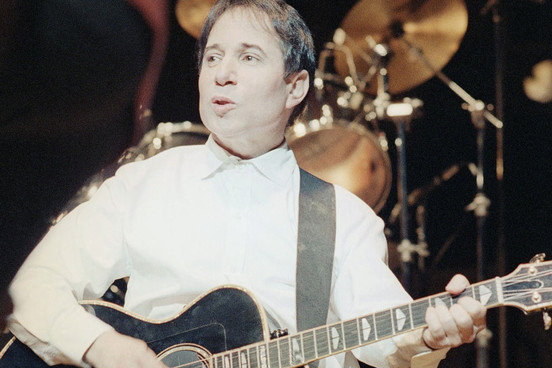
This Sunday Paul Simon will bring ‘Graceland’ back to London, 25 years after the original tour was picketed by protestors including Paul Weller, Jerry Dammers and Billy Bragg who argued that Simon was wrong to break the cultural boycott of apartheid-era South Africa.

The BBC marked the occasion this week by broadcasting ‘Under African Skies’, a documentary about the album’s controversial recording process and tour. It’s a fascinating film, including an emotionally tense meeting between Paul Simon and Dali Tambo, who founded Artists Against Apartheid and led the protests.

What’s really interesting is hearing from the South African musicians who made the decision to play with Simon, and how they justified it to themselves, the protestors and their countrymen. Koloi Lebona, a producer who helped to assemble some of the musicians involved, summed it up when he said: “When I brought musicians to the ‘Graceland’ sessions I was patently aware that there was a cultural boycott. It was risky, but our music was always regarded as ‘third world music’. I thought, if our music gets the chance to be part of mainstream music, surely that can’t do any harm?”

Continue reading at NME.

Stanley Booth on life on the road with the Rolling Stones

Stanley BoothWhen we meet Stanley Booth in a drawing room at Durrants Hotel in London’s Marylebone he immediately apologises for his persistent runny nose.  “I don’t know why,” he says by way of an opener, “I haven’t done any cocaine.”

He may be a slight 70-year-old with snow-white hair now, but in his time Booth has hoovered up more than his fair share of high-grade narcotics. A music writer who knew every American great from BB King to Otis Redding, Booth somehow talked himself onboard the Rolling Stones’ infamous 1969 American tour and ended up becoming friends and late-night sparring partners with Keith Richards himself.

He didn’t just live to tell the tale, he wrote the book on it: The True Adventures Of The Rolling Stones, a stone-cold classic of music writing which took him 15 years to complete. For his part, Keith Richards called Booth the band’s “writer-in-residence” and said of the report, “Stanley Booth’s book is the only one I can read and say, “Yeah, that’s how it was””. Here, Booth talks frankly about witnessing the murder of a Stones fan at Altamont, the difference between Mick and Keith’s attitude to women and the iconic jewellery he unintentionally inspired.

keithandstanleyGQ.com: How did you first meet the Stones?
Stanley Booth: I had an editor at Eye magazine who commissioned me to do a piece about them in 1968. I came over here to London and went to the Stones’ office. I told them I was from Memphis and that I knew people like BB King and Furry Lewis, so they never thought of me as a critic. At first I wasn’t interested in writing a book about a rock’n’roll band, but then Brian Jones died and I found that compelling. Brian was 27 and his death was a mystery. I wanted to get to the bottom of that.

You’d already written about a host of legendary artists before you came to England. How did you end up in the studio with Otis Redding?
I got a commission from the Saturday Evening Post, of all places, to do a piece about the Memphis soul sound. I went over to Stax and I remember I was outside taking some notes when this white Lincoln limousine pulled up at the curb. Otis Redding got out of the back. I introduced myself to him and then we went into Stax together. I spent the whole week with him. I’ll never forget watching him and Steve Cropper record “(Sittin’ On) The Dock Of The Bay”. I was there for the writing and recording – they cut ‘Hard To Handle’ and half a dozen others as well. It was thrilling.

Unlike most music books, yours reads like a novel. What inspired you to write it that way?
I was a great fan of Capote’s In Cold Blood and also Gay Talese. He was the guy who really taught me how to do what I do. I don’t find him very morally appealing, but he was a hell of a writer. He had a beautiful, wise and talented wife but when he wrote Thy Neighbour’s Wife he was going around screwing 19-year-olds in massage parlours. I found that very unappetising.

What was it like to be on tour with the Stones in 1969?
It was exhilarating! Those shows were just awesome. I watched the Stones play live every night You couldn’t do it today. In those days everybody was together. We were one little force, maybe eight or ten of us altogether. We all trusted each other and we didn’t have personal problems. We developed personal problems later. When they started having people like Capote on the tour in 1972, he said, [In whiny Capote voice] “There’s no story!” I thought: “Oh, thou fool!” I knew there was a story, because I was writing it. Capote was not equipped to understand or deal with the Rolling Stones.

William S Burroughs was supposed to join that tour as well, wasn’t he?
Burroughs was really above the fray, but he was very helpful to me. He lived in London at Duke Street, St James and I’d go and see him at his flat. He gave me a lot of good advice. We talked about Scott Fitzgerald, whose work he valued very highl, and he told me to read Carlos Baker’s book about Hemingway. He also told me not to smoke hash in front of the window. Those were both pieces of good advice. Uncle Bill was aware that he was a very famous junky, probably the most famous junky in the world at that time.

What was the biggest misconception about the Stones?
That they were motivated by some sort of satanic influence. People think they hired the Hell’s Angels for the concert at Altamont. Nobody hired the Hell’s Angels. There were half-a-million people there and 500 of them happened to be Angels. It was a hopeless situation as far as security was concerned. It was really one of the most terrifying experiences of my life. I was right behind Keith’s amps when I saw this Angel kill Meredith Hunter. This 18-year-old black man was right in front of the stage with his white girlfriend. The Angels don’t like black people anyway. Some Angels kept pushing Meredith away from the stage. At some point he reached into his coat and pulled out a nickel-plated revolver. He signed his own death warrant. That was not the right thing to do. He didn’t live another five minutes after he pulled that gun out.

Did the Stones know immediately what had happened?
No, I don’t think they had any idea. They just knew it was a very bad scene with a lot of violence. We saw Angels hitting people over the head with lead-weighted pool cues, using them like baseball bats. After Meredith died the Stones played for another hour-and-a-half and they played a brilliant, brilliant show. It was an heroic performance on the part of the Stones. At that point we assumed that several people had died. We saw so many people knocked down and pounded on.

What was a typical night with Keith like?
It depended on what we had. If we had cocaine, we’d do cocaine. If we had heroin, we’d do heroin. Not injecting, but snorting the light brown powder. It was most gratifying. Speedballs were good stuff. I don’t look for inspiration in drugs anymore. I still smoke grass, but that’s different. Grass is a vegetable. Keith and I spent a lot of time together with nobody else around. He had a tape-recorder that looked like a World War II radio. He had blues songs that I’d never heard, like “Shave ‘Em Dry” by Lucille Bogan. “Oh Daddy, won’t you shave me dry / you can grind me, Papa / grind me ’til I cry.”

Would Keith have been as inspired without drugs?
He used drugs to stay awake. The Stones would work for days on end, and you couldn’t do that without some kind of fuel. Keith wouldn’t have been the same without them, of course.

What’s your favourite memory from that time?
I had some very pleasant days at Keith’s house in the south of England. After a certain amount of time Anita would throw you out, which I never particularly appreciated, but she was really hot in those days. Really fucking beautiful.

What did you learn from being in the studio with the Stones?
They inspired me by example. I’d never seen any band work as hard as the Rolling Stones. They really inspired me to work harder as an artist, or in my attempt to be an artist. At Muscle Shoals they cut three tracks: “Wild Horses”, “You Gotta Move” and “Brown Sugar” and they played for three days straight. At the end of the session Charlie went back to the drum-set and started playing again. Keith said, “Look at that! That’s a rock’n’roller.” At one point [Atlantic Records President] Ahmet Ertegun called me at my motel room at the Holiday Inn and said, “If you guys have any dope you better flush it because the cops are going to try and bust the session.” That was a shame. I wasn’t about to flush no dope away!

After Keith’s Life, do you think Mick will ever write a book?
Fuck no! When I was working on my book my editor, a fatuous and callow young man, called me and told me that Mick had signed a contract for $2m to write a book. I told him that Mick wouldn’t do it. Sure enough, a few months later Mick gave the money back. I didn’t consider it possible for one minute that Mick would write a book. He’s got too much womanising to hide.

Was Keith’s attitude different?
Keith was not a womaniser. He would show up with a girl occasionally but Mick indulged himself in fornication to an unpleasant degree.

As well as the music, the Stones have had a huge influence on men’s style. What did you think of the way they looked?
Well, I had the original skull ring! I was walking down the King’s Road one day in about 1970. There used to be all these wonderful shops and I passed this little store that had a lot of silver in the window. It reminded me that when I was a little kid I’d had a cowboy comic book with a skull ring advertised on the back page. It had stones in its eyes that glowed red like fire in the daytime and blue like the stars at night. So I bought the skull ring and wore it that night to a Stones session. Keith saw it and immediately copped the idea. I’ve never gotten any credit for that! I don’t have the original one anymore. [Pause] I broke it on the head of a whore.[laughs]

Originally published by British GQ.

It’s Time Twitter Fanbases Learned Some Self-Control

If you ever find yourself doubting the number of ways it’s possible to misspell a term of abuse, simply tweet that you’re not that fussed about a contemporary pop star. In the last couple of days both Frank Turner and London-based copywriter Holly Brockwell have discovered that there’s no limit to the crimes against the English language that some fans will commit in their eagerness to defend their heroes.

Continue reading at NME.

Garbage’s Shirley Manson: “Women have forgotten what a struggle it was”

shirley-manson

“To take seven years off and see all the bands who came up after us, I think there were times when I did sit at home and think: ‘I don’t understand why I never felt I was good enough because I could smoke 99.9% of this bunch.’”

Shirley Manson remains very much a shrinking violet.

Shirley and I are sat in some sort of ersatz library at The Langham, a grand, swanky hotel opposite BBC Broadcasting House in central London and thus a prime location for anyone wishing to launch an assault on the nation’s airwaves. Shirley is “fantastic” because she’s just drunk half a bottle of wine over lunch and apparently ate three or four contemporary pop acts for breakfast. She seems to be rather enjoying being back in the saddle of this record-promoting lark. She’s brilliant company, with a glint in her eye and her tongue in her cheek. The seven year gap since the last record doesn’t seem to have mellowed her.

“Don’t be fooled!” she laughs wickedly, “I’ve completely mellowed! I’m a pussycat!”

The rest of Garbage: Duke Erikson, Steve Marker and Butch Vig are nowhere to be seen. It seems hard to believe now but there was a time when it was the trio of male producers, most notably Butch “That bloke who produced Nevermind” Vig who were perceived as running the show, with their red-headed front-woman cast as the eye-candy who should be grateful to have been plucked from the relative obscurity of goth-pop combo Goodbye Mr. Mackenzie. Hence Shirley’s aforementioned feelings of inadequacy:

“I spent my entire career feeling that I was coming from a position of lack. When you’re a young woman who gets into business with a renowned and revered producer, the way the world views that can be complicated and diminishing for a less experienced, younger, unproven talent. I constantly felt, because I would read it everyday in the press, that I wasn’t worthy of such a relationship. Even though I am a bolshie, feisty person it did eventually wear me down, if the truth be told.”

While she’s now more confident in herself than ever, she’s not even close to forgetting the struggle she went through as a woman to be taken seriously as an artist. When I bring up feminism, she raises her concern that the types of roles women are allowed to play in mainstream music have become increasing circumscribed: “I feel that in the Nineties when we first came out there were a lot of different types of women being heard in the mainstream. In the last ten years all it has been is women singing pretty ditties and showing their titties. There’s not been really many records that have been played on mainstream radio of any depth, or have indeed even been penned by women. That disturbs me a little. Plenty of pop music. Plenty of catchy, all-singing, all-dancing girls out there, but there’s not really many agitators or provocateurs or women in disagreement with what’s going on.”

There’s the odd exception, of course. Shirley’s a big fan of one particular filthy-mouthed New Yorker: “Azealia Banks blows me away. Fucking unbelievable. When I heard ‘212’ it was like hearing ‘Why D’ya Do It?’ by Marianne Faithfull for the first time. It blew me away, and I was jealous because that’s something I can’t do. She does it brilliantly and I’m so grateful that there’s somebody like her out there. But she’s the 1%. Azealia is a phenomenal, fantastic, welcomed force right now, but her challenge will be to have a career that lasts more than two years.”

With the music industry still softly imploding around all of us it’s a tough time for anyone to be thinking about career longevity, but her concerns come from a hard won sense of having climbed a mountain and found few compatriots at the top: “It’s tough for anyone to be in the music industry, but I think what has happened in the last decade is that a lot of women have forgotten what a struggle it was for previous generations to even get a foot in the door in the music scene and so have forgotten how tenuous their holding is. As a result I haven’t seen much effort into trying to redefine the way women have historically been viewed as solely visual treats and playthings. Make no mistake, there is still an incredible struggle for women to be treated as equal around the world and in the music industry. I’ve always felt a responsibility to conduct myself a certain way. Before I broke into the music scene there weren’t that many empowered women getting played on the radio. There are still very few women who have managed to navigate a career of any length or are considered of any worth and that bothers me.”

Seventeen years separate Garbage’s debut self-titled record and the spanking new aggression of Not Your Kind Of People. She thinks she’s better at her job now than she was back then: “I can’t speak for everyone else in the band but I definitely found it easier to make this record than the earlier ones. We’ve maybe stopped giving a shit about everything aside from making music together as a band and trying to ensure that we engineer our own happiness. That sounds really trite, but actually it’s harder than one might think.”

So why reform now? “Why not?”, she shoots back, without missing a beat. “There’s a lot of different reasons. A lot of things have happened to us. A lot of things have happened to those we love. A lot of time has changed. A lot of time has passed, but we’ve got to the point where we’re gasping to communicate and gasping for contact.”

Needless to say, plenty has changed since Garbage were last treading the boards of publicity. Not least the advent of the age of social media. Shirley is relishing it. The band’s twitter account is staffed by: “Mostly me. Not always, but mostly. At first I railed against it and thought it was awful. Now I see it as remarkably effective tool to inform our following.” There are also new connections to be made: “There’s something really exciting for me to get a glimpse into our fans’ lives. I find it fascinating, and thrilling and sometimes touching. When you realise someone’s spent their entire wage to buy a ticket to your show and travel there and buy the T-shirt… that makes me want to burst into tears, quite frankly. I’ve railed against it, but now I realise that what once was is gone. The mysteriousness and the allure of rock’n’roll as we knew it when we were growing up is gone, but that doesn’t mean that other great things can’t move into its place.”

In some ways, she says, the things she’s proudest of herself for are the things she didn’t do. She was never lured by the carrot of a pop solo career. She “didn’t take my clothes off for a million dollars.” She’s still every inch her own woman, but knows now that the temptations of fame and fortune are “hard things to resist. It looks easier on paper.”

The greatest joy of having Garbage back together again is being back on stage. That’s where she’s happiest: “I didn’t have a flutter of nerves even on day one. I feel more comfortable onstage than I do anywhere else in the world in my life. I feel completely uninhibited. I just don’t feel self-conscious, in any way, shape or form, and yet in my day-to-day life even now I feel self-conscious.”

That sounds like the mirror image of stage fright, I venture.

“Exactly. I don’t know why that is and I’m sure it’s not healthy. I don’t feel that the audience is judging me in a negative way, at all. I feel that they’ve come because they love our music, and I’m just a vessel for that. I don’t feel that I’m being scrutinised and judged and criticised, whereas in the rest of my life I do. I feel that people are constantly looking at me and judging me and making assumptions about me. It’s nothing to do with being famous. My whole life I’ve felt that way….”

She pauses as she realises we’re drifting into the realm of therapy. She laughs at herself loudly and then pouts at me: “Can you explain it, doctor? Can you cure me?”

I’m not sure what to say to that, so I tell I can’t: “But then I wouldn’t want to.”

“Good answer,” she smiles. “Smooth.”

I appear to be accidentally trying it on with Shirley Manson. I’m saved from further embarrassing myself because she’s due any minute over at Broadcasting House. As we get up to leave I tell her that I hope the album does well.

“I’m sure it won’t,” she grins, not giving a fuck. “But that’s life.”

Originally published by Drowned In Sound.

Spiritualized’s Jason Pierce: The Individual

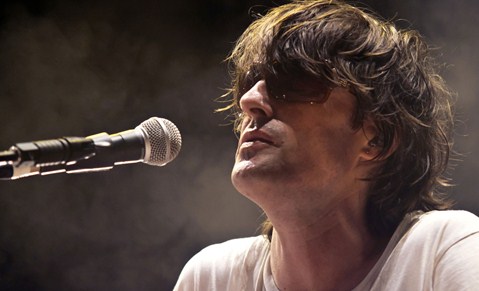
JPierceLike Bono, Jason Pierce is rarely seen onstage without sunglasses. Mercifully, that’s about as far as U2/Spiritualized comparisons go. Over seven albums spanning more than two decades, Pierce’s experiments with sound and pharmaceuticals have taken him from the platinum-selling highs of 1997’s Ladies And Gentlemen We Are Floating In Space to the gruelling lows of last year’s battle with a degenerative liver disease. Now fighting fit again, the 46-year-old meets GQ.com at Fergus Henderson’s restaurant St John in east London, wearing a baggy MC5 T-shirt, black jeans and, of course, a pair of reflective aviators. As we settle into a quiet corner, he removes his glasses to reveal glacial blue eyes and opens up about new album Sweet Heart Sweet Light, the treatment that saved his life and wanting to snuggle down with Iggy Pop…

GQ.com: Do you think people make too much of the drugs influence on your songwriting?
Jason Pierce: Yes. It’s funny, I read Keith Richards’autobiography and I don’t think it reads like someone doing drugs because the drugs he got were the finest in the world. When they weren’t available, he stopped. Very few people have that kind of safety net. It’s a different world. The other thing about drugs is that they’re everywhere. I know plumbers and window cleaners who do more drugs than anyone I know in the music industry. Sure, drugs can help with songwriting, but no more so than language or music. The most psychedelic record in the world is Buddy Holly’s “Slipping And Sliding”. It reminds me of taking LSD but the author couldn’t have been more removed from that world. When music tried to describe the inner workings of the mind it lost its way quite dreadfully. When the world was full of people who wanted to sound like the Rolling Stones and they were chewing acid, loads of great music came out, but when it became more introverted and tried to actually explain the trip it got awful. I met [One Flew Over The Cuckoo’s Nest author] Ken Kesey and we did shows with him and the Pranksters. He was really not very psychedelic. I knew him through Tom Wolfe’s book, The Electric Kool-Aid Acid Test, but when I met him he was hanging out with these “New Pranksters” who were into staring at crystals. It was just awful.

What’s the biggest misconception about Spiritualized?
I don’t know and I don’t really care! Reading your own press is dangerous. The good is usually better than the reality, and the bad is so bad.

What made you want to start writing music?
The records that I like the most are the ones where you’re the only audience. It’s just you and the record. Those records that seem to elevate you aren’t just foot-tapping pop music, they demand that you are listening and taking it in. I want to make records like that. We live in an age now where you can type “Neu” or “Patsy Cline” into a search engine and get the whole back catalogue: all the bootlegs and the live recordings and everything. That’s not the same as listening to the music or having that music become part of your life, where you only have to hear two notes and it takes you back to a certain time.

Which lyric are you proudest of writing?
I like a lot of them. They’ve all been laboured over. I quite like “Broken Heart” for its real, blatant simplicity. It’s not trying to be clever. Things like “Out Of Sight” and “I Think I’m In Love” have more obvious plays on words and language, but “Broken Heart” is so starkly simple.

Is the religious language you use just the language of rock’n’roll?
It comes from gospel, blues and even doo-wop. It’s a shortcut to explaining what you’re talking about. When I wrote “Walking With Jesus” people knew that I was dealing with issues of mortality and what it means to be human. You don’t have a conversation with Jesus about trivia.

Can you recommend a good book?
The last book I read was Knockemstiff by Donald Ray Pollock. It’s set in Ohio and it reminded me of Denis Johnson’s Jesus’ Son. It’s a book of shocking stories from the Midwest, but written with such an elegance that you can just appreciate it for that. Pollock is from the town of Knockemstiff himself – it’s a real place – and even though he’s writing about outcasts and retards, there’s still a sense that he’s one of those people. It’s an amazing book. I don’t read as much as I should but I think books have had an influence on me. “Ladies And Gentlemen We Are Floating In Space” is a quote from Sophie’s World  by Jostein Gaarder. It’s an introduction to philosophy but written like Alice In Wonderland.

What is it that attracts you to America?
Every part of it’s like a B-movie. Anywhere else on tour you’re just on motorways, but in America you’re in a movie. When you go to San Francisco, you already know your way around. I went to the book depository area in Dallas and it really is like a film set. You’ve seen it so many times that you could draw a picture of the layout. The thing about America is the whole country is like a juvenile: big, powerful and full of its own strength. The whole of its musical history is on record. That’s so rare.

What’s the best thing you can cook?
Cheese on toast is about the limit. It’s good cheese on toast though, just because I make it. Even cereal is better if you make it than if anyone else does. I think I’m at my happiest touring and there’s not much opportunity for cooking on the road. I went to Italy a few years ago and learned some of that style of cooking. It basically just involved chopping things really finely, which appealed to me in an OCD kind of way. I kind of got into that for a while, just smoking joints and chopping things up into miniscule bits.

What was your favourite record in your parent’s collection?
We didn’t have many records! We did have the Seekers who did “Morningtown Ride”, “Georgy Girl” and “The Carnival Is Over”. I don’t think they’re that far removed from Spiritualized, actually. We had Holst’s The Planets  suite as well. Maybe there’s something in that as well.

What’s your drink of choice?
I absolutely adore wine. Fortunately I can drink it again because my liver is properly cured. It’s amazing. Given how bad it was, I can’t believe it’s back to how it started. The treatment is incredible. In some cases it’s even cured cirrhosis, which used to be untreatable. It meant scarring beyond redemption, but even that now seems to be curable. Which is good news if you like drinking.

When were you last starstruck?
I get this sort of rictus smile whenever I meet anybody who’s a big part of my life. Iggy Pop probably the most. I grew up listening to Iggy and I’ve met him a few times now. Last time he gave me a hug and part of me just wanted to snuggle down forever. The other part of my head was saying: “Just hold on tight – don’t let go.” I didn’t sleep at all that night.

Are you a perfectionist?
No, because I’m not seeking the perfect sound. There isn’t a scale with all the great music at one end and all the bad music at the other end. The finest music in the world is so close to the most awful music. It might be a change of production, or a slightly different voice. You can hear it in adequate cover versions of songs that don’t have any magic. It might be a slight difference in the voice or just the placement of the snare drum. It’s such a fine line. Most of my job is just making sure that the needle is on the right side to satisfy me; that it’s always rock’n’roll and it has some kind of ragged glory that satisfies what I like about music. Things like “Freedom” and “Too Late” are a few slips away from being quite middle-of-the-road, or worse: white soul. I don’t have a bag of tricks. It just takes time to make sure that it’s all right.

Originally published by British GQ.

“The Clash had a message… so have we.”

On a breezy spring afternoon, Brian Fallon is holding court outside a scruffy café in central London. Over cigarettes and “awful” coffee, The Gaslight Anthem leader is setting out the game plan. “With this record we wanted to recapture some of our earlier stuff,” he says of forthcoming album Handwritten, out July 23, wistfully recalling the basements and barrooms of New Jersey where the band first cut their teeth. “We wanted to play fast and have people sing along because that’s what our community was about. It was about having a blast in a basement. What would it be like if that basement got 50 times bigger? How cool would that be?”

His bandmates, guitarist Alex Rosamilia, bassist Alex Levine and drummer Benny Horowitz, nod knowingly. They’ve already seen it happen once. At the beginning of 2008 Brian was earning more from construction work that he was from the band. When ‘The 59 Sound’ was released later that year by indie label Side One Dummy they hoped it might sell 100 copies. It did. Then it sold 249,900 more, including 65,000 in the UK. That whirlwind of success changed everything fast, and Brian admits there were times he forgot he was supposed to be having fun: “There was a period when it was tough. We were maybe taking ourselves too seriously and taking the press too seriously. It was taking the light out of the fact that I don’t have to go on a roof and pound in nails anymore. I’d say to myself: ‘I’m sorry you’re tired of answering Bruce Springsteen questions, but it’s a lot cooler than what you were doing before.’”

Those Springsteen questions were hard to shake off for a while, particularly after the Boss joined them for their Glastonbury set in 2009 and then invited Brian to duet with him during his own headlining slot. While the band appreciated his patronage, they’ve always been eager to step out of the shadow he casts across their home state. That ambition led them to sign with Mercury Records this year, but it wasn’t a decision they took lightly. “We didn’t know what was going to happen,” Brian explains. “How many times have you seen a band sign to a major label and the album doesn’t even come out? All we knew was that we’d better write a record that we’re happy with or else we’re in trouble. I don’t want to have 50,000 people singing my songs if I don’t like them. I’d rather be poor playing songs I love than filthy rich playing songs I hate.”

The band have never been shy about admitting that they’d love the chance to play to huge crowds, and this time round the record feels unashamedly built for stadium shows.  “We make no bones about that,” Brian nods. “I would love to play Wembley Arena or those big Foo Fighters-style shows. It’s gotta be so much fun. You’ve got to be conscious about it, though. Look at The Clash. They had a message. If hundreds and thousands and millions of people are listening to what you say, and you’re saying: “Hey man, you should get back to your records and the joy you found in music.” That’s a cool message.” Benny agrees with a grin: “It’s better than just saying “Here’s my cash”. We’re not singing about boats and ho’s.”

What the band are singing about on this record is the loss of romance and mystery in an era when all human knowledge is just a tap of the fingers away. Benny says his favourite ever Gaslight Anthem lyric is this one, from album closer ‘National Anthem’: “Now everybody lately is living up in space/Flying through transmissions on invisible airwaves/With everything discovered, just waiting to be known” As he points out: “The internet has completely changed what we can comprehend and the way we comprehend it, but it makes certain things feel artificial.”

Their no-frills authenticity defines them as a band, but it feels like a shame that Brian has felt the need to dial down some of his literary references in an attempt to broaden the band’s appeal. Naturally, he disagrees: “We didn’t want to make a record that’s above people’s heads. We wanted to make it in the language that we speak. Straight to the point, trim the fat. There’s no need to prove that we’ve read TS Eliot. Yeah, we’ve read it, and yeah, it’s cool, but we don’t need to prove that.”

Having felt that 2010’s ‘American Slang’ had been waylaid by their disparate personal lives, for this record the band took the decision to move to Nashville as a unit. They rented a house where they could work 24 hours-a-day and holed themselves up with legendary producer Brendan O’Brien, whose CV includes the likes of Springsteen and Neil Young. The result is that on tracks like ‘45’, ‘Keepsake’ and ‘Too Much Blood’ the band’s message comes backed by a full-throttle all-American rock sound that sits somewhere between Tom Petty’s ‘Full Moon Fever’ and Pearl Jam’s ‘Backspacer’.

The band have an unabashed love of a good pop hook, and on ‘Handwritten’ they aren’t afraid to be catchy. “Music doesn’t have to suck in order to be cool,” says Brian. “Don’t forget, Radiohead wrote some catchy songs. I’m not just talking about ‘Creep’, I’m talking about ‘Karma Police’ and ‘Fake Plastic Trees’. Those are catchy pop songs! It gets the point across. For instance, our song ‘Here Comes My Man’ is somewhere between ‘I’m Waiting For The Man’ by the Velvet Underground and ‘Single Ladies’ by Beyonce. I’m totally serious. Those two songs somehow mashed up in my brain. It’s the first time I’ve written from a girl’s point of view, and it’s basically Lou Reed meets “If you liked it then you should have put a ring on it.””

As Fallon knows, groups like Radiohead and The Clash have shown that it’s possible to tilt at being the biggest band in the world without compromising your song-writing, your experimentalism or your ideals. That’s the reason The Gaslight Anthem got together in the first place. Brian still remembers a mixtape a friend of his mother gave him when he was 12, filled with bands like Bauhaus, The Ramones and The Replacements. “I’ll never forget listening to that stuff on headphones. I remember thinking: “Did those bands know when they were writing that stuff that there would be kids who’d make those songs their lives?” The most important thing being said was not from a Congressman on television, it was a band from wherever saying it to you in your headphones. I always hoped, maybe presumptuously, that people would do that with our band.”

On ‘Handwritten’, The Gaslight Anthem’s atavistic message is one of nostalgia for the authenticity of the offline world. They want to remind people how much fun it can be to turn off their computers and experience something real. Brian grins as he spells it out: “We just want to get everybody in the room together, singing along and having a good time because in this age that doesn’t happen very often.”

Originally published in NME, 9 June 2012

Ben Drew’s Ill Manors

bdrewPlan B’s smooth transition from hoody-clad rapper to crisp-suited soul singer may have raised eyebrows but his directorial debut seems intent on grabbing the country by the throat. Made under his real name, Ben Drew, Ill Manors is both structurally inventive and bruisingly frank, following eight characters as their lives interweave in an inner-city cycle of drug-dealing, prostitution and poverty. Having grown up in east London’s Forest Gate where the film is set, Drew, who was sent to a pupil referral unit at 16, has watched these stories play out in real life. When GQ.com meet him in central London he’s wearing a hoody again – and, seemingly, the weight of the world on his shoulders. After flicking his Zippo to spark up a cigarette, he soon begins setting forth his views on the environment that shaped him, the films that influenced him and the style that inspires him.

GQ: You wrote Ill Manors in 2007. Did you make any changes to it after last year’s riots?
Ben Drew: No. The song “Ill Manors” and its video are a response to the riots, but we’d already shot the bulk of the film by September 2010. Really the riots were a response to the issues depicted in the film, so it’s the other way around. These issues have been around since I left school in 2000 and longer than that. People don’t believe that they exist, so they don’t try to change them. Unfortunately the people in charge of fixing these problems are politicians who don’t come from that world. I don’t think the film glamorises anything. The only fiction in this film is that all this stuff is happening at the same time, involving so many characters. That’s the only artistic licence.

What do you think of Kanye West and Jay-Z showing rioting in their video for “No Church In The Wild”?
The problem is when people do that is that it gives others an excuse to be cynical about why people like me are doing things, but I haven’t actually seen the video so I would in no way want to disrespect anybody or talk about their motives. They’re artists themselves so I would never speak for them. When it comes to film and music like that though, the only people who need to be worried are the well-off. It’s only their kids who are going to be influenced negatively by that. The kids that I’m talking about are living that life already. They’re not going to be influenced by Top Boy or Kidulthood to go out in the street and sell crack because they’re already doing it.

Why do you think people get drawn into that life?
They’re doing it because society tells them that they need to have the newest trainers and widescreen TVs and PS3s. In that respect we all have something in common, no matter what walk of life you come from. We’re all consumers: difference is, some people can afford it and some people can’t. There’s so much importance put on these things that the kids who can’t afford them will go and sell crack to be able to afford them. These little kids on the street are prepared to sell crack and ruin another kid’s life so that they can afford a pair of trainers. What made them think it was that important? TV, adverts, magazines and rich kids walking around wearing that stuff and looking down on the kids who can’t afford it and calling them tramps and chavs.

What’s the impact of dismissing people as “chavs”?
It’s a class war perpetuated by journalists. There are so many people walking around with opinions that aren’t their own. How can you judge people that you never come into contact with? You can’t. It’s got so bad now that when you do come in contact with someone of a different class you act a certain way towards them because this war has been created and perpetuated. We’re all falling for it. I had to find a way of dealing with it because I used to get picked on and robbed at school. I was minority white in a multicultural school and I was a target. Not because the kids were racist: that’s just what bullies do. I had to ask the question as to why these kids thought it was OK to pick on people. Then you see where they live and see that they ain’t got s***. They’re just doing what they’ve got to do to get the things that all of us put so much importance on. If you look at life that way it means you ain’t got to fear them, or hate them, or put it down to colour. You put it down to money. The most vile things that we as human beings do to each other is for money. Governments go into other countries and bomb them for oil, power and money. Girls get prostituted and sex-trafficked for money. It’s all to do with class, and nothing to do with religion or race. It all boils down to money.

Could you ever see yourself becoming an MP?
I’m not going to try and be a politician. It would compromise everything that I stand for. These guys get into it with the best intentions and then when they get into power they see the mess they have to deal with. We can’t change the system. As people we just need to be aware of it and make it work for us. Each one of us can teach one other person something that they’re lacking. It’s about taking the time to engage with someone and having patience. These kids need to be able to call someone at two o’clock in the morning and tell them that they’re about to do something really stupid. They need someone to talk to. That goes beyond social work. I was lucky enough to have social workers like that in my life.

Which other films and directors were you influenced by?
I’d say Pusher by Nicolas Winding Refn. It’s not a beautiful film, by any means. It’s shot handheld, almost documentary-style, but the story is strong and the characters are really interesting. I took a leaf out of his book. I also looked at how Shane Meadows works. He’ll write a treatment and then cast the film. Then he’ll get the actors to improv to come up with the dialogue. We did that with bits and pieces. Sometimes we stuck to the script, but sometimes when it was wooden and it felt like they were “acting” I threw the script away and said: “Remember the beats, remember when you’re supposed to walk into the room, remember when you’re supposed to get offended by this person.” It made it difficult to cut and edit the film, but that’s what produced the magic.

Can you recommend a good book?
The last book I read was Premiership Psycho by CM Taylor. It’s about a Premiership footballer who’s a serial killer. He calls himself a “Customer Service Vigilante”. He’s completely obsessed with labels and material things and he hates people that work within customer service who don’t respect the fact that he’s spending money. It’s a black comedy, but for me it says a lot about the society that we live in. It’s hilarious.

What’s your style rule?
The cut is so important, but it doesn’t really matter about the name to me. I really like Armani suits but it’s not because they’ve got Armani written on them: I love the cut of their suits and I think they drop well on me. I get a lot of my denim from Topman. It’s nice, it’s affordable – not that I have to worry about things being affordable – again, I just like the cut. I’d buy jeans from Mr Byrite if I liked the cut. I’ve bought stuff from Primark before. My tip is to know how clothes hang on you and what suits you. If you’re short and you’ve got a round head there are certain things that won’t work for you. If you’re tall and slim and you’ve got a long face there are certain things that will.

What’s the best piece of advice you’ve ever been given?
Always take insults in the same breath as praise. If someone tells you you’re a piece of shit, you’re not. If someone says you’re the best thing since sliced bread, don’t believe that either. You’re not Jesus or Mother Theresa, but you’re all right. I think that’s how you keep the balance and keep your feet on the ground.

Originally published by British GQ.

Why Plan B should write Britain’s alternative national anthem

News reaches us from across the Atlantic that the American people have taken a vote and chosen none other than Bruce Springsteen as the man they’d most like to compose a new national anthem for their star-spangled country, beating the likes of Dolly Parton, Bob Dylan, Stevie Wonder and Jay-Z.

We can all agree that’s a fine result for democracy from a country with a frankly patchy recent record, and let’s not let the fact that this is an entirely spurious Vanity Fair pop quiz result spoil our fun. It seems apposite at a time when Union Jack bunting is clogging the country’s arteries to ask who the British Boss is who could be drafted in to pen a replacement for ‘God Save The Queen’?

Continue reading at NME.

Yes we Cannes: How to party with Bill Murray

The penthouse suite at the Hotel Martinez in Cannes was once the most expensive in the world. At nearly £24,000 per night, nowadays it’s considered merely the fourth costliest on earth. So what’s the view like from the opulence of the seventh floor? Probably of your yacht, so long as Roman’s isn’t in the way. Then, if you look west on a clear day, down the curving stretch of the beachfront known as la Croisette, the landmark at the far end is the squat glass pile of the Palais des Festivals. That’s the business end of Cannes, where for the two weeks of the festival hustlers converge at the Marché du Film to hawk all manner of art house and erotica, densely plotted thrillers and cheesy B-movies, most of which will probably never see the dark of your local cinema.

It’s also where the films, including the press screenings and the red carpet premieres, are shown. If you’re travelling from the Martinez to a gala opening then that means a short trip as part of a convoy of official cars. Alternatively, if you’re still partying as the sun comes up, you might glimpse bleary eyed journalists making the kilometre shuffle, dragging theirs hangovers behind them, to ensure that they’re at the dawn press screening in good enough time that they don’t have to wrestle for a seat with the guy from the Kazakh Film Federation.

Look closer and you’ll see the run of luxury hotels down the seafront: the Majestic, the Marriott and the Carlton, which this year has been taken over by Sacha Baron Cohen’s The Dictator  and made to look like a gaudy totalitarian palace. The entire seafront stretch is adorned with movie posters of all shapes and sizes, mostly for projects with distant release dates and dubious premises. One of the most prominent billboards this year is not for a film but rather a character: “Tom Cruise as Jack Reacher”. The next is for the newly postponed, backlash-ready GI Joe: Retaliation. Doubtless future Palme d’Or contenders both.

Opposite the hotels is the beach itself, which inevitably has its own cinema. It appears to mainly screen old Bond movies, which seems fitting in a town where men are rarely out of tuxedos. There’s then a string of temporary beachfront bars like Chivas House which host the various exclusive after-parties. These will be heaving until the early hours, so for a quiet drink its better to head a couple of streets back into the old town to places like Silencio, David Lynch’s Parisian nightclub which has taken up residence at the summit of Cannes’ Five Hotel.

Look straight down from the terrace, like P Diddy did from his room a couple of days ago, and you’ll be able to wave to the crowds of autograph-hunters and amateur paparazzi who cluster around the Martinez for the duration of the festival. They hang around the hotel from around 9am to ensure a spot close to the barriers for showtime: the pre-premiere moment when celebrities make the short walk from the hotel doors to their waiting cars, and the iPhones and SLRs click away in harmony. In such a frenzied atmosphere, the potential for mayhem is high. One afternoon I saw a beautiful young Asian woman in a short yellow dress walk shyly through the front door of the Martinez, then launch a big wave at the crowds. This triggered a wall of camera flashes and cries of “Freida!” before someone forlornly pointed out that she was not, in fact, Freida Pinto. Whoever she was, she got her Cannes moment.

Whatever the views from the roof are like, the ground-floor bar is unparalleled for people-watching. While skimming the trade dailies for newly inked deals, you can watch the stars leaving for the red carpet, the equally glamorous Harvey Weinstein-presided parties by the pool and the informal meetings happening over drinks. Hustlers in every direction. Everyone in Cannes is hustling for something. Producers take a year’s worth of meeting in two weeks and young actors with light in their eyes brush shoulders with older rivals who were major players once upon a time.

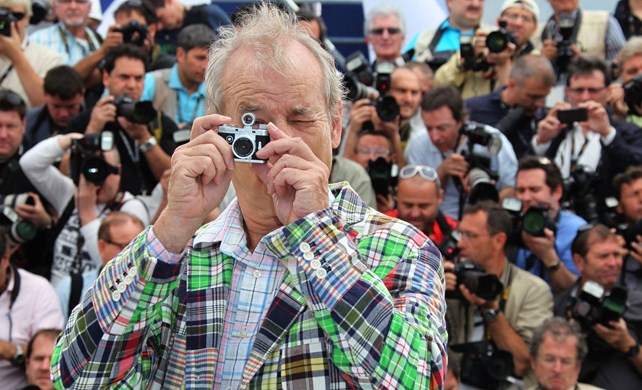
kevinegperry-billmurrayThe former stars watch the current crop glide past on the crest of their waves, temporarily invincible. Eva Longoria has at least two separate entourages, one security, the other simply to deal with the train of her dress. Lana Del Rey takes the time to work the barriers outside the hotel then can’t find her car in the queue. The crowds just keep cheering her as she goes from door to door. Freida Pinto arrives. It’s really her this time, and the crowds whoop it up again. Back inside, Bill Murray is delighting in subverting the entrenched celebrity code by approaching and deadpan-charming everyone he sees. He joins us for a drink a couple of nights running, telling us he’s in town to “cause mischief”. He’s succeeding.

Cannes is celebrity in the raw. For the crowds at the barriers there is the coquettish promise of proximity to the rich and famous even as the distance between fans and stars is reinforced with metal barriers, blacked-out cars and burly security. Inside the barriers, the deals that make celebrity happen are signed. It’s a hustler’s paradise and the views are spectacular.

Originally published by British GQ.

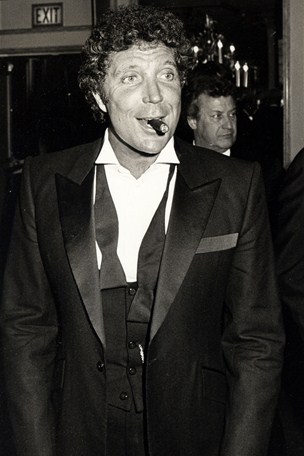
Tom Jones on Sinatra’s advice, Chuck Berry’s lyrics and the style of Elvis

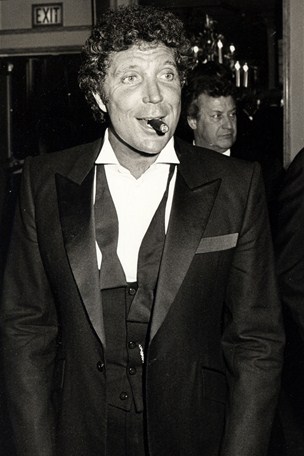
TomJones“My favourite line on the album is from Leonard Cohen’s ‘Tower Of Song'” says Tom Jones with a knowing chuckle. “‘My friends are gone / and my hair is grey’ That rang a bell as soon as I heard it.” Well, Mr Jones, at 71 it’s not unusual. Having removed his ill-advised dye, his hair is now closer to salt-white and the friends that are departed – Elvis Presley, Frank Sinatra, Dean Martin – still pepper his conversation. Jones’s life-story is the outlandish tale of a young lad from Pontypridd in the Welsh valleys whose booming voice took him all the way to the Rat Pack’s Las Vegas turf. Now he’s not only a judge on the BBC’s The Voice but also releasing his 38th album, Spirit In The Room. For this latest venture he’s recruited the drummer from hip LA artrockers Warpaint and is covering Tom Waits. “You’ve got to do it in a cheeky way,” he explains of Waits’ song “Bad As Me”. “You don’t want to make it sound blasphemous when you’re singing about the ‘mother superior in only a bra’.” We caught up with the full-throated crooner at the Charlotte Street Hotel in London’s Bloomsbury to discuss the advice Sinatra gave him, the importance of being able to tie a bow tie and why he’s never had to cook a single meal in his life.

GQ.com: Which singers do you consider particularly stylish?
Tom Jones: Dean Martin always dressed very well but then he was a good looking fella with a good physique so he could wear anything. I remember talking to him after he came over on the Queen Mary because I’d never been on a big ship. He said: “The only trouble is the captain invites you to sit at the top table and you’ve got to wear the bloody tuxedo! I wear a tuxedo onstage I don’t want to be wearing it out for dinner. You’ve got to look like Cary Grant all the time!” Dean was always very stylish, as was Sammy Davis. Frank Sinatra was always wearing a tuxedo but I thought he was quite conventional.

What about Elvis?
Elvis was always over the top. It’s funny that in those days people who wanted to look like Elvis would wear leather jackets and jeans, because that’s what he wore in his movies. In real life, Elvis never wore denim. He thought they were work clothes. When he had to wear them, when he was driving a truck, he would do but he always loved the way black entertainers dressed. He styled himself on them, because he wanted to be flamboyant. That’s why he had that gold lamé suit! He designed his jumpsuits himself. He always said, “If you’re going to be a star, you should look like one.”

Did that influence your own look?
I was a teddy boy in the Fifties, so when I first started wearing long trousers they were tight. In the Sixties it stayed like that. The jackets got shorter, the shoes changed from beetle-crushers to winklepickers… but the trousers stayed tight. I think the first time I ever wore a tuxedo was when I played at the Talk Of The Town in 1967, because it was a nightclub and that was the thing to do.

Can you tie your own bow tie?
I had to learn to do that, especially when I had my own TV show in the late Sixties. I used to [perform] a concert slot so I wanted to get that tie off. You don’t want to be unclipping a fake bow tie. You still see people do it now – they unclip it and they’ve got the bloody whole bow hanging on one side! I had to practise. I remember doing it over and over again in the makeup room. Once you see a real bow tie tied, it’s definitely got a flair to it.

Where’s the strangest place you’ve ever heard your music played?
It’s always good to hear it at festivals. When you hear “Delilah” coming over the airwaves it’s such an “up” tune and it’s great to see people’s reactions to it. They sing “Delilah” at rugby matches as well, of course! That’s always a kick.

What’s the biggest misconception about you?
I’m not a bloody coat-rack for underwear! You don’t have to throw them when you come and see me. Have a listen first. I think the image sometimes overshadowed the talent. I was partly to blame for that, of course. [Roguish smile] You can’t record a song like “Sex Bomb” and then complain that people see you in that way. The biggest misconception about me is that my audience is 90 per cent female. I think the truth is closer to 50-50.

Has The Voice meant that you’re being recognised by a new generation?
Yes, there were some kids who wanted a photo when I flew in from LA last week. I know that when we were talking about putting the judges together they wanted a cross-section of people. They’ve got me there because I’ve been around so long, but it’s nice to know that the kids are taking notice not just to Jessie J, Will.I.Am and Danny O’Donoghue. That’s nice. That’s flattering.

Did you have any doubts about getting involved?
This is the first time I’ve ever been involved in something that’s not just about me. Over my career, all the decisions I’ve had to make about song choices and producers were all about my next record. Now I’m trying to pass that onto other people. That’s new – you’re throwing yourself out there. When I was watching the blind audition shows back, I noticed that there’s a girl on show three who’s singing great and none of us turned around! The viewing audience must have thought there was something wrong with us. The thing is, at first they were calling me “trigger happy” because as soon as someone started singing I’d be hitting the button. The producers told us we had to slow down because we had a lot of people to listen to and we could only choose 10 people. You can’t explain all that to the contestants or to the viewers!

What’s the best advice you’ve ever been given?
Frank Sinatra said to me: “You don’t have to push the shit out of every song you sing, you know. There’s light and shade. Preserve your voice.” At the time I said, “I know what I’m doing” but the longer I kept going I realised that Frank was right. You don’t have to bite the head off the microphone on every song. That’s youth, I suppose. [Actually], the first piece of good advice I was given was when I was working in a paper mill. I got married when I was 16 so I had to do shift-work to make ends meet.I was working on this machine and this old fella – I say old fella, he was probably younger than I am now – was working on the next one. He said “The word round here is that you can sing. Why don’t you go for it?” I replied that it would happen eventually and somebody was bound to notice me. He said, “Don’t hang about! Time will run, believe me. You can always do this if you fail, but give it a go for Christ’s sake!” That made me think.

What’s the best way to impress a woman?
To talk to her and not be moody. It’s important not to be too moody.

What’s your drink of choice?
Champagne. Dom Pérignon, to be precise. I used to be a beer drinker, so real ale still stands high on my list. I love going into a pub and seeing the pump in action. That’s a close second…

What’s the best thing you can cook?
Oh God, I can’t cook. It’s coming from that bloody working class background. My father said, “Don’t go in the kitchen.” I used to help my mother when I was a kid and I love food. I love going into restaurants but if I had to cook for myself… Christ. I suppose I could grill a steak or something. I could boil an egg. I’ve never had to. [Pause] I can make a sandwich.

Can you recommend a good book?
I love British history. I liked The Rise and Fall of the British Empire by Lawrence James and Victoria’s Wars by Saul David. Then again, a book of jokes is pretty good too.

How many watches do you own?
Oh, Christ. I tried to count them but I haven’t got around to them all yet. I have a weakness for watches. I have to stop myself buying more. Today I’m wearing a Santos by Cartier.

Which singers have the greatest voices of all time?
Jerry Lee Lewis, Elvis Presley, Fats Domino, Chuck Berry and Gene Vincent would be my five. They each had something unique at the time. Chuck Berry’s such a great lyricist. I know Chuck and the thing about him is that he doesn’t know what’s so great about them. He’s that kind of guy. In old songs they used to repeat lines a lot, but with Chuck Berry every note was a new word. There’s a song called “Let It Rock” about a guy working on a railroad, and in three verses he paints such a picture. [sings low] “Later in the evening when the sun is sinking low / All day I been waiting for the whistle to blow / Sitting in a teepee built right on the tracks / Rolling them bones until the foreman comes back / Pick up you belongings boys and scatter about / We’ve got an off-schedule train comin’ two miles out.”. I mean, Jesus Christ! You can see it! Tremendous!

Originally published by British GQ.

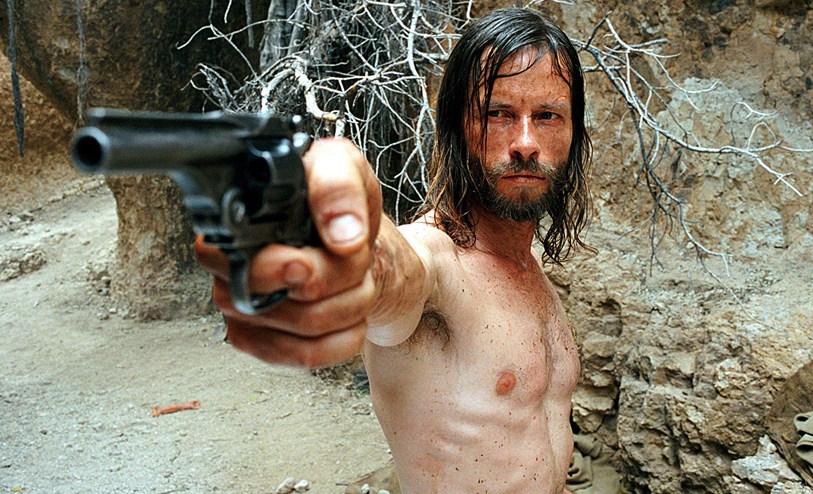
Guy Pearce

guypearce“When you’re promoting a film it’s really interesting trying to gauge what people think about it,” says Guy Pearce with a grin. “It’s terrible if the film’s crap because you’re just sitting there going: “Christ!”” Fortunately for Pearce and for us, his new film Lockout is a lot of fun – a knockabout romp through a space prison with Pearce as the swaggering action hero who barely notices a punch to the face. As Pearce admits (and anyone who’s sat through Adam Sandler’s Bedtime Stories would agree), he’s made the odd cinematic mistake but when he’s good, he’s extraordinary. From LA Confidential to Memento and The Proposition, not to mention cameos in The Hurt Locker and The Road, Pearce has racked up appearances in unmissable films without ever quite assuming the arrogance of superstardom. Indeed, when we meet him at the Corinthia Hotel in central London, a short walk from the Thames, he couldn’t be further from the macho archetype he’s just played onscreen. Wearing thick-rimmed Dita’s New Yorker glasses and sinking back in his chair with legs crossed, the 44-year-old Australian shares his excitement about being able to inhabit the imagined worlds of Luc Besson and Ridley Scott, the fascinating dynamic created by John Hillcoat and Nick Cave and why he’d rather go cross-eyed than watch a film in 3D.

GQ: How was it playing an unreconstructed, chain-smoking, wise-cracking antihero?
Guy Pearce: It was great fun, but I wanted to make sure that there was a three-dimensional nature to the character. There are a couple of serious moments in the film where it’s important to see that he actually is a person with feelings, even if he spends most of his time trying to repress them. I say in the film something like, “Oh well, people die all the time.” He tries to bury his emotions. I think a lot of actors take on fun roles and then they’re lazy or flippant with them. I just can’t do that.

Was it a challenge to play such a physical role straight after the louche bounder you played inMildred Pierce?
Yeah – they were totally separate! I met the directors ofLockout when I was doing Mildred Pierce and they were nervous because I was so skinny. I didn’t really have the look that they wanted, but I assured them I could sort that out at the gym.

After seeing your sex scenes in Mildred Pierce,  will you see Titanic 3D or have you seen quite enough of Kate Winslet naked?
Never enough of Kate Winslet naked, but certainly enough ofTitanic! [Laughs] I don’t enjoy movies in 3D. I find I can’t engage with the story as well. I saw Hugo in 3D and I ended up taking the glasses off and watching it slightly cross-eyed, because at least I felt the effects weren’t hindering me. I probably shouldn’t be saying that because Prometheus is in 3D! I had no control over that.

When you were approached about Prometheus  did you realise that the majority of your role would become a YouTube TED Talk?
It was great! To know that we were doing it purely for the back-story of the film was really interesting. It was kind of hard work because it was a fairly long speech that I had to give. It was a lot to learn, longer than the finished product which has been released. It’s almost disappointing, because you have a little moment of: “What? I learned so much and you cut it out!”

Your next film Lawless reunites you with The Proposition and The Road director John Hillcoat…
John’s such a lovely director to work with. He’s a wonderful human being and a really artistic guy. He’s very generous and extremely honest about what he’s capable of and what he isn’t. I’ve seen a rough cut of Lawless already and it’s fabulous. Nick Cave adapted the book, so again it has the real flavour that those two create. Their dynamic is fascinating.

Were you already a Nick Cave fan before you made The Proposition?
I’m a big fan of his music and The Proposition is my favourite of all the films I’ve done. It was intense but it was enjoyable as well. You can’t help but feel moved by spending so long working in that Aboriginal landscape in such a spiritual part of the world. The heat in that remote desert just made the whole thing really weird and unusual.

Originally published in British GQ.

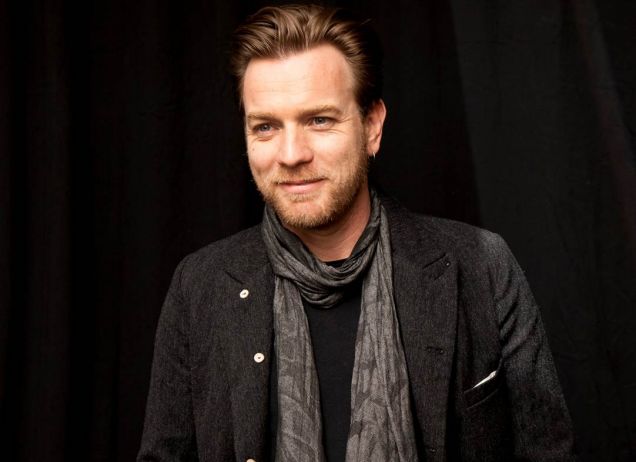
Ewan McGregor

ewanmcgregorIn a suite at London’s Claridge’s Hotel, Ewan McGregor is pulling a face of utter bewilderment as he ponders the relentless march of CGI. The man who once had to battle to keep a straight face while conversing with Jar Jar Binks gestures towards the poster for his rather more sedate new film Salmon Fishing In The Yemen. “I mean, what I don’t understand,” he sighs, “is why on earth they’ve decided to turn my trousers blue.” Back from filming the Lasse Hallström-directed rom-com on location in Morocco and Scotland, here he shares the acting advice he was given by the screenwriter Dennis Potter, his sartorial lessons from Neil Barrett and what cheating death on a motorbike taught him.

Watch at GQ.

The New Yorker’s Susan Orlean on crafting a story

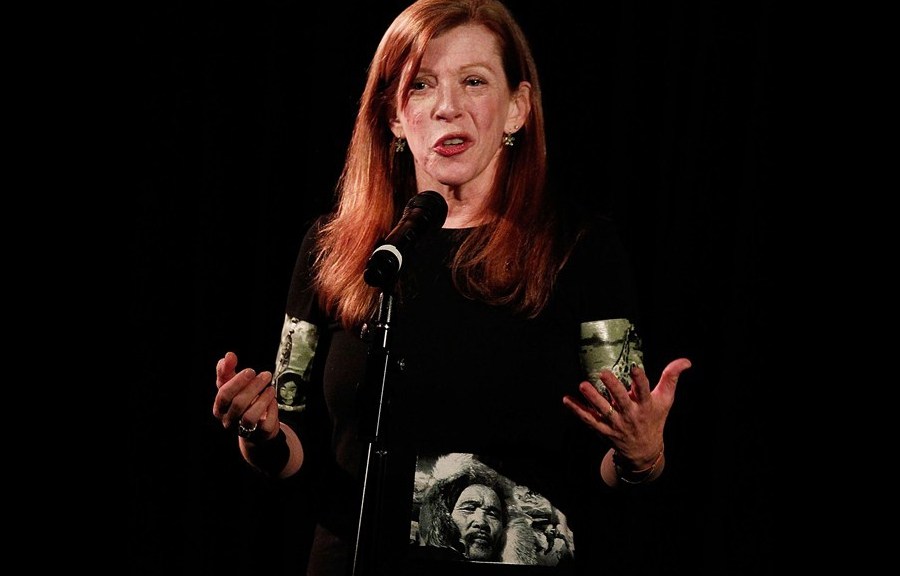
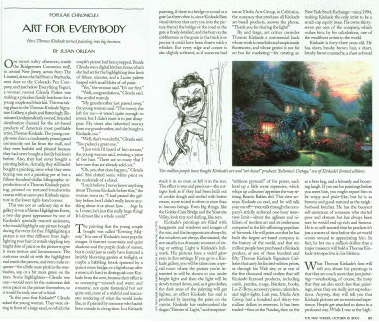
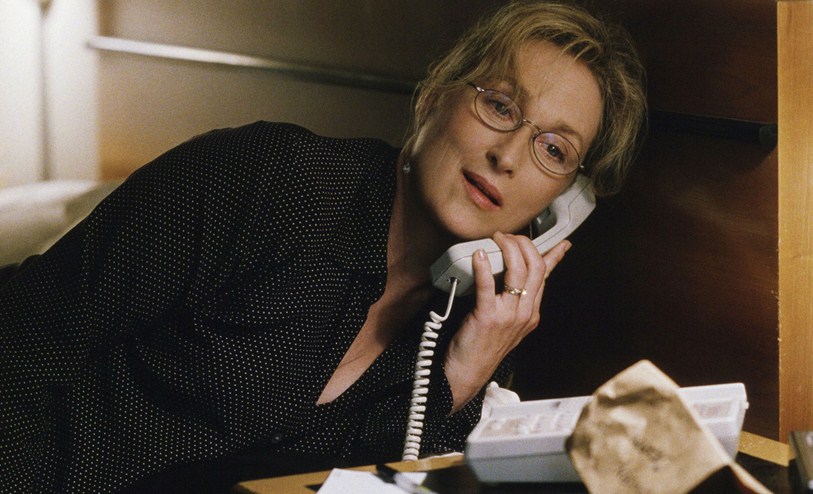
susanorlean“I guess I’m an amateur anthropologist,” says Susan Orlean, musing on her two decades as a staff writer for the New Yorker. “It’s part of my nature to poke around in things.” Since joining in 1992 after writing for Rolling Stone, Vogue and the Boston Globe, Orlean has earned her reputation as one of the world’s great exponents of literary nonfiction by taking curious personal stories and mining them for universal truths. She recently published ‘Rin Tin Tin’, the tale of the eponymous canine movie star through which she explores, among other things, 20th-century celebrity culture. Her 1998 bestseller ‘The Orchid Thief’ focused on obsessive flower collectors and inspired Charlie Kaufman’s film ‘Adaptation’ in which a character called “Charlie Kaufman” is driven mad trying to adapt a brilliant book written by a character named “Susan Orlean”. Here, the real-life Orlean talks to me about what she made of Meryl Streep’s take on her, the book that changed her life and how holding court in a bar can teach you the secrets of a compelling story.

I notice you try not to embellish scenes which you’re describing but at which you weren’t present? ‘Rin Tin Tin’ was researched, rather than your usual experiential writing. Was that a challenge?

That was a huge challenge. I have always found the idea of recreating scenes that you weren’t present at to be borderline unethical. It just doesn’t really appeal to me. I don’t feel that I need to write that way. I also feel that readers are very generous, and I don’t think that they’re disturbed by the idea that you confess to your limitations as a reporter. A certain amount of this simply can’t be known, or would require so much reporting that it would be a huge waste of time to establish one small fact. In this case I was using “inductive reasoning” to assume that at this time when dogs were popular in film there would have been an upswelling of interest in the idea that you could make a good living by having your dog in a movie and there would have almost certainly been other people treading the same sidewalk. I guess it just comes down to trusting the reader, and believing that the reader can trust me when I say that it’s a pretty good bet that that was happening, and move on from there as opposed to either embellishing when I don’t really have the information or skipping it altogether when I feel that I can still talk about it. It’s the way that you would talk about it to a friend, if you were saying: “Oh, I’ve been reading all about this dog Rin Tin Tin and there were probably other dogs trying to get into movies at the time, but he’s the one that made it.” It’s a very natural way that we communicate with each other.

Are you strict with yourself about not “smoothing the edges” of a story?

I am strict, and of course I feel like that’s the correct posture to take! I also think it’s the most unambiguous one. I’m going to tell you what I know to be true, and I’m going to admit when there’s information that I can’t get. I wouldn’t tell my friends a story filled with things that aren’t true. Why would you? You would tell them about an experience you’ve had or something you’ve learned that was interesting, and when you came to parts you couldn’t answer you would simply acknowledge that. That to me feels natural and I don’t believe in smoothing edges and writing as if you knew something, and I don’t like reading stories that involve recreated scenes that I know the person couldn’t have observed. I think they ring false.

I agree, I find it jarring.

If it’s fictional then you accept that it’s an imagined version, and I’m perfectly comfortable with that and read fiction and see movies that are built on imagined encounters, but nonfiction is not fiction. As a writer you have to have the confidence to be transparent, and I think that includes acknowledging when it’s not possible to know something. I think that then readers trust you because they know that what you’re telling them is real.

Recently a British writer named Johann Hari lost his job after he embellished his profile pieces.

Oh really? Ugh. I think readers have a gut reaction to things that feel fake. I just recoil from them, and question how people could know these things. It just doesn’t make any sense. We’ve had instances here of people spectacularly and flamboyantly faking what they were writing and mostly in memoir, which is a little bit different to reporting. I think as a reporter you’re one step even further removed from fiction. You’ve basically said to people that you’re taking an objective and honest snapshot of the world and showing them what’s really there. With a memoir already you know that you’re seeing it through the lens of memory which is a somewhat unreliable narrator to begin with.

Are you a good storyteller in person? Do you think that those are shared skills: writing and being able to tell a good story in a bar?

Oh, what a great question! The answer is, and I’m embarrassed to blow my own horn, I actually do think I’m a very good storyteller and I feel like the skills are absolutely intertwined. Not every writer enjoys the process of oral storytelling, they don’t necessarily like being the centre of attention. They may be shy or introverted, but I think that the art of storytelling is knowing both what a story is and what story might appeal to the greatest number of people, and then knowing the art of deduction of playing out a story, the timing of it. The way you do a striptease with information to keep people engaged. It’s about an audience and I think whether you’re in a bar telling a story or telling a story on the page, it’s about engaging an audience and luring them along and keeping them interested and tantalized, so I think they’re very much connected and I secretly think I’m a very good storyteller in a bar, especially after several drinks.

What’s your role as a character in your stories?

It’s related to what we were just talking about. One thing I’m very comfortable with is the inherent subjectivity of literary journalism. All journalism has some amount of subjectivity, but the kind of writing that I do is honest and factual, but I’m very clear about the fact that it is a story I’m telling you, limited by my vision of the story, my abilities as a reporter and frankly coloured by what I have come to feel is important, what I want to talk to you about. Sometimes my presence in the story is just to be the narrator taking you from one place to another, but sometimes, particularly in books, I feel like I want to reveal to you why I was drawn to the story. It’s not like writing a political biography, that there’s an acknowledged need for it, or stories that are understood to be significant. Many times I’m writing about something that I feel is oblique enough that I want to tell you why I thought it was important. I want to share my surprise about how I came to the story. I don’t really want to be a character, but I want you to understand going into it what drew me in. Sometimes it becomes part of explaining how I moved from one place to another in the reporting. It becomes a natural way of saying that how I got from point A to point B involved me learning this, that or the other. Just the way that someone telling you a story in a bar is very present and you’re very aware of them. Even if the story is not about them, it’s about them telling you the story.

Is there a pattern to what catches your eye and draws you in, in terms of finding stories?

I’m scouring newspapers and I think it’s part of my nature to simply be poking around and listening and reading and actually sometimes enjoying reading things that I’m not normally interested in or that aren’t part of my specific set of tastes and curiosities. I’m always thinking: “Huh, I wonder what that is like?” When an idea gets stuck and I find myself returning to it, or having the curiosity that’s very natural: “Gee, that’s interesting. I wonder what that’s about?” It’s such a pure response of my own curiosity that I don’t then think: “Gee, I wonder if this will be a popular story?” I tend to just get excited and the next thing I know I really want to write this story and I’ll simply make people interested in it. I won’t say it’s narcissistic, but I don’t focus group my ideas in any way. If I’m excited about it then I just feel sure that it’s exciting.

Do you ever then lose interest once you’ve started?

It does happen, but less often than you’d think. It may be because I’m so picky. I hear stories and think they’re kind of interesting but often they feel too narrow. The ones that really stick I tend to be devoted to. To be honest, I don’t write a million stories. I’m not looking for twenty good ideas, which would mean a lot of false starts. I can wait for that idea that feels genuinely interesting. It’s a very fortunate position to be in because I’m not trying to find a million ideas.

How do you write a good opening? How do you convince someone to read something if the subject itself isn’t going to convince them?

You just hit the nail on the head. Very often I’m swimming upstream. I’m starting with an idea that initially many people would react to by saying: “I’m not interested. Why would I ever read this?” That’s why I feel like the lede is so important. You’re a salesman, and at that moment when someone walks into the showroom you’ve got to immediately capture and keep them there. You have to show them why this thing they didn’t want to buy is in fact something they can’t live without. Where that lede comes from can be a whole lot of places. I always start writing with my lede, and I don’t feel that I can write a story and then come back and do the lede later. I feel it just sets the tone in such a powerful way that I can’t imagine going back later and sort of pasting a lede on. One really liberating thing for me was coming to the conclusion that a lede did not have to be a miniature encapsulation of the story. It could be a tiny sliver that was just sexy enough to draw you in, and then I’m going to tell you what the story’s really about. Sometimes I think it just has to be mysterious and intriguing enough that if you half-read the sentence idly you’ll think: “I have to read the rest of this.” A lot of times I’m embedding a joke or a twist or something odd in that first sentence, just so you think: “I’ve got to read the rest of this! What is this about?” It’s okay to be a little bit baffling. To go back to the bar that has become our metaphor, it’s like your opening line when you meet someone, and having it be sort of intriguing and curious and arresting. It doesn’t have to be: “Hi, my name is Susan.” That’s boring. That’s true, and it may be useful to know, but it’s not a very interesting way to begin a conversation. It’s a lot more about attention in that first sentence, and I feel like a lot of times it’s better not to tell people what the story’s about for a little while. Just get them interested and tease them with ideas that become fascinating. I feel like writing is very transactional. I say to my students: “You have to write every sentence.” There’s no moment in a story when you can get lazy. Every single sentence is selling the story. I don’t mean that to sound commercial, I mean it just in the same way that in the bar the minute your story gets boring people are going to drift off, and go and listen to someone else tell a story, or get another drink, or leave. I feel like every sentence is part of this process of saying: “Listen! Listen! Listen!” Ledes are very difficult, and a lot of times I’ll go for a long time without thinking of the lede. Believe me, the lede for Rin Tin Tin took me so long I don’t even want to think about it. The lede for a book has an enormous weight on it. I spend a lot of time waiting and thinking and then trying not to think, waiting for inspiration. Just to get the gears turning I’ll read ledes of a ton of different pieces, both old pieces of mine and those by people I really admire.

Do you have a stock of favourite writers’ books that you always go back to?

Oh yeah, and they’re all dog-eared from me flipping through them. Very often people come to stories from very unlikely directions, and it’s good to remind yourself that there are many ways to skin a cat. If it’s not working the way you think you should start the story then maybe throw that all out and come at it from a different way that feels fresh and different.

Who are those writers?

I have a stack of books on my desk that I go back to all the time. A couple of Joan Didion books, a couple of John McPhee books, a couple of collections of narrative journalism that I think are really good. They have an array of writers who I admire. One’s called Literary Journalism, which has a bunch of very good pieces. I keep AJ Liebling and Joseph Mitchell sitting there. Calvin Trillin. This is my stack, and they’re all pretty different writers, and they can all help me when I’m dry and I can’t think of anything.

Is it just as hard to close an article as to open it?

I think ends are easier because while you want it to be very satisfying, and a good way to bring it all to a close, I don’t think it has that same burden of getting people engaged. It’s a little less difficult, but I still think they’re pretty tricky. The best lesson for me was that I used to spend all this time writing these endings, and go to great lengths to work them out, and be very proud that I’d made them work, and I’d turn in my stories and my editor would say: “I really liked the piece, and I just cut off the last paragraph.” I was horrified! “What are you talking about?” He made the point that a lot of times you’ve already ended and then you do yet another ending. It’s okay to end in a less valedictory fashion. You don’t have to have the full orchestra blaring at the end. You can end with a slightly off-kilter tone. It was a great lesson for me, even though I was shocked by it at first, but it taught me that sometimes you’ve already ended and you’re just adding a little bit too much at the end. People are quite good at filling in that final note in their own mind.

artforeverybodyWhat is it that attracts you to write about topics that are popular but not critically acclaimed, like the painter Thomas Kinkade?

I’ve always had a kind of perverse curiosity about anything in culture that has become enormously popular and successful and I don’t know why. Frequently it’s something that I don’t like, or that I don’t consider especially admirable, and yet it had managed to become enormously popular. I’m very curious about populism in every way. What is it that connects with so many people? Thomas Kinkade was a perfect example of that, because when I first saw the paintings I thought: “These are absolutely horrible! I can’t believe they’re so popular. What’s the DNA of something that has communicated with so many people?” It absolutely fascinates me. In fact, I think I’m better at looking at these things when I don’t have an emotional connection to the content, because then I’m really looking at it from the distance of: “Explain to me how this connects.” Why and how did this become embraced? How did this become something that so many people care about? Especially if I don’t personally like it. I also think that we need to spend more time thinking about that. It’s very easy to be elitist and then miss the big picture. Thomas Kinkade is not a dumb guy, and he made some very salient points about modern art and how a lot of modern art simply has no meaning to many people, except for art critics, and that’s a real question to ask. What does that mean then? What’s the meaning of art if nobody takes any pleasure out of it apart from a group of people who’ve designated themselves as tastemakers? At the same time, not everything is valuable because it’s popular, but I think there’s a great story that you can tell about culture through those things that become embraced by great numbers of people. There’s a mechanism to it as well. It’s not purely organic, it’s marketed and it’s meant to be popular. It’s quite different from a viral video where something a guy made on his flip-camera is suddenly and unexpectedly embraced by millions of people. This is something that involved strategic decisions to make something popular, and I find writing about that very interesting. I also think it’s a real challenge for me intellectually to try to write objectively about something that personally is not to my taste. Thomas Kinkade was really a rewarding story, because he was not a fool. He asked questions which are legitimate about what popularity means, and what is art? If something makes people happy, how can you say that it’s not good? They’re all very good questions to ask, especially in an era where art in many cases has become so distanced from most people. They just cannot understand how it can be valued the way it is valued. I love those stories. I loved writing about music when I was at Rolling Stone. I stopped writing about the music I liked because I preferred just listening to it, so I then became very interested in groups who became hugely popular and how that came about and why, and for that matter what it was like for those musicians in those bands. I guess I’m an amateur anthropologist. What I look for are things that define culture, and those are in some cases very limited and elite, and in many cases they’re the things that are consumed in a much broader way.

I agree…

It’s so interesting. I love music and I can sometimes appreciate a very big, fat pop song that everyone in the world is singing all at once. At the same time, a lot of my taste is a lot less popular. That’s fine, it just happens to be the stuff I love. Sometimes there might be good stories to write about those musicians, but I am very interested in that bigger question of ‘What draws people together?’ What are the things that can connect in some unconscious way with a lot of people, and with a real variety of people? That intrigues me.

Do you listen to music while you write?

For a while I did, but then I just found that it was a little too distracting. Which is too bad, because that’s a lot of time when I could have been listening to music! I can’t listen to the radio because as soon as there’s talking it really distracted me. Then for a while once I discovered Pandora I would listen to that. It saved me having to think of what CD I wanted to hear. I didn’t even really want to hear music that I’d picked. So I listened to Pandora until I really felt that I was too distracted by it.

What do you listen to?

I listen to a lot of what I guess you’d call indie music. Alternative rock. I just went to a Wilco concert, I like Belle & Sebastian. I really love Eels. He seems fascinating and I’ve often thought he’d make for a really interesting profile piece. I like Laura Marling and love Mumford & Sons, and I really love African music. I love Congolese music. Franco sort of changed my life. He made a million albums, and some of those songs are just the most magnificent things I’ve ever heard. He was just the most incredible force. Amazing guitar player, amazing voice, amazing songwriter. I love how complex it is. People think of “world music” as kind of twee. I mean, “world music”? For crying out loud! You’re basically lumping a million different kinds of music together. Even just within Africa the music is very different. I did a story some years ago about an African music store in Paris, and at the time I kind of wanted to go to the Congo to write a little bit in addition about the diaspora, but things were very bad in the Congo at the time and the magazine didn’t want me to go so I kind of chickened out!
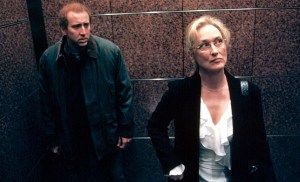
streepassusanorlean2Did Charlie Kaufman really come to New York to try and meet you, as his character does in ‘Adaptation’?

I think that he did exactly what he shows in the movie! I think he came to New York and that he sort of stalked me but never brought himself to talk to me. We met finally on the set of the film, and I think for both of us it was kind of embarrassing, although he told me that he felt it was much more embarrassing for him than it was for me! We then became friends, and he’s wonderful, but I’ve never asked him outright about that because it really did feel personal. Which is funny to say, given that it was on the screen and seen by millions of people, but I actually felt that it would be too embarrassing if I said: “Come on, be honest with me!” He was genuinely embarrassed when we finally and that made me feel that it was either true or that portraying it as true made him feel kind of exposed! I love the movie and give all the credit for the brilliance of it to Charlie and to Spike. I was very nervous about agreeing to it, and it was a complete shock to read the screenplay! My first reaction was: “Absolutely not!” They had to get my permission, and I just said: “No! Are you kidding? This is going to ruin my career! You can’t!” Very wisely, they didn’t really pressure me. They just let me think about it. They did tell me that everybody else had agreed, and that all the real people involved were okay with them using their real names. I somehow got emboldened and just thought that it would be interesting. I knew that the people involved were devoted to making a good movie, and that combination got me curious enough that I said: “Ok, go ahead. We’ll see.” It was certainly scary to see the movie for the first time. I was thinking: “Is it too late to change my mind?” and the answer, of course, was yes, it was too late to change my mind. I took a while for me to get over the idea that I had been insane to agree to it, but I love the movie now. I really think it’s one of the great postmodern American movies. It’s really quite special.

It’s actually very faithful to the spirit of the book.

Yes. I felt that a conventional Hollywood adaptation would have been much less faithful. While this was not meant to a cinematic recreation of the book, it was a meditation on the book and it felt to me much more real than if it had been turned into a Hollywood movie. What I admire the most about the film is that it’s very true to the book’s themes of life and obsession, and there are also insights into things which are much more subtle in the book about longing, and about disappointment.
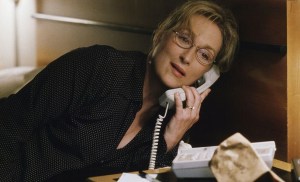
streepassusanorleanAnd how did it feel to see yourself played by Meryl Streep?

She’s amazing. It was great because she wasn’t trying to impersonate me. She created the character just through knowing me from the book and inhabited the role in a way that really suited the film. It’s actually one of my favourite performances by her! Maybe I’m a little prejudiced, but how could I not be? But I think she’s really loose in the film and it’s really appealing to see her being so funny. I really like her portrayal… of this strange creature!

Can you recommend a good book?

Can I have two? One I’m reading now and I really like is called We The Animals by Justin Torres. It’s a collection of related short stories, and he’s a young American writer. Really terrific. The book that I proselytise about the most is actually a trilogy by Pat Barker: Regeneration, The Eye In The Door and The Ghost Road. It’s a trilogy about World War I, and they just affected me. They’re brilliantly written, and they just changed the way I looked at life. There aren’t that many books like that. Why is that? It’s hard to say. There’s almost nothing in it which would seem to relate to me directly. It follows two people’s stories through World War I, one is a soldier and one is a doctor, but it was just kind of mind-boggling. There are many books that changed my world, many of which I read when I was younger and which are classics, but this is something I’m always nagging people to read because it’s so fantastic! It’s great stuff.

What advice would you give to your younger self?

Save your receipts, and have fun! I guess one suggests that one of those suggests you should be more professional, and the other that you should be less professional. I’m hitting from both sides of the plate.

An abridged version of this interview was published by GQ.
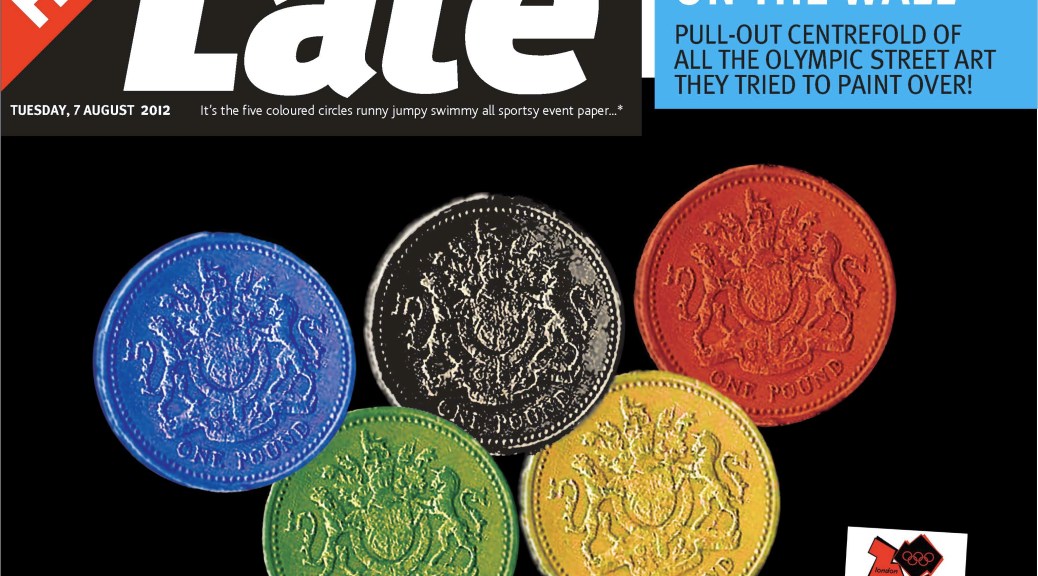
Mark E Smith and the Mystery Jet

“Do you ever suffer from hallucinations?” In a quiet corner of Salford’s New Oxford pub, Mark E Smith looks Blaine Harrison straight in the eye and then asks again: “Do you ever see things that aren’t there?” Half a beat goes by before he pops out his dentures and gurns toothlessly as Blaine jumps back in his seat more in shock than horror. Moments later Mark’s teeth are back in place and he’s shaking his head sadly. “I think you’re seeing things, matey.” The day had unquestionably taken a turn for the surreal. How had this happened? The pints of Sparta ale with whisky chasers had been a factor. We had come here with the best of intentions. We had come to meet the infamous ringleader of The Fall. Since forming in 1979 the band’s uncompromising union of raw punk rock and motorik rhythms has produced no less than 29 records while Mark, the sole constant, “doesn’t fucking know” how many band-mates he’s got through. “Mark’s incredibly fascinating,” Blaine had said earlier. “I’m looking forward to having a pint and a conversation. Anything could happen.” We’re also here to find out what the often irascible punk poet of the proletariat thinks of ‘Greatest Hits’, the new Mystery Jets track which mentions him by name. “The lyric is about a couple breaking up and dividing their record collection,” Blaine explained. “He’s saying to her: “You can keep all your Belle & Sebastian records, but I’m keeping ‘This Nation’s Saving Grace’. You only listen to it when you’re pissed, and when you sober up you ask why I’m still listening to Mark E Smith.” I think it’s complimentary, I just hope he does too.”

NME: Blaine, when did you first hear The Fall?

Blaine: My first encounter was when I was 17. I read an interview with Mark in a book about the Eighties musical underground called Tape Delay then went out and bought ‘This Nation’s Saving Grace’. It seems like the public have always been quite confused by The Fall, but I think in the Eighties they were trying to be a pop band.

Mark: Yeah, but we were real pop and they weren’t. Boy George wasn’t pop. Spandau Ballet wasn’t pop. That was fashion.

Blaine: ‘This Nation’s Saving Grace’ introduced me to Damo Suzuki and Can. Do you think The Fall were almost a British Krautrock band?

Mark: Sort of. It’s funny because in Germany they’ve said the same thing, that they hadn’t realised how good those old groups were until they heard The Fall. That’s an achievement, isn’t it?

Blaine: Have you met Damo Suzuki?

Mark: Yeah.

Blaine: Was he a nice guy?

Mark: Fucking bonkers! When I met him he was selling Japanese cars in Düsseldorf. Who’s going to buy a Japanese car in fucking Germany?

Blaine: I also went out and got the first Fall record, ‘Live At The Witch Trials’. Where did your fascination with the occult come from?

Mark: I knew people who were sort of pseudo-witches, so the title was just to annoy them. It’s the same now with Twilight or Buffy The Vampire Slayer, particularly in America. It’s a big rebellion for them. I see it when I go through the Midwest, where to be into vampires or werewolves is like spitting in your dad’s face. To us it’s Carry On Dracula, but to them it’s very serious because they all go to church every Sunday.

mes-blaineNME: Have you heard the Mystery Jets, Mark?

Mark: I’ve heard ‘Greatest Hits’ and it’s a fucking good song. I’m not just saying that.

Blaine: Thank you.

Mark: I won’t say it again!

Blaine: You’re influenced by people like Bo Diddley, Johnny Cash and Gene Vincent. What do you like about rockabilly?

Mark: The simplicity, as I’m not really a musician. Do you play a lot?

Blaine: I see myself more as a songwriter. I learnt the guitar through wanting to write songs but I don’t go into music shops and play ‘Stairway to Heaven’.

Mark: I’ve never really done much on the guitar. Mine’s only got two strings. It’s just A and E and then I get the group to embellish it.

Blaine: Was your dad into rockabilly?

Mark: No, there was no music in my house. Well, my sisters had singles but I was a latecomer. I was more interested in writing poetry. Nothing in music satisfied me. I still write every day. How do you operate?

Blaine: I sing stuff into my Dictaphone. I don’t think writing music should be laborious. There’s a Keith Richards quote which I love where he says that songs are just floating around and you need to have a radar to pick them up. If you stay up late enough you can catch them.

Mark: You’ve got to trap them.

Blaine: Yeah. Nick Cave says he puts on a suit every day and goes to his office. I couldn’t do that. They just appear now and then.

NME: Is there a bit more labour involved for you, Mark?

Mark: Correct. There’s no secret to being creative.

Blaine: What do you mean by that?

Mark: [Sticks his tongue out]

NME: I love that Keith Richards line too, but I think there’s also graft involved.

Mark: And half a gram of heroin and some Afghani black! He doesn’t just smoke skunk, does he? If he thinks there’s so many songs flying around why is he still playing the same ones after 50 years?

Blaine: A lot of your lyrics feel like things that have been overheard in the pub, particularly characters like Carry Bag Man, Wireless Enthusiast and Hip Priest. Is that how you write a song, rather than autobiographically?

Mark: I do try to write objectively, not subjectively. People say all the time: “Oh, you’re the Hip Priest!” but it’s not about me. ‘Carry Bag Man’ isn’t about me. I don’t go around with carrier bags full of drugs, do I? What do you do? Was your missus really moaning that you’d taken half her record collection?

Blaine: Yeah, a lot of the records mentioned in that song were records that I didn’t want to part with when I had a break-up, but it’s sort of a fictionalised account.

Mark: Well that’s good. You got it out of your system, didn’t you? Good riddance to bad rubbish as regards her, and you got a good fucking record.

Blaine: Your girlfriends and partners have often been in the band. What’s it like touring with your wife?

Mark: What’s it like touring with your dad?

Blaine: [Laughs]

Mark: So what have you got in the Jets? A guitarist, a bass player and a drummer?

Blaine: Yeah, and a pedal-steel player because this one’s an Americana record. We spent quite a lot of last year living in Austin, Texas.

Mark: You’re joking!

Blaine: No, we did.

Mark: [Incredulous] What, the whole group? With your dad?

Blaine: Yeah. Well he came out, but it was really the four of us plus wives and girlfriends. I’ve always wanted to live in America. It’s a ridiculous place. Texas is fascinating. We got obsessed with the suicide cults, like Waco and Heaven’s Gate. That’s all on the record.

Mark: That takes me back. When we were in Austin in 1981 the mixing guy and the drummer were kidnapped by these fucking weirdoes. Me and the bass player had to go and rescue them. They were being seduced! The guy running the place had a fucking cane and looked like Lucifer personified. He was a member of the KKK. There were all these birds in miniskirts with their tits out. They were all very attractive. We were looking through the blinds and we could see the drummer and the sound guy in the middle of all this. I said, “We’ve got to get them out!” Me and the bass player did this sort of weird attack. We broke in through the fucking skylight. We got them, but they weren’t very pleased about it. They were in their underpants with hard-ons and white powder all over their faces. I said: “Get in the van, you fucking cunts! Say goodbye to Austin, matey. You’re going back to the misery.”

Originally published in NME, 14 April 2012.

A$AP Rocky: just your average Home Alone-loving, Harry Potter-reading, Rick Owens-clad Harlem rapper

ASAP_Rocky_GQ_13Apr12_getty_bt_642x390_1“Hey! I need a fork!” In a secluded backroom at Sony Music’s London office, Harlem-born A$AP Rocky has just taken delivery of a consignment of Nando’s but has realised too late that he doesn’t have anything with which to eat his “Macho peas”. Improvising, he tears the corner off the carton and starts spooning them into his mouth with a shrug: “I’m so ghetto, look at what I do!” This might be his first time in London, and his first taste of that patented Peri Peri, but the 23-year-old’s reputation precedes him. Since he announced himself to the world with “Peso” late last year (with its catwalk-friendly line “Raf Simons, Rick Owens, usually what I’m dressed in”) he’s signed a $3m deal with Sony and become known as the East Coast MC with an eye for fashion that’s as high as he is. Slouching back on a sofa, he talks to GQ.com about why he isn’t a gangster, the $2,500 trainers he won’t wear and why you should think twice before copying Tupac’s tattoo…

Continue reading at GQ.

Someone Great

LCD Soundsystem were one of the smartest, funniest and most literate bands of the last decade, and they did it by playing by their own rules. This isn’t empty hyperbole, there were actual rules. “No sunglasses on stage” was one, as was “No rocking out” and “No psyching up the crowd”. Why was this Spartan attitude to audience interaction so important? James Murphy, LCD’s erstwhile iron-fisted leader, remembers his reign with a broad grin. “We relaxed them for a while, but people would get like James Brown ‘fined’. “You’re rocking out! Stop that!” No cool stuff. It’s a shortcut for meaning. It’s a simulacrum for meaning. I wanted to do away with that as much as humanly possible. The end doesn’t justify the means.”

Murphy grew up in New Jersey listening to David Bowie, the Clash and the warm hum of electrical appliances.  In his stoic Irish Catholic family, the sound of a refrigerator was a “replacement for hugs”. After moving to New York City in his late teens his attempts to understand the emotional power of noise led him into production and a series of failed bands. He was 35 by the time LCD Soundsystem released their debut album, and while he says now that he never made another song quite as direct as their debut single “Losing My Edge”, it’s the band’s second album, 2007’s Sound Of Silverwhich contains some of their most visceral and powerful moments, like the double punch to the heart and gut of “Someone Great” and “All My Friends”. Along the way he’s been charged with musical theft from time to time, and you can certainly hear him paying tribute to his heroes – well, specifically Bowie’s “Heroes” – on tracks like “All I Want”, but that was always sort of the point. There are no new things under the sun, just better remixes.

Following the release of their third album, This Is Happeningin 2010, Murphy called time on the band, as he’d always threatened to, with an epic 4-hour final show at New York’s Madison Square Garden on 2 April 2011. Now, almost exactly a year later, GQ.com meets him at London’s Red Bull Music Academy as he’s preparing to give a talk to a room full of the sort of wide-eyed kids that he’s been talking about “coming up from behind” since the days of “Losing My Edge”. The four-day beard growth that seems to have been a permanent fixture for the last five years is now almost entirely white, but at the fitting age of 42 Murphy seems to have found something like the meaning of life. He’s finishing work on the full-length concert film which will accompany LCD’s documentary Shut Up And Play The Hits, and he continues to make music without the pressure of the band. As he tells us, his restless curiosity about how stuff works is now also free to extend into the realms of wristwatches, making the perfect cup of coffee and fiction-writing, meaning his next big release could be printed and bound rather than pressed on vinyl.

GQ.com: Did you ever imagine you’d find yourself lecturing about music?
James Murphy: I never thought I’d do this. I have no game plan, I just improvise. I did a talk with David Byrne at Yale last month. David seems to have a career path that fits him very well and I would want one that fits me. I like that he’s cut a wide swath for himself. It’s very different though, because he was in a very successful band when he was quite young.

Are you growing more comfortable at being the centre of attention?
Sometimes my anxiety makes me very quiet and sometimes it makes me falsely gregarious as a way of trying to make everybody happy. It’s not something I desire. Stage fright is a very real thing for me. I don’t address performing. I try to play the songs. The performative aspect for me is always musical and physical and not about theatre, which I think is a failure of mine. I think if I had a little more confidence or I was a different kind of guy, it’d be cool. I love David Bowie, who’s obviously a theatrical performer but I don’t have that gene. I need to get over my self-consciousness and the only way to do that is to try and forget that there are people there. Luckily I designed a lot of music where there’s not a lot of down-time. I sing almost the entire time or play percussion. It’s very physical so that it’s easier for me to let go a bit.

Do you feel very connected to your lyrics?
Some more than others. I get rid of them if they feel too much like “Where did that come from?” unless I really like the way they feel or sound. David Byrne said that the words don’t matter to him, just the emotional tone. He’ll think in sounds and then fit words into them. That makes a lot of sense for him, but I feel like there needs to be a point of view. I feel like a newscaster, not a charming personality. If I didn’t have news to say, then why would you listen to me?

There’s an emotional weight to LCD Soundsystem’s music that means fans often say they’d like it played at their funeral. Is that something you can relate to?
As long as they don’t mean, “I hate this, when I’m dead you can play it!” I think that’s positive but I don’t know how it makes me feel. If I had to pick something to play at my funeral I’d force everyone to listen to “First Time Ever I Saw Your Face” performed by Roberta Flack really loudly on a really good sound-system, just because I want everyone to hear what I hear when I hear that.

What are you most afraid of?
Making people feel terrible. Or the selfish version: being blamed for making people feel terrible. [Laughs]

Mark E Smith says the Fall would have been the same band even if he wasn’t from Salford. Would LCD Soundsystem have been the same without New York?
I think it had a big impact. I don’t think if I’d grown up in New York I’d have made the same music but I’m from a small place in New Jersey very close to the city. I moved there after fetishising it and as opposed to just being disappointed by it not being right, I tried to manipulate it into being right, so that was pretty formative. It’s a big part of me. I’m a reactive person. Mark E Smith seems to be a generative person. “I’m going to make this thing. Nothing like it happened before. Nothing like it has happened since.” I’m not that guy. I’m a middle-aged guy who responds to stuff. I’m a volley-er, not a server.

What was the best record in your parents’ collection?
For Sentimental Reasons by the Nat King Cole Trio – it has “That Ain’t Right” and “This Will Make You Laugh” on it. That was my dad’s favourite record. He was a bouncer at a jazz club.

What’s the secret to making the perfect cup of coffee?
Good beans, good roast and following the recipe. You’ve got to have a good brew ratio. You’ve got to have the right amount of grounds, ground the right way, in a French press, held for the right amount of time. It’s not a very sexy answer, but it’s the truth!

When did you first become interested in watches?
The first watch I had was given to me when my grandfather passed away. My mother gave me his watch, which was a Forties Bulova. My father’s father had passed away before my parents were married but when they saw that I liked that watch my father gave me my other grandfather’s watch as well. That was a Twenties’ Gruen. I went through a big phase of wearing old Timetron digital LED watches and actually I didn’t wear a watch for years and years. Recently I started liking them again. I just think these things float through space and they go into your ear and you find that you’re not alone. I started liking automatic and mechanical watches. I really like the mechanisms.

Can you recommend a good book?
David Foster Wallace is great so read Infinite Jest because it’s amazing, then Pale King because it’s beautiful. Broom Of The System is fine and you should read it if you want to know more about where he came from. Also, read Sam Lipsyte especially Home Land and The Ask. He’s a great contemporary writer, and young-ish. Young for writing, but older than me.

Do you have any plans to write fiction yourself?
That’s what I went to school for, so it’s where I come from academically. I’m writing now, actually. A novel. I’m always making things, but whether they turn into something that I’ll consider making a part of the public world is different. I mean, I write songs every day, but only once in a while do they go out into the public sphere. I’m also dubious because as a person who’s known for something else, something that I wrote might get published before it was ready. Maybe I’ll have to send things in under a pseudonym, just so that they’re considered fairly. Editing is no joke.

What’s the best advice you’ve ever been given?
My dad gave me some good advice: when you’re walking with a lady you should always walk on the street side. His other advice was “Don’t do anything jailable” and “Don’t die”. [Laughs] He was using the minimum number of words but you got his point. If you’re doing stupid shit, be the guy who doesn’t do the stuff that could kill you. If you’re going to break the law: speed, run a red light, drink underage but don’t get yourself sent to jail. That’s when you know your dad was not raised fancy. It’s not like he told me: [adopts aristocratic accent] “Always take care of the little people.” It’s not noblesse oblige.

Originally published by British GQ.

Peter Berg

peter-bergPeter Berg is sunk deep into an armchair in his hotel suite at London’s Claridge’s, rubbing his brow. He’s wearing a suit jacket approximately two sizes too small for him and the expression of a man simultaneously nursing an expensive hangover, transatlantic jetlag and the pressure of bringing the $200m blockbuster Battleship  safely into harbour. After proving his big-budget action credentials with Will Smith’s drunk superhero movie Hancock, Universal handed him the keys to their brand new Hasbro franchise (complete with stars Liam Neeson, Taylor Kitsch and Rihanna) and all the political headaches that go with it – they’re spending another $50m on promotional tie-ins with the likes of Coca-Cola Zero and Subway alone. GQ.com lends an ear as he explains how he’s dealt with the inevitable jokes about making a film based on a children’s game, how Spider-Man changed everything for moviemakers and why the best way to wake up is with a “Breakfast of Booze”.

GQ.com: How involved were Hasbro in the making of Battleship?
Peter Berg: First of all, Hasbro doesn’t have any real creative input. They might have an idea, and I’ll listen to anybody’s ideas because I’m a very inclusive filmmaker – Hasbro have had some really good ideas. That being said, there’s a lot of scepticism and cynicism about the title and the fact that there’s a toy company involved. People have been very public about it: “What’s next, ‘Tic-tac-toe: The movie’?” At the same time, I’ve also met a lot of people who generally don’t write for websites or blog who say; “Wow! That’s awesome, I love that game!” So how it really pans out remains to be seen. I think at the end of the day the movie will succeed or fail based upon itself and once people have taken their shots at the title, they’re still going to take a look at the movie. If the movie is good and the marketing is good then it’ll work, if not, it won’t. I don’t think that the title of Transformers  and Hasbro’s involvement in it had very much to do with the film’s success – but Michael Bay had a lot to do with it. Pirates Of The Caribbean didn’t owe much of its success to the theme park ride, it was a success because it was a Johnny Depp movie directed by Gore Verbinski.

What motivates you to make a summer blockbuster?
I’m interested in the business of movies. When I first started making films as a profession, Universal was the top studio. Stacey Snider was running it and back around 2000 they had movies like Meet The Parents and The Bourne Identity. They were number one. Their movies were making a certain amount of money, maybe $350-400m worldwide and were good movies with character and some effects. Suddenly Spider-Man comes along in 2002 and blows the roof off it! People realized that there was actually a bigger audience out there and a bigger appetite. It was Sam Raimi (a respected filmmaker) and Tobey Maguire (a pretty good actor) and the movie was actually really good! It made a lot of money all around the world. Suddenly people realised “Holy s***! There’s a new game!” When a movie like Avatar  does the kind of business it does you have to realize that there’s an appetite for big spectacle that delivers. There’s gotta be emotion, humour and character but if you can take those things and add big, epic never-before-seen visual spectacle then you can make a mega-movie. If you look at the directors, guys like JJ Abrams, Jon Favreau, James Cameron, Gore Verbinski – these are talented filmmakers who understand the thrill and the rush you get making movies like that.

Are we supposed to sympathise with the aliens in Battleship?
I wanted the aliens to at least have a pathos because we see so many [science fiction] films where we don’t know what’s going on and they’re killing everything. I liked the challenge of making their thought processes and emotions part of the film. Making their desire to look out for themselves as relevant as our desire to look out for ourselves. There’s a scene later on in the film where there’s an encounter between an American scientist and an alien scientist. It’s a peaceful encounter where they just take the measure of each other and I think it’s my favourite scene in the movie. I also like the idea that the aliens didn’t start it – we started it! We didn’t mean to start it but there’s a series of misunderstandings. I’ve seen that happen in real life: giant miscommunications which end in violence.

Is there any truth to the rumour that you’re going to direct an N.W.A biopic?
No. I’m a huge fan of N.W.A. I was really into Eazy-E, like every other red-blooded, white American who thinks he’s a rapper from Compton. It’s not a movie I’m going to do but I hope somebody does it because it would be a great story.

Can you recommend a good book?
Lone Survivor by Marcus Luttrell. It’s going to be my next movie and it’s a hell of a book.

What’s the best thing you can cook?
The Breakfast of Booze. We make it every Super Bowl at my house. I got the recipe from Epic Meal Time. They’re my heroes. They’re some cooks from Canada who have a YouTube channel and they’re getting big.

What’s your whiskey of choice?
I’m a Jack Daniels man. As classless and American as that is, I grew up drinking Jack Daniels.  Last night, though, I was drinking a 1966 Macallan. That was a treat. It was £500 for a shot of that.

Originally published by British GQ.

Eric Cantona on football, smoking and Switch

The man the Old Trafford terraces still call “King Eric” wants a cigarette. GQ.com is stood with Cantona by the pool in the basement of Piccadilly’s Haymarket Hotel where a family of swimmers can’t quite believe what’s happening around them. The footballer whose talent, arrogance and occasional acts of uncontrolled aggression defined the early years of the Premiership has just appeared from one of the pool’s side-rooms, possibly a sauna, out of which in the last three-quarters of an hour both Radio One’s Edith Bowman and David Frost have emerged looking equally awed. The Frenchman is patting his pockets distractedly until one of his team of press handlers scurries over to stop him. “You can’t smoke down here!” she whispers urgently.Cantona looks at her, baffled. “But why not?” he asks with a shrug. He makes his apologies and disappears off in search of Frédéric Schoendoerffer, the director of his new film Switch  and the keeper of his tabs. A couple of minutes later we are safely ensconced in a quiet side room where Cantona, sipping an espresso, apologises for the delay. He eases back in his chair, tilting his chin skywards contemplatively and sets about expounding his philosophy that everything – football, acting, even cooking – is simply another way of expressing your true self.

GQ.com: Detective Forgeat, the character you play in Switch, always has a cigarette in his hand. Do you smoke as much as he does?
Eric Cantona: It’s to show that he is a free person. It’s not because you like adventure that you smoke but I think it shows the freedom that Forgeat has and where he puts his priorities. His priority is his job and he’ll do anything that helps to inspire him to do it well. He doesn’t obey the smoking ban. For me, I don’t like it when there is too much interference in our lives. We’re not children. It is our own life in our hands.

What advice would you give to someone like yourself who wants to act but is not a trained actor?
It’s a discipline. For me football, cinema, theatre or photography are all ways of expressing ourselves. Of course, if you want to be a photographer you need to learn the techniques. You must learn how to play the sport but I don’t think the technique is the most important thing. Sometimes it’s nice when it’s not so perfect. It’s like beauty. If someone is too perfect they won’t look good. Imperfection is important. That’s why I think it’s important to learn the techniques but to know when to stop using them. We can be eaten by techniques and forget what we have inside of us.

If you could have acted in any film, which would it be?
I would like to have worked with [Pier Paolo] Pasolini. In Oedipus Rex, maybe.

What was the best thing about playing football?
Expressing myself. Of course, my dream was always to play for the best teams and with the best players but I loved to express myself through the sport.

Can you recommend a good book?
Narcissus and Goldmund by Hermann Hesse. It’s about our desires and the small voice inside us that tells us not to follow them. It’s about that rivalry between the two people inside each of us.

What music do you listen to at home?
I love the singer-songwriter Sophie Hunger, particularly her last two albums 1983 and Sophie Hunger.

What achievement are you most proud of?
I try to be honest. I’m honest with people and I try to respect myself. If I respect myself and I am honest with myself, then I will respect other people. Of course, I don’t do everything perfectly. I’m proud that I’ve tried many things. I’ve shown that as people we can try anything.

What is the best advice you’ve ever been given?
I don’t remember any advice. I listen to my own experience. My mind says to me that life is just “le passage” – a journey. You are here today, but tomorrow… you don’t know. You must live with a feeling of freedom. You are not “appartenir“. You don’t belong to other people, your environment or the world around you. You are free. That helped me to achieve a lot of things.

What is the best thing you can cook?
Dorado. It’s a fish. The secret is in the filling.

The filling?
Non, the feeling! I know how to cook it, but if I told you how to do it, then yours would be different to mine. It’s all about the feeling.

Originally published by British GQ.

Nikolaj Coster-Waldau

ncw“She’s not naked?” Nikolaj Coster-Waldau is a little taken aback by his Game Of Thrones co-star Emilia Clarke’s GQ photo shoot. “That makes a change!” Best known for playing Jaime Lannister in the notoriously clothes-repellent fantasy series, the 41-year-old Dane is here today to talk about his role in the film adaptation of Norwegian crime-writer Jo Nesbø’s blackly comic Headhunters. A heist movie that escalates into a Coen Brothers-esque cat-and-mouse pursuit across Scandinavia, Coster-Waldau plays a character he describes as “an alpha-alpha male, dashing and extremely well-dressed”. To mark the release of Headhunters in cinemas, here he discusses the most beautiful Game Of Thrones fan he ever laid eyes on, the stubbornness of English football fans and one particularly eye-watering encounter with a doctor…

What did you think when you first read the script for Headhunters?
I loved the fact that the main guy is such an idiot and that he’s not very nice. Within seconds of the movie starting you see him being unfaithful and on top of that treating that girl like she’s worthless. The script has so many twists and turns and surprises. It’s a great story.

Will you audition to play your character again when the film is remade for America?
I don’t know! I haven’t thought about it. It’s great that it’s being talked about, though. The fact is when a film with subtitles comes out in America it will only find a limited audience. If they can sell it and make some money then that’s great.

You’re very well dressed at the start of the film. What were you wearing?
I’ve never tried on so many suits for a role! We ended up with Paul Smith for the film. I loved them, but personally I wouldn’t spend that much money on a suit. Today I’m wearing a… [Looks for tag] Boss Selection suit jacket – clearly not bought by myself! The trainers are Reebok. I like to wear beautiful clothes but I don’t have that many.

Can you recommend a good book?
The Finkler Question by Howard Jacobson. I guess with any story it’s the characters that pull you in and I love the way he tells the story of those friends.

Are you looking forward to Euro 2012 this summer?
I’m feeling very confident although we Danes aren’t quite as mad as you guys are. My best friend is English so I know that at every World Cup and Euros you manage to convince yourselves that you’re going to win it. You set yourselves for that horrible, horrible despair when you crash out on penalties against Germany. Actually one of the greatest matches I ever saw was at Wembley during Euro ’96 between Scotland and England. That was an incredible game. Remember Gascoigne’s goal and then his celebration? Just amazing.

Are there any members of the Game Of Thrones cast you haven’t seen naked?
Let me think. I’ve seen Sean Bean naked. I’ve seen Mark Addy. And Lena. I haven’t seen the kids of course, but all the adults. We do that at the read-through. We just strip naked and read the script.

Given that there’s even an official Game Of Thrones cook book, what’s the best thing you can cook?
I do a really wicked chicken where I stuff Parma ham under its skin.

What’s been your strangest fan experience?
I was very lucky to be invited to ComicCon last year. That was a tremendous experience. We were sat on this panel and to see all the fans and their passion and energy was incredible. A lot of people in costume, of course. In the show Emilia Clarke plays this character called Daenerys Targaryen and I remember seeing an Asian Daenerys Targaryen at ComicCon. She was quite stunning. A beautiful vision.

Have you met Game Of Thrones creator George RR Martin?
Yes, he’s a very sweet man and very proud of his work, as he should be. I guess in that situation every actor wants to ask whether their character is going to survive, but I didn’t. I kept my pride. He was very gracious.

What can you tell us about your upcoming role in Oblivion alongside Tom Cruise?
Well, I can tell you that it’s directed by Joe Kosinski and based on a story he came up with along with Barry Levine. The script is by William Monahan. I play a guy called Sykes. Apart from Tom Cruise there’s also Morgan Freeman, Andrea Riseborough and Olga Kurylenko. It’s set in the not too distant future and that’s about all I can tell you! I play a pretty traumatised man, that’s all I’ll say.

What’s the worst pain you’ve ever experienced?
I’ll tell you that, but it will make you feel the pain too. I once had a urinary infection. That was fine, but in Denmark when you have that, as a man, if you’re under the age of 50 they call you in for a test. I thought it was a test to check how much power your piss has. I went in and they sent me down to examination room number three. There was a nurse waiting for me. She asked me to undress, so I did. I asked her what we were doing, and she just said that they wanted to have “a look”. So I’m lying there and she puts a little bit of gel on my willy. I asked her what it was for and she said it was so that it wouldn’t hurt so much. Then the doctor came in with this big thing and said: “Let’s have a look at it, then!” He had this big, bendy camera. Then he inserted it into my penis. That pain was beyond painful. So the lesson is never let anyone put a camera up your penis. Afterwards he asked me if I wanted him to have a look at the other one. He had another big thing to go in the arse. I told him I was alright.

I don’t blame you.
There was a TV screen showing what they could see but I was in too much pain to look at it. I remember he’d put it in and I was screaming in agony and then he said: “Right, now the worst pain is still to come.” He had to force his way inside because the bladder closes up. Every time he moved it was horrible.

I’m glad I’ve managed to avoid requiring too much medical attention to my penis.
You’re very lucky. When I was 21 I went to a music festival and met a girl who gave me two presents that I didn’t discover until I got back. Two great venereal diseases.

Which festival was that at?
That was at Roskilde, which is a huge festival in Denmark with just as much mud as Glastonbury. I’ve seen some amazing bands there. A couple of years back I saw Nick Cave, not with the Bad Seeds but with Grinderman and they really delivered. He was great.

Originally published at GQ.

Rita Ora

ritaoraRita Ora arrives for our interview bearing gifts. Appearing beneath blonde locks and wearing bright red lipstick and a tight dress, the 21-year-old might already have a number one single “Hot Right Now” (with DJ Fresh) and a direct line to her label boss Jay-Z, but she’s also generous with her cupcakes. She excitedly offers us a delicate chocolate creation covered with an obscene amount of icing while taking a red velvet one for herself. “You wouldn’t mind if I just dug in, would you?” Although she was signed by Jay-Z to Roc Nation three years ago, this year Ora is finally enjoying her moment in the spotlight: releasing “R.I.P” written by Drake and featuring Tinie Tempah, touring with Coldplay and finally unveiling her debut album. Between mouthfuls of icing and enthusing about her single (“I love the message behind it. “R.I.P to the girl you used to see, her days are over”. It’s like something you’d say in a conversation.”), she tells GQ.com about working for Hova, her advice on getting tattoos and her love of Bruce Springsteen.

GQ: What’s Jay-Z like as a boss?
Rita Ora: He’s a great mentor, a great boss and so is his wife. There’s not a lot of people on Roc Nation so the few that are genuinely get time spent on their project. It’s like a family, well especially now with Blue Ivy – although she just chills: eats, sleeps, wakes up, eats, sleeps. Jay-Z taught me a lot about patience as an artist. I was itching. When I was 18 I thought it was all going to happen so quickly – I just thought next week I’d be on Oprah!

What’s the most important item on your rider?
Throat Coat Tea and a steamer. A steamer is like an inhaler so you can inhale this oil, or frankincense of eucalyptus. Before I go onstage I spend half an hour taking in that steam and it saves my life! A little bit of whiskey, too.

What advice would you give someone getting a tattoo?
Know what you want to get, because even if you try and take it off with a laser it’s not 100% going to come off.

You signed to Roc Nation at 18 and you’re now releasing your debut album at 21. Have the last three years been your equivalent of going to university?
Roc Nation is like my uni. I had a flat in Brooklyn and it was definitely like being at uni but because I did it in the States I was underage. I couldn’t even go anywhere to party! When I came back to London I could drink, so we had our fair share of parties here.

What music do you love that would surprise people?
I’m a huge Bruce Springsteen and Duran Duran fan. But No Doubt are one of my favourite bands of all time. When I first saw Gwen Stefani wearing red lipstick I thought it was the prettiest thing I ever saw.

Have you ever cheated death?
I was doing yo-yos on stage and I almost fell off. I was scared of embarrassing myself more than death, so I guess I really cheated embarrassment.

What’s your key style advice for men?
The worst thing is when a guy just looks awkward. It’s not attractive. A guy has a certain power anyway just by being a different sex, so all you have to do is just be comfortable.

You’re supporting Coldplay at their stadium shows this summer. How did that happen?
I’m so glad that’s out now because I’ve known for a minute and I’ve wanted to tell everyone! They heard my tracks and then “Hot Right Now” went to number one. I’ve met them a few times over the last few years so they asked me to be on the tour. I’m over the moon – they play huge  arenas and I can’t wait to finally do it!

Originally published by British GQ.

What Kony 2012 doesn’t tell you

In 2008 I found myself stood in a sewer trench in the centre of Kinshasa, the capital of the Democratic Republic of Congo, trying to help a man named Karem clear it with a spade. If he didn’t do this then when the rains came the sewers would flood the adjacent homes, which were little more than permanent slums. Karem, who was in his mid-twenties, turned to me and said: “My country, the DRC, it’s fucked”. Ankle-deep in sewage, I found it hard to disagree.

I’m telling you this not to perpetuate the idea that central Africa is a hopeless place, which it isn’t, but by way of explaining that I have some insight into what it’s like to be a white man in a country that I don’t understand wanting to help in any way I can. Maybe this is why, despite extensive flaws, I have some sympathy with the filmmaker Jason Russell and Invisible Children’s campaign to arrest Joseph Kony, the fugitive leader of the Lord’s Resistance Army.

Kony 2012 is about a promise. It’s a promise that Jason Russell made to Jacob, a former child soldier, when he met him in Uganda in 2003. Jason promised Jacob that he would stop at nothing to have Joseph Kony arrested and last week he managed to get the whole world talking about Kony and his army of children. This is no mean feat and I think it’s wholly admirable that Jason Russell is keeping his promise to his friend. However, in doing so he is using and perpetuating stereotypes that obscure the reality of life in central Africa.

The Kony 2012 campaign is a brilliant demonstration of the power of a simple narrative over a complicated one. The message, as is made explicitly clear in the film, has been simplified to the level that a five-year-old child, in this case Jason Russell’s son, can understand it. Unfortunately, as you may have noticed, the world is more complicated than that.

First of all, Joseph Kony is no longer in Uganda, where Invisible Children have successfully lobbied to send American advisory troops to hunt for him. In the last half decade he has moved through the Democratic Republic of Congo, South Sudan and is now most likely in the Central African Republic. In the film, Russell repeatedly refers to Uganda as a warzone, doing a disservice to the country’s partial recovery in the years since Kony was forced to flee. In reality, children in Uganda are now at a far greater risk from nodding disease, an incurable and debilitating neurological condition, than they are from Joseph Kony.

Arresting Kony won’t stop militias from recruiting child soldiers and it won’t bring an end to nodding disease, chronic lack of sanitation or any of the many other awful things that can happen to you if you if you have the misfortune to be a child born into poverty in central Africa. Invisible Children, by their very design, are not built to tackle these problems. They’ve been repeatedly criticised for the lack of transparency over their accounts and the small percentage of their funds which go to development work on the ground, and by their own admission they are a campaigning organisation first with everything else an afterthought. All they really care about is that promise. That’s why while their campaign has been startlingly well executed, the very last thing anyone should do is give them more money. They don’t need it. Their stated aim, to raise awareness about the actions of Joseph Kony, has already been achieved.

The fact that reality is more complex than the Kony 2012 campaign would like it to be shouldn’t mean that people have to be confused or bored into apathy. There are things that can be done to help children in Central Africa, but these things will be slower and less glamorous than hunting down a single “bad guy”.

I met another young man in the Democratic Republic of Congo named Freddie Mbulayi Kabamba. He was part of a small organisation named RECIC who were seeking to establish local political accountability, and who had been supported for many years by the international development organisation Christian Aid. When I asked him whether he had any hope for the future of his region, he said: “We have hope, but not for now. In a long time. Hope is permitted, but we must have good leaders.”

That’s what people want and need. Not quick fixes and American troops, but their own accountable political structure. Neither Uganda or the misleadingly-named Democratic Republic of Congo are functioning democracies. I hope Joseph Kony is arrested this year, with or without the help of the American advisory troops, but that will not be the end of the story.

Originally published by British GQ.

Paul Weller

PaulWeller“Nothing wrong with pop!” says Paul Weller with a grin as we fumble for a way to describe his new record Sonik Kicks. There are a host of different influences on the album, from dub to jazz, but that doesn’t, Weller wants to make clear, mean that it’s “eclectic”. “Quite a few people have said it’s an ‘eclectic’ record, and I kind of know what they mean but actually I think there’s very much an overall sound to it. It really hangs together, do you know what I mean?”  Something similar could be said for Weller’s career. After disbanding hugely influential mod punks the Jam at the height of their fame in 1982 he spent the remainder of the Eighties exploring a more soulful sound with the Style Council. In the Nineties he was lauded as one of the guiding lights of Britpop and then slated when the genre begat Dadrock. Since the turn of the century he’s shrugged off that criticism by turning in a series of albums each more inventive and experimental than the last. As he prepares to release his eleventh solo record we sat down with the artist formerly known as the Modfather in a comfortable office upstairs at Island Records to talk about his tabloid midlife crisis, resenting the “Dadrock” tag and what David Cameron doesn’t understand about “The Eton Rifles”.

GQ: You announced that you’re going to be playing a “classic album” in full at the Roundhouse this month – your new one. You’ve also vowed never to reunite the Jam. Are you tired of nostalgia acts?
Paul Weller: I’m bored of all these bands getting back together and playing their classic album from 20 years ago. I’m sure I’m in the minority because they’re doing good business and there are a lot of people out there who want it. Fair play to them, and who am I to say that they shouldn’t? [Laughs] I’m just bored of it, man, and I want to make a statement of intent about my new record. We’re going to play the whole album all the way through at the Roundhouse and it’s one of those things where it’ll either be a complete  disaster or it’ll blow people’s minds. Hopefully the latter. I think the album flows as one piece, so if we can put that over live I think people will be into it. Either that or we’ll get bottled off. There’s always going to be an element of people who want the old stuff. I see it at gigs when we play the old songs and it’s nice. But if anyone knows me well enough and has followed my path well enough they would know that there’s no chance of me reforming an old band. So it amuses me, because why do they ask? They should know it’ll never f***ing happen. I’m just not a particularly nostalgic person.

Your single “That Dangerous Age” is about a midlife crisis. Are you having one?
It is about that but it’s not particularly biographical. It’s more of a take on how society allows people to be at a certain age. In reality there aren’t any rules because no-one’s ever been there before. There are no maps. You make it up as you go along, like all of life. It’s born out of the fact that my wife, who I’ve been married to for about a year-and-a-half, is much younger than me. There was a bit of a “Wor!” when that first happened. “Is he going through a midlife crisis? Sports car and the young wife?” I found that very amusing because of how clichéd people’s minds are, particularly in the media. That was kind of the impetus for the song, but I wouldn’t really write about myself because it’d be too boring, so I made up these characters.

What’s the biggest misconception about you?
The “Dadrock” thing. Unless people know me well they would probably think I just listen to the Small Faces or old soul records, which I do obviously because I love that music but it really isn’t that simplistic. I get labelled as just being about one thing, but there’s lots of layers to what I do. It’s just lazy journalism but people start to accept it. If people spent an hour in my car driving around London and listening to the stuff I listen to they’d hear some interesting stuff.

What music do you love that would surprise people?
Probably a lot of the music I love would surprise people! The other week, for instance, I bought an album of Ethiopian music, an album of Iranian folk songs, a Karen Dalton record and an old English folk compilation. If I don’t know what something’s going to sound like then I’m interested to hear it. I want to hear as much music as I possibly can before I leave this mortal coil but it’s impossible to hear it all because there’s so much of it. It’s like a river that never stops flowing. Which is great, but if you think you know about music you’re really just dipping your toe in.

Which lyric are you proudest of writing?
From my long and illustrious career? I really like “The Eton Rifles” because I thought it was a very clever subject matter. I’d heard people write about the class system but not in that way. I thought “Going Underground” was good. I like the simplicity of “Wild Wood” and its message of strength and hope. “Broken Stones” I like a lot. I can’t remember most of them to be honest – I’m just making this up as I go along! I can’t even remember some of the songs on the new album, which I’ll have to rectify soon…

“The Eton Rifles” is famously one of David Cameron’s favourite songs, so I guess you have that in common.
I found him saying that amusing but weird at the same time. How could anyone get the lyrics so wrong? I guess it’s just that not everybody listens intently to lyrics. They’ve got the radio on in the background and they just sing along to the chorus even if they don’t understand it. It’s just one of those aspects of pop music. Having said that, I think it’s such an engaging song and idea that you’d have to be stupid not to understand it.

Do you still get passionate about politics?
I do still get angry about politics, particularly about the fact that there’s nothing apparent that we can do to change things. I’m upset and angry about what’s happening in Syria at the moment but I don’t really know what I can do about it as an individual. It’s hard to get upset about party politics in the same way, even though it does make a difference. From what I’ve ever seen of it, it’s just jobs for the boys and careerism. I try not to be cynical about it but I think I just end up being apathetic. I could write songs about politics, but I’m conscious of not writing songs that sound the same as the ones I wrote 30 years ago. Nothing’s really moved on, so I’d just be regurgitating the same sentiments.

Why did you decide to open the album with the most unconventional track, “Green”?
We wanted to throw people in at the deep end so that the first thing they heard would make them sit up. That’s not to say I’m doing it to try and alienate people, quite the opposite really. It’s just to disorientate you at first and make a statement that you’re going to go on a different ride here.

What was the best record in your parents’ collection?
Probably a Beatles record. My mum bought things like “She Loves You” as singles. When I got into the Beatles I must have only been about six or seven but old enough to take notice. We used to have an old radiogram which, for readers of a certain age, was like a big cabinet thing with a record player inside it. It had a drinks cabinet on one side and a little deck on the other. It had a really lovely warm valve sound sound as well. You could put a stack of singles on and they’d just keep dropping down. We didn’t have many records because they were too dear, but whatever we did have I would load up and play endlessly, then turn them over and play all the B-sides.

Can you recommend a good book?
A book about Syd Barret called A Very Irregular Head by Rob Chapman. Maybe you’d have to be a Syd fan to enjoy it, but if you are it’s a great book. It describes a lot of Syd’s influences, where his lyrics came from and the inspirations for his painting as well. It’s an interesting book and it affords him a bit of dignity which is missing in some of his other biographies.

What advice would you give to your younger self?
“Be Happy Children”… not that I would have listened to any advice anyway! The last song on this album is called “Be Happy Children” and it was written about my Dad. He passed away three years ago. He was a strong man with a strong character and if he could he’d say: “Listen, don’t cry for me. Be happy and be joyful for the time we had together.” So the song is about that and also about me thinking about my own role as a father and what I’d want to say to my kids. I got my eldest daughter and my second youngest son to sing on it. There’s a kind of cyclical thing to it: from my dad, to me, to my kids. It’s almost like a hymn, a postscript for the album after all the sonic stuff that’s gone before.

Do you enjoy listening back to your own records?
I hear an album so many times during the course of making it that when I’ve just finished it I don’t want to hear it again. After you’ve taken a little bit of time away from it you can come back to it, which can be scary. I’m happy with Sonik Kicks, man. It’s pretty damn close to what I thought it should be and that’s rare in itself. It’s very easy when you make a record to start off with one idea and then get sidetracked. There’s nothing else around that sounds like it. It’s a 21st Century record.

Originally published by British GQ.

Imprisoned in Putin’s Russia

Khodorkovsky_gq_12mar12_pr_bMikhail Khodorkovsky had it all. Back in 2002 he was the head of Siberian oil giant Yukos and the richest man in the world under the age of 40. The only thing Khodorkovsky didn’t have enough of was respect for Vladimir Putin. He repeatedly and publicly set about accusing the Kremlin of corruption and gave financial support to the political opposition. Unsurprisingly, this did not go down well with the then Russian President. In October 2003 Khodorkovsky was convicted of tax evasion, as well as “stealing 350m barrels of oil” and was sent to languish in the Siberian prison where he remains to this day. However, in the wake of Russia’s recent presidential election Khodorkovsky now finds his sentence under review, with the suggestion that he could be freed. Cyril Tuschi’s bleak new documentary Khodorkovsky explores the charges against the recalcitrant oligarch and the cold, hard realities of Putin’s Russia. We spoke to Tuschi about whether the recent elections contained any surprises, whether audiences will sympathise with his documentary’s billionaire protagonist and whether anyone in Russia can realistically challenge Putin.

GQ.com: What was your reaction to Putin’s re-election?
Cyril Tuschi: What re-election? There was no election. Sorry for being boring and repeating what many others have said, but Putin is just simulating democracy. Sadly enough, there were no real surprises. Well, except one: that my friends and other bright people in the opposition like Vladimir Bukovsky now openly support Mikhail Prokhorov. In my opinion, in the past Prokhorov has not been a Kremlin-independent politician. But hey, I am always open for surprises! There could be excuses, like the idea that they are trying to reform the government from within, but I would tell Prokhorov not to accept Putin’s offer to join him. Also, I agree 100% with Khodorkovsky’s call to the opposition in Russia “to avoid radical scenarios, a split and not to stop mass actions.”

How sympathetic are you personally to Khodorkovsky’s plight?
I had and still have a little bit of an ambivalent feeling towards Khodorkovsky. My topic was ambivalence. He is a person who aimed high and acted heroic in the way that he came back to Russia, knowing that he would get arrested but now he must see that he made some kind of misjudgement either of his own powers or of the powers of his adversaries.

Was it strange to make a film sympathising with a billionaire in the current economic climate?
No, I never thought that much ahead. I always start a project from my personal point of view and only later did I think about the possible reaction from audiences. When I began, in 2006, there was no economic crisis in sight at all.

What resources did you use in your research that you could recommend to people who want to understand more about contemporary Russia?
There was no main source for my research in the beginning – I was plodding through the fog of unknown Russian territory. I was also a regular visitor to the webpage of Khodorkovsky’s team. I also read the Moscow Times and the many blogs of his lawyers, partners and family.

Which documentaries have influenced you as a filmmaker?
Those which inspired me to make a creative leap forward were: Man On Wire, The Corporation and The Fog Of War.

Can anyone realistically challenge Putin’s power?
The people can. The only danger is that Putin is using the tool of fear again, particularly the fear of political destabilisation as happened in the Nineties. Stability was and is Putin’s biggest asset, even though in reality he was just lucky to come to power at a time when the oil price had a spectacular upswing.

Originally published by British GQ.

The Mayoral election race starts here

Boris Johnson was a couple of minutes into his opening speech at Hammersmith Town Hall last night when the heckling started in earnest. Naturally, he didn’t miss a beat. “We have cut council tax!” he thundered over the dissent before singling out his loudest critic: “Yes, in real terms, sir, we have cut your council tax – assuming you pay it!”

The audience rewarded him with a gale of laughter. This was the clown prince of political theatre they’d come to see. The occasion was People’s Question Time and the evening was at once not about the elections in May and wholly about them. These events are held twice yearly, but the timing of this one, coming just days after Boris unveiled his “Nine point plan for a Greater London”, meant it was bound to become a debate about re-election. They are attended not just by the Mayor of London but by the Assembly Members who represent constituencies across the city and who will also be contesting their seats on 3 May. The truth was, the majority of them didn’t utter a single word from the stage all evening. This was all about Boris.

The first talking point was crime, on which he was bullish. “I would feel safe walking anywhere in London at any time,” Boris told us to audible snorts of derision, but he was applauded for his claim that on his watch crime has dropped 10% and that the murder rate is at its lowest since 1978. “You can’t juke the murder stats,” he pointed out. “After all, with modern DNA technology it’s very hard to hide the bodies.”

Last August’s riots were noticeable by their absence from Boris’ opening speech. When asked from the floor whether he now accepted that closing youth clubs had been a mistake, and whether he’d be reopening them, he answered that Olympic legacy money was intended to be spent on “sports clubs”. Youth clubs and sports clubs are clearly not the same thing and this sounded a lot like an Olympic-branded sledgehammer being wielded in response to every problem. The value of falling crime rates shouldn’t be downplayed, but claims of better community policing ring hollow when the city has so recently experienced widespread rioting.

Housing and development was by far the noisiest issue of the night. The development of Shepherd’s Bush Market, the plans to build high speed rail tunnels and the proposed “super sewers” for the Thames all caused noisy and frustrated debates as Boris failed to deliver straight answers. The closest he came was towards the end of the evening: “You cannot sterilise London. There are things that have to be done.” He repeated his promise to create 200,000 jobs, which is some target. By way of comparison, employment in his current term has seen a total net rise of around 45,000 jobs.

Affordable housing will be one of the key debates at the election. Much time will doubtless be devoted to investigating how accurate Boris’ claim is that he’s on course to meet his target of building 50,000 affordable houses during his time as Mayor – a goal he’s already shifted from being attainable after three years. Lib Dem Assembly Member Mike Tuffrey argued that he’ll miss his targets and in any case accused him of a poverty of ambition when it comes to housing. Tuffrey believes there is both land and private investment available to create social housing in the hundreds of thousands, as evidenced by the bidding on the Olympic village housing. What we won’t get is any big promises from Boris. On housing London could do with some new thinking – The Mayor has the power to do much more to prosecute rogue landlords and innovative ideas like Shelter’s Homes For London campaign (which proposes a TfL style agency to look after London’s housing) deserve to be listened to.

While Boris had been heckled and booed throughout the night, he was applauded and cheered in roughly equal measure. When the meeting ended he was mobbed by adoring fans seeking handshakes, photos and autographs. Boris always looks like a political superstar when given a open question with which to grandstand, and even the Assembly Member Jenny Jones, who will run against him as the Green candidate for Mayor, conceded that he’s good at ideas. What tends to happen she argued, with ideas like mentoring young people, is that they see their funding cut before they can come to fruition. With two months to go until the Mayoral election the battle lines – on crime, employment, housing and transport – are being drawn, and the people in Hammersmith last night seemed split between those delighted by the Mayor’s performance and those restless over his figures, particularly on jobs and houses created. Boris is always comfortable dispatching hecklers, but it’s going to be the numbers that count.

Originally published by British GQ.

Geoff Dyer

GeoffDyer_GQ_6Mar12_642Like a virtuoso musician who can master any instrument they lay their hands on, author Geoff Dyer brings the same wit and intelligence to the page whether he’s riffing on jazz (1991’s Somerset Maugham Award-winning But Beautiful) or writing a book about not writing a book about DH Lawrence (1997’s Out Of Sheer Rage). He’s also a deft and original critic, shortlisted for this year’s inaugural Hatchet Job prize for his withering takedown of Julian Barnes’ Booker Prize-winning The Sense Of An Ending [“It isn’t terrible, it is just so… average.”]. Back in 2009 GQ described him as “writer as hipster polymath” when we made him our Writer Of The Year following the publication of his travelogue-meets-novel Jeff In Venice, Death In Varanasi, and this year he lived up to that pithy epithet yet again with the publication of Zona, his idiosyncratic exploration of Stalker, Andrei Tarkovsky’s 1979 classic of Soviet cinema. Here Dyer talks to GQ.com about the relationship between fiction and non-fiction, whether being able to hold court in the pub will make you a good writer and why Drive‘s style masked its failings as a film…

GQ.com: Is it accurate to say that rather than being a book about a film, Zona  is a book about your personal experience of watching Stalker?
Geoff Dyer: It’s a bit of both. The fact that there’s a character in the film called “Writer” means he can serve as my embedded representative and enable me to participate in something I’m observing.

Do you think you need to be a good raconteur to be a good writer?
No, there’s absolutely no connection at all. One is always meeting people who are very entertaining socially but can’t do it on the page. Some writers are fun socially and some aren’t. Naturally, I am great fun – just about the funnest person in the room – which is why, as far as possible, I try to make sure no one else can get a word in edgeways.

How do your journalism and non-fiction relate to your fictional work? 
To me it’s all just writing. The idea of invention and imagination is not just about making up stuff or scenes or stories within a book; it needs also to be considered at the formal level. If we bear in mind that Zona, like all my non-fiction books, has a very unusual and original structure or form then it could be said to be fiction which we expect to be original but which of course is often anything but, especially at the structural level.

You wrote in Prospect magazine about your “literary allergy” to David Foster Wallace’s lengthy footnotes, so why did you decide that similarly extended footnotes were important for Zona
It was a technical expedient: the least inconvenient way of reconciling the demands of the successive (things unfolding in sequence, over time) and the simultaneous (things happening at the same time). In the course of the book the distinction between footnote-type stuff and the main body of the text dissolves, to the extent that the latter is overgrown by the former. This is appropriate in a film in which the manufactured and the man-made are in the process of being reclaimed or overgrown by the natural.

This “overgrowth” of footnotes works on the printed page, but eBook readers compartmentalise them by filing them neatly away. Do you think electronic readers will change the way people write?  
I don’t have any kind of e-reader (though I am all for them in theory) so it was not an issue. I had no idea about the technical complexity posed by footnotes on an e-reader, but it’s not like I’m a zealous footnote-ist generally, lobbying for the protection of an endangered species; it’s just that in the context of this book they were necessary.

Which films do you consider stylish?
Lots, but the fact of being stylish does not prove anything one way or the other. Look at that film Drive  with Ryan Gosling. It’s immensely stylish, couldn’t be more stylish, and this deluded people into thinking the film was of some merit. In fact, its stylishness is absolutely inseparable from – ie a symptom and cause of – the larger idiocy and waste (of Gosling’s talents, for example) of the film. The whole thing is entirely gratuitous. To give another example, I watched Claire Denis’s Beau Travail again the other day. Every bit as stylised as Drive  but here it’s an inherent part of a very deep cinematic experience.

Can you recommend a good book?
Ben Lerner’s Leaving The Atocha Station.

If Zona had a soundtrack, what would it be?
Stalker has already got a great soundtrack that has stood up remarkably well over the years! I was listening to Stars Of The Lid a lot when I was doing the book and was overjoyed to find that they actually use a sample from the final scene of Stalker in their track “Requiem For Dying Mothers”. Also the Necks, as always, and William Basinski, particularly The Disintegration Loops.

What advice would you give to your younger self?
Play more sport. Drink less.

Originally published by British GQ.

The Kills’ Jamie Hince

jamie-hinceA boy, a girl, a mildy curious crowd: just over a decade ago, on Valentine’s Day 2002, Jamie Hince and Alison Mosshart played together live for the first time in the ramshackle backroom at the 12 Bar Club on London’s Denmark Street. Hampsire-born Hince was 33, ten years older than his American bandmate, and had spent most of the preceding years in the band he’d formed at school, Scarfo, which wasn’t heading anywhere in particular. After they split he lived in a flat in Gipsy Hill where Mosshart, on tour with a pop-punk band called Discount, introduced herself after overhearing him playing guitar. “She was quite a blank canvas back then,” Hince remembers with a laugh, “That was part of the appeal! I could be a patriarch and brainwash her with the music I was into!”  We caught up with him to find out how a Fugazi fan from a country town ended up being photographed on the front row of fashion shows, why he isn’t as miserable as he looks in the papers and the reason he brought his favourite Parisian bartender over for his marriage to Kate Moss.

GQ.com: When did you become interested in fashion?
Jamie Hince: When I was a kid growing up I lived in a little rural village called Woolton Hill and the nearest town was Newbury. No bands played anywhere near us, so as much as I wanted to be on the grid and in the loop I never was. I’d hitchhike into town and spend all day at the record shop. I didn’t even know what the bands sounded like, so I’d buy records on the strength of the artwork. That’s when I realised that music and fashion were pretty closely linked. I remember buying the Cramps and the Buzzcocks and little obscure bands like Skeletal Family. I’d come back with a record or two with crazy-looking artwork or amazing looking bands. I think that’s why fashion is in my psyche, although obviously Fashion Week is a far cry from that. We were at New York Fashion Week because we happened to be in New York and we were invited to play at a Marc Jacobs party. A party’s a party, isn’t it? And I like Marc Jacobs. He came to my wedding.

Well it would be rude not to then, wouldn’t it?
You can tell I’m a bit awkward about it. I feel a bit uncomfortable about where the whole fashion and music thing came from, really. Sometimes I feel like: “What am I doing here?”

“This is not my beautiful house! This is not my beautiful wife!”
Exactly! What am I doing sitting on the front row of a Stella McCartney show? [Laughs] She is my friend, and her dad was in the Beatles.

What’s your key style rule?
Never wear a hat and sunglasses at the same time, because it looks like you’re wearing a disguise. Also, change your scarf regularly.

Which lyric are you proudest of writing?
“Baby Says” on our last record [Blood Pressures] is one of my favourites. Having said that, at the 10th anniversary show we played this really old song called “At The Back Of The Shell”, and it sort of transported me back to a time when I found it easier to write lyrics. I find it really difficult now. It gets harder because the more songs you write the more you write about personal things. To do that well you have to really put yourself on the line and be vulnerable and personal. As I get older I find that hard. People are already writing about that stuff enough.

What’s the biggest media misconception about you?
When I see my picture in the papers I imagine that people think I’m a lot more serious than I am. They probably think I’m pretty miserable. It’s a funny thing though, because when I walk out into the street and there’s all those f***ing idiots with cameras barging into me it just makes me look miserable. People don’t see the bank of photographers because it’s easy to cut them out. Do you remember that picture of Lady Diana in front of the Taj Mahal? It’s supposed to be one of the loneliest pictures of all time, but if you see it from another angle there’s 500,000 photographers standing there! It’s just a pose, with nothing to do with loneliness.

How different is a Kills show now from a Kills show 10 years ago?
Well, we’ve got drummers now. The first tour we ever did was just me and Alison in a car driving around America with our amps and guitars in the back. Right from the start everyone commented on the fact that we used a drum machine and at first we held fast to it, but now we’ve got four drummers, gospel singers and lights. That makes a big difference.

Did you always have grand ambitions?
No, we were quite firmly from that mould of Fugazi and Sonic Youth and we didn’t think too much about commercial success. It was never on our agenda to climb the rungs of the ladder. It’s a little sad to break it down to such a cliché, but we just wanted to be the sort of band who can do exactly what we want. I was just reading about Lucian Freud and he said that selfishness can be a really honest and carefully considered thing – I think if you’re [creating] any sort of art you have to consider that.

What’s the most important item on your rider?
Red wine is important. Vodka and red bull is disgusting, but it’s like a medicine we drink before we go onstage. I can’t imagine playing without that being in the dressing room, even though it tastes horrible. We also have cigarettes on the rider. All the things I’m addicted to.

Where would you be if you’d never met Alison?
I thought my luck had run out until I met her. It’s weird to talk about it, but I’ve read other bands like Led Zeppelin saying that when they started playing they never spoke of it but they all looked at each other and there was a unanimous recognition that each one of them were one in a million and that the combination of them was the greatest thing that could have ever happened. That’s the most precious thing to me, that for some reason when I play with her there’s some sort of electricity that is bigger than the two of us.

What music did you introduce her to?
She was from a little town in Florida and singing in a skateboarding pop-punk band, so the bands she knew were so limited. I played her the Velvet Underground for the first time and people like PJ Harvey and Gavin Bryars. All sorts of weird and wonderful things.

Can you recommend a good book?
The Tin Drum by Günter Grass is my favourite book of all time, and Jean Stein’s Edie Sedgwick book [Edie: American Girl] became quite a big influence on the Kills. Different books suit different occasions, though. I used to take Visions of Cody by Jack Kerouac on tour all the time. I don’t really love Kerouac but that book you could just open at any page and find something incredible for that day.

Are you a better songwriter than you were 10 years ago?
I bloody hope so! In the pre-Kills day I didn’t really understand what “a song” is as I was listening to noise bands all the time. I remember really struggling with the idea of it. When I look at Keep On Your Mean Side, our first album, there’s definitely a naivety to it that has something brilliant about it and you’ll never get that back. You write songs that last six minutes and have no chorus, or a song with four verses and six choruses, or a song that lasts 58 seconds, but somehow they all work.

What was the best record in your parents’ collection?
[With deep sarcasm] That’s a massive choice of about 15 records. I’d say Simon and Garfunkel’s Bridge Over Troubled Water. The rest of it was stuff like Abba’s Arrival, Neil Diamond, the Seekers and then the New Seekers. I try to find pleasure in any kind of music, but out of those I’d have to say Simon and Garfunkel.

What’s your hangover cure?
Dive in a swimming pool. That’s pretty much the only one.

What advice would you give to your younger self?
I wouldn’t worry as much. You worry that everything you do could have a drastic effect on everything else but that’s actually quite a myopic way to be. I think the thing that I disliked most about myself before we started was that I worried so much about how we’d be perceived. I don’t care anymore.

How do you make your favourite drink?
I don’t have to make it, it comes in a bottle. It’s a red wine called Chateaux Margaux. I also like a French ’76 to perk me up a bit – it’s champagne and vodka. There’s a bar in Paris called the Hemingway that does the most amazing French ’76s which is where I developed a love for it. I got the barman to come over for our wedding, that’s how much I love them.

What’s the best thing you can cook?
Cheese on toast. Does that count as cooking? I’m only saying it because I do a really good one. It’s famous. Well, not famous obviously, but it’s quite well known in my circle of my friends. I use a cheddar, preferably not a mild one because I like a bit of a bite to it. I let people do condiments themselves. It’s presented on a tray with hot sauce, salt, pepper and Worcestershire sauce and it’s up to them what they do then. My work is done when it comes out of the oven. That’s as far as I can tell you, the rest of it is instinct. It’s just something in me that I’ve got that other people don’t have. I couldn’t teach it.

You should try Keith Richards’ bangers and mash recipe fromLife.
Have you tried it?

It was the first thing I did when I finished the book.
That is one of the most impressive things I’ve ever heard. Finish Keith’s book and then make bangers and mash. I’m going to dig that out straight away and make it tonight.

Originally published by GQ.

“It’s not a throwback… we’re trying to do something new with what we love”

war-on-drugsThe War On Drugs were about halfway through their set in the sweaty confines of Corsica Studios last year when band leader Adam Granduciel announced that they were about to play ‘Brothers’, arguably the centrepiece of their stunning last record Slave Ambient. “We usually invite someone from the audience up to play guitar on this one, but I don’t think there’s room,” he continued, glancing around the tiny stage. “Ah, fuck it! Who wants to play guitar?” The guy who cheered loudest was invited up, but his tentative strumming made it quickly apparent that he wasn’t as confident as he first sounded. There was just a trace of consternation in Granduciel’s voice when he told him: “Erm… this is a big show for us, dude.”

Moments later the singer turned back to face the audience. “Hey, that’s what rock’n’roll is all about,” he announced. “It doesn’t matter whether he can play or not. He said he wanted to play and now he’s up here. Fuck it.” No matter. As the band launched into the song the new guy’s tentative strumming became just a drop in their squalling ocean of sound.

Months later, when I remind Granduciel of that moment he recalls it instantly, and with a chuckle: “I think that might have been the last time we’re going to do that! It’s funny because it’s such an easy song to play that normally we’d been lucky. People who wanted to come up and play with the band in front of a lot of people would be pretty confident in their playing ability. We’d never had an issue, but on that night I remember the guy… well, he was left-handed to start with, and we obviously didn’t have any left-handed guitars. The whole thing was pretty amusing. I still give the guy credit for getting up there! He’d definitely had a couple of drinks but he didn’t let not having a left-handed guitar stop him! For me, it’s one of those things that takes the energy of the room to a different place. It changes the mood in a good way, whether or not the person coming up is capable, it’s more about the fact that they wanted to be up there… it’s more about just having a good time. At the end of the day, it’s just rock music!”

The War On Drugs bring their rock music back to the UK this week, and the widely-acknowledged brilliance of Slave Ambient means they’re playing bigger rooms than ever. As well as the pleasure of playing to larger audiences, for someone as obsessive about the way his music sounds as Granduciel there’s also a sonic reward: “When you start playing bigger rooms the music just sounds better. The show at Corsica Studios was awesome but it’s definitely not the best environment for a lot of the War On Drugs music. Also, as a band we really like to play for a while, so hopefully the more people who come and the more our catalogue expands will mean that we can play big rooms and just keep going for two-and-a-half hours! It’s a blessing to play these gorgeous rooms, and to hear our music there is a really big pay-off.”

It’s a pay-off Granduciel’s earned after spending years carefully honing and shaping his music. In 2003 he moved to Philadelphia where he met and started making music with Kurt Vile, who played in an early incarnation of The War On Drugs. To support himself, Granduciel was working for a property management company. His job was to clear out apartments when people, mostly college students, moved on and left detritus in their wake. It was the sort of job that allowed him to concentrate his energy on his music. “There was a lot to do, but there was a lot of down time as well,” he remembers. “In the main office there was a computer on the third floor and I would come in in the morning and work for an hour and then disappear up to the third floor to work on the album art for the first record. I’d come down at like five in the afternoon and they’d be like: “You were here today?” and I’d make up some excuse about what I’d been working on up there. That’s the time when you really find out for yourself the extent to which you’re committed to something. I was working all the time to pay the rent, and also to buy musical equipment and records. I’d work all day and then come home and jam all night. I was playing shows, recording, manipulating sounds, partying and fucking around. We’d go on tour and then get back and have to go to work the next day. It was all because we just loved what we were doing. We put a lot of time into it, and really focused on just being better musicians. I still spend all my time working on new music and just fucking around with sounds. I think it taught me a certain working method that I feel comfortable with and get great results from. It would have been easier to not work as hard as I did all the time, but I feel like it was worth it.”

You can hear the results of that work in the densely-layered music on Slave Ambient, which Granduciel spent weeks and months fine-tuning. He’s been making music this way for so long that things like lyric-writing have become almost instinctive: “A lot of the stuff that I’m really proud of on the record was stuff that just came out in the moment while I was working on the song. Lines that would just pop into my head when I was writing it or recording a vocal. A lot of times I’d go into the studio with just the music and take a couple of hours to improvise and take notes. I got some real gems out of just zoning in to what I was hearing in the music. In ‘I Was There’ there’s a line: “I was there to catch a man, I thought I had him by the hand, I only had him by the glove,” which just came out at the spur of the moment and I still can’t believe I got something like that.”

He raves about seeing his heroes play live, people like Neil Young and Bob Dylan, but he thinks it’s reductive for critics to peg his band as “throwback Americana”. It’s not a throwback, he says, because: “we’re trying to do something new with what we love.”

When the band had a little time off from touring recently, Granduciel predictably couldn’t be kept out of the studio for long. He read Thomas McGuane’s short story collection Gallatin Canyon and cooked his signature chicken soup, but mostly he just recorded and recorded. “I was writing a lot,” he says. “I booked some studio time and went in with the band. It’s nice to have some new stuff to listen to and to put into the set. By the time it comes to record ‘for real’, when we put together the next record, it’ll be nice to have stuff that we’ve been playing live as a band for a while.”

He’s taking his band across Europe this month, and recently he celebrated his birthday with a show at the Melkweg in Amsterdam. He describes it as coming “full circle”, having spent countless hours listening to Spacemen 3’s classic live album Performance, recorded at the Dutch venue in 1988. He’s enjoying the challenge of living up to the music he loves: “In terms of making the records I try to make them as interesting and as much of a work of art as possible, but then live we take those big ideas and turn it into music for a full-fledged rock band.”

Granduciel is a man doing what he loves, on his own terms, which might be what makes his records and his shows so utterly and purely exhilarating. “From the moment I started playing I knew it was something I really, really loved. I never hunted down a record deal. I was really just enjoying what I was doing and it fell into place. I was aware of having to make sure that I was ready for it. I just focused on writing and recording and amazingly it got around to the people who wanted to put it out.” Listening to him talk, I keep thinking back to what he said to that audience in the sweaty confines of Corsica Studios. Hey, this is what rock’n’roll is all about. “Since I was young,” he tells me matter-of-factly, “I’ve always known that all I wanted to do was play guitar my whole life.”

Originally published by Drowned In Sound.

What next for Syria?

It’s hard to react to the news reports coming out of Syria with anything other than horror and bewilderment. According to UN estimates around 9,000 people have been killed in the twelve months since the Arab Spring sparked an uprising across the country, yet there remains widespread confusion throughout the outside world about how to respond. The Syrian authorities have grown increasingly violent and indiscriminate, and the recent death of Sunday Times correspondent Marie Colvin during the siege of Homs brought increased international attention to the bloody realities on the ground. The state’s violence has only hardened the resolve of protestors to bring about the downfall of President Bashar al-Assad, whose Ba’ath party has ruled Syria for nearly 50 years. Meanwhile, Syria’s location at the heart of the Middle East means that the outbreak of a full scale civil war could drag in Saudi Arabia, Iran and

even Russia. Last weekend, al-Assad held a referendum on a new constitution which has been widely decried as a sham, while the UN Human Rights Council is currently debating what role it can play in applying pressure to the Syrian leadership.

GQ.com asked Nikolaos van Dam, a former Dutch ambassador to Iraq and Egypt and the author of The Struggle For Power In Syria, for his thoughts on the wisdom of military intervention, the likelihood of real political reform and what the future holds for President al-Assad.

GQ.com: Should there be a military intervention in Syria?
Nikolaos van Dam: Foreign governments should think more than twice before deciding on military intervention in Syria because it is a guaranteed recipe for disaster. It could easily contribute to further stimulating a civil war, the outcome of which is far from certain and which would be extremely damaging for Syrian society for generations to come. Bringing down the present regime is one thing, but who will thereby be helped into power next? In principle, most Syrians would prefer to do the job of deposing the regime themselves, without foreign intervention. Just imagine, however, if foreign forces help people from the Sunni majority into power, and they then subsequently take bloody revenge on the Alawite community, members of which have ruled Syria for almost half a century. Will these same foreign forces then shift sides in order to protect the very people who previously were among the suppressors but whose lives are subsequently under serious threat? Syria is not an “easy” military piece of cake like Libya was. There are also no large Syrian areas under the opposition’s military control. The heavily armed elite troops of the regime can be expected to be a dangerous opponent. Besides, much of the violence takes place in cities and villages, which are far from attractive targets to attack from the point of view of foreign intervention.

What is the significance of the city of Homs in the uprising and how organised are the opposition groups?
Homs is centrally located in Syria, and is the third biggest city after Damascus and Aleppo. It has occasionally been called “the capital of the revolution” because of its size and the extent of opposition demonstrations there. Opposition groups are generally not very well organized across Syria, but locally they can coordinate much better because people know one another and the scale is smaller. There is no civil war yet, but the country is dangerously sliding towards one, irrespective of the fact that nobody wants it. Syrians are very much aware of the negative and potentially disastrous consequences of descending into civil war, but not wanting a civil war does not mean that it is not going to happen.

Is it accurate to describe the fighting as sectarian?
There is opposition against the Ba’th regime among all communities and social groups in Syria. As the Ba’th regime and its oppressive institutions are heavily dominated by members from the Alawite community, the current confrontation is bound to have a strong sectarian dimension. Suppressors from the armed forces and security institutions are often easily recognizable as Alawites. Although it is not correct to say that “the Alawites” rule the country, since there are also many Alawite opponents to the regime, this has not prevented the population in general from perceiving it as Alawite domination and suppression. Whereas president al-Assad and his regime are occasionally described as protectors of minorities, the Alawites in particular, their bloody and suppressive behaviour may turn out to be the biggest threat to those same Alawites and other minorities they are supposed to protect. The Sunni opposition may one day wish to take revenge against them.

Would President al-Assad be giving up any real power under the proposed new constitution?
The new constitution may constitute an important step towards political reform in Syria because it could abolish the power monopoly of the Ba’th Party. The regime seems to have started one-sided reforms, now that dialogue with the opposition has turned out to be impossible for the time being. As there has been so much bloodshed, the opposition no longer wants to cooperate with the regime, with the possible exception of ministers who do not have blood on their hands. Their precondition is, however, that the president and his entourage resign. It is unlikely that Bashar al-Assad and his inner circle will do that because they would effectively be signing their own death warrants. Resignation and free passage at a later stage in a more constitutional way could be a possibility, if the regime perseveres that long.

Will the armed forces continue to support al-Assad?
Various members of the military have been executed on the spot after refusing to fire at civilian demonstrators. Many others have defected. Once defections develop on a very large scale the morale of the army will be undermined even further, and it wasn’t high in the first place. The defectors are mainly Sunni military who have not been able to escape with heavy arms and therefore do not constitute a military threat for the well equipped and armed Alawite dominated military elite units. Potentially the biggest danger for al-Assad comes, however, from within the Alawite circle in the armed forces itself. Many Alawite officers will have become more and more critical of the suppressive actions of the regime, but plotting against it is a highly dangerous activity which can easily lead to death.

How do you expect the situation to unfold over the next six months and what should international governments be doing?
The situation is almost certainly bound to escalate further, unless al-Assad and his inner circle are willing to stop the violence. Maybe the regime will be willing to listen to the outside world more if they get the feeling of being taken more seriously and that communication is not only through sanctions  but also through direct personal communication and dialogue. If violence is not stopped from both sides there is the very serious danger of an escalation into sectarian civil war, from which there is no way back. That would have tremendously negative consequences, not only for Syria, but also for other countries in the region. Hopefully, the awareness among Syrians about the serious consequences of such a scenario may prevent them from plunging into it. The soldiers who have deserted, however, have hardly any other choice but to fight. Their authentic and justified feelings for revenge as a reaction to all the brutal repression of the regime may get even more out of hand.

Originally published by British GQ.

Louis de Bernières

ldebernieres“The secret of artistic entertainment is to drag people from one emotion to the other – the more extreme you can make it the better,” explains Louis de Bernières with a smile. The author of Captain Corelli’s Mandolin knows a thing or two about emotional manipulation. His tale of lust and love in Cephallonia made his fortune in 1994 but he had little influence over the 2001 film adaptation, starring Nic Cage and Penélope Cruz, which was mauled by critics. At his publishers suggestion he followed up Captain Corelli’s Mandolin with a book for teenagers, Red Dog, based on the true story of a hitch-hiking canine in Western Australia in the Seventies. It too has now been adapted for the screen, and de Bernières is rather more pleased with this production. Over coffee in a sweltering office in central London, he shares his thoughts on mortality, the challenges of adapting a novel for the screen and why the joy of travel is finding the stories you couldn’t make up.

GQ: Red Dog may have been written for a young audience but it deals honestly with the characters’ mortality. Do you think death continues to be a taboo for family audiences?
Louis de Bernières : I’ve always been very preoccupied with death. If you don’t bear your own death constantly in mind then you don’t have any sense of proportion about your own life. As the years go by more and more of the people who you love become dead people – you’re heading inexorably in that direction yourself. Children think about it as well but they don’t necessarily understand. My little boy is only seven and he thinks about it a lot but if I tell my daughter that her Grandma is dead and under the ground in the churchyard she says: “Well, can we get her out?”

Have you ever cheated death yourself?
Once the throttle spring broke on my Morris Minor. The car was going at maximum speed down this street in Thetford. You wouldn’t believe how fast a Morris Minor goes with no throttle spring. It was just going faster and faster and it didn’t matter how much I put my foot on the brake or tried to change down, I couldn’t stop the car. As a mechanic I should have thought of this earlier, but I only just in time thought to turn off the ignition! That was horrifying. I thought I was going to meet my death against a large monument of the Duke of Wellington.

Many of your books are based on your experiences in other countries. Do you travel deliberately in search of stories?
No, if I travel looking for stories I never find them. I always think that if I travel something wonderful will happen, but more often than not it doesn’t. I’ve been travelling since I was 19. I cocked up being in the army so I fled to South America. I spent a year working in the outback on a cattle ranch and playing at being a cowboy. I’m still quite handy with a lasso. I met all sorts of characters there. There was a hunter named Pedro who worked with dozens of dogs and dressed in skins. There was a man who claimed to be the son of the devil. In that part of Colombia they believe very strongly in magic, especially the magic of twins. Somebody’s twin brother had died so they dug up the skull and were hiring it out for magic. It’s not the kind of thing you can make up!

What went wrong with the film adaptation ofCaptain Corelli’s Mandolin?
The director of Captain Corelli’s was originally going to be Roger Michell, but he had a heart-attack while on the Eurostar so they got in another director . Roger had asked me to write the script and I said no because I was working on a novel and didn’t feel I knew enough about scriptwriting. Of course, in retrospect I really wish I had! I didn’t really have any say over the film. Whenever they asked my advice they ignored it. I did have one confrontation with the new director John Madden. He wanted Captain Corelli to kill his German friend Gunther Weber, played by David Morrissey. I said, “This is completely out of character! Corelli wouldn’t do this!” He went ahead and filmed the scene anyway and then left it out. David’s never really forgiven me because he says it was his best scene!

What was it like on set?
Nic Cage was keeping himself to himself. He was being collected off the tarmac at the airport in a blacked-out limousine and hiding in his caravan most of the time. He emerged to shake my hand and then disappeared again. He was going through a bad time as I think he was involved in a custody battle over his children. Penélope Cruz was really sweet and quite happy to sit in a cafe with you and have a coffee.

Do you think filmmakers ever get adaptations of books right?
It’s tricky but there are lots of good examples. Gone With The Wind is a perfect example of a gigantic novel that became a superb film. Zorba The Greek is a great film and is probably more digestible than the book.  I liked the film of Like Water For Chocolate – Laura Esquivel wrote both the book and the script, so that would explain that. There was a long television version of War And Peace with Anthony Hopkins which was bloody brilliant, but then a television series can do things more thoroughly than a film can.

Are you a good storyteller in person?
You need to know how to string an anecdote along and how to spin it out so that it gets funnier or weirder as it goes along. I’ve done quite a lot of performances as a musician and I nearly always tell jokes. I nicked most of them from Acker Bilk, the great clarinet player who wrote “Stranger On The Shore”. He’d tell these really stupid stories. For example, there were these two old people on the beach at Weston-super-Mare. One of them says to the other: “I’d really like an ice cream.” The old lady says: “I’d really like one too.” He says: “The kind with the chocolate bar sticking out of it.” She says: “Oh yeah, chocolate bar.” He says: “And crumbly chocolate bits.” She says: “Oh yes, crumbly chocolate bits.” They sit there for another ten minutes until he says: “Shall I go and get them then?” She says: “Oh yes, but don’t forget the chocolate bar or the crumbly chocolate bits!” He tells her he won’t forget and wanders off. An hour and a half later he comes back and he’s got two meat pies. She says: “You silly old fool! I knew you’d forget the chips!”

Can you recommend a good book?
I had a lift from an Albanian taxi driver today and he reminded me that there’s an Albanian writer called Ismail Kadare who wrote a stonking great book called The Siege.  It was first published in the Seventies but I read it a few months ago and was really impressed by it.

What advice would you give your younger self?
Never lose hope.

Originally published by British GQ.

Gonzo Management

Hunter S Thompson was, as he once wrote of his friend Oscar Acosta, “one of God’s own prototypes. A high-powered mutant of some kind never even considered for mass production. Too weird to live, and too rare to die.” It was seven years ago today that, sitting at his desk in the kitchen of his “fortified compound” at Owl Farm in Woody Creek near Aspen, Colorado, he put a gun into his mouth and ended a life that had brought him literary notoriety as well as a reputation for personal excess, no-holds-barred journalism and fire-and-brimstone prose. He was 67. Although Thompson’s Gonzo style first appeared in “The Kentucky Derby Is Decadent and Depraved” in Scanlan’s Monthly in 1970, the publication that became synonymous with his deceptively chaotic yet incisive writing style was Rolling Stone. Beginning with “The Battle of Aspen”, Thompson’s coverage of his own attempt to be elected Sheriff of Pitkin County under a “Freak Power” banner in 1970, Jann Wenner’s music magazine went on publish his coverage of the Nixon-McGovern presidential race in 1972 as well as his “savage journey to the heart of the American Dream” Fear And Loathing in Las Vegas. Paul Scanlon [Pictured above left with Thompson in 1973] was managing editor of Rolling Stone throughout the Seventies and, along with Wenner, was responsible for managing Hunter Thompson. To mark the anniversary of Thompson’s death, Scanlon told us about trying to persuade him to curb his excess, partying hard and receiving an expenses claim for an incinerated sofa.

GQ.com: What’s the biggest misconception about Hunter?
Paul Scanlon: God knows he drank a lot and did a lot of drugs, but he was incredibly hard-working. That’s something Jann [Wenner] and I tried to put forth in Fear And Loathing At Rolling Stone. You see it in the correspondence that goes back and forth between each piece, especially on the campaign trail pieces. He might have made a big show of waving a bottle of Wild Turkey around but he also worked very, very hard. Hunter did play to his myth. After Garry Trudeau introduced the “Uncle Duke” character [who was based on Hunter] into the Doonesbury comic strips it made it even worse. A few months after the election in 1972 we were sat in Jerry’s, the Rolling Stone watering hole and I took it upon myself to suggest that he drop the Raoul Duke persona and go back to being the guy who wrote Hell’s Angels – maybe even cut back on the drink and drugs a little bit. He looked at me, reached into his pocket, took out a tab of blotter acid, put it in his mouth and swallowed it. He played a lot when he wasn’t working. But when he worked, he really worked. He was a strict taskmaster to himself, and in the days when he was around Rolling Stone he was very generous with his advice for others. He was kind of a team-leader in that way.

What advice did he give the other writers?
There was a very good writer named Tim Cahill, but he was terribly sloppy. His manuscripts were foul-looking. Hunter sat down with him and said: “Turning in a neat manuscript is not only important, it will also make your writing better.” So help me God, that’s what happened! Somehow Tim’s writing got better after that! Hunter was a lover of grammar and good reading. I loved to sit around with him and talk about the kind of writing he liked, especially Scott Fitzgerald and Hemingway. He was a fan of Tom Wolfe and they were also good friends. Hunter loaned him his Hell’s Angels tapes to help with his Kesey book [The Electric Kool-Aid Acid Test].

When was Hunter at his best?
The early Seventies: Fear And Loathing In Las Vegas, of course, from 1971, and “Strange Rumblings in Aztlan”, the piece on the murder of Ruben Salazar that preceded it. Also, I’d say his piece about running for sheriff of Aspen in 1970 and then the whole of his presidential campaign coverage from 1972. He produced something like 90,000 words to extreme deadlines, which became Fear And Loathing On The Campaign Trail. In a way, he never quite recovered from that! He became very popular on the college speaking circuit  and he was making pretty good money there. I think his writing dropped off sharply.

What did you learn about management from being Hunter’s editor?
It was like editing 2.0. Some people need attention… and Hunter certainly demanded a lot of attention! He kept his own hours so the copy would come in on the “Mojo Wire”, the telecopier, anywhere between one and five in the morning. It would also arrive in pieces, because he would start in the middle and then he’d go back to the beginning. It usually fell to Jann to make sense out of them. As the years went by the process became more and more difficult. Bob Love, who was managing editor when Hunter wrote “Fear And Loathing In Elko”, one of his last big pieces, was literally on the dawn patrol waiting for the copy to arrive.

What was it like to receive an expenses bill from him?
Somewhere I have my favourite expenses bill, which was for $42,000 for Part Two of “Polo Is My Life”, which was never written. It’s a pretty amazing list, including the bar tabs, the mini-bar tabs and something like $700 for an incinerated sofa! He and Jann were constantly arguing about money, that was a major motif. In a letter from 1998 he wrote: “Some people were fried to cinders, as I recall, while others were transmogrified into heroes. (Which reminds me that you still owe me a vast amount of money – and you still refuse to even discuss payment for my recent politics memo.)” As Jann says, if Hunter wasn’t in a crisis he’d create one. There was always a crisis about money.

How did Hunter’s celebrity affect his writing?
One of the problems was that he wasn’t really that well known when he did the campaign trail of 1972, but when he went back in 1976 to write about Jimmy Carter he’d become a celebrity. That changed the whole landscape, because he couldn’t really do what he had done before. While he still wrote about politics, many of his later pieces like the wonderful two-part piece on Muhammad Ali and his coverage of the Roxanne Pulitzer divorce trial, were a product of the fact that he really couldn’t be out there reporting on the political race because he had become famous himself.

Do you think he would have taken to Twitter?
Probably! He was something of a monster with a fax machine. When I was putting together the book I went through every single piece of correspondence from him. Some of it was really amazing, some of it was gibberish, but I only used maybe 5%. He was an inveterate letter-writer, so yeah, I think he would have had a Twitter account. I think the letters show that he was a naturally gifted writer in any event, but of course he worked much harder on the stuff that was being published.

What was it like to be handed the first manuscript copies of Fear And Loathing In Las Vegas?
He was staying at Jann’s house and we knew he was up to something. He was actually originally working on the Salazar piece, and I found out later that he started writing Vegas as a way to blow off steam because the Salazar piece was terribly difficult. He was in a scary situation and it was through working on that story that he met Oscar Acosta [the inspiration for his “300-pound Samoan attorney” Dr Gonzo]. We were just standing around one day when he came in and handed me this sheaf of about twelve pages and handed copies to the other editors Charlie Perry and Grover Lewis. We all started reading and we were howling! It was one of the funniest things I’d ever seen and like nothing I’d ever read before. We all compared notes and by the end of the day the entire staff had read it. We were just amazed by how good, how funny and how different it was. I’ll never forget the day that [Ralph] Steadman’s illustrations came in from England. We unrolled them one by one and they were just incredible.

Was Hunter concerned about how you’d react to it?
In the book there’s a memo to Jann that I call the “Gonzo Manifesto”. He wrote it when he was working on Part Two ofFear And Loathing In Las Vegas and realised how different and unique it is. He says that he doesn’t think it needs to be edited in the standard fashion, because it’s not a standard piece. [“The central problem here is that you’re working overtime to treat this thing as Straight or at least Responsible journalism… whereas in truth we are dealing with a classic of irresponsible gibberish.”] He also writes, “I like the bastard.” So I think it was around that point that he really knew he had something special.

What was the atmosphere like at Rolling Stonewhen it was published?
Well both Parts One and Two were big events at our office and it was also very close to our 100th issue, so we had a rather interesting party! It was wild. The cops came twice to try and shut it down. We were all young then! This was San Francisco in the early Seventies, so there were a lot of drugs and a lot of “tomfoolery”, if you want to call it that.

Hunter went to Zaire to cover the “Rumble in the Jungle” in 1974 and returned empty-handed. Was there a lot of concern about him at that point?
Zaire was a massive failure and I still can’t quite figure it out. Ralph was really angry because he’d done these very, very good illustrations that were never published. Jann told me that sometime after that he did the same thing that I’d done: sat down with Hunter and tried to tell him to cool it. Of course, Hunter ignored him. Years later a lot of his friends in Woody Creek in Colorado attempted an intervention, which Hunter called “an invasion” and refused to have anything to do with it.

What was Hunter’s fan mail like?
People would send him joints of marijuana and pills. He’d open up an envelope and the stuff would just come falling out of it. Later, when he was on the lecture circuit, people would throw joints at him from the audience.

Did you ever consider asking him to write about music?
Hunter was a great music fan, and a good friend of Keith Richards and Jimmy Buffett and a lot of those people, but he had no influence on the way Rolling Stone covered music. The National Affairs desk was his nest.

How did you manage him day-to-day?
Well, he wasn’t in the office that much! We realised that it was necessary for him to peel off to do his best work. If he was in San Francisco he’d stay at the Seal Rock Inn out by the Pacific Ocean. He did most of his work, when not on the campaign trail, from his home in Woody Creek. That was best for him because people wouldn’t come around and distract him, which could sometimes be a problem! In my rolodex I had a card for Hunter that had two home numbers, for a public and a private line, a number at the Hotel Jerome bar and about five or six other numbers in Aspen.

What’s your abiding memory of Hunter?
The guy I knew in San Francisco. The tall, athletic guy who’d come stomping into the office in shorts and high-top white tennis shoes. A good drinking companion who was a lot of fun to be around. The last time I saw him was 1996 at a party for the 25th anniversary of Fear And Loathing In Las Vegas, and Hunter was standing there with a red, white and blue bandana on his head. He had a can of lighter fluid in one hand and looked as if he were about to do his old spitting-the-fluid trick. I walked over to Terry McDonell, who was my successor as managing editor, and he said: “Well, here we are standing around waiting for Hunter to do something amusing again.” But the Hunter I knew best, in the early Seventies, would come into the office with his leather sack and unload the contents, typically a grapefruit, a carton of Dunhills, a flashlight, a bottle of Wild Turkey and a can of Mace, in lieu of saying hello. Underneath it all he was a little bit shy, and courtly in a lot of ways. He was a gentleman… at least when he was sober.

Originally published by British GQ.

Everybody comes to Rick’s

It’s easy to be cynical about Rick’s Café in Casablanca, so I was. The 1942 film which took the Moroccan seaport’s name is back in cinemas this week ahead of its 70th anniversary. It was of course shot almost entirely on the Warner Brothers’ backlot, but nevertheless in 2004 an enterprising former American diplomat opened something that its own literature describes as “more than a restaurant and bar… a tourism theme project.” That earnest line can’t help but conjure the sort of place where corpulent tourists fritter away their time and their fat rolls of dollar bills to the tune of “As Time Goes By” repeated ad nauseum. One shudders to think what Bogie would have made of this ersatz imitation of his famous gin-joint.

We had arrived in Casablanca by train early in a grey January afternoon. After the vibrant chaos of Marrakech, the stoned beauty of the Rif Mountains and the claustrophobic medina of Fes, Morocco’s largest city seemed like a town with all the colour drained out of it. It is not a place designed for tourists. All it has to offer beyond the undeniably spectacular King Hassan II Mosque, built out over the sea, is the world’s largest artificial port, stacked high with containers and a workaday ville nouvelle where the roads never remain unclogged for long.

As night fell we realised we’d have to pick one of the many roadside cafés for dinner, but the truth was that since arriving in Morocco we’d eaten our fill of lamb tagine and drunk an ocean’s worth of mint tea. We could try and resist, but there was always going to be another option. Hell, where else are you going to go for dinner in Casablanca? Everybody comes to Rick’s.

I hadn’t been inside for long when I caught sight of Humphrey Bogart and Ingrid Bergman’s flickering likenesses in black and white. If I had been cynical about the “tourism theme project”, I was never cynical about the film. The screenwriting guru Robert McKee rates it so highly that he ends every one of his weekend script master-classes with a six-hour annotated reading of Casablanca, during which he walks his students through the film scene-by-scene and at times even beat-by-beat. What makes this veneration all the more remarkable is that Casablanca was not the work of a virtuoso writer but the product of months of internal disputes between director Michael Curtiz and a team of writers including brothers Julius and Philip Epstein as well as Howard Koch. The abridged version of their wrangling is roughly that Koch wanted to make a political call-to-arms while Curtiz wanted to make a romance. Somehow, they ended up making both and tailored it without seams.

There’s a lot going on in Casablanca. Umberto Eco argued that it succeeds because it is crammed so full of clichés that somehow, as the clichés begin to talk amongst themselves, the film reaches into the depths of philosophy. “Casablanca  is not just one film,” he wrote, “It is many films, an anthology. Made haphazardly, it probably made itself, if not actually against the will of its authors and actors, then at least beyond their control.” Robert McKee, for his part, argues that the film is about “the difference between love and romance. It’s about the possibility that we can be ourselves and change at the same time.” For me, Casablanca is most of all about the challenge of living without illusions without becoming disillusioned. When Rick asks the resistance leader Victor Laszlo: “Don’t you sometimes wonder if it’s worth all this?” it’s a political challenge but also an existential one.

That’s why I can only blame the filmmakers for the fact that after we took our table overlooking the bar and the piano player, we had a hard time not enjoying ourselves. Lennie Bluett, whose mother was Humphrey Bogart’s cook, and who once upon a time auditioned for the part of Sam, played graceful jazz and mercifully limited “As Times Go By” to a solitary outing. The food and service were faultless, with a menu that makes good use of the local fishing port and features an outstanding roast duck dish served with fruit chutney. Three courses and drinks over an unhurried three hours cost 800 dirhams (£60). After dinner, at the bar, the smoky ambience was a reminder that Rick’s really wouldn’t quite work in any country that enforces a smoking ban. It shouldn’t work here either, but somehow, in Casablanca, it does. It works just as long as, as Rick’s friend Captain Renault would put it, under that cynical shell you’re at heart a sentimentalist.

Originally published by British GQ.

Chiddy Bang

ChiddyBang“The English breakfast is amazing,” says producer and DJ Xaphoon Jones as he polishes off the greasy remains of a fry-up in a glass-walled penthouse boardroom inside EMI’s London headquarters. Jones’ band-mate, rapper “Chiddy” Anamege pushes his similary clean plate away and agrees: “When you got that hangover, or when you don’t get any sleep at night, it’ll cure it!” GQ.com are here to discuss both breakfast and Breakfast, Chiddy Bang’s debut record that finally gets a release next month. It arrives two years after the duo’s single “Opposite Of Adults” which samples MGMT’s “Kids”, exploded onto the internet on its way to racking up 16 million views on YouTube. They’ve spent that time touring the world, including a series of UK shows with Tinie Tempah, and arrive in London with an arsenal of war stories about getting stoned with Keith Richards, why venues keep thinking they’re trying to score cocaine and why they could be the rap world’s new Fresh Princes.

GQ.com: We understand that it was in West Philadelphia you were born and raised. Where would you say you spent most of your days?
Xaphoon: I was born in West Philadelphia, but I was raised in North-West Philadelphia. Actually I did go to the same middle school as Will Smith years later – J.R. Masterman on 17th and Spring Gardens. I guess from ages 10 to 14 I kind of got the same schooling as Will Smith. There definitely were “a couple of guys up to no good in my neighbourhood”.
Chiddy Anamege: That show was very important to me growing up! I’ve seen every episode. Will Smith’s one of my favourite ever people.
XJ: You are legend, Will Smith.

What’s your favourite lyric on the album?
CA: We’ve got this song called “Out 2 Space”. It goes: “This the feeling that they can’t control / We’re taking off to the stars now / I’m getting stoned while my brother rolls / so me and Keith will prob’ly blow it down.” The significance of that is that we got to smoke weed with Keith Richards in the studio.
XJ: He had the back room at a studio we were working at in New York. We’d be smoking and then one day there was this knock at the door and: [Puts on Keith Richards pirate growl] “I think I smell something!” My jaw is on the floor, meanwhile Chiddy and his brother have no idea who he is! We invited him in and we were all smoking, and then Chiddy’s brother turns to Keith and tells him he’s smoking too hard and he should chill! I’m like, “You can’t tell Keith Richards to chill! He snorted his dad!”
CA: It was crazy, because he just smelled it from down the corridor. I just knew he was an older British dude who wanted to smoke weed. I was like, “This dude’s cool…”
XJ: Also because he looks like a British ninja zombie pirate. He carries around these briefcases full of the Jack Daniels bottles you get on airplanes. But that’s why we love that line about “getting stoned while my brother rolls”. Unless you know the story you won’t realise it’s a Rolling Stones reference. And Gentlemen’s Quarterly are the first people to know the meaning!

What is the perfect Chiddy Bang breakfast?
XJ: My ideal breakfast is probably something simple at home with my dad. Toast and eggs. Coffee.
CA: I’ll go with Eggs Benedict, baby!
XJ: I put him on to that. That Hollandaise sauce is tricky to make, though. You’ve got to do it over the flame and if you do it too short, it’s not thick enough. If you do it too long the eggs in the sauce scramble and you get chunky sauce.

Why did you decide not to put “Opposite Of Adults” on the album?
XJ: I think our label was a bit shocked. They kept saying: “What you talking about? We signed you for that! You don’t want to put a hit on the record?” To us, it’s a dope song but it’s almost too easy to make a hit song if you’re starting with a hit song. It’s like, how do you make a million dollars? Start with two million dollars. We wanted to create the album from start to finish, not just get signed for big songs and then fill it in. We wanted to take the time and do it right.
CA: We’ve taken more creative control. Instead of just sampling stuff that’s well known we’ve sampled a few more obscure things and created more ourselves.

Which contemporary artists do you admire?
XJ: We would not be around if it weren’t for Kanye West. He loosened the bonds of what defines rap as rap. In the late Nineties and early 2000s rap had a very gangster image. It had a specific sound, and if you weren’t getting shot up a hundred times like 50 Cent, then you weren’t going to get a record deal. People like Kanye West came in and went: “You know what? I’m a nerd! I’m going to do fashion. I’m going to sample Daft Punk. I’m going to do whatever I want!” He furthered how self-expression could be done through hip-hop.

Chiddy, you broke the world record for the longest freestyle rap with a time of 9 hours, 18 minutes and 22 seconds. How did you achieve it?
CA: It was our manager’s idea. He told me I was allowed three second breaks and I felt like that was enough time for me to come up with the rhymes. I basically just had a good nap [beforehand] and MTV got me a good breakfast. Then Xaphoon started playing instrumentals that I love and that I’d grown up on so I’d constantly have fresh inspiration.
XJ: No world record for me! Just a cheeky nine hours of DJing, no big deal.
CA: For my freestyle, they had a judge there the whole time. I was close to messing up when I went into the bathroom. My manager was like, “Yo! You gotta keep rappin’ or you’re gonna lose it!” I guess I was taking slightly longer-than-allowed pauses and the judge was trippin’. But at the end of it we prevailed. It was a fun experience, but I’ll tell you what, at the end of it I just stopped talking.

What’s the most important item on your rider?
XJ: I think in America it’s probably socks. We never get to do laundry or go home, so fresh socks when you really need them are gold. When we come over here and we try to get white socks they say: [Puts on British gangster voice] “Blood, we’re not giving you cocaine! We know all about ‘white socks’. We know what you’re doing!” We’re actually do want socks! We swear!”

Who’s the best-dressed British man?
XJ: G FrSH! No question! He’s signed to Tinie Tempah’s label. He’s just the freshest dude in the game! He wears, like, racoon tail hats and comes in with his custom clothing line and his fresh Nikes on. You need to do just a separate GQ issue on the ways of G Frsh.

What influences your style?
CA: My style is mix-and-match. I’ll wear a cheap little Walmart v-neck and jeans but then put it with a Fendi belt and Ferragamo sneakers.
XJ: He does the “swag rapper” thing, I do the “homeless hipster” thing. We have the balance.

What’s the biggest misconception about Chiddy Bang?
XJ: I think people who give us a quick look-over will do what the label says and listen to the singles – but I don’t think looking just at “Mind Your Manners” or “Ray Charles” is going to give you a portrait of what we do. Those are our poppiest moments, but they aren’t our favourite moments.
CA: It’s the classic music industry story that the s*** we like the most is not the s*** that the label likes the most. Our favourite tracks are not the singles.
XJ: At the end of the day, if the label don’t feel like there’s a chance to profit immensely off you then they won’t put the record out. Especially in hip-hop, it’s rare to get a release date on a major label. You have maybe 15 major label hip-hop release dates in one year and just to be part of that is a blessing. So if people want us to dig deep and find the poppiest side of ourselves so that they have something to spin on the radio, that’s cool. For me what I’m proud of is the little moments in-between, pieces that are woven into the fabric of the album. So to anyone who thinks of us as a radio chart act I would say: just drive around London, put on the album and maybe skip over the singles! Maybe I should make my own bootleg version of the album!

Can you recommend a good book?
CA: The Steve Jobs biography by Walter Isaacson. A lot of people don’t know how much the man did. His approach to design, coming up with new ideas and getting the best out of people was unlike anybody I’ve ever read about before.
XJ: I’m reading The Man Who Recorded the World, a biography of Alan Lomax, who’s the folklorist in the United States who was the first person to record people like Leadbelly and various other blues artists. He travelled around the South in the Forties with a wax cylinder machine to record these artists who no-one had ever recorded before. It’s amazing to read as a producer and engineer, but also as someone who travels a lot and is exposed to a lot of different music. It’s by John Szwed, who also did a biography of Miles Davis.

What music do you love that would surprise people?
XJ: Well in America, nobody really knows what grime is and I’m a very big grime fan. I’m not necessarily trying to work that in to what we do, but sometimes in DJ sets I’ll pull out some Wiley and the earlier grime stuff, or even more recent stuff like P-Money and Trim. I love to drive around Philly and blast that because people there don’t understand it all.
CA: My parents are from Nigeria, so I listen to a lot of Nigerian music. That’s the soundtrack to my house. You know D’banj? He’s a big star in Nigeria and he just got signed by Kanye. Tunes like the “Ashawo Remix” by Flavour are just crazy.
XJ: [Whips out laptop, opens Flavour – Nwa Baby (Ashawo Remix) on YouTube. They both start dancing.] This is what we’re talking about. He’s on the roof! This is such a big tune!

Originally published by British GQ.

Paul Schrader

PSchrader_GQ_31Jan12_rex_bTaxi Driver wasn’t autobiographical in terms of the actual events,” Paul Schrader tells me with a cautious chuckle, “but I did draw on my own mental state.” Written when he was 26, Schrader’s violent tale of psychological breakdown wasn’t the first screenplay he sold but it was the film which launched the career of one of American cinema’s defining voices. Schrader, who had a strict religious upbringing and didn’t see a film until the age of 17, set about using film to explore the existential loneliness of modern man. He wrote three more scripts for Martin Scorsese: The Last Temptation Of Christ,Bringing Out The Dead and Raging Bull, as well as writing and directing the timelessly stylish American Gigolo. His most recent film, Adam Resurrected, is an idiosyncratic piece about a man who survives the Holocaust by living as a dog. “I think the appeal of storytelling in general is to explore outsider characters,” he says. Here, Schrader explains how writing scripts can be a form of therapy, why he didn’t want to make a conventional Holocaust film and why the movie industry as we know it is dead.

GQ: Did you approach shooting the adaptation of Yoram Kaniuk’s novel Adam Resurrecteddifferently to the screenplays you’ve written yourself?
Paul Schrader: No, I don’t think so. By the time you get around to shooting the film, it is your own. You’ve lived with it, rehearsed and rewritten it and it feels like your own story even though it is born of Yoram’s experiences which are very different to my own. The thing about the film is that I’m not Jewish and there have been so many movies about the Holocaust that I certainly didn’t feel like the world needed another one from me. What drew me in to the script was the irreverence of it and the black humour – that’s also what made the book so controversial. Yoram is a very iconoclastic man – he is someone who called Yad Vashem, the Holocaust Museum in Jerusalem, a “Disneyland”.

How did you translate the novel’s magic-realism onto the screen?
Some of that ambiguity is lost when you turn it into realistic images for the film, but it remains inherently preposterous – there’s a mental hospital in the middle of the desert for a start, which makes no sense! In fact, the very first Holocaust institution in Israel was built in the 1980s and the novel was written 20 years before that.  I like to describe the film as “The story of a man who once was a dog, who meets a dog who once was a boy!” The main character is a clown who survives the Holocaust by becoming a dog. Yoram was not in the camps but he was in the war of liberation. He was injured on Mount Sinai and he left to go to America and he was on a ship full of holocaust survivors. He heard all these stories, and then he came to Boston and went up to the experimental medical centre there, including a case of a guy who thought he was a dog. So he put it all together – it’s more aggressively an act of imagination than an act of history.

Many of your films have returned to certain themes, such as The Walker which updates some of the characters from American Gigolo. How does Adam Resurrected fit in?
The original scripts that I’ve written tend to be more realistic. The closest thing to Adam Resurrected, I guess, would beThe Last Temptation Of Christ, because that was also an act of imagination about sacred events that feels blasphemous! In screenwriting there are definitely certain things that you fall back on and certain things that you’re interested in. There’s also a sense of humour that’s inherent in your characters.

Jeff Goldblum in Adam Resurrected, like Robert De Niro in Taxi Driver and Richard Gere in American Gigolo, is on screen for almost every scene of the film. How do you prepare an actor to take on that sort of role?
I call them monocular films, because it’s like you’re looking with one eye! In these films the actor has to play more than one role. He has to use different sides of himself to stay interesting. I actually break apart the character into the different elements he has and then I draw a graph of those various elements, so at any given time one aspect of his character is on an uprising curve. Every film creates its own rules.

How much of yourself do you put into those characters?
A script like Taxi Driver was originally written as a kind of self-therapy. This ugly person was taking over my life, but I came to realise that this kid locked in a metal box and floating around the sewers of New York getting angrier and angrier is a metaphor for what I was feeling. I realised that if I could write that kid, I could exorcise my own feelings.

Can you recommend a good book?
The book I’m reading right now is Catherine the Great: Portrait of a Woman by Robert K Massie. He’s a Pulitzer Prize-winner and it’s a really great read. In terms of screenwriting there isn’t anything I’d recommend. I teach a course in screenwriting at Columbia, but I’ve never taken a course and I’ve never read a book about it!

What do you think the future holds for the film industry?
Motion pictures as we knew them are virtually over. They were a Twentieth Century phenomenon. The idea of a projected image in a darkened room with a crowd is going the way of albums, CDs, books and bookstores! Our culture is evolving into a new kind of audio-visual entertainment, and nobody quite knows what it is yet, but I don’t think there’s anybody in the business who thinks that it’s going to continue much longer the way it is.

Will that change the types of stories that are able to be told?
I think it’s already done that. The middle is gone, and all you have left is low-budget and big-budget films. A film likeAdam Resurrected couldn’t be made anymore, because you couldn’t get the $11m dollars you’d need! You’re left with $5m films and $75m films and the conventional, well-made dramas in the middle are few and far between. A film like Tinker, Tailor, Soldier, Spy has become the exception, but it used to be the rule.

Are there positive things about the decline of the studio system?
Films are moving into a post-capitalist era. The only economic paradigm that movies have ever known is capitalism. There were no church sponsors or state patronage. The idea was that if you’d pay to see it, we’ll make it for you. Now, because of the low cost of the technology, micro-budget films are being made in much the same way as a painting, a poem or a song is made, without a direct connection to the capitalist marketplace. Films are being made essentially for the makers, and that changes everything! They’re being made for an audience of one, so you’re getting a huge influx of films. There were 15,000 films submitted to Sundance this year, and of that 15,000 you will only hear about maybe 30 and you’ll see, perhaps, one! The new model of film is becoming more like the model for the other arts, and not like the capitalist model of the studio system. There will still be the big road-show films, but for most films the audiences will become so fractured that they’ll be more like theatre or opera. To me, the era of the multiplex is dead.

Do you feel sad to be witnessing that decline?
I’m very lucky to have been able to work during the most interesting period in the 100-year life of movies. I’m not done yet! I’m working on a couple of different things, including one which would essentially be a DIY film, made on the equivalent of an iPhone. A whole new curatorial system is also going to have to evolve, and right now it’s evolving through the film festivals. They are becoming the new editors and power-brokers, because somebody has to screen all this stuff! The internet has brought about fundamental changes – who would have thought that all those ones and zeroes would have destroyed the world we knew!

The style of American Gigolo.

Much like Richard Gere’s on-screen pimp, American Gigolo helped make us – teaching a generation of men how to dress, how to move and how to make love. Paul Schrader’s film first hit cinemas 32 years ago this week, but the film’s style, particularly Gere’s Armani wardrobe, remains a touchstone for well-dressed men everywhere. From the opening sequence where Gere is fitted by his tailor to the famous scene where he lovingly lays out his suits on his bed while dabbing cocaine and singing along to Smokey Robinson, menswear has never been quite the same since. The film launched Armani’s career, caused a sea change on Savile Row and inspired a generation of men to adopt his silk, linen and Italian cotton suiting. Here Schrader guides GQ.com through the style which made the man…

As an actor, Richard was more interested in the character than the clothes, but to me the clothes and the character were the same. I mean, this is a guy who does a line of coke in order to get dressed!

I remember telling Richard in 1980 that men’s clothes would become more Edwardian. I felt there was a kind of foppishness that was due to reoccur. Richard thought I was completely wrong, but a couple of years later I ran into him and he said: “You were right about that!” It was just around the corner, so it was simply a matter of who exploited it first.

Giorgio Armani was involved because of John Travolta. Travolta was originally going to star, and his manager suggested Armani because he knew that he was on the verge of becoming big. We all went to Milan and Giorgio was just getting ready to go into an international non-couture line, so the film synced up perfectly with what he was up to. John dropped out at the last moment and Richard came in, but we kept all the Armani clothes. It was just a matter of tailoring.

The whole style of the film is influenced by Italy. Los Angeles is an over-photographed city and has that punishing sunlight. It’s hard to find a new way to shoot LA. I got around that by going to Italy and bringing back Ferdinando Scarfiotti. He had been the art director on Bertolucci’s The Conformist and Last Tango In Paris and eventually he won an Oscar for The Last Emperor. It was Nando who was the driving visual force for the film.

I’ve worked with Giorgio subsequently, but the last time I tried to pull him into a film his representative told me: “We don’t do films anymore. It’s too much work. We prefer to just do the red carpet!” That’s where the money is!

Originally published by British GQ.

A Culture In-Between

baloji“The energy in Kinshasa is something else,” says Baloji before pausing, searching for the right way to describe the industrious and frenetic Congolese capital. The sound of the city throbs out of every bar of his second solo album, Kinshasa Succursale, which blends the expressive rap style that made his name in Belgium with the unmistakeable Congolese rhythm of collaborators like Konono No. 1. “Maybe it sounds strange, but I want to say that it is unique. It’s a city that was made for 500,000 people, and now there are 12 million living there. Nothing is really built for that. Everybody has to work hard and to address themselves to their situation, but they do it with elegance. It’s clichéd to say that African people always laugh, or African people are always friendly, but it’s true. There is a spirit there of people saying: ‘Let’s be creative, let’s find a way to make things work.'”


Continue reading at The Quietus.

The real cost of selling out

Sad news reaches us from New York, where it has emerged that there is now a $100,000 minimum spend at the bar of rock stardom. Hapless poster-bros for self-importance Abner and Harper Willis have penned a tear-jerking article for Time Magazine in which they bemoan the fact that for all their effort, no record label has yet offered them the “blank cheque” they believed they’d been promised. Instead, they calculate – with accounting that would make the Lehman brothers proud – that they’ve had to spend $109,000 dollars of their own money in order to generate the massive groundswell of public opinion that has so far seen them gain 92 twitter followers. That’s over $1,100 per web-enabled fan, so they should probably get around to firing the PR guy they’ve already paid $1000 to cook up their spam.

The article is so full of whiny self-entitlement it’s hard to know where to start pulling it apart. Perhaps with the fact that they whinge about the fact that their parent had to spend $25,000 on instruments for them and another $500 a month on voice lessons. Maybe the fact that they claim they have to live in New York, ignoring the hundreds of great bands who’ve used the opportunities provided by the internet to release their music from bedrooms all over the world. Then there’s the fact that a big chunk of the 100k comes from spurious opportunity costs – one of the brothers is apparently turning down freelance writing jobs worth $400 each week so that he can focus on the band. So what are the band doing with all this dedication? Their list of accomplishments includes both “posing for photo-shoots” and “hanging out with models” and not, as you might expect, writing a great song. I just looked it up in my Encyclopedia Rocktania, and it turns out that Keith Richards isn’t the greatest rock star who ever lived because he bought lots of expensive guitars, hung out with models or moved to New York City. Keith Richards is the greatest rock star who ever lived because he’s such a phenomenally talented songwriter he wrote the riff to “Satisfaction” in his sleep.

If it were true that the decline of record labels was making it tougher for interesting new artists with good ideas to get them out there, then Two Lights’ article would be a timely warning. Fortunately, the decline of record labels is tied directly to the rise of internet distribution and cheap home production tools. If Two Lights insist on living in one of the most expensive cities on earth, they should at least take the time to go and check out a DIY masterclass from someone like Jeffrey Lewis, who has built a worldwide, passionate audience without major label backing through a steady diet of touring and writing brilliantly funny, clever and original music. The idea is still king, and the casualties of record labels not handing out “blank cheques” will be the sort of safe, originality-free posers who believe that playing at being a “rock star” is more important than writing great music. Two Lights don’t need a blank cheque, they just need some better ideas. Something like the song I’ve just written for them, composed entirely on the world’s smallest violin.

Originally published by British GQ.

Perfume Genius talks scents

pgeniusMike Hadreas’ music, released under the name Perfume Genius, doesn’t so much wear its heart on its sleeve as scrawl every raw emotion across its chest. “I’m really glad you like the album,” he says with a crooked smile. “I’m kind of nervous about it…” He needn’t be: Put Your Back N 2 It, his second album of frank and fragile songs, is a staggeringly beautiful piece of work. The curious title came about as a riposte to Ice Cube circa 1999. “I wanted to reinterpret ‘Put Your Back Into It’ as something more tender,” Hadreas explains. “I like the ambiguity that people can interpret the name either to be nasty and sexual or to mean putting effort into something. My music is so serious that I like to get any kind of winking humour into it – even the spelling is a Sinead O’Connor-covering-Prince kind of thing!”  It’s perhaps unsurprising that Hadreas wants to lighten the tone –  most of his interviews so far have focused on how he began songwriting while living with his mother after quitting drink and drugs. Sipping a Diet Coke in the bar of Shoreditch House, the Seattle-based 27-year-old opens up about how he lost his last job, being more cheerful than people expect and why he’d rather play churches and cemeteries than bars.

GQ.com: Which lyric are you proudest of writing?
Perfume Genius: There’s a song on the new album, “Dark Parts”, which I wrote for my Mom. [Sample lyric: “He’ll never break you, baby”]. If I get kind of hippy-ish about having a purpose in making music, then my purpose would be to take something that was originally shameful, secret and made you feel gross about yourself and to inject some kind of tenderness and healing into it.

What’s the worst thing a critic has ever said about you?
As long as it’s about my music I don’t really care, especially if it’s written really well! It only really upsets me if it’s ever personal. I think what I hate is that people think there’s some kind of weakness to what I do because it’s sensitive. I’m not saying I’m super brave or anything but I feel that there’s more bravery in making yourself vulnerable than in making party music or some Odd Future bullshit. That’s just teenage shit but everyone tells them they’re being innovative. Being emotional might not be innovative, but it’s definitely not wimpy.

Have you ever been fired from a job?
I was fired from the last job I had, which was mixing paint at a department store. It was weird, because when I was drinking and doing a lot of drugs I never got fired. I’d come in super strung-out, having been up for a couple of days, smelling like vinegar, running into things and weeping but I still managed to keep my job. When I got sober, I got fired after two weeks because I didn’t show up. When I was drinking I’d always show up, even if I was seven hours late, but when I got sober I was so proud of myself I felt like I shouldn’t have to do anything else. I quit drinking and nobody else in the world cared, except for maybe my Mom. Everyone else was just like: “Big deal! You quit doing something that made you a horrible person for the last ten years!”

Can you recommend a good book?
The last really good book I read was Winner of the National Book Award by Jincy Willett. She’s really funny but there’s some devastating things in there as well. I like how it balances both – her book of short stories Jenny And The Jaws Of Life is really good as well. I also read a lot of short stories –  Raymond Carver’s Cathedral is probably my favourite [collection] and Alice Munro, who is a Canadian writer, is really good as well.

What’s the most important thing on your rider?
Diet Coke. That’s all I really want. It’s my big treat after the show, but I drink it all day too. I think riders are kind of goofy – if it’s too big, that’s kind of presumptuous.

What do people get wrong about you?
Sometimes people want me to not be personable. They think that in order for the music to stay important I have to maintain a character the whole time, but to me being funny comes from the same place. I don’t feel like moping through my day, but I think when I’m onstage people can be put off if I’m giggling.

What’s the strangest gift you’ve ever received from a fan?
I get a lot of heartfelt letters, which are pretty intense. Those aren’t really strange, but I feel under pressure to write them a good response. People do drawings and paintings of me from pictures in magazines, which is really sweet because I remember drawing people like Courtney Love and PJ Harvey in my art class. To think of people taking the time to draw my weird little face is awesome.

Have you ever fired a gun?
Nope, but I’ve held a bunch of them – that was a weird night! My friend was showing me all his guns, so I felt the weight of all of them.

When was the last time you were starstruck?
Anyone who is vaguely famous makes me nervous. When I saw Robyn in Seattle I got really excited.

Have you ever stolen anything?
When I was little I went through a phase of stealing things and I did some even riskier things for rent money when I was older. When I was eleven I remember stealing a magazine from a store and then, after I’d read it outside, I felt so guilty I just leaned it up against the door! I was still a good little kid then.

What’s your favourite film of all time?
Probably Thelma & Louise. There are movies that have been more powerful to me, but that one I’ve seen the most and it’s always good. I always thought [Lars Von Triers’] Breaking The Waves was my favourite film but I watched it recently and it didn’t do the same thing. Thelma & Louise puts me in the same spot every time – it’s not too good but it’s not bad either. It can be the same with records. Your favourites aren’t always the most progressive things. It’s the simpler, more straight-forward things that you can always go back to.

What’s the strangest venue you’ve ever played?
We played at the Hollywood Forever cemetery once. The grounds were really gaudy, but it was a cool venue for us. Sometimes our music doesn’t go over very well in a bar, even if people are coming to see me, there’s just something about that room. I’d like to play some churches when I tour the UK in the Spring.

Which albums are you looking forward to in 2012?
When I first heard Lana Del Rey’s “Video Games” I was really into it, but then because everybody else started liking it so I hate it now! It’s the classic thing! Even though I hate it, I’m still listening to every new thing that she’s doing so I’m sure I’ll get the album when it comes out.  She’s just some girl doing her thing, but people are now analysing everything she releases as if it’s some big statement.

What advice would you give your younger self?
Every year you look back and you realise how ridiculous what you thought your problems were. Things feel so real and inescapable in the moment, but within ten minutes or a year it goes away. My advice would be to just let things come up and leave, not to hold on so tight to everything. I think I’m a little bit more self-aware about that now, but I still take myself way too seriously most of the time.

PERFUME GENIUS ON PERFUME

“My name comes from what my friend kept shouting when we were watching the movie Perfume,” explains elegiac balladeer Mike Hadreas, better known as Perfume Genius. “She was trashing the movie, and kept making fun of the ‘perfume genius’. When I first started using the name I wasn’t sure it would stick, but now I like it!” As he prepares to release Put Your Back N 2 It, the gorgeous follow-up to 2010’s critically acclaimed Learning, the Seattle-based singer-songwriter took time out to guide GQ.com through his favourite scents, the smells that take him back to high school and making his friends gag…

Men should smell masculine  
“I don’t know how cool my scent choice is, but I’ve been wearing Bang by Marc Jacobs. It’s the one with the crazy bottle. I like things that smell like leather or tobacco: really masculine, musky stuff. A lot of people like things like cucumber, but I’m not such a fan of that. I prefer things that are a bit nasty.”

Sometimes a smell can take you back in time
“Hugo Boss smells to me like high school. All the guys I had a crush on smelled the same. It’s the same with Old Spice. It’s hard to distinguish, because instinctively I like those smells even though they can be overpowering, but it makes me think of being a teenager just from those leftover memories. I used to pour that shit on me! Everybody makes fun of Axe, or Lynx over here, but when I smell it I think it smells good.”

Caffeine isn’t just for coffee
“I don’t know if I have a grooming routine. I used to read the goofy little tips in my mom’s magazines when I was growing up and there was lots of advice about looking after your skin. I don’t know if I follow it now – I smoke a shit-load but I guess I do what I can. I’ve got a caffeine eye-roller. I don’t know if it does anything but it makes me feel better before I leave the house.”

He doesn’t mind smelling of blood, sweat and tears
“I have one perfume that is supposed to smell like blood and semen. It actually smells awful. I don’t know why I like it, it smells kind of like spit! It’s called Sécrétions Magnifiques. My friend got it as a joke but then I liked it. One of my friends gagged when they smelt it, so of course that made me want to douse myself in it!”


The wisdom of Leonard Cohen

Leonard Cohen“We’ve got to be very careful, exploring these sacred mechanics. Someone will throw a monkey wrench into the thing, and we’ll never write another line…” Leonard Cohen cracked a smile even as he ducked Jarvis Cocker’s questions like a veteran prize fighter last night at a special playback of his twelfth studio album Old Ideas.
The elegant pair were sat in the basement of a Mayfair hotel, in front of what looked like every BBC arts critic and broadsheet music writer in the country, but Cohen seemed mindful that pulling apart poetry, like dissecting a frog, has a tendency to kill it. Regardless, this new record from the 77 year-old stands up to even the most forensic examination. It’s a masterfully crafted record that feels like the return of old truths and forgotten melodies. “I think this particular record invites one to be swept along with it,” he remarked, “even if you happen to have written it yourself.” One of the pre-eminent songwriters of the Twentieth Century, when Cohen moved to New York to become a singer in 1966, he told fellow songwriter Jackson Browne that although he loved Bob Dylan, “Dylan wrote really long lines, and I want to write really short lines.” In conversation he now shies away from the “mysterious and dangerous territory” of such technical scrutiny, and as he once told an interviewer, “I never discuss my mistresses or my tailors”.  Nevertheless he had plenty of field notes to pass on from his years of labour in the tower of song.

Leonard Cohen on….

Being perceived as depressing
“It’s the song that allows the light to come in. It’s the position of the man standing up in the face of something that is irrevocable and unyielding… and singing about it. It’s the position that the Greek Zorba had. When things get really bad, just raise your glass and stamp your feet and do a little jig. That’s about all you can do.”

The death of a ladies’ man
“Back then it was agreeable to have some kind of a reputation or some kind of list of credentials so you didn’t have to start from scratch with every woman you walked into. Now it doesn’t really matter one way or the other.”

His voice getting still deeper
“It’s what happens when you give up cigarettes, contrary to public opinion. I thought it would destroy my whole position and my voice would rise to a soprano.”

His technical ability
“Journalists, especially English journalists, were very cruel to me. They said I only knew three chords when I knew five!”

The invigorating effects of a sell-out world tour
“I’d kinda forgotten. I hadn’t done anything for 15 years. I was sort of like Ronald Reagan. In his declining years he remembered he’d had a good role. He’d played the role of a President in a movie. I kind of felt that somewhere I’d been a singer. Being back on the road re-established me as a worker in the world, and that was a very satisfactory feeling.”

The possibility of touring again
“I decided that I’ll start smoking again when I’m 80. I’ll be 78 this year, so if I go out on tour for a couple of years I’ll be able to start smoking on the road. I’m looking forward to that, so it is a possibility.”

Rock’n’roll lyricism 
“The thing I liked about [the PEN New England award for literary excellence in song lyrics] was that I’m sharing it with Chuck Berry. “Roll over Beethoven / Tell Tchaikovsky the news”… I’d like to write a line like that.”

The benevolent dictatorship of London landladies
“I lived at the corner of Gayton Road and Hampstead High Street in 1959. I lived with my landlady, Mrs Stella Pullman. I had a bed in the sitting room and I had some jobs to do, like bringing up the coal to start the fire every morning. She said to me, ‘What do you do in life?’ and I said ‘I’m a writer.’ She said, ‘How much do you write?’  and I said, ‘Three pages a day.’ She said, ‘I’m going to check at the end of every day. If you haven’t written your three pages and you don’t bring up the coal, you can’t stay here.’ She did that, Stella Pullman, and it was under her fierce and compassionate surveillance that I wrote my first novel, The Favourite Game.”

Drinking from the well of inspiration
“I never had a strategy. I always felt I was scraping the bottom of the barrel trying to get a song together. I never had the sense of standing in front of a buffet table with a multitude of choices. It’s more like what Yeats used to say, working ‘in the foul rag-and-bone shop of the heart’.  You always feel like you’re at the end of the line. There’s no sense of abundance but I blacken a lot of pages. It is my work and I try to do it every day. Most of the time one is discouraged by the work, but now and again by some grace something stands out and invites you to work on it, to elaborate it or animate it in some way. It’s a mysterious process. This place is filled with writers, and we all know that the activity depends not just on perseverance and perspiration, but also a certain kind of grace and illumination. We depend on that.”

Failing better
“I wrote “Hallelujah” over the space of at least four years, I wrote many, many verses. I don’t know if it was eighty, maybe more or a little less. The trouble… my trouble… it’s not the world’s trouble, and it’s a tiny trouble, I don’t want you to think that this is a significant trouble. My tiny trouble is that before I can discard a verse, I have to write it. I have to work on it, and I have to polish it and bring it to as close to finished as I can. It’s only then that I can discard it, so the process takes a long, long time. I can work on a verse for a long, long time before I understand that it isn’t any good, but I can’t discard it before it’s finished.”

The advice he’d give to a young writer
“I’m reminded of the advice my old friend Irving Layton, who has passed away now but probably is the greatest Canadian poet that we’ve ever produced, and a very close friend. I would confide in him, and after I’d told him what I planned to do and what my deepest aspirations were, he’d always say to me, ‘Leonard, are you sure you’re doing the wrong thing?'”

Originally published by British GQ.

It is hard for thee to kick against the pricks

Up those stone steps I climbed. Into its great shadowed vault I stepped. Tall candles flickered at the far end of the aisle. It was quiet inside, reverential, and something in the air made it hard to catch my breath. I checked my watch: still time before Mass. Time to kill. A painted sign said: For confession, ring bell.

I considered it. I glanced around the Brompton Oratory and wondered whether Nick Cave had rung it. Like Thomas, I had my doubts. Cave would have no need. His confession is made in song.

I made my way forward slowly, trying to tread carefully but sure the click of my heels was disturbing the handful of worshippers knelt in their pews. Above me, the apostles gazed down unmoved, as they did on Cave in the song that bears the church’s name: “The reading is from Luke 24/ Where Christ returns to his loved ones/ I look at the stone apostles/ Think that it’s alright for some.”

The apostles fail utterly to comfort him in his time of sorrow and longing. The word “stone” recurs: the steps, the apostles, his own wish to be made of it and so be spared pain. “Very often people are driven towards a spiritual life through the failings of their personal life,” he told James McNair in 1997. “In the Brompton Oratory I was thinking about a particular girl that had left me, and found that the church wasn’t a lot of help.”

Cave came here for the “event”, the Catholic Mass in Latin. I had come here for the same service, in search of inspiration. I’d just spent several days holed up in a room with a record player, a word processor and a Bible feverishly trying to keep track of every time Nick Cave alludes in song to God, or heaven, or hell, or forgiveness, or redemption. This had been a mistake. Cave’s writing is so drenched in biblical imagery I couldn’t see straight – not just a mote but a beam in my eye.

Likewise, every time I opened my Bible I suspected Cave had been slipping murder ballads into its pages. This is the Song of Deborah, from Judges 5:26, which tells the story of Jael: “She put her hand to the nail, and her right hand to the workmen’s hammer; and with the hammer she smote Sisera, she smote off his head, when she had pierced and stricken through his temples. At her feet he bowed, he fell, he lay down: at her feet he bowed, he fell: where he bowed, there he fell down dead.”

Shouldn’t that have taken place in O’Malley’s Bar? The lines were blurring. I needed space, and what better place than church? As Cave said in that same interview: “I like the order and ritual of a church service, the way it facilitates some kind of spiritual meditation.” I took a pew and tried to sketch out what I’d learned.

Cave was just a boy when he was introduced to the words of the Lord. He was a choirboy in Wangaratta and would have learned what many forget, that the Bible rings with music. Many of the psalms begin with the instruction: “To the choirmaster: with stringed instruments,” surely a Bad Seeds reference; and even more are dotted with the word “Selah”, a kind of musical punctuation calling on the reader, or listener, to reflect.

Cave says he started reading the Bible of his own volition at around the age of 22, which would have been in 1979. His father had died in a car accident in 1978. By the time of the first Bad Seeds record in 1984 his absorption of Old Testament vernacular was already apparent. And why not? How could any songwriter fail to be moved by the seduction of the Song of Solomon, or by the raw power of the instruments that brought the walls of Jericho tumbling down? There was much wailing and gnashing of teeth, and while he dug his ‘Well of Misery’ Cave lamented that “the same God that abandon’d her/ Has in turn abandon’d me.”

The next record, 1985’s The Firstborn is Dead, could have been named to appease Herod. It’s worth noting at this point that the simplistic notion that Cave’s discography can be split into chronological Old and New Testament periods is wrong. Cave called this idea “tosh” in an interview with Mojo’s Phil Sutcliffe in 2004, and described how the story of Jesus hooked him early on: “I was taken away by the life of Christ. Because he seemed, in the Bible, he seems very different to this Christ character who was being pushed at me when I was in the choir – a figure that was deeply human, fallible, and something one could almost aspire to, as opposed to the gods in other religions who seemed to be beyond us as humans.”

Cave identified with the rebel Jesus, and cast him as a sort of wild, tormented proto-punk rock star. In ‘Tupelo’, the beast slouches not towards Bethlehem, but the birthplace of Elvis, to be born: “Where no bird can fly no fish can swim…Until The King is born!”

In the late eighties, Cave began writing And the Ass Saw the Angel, which was published in 1989. He drew from the Southern Gothic aesthetic of William Faulkner and Flannery O’Connor, but more than anywhere else he drew from the Old Testament. Of course, even the titular allusion is to Numbers 22:25, in which Balaam does not see the angel, for he is blind to God’s will, but his animal does: “And when the ass saw the angel of the LORD, she thrust herself unto the wall, and crushed Balaam’s foot against the wall: and he smote her again.” Balaam’s failure to witness God’s rehabilitative intervention only leads him to struggle more, heaping on more pain and misery.

This period of immersion in the Old Testament produced 1986’s Kicking Against the Pricks, which draws its title from a warning to Saul, in Acts 26:14, that he should not rebel against the Lord: “And when we were all fallen to the earth, I heard a voice speaking unto me, and saying in the Hebrew tongue, Saul, Saul, why persecutest thou me? It is hard for thee to kick against the pricks.” Cave’s reappropriation of the phrase layers it in new meanings, not least in alluding to Samuel Beckett’s More Pricks Than Kicks and in aiming a righteous broadside at the band’s perceived critics.

The language of the Bible was thoroughly used, abused, subverted and perverted later that same year on Your Funeral… My Trial. In ‘Hard On for Love’ we get a girl swaggering in looking “like she walked straight outta the book of Leviticus,” and soon our protagonist is “coming at her like Lazarus from above.” The whole of the venerable old Psalm 23 gets thoroughly filthified: “The Lord is my shepherd I shall not want/ But he leadeth me like a lamb to the lips/ Of the mouth of the valley of the shadow of death/ I am his rod and his staff/ I am his sceptre and shaft/ And she is heaven and hell/ At whose gates I ain’t been delivered/ I’m gonna give the gates a shove/ Hard on for love.” It’s perhaps the least pious and most viscerally alive song ever to take the name of the Lord in vain.

Buried within And the Ass Saw the Angel, once you scrape off the filth and muck, is evidence of Cave tossing aside Old Testament fireworks in search of redemptive truths. The novel’s protagonist Euchrid Eucrow tells us: “God has matured. He is not the impulsive, bowelless being of the Testaments – the vehement glorymonger, with His bag of cheap carny tricks and his booming voice – the fiery huckster with his burning bushes and his wonder wands. Nowadays God knows what He wants and He knows who He wants.”

God, it seems, wanted Cave. As he told Debbie Kruger when he was interviewed for Songwriters Speak in 2005: “I’ve always been more interested in the New Testament. Apart from very early on. The Old Testament to me really has been nothing more than an extraordinary kind of storybook with wonderful tales. But the New Testament spoke in a very different way to me.”

The New Testament spoke to Cave in such a way that he began retelling it in song. There’s ‘Mercy’, from 1988’s Tender Prey, the story of John the Baptist repeatedly prophesying his own death; or ‘The Good Son’ from 1990’s album of the same name, which narrates the tale of the brother of the prodigal son, and his murderous feelings towards his father and brother. Needless to say, Cave could still summon up a vengeful God. When he sang: “He’s a ghost, he’s a god, he’s a man, he’s a guru/ You’re one microscopic cog in his catastrophic plan/ Designed and directed by his red right hand” in 1994, he was talking not about Satan, of course, but invoking the demon Belial’s description of God in Milton’s Paradise Lost.

Arguably Cave wrote his most famous religious lyric when he strayed furthest from vengeance. The very first line of the first song on 1997’s The Boatman’s Call was a change of scenery, but the cast remained the same: “I don’t believe in an interventionist God/ But I know, darling, that you do…” Cave himself was changing: he wrote that song while in rehab after returning from church, although it was a visit he’d made as much to get out of the clinic for a few hours as for any spiritual calling.

The same record contains both ‘Brompton Oratory’ and the contemplative ‘(Are You) The One That I’ve Been Waiting For?’. Matthew 7:7-8 is alluded to in the description of Jesus as “a man who spoke wonders/ though I’ve never met him/ he said, ‘he who seeks finds and who knocks will be let in.’”

In the stone reality of Brompton Oratory, a small bell rang to announce the beginning of Mass. Three priests appeared to perform the service. I could not follow the Latin, but the readings were in English. Not from Luke, but from the “Book of the Apocalypse”, which it took me a moment to realise referred to Revelation. As I listened to the man in robes prophesy the end-times, I thought of what Cave said when challenged about the reality of his beliefs: “In some respects – the existence of a benign God is an impossible notion,” he told Barney Hoskyns in 2004. “But for me that lives quite comfortably in the part of my mind that is about imagination and magic and absurdity and everything that there is no argument for. It’s pointless for me to argue the existence of God, because I’ll lose. In the end I just have to go, ‘Well, it’s just something I feel, it’s just this feeling I have.’”

There is a sense in which Nick Cave is mounting a defence of God. At a time when He rarely finds Himself spoken of aside from being used to justify bloody wars, homophobia, unenlightened creationism or another lunatic’s fury, Cave’s work stands as an alternative both to religious extremism and to the equally tiresome new atheism of Richard Dawkins. These opposing groups have succeeded in making the Bible something of a taboo text among certain readers and writers, but Cave learns from it both as a great work of literature, from which he has stolen countless starbursts of writing, but also as a majestic study of the human condition. Cave is a true believer.

He may not believe in an interventionist God, but he believes in love, and he believes in beauty. His belief in beauty, particularly the redemptive power of art, seems to drive his work. In an interview with Ginny Dougary of The Times in 1999, he even went so far as to say that he felt he’d been “protected in certain ways by God” from an early grave in order that he could keep creating his art.

It is tempting, knowing Cave’s biography, to read his faith in God, the ultimate patriarch, as a direct response to his father’s death when Cave was 19. He inherited a love of literature from his father, and also that faith in beauty. The exchange which he recounts in the opening verse of ‘Nature Boy’ is true, and occurred when Cave was 14 and watching the news coverage of the attempted assassination of presidential candidate George Wallace by Arthur Bremer, the man whose actions went on to inspire Scorsese’s Taxi Driver: “I was just a boy when I sat down/ To watch the news on TV/ I saw some ordinary slaughter/ I saw some routine atrocity/ My father said, don’t look away/ You got to be strong, you got to be bold, now/ He said, that in the end it is beauty/ That is going to save the world, now.” His father told him then that the beauty of the world outweighs the pain and violence, and it’s a belief that Cave seems to have clung to even when penning his most manically violent stories.

He also inherited a scholar’s eye. When he was asked to write an introduction for the Gospel according to Mark, he picked out Mark’s writing style for particularly close analysis: “‘Straightway’ and ‘immediately’ link one event to another, everyone ‘runs’, ‘shouts’, is ‘amazed’, inflaming Christ’s mission with a dazzling urgency.

Mark’s Gospel is a clatter of bones, so raw, nervy and lean on information that the narrative aches with the melancholy of absence. Scenes of deep tragedy are treated with such a matter of factness and raw economy they become almost palpable in their unprotected sorrowfulness.”

Throughout Cave’s life and work, certain melodies repeat: themes of sin, addiction, betrayal, loss, faith, creativity, love and redemption run through his work like red cords. For all of Cave’s faith, his work, from the violent to the elegiac, rarely inhabits a state of grace. He is constantly searching and questioning, and whenever he looks for a guide the Bible seems as good a place as any to start.

When the service ended the priests shuffled off and the spell was broken. I turned towards the huge wooden doors but the majority of the congregation turned to their left, into the transept, to kneel and pray. I followed them, still looking for some final clue, and found only a prayer whose words were dedicated to St Philip Neri, but whose voice seemed to be unmistakably in the tone of Nick Cave. Selah:

“Steer this little ship of thine… keep us off all the rocks of evil desires, that… we may safely come to the port of eternal bliss.”

Originally published in Read Write [Hand]: A Multi-Disciplinary Nick Cave Reader.

Korea Advisor

What do you get for the man who has the most dangerous inheritance on earth? Yesterday, as Kim Jong-un turned 29 (or possibly 28), North Korean state television broadcast a propaganda film showing the new “Dear Leader” driving a tank, riding a horse and inspecting troops. Filmed before Kim Jong-il’s death, it is believed that the broadcast was timed to illustrate the military’s support for their new commander and introduce him to a population still grieving for his father. In the outside world, information on Jong-un is similarly scarce, but one of the few who has an insight into the man with his finger on the nuclear button is American academic BR Myers. A professor at Dongseo University in Busan, South Korea, Myers has extensively researched the North’s cult of personality for his 2010 book The Cleanest Race: How North Koreans See Themselves And Why It Matters (Melville House), which the late Christopher Hitchens called “electrifying… finely argued and brilliantly written”. Here Myers talks to GQ.com about Kim Jong-un’s “mytho-biography”, the reality behind the propaganda and how worried we should be…

GQ.com: Should the world be worried about the new North Korean leadership?
B.R. Myers: The people who should really be careful are the South Koreans. We know from North Korea’s domestic propaganda that South Korea’s accomodationism is interpreted as a lack of guts and an unwillingness to defend the “Yankee colony”. By shrugging off two North Korean attacks in 2010, the South Korean public might well have conveyed a certain lack of resolve to the North. It really is quite strange here in South Korea. After Kim Jong-il died, you had South Korean government television announcers somberly referring to him by his formal title of “National Defense Council Chairman” even while the North’s TV announcers were vilifying the South Korean president Lee Myung-bak as a “traitor.” I would hope, then, that neither the South Korean nor the American government bends too far backwards in the next few months in a misplaced effort to gain the new leader’s trust. A certain firmness would be safer. In any case, North Korea simply cannot come down from its military-first pedestal. It is unlikely even to make tactical concessions on any front until after the South Korean elections in December.

Why wasn’t the North Korean propaganda machine better prepared for the very public fear and grief witnessed after the death of Kim Jong-il?
The question implies that it’s a bad thing for the regime if the people feel afraid and uncertain. In fact, fear helps the military-first regime rally the masses around it. The South Koreans felt comparably rudderless in 1979 after the dictator Park Chung Hee was shot and that made it easier for citizens to come to terms with the military coup that ensued. In any case, it would have been hard for Kim Jong-il to prepare the masses for the transition without admitting his very poor health, which could have resulted in power transferring too early to his son. In the end it all seems to have worked out well for the regime, because the masses finally got to know Kim Jong-un at a time when he looked less smug and pampered than usual. Having him walk alongside the hearse was a stroke of genius.

How much do we really know about Kim Jong-un?
Very little apart from his family background; even the amount of time he spent overseas is in dispute. The North Koreans know even less. After his formal debut at a party conference in September 2010, he appeared often in TV news reports of his father’s “on-the-spot guidance” visits to various workplaces, but he was never centre-stage. Often when the camera panned over to him, the voiceover would fall silent. By late 2011 the official media had begun praising him more extensively, but always in very vague terms, with no biographical details. Only since the New Year have the North Korean people begun learning about his life. So far the mytho-biography is shaping up to be a lot like Kim Jong-il’s: in other words, propaganda claims that he spent his teenage years studying his grandfather’s work, waiting plaintively for his busy father to come home from tours of the countryside and so on. As with Kim Jong Il, there’s an obvious effort to counter the public assumption that he was spoilt rotten. His mother has finally been publicly mentioned but not yet identified. The problem is not just that she was a Korean from Japan, but also that Kim Jong-il had always been depicted as a man too busy to start a family. The propaganda apparatus really has its work cut out for it.

Might Kim Jong-un be merely a figurehead?
We have no way of knowing how much power he really has. With Kim Il-sung, we were fooled right up until his death in 1994. Only afterward did we find out that he had devolved into a mere figurehead by the late Eighties. When you get right down to it, the question is not all that important, because we have no evidence of ideological factions inside the elite. There is no doubt bureaucratic rivalry, such as you find in any Western government, but there is no sign of this or that person wanting to take the country in a different direction. So even if Kim Jong-un is a mere figurehead, we are still going to have to treat him as if he’s in full control.

Will the change of leadership lead to North Korea becoming less isolated?
I don’t think the change of leadership will cause North Korea to open up in a political sense. The economy may liberalise further and there will likely be even more Chinese investment, but North Korea needs to maintain its distinct identity in order to justify its existence to its own people. Unfortunately for the rest of us, it’s a military-first, radically ethno-nationalist identity. If anything, economic reforms may well induce the regime to behave more recklessly in its foreign policy, so as to prove to its people that North Korea is more than just a backward version of the South.

Originally published by British GQ.

Air

air_gq_9Jan12_pr_642_479x291When the producers of a new version of Le Voyage Dans La Lune approached Air to soundtrack Georges Méliès’ legendary silent film, they were asking for the moon. Made in 1902, the 14-minute film is not just considered a master-class in pioneering special effects, but the first science fiction movie ever made. When a decomposing hand-coloured print of the film was discovered in 1993, the producers had the chance to finally restore it to its former glory, but they wanted a new, contemporary score – Nicholas Godin and Jean- Benoît Dunckel provided an elegant solution to their problem. Not only are Air used to taking lunar inspiration (see 1998 debut Moon Safari) but they have impeccable film credentials after working with Sofia Coppola on both The Virgin Suicides and Lost In Translation. “The challenge for this soundtrack was that the movie is totally muted” explains Dunckel. “There’s no music at all, no sound design, no noises, so it was a chance to express ourselves from beginning to end”. GQ.com sat down with the melodic pair in the spacious library of London’s French Cultural Institute to talk about what makes a great film soundtrack, why bespoke tailoring always beats luxe and why they’re not as French as we think they are.

GQ.com: What is the most stylish thing in your home?
Jean-Benoît Dunckel: At home I recently bought a real stuffed lion. It’s really cool because you have this animal in your home always and it reminds you of things about nature. In the wild, an animal like that is always hunting, always conscious and craving for food and sex. It reminds me that in life you have to be aware. Having this attitude in my living room gives me a lot of confidence in myself, because I think  that I should be like the lion. I should not lose my relationship with the elements, with the sun and with nature. All the life we are creating, even music and art is fake. The only reality is that we are animals living on the earth. It can be a scary thing for people to see in my house – I forgot to tell my cleaning lady and it terrified her! Maybe I should get a recording of a lion’s growl to scare people off.
Nicolas Godin: In terms of listening to music, I only use old McIntosh amps. It’s an English brand, nothing to do with Mac computers. People are so used to MP3s that our ears have forgotten the idea of good sound. Suddenly one day you put on some vinyl and use these amps and you’re like: “Holy s***! That music sounds so good!”

What is your most important style rule?
NG: Get the basics right.  I’m very attached to French traditions and I choose my own fabrics and get a lot of clothes tailor-made. When I was a child, luxe was pretty cool – only rich people could go for designer labels and at the store there would be someone at the door to park your car. Now it’s just like duty-free in an airport. It’s so depressing. That’s why I quit the shops and now I get everything tailored. You want to get the best guy for each part of your outfit. For the shirts, you go to Charvet in France. For the shoes, if you are in England, you go to John Lobb. We’ve reached that age in our lives when we know what look suits us. When I was young I followed fashion a lot but at some point you give that up and decide you just want to look timeless. For example, my watch is a vintage Rolex. Nowadays a lot of watches are very bling-bling, but in the Sixties and Seventies they had a more sober cool. I have a retailer in Paris who deals in old watches, has an amazing shop and he knows what I like so each time he gets a cool piece he calls me!
JBD: I have two sides. There is a part of me that likes to spend an afternoon searching the market for a vintage shirt and another part that enjoys going to the big, well-known brands like Dior or Yves Saint Laurent. I like to buy the classics from them and then match them with something from the market that matches my personality.

Can you recommend a good book?
NG: Yes, this one! [Turns and takes a thick volume down from the bookshelves behind him] Marcel Proust’s In Search Of Lost Time. It’s crazy but it’s one of my favourite books. Proust and Céline, who wrote Journey To The End Of The Night, are the two best stylists in the history of 20th Century French literature. You read Proust for the path, because he takes you on a journey, but what it seems like he knows how the human mind works. It is exactly like what we do with music, trying to explore your childhood memories and recapture that intensity in your adult life. Céline is the dark side of that. He is so nihilistic and his descriptions of war make you feel like you are at war yourself. We are of a generation that didn’t have to go to war, and while you can watch a movie, it doesn’t make you feel like you are in the skin of someone on the battlefield. Reading Céline is like being struck in the face!
JBD: The Martian Chronicles by Ray Bradbury. It’s so entertaining, I am a fan of that sort of science-fiction – not lasers and stuff – but authors like Philip K Dick. Stories about people losing touch with reality.

Has your music always been influenced by film and TV soundtracks?
NG: A lot, because I was watching TV before I was old enough to buy records! It’s strange that bands don’t have more soundtrack elements, because everyone when they were a child stared for ages at a TV screen. It’s strange that you don’t hear this atmospheric music more often, but we are pretty alone in that style. TV is the first thing you take in music: I remember watching Planet of the Apes and they’re in the desert and there’s all these crazy noises! We put these kind of noises in our music because this is what we grew up with.

Which film soundtracks would you recommend?
JBD: I especially like dark science-fiction movies where things go wrong. I love Solaris, because it’s really dark and strange. I like the new version with George Clooney. The music is just string parts, with really dark chords.
NG: There are so many: John Carpenter’s Escape from New York, Planet of the Apes, BullitInception. Even pop music in soundtracks is cool, like The Graduate. But in The Good, the Bad and the Ugly by Ennio Morricone, the music was a shock! It was so sexy, so sensual, so appealing and magnetic. I was young when I saw that movie in Paris. I couldn’t believe what I was hearing! There were all these reverb sounds, electric guitars and girls shouting! Very weird.

What was your favourite record in your parents’ collection?
JBD: My father was into Serge Gainsbourg a lot, so he made me discover things like Melody Nelson. He liked Gainsbourg’s impolite image, always drunk and saying provocative things on television. Also, I remember listening to a lot of children’s vinyl, so I loved Walt Disney records. The fact that you have a voice telling a story with some music in the background is great – and very like Serge Gainsbourg!
NG: For me it was a best-of record of music from all the cowboy movies. I wanted to listen to it every day when I was young, it was like an addiction.

What music do you love that would surprise people?
NG: The music we do is the music we can do, but we like different things as well. I love The Stooges, but it would be ridiculous if I made music like them.
JBD: I really love hard rock, but right now I’m really into German music from the Seventies. It’s another pool of music that I’d been ignoring, but that some English artists loved and tried to be inspired by, people like Brian Eno and David Bowie.

What is the biggest misconception about Air?
JBD: That we’re nice. [laughs]
NG: It’s funny, because people have their image of France in their head and they fit us into their cliché. It’s strange. Obviously we are French, we cannot hide it, but a lot of people expect us to act like a stereotype. It’s like the way people think about Versailles. Today, it’s just a boring, traditional city. 300 years ago, when the King was there, it was full of parties but people think it’s still like that! In Japan people seem to think we still drive around on horse-drawn carriages.
JBD: I think the reason we’re well-known is actually because we don’t feel French at all. If our music was really French then nobody would have heard about us outside of France!
NG:  Another misconception comes from the fact that there is something deep in our music, but if you don’t connect to it, you can consider it boring.

What advice would you give your younger self?
NG:  So much! Normally when people are asked this they say “I have no regrets! I’d do everything the same!” but I think that’s stupid! Every year you make a certain amount of mistakes, so I would erase all of them. But in general, we were anxious and everything went well, so maybe the advice I would give myself is just: “Don’t worry, everything is going to be fine.”  It is a big challenge to make music and believe in yourself, particularly in a country like France where You listen to the radio and everything sounds horrible! We had the balls to do it, but it was scary.
JBD: When you make something emotional, musically and artistically, there will always be an audience for you. The most horrible thing to do is compromise or try to imitate others. But in general in my life I would have made a few different choices.
NG: You would have worn more condoms?
JBD:  Maybe. Or maybe no condoms at all!

Originally published by British GQ.

The Maccabees

maccabeesFans of guitar bands reading the British music press have become accustomed to hearing more about dire straits than even the most ardent Mark Knopflerfan. But they’ll also have noted this month that the Maccabees’ third album, Given To The Wild, has been picking up rave reviews everywhere from the NME to the Times  (the latter called it “a thoughtful, spiritual record of musical innovation… the Maccabees’ renaissance album”). The much-anticipated follow up to 2007’s debut Colour It In and 2009’s Wall Of Arms, recorded under the watchful eye of DFA producer Tim Goldsworthy, is the sound of the Brighton-basedband growing up and getting on. “We wanted to make a record that works as a record, rather than just an accurate snapshot of our live performances,” explains singer Orlando Weeks. “We’d have days where we’d be saying: “Hang on, how are we going to afford a string section?” but we decided to just worry about how we’d play it live later. Now we’re worrying about it!” GQ.com met Orlando [Pictured above, centre] and guitarist Felix White [Far left] in a quiet pub in central London to discuss being starstruck by David Attenborough, failing to get inside the Twiglets factory and the influence of The Old Grey Whistle Test.

Which lyric are you most proud of writing?
Orlando Weeks: I can’t really stand “Latchmere” anymore [about the swimming pool at Latchmere Leisure Centre], but I still think: “I came out of the changing room and absolutely nothing had changed” is quite a funny thing to have got in to a song. It’s not a great lyric, but it just tickles me.

What’s the most important item on your rider?
OW: Our rider is pretty boring, but our tour manager is really great at finding us things to do on tour if we have a day off. We were in Leicester the other day and he tried his absolute best to get us a tour of the Twiglets factory. That’s what you want from a tour manager! He took the time to phone up Twiglets and try and get us in there, but sadly he couldn’t do it.
Felix White: We love little local things like that. He took us go-karting, but I was terrified of it.
OW: I hope that at no point in my life I stop enjoying a day out.

What do people get wrong about The Maccabees?
FW: It can be difficult reading sometimes that you sound like this or that band. It’s also difficult to read about something you’ve put your life into summed up in two sentences.

Can you recommend a good book?
OW: Papillon by Henri Charrière. It was made into a film with Steve McQueen and Dustin Hoffman. I’m not normally the guy who says “The film’s not as good”, but the book is amazing. It’s the story of a man who is kind of a shady Parisian and is rightly or wrongly accused of murder – he’s shipped out to be imprisoned in the French colonies. It’s about his survival and his eventual… well, I don’t want to give the story away. Maybe he gets away, maybe he doesn’t. Maybe he does some handmade tattoos, maybe he doesn’t. There’s some good stuff in there.
FW: Years and years ago I read The Outsider by Albert Camus, and it really stuck with me. It really captures something about the human condition. It’s amazing to be inside someone’s head like that. It rings true, and when you finish the book you feel strangely hollow.

What music do you love that would surprise people?
FW: I think we all love a lot of music that doesn’t sound like The Maccabees. I love buying compilations like The Afrosound of Colombia which I don’t have to listen to in a “work” way, I can just enjoy the music.
OW: I love the Sinéad O’Connor version of “Nothing Compares 2 U”.  I allow myself just one, solitary tear.

What was the best record in your parents’ collection?
OW: My favourite was The Beatles Live At The BBC which my mum had on tape. We either had that or The Best Of Bob Marley on in the car.
FW: My mum and dad love Bob Dylan and people like Loudon Wainwright, and the White Album is still my favourite album ever. It’s funny, because there was something about Britpop that pulled generations together because it referenced the Sixties and Seventies. I would love it and my dad would love it as well. I think there’s something more beautiful in that than music which rebelled against older generations. My dad likes our records, I think. When I said that we were going to work with Tim Goldsworthy he said: “Oh yeah, Massive Attack! I like all that crossover stuff.” I was like, “Fucking hell, Dad! Exactly!”

Can you recommend a good DVD?
OW: We pretty much started the band around The Old Grey Whistle Test DVD.  I love XTC telling you to “Pop your Acid spangles in now”.
FW: Hugo [Felix’s brother and guitarist] and I love the riff from Tom Petty’s “American Girl” on that DVD. It’s awesome. “Roxette” by Dr Feelgood is absolutely amazing as well.

What advice would you give your younger self?
FW: I always thought there was some secret or trick to being in a band, but when you get to our stage you realise it’s just persistence and trying not to let your imagination get too bogged down. That’s the advice I’d give.
OW: Would you appear [like a vision] in the clouds?
FW: [Laughs, adopts booming mystic voice] “Be persistent, young Felix!”

Which albums are you looking forward to hearing in 2012?
FW: I’d love to hear some new stuff from Jamie T. Also, La Shark are putting out a record this year and they’re awesome.
OW: I’m looking forward to the record from a guy called Casually Here.

When was the last time you were starstruck?
FW: I was at a record label party recently when Andy Bell from Oasis walked in. I used to love Oasis and ten years ago I met him and had a photo with him. When I saw him something from my childhood just came back and my stomach jumped. I had a brief chat with him and he was lovely. You wouldn’t necessarily be starstruck meeting people you respect now, but it’s funny how those pop stars from when you were young always have that effect.
OW: I went to a book-signing by David Attenborough recently and I was pretty starstruck. I don’t get awestruck that much, more often it’s just accidently thinking you know people because you recognise them off the telly. We played at a thing called “T4 On The Beach” and everyone from Channel 4 was there. You keep thinking you know people, then realising it’s actually O.B. from Hollyoaks.

Originally published by British GQ.

Soulwax/2manyDJs

soulwaxBackstage at Brixton Academy, brothers Stephen and David Dewaele are in the midst of coordinating the final preparations for Soulwaxmas, their annual end of year extravaganza. Despite the frantic activity around them, the party’s suave puppet-masters are in their element. After all, in the decade since they released seminal sound-collage compilation As Heard on Radio Soulwax Pt. 2 (under their 2manyDJs moniker) they’ve established a reputation as one of the world’s greatest party bands with a string of albums and remixes and a seemingly never-ending live tour. Their latest project, Radio Soulwax, is an online radio station stuffed with 24 hour-long video and audio mixes they’ve put together over the last couple of years. Here the Belgian brothers tell GQ.com their tips for 2012, why they hate Buddha Bar muzak and the reason they’re tired of the “mash up” tag.

What music do you love that would surprise people?
Stephen: It’s when we say that we don’t love something that people get surprised. “I thought you guys liked everything!” The stuff I don’t like is the lounge-y muzak in restaurants, elevators and hotels. It really gets me angry, because it’s supposed to be in the background. It’s not supposed to be something that people listen to. You’ll go into a fancy hotel and you’ll hear this track where someone has sampled 30 seconds of a really good song. Your ear picks it up and you get excited but then it goes into some monotone thing. The Buddha Bar stuff annoys me. I don’t need to be on a beach and hear this stuff through little speakers, but people think it creates a “cool vibe”.

Do you think music is too omnipresent now?
Stephen: Maybe something really exciting will come out of it. It’s a shame, but also for kids it’s so easy now for them to download it to their phone and listen to it everywhere. If you go to Lille Eurostar station there is music playing: Why? What’s the point? It’s like showing someone a movie on a small crappy screen. It should be sounding good! There’s a lot of noise pollution, in that sense.

What was the best record in your parents’ collection?
David: I guess the Beatles. Our Dad was a DJ and had thousands of records, so we grew up among a lot of music. As a kid the Beatles are a band you’re drawn to. I think Sgt. Pepper’s in particular.

What do people get wrong about you?
David: That we invented mash-ups. We get that all the time. It’s weird, because with everything we do, that becomes the anchor to hang it on. This year we’ve done a massive project, Radio Soulwax, with many different mixes and it’s been musically very varied, but even if it’s an hour of ballads the press will call it a “mash-up”. I just think, “Have you not listened to it?” It’s weird, but people need that label.
Stephen: It’s like the fact that people still call Blur a “Britpop” band. They’ve evolved into something completely different, but people need to put a label on it. We’ve been called many things, “electro-pioneers”, “punk funk band”, “electronic rock band”,  so it’s nice to survive those names and keep doing music. I’ve seen Radiohead called a “post-grunge” band and you want to say, “That’s nothing to do with them!” It’s like a football player who is always linked to the team they played for first.

Can you recommend a good book?
Stephen: I just read Boomerang by Michael Lewis. I’d never read any of his stuff before but I really enjoyed it. I read it in a day.
David: I don’t know what to say!
Stephen: Just recommend one! It doesn’t have to be Kurt Vonnegut.
David: There’s a really good one I’m reading now by Jon Savage. It’s called Teenage: The Creation of Youth Culture. It’s about the fact that teenage culture didn’t exist before the Second World War, and of course since then it has exploded and now music and youth culture are everywhere. It’s basically down to the baby boomers, because so many kids were born after the war.

What records are you looking forward to in 2012?
Stephen: I wouldn’t mind a Queens of the Stone Age record. They’re a good rock band.
David: Gesaffelstein is making a new record – that should be good. Also, Mickey Moonlight just made a record and it’s brilliant. It’s acid and psychedelic and then there are some weird ballads. I really think it’s great. It’s somewhere between Pink Floyd and Ron Hardy, the Chicago house DJ.

What advice would you give your younger self?
David: Get married. Early.
Stephen: Have kids. Early.

2manydinnerjackets…

It’s just hours before they play to nearly 10,000 people over two sold-out shows at Brixton Academy, but suave siblings Stephen and David Dewaele look relaxed. Perhaps that’s because beside them, in their bright, bare dressing room deep in the venue’s bowels, is a wardrobe filled exclusively with tailor-made dinner suits in powder grey (to wear when performing as Soulwax) and white (as aptly named alter-egos 2ManyDJs). Here the most dapper Belgian exports since Poirot explain their particular spin on black tie, the advantages of bespoke and why you should steer clear of too much experimentation…

Black tie is timeless
Stephen: “We’ve been wearing tuxedos onstage for ten years. Now it feels like a second skin. When you look back at the footage of us performing, you can only tell the date by the lights. For us, we find we have to only redo the suits over the years because we ‘fluctuate’ – sometimes we get skinnier or bigger.”

Tailoring matters
David: “A bad tuxedo does not make a good outfit. Not everybody is the same, so that’s what makes tailoring important. Some people can get away with wearing a normal [off-the-peg] suit, but for a lot of people their legs are too long or their arms are too short, so tailoring covers the differences.”

Go bespoke
Stephen: “Since 2006 we’ve had them made by this guy in Belgium at a place called Café Costume. His dad has a big factory where a lot of the Belgian designers like Dries van Noten get their suits made. I think sometimes for him we’re a bit too classical. He wants to do crazy things, but we like a really old-school cut. It’s been amazing to look at fabrics with him and see what works well onstage. Sometimes something feels really nice and good, but when you’re in it for an hour under the lights you’re just like, “Oh, God – this is too hot!”

Embrace the uniform aspect
Stephen: “I think that if you wore something else onstage you’d be self-conscious about it, but with this it’s easy. All four of the band are wearing tuxedos, so then it’s just about the music. We don’t have to worry if we’re wearing the right jeans or shirt.”

Don’t be too precious about your DJ
Stephen: “I’ve learned not to hold onto things for too long. You get those pieces that you think you really like but then you never wear them again. It’s better not to get too attached.”

Don’t mix and match
Stephen: “It has happened that we’ve lost the suit pants. So we’re all wearing tuxedos and then one person is wearing jeans because that’s all we had. That’s not good.”

Learn from the best
David: “When you look at a picture of Bryan Ferry now and a picture of him 30 years ago, it’s not hugely different. He still looks equally stylish. He’s aged well.”

Don’t just wear them onstage
Stephen: “It’s not just for the show. I think a lot of people don’t like wearing them because they don’t feel loose in it, but now I wear a tuxedo more and more.”

Don’t experiment
David: “We once did a gig dressed as women. That was a huge faux pas. Stephen doesn’t look good as a woman.”

Originally published by British GQ.


The Antlers

antlers“We can’t afford nice enough whiskies that we’d consider ourselves connoisseurs,” says the Antlers’ keyboardist Darby Cicci as he proffers a bottle of Jameson’s from the band’s rider backstage at Koko in Camden, London. “Would you care for a spot?” Together with the band’s lead singer Peter Silberman and drummer Michael Lerner, Darby has had the kind of year worth toasting. The Brooklyn-based trio must have felt under pressure to follow 2009’s critically feted Hospice but their mesmerising follow-up Burst Apart enjoyed the sort of slow-burning acclaim that landed it at the top of both The Fly and Drowned in Sound’s end-of-year lists. They’ve spent most of 2011 on an unrelenting tour that has taken them from the Reading and Leeds Festivals to Late Night with Jimmy Fallon, but here they found the time to tell GQ.com about pop hooks, good books and fans wielding saxophones…

GQ.com: You must have been pleased by the reaction to Burst Apart
Darby: I was just hoping it wasn’t going to be a huge flop! There was an experimental side to making this record because the only success this band had seen up to this point was from Hospice, which had a very specific mood. It’s hard to tell how people are going to react to you changing it all.
Michael: The most important thing was to make a record that we were satisfied with and would actually want to listen to, but it’s satisfying to know that other people are reacting the same way. We’ve all discussed the importance of staying power in a record. It’s rare, so it’s flattering to hear that people keep coming back to it.

Which lyric are you proudest of writing?
Peter: That’s a tough question! I don’t know if I could pick out a particular line, but lyrically my favourite song is “Hounds”. The idea with this record, and moving forward, is going to be fewer lyrics. Trying to say more with less, and I think that song kind of nailed it.

What have been your strangest experiences this year?
Michael: We had a guy who got past security and jumped onstage with a saxophone and jammed with us for half a song before he got pulled offstage. That was odd.
Darby: Somebody came onstage in New York and looked like they were about to be sick. They were leaning on my keyboard and hovering over my $3,000 synth about to throw up on it. That was a show where there were tequila popsicles at the bar, so I’m lucky my synth survived at all.
Michael: Offstage we’re big fans of reckless driving on our tour bus.
Darby: We were on two wheels in Barcelona.
Peter: But we do all of our own stunts.

Can you recommend a good book?
Peter: The Sirens of Titan by Kurt Vonnegut. I read it over the summer and it’s awesome.
Darby: Electronic Music by Allen Strange. It’s not a novel, it’s mostly a technical manual, but it’s really good.
Michael: My all-time favourite book is The Count of Monte Cristo by Alexandre Dumas. It’s got a bit of everything.

What was the first song you fell in love with?
Michael: I remember when I was a little kid it was that Kiss song, “Rock And Roll All Nite”. I don’t know what it was, just that rock energy and that chorus, I guess. I’m a sucker for pop hooks and that chorus just made it a party song.
Darby: My mom has a baby book where she wrote down all my firsts. Apparently the only song I would stop crying to hear was John Denver’s “Annie’s Song”. It’s pretty sappy, but I really liked it when I was two!
Peter: Mine was “Oh, What A Night” by the Four Seasons. I bought a cassette of it and used to listen to it on the school bus when I was really young. I just loved it, but when I listen to it now, I’m like: “That song is ridiculous!”
Michael: It’s about losing your virginity.
Peter: I didn’t realise that at the time.

Do you think pop hooks have influenced your music?
Michael: I know some people feel there’s something dirty about pop, and of course it can be cheesy and you have to be discerning, but there’s a reason it’s popular music. People like it if there’s something to it that just catches fire, and you don’t really have to over-analyse it. Something can stand on its own whether it’s simple or complex. There’s a type of over-analysis which gets a bit much.
Peter: As far as writing songs goes, you want them to stick in your head. It’s a fun challenge, to make something simultaneously as weird and as accessible as possible.  It’s very easy to fall into really cheesy stuff, especially as you become a more popular band. There’s more temptation to do that, I guess, because radio and mainstream success is dangled in front of you.
Darby: I just want to make really catchy noise music! That’s my life goal!

Originally published by British GQ.