Damon Albarn: ‘I want to write a new opera’

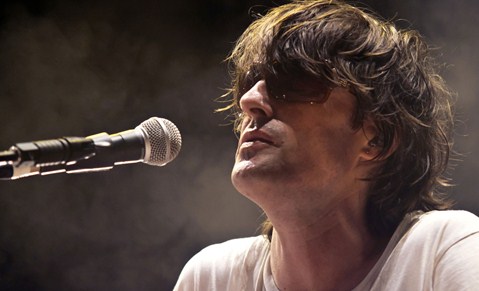
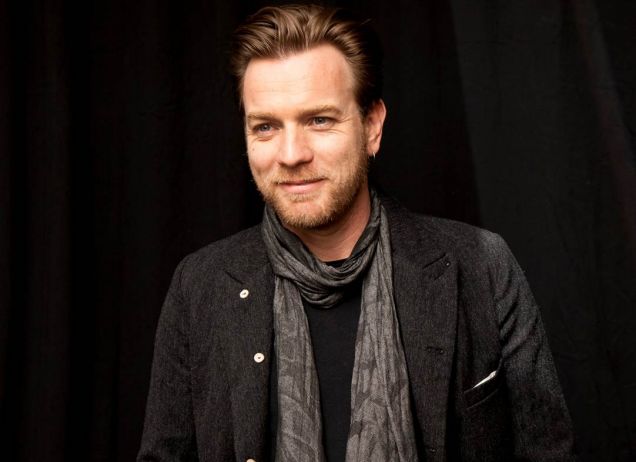
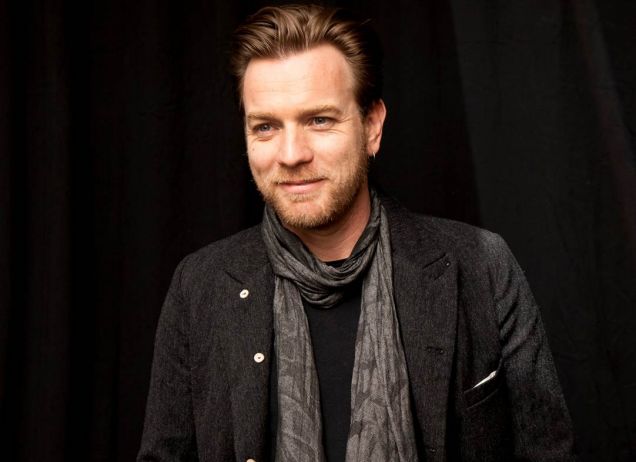
Damon Albarn has revealed that he’s keen to write another opera following the success of last year’s production of Dr Dee.

Speaking at the English National Opera (ENO) in London this morning (October 3), the Blur frontman said: “I’ve got a really good idea. I’m not going to say what it is, but it’s interesting.”

Albarn was at ENO to help launch Undress For The Opera, a new scheme to attract younger people to the opera with lower prices and a relaxed dress code. Albarn backed the idea, saying: “I quite like dressing up, but I also like to have the choice. I like the ritual of dressing up to go and see something, but at the same time you don’t have to.”

Continue reading at NME.

Beyond ‘Gangnam Style’ – A Beginner’s Guide To K-Pop

While Psy’s ‘Gangnam Style’ this week became the first K-pop song ever to top the British charts, some of the genre’s purist fans argue he isn’t the best introduction. In this week’s NME Grimes argues that Psy’s success is down in part to the fact that he’s actually a rarity: a K-pop star with a big personality. In the heavily manufactured world of K-pop, that makes him heroically odd.

Since the Nineties, South Korea have been churning out pop hits faster than David Guetta can say “Feat. Nicki Minaj” and their success in countries like Japan, Taiwan, Singapore and Thailand means their tunes are being pumped into the ears of about a billion and a half listeners. For a country of fifty million people, that’s some feat.

The man credited with getting the scene started is South Korean pop impresario Lee Soo-man. Rather than hosting talent shows like Western counterpart Simon Cowell, Soo-man’s system relies on recruiting very young singers and dancers who are then put through years of rigorous training before being forged into groups. His first major successes were late Nineties boy group H.O.T. and girl group S.E.S., who are credited with sparking the ‘Idol craze’ for manufactured pop groups. H.O.T. had a hit back in 1997 with the presciently titled ‘We Are The Future’:

Lee Soo-man now runs SM Entertainment, the largest record label in South Korea. Their roster includes a new boy band, Shinee, and two of today’s biggest girl groups: Girls’ Generation and f(x). Unlike Western acts who sometimes seem locked in a battle to out-scandalise each other, K-Pop acts deal in more wholesome subject matter and shy away from explicit references to sex and drinking. Girls’ Generation also have a massive nine members, which is indicative of the way the efficient K-pop machine can favour choreographed style over individual personalities.

One of the biggest groups to come all the K-Pop production line in recent years are BIGBANG. Their video for ‘Fantastic Baby’ features the boy band wearing Gaga-style outfits and embracing riot chic. Oh, and there’s a “Boom Shakalaka” breakdown that suggest someone somewhere along the line has been listening to Sly & The Family Stone. They end up slouched on thrones: Kanye and Jay-Z, they’re coming for you.

Big Bang’s girl group equivalents on their label YG Entertainment are 2NE1, and the two groups collaborated on ‘Lollipop’:

BIGBANG’s de facto leader G Dragon is also a solo star in his own right and his been in the limelight since he was 8 as part of a group called Little Roora – making even Justin Bieber look like something of a dinosaur. Unlike the distance former child stars like Britney like to put between their sweet Mickey Mouse club beginnings and their grown-up incarnations, G Dragon still dances around at gigs to recordings of himself singing as a cherubic child. To be honest he doesn’t look that much older now:

Solo rapper Psy is a relatively recent signing to YG, and had been seen as something of an outsider. If the crossover success of ‘Gangnam Style’ has surprised some K-pop fans, it really shouldn’t have. While Korean labels have long had their hearts set on cracking the lucrative western market with their well-drilled groups, by injecting a sense of humour into the already over-the-top world of K-pop videos it’s the man nicknamed the “Bizarre Rapper” who’s gone global.

Originally published by NME.

Why you need to check out Sziget in 2013

We never thought we’d enjoy an LMFAO show. It seems implausible, like having a really fun colonoscopy, but it happened. It must have been something to do with watching them while taking a trip on a Ferris wheel high above one of the most beautiful cities in Eastern Europe as the neon crowd ebbed and flowed below us. From that vantage point, even “Sorry For Party Rocking” has a sort of undeniable charm to it.

Sziget, a dreamlike music festival in Budapest, is the sort of place where implausible things become commonplace. Each day 75,000 sun-tanned people from all over Europe drift and flirt their way around an island in the Danube. They visit mock Communist fun fairs, where Hungary’s oppressive history becomes a chance to kick a mannequin from behind to see how far his hat flies off. They strap themselves into sky-bars which lift them 150ft into the airwhere they can sip rum cocktails with a man dressed in a novelty pirate costume. They slip away into the city to soak themselves in the ancient heated spring baths. At night they flit between banging house raves, gypsy parties, burlesque shows and surreal theatre performances. The organisers say that a full 30 per cent of the programme isn’t even music – we think they’re talking about the theatrical sideshows and not just offering a critical opinion of RizzleKicks.

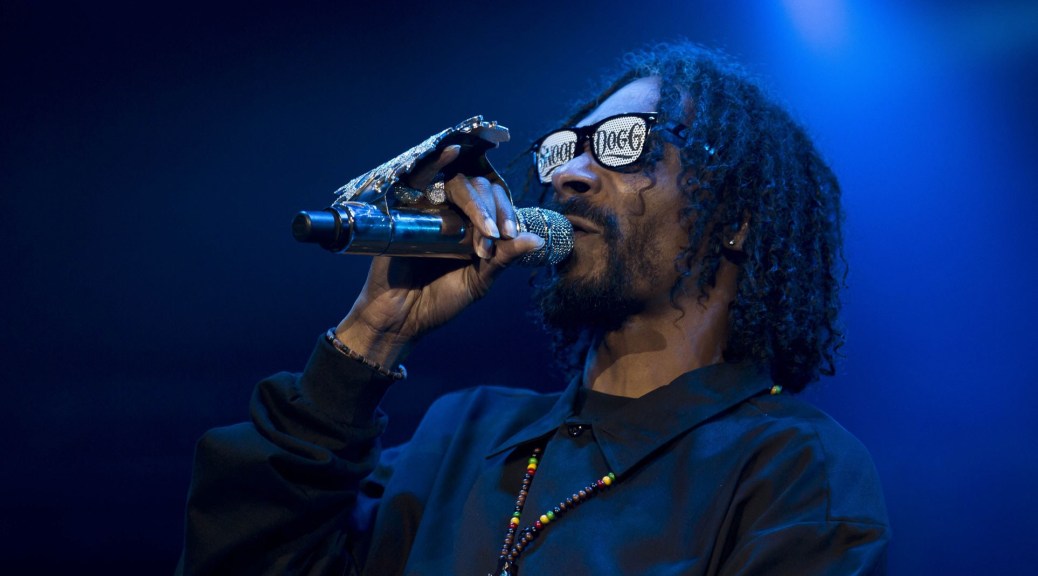
But if it’s music you want, Sziget has something for every palette. In the daytime we see the likes of Wild Beasts serving up their lush harmonies and dance with somebody to Mando Diao. As night falls the xx demonstrate how being coolly understated doesn’t necessarily preclude you playing epic festival shows and The Stone Roses prove that you don’t need a Delorean to travel back in time as long as you have a little bit of goodwill and a whole lot of classic tunes. Snoop Dogg steals the show. “No one throws a Eastside party like we do,” he proclaims at one point, and that goes for the former Eastern bloc too. He’s a natural showman, but even his crowd-pleasing, hit-packed set takes a turn for the bizarre when he’s joined onstage by “Nasty Dogg”, a mascot-style avatar of himself with a huge novelty spliff and a long furry penis that he unrolls from his shorts and whips around.

If there were any doubting Sziget’s claims to greatness, it’s surely dispelled by the presence of the Festival King himself. In Glastonbury’s fallow year, Michael Eavis took the chance to visit Sziget and was fulsome with praise. “It’s been a real delight,” he told us. “We’ve seen all the best bands and it’s a great atmosphere. It’s also cleaner than we are. Maybe that’s a Continental thing. We’re messier in Britain, slightly more philistine in nature.”

It’s not just the cleanliness that makes Sziget feel unique. The festival seems to stands at a confluence of history, where all the best ideas, art and music meet. It’s no longer implausible that The Killers, a band from Las Vegas, can stand onstage in Budapest singing: “Are you going to drop the bomb or not?” from “Forever Young”, a German synthpop song released by Alphaville when Hungary was still living under Communism. In a time of economic gloom and despondency, Sziget represents a more optimistic Europe. Afterwards we skip the traditional rooster testicle stew and head for the all-American hot dog stand. Francis Fukuyama should have come dancing here. This is what the party at the end of history looks like.

Originally published by British GQ.

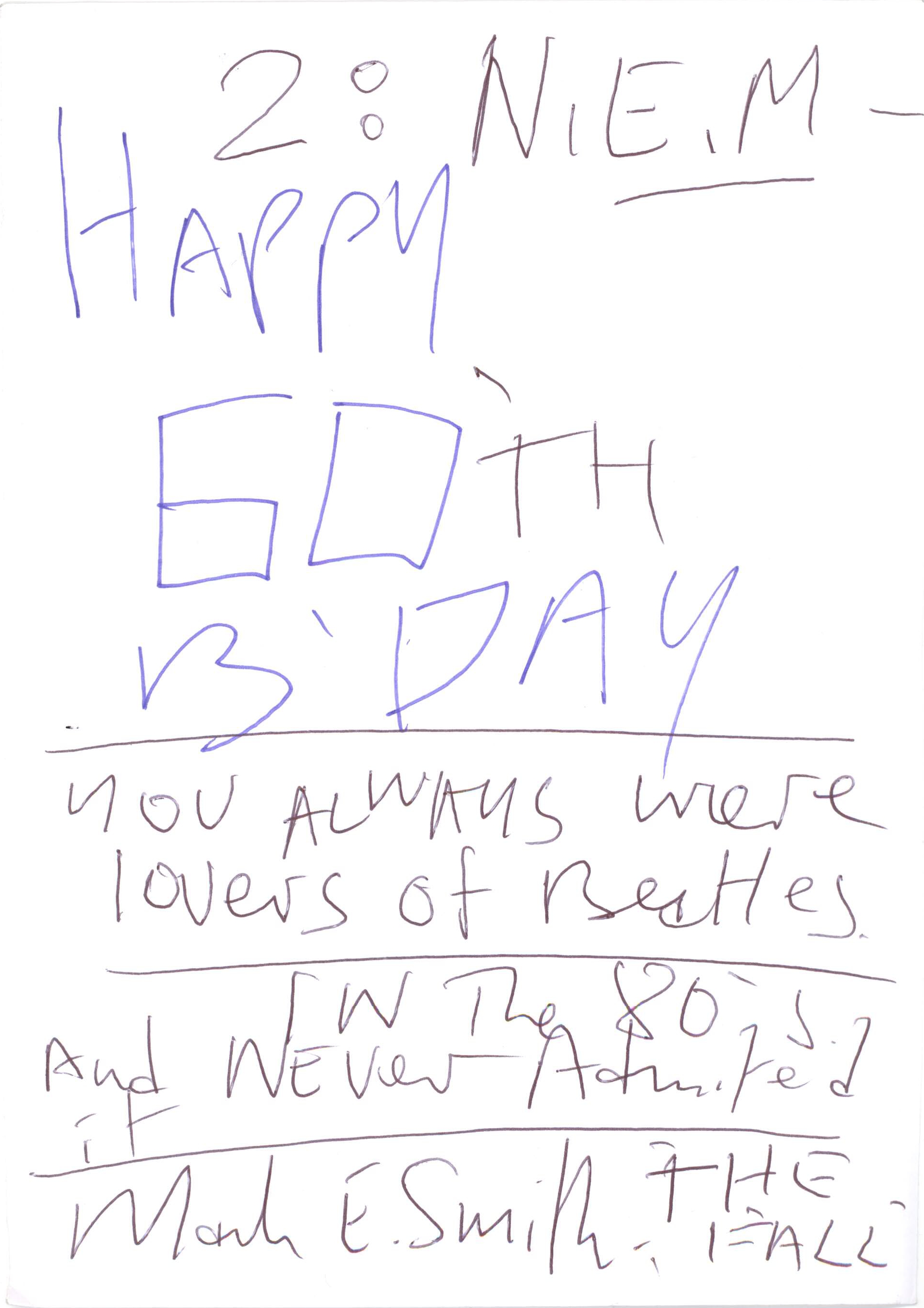
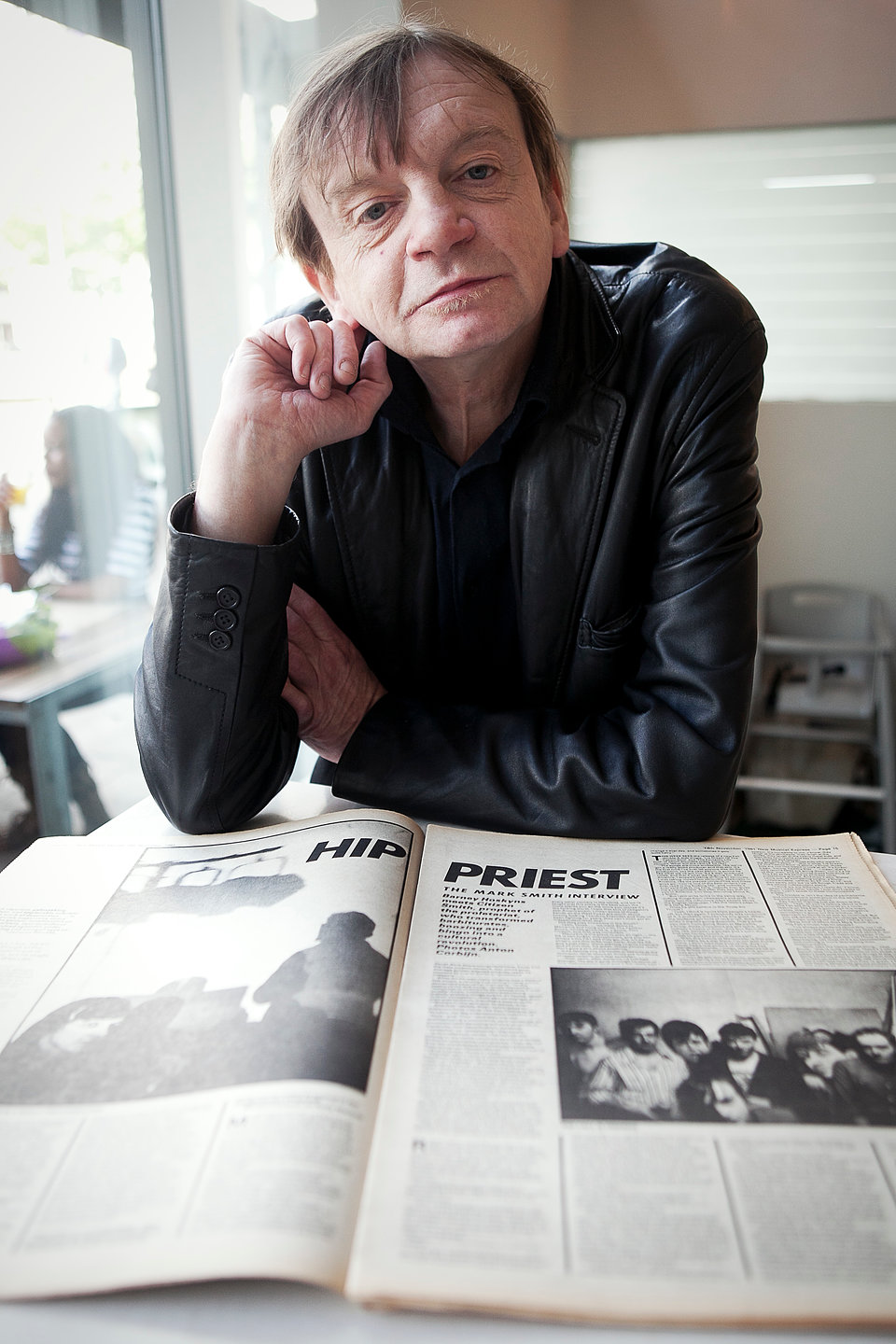
Mark E Smith wishes NME “Happy 60th B’day”

mes-nmeWhat do you remember about being interviewed for your first NME cover in 1981?

Mark E Smith: That was a time of great stress. I didn’t have time to read interviews, but I remember doing it very distinctly. We were just back from our second American tour. We’d been in Georgia where we just played ‘Hip Priest’ for about 20 minutes. When we came off this fella said to me: “If you get back up and do an encore, buddy, I’ll kill ya!” The actual interview with Barney Hoskyns was in this big hall in Birmingham. Nico was on with us that night as well. That was weird for me. Me and my best friends at school had liked the Velvet Underground since we were about 14. Then Nico moved in with John Cooper Clarke about four bloody streets away! I opened the curtains in me mam’s house one day and saw Nico walking past! Dead strange. In them days New York might as well have been Mars. I couldn’t really talk when I met her, I was still a bit starstruck. It was interesting to see the six or seven person line-up from 1981 in that magazine, and a bit depressing, really! They were great players but the ones I’ve got now are much better. I always think we haven’t even started yet. Coincidentally I did listen to ‘Hex Enduction Hour’ last week for the first time in ages and it was impressive. On reflection, I was a bit very nasty to the group!

In 1989 we got you together with Nick Cave and Shane MacGowan for an NME pop summit. You seemed hell bent on winding the other two up, is that right?

Of course! I remember it being a fun interview. Loads of people wrote to me, this was before the internet, saying: “I don’t know how you bleeding get away with saying things like that, Mark!” I don’t think I’ve talked to either of them since. Not surprising, I suppose.

What do you think of the bands that the NME have championed more recently?

I didn’t mind The Libertines at all. I thought they were alright. They wanted to meet me. When they played in Manchester they were put in this sort of compound with yellow accident tape roping them off. I thought, he’s not that bloody outrageous is he?

Were you pleased that the NME supported The Fall in the early 80s?

Yeah, you’ve got to remember that in them days no record company would come anywhere fucking near us. We’d left Rough Trade and we were on a heavy metal label. With The Fall you’re always living day-by-day. Nobody understood us. As John Cooper Clarke says: “It was the time of the ‘guitars are dead’ mob”.

Had you always been an NME reader?

Yeah, I first got the NME in about ’74 and I used to read people like Nick Kent and Charles Shaar Murray. I remember the first time we were ever in the NME was when Paul Morley mentioned us in a live review in about 1978. My sister still has a copy of that first cover that my mother bought. NME was always good because it had the freedom to put shit like us on the cover. That’s admirable. The Fall got bad reviews from the NME as well but it didn’t bother me. I thought that passion was good. A review in a newspaper might say something was “slightly disappointing” but the NME would say it was “totally crap”. I like reading bad reviews, I don’t read the good ones!

Originally published in NME’s 60th Birthday Issue, 29 September 2012.

Ned Beauman

Ned-Beauman-author-photo_GQ_12Sep12_pr_1280_426x639Ned Beauman’s two novels don’t read like the work of an author in his mid-twenties. At 27 he is by some margin the youngest author on the longlist for this year’s Booker Prize, yet he seems to have emerged already fully-formed as a mature and wildly inventive storyteller.  His debut novel, Boxer, Beetle, which simultaneously told the tale of Nazi memorabilia hunters and a eugenics-obsessed scientist, was published in 2010 and picked up a clutch of awards. His new book, The Teleportation Accident, takes as its starting point the plight of the Weimar émigrés fleeing Nazi Germany, but resolutely refuses to take itself as seriously as that subject matter mightsuggest. The protagonist, Egon Loeser, is more concerned with finding someone to have sex with him than political upheavals and eventually leaves Berlin in pursuit of a girl named Adele Hitler (no relation). Over chamomile tea in a hotel bar in Clerkenwell, Beauman discusses the parts of his books guaranteed to embarrass his friends, his love of Terrence Malick and how earplugs changed his life.

GQ: Your first book featured Nazi sympathisers while this book centres around a German character in the Thirties who’s completely politically oblivious. What is it about those morally dubious characters that appeals?
Ned Beauman: The main thing is that I still haven’t written about a character who’s on the right side. Either they’re on the wrong side or they’re not on any side. I wouldn’t find it as interesting. It’s like the fact that it’s impossible to write an interesting Superman story. I would find it really difficult to write a good story about a French resistance hero or a George Orwell-figure. There’s no contradictory pull of contempt at the same time as attention.

Your Thirties Berlin is really a thinly-veiled version of East London in 2009, right down to the anachronistic ketamine that everyone’s taking. Did you decide early on that you would have to knowingly acknowledge this piece of teleportation to the reader?
It’s acknowledged in the sense that it’s clear to the reader, but it’s not actually acknowledged in the world of the book. What I quite enjoy doing is writing things which really press up against the membrane of the fourth wall without actually breaking it. I like seeing how close I can come to being explicitly self-referential while still not breaking any of the rules of the ontic coherence of the narrative world.

If The Teleportation Accident had a soundtrack, what would it be?
The music that Drabsfahren writes is meant to be very much from that atonal Schoenberg, Berg, and Webern school, as are the soundtracks to Loeser’s place. There’d also be a lot of scratchy Thirties dance hall music. If you were trying to be a bit more multi-levelled you’d presumably put in The Big Pink or some comparable East London band of the 2010s to get the Dalston aspect. I didn’t listen to anything in particular while I was writing it, but my new one is set in London in the present day and is more explicitly music-influenced. I’ve been listening to a lot of Burial, Koreless and Holy Other.

Did writing your second novel feel like going back to square one, or were you better equipped this time around?
I definitely felt better equipped. I’d had an extra 80,000 words of practice at the technical stuff like sentences, characterisation and structure and so on. It was different though in that it didn’t come together quite as easily as Boxer, Beetle did. I didn’t really know what it was going to be about and I was very ambivalent about writing another novel about the Thirties. It doesn’t have a strong central relationship so I wasn’t sure what the emotional core would be. I’d resigned myself to people not really liking it so I wasn’t sure what my incentive was. It felt like more of a chore to write than the first one, until the end where I cut loose a little bit.

Which film has inspired you?
Days of Heaven, Terrence Malick’s second film. Malick’s an incredibly philosophical filmmaker. Arguably Tree Of Life is the most extensive presentation of his metaphysics and Thin Red Line is the most effectively articulated, but Days of Heaven is just the most beautiful, wordless painting of what he believes about God and the world. It’s ceaselessly beautiful.

You have a flair for writing similes. Do you collect them?
Not really. I collect a few when I see a particularly weird face or sunset or whatever, and I’ll occasionally put them in a notebook, but more often I have to come up with them while I’m writing. The simile has to match the tone of its surroundings and has to be like a little joke. Writing a simile that isn’t funny on some level is quite hard. A better writer wouldn’t use as many similes as I do – if possible you want to subsume your similes in metaphor. The major 20th Century stylists like Nabokov and Updike don’t use “as” or “like” as much as I do. They have a much more fluid way of bringing in comparisons, but I also like the Proustian approach of making a simile 500 per cent as long as the thing it’s describing. It’s kind of disingenuous – you as the narrative voice put in a simile under thepretext that you’re helping the reader to understand better what something looks like or feels like. In fact, it’s just an excuse to put in a little espresso shot of what you hope is lyrical beauty. It’s like putting a little flower arrangement in the sentence.

Can you recommend a good book?
I just read this great novel called Wittgenstein’s Mistress by David Markson. It’s from the late Eighties. It’s about the last surviving woman on earth. David Foster Wallace said that it was the high-water mark for experimental fiction in the US. It’s really funny, as well as being bleak and deep. It’s quite Beckett-y.

What’s the best advice you’ve everreceived?
Somebody told me to start wearing earplugs and it completely changed my life. On planes, in the library, trying to get to sleep, on trains, when your flatmate’s playing the guitar, all the time. There’s never a bad time to put earplugs in. They’re the kind of thing you can reject as a bit lame, but somebody told me to do start wearing earplugs and it turned out to be great advice.

Are you good at holding court in the pub?
No, I’m not. I’m reasonably good at talking onstage, but actually holding court in a pub is all to do with power dynamics which I don’t think has anything to do with fiction. The most fun I’ve had in the pub with my books is people trying to read out the sex scenes from beginning to end without giggling or having to stop. I’d have no problem with doing it but some people find it surprisingly hard. The gay sex in Boxer, Beetle really makes people blush.

Originally published by British GQ.

The Real James Bond

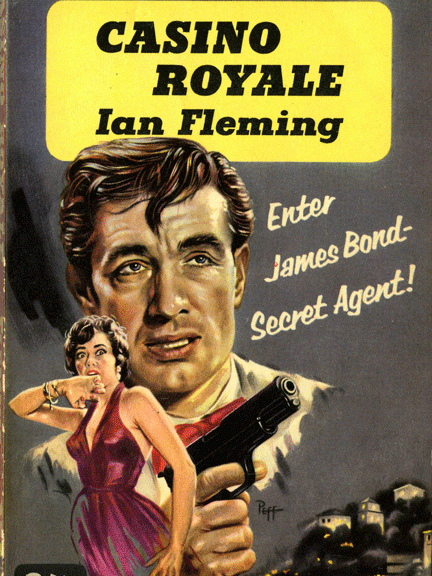
james-bond-casino-royaleA psychological profile of Ian Fleming’s literary James Bond.

Bond as Swordsman
As countless adversaries have learned, James Bond is not a man easily bested. He skis, fights, drives, plays golf and swims underwater with prodigious ease, and is somehow able to give relentless chase to foes on land or sea while still smoking 60 Morland’s cigarettes a day – that is until he visits a health farm in Thunderball and cuts down to a more circumspect 25. Fleming knew that his hero must be the most alpha of alpha males, but there’s at least a nod to his fallible humanity in the fact that he is occasionally beaten. While he’s the best marksman in the Secret Service, for example, he’s still outshot by his instructor. Beyond all his other talents, it’s with women that he really comes into his own. In Moonraker Fleming writes that while not on assignment Bond makes love “with rather cold passion, to one of three similarly disposed married women”, but while on the job things get rather more interesting. Part of Bond’s appeal is that his charms belong to a simpler time: one in which women are to be “softly wooed or brutally ravaged, never pandered to or pursued”. His success breeds a sort of contempt. In Casino Royale he reflects on the “conventional parabola” of a relationship and confesses that it bores him. He’s only happy facing a challenge, and the women he does woo are often initially distrustful of men only to be entirely won over by Bond’s sheer force of character. He appeals to the male fantasy that if you were just a little more suave no woman would ever remain tantalisingly out of reach for long. For 007, it seems, there is simply no such thing as an unattainable woman. At the conclusion of Goldfinger he ends up in bed with Pussy Galore, a lesbian. “They told me you only liked women,” he says, to which she replies: “I never met a man before.”

Bond as Outsider
While the name “James Bond” is now synonymous with adventure in far-flung locations, Ian Fleming said in 1958 that he had chosen it because it was “the simplest, dullest, plainest-sounding name” he could find. The reason? “Exotic things would happen to and around him, but he would be a neutral figure—an anonymous, blunt instrument wielded by a government department.” For all his insubordination, that’s exactly what Bond is – a tool of the Establishment. Yet at the same time he appeals to us precisely because he manages to remain an outsider. Bond enjoys his proximity to power, and the licence to kill and unlimited expense account that come with it, but he’s simultaneously straining at the leash. In the post-war Fifties he combined a sense of loyalty to his country with the individual’s desire to cast off the shackles of rationing and austerity. Today, his appeal remains for anyone who’s ever wanted to tell their meddling boss that they know best how to do their own job. Even Bond can cross the line, however, and in You Only Live Twice his 00-status is revoked by M when his drinking and gambling gets out of hand. Before dismissing him, M reassigns him and hands him a final, seemingly impossible mission.gq-october-cover In the end, Bond is relied upon by the Establishment that he refuses to ever entirely become a part of it. At the conclusion of The Man with the Golden Gun, Bond learns that the Prime Minister wishes to offer him a knighthood. He tells his companion Mary Goodnight to send a refusal, pointing out that he is “a Scottish peasant and will always feel at home being a Scottish peasant.” He adds: “I just refuse to call myself Sir James Bond. I’d laugh at myself every time I looked in the mirror to shave.”

Originally published in the GQ Men Of The Year issue, October 2012.

Nick Cave’s Lawless life

Jet-lagged amid a gruelling promotional schedule, Nick Cave is so relieved that our interview is taking place off camera that he relaxes and makes a wanking motion. Then he sighs with a sudden realisation. “Your opening line is: ‘He relaxes and makes a wanking motion’, isn’t it?” he says. “I can see it now.”

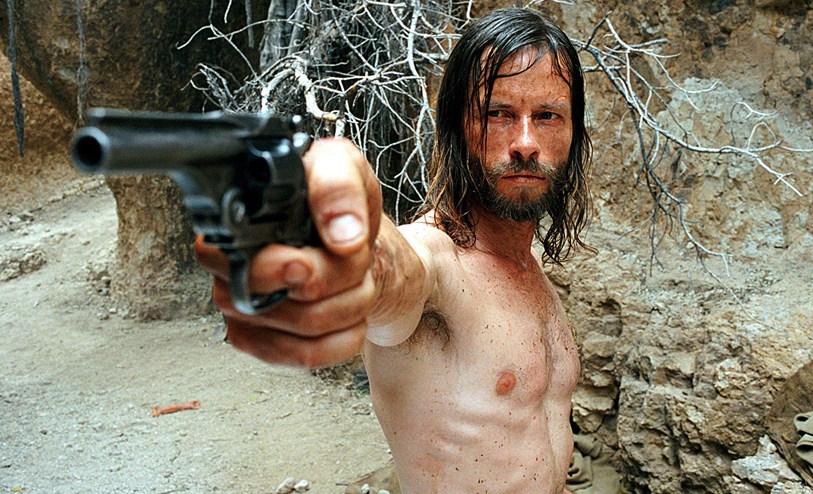
Cave, it seems, is always writing. Since the release of his 14th record with the Bad Seeds, 2008’s Dig, Lazarus, Dig!!!, the prolific rock polymath has published his second novel, The Death of Bunny Monro, released a second album with his incendiary side-project Grinderman and written the screenplay and score for the brutal moonshine gangster drama Lawless. John Hillcoat, the film’s director, still appears faintly bewildered by his friend’s work rate despite over 20 years of collaboration. Having met on the Australian post-punk scene in the late Eighties, Hillcoat cast Cave as a violent inmate in his 1988 debut Ghosts… Of The Civil Dead about a privately-run maximum security prison. It was 2005’s stunning outback western The Proposition, from an original screenplay by Cave, that grabbed Hollywood’s attention and led to Hillcoat landing the job of directing the big-screen adaptation of Cormac McCarthy’s The Road.

When Hillcoat read Matt Bondurant’s 2008 novel The Wettest County in the World, about his family’s past as outlaw bootleggers, there was really only one name in the frame to adapt the savage yet cerebral tale for the screen (albeit with the new title Lawless). Today, Cave is dressed in a three-piece Chris Kerr pinstripe suit, golden shades dangling from his waistcoat, while Hillcoat is more understated, pairing a navy t-shirt with a double-breasted blazer. Together, the pair discuss Tom Hardy’s lesbian tendencies, why it’s easier to write a screenplay than a song and which of the Lawless  cast is their best-dressed British man.

GQ.com: Going right back to Ghosts… Of The Civil Dead, your work together tends to be characterised by a preoccupation with brutal violence and specifically with…
Nick Cave: Blokes.

So it was surprising to learn that Tom Hardy apparently decided to play his character as if he was an “old lesbian”. Was that something you envisioned?
NC: Yes, in fact I thought all the characters were all old lesbians. [Laughs] No, he had a habit of coming up to you during rehearsals and whispering in your ear: “I’m going to play it like an old lesbian.” Then he’d walk off and you’d be left there going: “Did he just say ‘old lesbian’?” At first we didn’t know if he would be the best possible actor or the worst possible actor for the part because of all these ideas he had, but it became very clear that he had the long game in mind. He knew his character really well and he knew how effective it would be.
John Hillcoat: His character, Forrest, has all this physical power and is like a snake when he strikes: lethal and fast. What I think Tom wanted to explore was the family side and the female, matriarchal qualities that he had to take on as opposed to the obvious hitman stuff.
NC: He wanted scenes put in where he was darning socks, sitting on the porch knitting, all that sort of thing…
JH: We had to draw the line somewhere!

There’s an anachronistic bluegrass cover of the Velvet Underground’s “White Light/White Heat” on the soundtrack. Was that a deliberate decision to draw a parallel between the failure of prohibition and the contemporary war on drugs?
NC: Yeah, for sure. We weren’t doing it with the story, but that was our way of making those issues contemporary as well. We did feel that we were sometimes in danger of pulling the audience out of the story by putting contemporary songs in, so we had them done ‘of the time’ by people who have one foot in that era like Ralph Stanley.

The history of cinema is littered with mediocre literary adaptations. Did you have any particular concerns about tackling Bondurant’s novel?
NC: Not when I was actually writing it, but now that I’ve seen the sorts of things that didn’t make it from the script into the final version I would have been more concerned. There were details of the book that were so beautiful and lyrical and were just there as elements of the story. In the end, they weren’t seen as serving the thrust of the tale so they were slowly cut away. That would have worried me much more when I was writing it if I’d known that. It’s very much that detail that reverberates around the characters that makes that book so special. The story is a basic sort of revenge story, tit for tat, and losing some of that stuff tipped the balance slightly – but all screenwriters are going to say that!

If rights were no issue and you could adapt any book for the screen, which would it be?
NC: I’ve got a book in mind but I don’t want to say what it is because it might actually happen. The problem with books, now that I’ve written one, is that the idea of adaptation is so much easier than sitting down to write something new. People send me books all the time that they want adapting but there is one great book out there – I just can’t say what it is.
JH: I’d still like a stab at Cormac McCarthy’s Blood Meridian, but there’s a long queue on that one.

Nick, you’ve also just finished making a new Bad Seeds record. Do you think script-writing has changed your song-writing?
NC: Look, it totally keeps it alive because once you’ve been involved in Hollywood you just run screaming back to music where you can just sit in a room and deal with your band. When you’re making a film there are so many people involved that you get opinions and notes from people and you don’t even know who they are. I find that quite difficult and it wears you down. It’s a joyful experience to go back to making music. It keeps it energised and I don’t think without doing other stuff I’d have been able to make 15 or 16 Bad Seeds records.

But has writing screenplays actually informed the way you write narratives in song?
JH: Didn’t you say that writing songs is much tougher?
NC: Oh, it is. Writing songs is actually difficult. Writing a script is…
JH: …a no-brainer!
NC: It’s relatively easy and actually really exciting. Writing The Proposition was probably the most fun thing I’ve ever done in terms of writing because I didn’t know anything about it. I didn’t know what you could do and couldn’t do in a film. I was like a kid with a box of crayons: “Oh, let’s have this happen!” We did get away with a lot withThe Proposition,but sadly I think the more you learn about the art of script-writing the less attractive the whole process becomes.

You don’t want to see how the sausage is made.
NC: Can I use that for the next interview? Exactly. You know when you write something down that probably no-one’s ever going to do it, but you try to get away with it. There are things which aren’t there just to push the story along and it’s often those things in films which are so amazing and rare. Next time I’m going to write a film with no story at all, just a collection of random details.
JH: I’m attached to direct…

Guy Pearce told us that The Proposition is his favourite film that he’s worked on. What made you cast him in such a wildly different role in Lawless?
JH: I think he disappears into so many roles because he’s so remarkably nuanced and subtle. He kind of vanishes. I think all three of us were very keen on him doing something where he actually does the opposite and doesn’t hold back. It was inspired by these Cagney-like characters who are larger-than-life, and also of course by Nick’s suits and hair colour. [laughs]
NC: There’s something so tightly-wound about Guy and that’s what really drew us to him initially. The way he was in LA Confidential and Rules of Engagement  or any of those roles where he has a grinding jaw and looks like he’s set to go off. He never actually does go off and that’s an incredible thing to watch. He was first in our minds for The Proposition. WithLawless, in the script that we sent him initially his character Rakes was a small-town country cop, as he is in the book. Guy wanted to play something different and more memorable, so we played around with Rakes quite a lot.

Finally, who would you say is the best-dressed British man?
JH: I’d nominate Nick but I guess he’s not actually British. Maybe Tom Hardy for his cardigan. The team have been calling it the “Hardigan”. Or Gary Oldman, when he suits up.
NC: The British can’t dress for s***. That’s just a general observation from an Australian. That ought to endear me to everyone in this country. I’ll be up there with Germaine Greer!

Originally published by British GQ.

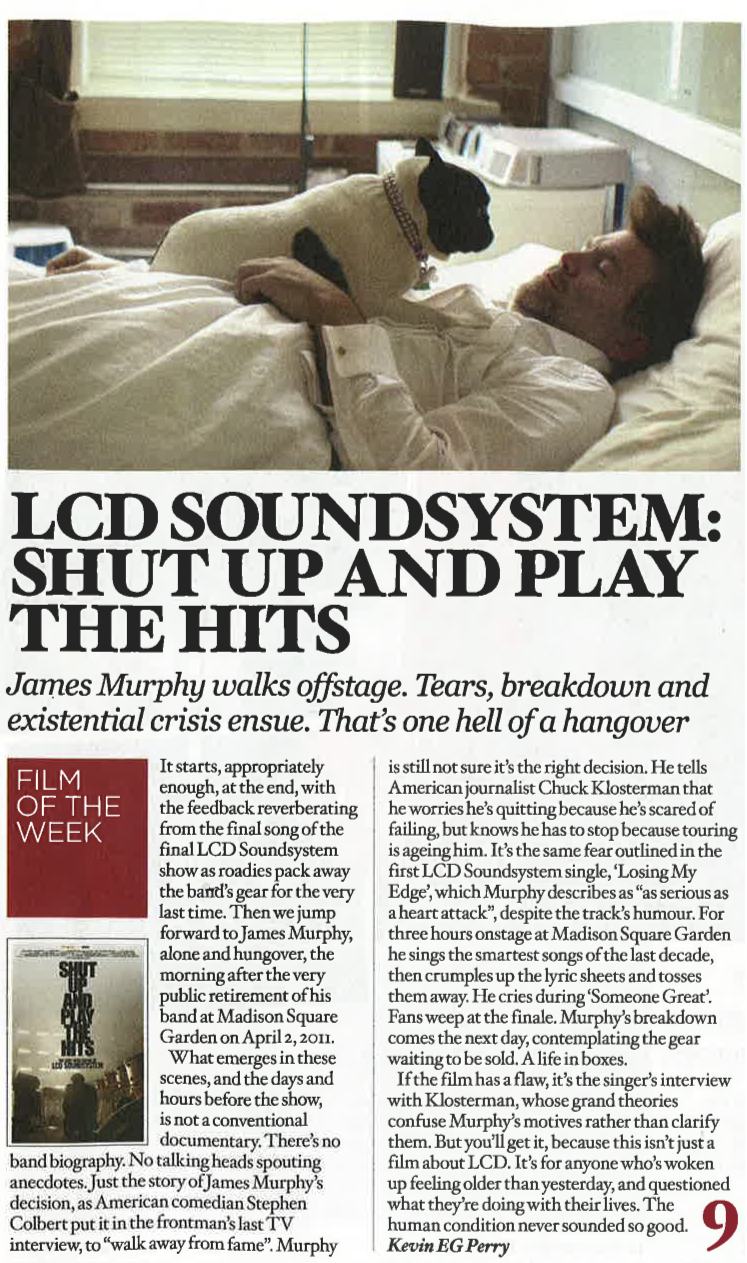
Shut Up And Play The Hits

It starts, appropriately enough, at the end. It starts with the feedback reverberating from the final song of the final LCD Soundsystem show as roadies pack away the band’s gear for the very last time. Then we jump forward to James Murphy, alone and hungover, the morning after the very public retirement of his band at Madison Square Garden on April 2, 2011.

Continue reading at NME.

Reading Festival 2012

Alt-J spring a surprise
BBC Introducing, Friday, 14:40

Alt-J turned up early and eager to make their Reading debut three hours ahead of their scheduled slot. The crowd initially seem nonplussed as the a cappella harmonies of ‘Interlude I’ struggle against the earth-shaking noise emanating from the main stage, but the band riding high on their acclaimed debut ‘An Awesome Wave’ soon win them over. When they close their short set with the smooth groove of ‘Matilda’ newly-converted fans form triangles with their fingers and chant for more. A brief introduction, but Alt-J are shaping up for bigger things.

The Cure’s marathon victory
Main Stage, Friday, 21:00

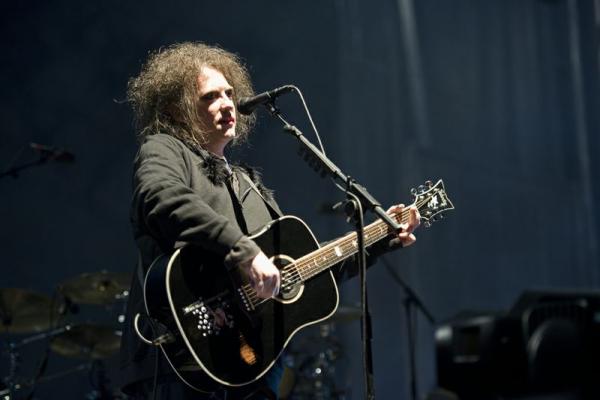
“Thank you, and hello… again,” smiles Robert Smith, cloaked in mist and mystery, as The Cure return to Reading Festival after a third-of-a-century wait. He’d promised that their epic two-and-a-half hour headlining set would be an education for the band’s young fans and they didn’t hold back from delving deep into their back catalogue. Most of the audience weren’t even born the last time The Cure played here, in 1979, but timeless classics like ‘In Between Days’ and ‘The Lovecats’ have every soul in the field twirling and waltzing. At other times, Smith’s kohl-rimmed eyes seem close to tears. ‘Pictures Of You’ is so deeply sad it makes you wonder how he summons the emotional fortitude to sing it show-in, show-out. The sinister ‘Lullaby’ is a work of condensed theatre. He doesn’t talk much or pause long between songs, but Smith still manages to throw in a few flashes of humour. “At least it’s the right day, eh?” he shrugs before the glorious ‘Friday I’m In Love’. The band around him are on imperious form, with ex-Bowie sideman Reeves Gabrels on guitar and bassist Simon Gallup stalking the stage like Paul Simonon in his prime. Gallup’s best moment is ‘The Forest’ which he ends by tearing at his bass like a lumberjack hacking up wood. Inevitably there are times during the sprawling set that the pace slackens and the atmosphere lulls, but it’s never long before the band shake themselves out of it. If the main set is designed to teach and test the fans, the triumphant encore is their reward. ‘The Lovecats’ is so irresistibly danceable that even the most lethargic camper finds their feet moving. Perhaps the band are nodding to their own and the audience’s stamina when they suggest ‘Let’s Go To Bed’, but they still find time for ‘Why Can’t I Be You?’ and an ecstatic ‘Boy’s Don’t Cry’. Before that final song, Smith says: “33 years on and still standing here singing…” As he leaves he adds: “See you again!” Hopefully sooner this time.

Enter Shikari smash the ‘System…’
Main Stage, Saturday, 17:30

Rou Reynolds has only been onstage for about 45 seconds when he decides to leap off it. Enter Shikari’s opening double punch of ‘System…’ and ‘…Meltdown’ has just begun and their hyperactive frontman is already throwing himself, still head-banging, from not just the stage but any raised platform in sight. It’s a hell of an entrance, and the assembled masses cheer the band like returning heroes fresh from battle. “We are Enter Shikari. We’ve been abusing musical genres using technology since 2003,” says Rou by way of introduction, “What are you saying, Reading?” What Reading is saying is that they’re as ready as he is to throw themselves around to tunes like ‘Sorry, You’re Not A Winner’ and ‘Destabilise’. The band keep faith with the setlist that’s proved so successful for them across festival shows this summer, and pounding riffs and beats flow into each other seamlessly. The only times Rou ceases his perpetual motion is when he grabs hold of the huge dashboard he has set up on stage to drop the band’s mighty dubstep wobble. It has more knobs and dials to twiddle than the cockpit of a Concorde, and it’s just as likely to smash the sound barrier. Before ‘Juggernauts’ Rou announces: “A few years ago we broke the world record for crowd surfing to this song.” They come close to breaking that record again as hundreds of bodies ride the wave towards the stage. They don’t curb their impassioned rhetoric on the big stage, and while ‘Gandhi Mate, Gandhi’ Rou tells the adoring crowd: “Our lives begin to end the moment we fall silent about the things that matter.” The rain starts to fall but it can’t dampen the spirits of the tightly-packed audience and it soon stops trying. “There are 627,000 hours in an average human lifespan,” Rou informs us before ‘Zzzonked’, “We appreciate so much that you spent one of those hours with us.” Nobody seems to regret their choice. This is the band’s fourth year running playing Reading, and while on ‘Destabilise’ they sing: “We don’t belong here” they can’t be talking about the main stage. Thousands of moshing fans say this is exactly where they belong.

At The Drive-In finally take command
NME Stage, Saturday, 22:15

Cedric Bixler-Zavala arrives onstage pushing a broom. “What the fuck are you doing here?” he asks the audience in mock surprise, “We still have to clean this fucker.” Tidying up after The Cribs hacked apart their instruments isn’t exactly what he would’ve expected from their long-awaited return to the UK, but he’s in high spirits. “I just got in from Vegas and guess whose ass I was taking photos of?” he jokes. The band launch into ‘Arcarsenal’ to open a set mainly drawn from ‘Relationship Of Command’. They admit it’s “kind of funny” to be touring the album 12 years on and it’s nowhere near the biggest crowd the NME stage sees over the weekend, but the adoring faithful never thought they’d see this. The band themselves still seem unsure about their reunion. Guitarist Omar Rodríguez-López spends the entire show looking like he’s stuck with a charmless man at a party he’d rather not be at. Thank God for Cedric, who moves like he’s getting an electric shock every time he touches the floor. The band might not be having the time of their lives, but even Omar’s frown can’t dent the sheer visceral power of closers ‘Catacombs’ and ‘One Armed Scissor’.

Originally published in NME, 29 August 2012.

Dntel: “Sometimes a song kind of turns 3D.”

dntelJimmy Tamborello is a bedroom producer. At least he was until a couple of years ago, when he finally moved his studio out into its own room at his home in LA. Still, the man better known as Dntel didn’t do too badly out of that bedchamber. It was, as they used to perpetually say on MTV Cribs, “where the magic happened.”

A pioneer of glitch and the sort of understated electronica that’s become increasingly popular over the last decade, his 2001 album Life Is Full Of Possibilities still sounds fresh and vital today. There are plenty of exquisite moments on that record, but the track which was to prove most fruitful was his collaboration with Death Cab For Cutie singer Ben Gibbard, ‘(This Is) The Dream of Evan and Chan’. The pair liked the track so much that they decided to make an album together as The Postal Service. The result, Give Up, was released on Sub Pop in 2003 and went on to become the label’s biggest-selling album since Nirvana’s Bleach.

Tamborello returned to the name Dntel for 2007’s Dumb Luck, which featured collaborations with Conor Oberst and Jenny Lewis among others, but when he started work on new album Aimlessness he initially decided he wanted to move away from vocalists altogether. “I made most of this album instrumentally and at one point planned on it all being instrumental,” he says, “but then in the last couple of months we decided to add little bits of vocals. Nite Jewel is friends with my girlfriend, so that’s kind of how that collaboration happened! She’s someone that I hadn’t worked with before and I really like her voice. I thought it could work for a song. I gave her almost the whole album as instrumentals and had her tell me what she wanted to sing on.”

The track she plumped for, ‘Santa Ana Winds’, is one of the highlights of a gorgeous, understated ramble through sweet electronic soundscapes. “I tend to turn on instrumental electronic music more than other music these days,” Tamborello explains. “I have this thing of just liking music on in the house that’s not super-aggressive and forcing you to pay attention all the time. Stuff that elevates the mood but you can choose how much to pay attention to it. You can take different things from it.”

Given that he’s inspired by the sort of music fills people’s lives almost without them realising, does he consider how people will be listening to his songs when he makes them? “I don’t think about it too much,” he says. “I rarely know what sort of song I’m making while I’m making it, so to think about the audience for it too would be really hard. I was making a lot of these songs as I was preparing to go on tour, so I pictured them being in clubs. I guess I started making these big dance hits, but then when they get finished they’re not that at all! A lot of the electronic music I like is club music, so I want to be like that but it doesn’t come out that way.”

Listening to his intricate production work, and considering the five year gap since Dumb Luck, it seems easy to imagine that Tamborello has a painstaking perfectionist streak. I ask if it feels like starting over from his beginnings each time he makes a new record, and he pauses for a while before saying: “It’s a little bit like starting from scratch. I never mean for it to take so long between albums.” He sighs. “I really like the idea of putting out a lot of albums and taking chances and not really worrying about what people think. Just building up the albums, but I haven’t really done that because each one has taken me so long.”

For this record, though, there was a conscious attempt to go back to his roots: “I was looking back at my older music from before Life Is Full Of Possibilities, at what I was doing in the 90s which was more electronic and melancholy. I tried to recapture some of that energy and that mood, which is also there on Life Is Full Of Possibilities. I felt like ‘Dumb Luck’ was going in a direction that, by the time it was done, was barely to my tastes. I like the album, but if I put it up against other records that are like it I probably wouldn’t like those other records! I needed to re-figure out where I was going.”

The direction he’s found himself heading in can perhaps best be summed up by the instrumental ‘Bright Night’, which marks something like the centre point of the album and which he describes as perhaps his favourite moment on the record. “It’s a real visual song for me,” he says, “It makes me picture things in my head.”

It’s that alchemy, the way Tamborello’s music can draw pictures using the most minimal of palettes, that makes a Dntel record so rewarding. He just wishes he knew how he does it: “It’s not always visual but I like sounds that feel physical, like they have a texture or shape to them. I never really know how to get that. It just kind of happens accidentally. Sometimes a song comes out sounding kind of flat, which can be okay too, but sometimes they kind of turn 3D.”

Originally published by Drowned In Sound.

What’s My Name? Chatting to “Snoop Lion” at Sziget

“Heavens to Betsy!” exclaims Snoop Dogg as he stumbles into the brightly-lit press room backstage at Sziget festival in Budapest, Hungary. The rap legend was still on a metaphorical high after finishing a headlining set which included classics like “Nuthin’ but a “G” Thang” and “Gin & Juice”, as well as more recent tracks such as his Wiz Khalifa collaboration “Young, Wild & Free” and a mumbled version of his Katy Perry hook-up “California Gurls”. Despite his much discussed rebranding as “Snoop Lion” he performed wearing shades bearing the name “Snoop Dogg” and played just one reggae track, “La La La”, the first single from his forthcoming album Reincarnated. Settling down and sparking up, Snoop opened up about the influence of Bob Marley, collaborating with Diplo and the secret of his longevity.

Snoop Dogg on…

The reaction to changing his name to “Snoop Lion”…
“I’m gonna always be Snoop Dogg, because that’s who I am. Snoop Lion is for when I’m making reggae music and is a progression of Snoop Dogg. I do believe that any time you’re doing what I’m doing, you have to have progression and growth. I feel like my fans have grown with me and understand what I’m going through. They don’t get mad when I make decisions to change, to add on or to enlighten. I believe they know who I am as a person because I’ve been so personal with them since day one. They never react with surprise, but with excitement.”

The legend of Bob Marley
“The reason Bob Marley is such a heavy influence is that I feel like we have the same spirit and way of life. His kids are like my brothers. It’s like we all grew up together. That reassures me that I’m a part of the seed that he planted. When he started making music and putting out songs it reached all the way to me during my upbringing. Even now, 20 years later, it’s still influencing me. I feel like I have to make a reggae album. I feel like I have to go through what I’m going through because I’ve done so much in the rap world, in terms of changing the rap game and elevating it. Now this other genre is calling me because it needs a spotlight. It needs to be talked about and it needs to be glamourised.

Converting to Rastafarianism
“The thing about the spirit is that when it calls you, its not that you have to wake up and put a plan together about what you’re going to do or who you’re going to be. The spirit is who I was anyway. The spirit was in my way of life and my liberty. It was always me anyway, it was just a matter of me waking up to that. I found out about my origins and learning about it made me change my lifestyle a little.”

The best advice he got from the Rastafarian priests
“Just to be strong. Rastafari has always been under scrutiny and it’s always been criticised. It’s always been an ‘outcast’, so to speak. When I embrace it I have to take on all that: those years of struggle and Rastafari not being respected. They’ve been held as villains and bad guys. I have to put a whole new look, feel and style on it because its grown to a point where its reached me. I know I have a lot of influence and a lot of people following me. I’m not trying to convert nobody, I’m just trying to live a righteous life. Hopefully if I put a clean glass next to a dirty glass, and I drink from the clean glass… you know the rest.”

Working with Diplo
“Diplo, or Major Lazer, has been heavy in the reggae scene for years. They’ve brought some old school cats back to life and given them the chance to sing again and do their thing. They’ve put a lot of attention on reggae music and Jamaica. They have a foot in the streets and understood what I was looking for. As producers, I felt that they would put the right team around me to project the sound that I was looking for. I wasn’t looking to make a Snoop Dogg album and then make it sound reggae. I was looking to make a reggae record with no Snoop Dogg, no rapping, just straight reggae. Putting the right team together was important, and I felt that a strong producer like Diplo would be able to give me the world. It turns out awesome. I can’t wait to play it for everyone.”

His connection to his fans
“One thing about my music, I love to keep it up close and personal. I love to be up close and personal with the people who follow me. Giving interviews means a lot. Sometimes record labels say not to but personally I love to do it because that way you get the story directly from me. Whenever I’m in Europe, or in other parts of the world where people don’t get the chance to see me all the time, I like to make it special. I want it to be an experience that they’re going to be talking about for years and years. I want them to feel like it’s their show. It’s not me coming to town and stealing, it’s me coming to town and leaving a piece of me behind.”

Originally published by British GQ.

(Dirty) Business at London 2012

Adidas: “We’re not in the welfare business”

Official Olympics sponsor Adidas recently reported that they are unable to provide evidence that they pay their Indonesian workers any more than 34p an hour, and confirmed that in at least one supplier factory they are failing to pay even that amount. However, it would seem that chief executive Herbert Hainer has missed a memo. Speaking to the Independent while in London for the Olympics, he flat-out denied paying workers that rate, before adding: “We are not in the welfare business. Our job is to make a profit.”

Olympics Boss admits selling out to McDonalds and Coca-Cola

The president of the International Olympic Committee, Jacques Rogge, has admitted in an interview with the Financial Times that it “was not an easy decision” to allow McDonald’s and Coca-Cola to sponsor the Games until 2020. While he acknowledged that consuming their unhealthy products would not be a good step towards becoming an Olympian, he confessed that financial concerns won out. As the FT reported: “The growing financial demands of the Olympics were making it harder for the movement to hold on to its long-cherished values, which include taking care of one’s health.”

Dow Chemical slump

Dow Chemical Co. have announced that their 2012 second-quarter net income has fallen by 34 percent. Its share price also took a hit, falling 3.7 percent. The company are blaming weaker demand and the ongoing economic crisis, but they’ve have also been contending with one of the world’s worst ongoing PR failures: their handling of the Bhopal tragedy. In December 1984, a United Carbide India pesticide plant in central India began leaking poisonous gases and other toxic chemicals, eventually killing 20,000 people, poisoning 500,000 more and causing decades of disease. Union Carbide was bought by Dow Chemicals in 2000, but they have refused to assume any liability for the tragedy. The Indian Olympic Association have tried to pressure the London Olympic Games Committee to drop Dow as a sponsor as their stance clearly conflicts with the ethical standards of the Olympics.

Rio Tinto tarnish Olympic medals

Global mining giant Rio Tinto have the prestigious and lucrative job of providing all of the official Olympic medals at London 2012. However, they’re also guilty of human rights violations across the globe. At the end of last year, 780 unionised mine workers in Quebec were locked out for opposing plans to replace retiring workers with contractors who would earn 50% less in wages, with no pension and no union. Rio Tinto executives were also found guilty of bribery and stealing commercial secrets in China and sentenced to lengthy jail terms, while at the Kelian Gold Mine in Indonesia they’ve been accused of forcible evictions, contamination of local waterways and other human rights violations. Hardly medal-worthy behaviour.

Would Atos allow athletes to claim support?

Atos, the private company behind the controversial computerised test which judges whether benefit claimants are unable to work have drawn the ire of disability activists by sponsoring the London 2012 Paralympics. The company is paid £100m a year under a contract from the Department for Work and Pensions and tests around 11,000 incapacity benefit claimants every week. However, MPs and disability campaigners alike have highlighted their “flawed” approach which has already left thousands of genuinely disabled people unable to claim essential benefits. Tanni Grey-Thompson, who won 11 Paralympic gold medals as a wheelchair athlete, has said that disability benefit cuts will affect the development of top athletes while Tom Greatrex, Labour MP for Rutherglen and Hamilton West pointed out: “It is a cruel irony that the company causing so much distress to thousands of disabled people across the country is now sponsoring the Paralympics.”

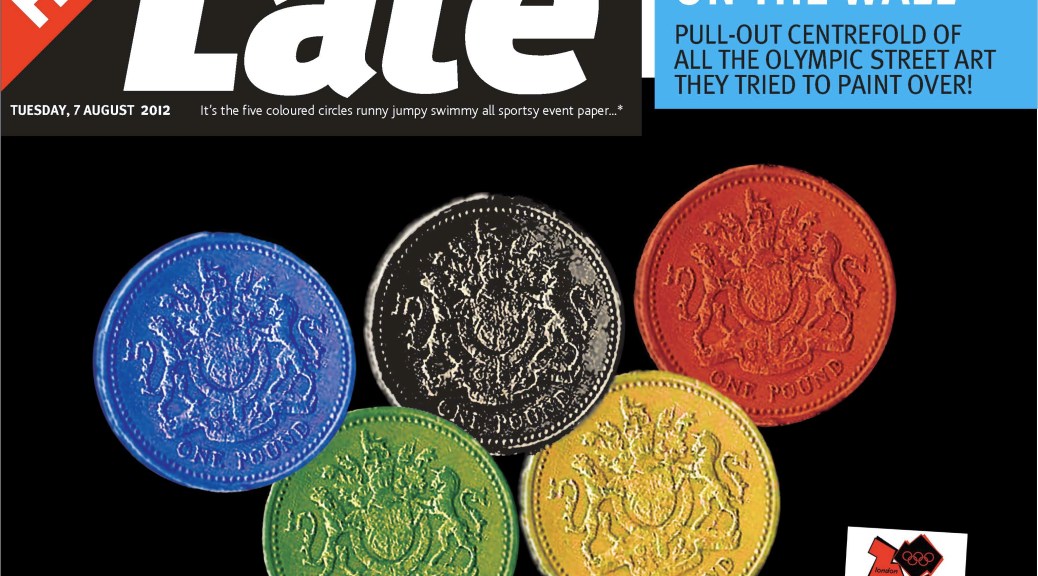
(Dirty) Business appeared in today’s one-off newspaper London Late : The Big Money Games.

London Late is a spoof newspaper that critiques and pokes fun at some of the more controversial sponsors of the Olympic Games, including BP, Adidas, Rio Tinto, G4S and Dow Chemicals.

The paper has been produced by five organisations – the London Mining Network, the anti-poverty charity War on Want, the Bhopal Medical Appeal, the oil campaign group Platform and the UK Tar Sands Network.

The paper was distributed today in central London, but if you missed out then you can download it in .pdf format or read it online below:

Open’er 2012: Penderecki’s violin revolution in Poland

Penderecki greenwood live2 P. Tarasewicz  Alter Art“If you love music, this is the place to come,” said Mikolaj Ziolkowski, the chief organiser of Heineken Open’er. We were sat backstage in a tent on the disused military airport in Gdynia, northern Poland, where his festival takes place. “Our audience prepare for the festival,” he continued. “They listen to the music and care about who’s playing. There are not too many drunk people, as you can see. It’s not a holiday, it’s a music festival.”

I smiled and nodded, but inside I was thinking: “I’m not sure this will play well in Britain.” Do people who go to festivals want to be told to take things more seriously? I’ve been to British festivals and we’re just inefficient machines for converting gallons of booze and fistfuls of drugs into piss and shouting.

At Open’er, they only serve Heineken. Aside from a couple of stalls offering Desperados as an alternative beer, it’s the only alcohol on site. As a branding exercise it seems utterly self-defeating. After four days of nothing but Heineken you don’t want to taste another drop. It’s hard to get raving, stumbling drunk without hard liquor, but naturally we in the British Music Press Corps gave it a damn good try. Must be all that Olympic spirit. Inspire a generation.

Still, Mikolaj had a point. Open’er’s unusually attentive 65,000-strong audience and thoughtfully curated line-up combined to produce some jaw-dropping moments. They served up everything from Björk firing up her overhead Tesla coil to an epic six-hour production of Tony Kushner’s ‘Angels In America’ in the theatre tent. They also provided one of the most brilliant, unique and aggressively weird things I’ve ever seen on a festival stage: the hour-long orchestra performance of work by both legendary radical Polish composer Krzysztof Penderecki and Radiohead’s Jonny Greenwood, his devoted acolyte.

We had landed in Poland early on the Wednesday at Gdansk’s airport, which is named in honour of Lech Walesa. The baggage handlers all seemed to wear approximations of his walrus moustache, hairy personal tributes to the shipyard union leader who in 1990 became the first Polish President elected by popular vote and oversaw the country’s transition out of communism. I had a hunch that meeting Penderecki would help me to understand how music and culture had interacted with the country’s historical realities, but first there were bands to be seen.

We arrived on site in time to witness The Kills in indomitable form. Every eyeball on site seemed to be trained on Alison Mosshart, her hair dip-dyed like a tequila sunrise, as she elegantly stalked the stage. The band were backed by four extra drummers, wearing red bandanas, and their contribution made tracks like ‘Heart Is A Beating Drum’, ‘Fuck The People’ and ‘Monkey 23’ sound imposingly huge. They’re not shy about their influences, with ‘DNA’ sounding uncannily like The Rolling Stones’s ‘We Love You’, but nobody cares. When everyone else leaves the stage to let Mosshart and Jamie Hince tiptoe through ‘The Last Goodbye’ the crowd is rapt. The only bum note is Hince’s Polish, which needs a polish. “Cheers!” he shouts at one point, “What do they say in Poland?… Cheers!”

Björk’s Polish is better, and she thanked the crowd regularly: “Dziekuje!” She’s played here before, in 2007, and seemed to be welcomed back as a returning hero and kindred artistic spirit. She was very much in Biophilia mode, with exactly half of her 16-song set drawn from that most recent record. The Tesla coil suspended above her sparked into action for ‘Thunderbolt’, while both ‘Crystalline’ and closer ‘Declare Independence’ turned into onstage raves as she was joined in losing the plot by her army of backing singers.

New Order opened by saying sorry. “This is our first time in Poland,” Bernard Sumner announced. “We can only apologise for not coming here in the last 30 years. It wasn’t our fault.” No matter, they still manage to somehow sound ahead of their time despite Sumner’s ragged vocals. Tracks like ‘Regret’ still sound transcendent, and ‘Transmission’ and ‘Love Will Tear Us Apart’ aren’t a bad couple of songs to keep up your sleeve for the encore.

We arrived the next day to discover that things start late at Open’er. At least we had plenty of time to explore the site. I ate some perogies, which were delicious but so greasy I worried my lips had turned translucent. I visited the fashion tent, where a catwalk jutted out of a hillside bunker. Young Polish designers displayed punk knitwear in garish colours and t-shirts emblazoned with slogans like “Fuck My Polish Life”. Mainly the airport’s old runway was lined with the sort of international hippy tat stalls that you find at every festival in Europe, but the Muzeum, a modern art gallery, is more unusual. Housed in another bunker, it had short art films playing on a loop inside wooden containers. “My ambition is to do art on a high level,” Mikolaj had told me, explaining why Open’er avoids workaday fancy dress festivities. “Usually at other festivals it’s just street theatre as decoration.”

When 5pm rolled around the first bands came on and I went to check out one of the locals. Iza Lach is a much-hyped young singer who’s just been signed by the artist formerly known as Snoop Dogg. There wasn’t much evidence of his rap influence, or indeed his new reggae incarnation, in her spikily confident keyboard-led set.

By the time I left the tent 45 minutes later a thick fog had descended which made it impossible to even see the main stage from the press area. With stage lights streaming through the fog as people wandered back and forth the whole scene could have been lifted straight out of ‘Close Encounters Of The Third Kind’. Through the mist drifted the sound of Kapela Ze Wsi Warszawa (The Warsaw Village Band) playing extended versions of traditional Polish folk songs.

Open’er does a pretty great job of balancing intriguing Polish acts with high-end headliners. Justice topped the bill on Thursday night and ruthlessly got every soul moving, while the following night Franz Ferdinand’s dazzlingly tight set was followed by the reformed Cardigans. Everyone fell for the wonderful Nina Persson just as hard as we had done for Mosshart. Away from the main stage, Public Enemy and Janelle Monáe delivered very different but equally energy-packed and rapturously-received sets on consecutive nights. The Mars Voltaand The xx closed the final night, both confidently justifying the fact that they played higher up the bill than you’d see them in the UK.

As a booking philosophy, Mikolaj had explained with a laugh that: “Our ambition is to be an interesting festival. We don’t book bands who are very popular but not very interesting.” He’s achieved that goal this year, although out of politeness I didn’t bring up the inevitable Mumford & Sons performance. The Polish summer proved to be just as changeable as the British, and in four days we got everything from sweltering heat to thick fog. The only time the heavens really opened was for a spectacular thunderstorm which delayed the Mumfords. Maybe God was trying to send Mikolaj a message.

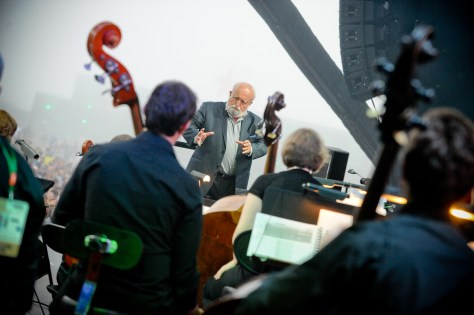
By contrast, that remarkable Penderecki // Greenwood performance was fittingly cloaked in mysterious fog. I had to get up close just to see the full string orchestra assembled onstage. The show had been performed just twice before, at the Congress of Culture in Wroclaw, and at the Barbican in London. As Mikolaj explained: “It crosses borders. It’s been performed for classical music fans but it’s never been performed for regular people. It’s never been at a festival. It was an experiment, but it worked! I know that 99% of people won’t be listening to his CD in their cars, but they came with open minds. People who come to this festival should know that this kind of music exists and it’s very important. Penderecki is a big star in Poland, so for him to come here means a lot. He was very enthusiastic to do it.”

The format is that first Penderecki’s startling 1960 composition ‘Threnody for the Victims of Hiroshima’ is performed, followed by Jonny Greenwood’s ‘Popcorn Superhet Receiver’, which was heavily inspired by it. Then we hear Penderecki’s ‘Polymorphia’ and Greenwood’s ‘48 Responses to Polymorphia’, which includes echoes of Bach and Messiaen.

It’s strange and unfamiliar music to hear in a festival setting. Many of the audience will have heard Penderecki’s work before, though, even if only in films. He’s appeared on soundtracks including The Shining and a couple of David Lynch movies, while parts of ‘Polymorphia’ feature in The Exorcist. ‘Popcorn Superhet Receiver’, meanwhile, formed the basis of Greenwood’s famous There Will Be Blood score.

Penderecki’s avant garde work came about through his early experiments with electronic music, and he asks the orchestra to do things with their instruments that they’d never usually do. String instruments are transformed into percussion, which lends their whole performance an unusual physicality that complements the often jarring and unbearably tense music. Greenwood goes even further in ‘48 Responses’, and towards the end the violinists swap their bows for pacay tree branches that look like toy swords. At the finale they shake their branches over their heads, creating a sound like massed armies of rattlesnakes. For the entire performance, which lasted over an hour, the audience were flawlessly attentive, something I have to confess to Mikolaj would surely never have happened at a UK festival of comparable size.

Penderecki conducted his own pieces, while Marek Mos conducted Greenwood’s, who wasn’t actually there. He didn’t need to be. This was Penderecki’s rock star moment. At the end of ‘Polymorphia’ he walked offstage and than returned to yet more whooped applause. He lifted both arms above his head and punched the sky.

“It’s not easy music,” Penderecki admitted when I tracked him down backstage, “but it is music that these young people have never heard before. Those two pieces, ‘Threnody’ and ‘Polymorphia’, I wrote 52 years ago. I was young and enthusiastic. Actually at that time, only young people liked my music. Now it’s finding a new generation.”

I asked him what made ‘Threnody’ so radical, and he replied: “It’s unusual because of this new way of using string instruments, playing behind the bridge or on the tail-piece, different types of vibrato, and so on and so forth. Also, of course, treating the instrument as a percussion instrument. I remember, 50 years ago many orchestras went on strike and refused to play this music, but I believed that I was right. Of course, the string instrument is not built for such music but it can produce a sound that it had not done before. I was happy to be a radical.”

If ‘Threnody’ was radical, then the strange genesis of ‘Polymorphia’ is something else entirely. As Penderecki explained: “I was interested to know the reaction of people to my music. My friend was a psychiatrist, so we played ‘Threnody’ for the sick people, and recorded electroencephalograms. I used the results of this in ‘Polymorphia’. It doesn’t look like a piece of music.”

He opened his book of sheet music to show me. Black lines zigzagged across the page like the medical charts of a particularly unstable patient. Which is precisely what they are. Penderecki chuckled to himself. “You can imagine that 52 years ago, for musicians who had only studied music in a conservatory, looking at this score and the music that I asked them to play was a shock! Even now if somebody wants to play ‘Polymorphia’ or ‘Threnody’ I ask for one specific rehearsal for an explanation of the symbols I have used. Otherwise, you can’t play it.”

Penderecki’s musical experiments seem all the more remarkable when placed in the context of a Poland still living under communism. I asked the composer how his country has changed in his lifetime. He replied: “It’s a different country now to the one that I remember. I grew up under communism. You can compare it maybe to the situation in Cambodia… I’m exaggerating perhaps, but it was a very poor country in Europe and that’s completely changed now. The economy is very good. It is the only country without a crisis. People are working. Everything is possible. There is freedom. When I grew up, sacred music and avant garde music was forbidden because it was the music of the bourgeois. We were very lucky to have the Warsaw Autumn festival, which was the only place where this music was played. Then I started, with other composers, to fight for freedom in art. Poland was a unique country in the socialist bloc where avant garde music was possible. It was not in Russia, not in Czechoslovakia, not in other countries, only in Poland.”

His fight was not just an artistic one but a fight for political freedom. “I wrote a lot of sacred music,” he continued. “At that time it was forbidden but because it was a success in the West they started to play my music in Poland as well. It could not be performed when I wrote it. We had to find private choirs to practice the music. It was 10 years before I saw it in Poland. We did it, really. Artists, not only me, of course, but my colleagues, people like Wajda for movies and Tadeusz Kantor for the theatre. We changed Poland.”

The country Penderecki helped shape is one that embraces the musically adventurous, and there’s no better place to experience that than at Open’er. The crowd are also wilder than Mikolaj made out. On the final night after leaving the site we in the British Music Press Corps ended up in the nearby town of Sopot. Hundreds of Polish teenagers leaving the festival were celebrating their last night, and their freedom from Heineken, by sitting on the beach and mixing litre bottles of vodka and apple juice. I could see many, many drunk people. We were treated to the sight of one of my fellow journalists stripping stark naked and wading out into the water. He splashed around like a wet seal as the sun came up, but even that wasn’t quite as weird or unforgettable as what a 78-year-old Polish composer had just done with a string orchestra, an awed crowd and a head full of twisted, revolutionary ideas.

Originally published by Drowned In Sound.

Clash Of The Titans

There’s a monkey who watches the news in the Guggenheim in Bilbao. An artist named Francesc Torres put him there. He’s sat on a rotating high chair, and as it turns his simian gaze takes in first the television playing CNN, then glacially slow footage of the Russian Revolution, Hitler’s rise to power, Roosevelt, Churchill and Stalin at the Yalta Conference, the creation of the state of Israel, decolonization as represented by Algeria’s war of independence and Gorbachev taking control of the Soviet Union. Finally he sees an etching by Goya, in which fortune punishes those who have risen to greatness with downfall. History stutters past as the baffled chimp watches on. I think I know how he must feel, and I don’t even own a rotating high chair. That monkey doesn’t know how lucky he is.

I’ve come to Bilbao to weigh up whether either Radiohead or The Cure can lay claim to being the foremost proponents of live “alternative rock” in 2012 or whether fortune is grasping their ankles and precipitating their downfall.

Continue reading at The Quietus.

I Dreamed Of Being An Olympic Dancer

I am not a dancer. Not even for fun. I’ve been seen to twitch in darkened rooms to pounding basslines but that was just a trick of the strobe light. Mine is a largely sedentary life, aside from the odd unavoidable flight of stairs.

I’ve hiked to the top deck of the bus on occasion. I climb in and out of bed several times each day. I can only imagine that any more strenuous exercise would feel roughly like a hangover, and knowing how much they take it out of me I’ve done all I can to avoid it.

Continue reading at The Quietus.

The state of rap today… according to Nas

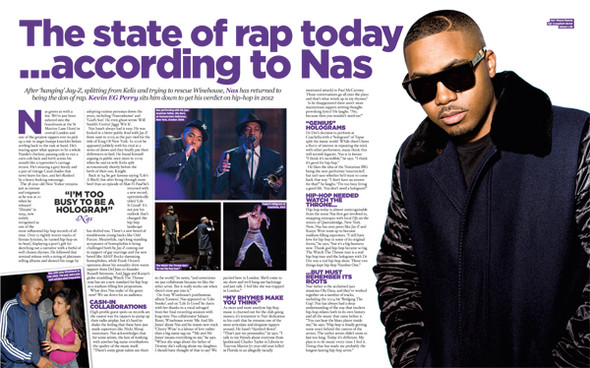
Nas greets us with a fist. We’ve just been ushered into the boardroom at the St Martins Lane Hotel in central London and one of the greatest rappers ever to pick up a mic in anger bumps knuckles before settling back to the task at hand. He’s tearing apart what appears to be a whole Nando’s chicken, pausing only to run a corn-cob back and forth across his mouth like a typewriter’s carriage return. He’s wearing a grey hoody and a pair of vintage Cazal shades that never leave his face, and he’s flanked by a heavy-looking entourage.

The 38-year-old New Yorker remains just as intense and enigmatic as he was aged 20 when he released ‘Illmatic’ in 1994, now widely recognised as one of the most influential hip-hop records of all time. Over ten tightly-woven tracks of literate lyricism he turned hip-hop on its head, displaying a poet’s gift for sketching out a narrative with a fistful of well chosen rhymes. He followed that seminal release with a string of platinum-selling albums and showed his range by adopting a string of personas down the years like ‘Nastradamus’ and ‘God’s Son’. He even ghost-wrote Will Smith’s ‘Gettin’ Jiggy Wit It’.

Despite his talent shining through from a young age, Nas hasn’t always had it easy. He was locked in a bitter public feud with Jay-Z from 1996 to 2005 as the two great rappers vied for the title of ‘King of New York’. In 2006 he appeared publicly with his rival at a series of shows and they finally put their differences to bed. He found himself arguing in public once more in 2009 when he and ex-wife Kelis split acrimoniously shortly before the birth of their son, Knight.

Back in ’94 he got famous saying: ‘Life’s A Bitch’, but after living through more beef than an episode of ‘Man Vs Food’ he’s returned with a new record optimistically titled ‘Life Is Good’. It’s not just his outlook that’s changed: the hip-hop landscape has shifted too. There’s a new breed of troublesome young turks like Odd Future setting their sights on offending everyone all the time, while in contrast A$AP Rocky has taken a stand as a voice against rap’s homophobia. Meanwhile Jay-Z and Kanye’s all-conquering, globe-straddling ‘Watch The Throne’ tour has set a new standard for hip-hop as a stadium-filling live proposition. Having been there in the crucible of New York from the very beginning, Nas is ideally placed to pass judgement. To get a real sense of the state of hip-hop in 2012, we sat down for an audience with the Don.

Collaborations should mean something: like Nas and Amy Winehouse

High-profile guest-spots on each other’s records are the easiest way for rappers to pump up their radio airplay, but it’s hard to shake the feeling that these have just made superstars like Nicki Minaj increasingly mercenary. Nas acknowledges that for some artists, the lure of working with another big name overshadows the quality of the music itself. “There’s some great talent out there in the world, and sometimes we just collaborate because we like the other artist. That’s cool, but it really works out when there’s time put into it.”

On ‘Life Is Good’ he duets with Amy Winehouse thanks to a vocal salvaged from her final recording sessions with long-time Nas collaborator Salaam Remi. Winehouse wrote ‘Me and Mr Jones’ about Nas and it’s clear that for him new track ‘Cherry Wine’ is both a labour of love and that song’s spiritual successor. “‘Me and Mr Jones’ means everything to me. I love that record. When she sings about the father of Destiny she’s talking about my daughter. I thought that was a clever line. I should have thought of that to say! We partied here in London. She’d come to my show and we’d hang out backstage and just talk. I feel like she was trapped in London.”

“My rhymes make you think”

As more and more anodyne hip-hop music is churned out for the club-going masses, it’s testament to Nas’s dedication to his craft that he remains one of the most articulate and eloquent rappers around. He hasn’t “dumbed down”. “That’s just my personality,” he says. “I talk to my friends about everyone from Charles Taylor in Liberia to Trayvon Martin to Paul McCartney. Those conversations go all over the place and that’s what winds up in my rhymes.”

Is he disappointed there aren’t more mainstream rappers writing thought-provoking lyrics? He laughs: “No, because then you wouldn’t need me!”

“Genius” Holograms

Dr Dre’s decision to perform at Coachella with a “hologram” of Tupac split the music world. While there’s been a flurry of interest in repeating the trick with other performers, many think this will tarnish the legacy of the greats. Nas, however, is very much in favour. “I think it’s incredible. I didn’t see it live but I think it’s good for hip-hop music. It was amazing.”

He likes the idea of the Notorious B.I.G. being the next performer ‘resurrected’ with the technology, but isn’t sure whether he’d want to come back that way after he’s gone: “I don’t have an answer for that! I’m too busy living a good life. You don’t need a hologram, I’m here!”

“Hip-hop needed Watch The Throne”

Hip-hop as it is today is almost unrecognizable from the scene Nas first got involved in, swapping mixtapes with local DJs on the streets of Queensbridge, New York. Now, Nas has seen peers like Jay-Z and Kanye West team-up to become stadium-filling superstars. He likes what he sees. “I still have love for hip-hop in some of its original forms, but it’s a big business, a big industry now. Thank God hip-hop became so big. The ‘Watch The Throne’ tour is a real hip-hop tour and the hologram with Dr Dre was a real hip-hop show. Those two things kept hip-hop number one.”

But it should also remember its roots

Nas’s father is the jazz musician Olu Dara and they’ve worked together on a number of tracks including the 2004 hit ‘Bridging The Gap’. Nas has always had a deep understanding of the way that modern hip-hop relates both to its own history and the music that came before it. “You can hear the blues player inside of me. Hip-hop music is finally getting some years behind the careers of the artists. For whatever reason the earlier artists didn’t seem to last too long in this crazy business. Today it’s different. My plan is to do music every time I feel it. Doing that has made me probably the longest-lasting hip-hop artist.”

“Homophobia is not hip-hop’s concern

There’s an ongoing debate about homophobia in rap, most recently sparked by the deliberately provocative and offensive lyrics spouted by Odd Future’s Tyler, the Creator. In contrast, fellow young upstart A$AP Rocky recently told NME that he respects gay men and women. Nas, however, dismisses the idea that sexuality is a major issue. “Do I think rap music is homophobic? I don’t think that’s the concern of rap music at the moment. Rap is the street, rap is sex and money. They don’t have time to think about homophobia or anything like that. It’s about ass, ass, ass – female ass! It’s about women, money, it’s about being the flyest of the fly- that’s hip-hop.”

On ‘Back When’, from his new record, Nas points out that some rappers use offending others due to their sexuality or race as a mask for their own weaknesses: “I say: “You seem to blame all your shortcomings on sex and race, the Mafia, homosexuals and all the Jews. You might as well blame all your shortcomings on your foes the Jews, it’s hogwash point of views, stereotypical, anti-Semitic like the foul words Gibson spewed.” That’s Mel Gibson. That’s me just saying to let go of the illusions of someone holding you back.”

“Game-changing” artwork

Nas wants to be known as the man with “the best album covers in rap”, and for new record ‘Life Is Good’ he’s taken the tabloid-baiting decision to pose with ex-wife Kelis’ wedding dress slung over his knee. “People have heard about my divorce. I’ve always had a private life but if people today want to get on the internet and talk then it’ll happen. For me, the cover was very therapeutic. I’m a storyteller, and it has that old bluesman vibe to it. I have so much to say on this record about myself personally. It feels like a record close to my soul. That’s the blues. My record cover: that’s the blues.”

He’s fiercely proud of the influence his ‘Illmatic’ artwork has had: “Think about how many album covers since then have been like that: Notorious B.I.G. and U2 all the way to Lil’ Wayne and Jill Scott. It changed the game.”

Regrets? I’ve had a feud

Rivalries like Tupac vs. Notorious B.I.G. have long been a feature of the hip-hop world, and Nas had his own ongoing feud with Jay-Z. With previously unseen footage from 2002 of Nas’s preparations for an inflammatory attack on Jay-Z recently surfacing, does Nas look back on his career with any regrets?

“No”

Not even about the time he commissioned a animatronic dummy of Jay-Z and a set of gallows so he could ‘hang’ him onstage?

Nas clamps the toothpick he’s been fiddling with between his teeth and shakes his head slowly to dismiss the question. Since the footage has come out he’s repeatedly refused to discuss or even acknowledge it. From a corner of the room a low voice mutters: “That’s not okay, man.”

Nas’s expression doesn’t flicker, but before we’re escorted out we try to defuse the situation by telling him that the new record is up there with his very best. He pauses and then his face cracks into a smile as the tension dissolves and we bump fists again. “Life is good, man,” he shrugs, “Life is good.”

Originally published in NME, 18 July 2012.

Public Enemy on being “the security of the hip-hop party”

fflav_chuckd_gq_17jul12_rex_b_479x291“That’s a nice t-shirt!” Chuck D is admiring the image of Brian Jones on GQ.com’s chest backstage at the Heineken Open’er Festival in Gdynia, northern Poland. “They call us the Rolling Stones of the rap game. I don’t know if I’m Mick and Flavor’s Keith. I think we switch back and forth!” Public Enemy have just come offstage after a storming set which included the first ever performance of their new single “I Shall Not Be Moved” as well as a host of songs from their canonical albums It Takes a Nation of Millions To Hold Us Back and Fear of A Black Planet. Despite the high-intensity performance we’ve just witnessed, Chuck D, now aged 51, exudes a Zen-like state of calm. All around us people are cracking open drinks and digging into food while main-stage headliners Franz Ferdinand have shyly snuck in to hang out with the hip-hop legends. It’s 25 years since Public Enemy dropped their debut record Yo! Bum Rush the Show and to mark the anniversary they’re currently preparing two new albums, Most Of My Heroes Still Don’t Appear On No Stamp and The Evil Empire Of Everything. Here, Chuck D and Flavor Flav tell us about staying politically aware on tour and share their advice for life in typically righteous fashion.

GQ: When you’re on tour here in Europe are you very aware of the history of the countries you visit?
Chuck D: That’s very important. In Belgium, we dedicated “Fight The Power” to the Democratic Republic of Congo. The memory of Patrice Lumumba will not be in vain. You always have to be aware where you’re going to when you step into somebody’s home. That’s the thing that sets us apart as different. We’re not the normal rap group.

Do you think young rappers should be more politically conscious?
CD: Everybody can do whatever they’ve got to do. Younger generations can have a good time or whatever. There’s no obligation that they’ve got to do something, but every party has security. Public Enemy is the security of the hip-hop party.

Flavor Flav said onstage that this is your 81st tour. How do you keep things fresh?
CD: Just travelling the world. Look! He’s consumed by that sandwich!
[Flavor Flav walks in eating a ham sandwich bigger than his own head.]

What’s the best advice you’ve ever been given?
CD: There’s been plenty of advice. I would say: “Do what you like to do well, so that you can do it for a long time.”
Flavor Flav: Best advice that I ever got is to do whatever it takes to make myself happy, so that I’ll be able to make others happy. If I’m not happy, I can’t make other people happy.
CD: That’s what he told me the other day. Trust me. We had a conversation about this.
FF: That’s real talk. I’ll tell you one thing you can’t do: you can’t put your shoes on, then your socks on.
[Chuck D starts laughing]
FF: That’s what I was taught! I was taught never to be an asshole, because an asshole gets nothing but a good wipe. Do you know what I mean? That’s exactly what I teach in America. If you’re an asshole, then you’re gonna get wiped. If you’re in a situation where you’re being forced to be an asshole, then you have to change it to make it work for yourself. You get what I’m saying? I love you, baby!

Originally published by British GQ.

Chris Moyles To Quit The Radio 1 Breakfast Show? Thank Christ!

There was a moment on Chris Morris’ old radio show when he told a story about a naked DJ, up on the roof and smeared with jam, who shouted out: “I’m Chris Moyles, please forgive me!” and the windows all around flew open, and a thousand voices cried out; “No fucking way.”

As Moyles finally relinquishes control of the Radio 1 Breakfast Show from his sweaty grasp, the time has come to ask whether we forgive him.

Do we forgive him for the decades of grating laddish sexism? For year after year of desperately unfunny and nauseatingly self-aggrandising anecdotes? For saying on-air of Charlotte Church that he would “lead her through the forest of sexuality now that she had reached 16”? For his continual failure to understand why using the word “gay” as an insult isn’t okay? For being a boorish poster boy for anti-intellectualism of all kinds? For his unshakeable belief that the sound of his own voice trumps every piece of music produced since the dawn of recorded time?

Whatever you think of Moyles’ replacement Nick Grimshaw’s presenting style, he has over the last half-decade popped-up at countless review shows and album playbacks (in fact I saw him at a Nas listening session just the other day) and, excitingly, given the impression that he might actually quite like music. This already puts him at least one step ahead of Moyles, not to mention the fact that he wasn’t named LGBT charity Stonewall’s Bully Of The Year 2006.

Chris Moyles, the end-result of a belief that you can never under-estimate the intelligence of radio listeners, is now a host without a party. Who knows where the hot-air balloon of his own egotism will take him now? Perhaps he’ll go door-to-door singing novelty songs while surrounded by a troupe of idiot sycophants repeating his sole joke over and over like a mantra. Perhaps he’ll take a vow of silence as penance. Perhaps he’ll strip naked and smother himself in jam on the Radio 1 rooftop, taking his pleasure where he can find it in the abject misery of his self-knowledge. But should we forgive him? No fucking way.

Originally published by NME.

Durban Hymns – There’s More To African Music Than ‘Graceland’

This Sunday Paul Simon will bring ‘Graceland’ back to London, 25 years after the original tour was picketed by protestors including Paul Weller, Jerry Dammers and Billy Bragg who argued that Simon was wrong to break the cultural boycott of apartheid-era South Africa.

The BBC marked the occasion this week by broadcasting ‘Under African Skies’, a documentary about the album’s controversial recording process and tour. It’s a fascinating film, including an emotionally tense meeting between Paul Simon and Dali Tambo, who founded Artists Against Apartheid and led the protests.

What’s really interesting is hearing from the South African musicians who made the decision to play with Simon, and how they justified it to themselves, the protestors and their countrymen. Koloi Lebona, a producer who helped to assemble some of the musicians involved, summed it up when he said: “When I brought musicians to the ‘Graceland’ sessions I was patently aware that there was a cultural boycott. It was risky, but our music was always regarded as ‘third world music’. I thought, if our music gets the chance to be part of mainstream music, surely that can’t do any harm?”

Continue reading at NME.

Stanley Booth on life on the road with the Rolling Stones

Stanley BoothWhen we meet Stanley Booth in a drawing room at Durrants Hotel in London’s Marylebone he immediately apologises for his persistent runny nose.  “I don’t know why,” he says by way of an opener, “I haven’t done any cocaine.”

He may be a slight 70-year-old with snow-white hair now, but in his time Booth has hoovered up more than his fair share of high-grade narcotics. A music writer who knew every American great from BB King to Otis Redding, Booth somehow talked himself onboard the Rolling Stones’ infamous 1969 American tour and ended up becoming friends and late-night sparring partners with Keith Richards himself.

He didn’t just live to tell the tale, he wrote the book on it: The True Adventures Of The Rolling Stones, a stone-cold classic of music writing which took him 15 years to complete. For his part, Keith Richards called Booth the band’s “writer-in-residence” and said of the report, “Stanley Booth’s book is the only one I can read and say, “Yeah, that’s how it was””. Here, Booth talks frankly about witnessing the murder of a Stones fan at Altamont, the difference between Mick and Keith’s attitude to women and the iconic jewellery he unintentionally inspired.

keithandstanleyGQ.com: How did you first meet the Stones?
Stanley Booth: I had an editor at Eye magazine who commissioned me to do a piece about them in 1968. I came over here to London and went to the Stones’ office. I told them I was from Memphis and that I knew people like BB King and Furry Lewis, so they never thought of me as a critic. At first I wasn’t interested in writing a book about a rock’n’roll band, but then Brian Jones died and I found that compelling. Brian was 27 and his death was a mystery. I wanted to get to the bottom of that.

You’d already written about a host of legendary artists before you came to England. How did you end up in the studio with Otis Redding?
I got a commission from the Saturday Evening Post, of all places, to do a piece about the Memphis soul sound. I went over to Stax and I remember I was outside taking some notes when this white Lincoln limousine pulled up at the curb. Otis Redding got out of the back. I introduced myself to him and then we went into Stax together. I spent the whole week with him. I’ll never forget watching him and Steve Cropper record “(Sittin’ On) The Dock Of The Bay”. I was there for the writing and recording – they cut ‘Hard To Handle’ and half a dozen others as well. It was thrilling.

Unlike most music books, yours reads like a novel. What inspired you to write it that way?
I was a great fan of Capote’s In Cold Blood and also Gay Talese. He was the guy who really taught me how to do what I do. I don’t find him very morally appealing, but he was a hell of a writer. He had a beautiful, wise and talented wife but when he wrote Thy Neighbour’s Wife he was going around screwing 19-year-olds in massage parlours. I found that very unappetising.

What was it like to be on tour with the Stones in 1969?
It was exhilarating! Those shows were just awesome. I watched the Stones play live every night You couldn’t do it today. In those days everybody was together. We were one little force, maybe eight or ten of us altogether. We all trusted each other and we didn’t have personal problems. We developed personal problems later. When they started having people like Capote on the tour in 1972, he said, [In whiny Capote voice] “There’s no story!” I thought: “Oh, thou fool!” I knew there was a story, because I was writing it. Capote was not equipped to understand or deal with the Rolling Stones.

William S Burroughs was supposed to join that tour as well, wasn’t he?
Burroughs was really above the fray, but he was very helpful to me. He lived in London at Duke Street, St James and I’d go and see him at his flat. He gave me a lot of good advice. We talked about Scott Fitzgerald, whose work he valued very highl, and he told me to read Carlos Baker’s book about Hemingway. He also told me not to smoke hash in front of the window. Those were both pieces of good advice. Uncle Bill was aware that he was a very famous junky, probably the most famous junky in the world at that time.

What was the biggest misconception about the Stones?
That they were motivated by some sort of satanic influence. People think they hired the Hell’s Angels for the concert at Altamont. Nobody hired the Hell’s Angels. There were half-a-million people there and 500 of them happened to be Angels. It was a hopeless situation as far as security was concerned. It was really one of the most terrifying experiences of my life. I was right behind Keith’s amps when I saw this Angel kill Meredith Hunter. This 18-year-old black man was right in front of the stage with his white girlfriend. The Angels don’t like black people anyway. Some Angels kept pushing Meredith away from the stage. At some point he reached into his coat and pulled out a nickel-plated revolver. He signed his own death warrant. That was not the right thing to do. He didn’t live another five minutes after he pulled that gun out.

Did the Stones know immediately what had happened?
No, I don’t think they had any idea. They just knew it was a very bad scene with a lot of violence. We saw Angels hitting people over the head with lead-weighted pool cues, using them like baseball bats. After Meredith died the Stones played for another hour-and-a-half and they played a brilliant, brilliant show. It was an heroic performance on the part of the Stones. At that point we assumed that several people had died. We saw so many people knocked down and pounded on.

What was a typical night with Keith like?
It depended on what we had. If we had cocaine, we’d do cocaine. If we had heroin, we’d do heroin. Not injecting, but snorting the light brown powder. It was most gratifying. Speedballs were good stuff. I don’t look for inspiration in drugs anymore. I still smoke grass, but that’s different. Grass is a vegetable. Keith and I spent a lot of time together with nobody else around. He had a tape-recorder that looked like a World War II radio. He had blues songs that I’d never heard, like “Shave ‘Em Dry” by Lucille Bogan. “Oh Daddy, won’t you shave me dry / you can grind me, Papa / grind me ’til I cry.”

Would Keith have been as inspired without drugs?
He used drugs to stay awake. The Stones would work for days on end, and you couldn’t do that without some kind of fuel. Keith wouldn’t have been the same without them, of course.

What’s your favourite memory from that time?
I had some very pleasant days at Keith’s house in the south of England. After a certain amount of time Anita would throw you out, which I never particularly appreciated, but she was really hot in those days. Really fucking beautiful.

What did you learn from being in the studio with the Stones?
They inspired me by example. I’d never seen any band work as hard as the Rolling Stones. They really inspired me to work harder as an artist, or in my attempt to be an artist. At Muscle Shoals they cut three tracks: “Wild Horses”, “You Gotta Move” and “Brown Sugar” and they played for three days straight. At the end of the session Charlie went back to the drum-set and started playing again. Keith said, “Look at that! That’s a rock’n’roller.” At one point [Atlantic Records President] Ahmet Ertegun called me at my motel room at the Holiday Inn and said, “If you guys have any dope you better flush it because the cops are going to try and bust the session.” That was a shame. I wasn’t about to flush no dope away!

After Keith’s Life, do you think Mick will ever write a book?
Fuck no! When I was working on my book my editor, a fatuous and callow young man, called me and told me that Mick had signed a contract for $2m to write a book. I told him that Mick wouldn’t do it. Sure enough, a few months later Mick gave the money back. I didn’t consider it possible for one minute that Mick would write a book. He’s got too much womanising to hide.

Was Keith’s attitude different?
Keith was not a womaniser. He would show up with a girl occasionally but Mick indulged himself in fornication to an unpleasant degree.

As well as the music, the Stones have had a huge influence on men’s style. What did you think of the way they looked?
Well, I had the original skull ring! I was walking down the King’s Road one day in about 1970. There used to be all these wonderful shops and I passed this little store that had a lot of silver in the window. It reminded me that when I was a little kid I’d had a cowboy comic book with a skull ring advertised on the back page. It had stones in its eyes that glowed red like fire in the daytime and blue like the stars at night. So I bought the skull ring and wore it that night to a Stones session. Keith saw it and immediately copped the idea. I’ve never gotten any credit for that! I don’t have the original one anymore. [Pause] I broke it on the head of a whore.[laughs]

Originally published by British GQ.

It’s Time Twitter Fanbases Learned Some Self-Control

If you ever find yourself doubting the number of ways it’s possible to misspell a term of abuse, simply tweet that you’re not that fussed about a contemporary pop star. In the last couple of days both Frank Turner and London-based copywriter Holly Brockwell have discovered that there’s no limit to the crimes against the English language that some fans will commit in their eagerness to defend their heroes.

Continue reading at NME.

Garbage’s Shirley Manson: “Women have forgotten what a struggle it was”

shirley-manson

“To take seven years off and see all the bands who came up after us, I think there were times when I did sit at home and think: ‘I don’t understand why I never felt I was good enough because I could smoke 99.9% of this bunch.’”

Shirley Manson remains very much a shrinking violet.

Shirley and I are sat in some sort of ersatz library at The Langham, a grand, swanky hotel opposite BBC Broadcasting House in central London and thus a prime location for anyone wishing to launch an assault on the nation’s airwaves. Shirley is “fantastic” because she’s just drunk half a bottle of wine over lunch and apparently ate three or four contemporary pop acts for breakfast. She seems to be rather enjoying being back in the saddle of this record-promoting lark. She’s brilliant company, with a glint in her eye and her tongue in her cheek. The seven year gap since the last record doesn’t seem to have mellowed her.

“Don’t be fooled!” she laughs wickedly, “I’ve completely mellowed! I’m a pussycat!”

The rest of Garbage: Duke Erikson, Steve Marker and Butch Vig are nowhere to be seen. It seems hard to believe now but there was a time when it was the trio of male producers, most notably Butch “That bloke who produced Nevermind” Vig who were perceived as running the show, with their red-headed front-woman cast as the eye-candy who should be grateful to have been plucked from the relative obscurity of goth-pop combo Goodbye Mr. Mackenzie. Hence Shirley’s aforementioned feelings of inadequacy:

“I spent my entire career feeling that I was coming from a position of lack. When you’re a young woman who gets into business with a renowned and revered producer, the way the world views that can be complicated and diminishing for a less experienced, younger, unproven talent. I constantly felt, because I would read it everyday in the press, that I wasn’t worthy of such a relationship. Even though I am a bolshie, feisty person it did eventually wear me down, if the truth be told.”

While she’s now more confident in herself than ever, she’s not even close to forgetting the struggle she went through as a woman to be taken seriously as an artist. When I bring up feminism, she raises her concern that the types of roles women are allowed to play in mainstream music have become increasing circumscribed: “I feel that in the Nineties when we first came out there were a lot of different types of women being heard in the mainstream. In the last ten years all it has been is women singing pretty ditties and showing their titties. There’s not been really many records that have been played on mainstream radio of any depth, or have indeed even been penned by women. That disturbs me a little. Plenty of pop music. Plenty of catchy, all-singing, all-dancing girls out there, but there’s not really many agitators or provocateurs or women in disagreement with what’s going on.”

There’s the odd exception, of course. Shirley’s a big fan of one particular filthy-mouthed New Yorker: “Azealia Banks blows me away. Fucking unbelievable. When I heard ‘212’ it was like hearing ‘Why D’ya Do It?’ by Marianne Faithfull for the first time. It blew me away, and I was jealous because that’s something I can’t do. She does it brilliantly and I’m so grateful that there’s somebody like her out there. But she’s the 1%. Azealia is a phenomenal, fantastic, welcomed force right now, but her challenge will be to have a career that lasts more than two years.”

With the music industry still softly imploding around all of us it’s a tough time for anyone to be thinking about career longevity, but her concerns come from a hard won sense of having climbed a mountain and found few compatriots at the top: “It’s tough for anyone to be in the music industry, but I think what has happened in the last decade is that a lot of women have forgotten what a struggle it was for previous generations to even get a foot in the door in the music scene and so have forgotten how tenuous their holding is. As a result I haven’t seen much effort into trying to redefine the way women have historically been viewed as solely visual treats and playthings. Make no mistake, there is still an incredible struggle for women to be treated as equal around the world and in the music industry. I’ve always felt a responsibility to conduct myself a certain way. Before I broke into the music scene there weren’t that many empowered women getting played on the radio. There are still very few women who have managed to navigate a career of any length or are considered of any worth and that bothers me.”

Seventeen years separate Garbage’s debut self-titled record and the spanking new aggression of Not Your Kind Of People. She thinks she’s better at her job now than she was back then: “I can’t speak for everyone else in the band but I definitely found it easier to make this record than the earlier ones. We’ve maybe stopped giving a shit about everything aside from making music together as a band and trying to ensure that we engineer our own happiness. That sounds really trite, but actually it’s harder than one might think.”

So why reform now? “Why not?”, she shoots back, without missing a beat. “There’s a lot of different reasons. A lot of things have happened to us. A lot of things have happened to those we love. A lot of time has changed. A lot of time has passed, but we’ve got to the point where we’re gasping to communicate and gasping for contact.”

Needless to say, plenty has changed since Garbage were last treading the boards of publicity. Not least the advent of the age of social media. Shirley is relishing it. The band’s twitter account is staffed by: “Mostly me. Not always, but mostly. At first I railed against it and thought it was awful. Now I see it as remarkably effective tool to inform our following.” There are also new connections to be made: “There’s something really exciting for me to get a glimpse into our fans’ lives. I find it fascinating, and thrilling and sometimes touching. When you realise someone’s spent their entire wage to buy a ticket to your show and travel there and buy the T-shirt… that makes me want to burst into tears, quite frankly. I’ve railed against it, but now I realise that what once was is gone. The mysteriousness and the allure of rock’n’roll as we knew it when we were growing up is gone, but that doesn’t mean that other great things can’t move into its place.”

In some ways, she says, the things she’s proudest of herself for are the things she didn’t do. She was never lured by the carrot of a pop solo career. She “didn’t take my clothes off for a million dollars.” She’s still every inch her own woman, but knows now that the temptations of fame and fortune are “hard things to resist. It looks easier on paper.”

The greatest joy of having Garbage back together again is being back on stage. That’s where she’s happiest: “I didn’t have a flutter of nerves even on day one. I feel more comfortable onstage than I do anywhere else in the world in my life. I feel completely uninhibited. I just don’t feel self-conscious, in any way, shape or form, and yet in my day-to-day life even now I feel self-conscious.”

That sounds like the mirror image of stage fright, I venture.

“Exactly. I don’t know why that is and I’m sure it’s not healthy. I don’t feel that the audience is judging me in a negative way, at all. I feel that they’ve come because they love our music, and I’m just a vessel for that. I don’t feel that I’m being scrutinised and judged and criticised, whereas in the rest of my life I do. I feel that people are constantly looking at me and judging me and making assumptions about me. It’s nothing to do with being famous. My whole life I’ve felt that way….”

She pauses as she realises we’re drifting into the realm of therapy. She laughs at herself loudly and then pouts at me: “Can you explain it, doctor? Can you cure me?”

I’m not sure what to say to that, so I tell I can’t: “But then I wouldn’t want to.”

“Good answer,” she smiles. “Smooth.”

I appear to be accidentally trying it on with Shirley Manson. I’m saved from further embarrassing myself because she’s due any minute over at Broadcasting House. As we get up to leave I tell her that I hope the album does well.

“I’m sure it won’t,” she grins, not giving a fuck. “But that’s life.”

Originally published by Drowned In Sound.

Spiritualized’s Jason Pierce: The Individual

JPierceLike Bono, Jason Pierce is rarely seen onstage without sunglasses. Mercifully, that’s about as far as U2/Spiritualized comparisons go. Over seven albums spanning more than two decades, Pierce’s experiments with sound and pharmaceuticals have taken him from the platinum-selling highs of 1997’s Ladies And Gentlemen We Are Floating In Space to the gruelling lows of last year’s battle with a degenerative liver disease. Now fighting fit again, the 46-year-old meets GQ.com at Fergus Henderson’s restaurant St John in east London, wearing a baggy MC5 T-shirt, black jeans and, of course, a pair of reflective aviators. As we settle into a quiet corner, he removes his glasses to reveal glacial blue eyes and opens up about new album Sweet Heart Sweet Light, the treatment that saved his life and wanting to snuggle down with Iggy Pop…

GQ.com: Do you think people make too much of the drugs influence on your songwriting?
Jason Pierce: Yes. It’s funny, I read Keith Richards’autobiography and I don’t think it reads like someone doing drugs because the drugs he got were the finest in the world. When they weren’t available, he stopped. Very few people have that kind of safety net. It’s a different world. The other thing about drugs is that they’re everywhere. I know plumbers and window cleaners who do more drugs than anyone I know in the music industry. Sure, drugs can help with songwriting, but no more so than language or music. The most psychedelic record in the world is Buddy Holly’s “Slipping And Sliding”. It reminds me of taking LSD but the author couldn’t have been more removed from that world. When music tried to describe the inner workings of the mind it lost its way quite dreadfully. When the world was full of people who wanted to sound like the Rolling Stones and they were chewing acid, loads of great music came out, but when it became more introverted and tried to actually explain the trip it got awful. I met [One Flew Over The Cuckoo’s Nest author] Ken Kesey and we did shows with him and the Pranksters. He was really not very psychedelic. I knew him through Tom Wolfe’s book, The Electric Kool-Aid Acid Test, but when I met him he was hanging out with these “New Pranksters” who were into staring at crystals. It was just awful.

What’s the biggest misconception about Spiritualized?
I don’t know and I don’t really care! Reading your own press is dangerous. The good is usually better than the reality, and the bad is so bad.

What made you want to start writing music?
The records that I like the most are the ones where you’re the only audience. It’s just you and the record. Those records that seem to elevate you aren’t just foot-tapping pop music, they demand that you are listening and taking it in. I want to make records like that. We live in an age now where you can type “Neu” or “Patsy Cline” into a search engine and get the whole back catalogue: all the bootlegs and the live recordings and everything. That’s not the same as listening to the music or having that music become part of your life, where you only have to hear two notes and it takes you back to a certain time.

Which lyric are you proudest of writing?
I like a lot of them. They’ve all been laboured over. I quite like “Broken Heart” for its real, blatant simplicity. It’s not trying to be clever. Things like “Out Of Sight” and “I Think I’m In Love” have more obvious plays on words and language, but “Broken Heart” is so starkly simple.

Is the religious language you use just the language of rock’n’roll?
It comes from gospel, blues and even doo-wop. It’s a shortcut to explaining what you’re talking about. When I wrote “Walking With Jesus” people knew that I was dealing with issues of mortality and what it means to be human. You don’t have a conversation with Jesus about trivia.

Can you recommend a good book?
The last book I read was Knockemstiff by Donald Ray Pollock. It’s set in Ohio and it reminded me of Denis Johnson’s Jesus’ Son. It’s a book of shocking stories from the Midwest, but written with such an elegance that you can just appreciate it for that. Pollock is from the town of Knockemstiff himself – it’s a real place – and even though he’s writing about outcasts and retards, there’s still a sense that he’s one of those people. It’s an amazing book. I don’t read as much as I should but I think books have had an influence on me. “Ladies And Gentlemen We Are Floating In Space” is a quote from Sophie’s World  by Jostein Gaarder. It’s an introduction to philosophy but written like Alice In Wonderland.

What is it that attracts you to America?
Every part of it’s like a B-movie. Anywhere else on tour you’re just on motorways, but in America you’re in a movie. When you go to San Francisco, you already know your way around. I went to the book depository area in Dallas and it really is like a film set. You’ve seen it so many times that you could draw a picture of the layout. The thing about America is the whole country is like a juvenile: big, powerful and full of its own strength. The whole of its musical history is on record. That’s so rare.

What’s the best thing you can cook?
Cheese on toast is about the limit. It’s good cheese on toast though, just because I make it. Even cereal is better if you make it than if anyone else does. I think I’m at my happiest touring and there’s not much opportunity for cooking on the road. I went to Italy a few years ago and learned some of that style of cooking. It basically just involved chopping things really finely, which appealed to me in an OCD kind of way. I kind of got into that for a while, just smoking joints and chopping things up into miniscule bits.

What was your favourite record in your parent’s collection?
We didn’t have many records! We did have the Seekers who did “Morningtown Ride”, “Georgy Girl” and “The Carnival Is Over”. I don’t think they’re that far removed from Spiritualized, actually. We had Holst’s The Planets  suite as well. Maybe there’s something in that as well.

What’s your drink of choice?
I absolutely adore wine. Fortunately I can drink it again because my liver is properly cured. It’s amazing. Given how bad it was, I can’t believe it’s back to how it started. The treatment is incredible. In some cases it’s even cured cirrhosis, which used to be untreatable. It meant scarring beyond redemption, but even that now seems to be curable. Which is good news if you like drinking.

When were you last starstruck?
I get this sort of rictus smile whenever I meet anybody who’s a big part of my life. Iggy Pop probably the most. I grew up listening to Iggy and I’ve met him a few times now. Last time he gave me a hug and part of me just wanted to snuggle down forever. The other part of my head was saying: “Just hold on tight – don’t let go.” I didn’t sleep at all that night.

Are you a perfectionist?
No, because I’m not seeking the perfect sound. There isn’t a scale with all the great music at one end and all the bad music at the other end. The finest music in the world is so close to the most awful music. It might be a change of production, or a slightly different voice. You can hear it in adequate cover versions of songs that don’t have any magic. It might be a slight difference in the voice or just the placement of the snare drum. It’s such a fine line. Most of my job is just making sure that the needle is on the right side to satisfy me; that it’s always rock’n’roll and it has some kind of ragged glory that satisfies what I like about music. Things like “Freedom” and “Too Late” are a few slips away from being quite middle-of-the-road, or worse: white soul. I don’t have a bag of tricks. It just takes time to make sure that it’s all right.

Originally published by British GQ.

“The Clash had a message… so have we.”

On a breezy spring afternoon, Brian Fallon is holding court outside a scruffy café in central London. Over cigarettes and “awful” coffee, The Gaslight Anthem leader is setting out the game plan. “With this record we wanted to recapture some of our earlier stuff,” he says of forthcoming album Handwritten, out July 23, wistfully recalling the basements and barrooms of New Jersey where the band first cut their teeth. “We wanted to play fast and have people sing along because that’s what our community was about. It was about having a blast in a basement. What would it be like if that basement got 50 times bigger? How cool would that be?”

His bandmates, guitarist Alex Rosamilia, bassist Alex Levine and drummer Benny Horowitz, nod knowingly. They’ve already seen it happen once. At the beginning of 2008 Brian was earning more from construction work that he was from the band. When ‘The 59 Sound’ was released later that year by indie label Side One Dummy they hoped it might sell 100 copies. It did. Then it sold 249,900 more, including 65,000 in the UK. That whirlwind of success changed everything fast, and Brian admits there were times he forgot he was supposed to be having fun: “There was a period when it was tough. We were maybe taking ourselves too seriously and taking the press too seriously. It was taking the light out of the fact that I don’t have to go on a roof and pound in nails anymore. I’d say to myself: ‘I’m sorry you’re tired of answering Bruce Springsteen questions, but it’s a lot cooler than what you were doing before.’”

Those Springsteen questions were hard to shake off for a while, particularly after the Boss joined them for their Glastonbury set in 2009 and then invited Brian to duet with him during his own headlining slot. While the band appreciated his patronage, they’ve always been eager to step out of the shadow he casts across their home state. That ambition led them to sign with Mercury Records this year, but it wasn’t a decision they took lightly. “We didn’t know what was going to happen,” Brian explains. “How many times have you seen a band sign to a major label and the album doesn’t even come out? All we knew was that we’d better write a record that we’re happy with or else we’re in trouble. I don’t want to have 50,000 people singing my songs if I don’t like them. I’d rather be poor playing songs I love than filthy rich playing songs I hate.”

The band have never been shy about admitting that they’d love the chance to play to huge crowds, and this time round the record feels unashamedly built for stadium shows.  “We make no bones about that,” Brian nods. “I would love to play Wembley Arena or those big Foo Fighters-style shows. It’s gotta be so much fun. You’ve got to be conscious about it, though. Look at The Clash. They had a message. If hundreds and thousands and millions of people are listening to what you say, and you’re saying: “Hey man, you should get back to your records and the joy you found in music.” That’s a cool message.” Benny agrees with a grin: “It’s better than just saying “Here’s my cash”. We’re not singing about boats and ho’s.”

What the band are singing about on this record is the loss of romance and mystery in an era when all human knowledge is just a tap of the fingers away. Benny says his favourite ever Gaslight Anthem lyric is this one, from album closer ‘National Anthem’: “Now everybody lately is living up in space/Flying through transmissions on invisible airwaves/With everything discovered, just waiting to be known” As he points out: “The internet has completely changed what we can comprehend and the way we comprehend it, but it makes certain things feel artificial.”

Their no-frills authenticity defines them as a band, but it feels like a shame that Brian has felt the need to dial down some of his literary references in an attempt to broaden the band’s appeal. Naturally, he disagrees: “We didn’t want to make a record that’s above people’s heads. We wanted to make it in the language that we speak. Straight to the point, trim the fat. There’s no need to prove that we’ve read TS Eliot. Yeah, we’ve read it, and yeah, it’s cool, but we don’t need to prove that.”

Having felt that 2010’s ‘American Slang’ had been waylaid by their disparate personal lives, for this record the band took the decision to move to Nashville as a unit. They rented a house where they could work 24 hours-a-day and holed themselves up with legendary producer Brendan O’Brien, whose CV includes the likes of Springsteen and Neil Young. The result is that on tracks like ‘45’, ‘Keepsake’ and ‘Too Much Blood’ the band’s message comes backed by a full-throttle all-American rock sound that sits somewhere between Tom Petty’s ‘Full Moon Fever’ and Pearl Jam’s ‘Backspacer’.

The band have an unabashed love of a good pop hook, and on ‘Handwritten’ they aren’t afraid to be catchy. “Music doesn’t have to suck in order to be cool,” says Brian. “Don’t forget, Radiohead wrote some catchy songs. I’m not just talking about ‘Creep’, I’m talking about ‘Karma Police’ and ‘Fake Plastic Trees’. Those are catchy pop songs! It gets the point across. For instance, our song ‘Here Comes My Man’ is somewhere between ‘I’m Waiting For The Man’ by the Velvet Underground and ‘Single Ladies’ by Beyonce. I’m totally serious. Those two songs somehow mashed up in my brain. It’s the first time I’ve written from a girl’s point of view, and it’s basically Lou Reed meets “If you liked it then you should have put a ring on it.””

As Fallon knows, groups like Radiohead and The Clash have shown that it’s possible to tilt at being the biggest band in the world without compromising your song-writing, your experimentalism or your ideals. That’s the reason The Gaslight Anthem got together in the first place. Brian still remembers a mixtape a friend of his mother gave him when he was 12, filled with bands like Bauhaus, The Ramones and The Replacements. “I’ll never forget listening to that stuff on headphones. I remember thinking: “Did those bands know when they were writing that stuff that there would be kids who’d make those songs their lives?” The most important thing being said was not from a Congressman on television, it was a band from wherever saying it to you in your headphones. I always hoped, maybe presumptuously, that people would do that with our band.”

On ‘Handwritten’, The Gaslight Anthem’s atavistic message is one of nostalgia for the authenticity of the offline world. They want to remind people how much fun it can be to turn off their computers and experience something real. Brian grins as he spells it out: “We just want to get everybody in the room together, singing along and having a good time because in this age that doesn’t happen very often.”

Originally published in NME, 9 June 2012

Ben Drew’s Ill Manors

bdrewPlan B’s smooth transition from hoody-clad rapper to crisp-suited soul singer may have raised eyebrows but his directorial debut seems intent on grabbing the country by the throat. Made under his real name, Ben Drew, Ill Manors is both structurally inventive and bruisingly frank, following eight characters as their lives interweave in an inner-city cycle of drug-dealing, prostitution and poverty. Having grown up in east London’s Forest Gate where the film is set, Drew, who was sent to a pupil referral unit at 16, has watched these stories play out in real life. When GQ.com meet him in central London he’s wearing a hoody again – and, seemingly, the weight of the world on his shoulders. After flicking his Zippo to spark up a cigarette, he soon begins setting forth his views on the environment that shaped him, the films that influenced him and the style that inspires him.

GQ: You wrote Ill Manors in 2007. Did you make any changes to it after last year’s riots?
Ben Drew: No. The song “Ill Manors” and its video are a response to the riots, but we’d already shot the bulk of the film by September 2010. Really the riots were a response to the issues depicted in the film, so it’s the other way around. These issues have been around since I left school in 2000 and longer than that. People don’t believe that they exist, so they don’t try to change them. Unfortunately the people in charge of fixing these problems are politicians who don’t come from that world. I don’t think the film glamorises anything. The only fiction in this film is that all this stuff is happening at the same time, involving so many characters. That’s the only artistic licence.

What do you think of Kanye West and Jay-Z showing rioting in their video for “No Church In The Wild”?
The problem is when people do that is that it gives others an excuse to be cynical about why people like me are doing things, but I haven’t actually seen the video so I would in no way want to disrespect anybody or talk about their motives. They’re artists themselves so I would never speak for them. When it comes to film and music like that though, the only people who need to be worried are the well-off. It’s only their kids who are going to be influenced negatively by that. The kids that I’m talking about are living that life already. They’re not going to be influenced by Top Boy or Kidulthood to go out in the street and sell crack because they’re already doing it.

Why do you think people get drawn into that life?
They’re doing it because society tells them that they need to have the newest trainers and widescreen TVs and PS3s. In that respect we all have something in common, no matter what walk of life you come from. We’re all consumers: difference is, some people can afford it and some people can’t. There’s so much importance put on these things that the kids who can’t afford them will go and sell crack to be able to afford them. These little kids on the street are prepared to sell crack and ruin another kid’s life so that they can afford a pair of trainers. What made them think it was that important? TV, adverts, magazines and rich kids walking around wearing that stuff and looking down on the kids who can’t afford it and calling them tramps and chavs.

What’s the impact of dismissing people as “chavs”?
It’s a class war perpetuated by journalists. There are so many people walking around with opinions that aren’t their own. How can you judge people that you never come into contact with? You can’t. It’s got so bad now that when you do come in contact with someone of a different class you act a certain way towards them because this war has been created and perpetuated. We’re all falling for it. I had to find a way of dealing with it because I used to get picked on and robbed at school. I was minority white in a multicultural school and I was a target. Not because the kids were racist: that’s just what bullies do. I had to ask the question as to why these kids thought it was OK to pick on people. Then you see where they live and see that they ain’t got s***. They’re just doing what they’ve got to do to get the things that all of us put so much importance on. If you look at life that way it means you ain’t got to fear them, or hate them, or put it down to colour. You put it down to money. The most vile things that we as human beings do to each other is for money. Governments go into other countries and bomb them for oil, power and money. Girls get prostituted and sex-trafficked for money. It’s all to do with class, and nothing to do with religion or race. It all boils down to money.

Could you ever see yourself becoming an MP?
I’m not going to try and be a politician. It would compromise everything that I stand for. These guys get into it with the best intentions and then when they get into power they see the mess they have to deal with. We can’t change the system. As people we just need to be aware of it and make it work for us. Each one of us can teach one other person something that they’re lacking. It’s about taking the time to engage with someone and having patience. These kids need to be able to call someone at two o’clock in the morning and tell them that they’re about to do something really stupid. They need someone to talk to. That goes beyond social work. I was lucky enough to have social workers like that in my life.

Which other films and directors were you influenced by?
I’d say Pusher by Nicolas Winding Refn. It’s not a beautiful film, by any means. It’s shot handheld, almost documentary-style, but the story is strong and the characters are really interesting. I took a leaf out of his book. I also looked at how Shane Meadows works. He’ll write a treatment and then cast the film. Then he’ll get the actors to improv to come up with the dialogue. We did that with bits and pieces. Sometimes we stuck to the script, but sometimes when it was wooden and it felt like they were “acting” I threw the script away and said: “Remember the beats, remember when you’re supposed to walk into the room, remember when you’re supposed to get offended by this person.” It made it difficult to cut and edit the film, but that’s what produced the magic.

Can you recommend a good book?
The last book I read was Premiership Psycho by CM Taylor. It’s about a Premiership footballer who’s a serial killer. He calls himself a “Customer Service Vigilante”. He’s completely obsessed with labels and material things and he hates people that work within customer service who don’t respect the fact that he’s spending money. It’s a black comedy, but for me it says a lot about the society that we live in. It’s hilarious.

What’s your style rule?
The cut is so important, but it doesn’t really matter about the name to me. I really like Armani suits but it’s not because they’ve got Armani written on them: I love the cut of their suits and I think they drop well on me. I get a lot of my denim from Topman. It’s nice, it’s affordable – not that I have to worry about things being affordable – again, I just like the cut. I’d buy jeans from Mr Byrite if I liked the cut. I’ve bought stuff from Primark before. My tip is to know how clothes hang on you and what suits you. If you’re short and you’ve got a round head there are certain things that won’t work for you. If you’re tall and slim and you’ve got a long face there are certain things that will.

What’s the best piece of advice you’ve ever been given?
Always take insults in the same breath as praise. If someone tells you you’re a piece of shit, you’re not. If someone says you’re the best thing since sliced bread, don’t believe that either. You’re not Jesus or Mother Theresa, but you’re all right. I think that’s how you keep the balance and keep your feet on the ground.

Originally published by British GQ.

Why Plan B should write Britain’s alternative national anthem

News reaches us from across the Atlantic that the American people have taken a vote and chosen none other than Bruce Springsteen as the man they’d most like to compose a new national anthem for their star-spangled country, beating the likes of Dolly Parton, Bob Dylan, Stevie Wonder and Jay-Z.

We can all agree that’s a fine result for democracy from a country with a frankly patchy recent record, and let’s not let the fact that this is an entirely spurious Vanity Fair pop quiz result spoil our fun. It seems apposite at a time when Union Jack bunting is clogging the country’s arteries to ask who the British Boss is who could be drafted in to pen a replacement for ‘God Save The Queen’?

Continue reading at NME.

Yes we Cannes: How to party with Bill Murray

The penthouse suite at the Hotel Martinez in Cannes was once the most expensive in the world. At nearly £24,000 per night, nowadays it’s considered merely the fourth costliest on earth. So what’s the view like from the opulence of the seventh floor? Probably of your yacht, so long as Roman’s isn’t in the way. Then, if you look west on a clear day, down the curving stretch of the beachfront known as la Croisette, the landmark at the far end is the squat glass pile of the Palais des Festivals. That’s the business end of Cannes, where for the two weeks of the festival hustlers converge at the Marché du Film to hawk all manner of art house and erotica, densely plotted thrillers and cheesy B-movies, most of which will probably never see the dark of your local cinema.

It’s also where the films, including the press screenings and the red carpet premieres, are shown. If you’re travelling from the Martinez to a gala opening then that means a short trip as part of a convoy of official cars. Alternatively, if you’re still partying as the sun comes up, you might glimpse bleary eyed journalists making the kilometre shuffle, dragging theirs hangovers behind them, to ensure that they’re at the dawn press screening in good enough time that they don’t have to wrestle for a seat with the guy from the Kazakh Film Federation.

Look closer and you’ll see the run of luxury hotels down the seafront: the Majestic, the Marriott and the Carlton, which this year has been taken over by Sacha Baron Cohen’s The Dictator  and made to look like a gaudy totalitarian palace. The entire seafront stretch is adorned with movie posters of all shapes and sizes, mostly for projects with distant release dates and dubious premises. One of the most prominent billboards this year is not for a film but rather a character: “Tom Cruise as Jack Reacher”. The next is for the newly postponed, backlash-ready GI Joe: Retaliation. Doubtless future Palme d’Or contenders both.

Opposite the hotels is the beach itself, which inevitably has its own cinema. It appears to mainly screen old Bond movies, which seems fitting in a town where men are rarely out of tuxedos. There’s then a string of temporary beachfront bars like Chivas House which host the various exclusive after-parties. These will be heaving until the early hours, so for a quiet drink its better to head a couple of streets back into the old town to places like Silencio, David Lynch’s Parisian nightclub which has taken up residence at the summit of Cannes’ Five Hotel.

Look straight down from the terrace, like P Diddy did from his room a couple of days ago, and you’ll be able to wave to the crowds of autograph-hunters and amateur paparazzi who cluster around the Martinez for the duration of the festival. They hang around the hotel from around 9am to ensure a spot close to the barriers for showtime: the pre-premiere moment when celebrities make the short walk from the hotel doors to their waiting cars, and the iPhones and SLRs click away in harmony. In such a frenzied atmosphere, the potential for mayhem is high. One afternoon I saw a beautiful young Asian woman in a short yellow dress walk shyly through the front door of the Martinez, then launch a big wave at the crowds. This triggered a wall of camera flashes and cries of “Freida!” before someone forlornly pointed out that she was not, in fact, Freida Pinto. Whoever she was, she got her Cannes moment.

Whatever the views from the roof are like, the ground-floor bar is unparalleled for people-watching. While skimming the trade dailies for newly inked deals, you can watch the stars leaving for the red carpet, the equally glamorous Harvey Weinstein-presided parties by the pool and the informal meetings happening over drinks. Hustlers in every direction. Everyone in Cannes is hustling for something. Producers take a year’s worth of meeting in two weeks and young actors with light in their eyes brush shoulders with older rivals who were major players once upon a time.

kevinegperry-billmurrayThe former stars watch the current crop glide past on the crest of their waves, temporarily invincible. Eva Longoria has at least two separate entourages, one security, the other simply to deal with the train of her dress. Lana Del Rey takes the time to work the barriers outside the hotel then can’t find her car in the queue. The crowds just keep cheering her as she goes from door to door. Freida Pinto arrives. It’s really her this time, and the crowds whoop it up again. Back inside, Bill Murray is delighting in subverting the entrenched celebrity code by approaching and deadpan-charming everyone he sees. He joins us for a drink a couple of nights running, telling us he’s in town to “cause mischief”. He’s succeeding.

Cannes is celebrity in the raw. For the crowds at the barriers there is the coquettish promise of proximity to the rich and famous even as the distance between fans and stars is reinforced with metal barriers, blacked-out cars and burly security. Inside the barriers, the deals that make celebrity happen are signed. It’s a hustler’s paradise and the views are spectacular.

Originally published by British GQ.

Tom Jones on Sinatra’s advice, Chuck Berry’s lyrics and the style of Elvis

TomJones“My favourite line on the album is from Leonard Cohen’s ‘Tower Of Song'” says Tom Jones with a knowing chuckle. “‘My friends are gone / and my hair is grey’ That rang a bell as soon as I heard it.” Well, Mr Jones, at 71 it’s not unusual. Having removed his ill-advised dye, his hair is now closer to salt-white and the friends that are departed – Elvis Presley, Frank Sinatra, Dean Martin – still pepper his conversation. Jones’s life-story is the outlandish tale of a young lad from Pontypridd in the Welsh valleys whose booming voice took him all the way to the Rat Pack’s Las Vegas turf. Now he’s not only a judge on the BBC’s The Voice but also releasing his 38th album, Spirit In The Room. For this latest venture he’s recruited the drummer from hip LA artrockers Warpaint and is covering Tom Waits. “You’ve got to do it in a cheeky way,” he explains of Waits’ song “Bad As Me”. “You don’t want to make it sound blasphemous when you’re singing about the ‘mother superior in only a bra’.” We caught up with the full-throated crooner at the Charlotte Street Hotel in London’s Bloomsbury to discuss the advice Sinatra gave him, the importance of being able to tie a bow tie and why he’s never had to cook a single meal in his life.

GQ.com: Which singers do you consider particularly stylish?
Tom Jones: Dean Martin always dressed very well but then he was a good looking fella with a good physique so he could wear anything. I remember talking to him after he came over on the Queen Mary because I’d never been on a big ship. He said: “The only trouble is the captain invites you to sit at the top table and you’ve got to wear the bloody tuxedo! I wear a tuxedo onstage I don’t want to be wearing it out for dinner. You’ve got to look like Cary Grant all the time!” Dean was always very stylish, as was Sammy Davis. Frank Sinatra was always wearing a tuxedo but I thought he was quite conventional.

What about Elvis?
Elvis was always over the top. It’s funny that in those days people who wanted to look like Elvis would wear leather jackets and jeans, because that’s what he wore in his movies. In real life, Elvis never wore denim. He thought they were work clothes. When he had to wear them, when he was driving a truck, he would do but he always loved the way black entertainers dressed. He styled himself on them, because he wanted to be flamboyant. That’s why he had that gold lamé suit! He designed his jumpsuits himself. He always said, “If you’re going to be a star, you should look like one.”

Did that influence your own look?
I was a teddy boy in the Fifties, so when I first started wearing long trousers they were tight. In the Sixties it stayed like that. The jackets got shorter, the shoes changed from beetle-crushers to winklepickers… but the trousers stayed tight. I think the first time I ever wore a tuxedo was when I played at the Talk Of The Town in 1967, because it was a nightclub and that was the thing to do.

Can you tie your own bow tie?
I had to learn to do that, especially when I had my own TV show in the late Sixties. I used to [perform] a concert slot so I wanted to get that tie off. You don’t want to be unclipping a fake bow tie. You still see people do it now – they unclip it and they’ve got the bloody whole bow hanging on one side! I had to practise. I remember doing it over and over again in the makeup room. Once you see a real bow tie tied, it’s definitely got a flair to it.

Where’s the strangest place you’ve ever heard your music played?
It’s always good to hear it at festivals. When you hear “Delilah” coming over the airwaves it’s such an “up” tune and it’s great to see people’s reactions to it. They sing “Delilah” at rugby matches as well, of course! That’s always a kick.

What’s the biggest misconception about you?
I’m not a bloody coat-rack for underwear! You don’t have to throw them when you come and see me. Have a listen first. I think the image sometimes overshadowed the talent. I was partly to blame for that, of course. [Roguish smile] You can’t record a song like “Sex Bomb” and then complain that people see you in that way. The biggest misconception about me is that my audience is 90 per cent female. I think the truth is closer to 50-50.

Has The Voice meant that you’re being recognised by a new generation?
Yes, there were some kids who wanted a photo when I flew in from LA last week. I know that when we were talking about putting the judges together they wanted a cross-section of people. They’ve got me there because I’ve been around so long, but it’s nice to know that the kids are taking notice not just to Jessie J, Will.I.Am and Danny O’Donoghue. That’s nice. That’s flattering.

Did you have any doubts about getting involved?
This is the first time I’ve ever been involved in something that’s not just about me. Over my career, all the decisions I’ve had to make about song choices and producers were all about my next record. Now I’m trying to pass that onto other people. That’s new – you’re throwing yourself out there. When I was watching the blind audition shows back, I noticed that there’s a girl on show three who’s singing great and none of us turned around! The viewing audience must have thought there was something wrong with us. The thing is, at first they were calling me “trigger happy” because as soon as someone started singing I’d be hitting the button. The producers told us we had to slow down because we had a lot of people to listen to and we could only choose 10 people. You can’t explain all that to the contestants or to the viewers!

What’s the best advice you’ve ever been given?
Frank Sinatra said to me: “You don’t have to push the shit out of every song you sing, you know. There’s light and shade. Preserve your voice.” At the time I said, “I know what I’m doing” but the longer I kept going I realised that Frank was right. You don’t have to bite the head off the microphone on every song. That’s youth, I suppose. [Actually], the first piece of good advice I was given was when I was working in a paper mill. I got married when I was 16 so I had to do shift-work to make ends meet.I was working on this machine and this old fella – I say old fella, he was probably younger than I am now – was working on the next one. He said “The word round here is that you can sing. Why don’t you go for it?” I replied that it would happen eventually and somebody was bound to notice me. He said, “Don’t hang about! Time will run, believe me. You can always do this if you fail, but give it a go for Christ’s sake!” That made me think.

What’s the best way to impress a woman?
To talk to her and not be moody. It’s important not to be too moody.

What’s your drink of choice?
Champagne. Dom Pérignon, to be precise. I used to be a beer drinker, so real ale still stands high on my list. I love going into a pub and seeing the pump in action. That’s a close second…

What’s the best thing you can cook?
Oh God, I can’t cook. It’s coming from that bloody working class background. My father said, “Don’t go in the kitchen.” I used to help my mother when I was a kid and I love food. I love going into restaurants but if I had to cook for myself… Christ. I suppose I could grill a steak or something. I could boil an egg. I’ve never had to. [Pause] I can make a sandwich.

Can you recommend a good book?
I love British history. I liked The Rise and Fall of the British Empire by Lawrence James and Victoria’s Wars by Saul David. Then again, a book of jokes is pretty good too.

How many watches do you own?
Oh, Christ. I tried to count them but I haven’t got around to them all yet. I have a weakness for watches. I have to stop myself buying more. Today I’m wearing a Santos by Cartier.

Which singers have the greatest voices of all time?
Jerry Lee Lewis, Elvis Presley, Fats Domino, Chuck Berry and Gene Vincent would be my five. They each had something unique at the time. Chuck Berry’s such a great lyricist. I know Chuck and the thing about him is that he doesn’t know what’s so great about them. He’s that kind of guy. In old songs they used to repeat lines a lot, but with Chuck Berry every note was a new word. There’s a song called “Let It Rock” about a guy working on a railroad, and in three verses he paints such a picture. [sings low] “Later in the evening when the sun is sinking low / All day I been waiting for the whistle to blow / Sitting in a teepee built right on the tracks / Rolling them bones until the foreman comes back / Pick up you belongings boys and scatter about / We’ve got an off-schedule train comin’ two miles out.”. I mean, Jesus Christ! You can see it! Tremendous!

Originally published by British GQ.

Guy Pearce

guypearce“When you’re promoting a film it’s really interesting trying to gauge what people think about it,” says Guy Pearce with a grin. “It’s terrible if the film’s crap because you’re just sitting there going: “Christ!”” Fortunately for Pearce and for us, his new film Lockout is a lot of fun – a knockabout romp through a space prison with Pearce as the swaggering action hero who barely notices a punch to the face. As Pearce admits (and anyone who’s sat through Adam Sandler’s Bedtime Stories would agree), he’s made the odd cinematic mistake but when he’s good, he’s extraordinary. From LA Confidential to Memento and The Proposition, not to mention cameos in The Hurt Locker and The Road, Pearce has racked up appearances in unmissable films without ever quite assuming the arrogance of superstardom. Indeed, when we meet him at the Corinthia Hotel in central London, a short walk from the Thames, he couldn’t be further from the macho archetype he’s just played onscreen. Wearing thick-rimmed Dita’s New Yorker glasses and sinking back in his chair with legs crossed, the 44-year-old Australian shares his excitement about being able to inhabit the imagined worlds of Luc Besson and Ridley Scott, the fascinating dynamic created by John Hillcoat and Nick Cave and why he’d rather go cross-eyed than watch a film in 3D.

GQ: How was it playing an unreconstructed, chain-smoking, wise-cracking antihero?
Guy Pearce: It was great fun, but I wanted to make sure that there was a three-dimensional nature to the character. There are a couple of serious moments in the film where it’s important to see that he actually is a person with feelings, even if he spends most of his time trying to repress them. I say in the film something like, “Oh well, people die all the time.” He tries to bury his emotions. I think a lot of actors take on fun roles and then they’re lazy or flippant with them. I just can’t do that.

Was it a challenge to play such a physical role straight after the louche bounder you played inMildred Pierce?
Yeah – they were totally separate! I met the directors ofLockout when I was doing Mildred Pierce and they were nervous because I was so skinny. I didn’t really have the look that they wanted, but I assured them I could sort that out at the gym.

After seeing your sex scenes in Mildred Pierce,  will you see Titanic 3D or have you seen quite enough of Kate Winslet naked?
Never enough of Kate Winslet naked, but certainly enough ofTitanic! [Laughs] I don’t enjoy movies in 3D. I find I can’t engage with the story as well. I saw Hugo in 3D and I ended up taking the glasses off and watching it slightly cross-eyed, because at least I felt the effects weren’t hindering me. I probably shouldn’t be saying that because Prometheus is in 3D! I had no control over that.

When you were approached about Prometheus  did you realise that the majority of your role would become a YouTube TED Talk?
It was great! To know that we were doing it purely for the back-story of the film was really interesting. It was kind of hard work because it was a fairly long speech that I had to give. It was a lot to learn, longer than the finished product which has been released. It’s almost disappointing, because you have a little moment of: “What? I learned so much and you cut it out!”

Your next film Lawless reunites you with The Proposition and The Road director John Hillcoat…
John’s such a lovely director to work with. He’s a wonderful human being and a really artistic guy. He’s very generous and extremely honest about what he’s capable of and what he isn’t. I’ve seen a rough cut of Lawless already and it’s fabulous. Nick Cave adapted the book, so again it has the real flavour that those two create. Their dynamic is fascinating.

Were you already a Nick Cave fan before you made The Proposition?
I’m a big fan of his music and The Proposition is my favourite of all the films I’ve done. It was intense but it was enjoyable as well. You can’t help but feel moved by spending so long working in that Aboriginal landscape in such a spiritual part of the world. The heat in that remote desert just made the whole thing really weird and unusual.

Originally published in British GQ.

Ewan McGregor

ewanmcgregorIn a suite at London’s Claridge’s Hotel, Ewan McGregor is pulling a face of utter bewilderment as he ponders the relentless march of CGI. The man who once had to battle to keep a straight face while conversing with Jar Jar Binks gestures towards the poster for his rather more sedate new film Salmon Fishing In The Yemen. “I mean, what I don’t understand,” he sighs, “is why on earth they’ve decided to turn my trousers blue.” Back from filming the Lasse Hallström-directed rom-com on location in Morocco and Scotland, here he shares the acting advice he was given by the screenwriter Dennis Potter, his sartorial lessons from Neil Barrett and what cheating death on a motorbike taught him.

Watch at GQ.

The New Yorker’s Susan Orlean on crafting a story

susanorlean“I guess I’m an amateur anthropologist,” says Susan Orlean, musing on her two decades as a staff writer for the New Yorker. “It’s part of my nature to poke around in things.” Since joining in 1992 after writing for Rolling Stone, Vogue and the Boston Globe, Orlean has earned her reputation as one of the world’s great exponents of literary nonfiction by taking curious personal stories and mining them for universal truths. She recently published ‘Rin Tin Tin’, the tale of the eponymous canine movie star through which she explores, among other things, 20th-century celebrity culture. Her 1998 bestseller ‘The Orchid Thief’ focused on obsessive flower collectors and inspired Charlie Kaufman’s film ‘Adaptation’ in which a character called “Charlie Kaufman” is driven mad trying to adapt a brilliant book written by a character named “Susan Orlean”. Here, the real-life Orlean talks to me about what she made of Meryl Streep’s take on her, the book that changed her life and how holding court in a bar can teach you the secrets of a compelling story.

I notice you try not to embellish scenes which you’re describing but at which you weren’t present? ‘Rin Tin Tin’ was researched, rather than your usual experiential writing. Was that a challenge?

That was a huge challenge. I have always found the idea of recreating scenes that you weren’t present at to be borderline unethical. It just doesn’t really appeal to me. I don’t feel that I need to write that way. I also feel that readers are very generous, and I don’t think that they’re disturbed by the idea that you confess to your limitations as a reporter. A certain amount of this simply can’t be known, or would require so much reporting that it would be a huge waste of time to establish one small fact. In this case I was using “inductive reasoning” to assume that at this time when dogs were popular in film there would have been an upswelling of interest in the idea that you could make a good living by having your dog in a movie and there would have almost certainly been other people treading the same sidewalk. I guess it just comes down to trusting the reader, and believing that the reader can trust me when I say that it’s a pretty good bet that that was happening, and move on from there as opposed to either embellishing when I don’t really have the information or skipping it altogether when I feel that I can still talk about it. It’s the way that you would talk about it to a friend, if you were saying: “Oh, I’ve been reading all about this dog Rin Tin Tin and there were probably other dogs trying to get into movies at the time, but he’s the one that made it.” It’s a very natural way that we communicate with each other.

Are you strict with yourself about not “smoothing the edges” of a story?

I am strict, and of course I feel like that’s the correct posture to take! I also think it’s the most unambiguous one. I’m going to tell you what I know to be true, and I’m going to admit when there’s information that I can’t get. I wouldn’t tell my friends a story filled with things that aren’t true. Why would you? You would tell them about an experience you’ve had or something you’ve learned that was interesting, and when you came to parts you couldn’t answer you would simply acknowledge that. That to me feels natural and I don’t believe in smoothing edges and writing as if you knew something, and I don’t like reading stories that involve recreated scenes that I know the person couldn’t have observed. I think they ring false.

I agree, I find it jarring.

If it’s fictional then you accept that it’s an imagined version, and I’m perfectly comfortable with that and read fiction and see movies that are built on imagined encounters, but nonfiction is not fiction. As a writer you have to have the confidence to be transparent, and I think that includes acknowledging when it’s not possible to know something. I think that then readers trust you because they know that what you’re telling them is real.

Recently a British writer named Johann Hari lost his job after he embellished his profile pieces.

Oh really? Ugh. I think readers have a gut reaction to things that feel fake. I just recoil from them, and question how people could know these things. It just doesn’t make any sense. We’ve had instances here of people spectacularly and flamboyantly faking what they were writing and mostly in memoir, which is a little bit different to reporting. I think as a reporter you’re one step even further removed from fiction. You’ve basically said to people that you’re taking an objective and honest snapshot of the world and showing them what’s really there. With a memoir already you know that you’re seeing it through the lens of memory which is a somewhat unreliable narrator to begin with.

Are you a good storyteller in person? Do you think that those are shared skills: writing and being able to tell a good story in a bar?

Oh, what a great question! The answer is, and I’m embarrassed to blow my own horn, I actually do think I’m a very good storyteller and I feel like the skills are absolutely intertwined. Not every writer enjoys the process of oral storytelling, they don’t necessarily like being the centre of attention. They may be shy or introverted, but I think that the art of storytelling is knowing both what a story is and what story might appeal to the greatest number of people, and then knowing the art of deduction of playing out a story, the timing of it. The way you do a striptease with information to keep people engaged. It’s about an audience and I think whether you’re in a bar telling a story or telling a story on the page, it’s about engaging an audience and luring them along and keeping them interested and tantalized, so I think they’re very much connected and I secretly think I’m a very good storyteller in a bar, especially after several drinks.

What’s your role as a character in your stories?

It’s related to what we were just talking about. One thing I’m very comfortable with is the inherent subjectivity of literary journalism. All journalism has some amount of subjectivity, but the kind of writing that I do is honest and factual, but I’m very clear about the fact that it is a story I’m telling you, limited by my vision of the story, my abilities as a reporter and frankly coloured by what I have come to feel is important, what I want to talk to you about. Sometimes my presence in the story is just to be the narrator taking you from one place to another, but sometimes, particularly in books, I feel like I want to reveal to you why I was drawn to the story. It’s not like writing a political biography, that there’s an acknowledged need for it, or stories that are understood to be significant. Many times I’m writing about something that I feel is oblique enough that I want to tell you why I thought it was important. I want to share my surprise about how I came to the story. I don’t really want to be a character, but I want you to understand going into it what drew me in. Sometimes it becomes part of explaining how I moved from one place to another in the reporting. It becomes a natural way of saying that how I got from point A to point B involved me learning this, that or the other. Just the way that someone telling you a story in a bar is very present and you’re very aware of them. Even if the story is not about them, it’s about them telling you the story.

Is there a pattern to what catches your eye and draws you in, in terms of finding stories?

I’m scouring newspapers and I think it’s part of my nature to simply be poking around and listening and reading and actually sometimes enjoying reading things that I’m not normally interested in or that aren’t part of my specific set of tastes and curiosities. I’m always thinking: “Huh, I wonder what that is like?” When an idea gets stuck and I find myself returning to it, or having the curiosity that’s very natural: “Gee, that’s interesting. I wonder what that’s about?” It’s such a pure response of my own curiosity that I don’t then think: “Gee, I wonder if this will be a popular story?” I tend to just get excited and the next thing I know I really want to write this story and I’ll simply make people interested in it. I won’t say it’s narcissistic, but I don’t focus group my ideas in any way. If I’m excited about it then I just feel sure that it’s exciting.

Do you ever then lose interest once you’ve started?

It does happen, but less often than you’d think. It may be because I’m so picky. I hear stories and think they’re kind of interesting but often they feel too narrow. The ones that really stick I tend to be devoted to. To be honest, I don’t write a million stories. I’m not looking for twenty good ideas, which would mean a lot of false starts. I can wait for that idea that feels genuinely interesting. It’s a very fortunate position to be in because I’m not trying to find a million ideas.

How do you write a good opening? How do you convince someone to read something if the subject itself isn’t going to convince them?

You just hit the nail on the head. Very often I’m swimming upstream. I’m starting with an idea that initially many people would react to by saying: “I’m not interested. Why would I ever read this?” That’s why I feel like the lede is so important. You’re a salesman, and at that moment when someone walks into the showroom you’ve got to immediately capture and keep them there. You have to show them why this thing they didn’t want to buy is in fact something they can’t live without. Where that lede comes from can be a whole lot of places. I always start writing with my lede, and I don’t feel that I can write a story and then come back and do the lede later. I feel it just sets the tone in such a powerful way that I can’t imagine going back later and sort of pasting a lede on. One really liberating thing for me was coming to the conclusion that a lede did not have to be a miniature encapsulation of the story. It could be a tiny sliver that was just sexy enough to draw you in, and then I’m going to tell you what the story’s really about. Sometimes I think it just has to be mysterious and intriguing enough that if you half-read the sentence idly you’ll think: “I have to read the rest of this.” A lot of times I’m embedding a joke or a twist or something odd in that first sentence, just so you think: “I’ve got to read the rest of this! What is this about?” It’s okay to be a little bit baffling. To go back to the bar that has become our metaphor, it’s like your opening line when you meet someone, and having it be sort of intriguing and curious and arresting. It doesn’t have to be: “Hi, my name is Susan.” That’s boring. That’s true, and it may be useful to know, but it’s not a very interesting way to begin a conversation. It’s a lot more about attention in that first sentence, and I feel like a lot of times it’s better not to tell people what the story’s about for a little while. Just get them interested and tease them with ideas that become fascinating. I feel like writing is very transactional. I say to my students: “You have to write every sentence.” There’s no moment in a story when you can get lazy. Every single sentence is selling the story. I don’t mean that to sound commercial, I mean it just in the same way that in the bar the minute your story gets boring people are going to drift off, and go and listen to someone else tell a story, or get another drink, or leave. I feel like every sentence is part of this process of saying: “Listen! Listen! Listen!” Ledes are very difficult, and a lot of times I’ll go for a long time without thinking of the lede. Believe me, the lede for Rin Tin Tin took me so long I don’t even want to think about it. The lede for a book has an enormous weight on it. I spend a lot of time waiting and thinking and then trying not to think, waiting for inspiration. Just to get the gears turning I’ll read ledes of a ton of different pieces, both old pieces of mine and those by people I really admire.

Do you have a stock of favourite writers’ books that you always go back to?

Oh yeah, and they’re all dog-eared from me flipping through them. Very often people come to stories from very unlikely directions, and it’s good to remind yourself that there are many ways to skin a cat. If it’s not working the way you think you should start the story then maybe throw that all out and come at it from a different way that feels fresh and different.

Who are those writers?

I have a stack of books on my desk that I go back to all the time. A couple of Joan Didion books, a couple of John McPhee books, a couple of collections of narrative journalism that I think are really good. They have an array of writers who I admire. One’s called Literary Journalism, which has a bunch of very good pieces. I keep AJ Liebling and Joseph Mitchell sitting there. Calvin Trillin. This is my stack, and they’re all pretty different writers, and they can all help me when I’m dry and I can’t think of anything.

Is it just as hard to close an article as to open it?

I think ends are easier because while you want it to be very satisfying, and a good way to bring it all to a close, I don’t think it has that same burden of getting people engaged. It’s a little less difficult, but I still think they’re pretty tricky. The best lesson for me was that I used to spend all this time writing these endings, and go to great lengths to work them out, and be very proud that I’d made them work, and I’d turn in my stories and my editor would say: “I really liked the piece, and I just cut off the last paragraph.” I was horrified! “What are you talking about?” He made the point that a lot of times you’ve already ended and then you do yet another ending. It’s okay to end in a less valedictory fashion. You don’t have to have the full orchestra blaring at the end. You can end with a slightly off-kilter tone. It was a great lesson for me, even though I was shocked by it at first, but it taught me that sometimes you’ve already ended and you’re just adding a little bit too much at the end. People are quite good at filling in that final note in their own mind.

artforeverybodyWhat is it that attracts you to write about topics that are popular but not critically acclaimed, like the painter Thomas Kinkade?

I’ve always had a kind of perverse curiosity about anything in culture that has become enormously popular and successful and I don’t know why. Frequently it’s something that I don’t like, or that I don’t consider especially admirable, and yet it had managed to become enormously popular. I’m very curious about populism in every way. What is it that connects with so many people? Thomas Kinkade was a perfect example of that, because when I first saw the paintings I thought: “These are absolutely horrible! I can’t believe they’re so popular. What’s the DNA of something that has communicated with so many people?” It absolutely fascinates me. In fact, I think I’m better at looking at these things when I don’t have an emotional connection to the content, because then I’m really looking at it from the distance of: “Explain to me how this connects.” Why and how did this become embraced? How did this become something that so many people care about? Especially if I don’t personally like it. I also think that we need to spend more time thinking about that. It’s very easy to be elitist and then miss the big picture. Thomas Kinkade is not a dumb guy, and he made some very salient points about modern art and how a lot of modern art simply has no meaning to many people, except for art critics, and that’s a real question to ask. What does that mean then? What’s the meaning of art if nobody takes any pleasure out of it apart from a group of people who’ve designated themselves as tastemakers? At the same time, not everything is valuable because it’s popular, but I think there’s a great story that you can tell about culture through those things that become embraced by great numbers of people. There’s a mechanism to it as well. It’s not purely organic, it’s marketed and it’s meant to be popular. It’s quite different from a viral video where something a guy made on his flip-camera is suddenly and unexpectedly embraced by millions of people. This is something that involved strategic decisions to make something popular, and I find writing about that very interesting. I also think it’s a real challenge for me intellectually to try to write objectively about something that personally is not to my taste. Thomas Kinkade was really a rewarding story, because he was not a fool. He asked questions which are legitimate about what popularity means, and what is art? If something makes people happy, how can you say that it’s not good? They’re all very good questions to ask, especially in an era where art in many cases has become so distanced from most people. They just cannot understand how it can be valued the way it is valued. I love those stories. I loved writing about music when I was at Rolling Stone. I stopped writing about the music I liked because I preferred just listening to it, so I then became very interested in groups who became hugely popular and how that came about and why, and for that matter what it was like for those musicians in those bands. I guess I’m an amateur anthropologist. What I look for are things that define culture, and those are in some cases very limited and elite, and in many cases they’re the things that are consumed in a much broader way.

I agree…

It’s so interesting. I love music and I can sometimes appreciate a very big, fat pop song that everyone in the world is singing all at once. At the same time, a lot of my taste is a lot less popular. That’s fine, it just happens to be the stuff I love. Sometimes there might be good stories to write about those musicians, but I am very interested in that bigger question of ‘What draws people together?’ What are the things that can connect in some unconscious way with a lot of people, and with a real variety of people? That intrigues me.

Do you listen to music while you write?

For a while I did, but then I just found that it was a little too distracting. Which is too bad, because that’s a lot of time when I could have been listening to music! I can’t listen to the radio because as soon as there’s talking it really distracted me. Then for a while once I discovered Pandora I would listen to that. It saved me having to think of what CD I wanted to hear. I didn’t even really want to hear music that I’d picked. So I listened to Pandora until I really felt that I was too distracted by it.

What do you listen to?

I listen to a lot of what I guess you’d call indie music. Alternative rock. I just went to a Wilco concert, I like Belle & Sebastian. I really love Eels. He seems fascinating and I’ve often thought he’d make for a really interesting profile piece. I like Laura Marling and love Mumford & Sons, and I really love African music. I love Congolese music. Franco sort of changed my life. He made a million albums, and some of those songs are just the most magnificent things I’ve ever heard. He was just the most incredible force. Amazing guitar player, amazing voice, amazing songwriter. I love how complex it is. People think of “world music” as kind of twee. I mean, “world music”? For crying out loud! You’re basically lumping a million different kinds of music together. Even just within Africa the music is very different. I did a story some years ago about an African music store in Paris, and at the time I kind of wanted to go to the Congo to write a little bit in addition about the diaspora, but things were very bad in the Congo at the time and the magazine didn’t want me to go so I kind of chickened out!
streepassusanorlean2Did Charlie Kaufman really come to New York to try and meet you, as his character does in ‘Adaptation’?

I think that he did exactly what he shows in the movie! I think he came to New York and that he sort of stalked me but never brought himself to talk to me. We met finally on the set of the film, and I think for both of us it was kind of embarrassing, although he told me that he felt it was much more embarrassing for him than it was for me! We then became friends, and he’s wonderful, but I’ve never asked him outright about that because it really did feel personal. Which is funny to say, given that it was on the screen and seen by millions of people, but I actually felt that it would be too embarrassing if I said: “Come on, be honest with me!” He was genuinely embarrassed when we finally and that made me feel that it was either true or that portraying it as true made him feel kind of exposed! I love the movie and give all the credit for the brilliance of it to Charlie and to Spike. I was very nervous about agreeing to it, and it was a complete shock to read the screenplay! My first reaction was: “Absolutely not!” They had to get my permission, and I just said: “No! Are you kidding? This is going to ruin my career! You can’t!” Very wisely, they didn’t really pressure me. They just let me think about it. They did tell me that everybody else had agreed, and that all the real people involved were okay with them using their real names. I somehow got emboldened and just thought that it would be interesting. I knew that the people involved were devoted to making a good movie, and that combination got me curious enough that I said: “Ok, go ahead. We’ll see.” It was certainly scary to see the movie for the first time. I was thinking: “Is it too late to change my mind?” and the answer, of course, was yes, it was too late to change my mind. I took a while for me to get over the idea that I had been insane to agree to it, but I love the movie now. I really think it’s one of the great postmodern American movies. It’s really quite special.

It’s actually very faithful to the spirit of the book.

Yes. I felt that a conventional Hollywood adaptation would have been much less faithful. While this was not meant to a cinematic recreation of the book, it was a meditation on the book and it felt to me much more real than if it had been turned into a Hollywood movie. What I admire the most about the film is that it’s very true to the book’s themes of life and obsession, and there are also insights into things which are much more subtle in the book about longing, and about disappointment.
streepassusanorleanAnd how did it feel to see yourself played by Meryl Streep?

She’s amazing. It was great because she wasn’t trying to impersonate me. She created the character just through knowing me from the book and inhabited the role in a way that really suited the film. It’s actually one of my favourite performances by her! Maybe I’m a little prejudiced, but how could I not be? But I think she’s really loose in the film and it’s really appealing to see her being so funny. I really like her portrayal… of this strange creature!

Can you recommend a good book?

Can I have two? One I’m reading now and I really like is called We The Animals by Justin Torres. It’s a collection of related short stories, and he’s a young American writer. Really terrific. The book that I proselytise about the most is actually a trilogy by Pat Barker: Regeneration, The Eye In The Door and The Ghost Road. It’s a trilogy about World War I, and they just affected me. They’re brilliantly written, and they just changed the way I looked at life. There aren’t that many books like that. Why is that? It’s hard to say. There’s almost nothing in it which would seem to relate to me directly. It follows two people’s stories through World War I, one is a soldier and one is a doctor, but it was just kind of mind-boggling. There are many books that changed my world, many of which I read when I was younger and which are classics, but this is something I’m always nagging people to read because it’s so fantastic! It’s great stuff.

What advice would you give to your younger self?

Save your receipts, and have fun! I guess one suggests that one of those suggests you should be more professional, and the other that you should be less professional. I’m hitting from both sides of the plate.

An abridged version of this interview was published by GQ.
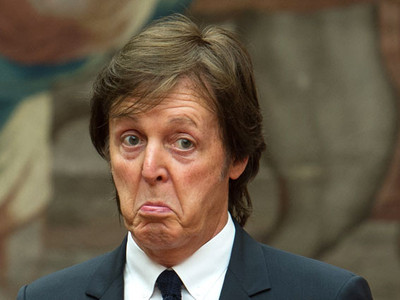
Mark E Smith and the Mystery Jet

“Do you ever suffer from hallucinations?” In a quiet corner of Salford’s New Oxford pub, Mark E Smith looks Blaine Harrison straight in the eye and then asks again: “Do you ever see things that aren’t there?” Half a beat goes by before he pops out his dentures and gurns toothlessly as Blaine jumps back in his seat more in shock than horror. Moments later Mark’s teeth are back in place and he’s shaking his head sadly. “I think you’re seeing things, matey.” The day had unquestionably taken a turn for the surreal. How had this happened? The pints of Sparta ale with whisky chasers had been a factor. We had come here with the best of intentions. We had come to meet the infamous ringleader of The Fall. Since forming in 1979 the band’s uncompromising union of raw punk rock and motorik rhythms has produced no less than 29 records while Mark, the sole constant, “doesn’t fucking know” how many band-mates he’s got through. “Mark’s incredibly fascinating,” Blaine had said earlier. “I’m looking forward to having a pint and a conversation. Anything could happen.” We’re also here to find out what the often irascible punk poet of the proletariat thinks of ‘Greatest Hits’, the new Mystery Jets track which mentions him by name. “The lyric is about a couple breaking up and dividing their record collection,” Blaine explained. “He’s saying to her: “You can keep all your Belle & Sebastian records, but I’m keeping ‘This Nation’s Saving Grace’. You only listen to it when you’re pissed, and when you sober up you ask why I’m still listening to Mark E Smith.” I think it’s complimentary, I just hope he does too.”

NME: Blaine, when did you first hear The Fall?

Blaine: My first encounter was when I was 17. I read an interview with Mark in a book about the Eighties musical underground called Tape Delay then went out and bought ‘This Nation’s Saving Grace’. It seems like the public have always been quite confused by The Fall, but I think in the Eighties they were trying to be a pop band.

Mark: Yeah, but we were real pop and they weren’t. Boy George wasn’t pop. Spandau Ballet wasn’t pop. That was fashion.

Blaine: ‘This Nation’s Saving Grace’ introduced me to Damo Suzuki and Can. Do you think The Fall were almost a British Krautrock band?

Mark: Sort of. It’s funny because in Germany they’ve said the same thing, that they hadn’t realised how good those old groups were until they heard The Fall. That’s an achievement, isn’t it?

Blaine: Have you met Damo Suzuki?

Mark: Yeah.

Blaine: Was he a nice guy?

Mark: Fucking bonkers! When I met him he was selling Japanese cars in Düsseldorf. Who’s going to buy a Japanese car in fucking Germany?

Blaine: I also went out and got the first Fall record, ‘Live At The Witch Trials’. Where did your fascination with the occult come from?

Mark: I knew people who were sort of pseudo-witches, so the title was just to annoy them. It’s the same now with Twilight or Buffy The Vampire Slayer, particularly in America. It’s a big rebellion for them. I see it when I go through the Midwest, where to be into vampires or werewolves is like spitting in your dad’s face. To us it’s Carry On Dracula, but to them it’s very serious because they all go to church every Sunday.

mes-blaineNME: Have you heard the Mystery Jets, Mark?

Mark: I’ve heard ‘Greatest Hits’ and it’s a fucking good song. I’m not just saying that.

Blaine: Thank you.

Mark: I won’t say it again!

Blaine: You’re influenced by people like Bo Diddley, Johnny Cash and Gene Vincent. What do you like about rockabilly?

Mark: The simplicity, as I’m not really a musician. Do you play a lot?

Blaine: I see myself more as a songwriter. I learnt the guitar through wanting to write songs but I don’t go into music shops and play ‘Stairway to Heaven’.

Mark: I’ve never really done much on the guitar. Mine’s only got two strings. It’s just A and E and then I get the group to embellish it.

Blaine: Was your dad into rockabilly?

Mark: No, there was no music in my house. Well, my sisters had singles but I was a latecomer. I was more interested in writing poetry. Nothing in music satisfied me. I still write every day. How do you operate?

Blaine: I sing stuff into my Dictaphone. I don’t think writing music should be laborious. There’s a Keith Richards quote which I love where he says that songs are just floating around and you need to have a radar to pick them up. If you stay up late enough you can catch them.

Mark: You’ve got to trap them.

Blaine: Yeah. Nick Cave says he puts on a suit every day and goes to his office. I couldn’t do that. They just appear now and then.

NME: Is there a bit more labour involved for you, Mark?

Mark: Correct. There’s no secret to being creative.

Blaine: What do you mean by that?

Mark: [Sticks his tongue out]

NME: I love that Keith Richards line too, but I think there’s also graft involved.

Mark: And half a gram of heroin and some Afghani black! He doesn’t just smoke skunk, does he? If he thinks there’s so many songs flying around why is he still playing the same ones after 50 years?

Blaine: A lot of your lyrics feel like things that have been overheard in the pub, particularly characters like Carry Bag Man, Wireless Enthusiast and Hip Priest. Is that how you write a song, rather than autobiographically?

Mark: I do try to write objectively, not subjectively. People say all the time: “Oh, you’re the Hip Priest!” but it’s not about me. ‘Carry Bag Man’ isn’t about me. I don’t go around with carrier bags full of drugs, do I? What do you do? Was your missus really moaning that you’d taken half her record collection?

Blaine: Yeah, a lot of the records mentioned in that song were records that I didn’t want to part with when I had a break-up, but it’s sort of a fictionalised account.

Mark: Well that’s good. You got it out of your system, didn’t you? Good riddance to bad rubbish as regards her, and you got a good fucking record.

Blaine: Your girlfriends and partners have often been in the band. What’s it like touring with your wife?

Mark: What’s it like touring with your dad?

Blaine: [Laughs]

Mark: So what have you got in the Jets? A guitarist, a bass player and a drummer?

Blaine: Yeah, and a pedal-steel player because this one’s an Americana record. We spent quite a lot of last year living in Austin, Texas.

Mark: You’re joking!

Blaine: No, we did.

Mark: [Incredulous] What, the whole group? With your dad?

Blaine: Yeah. Well he came out, but it was really the four of us plus wives and girlfriends. I’ve always wanted to live in America. It’s a ridiculous place. Texas is fascinating. We got obsessed with the suicide cults, like Waco and Heaven’s Gate. That’s all on the record.

Mark: That takes me back. When we were in Austin in 1981 the mixing guy and the drummer were kidnapped by these fucking weirdoes. Me and the bass player had to go and rescue them. They were being seduced! The guy running the place had a fucking cane and looked like Lucifer personified. He was a member of the KKK. There were all these birds in miniskirts with their tits out. They were all very attractive. We were looking through the blinds and we could see the drummer and the sound guy in the middle of all this. I said, “We’ve got to get them out!” Me and the bass player did this sort of weird attack. We broke in through the fucking skylight. We got them, but they weren’t very pleased about it. They were in their underpants with hard-ons and white powder all over their faces. I said: “Get in the van, you fucking cunts! Say goodbye to Austin, matey. You’re going back to the misery.”

Originally published in NME, 14 April 2012.

A$AP Rocky: just your average Home Alone-loving, Harry Potter-reading, Rick Owens-clad Harlem rapper

ASAP_Rocky_GQ_13Apr12_getty_bt_642x390_1“Hey! I need a fork!” In a secluded backroom at Sony Music’s London office, Harlem-born A$AP Rocky has just taken delivery of a consignment of Nando’s but has realised too late that he doesn’t have anything with which to eat his “Macho peas”. Improvising, he tears the corner off the carton and starts spooning them into his mouth with a shrug: “I’m so ghetto, look at what I do!” This might be his first time in London, and his first taste of that patented Peri Peri, but the 23-year-old’s reputation precedes him. Since he announced himself to the world with “Peso” late last year (with its catwalk-friendly line “Raf Simons, Rick Owens, usually what I’m dressed in”) he’s signed a $3m deal with Sony and become known as the East Coast MC with an eye for fashion that’s as high as he is. Slouching back on a sofa, he talks to GQ.com about why he isn’t a gangster, the $2,500 trainers he won’t wear and why you should think twice before copying Tupac’s tattoo…

Continue reading at GQ.

Someone Great

LCD Soundsystem were one of the smartest, funniest and most literate bands of the last decade, and they did it by playing by their own rules. This isn’t empty hyperbole, there were actual rules. “No sunglasses on stage” was one, as was “No rocking out” and “No psyching up the crowd”. Why was this Spartan attitude to audience interaction so important? James Murphy, LCD’s erstwhile iron-fisted leader, remembers his reign with a broad grin. “We relaxed them for a while, but people would get like James Brown ‘fined’. “You’re rocking out! Stop that!” No cool stuff. It’s a shortcut for meaning. It’s a simulacrum for meaning. I wanted to do away with that as much as humanly possible. The end doesn’t justify the means.”

Murphy grew up in New Jersey listening to David Bowie, the Clash and the warm hum of electrical appliances.  In his stoic Irish Catholic family, the sound of a refrigerator was a “replacement for hugs”. After moving to New York City in his late teens his attempts to understand the emotional power of noise led him into production and a series of failed bands. He was 35 by the time LCD Soundsystem released their debut album, and while he says now that he never made another song quite as direct as their debut single “Losing My Edge”, it’s the band’s second album, 2007’s Sound Of Silverwhich contains some of their most visceral and powerful moments, like the double punch to the heart and gut of “Someone Great” and “All My Friends”. Along the way he’s been charged with musical theft from time to time, and you can certainly hear him paying tribute to his heroes – well, specifically Bowie’s “Heroes” – on tracks like “All I Want”, but that was always sort of the point. There are no new things under the sun, just better remixes.

Following the release of their third album, This Is Happeningin 2010, Murphy called time on the band, as he’d always threatened to, with an epic 4-hour final show at New York’s Madison Square Garden on 2 April 2011. Now, almost exactly a year later, GQ.com meets him at London’s Red Bull Music Academy as he’s preparing to give a talk to a room full of the sort of wide-eyed kids that he’s been talking about “coming up from behind” since the days of “Losing My Edge”. The four-day beard growth that seems to have been a permanent fixture for the last five years is now almost entirely white, but at the fitting age of 42 Murphy seems to have found something like the meaning of life. He’s finishing work on the full-length concert film which will accompany LCD’s documentary Shut Up And Play The Hits, and he continues to make music without the pressure of the band. As he tells us, his restless curiosity about how stuff works is now also free to extend into the realms of wristwatches, making the perfect cup of coffee and fiction-writing, meaning his next big release could be printed and bound rather than pressed on vinyl.

GQ.com: Did you ever imagine you’d find yourself lecturing about music?
James Murphy: I never thought I’d do this. I have no game plan, I just improvise. I did a talk with David Byrne at Yale last month. David seems to have a career path that fits him very well and I would want one that fits me. I like that he’s cut a wide swath for himself. It’s very different though, because he was in a very successful band when he was quite young.

Are you growing more comfortable at being the centre of attention?
Sometimes my anxiety makes me very quiet and sometimes it makes me falsely gregarious as a way of trying to make everybody happy. It’s not something I desire. Stage fright is a very real thing for me. I don’t address performing. I try to play the songs. The performative aspect for me is always musical and physical and not about theatre, which I think is a failure of mine. I think if I had a little more confidence or I was a different kind of guy, it’d be cool. I love David Bowie, who’s obviously a theatrical performer but I don’t have that gene. I need to get over my self-consciousness and the only way to do that is to try and forget that there are people there. Luckily I designed a lot of music where there’s not a lot of down-time. I sing almost the entire time or play percussion. It’s very physical so that it’s easier for me to let go a bit.

Do you feel very connected to your lyrics?
Some more than others. I get rid of them if they feel too much like “Where did that come from?” unless I really like the way they feel or sound. David Byrne said that the words don’t matter to him, just the emotional tone. He’ll think in sounds and then fit words into them. That makes a lot of sense for him, but I feel like there needs to be a point of view. I feel like a newscaster, not a charming personality. If I didn’t have news to say, then why would you listen to me?

There’s an emotional weight to LCD Soundsystem’s music that means fans often say they’d like it played at their funeral. Is that something you can relate to?
As long as they don’t mean, “I hate this, when I’m dead you can play it!” I think that’s positive but I don’t know how it makes me feel. If I had to pick something to play at my funeral I’d force everyone to listen to “First Time Ever I Saw Your Face” performed by Roberta Flack really loudly on a really good sound-system, just because I want everyone to hear what I hear when I hear that.

What are you most afraid of?
Making people feel terrible. Or the selfish version: being blamed for making people feel terrible. [Laughs]

Mark E Smith says the Fall would have been the same band even if he wasn’t from Salford. Would LCD Soundsystem have been the same without New York?
I think it had a big impact. I don’t think if I’d grown up in New York I’d have made the same music but I’m from a small place in New Jersey very close to the city. I moved there after fetishising it and as opposed to just being disappointed by it not being right, I tried to manipulate it into being right, so that was pretty formative. It’s a big part of me. I’m a reactive person. Mark E Smith seems to be a generative person. “I’m going to make this thing. Nothing like it happened before. Nothing like it has happened since.” I’m not that guy. I’m a middle-aged guy who responds to stuff. I’m a volley-er, not a server.

What was the best record in your parents’ collection?
For Sentimental Reasons by the Nat King Cole Trio – it has “That Ain’t Right” and “This Will Make You Laugh” on it. That was my dad’s favourite record. He was a bouncer at a jazz club.

What’s the secret to making the perfect cup of coffee?
Good beans, good roast and following the recipe. You’ve got to have a good brew ratio. You’ve got to have the right amount of grounds, ground the right way, in a French press, held for the right amount of time. It’s not a very sexy answer, but it’s the truth!

When did you first become interested in watches?
The first watch I had was given to me when my grandfather passed away. My mother gave me his watch, which was a Forties Bulova. My father’s father had passed away before my parents were married but when they saw that I liked that watch my father gave me my other grandfather’s watch as well. That was a Twenties’ Gruen. I went through a big phase of wearing old Timetron digital LED watches and actually I didn’t wear a watch for years and years. Recently I started liking them again. I just think these things float through space and they go into your ear and you find that you’re not alone. I started liking automatic and mechanical watches. I really like the mechanisms.

Can you recommend a good book?
David Foster Wallace is great so read Infinite Jest because it’s amazing, then Pale King because it’s beautiful. Broom Of The System is fine and you should read it if you want to know more about where he came from. Also, read Sam Lipsyte especially Home Land and The Ask. He’s a great contemporary writer, and young-ish. Young for writing, but older than me.

Do you have any plans to write fiction yourself?
That’s what I went to school for, so it’s where I come from academically. I’m writing now, actually. A novel. I’m always making things, but whether they turn into something that I’ll consider making a part of the public world is different. I mean, I write songs every day, but only once in a while do they go out into the public sphere. I’m also dubious because as a person who’s known for something else, something that I wrote might get published before it was ready. Maybe I’ll have to send things in under a pseudonym, just so that they’re considered fairly. Editing is no joke.

What’s the best advice you’ve ever been given?
My dad gave me some good advice: when you’re walking with a lady you should always walk on the street side. His other advice was “Don’t do anything jailable” and “Don’t die”. [Laughs] He was using the minimum number of words but you got his point. If you’re doing stupid shit, be the guy who doesn’t do the stuff that could kill you. If you’re going to break the law: speed, run a red light, drink underage but don’t get yourself sent to jail. That’s when you know your dad was not raised fancy. It’s not like he told me: [adopts aristocratic accent] “Always take care of the little people.” It’s not noblesse oblige.

Originally published by British GQ.

Peter Berg

peter-bergPeter Berg is sunk deep into an armchair in his hotel suite at London’s Claridge’s, rubbing his brow. He’s wearing a suit jacket approximately two sizes too small for him and the expression of a man simultaneously nursing an expensive hangover, transatlantic jetlag and the pressure of bringing the $200m blockbuster Battleship  safely into harbour. After proving his big-budget action credentials with Will Smith’s drunk superhero movie Hancock, Universal handed him the keys to their brand new Hasbro franchise (complete with stars Liam Neeson, Taylor Kitsch and Rihanna) and all the political headaches that go with it – they’re spending another $50m on promotional tie-ins with the likes of Coca-Cola Zero and Subway alone. GQ.com lends an ear as he explains how he’s dealt with the inevitable jokes about making a film based on a children’s game, how Spider-Man changed everything for moviemakers and why the best way to wake up is with a “Breakfast of Booze”.

GQ.com: How involved were Hasbro in the making of Battleship?
Peter Berg: First of all, Hasbro doesn’t have any real creative input. They might have an idea, and I’ll listen to anybody’s ideas because I’m a very inclusive filmmaker – Hasbro have had some really good ideas. That being said, there’s a lot of scepticism and cynicism about the title and the fact that there’s a toy company involved. People have been very public about it: “What’s next, ‘Tic-tac-toe: The movie’?” At the same time, I’ve also met a lot of people who generally don’t write for websites or blog who say; “Wow! That’s awesome, I love that game!” So how it really pans out remains to be seen. I think at the end of the day the movie will succeed or fail based upon itself and once people have taken their shots at the title, they’re still going to take a look at the movie. If the movie is good and the marketing is good then it’ll work, if not, it won’t. I don’t think that the title of Transformers  and Hasbro’s involvement in it had very much to do with the film’s success – but Michael Bay had a lot to do with it. Pirates Of The Caribbean didn’t owe much of its success to the theme park ride, it was a success because it was a Johnny Depp movie directed by Gore Verbinski.

What motivates you to make a summer blockbuster?
I’m interested in the business of movies. When I first started making films as a profession, Universal was the top studio. Stacey Snider was running it and back around 2000 they had movies like Meet The Parents and The Bourne Identity. They were number one. Their movies were making a certain amount of money, maybe $350-400m worldwide and were good movies with character and some effects. Suddenly Spider-Man comes along in 2002 and blows the roof off it! People realized that there was actually a bigger audience out there and a bigger appetite. It was Sam Raimi (a respected filmmaker) and Tobey Maguire (a pretty good actor) and the movie was actually really good! It made a lot of money all around the world. Suddenly people realised “Holy s***! There’s a new game!” When a movie like Avatar  does the kind of business it does you have to realize that there’s an appetite for big spectacle that delivers. There’s gotta be emotion, humour and character but if you can take those things and add big, epic never-before-seen visual spectacle then you can make a mega-movie. If you look at the directors, guys like JJ Abrams, Jon Favreau, James Cameron, Gore Verbinski – these are talented filmmakers who understand the thrill and the rush you get making movies like that.

Are we supposed to sympathise with the aliens in Battleship?
I wanted the aliens to at least have a pathos because we see so many [science fiction] films where we don’t know what’s going on and they’re killing everything. I liked the challenge of making their thought processes and emotions part of the film. Making their desire to look out for themselves as relevant as our desire to look out for ourselves. There’s a scene later on in the film where there’s an encounter between an American scientist and an alien scientist. It’s a peaceful encounter where they just take the measure of each other and I think it’s my favourite scene in the movie. I also like the idea that the aliens didn’t start it – we started it! We didn’t mean to start it but there’s a series of misunderstandings. I’ve seen that happen in real life: giant miscommunications which end in violence.

Is there any truth to the rumour that you’re going to direct an N.W.A biopic?
No. I’m a huge fan of N.W.A. I was really into Eazy-E, like every other red-blooded, white American who thinks he’s a rapper from Compton. It’s not a movie I’m going to do but I hope somebody does it because it would be a great story.

Can you recommend a good book?
Lone Survivor by Marcus Luttrell. It’s going to be my next movie and it’s a hell of a book.

What’s the best thing you can cook?
The Breakfast of Booze. We make it every Super Bowl at my house. I got the recipe from Epic Meal Time. They’re my heroes. They’re some cooks from Canada who have a YouTube channel and they’re getting big.

What’s your whiskey of choice?
I’m a Jack Daniels man. As classless and American as that is, I grew up drinking Jack Daniels.  Last night, though, I was drinking a 1966 Macallan. That was a treat. It was £500 for a shot of that.

Originally published by British GQ.

Eric Cantona on football, smoking and Switch

The man the Old Trafford terraces still call “King Eric” wants a cigarette. GQ.com is stood with Cantona by the pool in the basement of Piccadilly’s Haymarket Hotel where a family of swimmers can’t quite believe what’s happening around them. The footballer whose talent, arrogance and occasional acts of uncontrolled aggression defined the early years of the Premiership has just appeared from one of the pool’s side-rooms, possibly a sauna, out of which in the last three-quarters of an hour both Radio One’s Edith Bowman and David Frost have emerged looking equally awed. The Frenchman is patting his pockets distractedly until one of his team of press handlers scurries over to stop him. “You can’t smoke down here!” she whispers urgently.Cantona looks at her, baffled. “But why not?” he asks with a shrug. He makes his apologies and disappears off in search of Frédéric Schoendoerffer, the director of his new film Switch  and the keeper of his tabs. A couple of minutes later we are safely ensconced in a quiet side room where Cantona, sipping an espresso, apologises for the delay. He eases back in his chair, tilting his chin skywards contemplatively and sets about expounding his philosophy that everything – football, acting, even cooking – is simply another way of expressing your true self.

GQ.com: Detective Forgeat, the character you play in Switch, always has a cigarette in his hand. Do you smoke as much as he does?
Eric Cantona: It’s to show that he is a free person. It’s not because you like adventure that you smoke but I think it shows the freedom that Forgeat has and where he puts his priorities. His priority is his job and he’ll do anything that helps to inspire him to do it well. He doesn’t obey the smoking ban. For me, I don’t like it when there is too much interference in our lives. We’re not children. It is our own life in our hands.

What advice would you give to someone like yourself who wants to act but is not a trained actor?
It’s a discipline. For me football, cinema, theatre or photography are all ways of expressing ourselves. Of course, if you want to be a photographer you need to learn the techniques. You must learn how to play the sport but I don’t think the technique is the most important thing. Sometimes it’s nice when it’s not so perfect. It’s like beauty. If someone is too perfect they won’t look good. Imperfection is important. That’s why I think it’s important to learn the techniques but to know when to stop using them. We can be eaten by techniques and forget what we have inside of us.

If you could have acted in any film, which would it be?
I would like to have worked with [Pier Paolo] Pasolini. In Oedipus Rex, maybe.

What was the best thing about playing football?
Expressing myself. Of course, my dream was always to play for the best teams and with the best players but I loved to express myself through the sport.

Can you recommend a good book?
Narcissus and Goldmund by Hermann Hesse. It’s about our desires and the small voice inside us that tells us not to follow them. It’s about that rivalry between the two people inside each of us.

What music do you listen to at home?
I love the singer-songwriter Sophie Hunger, particularly her last two albums 1983 and Sophie Hunger.

What achievement are you most proud of?
I try to be honest. I’m honest with people and I try to respect myself. If I respect myself and I am honest with myself, then I will respect other people. Of course, I don’t do everything perfectly. I’m proud that I’ve tried many things. I’ve shown that as people we can try anything.

What is the best advice you’ve ever been given?
I don’t remember any advice. I listen to my own experience. My mind says to me that life is just “le passage” – a journey. You are here today, but tomorrow… you don’t know. You must live with a feeling of freedom. You are not “appartenir“. You don’t belong to other people, your environment or the world around you. You are free. That helped me to achieve a lot of things.

What is the best thing you can cook?
Dorado. It’s a fish. The secret is in the filling.

The filling?
Non, the feeling! I know how to cook it, but if I told you how to do it, then yours would be different to mine. It’s all about the feeling.

Originally published by British GQ.

Nikolaj Coster-Waldau

ncw“She’s not naked?” Nikolaj Coster-Waldau is a little taken aback by his Game Of Thrones co-star Emilia Clarke’s GQ photo shoot. “That makes a change!” Best known for playing Jaime Lannister in the notoriously clothes-repellent fantasy series, the 41-year-old Dane is here today to talk about his role in the film adaptation of Norwegian crime-writer Jo Nesbø’s blackly comic Headhunters. A heist movie that escalates into a Coen Brothers-esque cat-and-mouse pursuit across Scandinavia, Coster-Waldau plays a character he describes as “an alpha-alpha male, dashing and extremely well-dressed”. To mark the release of Headhunters in cinemas, here he discusses the most beautiful Game Of Thrones fan he ever laid eyes on, the stubbornness of English football fans and one particularly eye-watering encounter with a doctor…

What did you think when you first read the script for Headhunters?
I loved the fact that the main guy is such an idiot and that he’s not very nice. Within seconds of the movie starting you see him being unfaithful and on top of that treating that girl like she’s worthless. The script has so many twists and turns and surprises. It’s a great story.

Will you audition to play your character again when the film is remade for America?
I don’t know! I haven’t thought about it. It’s great that it’s being talked about, though. The fact is when a film with subtitles comes out in America it will only find a limited audience. If they can sell it and make some money then that’s great.

You’re very well dressed at the start of the film. What were you wearing?
I’ve never tried on so many suits for a role! We ended up with Paul Smith for the film. I loved them, but personally I wouldn’t spend that much money on a suit. Today I’m wearing a… [Looks for tag] Boss Selection suit jacket – clearly not bought by myself! The trainers are Reebok. I like to wear beautiful clothes but I don’t have that many.

Can you recommend a good book?
The Finkler Question by Howard Jacobson. I guess with any story it’s the characters that pull you in and I love the way he tells the story of those friends.

Are you looking forward to Euro 2012 this summer?
I’m feeling very confident although we Danes aren’t quite as mad as you guys are. My best friend is English so I know that at every World Cup and Euros you manage to convince yourselves that you’re going to win it. You set yourselves for that horrible, horrible despair when you crash out on penalties against Germany. Actually one of the greatest matches I ever saw was at Wembley during Euro ’96 between Scotland and England. That was an incredible game. Remember Gascoigne’s goal and then his celebration? Just amazing.

Are there any members of the Game Of Thrones cast you haven’t seen naked?
Let me think. I’ve seen Sean Bean naked. I’ve seen Mark Addy. And Lena. I haven’t seen the kids of course, but all the adults. We do that at the read-through. We just strip naked and read the script.

Given that there’s even an official Game Of Thrones cook book, what’s the best thing you can cook?
I do a really wicked chicken where I stuff Parma ham under its skin.

What’s been your strangest fan experience?
I was very lucky to be invited to ComicCon last year. That was a tremendous experience. We were sat on this panel and to see all the fans and their passion and energy was incredible. A lot of people in costume, of course. In the show Emilia Clarke plays this character called Daenerys Targaryen and I remember seeing an Asian Daenerys Targaryen at ComicCon. She was quite stunning. A beautiful vision.

Have you met Game Of Thrones creator George RR Martin?
Yes, he’s a very sweet man and very proud of his work, as he should be. I guess in that situation every actor wants to ask whether their character is going to survive, but I didn’t. I kept my pride. He was very gracious.

What can you tell us about your upcoming role in Oblivion alongside Tom Cruise?
Well, I can tell you that it’s directed by Joe Kosinski and based on a story he came up with along with Barry Levine. The script is by William Monahan. I play a guy called Sykes. Apart from Tom Cruise there’s also Morgan Freeman, Andrea Riseborough and Olga Kurylenko. It’s set in the not too distant future and that’s about all I can tell you! I play a pretty traumatised man, that’s all I’ll say.

What’s the worst pain you’ve ever experienced?
I’ll tell you that, but it will make you feel the pain too. I once had a urinary infection. That was fine, but in Denmark when you have that, as a man, if you’re under the age of 50 they call you in for a test. I thought it was a test to check how much power your piss has. I went in and they sent me down to examination room number three. There was a nurse waiting for me. She asked me to undress, so I did. I asked her what we were doing, and she just said that they wanted to have “a look”. So I’m lying there and she puts a little bit of gel on my willy. I asked her what it was for and she said it was so that it wouldn’t hurt so much. Then the doctor came in with this big thing and said: “Let’s have a look at it, then!” He had this big, bendy camera. Then he inserted it into my penis. That pain was beyond painful. So the lesson is never let anyone put a camera up your penis. Afterwards he asked me if I wanted him to have a look at the other one. He had another big thing to go in the arse. I told him I was alright.

I don’t blame you.
There was a TV screen showing what they could see but I was in too much pain to look at it. I remember he’d put it in and I was screaming in agony and then he said: “Right, now the worst pain is still to come.” He had to force his way inside because the bladder closes up. Every time he moved it was horrible.

I’m glad I’ve managed to avoid requiring too much medical attention to my penis.
You’re very lucky. When I was 21 I went to a music festival and met a girl who gave me two presents that I didn’t discover until I got back. Two great venereal diseases.

Which festival was that at?
That was at Roskilde, which is a huge festival in Denmark with just as much mud as Glastonbury. I’ve seen some amazing bands there. A couple of years back I saw Nick Cave, not with the Bad Seeds but with Grinderman and they really delivered. He was great.

Originally published at GQ.

Rita Ora

ritaoraRita Ora arrives for our interview bearing gifts. Appearing beneath blonde locks and wearing bright red lipstick and a tight dress, the 21-year-old might already have a number one single “Hot Right Now” (with DJ Fresh) and a direct line to her label boss Jay-Z, but she’s also generous with her cupcakes. She excitedly offers us a delicate chocolate creation covered with an obscene amount of icing while taking a red velvet one for herself. “You wouldn’t mind if I just dug in, would you?” Although she was signed by Jay-Z to Roc Nation three years ago, this year Ora is finally enjoying her moment in the spotlight: releasing “R.I.P” written by Drake and featuring Tinie Tempah, touring with Coldplay and finally unveiling her debut album. Between mouthfuls of icing and enthusing about her single (“I love the message behind it. “R.I.P to the girl you used to see, her days are over”. It’s like something you’d say in a conversation.”), she tells GQ.com about working for Hova, her advice on getting tattoos and her love of Bruce Springsteen.

GQ: What’s Jay-Z like as a boss?
Rita Ora: He’s a great mentor, a great boss and so is his wife. There’s not a lot of people on Roc Nation so the few that are genuinely get time spent on their project. It’s like a family, well especially now with Blue Ivy – although she just chills: eats, sleeps, wakes up, eats, sleeps. Jay-Z taught me a lot about patience as an artist. I was itching. When I was 18 I thought it was all going to happen so quickly – I just thought next week I’d be on Oprah!

What’s the most important item on your rider?
Throat Coat Tea and a steamer. A steamer is like an inhaler so you can inhale this oil, or frankincense of eucalyptus. Before I go onstage I spend half an hour taking in that steam and it saves my life! A little bit of whiskey, too.

What advice would you give someone getting a tattoo?
Know what you want to get, because even if you try and take it off with a laser it’s not 100% going to come off.

You signed to Roc Nation at 18 and you’re now releasing your debut album at 21. Have the last three years been your equivalent of going to university?
Roc Nation is like my uni. I had a flat in Brooklyn and it was definitely like being at uni but because I did it in the States I was underage. I couldn’t even go anywhere to party! When I came back to London I could drink, so we had our fair share of parties here.

What music do you love that would surprise people?
I’m a huge Bruce Springsteen and Duran Duran fan. But No Doubt are one of my favourite bands of all time. When I first saw Gwen Stefani wearing red lipstick I thought it was the prettiest thing I ever saw.

Have you ever cheated death?
I was doing yo-yos on stage and I almost fell off. I was scared of embarrassing myself more than death, so I guess I really cheated embarrassment.

What’s your key style advice for men?
The worst thing is when a guy just looks awkward. It’s not attractive. A guy has a certain power anyway just by being a different sex, so all you have to do is just be comfortable.

You’re supporting Coldplay at their stadium shows this summer. How did that happen?
I’m so glad that’s out now because I’ve known for a minute and I’ve wanted to tell everyone! They heard my tracks and then “Hot Right Now” went to number one. I’ve met them a few times over the last few years so they asked me to be on the tour. I’m over the moon – they play huge  arenas and I can’t wait to finally do it!

Originally published by British GQ.

What Kony 2012 doesn’t tell you

In 2008 I found myself stood in a sewer trench in the centre of Kinshasa, the capital of the Democratic Republic of Congo, trying to help a man named Karem clear it with a spade. If he didn’t do this then when the rains came the sewers would flood the adjacent homes, which were little more than permanent slums. Karem, who was in his mid-twenties, turned to me and said: “My country, the DRC, it’s fucked”. Ankle-deep in sewage, I found it hard to disagree.

I’m telling you this not to perpetuate the idea that central Africa is a hopeless place, which it isn’t, but by way of explaining that I have some insight into what it’s like to be a white man in a country that I don’t understand wanting to help in any way I can. Maybe this is why, despite extensive flaws, I have some sympathy with the filmmaker Jason Russell and Invisible Children’s campaign to arrest Joseph Kony, the fugitive leader of the Lord’s Resistance Army.

Kony 2012 is about a promise. It’s a promise that Jason Russell made to Jacob, a former child soldier, when he met him in Uganda in 2003. Jason promised Jacob that he would stop at nothing to have Joseph Kony arrested and last week he managed to get the whole world talking about Kony and his army of children. This is no mean feat and I think it’s wholly admirable that Jason Russell is keeping his promise to his friend. However, in doing so he is using and perpetuating stereotypes that obscure the reality of life in central Africa.

The Kony 2012 campaign is a brilliant demonstration of the power of a simple narrative over a complicated one. The message, as is made explicitly clear in the film, has been simplified to the level that a five-year-old child, in this case Jason Russell’s son, can understand it. Unfortunately, as you may have noticed, the world is more complicated than that.

First of all, Joseph Kony is no longer in Uganda, where Invisible Children have successfully lobbied to send American advisory troops to hunt for him. In the last half decade he has moved through the Democratic Republic of Congo, South Sudan and is now most likely in the Central African Republic. In the film, Russell repeatedly refers to Uganda as a warzone, doing a disservice to the country’s partial recovery in the years since Kony was forced to flee. In reality, children in Uganda are now at a far greater risk from nodding disease, an incurable and debilitating neurological condition, than they are from Joseph Kony.

Arresting Kony won’t stop militias from recruiting child soldiers and it won’t bring an end to nodding disease, chronic lack of sanitation or any of the many other awful things that can happen to you if you if you have the misfortune to be a child born into poverty in central Africa. Invisible Children, by their very design, are not built to tackle these problems. They’ve been repeatedly criticised for the lack of transparency over their accounts and the small percentage of their funds which go to development work on the ground, and by their own admission they are a campaigning organisation first with everything else an afterthought. All they really care about is that promise. That’s why while their campaign has been startlingly well executed, the very last thing anyone should do is give them more money. They don’t need it. Their stated aim, to raise awareness about the actions of Joseph Kony, has already been achieved.

The fact that reality is more complex than the Kony 2012 campaign would like it to be shouldn’t mean that people have to be confused or bored into apathy. There are things that can be done to help children in Central Africa, but these things will be slower and less glamorous than hunting down a single “bad guy”.

I met another young man in the Democratic Republic of Congo named Freddie Mbulayi Kabamba. He was part of a small organisation named RECIC who were seeking to establish local political accountability, and who had been supported for many years by the international development organisation Christian Aid. When I asked him whether he had any hope for the future of his region, he said: “We have hope, but not for now. In a long time. Hope is permitted, but we must have good leaders.”

That’s what people want and need. Not quick fixes and American troops, but their own accountable political structure. Neither Uganda or the misleadingly-named Democratic Republic of Congo are functioning democracies. I hope Joseph Kony is arrested this year, with or without the help of the American advisory troops, but that will not be the end of the story.

Originally published by British GQ.

Paul Weller

PaulWeller“Nothing wrong with pop!” says Paul Weller with a grin as we fumble for a way to describe his new record Sonik Kicks. There are a host of different influences on the album, from dub to jazz, but that doesn’t, Weller wants to make clear, mean that it’s “eclectic”. “Quite a few people have said it’s an ‘eclectic’ record, and I kind of know what they mean but actually I think there’s very much an overall sound to it. It really hangs together, do you know what I mean?”  Something similar could be said for Weller’s career. After disbanding hugely influential mod punks the Jam at the height of their fame in 1982 he spent the remainder of the Eighties exploring a more soulful sound with the Style Council. In the Nineties he was lauded as one of the guiding lights of Britpop and then slated when the genre begat Dadrock. Since the turn of the century he’s shrugged off that criticism by turning in a series of albums each more inventive and experimental than the last. As he prepares to release his eleventh solo record we sat down with the artist formerly known as the Modfather in a comfortable office upstairs at Island Records to talk about his tabloid midlife crisis, resenting the “Dadrock” tag and what David Cameron doesn’t understand about “The Eton Rifles”.

GQ: You announced that you’re going to be playing a “classic album” in full at the Roundhouse this month – your new one. You’ve also vowed never to reunite the Jam. Are you tired of nostalgia acts?
Paul Weller: I’m bored of all these bands getting back together and playing their classic album from 20 years ago. I’m sure I’m in the minority because they’re doing good business and there are a lot of people out there who want it. Fair play to them, and who am I to say that they shouldn’t? [Laughs] I’m just bored of it, man, and I want to make a statement of intent about my new record. We’re going to play the whole album all the way through at the Roundhouse and it’s one of those things where it’ll either be a complete  disaster or it’ll blow people’s minds. Hopefully the latter. I think the album flows as one piece, so if we can put that over live I think people will be into it. Either that or we’ll get bottled off. There’s always going to be an element of people who want the old stuff. I see it at gigs when we play the old songs and it’s nice. But if anyone knows me well enough and has followed my path well enough they would know that there’s no chance of me reforming an old band. So it amuses me, because why do they ask? They should know it’ll never f***ing happen. I’m just not a particularly nostalgic person.

Your single “That Dangerous Age” is about a midlife crisis. Are you having one?
It is about that but it’s not particularly biographical. It’s more of a take on how society allows people to be at a certain age. In reality there aren’t any rules because no-one’s ever been there before. There are no maps. You make it up as you go along, like all of life. It’s born out of the fact that my wife, who I’ve been married to for about a year-and-a-half, is much younger than me. There was a bit of a “Wor!” when that first happened. “Is he going through a midlife crisis? Sports car and the young wife?” I found that very amusing because of how clichéd people’s minds are, particularly in the media. That was kind of the impetus for the song, but I wouldn’t really write about myself because it’d be too boring, so I made up these characters.

What’s the biggest misconception about you?
The “Dadrock” thing. Unless people know me well they would probably think I just listen to the Small Faces or old soul records, which I do obviously because I love that music but it really isn’t that simplistic. I get labelled as just being about one thing, but there’s lots of layers to what I do. It’s just lazy journalism but people start to accept it. If people spent an hour in my car driving around London and listening to the stuff I listen to they’d hear some interesting stuff.

What music do you love that would surprise people?
Probably a lot of the music I love would surprise people! The other week, for instance, I bought an album of Ethiopian music, an album of Iranian folk songs, a Karen Dalton record and an old English folk compilation. If I don’t know what something’s going to sound like then I’m interested to hear it. I want to hear as much music as I possibly can before I leave this mortal coil but it’s impossible to hear it all because there’s so much of it. It’s like a river that never stops flowing. Which is great, but if you think you know about music you’re really just dipping your toe in.

Which lyric are you proudest of writing?
From my long and illustrious career? I really like “The Eton Rifles” because I thought it was a very clever subject matter. I’d heard people write about the class system but not in that way. I thought “Going Underground” was good. I like the simplicity of “Wild Wood” and its message of strength and hope. “Broken Stones” I like a lot. I can’t remember most of them to be honest – I’m just making this up as I go along! I can’t even remember some of the songs on the new album, which I’ll have to rectify soon…

“The Eton Rifles” is famously one of David Cameron’s favourite songs, so I guess you have that in common.
I found him saying that amusing but weird at the same time. How could anyone get the lyrics so wrong? I guess it’s just that not everybody listens intently to lyrics. They’ve got the radio on in the background and they just sing along to the chorus even if they don’t understand it. It’s just one of those aspects of pop music. Having said that, I think it’s such an engaging song and idea that you’d have to be stupid not to understand it.

Do you still get passionate about politics?
I do still get angry about politics, particularly about the fact that there’s nothing apparent that we can do to change things. I’m upset and angry about what’s happening in Syria at the moment but I don’t really know what I can do about it as an individual. It’s hard to get upset about party politics in the same way, even though it does make a difference. From what I’ve ever seen of it, it’s just jobs for the boys and careerism. I try not to be cynical about it but I think I just end up being apathetic. I could write songs about politics, but I’m conscious of not writing songs that sound the same as the ones I wrote 30 years ago. Nothing’s really moved on, so I’d just be regurgitating the same sentiments.

Why did you decide to open the album with the most unconventional track, “Green”?
We wanted to throw people in at the deep end so that the first thing they heard would make them sit up. That’s not to say I’m doing it to try and alienate people, quite the opposite really. It’s just to disorientate you at first and make a statement that you’re going to go on a different ride here.

What was the best record in your parents’ collection?
Probably a Beatles record. My mum bought things like “She Loves You” as singles. When I got into the Beatles I must have only been about six or seven but old enough to take notice. We used to have an old radiogram which, for readers of a certain age, was like a big cabinet thing with a record player inside it. It had a drinks cabinet on one side and a little deck on the other. It had a really lovely warm valve sound sound as well. You could put a stack of singles on and they’d just keep dropping down. We didn’t have many records because they were too dear, but whatever we did have I would load up and play endlessly, then turn them over and play all the B-sides.

Can you recommend a good book?
A book about Syd Barret called A Very Irregular Head by Rob Chapman. Maybe you’d have to be a Syd fan to enjoy it, but if you are it’s a great book. It describes a lot of Syd’s influences, where his lyrics came from and the inspirations for his painting as well. It’s an interesting book and it affords him a bit of dignity which is missing in some of his other biographies.

What advice would you give to your younger self?
“Be Happy Children”… not that I would have listened to any advice anyway! The last song on this album is called “Be Happy Children” and it was written about my Dad. He passed away three years ago. He was a strong man with a strong character and if he could he’d say: “Listen, don’t cry for me. Be happy and be joyful for the time we had together.” So the song is about that and also about me thinking about my own role as a father and what I’d want to say to my kids. I got my eldest daughter and my second youngest son to sing on it. There’s a kind of cyclical thing to it: from my dad, to me, to my kids. It’s almost like a hymn, a postscript for the album after all the sonic stuff that’s gone before.

Do you enjoy listening back to your own records?
I hear an album so many times during the course of making it that when I’ve just finished it I don’t want to hear it again. After you’ve taken a little bit of time away from it you can come back to it, which can be scary. I’m happy with Sonik Kicks, man. It’s pretty damn close to what I thought it should be and that’s rare in itself. It’s very easy when you make a record to start off with one idea and then get sidetracked. There’s nothing else around that sounds like it. It’s a 21st Century record.

Originally published by British GQ.

Imprisoned in Putin’s Russia

Khodorkovsky_gq_12mar12_pr_bMikhail Khodorkovsky had it all. Back in 2002 he was the head of Siberian oil giant Yukos and the richest man in the world under the age of 40. The only thing Khodorkovsky didn’t have enough of was respect for Vladimir Putin. He repeatedly and publicly set about accusing the Kremlin of corruption and gave financial support to the political opposition. Unsurprisingly, this did not go down well with the then Russian President. In October 2003 Khodorkovsky was convicted of tax evasion, as well as “stealing 350m barrels of oil” and was sent to languish in the Siberian prison where he remains to this day. However, in the wake of Russia’s recent presidential election Khodorkovsky now finds his sentence under review, with the suggestion that he could be freed. Cyril Tuschi’s bleak new documentary Khodorkovsky explores the charges against the recalcitrant oligarch and the cold, hard realities of Putin’s Russia. We spoke to Tuschi about whether the recent elections contained any surprises, whether audiences will sympathise with his documentary’s billionaire protagonist and whether anyone in Russia can realistically challenge Putin.

GQ.com: What was your reaction to Putin’s re-election?
Cyril Tuschi: What re-election? There was no election. Sorry for being boring and repeating what many others have said, but Putin is just simulating democracy. Sadly enough, there were no real surprises. Well, except one: that my friends and other bright people in the opposition like Vladimir Bukovsky now openly support Mikhail Prokhorov. In my opinion, in the past Prokhorov has not been a Kremlin-independent politician. But hey, I am always open for surprises! There could be excuses, like the idea that they are trying to reform the government from within, but I would tell Prokhorov not to accept Putin’s offer to join him. Also, I agree 100% with Khodorkovsky’s call to the opposition in Russia “to avoid radical scenarios, a split and not to stop mass actions.”

How sympathetic are you personally to Khodorkovsky’s plight?
I had and still have a little bit of an ambivalent feeling towards Khodorkovsky. My topic was ambivalence. He is a person who aimed high and acted heroic in the way that he came back to Russia, knowing that he would get arrested but now he must see that he made some kind of misjudgement either of his own powers or of the powers of his adversaries.

Was it strange to make a film sympathising with a billionaire in the current economic climate?
No, I never thought that much ahead. I always start a project from my personal point of view and only later did I think about the possible reaction from audiences. When I began, in 2006, there was no economic crisis in sight at all.

What resources did you use in your research that you could recommend to people who want to understand more about contemporary Russia?
There was no main source for my research in the beginning – I was plodding through the fog of unknown Russian territory. I was also a regular visitor to the webpage of Khodorkovsky’s team. I also read the Moscow Times and the many blogs of his lawyers, partners and family.

Which documentaries have influenced you as a filmmaker?
Those which inspired me to make a creative leap forward were: Man On Wire, The Corporation and The Fog Of War.

Can anyone realistically challenge Putin’s power?
The people can. The only danger is that Putin is using the tool of fear again, particularly the fear of political destabilisation as happened in the Nineties. Stability was and is Putin’s biggest asset, even though in reality he was just lucky to come to power at a time when the oil price had a spectacular upswing.

Originally published by British GQ.

The Mayoral election race starts here

Boris Johnson was a couple of minutes into his opening speech at Hammersmith Town Hall last night when the heckling started in earnest. Naturally, he didn’t miss a beat. “We have cut council tax!” he thundered over the dissent before singling out his loudest critic: “Yes, in real terms, sir, we have cut your council tax – assuming you pay it!”

The audience rewarded him with a gale of laughter. This was the clown prince of political theatre they’d come to see. The occasion was People’s Question Time and the evening was at once not about the elections in May and wholly about them. These events are held twice yearly, but the timing of this one, coming just days after Boris unveiled his “Nine point plan for a Greater London”, meant it was bound to become a debate about re-election. They are attended not just by the Mayor of London but by the Assembly Members who represent constituencies across the city and who will also be contesting their seats on 3 May. The truth was, the majority of them didn’t utter a single word from the stage all evening. This was all about Boris.

The first talking point was crime, on which he was bullish. “I would feel safe walking anywhere in London at any time,” Boris told us to audible snorts of derision, but he was applauded for his claim that on his watch crime has dropped 10% and that the murder rate is at its lowest since 1978. “You can’t juke the murder stats,” he pointed out. “After all, with modern DNA technology it’s very hard to hide the bodies.”

Last August’s riots were noticeable by their absence from Boris’ opening speech. When asked from the floor whether he now accepted that closing youth clubs had been a mistake, and whether he’d be reopening them, he answered that Olympic legacy money was intended to be spent on “sports clubs”. Youth clubs and sports clubs are clearly not the same thing and this sounded a lot like an Olympic-branded sledgehammer being wielded in response to every problem. The value of falling crime rates shouldn’t be downplayed, but claims of better community policing ring hollow when the city has so recently experienced widespread rioting.

Housing and development was by far the noisiest issue of the night. The development of Shepherd’s Bush Market, the plans to build high speed rail tunnels and the proposed “super sewers” for the Thames all caused noisy and frustrated debates as Boris failed to deliver straight answers. The closest he came was towards the end of the evening: “You cannot sterilise London. There are things that have to be done.” He repeated his promise to create 200,000 jobs, which is some target. By way of comparison, employment in his current term has seen a total net rise of around 45,000 jobs.

Affordable housing will be one of the key debates at the election. Much time will doubtless be devoted to investigating how accurate Boris’ claim is that he’s on course to meet his target of building 50,000 affordable houses during his time as Mayor – a goal he’s already shifted from being attainable after three years. Lib Dem Assembly Member Mike Tuffrey argued that he’ll miss his targets and in any case accused him of a poverty of ambition when it comes to housing. Tuffrey believes there is both land and private investment available to create social housing in the hundreds of thousands, as evidenced by the bidding on the Olympic village housing. What we won’t get is any big promises from Boris. On housing London could do with some new thinking – The Mayor has the power to do much more to prosecute rogue landlords and innovative ideas like Shelter’s Homes For London campaign (which proposes a TfL style agency to look after London’s housing) deserve to be listened to.

While Boris had been heckled and booed throughout the night, he was applauded and cheered in roughly equal measure. When the meeting ended he was mobbed by adoring fans seeking handshakes, photos and autographs. Boris always looks like a political superstar when given a open question with which to grandstand, and even the Assembly Member Jenny Jones, who will run against him as the Green candidate for Mayor, conceded that he’s good at ideas. What tends to happen she argued, with ideas like mentoring young people, is that they see their funding cut before they can come to fruition. With two months to go until the Mayoral election the battle lines – on crime, employment, housing and transport – are being drawn, and the people in Hammersmith last night seemed split between those delighted by the Mayor’s performance and those restless over his figures, particularly on jobs and houses created. Boris is always comfortable dispatching hecklers, but it’s going to be the numbers that count.

Originally published by British GQ.

Geoff Dyer

GeoffDyer_GQ_6Mar12_642Like a virtuoso musician who can master any instrument they lay their hands on, author Geoff Dyer brings the same wit and intelligence to the page whether he’s riffing on jazz (1991’s Somerset Maugham Award-winning But Beautiful) or writing a book about not writing a book about DH Lawrence (1997’s Out Of Sheer Rage). He’s also a deft and original critic, shortlisted for this year’s inaugural Hatchet Job prize for his withering takedown of Julian Barnes’ Booker Prize-winning The Sense Of An Ending [“It isn’t terrible, it is just so… average.”]. Back in 2009 GQ described him as “writer as hipster polymath” when we made him our Writer Of The Year following the publication of his travelogue-meets-novel Jeff In Venice, Death In Varanasi, and this year he lived up to that pithy epithet yet again with the publication of Zona, his idiosyncratic exploration of Stalker, Andrei Tarkovsky’s 1979 classic of Soviet cinema. Here Dyer talks to GQ.com about the relationship between fiction and non-fiction, whether being able to hold court in the pub will make you a good writer and why Drive‘s style masked its failings as a film…

GQ.com: Is it accurate to say that rather than being a book about a film, Zona  is a book about your personal experience of watching Stalker?
Geoff Dyer: It’s a bit of both. The fact that there’s a character in the film called “Writer” means he can serve as my embedded representative and enable me to participate in something I’m observing.

Do you think you need to be a good raconteur to be a good writer?
No, there’s absolutely no connection at all. One is always meeting people who are very entertaining socially but can’t do it on the page. Some writers are fun socially and some aren’t. Naturally, I am great fun – just about the funnest person in the room – which is why, as far as possible, I try to make sure no one else can get a word in edgeways.

How do your journalism and non-fiction relate to your fictional work? 
To me it’s all just writing. The idea of invention and imagination is not just about making up stuff or scenes or stories within a book; it needs also to be considered at the formal level. If we bear in mind that Zona, like all my non-fiction books, has a very unusual and original structure or form then it could be said to be fiction which we expect to be original but which of course is often anything but, especially at the structural level.

You wrote in Prospect magazine about your “literary allergy” to David Foster Wallace’s lengthy footnotes, so why did you decide that similarly extended footnotes were important for Zona
It was a technical expedient: the least inconvenient way of reconciling the demands of the successive (things unfolding in sequence, over time) and the simultaneous (things happening at the same time). In the course of the book the distinction between footnote-type stuff and the main body of the text dissolves, to the extent that the latter is overgrown by the former. This is appropriate in a film in which the manufactured and the man-made are in the process of being reclaimed or overgrown by the natural.

This “overgrowth” of footnotes works on the printed page, but eBook readers compartmentalise them by filing them neatly away. Do you think electronic readers will change the way people write?  
I don’t have any kind of e-reader (though I am all for them in theory) so it was not an issue. I had no idea about the technical complexity posed by footnotes on an e-reader, but it’s not like I’m a zealous footnote-ist generally, lobbying for the protection of an endangered species; it’s just that in the context of this book they were necessary.

Which films do you consider stylish?
Lots, but the fact of being stylish does not prove anything one way or the other. Look at that film Drive  with Ryan Gosling. It’s immensely stylish, couldn’t be more stylish, and this deluded people into thinking the film was of some merit. In fact, its stylishness is absolutely inseparable from – ie a symptom and cause of – the larger idiocy and waste (of Gosling’s talents, for example) of the film. The whole thing is entirely gratuitous. To give another example, I watched Claire Denis’s Beau Travail again the other day. Every bit as stylised as Drive  but here it’s an inherent part of a very deep cinematic experience.

Can you recommend a good book?
Ben Lerner’s Leaving The Atocha Station.

If Zona had a soundtrack, what would it be?
Stalker has already got a great soundtrack that has stood up remarkably well over the years! I was listening to Stars Of The Lid a lot when I was doing the book and was overjoyed to find that they actually use a sample from the final scene of Stalker in their track “Requiem For Dying Mothers”. Also the Necks, as always, and William Basinski, particularly The Disintegration Loops.

What advice would you give to your younger self?
Play more sport. Drink less.

Originally published by British GQ.

The Kills’ Jamie Hince

jamie-hinceA boy, a girl, a mildy curious crowd: just over a decade ago, on Valentine’s Day 2002, Jamie Hince and Alison Mosshart played together live for the first time in the ramshackle backroom at the 12 Bar Club on London’s Denmark Street. Hampsire-born Hince was 33, ten years older than his American bandmate, and had spent most of the preceding years in the band he’d formed at school, Scarfo, which wasn’t heading anywhere in particular. After they split he lived in a flat in Gipsy Hill where Mosshart, on tour with a pop-punk band called Discount, introduced herself after overhearing him playing guitar. “She was quite a blank canvas back then,” Hince remembers with a laugh, “That was part of the appeal! I could be a patriarch and brainwash her with the music I was into!”  We caught up with him to find out how a Fugazi fan from a country town ended up being photographed on the front row of fashion shows, why he isn’t as miserable as he looks in the papers and the reason he brought his favourite Parisian bartender over for his marriage to Kate Moss.

GQ.com: When did you become interested in fashion?
Jamie Hince: When I was a kid growing up I lived in a little rural village called Woolton Hill and the nearest town was Newbury. No bands played anywhere near us, so as much as I wanted to be on the grid and in the loop I never was. I’d hitchhike into town and spend all day at the record shop. I didn’t even know what the bands sounded like, so I’d buy records on the strength of the artwork. That’s when I realised that music and fashion were pretty closely linked. I remember buying the Cramps and the Buzzcocks and little obscure bands like Skeletal Family. I’d come back with a record or two with crazy-looking artwork or amazing looking bands. I think that’s why fashion is in my psyche, although obviously Fashion Week is a far cry from that. We were at New York Fashion Week because we happened to be in New York and we were invited to play at a Marc Jacobs party. A party’s a party, isn’t it? And I like Marc Jacobs. He came to my wedding.

Well it would be rude not to then, wouldn’t it?
You can tell I’m a bit awkward about it. I feel a bit uncomfortable about where the whole fashion and music thing came from, really. Sometimes I feel like: “What am I doing here?”

“This is not my beautiful house! This is not my beautiful wife!”
Exactly! What am I doing sitting on the front row of a Stella McCartney show? [Laughs] She is my friend, and her dad was in the Beatles.

What’s your key style rule?
Never wear a hat and sunglasses at the same time, because it looks like you’re wearing a disguise. Also, change your scarf regularly.

Which lyric are you proudest of writing?
“Baby Says” on our last record [Blood Pressures] is one of my favourites. Having said that, at the 10th anniversary show we played this really old song called “At The Back Of The Shell”, and it sort of transported me back to a time when I found it easier to write lyrics. I find it really difficult now. It gets harder because the more songs you write the more you write about personal things. To do that well you have to really put yourself on the line and be vulnerable and personal. As I get older I find that hard. People are already writing about that stuff enough.

What’s the biggest media misconception about you?
When I see my picture in the papers I imagine that people think I’m a lot more serious than I am. They probably think I’m pretty miserable. It’s a funny thing though, because when I walk out into the street and there’s all those f***ing idiots with cameras barging into me it just makes me look miserable. People don’t see the bank of photographers because it’s easy to cut them out. Do you remember that picture of Lady Diana in front of the Taj Mahal? It’s supposed to be one of the loneliest pictures of all time, but if you see it from another angle there’s 500,000 photographers standing there! It’s just a pose, with nothing to do with loneliness.

How different is a Kills show now from a Kills show 10 years ago?
Well, we’ve got drummers now. The first tour we ever did was just me and Alison in a car driving around America with our amps and guitars in the back. Right from the start everyone commented on the fact that we used a drum machine and at first we held fast to it, but now we’ve got four drummers, gospel singers and lights. That makes a big difference.

Did you always have grand ambitions?
No, we were quite firmly from that mould of Fugazi and Sonic Youth and we didn’t think too much about commercial success. It was never on our agenda to climb the rungs of the ladder. It’s a little sad to break it down to such a cliché, but we just wanted to be the sort of band who can do exactly what we want. I was just reading about Lucian Freud and he said that selfishness can be a really honest and carefully considered thing – I think if you’re [creating] any sort of art you have to consider that.

What’s the most important item on your rider?
Red wine is important. Vodka and red bull is disgusting, but it’s like a medicine we drink before we go onstage. I can’t imagine playing without that being in the dressing room, even though it tastes horrible. We also have cigarettes on the rider. All the things I’m addicted to.

Where would you be if you’d never met Alison?
I thought my luck had run out until I met her. It’s weird to talk about it, but I’ve read other bands like Led Zeppelin saying that when they started playing they never spoke of it but they all looked at each other and there was a unanimous recognition that each one of them were one in a million and that the combination of them was the greatest thing that could have ever happened. That’s the most precious thing to me, that for some reason when I play with her there’s some sort of electricity that is bigger than the two of us.

What music did you introduce her to?
She was from a little town in Florida and singing in a skateboarding pop-punk band, so the bands she knew were so limited. I played her the Velvet Underground for the first time and people like PJ Harvey and Gavin Bryars. All sorts of weird and wonderful things.

Can you recommend a good book?
The Tin Drum by Günter Grass is my favourite book of all time, and Jean Stein’s Edie Sedgwick book [Edie: American Girl] became quite a big influence on the Kills. Different books suit different occasions, though. I used to take Visions of Cody by Jack Kerouac on tour all the time. I don’t really love Kerouac but that book you could just open at any page and find something incredible for that day.

Are you a better songwriter than you were 10 years ago?
I bloody hope so! In the pre-Kills day I didn’t really understand what “a song” is as I was listening to noise bands all the time. I remember really struggling with the idea of it. When I look at Keep On Your Mean Side, our first album, there’s definitely a naivety to it that has something brilliant about it and you’ll never get that back. You write songs that last six minutes and have no chorus, or a song with four verses and six choruses, or a song that lasts 58 seconds, but somehow they all work.

What was the best record in your parents’ collection?
[With deep sarcasm] That’s a massive choice of about 15 records. I’d say Simon and Garfunkel’s Bridge Over Troubled Water. The rest of it was stuff like Abba’s Arrival, Neil Diamond, the Seekers and then the New Seekers. I try to find pleasure in any kind of music, but out of those I’d have to say Simon and Garfunkel.

What’s your hangover cure?
Dive in a swimming pool. That’s pretty much the only one.

What advice would you give to your younger self?
I wouldn’t worry as much. You worry that everything you do could have a drastic effect on everything else but that’s actually quite a myopic way to be. I think the thing that I disliked most about myself before we started was that I worried so much about how we’d be perceived. I don’t care anymore.

How do you make your favourite drink?
I don’t have to make it, it comes in a bottle. It’s a red wine called Chateaux Margaux. I also like a French ’76 to perk me up a bit – it’s champagne and vodka. There’s a bar in Paris called the Hemingway that does the most amazing French ’76s which is where I developed a love for it. I got the barman to come over for our wedding, that’s how much I love them.

What’s the best thing you can cook?
Cheese on toast. Does that count as cooking? I’m only saying it because I do a really good one. It’s famous. Well, not famous obviously, but it’s quite well known in my circle of my friends. I use a cheddar, preferably not a mild one because I like a bit of a bite to it. I let people do condiments themselves. It’s presented on a tray with hot sauce, salt, pepper and Worcestershire sauce and it’s up to them what they do then. My work is done when it comes out of the oven. That’s as far as I can tell you, the rest of it is instinct. It’s just something in me that I’ve got that other people don’t have. I couldn’t teach it.

You should try Keith Richards’ bangers and mash recipe fromLife.
Have you tried it?

It was the first thing I did when I finished the book.
That is one of the most impressive things I’ve ever heard. Finish Keith’s book and then make bangers and mash. I’m going to dig that out straight away and make it tonight.

Originally published by GQ.

“It’s not a throwback… we’re trying to do something new with what we love”

war-on-drugsThe War On Drugs were about halfway through their set in the sweaty confines of Corsica Studios last year when band leader Adam Granduciel announced that they were about to play ‘Brothers’, arguably the centrepiece of their stunning last record Slave Ambient. “We usually invite someone from the audience up to play guitar on this one, but I don’t think there’s room,” he continued, glancing around the tiny stage. “Ah, fuck it! Who wants to play guitar?” The guy who cheered loudest was invited up, but his tentative strumming made it quickly apparent that he wasn’t as confident as he first sounded. There was just a trace of consternation in Granduciel’s voice when he told him: “Erm… this is a big show for us, dude.”

Moments later the singer turned back to face the audience. “Hey, that’s what rock’n’roll is all about,” he announced. “It doesn’t matter whether he can play or not. He said he wanted to play and now he’s up here. Fuck it.” No matter. As the band launched into the song the new guy’s tentative strumming became just a drop in their squalling ocean of sound.

Months later, when I remind Granduciel of that moment he recalls it instantly, and with a chuckle: “I think that might have been the last time we’re going to do that! It’s funny because it’s such an easy song to play that normally we’d been lucky. People who wanted to come up and play with the band in front of a lot of people would be pretty confident in their playing ability. We’d never had an issue, but on that night I remember the guy… well, he was left-handed to start with, and we obviously didn’t have any left-handed guitars. The whole thing was pretty amusing. I still give the guy credit for getting up there! He’d definitely had a couple of drinks but he didn’t let not having a left-handed guitar stop him! For me, it’s one of those things that takes the energy of the room to a different place. It changes the mood in a good way, whether or not the person coming up is capable, it’s more about the fact that they wanted to be up there… it’s more about just having a good time. At the end of the day, it’s just rock music!”

The War On Drugs bring their rock music back to the UK this week, and the widely-acknowledged brilliance of Slave Ambient means they’re playing bigger rooms than ever. As well as the pleasure of playing to larger audiences, for someone as obsessive about the way his music sounds as Granduciel there’s also a sonic reward: “When you start playing bigger rooms the music just sounds better. The show at Corsica Studios was awesome but it’s definitely not the best environment for a lot of the War On Drugs music. Also, as a band we really like to play for a while, so hopefully the more people who come and the more our catalogue expands will mean that we can play big rooms and just keep going for two-and-a-half hours! It’s a blessing to play these gorgeous rooms, and to hear our music there is a really big pay-off.”

It’s a pay-off Granduciel’s earned after spending years carefully honing and shaping his music. In 2003 he moved to Philadelphia where he met and started making music with Kurt Vile, who played in an early incarnation of The War On Drugs. To support himself, Granduciel was working for a property management company. His job was to clear out apartments when people, mostly college students, moved on and left detritus in their wake. It was the sort of job that allowed him to concentrate his energy on his music. “There was a lot to do, but there was a lot of down time as well,” he remembers. “In the main office there was a computer on the third floor and I would come in in the morning and work for an hour and then disappear up to the third floor to work on the album art for the first record. I’d come down at like five in the afternoon and they’d be like: “You were here today?” and I’d make up some excuse about what I’d been working on up there. That’s the time when you really find out for yourself the extent to which you’re committed to something. I was working all the time to pay the rent, and also to buy musical equipment and records. I’d work all day and then come home and jam all night. I was playing shows, recording, manipulating sounds, partying and fucking around. We’d go on tour and then get back and have to go to work the next day. It was all because we just loved what we were doing. We put a lot of time into it, and really focused on just being better musicians. I still spend all my time working on new music and just fucking around with sounds. I think it taught me a certain working method that I feel comfortable with and get great results from. It would have been easier to not work as hard as I did all the time, but I feel like it was worth it.”

You can hear the results of that work in the densely-layered music on Slave Ambient, which Granduciel spent weeks and months fine-tuning. He’s been making music this way for so long that things like lyric-writing have become almost instinctive: “A lot of the stuff that I’m really proud of on the record was stuff that just came out in the moment while I was working on the song. Lines that would just pop into my head when I was writing it or recording a vocal. A lot of times I’d go into the studio with just the music and take a couple of hours to improvise and take notes. I got some real gems out of just zoning in to what I was hearing in the music. In ‘I Was There’ there’s a line: “I was there to catch a man, I thought I had him by the hand, I only had him by the glove,” which just came out at the spur of the moment and I still can’t believe I got something like that.”

He raves about seeing his heroes play live, people like Neil Young and Bob Dylan, but he thinks it’s reductive for critics to peg his band as “throwback Americana”. It’s not a throwback, he says, because: “we’re trying to do something new with what we love.”

When the band had a little time off from touring recently, Granduciel predictably couldn’t be kept out of the studio for long. He read Thomas McGuane’s short story collection Gallatin Canyon and cooked his signature chicken soup, but mostly he just recorded and recorded. “I was writing a lot,” he says. “I booked some studio time and went in with the band. It’s nice to have some new stuff to listen to and to put into the set. By the time it comes to record ‘for real’, when we put together the next record, it’ll be nice to have stuff that we’ve been playing live as a band for a while.”

He’s taking his band across Europe this month, and recently he celebrated his birthday with a show at the Melkweg in Amsterdam. He describes it as coming “full circle”, having spent countless hours listening to Spacemen 3’s classic live album Performance, recorded at the Dutch venue in 1988. He’s enjoying the challenge of living up to the music he loves: “In terms of making the records I try to make them as interesting and as much of a work of art as possible, but then live we take those big ideas and turn it into music for a full-fledged rock band.”

Granduciel is a man doing what he loves, on his own terms, which might be what makes his records and his shows so utterly and purely exhilarating. “From the moment I started playing I knew it was something I really, really loved. I never hunted down a record deal. I was really just enjoying what I was doing and it fell into place. I was aware of having to make sure that I was ready for it. I just focused on writing and recording and amazingly it got around to the people who wanted to put it out.” Listening to him talk, I keep thinking back to what he said to that audience in the sweaty confines of Corsica Studios. Hey, this is what rock’n’roll is all about. “Since I was young,” he tells me matter-of-factly, “I’ve always known that all I wanted to do was play guitar my whole life.”

Originally published by Drowned In Sound.

What next for Syria?

It’s hard to react to the news reports coming out of Syria with anything other than horror and bewilderment. According to UN estimates around 9,000 people have been killed in the twelve months since the Arab Spring sparked an uprising across the country, yet there remains widespread confusion throughout the outside world about how to respond. The Syrian authorities have grown increasingly violent and indiscriminate, and the recent death of Sunday Times correspondent Marie Colvin during the siege of Homs brought increased international attention to the bloody realities on the ground. The state’s violence has only hardened the resolve of protestors to bring about the downfall of President Bashar al-Assad, whose Ba’ath party has ruled Syria for nearly 50 years. Meanwhile, Syria’s location at the heart of the Middle East means that the outbreak of a full scale civil war could drag in Saudi Arabia, Iran and

even Russia. Last weekend, al-Assad held a referendum on a new constitution which has been widely decried as a sham, while the UN Human Rights Council is currently debating what role it can play in applying pressure to the Syrian leadership.

GQ.com asked Nikolaos van Dam, a former Dutch ambassador to Iraq and Egypt and the author of The Struggle For Power In Syria, for his thoughts on the wisdom of military intervention, the likelihood of real political reform and what the future holds for President al-Assad.

GQ.com: Should there be a military intervention in Syria?
Nikolaos van Dam: Foreign governments should think more than twice before deciding on military intervention in Syria because it is a guaranteed recipe for disaster. It could easily contribute to further stimulating a civil war, the outcome of which is far from certain and which would be extremely damaging for Syrian society for generations to come. Bringing down the present regime is one thing, but who will thereby be helped into power next? In principle, most Syrians would prefer to do the job of deposing the regime themselves, without foreign intervention. Just imagine, however, if foreign forces help people from the Sunni majority into power, and they then subsequently take bloody revenge on the Alawite community, members of which have ruled Syria for almost half a century. Will these same foreign forces then shift sides in order to protect the very people who previously were among the suppressors but whose lives are subsequently under serious threat? Syria is not an “easy” military piece of cake like Libya was. There are also no large Syrian areas under the opposition’s military control. The heavily armed elite troops of the regime can be expected to be a dangerous opponent. Besides, much of the violence takes place in cities and villages, which are far from attractive targets to attack from the point of view of foreign intervention.

What is the significance of the city of Homs in the uprising and how organised are the opposition groups?
Homs is centrally located in Syria, and is the third biggest city after Damascus and Aleppo. It has occasionally been called “the capital of the revolution” because of its size and the extent of opposition demonstrations there. Opposition groups are generally not very well organized across Syria, but locally they can coordinate much better because people know one another and the scale is smaller. There is no civil war yet, but the country is dangerously sliding towards one, irrespective of the fact that nobody wants it. Syrians are very much aware of the negative and potentially disastrous consequences of descending into civil war, but not wanting a civil war does not mean that it is not going to happen.

Is it accurate to describe the fighting as sectarian?
There is opposition against the Ba’th regime among all communities and social groups in Syria. As the Ba’th regime and its oppressive institutions are heavily dominated by members from the Alawite community, the current confrontation is bound to have a strong sectarian dimension. Suppressors from the armed forces and security institutions are often easily recognizable as Alawites. Although it is not correct to say that “the Alawites” rule the country, since there are also many Alawite opponents to the regime, this has not prevented the population in general from perceiving it as Alawite domination and suppression. Whereas president al-Assad and his regime are occasionally described as protectors of minorities, the Alawites in particular, their bloody and suppressive behaviour may turn out to be the biggest threat to those same Alawites and other minorities they are supposed to protect. The Sunni opposition may one day wish to take revenge against them.

Would President al-Assad be giving up any real power under the proposed new constitution?
The new constitution may constitute an important step towards political reform in Syria because it could abolish the power monopoly of the Ba’th Party. The regime seems to have started one-sided reforms, now that dialogue with the opposition has turned out to be impossible for the time being. As there has been so much bloodshed, the opposition no longer wants to cooperate with the regime, with the possible exception of ministers who do not have blood on their hands. Their precondition is, however, that the president and his entourage resign. It is unlikely that Bashar al-Assad and his inner circle will do that because they would effectively be signing their own death warrants. Resignation and free passage at a later stage in a more constitutional way could be a possibility, if the regime perseveres that long.

Will the armed forces continue to support al-Assad?
Various members of the military have been executed on the spot after refusing to fire at civilian demonstrators. Many others have defected. Once defections develop on a very large scale the morale of the army will be undermined even further, and it wasn’t high in the first place. The defectors are mainly Sunni military who have not been able to escape with heavy arms and therefore do not constitute a military threat for the well equipped and armed Alawite dominated military elite units. Potentially the biggest danger for al-Assad comes, however, from within the Alawite circle in the armed forces itself. Many Alawite officers will have become more and more critical of the suppressive actions of the regime, but plotting against it is a highly dangerous activity which can easily lead to death.

How do you expect the situation to unfold over the next six months and what should international governments be doing?
The situation is almost certainly bound to escalate further, unless al-Assad and his inner circle are willing to stop the violence. Maybe the regime will be willing to listen to the outside world more if they get the feeling of being taken more seriously and that communication is not only through sanctions  but also through direct personal communication and dialogue. If violence is not stopped from both sides there is the very serious danger of an escalation into sectarian civil war, from which there is no way back. That would have tremendously negative consequences, not only for Syria, but also for other countries in the region. Hopefully, the awareness among Syrians about the serious consequences of such a scenario may prevent them from plunging into it. The soldiers who have deserted, however, have hardly any other choice but to fight. Their authentic and justified feelings for revenge as a reaction to all the brutal repression of the regime may get even more out of hand.

Originally published by British GQ.

Kevin EG Perry is a writer for The Independent, The Guardian, GQ, NME, Empire, Wallpaper*, Vice, Lonely Planet Traveller and other reputable publications