Category Archives: Other

This Festival Kills Fascists

HutzSzigetThe men sat in the front row of EasyJet flight 5443 from Gatwick to Budapest were wearing sunglasses and sheepish expressions. A fellow passenger caught their eye. “Are you guys in a band?” she smiled. “Yeah,” sighed Maxim Reality as he glanced across at Liam Howlett and Keith Flint, a man who doesn’t find it easy to look inconspicuous. “We’re The Prodigy.”

A look of recognition flickered across her face and the band shrugged, just a little self-consciously. Like the fine men and women of the British Music Press Corps scattered about the plane behind them, they were on their way to Sziget, a weeklong Hungarian festival which bursts into life every August on an island in the Danube nestled between the once distinct cities of Buda and Pest.

Continue reading at The Quietus.

Rice Dream

India is not a good place to live if you don’t like eating rice. It is utterly ubiquitous, the staple of every meal from rice and daal for lunch and dinner, to rice puddings and rice sweets for dessert. I regularly get bemused looks from colleagues when I confess that I’ve cooked myself pasta or potato as an alternative. The idea of going even a day without rice is anathema to most rural Indians, and my fondness for sandwiches is regarded as a bizarre British eccentricity.

Continue reading at the Fairtrade Foundation.

Anxiety Attack: Jeffrey Lewis

JLExcerpts from an unpublished Jeffrey Lewis interview…

Part of what makes me such a big fan of your records is going through things like anxiety attacks and then listening to your records and feeling like someone else knows what I’m going through. Are you very aware when you write that you’re trying to say that to people? It’s something I struggle to talk about.

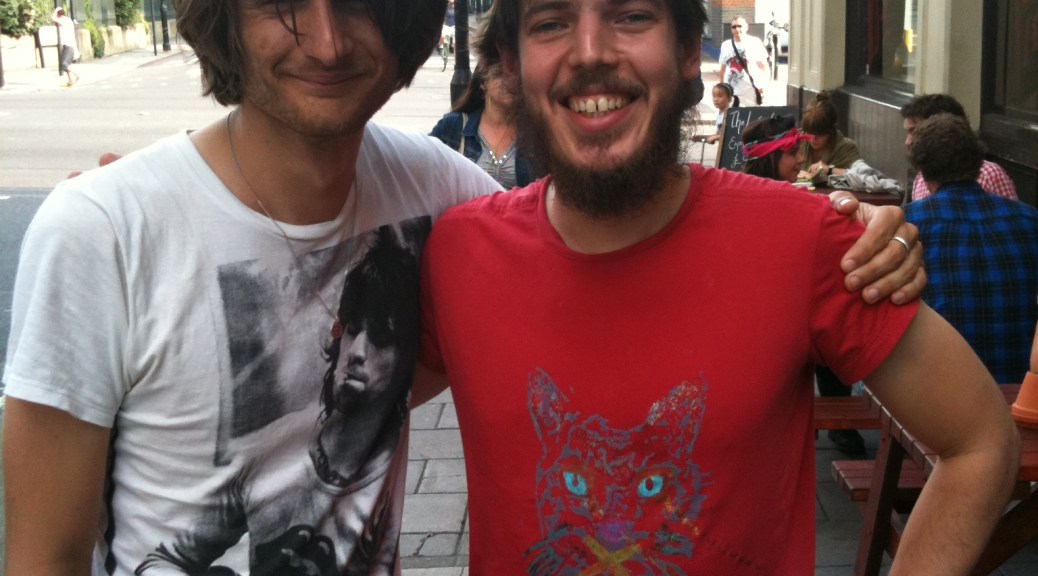
“I’m often surprised that people… I mean, I’m not surprised that people relate… I figured that somebody out there would relate to this stuff, but I feel like… obviously, people say the most personal things are the most universal things, or somebody said that, maybe Lenny Bruce or somebody? A lot of songs I’m really surprised that people… ah… I guess I’m not surprised that people relate, I’m surprised that people relate where… like you’re here, obviously, a very hip, together, young guy, you’re looking good in a Keith Richards shirt, you know? You should have the world laid out before you… you’re a swinging young man in London. Why would this guy relate to a song about an anxiety attack? Or… some stuff that I have that’s very New York City-oriented… I’m talking about certain trains, certain streets, certain people, but I can play it in Russia and people are into it. It makes me wonder how much other bands… well, er… I don’t know… I’m exposed to a lot of different bands in doing this because I play shows and every night we’re playing with other bands, we’re at festivals and seeing other bands, and I don’t know what other bands find important to talk about. For me, if there’s something that feels a little bit uncomfortable or something that it’s difficult to have a regular conversation about, or a casual conversation about, unless it’s somebody that’s a very close friend… and yet you can make a song out of it and play it in front of a hundred people or a thousand people or ten people, or whatever the case may be… and it makes sense in a social context in that way, whereas just one-on-one if you were to sit down next to somebody at a bar there’s no social construct for it.”

It’s weird to even talk about it now.

“Yeah, it’s very odd, right? Us sitting here and talking about our anxiety attacks… there’s no social… there isn’t really a roadmap for how you and I, who don’t know each other, are going to talk about something that’s intensely personal to both of us and yet when we’re in a room together and there’s a song as a bridge between us then we can share that space and relate to that. Except that it doesn’t always work, and I don’t really know why. I have a lot of songs where I’m like: ‘OK, I’m talking about stuff that’s personal’ and nobody cares, or people don’t like it, or I don’t like it, or, just, it’s not a good song. I started writing songs because I thought: ‘OK, this is not very hard, all I have to do is talk about stuff that’s important to me and it’ll be a good song.’ Over the years I’ve realised that that’s not necessarily the case, and I don’t know what that extra factor is, that turns something from just somebody talking about stuff into something that makes a song that creates that space that can be shared… yeah, I wish I knew what that was, because I could write more songs if I knew how to access that. Sometimes you just fall into it and you’re like: ‘Alright, great! I’ve got a song!’ Then a lot of times it just doesn’t work and you end up with all these embarrassing songs that are somehow in poor taste. Like my old ‘Complete history of Jeff’s sexual conquests, volume one’, which was an old song that I was playing when I first started out, and that song is one that I can’t… you know, when I’ve played it live at all in the past bunch of years it just seems in poor taste. Maybe it’s too personal? Too specific? It’s not something that other people can relate to, or it’s too much like… I don’t know… I mean, I just don’t know. Some things work, and some things just don’t and I’m not sure why.”

I love that your lyrics are direct, even blunt, but do you ever wish you could stop making sense?

“It’s true that I don’t understand how abstract writers do it. I mean, I think Adam Green is a really brilliant songwriter and it’s very surreal and very playful, and it has this wonderfully absurdist kind of freewheeling approach, but it maintains a real emotional impact and I can’t figure out how that works. That really doesn’t make sense to me. Or other songwriters, they’ll hit a certain channel where you’re beyond normal language. It’s like being an abstract painter: you’re able to really move people, moving beyond representation. If you look at a painting and you’re like ‘Oh, he can paint a really good picture of what’s happening in the street’, that’s cool, but it’s almost too easy. ‘Alright, but can you move me if you break out of that entirely?’ I don’t operate on that level. You hear certain lines by Dylan or Leonard Cohen or other songwriters, Syd Barrett, songwriting that just works and you’re like: ‘Why did that move me? I don’t even know why, it didn’t even make any sense!’ There’s a higher art to that and I’m just a literalist.”

But there’s something great about that frankness.

“I’m definitely a fan of it. That was what I wanted. When I started making music I wanted it to have no thrills… even to the point of having just my name… just ‘Jeffrey Lewis’, the most boring name in the entertainment industry. No band name. Nothing interesting about it. Not even a Devendra Banhart-type exotic name. You basically can’t get more boring. My whole idea was: Let me just strip away everything. Nothing fancy about the voice. Nothing fancy about the music. Nothing fancy about the recording. Nothing fancy about the name. No image. Just as boring as possible so that when something moves you it’s just the complete, direct frankness and you’re like: ‘Woah, I can’t believe this guy has blown my mind as much as anything does but without all of those extra crutches.’ It was Daniel Johnston who really blew my mind with that concept. I guess it was the mid-90s when somebody first introduced me to Daniel Johnston’s stuff, when his ‘Fun’ album came out, and that is pretty produced compared to his other stuff, but even that just had this emotional and lyrical and musical frankness and directness to it that gave me a whole new concept of what music could be and that just inspired me and gave me a completely new ideal for what great music was. So now I don’t know if that was a mistake or not, because now I’m kind of more of a normal band. I play with my brother on bass and our drummer Dave and we go on tour with a band… here, we’re about to sound-check and play a show and sell merch… These are all things that a normal band does. Maybe it really would be better to have a band name and have an image and all of that stuff, because it probably adds to… I don’t know, we could wear costumes on stage or something. You’re charging people money to come to a show, is there a point to not giving them a show? It becomes an awkward situation because I’m very much not a spectacle, but maybe… you feel like: ‘Am I ripping people off by not being a spectacle, by just doing this normal, direct thing?’

Do you write from a blank page or construct a song from phrases?

“It’s shameful how little I actually write songs. I almost never pick up the guitar at home. The guitar sits in the closet 95% of the time. I almost never just play guitar. Once in a while, a little bit of an idea will come into my head and maybe I’ll write it down and if it’s going somewhere I might pick up the guitar and put some chords to it. Which I know is a terrible mistake because if I write 20 songs maybe one of them will really feel important enough to do something with, so I should just write more. But usually what happens is that I’ll write a song, and then looking at it again I’ll realize this line and this line are kind of stupid and I should just take them out and put something better in there. I wrote this song but only about 40% of it really felt good to me, and the other parts I’ll just have to replace with something better eventually. If I listen to the original versions of a lot of my songs I’m like: “Man, I’m so glad I changed that.” So many of my songs just have gotten better and better, especially through live performance. I listen to the early, original versions or sometimes I find an old lyric sheet, and I’m like: “Man, those were the original lyrics? I’m so glad I changed that.” The song concept is there and most of what’s good about the song is there, but there are some really stupid lines that just got whittled away eventually. It’s definitely a constant process.”

You need that freedom to make mistakes.

“Yeah, right. If it had to be great the first time you’d never write anything. You’d just write three lines, it wouldn’t be great and you’d crumple it up and throw it away. You really have to allow yourself to just not worry about how good it is. Even in live performance, every night we’re trying out stuff that we’re not really that honed on. Allowing yourself to not have it perfectly, and kind of discovering it as you go along: “Last time we did that song something cool kinda happened in the bridge when you did this thing. Let’s try to keep that again.” I suppose it’s also because my band almost never rehearses, ever. We get so much better when we rehearse. There were like three periods: Fall of 2007 we booked a week in a rehearsal studio and we got a zillion times better. It was like: “Oh my God, why don’t we do this all the time?” I feel like we leapt up from a solid week of rehearsal and my band has never been the same. There were maybe two other times in the last 10 years we’ve done that. Most of the time it’s just kind of like: “Hey, let’s meet up and go on tour.” Then night by night we’re just hammering it out and after about four shows everything has really taken shape. The new material is taking shape and the old material is getting tighter. It’s all happening in the live moment, which is the best rehearsal anyway. You can rehearse something in a practice space and when you get on stage it’s going to be totally different anyway. First of all, in a practice space you’re all facing each other and on stage you’re facing out and not seeing the other people.”

Is part of the fact that you rarely write songs down to the fact that your first love remains drawing comics?

“Uhhm, I wish that was the case. Most of my – I feel like 99% of my time is just occupied with emailing, I’m just like booking shows, figuring out how to rent a car from Frankfurt airport and if we return it to Hamburg airport it’s going to cost us an extra 70 Euros, so we shouldn’t do that, and I got to tell so and so what order the tracks are going to be in for the album and then I am filming some of my illustrated songs for this like TV show in Philadelphia so I need to work out what days I am going to be in Philadelphia to film that. So I mean, you know I am basically, I’m not actually Jeffery Lewis, I am like Jeffery Lewis’ manager and I kind of wish that there was a Jeffery Lewis who meanwhile was working on comics and music. But between the three band members we all sort of share the booking and managing, tour managing, figuring out who is selling merch after the show tonight and who is driving and who is going to get paid by the promoter tonight and who is going to, you know, talk to the record label and Jack, you know my bass player, he’s like ‘Jens Lekman announced a U.S. tour and he doesn’t have a support act announced, so why don’t you email him and ask him if we can open up a few shows?’ So it’s like ‘alright I’ll do that’. It’s almost really stuff like that but between the three of us we are all sort of on it. You know even the managing and organizing side is pretty fun, but email is so weird because when, you know, I never operated as a band before email and I think if you are dealing with the phone then there’s an end to a conversation, but with an email it never ends, like you know somebody emails saying ‘you know that was a good show you did last night’ and I email back ‘oh thanks’.  They email back ‘What comics are you into lately?’ or blah blah blah. It’s like every single person just turns into a pen pal and then like every time you open up your inbox there’s ten bazillion things and I don’t know why I prioritize that, I should be like alright ‘I got to draw two column pages before I catch up on my emails’, but instead I’m like ‘no I have to catch up on the tons of emails’ and then I draw my cartoon page, so yeah that’s a stupid way of going about it.”

Live performance isn’t perfectible in the way that writing is. You don’t get a second chance. How you deal with the two worlds of writing and performing?

“Well, it’s true that the feeling of having done a bad show, is like the worst feeling, it just feels so miserable, you don’t want to talk to anybody and find yourself a dark corner and just disintegrate. And I never want to show my face in that city again. I mean if it was a bad show, I will never go to that same city again for years. I feel like just now I am able to show my face in… say, Berlin. In 2008 and 2009 we played a show in Berlin and screwed up a couple of songs, broke a string. Man, I mean I can’t show my face around Berlin. It was just sort of last week that we played a show and we were like ‘Maybe we can start to re-establish ourselves there’. But it also sort of goes both ways because if you do a really great show then you don’t want to come back to that city again either. Because then you’re like: ‘We will never leave them with a better impression than that’. We played an absolutely incredible show. We felt amazing about it, everybody felt amazing about it – that’s it. You know, we have to leave them with that, rather than diminish that, so …but also a show cannot reach the heights of being a great show if you’re not taking chances. I think that what really makes it a great show for the audience and for the band is when you are doing something that you’re not sure you can pull off. It’s not when you are doing something that you have already rehearsed to the point that you are going to get it perfect every night because that’s just theatre, I think. That’s just like memorizing your script for ‘Romeo and Juliet’ and getting on stage and reciting it. It’s just that when you are going out on a tightrope and then throwing yourself off it. The audience picks up on it, I think. There’s a certain energy that’s sort of happening as an exploration when you’re really… you know, it’s like the difference between trying to kiss somebody that you’ve never kissed before… and it works! And you’re like ‘YES’, rather than kissing your girlfriend of the past five years where… I don’t know, I mean it’s still cool, it’s better than… something good is still better than something bad, but the thrill of, you know, the excitement, of like, risking the disaster of getting rejected, because you know the rejection feels horrible, but if it works then that’s really hitting the heights. It’s sort of the same on stage. There’s been times were we’ve been playing  and we were a sort of more cowardly on stage and we are just playing songs that we know how to play in a way that we know will be good. And those are good shows but the greatest shows, you know, you can’t just get comfortable doing that because you’ve got to be willing to fail in order to get to the best place. But the failure is still horrible, it’s really terrible.”

Congotronics vs Rockers: A New Language In Music

congotronics_vs_rockersIt is early May 2011, and twenty musicians find themselves together for the first time in a recording studio somewhere in Brussels. Producer, bass-player and musical ringleader Vincent Kenis is marshalling his troops: half of them represent ‘Congotronics’ – drawn from the ranks of Konono N°1 and Kasai Allstars – the other half are ‘Rockers’, flown in from the States, Sweden, Argentina and Japan. The atmosphere, according to Matt Mehlan of Skeletons, is “intense”.

Continue reading at The Quietus.

Dharavi Dreams

‘Most homes have televisions,’ points out Santosh, a guide from Reality Tours, as we squeeze down a narrow lane in Mumbai’s Dharavi slums. He turns to me and smiles: ‘So nobody works when Mumbai play cricket.’

Even in cricket-mad India, this is hard to believe. Dharavi is a thriving centre of industry and raw entrepreneurial spirit, a sprawling temple to a sort of distilled capitalism – but it’s also a place for dreamers. You don’t leave your village to come and live in slum conditions unless you’re chasing something.

Continue reading at New Internationalist.

Lipstick Kisses in Pere-Lachaise

“They say, Lady Hunstanton, that when good Americans die they go to Paris.”

Oscar Wilde, “A Woman of No Importance”

Oscar Wilde was not an American, but he came to Paris to die nevertheless. 71 years later so too did Jim Morrison. The pair share in eternity at the Cimetiere du Pere-Lachaise with a whole company of France’s own writers and artists, stretching through the ages from Moliere to Edith Piaf.

Wilde himself died on November 30th 1900 at the Hotel d’Alsace, with bon mots on his lips to the very end. “My wallpaper and I are fighting a duel to the death,” he is said to have announced, “one or the other of us has to go.”

He had come to France three years earlier following his release of his poem “Reading Gaol.” Although he found himself in penniless exile he still managed to sip champagne on his deathbed. As he put it, he died as he had lived — beyond his means. He was first buried in a pauper’s grave at the Cimetiere de Bagneux outside of Paris, but his close friend Robbie Ross arranged for him to be moved to the rather more celebrated environs of Pere-Lachaise in 1909.

A century later, it’s a clear, crisp morning in Paris and I pull the collar of my coat up to keep the chill out. I alight at the Metro station named Philippe Auguste. When I find myself standing before the grand entrance of Pere-Lachaise a Smiths lyric falls irresistibly off my tongue: “A dreaded sunny day / So I meet you at the cemetery gates / Keats and Yeats are on your side / While Wilde is on mine.” I discreetly check to see whether Morrissey is waiting for me before making my way inside.

After passing through the gates, I pause at a dignified sign which points to the final resting places of Chopin, Proust and a litany of other immortal names. I locate Wilde’s plot, on the far side of the grounds, and set off down the Avenue Principale, the broad road that runs towards the centre of the grounds. It is immediately apparent why Ross worked so hard to get Oscar moved here. From the moment I stepped within the high walls of the cemetery I felt as if modern-day Paris had been left far behind. The tombs that line the road look at first glance like small houses, and narrow side streets stretch off in all directions. The cobbled paths are lined with trees, and there are road signs at the intersections.

The impression is not of being in a graveyard, but in a small town. Indeed, when I had first announced my intention to visit the cemetery a Parisian had referred to it as “une ville dans la ville.” That is as good a description of the place as any. The sprawling necropolis of Pere-Lachaise is a city within a city, and one that has seemingly been cast adrift from another time.

It’s easy to imagine Wilde as a visitor. He first came here in his 20s, while splitting those formative years between Paris and London. After his successful lecture tour of America in 1882 he settled in London and established his reputation as a writer with his journalism and essays as well as the publication of his only novel, The Picture of Dorian Gray in 1890.

The book tells the story of a handsome young man who never ages, despite his decadent lifestyle, after his likeness is captured in a portrait. I can’t help but think of Dorian when I take a detour to visit the grave of Jim Morrison. It’s a simple memorial, but it’s strewn with roses and those unavoidable, iconic pictures. Morrison’s young death at 27, accelerated by hedonistic excess, means that he will forever be the Adonis with high cheekbones captured in that black-and-white photograph.

Morrison’s grave seems to draw even more visitors than Wilde’s, and it was the small knot of devoted fans which initially alerted me to its presence. The plot itself is tucked away, hidden from the path, and the grave bears only a small plaque showing his full name; James Douglas Morrison, his dates; 1943-1971, and an inscription in Greek: KATA TON AAIMONA EAYTOY. It translates roughly as “true to his own demon,” a sentiment Wilde, with his prescient understanding of contemporary celebrity, would have understood only too well.

Leaving the gaggle of Doors fans behind me I climb a narrow path shrouded in trees and walk back towards the centre of the grounds. The sun is climbing higher in the sky now and the multitude of statues and monuments cast dappled shadows on the paving stones. The grounds, which spread over nearly 120 acres, are home to around 5,000 trees. It makes Pere-Lachaise a surprising oasis of green, as much a park as a cemetery. It is easy to lose hours here, reading the stones and enjoying the quiet air of contemplation.

After settling in London, Wilde missed the romance of Paris and he returned here in 1891 following the success of The Picture of Dorian Gray. It was here that he wrote his play Salome in French, and later translated it into English. However, rehearsals in London were halted by the Lord Chamberlain due to a ban on depicting Biblical characters on stage. It would not be performed until 1896, when it was finally staged in its original French at the Comedie-Parisienne. Wilde could not attend. By this time he was in prison, serving out a sentence of two years hard labour. He had been convicted of gross indecency after the exposure of his homosexual relationships.

He had already been left bankrupt by the preceding libel case, which he had brought himself against the Marquess of Queensbury, the father of his lover Lord Alfred Douglas. When he was released, he had little choice but to return to France where he travelled under an assumed name, Sebastian Melmoth. In 1897, he used his experience of prison life to write “The Ballad of Reading Gaol,” a poem which fiercely criticised the brutalizing nature of the criminal justice system. It was to be his final significant work, as tragedy stalked the final years of his life.

Despite his hardships, he was never alone. Robbie Ross, who is thought to have been his first male lover, was with him during this time and stayed by his side until the end of his life. Wilde was just 46 when he succumbed to meningitis brought on by an ear infection in a dingy hotel room by the Seine. Arrangements were made at his initial burial for him to be placed in quicklime to ease the later transfer of his body. Ross, as loyal in death as in life, was already making plans to ensure that Wilde would in time be given a fitting memorial.

When I find Wilde’s tomb, it is clear that Ross got his wish. Located on the Avenue Carette, it is utterly impossible to miss. An imposing sandstone block looms over me, and I study the modernist sculpture carved into it by Jacob Epstein. It depicts an angel in flight and was intended to be as dazzling as the man it memorialized, and just as scandalous. The original was complete with male genitals, but these were wrenched away as long ago as 1922, presumably by souvenir-hunters but reportedly to the relief of the conservative cemetery authorities.

The genitals may be gone, but the kisses remain. Every inch of this huge monument is covered in lipstick traces. At first I am unsure as to whether they have simply been drawn on, but before long a pair of Japanese girls arrive to show me how it is done. Giggling as they approach the monument, they apply their thick red lipstick and each take a turn to press their lips to the stone. An unusual sign of devotion, but one of which Wilde would no doubt have approved.

He would have been just as pleased by the countless scrawled messages from his legion of fans. As I decipher them it’s soon clear that while they seem to have come from every country on the globe, the sentiments are universal: “We love you, Oscar!” says one, “Je t’aime Wilde,” adds another, while another hand has clearly marked “L’importanza di essere Oscar!”

Even in a cemetery full of eye-catching monuments and heart-rending sculptures, Wilde’s is defiantly ostentatious. Ross, who also became Wilde’s literary executor after his death, charged himself with ensuring that his dear friend Oscar would be remembered in all his glory, and he seems to have succeeded. Ross’ reward is that he is here as well. At his request, Wilde’s tomb contains a small compartment where his own ashes were placed in 1950.

I watch the other visitors come and go and realise that although Pere-Lachaise is a cemetery it never feels oppressive, sombre or maudlin. It’s a tranquil corner of Paris, where Oscar Wilde and many others who strove for immortality through their work have, in some way, found it. I look again at the etched reminders of his pilgrim travelers and smile. For Oscar, of course, the only thing worse than being talked about is not being talked about, so he would have adored these notes of kinship. Wilde’s work is characterized by his overarching humanity, and beneath the surface wit, there lies a tragic wisdom. In one of his most famous short stories, “The Canterville Ghost,” he wrote these words:

Death must be so beautiful. To lie in the soft brown earth, with the grasses waving above one’s head, and listen to silence. To have no yesterday, and no tomorrow. To forget time, to forgive life, to be at peace.

Here in Pere-Lachaise, where the high walls keep the frenzy of Paris at bay, Oscar Wilde has found the peace that eluded him in life.

Originally published by Literary Traveler.

The importance of being patient

Nayanamate
Upasana with Nayanamate.

I’ve frequently been reminded of the importance of being patient during my time in India. However much I feel eager to make a difference, when dealing with Kafkaesque bureaucracy or sitting out another interminable power cut it often pays to be stoic. More than that, witnessing the calm perseverance of my colleagues at Ekta has shown me that sometimes the long road is the only option.

One of my colleagues, Upasana, recently took me to visit a girl called Nayanamate at her home in Bariguda, a small tribal village made up of fewer than 70 houses in the Koraput district of Orissa. Nayanamate is 17 years old and was born with both cerebral palsy and severe epilepsy, which makes it extremely difficult for her to learn anything and impossible for her to attend the already overstretched local school. She has a limited vocabulary and struggles to identify shapes or match colours. Her mother and grandmother, who themselves must fight to survive in one of the world’s poorest regions, told me of their fears for her future.

Upasana has spent countless hours working with Nayanamate, struggling over each new word and endlessly repeating exercises. The result is that by the time she reached puberty Nayamate had finally learned to read and write her own name and the names of her parents and village. These are essential skills anywhere in the world, nowhere more so than in a country which adores paperwork as much as India. Along with the epilepsy medicine Ekta has obtained for her, which aids her concentration, Nayamate has earned a tiny measure of independence and has improved her chances of accessing the government schemes designed to help her.

Ekta’s Community Based Rehabilitation programme works with around 200 people living with disabilities in Koraput district. A large part of its role is to help those who are illiterate to access the support the government offers. For many of the rural poor, this education deficit is in turn caused by the fact that school is secondary to survival.

Helping these communities out of this Catch-22 situation is a slow process requiring equanimity and persistence. My colleagues and I at Ekta are all impatient to see change that will make a real difference for Koraput’s tribal population, but there are no shortcuts to development. As Upasana and Nayanamate can teach us, sometimes small steps, hard won, are the only way to move forwards.

Originally published by VSO.

Getting children back to school in Orissa

A volunteer demonstrates thorough hand washing in front of his classmates.

It’s a bright morning in the village of Nuaguda, in the eastern Indian state of Orissa, and Sanju, Manima and Daitari are on their way to school. Walking through the vivid green fields along a track still muddy from last night’s rain, they chat away noisily with classmates who haven’t seen them walk this path for months.

The three nine-year-olds were all enrolled in school at the beginning of the year, but they’ve all since dropped out. Each of their parents had decided that it wasn’t worth the effort to keep sending them to school when they could be working. This is not uncommon. According to the Indian Education Department, although 96% of India’s children start primary school, by the age of 10 around 40% have dropped out.

UNICEF are working to change that. I’m visiting Nuaguda with a team from Ekta, a small Indian human rights organisation who UNICEF supports. When the team first arrived yesterday they quickly realised that there were a high number of dropouts from the village school. Their first step was to organise a meeting with parents to explain what a difference education could make to their children’s lives.

Few of the adults who attended had spent much time in school themselves. They grew up in a time before the constitutional amendment, introduced last year, which makes education a compulsory and fundamental right for everyone from the ages of 6 to 14. This is an ideal which is taking time to become a reality, particularly in Orissa, one of India’s poorest states. Just over half of the region’s population are literate, placing the state well below the national literacy rate of 65%. In rural areas like this one, being literate is even rarer, especially for women. In Rayagada, the southern district where Nuaguda sits, just 34% of boys and 15% of girls will learn to read and write.

Ekta’s staff must work hard to persuade parents that broadened horizons in the future outweigh the small financial benefits of sending children out to work. Lulu, 24, is one of Ekta’s village facilitators. He’s from a nearby town, and he tells me of the lack of opportunities available to adults. “There is no education to help them provide a livelihood for their children,” he tells me.

Lulu works in a pair with his female colleague, Bharati, travelling from village to village. Their task doesn’t stop at getting children back into school. They also spread messages about the importance of cleanliness.

Today, they’re in the schoolyard before the midday meal to teach the children the importance of hand washing. Bharati holds a bar of soap aloft before pouring water over her hands and carefully scrubbing between her fingers. Then the children get to try, and Sanju is an eager volunteer.

Lulu explains that diarrhea is prevalent in Rayagada. Before they leave the village, the pair will distribute bars of soap to the families in the hope of creating a precedent for frequent hand washing and sparing the children the effects of this unpleasant and often fatal condition. Lulu tells me that he believes spreading the word about sanitation is one of the most important parts of his work. “I just want to help people lead a healthy life,” he says.

After the demonstration Lulu and Bharati will hold smaller workshops with target groups, such as talking to teenagers about sexual health or pregnant mothers about antenatal health checks. Then they will move on to another village. In the next two months, they and their colleagues will visit 1,000 villages spread across rural Orissa.

Ekta’s Amit Kumar Njayak oversees this vast project, and he is pleased with the progress the teams have made so far. “The villagers and the school teacher really appreciate the importance of this cause. If with this project we have been able to make a small difference in the life of the community then I think that all our work is on the right track.”

He knows, however, that their messages about education and cleanliness will take time to sink in. “We know that this is only the first step of our journey,” he says. “We still have a long way to go.

Originally published by UNICEF.

Millennium Development Goals: The view from Orissa

Forestry officer Ajit Bharthuar is midway through outlining his clean energy proposals to a plenary meeting on ‘Ensuring Environmental Sustainability’, the seventh Millennium Development Goal, when his microphone falls silent.

The lights simultaneously cut out; for a moment the only sound is the monsoon rain lashing against the tarpaulin above our heads. Ajit Bharthuar is undaunted. Clearly accustomed to this sort of hindrance, he raises his voice and forges on through the darkness until the light returns.

Continue reading at New Internationalist.

Eels

eels-kevinegperryMark Oliver Everett is walking through Hyde Park to meet me. The man called ‘E’ is currently in the most prolific form of his life, about to release his thirdEels album in just under two years. Then he’ll set off on a world tour that will take in Japan, Australia, Europe and Canada before heading back through the States to his home in California. The sun is shining. God damn right, it’s a beautiful day.

Just as he nears the edge of the park, two policemen accost him. Apparently, they’ve had a report that someone matching his description – beard, cuffed jeans, blue jacket – was staring suspiciously at nearby embassies and hotels. E starts to smile, but they’re not laughing. Before they search him, he digs in his pockets and retrieves his hotel key. “Why would I be staring at my own hotel?” he asks them, baffled. After some discussion, they agree to let him go. Hey man, now you’re really living.

He explains what happened to him as soon as he arrives. “Now I’m on some terrorist watchlist, I think.” He lets a low laugh escape from the thick black fuzz of his beard, but he’s clearly annoyed. “The whole thing was so ludicrous! Someone was telling me that this is a very snobby area. Apparently you’re not allowed to look like me here.” He stares out of the window at the park he’s talking about and shrugs. “I used to enjoy walking around here but I don’t know if I can now. I feel weird about it.”

It is safe to say that this is not the first weird thing that has ever happened to E. It’s not even the first weird thing that’s ever happened to him at this hotel. He was staying here, next door to Kensington Palace, the day Princess Diana died. He was supposed to be promoting his first Eels album, Beautiful Freak, but instead he ended up spending a week watching the masses queue to leave flowers at the gate while the country seemed to grind to a halt. His song ‘Your Lucky Day in Hell’ was deemed to no longer be appropriate for Top of the Pops.

As has been well documented, E has had more than his fair share of grieving to do. While he watched the public outpourings over Diana, he was still reeling from his sister’s suicide. At 19 he was alone when he discovered his father slumped dead at home. Later, he would nurse his mother through a slow, painful and ultimately fatal fight with cancer. On September 11, 2001 his cousin Jennifer was working as a flight attendant on the plane that hit The Pentagon, where his father had once worked. Now, as he prepares to release Tomorrow Morning, the final album in a trilogy which started with 2009’s Hombre Lobo and continued with End Times, he tells me of the sense of urgency that drives him: “I’ve always had that, because of my family history. I’ve always felt that I better strike while I can.”

Having lived through such a litany of misfortune, E’s music has often been wreathed in tragedy. He agrees though that even amongst Eels albums this year’s End Times ranked among the most melancholy. He laughs: “I probably thought, you know, ‘Everyone’s always calling my albums sad – I’ll show them sad!’ I wanted to make the other ones look happy!” He does however take me to task for assuming, in my reviewof End Times, that ‘The Mansions of Los Feliz’ included his own home: “I don’t live in a big mansion!” he says, then thinks for a beat. “Well, I like to think of it as a mansion, but it’s not.”

“After that last one, in my mind, there was only one direction to go. I had to go up!” says E of Tomorrow Morning. “I didn’t want to go any further down,” he laughs again. “I didn’t think that album would be releaseable. It’d be too much!” For E, making an upbeat album brings with it its own problems. He would loathe to produce anything trite. “I think this kind of album is the biggest challenge. It’s the hardest thing to do: to try to do something overtly uplifting and happy-sounding but to do that in a meaningful way.”

As someone who writes such intensely personal music it’s hard to imagine him sitting down to write a dancefloor-filler or stadium anthem. Who does he write for? “I just write for my demographic,” he says with a knowing smile. “No, I just write for myself. You’ve gotta just treat yourself as the audience. I don’t know how else you could do it.”

When he was first signed to a label, as a solo artist, he was in the rare position of signing a deal without having performed his music live. Looking back, he says his formative musical experiences meant it wasn’t so hard to translate his bedroom tapes into the live arena: “It was an interesting experience for me. I grew up as a drummer. I played in a lot of bar bands and stuff in Virginia, but I’d never been a frontman until after my first album came out. Everyone, I think, just expected me to not be a very good live performer because I was this kid making tapes in his closet. It surprised everyone, myself included, that I seemed to have a natural knack for live performing.”

His ability as a performer is complemented by his desire for invention, which ensures that every Eels tour seems fundamentally unlike the last and also to exist separately from his records. “I just don’t like ever to treat a show and an album as the same thing. I treat a show like it’s its own album. It’s its own beast, completely. I understand that that can be frustrating for certain kinds of audience members, but once again I’m just trying to please myself, the audience member, and that’s the kind of artist that I always enjoy going to see. People that switch it up.”

The obvious comparison seems to be with Dylan, one of his great heroes, going electric. “Right, there’s a whole bunch of good examples. I can’t imagine being the kind of person that wants to go see the same thing over and over again. It’s weird though, because there are all sorts of people that have giant careers who do that. Every year people go to their concerts and it sounds exactly like the record. I just don’t get it.”

Which is why he’s so determined to switch it up. I remind him that when I saw Eels a few years ago he was accompanied on stage by a security guard who burst into dance halfway through the set. “That’s right! 2006 was the dancing security guard year. That was fun!” He adds that anyone coming to this year’s world tour should cast their expectations aside. “You should expect nothing, because it’s always a mistake. The thing I always enjoyed the most, when I was a teenager and I’d go to a show, was not knowing what to expect and being surprised in some way. That was my favourite part of it – when that happened. So, it’s smart to not have expectations. I’ve never had expectations about my life or anything, because I learned early on there’s no point in it. If people want to expect a certain thing, and I don’t give them what they expect, I feel like that’s a success!” He chuckles wryly, “But they might feel frustrated by that, so what can I do?”

He says he takes a similar approach to his records, but points out that he doesn’t change things purely for the sake of variety. “I’m not trying to dazzle people with being versatile. I’m not going to make a record that’s in some genre just because I haven’t already. I’m only going to do what naturally comes out of me.” Intriguingly though, he corrects me when I suggest that we can rule out an Eels jazz album: “Well no, that is possible. That could happen.” To be safe, he picks a more obscure example of an unlikely genre: “I’m not going to make a polka record, because I’m not that interested in polka, although that may change some day. But so far, it’s not.” He smiles and glances away: “The jazz record is possible, though.”

At the moment, having completed this trilogy, this cycle of words and music, E is happy to look into a future with no clear path mapped out for him. “For the last couple of years I’ve known that I was doing these three records although I trained myself to get good at not talking about it too soon, because I didn’t want to paint myself into a corner. I knew I might change my mind along the way, and I didn’t want to ‘have’ to do it. But now it’s okay because I’ve seen it through and that’s the end of it. So for the last couple of years everything was kinda mapped out in my mind, but now it’s wide open. I don’t know what happens atall. I don’t know where I’m going next. Which is exciting. After the tour is over, I don’t know what happens next. It’s a place I haven’t been to for a while.”

You shouldn’t expect him to take too long a break. Making music is a compulsion. “For someone like me, there’s a million reasons to do it. It just serves me on so many different levels. I feel so lucky that I get to do it. Also, I think a lot of people who do what I do have an obsessive element to their personality. You kinda have to have that, to be such a factory. A lot of the issues in my life are the opposite of most people’s issues. A lot of people have a problem that they don’t work enough, or have a problem following through their ideas. I have to worry about what I think about because I will probably follow through on it, so I have to be careful what I wish for because I might not want that much work.”

In 2008 he made a documentary about his father, Parallel Worlds, Parallel Lives, and came to see that this obsessive streak was perhaps inherited. His father, Hugh Everett III, was a quantum physicist who rarely spoke to his children because he was so wrapped up in developing his Many Worlds Theory. I ask E whether the experience of getting to know his father’s work has affected his own. “I don’t know how that’s affected my work, exactly. Definitely personally it had a big effect on me, and a very good effect. I’m not sure how that relates to the work yet, though. That might not be clear to me for a few more years.”

His mother’s birdwatching seems to have had a more direct influence on him. After ‘I Like Birds’ and ‘Little Bird’, the new record includes a song called ‘I’m a Hummingbird’ and he still has her bird tables at his home in Los Feliz. “That’s where the idea for this new song came from, a hummingbird on my back porch. They’re just so amazing. They must get so tired!”

2008 seemed to be a year of taking stock for E. As well as the documentary about his father, Eels released two compilations, Meet The Eels: Essential Eels and Useless Trinkets and he published his critically-acclaimed memoir Things The Grandchildren Should Know. I ask whether he nows sees that as a cathartic experience, having released a trio of albums in quick succession since then. “It’s strange to do all that stuff that early in your life. I mean, none of us know how long we’re going to live, but usually you write your memoirs when you retire, or whatever, so now I’m in this strange sort of ‘Part 2’ feeling of my life. It’s kinda unusual.”

As he enters his life’s second act he’s still as determined as ever to do things his own way. “It’s the sickness of the times we live in now: the way that everything is made by committee. Everthing has a focus group. It’s just a horrible way to make things. The age of the auteur is quickly dying. You look at the film world. All the genius film-makers wouldn’t be able to make movies, the way things work today. It would be impossible for anyone who had a strong artistic vision to see it through.”

When I ask about the artists he admires, it’s “auteurs” that he turns to while admitting that his tastes are “the usual suspects”. “I just feel like, if you’re going to do anything, why not go to the best? If you’re going to watch movies, watch Stanley Kubrik movies. If you’re going to listen to music, listen to Bob Dylan or The Beatles.”

E is also doggedly resistant to the commodification of his music. “I think I’m starting to look pretty old-fashioned about that, because everybody does it now, but I don’t think that means it’s the right thing to do. I can understand a brand new band doing it, because it might be one of the only ways for people to hear their music, but I have an ethical issue with what the music’s about. It’s just important to me that the music means something, you know? I just feel like, if it’s selling a product, other than itself, it becomes meaningless.”

His refusal to sell out is also motivated by his desire to build a body of work that he can feel proud of. “You want to try and look back on your life at the end and look at the CD shelf and feel good about what you have sitting there.” He pauses, then laughs. “If you have your own CDs on your shelf, that is!”

For me, it’s this sense of perspective that makes E’s music so life-affirming. Gazing out of the hotel window we have a clear view across to the Royal Albert Hall. Things The Grandchildren Should Know concludes with a moving passage about the sense of validation he felt playing his songs there, a feeling of catharsis that he’d managed to turn every shitty hand he’d ever been dealt into music that creates a “sense of community”. He also wrote that being exposed to so much death and grief throughout his life had changed his whole worldview: “I realized that people probably liked to look at the vast horizon of the beach and the endless sky at night because it took them out of their daily routine and reminded them about the bigger things. But I never seemed to stop thinking about these bigger things.”

What makes him such a perceptive songwriter is precisely that understanding of the bigger things. Although he wears it lightly, that burden must still weigh heavily on his soul, as much a curse as a blessing. Talking to E, I’m reminded of Douglas Adams. I ask him whether he knows The Hitchhiker’s Guide To The Galaxy? “Yeah?” he replies.

I start to recount the story of the Total Perspective Vortex. The Total Perspective Vortex is the most horrible form of torture any sentient being can be subjected to and it was invented by a man to annoy his wife. She would nag him for having no sense of proportion, so he decided to invent a machine that would illustrate exactly what having a sense of proportion means. When you’re placed inside the Vortex you are given just one momentary glimpse of the entire, unimaginable infinity of creation, and somewhere in it a tiny little mark, a microscopic dot on a microscopic dot, which says simply, “You are here.” The machine destroyed his wife’s brain, but the man was comforted by the fact that he had been right and she had been wrong. As Adams wrote, the machine proved that: “In an infinite universe, the one thing sentient life cannot afford to have is a sense of proportion.”

E laughs loudly. He pauses for a second, then shrugs. “Yeah. It’s true. Every once in a while you’ve got to remind yourself how insignificant you are.”

Originally published by Drowned In Sound.

Who in the hell is Tom Jones?

TomJones2‘Who in the hell is Tom Jones?’ spat Charles Bukowski. It’s a good question. The Tom Jones he wrote about in Hollywood is a slick Vegas showman, “his shirt is open and the black hairs on his chest show. The hairs are sweating.” The Tom Jones I meet is a white-haired Welshman about to release an album of blues and gospel so out of character that the vice-president of his own record label called it a “sick joke”. So just who in the hell does Tom Jones think he is?

He was billed alongside The Beatles and The Stones, partied with Elvis and Sinatra and dueted with everyone from Janis Joplin to Ray Charles, but in the popular imagination he’s festooned with knickers, his career built on sex appeal. Now, on Praise & Blame, he’s traded sex for death. There is a lot of mortality on Praise & Blame, and a lot of God. What’s happening here, Mr Jones? He looks at me and turns his palms towards me. “Time’s getting shorter,” he says.

“Now that I’m seventy, I know I haven’t got as much time left as I did when I was thirty, or forty, or fifty, or sixty. I still want to record as much as I can, but when you don’t have that much time left you think about it more.” Age has given him a sense of urgency, I suggest. “Exactly! You think, let’s knuckle down and let’s do some stuff that I want to do.”

It turns out that what Tom Jones wants to do is cover Bob Dylan and John Lee Hooker and a host of standards drawn from the deep well of the American South. “I’d heard a lot of them before, from different artists. I knew them. ‘Run On’, I knew the Elvis Presley version. We tried it in the same key as he did it in, but I sounded too much like him. I’m not going to play it if we’re not doing anything differently, so we put it in a higher key.”

One thing you realise quickly talking to Tom Jones is that he really, really loves singing. When he talks about it, a boyish passion spills out of him. He knows these songs inside out, every nuance. “I said rather than have voices for the answers, I’ll sing the whole thing. It made it different from what I’d done before, from when other people had done it. I tried to do the same thing with all the songs, really. One or two are similar, like Johnny Cash with ‘Ain’t No Grave Gonna Hold My Body Down’, but still we put more of a beat to it. Johnny Cash’s was a little slower.”

This mention of Johnny Cash is telling. It has been suggested that Praise & Blame is Jones’ attempt to replicate the success of Cash’s American Recordings. Was that a conscious decision? “Well, there are comparisons – because I’m seventy now, and because some of the songs are the same, and the stripped-down nature of it because of what Rick Rubin did with Johnny Cash and Neil Diamond.” The difference, he says, is in their voices. “With him, he was at the end of his… well, as it turned out, the end of his life… but certainly at the end of his recording career. He had difficulty in doing that stuff, and some of it added to the feel, because he was struggling with it. But with me – I’m not struggling with it.”

Jones is proud of his extraordinary voice, and it lends itself well to this music. Gospel is in his bones. “I’ve always liked 50s rock’n’roll music, and rock’n’roll came from gospel and blues and was a marriage of all those things in the South, in the States. I like rockabilly, boogie-woogie stuff. I like gospel not only because of the lyrics but because of the feel of the songs.”

He says he didn’t record these songs earlier because record labels were in thrall to Tom Jones the Sex Bomb: “I’ve wanted to do gospel for a long time, but most record labels want you to do pop records. Any time you sign with a label, it’s ‘Well, I’d like to do…’ ‘Yeah, we will, we’ll get to that, but meanwhile give us a hit.’ Island Records, they initially wanted hymns or songs for Christmas, so I thought that maybe this is my chance to get to those gospel songs.”

Island’s enthusiasm and decision to team him with Ethan Johns, who’s produced the likes of Kings of Leon and Ryan Adams, makes it even more surprising that their vice-president David Sharpe attacked the album in an email that was leaked to the press. His complaint was precisely that Jones was singing “hymns”, not pop songs. Jones is fiercely protective of his songs, and if the leak was part of a marketing stunt then he certainly wasn’t in on it: “I read it on the plane coming over,” he says. “One of the stewards had an English paper and he said ‘There’s a spread about your album’, so I said ‘Oh, really! Let me have a look!’ I read it and I thought ‘Who the fuck is this?’ First of all I didn’t know who the guy was. I still don’t. I only deal with the people who are involved in making the record. So, first thing when I got in, I said, ‘Who is this guy? What does he do?’ Apparently he’s one of the financial guys. I said, ‘What the fuck’s he on about?’ You can’t go condemning a record. It’s terrible for people to say, ‘Well, maybe Tom has made a mistake if the record company don’t even like it.’ I mean, that’s what people are going to read – ‘cause that’s what I read! They’ve been apologising to me ever since, but they still haven’t come up with why it was done. What is the point of that? I don’t get it. As far as I’m concerned there was no plan to get a controversy. It’s negative, I think, and misleading.”

Misleading certainly, because despite the spiritual themes these are by no means hymns. Is Jones himself religious? “I’ve always been a God fearing person,” he replies. “I pray every night, before I go to sleep. I’m always aware – aware that there’s something.”

It’s a deeply introspective album, never more so than on his version of Dylan’s ‘What Good Am I?’ Is Tom Jones really a Dylan fan? “Yeah! I listen to him more now, or I have done in the last twenty years, than I did before. When I first started recording, even before that, I’ve always liked voices. I listened to a lot of ‘singers’. I wasn’t much interested in ‘Did he write the song or didn’t he?’ In those days, I just went with what it sounded like. I wasn’t so much of a fan of Dylan then because I didn’t particularly like the way he was delivering them, whether he wrote them or not. The more I’ve listened to them, the more I’ve appreciated them.”

So what drew him to ‘What Good Am I’? “I wanted songs that were meaningful, I wanted songs that said something. Even on the up-tempo songs, like ‘Strange Things Happen Every Day’, there’s things that’ll make you think. They’re important songs. So that’s why I liked that one of Bob Dylan’s. I mean, I’d like to do an album of Dylan’s stuff, he’s written some great songs. Ethan thought, ‘How are we going to treat this?’ It was his idea to sing it in a lower key than I would ordinarily. ‘Don’t sing it out,’ he said, ‘Try and hold it, even when you go up.’ When I start to sing higher, my voice opens up, but here I controlled it. It took a few takes to get to where we did, but it was his idea for the arrangement, which I thought was great. Slow it down and sing it low. Breathy.”

He’s back enthusing about singing, but I want to know why he thinks he’s been so successful interpreting songs he hasn’t written. Does he have an actor’s instinct? “That’s exactly how I approach it. The sound of my voice – there’s a certain quality to my voice that sort of defines me. That’s the first thing, the sound of it, but then I listen to the lyrics and I want to get into it. Lyrics are very important to me, no matter what the song is. I’ve always liked lyrics, and when I hear an interesting lyric – that could be ‘Sex Bomb’, if you like. If you listen to ‘Sex Bomb’, the verses are really clever. There are some really good things in there. Like ‘Delilah’ – “I felt the knife in my hand” – it paints a picture.”

Thinking about the darker subject matter of Praise & Blame, it’s worth noting that Jones has been a proponent of the ‘murder ballad’ since early in his career: “With ‘Delilah’, everybody knows the chorus, but you’re thinking about the knife and the fella killing the girl, or ‘The Green, Green Grass of Home’, where’s he’s in jail.”

Jones talks about his career, his hits and his life like a man who can’t quite believe his luck. He was 24 in 1964, scraping a living as frontman for Tommy Scott and the Senators, listening to Jerry Lee Lewis records and recording unsuccessful demos with Joe Meek. Then he met Gordon Mills, who became his manager. His debut single ‘Chills and Fever’ failed to chart, but when Mills wrote ‘It’s Not Unusual’ for Sandy Shaw, Jones recorded the demo and managed to persuade them both to let him release it instead. He never looked back: “The record was so big, all of a sudden, like a few months. I recorded the song at the end of ’64, then it came out at the beginning of January ’65, and it was number one on March 1st. Then it went worldwide.”

On one particularly memorable bill in 1965, Jones appeared at the NME Poll-Winners Concert alongside The Beatles, The Rolling Stones, The Kinks, Dusty Springfield and The Animals. What on earth could it have felt like to be a part of that scene? Did it feel like something special was going on even then? “Oh, definitely! I mean, The Beatles opened the door. Before that it was always American music. British music was cover versions of American records. Then The Beatles came along. When I was here in London at that time you felt it – that this was it. American acts were coming over and they wanted to go to Carnaby Street. It had moved from Memphis or Motown to London.”

But like he said, he’d gone worldwide: he broke America instantly: “I think I did my first Ed Sullivan show in April of ’65. I met Elvis the same year. It was unbelievable!” Surely it was overwhelming. How do you readjust to your landscape shifting so permanently? “It was just mind-boggling. It goes from wanting to prove what I could do, singing-wise. When I got onto Top of the Pops and met all the bands they were going ‘Jesus! You’ve got a great voice!’ and I was like, ‘Wow! I’m proving it! I’m doing it!’ It was buzzy. The Beatles and The Stones were at the top of their game – and then Elvis Presley! And Frank Sinatra! In the same year! Mind-boggling!”

Jones is beaming as he tells the tale, that note of incredulity still in his voice. He shows me the way he hunched up shyly when he first had his picture taken with Elvis Presley. The way Elvis posed. “It was great, and you don’t get used to it, but it becomes a part of your life, the more you do it. Then in the Seventies when I had my own TV show and I was doing duets with Jerry Lee Lewis and…”

He’s on a roll now, but he was on a roll back then too. He was safe enough for middle America to grant him his own television show, but edgy enough to demand that his guests were his rock’n’roll heroes. The guest list reads like a roll-call of Seventies celebrity: Richard Pryor, Johnny Cash, Janis Joplin, Peter Sellers, Ray Charles, The Who, Stevie Wonder, Aretha Franklin, Crosby, Stills, Nash and Young – but the name of the show was This is Tom Jones. “It was fantastic! I was pushing for rock’n’roll acts, you know. It was made by ABC Television in the States and they wanted more ‘safe’ acts, they wanted it to be a TV hit on the ratings. Rock’n’roll, even then, in ’69 still hadn’t really been accepted.”

Hang on a minute there, Tom. You were pretty ‘safe’ yourself. That’s why they hired you! “Well, I was recording available material. Not being a songwriter I had to rely on what was coming in. ‘What’s New, Pussycat?’ came from that. Burt Bacharach wanted me to do it. I was thinking ‘I want to do more rhythm and blues, soul’, but things kept popping up – it’s like I was saying with the record companies – ‘We’ll get to that…’ Meanwhile, Big Burt Bacharach wants me to do this song for this Woody Allen film! So yeah, some things I did people would think it was towards middle-of-the-road type stuff, but if anybody came to see me live in those days I was doing more soul music than anything else.”

The advantage of being ‘safe’ in the network’s eyes was that he had the power to open the door for people he loved to get on television. That included his hero, Jerry Lee Lewis. “I’d been a fan ever since ‘Whole Lotta Shakin’. Elvis had come out with ‘Heartbreak Hotel’, which was the first major hit, so everybody was going, ‘Wow! Elvis is a freak of nature, a white guy singing like that’, and I said, ‘Well that’s gotta be other people! He can’t be the only one, surely!’ So when ‘Whole Lotta Shakin’ came out that was it. It’s a Southern thing – White people grew up with Black people, and it was all rubbing off, you know what I mean? Elvis definitely came out with a unique sound though. The sound of his voice was… phew! In terms of the show, I was getting my way – as I say, they wanted Robert Goulet and other people that you probably don’t know, mainstream America – so I’m saying, ‘I want Jerry Lee Lewis!’ and they’re going
‘Jerry Lee Lewis?’ I said, ‘If you want me to do this, you have to do that.’ I was pleased that it was happening – and the guests were thanking me! Jerry Lee thanked me for getting him back on TV!”

Jones is still pulling in the crowds. His low-key Latitude set to showcase Praise & Blame saw disappointed fans being turned away, recalling memories of the rush to his set at Glastonbury last year: “When I went on and I was singing, I could see these kids coming in, ‘cause they weren’t all around the stage at that point, but I could see them coming over and running and I thought ‘Jesus Christ! This is great!’ I loved it!”

Bukowski called him a “cardboard man”. Bukowski was wrong on that count. He may have played ‘safe’ for much of his career, but there’s a real depth to Tom Jones, and on Praise & Blame a newfound sense of perspective. Now in his fifth decade as a professional singer he still has the ability to surprise. Then again, there have always been those who saw a little more in him. Among the devoted viewers of This is Tom Jones was a young Tim Burton, who remembered the show when he came to write Mars Attacks!. “He came to see me do a show in LA and said, ‘I’m writing this film and I want you to be in it,’” Jones chuckles. “He said, ‘I thought to myself, if anybody can save the world it’s Tom Jones!”

Originally published by Drowned In Sound.

Devo’s Mark Mothersbaugh

Mark Mothersbaugh (2014) publicityMark Mothersbaugh is showing me his impression of Sid Vicious. He’s standing next to a coffee table, scanning the room and sliding the lid of a coffee pot towards the edge with his fingertips. It teeters for a moment, then falls. He explains: “When The Sex Pistols played their last show in San Francisco, Devo had played a punk club the night before. We slept in the offices of a magazine called ‘Search and Destroy’ and after The Sex Pistols show they came over there to party with us. Sid was with Nancy. There’d be a bottle of beer on a table, and he’d be going like this. Looking around. Then he’d push it a little closer. Keep looking around. Then he’d push it over: CRASH! Then he’d look around and realise nobody gave a shit, so then he went and did it again somewhere else. He did it three or four times and then he realised he wasn’t gonna get anybody upset, so he quit.”

Devo were never a band who smashed things. Mothersbaugh liked Vicious, liked that he was true to what he stood for, but Devo eschewed nihilism. They were playing club shows in 1978 surrounded by punk upstarts, but they had long since decided that rebellion didn’t lead anywhere. They had witnessed the starkest imaginable demonstration. On 4th May 1970, founding members Mothersbaugh, Gerald Casale and Bob Lewis were students at Kent State University when the Ohio National Guard shot dead four unarmed students at a protest against the invasion of Cambodia.

Devo’s art still ripples with the impact of that seismic day: “The thing that we took away from that is that rebellion is obsolete. We came to the opinion that rebellion and nihilism weren’t really the way to affect change in our culture. We came to the conclusion that the best way to affect change was through subversion. Who really affects culture? It seemed like it was Madison Avenue.”

So on Something for Everybody, their first new album in twenty years, Devo tell us that they’ve taken the dark arts of the advertising industry and applied them to their music. ‘88% Focus Group Approved’ declares the sticker on the CD case, after the band asked fans to vote for the track listing on their website. Their iconic red Energy Domes are now blue, another decision by focus group. It’s worryingly reminiscent of the ‘Most Wanted’ artwork by the graphic artists Komar and Melamid who took a focus group approach to creating art and found that what people want is banal blue landscapes.

Fortunately, the music on Something for Everybody is anything but banal. Somehow, despite the intervening years, Devo still sound ahead of their time. Meanwhile all this stuff about focus groups is just part of Devo’s Dadaist satire, isn’t it? “Yeah, and maybe no”, says Motherbaugh. For a start, they really did work with the advertising agency Mother LA: “We talked Warner Brothers into hiring an ad agency for us. Three years ago, if you’d have said ‘In 2010 you’re going to put out a record on Warner Brothers Records’, I’d have said ‘You, my friend, are hallucinating. There is no possible way I would do that. There is not one compelling reason.’ Somehow, in the last year I went and met them and it was interesting to hear them say: ‘We know we’re going to be obsolete in five years, we know that record companies as they exist now are useless and needless, but we’re going to put one last effort behind seeing if we can redefine what a record company is.’ I thought that sounded intriguing.”

He finds it quaintly amusing that Warner Brothers still insist on releasing “unnecessary” CDs: “I mean, okay, it’s a little souvenir, but most people are still going to get the music from the internet.” Mothersbaugh has even less time for that last resort of the desperate label, the re-release ‘with bonus material!’: “The record companies already got you for a third time! After you bought the records, they’ve got you to buy the cassette of your favourite album, and then they got you to buy the CD of your favourite album. Then because they could, they threw in other crap that wasn’t part of the original presentation. That’s like saying ‘Well, when I painted that painting that’s what I originally did, but now that I can I’m going to add some other crap on the side that wasn’t there originally.’ All of a sudden the original intention has been perverted for the sake of a record company trying to make an extra couple of bucks trying to sell one more version of a record.”

Mothersbaugh seems to be enjoying watching the death throes of the record industry, but then he’s been predicting it for years. He knew that labels were out of touch with the MTV generation when he had to convince them it was worthwhile spending money on music videos, but their self preservation instinct soon kicked in. “I thought that ‘sound and vision’ was going to be the death of rock’n’roll. I thought I’d never have to listen to another Rod Stewart album, because by the time the Eighties get here it’s going to be visual artists who also make music, or musicians who also do visual art, and it will eliminate all those dinosaurs that were out there. I was wrong. What really happened was record companies took a look at what bands like Devo were doing in making these films and they said ‘We need to do that for Van Halen!’ They became moronic within like five minutes. The whole concept became subverted and was assimilated by the status quo of the rock machine, and it allowed the music industry, as it had existed for thirty or forty years, to hang in there for another ten or fifteen years.”

The internet is changing all that, and Devo have embraced it in a way that it’s difficult to imagine many of their contemporaries doing. When Mothersbaugh talks about the internet it is with the fervour of a true believer: “The internet has already so radically changed the way artists create art, the way artists present art, the way people view art, the way people perceive art. I think YouTube is a much more successful version of what ‘sound and vision’ should be than MTV. It’s not about budgets. It’s not about Michael Jackson paying $175,000 to do ‘Thriller’, or Madonna spending $190,000 to do her last video, or Lady Gaga doing the most incredible spectacle ever. I’m not saying that any of those were necessarily bad videos. I mean, those were great. ‘Thriller’ was great. Lady Gaga is really talented and does really good work. I’m just saying that the field has been leveled because of YouTube and access to technology. Artists have been empowered. All the record companies are wringing their hands and going ‘No-one is buying our beautiful records any more!’ I say ‘Hoody-hoo-hoo! You made that work for a really long time, and either we applaud you for your cunningness or shame on you for keeping people captive for so long and being able to dictate what we were allowed to listen to and to watch’. Now, you go to YouTube and the most important thing is a good idea: something that’s great and somebody who is talented at delivering it.”

Devo were making homemade videos to showcase their great ideas long before YouTube came along. They filmed ‘The Truth About De-Evolution’, a music video for their tracks ‘Secret Agent Man’ and ‘Jocko Homo’ in 1974, four years before they released their debut album. The success of that video led to Neil Young inviting them to appear in his experimental film ‘Human Highway’. Having initially dismissed it, Mothersbaugh is pleased by how “weird” the film remains on repeated viewings. “Neil Young crushed my playpen! Half of the score is him fooling around with synths. He’s an interesting guy! He was really interested in The Sex Pistols. His half of the score sounds like Gary Numan to me. My half sounds like Pee-wee Herman.”

It is his work as a soundtrack composer, for the likes of ‘Pee-wee Herman’, ‘Rugrats’ and last year’s ‘Cloudy with a Chance of Meatballs’ that has kept Mothersbaugh occupied in the years since Devo’s last record. Film scores are not just a way to pay the rent, however. His scores for Wes Anderson, in particular ‘Rushmore’, ‘The Royal Tenenbaums’ and ‘The Life Aquatic with Steve Zissou’ have been brilliant, at turns playful, touching and just plain hilarious. Mothersbaugh says there are plans to work with Anderson again, once he’s overcome his transatlantic separation from the anglophile director. Once again, he evangelises the ability of the internet to provide the solution: “Now there’s technology where we can be on screen talking, but we can also put the movie in the top corner of the screen and both touch it. He can make marks on the film and I can take music and try it out. It’s like being in the same building but we’re just on each side of a plate of glass!”

Mothersbaugh’s obvious delight at the opportunities new technology presents his art, and his constant striving to break new ground, arguably sits somewhat uneasily alongside Devo’s decision to play a ‘Don’t Look Back’ performance of their debut album Q: Are We Not Men? A: We Are Devo! last year. Mothersbaugh agrees that it was a “contra-intuitive” decision, but one that proved to be “a learning experience”. He says that the concept behind the shows didn’t make sense to him until they did it: “Onstage, playing it that night, I said ‘What a brilliant idea’, because I realised that I could think of at least two dozen albums that I would love to hear the artists play Song 1, Side 1 all the way through to the end of Side 2, because that’s the way I experienced that music when I first experienced it, and that became the imprint of my memories and my best experiences. If I could hear the Ziggy Stardust album from Song 1 all the way to the song on Side 2, I’d die and go to heaven. There’s at least a half dozen Stones or Beatles albums I’d feel the same way about.”

They resisted the initial desire, however, to take a similarly atavistic approach to the new album: “When we first started I had this kinda romantic notion, ‘Hey! Let’s get the same gear we used for album one and let’s go in a room and get a four track recorder and let’s do it the same way we did the first album. Everybody was not so sure about that, but we tried it for about a month and I was the only one pushing it. Then I started thinking about why the other guys weren’t into it and why did it not seem right, and I realised we did nine albums and they weren’t like that. We didn’t go back to the first album every time. By the time we had our fourth album, Lynn drum machines had come out. We got a Fairlight by the time our sixth album came out. We were always embracing technology, so it was kinda ingenuous to decide that we’re going to artificially pretend that we’re 22 again.”

So what has changed since they were 22? “If you see a Devo live show you’ll be like, ‘Oh, they all learned how to play their instruments over the last thirty years!’ You can’t be what you were, but I think it’s a logical progression.” When Mothersbaugh talks about Devo, he doesn’t seem to talking about it as a band. He seems more like he’s talking about a hilarious art experiment that he can’t quite believe he’s still getting away with. “I don’t think all of us would call ourselves musicians, really. We were influenced by the artists of the time when we were starting the band. It was Andy Warhol who I really paid attention to because he was a painter, and he was a photographer, and he was a silkscreen artist, and he was a fashion designer and all these different things. What I took from it was that technology was plastic and that it was available for an artist to use whatever fit his needs. There was no restriction to just music or sound. You could be a visual artist and an audio artist at the same time. You didn’t have to be in one category. We thought with Devo we were going to be Akron, Ohio’s version of Andy Warhol’s Factory. I remember early on thinking that Devo wasn’t even going to be us as band members. I thought we were going to hire people as our little agitprop groups and they could go out and be Devo. We thought we could have like five Devos out at once, if we were that successful!”

A version of this was almost realised with Devo 2.0, a “kinda flawed” collaboration with Disney which saw children covering Devo songs. Wait! A collaboration with Disney? Aren’t these the same guys who sued McDonalds for using their hats on a Happy Meal toy? Mothersbaugh can’t help but laugh. “It was definitely a subversive way to infiltrate the minds of young kids that maybe someday would find out about Devo 1.0 and be curious.” In fact, Devo have never been too worried about letting their art be used by corporations. ‘Whip It’ alone has appeared in advertisements for Twix, Pringles, Jeep, Taco Bell and Swiffer dusters. Mothersbaugh jokes: “I could do a reel of them all, and by the end of it you’d say ‘This is the band De-Ho’”. I get the impression he sees each one as a victory, an infiltration of the mainstream by Devo’s own brand of weirdness and something his hero would have firmly approved of: “I met Andy Warhol a few times and I think if he were alive he’d love where we were taking things. It’s blurring the lines between pop and fine art, and fine art and commercial art.”

Devo never smashed things because they never needed to: they do rebellion their own way. Their prophecy of de-evolution may have been proved right by a lowbrow media intent on cultural homogeneity, but simultaneously the rise of the internet has created a new space for artists like Devo to thrive in, a base from which to launch their assaults on the establishment. “If I was a kid now I think it would be a great time to be starting off as an artist. I think there are so many possibilities if you want to be an artist who creates visual or sound art,” Mothersbaugh concludes. “I feel like we may be more in our time than we were back in the Seventies.”

Originally published by Drowned In Sound.

Congo Powers: Konono No.1’s Familial Rhythms

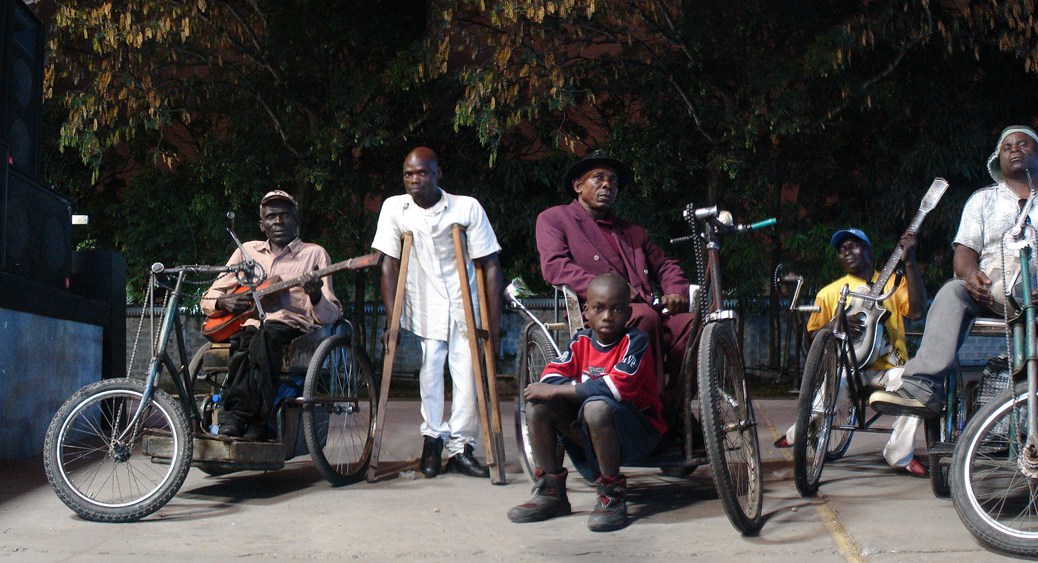
konono-no_1Anyone who has spent time in Kinshasa, the capital of the Democratic Republic of Congo, will know that it’s a city that bustles with an industrious and infectious energy. Maybe it was living there that inspired Mawangu Mingiedi to take that energy and apply it like jump leads to the Bazombo trance music he had grown up with near the Angolan border. In doing so, he created a band called Konono No.1 and revolutionised a musical tradition that stretched back hundreds of years.


The impact Konono No.1 have had on Bazombo music has been literally electrifying. When Mingiedi found himself unable to find the sound he was looking for using traditional instruments he took it upon himself to build the first ever electric likembe. The likembe is a kind of handheld piano played with the thumbs, but amplification using magnets salvaged from old cars transformed it. When the band plays the likembe on stage it looks like they’re operating oversized remote controls. It sounds like nothing you’ve ever heard before.

Continue reading at The Quietus.

Charlotte Gainsbourg

charlotte-gainsbourgWhen Charlotte Gainsbourg was 12 she made her musical debut dueting with her father, Serge, on a still notorious single called ‘Lemon Incest’. As an actress, she appeared last year as the unrelentingly sexually violent lead in Lars von Trier’s ‘Antichrist’. Hers is a career that has always playfully shrugged off social mores with an air of measured provocation, but then what else would you expect from someone whose parents breathed ‘Je t’aime… moi non plus’ to each other?


I wasn’t sure whether these calculated controversies would be delicate topics to broach in conversation, but I needn’t have worried. Gainsbourg turns out to be charmingly ebullient and engaging whether she’s talking about her father, her film career or her own intriguing musical journey.

It began with her first record, called ‘Charlotte for Ever’ in France but known to the rest of the world as ‘Lemon Incest’ after the controversial single she recorded two years prior. It was released when she was just 14, twenty years before she would record her second, ‘5:55’. Looking back, she says the intervening years distance her from those songs. “It’s very separate. It’s like being a different person. The memory I cherish is recording ‘Lemon Incest’. That was another time, I was twelve and it was on a record of my father’s, Love on the Beat. It was my first experience and it was very magical, but the record I did with him was done so quickly. He did everything, so I didn’t really have an influence on anything. I’m very thankful that I had that experience with him, but I didn’t talk about the lyrics with him. He didn’t work that way. He wrote the songs and I recorded in a week and it was done. It’s very, very far away and very immature, in my head.”

She has just released her third album, IRM, a collaboration with Beck named for the French translation for the MRI scan. It is anything but immature. In 2007, Gainsbourg suffered a brain haemorrhage in a water-skiing accident and as she lay in the metal tube for scans, the sound of the machine accompanied her contemplation of mortality. No surprises, then that the sound found its way on to her album in the form of sample lifted from the internet.

She says now, however, that there was never a conscious decision to theme the album. “The idea was important to me, but I didn’t do the album thinking ‘I’m going to talk about this experience I’ve had and the MRI’, it just very naturally came and I didn’t talk to Beck that much about it.”

She must have talked to Beck about something, though, because although IRM is billed as a Charlotte Gainsbourg solo album, the music and lyrics were written predominantly by Beck. What did she tell him she wanted? “At the beginning, I really didn’t know. When he asked me what sound I wanted or if I had a precise thing in mind, I didn’t. I wanted to explore things with him and I wanted to try different stuff.” But the accident played a part in that? “What I had in my head at the time was not the accident itself, but the memories and a fragile state of mind and I think that’s what he understood. He wrote all the lyrics, I just came up with titles and song ideas and words here and there, but not more than that. He was able to really understand what I had in my head.”

Going exploring with Beck may sound like an exciting way to make music, but inevitably not every roll of the dice pays off. She laughs as she recalls a few of the missteps along the way. “We tried a rap song that was quite terrible, which was my fault. Then we did a disco song, we tried all sorts of things. We had fun.”

Building that intuitive working relationship meant working together closely at Beck’s home studio, a culture shock compared to the more collaborative approach she took recording 5:55 with Air and Jarvis Cocker in Paris. “I was alone with Beck – I mean, there was a sound engineer there with us – but the discussions were more intimate. Then the fact that it wasn’t in Paris, so it was away from my home and away from any kind of references that I had. 5:55 was done in a studio in Paris, which was very close to what I had experienced with my father. This time it was in Beck’s house.” Was that an isolating experience? “Yes, being in Los Angeles I felt completely isolated, sometimes in a good way, sometimes in a very bad way but it helped for all sorts of moods. The whole thing was really very different. It was the same thing, though, of working for a very long time, maybe a year and half. That was the same with Air, because I wanted to be able to continue doing films. That was quite nice, being able to go back and forth and taking a bit of distance.”

The film that she was going off to film during the making of IRM was Lars von Trier’s ‘Antichrist’. Gainsbourg won the Best Actress award at Cannes for her performance as a woman who becomes more violent and unhinged as the film goes on. Surely such an intense performance must have been hard to leave behind when she returned to music? “It did have an importance,” she concedes, “but just in the mood. I didn’t bring back anything about the subject of the film. But about the experience and the intensity of the shoot that I had been through, yes, I think I wasn’t entirely ‘over it’ when I got back to the music with Beck. I had to talk about the shoot and what I had gone through. Also, because it was so unreal. I only had the memory of the shoot. I didn’t have any of the images, I didn’t know what the film would be like, so it was completely abstract. It was quite vivid in my mind and I needed to talk about it, so it influenced the kind of helpless mood I was in afterwards.”

A film with a more obvious influence on her musical career would be Todd Haynes’ ‘I’m Not There’, in which she played the artist wife of Heath Ledger’s Robbie Clark, just one of the film’s splinters of Bob Dylan. She contributed a cover of ‘Just Like a Woman’ to the film’s soundtrack and says the film was a dream for a Dylan devotee like her. “It was an incredible film to do, and I’m very emotional about it today because Heath Ledger’s dead and the whole thing was so strange. But as an experience it was just wonderful to be able to be inhabited by that music which I had listened to really all my life. Just being able to play scenes with the music is quite rare, and it’s so helpful, you’re just compelled to go towards the music.”

Performing with music is something she’ll be getting used to now, as for the first time in her life she’s decided to play live. She says she didn’t tour 5:55 because she was intimidated by seeing “incredible” performances by Radiohead, Fiona Apple, and the French singer-songwriter Camille. This year she overcame her nerves to complete a short tour of America, including a stop at Coachella. On the 22nd June, she brings her tour to London’s Shepherd’s Bush Empire, and she returns in July to play the Sunday at Latitude. She’d previously mentioned Grizzly Bear as one of her current favourites and sounds delighted when I point out that she’ll be on the bill with them there. Coachella was her first festival experience but it gave her a taste for them. “It was very exciting, and so new. To be able to experience something new at my age, and have such discoveries – the whole experience was really thrilling and at the same time, kind of nerve-wracking.”

This seems to be the mantra by which Gainsbourg pushes her career forward. She enjoys nothing more than finding that space in which she can provoke discussion, thought and controversy, even if her nerves are jangling as she does it. “It’s terrible to have to juggle with that fear all the time but that’s what gives me enough pleasure to want to do it and to continue.”

Originally published by Drowned In Sound.

Drinking Red Bull with the Devil

rbma

Anyone with a passing knowledge of the Red Bull company could be forgiven for thinking that their raison d’être is, firstly, to sell caffeinated soft drinks and, secondly, to sell more caffeinated soft drinks. Apparently this is not the case. The Red Bull company exists to rock out, party hard and give up-and-coming young musicians wings. At least that’s the impression their press release gave me. I had come to a nondescript building near London Bridge to find out what sort of musicians would sign up to be part of a rock brand.

I found myself stood in the lobby of the Red Bull Music Academy. Each year the Academy hand-picks sixty young musicians from all over the world to come together and make music, and it can count the likes of Mr Hudson, GoldieLocks and Flying Lotus among its alumni. A different city plays host each time, and the last three have been held in Melbourne, Toronto and Barcelona respectively. This year, it came to London.

It came, specifically, to a spacious building on Tooley Street. Bought to house Red Bull’s new London HQ, it was first transformed into a musical playground that looked like it had been designed by Nathan Barley. There were brightly coloured sculptures that resembled those toy car rides you see outside arcades. There were Macs sat in the cafe loaded with GarageBand. There was a piano with all the wires pulled out into bushy eyebrows. It looked as if someone was trying to show the guts being ripped out of music, but it seemed rude to mention this to the pleasant PR guy showing me round.

As he talked, I became increasingly embarrassed of my own cynicism. Reading Naomi Klein’s ‘No Logo’ had taught me all about ‘cool hunting’, corporations piggy-backing on the talent and creativity of young artists to boost their own sales, and it seemed pretty obvious that that was what was going on here. But as he showed me the recording studio fitted out with one of Rammstein’s old mixing desks, the basement rehearsal space and the storeroom filled with every kind of instrument or music-creating gadget you could dream of, along with plenty of private rooms in which to experiment, I began to see why competition was so fierce to get a place here. The glaring omission from it all was the Red Bull logo. There were plenty of cans about, but elsewhere the branding was always subtle and understated and the PR guy was at pains to point out that the Academy’s participants were given access to the facilities with no strings attached. They weren’t asked to hand over rights to their music or to make it a certain way. They weren’t even actually required to make any music at all. If this is selling out, it can never have tasted so good.

I wanted to find out how the artists felt about the promised land they’d found themselves in so I left the PR guy and found a 20-year-old Mexican girl going by the name of Teri Gender-Bender. Teri is the singer and songwriter in a band called Le Butcherettes and is the most energetic human being I have ever met. She carries herself like a natural rock star and instantly begins telling me self-mythologising tales of onstage excess. Meeting her, I’m even more baffled about the fact that, in her words, “music, and Red Bull, have brought us together.” She does have an off-brand confession: “I haven’t had one Red Bull. I don’t drink caffeine.”

I ask her how she feels about the Academy, and she says:

“It’s amazing. There’s a lot of investment in computers and stuff. It’s like a taste of heaven.” At the same time, she’s aware that she finds herself in an odd situation: a self-described punk-rocker being supported by a soft-drink company: “It’s ironic, in a way, because the history of punk rock is rebelling against the White Man’s industry, the White Man’s market. But the White Man’s market is also helping music. It’s crazy.”

She says she doesn’t think about how she’s going to make a living out of music in the age of Free, so I ask her how she’d feel about writing a song for Red Bull.

“I don’t know if it’s ‘selling out’. If you’re going to sell your soul to rock’n’roll, at least try to take advantage of it. I know it sounds weird. People try to make us feel bad for doing something that has to do with big stuff like Coca-Cola or Red Bull, but if Red Bull asked me to do a song for them I would do it because they’re doing this for me. Maybe I wouldn’t do it for anyone else. I’d just have to feel comfortable with it. I don’t drink caffeine, but I like what they stand for, which is why I would do it. If it’s selling out then cool. At least I’m going to get bread, get fed and I’m going to give milk to my children. Everything’s a business nowadays”

Jorge Read agrees. He’s a DJ from the Dominican Republic who calls the Academy “a dream come true.” He tells me:

“It’s incredible, man. They pay for your trip, they pay for your hotel, they pay everyone who works here, they pay for everything. It’s sixty people, two terms, a big fucking huge building with all the equipment, drivers, cars, events. It’s such a massive project.”

Unsurprisingly he’s all for Red Bull supporting struggling artists who’d never otherwise have access to this calibre of studio equipment. He’s not going to look a gift horse in the mouth, and reminds me of the lack of corporate branding going on. “You can go through the building and you don’t see one Red Bull sign. Everyone walks by and is like ‘What is this place?’”

As well as the access to equipment and all-expenses-paid lifestyle, one of the attractions of the Academy is the private lecture series they run, featuring established musicians and industry figures. I sit in on a talk by Pedro Winter, the guy behind Ed Banger records. Among the anecdotes about hanging out with Daft Punk, he has some sage advice for his rapt audience. He tells them about his move into producing merchandise with Cool Cats and says “finding money with brands is the new game today.” He asks them rhetorically how they could ever turn down Nike: “They are monsters, but sometimes it is good to play with monsters. Nowadays brands understand it is not about putting a logo on your flyer. It is about being part of something.” He tells them simply: “Take life with a smile and sell out. Mainstream and underground is over. You are all mainstream now.”

So there you go. There’s no shame in corporate arts patronage. It’ll surely be soon forgotten anyway. No-one remembers the patrons of Shakespeare or Da Vinci, but they both took money from the wealthy to fund their work. Samuel Johnson once described a patron as “one who looks with unconcern on a man struggling for life in the water, and, when he has reached ground, encumbers him with help”, but that’s not a charge you can level at this Academy. It’s surely better for music that Red Bull plough their money into unknown creatives rather than slapping their logo onto an established band’s mega tour.

The question, then, is what Red Bull are getting out of this? I find the PR guy again and ask him straight: what’s the catch? He concedes that the company is not running the Academy out of altruism. For Red Bull it’s about a notion of authentic involvement, or as he puts it, the brand having to “earn its place on the scene”. They think the way to do that is by stepping in where record companies are failing. “Record companies don’t nurture anyone anymore,” he says, “Brands can play a part in music.”

The Red Bull Music Academy is testament to that, yet despite their enthusiasm it still leaves me feeling somehow sorry for the talented kids making righteous noise in the next room. They’ve been dumped into a brave new world that the most experienced heads in the business are struggling to make work. All they want to do is make a living making music but they’ve been raised on dreams of rock stars they can no longer possibly emulate. The rules of the game have changed and you can’t blame them and other struggling artists for feeling like there’s nothing left for them to do but grit their teeth and take the corporate bull by the horns.

Originally published by Drowned In Sound.

Vote Afghanistan!

vote-afghanistanIn August 2009, Afghanistan went to the polls to choose a president for only the second time in its history. While incumbent Hamid Karzai would eventually be awarded another term amid widespread allegations of fraud, the opponents who risked their lives to run against him captured a thirst for change amongst many Afghan voters. A year earlier, Havana Marking had directed the remarkable and award-winning documentary ‘Afghan Star’, which had focused on hopefuls competing in Afghanistan’s equivalent to Pop Idol. Three weeks before election day she returned to the country with co-director Martin Herring to go on the campaign trail with the candidates auditioning for the job of President of Afghanistan. With screenings of ‘Vote Afghanistan!’ now starting at the ICA, Dazed Digital met the two directors to discuss democracy in a warzone and compare electioneering in Kabul with the race to Downing Street.

Continue reading at Dazed & Confused.

Daniel Johnston: Live in London

danieljohnston-kevinegperryDaniel Johnston is a cult singer-songwriter whose seventeen albums have taken him from working at Astro World in Houston and handing out his homemade tapes after his shows to international acclaim and a queue of artists, including TV on the Radio, The Flaming Lips and Tom Waits, lining up to cover his songs. He was first thrust into the public consciousness when Kurt Cobain was pictured wearing one of his t-shirts and a bidding war between record labels ensued, despite the fact that he was in the middle of a five year stint in a mental hospital. In 2005, ‘The Devil and Daniel Johnston’, a documentary about his life, his music and his struggles with bipolar disorder, won the Documentary Directing Award at Sundance. He was back in the spotlight last year when Karen O covered his song ‘Worried Shoes’ for the ‘Where The Wild Things Are’ soundtrack, and he is currently touring Europe with BEAM, an 11-piece orchestra from the Netherlands. Dazed Digital caught up with him before their show at London’s Troxy.

Dazed Digital: How did this tour with BEAM come about?
Daniel Johnston: The orchestra? My brother arranged it and got some really good players together. There’s like three guitars, bass, drums, trumpets, trombones, saxophones, violins, everything you can imagine. It’s a lot of music. We got off to a kind of rough start yesterday at the show, but I think our shows will be more and more improved, you know?

DD: Have you written new songs specifically to play with them?
Daniel Johnston: They’re all a lot of my older songs, some are the newer songs. Well, there are some ‘new’ songs about that are already ten years old. It’s a lot of fun playing with the orchestra. They’ve got it all arranged well. It’s easy to singing along with.

DD: How do you set about writing songs?
Daniel Johnston: Well, for a long time, if something happened to me, with different girls and stuff, then I would write about certain days and include just about everything that happened. But this year I’m trying to write fiction, fictional songs, you know, made-up songs that aren’t fake or false. I’m trying to do that at the moment, that’s what I keep telling everybody but I haven’t really done it that much.

DD: Are you still drawing as well?
Daniel Johnston: Yeah, I draw all the time. My drawings really are more of a fantasy. It’s not really my own life anymore.

DD: Do you find it difficult to always be honest and open in your writing?
Daniel Johnston: I just keep writing autobiographically and when I think that way the songs almost write themselves, just thinking about everything that’s happened.

DD: You seem to be becoming even more popular and you’re playing bigger venues each time you come to London. Are you enjoying this tour?
Daniel Johnston: It should be easy now. If I keep selling records, I should be able to make it through life without going too crazy. It’s fun to go around the world. We just got back from Australia after a month. We went to Australia and Japan.

DD: If your music’s taking you all over the world, is there anything left that you still want to achieve?
Daniel Johnston: I want to make better sounding recordings. When I started out I was just recording on my dad’s little tape player. I thought that when I made tapes for my friends, I’d just pretend like I’m making an album, so all my friends got plenty of tapes.

DD: But now you’d like to make records that sound more produced?
Daniel Johnston: I try to make it different just to keep an interest in it. The thing about a song is that I might have it done in like a half hour. Then I’ll play it over and over again, if I like it. In the big time, they spend forever on recordings. That’s what I’d like to do. All those kinds of overdubs and everything, that’s what I’d like to do someday. I’ll get rich enough, I’m sure I will.

Originally published by Dazed & Confused.

The Libertines

libertinesGuess who just got back today? Those wild-eyed Libertines that had been away. But what brings them back? Money? Ego? Music? Love?

That depends on who you talk to. The cynics will tell you it’s the fact that Reading and Leeds Festivals offered them over a million shiny reasons to forgive and forget past transgressions. Ask a romantic, if you can find one, and they’ll tell you it’s the fans, the songs and the fact that Pete Doherty and Carl Barat are back on the sort of terms where you’ll struggle to separate them with a rizla paper.

When I arrived at The Boogaloo, the infamous north London boozer where the band chose to announce their reunion, there were a lot more cynics in the room than romantics. There also seemed to be more cameras than people. The Libertines are a News Event.

By the time I got to the bar I could already overhear people muttering about the band’s motives and the size of their fee. The Libertines became heroes playing in people’s kitchen cabinets and underwear drawers, with half of less than 50p in their pocket and a reputation for pissing it all up the wall if they got any more. How do you square that anarchic spirit with this barrel-load of filthy lucre to play a corporate-sponsored festival main stage?

When the band arrived a few minutes later, they found themselves staring down the barrel of their very own media circus, all bulbs flashing. After some polite preliminaries, mainly answered by bassist John Hassall and roughly along the lines of it feeling like the right time to get back together, they were asked the inevitable million pound question: “What is it about the £1.5 million appearance fee that’s so appealing to you?”

“£1.2 million,” Doherty quickly corrected, “and what’s appealing about the money is what’s left over after tax, obviously. Which, turns out, luckily, to be just about enough to pay last year’s tax bill.” A relatively candid answer, but a field day for the cynics.

But if you’re waiting for a romantic, Pete Doherty’s your man. He declined to put his feelings about the reunion into mere words, saying: “The way we’ve always communicated with each other successfully is through music. I know that sounds really naff, but it’s true. That’s how and why we’re together.”

Which sounds all well and good, but even taking the money out of the equation it remains to be seen whether The Libertines have anything new to say. They certainly made no promises of new material, although Barat was clearly eager to start writing. He joked: “We just wrote a song in the guitar shop, but it turned out to be ‘Don’t Look Back In Anger’. We’re gonna keep working on it.”

Many a true word is spoken in jest, Carlito. That line contains a kernel of truth you’d do well to heed before you follow Oasis down a dingy Memory Lane to peddle your own brand of Union Jack-coloured nostalgia with ever diminishing returns. But for now, nostalgia is the order of the day. This means DO NOT OPEN OLD WOUNDS. Barat dismissed one unwanted question about tension in the band with a blunt, “Fuck off with your bitterness!”

Drummer Gary Powell got into the spirit of things by promising the music will be as “heartfelt and as dynamic as it possibly can be”, but surprisingly all this misty-eyed nostalgia doesn’t extend to the small pub and house gigs which forged their Libertine reputation. Or at least they’re not letting on if it does, with Doherty declaring: “It’s either gonna be the four of us alone or in front of 100,000 people.”

Whether or not The Libertines succeed this time round is probably down to whether these inadvertent tabloid rock stars can channel the urgency that made them form the band over a decade ago. As Doherty put it: “We were so desperate to do something. We couldn’t quite put our finger on what it was but it was something to do with performing songs, and we were kind of falling over ourselves to do it. It all got so messed up. But looking back on it, we actually did produce things that we’re all so proud of. I’m dying just to play some of them songs with the boys.”

So play some of them songs with the boys he did. If the press conference was oddly tense, the band’s short set brushed aside all traces of cynicism and converted every soul in the building into a hushed, awed romantic. They opened with a cover of ‘Georgia On My Mind’ which ran into ‘The Good Old Days’, a rather neat riposte to accusations of nostalgia. By the time they got to ‘Music When The Lights Go Out’ and ‘Can’t Stand Me Now’ even the most jaded of hack was spellbound. For those of you keeping score, they also played ‘France’, ‘Death On The Stairs’ and an “old Liverpool song” called ‘Sally Brown’ with a bearded gentleman named Rabbi John.

Later on, after the ambulances had taken the last few tabloid hacks away to treat them for emotional shock, I grabbed Doherty for a quiet chat while the TV crews from Sky and Channel 5 squabbled over the band. “Drowned in Sound? Why do I know that name? Oh…you slagged us in the early days!” he chided me. “I assure you, Peter,” I replied, “it ain’t me you’re looking for.”

His eyes were like saucers, but in person he’s much more softly spoken than in front of the massed ranks of Her Majesty’s press corp. I ask him whether he thinks there’s more to this band getting back together than just flogging festival tickets after he’d admitted: “It’s hard to justify taking 150 quid of someone’s money to make them wander round from one sponsored stage to another sponsored stage”. He told me he doesn’t see it as “just a payday”, and added, in light of his tax bills, it’s “not even that much of a payday. Which is a shame.” He says all this with such open vulnerability that I’m inclined to believe him. “The Libertines are more than a band to me,” he says. “That’s definitely something that’s always been in my heart, and for Carl as well. I don’t think he would be doing it otherwise.” Which seems much more plausible having just seen him play his heart out while sharing a mic with Barat. Suddenly this all looks a lot less like hitherto acrimoniously estranged band-mates regrouping purely to accept a million pounds and loose change from Britain’s biggest festival company. It looks rather more like a band of brothers realising that their clock is ticking and that the time for heroes is now.

Originally published by Drowned In Sound.

Neil Farber: Nuisance Grounds

neil-farberMixing his mordant sense of humour with a childlike style, Neil Farber’s artwork inhabits a world of its own. It is a melancholy world, populated with a macabre cast of characters: girls with shining eyes, ghosts, gorillas and endless disembodied heads, spreading rapidly across the canvas. They often carry a weight of sadness or foreboding, but their sense of absurdity and surprising juxtaposition of ideas means that they’re more likely to make you laugh than they are to bring you down.

His work, which at times recalls David Shrigley at his darkest, has explored relationships, religion and in particular illness and death, as in last year’s Canniballistics exhibition. He has worked variously with watercolour, oil and mixed media, to build rich, densely layered pieces.

Born in 1975 in Winnipeg, Farber was an original member of the Royal Art Lodge, a Winnipeg-based artist’s collective where he worked alongside Marcel Dzama and Michael Dumontier. Since the collective disbanded in 2008 Farber has continued to work with Dumontier and has also begun exhibiting solo. For Volta 2010 in New York, Farber has created a series of new works. His major piece is Nuisance Grounds, named for a Canadian expression for a rubbish tip. It is 160 inches (over 4m) wide, a leap away from the two inch square pieces he produced with the Royal Art Lodge. Dazed caught up with him to find out why, in this case, bigger means lighter…

Continue reading at Dazed & Confused.

Postcards From The Edge: Morocco – Skateboarding Bin Laden

path-cra-911

You can buy almost anything you can imagine in the markets of Marrakech. Down the twisting alleyways known as souqs you can pick up anything from traditional rugs to mobile phones, from antique jewellery to Converse trainers. Nothing, however, prepared me for what I saw when I stumbled across a small toy stall. There, in amongst the race cars and football merchandise, was the unmistakeable image of Osama Bin Laden.

Having succeeded where thousands of troops have failed in finding Bin Laden, I had to investigate further. The toy is called ‘Path Cra 911’, which I’m fairly sure is a mistyping of ‘Path Car’. It was made in China and is billed as a “Super Funny Children’s Toy”. The ‘path’ is basically a toy train track. Instead of trains, however, George W. Bush chases Osama around the circuit endlessly, or until he falls over. Bush is in a battery-powered tank complete with machine gun, Bin Laden is on a skateboard.

According to the packaging the toy is aimed at children “ages 3 and up” but I suppose it’s really aimed as much at incredulous travellers like me who are happy to part with 40 dirhams (just over £3) for something you’ll never find in Toys’R’Us. I asked a few locals what they thought of it, and one savvy shopkeeper told me it was worth hanging onto. “Don’t take it out of the plastic, you’ll get a good price for that”, he told me. Others gave more of an insight into how the ‘War on Terror’ has been viewed from a part of the Islamic world safely distanced from the fighting in Afghanistan and Iraq. They thought the toy was funny, but added “Those two (Bush and Bin Laden) are too crazy, they have both got us into a bad situation in the world.” Another added, without prompting, “Blair as well. Those three together caused the bad situation.”

I found out that the toy is a few years old, and of course since it was produced one of its characters has left the world stage. Moroccans who mistook me for American were quick to praise Bush’s replacement, the “great man” Obama. However, as he continues to send more and more troops to Afghanistan, Obama must feel like he’s trapped in a similar loop, endlessly chasing the elusive Bin Laden while America’s War on Terror comes off the rails.

Originally published by Ctrl.Alt.Shift.

Robert Greene: 50 Cent, Machiavelli and the laws of power

If you want to know about power, Robert Greene is the man to talk to. His book ‘The 48 Laws of Power’ draws on the lessons of history’s most powerful people from Napoleon to Leonardo Da Vinci and has been adopted as a sacred text by everyone from Busta Rhymes to Jay-Z. Its lessons on playing the game without compromise led to the New Yorker calling him ‘Hip Hop’s Machiavelli’, and Kanye West identified with the book so much he once rapped “The only book I ever read, I could have wrote, ‘The 48 Laws of Power’.”

Greene has now teamed up with 50 Cent to unveil ‘The 50th Law’, a guide to conducting yourself fearlessly in order to gain power and influence. But as we all know, with great power comes great responsibility, so we caught up with Greene to talk about how power corrupts and how we can all change the world for the better.

We started by asking for his perspective on corruption, and he took us right back to 16th Century Italy and the master of cunning himself, Niccolò Machiavelli:

“There’s a concept from Machiavelli that I like called the ‘New Prince’. Unlike a prince who has inherited power from family, privilege or connections, the New Prince is someone who comes from the lowest strata of society. In a time where people are experiencing war or hardship they use their own energy and ambition to create a new way of thinking. What they create is very powerful and people want to follow them. It’s only then that corruption begins to take place because power begins to settle down into something comfortable. When people are living in poverty they’re motivated to get things and solves problems. The moment that goes away they start using up what other people have created, acting politically to try and keep what they have. Machiavelli said that this creates a cycle of corruption and decay and this is when things fall apart. But now the cycle returns and another ‘New Prince’ comes up who creates something new for themselves.”

In ‘The 50th Law’ you use 50 Cent as an example of a ‘New Prince’, someone who has worked his way up from a desperate situation to a position of huge wealth and power. What about the rest of us? Can anybody be a New Prince?

“I’m in two minds about that. My optimist side believes that everybody has the potential. I really rebel against this idea that we are creatures of our background or that we’re doomed by our DNA to be a certain way. Deep down inside I believe everybody has the capacity to change. On the other hand, clearly some people have more drive and energy. Some people just want to be comfortable in life. They don’t want to get things on their own. There are a lot of people like that. Then there’s the 5 or 10% who really are motivated but are in a bad situation. The idea of the ‘New Prince’ resonates with their own spirit and individuality.”

One major criticism of your books has been that they encourage people to think more selfishly and encourages people to manipulate others. How do you respond to these criticisms?

“People always ask if I’m concerned that the really ugly people in life, the manipulators and the dictators, are going to use my book to get power. I’m sure that does happen and I certainly regret that, but really those people don’t need a book. They’re going to be like that anyway, nothing’s going to change that.”

But you say in your book “Understand that everyone is after power, and that to get it we all occasionally manipulate and even deceive. That is human nature and there is no shame in it.” Aren’t you basically telling people they can do what they want without worrying about others?

“Well, I don’t really go at things from the moral angle. That’s for other people to write about and for people to practise on their own. Morality is something that a person has to come to by themselves. I’m extremely tired of people preaching to us about morality when they’re not necessarily practicing it themselves. The real problem in the world is that people are timid. There are always the manipulators out there, but most people are actually quite afraid. They’re afraid of confronting people and the political games that people play. That, to me, is a much greater problem. People who don’t feel that they can be an individual. People who can’t say to that asshole in the office ‘Fuck you, I’m going to fight back’. It really irritates me, to be honest. I get tired of everyone focusing on the evil-doers. I don’t think it’s realistic to expect everyone to act better. You’re always confronting those people and situations. It can be the boss who seems to care for you and then the next day you’ve got a slip of paper saying ‘You’re out of here’. I don’t feel bad about my books because I get emails from people saying ‘thank you’ for opening their eyes to what’s really going on in the world.”

You sound a bit like Thomas Hobbes, the philosopher who said that life in nature is “nasty, brutish and short” and that everyone is out to get everyone else. Is that how you see the world?

“No, I think ‘The 50th Law’ is a hopeful book. It talks about the miraculous side of life and the sublime. But I do think that the sweet, moralistic approach that people tend to sell in books is quite cynical. I’m trying to say that you have the power to change your life. That life doesn’t have to be ‘nasty, brutish and short’. It will be ‘nasty, brutish and short’ if you don’t open your eyes, and you’re just naïve and believe that your boss has your best interests at heart. Then you’re going to have a pretty unhappy life. If you’re aware and awake you won’t. I don’t feel my books have a doomed atmosphere or say that you need to be paranoid. Not everybody out there has a knife ready to go into your back, but there are people out there who do and you need to be aware of it. If you start thinking everybody is out to get you, you turn into Joseph Stalin and that’s not what I’m advocating. But I am somewhat brutal, and I am Machiavellian, and I am amoral.”

But what about society? Don’t you think people are too individualistic?

“The problem isn’t that people are too individualistic. The problem is that they’re not individualistic enough. People are afraid to be themselves. What came out of Descartes is ‘think for yourself and don’t depend on authority’. That was a reaction against the dark ages, and that’s what we’re returning to now. People just follow what other people say. They take their job and just accept it as it is. They’re not being individual enough. They may cooperate in groups but they’re coming at it from a position of insecurity and weakness. They’re getting comfort from the group, but I maintain that if you’re a true individual who is comfortable with themselves and knows what makes you different, then you’re actually a better person in that group. You feel more comfortable. That’s not always true. There are a lot of people who are individuals who end up becoming right assholes, and that’s not what I’m saying.”

In the book you quote Richard Wright: “Men are men and life is life, and we must deal with them as they are; and if we want to change them, we must deal with them in the form in which they exist.” How can we challenge corrupt leaders?

“I think young people are at a stage where they’re figuring out who they are. They create new trends which filter through society. They’re searching for something, and that’s a beautiful thing. I think every human being should be searching and not feeling like they know anything for certain. But what that spirit of searching needs is an element of rebellion. That’s what I feel is missing. I think young people respect the order a bit too much. They’re not questioning authority figures enough. They’re not translating this hunger to find out who they are into action. If young people aren’t doing that, then we’re doomed because that’s where all the ‘New Princes’ emerge in our society. That’s where all the real change happens. So my message to young people would be: question everything. Nothing you inherit in the world has to be the way it is. There is a lot of corruption, just look at Wall Street. That’s because people got power and are holding on to it. You need to have the attitude that you’re going to shake the foundations and bring all those people down and create something new.”

Originally published in Ctrl.Alt.Shift: The Corruption Issue.

Staff Benda Bilili

Benda_Bilili_02Kinshasa, the capital of the Democratic Republic of Congo, is a vast, sprawling city in a vast, sprawling country ten times the size of the UK. The Congolese like to refer to their home as the “richest country on Earth”, a reference to the lush rainforest and its wealth of natural resources. Sadly, those killjoys at the International Monetary Fund like to refer to it as the “118th richest country on Earth”, coming in just behind financial powerhouses Armenia and Afghanistan, and presumably a reference to the years of conflict and political instability that have gutted the national infrastructure and left many of those resources in the hands of a motley assortment of warlords.
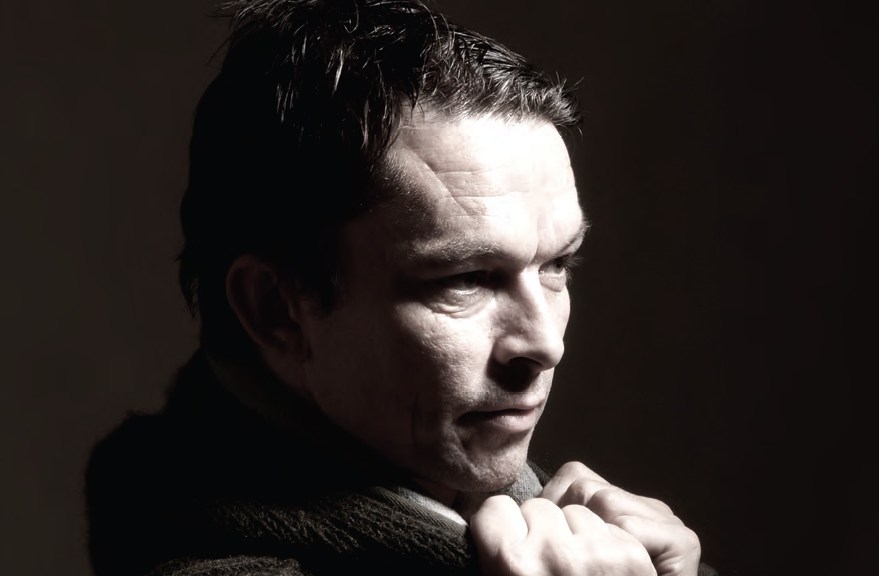
This makes Kinshasa a hell of a place to live at the best of times, but for Staff Benda Bilili singers Ricky Likabu, Theo Nsituvuidi, Coco Ngambali, Kabose Kaamba and Djunana Tanga there was also the complication of growing up with polio in a country with over 9,000 humans to every qualified doctor (the UK has 440). The core of the band bonded over their shared experience of disability, and many of their lyrics are directly informed by it. One song translates as “Parents, please go to the vaccination centre / Get your babies vaccinated against polio.”Of course, it is not this social consciousness that drew fans to the Brighton Dome the night I met them, so I began by asking if they fear their songs have less of an impact for crowds who not only don’t understand the lyrics, but are also living lives a world away from the situation the songs were born in. Michel Winter, their manager and acting translator, sums up their answer: “They’re here so that people can enjoy it. They realise that European audiences like their music, so what the lyrics mean isn’t so important. The music is good and so is their attitude on stage and the energy they give. They’re just happy to be here.”

I’m meeting them at the start of their first ever full tour, 35 dates dotted around Europe, and the band are clearly on a high following what they describe as the “great success” of their debut British show at London’s Barbican the previous night. They say they’ve always known they’d play in Europe; such is the utter confidence they have in the music they’re making. I ask if it was a dream, but Michel replies with a Gallic shrug, “It was obvious for them.” The rather staid, sedate venues they’re playing is perhaps a reflection of the narrow box ‘world music’ is routinely filed away in, and their remarkable if sobering back-story probably leads some to assume that a Staff Benda Bilili gig will be a solemn affair. The reality is anything but. Later that night the good people of Brighton are dragged as one from the comfort of their chairs to find themselves dancing down the aisles and pressing up against the stage. They are being led by an irresistible rhythm and the example of the band, pirouetting in their wheelchairs. Djunana hops out of his on powerful arms and forward-rolls across the stage, the legs that polio has withered to stumps tucked beneath him. He is grinning wildly, and so, I realise, am I. Regardless of anything else, Staff Benda Bilili are a great party band.

They were inspired by one of the greats. Back in 1974, Congolese dictator Mobutu helped bring the now legendary ‘Rumble in the Jungle’ fight between Muhammad Ali and George Foreman to Kinshasa. The fight was preceded by ‘Zaire 74’, a three day festival immortalised in the documentary Soul Power and headlined by James Brown. Two of the band saw Brown’s performance, and the Godfather of Soul’s fingerprints are imprinted on their music and on their tireless quest to entertain. On ‘Je t’aime’ you can hear them call out “Sex Machine” in tribute. As for other influences, they mention reggae, the Cuban rumba and the vague catchall of ‘international music’. They are sketchy about specific artists, and Michel reveals that it is only recent touring that has introduced them properly to many musicians. “Other than James Brown, they don’t know many Western artists. They are just starting to discover now. For example, they didn’t know about Jimi Hendrix before they started touring, but now they see some similarities.”

Claiming musical kinship with Hendrix strikes me as a bold claim, but the band have their own musical innovator in the shape of Roger Landu. As a child Roger lived on the streets of Kinshasa, but he was taken in by the band after they came across him busking with an instrument he had invented himself: the satongé. You can make one yourself if you happen to have a powdered milk tin, an electrical wire and a bit of broken basket lying around. Simply jam the curved basket wood into the side of the tin and string the wire between the top of the tin and its new handle. Sounds simple, looks simpler, but by pressing the tin tight to his chest and squeezing the wooden handle in and out, Roger wrings virtuoso solos out of that single wire that could raze Electric Ladyland. The only drawback to his improvisation seems to be several occasions during the night when he is forced to repair or even entirely rebuild his instrument.

Not that the audience seems to mind, and neither do the band. For them, it’s a tiny hurdle after a journey that seems to have been mainly constructed of much larger obstacles. Their music, and their performance, now drips with the confidence of a band who feel they can do anything. Before I leave, Michel smiles at the apparent chaos backstage and confides that when he first heard of the band he was told “They are fantastic musicians, but they are disabled. Is that a problem?” His reply has proved true, “If the music is good, there won’t be a problem.”

Originally published by Drowned In Sound.

Republished in an alternate form by the World Health Organisation.

This Mess We’re In

Tell a Colombian cocaine baron something he doesn’t want to hear and you probably won’t be heard from again. As Professor David Nutt found out, tell a British politician something they don’t want to hear about drugs and a similar fate awaits. His mistake was to think that prohibition has anything to do with something as trifling as scientific evidence. In The War on Drugs, the first of many casualties was the Truth. Tom Feiling has set out to resurrect it. His book ‘The Candy Machine – How Cocaine Took Over The World’ sees him chewing the cud with coca farmers in Colombia and contemplating crack with a former Mayor of Baltimore. Along the way he stares deep into the heart of the “culture war” that keeps drugs like cocaine illegal, and argues lucidly that the mess we’re in is as self-inflicted as a Sunday comedown.

I met Tom Feiling in his Brixton flat surrounded by maps and other exotic artifacts from remote parts. The ambience is distinctly South American, and as he rolls the first of many cigarettes he tells me it is a decade since he first visited the continent. He had set off for Venezuela, but after falling in with a gang of “gringo travelers” he found himself bewitched by Colombia. Returning years later, he shot a documentary feature ‘Resistencia: Hip-Hop in Colombia’ which told the social and political history of the country through the eyes and lyrics of young rappers. He describes it now as a risk, “People told me that if I wanted to find out about politics, I should talk to journalists and politicians, but I thought it was a gamble worth taking.” This blending of culture and politics is a gamble that still pays off. His book benefits from an understanding of the peculiar place that cocaine occupies within popular discourse, simultaneously aspirational party lubricant and, as crack, a demon stalking the poor and vulnerable. He suggests this paradox finds its way into music. “The whole story of crack dealing in the States can be traced by listening to hip-hop.”

This cultural context is essential given Feiling’s argument that drug prohibition is much more about a “culture war” than a true “public health problem”. “Prohibition was the government trying to assert itself,” he points out. “That’s the problem with trying to have a rational drugs policy. Drugs are emblematic of something else.” Feiling is not afraid to unpick the sociological history of cocaine vilification, but he also used his Colombian connections to shine a light on those growing the plant that becomes the drug. Coca production is heavily controlled, although fascinatingly some is still being legally imported into the States. The Coca-Cola Company ships 100 metric tons of coca to New Jersey every year, where the plants are ‘de-cocainized’, and the active ingredient sold on for use in pharmaceuticals. Most farmers, of course, find themselves working for even less savoury employers than Coca-Cola. Feiling blames the “long tradition of lawlessness” and lack of state apparatus for why, of the thirty-three countries which produced coca when it was legal, Colombia is now the world’s number one cocaine producer.

From Colombia, Feiling followed the white vein which runs to Tijuana, Kingston and Miami before arriving in Baltimore. Here he met Kurt Schmoke, who was in office for over a decade after becoming the city’s first elected black mayor in 1988. He also had a small part in ‘The Wire’ as an advisor to Mayor Clarence Royce, a reflection of the fact that Schmoke’s own liberal policies as mayor had inspired ‘Hamsterdam’, the area in the series where drugs are de facto legalised. “Schmoke made the point that the harm being done was not done by drugs, it was being done by drug money and the thirst for drug money,” Feiling tells me. “He also argued that as a society we don’t have to make things illegal to show that we disapprove of them. One in eight adults in Baltimore had a drug abuse problem during the time he was in office, so he saw the whole thing up close. When he suggested that decriminalization would take the sting out of the drugs trade he was pilloried and called a maniac. The impression that I got was that he was an up-and-coming Democratic politician who was being groomed for higher office, but after that his career in politics was over.”

This prohibition of debate is a critical barrier to new thinking about drugs. It is thus sadly appropriate that I met Feiling in the week that David Nutt was sacked as a government drugs advisor for suggesting that laws be based on scientific evidence rather than political ideology. “This isn’t something that can be debated,” Feiling points out, “This is the Government saying, ‘We don’t want to talk about this’. We’re not judging the success of the war, it’s the fact that there is a war that we’re judged on.” Feiling advocates legalisation, but stresses that this view comes more from evidence of the failure of the status quo than any ideology of his own, and he realises it won’t come soon. “It’s like saying I’m an advocate for the rivers running with milk and honey.” A debate desperately needs to take place, but this cannot happen while politicians would, as ‘The Wire’ had it, rather live in shit than let the world see them use a shovel. “If legalisation isn’t the way out, I’d like to know what the hell is? Unfortunately, most Western politicians are indifferent to what is happening in Colombia, in Mexico and in American and British inner cities. They’ve been indifferent to it for a long time, and I think that’s far more of a controversy than legalisation.” Like a hopeless addict returning for yet another hit, the longer we pursue failed prohibition policies the worse it gets. Nobody benefits but drug runners and gangsters. We do it to ourselves, and that’s what really hurts.

Originally published in Notion, December 2009.

Remembrance of Things Past: John Peel, Mark E Smith & Gordon Strachan

When I was 13, I used to listen to John Peel while I did my homework. The sound of his voice is one of the snatches of memory that I recall from those nights, a hazy decade ago, like the smell of the wooden desk or the burning light of the desk lamp when I glanced up. I would listen to Radio One incessantly at that age, even forcing myself through the boorish Chris Moyles in my desire to become acquainted with the music which populated the charts. I would stop and start my tape deck, trying to capture my favourite songs, or at least the ones I thought the pretty girls at school would be eagerly discussing the next day.

It goes without saying that by the time John Peel got on air, late in the evening, different rules applied. The girls at school would not be discussing anything that John Peel played, and nothing on his playlist would make it onto the charts at the end of the week. What he played was utterly foreign to my ears, accustomed to either the Beatles and Byrds of my parents or the Britpop of my peers. Some of it would confuse or bore me, some I would adore, but the most frustrating fact, for me, was that he seemed to play things once and once only. I was used to the rapid repetition of daytime Radio One to help me create my mix tapes. With Peel, by the time I felt the pangs of love I was already too late, the songs were gone. With the internet still in its infancy, tracking down music as wantonly obscure as Peel’s seemed like an impossibility to me. Somehow though, two different songs managed to sear themselves onto my memory, although I had no idea of their authors, or indeed even their exact titles. All I knew was that one was about, but certainly not by, a band called ‘The Fall’, and the other was about a footballer named Gordon Strachan.

I was reunited with the song about The Fall a few years ago. It’s by Jeffrey Lewis and it’s called, helpfully, ‘The Legend of ‘The Fall’. The irony, of course, of always remembering a song about Mark E. Smith and his coterie, but never being able to find it, was that in the meantime I spent a lot of time listening to their music, by way of a proxy. The song had been my first introduction to the eponymous band, and the lyrics had been bewitching. “He had a dream rock’n’roll could be given a new brain / Something raw and uncompromising and smart and strange.” Indeed, even Peel himself was name-checked; “John Peel said they were his favourite band because they’re always different but always the same.” The Fall proved to be everything the song promised, but it is Jeffrey Lewis himself who I now adore, after I reencountered him late at night on MTV2’s now sadly defunct ‘120 Minutes’, singing ‘Williamsburg Will Oldham Horror’. That was in 2005, some six years after I had first heard him on Peel, and it was in my subsequent acquisition of his back catalogue that I rediscovered ‘The Legend of ‘The Fall’ and could finally identify its creator.

The second of the two songs John Peel left me took much longer to find me again, but I stumbled across it earlier today and it was that which prompted this torrent of memories. It is a song called ‘Strachan’ by a band called ‘The Hitchers’. It would be a shame if you let the fact that it’s a song about a footballer put you off it, because it’s glorious. Punctuated by raging shoegaze guitars, it does admittedly spend much time describing the wee Scotsman’s role in a mid-nineties Leeds United side, but it is told through a framework of domestic minutiae which will be familiar to football fans and neglected partners alike. She asks “What’s that you’re watching?” He retorts, “A program about art.” Listening to it now it still sounds as exhilarating as it did then, and although The Hitchers seem to have disappeared without a trace, the sound they introduced me to still echoes through the bands listed on my computer’s hard drive.

Which brings me, finally, to Heraclitus and to wondering whether any of us are the same person we were ten years ago. I don’t consider myself to have much in common with that boy, sat over his homework at age 13. We have staggeringly different views of the world, and while we certainly share some memories I have no doubt lost almost as many as I have gained. Our tastes in art would certainly seem to be absurdly divergent. I mean, that kid was into Oasis. Yet for some reason I still get the same pleasure listening to ‘Strachan’ or Jeffrey Lewis now as I did ten years ago when I first heard them. Was I drawn to them then because of some germ of my future tastes, or do I listen to Lewis now because of a seed that song planted in my head, without me even knowing the singer’s name? Perhaps there is simply an illusion caused by my brain filtering out all those thousands of songs I’ve heard and forgotten to create a false sense of continuity, but I can’t shake the feeling that I am stepping into the same stream of consciousness twice.

It’s all John Peel’s fault.

Thanks, John.

Originally published at The Comment Tree.

Click here to read my review of John Peel compilation ‘Kats Karavan’ at Drowned In Sound.

The Greatest Silence

greatestLast week, I was invited to speak at the Centre for Development and Emergency Practice’s Human Rights Film Festival, at Oxford Brookes University, following a screening of ‘The Greatest Silence: Rape in the Congo’. It is a powerful and shocking documentary made two years ago by Lisa F Jackson, who draws on her own experience as a rape victim, and I would highly recommend it although it is far from comfortable viewing. At one point a Congolese doctor describes how he thinks that each patient he sees has the most harrowing story imaginable, until he encounters the next, and the film is similar – each story, told firsthand, brings a fresh horror to what has gone before.

It was difficult to find any glimmers of hope following such a distressing film, but I tried to highlight some of the remarkable work that Christian Aid’s partners are able to do, even in the war-torn East, to rebuild lives torn apart by sexual violence.

I told the story of Afua, who was abducted by Mai Mai militia in 2002 while out farming in the fields and was gang raped while being held at a military camp. She told Christian Aid’s partners that when the soldiers eventually left the area, she immediately sought out medical help. ” I was physically sick with worry that I had caught AIDS. I was in trouble with my husband. He didn’t want me anymore – he wanted me out of the house and away.”

Afua was helped by Madame Albertine, head of Christian Aid partner UMAMA. She arranged medical tests which proved Afua was free from disease and gave counseling, acting as a bridge between Afua and her estranged husband, who had accused Afua of seeking and enjoying sex with her attackers. As ‘The Greatest Silence’ explores, this view of rape victims is common. Afua was eventually reconciled with her husband and children, after Albertine had made it clear to him that his wife had been a victim, targeted because she was vulnerable in the fields where she worked to feed her family.

UMAMA also helped Afua with a loan of $100 for a bread oven, allowing her to earn a living without the obviously traumatic need to go back into the fields where she was attacked. She now earns $20 a week, the same amount her husband, a nurse, earns in a month, and is able to pay back $10 each month to pay off UMAMA’s loan. afua

Afua says now that “UMAMA is a good organization. It helped our family to survive and stay together.” While the scars of her attack remain, organisations like UMAMA are, in some way, able to rekindle hope. It brings to mind another partner organisation, Fondation Femme Plus, who are made up of women living with HIV-AIDS and its consequences. They specialise in psychological, social and medical support, as well as promoting income-generating activities for women with HIV-AIDS such as a restaurant, a tailor’s workshop and photography training. Their slogan is “Rendre l’espoir est notre vocation” – Returning hope is our job.

Originally published at Congolese Dawn.

Trapped In A Series of Tubes: The Government, The Internet And You

“Take away the right to say ‘fuck’”, said Lenny Bruce, “and you take away the right to say ‘fuck the government.’” Last December, the Secretary of State for Culture, Media and Sport, Andy Burnham, announced that when it comes to the internet, “There is content that should just not be available to be viewed. That is my view. Absolutely categorical.” He proposed to start deciding what internet users can and cannot view by introducing filters which would screen web-pages for obscene content. He was, quite literally, proposing to take away our right to say ‘fuck’.

Just days earlier, the Internet Watch Foundation, the self-regulatory, non-governmental body which regulates the internet in the UK, had blocked the Wikipedia page for Scorpions’ album ‘Virgin Killer’, which was released in 1976. The block had come about due to the fact that the album cover has an image of a young, naked girl on it, but this was not explained, nor was the rest of the page accessible – it simply returned a 404 error, which meant that users did not even know that they were being blocked.

Perhaps most worrying of all is the ongoing case against Darryn Walker over allegedly posting an explicit story describing the rape and murder of Girls Aloud. The worrying aspect of this case is not so much that he is being prosecuted – while grotesque fan fiction of this kind is not a new phenomenon, a case could certainly be made for him to be tried for harassing and intimidating the very real subjects of his story. No, the worrying aspect is that he is being tried under the Obscene Publications Act, the law which tried unsuccessfully to outlaw ‘Lady Chatterly’s Lover’ and the Oz ‘Schoolkids Issue’ in the 60s and 70s. If successful, the prosecution will set the remarkable precedent of making it a criminal act simply to type words that are thought to be ‘obscene’. The case has met with little protest, due in no small part to the fact that there is very little political capital to be won defending Girls Aloud rape stories. But the unsavory subject matter does not reduce its importance. As Martin Niemöller might have said, “they came first for the perverts…”

Burnham has defended his plans to censor the internet by pointing out that as a father; he does not feel safe leaving his young children alone to access the internet, saying “Leaving your child for two hours completely unregulated on the internet is not something you can do.” He has drawn a comparison with the success of the TV watershed in protecting children from obscene content. This is disingenuous for a number of reasons. Firstly, Burnham’s parental decision making should not determine national law – it is already possible for parents to select which websites their children are able to view, or indeed to install filters of the kind Burnham is proposing to make mandatory for the entire country. Secondly, potentially the most dangerous part of the internet for young children is chat rooms, which would not be covered by filters which restrict content. Thirdly, pornographic material is already marked by age limits, something Burnham is proposing should now cover all websites. What Burnham is seeking to extend censorship to is not images, but words. The comparison is not with the TV watershed, but with putting policemen in public libraries.

Burnham need only look to Australia if he is seeking a lesson in the complexities of suppressing web pages he does not approve of. Recent proposals there for a compulsory internet filter have been met with widespread protests. The proposals would make Australia one of the strictest democracies in terms of internet regulation, with at least 1,300 sites prohibited, based on a list drawn up by the state and not made public, leaving it free from legal scrutiny. The filter would have two tiers, one which would block the sites on the government’s blacklist, the other which would be optional and would block pornography by using keywords. When internet providers pointed out that much of the illegal material which is theoretically being targeted here, such as child pornography, is traded via peer-to-peer networks or chat programs, Communications Minister Stephen Conroy’s office said a peer-to-peer filter would be considered, despite the fact that the technology to do this simply does not exist.

It is at this point that we are reminded of what a brave new world the internet has led us into. No matter how much governments desire to regulate the internet, technology seems to be able to stay ahead of them. Technology like Tor and Freenet already make it possible to access the internet and transfer data anonymously, and Dr. Vint Cerf, who was one of the internet’s founding fathers when along with Robert Kahn he designed the TCP/IP Internet network protocol in the early 1970s, has said on numerous occasions that any attempt by governments to control the internet are doomed to failure due in part to private ownership. In 2007, he said “It’s tempting to think that you need a United Nations-like structure to deal with it, but I believe it will be very hard to accomplish that objective for one simple reason – 99 percent of the internet, the physical internet, is in private sector hands, operated by the private sector.”

Cerf has, however, backed multiple stakeholder models on control, which would include customers, governments and wider society. “The internet is used by a billion users around the world, it’s not strictly a purely governmental thing to control, and that’s why you need this multi-stakeholders structure to make sure all the prospects are respected.” Cerf is the chair of the Internet Corporation for Assigned Names and Numbers (ICANN), which is the body which controls domain names, and which Cerf describes as “the first big expert in a global multi-stakeholders structure.” However, even, ICANN reports to the U.S. Commerce Department, which has drawn criticism on a number of occasions, either for political interference in the Web’s governance, or for simply being out of touch. In 2006, Senator Ted Stevens, Chairman of the Senate Commerce Committee, expressed his fears that the internet would slow down due to heavy usage, saying, “The Internet is not something that you just dump something on. It’s not a big truck. It’s a series of tubes. And if you don’t understand, those tubes can be filled and if they are filled, when you put your message in, it gets in line and it’s going to be delayed by anyone that puts into that tube enormous amounts of material…just the other day an Internet was sent by my staff at 10 o’clock in the morning on Friday. I got it Tuesday. Why? Because it got tangled up with all these things going on the Internet commercially.”

Government will not stay this out of touch with the internet for long. Burnham has talked of working with Obama to regulate the English-language internet, and a recent think-tank report entitled ‘Securing Cyberspace for the 44th Presidency’ calls for “strong authentication of identity, based on robust in-person proofing and thorough verification of devices”. The British Government has been scrabbling around desperately for a justification for its much derided identity card scheme, and the internet may well provide one – a theoretically viable means of authenticating age, and individual agency, on the internet. Smuggled in under the paranoia which surrounds identity theft, swiping into your computer with your ID card is not a conspiracy theorists fantasy, it is a policy option being currently debated.

But while the nature of the internet would suggest that some people, somewhere, will always find a way of getting around the censors, and although even Thomas Jefferson knew that “taste cannot be controlled by law”, this has not stopped plenty of countries exercising fierce control over those who seek to take advantage of the freest of free presses. 13 countries were placed on Reporters Without Borders’ ‘Enemies of the Internet’ list, including China, where Obama’s inauguration speech was recently censored of any mention of communism, and Egypt, where Kareem Amer remains in prison for critically blogging about Islam and the Egyptian President.

Closer to home, LSE itself has a history when it comes to online censorship. Former lecturer Erik Ringmar wrote ‘A Blogger’s Manifesto’ about his experiences after he published blog posts which included details of his salary and others which were critical of the way the school is run. He was asked by his department convener to “destroy/cancel your blog entirely and shut the whole thing down until further notice”. The convener was in turn backed up by Howard Davies, although he argued that “The issue here is not a policy on blogging, it is whether a colleague can publicly abuse his employer and his colleagues without consequences.” That it is the message being censored, and not the medium, is beside the point. There was once a time when the press was free only to those who owned one, but the internet has democratised publishing, and this is the situation which is now under threat.

As Ringmar himself points out in his book, LSE also has a prouder tradition to draw on, which predates the internet. Karl Popper wrote ‘The Open Society and Its Enemies’ shortly before taking up a post at the school, and in it he set out his belief that society only moves forward if it has the power to ask questions and the space to listen to dissenting voices. “It is the longing of uncounted unknown men to free themselves and their minds from the tutelage of authority and prejudice. It is their attempt to build up an open society which rejects the absolute authority to preserve, to develop, and to establish traditions, old or new, that measure up to their standards of freedom, of humaneness, and of rational criticism.”

It is this tradition that we must protect now. The internet represents the greatest tool yet found for the free exchange of ideas, to challenge the tutelage of authority and prejudice whether it be in Egypt or England, at home or in the workplace. The internet revolutionised our access to knowledge, and power, so swiftly that it is easy to take for granted, and the cases which Burnham and the IWF have cited are difficult to defend – but they must be. We don’t have to agree with everything that is published on the internet to realise the value of the space it grants all of us. We all own our own presses, now, and as Albert Camus would have it, “A free press can be good or bad, but, most certainly, without freedom a press will never be anything but bad.”

Originally published by the LSE’s Clare Market Review.

A voice from Gaza: Majeda Al-Saqqa

9th January 2009 at 3.30pm

Majeda Al-Saqqa works for the Culture and Free Thought Association, a group that was established in 1992 to improve life for the people of Khan Yunis refugee camp in Gaza by running community activities for children, young people and women. She spoke to Ctrl.Alt.Shift about her experiences over the last few weeks, her belief in the power of the masses and her hopes for the future.

“At the moment I’m in my house in Khan Yunis, in the south of the Gaza Strip. It’s quiet, but there is no electricity and there are some airplanes in the sky. It’s a bit tense because we don’t know what will happen. It seems that there are some escalations, from what we heard on the news, so we don’t know what is going to happen.”

“Because we don’t have electricity we don’t have access to TV news, so we’re just listening to local FM radios all the time. They are reporting about what is happening in several places across the Gaza Strip. The Israelis are in the eastern villages of Khan Yunis, but so far they have not entered into the city. Of course, you can still hear the shelling and the air-strikes all the time.”

“In my opinion, I don’t think this war has anything to do with Hamas, even though Israel has announced it is because of what Hamas is doing. If we look at the history, if we look at 1948 or 1967, or the first Intifada, it’s not always Hamas. Unfortunately, it is the Israeli regime and the occupation that is doing this.”

“With what we are seeing in the world, I don’t think anything will change withIsraelas long as the American administration is acting this way, as long as the EU is acting this way, and as long asRussiais acting this way. Unfortunately, all the people who supportPalestineare the people, the masses who are not in power. They are the supporters for the Palestinian cause and the right to live free and to end the Israeli occupation. As long as the EU is rewarding Israel and upgrading their relationship, the Israelis have no reason to stop what they are doing. Unfortunately, it is an arrogant state, and we are hoping that the people, the masses in Europe andAmerica, in the Arab world and the Muslim world, will continue their revolution and change the situation inPalestineas well.”

“We hear about protests all over the world. Supporters from London or Europe or the Arab world will call random phone numbers in the Gaza Strip and they are supporting people and telling them that the masses are on the street and that they are protesting in the big cities and in small villages, even. This is our hope. Our hope is that our freedom will come from the people. I don’t think we have any hope in any of the governments of the world, not even Obama. He said that he will bring change, but his last statement equalised the victim and the oppressor. We were so disappointed, because he is saying he cares about the security in Sderot, but he does not care at all about the hundreds of people who are dying, the children who are dying in Palestine. I mean, because of 17 people in Sderot who suffered from the rocket, I don’t know how to describe it but it’s nothing compared to the F-16s that are hitting civilians, that are hitting children. And I don’t think you did not see it. Everybody saw it, everybody is a witness of this crime. Unfortunately, Obama is part of an administration, and I don’t think his administration will allow him to bring change. I don’t think the American administration is ready for any change in the Middle East, but we were hoping that the EU, or the UK after Blair, would do something but unfortunately they are still very shy in their statements, and it’s undermining the Palestinian cause and it’s dehumanising, sometimes. So we are waiting for the people, but because we are struggling for our rights, our freedom, for justice and for peace I think we are going to win.”

“There was no warning at all when the attacks started. Our kids were in kindergarten and at school. It was a Saturday so it was a day off for us but the schools were open. People were in the market, just like every day. This is why it was so bad, and it killed so many people. In a second they changed the whole geography of Gaza, but no Government is doing anything about it. It happened all of a sudden, there were bombings everywhere, huge sounds and huge lights. It was like an earthquake, the house was moving. My first thought was of my nephews in kindergarten. I ran down the steps and went towards the door to go and get them, but fortunately our neighbour was near the kindergarten, and he brought them with him. It happened in a few seconds, it lasted maybe five minutes, but they hit so many places at one time. Then we heard that it’s all over the Gaza Strip, so we tried to call my brother, my relatives, my friends, my colleagues. We just wanted to understand what was going on. Unfortunately the phone lines were not working, mobiles or landlines, and it took two or three hours before they worked again. It was horrific, I can’t describe it. It is the most awful thing that’s happened in our lives. I just can’t describe it, it’s heartbreaking, because people were just in the markets and in their work, the children were in kindergarten and schools, and here you have this war-machine that is taking over your sky and your whole life, they are hitting everywhere. Nobody is talking about this trauma, they are just talking about the Israelis in Sderot unfortunately.”

“Of course I think that one day we will see a peacefulPalestine. I think I will see it myself, and I think my nephews and so many other children will live in better situations and have better lives soon, because what is happening is madness. What the Israelis are doing is a crime, and criminals can’t escape all their lives. They will be caught one day, and they will be brought to justice. I think they went out of control, and I don’t think the world will allow them. If the world will allow them, then I don’t think anybody deserves to live in this earth.”

“My message to the people in Britain is please go on and continue your fight, because the Palestinian cause is not only a Palestinian cause, it is a Human Rights cause. We are all humans sharing this earth together, so it is your responsibility as much as it is our responsibility to stop the craziness of the Israelis. It is their duty to work to bring change with the British government. I think every nation, every people in their own country, should work to bring change within their own government.”

Tim Butcher: Journeying to Africa’s Broken Heart

Tim Butcher’s book, ‘Blood River: A Journey to Africa’s Broken Heart’, part-travelogue, part-history of the Congo, topped bestseller lists early this year. The premise of the book was that Butcher would follow in the footsteps of Stanley, the first man to map the length of the Congo River, and in doing so tell the story of the country. We had the chance to speak to Butcher recently about his experiences.

You seem to spend every moment of the book in fear for your life, did you actually enjoy the experience? 

Tim Butcher: “I think enjoy would be the wrong word. It was an ordeal, and it was challenging and rewarding, but I wouldn’t say I enjoyed it. I’ve been told that there aren’t many laughs in the book, and I’m afraid that that’s because you can’t really make light of the situation. Of course I enjoyed meeting the fantastic people who helped me, but that enjoyment was tempered by the fact that I had to leave them there. I’m still in contact with Benoit, who was one of the motorbike drivers who took me on a large part of the journey, and since the book he has lost his job with Care International simply because they were downsizing their operation. He is now forced to eke out a shitty, miserable living, while in a stable country he’d have a great job, maybe the head teacher of a school. Benoit is one of the most incredible men I’ve ever met, and I would trust him with my life – well, I did trust him with my life. Some people accused me of being too negative in the book, but I reject that claim. I think I wrote about the way that the human spirit had survived, but it’s not a situation to be made light of. I think I was realistic in the book.”

Why were the local Congolese people happy to go so far out of their way to help you on your journey?

“The milk of human kindness runs very deep there. People like Benoit and Georges Mbuyu, the pygmy leader, didn’t even ask for money. They really wanted to help me. The people of the Congo are incredibly generous. It’s one of those classic cases of a tiny fringe of radicals colouring the perception of an entire group of people.”

Your journey wasn’t just unusual in that it was done by a non-Congolese person, even the locals rarely travel through the dangerous eastern provinces. How unified can the country be if communities are so isolated?

“That’s a very good question, because why would the country be unified along such arbitrary geographic lines? – lines drawn up by the very worst kind of colonialism. Amazingly there is a national identity, though, because the country passes the football test. Everybody cheers for the Simba. It’s astonishing, but even in areas of the country where it’s impossible to get television coverage of the games, everybody knows that there’s a game on and are behind the team. Since the 60s with Katanga, none of the regions have really talked of secession. I mean, some rebels have talked about making various provinces independent, but it’s just pie in the sky. Considering that it’s basically a failed state there is a remarkable amount of national unity.”

‘Blood River’ mentions the lack of institutional memory, the fact that the reasons for fighting wars can quickly be forgotten. Is Patrice Lumumba remembered as a hero of independence?

“It’s difficult to have that memory because it’s a country of young people. Lumumba doesn’t really have a Mandela-like following. He was a man of his time, and his murder was shrouded in so much mystery. It’s only relatively recently that the truth has come out. The violence is so complicated and multi-layered that it is difficult for anyone to keep track of it and remember it.”

The book is full of examples of decaying infrastructure, as the jungle reclaims roads and train-tracks. Is there a part of you that enjoys the unspoilt nature of the rainforest?

“If I could guarantee that my children would be safe and that my wife wouldn’t be raped, then the Congo would be a beautiful place to visit. It’s an incredible environmental paradise.

There are strange benefits. It is an African irony that HIV started in the Congo, the first samples are from Leopoldville, and there’s evidence from the 30s, 40s and 50s. But the country hasn’t been that badly affected by HIV. There is HIV there, certainly, but it hasn’t spread as rapidly as it could have done, simply because the transport infrastructure isn’t there. HIV needs two things to spread quickly: poverty and good transport, and that’s why countries like Botswana and South Africa have been so badly affected.

So there is a positive side to the unspoilt nature. The oxygen we breath comes from the Congo rainforest, it’s one of the lungs of the world. And the unfortunate fact is that I can guarantee that the first roads that go into those areas will be logging roads.

Some of the remoter regions support fantastic ecosystems. An expedition recently found something like nine new species of mammal. So there is a pure, exciting, Garden of Eden, element to the country, but at the moment it’s not safe for the people.”

What does the Congo need, above all else?

“The rule of law, and transparency. People have to know that if someone takes something that belongs to them, they can do something other than take a gun and shoot them. There is money in the country. The cobalt mines are generating fantastic amounts of money, but where is it going? Into Swiss bank accounts. Of course it’s easy for me to say what the Congo needs. The million dollar question, the million dollar developmental question, is how you implement the rule of law and transparency.”

Originally published at Congolese Dawn.

Tom Waits live at The Ratcellar, Dublin

Tom+Waits+Glitter++Doom+Tour+-+The+RatcellarTom Waits stands in a bright spotlight in a tent dubbed ‘The Ratcellar’. He stomps out a beat, sending clouds of dust into the air, and for a sprawling twenty-eight song set he invites us into his universe.
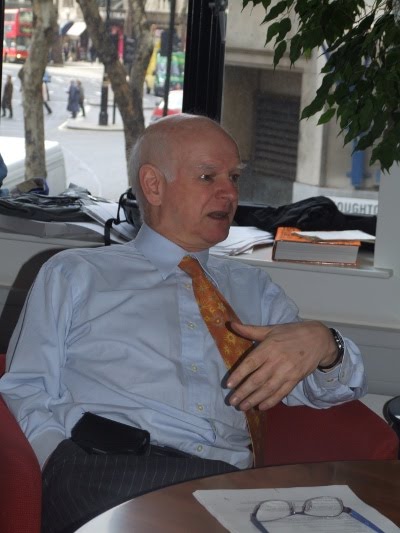
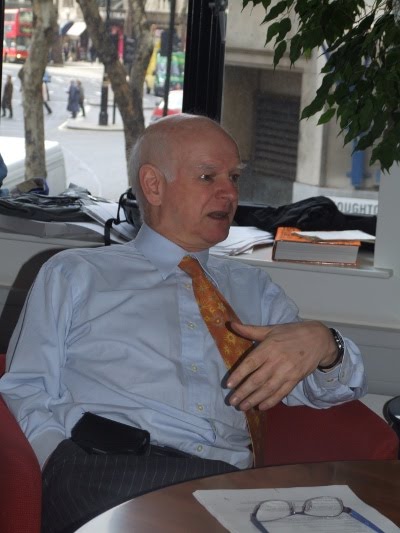

He recently said the most curious record he owns is “The best of Marcel Marceau – forty minutes of silence followed by applause” and his performance has something of the mime’s physical expressiveness, particularly when acting out ‘I’ll Shoot The Moon’, but none of his theatrics would work as well if it wasn’t for that voice. On ‘Falling Down’ he howls at the moon, while the a cappella opening to ‘Jesus Gonna Be Here’ is otherworldly.

He sits at his piano to share his thoughts. The female mantis, he tells us, eats the male during reproduction. However, the male will continue copulating, even after she’s devoured his head and most of his torso. “He’s like a rocking chair.” From that introduction, he somehow segues into an emotional rendition of ‘Tom Traubert’s Blues’ and reaches into his back catalogue for ‘The Heart of Saturday Night’. By the time he gets to ‘Innocent When You Dream’, every voice is singing along.

Returning to centre stage, he changes the mood in an instant from mournful to undeniably sexy. The extended guitar riff in ‘Hoist That Rag’ could be Santana, and near me two girls in cocktail dresses start dancing in the aisle.

On the ‘Eyeball Kid’ he dons a mirror ball hat and becomes a fairground barker, while the end of the set delivers the glitter and doom that the tour promised. ‘Make It Rain’ sees him showered triumphantly in golden glitter, but moments later he is dwelling on mortality on a haunting ‘Dirt In The Ground’.

So there was sex and death, melancholy and humour, theatrics and genuine emotion. Waits dragged us through the looking glass and showed us every aspect of life, and the only real disappointment was that at some point it had to end. Just like life, then.

The last word has to be his. “Tell the boys back home I’m doing just fine” he sang on closer ‘Lucky Day’. Tom Waits is doing just fine.

Howard Davies on the LSE

A lot of students seem to know who you are without knowing exactly what you do – what does the role of Director entail on a week by week basis?

I sometimes wonder as well! Roughly, I would say about half the time is management. The Director’s management team meets every week, which makes all kinds of decisions about all kinds of routine, daily things. Then I chair the Academic Board, the APRC, which is the Resource Allocation Committee, the Promotions Committee, and the Appointments Committee. Then there are others that I don’t chair but that I still go to, like the Council, the Court and the Finance Committee. This is an organisation with a turnover of about £150 million, so you have to have good management control and financial control.

Another quarter of my time is on a combination of fundraising and external representation, which merges together, because if you’re talking to an alumni group, they want to know about the School, but also in the long run they are probably going to be financial supporters. Fundraising for a university isn’t “Give me money”, it’s explaining what the School is doing and talking about interesting people within the School.

The other quarter of the time is activities within the School. Some teaching – I lecture on the Law and Accounting programme and others. Also, some student things, for example I’m currently rehearsing for ‘The Wizard of Oz’. Also some research that I do myself – I don’t do a full scale academic job but I’ve published one book since I’ve been here and I’ve got another one coming this month, and quite a lot of articles as well.

Your public profile, whether it is chairing the Man Booker Prize or appearing on Radio 4 to discuss the World Economic Forum, is relatively high. Is this something that you feel is beneficial for the school?

If you look back at the LSE tradition, the distinctive feature of the school is that it has always been an engaged academic institution. Some people like to claim that it’s had a particular political leaning, which I don’t really think is true. If you look at the combination of people here – you’ve had the likes of Hayek and Popper at one end to people like Laski and the Webbs on the other. But whoever it’s been most LSE Directors have been actively engaged in political policy. Giddens clearly was, in a different way from me, and certainly Dahrendorf and Beveridge were. That’s the tradition of the job, and I think people like that. Many of the students here are interested in what’s going on in the outside world, and the fact that the School is engaged in that debate seems to fit.

School

We reported last week that the School has a surplus which it is using for capital investment. What difference will the various redevelopments make?

First of all, about this surplus. If you look at our finances the core activities of the school, the teaching, research and degree programmes, is about the break-even proposition. Where we make surpluses is on executive education, the summer school, Enterprise LSE, residences in the summer and things like that. That’s where the profit comes from. If you look at our balance sheet, we’re relatively highly indebted for this sector. Oxford and Cambridge have basically got no debt because they were sort of given their land. Most of what we’ve got we had to buy. We don’t get much Government support. We get about £3 million a year for capital, and since the New Academic building is costing £70 million, you’ve got to make the money yourself.

My view when I arrived here was that the facilities of this place did not match its international reputation, so I thought we had to go for a major redevelopment project. The first stage is the New Academic Building, and then we have to redevelop St Philip’s. That will be a brand new Students’ Union building. The Students’ Union facilities here are, in my view, poor. I mean, they’ve got character. The Underground and the Quad are fun places to be, they generate good events, but they’re not great. Clearly the sports facilities are poor, so the only way you’ll do significantly better is with a new building.

So we’re doing that next, and then in about 2011 we can empty the Students’ Union and the towers above it, and redevelop it. That’s the tricky bit, because it’s right in the middle. Nobody can hide the fact that that will be quite disruptive, and that’s why we need to do the other thing first.

The one thing that I think we’ll be able to do sooner is the sports facilities. So I think we can refurb the gym as a temporary solution until the new building in four or five years.

Won’t the ever-increasing student numbers place a strain on facilities while work is going on?

We shouldn’t have a problem maintaining the numbers we’ve got. I don’t think we’d be able to expand and I don’t want to expand any further. 9,000 is what we planned to do by 2011-2012. The new building gives us an extra 125,000 square feet, and almost doubles the teaching space in the School.

You’ve said that the School should be aiming for a first on People and Planet’s environmental performance league. Are we on course this year?

I think so. We’ve increased the amount of green energy, and also there were various technical things that hit us last time, like not having a travel plan on the website. In fact our travel is not a big deal. I was at a meeting of international university leaders, and the guy from Yale said “I think we should commit to having low emission vehicles in all our fleets”. So I said “We don’t actually have a car.” He just laughed; it never occurred to him that we could have a whole university and not own a vehicle at all. So on things like travel we’re very good actually, because almost everybody comes in on public transport. We haven’t got a car park. We have a bike scheme that a load of people use, so I think we’ll do well on that – we just didn’t have a policy stated on the website.

We’ve also set up a new sustainable LSE partnership, which I chair, which met for the first time just recently, and various workgroups below it, so I hope we’ll do better this year – but the bars always going to be raised.

Students

You have said in that past that it is important to ensure MSc Courses offer value for money. Do they?

Well, it really relates to the teaching taskforce. Value for money in education is a tricky concept. On the one hand, if you look at demand, there’s not an issue. Demand has gone up 23% this year for Masters programmes. If you were just a business, you’d say “Well what the hell! They all want to come.” The second aspect of value for money is what people do afterwards, and there you wouldn’t say there is a problem, I think we’re the highest starting salary on graduation. One reason that people come here is that it does improve their market value.

On the other hand, I don’t think that’s all we should be doing. There is evidence that people’s satisfaction with teaching here is not what we would like it to be. That’s what the teaching taskforce has been looking at, in terms of contact hours, class sizes, use of graduate teaching assistants and everything else, and I hope that we can put more into that. Obviously this is something that you have to bring the academic community along with, because it’s largely their work. So we’re going to be taking a set of proposals to the Academic Board in the Summer Term, and I hope that we can get agreement on it, but we’re still debating it at the moment.

You are now two years into the five-year planning process to renew the curriculum. How instructive has that been, and how much change should we expect to current academic programmes?

Well, the planning process here was what I call ‘decibel planning’. He who shouts loudest, gets most. We thought that this was not ideal, and given that we had an extra 1,000 students to share around we started a process to look at what sort of degrees we didn’t have. We’ve now brought in an MSc in Finance, an MSc in Financial Mathematics, which has got an absolute mountain of applications, an MSc in Race, Ethnicity and Post-Colonial Studies and others. So it was a good process that has produced a set of new degrees. There will be a continued roll out because you have to refresh the degree portfolio. For example, the European Institute had a degree on the growth of Europe to the east. Well that’s kind of happened now, so courses get revamped. Also, a big chunk was the new Management programmes.

Students’ Union

What are you expecting from the new Sabbatical team?

The students’ union plays an important role in the management of the school. What we need is a good sounding board on the issues that are of interest of us running the school. We’ve had a good response on athletics. We’ve said we are prepared to invest some money in this, what do you want? I can guess what a 19-year-old girl wants to do with her spare time, but I don’t know. It’s much better if the Union can intermediate in that way. You need Sabbaticals who care about that part of the job. I’m not stupid and I’ve been here for five years and I know that there are other things that student politicians want to do. They want to debate the state of the world, and that’s fine. I hope that they don’t spend all their time on that, because the reason that they are paid to be full time sabbaticals is not for that. It’s because they have a role in the running of the school. What I hope is that you get people who do care about the school as an institution, who are worried about the basic stuff about how we teach and facilities. Because that is an important element of decision making process. That’s what I hope for every year, and I am sometimes disappointed!

But this year for example Ruhana has really thrown herself into that. She’s been to every meeting of the teaching taskforce, she’s surveyed people, and she’s held focus groups. That’s what we want.

Any other thoughts on the outgoing Sabbaticals?

Fadhil has been a very assiduous attender of things. He’s certainly never shirked the job.

You occasionally have to push and prod about issues in relation to the School, because they can get distracted on to other issues. It seems that the Union’s finances have been soundly managed. I have no complaints about the Sabbaticals this year.

You are presumably aware of the new General Secretary from his time campaigning against the appointment of Peter Sutherland. Firstly, did you ever expect the protests that arose following the appointment?

No I didn’t really, because there were students involved in the selection process. I was surprised because normally here, although people may have different views about things the School’s got fairly painstaking decision-making processes. Sometimes I think extensively painstaking, but it does. Unlike many places the students are heavily involved in decision-making. They were involved in decision-making on my reappointment, which is unknown elsewhere, and in the appointment of the Chair, and I don’t know of anywhere else where that is the case. Normally, once a decision is made here – one of the advantages of painstaking processes is that when a decision is made, people say “Okay, I’ve had my say”. In this case, I thought people would say “Well that’s the decision. He may not be the person we’d have chosen, but that’s what it is.” They did not, and that was I think disappointing. Anyway, he is chairing Councils, so they’ll just have to live with it.

Do you foresee any problems with the two working together on Council next year?

I presume he wouldn’t be prepared to be General Secretary if he didn’t know what it involved. Not attending Council meetings would be rather curious, so I presume he’ll turn up!

Much has been made in the press of the Israel Divestment motion. Considering the School-backed proposals for a forum on the Arab-Israeli conflict, are you concerned about anti-Semitism on campus?

There are three dimensions to this. Firstly, the Students’ Union’s right to engage in these issues. I’ve no problem with that and I am prepared to stand up for that and do so when pressed on the issue. That’s fine.

The second thing is the implications for the School. As far as the divestment is concerned, I think there’s a lot of confusion. The LSE does not invest any of its students’ money in anything, actually, except short term deposits. We are net debtors, asking me about my net investments is like asking how I invest my overdraft, it’s meaningless. The idea that there is money coming from student fees that we are investing in arms companies is just not the case. Now we do have an endowment, that’s money that’s come from other people, effectively all of which is hypothecated income for scholarships or Chairs. That’s the money that we invest, and it’s almost exclusively invested in index funds, usually Charitrack. We have about £55 million. This is compared to Harvard’s £30 billion pounds. £55 million across the whole of the world’s investment markets is trivial.

That said, we do think it is reasonable to debate whether the School should have more of an active investment policy. We have typically been passive investors. With £55 million, some of which is in boxes and little pots with specifications from individual donors, there’s a limit to what you can do, but we are discussing whether we should have a responsible investment policy and say there are some things we will do and some things we won’t do. That’s still under debate.

The third point is that it is the case that some of the student societies, the Israeli society and the Jewish society, did approach the school to say that they were concerned about community relations, and they felt that this was spilling over into a degree of hostility which was not a good thing. They asked if we would support a kind of dialogue process within the student body. We said yes, and there are one or two people here who have experience of conflict resolution, so we offered their assistance. So far, I don’t believe this has started. There have been proposals and societies have come back and said they don’t like this or that. They are still engaged in a debate, and I haven’t seen the latest terms of the debate except when I see it in letters to The Beaver. But I am concerned that the school should not be seen as a place which is hostile to students of any particular community, whoever that might be. I think so far we’ve managed to achieve that. I think there are people who are concerned that it has been a hostile environment and that I don’t like. That’s why we were prepared to support this dialogue.

There are people out there who have thought that the School has passed motions as opposed to the Students’ Union. There are people who thought the Students’ Union passed the first motion, which had the more inflammatory language in it. I get emails congratulating me on passing a resolution as Israel as an apartheid state, and have to point out that I haven’t passed any resolutions and furthermore the resolution that did get passed did not actually use that language. There’s a lot of misunderstanding.

The Future

Your term runs until 2013, what are your remaining ambitions for the School?

First of all, the big plan for the campus. To get that done, without getting in to more debt than we can manage, is obviously the big thing that I have to do. The other thing is to keep the LSE relevant.

For example, the economics of climate change. We will be the big British centre for the economics of climate change. I’m trying to raise some money to build a bigger research programme and I’d like to think that people around Europe will say, the LSE is the place to go for the economics of climate change. That’s why I persuaded Nick Stern to come back to the school to build that. I also think there is a gap in the market for an academic institution that is engaged in diplomacy. I continue to hanker after having a proper Middle East centre here, and also I would like to develop further our urban work, because I think that the big social and environmental issues will all be addressed in the big cities.

Those are not ambitions I can personally achieve on my own; they depend on gathering together groups of academics who want to do them. At a school of this kind you’ve got to be fleet of foot and be able to develop new centres and degree programmes. For example, I’d like to have an MSc Economics of Climate Change which meant that you were training people who could go into governments and corporations and would have a tool kit so that they could understand what makes sense in terms of investments to reducing carbon emissions. I think that would be our best contribution.

Originally published in the LSE’s The Beaver, 11 March 2008.

Stiglitz’s War

For a man who has just uncovered the simply vast amounts of money his country is squandering on a war he describes as “stupid”, Joe Stiglitz is surprisingly jovial. He is quick to laugh and engages with a wide smile, and doesn’t strike you as either a bookish Nobel laureate or as the “green eye-shaded accountant” that the Bush administration attempted to dismiss him as.

Bush now has another reason to dismiss Stiglitz, following the publication of ‘The $3 Trillion War’; named for the true cost he believes America will pay for its decision to invade Iraq. Standing on the brink of that day’s fifth anniversary now is the time to assess what Stiglitz points out is “the second longest war in America’s history, after the Vietnam War, and the second most costly, after World War II.”

Stiglitz provides many examples of what could be bought for a fraction of the price of the Iraq War – the USA’s spending on autism research equates to four hours in Iraq, ten days fighting costs $5billion, which amounts to total American aid to Africa each year, and one sixth of an Iraq War would pay the United States’ social security needs for the next half-century.

Of course, despite its cost, World War II was famously credited with lifting America out of the great depression, and has helped to promulgate the cliché that war is good for the economy – a misconception that Stiglitz aims to correct. “Wars use resources that could have been used to promote economic growth, and the fact is that since Keynes we know how to stimulate the economy in more constructive ways. This war has been particularly bad for the economy because of the impact that it’s had on the price of oil (oil prices per barrel have risen from $25 before the war to $100), and because it was totally deficit financed. Even as we went to the war we had large deficits, but then the Bush administration actually lowered taxes for the rich. The symptoms didn’t show up because they were hidden by lax regulation which flooded the economy with liquidity which was buoying the economy as these other factors were depressing it. We were in effect living on borrowed money and borrowed time, and a day of reckoning had to come, and it’s now come.”

Stiglitz believes that the actions of the regulatory authorities have had a direct impact on the current financial crisis. “The monetary authorities thought they had to do what they needed to do to keep the American economy going. The high oil prices and the war was having an adverse effect on the economy, and they simply did what they thought was right, but in a very myopic, short-sighted way – and it worked, in a very myopic, short-sighted way. The symptoms of what the war was doing, of what the high oil prices were doing, were not evident. They now have become evident. But the problem is, by postponing the cost we have increased the cost. The cost the economy is going to have to pay, not only the American economy but the global economy, will be a multiple of what it otherwise would have been.”

There can be no doubting Stiglitz’s determination to keep the issue of the war at the forefront of political debate at this crucial time for American politics. As far as he is concerned, it is the biggest issue there is. “My work focuses on the economics of the public sector, and you might say that the Iraq War is the single largest public project that the United States has undertaken. Typically when we begin a project like building a bridge, we do a cost-benefit analysis. We certainly don’t undertake a large project without looking at the cost. This was a war of choice. But we began the war without thinking about the cost.”

For Stiglitz, however, there is more than just the financial cost to consider. There is also the cost to the idea of democracy. “This was a war that, in part, was allegedly to spread democracy. Democracy means that citizens ought to be able to participate in decisions, and meaningful participation means that they have to know the consequences, and among the consequences are the costs. It seemed to me that if we are going to be talking about democracy then it was important for the American citizens to know what this particular project was costing. The Bush administration did everything it could to hide the costs from the American people. I’m testifying in congress on Thursday, and one of the points I’m going to make is that we should not have had to write this book, and if we did have to write the book it should have been a lot easier.”

Stiglitz explains how the Freedom of Information act was required to uncover even rudimentary information about the number of people injured in the war. In the course of the investigation he also turned up more alarming discoveries, such as the fact that the military were denied a request for MRAPs (Mine-resistant ambush-protected armoured vehicles) which Stiglitz argued would have saved a large fraction of lives, at a short term cost which will now be far outweighed by caring for the injured.

With a war this badly managed, it seems to me that those in charge must be either highly incompetent or highly corrupt, I ask Stiglitz which he sees. “There are elements of both. The Bush administration deliberately tried to obscure what these costs were and has continued to try to obscure it. Particularly the way the money has been appropriated in 24 separate bills, including emergency appropriations five years after the war started. When you go to war it’s an emergency, but five years later you should be able to plan. The way they have deliberately hidden information clearly shows an intent for people not to know. But there’s also an element of what you might call self-deception. The bureaucracy has been created to have a whole set of checks and balances, because you realise that people like to please their superiors. The Bush administration short-circuited many of these checks and balances, and the predictable consequence is that the quality of information was lower than it otherwise would have been. Then they said “How could we have known?” So they were responsible in part for the low quality of information, and many of the specific things they did predictably raised costs. For example, the behaviour of the contractors that were hiring people from Nepal and the Philippines rather than hiring Iraqis, fed the unemployment, while the failure to safeguard the weapons caches, meant that you had an explosive mixture: unemployed young men with weapons, and that explosive combination exploded. Now that was predictable.”

He points out the $19.3 Billion that Halliburton have received in contested contracts in Iraq, and describes current defence spending as “corporate welfare.” He bluntly observes “weapons don’t work against enemies who don’t exist.”

Looking to the future, it is hard to resist wondering how Stiglitz views the upcoming presidential elections. He is blunt about the differences between the candidates. “What is clear is that McCain’s policy, saying that we may be there for 100 years, is not the right policy. If you extrapolate what 100 years would cost, it’s huge. If you ask what the benefits are, it’s hard to ascertain. Obama has been quite forthright in saying he’s not against wars in general, but he is against stupid wars. And this was a stupid war. He was aware of the kind of divisions that existed, and therefore the difficulty of obtaining a sound outcome to the war, and he’s called for a quick withdrawal. I think that those are all policies that are consistent with prudent actions.”

How does he rate the chances of seeing Obama in the White House? At this question he smiles and nods, a look of real excitement in his eyes. And would this mean a return for the man who spent three years as chair of President Clinton’s Council of Economic Advisors? “Perhaps”, he laughs, but maybe a different job this time. At least Obama has already expressed a desire to have Stiglitz as an advisor. The current administration’s response to Stiglitz’s appearance before Congress was derisory. “People like Joe Stiglitz lack the courage to consider the cost of doing nothing and the cost of failure. One can’t even begin to put a price tag on the cost to this nation of the attacks of 9/11,” said White House spokesman Tony Fratto. “It is also an investment in the future safety and security of Americans and our vital national interests. $3 trillion? What price does Joe Stiglitz put on attacks on the homeland that have already been prevented? Or doesn’t his slide rule work that way?”

Whoever wins in November, the world should listen to Stiglitz. Whether or not Joe can catch the ear of the next administration could have a serious effect on the cost the globe is forced to pay for Bush’s most spectacular folly.

Originally published in the LSE’s The Beaver, 4 March 2008.

Frank Dobson MP

frank-dobsonFrank Dobson has become one of the Labour Party’s defining MPs. A constructive critic of the New Labour experiment, he is a former Secretary of State for Health as well as an LSE graduate. He says he studied Economics, “In theory anyway. I know enough Economics to know when someone else is talking bollocks and that’s about it really.”

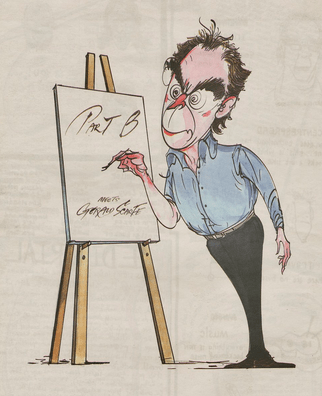
“I think LSE has changed, I think more attention is now paid to undergraduates than used to be. Certainly at the time I was there, my impression was that there wasn’t a great deal of attention. In the past I’ve caused offence by saying that I don’t think I really got very much from the academic staff there. But I gained a lot from talking and listening to my fellow students, who were from all over the world. It was a remarkable change for me coming from an all-white grammar school in the north of England.“ Dobson says he enjoyed student life immensely. “If you don’t enjoy yourself for three years of pretending to be an academic, you’re never going to enjoy yourself are you?”

Perhaps surprisingly for a man who is now in his 28th year as an MP, he was not involved in SU politics. “I didn’t particularly like student politics, and I still don’t. I think it’s certainly a way of learning the ‘dark arts’ of politics, but generally speaking, it never appealed to me. I was involved in other political campaigning but that wasn’t done through the Students’ Union, which was fairly tedious and a lot of willy-waving, and whatever is the female equivalent of willy-waving.” I told him that it hasn’t changed much, and he leant back in his chair, laughing heartily.

After leaving LSE Dobson became a local councillor. “I was a member of the Labour party throughout that whole period. I lived in Passfield Hall and then in a flat in Bury Place, near the British Museum, and continued living there when I ceased to be a student. I got heavily involved in local campaigns, basically related to stopping the residential population being driven out, and houses and flats being turned into offices. That was how I got involved in campaigning and the local Labour party, and in many senses that was why I stood for the council in 64. I didn’t get on, but I then stood for the council again in 71, and was elected. That was very heavily to do with trying to make sure that there remained a normal, ordinary, resident population.”

Dobson has now been a member of the Labour party for almost half a century. I asked him how he has dealt with the changes that have occurred in that time. “It was frustrating – I spent eighteen years in opposition, of which I think sixteen were on the front bench. Also, playing a part in – being close to Neil Kinnock – saving the party from ruin, really. Gradually strengthening the party, and after 1992, when Neil decided to pack in, I was a strong supporter of John Smith. I was very saddened by his premature death. Then supporting Tony Blair.”

I asked him what he thinks of Martin Bell’s recent assessment that New Labour got a lot of things right but threw them away with an illegal war. “The bulk of our election manifesto in 1997 was an up-to-date Labour manifesto. Most of the things that were introduced then were a modern version of a fairly traditional Labour approach to things. Things like the national minimum wage, actually getting people back to work or tax credits to ensure people actually got a decent wage. The last time John Smith spoke at the TUC he asked me to help with the speech, and I think I contributed two phrases. One was ‘A Britain on work, not a Britain on benefits’, and we wanted to make sure that when “people worked for a living, they were paid a living wage”. The Labour government in the first few years delivered on that, and continues to deliver on it, which is a dramatic assertion of timeless Labour values. Quite a lot of the things that we did in health, and in education, were along the same lines, and most of the things that have worked fall into that category. The things that haven’t worked are the fancy Blairite ideas, this obsession with choice and diversity. A certain elitism, and a belief that the best way to improve local hospitals is to have one supremely wonderful and the others will aspire to be like it. Similarly with schools, which is clearly claptrap. If you want to improve the worst performing institutions, you attend to the worst performing institutions. It is an obsession with elitism and management-ism, if you see what I mean, because if you look at it from the point of view of the patient, or the pupils, then you should be addressing the needs of the people who are getting the worst deal. Not marginal improvements for the people who are getting the best deal.”

“As far as the war’s concerned, I don’t think the fact that it’s illegal is of much consequence one way or the other. Combinations of powerful nation states make up international law, and it may have been an illegal law or not. But it was stupid. That’s the main offence. We’re in a worse position now than if we’d not got involved in the invasion and occupation of Iraq. The first duty of any government is to ensure the safety and security of the country and it’s citizens at home and abroad. No one could possibly argue that we’re safer either at home or abroad. We’re infinitely less so. I used to carry around the page out of Hansard which was my speech in the February debate about a month before we actually went to war. My only criticism of myself in there was that I think I give the Prime Minister too much…I don’t doubt his intentions at that time. Also, I understate the things that I predict will go wrong. They’ve been worse than predicted. That continued and continued, and it was what led in the end to him going as soon as he did. Because my impression is that the absolutely craven, stupid position we got into over the Israeli invasion of the Lebanon, when we were the only country in the world, apart from Israel and the US, who weren’t saying that they should withdraw. That was the pits. I think a lot of people who’d given him the benefit of the doubt up until that point decided that there really wasn’t any doubt any more. He was just getting it wrong, wrong and wrong again, because we were tied into the United States. I think Iraq has also restricted our capacity to prevent Iran getting nuclear weapons if they want to. I don’t want Iran having nuclear weapons, and I can’t see any sensible person who does, but Iraq has made it more difficult to do anything about that. Also, I think action would have been taken to prevent what’s been happening in Darfur, apart from the embarrassment of you can’t have a go at another Muslim, another Arab government. It has been a total, unrelenting disaster.”

There have been successes of course, Dobson mentions the “phenomenal” investments in the NHS, Gordon Brown’s work on overseas aid and cites John Prescott as an unsung hero for his work on the Kyoto agreement. He even singles out Blair for “a huge amount of credit for the settlement in Northern Ireland.”

However, he retains his belief that Labour can do better. He points out that NHS improvements have been undermined by costs spent on consultants and lawyers, and the private sector currently receives 11% more per operation than the NHS.

As a former London Mayoral candidate, I asked Dobson for his thoughts on the position. “My view on the mayor’s position has always been that I think this total singling out of the mayor is not the best approach. I’ve always preferred what might be called the ‘Barcelona Model’ which was that each political group would have councillors elected and they would say which of theirs would be mayor if they won, but the mayor would not be so separate as is the case in the United States and now here, but would remain part of the ruling group.”

And as for Boris Johnson? “Were, by some freak of fate, he to become Mayor I don’t think he would succeed. But I doubt he will do very well. You never know because there is this sort of “oh, well he’s quite funny on TV” “He can’t be as stupid as he pretends to be”. I think in some aspects he is as stupid as he pretends to be. Well not quite as stupid, very few people could be as stupid as he pretends to be and still be able to ride a bike.”

“More bothersome is trying to combat the BNP. With our current electoral system there is a significant danger that the BNP will get some members of the Greater London Authority this coming year, which would be very harmful for lots and lots of people in London.”

Originally published in the LSE’s The Beaver, 23 October 2007.

Oakenfold

“I never said that. That’s the last thing I’d want to do. Fuckin’ Ell!”

Paul Oakenfold reacted with amusement and seemingly genuine shock when I mentioned a rumour that I’d read online about him planning to sing on his new tracks.

“I don’t even sing in the shower that’s how bad I am. That’s the last thing I’d want to do. Fuckin’ Ell!” Well, I suppose that’s what you get for using Wikipedia for research. Let this be a lesson to us all.

We were sat in the Ascott Hotel, an exclusive Mayfair hotel just off Hyde Park. It is not one of the grander, showier affairs on the park itself, but its discreet entrance indicates an understated elegance. We were in the basement, in a conference room where Oakenfold had spent the day answering questions, apparently mostly about the Big Brother theme – the only cultural context within which Middle England understands him. His assistant left us alone, and despite the size of the room we squeezed ourselves into two chairs close together at one end of the mahogany conference table.

He asked me whether I wanted a cup of coffee, and indicated a pot on the far side of the room. Without thinking I said ‘yes’, and a moment of awkwardness followed. I wanted a drink, but I couldn’t get to the coffee without squeezing uncomfortably past him. Either I asked a man who’s sold over five million albums, without including his countless remix sales, to go and get me a drink, or I stick my ass in his face.

Noticing my hesitation, Oakenfold rose to get me my coffee, apparently without thinking anything of it. Thank fuck for that, I thought, but then realised I’d have to say something to break the silence before being waited on became too weird. “Sorry to come at the end of a day of interviews – I’ll try and think of something original to talk about. ”He flashed a wide grin back at me from across the room. “Good Luck!” he chuckled, with the air of a man who has been dealing with the attention of journalists for twenty years.

In that time he’s gone from playing tiny provincial clubs to selling out the Hollywood Bowl. But now, strangely enough, he’s going back. “I’m really looking forward to the tour. I left the UK five years ago, so it’s been a long time. I’m excited to be going to the likes of Swansea or Hull, and playing small venues in Manchester.”

It was in Manchester, of course, in which Oakenfold first made his name producing the Happy Monday’s seminal ‘Pills ‘n’ Thrills and Bellyaches.’ I ask him whether this tour feels like a homecoming. “It doesn’t at the moment, but it will. I’ve got bunches of friends all over the country, so I’ll be meeting up with them, going to dinner – I just spoke to a friend from Liverpool who tells me they’re tearing up the city at the moment – road works and that. You always notice the differences. I haven’t played in some of these places for 10 years.”

By his own admission, Oakenfold is not the sort of person to spend time looking back. He describes his biography, on which he collaborated with Richard Norris, as a “long process”. “I’ve always thought the past’s the past and you can’t change it so let’s move on. I’ve never kept a diary. But people are interested. The question I get asked most is ‘How do you do it?’ So the book tries to answer that. I went back and spoke to people, and I think we’ve built up a pretty good timeline of how it all happened. Maybe it’s not the specific day when I did this or that, but its close enough.”

Even without his music, Oakenfold has a presence which fills the room. His tattooed forearms are in perpetual motion, and he has an expansive grin, especially when he’s talking about having a point to prove on the forthcoming tour. “I love it. I’m playing to a whole new generation of kids who’ve never seen me DJ. They maybe know the name, but they’ve never heard me play so it’s like ‘Who the fuck are you?’ I enjoy that challenge.”

You get the impression that it is also an opportunity for Oakenfold to prove to himself that he’s still got what it takes. More than anything he hates the idea that living in LA, where he moved when he scored ‘Swordfish’, might have taken his edge off. “DJing isn’t my main job any more. I’m living in Hollywood – which is the last place I thought I’d be. I never thought I’d move to the States. But I was offered the chance to score a film and I thought, ‘A door’s opened here, and if I don’t take this opportunity I’ll regret it for my whole life.”

As well as the DJing, the film scores and the remixing, Oakenfold has produced two of his own studio albums. His most recent album, last year’s ‘A Lively Mind’ featured vocals from the likes of Brittany Murphy and Pharrel Williams, but his debut, 2002’s ‘Bunkka’, featured an even more eclectic mix of guest vocalists, ranging from Perry Farrell to Ice Cube.

Crazy Town’s Shifty Shellshock featured on the single ‘Starry Eyed Surprise’, which was omnipresent upon it’s release, but surely the strangest collaboration was on the track ‘Nixon’s Spirit’, featuring the excess scarred growl of Dr. Hunter S. Thompson. How on earth did that come about? “Well, I was a big fan of Hunter’s work, so I approached him and said ‘Look, I know you’ve never done anything like this before, but I can introduce you to a whole different demographic to the people who read your books.’ I got the idea from the fact that three or four different clubs were using his quotes on flyers at the time. He agreed to it and so we got together for a couple of nights, two sessions of six hours. We became friends, we drank a few beers and partied. But I learnt a lot. I learnt a lot about American History. And the idea for ‘Nixon’s Spirit’ came from talking about growing up. The younger you are the stronger your dreams are. And that’s where that twisted lyric came from. The fact that we had both grown up with these dreams and that we were both living them. And with Hunter you were never going to get a straight message from him, a ‘Believe in yourself and you can achieve your dreams’, but we wanted to do something that would connect with young people, because it was dance music, and that would say that if you wanted to be a fireman or whatever then you could be. And that’s where Nixon’s Spirit came from.”

At this point I asked Oakenfold about the connection between drugs and dance music. Moving from Hunter Thompson to recreational drugs seemed to me like a natural segue, but Oakenfold curled up defensively in his chair, sliding a foot underneath his thigh, and that illuminating smile switched off. I feel I have stepped onto a subject that he is bored of discussing. “Drugs are society’s problem, not dance music’s. You don’t have to take drugs to listen to dance music and you don’t have to listen to dance music to take drugs. I think it’s a shame if you associate the two, and its plain naïve to blame drugs on dance music.”

What he is happy to associate with music is his love of travel. From the journeys to India which produced the ‘Goa Mix’, his 1994 set which was massively influential in the rise of trance, to his more recent sojourns in Ibiza, Oakenfold has always been adept at selecting the best of what the world’s music scenes have to offer.

“If there’s anything good, then share it. The whole idea is to share. That’s what DJing is all about. But not just DJing; the internet, travel. I mean, I’m dyslexic, so I suffered at school. Everything I’ve learnt I’ve learnt by experience. It’s about giving something back, smiling at people, opening doors for people and giving two pounds a month to charity. The society you’re in is the whole world and you’re a fool if you don’t think you are. I used to believe, wrongly, that one person couldn’t change the world. But I saw this television programme about a National Geographic photographer. He was off taking photos in Bumfuck somewhere, I dunno where he was, somewhere in Africa. But the government was oppressing its people. This one guy took photos of what was happening, and they put these pictures on the cover of National Geographic. It brought all this awareness to the situation, and so the UN put pressure on the government and they stopped fucking with their people. One guy did that. One guy changed the world. So hopefully I can do my little bit. It’s just laziness otherwise.

People used to think things weren’t their problem, but times have changed. It is your problem.”

Originally published in the LSE’s The Beaver, 9 October 2007.

Drawn From Memory

partbmeetsgeraldscarfe“If Scarfe was in the newspaper when it arrived on the breakfast table it would be just as if the family dog had shat on the table. It was an outrage within their little world.” There is more than geography that seperates Gerald Scarfe’s rooftop studio from the “homes around the Shires” that he is referring to. The difference is in the mindset, an almost pathological mistrust of authority and those who wield it.

Examples of his latest works of irreverence adorn the wall behind him, huge caricatures of Tony Blair and George Bush, waiting to be sent off to the pages of The Sunday Times and The New Yorker. Next to them, amongst printed emails is a smaller cartoon, with the word FAITHLESS printed above it. “Have you heard of them?” he asks, “It’s an old cartoon but one of the band’s a fan, apparently, so they want to use it for a single cover.” The room is littered with memorabilia amassed throughout his career, a gold disc of Pink Floyd’s The Wall, which he designed the artwork for and provided animations for the film, a mug with Disney’s Hercules on it, for which Scarfe designed all the characters, videos of Yes Minister, for which he famously drew the opening sequence. On his desk, amid the paints and the vast sheaves of papers, sits a copy of his book, ‘Drawing Blood’ which collected some of his most famous political cartoons alongside uncensored drawings that his employers had refused to print.

Unsurprisingly, there are no shortage of these drawings, as Scarfe has never been afraid of tackling taboo subjects. “I thought, being an artist, I should be able to draw everything, you know? I can draw life and death and love and sex and whatever.” he says. However, early in his career Scarfe was shown that there were limits to what even he could draw, when the Daily Mail sent him to Vietnam. “The Daily Mail didn’t know how to handle me, because the stuff I’d been doing in Private Eye was fine for a cult audience, but for the general public it was too much. So they sent me off to Vietnam. I suppose they thought, “cruel, grotesque artist, let’s send him to a cruel, grotesque situation”. It was my first experience of war, I’d only seen war on television up till then, and I was drawing it symbolically, I was drawing President Johnson shitting bombs on Vietnam, and that sort of thing, but I hadn’t actually realised what it was really like, young guys who’d been pulled out of college and flown to the other side of the world and told to kill these people, told to ‘shoot these gooks’, as they called them. I had great difficulty in Vietnam really, drawing it, I found it too much to stand, the blood and guts of it all, and the incompetence of it all and the sort of stupidity of it all. I went into the morgue in Saigon. I went in there and I was just shocked by what I saw, because it hadn’t struck me that there’d be bits of bodies, heads without torsos and torsos without heads and torsos without limbs. Some were just like lumps of meat, and they were all being cleaned up by American medics. Some of them were whistling, because to them it was just a job, they were whistling and doing a daily job, in their white coats spattered with blood.”

The Mail refused to print some of the drawings he sent back, particularly those that showed Americans in Vietnamese brothels, but Scarfe has never regretted working for papers that don’t share his political views. “There’s no political censorship at all. I’m often against what the leader page in the paper is saying. I think it’s just that sort of sexually overt drawings are not acceptable in a ‘family’ newspaper, but I’ve never had any political, touch wood, interference at all. I’ve obviously been against the Iraq war, I’ve been against the Vietnam war, but I enjoy preaching to the unconverted. There are some newspapers who hold my point of view completely, and I’m therefore just doing the party line within that paper, really. The idea of a cartoonist is like an opinion writer on a paper, you’re there for your opinion, even if it is opposite. The great thing about this country, I guess, is that one can do that. It’s very healthy. There are different points of view in the same newspaper. When ‘Drawing Blood’ was printed in China, they wouldn’t print the pictures of Chairman Mao. I had to go to Hong Kong, which is still China but it’s kind of capitalist China, to print. So there is censorship. They even censored – there are some very large willies in here, some erect penises, and they said they wouldn’t print them, I said ‘Why not?’, and they said ‘Oh…too big’, so I said, ‘That’s the way we are in Britain.’ So there is a lot of censorship around the world, and I do appreciate that we have a huge ability to print freely.”

Totalitarian control was one of the central themes of The Wall, which Scarfe worked on with Roger Waters. “Roger came here with his Wall tapes which he’d done with a synthesiser himself, and he said at that time, “We’re going to make a film, we’re going to make a record, we’re going to make a show out of it.” Which, to his credit, all three happened. The show part was fun. That was travelling around from LA, the rock’n’roll stuff with black limos and helicopters and all the stuff backstage that you can imagine. But then when it got to the film, it got more difficult, because the director Alan Parker was brought in, and Roger and I had worked for say three or four years before Parker even appeared on the scene, but being a director naturally he wanted complete control, and Roger and I were not about to relinquish control, so there was a lot of pulling and tugging and angst there. I found myself at the very end, when we were doing post-production at Pinewood Studios, driving there at nine o’clock in the morning with a bottle of Jack Daniels on the passenger seat, and I had to have a kind of slug to go in and meet what I knew was going to be an onslaught of misery. But it’s very good because it keeps me in touch with a younger audience. My sons and their friends know about the Floyd, so I know it has applied to your generation as well as my generation at the time. God knows what it was in it that somehow struck a chord, about something that was happening at the time, I don’t know what that chord was but we all hit it. I don’t know what that magic ingredient is.”

At the time, Scarfe expressed a fear that certain aspects of the film might strike too much of a chord with far-right groups, and indeed a now defunct American neo-Nazi group, calling themselves the Hammerskins, adopted his crossed hammer design as a logo. “I was worried, yes, because when you’re railing against something, it means that you have to depict it, and there might be those that enjoy that depiction. They might enjoy the violence in the drawing. What I’m really saying is I am against violence, and I think some people mis-state that and think I’m advocating violence, which is the last thing I’m advocating. When we filmed the sequence a lot of young guys came along and they had shaved their heads, and shaved the crossed hammers mark into their haircut and I thought ‘Shit, this is a bit worrying’ because the last thing I wanted to do was start some kind of pseudo-fascist movement. It was the complete opposite of what we were saying really. What we were saying was that these are bastards. These are horrid people, not how wonderful they are.”

Irreverence is a key theme of Scarfe’s work, something that he traces to his bedridden childhood. “I think I very much mistrust authority, and I think that comes from relying on doctors. I’ve had some dodgy treatment. There was an osteopath who used to rabbit punch me on the back of the neck because he thought my vertebrae were out of line. I think I mistrust people. I mistrust politicians, obviously, and I think we’re all fallible. I mean, I’m part of it. I’m often talking about myself in my drawings when I talk about fallibility. We’re all here not quite knowing why we’re here, what we’re doing or why we’re doing it. Really, its all very mysterious, the whole question.”

I ask Scarfe about the impact technology has had on his work. “I’m an artist and I think you can’t beat hand drawn. When I was working on Hercules with Disney they did a whole sequence with the Hydra, which was perfect to computerise because as you remember, with the Hydra when you cut off one head, two heads grow, and you cut those off and four heads grow. So it was perfect computer stuff, you just regenerate. I did one Hydra drawing and then they made a model from that and computerised it. I think it took about six or seven months to do this whole sequence, which was probably only about half a minute, and it just looked computerised when you’d done it. It’s like computer games, they are brilliant but they look computerised. My sons play football games, and there’s the atmosphere and so on, but they’re still slightly inhuman, as this sequence was. They then had to spend a whole stash of money to redo it graphically. To make it look graphic like my work, and I said to them at the end, “Wouldn’t it have been quicker to do it in the old Walt Disney way?” and they said, “Yeah, probably, and cheaper too.” The ultimate result of the film, I thought there was some of me in it. There were 900 of them, and one of me, so I didn’t do too badly, considering the odds. But it was a great experience, and I would say it’s the nearest I’ll ever get to being Tom Cruise.”

Technology has also aided his ability to work internationally. “I used to have to send my New Yorker drawings on Concorde. It used to arrive before it left, so I could work all night. If they rang me on a Wednesday I could work until five in the morning if I wanted to, then a courier would come and take it to Heathrow, and put it on Concorde, which left at nine and arrived in New York at eight, so it was there at the start of day. But now of course it goes electronically, it’s brilliant. But also I can alter things electronically. If I do a drawing of Bush and Blair, and Bush is ok but Blair I didn’t like, then I can do another Blair on a separate piece of paper and marry them on a computer. Certainly some of the drawings don’t exist, as an entity, now.”

Another aspect of Scarfe’s work is his theatrical designs. He has designed stages for productions of The Magic Flute and Fantastic Mr Fox, and is currently working with Jim Steinman on a theatrical version of Bat Out Of Hell. “That’s great. It’s collaboration and being an artist is a lonely life, but when you’re working in the theatre you’re working with a director and all sorts of other people. But it’s a collaboration so you do have to listen to what other people say, whereas I as an artist, whatever I want to put on paper, appears on paper.”

“I think the people who employ me know the kind of stuff I do, they don’t expect me to do normal theatre but people giving you their opinion, of course someone as experienced as Peter Hall, who’s spent his life in the theatre, can help. I upset a lot of people at the ballet, I did ‘The Nutcracker’ three or four years ago, and the ballet critics really didn’t like what I’d done to their darling Tchaikovsky. So I did a drawing of all the critics up one another’s arse, Critic’s Circle, I called it. But, as I say, most people when they employ me, I think assume that I’m going to do something a bit weird. That’s my job. I wouldn’t do an orthodox production.”

Finally, I ask about his remaining ambitions, but he replies contentedly that it is “Only to go on”. Fittingly for someone whose work has spanned artistic mediums and insinuated itself into popular culture, he says he has no more burning ambitions. “I’ve been very, very lucky, considering where I started, as a timorous, asthmatic, anxious child in the war; I’ve done what I wanted to do for years, and still feel incredibly privileged to be able to walk up here in the mornings and draw.”

Originally published in the LSE’s The Beaver, 27 February 2007.

Hütz Attacks

“Now really isn’t a good time,” says Pavla Fleischer. In the background I can hear a man’s voice, shouting questions for her to relay to me. “Where is he from? Who publishes his paper?” I answer his questions for her, and she tells me to call back in another couple of hours. This is not the most typical nor the most auspicious start to an interview and I am already beginning to sense bad vibrations lurking in the ether. I have a horrible suspicion that the man’s voice was Eugene Hütz’s.

Unfortunately, Pavla has made me promise that the interview will focus on the new documentary that she has made about Hütz, and the fact that he will be performing in London with the traditional gypsy band The Kolpakov Trio. I’m not allowed to mention his day job, which means that I can’t tell you that he is the lead singer of notorious New York gypsy punk band Gogol Bordello, famed for their riotous live shows, or that he is a talented actor, as seen when he portrayed Alex alongside Elijah Wood in the adaptation of Jonathan Safran Foer’s ‘Everything is Illuminated’.

What I can tell you is that after meeting the documentary maker Pavla Fleischer in 2004 he agreed to let her make a film, The Pied Piper of Hützovina, about his trip across the Ukraine in search of the traditional gypsy music that he loves. Adding intrigue to the tale is the fact that she proposed the film in part as a way to spend more time with him, having found herself falling into what she called “a strange sort of obsessive love” following their initial brief encounter.

I ring back and Pavla answers. She sounds much more positive this time around, and passes me over to Eugene quickly. With a certain amount of trepidation, I begin the interview by asking him how he is finding London. “Well, what can I say? I’m back again. I like it.” So far, so brief – Mr Hütz is obviously not one for small talk. I hurry on to my first proper question: would he have made the trip to the Ukraine if the film had not been being made? “Absolutely! It’s not the first time I’ve done the trip, in fact I do a similar trip every year. There’s going to be another one in May. The film is just of one of them.” But would you ever have thought to make a film out of your experiences if you hadn’t met Pavla? “Maybe not” I pause, hoping for elaboration, but he refuses to fill the silence and I press on regardless.

The film shows a number of older gypsies who react badly when Eugene plays them his music, because they believe that the traditional folk music should not be bastardised into the punk version that Gogol Bordello play. I ask whether he was surprised by this negative reaction? “No, I’ve always seen a clash. With my music, some people love it and some people hate it. It’s a big community, so it can be like hot and cold. But I will continue on that path because it’s the only path I feel. Hopefully through my own search I can help other people to find their paths. For example, I met a lot of people who were Romany kids who were taken away from their families in the 70s and relocated to places like Switzerland and Austria, and those are the people who are my fans. I also work with a lot of young gypsy kids, well, young and old. But 80% of the reaction I meet is very positive. Conflict is very rare. But there will always be some conflict, you know? I mean, there are so many different kinds of gypsies, it’s like night and day, I feel like I’m part of a swirl of finding out what a gypsy really is. But there is one man who everyone agrees about, and that is the man sat next to me now.”

That man would be Sasha Kolpakov, a legendary Romany musician who has long been the star attraction at the Theater “Romen” in Moscow, the only Roma theatre in the world, and has toured North America with his Kolpakov Trio. “Sasha is one of the artists who can settle down the controversy. It’s such an honour for a musician to become a band mate of your hero. But also I think he saw elements of what I can bring in, in a refreshing and organic way. But even within The Kolpakov Trio there has always been an organic mix. One of Sasha’s old band mates, who unfortunately is now dead, was actually a Carpathian gypsy, so he was much more Hungarian, but they all share a love of the raw folklore, so all types of gypsy music can be married in an organic way. It’s all Eastern European.”

Eugene moved from the Ukraine to Burlington, Vermont after the Chernobyl nuclear accident. He was a refugee aged 14. I ask him whether he thinks his music would be more traditional if he had remained in the Ukraine, and to what extent being exposed to punk music in America affected him. “Actually, I think I would be more of a punk if I had stayed. I was already exposed to punk music in the Ukraine, but being in America made me crave what I was missing. I think as an artist you are always trying to fill the void with what you lack. I’ve always been attracted to the super-raw, exciting forms of music. When I moved to New York I was in a number of different bands – punk, industrial, metal – and I was always trying to bring it into a more traditional setting, sometimes literally. But the influence of what I was lacking grew over time, it’s been how I feel for decades now though, you know?”

On the film’s website, Pavla writes that Eugene did not like the original edit of the film, and that even after re-editing he told her that there was “no fucking way” that the film could ever come out. I ask whether he feels that now, attending a major screening of the film, he feels that he has grown to accept or even enjoy it? “I think so. I have a very directorial mind, so it can be difficult for me, but I’ve been an actor before and experienced being directed, so I have some experience of having to allow other perspectives. And while it was painful at first I am learning to let go. Also, you know, while it is nice to be told that you are doing well, I don’t get bent out of shape by crazy critics. Some people just get paid to write bullshit.”

Bad vibes all around. Hütz’s voice is getting accusatory, and I have little doubt that he suspects that I am a crazy critic getting paid to write bullshit. Fortunately, the moment passes, and he continues. “But yes, I have grown from the experience and grown to love the film. I actually think that some of most mind-blowing stuff is stuff that I wasn’t involved in. For example, the performances of the musicians that we managed to capture when we were stumbling about were incredible.” The film is described in it’s official press release as chronicling Eugene’s search for gypsy music, do you think you found what you were looking for? “I don’t think that I was searching. I have been there before and I knew exactly what I wanted. I crave it. I can’t let go of it. I don’t know what the fuck it is, but it always draws me back to the Ukraine.”

Eugene seems to be warming to his subject, but I make a mistake when I ask him whether he would ever move back to the Ukraine permanently? “Absolutely not. I never belonged there in the first place. What the fuck?”

He pauses.

“Listen, I am never moving back to the Ukraine.”

The line goes dead. Did I touch a nerve? Should you never ask a gypsy musician whether he’d consider settling down? Or did I just catch him on an off day, stressed out by press commitments the day before the premiere of a documentary which lays bare his incredibly personal trip across his estranged homeland and the intimate nature of his relationship with the film’s director? I attempt to ring back, if only to apologise to Pavla for offending Eugene, but the phone goes straight to answer phone. So that’s that.

Interview over.

What have we learnt from this debacle? Well, we’ve learnt that punk musicians are not the most amiable conversationalists and that going into an interview with a long list of offlimits topics makes for unsatisfying questions, but perhaps what has also been demonstrated is that it is often the most passionate and angry of individuals that make the most challenging and provocative art. Eugene Hütz, the Pied Piper of Hützovina, is certainly doing that.

Originally published in the LSE’s The Beaver, 30 January 2007.

The passion of Stewart Lee

No matter what medium he has chosen to work in, Stewart Lee has been dogged by controversy. In 1998 he and Richard Herring found a cult audience with ‘This Morning With Richard Not Judy’, but the show was cancelled after falling out of favour with the BBC hierarchy. Seven years later, the BBC had forgiven him enough to televise the musical that he had written with the composer Richard Thomas, ‘Jerry Springer – The Opera’. They received 55,000 complaints prior to the show even being broadcast, due to claims of blasphemy and ridiculing Jesus, not to mention profanity due to its reported 8,000 obscenities. Stand-up comedy is perhaps his most natural habitat, and his latest work combines this with his new-found love of theatre. “It’s called ‘What Would Judas Do?’ and it’s sort of me being Judas for an hour talking about the last week of his life and why he did what he did.”

Before the show, he plays down the comedy aspect “I wanted to do it in character and I wanted the jokes to be incidental to it, rather than being the bits where you ‘tick’ whether it’s worked or not.” In fact, the show is as funny as you’d expect from a winner of the prestigious ‘Tap Water’ Award, the anti-Nestle version of the Perrier. Despite the furore that surrounded ‘Jerry Springer’, it might seem that Lee has no qualms about making a joke out of Christianity, but he denies that he has explicitly set out to mock the faithful. “It’s not really about religion. It’s about hero worship, about being let down by someone you’ve idolised. This is a really good way of telling that story. I don’t set out to prove or disprove the existence of the characters involved. I thought that about ‘Jerry Springer’, which wasn’t in any way a criticism of religion, it was just the use of a story that’s very familiar in the Christian West to look at some different ideas. They don’t own the story. It’s in the public domain, so I think you should be allowed to do what you want with it.”

It is not, however, merely a story amongst others. Surely he must have expected to cause some controversy? “Well ‘Jerry Springer’ played for four years in theatre without a problem, it was only when it was on the telly and it was seized upon by a succession of right-wing gay-hate groups as a platform to get their own stuff into the marketplace that anyone gave it any thought. Before that it had got good reviews in the Church Times. The difference between its content and its supposed content was vast, really.” It is perhaps worth noting that despite the 55,000 complaints it received before going on air, it received only 8,000 afterwards.

Clearly well versed in Scripture, and a talented wordsmith, the role of preacher would seem to come naturally to Stewart Lee. Has he considered going into the Church? “I don’t even like going into the actual buildings anymore. I think the Church of England would probably be able to accommodate an atheist priest though – they seem very broad-minded. The good thing about doing a show here [The Bush Theatre] is that it’s an eighty-seater room, I’m on equity minimum every week, it’ll sell out before the loonies even find out about it. It’s on a safe level – I wouldn’t want to do anything particularly high profile again, all that happened is that I was kind of randomly picked on by mad people. You don’t make any money off it. What is the point? There is actually no point. I suppose when you start writing and you have a little idea you think, “It would be great to communicate with the masses”, they can fuck off. They can have all the shit that they want. It’s not my problem. The masses are idiots if they allow themselves to be dictated to by the Christian right, so they’re welcome to it.” Spleen vented, he smiles, “Much better to be here, in this ‘elite’ theatre, limited so that only eighty people a night can come.”

Like Lou Reed releasing ‘Metal Machine Music’, Stewart Lee has actively engaged in culling his audience. “Daniel Kitson said after the Perrier awards that he felt he had to shake off a lot of his new audience, they had sort of expectations of what he would do. I’ve largely managed to drive those sort of people away I think. You think “This’ll shake a few people off.” Also, where you perform, how you promote it, which magazines you go in. My DVD got reviewed in Nuts and Zoo magazine, but I refused to do any interviews with them, because you don’t really want those sorts of people coming to see you. I might have done ten years ago, before I was bitter, but now I just think it’ll make for a miserable night. A room of thick people, you couldn’t use irony, I’m too old to struggle.”

In his younger days, however, Lee and Herring were lauded as the comedic kings of the emerging ‘Lad’ culture. “Well we didn’t pull in much of a crowd. I think that was probably because a lot of the two million people who watched the TV show were about twelve years old and couldn’t really go out. Ironically now fifteen years later they’re journalists and promoters and things like that so there’s been a sort of weird second wave. ‘Loaded’ was different in ‘95 anyway. It used to have decent articles.”

Youth culture has certainly shifted, and student life is very different to the mid-90s. “It’s harder for students nowadays, I got a grant. I don’t think I’d become a student now. I think people were more politically active, or more visibly politically active I suppose, 20 years ago. Every day you were faced with a new challenge about what was the correct way to address a woman. Those things have just sort of settled down now. I enjoyed being a student though, I wrote for the Oxford Revue, and directed. That was amazing. There was money for student arts then. You could go to Edinburgh Festival. I didn’t really appreciate it at the time, but one of the best things was the opportunity to have educated, clever adults who were obliged to speak to you about things that you were supposed to be interested in. To treat that as a chore was really disgusting. Looking back, I really wish I’d done more work! The last few years, a lot of things that I’ve written have used things that I studied. ‘Jerry Springer: The Opera’, the framework of it was very Blakeian, with a sort of Miltonic quality, so it was nice to find an outlet for all that, fifteen years later.”

Lee’s current work is eclectic to say the least. “I’m writing a sitcom about the Norse myths, about Odin and Thor, and I’m working on a sort of folk-music musical about William Blake at the National. And I’m doing a site-specific theatre piece about DIY – someone walking you around their house, explaining why they want to sell it because they’ve done it all wrong. And then I’ll do another stand-up show in August.”

With all his work, however, he is defiantly steering away from the mainstream. “Critically, ‘Jerry Springer: The Opera’, was a big hit, but because of all the problems we didn’t really make anything out of it. So that’s kind of put me off commercial theatre. But ‘What Would Judas Do?’ is great – it’s cost effective and I might get a little radio drama out of it. I can’t keep doing things for nothing. Supporting the things that you want to do even if they aren’t viable. Working away at stuff that you think will make a difference.”

Music is one of Lee’s great passions. Offering him the opportunity to drive a tank, he says “I’d drive over all those Foxtons Estate Agents Minis that are made out in a kind of punk-rock livery, as if Foxtons Estate Agents had anything to do with the spirit of ‘76.” But in his new-found spirit of pragmatism, Lee finds himself accepting Murdoch’s greasy buck. “I write record reviews for The Sunday Times every week, and I do about one feature a month, and you know what? Between 2001 and 2004 that was the only money I earned, I earned about £12,000 a year, and it was exclusively from writing about music in the papers. Jerry Springer was being written, I was kind of doing that full time, and that’s really what this show is about. About being an idealist and about where you draw the line in the sand. I’m really glad to have that job. They let me write about whatever I want, and yeah…I hate Fox News, I hate Murdoch as a person, but it buys me the time to do other things. I’d have been in a lot of trouble without it.”

“I have a much more straight-forward relationship with my editor at the Sunday Times culture section than I’ve ever had with anyone at the BBC, who are the most duplicitous, lying, dishonest people. I feel much happier, much more ethically comfortable writing for a Murdoch newspaper than I would doing anything for BBC2, which to me is just so mad and chaotic and dishonest and panicky. I’ve wasted so much of my time there. There are things I wouldn’t do, I wouldn’t write for the BNP paper, but no-ones ever censored anything I’ve done for The Sunday Times on the grounds of politics or taste. Whereas you run into that sort of thing all the time in the BBC. You never know where you are, or what they want. It’s not even political correctness; it’s more nonsensical than that. When people say that there’s too much political correctness I think they forget that there was a black bloke beaten to death in Liverpool last year by racists, and that the next week there were MPs standing up in Parliament trying to deny gay people the same rights to goods and services that straight people enjoy. There are still people trying to prevent the exercising of basic human rights, and using the media and the courts to do it. It’s a bit of a red herring to blame political correctness.”

Speaking of Herrings, how does Lee view his long time partnership with Richard, forged in the writing of ‘On The Hour’ and growing to fruition with ‘Fist of Fun’ and ‘Lee and Herring’, “We were diet coke visionaries, we were like the romantic poets with laudanum, except we were on diet coke. We wrote about a hundred hours of radio on diet cokes and crisps between 1994 and 1997. We were caffeine visionaries.”

“Armando Iannucci got us in to write ‘On the Hour’. It was a satire of what radio sounded like. Satire had traditionally been about personalities, but he made it about the delivery mechanism, rather than the information itself. It was something new, compared to the very retrograde world of Dead Ringers. We wrote two series of that, and loads of things that went on to become comedy staples of the nineties, but we dropped out when it went to TV as ‘The Day Today’. Patrick Marber managed to get a share of the credits for the creation of Alan Partridge, even though he hadn’t been on original creating team, and we had. We felt me should have some sort of recognition for that, which seemed fair at the time. It could probably have been handled better. Sometimes I think dropping out of that was a major career mistake, but then on the other hand, it did mean that at least we were still, throughout our twenties when you’ve got a lot of energy, we were still coming up with our own ideas, rather than becoming writers for hire. Both individually and together me and Rich sort of developed our own voice. I can’t really write for other people, and I’m quite proud of that – it means that what you do is more distinctive. Although, if I had a percentage share of Partridge like Marber does, I wouldn’t be sitting here now with this on. Swings and roundabouts.”

“I learnt that I’m in this for the long haul. Doing a show at Edinburgh, touring it. That’s the only thing that I’ve got which is a certainty. There’s no interface between me and an audience. It doesn’t have to go through the filter of people commissioning it or funding it or whatever, and it also doesn’t have to go through the filter of someone deciding whether it worked or not. It’s pretty obvious if it worked. It went well. More people come next time. So that’s really really simple. I’m not managed by anyone at the moment, because I was very reluctant to go with anyone who wanted a cut of my work, because at the end of the day, it’s kind of all I’ve got. That and writing reviews of leftfield free jazz for a neo-Nazi newspaper, is all I’ve got.”

“I’d love to do a radio show, but the breadth of things I’d want to play wouldn’t really fit in anywhere. Which, again, is their problem. It’s a problem of broadcasters and formats and producers – it’s what you call narrowcasting. I got sent a letter asking if I wanted to write for a new comedy, and it explained how it had to be a little bit risqué and blue, but be targeted at 25-35 year old women with a sense of independence but also a degree of responsibility. I just screwed it up and threw it in the bin. Only an idiot, or a person with no heart whatsoever, would write to that brief. I mean, my Odin sitcom is going to be targeted at people who believe literally in the existence of Norse Gods.”

The internet is changing the way that comics work, and, thankfully for us, the audience, reducing the importance of agents, PR and management. “I’ve just put out a DVD through a website [www.gofasterstripe.com] because no-one wanted to put out my new DVD after the controversy that surrounded ‘Standup Comedian’. They’ve covered their costs so now they’re doing loads of stuff with people who can’t get deals. Its sort of an indie label for comedy DVDs.”

“I’m not at the stage where I’m thinking about developing content specifically for the web, but to sell DVDs just through a website, with no advertising, is entirely cost effective. About 2,000 people come to my website, and there’s another 1,000 or so on a MySpace page I have, so if I alert all those people to new shows and stuff I can sell out venues with no advertising costs. I was invited to go on ‘Derren Brown’, and I like ‘Derren Brown’ but they don’t pay you anything. Three million people watch it. It’s not worth being recognised by three million people in the street, for no money. It’s not really worth being recognised by eight million people for the amount of money you get for going on ‘Have I Got News For You’. It’s quite disconcerting.”

On the other hand, there’s still people who recognise him from ‘This Morning With Richard Not Judy’ “It’s tailing off, but it’s astonishing and very gratifying the amount of very nice people who do come up and say Hi.”

At least some of the sacrifices of celebrity are worthwhile then. Stewart Lee may not be the messiah, but he’s a very funny man.

Originally published in the LSE’s The Beaver, 23 January 2007.

Live Peep Show Action

David Mitchell is a happy man, and he has every right to be. He is currently mid-way through a UK tour as one face of “The Two Faces of Mitchell and Webb”, which comes to London next week. “We feel like we’re back in it now. We’ve been touring for just over a week, but we hadn’t been on stage before that for about five years, and that was when we were playing the Edinburgh Fringe and tiny little venues, not the massive hangers we’re playing now.”

David is clearly enjoying his return to the theatre. “It’s really good to be on stage again. You feel like you can shout and ham it up a bit. You can’t really do that on television. On stage it’s not just that you can shout, you actually feel like you should!”

However, he can’t help sounding a little like his Peep Show alter-ego Mark Corrigan when he mentions some paranoia about the upcoming dates. “The shows we’ve had have gone really well. Everyone’s laughed. We haven’t had any awkward silences yet, where there’s been a car crash outside the venue that we don’t know about and the whole audience is still traumatised.”

It is of course starring in Channel 4’s cult sitcom Peep Show that Mitchell and Webb have garnered the most attention, but they have been working together since meeting at Cambridge’s legendary Footlights society, of which Mitchell became president. Footlights is a veritable production line of comedy genius, and the presidency has previously been held by the likes of Peter Cook, Eric Idle and Hugh Laurie. “Footlights was a great experience, it’s like a drama society but it only puts on comedy. We did three main shows a year, including a pantomime, and then also lots of little informal shows as well. There’s an ongoing show called ‘Smokers’ where you can go along and try out new material every week, so it’s a really good place to just be creative and come up with fresh ideas. It’s somewhere where you feel like you can just have a go at it.”

I ask how much influence he feels the ability to join Footlights had on his career. How would he have fared, for example, if he had ended up at the LSE? “I’d probably have still have had a go at comedy. Do you have a drama society? I would definitely have joined that. Without Footlights I would probably have become a serious actor or something like that. Or maybe an economist, who knows?”

I ask whether he was ever tempted to go it alone as a stand-up comic. “I much prefer comedy that’s sketch based. I think you tend to start off doing what you like, and I’d got into comedy through watching TV. My heroes were people like Monty Python, Fry and Laurie, and shows like Blackadder. I didn’t grow up watching Lenny Bruce, or Billy Connolly. Even though they’re very funny, it’s not what I wanted to do. Also, I don’t think stand-up comedy works that well on TV. My goal was always to get into television, and to me that meant sketch-based comedy.”

After graduating, Mitchell’s partnership with Webb continued, as they began searching out their niche in the comedy mountain, stuffed full of vivid dreams of television superstardom. Inevitably, however, their first work was less glamorous, and away from the cameras, and indeed the limelight. “Our first jobs were writing for other shows. We were writing for Armstrong and Miller, and lots of other places, for television and for Radio 4. At first it was just exciting to be getting properly paid, to be able to see your jokes on actual television shows was great! At the same time we always knew that we really wanted to be doing something for ourselves. That’s why we kept doing live shows, and kept going and playing the Edinburgh fringe. In the end, it was actually a bit of a surprise that we eventually broke through with a show that someone else had written for us. For a long time we thought we’d break through with something we had written for someone else.”

That show, of course, was Peep Show. Since its humble beginnings in 2003, the show went on to win the inaugural sitcom Rose d’Or in 2004, had more than a million pairs of eyes peeping inside the heads of Mark and Jez in 2005, and in 2006 if you piled up all the DVDs they’ve shifted, you’d have a pile over half the size of Mount Fuji, and eight times more explosive. A fourth series was commissioned just a minute ago. “Yeah, we start shooting series four in January, so that should be on TV sometime next year, Spring I guess. We’re incredibly proud of the show. But we’re also very happy with our own show that’s on BBC2 at the moment.”

That would be That Mitchell and Webb Look, in which the duo stop satirising the foibles and neuroses of thirty-something men, and instead start dressing up in silly costumes, putting on funny voices, and generally farting around pretending to be game show hosts, posh waiters or superheroes. I ask David about the contrast between Peep Show and That Mitchell and Webb Look, and about how challenging he finds it to be funny in two very different scenarios. “I really like the fact that I have that mixture. Sometimes when we’ve been shooting for seven weeks I can hear myself moaning on and on, as Mark does, and realise I’m starting to get bored of it, and worry that other people will as well. But I suppose they just get it in 24 minute bursts. They don’t have to live with it for seven weeks. At the end of that it’s nice to be able to put on a funny beard and a silly voice and pretend to be a superhero. On the other hand, after a few weeks of that you get sick of all the make-up and just want to go back to playing someone who looks a bit more like you!”

The success of Peep Show means that next year you’ll be seeing a lot more of Mitchell and Webb in the New Year. As well as the new series of Peep Show, they’ll be stretching their faces by a factor of 1000 in order for them to appear on great big cinematic silver screens in a proper moving picture about a pair of competing magicians. David is excited. “We’ve just finished shooting ‘Magicians’, which will be out next April. It was written by Sam Bain and Jesse Armstrong, the same guys who write Peep Show. It’s really great to be working with them again, not only because we respect their work and enjoy working with them, but they’re also both really funny! Shooting the film was very similar to shooting Peep Show, except that we were all aware that it had to look even better, you have to kind of justify the use of the much bigger screen. It was also great to have the time to go back and do things in different ways. When you’re shooting for TV, or doing a theatre show, you’re always working against the clock, but with the film you have the extra time to go and try things from different angles and in different ways.”

While on this form Mitchell may seem inseparable from Webb, they have in fact worked separately on a couple of recent projects. Mitchell has a small part in the forthcoming Michelle Pfeiffer vehicle I Could Never Be Your Woman, and Webb played a lead part in last year’s Confetti, with Mitchell relegated to a fleeting appearance. As anyone who has seen Confetti will testify however, it seems that the two do their best work together, and David agrees. “I still love working with Robert. Having time working on separate projects was really good though, as it meant we were able to give each other some much needed space, after we’d been working in such close proximity to each other for so long. Also, when we started working together again we were able to come back with fresh new ideas.”

In that case, rejoice merriment-seekers! Mitchell and Webb are together again. Next spring, they will be on your television sets and in your cinemas. But wait! Put down those pills and forget about sedating yourself until next year, for this very week they are playing a great big show in London, and, like some sort of mirth-orientated Justin Timberlake, they’re bringing funny back.

Originally published in the LSE’s The Beaver, 5 December 2006.

Still Kicking Out The Jams: MC5’s Michael Davis

MC5“Right now… right now… I think it’s time to… KICK OUT THE JAMS MOTHERFUCKER!” begins one of the most incendiary tracks of all time, from the debut of MC5, a Detroit band who, whilst not widely feted in their time, are now recognised for their unique inventiveness and influence, especially within the American Punk movement.

Originally the band were together for just eight years, from 1964 until 1972, when they caved in under the pressure of their individual drug habits. Bassist Michael Davis was the first to leave the band, but I’m surprised when he tells me the scene of his departure. “I missed a gig at the LSE, and they kicked me out. We were really excited about playing there, we’d heard about the Stones playing the LSE, and it was only the third time we’d ever visited Britain. But I got busted at the airport with works in my bag, and I had to get a later flight to London. By the time I got there I’d missed the gig and the other guys kicked me out.”

Original members Rob Tyner and Fred Smith both died in the 90s, and Davis and Kramer had an unusual reunion in prison. Davis tells me “I was serving time for drug offences, and Wayne sent me this letter, saying that he was facing similar charges, and asking for my advice. I told him to say that he was serious about rehabilitation, and he was then sent to the same prison as me.”

However, it wasn’t until 2003 that Davis would play live with Kramer and Thompson again. “The reunion actually came about because of Levi’s. They were launching a new range of clothes inspired by that era, by the punk attitude, and apparently their marketing people told them that the band that best represented that music was the MC5. Can you believe that? So put out a line of t-shirts featuring old MC5 artwork, and they invited the three of us to play together again. There’s a British link again here, because our first gig was at the 100 Club. We really enjoyed it, so we toured after that, under the name DKT.”

The MC5 were famed for their overtly political lyrics, and their campaigning stance. I ask Davis whether he still thinks that music can change the world. “Absolutely, I think it’s the most nonviolent thing you can do, to be creative, and to play music together with other people. That’s why I set up a charity, musicisrevolution, to get more money for schools to have live music classes, to give more kids the chance to play instruments together.”

One of MC5’s most famous political moments came when they played for over eight hours at the infamous 1968 Democratic Convention in Chicago, but at the time no-one could have guessed at the carnage which was to follow. “I don’t know if I was in a Marijuana world or something, but when we were loading up the van, it just felt like going to play any other show. We just thought, we’re going to play for a load of political campaigners, and the Democratic convention just happens to be on at the same time – that’s why we’re meeting there, y’know? We weren’t prepared for what happened. We were playing to this field full of people, and we just saw the back of the crowd start to go crazy as the police closed in, and everyone start to surge forward. That wasn’t even the worst riot of the day. It was later in the evening that the police really started kicking the shit out of people.”

Originally published in the LSE’s The Beaver, 28 November 2006.

A farewell to arms

“How can we control the arms trade? How can we stir up enough public interest? Well, if emotive pictures of destruction and child soldiers were going to work, they would have worked by now. What we need to do if we want to control the arms trade is thoroughly destroy all of their arguments.” Mark Thomas fires his opening salvo with the precision and intensity of one of the guns he is working to control. Throughout the interview, Thomas rattles off figures and statistics with unnerving accuracy. But then, he should be good at this by now. Mark Thomas has been Britain’s foremost campaigning comedian since The Mark Thomas Comedy Product was first broadcast, eschewing tired sketches or “celebrity guests” in favour of creating a platform from which to attack social injustice and political negligence.

He has campaigned for greater corporate responsibility, against the dam in somewhere, and for the removal of third world debt, but in his new book As Used On The Famous Nelson Mandela, and on his current UK stand-up tour, he has his sights set firmly on the arms trade. “All the old lines that get wheeled out, “If we didn’t do it, someone else would”, “It’s good for British jobs”, “It’s good for the economy”, they’re all wrong, and we need to prove that they’re wrong to a wider audience. I mean, the arms industry is one of the most protected industries in Britain, these are companies that sponsor conflict, that sell weapons to the sorts of regimes and the sorts of individuals that sane people wouldn’t even invite round to their house for a cup of tea, and I really think they’re a cancer, a cancer in our society and a cancer at the very heart of our government. So really, my aim is to get people to engage with the arguments.”

Thomas’ campaigns have seen him doing extensive undercover journalism, posing as a pr specialist for aiding repressive regimes deal with amnesty, to setting up gun smuggling rackets in order to expose the loopholes in the current arms system. In light of his experiences, I ask him what he thinks of the LSE UGM’s recent decision to boycott donations from arms companies. His answer is less straight forward than perhaps one would expect. “Well, I would say that it does depend on the details of the companies, it not as easy as saying all companies ever involved in the manufacture of arms should be boycotted. Just to give an example, Land Rover have been involved in various arms deals over the years, but if they wanted to fund research, let’s say to develop a truck that could transport groups of people over large areas of difficult terrain, aiding the movement of refugees. You shouldn’t say, ‘They’ve been involved in arms in the past, we shouldn’t work with them’.” However, when I cite BAE Systems by name, his answer is slightly different. “I do think there is a very real ethical issue, with anyone, especially any university, accepting money from a company that has time and time again proven itself to act unethically. I mean, this is a company which has bribed, which has hidden information from investigation, which specialises in the most secretive of deals, which supports repressive regimes and that has the Labour government in its pocket, so I would definitely support a refusal to be funded by BAE’s money.”

It is a mark of Thomas’ nous as a campaigner that he does not see the world in a simple world-in-opposites reality. There is such a thing, for example, as a “good” arms company.

“The thing is, I do know some moral people who work within the arms industry and the arms trade, and people within the industry who support tougher laws and international treaties. These people will tell you that there are “good” arms companies and “bad” arms companies, and that you can distinguish between the two. Now, its fairly easy to see what a “bad” arms company is, I mean, even people within the arms trade will say that someone gunrunning to Zimbabwe is a “bad” arms company. The confusion comes when you try to work out exactly what a “good” arms company is. But it’s not as black as white as some activists seem to think.”

For Thomas, one of the failings of the arms control movement up to this point has been a lack of education, a simple ignorance of the facts. “I mean, some activists just haven’t done their homework. For example, you tell them that the Labour government has done good things, and they’re shocked. The Labour Government has brought in extra controls on the proliferation of torture equipment. That’s fucking brilliant! I mean, yes, it should go further, it should apply to all small arms, but it is a step in the right direction, it’s better than nothing. I always say that if the last Conservative government got 0/10 for arms control, then Labour is getting maybe 2 and a half/10, but that’s still something.”

The idea of a “good” arms company, I suggest, is perhaps a bitter pill for many activists to swallow. “Well, look at Liberia. The people of Liberia really deserve peace and safety. I mean, considering the things they’ve been through, the horrible atrocities, child soldiers and human rights violations of the worst kind, they really deserve some safety now. If that means that there has to be an armed police force, then arms are playing a positive role. It shouldn’t be assumed that all arms are bad.”

In this context then, support for stricter arms control does not need to infer a support for pacifism, and indeed Thomas refuses to sign up to what he refers to as “The Gandhian Perspective”. “There’s no point in adopting a pacifist strategy if the people attacking you are dropping Napalm on you from thousands of feet in the air. Non-violent resistance only works by eliciting shame in your attacker, but burning to death with your human dignity intact is still burning to death. Everyone has a right to life. That is the single most important human right. Article 2. It’s only natural that along with that right you have a right to defend your life. That’s just stunningly obvious. You have to be able to defend your own life against an aggressor.”

Thomas avoids being pigeon-holed into a neat category, and perhaps the same could be said for his career as a performer. He has worked in stand up, radio, television and written articles for publications such as The New Statesman, but As Used On The Famous Nelson Mandela is his first book. I ask him if he found the experience of writing it. “In a way it was daunting, and in a way it wasn’t. A lot of comics have written books, the likes of Alexi Sayle and Jo Brand, and I think the reason for this is that all comics are egoists. We all think we can do anything, and the sort of thing that people would regard as a challenge, the sort of thing to be approached with care and precision, we think is a piece of piss. But I’ve been working on issues in and around the arms trade for years, and basically I really saw the book as storytelling, a chance to fill in the gaps. When you do a television show you get about 24 minutes, once you’ve taken out ad breaks and the opening sequence and that sort of thing. If you want to really engage the audience in an issue, and present them with all the facts, that isn’t really long enough.”

One area his career has never taken him is into the realm of conventional politics. I ask him whether he has ever been tempted to become an MP, and also about his friend Tess Kingham, who is mentioned on several occasions in his book. Kingham was a Labour MP between 1997 and 2001, but she retired after a single term citing disillusionment with the political process. “Tess is an incredibly passionate person, she’s a friend, and she didn’t fuck about when she was an MP. I mean, before she became an MP she used to go out and do body counts, and collect other data on human rights violations. But her experience as an MP meant that she resigned because basically she felt her position had become untenable. She felt as if she had become part of the problem, rather than part of the solution. I think that’s what puts me off conventional politics, but also that I’m not disciplined enough to be an MP. I mean, I don’t think I could follow a party line! My skill is in offending people.” Indeed, his uncompromising style has hardly endeared him to the targets of his campaigns, but I ask him whether his humour is useful in the often dangerous situations he finds himself in, or whether the comedy only comes out later. “A bit of both, I guess. I do find myself in situations where I come away thinking, that was a bit scary, or that was a bit weird, or that was a bit horrible. I think anyone after an experience like that tries to rationalise their actions a little bit, tries to understand why they did what they did and said what they said, and I suppose humour comes in there.”

One story that Thomas details in As Used On The Famous Nelson Mandela is his uncovering of an illegal deal by Dheeraj Hinduja and Anders Spare to supply military trucks to the Sudan. Thomas worked on the story for BBC2’s newsnight, but the show was never aired following pressure from the Hinduja’s lawyers, a decision by the BBC which obviously disappointed Thomas. “I think that the moment they decided to pull the program will live on as a moment of ignomy, really. It was a shame to see a broadcaster politically cowed, and I think that it made the corporation seem very timid. The BBC has a special role to play. It’s remit is public broadcasting, and I think it has a duty to stand head and shoulders above other news broadcasters, and really hold people to account. That’s really what democracy is all about, holding people to account, and I think they failed on this occasion.”

However, his work was not without reward. “A lot of very positive things did come out of it. The committee report came out of it, the show I’m touring at the moment actually features it substantially – we’ve actually printed off copies of the final report and we distribute it at the end of it show, and of course the deal did fall through. Although a Chinese company did eventually come in and fill the order anyway, at least my actions did have some effect and proved that forcing the issue can produce results.”

Thomas’ campaigns over the years have brought many successes, but, as with any campaigner, the extent to which he knows how much personal influence he has had is unclear. “I think with anything in life you sometimes know the influence your actions have had, and sometimes you don’t. There’s a famous story about Kissinger advising Nixon not to nuke Vietnam with the words “Beware the hammer blow of the peace movement”, so while they may not have ended the war immediately, perhaps without even knowing it the peace protestors prevented nuclear bombs being dropped. To give another example, there was a strike in Colombia, and the military was called in to sort things out – it was getting very nasty, so solidarity protests were called outside the Colombian embassy in London. Now at these protests you’d get 10 people, maybe 20, maybe even 30 if you were really really lucky. However, when the Colombian government called off the military and began to negotiate, one of their non-negotiable demands was that they “call off the pickets in London”. So even relatively minor actions can have a major impact.”

But some important tangible changes have occurred. “But as for my proudest moment, I think getting real changes in the law. The thing I did with furniture disclose tax was a lot of fun, and getting the law changed. Finland also introduced a new law to restrict arm sales after one of my programs, and we’ve got Nestle to change their packaging and that sort of thing.”

“The next big aim is an international arms trade treaty, but really the aim before that is just to get as many people as possible engaged in the debate. It may seem complex, but, for example back in 1992 I was talking about reducing world debt, and people were incredulous. If you told them the facts they simply wouldn’t believe them. If you told them that some of the debt had been created by the Americans funding a nuclear power plant in the Philippines at the foot of an active volcano and in an earthquake zone, people wouldn’t believe it, but its true – a fucking active volcano. But now, some 14 years later, the removal of world debt is a large and popular debate, which shows that the public can get behind quite complicated arguments and movements. The same can happen with arms treaties.”

Thomas’ message, like his body of work, is a rallying shout, a call to arms if you will, for each of us to get informed and get engaged with the debates that will shape the world for years to come.

Originally published in the LSE’s The Beaver, 24 October 2006.

Satire For Art’s Sake

RalphSteadman“Hunter used to call Blair a ‘simpering little whore’, and I think we saw that yesterday” says Ralph Steadman, speaking the day after Tony Blair’s speech at the Labour Party Conference, and quoting his long time collaborator Hunter S. Thompson “Blair has dragged the socialist party of Britain to somewhere I never imagined it would be, and I don’t think the party did either.”

Perhaps the same could be said for Steadman himself, dragged out of his ordinary surroundings by his unstoppable talent. His career has taken him places that he could barely even of conceived of as a schoolboy growing up in North Wales. Born in 1936, Steadman’s artwork took him from the confines of the London College of Printing and Graphic Arts to working for the foremost satirical and cultural publications of the era, including Punch, Private Eye and Rolling Stone.

Described by Will Self as “Britain’s foremost post-war satirist” Steadman has forged a niche for himself with his instantly recognisable artwork that unflinchingly mocks and undermines the major political players of the day. However, as Self explains, he has not always achieved the intended offence; “Ralph eventually had to give up drawing politician’s faces after he discovered that no matter how disgusting, corrupt and venal he made them look, they’d still ring him up trying to buy the original prints.”

Self continues to work with Steadman on his regular Psychogeography column for The Independent, and speaks fondly about having Steadman as an illustrator. “After he gave up drawing their faces, he would just draw their legs. I used to get reams and reams of faxed politicians legs sent to whichever hotel I was staying at while I was writing the accompanying articles, which would utterly bewilder the hotel staff who received the faxes. I ended up just screaming at them ‘Have you got the legs??” Self states unequivocally that “Receiving a brand new Ralph Steadman print every week has been one of the greatest honours of my life.”

Steadman is currently in town to promote his latest work, a memoir of his late friend Hunter Thompson, entitled “The Joke’s Over”. Specifically the book focuses on the time the two spent working together covering such events as the Kentucky Derby, the Americas Cup and the Honolulu Marathon. Thompson wanted him to capture in his drawing ‘absolute evil’, the face of the decadent America that Thompson was pursuing. Steadman says he failed, and was only able to draw certain shades, certain types of evil.

He describes writing this memoir as a cathartic experience, which helped him to deal with the loss of a companion of was not only a great friend but also a constant inspiration. “I think we sparked off each other”, he says. Steadman now possesses a number of items of Thompson memorabilia, such as a distinctive hat, pair of aviator glasses and a cigarette holder. During the promotion of the work, he has begun donning these items to recreate the character of his lost friend, something he says he only feels comfortable doing now that he is dead. “When I used to go to Hunter’s house in Colorado, there were lots of people trying to be Hunter when they were with him. I could never do that.”

Steadman was always an outsider, and cursed with a naivety which at some times it seems Thompson took advantage of. He shows me a fax from Thompson, which begins with pleasantries but is soon down to brass tacks; “What I really need is $50,000 dollars. Keep your advice and send money.” Thompson was notoriously unwilling to share the credit he received for his work. Indeed, Steadman says that Thompson always regretted one of their deals when they did end up splitting the royalties. “For “The Curse of Lono” we agreed to split it 50-50, but afterwards he was never happy. He would say to me ‘Ralph, couldn’t we change that deal? Make it 51-49 in my favour?’ but I always said No.”

However, despite their differences of opinion, and of character, Steadman played an integral role in the forging of Gonzo journalism, Thompson’s great literary legacy, and Steadman delights in explaining the phenomenon. “What is Gonzo? Well, there are two concrete events in his life which I would point to and say “That’s pure Gonzo” The first would be, quite late in his life, when he had had a hip replacement and surgery to his spine, and he insisted on smoking inside the oxygen tent. The second would be his habit of turning off his lights and driving very fast down the wrong side of the road. We could see the other cars coming, but they couldn’t see us. We’d go past like ghosts, and they wouldn’t be sure whether they’d seen anything or not. The police had no idea. There was nothing to report. How could they know that some maniac was speeding down the wrong side of the road in pitch darkness?”

Thompson revelled in danger, and claimed that he wanted to drive fast enough that the “thrill of speed exceeded the fear of death”. Bearing this in mind, I wonder whether Steadman was surprised by Thompson’s suicide? “I say in my book ‘I have always known that at last I would take this road, but yesterday I did not know that it would be today.’ I always knew that he’d do it someday, but I wasn’t ready for it when he did. I understand his reasons for it. He was sick. He hated not being able to do what he loved, he hated not being able to do what he’d always done, and he hated the idea of going to an old people’s home. He used to say, “Ralph, the thing I worry about is being in an old people’s home, being strapped into a chair and some woman coming along and playing with my balls – and not being able to do anything about it.” Arthritis and illness had crept up on Thompson in later life, a man who had always been larger than life. Steadman mimics Thompson’s peculiar ambling gait, so ably reproduced by Johnny Depp in Fear and Loathing in Las Vegas. “Well he had one leg shorter than the other due to an American Football injury, so he always ended up with one foot just off the floor” Steadman explains “He would walk into a room and everyone would look at him. They had to; he was right in their faces.” He talks about Thompson fondly, but without deifying him, as so often happens after the death of a public figure. “He was a bastard” Steadman smiles, “but he was a lovable bastard.”

Speaking of bastards, Steadman is back to ranting about Blair. “He’s claims to have achieved everything he dreamt of coming to office – presumably that means bombing the shit out of Baghdad.” As I leave, Steadman is approached by a fan who asks him to doodle on the cover of the day’s Guardian. He willingly obliges, and sets about defacing the grinning image of Tony Blair with devil horns and other demented features. I suggest that he’s getting closer to absolute evil. He laughs, “I think you’re right”.

Originally published in the LSE’s The Beaver, 3 October 2006.

Wolfmother

Wolfmother are a band in demand. My interview with them before their sold-out show at the London Scala tonight is delayed and then cut short as their late arrival means cramming my demented inquisition in alongside my better paid but clearly inferior peers at the NME and several representatives of the international press. Whilst bassist Chris Ross has seemingly baulked at the gruelling schedule of interviews, playing truant at today’s proceedings, the band should be no strangers to attention. They are already superstars in their native Australia, where their debut album has garnered massive success which has been reflected by critical praise. Influential Australian radio station JJJ awarded them their ‘album of the year’ award and the band also had an unprecedented six songs voted on to their annual top 100 list.

When drummer Myles Heskett and Andrew Stockdale, the band’s impressively afroed lead singer and guitarist, finally arrive they are both laid back and happy to chat away, although this could be to do with the fact that they both seem very very stoned. Indeed, some critics have attempted to pigeonhole their sound as ‘stoner’ rock, but they tell me that they’re ‘not that absorbed’. To my ears, they are ‘everything-but-the-average’ rock, drawing influences from countless genres. They say ‘We want to take elements of stoner and mix it in with elements of punk, or take the finger plucking from country and mix it with straight out rock. We take things from hip-hop or anywhere else. I wouldn’t want to designate one scene.’ Myles cites Kyuss, and his subsequent discovery of Pink Floyd as key influences, whilst Andrew seems to naturally draw influences from anywhere he can find them, saying that even at school he could socialise with any scene, and listened to anything and everything from Black Flag to the Blues Explosion. This openness to eclecticism has made for an album with some unusual highlights. ‘I don’t see why people freak out over panflute solos,’ says Andrew, ‘I think for our next album we’re gonna get an entire flute orchestra together.’ Their debut LP was recorded in Los Angeles with Dave Sardy, a big name producer who’s worked with the likes of Oasis, The Dandy Warhols and Marilyn Manson. Andrew tells me that their openness to his ideas helped the band to progress, and to move on from the level they had already achieved after the years of jamming and rehearsing which had led up to the EP they self-released and which brought them so much attention. They are coming towards the end of this tour, and feel triumphant that their work has brought fresh recognition.

It’s been a far cry from the nightmare gig that followed their last visit to London. As Myles recounts the tale, Andrew seems physically pained, wincing “I feel like we shouldn’t even talk about it, I don’t wanna go there” Apparently a hectic departure from London, en route to New York, involved a very stoned Andrew and Wolfmother’s tour manager breaking into his old flat in order to retrieve his passport, then flying half way around the world to a photo shoot which involved sitting in the snow for several hours. By the time they played their New York showcase Andrew had lost his voice and Myles was suffering with flu and finding that his rented drumkit disintegrated mid-show. As their PR shuffles them off to sound check, I hope that the Scala will be kinder to them. By the time I next see them, striding onto the Stage to an exultant roar, they are changed men. Gone is the laid back, not a care in the world attitude, and in its place is classic showmanship. The show is pure foot-to-the-floor rock. Part Zeppelin riffs, part Sabbath howl and part Floyd psychedelia, they unite a diverse audience of hairy head-banging AC/DC fans, huge sweaty skinheads apparently on loan from Millwall riots and skinny girls with blonde pigtails, awakening an initially lethargic Tuesday night crowd. They roar through a crowd pleasing set, with Apple Tree, Another Dimension and Mind’s Eye particular standouts. Be sure to catch them at the Koko for their final British date next month, because as they exit stage right, world domination surely awaits.

Originally published in the LSE’s The Beaver, 14 March 2006.

The Naked Poet

‘If Tony Blair was in front of me, I’d fucking lamp him.’ Benjamin Zephaniah is back, and he’s angrier than ever. His new album ‘Naked’ is his first since ‘Belly of De Beast’ a decade ago, and he begins our interview by explaining that he never gets himself tied into a record or book deal, so you know that if he’s got material out then it’s because there’s something he needs to say, not because he’s fulfilling a contract. However, he tells me that there could be another record not too far away, simply because there’s so much going on in the world that he feels the need to speak out about. He may be best known as a poet, but his albums allow him to combine music with the performance poetry that comes naturally to someone who favours the oral tradition over dull textbooks. ‘Naked’ sees him at his very best, ‘undressed’ and ‘looking at the truth’.

Despite his righteous anger, I get the feeling that Benjamin Zephaniah is something of a reluctant radical. He’s as laid back and easy going as they come, and happily tells me that he’d much rather be ‘writing comedy and having lots of sex’. Unfortunately for the Tony Blairs of this world though, he’s the sort of person who couldn’t live with himself being apathetic.

On the title track of his new album he says ‘I hate dis government as much as I hated the one before it and I have reason to believe that I will hate the one to come’. It’s a powerfully delivered statement, but I ask him if he ever feels depressed about the lack of difference his message, and those of people like him, has made. ‘Yes, in a word. One of the most frustrating things is that there are no alternatives.’ He tells me about his experiences in South Africa after the fall of Apartheid, where he experienced the rare phenomenon of people actually being excited to vote for someone, rather than voting for the lesser of two evils. The end of Apartheid in South Africa was an issue that was close to Zephaniah’s heart. In the early 80s he recorded a protest song for Nelson Mandela with the Wailers, becoming the first artist to record with them after Bob Marley’s death. He tells me that the issue of South Africa brought them together, and the song was heard by Mandela, who asked to meet him when he was released from Robben Island. Zephaniah cannot help but remark at the way Mandela’s image has transformed in the West ‘You have to remember that at the time, the ANC were Al Qaeda, and Nelson Mandela was Osama Bin Laden, except that he’d been caught!’

Africa remains a central theme in Zephaniah’s writing. On ‘Rong Radio Station’ he says ‘I waz trying to convince myself that I could ease my conscience, If I gave a few pence or a few cents to a starving baby in Africa, Because African babies need me so, Because African babies needed my favours, Because Africa is full of dictators, and oh yeah, Globalisation will bring salvation. I’ve been listening to the rong radio station’ I tell him that while I agree that giving money to charity may not be the long term way to solve inequality, it must have an important role to play for the people suffering right now. Anyone who received the Kenyan Society’s recent urgent email regarding the drought that has hit the Horn of Africa will know that it has been estimated that eleven million people there will require food aid, but is the urge to give them our loose coins any more than middle class guilt? Zephaniah thinks that charitable giving is short changing African nations ‘If you have a stab wound, you don’t try and cover it up with a plaster do you? I’m not saying that people who give to charity are bad people, I’m saying that they should get political. Too often people give to charity and think that that counts as being political, because they’re scared of being revolutionary or radical.’ He compares the difference to that of not being a racist, and of being actively anti-racist. ‘If you’re walking down the street and you see a guy getting beaten up by a racist, do you walk on and say ‘That’s bad, I wouldn’t do that’ or do you actually get involved and do something to stop it? It may not be directly confronting the racist, but just anything to actively stop it happening. The same applies to charities. There’s more to stopping inequality than putting money in a tin.’

Issues of inequality are never far from Zephaniah’s mind, which is hardly surprising given his personal journey from spending time detained at Her Majesty’s Expense to being invited to the palace to meet HRH in person and collect his OBE, an ‘honour’ which he famously declined. He wrote at the time ‘Me? I thought, OBE me? Up yours, I thought. No way Mr Blair, no way Mrs Queen’ He rejected it on several grounds, not least the fact that an Order of the British Empire would be an unwieldy honour for someone who is ‘profoundly anti-empire’. Today he stands by his decision, describing those who accept one as ‘getting into bed with government and monarchy’ He says ‘I mean, I got a letter from Tony Blair inviting me to Downing Street. If Tony Blair was in front of me, I’d fucking lamp him. I’m a vegan, and when I was offered the OBE it was like someone who knew that offering me a steak, I’d fucking hit them, y’kno?’

He tells me that the years he spent in prison were formative for him. He says ‘Prison gave me time to think. Screws always have this thing where they’ll be like, ‘I’ll give you a year, you’ll be back’ When they said that to me, I said, ‘I’m not saying I won’t be back, but if I am it’ll be political.’ I realised that stealing off of the working class guy wasn’t achieving anything, but political activism could.’

Honours that he has been happy to receive are the honorary doctorates that have been bestowed on him by various Universities scattered across Britain. He counts ten proudly displayed on his wall, and tells me that for someone who left school at thirteen, being told your work is influential is an especially great honour, and one with some unexpected privileges. ‘After the first one I went to give a talk to some school kids and they introduced me as Dr Benjamin Zephaniah. I said, ‘Oh No, You don’t have to do that’ but the kids seemed impressed. I told them that I had had it put on my drivers licence so that every time I get stopped, the policeman has to call me ‘doctor.’

Freedom of speech has always been a key issue in Zephaniah’s writing, but he says that he thinks the recent uproar over cartoons published in a Danish paper highlights the ‘responsibility that comes with the right’ to free speech. Furthermore he tells me that he believes portraying the prophet as a suicide bomber perpetuated the negative stereotype that all suicide bombers are Muslim. He tells me that when he was in Palestine there was a suicide bomber who was a Christian, but ‘the media reported that he was a ‘Palestinian suicide bomber’, and never mentioned the fact that he was a Christian. It just fits in with this blinkered view that all suicide bombers must be Islamic.’

Musically speaking, ‘Naked’ is Zephaniah’s most diverse album. Every track stands out as an experiment in a different genre. He switches effortlessly from drum’n’bass to hip-hop and from garage to reggae dub. He tells me that whilst previous albums have been mostly reggae orientated, like ‘Belly of De Beast’ which was produced by the legendary Mad Professor, the new album ‘experiments with any genre of music that will enhance the words’. This openness to experiment has seen the involvement of a couple of talented collaborators. Preceding the release of the album is a remix EP by Rodney P, a friend of Zephaniah’s who ‘demanded’ that he got involved after he first played him the album. The album itself, unlike so many of the cheap and mundane CDs on the market, is physically a work of art. It is presented as a mini book of poetry, something Zephaniah says was intentional to ensure that the poems could stand alone from the music, and features the artwork of genius graffiti artist Banksy, whose work has become notorious worldwide and is ‘displayed’ everywhere from Palestine to LA and in several places close to the LSE campus. Zephaniah praises the alternative viewpoint that Banksy’s art provides. ‘He’s subversive and gives you another way of looking at the issues, which complements my poems.’

You sense that whilst he is very much a performance poet, he is at heart a wordsmith. I ask him how he sees himself. ‘I describe myself as a ‘Griot’. It’s a West African term which has no exact translation in English. Probably ‘Troubadour’ or ‘Bard’ would be closest. It’s someone who travels from village to village. Maybe they’ll tell a story in one village, sing in the next and perform a poem in another. Sometimes they aim just to entertain, but sometimes their aim is to get people off their asses and ready to storm the government.’ At a time like this, we need Griots like Benjamin Zephaniah more than ever.

Originally published in the LSE’s The Beaver, 7 March 2006.

Hunter S Thompson (July 18, 1937 – February 20, 2005)

A lot can change in a year. Twelve months ago Pope John Paul II was still happily popeing around, part-time horse impersonator and full-time home wrecker Camilla Parker Bowles was preparing herself to marry into our glorious monarchy and I was living in a hut in the vast, desert-like stretch of land that surrounds the remote Indian town of Lucknow. The only means I had of keeping tabs on Prince Charlie’s equestrian pursuits or surveying the spread-betting on the date and time of JP’s demise was scalpeled from The Hindustan Times, a decent and upstanding publication with many fine English-language articles and an unintentionally hilarious section in which desperate parents seek spouses for their children. However, this is certainly not the time or place or page in which to discuss the merits or otherwise of arranged marriages, as it was on this date, exactly a year ago, that The Hindustan Times was to bring me news of the death of Dr. Hunter S. Thompson. He had, the Times informed me, put a gun into his own mouth and ended a life that had brought him literary notoriety as well as a reputation for personal excess, no holds barred journalism and fire-and-brimstone prose.

The front page of the paper carried the quotation “The best fiction is far more true than any kind of journalism” It was wrongly attributed to Thompson, the words in fact first being written by William Faulkner, but they were often cited by Thompson and influenced the genre of writing which he carved out alone. He called it ‘Gonzo’, a form of journalism where the writer not only brings their own experiences and opinions into the writing, but also becomes the protagonist. Hunter Thompson didn’t simply report the story, he was the story.

This is a man whose ashes, six months later, were loaded into huge flares and fired, along with enough fireworks to celebrate every Guy Fawke’s night for the rest of the decade, out of a cannon topping a 150-foot tower shaped like a fist with two thumbs and clutching a peyote button, an hallucinogenic cactus native to the south-west of the United States of America.

It’s an horrifically pathetic cliché to say something along the lines of “if you looked up crazy in the dictionary, his picture would be there” but his picture and biography actually appeared in text books about manic compulsives. He was a maverick, a dangerous lunatic and in my opinion at least, the best thing to happen to the written word since cavemen first took up pointy sticks and carved crude approximations of their grunts into the earth.

He first rose to infamy in 1966 when he established himself as a journalist who was not constrained by ordinary boundaries by riding with the Hell’s Angels in San Francisco, imbibing gallons of alcohol, guzzling prescription drugs and LSD and eventually getting his face pounded into the asphalt. Then writing a book about it. Whilst shocking and controversial at the time it was published, in contrast with his later work it is in fact remarkably conventional journalism.

The success of Hell’s Angels secured him work with a number of American magazines where he began to hone his trademark style. The most high profile of these was Rolling Stone, who serialised his most famous work, Fear and Loathing in Las Vegas in 1971. Starting life when Sports Illustrated gave him the chance to travel to Las Vegas to cover the Mint 400 motorcycle race, Thompson hit the road with Chicano lawyer Oscar Zeta Acosta and a veritable pharmacy of illegal narcotics alongside him in a huge red convertible. The “mean gibberish” he sent back transformed from race coverage into a “Savage Journey to the Heart of the American Dream” and was predictably refused out of hand by Sports Illustrated. Rolling Stone proved to be more accommodating and the book went on to critical and commercial success.

‘Fear and Loathing’, like all Thompson’s ‘Gonzo’ work, blurs the lines between fiction and journalism, but as Thompson himself said “only a goddam lunatic would write a thing like this and claim it was true.” As such, identities are always thinly but necessarily masked. Thompson becomes Raoul Duke, an alter ego he used on several occasions, often in the third person, and Acosta is referred to as Doctor Gonzo, or simply “my attorney”, and transformed from a Mexican into a 300-pound Samoan.

The book itself starts at a ferocious pace which never slackens. Like a drunk on a powerful motorbike, Thompson twists the throttle without let up, and as his passengers all we can do is cling on for dear life and hope that this unstoppable force manages to keep tyres to tarmac. Ostensibly about Thompson’s attempt to cover the race, and later the district attorney’s drug conference, the themes the book explores capture the zeitgeist of an era. It deals with the death of the dream of a non-violent revolution, which the sixties had seemed to promise, and sees the American Dream itself being killed off by war in Vietnam and the election of the crooked Richard Nixon. However, the book is much more than a period piece, it is a book about the human condition, in particular our desire to anesthetise ourselves as insulation from ugly realities.

By second half of the book the narrative has broken free from its shackles and has set about destroying itself, like a scorpion doused in alcohol, insane and stinging itself to death. Part two’s ninth chapter opens with an editor’s note informing the reader that the author is no longer in a fit state to lash the prose together, and there follows simply a transcript of Thompson’s recorded conversations. The narrative re-appears in time to close the book, emerging blinking into the cold light of day in fittingly hung-over, but unrepentant, style. Alongside the vivid imagery of the prose, Ralph Steadman’s hectic illustrations, which originally accompanied the articles, have become inseparable from the novel.

He followed what he called “my Vegas book” with Fear and Loathing on the Campaign Trail in 1972. Unlike most of the jaded hacks covering the race for the presidency, Thompson actually had experience of running for office. Two years earlier he had been a candidate for Sheriff of Pitkin County, Aspen in Colorado. He ran under his own “Freak Power” banner and proposed renaming Aspen “Fat City”, a ploy designed to discourage the developers who sought to turn the town into a money-spinning ski resort, and also, somewhat predictably, proposed the decriminalization of the possession and sale of recreational drugs. In order to subvert his image as a hippy he promptly shaved his head and during public debates referred to the crew-cut-sporting Republican candidate as “my long haired opponent”. He lost the election, but only by a handful of votes.

Even in his later years he continued to publish and stood out amongst the pantheon of global social commentators. On 12 September 2001 he memorably wrote ‘The towers are gone now, reduced to bloody rubble, along with all hopes for Peace in Our Time, in the United States or any other country.’

A common criticism of his work as a serious body of literature has been his own, and by extension his protagonists’, vast narcotics consumption and many critics have used this as an excuse to dismiss the uncomfortable truths that Thompson frequently voiced. However, unlike comparable authors, notably William Burroughs, Thompson never baffles the reader or slips too far into his drug induced stupor that he becomes incoherent. While drugs undoubtedly inform the text, it is his intellect which drives it.

The biggest criticism of Thompson, however, and it is a major one, is that by his success and his genius in writing about truth and what it means to be alive, he has inspired hundreds of fucked up morons with drug habits to think that they can write, and it is for that reason that papers like The Beaver have to endure contributions like this one.

On that note it only remains for me to drain this bottle of Wild Turkey and cram these pages into the mojo wire. Only his own words can come close to being big enough to serve as an epitaph. “Too weird to live, too rare to die.”

Res Ipsa Loquitur. Mahalo.

Originally published in the LSE’s The Beaver, 21 February 2006.