The prayers of Manic Street Preachers fans have been answered: the band have confirmed they’ll be playing ‘The Holy Bible’ in full for the first time ever. The band will perform seven dates in four cities to mark the 20th anniversary of the record – the last to feature contributions from lyricist and guitarist Richey Edwards, who disappeared in 1995. “We’ve taken a long time over the decision, but we realised that we’ll never have another chance to celebrate ‘The Holy Bible’ and what we did with Richey again,” says singer James Dean Bradfield.
Scandinavians speak perfect English, they’re blessed with Viking genetics and if their wide-ranging musical output is any kind of yardstick they’re into everything from Abba to black metal. This should make them the world’s best festival hosts. Sadly they live in a place where it’s reasonable to charge £8 for a beer. It’s a steep price to pay, but if you’re willing then Norway’s Øya is ready to welcome you with open arms and a four-day line-up to rival anywhere on the planet.
Wednesday afternoon is kicked off by Philadelphia teens The Districts, who recently lost guitarist Mark Larson to a crippling education addiction. New guy Pat Cassidy slots right into a band that still sounds as ferocious as a hurricane on a cattle ranch.
Next was sleepy LA-based stoner Jonathan Wilson, who was just missing a fug of weed smoke to engulf his languorous jams. Norwegian crowds are just so well behaved. Fortunately nobody told Queens of the Stone Age, because no sooner had Josh Homme turned up than he started chanting: “Nicotine, Valium, Vicodin, Marijuana, Ecstasy and Alcohol… C-C-C-Cocaine.” If you open a festival headline set with ‘Feel Good Hit Of The Summer’ then you’ve basically already won. When Homme hollers: “We came from a long way to get shitfaced and have a party with y’all”, we’re happy to oblige.
On Thursday night the festival is invaded by future funk from Atlanta, Georgia. Janelle Monáe’s flawless live show is furiously energetic and expertly choreographed but still flashes with human moments – like when she introduces ‘Cold War’ by asking: “Do you believe women should be paid the same as men? Are you tired of what’s going on in Israel?” or when she closes her set flagrantly contravening the numerous ‘No Crowd Surfing’ signs.
There’s only one band in the world that can really follow her, and fortunately they’re here in Oslo. Monáe’s mentors Outkast play a dream set: opening with ‘B.O.B’, punctuated by ‘Rosa Parks’ and ‘Ms Jackson’, featuring solo spots for ‘GhettoMusick’ and the still peerless ‘Hey Ya!’, then closing with a run of ‘Roses’, ‘So Fresh, So Clean’ and a version of ‘International Players Anthem’ which features André 3000 stood on a turntable getting a full-blown case of the giggles. It’s moments like which banish any thought that this is a cynical milking of the anniversary cash cow: they’re clearly having a ball.
Friday sees Neutral Milk Hotel play an exuberant, ragged set which while light on introspective moments clearly thrills their substantial Norwegian fanbase. Speaking of local heroes, Röyksopp play a ravey headline set. They’re clad in neon yellow like kids on their cycling proficiency test but sound like Scandinavia’s answer to the Pet Shop Boys. They tag-team out for Robyn, who could teach the likes of Miley a thing or two about graphic stage-show foreplay, before Röyksopp reappear and the trio blast through their collaborative ‘Do It Again’ EP.
While the pop half of the Norwegian musical dichotomy is on the main stage, over in a venue that looks uncannily like an abbatoir another huge crowd is getting their fill of Black Metal. Mayhem deliver on every count: they’re fast and heavy; their frontman is grasping a human skull; and a hapless roadie struggles manfully to set alight a pig’s head in true Spinal Tap style.
Saturday saw Norway’s usually coy dancers finally lose their shit – and it was Syrian Wedding singer/techno wizard Omar Souleyman who brought out the most uninhibited dancing of the weekend.
After finally cutting lose, the Norwegian crowd were more than ready to get Oslo, down and dirty with Mac DeMarco. Mac and his band rock up direct from Gothenburg having not slept for two days and with new guitarist Andy White, once of Tonstartssbandht, in tow in place of Peter Sagar who’s left the band to work on his Homeshake solo project. Andy gets his most prominent moment early on when he’s left to play an epic guitar solo while Mac and bassist Pierce shotgun beer cans. “Now it’s a rock n roll show…” Mac belches. “Or at least it’s a redneck white trash show.” The band brings out the Norwegian eccentric streak: a girl thrusts a whole cabbage into the air when he opens with ‘Salad Days’ and the crowd are more than happy to surf him almost back to the sound stage, where he has to join Janelle Monáe on the naughty step. Even more than the reformed Slowdive or local headliner Todd Terje, who both play later, this is Mac’s day. He celebrates by spending the afternoon doing flips off a backstage diving board. Salad days indeed.
Ryan Adams’ 14th studio album could have been an entirely different beast. A couple of years ago he wrote and recorded a different record with producer Glyn Johns, who worked on 2011’s ‘’Ashes & Fire’. Then he sat down and listened to it. “It was just slow, adult shit,” Adams remembers now. “I’m just over that.”
So he scrapped the whole thing, leading to an awkward dinner with his manager and distributors. “I had to say: ‘By the way, I just spent $100,000 dollars or more on this record, but I’m shelving it,’” he laughs.
The thing was, his mind was elsewhere. While he’d been recording at Sunset Sound’s famed Studio B, construction had finished on his adjacent personal studio Pax Am. He says: “The whole time we were recording at Studio B I was thinking ‘I should be next door. I should be experimenting. I should just be writing for a whole year.'”
So that’s what he did. “They must have thought I was completely fucking mental. More than normal,” he says. “But I did it. 75 songs and numerous bags of weed later I have a record and enough singles to last me forever. I’m on the writing streak of my life. Things could not be cooler.”
The resulting self-produced album is scrappier and punkier than much of Adams’ previous work. “The records I like sound more like this record,” he says. “I love bands like The Wipers, Homestead Records bands like Antietam and New Zealand bands like The Verlaines, The Chills and The Clean.”
It still retains traces of Los Angeles AOR like Tom Petty and Fleetwood Mac, although Adams credits this to geography. “Well, I do live in LA. It would be weird if it sounded like a North Dakota album. I’d be like: ‘Damn, I gotta change what kind of weed I’m smoking.’”
The album’s eponymous title reflects how personal it is. “This seemed like a less pretentious way of saying that I recorded it myself at my own studio, rather than calling it ‘On My Own Time’ or ‘Both Sides, Now, Both Of Them Me’,” he says. “Eventually I just said ‘Let’s put a picture of my face on it and call it my fucking name.’”
Adams is adamant that whether or not people like his new direction is none of his concern. “I’m too old to care who likes my records,” he says. “It’s all bullshit anyway. People make judgements about records but the music is eternal. I like ‘Be Here Now’. I don’t even care if Noel Gallagher doesn’t like it because you know what? I will take two bong hits and that record will blow my mind. I’ve never spent a day hating something. You don’t get a do-over. If you make it to 80 and you’re dying they don’t say: ‘Remember that day you spent blogging about hating Pink Floyd? We’re giving you a 24 hour rebate. It’s a special on life. You get the time back you spent being a useless fucking computer blogger.’ I haven’t heard about that happening. I don’t give a fuck what somebody else likes because I’m busy being passionate and being creative. I will say though… it is funny as fuck when Noel Gallagher doesn’t like something. He can really sum it up, man.”
Some guy in the crowd was heckling us the other day,” says The Garden’s bleach-haired
drummer Fletcher Shears with a grin. “That’s cool, I’m into that. It’s a challenge. He was shouting ‘Fuck you!’ and ‘You suck!’. I ended up throwing myself onto him from the stage. He didn’t say anything after that. The crowd loved that shit. It was one of our best shows. So aggressive and raw. No bullshit.”
Body-slamming audience members isn’t the usual way new bands go about making friends, but Fletcher and his twin brother Wyatt don’t seem too concerned about that. Here is a list of things they do care about: 1) not being a boring live band; 2) defying any effort to slot them into a pre-existing genre.
In June, Death from Above 1979 singer, lyricist and drummer Sebastien Grainger joked to NME that if the press don’t like their new record, it’s their own fault because they’ve been “fucking asking for it.” Today, speaking from his home in Los Angeles, Grainger wants to clear something up. “We didn’t make this record because people wanted us to or because we saw some sort of commercial opportunity,” he says. “We made this record because it felt right.” The duo may have taken their time waiting for the opportune moment – it’s been 10 years since the release of their only previous album, cult classic ‘You’re A Woman, I’m A Machine’ – but ‘The Physical World’ comfortably delivers on a decade’s worth of expectations. It’s a dance record for punks and a punk record for dancers, marked by bassist Jesse F. Keeler’s muscular riffing and Grainger’s subversive lyrical wit. Their combination of powerful, complex musicianship and great rock’n’roll song-writing continues to mark them as a band. “When we started out we were coming out of a scene that was about math-rock and various subgenres of hardcore,” explains Grainger. “We wanted to be as straight-ahead as possible. We wanted to be the AC/DC of hardcore. That’s still one of our goals.”
Big Star’s name is kind of a misnomer. The Memphis band released three albums of introspective, melancholic power pop in the Seventies to widespread critical acclaim – but barely anyone bought them. Their 1972 debut – the equally ironically named ‘#1 Record’ – sold fewer than 10,000 copies, in part because of their label’s distribution issues.
“It was frustrating and depressing,” says their producer John Fry, of former Stax subsidiary Ardent Music. “We could see the very favourable reviews for both ‘#1 Record’ and ‘Radio City’, but in 1972 Stax had an ill-fated transition to distribution by Columbia, which never worked for Stax or for us. ‘Radio City’ came out in 1974 and Stax officially declared bankruptcy in 1975. It was a pretty quick series of events, and yes, it was discouraging.”
However, there was something about those records that wouldn’t let them die. By the 80s and 90s those three albums, plus the solo material of songwriters Alex Chilton and Chris Bell, were being name-dropped by everyone from The Flaming Lips to Elliott Smith and the entire Creation Records roster. Primal Scream flew to Memphis so they could record ‘Rocks’ at the Ardent Music studios. “It was like a pilgrimage to go there and record in the same studio that Alex Chilton and Big Star had [used]” said Bobby Gillespie later. “[They were] a huge inspiration to Primal Scream when we started.”
Now a new documentary, ‘Big Star: Nothing Can Hurt Me’, delves into the story of rock’n’roll’s original cult band. Despite their initial lack of commercial success, director Drew DeNicola says it’s a mistake to think of Big Star as having squandered their potential. “People usually want to know why it didn’t happen. What was the problem?” he says. “I feel like the seeds of their own destruction were in the making of that band. I don’t feel like they were ever intended to be a road band. I don’t even think Chris Bell and Alex Chilton could have spent more than six months together. That’s what I like about this story. The story of this band is really just the story of the artefacts, which are the records. Moments and feelings can be captured in the studio, and that’s what happened with Big Star.”
Drummer Jody Stephens is the only member of the original Big Star line-up still alive, and he says he has no regrets that the band didn’t sell more albums first time around. “The most gratifying thing was the creative process of making those records. That was an end in itself,” he says. “I was really thrilled to be a part of that. All these years later I’m still getting to play the music, so no, it wasn’t frustrating.”
The band finally enjoyed a resurgence as their reputation grew among musicians – particularly in the UK. The band reformed in the 90s for occasional shows, including headlining a stage at Reading Festival in 1993. Stephens says it’s gratifying when bands as diverse as Primal Scream, The Flaming Lips and Hot Chip pay tribute to their records. “They are all people I have a tremendous amount of respect for. I’m grateful that the music took the path it did and got to them, and that they enjoy it. Being in Big Star has built a lot of bridges for me. It’s been pretty cool.”
It was Björk who spotted Michel Gondry’s talent as a filmmaker. He was still the drummer in French pop band Oui Oui when she saw a music video he’d made for them and hired him to direct her own ‘Human Behaviour’. Since then he’s shot videos for everyone from Daft Punk and The White Stripes to The Rolling Stones and Paul McCartney, while also becoming the director and Oscar-winning screenwriter of films like ‘Eternal Sunshine of the Spotless Mind’ and ‘The Science of Sleep’.
All Gondry’s films have a playful, surrealist visual language which the director traces back to the movies and books he loved as a child, including Boris Vian’s 1947 novel ‘L’Écume des Jours’. It’s fitting that he’s now had the chance to adapt the book for the big screen as he says it was Vian’s ideas that were in his head when he first started directing for Björk. “That’s what’s great about him as a writer: every adolescent in France reads him and it sparks your creativity,” explains Gondry. “It shows you that literature can be really free but at the same time romantic and modern. It’s on the border of surrealism, which really inspired me. Those ideas about using dreams, juxtaposing different images, showing constant creativity and also sometimes nonsense – all of that was in me when I started to direct.”
In English, the film will be called ‘Mood Indigo’ after a Duke Ellington piece which underscores the film’s story of a newlywed couple forced to face an unexpected crisis. Ellington’s music holds particular significance for Gondry. “I grew up listening to Duke Ellington,” he says. “He was my dad’s God. The day he died in ’74, my dad was so devastated that we didn’t speak all night at the dinner table. Later on, when I learned more about jazz I realised just how unique Duke Ellington is. He took the same orchestra on the road for 50 years, and his was one of the only swing orchestras to survive the 60s and 70s. He was an innovator throughout his whole life.”
While Gondry is now the veteran of seven feature films, he believes he’ll always return to directing music videos. Earlier this year he shot Metronomy performing ‘Love Letters’ inside a hand-painted rotating set. “It’s very important to me,” he explains. “It’s where I come from and I don’t want to renounce it. It’s how I form my building blocks to tell stories in feature films. It refreshes my creativity.”
He doesn’t have his next music video shoot lined up yet, although he says he’s a fan of Belgian pop artist Stromae. “Most of the people I want to make videos for are dead, like Serge Gainsbourg,” he says. “I really wanted to do a Michael Jackson video but it never happened. I wasn’t famous enough when he was alive.”
The inventiveness and wit that Björk saw in Gondry’s work is still there, running like a red cord through ‘Mood Indigo’, ‘Eternal Sunshine…’ and his music videos. “Each video I’ve done I’ve tried something different,” he says. “When I grew up I wanted to be an inventor or a scientist or a painter. To be able to just have an idea and then put it into the real world and materialise it is really exciting.”
I’ve spoken to some of NME’s resident Libertines scholars and we think that the last time Pete Doherty, Carl Barât, Gary Powell and John Hassall all took to a stage together anywhere in mainland Europe was most likely 20 February 2003, at Loppen in Copenhagen. As with much Libertines lore the truth is clouded with uncertainty and a fog of drugs, but in any case it was certainly over a decade ago.
The most surprising thing about their return to continental gigging in Lisbon was that they turned up not just on time but even fractionally early – starting into ‘The Delaney’ promptly before quarter past midnight, after the strains of Vera Lynn’s ‘We’ll Meet Again’ had died away from over the tannoy. While The Libertines turned up, it’s worth noting that not a lot of Portuguese did – the crowd was smaller than it had been for Arctic Monkeys and The Black Keys, and very sparse indeed compared to the more mainstream likes of Bastille and Imagine Dragons. Of the hardcore who did turn up, most seemed to be British exiles enjoying a weekend in the sun with their heroes. What the Portuguese missed was a predictably ramshackle set, but it shone in brief flashes like pearls in muck. Here’s a motley handful:
You must have been pleased with the pretty much unanimous praise for Lost In The Dream?
“Obviously, you know, making the record I wanted to make the best thing I thought I could make, and the thing that represented the band and my friends the best way, and also that I could be like this is a step up for me. I don’t know, I feel really humbled by the whole thing because it has taken off. I feel like it’s given us so many opportunities in terms of making the band better. At the end of the day all anyone wants to do is be in an awesome band. That’s all we ever really wanted to do: play music together.”
Have you started working on the next record yet?
“I have a few songs that I’ve kinda been working on. I don’t really write with like an acoustic guitar and a pen and paper. I’ll have some ideas and I’ll put them in my phone, play them into my phone, and then I’ll listen to them and work on some lyrics. I’ll sometimes play them in soundcheck and get some sounds going and sometimes play them in rehearsal.”
How was playing Glastonbury?
“I grew up with a lot of my favourite bands playing Glastonbury. All the music mags I would read… Reading and Glastonbury… so to play it, on the Pyramid Stage, the main stage, was amazing. We played early in the afternoon, and it was pouring. It stopped raining before we played, and then right when we were about two songs in the sun came out. It was awesome. It was one of those magical things.”
Did you run into anyone you’re a fan of at Glastonbury?
“Well, on YouTube I watch this thing called Rig Rundown, by Premier Guitar. Most of the time they’ll talk to the techs. They’ll do like Dan Auerbach’s guitar rig, explained by his guitar tech. I’ve watched all of them. Eric Johnson’s is the best one. Everyone should watch the Eric Johnson one. His pedal board is like… all these guys now have these big crazy pedal boards which are MIDI controlled. Eric just has a couple of pedals on a slab of wood that he made and two tape echoes. It’s great. On the Dan Auerbach one, his guitar tech is backstage changing the pedals with his hands. There’s one with Josh Klinghoffer from the Red Hot Chili Peppers, and his guitar tech is this old British guy who’s probably guitar teched for like 50 million guys, and he goes through his whole rig. They just find the whole thing hilarious. He plays through all these old Marshalls and Hiwatts, and the guy’s saying that these things are ready to explode at any moment. I like watching them. Billy Corgan actually does his own, and it’s amazing. There’s so many great moments, in so many different ways of it being great.”
There’s something about watching small planes land on one runway of Gdynia’s Babie Doły Military Airport while you’re watching The Black Keys headline a festival from the other which lets you know that Open’er is not like other festivals. Located on a sprawling airfield in northern Poland, things don’t tend to get started until gone 6pm – which is pretty civilised for those of us who are staying in the nearby beach resort town of Sopot. The festival site serves hundreds of gallons of Heineken each year but frowns on spirits, giving it a reputation as the sort of place serious music fans come to watch music, not just get out of their heads. That could be part of the reason they attract some of the world’s biggest bands and most exciting new artists here to entertain 60,000 Pole dancers over four days.
Back in 1931, proto-anarchist writer Emma Goldman told the world that if she couldn’t dance at the revolution, she wanted no part of it. “Free your mind… and your ass will follow”, as Funkadelic put it. This year’s Glastonbury is shot through with this kind of righteous anger and ass-shaking, and Kate Tempest ignites that passion on Thursday night at the Rum Shack. Anyone who doubted that there would be an audience for socially-conscious poetry set to hip-hop beats should have seen the crowd massed outside the tent. They should have heard the cheers go up when Tempest rapped that “wages are fucked and rent is outrageous” or said of city boys buying coke that it’s “meant to be hard times, right / a recession / but these guys are buying more than ever.” The message is clear: we’re very much not all in this together. After her set Tempest said the night was “magical”, and gave a nod to the Left Field, Glastonbury’s political heart. “I think it’s really important that it’s here,” she says. “It creates a space for people to be confronted by people talking about interesting ideas. That’s fucking cool.”
The Left Field itself opens on Friday morning with a heartfelt tribute from Michael Eavis to the great old Labour politician and orator Tony Benn, who died in March. Turning that energy to practical action, a discussion on food banks immediately followed that concluded that the best way to fight the food poverty which affects a million people in this country is to remove the Conservative party from power as swiftly as possible.
Proving that chopped’n’screwed beats can still speak truth to power, that evening on the West Holts stage tUnE-yArDs’ Merrill Garbus rapped about the “blood-soaked dollar” that “still works in the store” as she talked about inequality and the travails of Haiti on ‘Water Fountain’. Two hours later on the same stage was arch provocateur MIA, who Garbus has called an inspiration. Her set is a no holds bar rave punctuated by middle-finger salutes to authority like: “Cause it’s not me and you / It’s the fucking banks!” on the pounding ‘Bring The Noize’. As Tony Benn said: “There is enough energy in this field to change the country for the better.” He’s gone, but his spirit lives on.
Before she was a sweary, capslock-bashing feminist icon and the undisputed Queen of Twitter, Caitlin Moran was a music journalist. Writing for the now defunct Melody Maker from the age of 16 left her with a barrel-load of rock’n’roll stories, many of which she’s now worked into her thinly-fictionalised autobiographical novel ‘How To Build A Girl’.
Holding court in a backroom at London’s Groucho Club, she reels off many of these tales – including her dad picking her up from a Manic Street Preachers gig and wanting to tell Richey Edwards to “cheer up”, and going to a deserted funfair in Milan with the Beastie Boys where they all got “caned out of our tiny fucking minds.”
One story stands out above the rest, and that’s the “seven or eight hours” she spent talking to Courtney Love for a feature on Hole in 1994. “During that conversation she told me about losing her virginity, the first time she fucked Kurt, the first time Kurt took E, all this stuff,” says Moran. “I left pretty much everything off the record apart from this one bit where she said Billy Corgan was a really great fuck. Two weeks later, Kurt killed himself. Everett True from Melody Maker rang me up and said: ‘The rumour I’m hearing is that Courtney was fucking Billy Corgan while Kurt was in rehab. He saw your interview about Billy being a great fuck and that’s why he skipped going back to rehab and shot himself.’ I was hearing this on my 18th birthday. I’d turned 18 and killed the spokesperson for my generation. Soz!”
The Smashing Pumpkins had been the first band Moran ever reviewed live – an occasion which makes it into the novel, in which her dad tells Billy Corgan that the grunge icons are “a tight little unit.” A few years after Cobain’s death, she ran into Corgan again. “I told him that Courtney had said he was a really great fuck,” she says. “He paused for a bit and then he said: ‘Well if Courtney says I’m a great fuck, I probably am.’ He looked at me, and I’ve never fancied him in my life, but the way he looked at me made it very clear he would know his way around a vagina. I went very red and very stuttery. Eventually I blurted out: ‘You look like [80s children’s TV puppet] Mooncat. We had to wrap up quite quickly after that.”
Beneath the tales of rock’n’roll excess, ‘How To Build A Girl’ is really a bildungsroman that deals with the awkward way in which teenagers come to terms with their own sexuality. “I wrote this book because I’d read ‘50 Shades of Grey’ and it terrified and annoyed me in equal measure,” explains Moran. “One in three women in this country have read that book, which has a teenage girl protagonist, which is rare, and yet the plot is her being spanked on the clitoris with a hairbrush in exchange for an iPad from a shady, fucked-up pervy billionaire. Ladies! Let me tell you a story about what would really happen if you were a teenager and went out with someone who is powerful and into pervy sex. It was mainly to stop women going out with fucking asshats that I wrote this book.”
Hurl a guitar anywhere in LA these days and you’ll hit at least three musicians. “It’s an awesome place to be in a band, especially a rock band,” says Together Pangea’s singer and guitarist William Keegan. “All of our peers are doing great things,” adds bassist Danny Bengston, from under a thatch of bleached-blonde hair. “Bands like The Garden and Cherry Glazerr are new to the scene but they’re coming in and doing amazing things really quickly. The kids are going bonkers. When we played our first headline show at The Echo we were barely even able to be onstage because of the amount of kids jumping up.”
The problem with being a cool as fuck guitar band from New York is that people can’t help but make the obvious comparison. “You can’t get away from it!” says Public Access TV frontman John Eatherly. “All we hear about is The Strokes. We liked those records when we were young but it’s been so many years. We’re already almost halfway into a new decade and we’re still hearing about the same old shit. Fuck that.”
When US singer-songwriter Elliott Smith died in 2003, aged just 34, he left behind him not only a beautiful and introspective body of work stretching over five albums and including the Oscar-nominated ‘Miss Misery’, but also a host of unreleased demos and song ideas.
The birth of the Mick’n’Keef songwriting partnership
“1960 was pretty boring and 1961 was boring,” Keith Richards told NME’s Brendon Fitzgerald, casting an eye back over the Sixties in a 1995 interview. “1962 I started playing with the Stones and things started to get interesting…”
By the time The Stones released their debut LP, 50 years ago in April 1964, things were getting very interesting indeed. Their manager in those early years was dynamic impresario Andrew Loog Oldham, and he says now that the record represented everything the band had been working towards. “I think the fact that the band had been able to make an album at all was a wonderful surprise,” he says.
“Your recording career went in increments: First the singles, then the EPs, then if it was all going well you were allowed to do an album. It was a highpoint for The Stones – we did not know what a marketing tool was in those days. Recording an album was just a wonderful validation of the work they’d put into being The Rolling Stones.”
That debut self-titled album, which was recorded at London’s Regent Sound Studios over five days in January and February 1964, was mainly made up of covers of songs by American R’n’B and blues artists like Jimmy Reed, Willie Dixon and rock’n’roll pioneer Chuck Berry. It was Oldham who encouraged the band to start writing their own material, locking Jagger and Richards in a kitchen until they came up with something original. “The R’n’B barrel of songs was getting lighter every day,” Oldham explains. “I had thought about the band trying James Ray’s ‘If You Gotta Make A Fool Of Somebody’, then somebody told me Freddie & The Dreamers had just done it. I knew they had to write and I was lucky that Mick and Keith went for it. A group that doesn’t write is like a plane without a parachute.”
Further encouragement to start writing for themselves had come in 1963, when Oldham had made use of his former role as The Beatles’ publicist to arrange for Lennon and McCartney to give The Stones a song they’d just written. “I bumped into John and Paul getting out of a cab outside Leicester Square tube station,” he explains. “They were slightly tipsy, therefore more clairvoyant than usual. “Andy, what’s wrong?” said John. He and Paul could call me Andy as I had until recently done their London PR. I told them we had nothing to record for our second single and that the Stones were rehearsing half a block away at Ken Colyer’s jazz club. “We’ve got a song,” they said in unison. They always had songs. They may have said the song was nearly finished, they forgot to mention that they’d recorded it 10 days before with Ringo singing. The song was ‘I Wanna Be Your Man’. They came and played it to the Stones. The moment I heard Brian play the bottle neck guitar I knew we had something good. I was so amazed I left for Paris to buy a pair of boots. The Stones recorded it with Eric Easton, my partner at the time.”
In the end the album contained a trio of original songs. Jagger and Richards contributed ‘Tell Me (You’re Coming Back)’ while two songs ‘Little By Little’ and ‘Now I’ve Got a Witness (Like Uncle Phil and Uncle Gene)’ were credited to Nanker Phelge, a pseudonym the band used for group compositions. The Phil and Gene referred to in the title were Phil Spector and Gene Pitney, who had been in the studio when they were recorded. Spector helped Jagger write ‘Little By Little’, and even ended up playing maracas on it.
The album was a huge hit, becoming one of the year’s biggest selling records in the UK and staying at number one for 12 weeks. However, NME interviews the time paint a picture of a modest, self-effacing group. In May 1964, Mick Jagger described the album simply as “the kind of stuff we like playing. I think the real R’n’B fans will know what we’re doing on it.” Keith Richards added: “I like it really, you know, I think it is good. It is something we have always wanted to do, to record these numbers.”
In later bootleg recordings, collected on ‘Voodoo Brew Two’, Richards describes how innocent he was in those early years. He says that when he first learned the blues standard ‘Cocaine’, he didn’t even know what the substance was, and had certainly never taken it. Looking back, Oldham says this was as much about the band’s work ethic as anything else. “It’s not just that we were innocent, we were very, very busy trying to get ahead,” he points out. “I’ve read so much revisionist crap about who took what when. It was not a competition. The first drug was the work.”
‘Sticky Fingers’ and decamping to France for the ‘Exile…’ sessions
With all the myths and legends that shroud The Rolling Stones like thick plumes of cigarette smoke, maybe the story that gets forgotten most is just how hard they worked. In 1969, finishing a brief American tour and with ‘Let It Bleed’ already done and dusted but not due for release until December 5, the band were already itching to start recording again. On December 2 they paid a brief impromptu visit to a new recording studio they’d heard stories about. Muscle Shoals Sound in Alabama had been started up by a renegade group of house musicians from the nearby FAME studio, which was then a soul hit factory. Writer Stanley Booth was touring with the band at the time. “I’d never seen any band work as hard as the Rolling Stones,” he says. “They really inspired me to work harder as an artist. At Muscle Shoals they cut three tracks: ‘Wild Horses’, ‘You Gotta Move’ and ‘Brown Sugar’ and they played for three days straight. At the end of the session Charlie went back to the drum-set and started playing again. Keith said, “Look at that! That’s a rock’n’roller”.”
Those three tracks would all make their way onto ‘Sticky Fingers’, with further recording sessions following at London’s Olympic studios and in the band’s Mighty Mobile studios which they had taken to Stargroves, Mick Jagger’s Hampshire estate. In April 1971 Jagger sat down with NME for a track-by-track run through of their upcoming album, which we said “gets back a bit to the roots that made The Stones.” He called ‘Wild Horses’ “my favourite ballad” and joked that ‘Bitch’ is “our tribute to all dog lovers.” Later that year, Keith Richards told NME: “When I first heard the completed album I was amazed how together it was. It took a long time to get it finished, but it hangs together very well. It still feels like the old Stones. All told, I think its one of our best.”
‘Sticky Fingers’ was the first record not to feature any contribution from Brian Jones, and Richards would say later that Mick Taylor’s increased presence in the band changed the way he wrote. “Some of the ‘Sticky Fingers’ compositions were rooted in the fact I knew Taylor was going to pull something great,” he wrote in his autobiography ‘Life’.
When the album came out in May 1971 it was a smash. It spent four weeks at number one before returning for another week in mid-June. Legendary rock writer Lester Bangs picked it as his album of the year, saying he’d played it more than any other record. At this point, The Stones were the biggest band in the world – albeit by default because their biggest rival for that title had just split. As NME’s Ritchie Yorke wrote in June 1971: “With the passing away of The Beatles and the lack of critical acceptance of such hugely successful bands as Led Zeppelin and Grand Funk, it could well be that the Stones are the top group in the world at present.”
It’s a mark again of just how hard The Stones worked and how prolific they were during the late Sixties that the 16-month gap between ‘Sticky Fingers’ and its follow-up ‘Exile On Main Street’ was described by NME at the time as “what seems like an eternity”. The 1972 record, which had initially had a working title of ‘Tropical Diseases’, was written and recorded when the band had decamped to Richards’ former Nazi villa Nellcôte, in the south of France.
Mick Jagger told NME’s Roy Carr at the time: “We recorded the album in this disgusting basement which looked like a prison. The humidity was incredible. I couldn’t stand it. As soon as I opened my mouth to sing my voice was gone. It was so humid that all the guitars were out of tune. By the time we managed to tune up to start one number, they were out of tune by the time we got to the end.”
Richards added in NME in April 1972: “Making this album was a much more relaxed affair than usual. Not being done in a proper studio, it was a question of who ever was around just picking up the appropriate instruments and laying down the tracks.”
Later Richards would remember it as arguably the most productive period of his and Jagger’s working relationship. They would force themselves to produce one or two songs a day, and the guitarist says that pressure spurred them to create. “You’d be surprised when you’re right on the ball and you’ve got to do something and everybody’s looking at you going, OK, what’s going to happen?” he wrote in ‘Life’. “You put yourself up there on the firing line – give me and blindfold and a last cigarette and let’s go. And you’d be surprised how much comes out of you before you die.”
Glastonbury & Hyde Park 2013
“Sorry to keep you all hanging around but the waiting is over,” announced Keith Richards with a pirate’s grin in 2012. After months of speculation, the greatest rock’n’roll band in history were returning to action. “I’ve always said the best place for rock and roll is on the stage,” he added, “and the same is true for the Stones.”
Half a century since their first gig at the Marquee Club on Oxford Street, on 12 July 1962, rumours had been running back and forth all year that the band would dust off their guitars to mark their 50th anniversary. They’d been on hiatus since wrapping up a two-year world tour in support of ‘A Bigger Bang’ in 2007. So it was: in October they released their first original single in six years, ‘Doom and Gloom’, and announced two shows at London’s O2 Arena and then a further pair in New York and New Jersey.
The shows gave the band a chance to bury some very old hatchets, with former members Bill Wyman and Mick Taylor invited back as guests. Those four initial dates were seen as a toe in the water: after five decades together, unprecedented longevity for a rock’n’roll band, could The Stones still hack it on the world’s biggest stages? A further 18 date tour of the USA proved that there was still life in the old dogs.
By this point in their careers there was very little that they still had left to achieve, but surely the most egregious omission from their CV was that they’d never performed at Britain’s biggest festival. In 2013 the band finally announced that they’d be paying a long overdue visit to Worthy Farm. Keith Richards said he felt the band were “destined to play Glastonbury.” “I look upon it as the culmination of our British heritage,” he added. “It had to be done and it’s gonna be done.”
Their triumphant headline set drew right from the depths of their five decade legacy. They opened with 1968’s ‘Jumpin’ Jack Flash’ and closed the night with the oldest song on the setlist, 1965’s ‘(I Can’t Get No) Satisfaction’. It was clear the band relished living up to the sense of occasion the festival provided, reworking the ‘Beggars Banquet’ track as ‘Glastonbury Girl’ and indulging in a spot of pyrotechnics, not least the mechanical phoenix perched on top of the Pyramid Stage that lurched into life as the band played ‘Sympathy For The Devil’.
They rounded off their 50th anniversary tour by returning to Hyde Park for a pair of shows. If Glastonbury was about proving themselves on a new stage, Hyde Park was a return to a former stomping ground that was inevitably tinged with nostalgia. Their set was designed to evoke memories of their show in 1969, when Mick Taylor had made his debut and the band had set off on the run of releases which cemented their legend. Mick Jagger played up the significance, pulling on a white top designed to look like the one he’d worn then, and claiming it was: “Just something I found in the back,” adding: “I just wanted to go back to my closet and see whether it still fitted.”
Even after the triumphs of Glastonbury and Hyde Park, the show stays on the road. As they wrapped up their 2013 tour, they announced dates which will take them across Asia, Europe and Australia this year. There’s no rest for the wicked.
“I can rest on my laurels,” Keith wrote towards the conclusion of his memoir ‘Life’, “I’ve stirred up enough crap in my time and I’ll live with it and see how somebody else deals with it. But then there’s that word “retiring.” I can’t retire until I croak. There’s carping about us being old men. The fact is, I’ve always said, if we were black and our name was Count Basie or Duke Ellington, everybody would be going yeah, yeah, yeah. White rock and rollers apparently are not supposed to do this at our age. But I’m not here just to make records and money. I’m here to say something and touch other people, sometimes in a cry of desperation: “Do you know this feeling?””
Looking back now, former manager Andrew Loog Oldham says that when he and the band were locked away in Regent Sound Studios recording that debut album they had no idea that people would still be talking about it in half a century’s time. “I didn’t think about it,” he explains. “Back then people didn’t live that long a lot of the time, unless they had good genes and money.”
As it turns out The Rolling Stones had one and soon got the other. They tried to tell us: “If you try sometimes you just might find / You get what you need.”
“What I’m trying to capture,” says producer Dan Carey, surrounded by countless electronic instruments and control panels in his Streatham, London studio, “is the place where it’s all just falling into place.”
He’s describing the ethos of Speedy Wunderground, the recording project he’s been running for the last year which sees bands record songs in just one day, finishing before midnight. The song is then mixed in the same time period and a limited run of 250 7 inch vinyl is produced. There are more rules too: recording takes place under cover of smoke machines and lasers, and every track must involve the Swarmatron, a type of analogue synthesiser. Carey owns the only one in Britain.
Kate Tempest may have won the Ted Hughes award for innovation in poetry last year – the first person under 40 ever to do so – but that doesn’t mean her debut hip-hop album is a step into unchartered territory. Having grown up in Lewisham on a steady diet of American rap, from Big L to Bahamadia, she says her debut album ‘Everybody Down’ is a return to the artform that first made her want to show her writing to the world.
“My friend was a rapper and he’d always be free-styling,” she explains. “One day I rang him and told him this little rap I’d written, down the phone, and he said it wasn’t bad. He took me to Deal Real, off Carnaby Street. It’s an amazing place. Every Friday night all these rappers would come in, like Ghostface Killah and Mos Def. It was a real hub. It felt so alive. It was obviously quite a male environment, and it was competitive. People thought I was a fucking weirdo but I just fell in love with it. I developed this crazy hunger to just rap at everybody.”
She formed a band, Sound of Rum, to play “hippy festivals and protest marches”, but eventually drifted into performance poetry rather than straight-up rap. “My friend told me about these things called ‘Slams’, where you could win £100,” she says. “I went down to one in Ladbroke Grove. It was very different from Deal Real, but suddenly I found this world where I could do the same lyrics that I’d do over a beat but people would be really listening. At those hip-hop nights sometimes everyone there would be a rapper, so they’d just be waiting for their turn.”
Poetry opened doors for her, including a commission from the Royal Shakespeare Company and ‘Brand New Ancients’, an hour-long “spoken story” backed by classical musicians. All the while she was keen to find a way back to rap. “My heart has been hankering after doing a hip-hop record for so long,” she says. “Taking a break from music has been amazing and challenging, but it’s exciting to think I’m going to be back on stage playing music again rather than telling poems.”
She got the chance to put together the record she wanted when she got studio time with the producer Dan Carey, who’s worked with the likes of The Kills, Franz Ferdinand and Mystery Jets. “We made a few demos and then his manager said he could have two weeks to work on it,” she explains. “Making it was fucking crazy. We sent it to Big Dada and I was worried people were going to think ‘What the fuck is this poet doing…?’”
The album follows a set of characters through their lives in London, and Tempest is keen that the album’s story be understood as a whole. “The idea is that each song can exist on its own,” she says, “but that heard together they become part of a bigger narrative.”
There are moments of sharp-toothed social comment, as with the drug dealer who sells in boardrooms rather than bars, but Tempest didn’t want that to overshadow the story. “That stuff can be so clunky,” she says. “Stuff about the times that we’re living in will come out, but I never begin thinking I must hit certain topics.”
The inventiveness that won Tempest that Ted Hughes award is there in every bar. “Rapping is wordplay,” she says. “Listening to rap was the first time I ever encountered people that really fucking gave a shit about how they could put words together. It makes you passionate about language.”
The Stone Roses may have had a well-earned reputation for partying as hard as the best of them, but while locked away recording the album that would later be named NME’s Greatest British Album of all Time they abided by the eminently sensible credo of not taking any drugs while they were actually in the studio. As Ian Brown told us back in April 1989, when the record was released: “You don’t need drugs to listen to the record.” John Squire added: “As for actually recording, you can’t get it together when you’re smashed out of your face, can you?” They did, however, make a rare exception after finishing work on their fifth track. The band rolled a giant spliff and lay down on the floor of London’s Battery Studios to hear the final version of ‘Don’t Stop’ for the very first time. As they stared at the ceiling and listened to their new song in all its backwards-tracked glory, they knew already they had the makings of a classic album on their hands.
It was the chance they’d been waiting for. Four years after they’d formed, there was a real sense of anticipation about what the band could produce, although they were still seen as outsiders in the Manchester scene because they weren’t on Tony Wilson’s Factory label, home of New Order and owners of the Hacienda nightclub. They called those formative months: “two years in the wilderness and two years in Manchester.”
Photographer Kevin Cummins, who shot all of the city’s greatest bands for NME, remembers the position the group found themselves in: “They were outsiders, and I think the problem was that the Manchester scene was very small, in its own way. Everybody went to the same gigs, and The Roses were slightly apart from that. They pissed everyone off in Manchester by going around spray-painting ‘The Stone Roses’ everywhere on the sides of major buildings and statues. People saw it as vandalism and decided they wouldn’t like this band whoever they were.”
They also had to contend with the fact that they hadn’t exactly been 100% transparent about how many actual songs they’d written. When they signed to Silvertone, a ‘new’ indie label which was actually a division of the terminally uncool Jive records, they’d told everyone they had “thirty or forty songs” in the bag. The truth was they had about eight. Fortunately, they had also had bags of self-confidence and an iron-clad belief that they could knock out the rest in a couple of weeks.
The band’s lack of songs was unbeknown to the record’s producer, John Leckie. Peter Hook had been the first choice to take on the role, but he had to pass as New Order had started work on ‘Technique’. Leckie was chosen in part due to his early experience working on records by the likes of Syd Barrett and John Lennon, which meant he’d learned his tricks of the trade from the likes of George Martin and Phil Spector. This meant a lot to John Squire, who was brought up listening to the Beatles as well as Elvis and Peggy Lee compilations. He told NME’s Simon Williams: “I didn’t hear a bad song until I left home.” Ian Brown was less attached to his musical upbringing, admitting: “I had an uncle who tried to get me into Led Zepellin.” Squire sympathised: “Horrible thing to do to a 10-year-old, isn’t it?”
Rehearsals began at Stockport’s Coconut Grove studios in June 1988 and then quickly stopped again, as Leckie soon realised the band needed to get their act together. He drilled each of them individually and before long they were playing as one. “The Roses’ strong point was that they all wanted to be the front man,” Leckie recalled later. “Somehow we made them into a group.”
Over the week or so the band wrote ‘Bye Bye Badman’, ‘Made of Stone’ and ‘Shoot You Down’ – songs which mixed Byrdsian 60s jangle with the new wave of acid house that was igniting raves the length and breadth of the country. They also reworked ‘I Am the Resurrection’, which had previously been played much faster, basing the new version on the fact that Mani would constantly sit around playing the bassline from The Beatles’ ‘Taxman’. Reni and John Squire would come in and play over the top, and eventually what started as a joke morphed into one of the band’s signature tunes.
With the sessions now going well the band decamped to London, moving into Battery Studios in Willesden. The album was recorded outside of working hours, from seven at night until sometimes as late as seven the next morning. Their living conditions weren’t exactly idyllic either. Mani would later recall: “We were sharing this house with The Bhundu Boys and we’d still be sat up all night doing hot knives while the odd business man would come and go in the morning. Hot knife frenzy. No wonder that LP sounds so mellow and laid-back. We were constantly stoned to fuck. Hot knives and trips were the order of the day.”
That’s not to say they weren’t putting the work in. “It takes effort to sound effortless,” as Ian Brown told us. “Like, it’s hard work not working. Being on the dole takes great endurance ‘cos you have to use your imagination, otherwise you’ll stagnate.”
Somehow, the weird alchemy of the band, the producer and the situation all came together to create gold. Everything they touched turned into a classic. Cultural commentator and former NME writer John Harris was a teenager in Manchester when the album was released. He remembers: “There was a club called DeVilles which had an indie night that I went to most Saturdays. I remember thinking what a big record it was because one night the DJ played every track from it over the course of two hours. He even played ‘Don’t Stop’, which is quite hard to dance to but we gave it a go.”
As well as the fact that every single one of the tracks was groovy enough to pack a dancefloor, there was a real intellectual weight behind the music. “Even on songs that we’ve got that are about a girl, there’s always something there that’s a call to insurrection,” said Brown, quoted in Simon Spence’s biography ‘The Stone Roses: War and Peace’. “People have to tune in, we don’t make it obvious because that would be less exciting for us.”
Sometimes their political statements were subtle, like the lemons on the album sleeve that reference the fact that the student protestors in Paris in 1968 sucked them to counteract the effect of being tear-gassed by the police. Other times, they wore their radical colours on their sleeve, as with scurrilous lyrics like: “Every member of parliament trips on glue”, from ‘(Song For My) Sugar Spun Sister’. As Harris points out: “The second side opens with ‘Elizabeth My Dear’. You weren’t in any doubt where they were coming from. They want to kill the Queen! How much more blunt can you get?”
Harris argues that The Stone Roses managed to find a way of engaging with politics without the hectoring sloganeering of the more overtly political bands of the era. “There’s this cliché around that acid house washed rock music of all its political aspects,” he says. “But Thatcher was still around in ’88, and Manchester hadn’t recovered from what Thatcher had done to it. Although it was more subtle in The Stone Roses’ case, it was in there and it was in their interviews. You instantly understood where they were coming from when they were admiringly referencing Tony Benn. Channel 4 had a season of programmes marking the 20th anniversary of Paris ’68. Quite soon after that out comes this record which, in the shape of ‘Bye Bye Badman’, has a song that references it. That placed them in the context not just of Thatcher and the 80s, but in the lineage of the Sex Pistols and the Sixties counterculture. I’m sure they sparked a lot of interest in Paris ’68.”
Away from politics, the band were less keen to get specific about their subject matter. Squire told us that ‘Made of Stone’ could be about anything we wanted it to be, and was generous enough to give us his own take: “It’s about making a wish and watching it happen, like scoring the winning goal in a cup final… on a Harley Electroglide… dressed as Spiderman.”
He at least gave a clue as to the genesis of ‘I Am The Resurrection’, saying that the Lord himself had literally given them a sign: “That’s to do with church publicity. There was a church in town that had a big yellow dayglo sign up with that line on it.”
Ian Brown was quick to pour scorn on any suggestion that the song might be mocking religion: “No, because I believe in God. There must be some substance to Christ ‘cos the myth has lasted so long, like 2000 years… but it’s convenient ‘cos you don’t have to make your mind up until you get to the gates.”
Mani, typically, sounded less convinced. “Heaven was just created to give us something to look forward to after all this shit,” he added.
While Kevin Cummins remembers that the NME office was “very excited about the record. We got a very early copy and played it to death,” it received only a lukewarm 7/10 review written by Jack Barren. As the months went by, however, the album seemed to grow in stature.
Former Melody Maker writer Simon Reynolds puts this down to the band capturing a prevailing sense of positivity: “Even though the lyrics are quite angry and political, there’s an optimism to the music that seemed to catch the feeling of the year. It was what everyone wanted. The other good music that was around at that time was quite dark and twisted in a fatalistic escapist way, with bands like My Bloody Valentine or Sonic Youth. The Stone Roses were seeing what was happening at warehouse parties in the north so they had another idea. Young people were coming together to create resistance through optimism.”
By November, the band were ready to grace the cover of NME and Kevin Cummins came up with the idea of shooting them as a Jackson Pollock-influenced John Squire painting. “It’s an era defining picture, along with Shaun Ryder on the ‘E’,” says Cummins, who set up both pictures to capture the mood of a country that was falling in love with taking Ecstasy for the first time. “They were two great NME covers. They were full of acid colours, and captured the zeitgeist in terms of the drugs people were taking and so on. It was an explosion, really.”
The photo shoot was suitably anarchic: “John opened a gallon tin of paint and just threw it across the room,” remembers Cummins. “I thought: ‘Jesus, this is going to be such a mess!’ Gradually he built the colours up. I’d ask him to add different colours and he’d get paint on a brush and throw it across them, splattering it. Then he’d paint himself and get into the shot. It was playful that I chose sky blue and white as the base colour, ‘cause he’s a Man United fan and I support Man City. That was my way of getting one over on them really.”
At the end of the year NME named ‘The Stone Roses’ the second best album of 1989, after De La Soul’s ‘3 Feet High And Rising’. The group cleaned up at the NME Awards, taking home Band of the Year, New Band of the Year, LP of the Year and Single of the Year for ‘Fool’s Gold’.
But even at their moment of greatest triumph, there were already cracks beginning to show. The pressure of a band who had been knocking around for four years suddenly being pushed into the stratosphere by their flawless record was almost too much, and their live performances were struggling to keep pace. When NME sent Stuart Maconie to crown them Band of the Year the talk soon turned to whether or not their recent Alexandra Palace show had turned out to be an anti-climax. Their biggest gig to date, on November 18 1989, was branded by Mani: “Crap. It was a disaster.”
Brown was more defensive. “It wasn’t crap. It was under par,” asserted the frontman. “We were struggling all night against the sound. There were a lot of nothing moments but there were a lot of good moments too.”
None of this, neither disappointing live shows nor the prolonged wait for ‘The Second Coming’, could dent the first album they’d cast in stone. Cummins says that even a quarter of a century ago he knew there was something about ‘The Stone Roses’ which meant we’d still be talking about it now. “I think it had that timeless feel and quality to it straight away,” he says. “When that record came out we played it to death and it sounded fresh every time we played it. The fact that they came back and reunited and did those gigs playing those songs and still sounded like a new band is a testament to that.”
Two and a half decades later, The Stone Roses continue to show the way. When the band did reform in 2011, their acolytes queued up to pay tribute. Noel Gallagher told NME: “In the cold light of day what you’re left with is the music, and what it boils down to is that they wrote the greatest songs of the late ‘80s. Without that band there would not have been an Oasis.” Tom from Kasabian added: “I must have only been eight or nine when they made that first album, but it’s a record that’s always been massively important to me.”
The Roses’ attitude lived on too. Ask Alex Turner what the best piece of advice he’s ever been given is and he’ll tell you this story: “We were at the NME Awards, the first time we were there and Ian Brown was presenting us with an award. Afterwards they take you to do a photo shoot. It was us and Ian Brown. He’s got the award and the swagger. We’re doing this photo shoot and the photographer’s like: ‘Oh yeah, Alex, could you just turn to your left?’ Ian Brown looked at me and said: ‘Don’t turn left for no-one.’”
When the author Joseph Heller was asked why he’d never written another book as good as ‘Catch-22’, he quickly pointed out: “Nobody else has, either.” Few would argue that The Stone Roses ever quite reclaimed the peak they’d reached in 1989, but when their debut was as unimpeachably classic as ‘The Stone Roses’ who can blame them? Ian Brown remembers John Leckie approaching him when they’d finished the album and telling him: “This is really good. You’re going to make it.” With typical ten-storey confidence, Brown thought to himself: “I know”. This was the one they, and we, had been waiting for.
The Rock and Roll Hall of Fame usually has about as much as common with the primal urgency of real, genuine rock and roll as masturbating alone into a crusty sock does with the felt reality of human love. It tends to be a chance for very rich old men to pat other very rich old men on the back and congratulate them on how many CDs they managed to shift before some bastard invented mp3s and kicked the arse out of the whole business. It’s like people looked at the rebellion and power of rock music and decided that what it really needed was an institution with a lengthy list of rules about who or what should be considered ‘great’. And guess what? It was usually rich old men. Fuck that.
This is what made it so surprising when Dave Grohl and Krist Novoselic used the occasion of Nirvana’s induction into the canon of rock to do something actually cool. Twenty years on from the death of arguably the greatest frontman to ever strike a guitar in anger, they invited four singers to take his place for one night only: Kim Gordon, Joan Jett, St Vincent and Lorde.
These provocative, leftfield choices span genres and generations – they’re 60, 55, 31 and 17 respectively – but you’ll have spotted they do have one thing in common: they’re all women.
Let’s put this in the context of the Rock and Roll Hall of Fame: out of the 304 bands, artists and other assorted honourees who have been inducted into the Rock n’ Roll Hall of Fame, 266 of them are entirely male. There are only 38 bands or artists with at least one female member, making up just 12.5% of the acts. The Hall of Fame has found room for half a dozen “sidemen” and session musicians deemed to have played on enough recordings to make them notable, but not for Nina Simone, Kate Bush, Salt-N-Pepa or Siouxsie Sioux.
Guess who else isn’t in the Hall of Fame? Joan fucking Jett. When the former Runaways singer and guitarist took to the stage at Brooklyn’s Barclays Centre – the woman, lest we forget, who gave the world ‘I Love Rock’n’Roll’ – to join Nirvana to tear through ‘Smells Like Teen Spirit’ she was reminding everyone in the room just how narrow-minded a place the Hall of Fame has always been.
Without wanting to put words in the mouth of a man long gone, it’s easy to imagine that Kurt would have got a hell of a kick out hearing those four women singing his words. As St Vincent herself said of Nirvana on the night: “Those guys were feminists in the early ’90s, when it wasn’t hip to be, and they were rad and forward-thinking. If you’re going to play these songs again, do it from a little bit of a different angle.”
If a guy ever tells you a man can’t be a feminist, punch him in the cock. Kurt loved the Riot Grrl movement. He was inspired by artists like PJ Harvey, Marine Girls, The Slits and Joan Jett, and in turn he’s inspired a generation that includes St Vincent and Lorde. He was proud to be a feminist and so am I. It’s probably time the Rock and Roll Hall of Fame caught up.
Pussy Riot members Nadia Tolokonnikova and Maria Alyokhina have called for economic sanctions against Russia in the wake of their country’s military action in the Ukraine.
Speaking at Tallinn Music Week in the Estonian capital, Alyokhina said: “Tomorrow we plan to be in Kiev in order to support Ukraine. Then we go to the European Parliament to call for sanctions against Russia. It must be understood that economic sanctions will hurt ordinary Russians, but maybe it has got to the point where Russians are too comfortable sat on the couch, and this will shake them and force them out onto the streets to express their opinions.”
Asked by NME how the rest of the world should react to Vladimir Putin’s aggression in Ukraine’s Crimea region, Tolokonnikova replied: “The problem with Putin is that it’s impossible to talk to him because he doesn’t seem to understand when he is told.”
Wide-eyed and grinning, with black crosses on their hands to show they’re too young to drink alcohol, The Districts could easily pass for just another gang trying desperately to sneak into a bunch of SXSW shows. But everything changes the moment they all start playing, when they sound like boys possessed by the spirit of great American rock’n’roll, from Neil Young to Nirvana.
Saturday (March 15) marks three years since the conflict began in Syria. During this time, more than 100,000 people have died and a staggering eight million have had to flee their homes. This week vigils have been held in Trafalgar Square and across the world in Russia, Jordan, America and France where people come together to light candles and to show that their thoughts are with the long-suffering Syrian people.
My Wednesday at SXSW 2014 started with the surreal experience of wandering into a rented kitchen in the east of the city to find Kelis hard at work preparing jerk chicken and other tasty treats for her own food truck. Be assured that her ‘Feast’ line of sauces are no ordinary celebrity endorsement – Kelis is a trained saucier and the sort of boss that all her kitchen staff refer to her as ‘chef’. We’ll find out today whether her jerk chicken brings all the boys to the yard.
With the minimal production of J Dilla, the lyrical wit of Das Racist and the sonic flair of MIA, it’s no surprise the Berlin-based rapper has racked up just shy of a million YouTube views for her signature track ‘Cash, Diamond Rings, Swimming Pools’. What’s more surprising is that until relatively recently she’d barely heard any hip-
hop atall.
Growing up in a small Bulgarian town close to the borders with Greece and Turkey, Dena still remembers the day MTV first started broadcasting. Before that she had to rely on the few tapes her father had managed to obtain on the black market, having himself grown up under communism. “A lot of the music my parents’ generation experienced was actually Russians covering Western bands,” explains Dena. “It’s so crazy. They believe it’s a Russian or Bulgarian song but actually it’s something super-famous by Gershwin or somebody.”
Last week’s raucous NME Awards bash at Brixton Academy came as the much-loved venue celebrates its 30th anniversary. Having witnessed everything from The Smiths’ last ever show, Kylie duetting with Nick Cave and Pete Doherty dangling Kate Moss out a backstage window, it’s now surprise that Pete’s erstwhile Libertines sparring partner Carl Barat has admitted: “Brixton was always the one.” Former owner Simon Parkes was just 23 when he launched the Academy as a venue, and as he publishes his memoir of three riotous decades, Live At The Brixton Academy, he guides us through 5 moments that made the Academy what it is today.
“I know this is literally the worst time to bring this up,” says singer Faris Badwan to the rest of The Horrors, “but it still doesn’t feel like that track’s called ‘Sleepwalk’ to me.” He grabs my notebook, where I’ve hastily noted down the song titles for the band’s fourth album, and he scribbles out the last one ‘Sleepwalk’ and replaces it with ‘Better Now’. The band members all take sides, and eventually he scribbles that out too and circles ‘Sleepwalk’. “No, let’s leave it as that.”
If you hadn’t gathered by now, The Horrors are perfectionists. After 15 months working on their latest record it’s finally got a release date of 5th Although the song titles may still be up for debate, after lengthy debate the record itself will be called ‘Luminous’.
“Brits fans wonder if Alex Turner is drunk after rambling Arctic Monkeys speech” ran the Metro headline. Peaches Geldof took to Instagram to call the singer an “ungrateful twat with glaring insecurity issues.” On Twitter people shook their heads (‘smh’) and called the speech “arrogant”. Ha! You can have 140 letters and still not understand a character.
Turner’s a character, and that makes him a dying breed right now. I guess that’s what happens when rock’n’roll has been absorbed into the turgid waters of traditional establishment showbiz. It’s a shock when anyone comes along and reminds you what a rock star really looks like. Arrogance is in the fucking job description.
You see, “rock’n’roll’ can never die”. Neil Young said that, and Neil Young is a man who knows. It’s a timely subject for that young greaser Turner to start preaching about from the podium: just this week George Ergatoudis, head of music at Radio 1, said that he thinks the time is right for guitar music to return to the Radio 1 playlist, like it’s his decision whether rock’n’roll lives, or rock’n’roll dies. Rock’n’roll never went away. And I mean SHITTING CHRIST if even he’s bored of the anaemic crud Radio 1 are currently playlisting then how in the living hell does he think the rest of us feel?
Is it any wonder that even the big cheeses at the BRITs have admitted that last year’s event was boring? It’s as if all the confidence has evaporated from mainstream music, and yet we all know that isn’t the real story.
You, me, in fact every single one of us who’s out going to gigs and hearing new bands twist our worlds into shapes we never knew existed know that there are plenty of bands out there fighting the good fight and yet not breaking through.
We’ve seen Fat White Family tearing up dingy clubs. We’ve heard Eagulls play our ear drums like taut animal skins. We’ve watched Wolf Alice turn gigs into the best parties you’ve ever dreamt of. Parquet Courts, Palma Violets, Radkey, The Orwells, Hookworms, Perfect Pussy, King Krule, Merchandise… it’s easy to see that rock’n’roll isn’t a slumbering beast that can be beckoned at whim to save anyone’s playlists. It’s already out there, fucking and fighting and clamouring to be heard.
What Turner was calling for is for rock’n’roll to find some of its old swagger again. It’s not about saying that we want more people picking up guitars for the sake of it if they’ve got nothing to say. It’s about an attitude to music, life and yes, even award show speeches that says shaking things up is why we’re here. It’s about talking shit to power. Yet conversely, rock’n’roll also means knowing that you come in a long line of rebels and truth-seekers. There is a red cord that runs through rock’n’roll and it’s in Alex Turner and it’s in David Bowie and it’s in you and it’s in me. You’ll find it at the front of the sweaty gig in the toilet venue. You’ll find it in the festival fields. You’ll find it in the grooves of your vinyl or you can even download it as an MP3. You just might not find it at the BRITs or on Radio One.
So the question, dear reader, is this: is it you he’s looking for? If someone gave you five minutes on a podium would you have something to say? Would you drop the mic? If someone didn’t give you the chance would you take it anyway?
We’re a nation of rock stars, let’s make ourselves heard.
“Panorama of the City of Interzone. Opening bars of East St. Louis Toodleoo … at times loud and clear then faint and intermittent like music down a windy street…. The room seems to shake and vibrate with motion…”
That was how William S Burroughs introduced the world to the ‘Interzone’ in his heroin-and-hashish-soaked 1959 novel ‘Naked Lunch’. Those few bars of Duke Ellington were just the beginning. Rarely has a writer had as much of an impact on rock’n’roll as Burroughs, who was born 100 years ago today on 5 February 1914.
Kurt Cobain was such a big fan that he played discordant guitar on a spoken-word performance called ‘The “Priest” They Called Him’. The Beatles put him on the Sgt. Pepper’s sleeve. Jagger and Richards used his ‘cut-up’ technique of rearranging words from their notes to help them write lyrics for ‘Exile On Main St.’s ‘Casino Boogie’.
While Burroughs lived all over the world, including in London and in Tangier, in north Morocco, the city that inspired ‘Interzone’, he is perhaps most associated with the New York scene that he inhabited with fellow poets and writers like Allen Ginsberg and Jack Kerouac. In later life, these writers became icons to the city’s burgeoning punk rock scene, particularly songwriters like Lou Reed, Patti Smith and Richard Hell.
Sonic Youth’s Thurston Moore moved to New York as a teenager to become a part of this scene. I spoke to him about his memories of the author as an old man:
What was your first impression of Burroughs?
I used to live near him in New York City. I first moved to New York in ’77 and he was living in ‘The Bunker’ in the Bowery, which was a sort of mythological place that John Giorno, the poet, resided in. Burroughs lived downstairs from him, underneath the street. I would see Burroughs walking around sometimes in the Bowery. You saw all those cats walking around at that time: Allen Ginsberg lived down the street from me with Peter Orlovsky. I would see them holding hands on the subway, which was fascinating. It was more of a small town in New York City in those days. Everybody knew each other. You would see all the people who were celebrated in that scene, such as those guys, and then the punk rock people like Tom Verlaine and Richard Hell and Patti Smith. Everybody lived in sort of the same area. There was this little village, and the area was starting to draw attention to itself because of CBGB.
Was he going to the shows?
When I first saw William Burroughs he was sitting in the audience at CBGB when Patti Smith was playing. It was really interesting, because usually that club was just crammed full of kids my age, 19 or 20 years old. I remember going to see Patti Smith there, late 76 or early 77, and she was pretty much at her apex at that point. I remember the place being really crowded, and in the day CBGB had tables and chairs and they served hamburgers and there were dogs walking around. I don’t think it was really set up to deal with the capacity crowds that started coming in there. They got rid of the tables and chairs after a while, but they still had them then. I remember it being jam-packed and sitting tightly up against this little round wooden table, and all of a sudden people who worked there came into the middle of the room and just started yelling, pulling people out of the chairs and pushing people away. They slammed down a table right in the middle of the room and threw some chairs around it. Everybody was really upset while this was going on. Then they escorted William Burroughs and a couple of his friends in and sat them down very diplomatically at this table. I remember sitting there thinking: ‘Oh my God, it’s like William Burroughs’. He was this old, grey eminence in a tie and a fedora. He sat there and looked around at us. He didn’t seem to feel very guilty about taking up all this space. Then Patti came out in leather trousers and absolutely decimated the place. I remember that was probably the most fabulous Patti Smith performance I ever saw. She was on fire, knowing that William Burroughs was sat right in the middle of the room watching this concert.
There was another club downtown called The Mudd Club. I started going there and you’d never know what was going to happen. There were no flyers or anything. Sometimes it would be a band or some performance art or a poet or whatever. One of the first times I walked in there they set up a folding card table onstage and William Burroughs did a reading. He did it a few times during those first few years of The Mudd Club, 78-79. That was fabulous. It was a very neighbourhood thing, and he was really acerbic. Cutting and biting.
Around that time they had the Nova Convention, which was one of the first celebrations of William S Burroughs. John Giorno instigated it. There were things that happened all over the city but there was a main concert which I got tickets for. There was a cavalcade of people announced for it: Patti Smith, Frank Zappa, Keith Richards, Brion Gysin and all the literary people. Everybody was there, except Keith Richards never showed up. Much to the audience’s dismay, because I think he sold a lot of tickets! We were all excited to see what that was all about because it was purported that Keith Richards wrote the lyrics to ‘Satisfaction’ after reading William Burroughs. It was a great event, and that was the first real gracing of William Burroughs as a cultural icon. That was a wonderful thing.
Did you meet him?
I didn’t meet him until he moved away. He relocated to Lawrence, Kansas and Sonic Youth was on a little miniature tour opening up for REM. REM were playing huge arenas and Sonic Youth would come out and the audience would sit there confounded. That happened all through the tour. It happened that we were in Kansas and James Grauerholz, who was his assistant/confidante/lover was a Sonic Youth fan. He was also possibly an REM fan, and Michael Stipe certainly moved in literary circles. He was a huge Patti Smith fanatic, as we both were, although she had disappeared from the scene at that point. She had married Fred Smith and to all intents and purposes she had vanished from the culture as an active presence. So we got this invite from Grauerholz for REM and Sonic Youth to visit Burroughs. So we went and that’s where we met him. I always remember walking into his little house in Lawrence, Kansas, which was one of these houses that Sears Roebuck had sold during the Fifties as Do-It-Yourself build-your-own house deals. It was quite interesting. He was extremely welcoming. He was elderly. He had magazines and books everywhere about knives and guns. That was a little off-putting. I didn’t know what to think of that because that was the last thing I was interested in. I tried to engage him in conversation: ‘So you’re obviously really into knives and guns?’ I asked him if he had a collection and I think he said yes. I asked him if he had a Beretta and he said: ‘Ah, that’s a ladies’ pocket-purse gun. I like guns that shoot and knives that cut.’ He was pretty sweet. I remember Michael Stipe had a hat on and he was going to toss it down. William thought he was going to toss it on the bed so he said: ‘No, no, no, don’t throw it on the bed!’ He really believed in these superstitions. I always remember that, even though of course Michael said: ‘I was never going to throw it on the bed. That was not my intention.’ Anyway, we had a nice visit with him. We visited his Wilhelm Reich orgone machine in the back yard. I sat in it and it was full of cobwebs.
Sonic Youth went back independently a few years later. It was right after Kurt Cobain had died. They’d done that recording together. I always remember William talking to me about it. He had this look in his eye like: ‘Why would anybody take their own life?’ He couldn’t make sense of it. Why would you do that? Why would you disturb your energy and your cosmic soul like that? You don’t do that. You protect it. You have to fight for it. You can do whatever you like, you can take heroin your entire life, you can be an alcoholic or you can be a creep, but you don’t eradicate yourself. You don’t kill yourself purposefully. He had this look on his face that was very childlike. He was questioning why anyone’s psychology would take them there? I said, ‘I don’t know, but I think some people get overwhelmed by their own bio-chemical, depressive feelings. They feel like they can’t take it. They get really lost. It’s nothing we can intellectualise.’ That was interesting. We talked. My daughter was in her first year, I remember. She was starting to make some noise in the house while he was talking. She was in my arms and she was whining. He put his hand up towards her face. I thought: ‘Uh oh! I need to stand tall here’ but basically he just did this little hand movement and she immediately quieted up. It was like this magician’s hand movement. He was a father. His son died tragically while he was still alive. I think William dealt with a lot of personal horrors of intimacy, with his wife, his son and his own personal and sexual feelings.
How much impact did his work have?
He was very radical to me as a writer. I first read about him in rock’n’roll publications, especially Creem Magazine in the early Seventies when Lester Bangs was the editor. He would talk about William Burroughs in conjunction with Lou Reed or the Velvet Underground, and certainly Patti Smith would reference William Burroughs. Right around 73 or 74 I started reading him. I read it as prose poetry. There’d be these repetitive lines that would be added to rat-a-tat-tat. He had this American gangster kind of language. It was very curious and intriguing, and it was very musical, what he wrote. It was somewhat like reading Kerouac. He had a complete knowledge of literature but also a disregard for regulations.
Did he influence your own songwriting?
I think he influenced me. I think that describing things that were horrific, but transforming them into romantic notions, I think it was that. I think I was probably more inspired by people he had inspired. Certainly writers like Patti Smith, Lou Reed, Tom Verlaine and Richard Hell. Even John Lydon was influenced by him. Characters like Johnny Yen. I think certainly Iggy Pop was very inspired by Burroughs. Those songs on ‘Lust For Life’ and ‘The Idiot’. Then journalists like Richard Meltzer and Lester Bangs.
At the Nova Convention he read this poem that he introduced by saying it had been inspired by a trip to London. He had this whole connection to the London underground of radical poetry, people like Jeff Nuttall. Then he was also publishing pieces for men’s magazines like Mayfair. He was living on Drury Lane and being part of the scene around the Indica Bookstore that Barry Miles had. He was a big part of the London scene, hanging out with Ian Sommerville, Iain Sinclair and all those guys. London was a big part of his history. For me now living in London it’s something I really relate to, Burroughs’ time here, as an American in London. I remember at this reading he said: ‘There’s a rock’n’roll group in London called the Sex Pistols who have a song called ‘God Save The Queen’. I’ve written my own song. It’s called ‘Bugger The Queen’. It was a really anti-authority, anti-royalty and anti-privilege piece of writing. It was wonderful, because a lot of people in New York, a lot of Americans, don’t really have much consciousness about royalty at all. It’s this funny thing that happens in the rest of the world that happens in Walt Disney films. It has no effect in any cultural way. The whole audience was chanting the phrase ‘Bugger The Queen’ every time he said it. ‘Bugger The Queen!’ I’ve always wanted to record that song, but I don’t want to get thrown out of the country now I live in England.
I think the idea of writing under the influence of genuine vision, and to be locked away with your typewriter and just let it roll like that, will always make him an influence on new artists. I think his influence continues, and certainly with this centennial this year it seems that lots of people are interested in representing different aspects of William Burroughs’ life, here in London, New York and Boulder, Colorado. That’s where NaropaUniversity is, where he taught and where I lecture every summer. This year I’ll be doing a course a which focuses on Burroughs’ relationship to rock music. There’s a real relationship there. There are bands who named themselves after his writing. Soft Machine. Matching Mole, which comes from the French for Soft Machine. Even punk bands like Dead Fingers Talk. Iggy Pop singing songs like ‘Here comes Johnny Yen again’. Even the phrase ‘heavy metal’ comes from his ‘heavy metal kids’, which is something Lester Bangs brought into the lexicon of rock’n’roll. I talk about all that, and any music that is trying to exhibit ‘Burroughsian’ ideas. We look at what that means. It comes out of the fall-out of ‘hippy’ and utopian desires and all this kind of thing. There’s a kind of anger and it takes the piss out of this dream of utopia. It’s somewhat naïve to the powers of the establishment, which is where people like McClaren and the Pistols and The Clash started to come in. For any of us coming in at that point that was what we had to do if you had any interest in defining yourself. He was really central to that, and Allen Ginsberg as well.
He interviewed Jimmy Page for Crawdaddy magazine. Page was into mysticism and Aleister Crowley’s writing. Burroughs was certainly interested in metaphysics and outer space. He was very interested in life beyond the human realm. He was very interested in Scientology as well. He researched all this stuff. I don’t think he was a cultist, because I think he probably took that line that he wouldn’t want to belong to any group that would have him as a member.
Did you use his ‘cut-up’ technique?
The cut-up process was definitely something I used, and I do that not only with literary language but with music as well. You’re working traditionally with verses and choruses and bridges, but something I’ve always been interested in is what happens if you take things and move them around. In a way, that was always the modus operandi of Sonic Youth. There was always talk of Sonic Youth being this experimental band in terms of guitars or other things, but actually the most experimental thing about the band was song structure. How we took traditional song structure and would try techniques with it. One of those techniques was certainly that cut-up technique. I would certainly do that with lyrics. I would take pieces from different notebooks and I would cut them up to create new meanings, or a new unity. I always liked that. I think it was really successful. I thought it was really interesting when I read an interview with Jagger talking about doing that on ‘Exile on Main Street’. He found it to be a successful strategy for lyric writing.
An abridged version of this interview appeared in NME, 8 February 2014 under the headline ‘The beat goes on’.
“We’re climbing down off of Mount Olympus to speak with you,” says Debbie Harry with a laugh, accepting Blondie’s Godlike Genius Award with all the graciousness and wicked humour you’d expect from a genuine pop culture icon. “No, it’s great you know. It’s out of proportion, but it’s nice to be recognised. It’s outstanding, really.”
It’s certainly no less than they deserve. This year Blondie celebrate their 40th anniversary as a band, having formed as an underground punk band in New York in 1974 before grasping widespread attention with the release of their classic 1978 record ‘Parallel Lines’. On their four decade journey from Greenwich Village and the Bowery they’ve become muses for Andy Warhol, made disco classics like ‘Call Me’ with Giorgio Moroder and even helped New York’s burgeoning hip hop scene reach a wider audience with the Fab Five Freddy-referencing ‘Rapture’.
All of which more than prepares them to assume their rightful place in the NME pantheon. “It’s an outstanding list,” says Debbie of the other Godlike Genius recipients. “I also find it particularly interesting that there aren’t many Americans who’ve been given this award before, so that’s flattering.”
“Yeah, I mean, the Beach Boys aren’t even on there, so there you go!” adds guitarist Chris Stein. “We’ve always had a special relationship with the UK. I love The Cure and listen to their stuff all the time. And The Clash is The Clash, you know? What more can you say about them?”
“There are a lot of ‘rock’ bands on the list so far,” says Debbie, who considers their inclusion even more of a compliment given how musically varied their own output has been. “We’ve always done different things that we like and that reflect what we’re influenced by. We are a metropolitan New York City band whose influences come to bear in the music that we make. Now we have so much more ‘world’ influence on us through the internet, and I think those sounds have become something distinctively part of Blondie.”
So just like The Cure, The Clash and all the rest, we’re giving Blondie the finger. In the best possible way, of course. Where are they gonna put it? “Awards tend to just get strewn about. My Rock’n’Roll Hall of Fame thing is just up on a shelf with a bunch of toys, smoking rabbits and my Andy Warhol skull. Somehow I’m in possession of the actual skull that he used for his paintings,” laughs Chris.
“That’s appropriate, I think,” says Debbie. “I have mine on a shelf with a couple of little Warhol dollar signs.”
As for the Awards Show night itself, the band feel like they’re in finely-tuned form ahead of their performance. “I think this is the best version of Blondie that we’ve had of all time,” says Debbie. “All the guys are really great players and that means when I walk out there I feel really excited about playing. I look forward to playing new songs, having a good time and working with the audience. I think in our earlier days we were often distracted by other problems or struggles that we were having, but now we’ve sort of got through a lot of the difficulties that young bands often go through establishing their business. We’re just glad to be playing music, really.”
Having survived so long in the entertainment business, they’ll have a few pearls of advice to dish out to the NME Newcomers. “My main advice is always that enthusiasm is not enough,” says Chris. “One has to practice also. You have to work on your skills. Enthusiasm helps but it’s just part of the equation. The model has changed since we were starting out. When we started there was nobody in rock and pop who was in their 50s or 60s. The only people who were that age were the old blues guys, who were also my heroes. In fact, when I was a teenager all my heroes were 60 years old anyway. People like Bukka White and Muddy Waters.”
That’s not to say that Blondie are ready for the Rock’n’Roll Old People’s Home just yet. This year they have a new album called ‘Ghosts Of Download’ coming out alongside a reworked greatest hits package dubbed ‘Blondie 4(0) Ever’. Chris is also putting out a book of his photography alongside an accompanying exhibition. These Godlike Geniuses have no plans to hang up their halos. “I know we’d like to keep recording and making music,” says Debbie. “Whether we can actually drag our withered old bones out onto the road to promote it in the future is another story, but right now I feel pretty good about doing shows.”
As you’d expect, the veterans of New York’s CBGB and Studio 54 are looking forward to the NME Awards party as much as the performance. “I always look forward to meeting people who I’ve never met before,” says Debbie. “But then again I really wish that people like Joe Strummer could be there. There’s a bittersweet aspect to that.”
“I still always get star-struck,” adds Chris. “I’m just as much of a fan as the next guy.”
“It should be a nice, chaotic night,” says Debbie. “I imagine there’ll be a lot of poking fun at people. It’ll be good to hang out, to see old friends, to be honoured so nicely and to play music. What could be better?”
It’s good to start the year as you mean to go on, and Superfood saw in 2014 onstage surrounded by mates, covered head-to-toe in champagne. “We were playing the Club NME party with Wolf Alice and Swim Deep,” explains singer Dom Ganderton. “We decided we should cover Robbie Williams’ ‘Millennium’ at about one in the morning. Aussie and Cav came on and there was so much champagne everywhere the stagehands were going crazy. I had my phone in my hand trying to read the lyrics of the second verse. I must have looked like such a plonker.”
“It’s like any normal city. My friend has just opened a club which is playing dubstep – real dubstep, not EDM – but on top of that there’s hipsters, super mainstream people, midget boxing, strip clubs, crackheads who like rock and nu-metal, places where you can get shrooms and just get lost…”
Welcome to Manila, capital of the Philippines and home to your tour guide: 23-year-old producer Idris Vicuña, better known as Eyedress. Where does he fit into all that? Nowhere exactly. Well, okay, maybe the shrooms part. “I’ve definitely ventured a lot of times,” he laughs. “All the stuff I’ve done here inspires me to make music. I’ve entered the black hole, I’ve entered the light and I’ve entered the psychedelic side. It’s fun out here.”
For the most part, Idris prefers to invent his own world. Born in the Philippines but raised in Arizona from the age of 5, he first really discovered music when his parents moved him to California at 13 and he started playing bass in a crusty skater band with distinct “Crass vibes.” When he moved back to Manila, in 2005, he formed a new band called Bee Eyes with his friend Julius Valledor. It was Julius who introduced him to making hip-hop beats. “It was just trial and error,” Idris explains. “I was just making whatever sounded good. And then eventually I started to think what it would be like if I sang over the beat.”
That solo production project, now called Eyedress, drew the attention of labels worldwide. Julius was still involved too, directing the Drive-meets-Enter The Void video for ‘Nature Trips’, the slice of blessed-out witch house which would become Eyedress’ calling card. “Before I took music seriously, I was trying to be a filmmaker,” explains Idris. “I guess through that I developed my eye and with my limitations, meaning lack of money, I developed my own way of seeing the world. I see people out in the Philippines trying to do films with huge budgets but they make the shittiest stuff. That inspired me to make use of what I had. My music videos were things that me and all my friends could do together because we were always frustrated with the stuff we were being fed out here so we thought we’d try and give it a shot.”
Musically, Idris draws from artists like J Dilla and the acts on Flying Lotus’ Brainfeeder label as well as UK producers like Joker and Darkstar. He also cites Frank Ocean and Odd Future as being big influences, adding: “Tyler is a huge inspiration because he started out rapping over his own beats and making his own videos for it, so for me that inspired me.” Although his music is made and recorded out of his bedroom in Manila, he doesn’t think is sound is particularly Filipino. “There’s some really cool old music,” he says. “And I guess the fact that it comes from the Philippines makes it Filipino but all inspirations aren’t from here, I’m not gonna lie about that. It’s not awesome out here for music, man. There are only a few cool people here that inspire me. Aside from that, a lot of musicians are years behind because they don’t really know much about music out here. Music here is made by privileged people. Lower class people aren’t really heard. Bands here tend to be either really ballin’ or really doing it on the cheap, so we just tried to put the best of both worlds.”
He says his debut album is pretty much done, and is due to be released this April. It should feature about half-a-dozen songs he sings on with the same number of collaborations with female vocalist Skint Eastwood – although he says people still get mixed up trying to tell them apart. “They think she sings ‘Nature Trips’ and I’m kind of embarrassed because I sing that! I was trying to be like Nite Jewel.”
When international artists do come calling, he’s right there. Bee Eyes have supported Mac DeMarco at their Asian dates, and as Eyedress he’s supported both Grimes and How To Dress Well. The latter show which Idris’ enjoyed with true rock star decadence. “I was really fucked up at the time!” he laughs. “So that was fun. I was on a molly, I was drunk as hell, but it was good because I felt like I was a like a rapper or some shit. I’m a singer, but when I’m performing live I try to just be punk. No-one ‘wilds out’ here. Everyone just stands there with their arms crossed. I’m out here trying to do my thing even if no one cares!” This February, Eyedress heads to these shores to play an NME Awards Show at London’s Sebright Arms. Time for people to wild out.
Originally published in NME, 11 January 2014
NME Radar Artist Of The Week, 7 December 2013:
“It’s really sad because the government doesn’t really do anything,” sighs 23-year-old Filipino songwriter and producer Idris Vicuña over a Skype connection from Manila, well north of the areas affected by the recent typhoon which ravaged the country. He shakes his Beatles mop top as he describes how his countries problems extended well beyond the recent catastrophe. “There’s a bigger problem out here than the typhoon. If you see the way our cities are built and look at our traffic, you’ll see that everything’s poorly planned. The only thing to do is to encourage everyone to work together and be loving towards each other.”
As Eyedress, he’s doing just that with his music. Born in the Philippines, Idris moved to the United States when he was five, living first in Arizona and then in California as a teenage, where he discovered music mainly through skate videos. After moving back to Manila in 2005, Idris continued to make music, both in indie band Bee Eyes and his own solo electronica project Eyedress. It’s with this blessed-out witch house that he caught the attention of Abeano, the indie label that broke the likes of Vampire Weekend and Iceage.
What proved really unforgettable is his homemade video for ‘Nature Trips’, blending lo-fi aesthetics with lashings of ultra-violence. “Before I took music seriously,” Idris explains, “I was trying to be a filmmaker. I had lots of limitations, particularly in terms of money, but I developed my own way of seeing the world. My music videos were things that me and all my friends could do together because we were always frustrated with the stuff we were being fed out here.”
His debut EP, out now, sees Idris teaming up with Skint Eastwood, who provides feminine vocals to counterpoint his own, although not everyone can always tell: “People get it mixed up,” Idris laughs. “They think she sings ‘Nature Trips’ and I’m kind of embarrassed because I sing that! I was trying to be like Nite Jewel.” He’s ended up sounding like nobody except himself. Keep your eyes on what Eyedress does next.
“She’s super-cute. I want you to put that in there in case she reads this!” Chance The Rapper laughs as he remembers one of the most surreal moments he had in 2013, a year that wasn’t short on surreal moments. He was playing a show in LA in November when Madonna came to check him out and hang out backstage. “It was cool,” he says, gathering his composure. “Madonna’s like Michael Jackson and Prince. She’s in that category. Meeting her was exactly how you’d imagine it would be. She’s flirty too, and sexy A F. Do you guys say ‘A F’? It means ‘as fuck’. She was sexy as fuck.”
Madonna isn’t the only person who’s ear Chance caught last year. He turned 20 on April 16th 2013 and then, two weeks later, Chancellor Bennett dropped his second mixtape, ‘Acid Rap’, as a free download. A wildly inventive mix of soul, acid jazz and his idiosyncratic rhymes, it wasn’t long before it had been downloaded 300,000 times. It even ended up making the Billboard charts because so many people were buying bootlegs of it by mistake. The success of ‘Acid Rap’ opened the door for him to travel the world, touring America and coming to Europe twice. He did the whole thing as a fully independent artist, typically just travelling as a trio with DJ Oreo and Pat, his manager, who everybody obviously calls Pat The Manager.
The excitement caused by ‘Acid Rap’ tells us a lot about where hip-hop is heading in 2014, and what Chance’s place in it is. Everyone’s been looking for people to challenge rap’s entrenched norms, and last year it was Kendrick Lamar who made the leap from an acclaimed mixtape to seriously challenging for a place among the pantheon of great rappers. Chance has the potential to go even further. He’s different. Chance has Kendrick’s knack for turning a finely-tuned phrase, but he also has Eminem’s delivery and Kanye’s ear for production – oh, and he’s funny as hell too.
When ‘Acid Rap’ dropped it passed the acid test: people wanted in to the world that Chance was creating. From that moment on, his life changed forever. What followed was eight months of solid touring, and now, back at his parents’ house in Chicago, he finally has a minute to sit and reflect on what’s happened. “I’ve seen some dope shit,” he tells me. “Before this year I hadn’t really been anywhere other than a few States in America. Americans don’t travel that much. I mean, some people do. White people do, but not everybody. This year I went to Europe twice, once with Eminem and once with Macklemore. I’ve seen a lot of shit, but I’m burning my body up. I had this belief that I had this unlimited amount of energy, but that shit ain’t true. I need a break!”
Chance’s New Year’s resolutions are to take things a little easier. He’s moving into a new place in LA with his mates – except in Chance’s world, those mates include last year’s Mercury Prize winner James Blake. “I’ve never lived anywhere else other than this house, the one I grew up in in Chicago,” he explains. “I’m leaving home finally, so it will probably be like being on vacation for the first couple of months. Then I’ll start figuring out what kind of music I’ll be making.”
Blake and Chance have become friends, collaborators and co-conspirators since first meeting at SXSW last year, and their plan for 2014 is simply to start working together and see who else the wind blows in: “We’re probably going to make a bunch of shit every day,” Chance explains. “I don’t know what we’re going to do with it. We might give some shit to other artists. We’re getting a compound, so we figure we might invite people round to the crib and make some music in the house, then kick them out and bring in some new people.”
Right now, though, there’s something more important to Chance than locking himself in a studio to finish an album, and that’s living his life. He spent so long touring ‘Acid Rap’ that it left him philosophical about the way art has swallowed up his young life whole. “This kid told me that: ‘Art is the articulation of existence’,” he says thoughtfully, then pauses as waits for this to sink in. “It’s like a regurgitation of what the world is and what living is. Art is like… did you ever see a slug move? And it leaves that filmy shit behind? That’s what art is. Even when you’re surrounded by art, and all these people are coming to my concerts to see me rap, you’ve got to remember that existence is the most beautiful thing. I want to go and see some concerts. I want to go surfboarding. Real life is awesome. I’m eventually going to go back to making my art and doing all that shit, but I want to just exist for a second. I want to clear my head.”
It’s no surprise that Chance feels the need to take some time out at the start of the year. What do you do next after all your dreams have come true? “It’s been very overwhelming,” he says. “I grew up trying to convince my parents that I was a rapper, or trying to convince my friends that I was a rapper, and no matter how talent shows I played, it was never too real. Now, every time I sell out a show or I’m in a magazine that people can hold and touch, it gets more real to everyone else. I don’t really know what my endgame is anymore.”
Chance’s options remain wide open to him because he still hasn’t signed any sort of record deal. This must make him easily the most famous unsigned artist on the planet, but it also means he doesn’t have the buffer of having a record label around him for support. “When I started touring it was just me, Pat The Manager and DJ Oreo going from country to country and city to city,” he explains. “Now it’s 18 people and all of them are on salary. It’s becoming more and more of a tangible thing. Everybody wants a picture for their friend, or wants to get their friend into the show, or their homie that makes music wants to get my email. It’s not the end of the world.”
Every so often his thoughts return to taking time off: “I’m having hella fun, I just know that I’ve got to get away. I need like two months to just sit down on the beach and throw rocks into the water… and fuck some bitches! And do some drugs! Or not do some drugs! Just do whatever the fuck I want. I feel like now everybody’s making me do something everyday, and I need some space so I can make a way hotter next project.”
The multi-million dollar question, at this point, is whether his life would become instantly easier if he signed a deal or if that would mean signing away his individuality. When I ask him whether he thinks his problems would go away if he signed, he doesn’t miss a beat: “I think about it all the time, man.” He pauses, still not sure of the answer. “I can think of a million different things that would have been easier if I had that money. Do you know how many of my friends have signed? Like… everybody. Everybody I know has some sort of deal, whether it’s a record deal, a publishing deal or a distribution deal. Motherfuckers got money. I ain’t got no money. All the money I make comes straight from rapping, plus a little merch money.”
On the other hand, he doesn’t believe he’d be even close to where he’s got himself today if he were tied to a conventional deal. “Do you think any label would have let me go on a headlining tour across the nation, playing 2,000-capacity rooms, without dropping an album or even releasing the name of an album?” he asks. “I was supposed to sign last year, in December. I had a deal on the table that I was so ready to go for. I was playing them ‘Acid Rap’ and they were talking about putting it out as an EP, but the truth is nobody would have heard it! They would have been telling me to do featured appearances with other artists, making me work on this and that and definitely not letting me tour! I’d have been in the studio every day until the album was done.”
The point is, Chance is reinventing being a rapper just like ‘Acid Rap’ reinvented the art of the mixtape. “Everything that I’m doing hasn’t been done before! Everything we do, we’re the architects of it. We’re the new architects. We’re what motherfuckers are going to start modeling their shit after, but it hasn’t been done before. That’s what makes it so scary.”
He’s got a lot of options ahead of him. He could release a major label debut of ‘pop smashs’. He could release a record of weird experimental acid jazz on an indie. As he puts it: “I’ve been anti-label for so long, but I could sign in 2014! Or I might not sign in 2014! I might quit making music in 2014 and go to college! Who fucking knows?.”
If he chooses right, he’s gonna be a seriously big deal in 2014. Chance The Rapper is gonna be big A F.
Most people wouldn’t choose to record a new album in a country where extremist militants last year attempted to outlaw music itself, but Damon Albarn isn’t most people. The Blur frontman rounded up a motley crew including Brian Eno and members of Metronomy, Django Django and Yeah Yeah Yeahs to travel to Bamako, in conflict-torn Mali in West Africa. There they convened with a group of African musicians at a youth club where they recorded a fascinating and funky new record named after the club itself: ‘Maison Des Jeunes’.
It’s part of the Africa Express project, but while they’ve visited Ethiopia and toured the UK by train in previous years, producing a whole albumwas a new challenge. Even as an Africa Express veteran, Yeah Yeah Yeahs’ Nick Zinner was blown away by this year’s adventure: “I’ve never been a part of anything like this at all. It was non-stop music: writing and recording all the time. It was one of the most inspiring experiences of my life.”
Zinner plays on one of the album’s standout tracks ‘Soubour’, joining the group Songhoy Blues for their first ever studio session. The band formed last year in opposition to the ban on music which the jihadist rebels who controlled the north of the country were trying to enforce. “The band are originally from Timbuktu,” Zinner explains, “but they fled because of the absurd law.”
It took Zinner some time to adjust to his new studio surroundings. “They literally had one amp,” he explains. “Then one acoustic guitar and a bunch of microphones, but these guys came in and just immediately started playing and jamming. It’s an amazing song with a phenomenal guitar riff so I loved it immediately from the first time I heard them play.”
Albarn adds backing vocals to the track, but Zinner says the singer is happy to let all of the participating musicians do their own thing. “He’s incredibly open and encouraging and inspiring,” he says, “Ultimately it’s his undertaking but he wants everyone to be equally involved.”
He says he was more star struck by having Brian Eno join the trip: “It’s so mind-blowing that he’s right there, but so cool because he’s such a lovely guy. In the back of your head you’re like: ‘Fuck! It’s Brian Eno!’”
So can we expect the next Yeah Yeah Yeahs record to be full of Malian rhythms and songs of resistance against those who seek to banmusic? Maybe. “We recorded some incredible music,” says Zinner. “I don’t know specifically what will come from it, but with so many rhythms and songs around and resonating with me then it’s going to come out in some way.”
“Where’s the doorman? He was supposed to be here by now.” It’s a Wednesday night in Nottingham, and a student house has been cleared of all its valuables and breakables. In the kitchen, a makeshift stage has been arranged. In the living room, Palma Violets and Childhood crack open tinnies and down rum. Sophie, a 21-year-old student at Nottingham Uni, whose house we’re all in, has spotted the one thing that’s missing: someone to stop the floods of Palma Violets fans from pouring into the house. “We’ve locked the garden gate,” she says, “but people are just climbing over. There’s nails on top, but it’s not stopping them.”
A year on since they first appeared on the cover of NME, caught in the midst of an riotous live show at Studio 180, their London base, Palma Violets are taking their Rattlesnake Rodeo tour right into their fans’ front rooms. If they’re not careful, it might be the only places they can play. They’ve become outlaws. “We’ve had a slight issue because O2 Academies have blacklisted us,” explains Pete. “We’ve still got two more shows at their venues to go.”
Ben from Childhood explains: “This security dude comes up to my after our show to tell us our gear was in the wrong place. Different venues sometimes want it in different places. He started having a go at me and I said I’d move it, but then he said something underneath his breath and all his mates were laughing at me. I asked him to repeat it and he said: “Is this the first gig you’ve ever played in your life?” It was so rude. Chilli comes in like: “You motherfucker!””
Chilli picks up the tale: “I was about to hit him with a bottle. The thing is: the whole tour is like a gang. We’re all friends. One guy starts on one of us and he starts on all of us. I hate those venues anyway. To be honest, that’s why we’re here at this house party. Those venues are so sterile and horrible. We’ve always played pub to pub. This is a taste of big venues, and I don’t really like it. I’m glad we’re experiencing it, and I have to say the kids have been fucking brilliant. Whatever’s gone on behind the scenes, the gigs have been just mental.”
The fact that this is the band’s biggest headline tour to date is precisely why they’ve arranged their own intimate, announced-on-the-day free shows to punctuate the tour. They’ve just played one in Sheffield, while at Middlesbrough’s Westgarth Social Club they literally brought the roof down.
“It fell in, but we still a great show,” explains Chilli. “There were kids breaking in through our dressing room, there were guys coming in through the windows…”
Will cracks open a beer: “Yeah, Westgarth kind of got out of hand.”
“It was delicious,” grins Chilli. “I love that kind of stuff.”
They’ve played shows all over the planet these past twelve months, from Australia to Mexico, but when asked for his highlight Chilli points to their recent respite from touring, when they ensconced themselves away to start writing the follow up to ‘180’.
“They can book you shows forever,” he says, “But we have a real love for writing songs. There’s nothing more exciting than putting in the hard work and getting something out of it.”
The band took themselves out of London to write, to a remote secret bunker somewhere in the Welsh mountains, but this has only resulted in a rediscovered love for the city. “There’s a lot of songs on the first album about the countryside, like ‘Last Of The Summer Wine’ and ‘All The Garden Birds’,” says Chilli. “Now we’re writing about London because we’re not there. When we get off the road we’re going to go back in and start recording demos. Hopefully a bridging single soon, we’ve got a good one, and no idea when the album will be but sooner rather than later.”
“At first writing in Wales was very chilled out,” adds Will. “There were a lot of magic mushrooms growing around the place. We’ve got one new one ‘Scandal’ which is a bit darker than the first album. We’re still such a new band that we’re still finding our sound. Other bands release their first album after they’ve been together for four years and they already own their sound. With us we’re still trying things out. If it works live, that’s the rule of thumb. It has to work live.”
Tonight, in the tiny, packed kitchen, they tear through a short set which includes the likes of ‘Step Up For The Cool Cats’, ‘Best Of Friends’ and ‘Rattlesnake Highway’ and is masterfully timed to wrap up just before the police van inevitably arrives. There’s sweat dripping off every body crammed into the room before the opening song is even done, and fans at the back hang off the windows to get a better view. It’s chaotic and intense, but the band are in their absolute element. They can stand the heat, and they could be in your kitchen next.
A man named Rizan Sa’id is alone on the stage of a converted underground car park in Hackney, his face impassive as he begins to play a fast-paced reworking of an old Arabic folk tune on a Yamaha keyboard and a big Korg synthesiser. It’s 10:30pm on the closing Sunday of the inaugural London Electronic Arts Festival, which goes some way to explaining the odd industrial surroundings – although they’re no doubt stranger to Rizan, who’s more used to playing this distinctly Middle Eastern music at Syrian weddings.
A powerful, disembodied voice fills the room. His song builds and builds before the singer himself emerges from backstage. He’s wearing an ankle-length khaki thawb, a distinctive keffiyeh headscarf known as a shemagh, and a pair of dark Antonio Miro shades which he never, ever removes on account of an eye injury sustained aged five. The crowd, already driven into the beginnings of a frenzy by the music, set about losing their shit at the appearance of Omar Souleyman. The trace of a smile plays across his lips. “Thank you”, he says, as the song finishes, one of only a handful of things he’ll say in English. Later, with the aid of an interpreter, he tells me he always likes to appear on stage already singing. “It’s good because in a way it surprises the audience,” he says. “I like surprises.”
It’s lucky Omar likes surprises, because he never expected to find himself playing festivals all over the globe, or to release a Four Tet-produced album on Domino Records, where he counts Arctic Monkeys, Franz Ferdinand and Animal Collective among his label mates. Omar, now 45, has lived for his entire life in Tel Amir, a small town on the outskirts of Ras Al Ayn, near Syria’s border with Turkey. He has been singing for his own entertainment since the age of 7, but he spent his teenage years working odd jobs in agriculture or construction to make ends meet. “I’d take any sort of labour,” he tells me over black coffee the morning after his show, “If it would help me eke out a living.”
Sometimes though, when he got lucky, people would let him sing at their weddings. “They used to allow me to sing for five or ten minutes,” he explains. “I took it as a form of practice, to help me refine my style.” By 1994, when Omar was 26, he was starting to find himself in demand as a wedding singer. The demand grew and grew. Nowadays, people ask him to sing for two or three hours.
He recorded all of his wedding performances, sometimes playing back-to-back events in a single day, and then distributed the tapes. This vast library of live material brought him fame across Syria and throughout neighbouring countries like Saudi Arabia, Jordan, Kuwait and the United Arab Emirates. Eventually his tapes came to the attention of Seattle label Sublime Frequencies, who began to release his music in the West. Omar found himself with a new fan base that he’d never expected, and with it his music took on a new significance. “When I perform now in Europe and North America I bring a message of love and a message of friendship,” he explains, “And it’s also a message which introduces Arabic music to Western audiences. I’m really very proud of this.”
When he did make the journey west, he took it in his stride. “I’m self-confident, in a way, because I worked for this. I worked really hard for this,” he says. “Even though initially I wasn’t expecting to perform in Europe or America, by the time I came here I was very self-confident about myself.” The same goes for recording his new record in New York with Kieran Hebden, better known as Four Tet. “It was quite smooth,” says Omar. “We’ve recorded in different studios before, so working with Kieran was no problem.”
Omar sings, as he speaks, in Arabic, but his music and the poetry of his lyrics resonate with audiences even if they don’t understand a word. Songs like ‘Wenu Wenu’, the title track of his new album, are built around repeated phrases. In English, the chorus translates as: “Where is he? Where is he? The one I loved – where is he?”, which is a diacope, a rhetorical flourish that Shakespeare loved, which is why his characters are always saying things like: “Romeo, Romeo, wherefore art thou Romeo?” or “My horse, my horse, my kingdom for a horse”. “There’s always a language barrier,” says Omar, “but my lyrics are very simple. I’ve noticed that when I sing ‘Wenu Wenu’, Western audiences will sing it with me.”
Many of the cultural differences between the Middle East and East London hipsters aren’t as wide as you might assume. While there’s no drinking at Syrian weddings – because of the presence of parents and grandparents – Omar does drink himself socially. Just never before a show. “Sometimes those who drink excessively may pass out when they’re onstage,” he points out. “This is a grave mistake for any artist who is appreciated by the people.” I hope Pete Doherty is taking notes.
Today, off duty, Omar has switched his headscarf and robe for a simple white baseball cap and a brown bomber jacket. “I wear my traditional clothes all the time back home,” he explains, “but here I don’t want to be very distinct from everybody else except for when I’m onstage. While I’m walking in the street I don’t want to be the focus of everybody’s attention,” He laughs. “It would be as if I’m going to do a show in the street.”
After he leaves London, Omar will be pulling his shemagh back on and heading home. Despite the brutal civil war currently devastating Syria, he says the situation in his own relatively remote village has stabilised. “There are no problems,” he says. “It’s isolated and I can go back whenever I want. As a singer I keep a distance from all these disputes.”
He’ll be on the road again before too long. “My ambition is to take part in the biggest music festivals in the world,” he says. The message of love that he brings to everyone: men, women, Syrians, Westerners, even hipsters, is too important not to spread. Omar’s music lets us hear something from Syria above the sound of bombs dropping on the news. He lets us hear humanity. “If you look at the general situation in the world,” he says, “A few radicals have inserted these bad ideas about the East in the West. This is something I completely disagree with. I’m trying to correct it with my music. I’m working against hate. Whenever I sing to Western audiences I really enjoy the way we interact: singing, clapping and dancing. I really love them.”
“Brown girl, brown girl, turn your shit down” raps MIA midway through her much-delayed new record ‘Matangi’, “Let you into Super Bowl, you try to steal Madonna’s crown”. It’s a reminder, if you needed one, of what happened a year and a half ago when she overshadowed Madge’s main event by giving the finger to 114 million Americans innocently tuned in to watch two teams of 300-pound bull elephants beat the living hell out of one another in the name of the name of God, advertising and the American Dream. The NFL, playing the shocked ingénue, are still trying to lay a $1.5million fine on MIA for her tiny act of digital rebellion.
The first time I meet the world’s preeminent pop agitator, whose friends call her Maya, she’s in a photo studio in Hackney, east London. She is wearing a jumper covered in raised middle fingers. There’s another on her beanie. In front of NME’s photographer she looks straight down the lens and sticks both her middle fingers up. I think she might be trying to tell us something.
The $1.5million question is whether she even really wants Madonna’s crown. Every time the stage seems set for her to cash in her chips, smile for the cameras and ascend to the throne she’ll be dragged away by a devilish current that will see her broadcasting shock-tactic videos like Romain Gavras’ film for ‘Born Free’, full of ginger children being rounded up and shot. Or else she’ll decide to hole up with Wikileaks’ Julian Assange to exchange outlaw conspiracy theories about governments committing murder in cold-blood and spying on their own people. These have a habit of turning out to be true.
“Everyone on a daily tells me I could be Madonna if I shut up,” she says with a grin. She does an impression of a cigar-chomping pop impresario telling her he can make her a star: “When I get offstage promoters and big people in the industry come back and they always go: ‘Oh, Maya: You could be Madonna! Or you could be Johnny Rotten! We don’t know! It’s a thin line!’”
She flashes her teeth.
“I’m like: ‘I’m Matangi, bitches! I’m both.’”
Up on the roof of the studio after the photo shoot, the 38-year old – whose well-worn passport reads Mathangi Maya Arulpragasam – has changed into an oversized t-shirt bearing a kitsch Hindu print. She stands 5’5’’ in flat shoes but her presence is immediate. Maybe it’s that she’s talking sixteen-to-the-dozen. She riffs like Wikipedia incarnate, following ideas down rabbit holes like a kid with a short attention span who’s just discovered hyper-links. She laughs a lot. It’s a conspiratorial laugh, as if you’ve just caught her doing something she shouldn’t be and she’s trusting you not to call the police. Right now she’s curled over a laptop, pulling up Google Images to illustrate how she stumbled across the ideas that would inform ‘Matangi’, her fourth record. The one the record label didn’t get. The one they delayed and delayed because Maya hadn’t delivered what they expected.
They wanted something on-trend. Dubsteppy. She gave them Matangi, Hindu goddess of music and learning. When Maya started researching the deity she shares a name with, give or take a ‘h’, she soon realised she’d found her kind of Tantric goddess. “Matangi is a bit wild and crazy,” she explains. She reads straight from Wikipedia: “‘Matangi represents the power of the spoken word as an expression of thoughts and the mind.’ I feel like what I’m doing is not even new. It already exists. Some dude or woman 5000 years ago already came up with this story about the things that are important to me. It wasn’t enough to make music just to ‘get back in the game.’ I wanted to tell this story.”
Maya reels off a whole list of coincidences and parallels between herself and Matangi. The goddess represents Hinduism’s “64 arts”, which are called ‘Kala’, the same as Maya’s mum’s name and her second album. Her mantra is ‘Aim’, MIA backwards. Fittingly and inevitably, when she meditates Matangi places her hands together with – you guessed it – both her middle fingers raised. I ask Maya outright about the Super Bowl incident and its her turn to play naïve. She suggests she was referencing the meditation pose she’s just demonstrated, but the look in her eye says she knew the exact location of the fuse she was lighting.
Not every link Matangi threw up was a positive one. Maya wanted to know more about her “gem studded throne” so she plugged the phrase into Google Images. The very first result shows Sri Lankan president Mahinda Rajapaksa being presented with a replica. “I tried to get away from politics on this record,” says Maya. “And I definitely tried to get away from evil Rajapaksa, but he’s the first thing that comes up! He killed my people. It could have been anything, but the first result is him being presented with this throne by fake monks who basically killed all these people for totalitarianism.”
Stop. Go back. Having spent years carving out a role for herself as pop’s politically-active social conscience and lining up alongside radicals like Julian Assange, why is she trying to get away from politics? Mostly it sounds like a fear of repeating herself. “You could never culturally make a record like ‘Arular’ or ‘Kala’ again,” she says. “I feel shit when I go and talk about: ‘Here’s a fucking slum in Africa’. I talked about these places and said: ‘Hey, there’s positivity and we still like partying even though we’re getting fucked up by all these other things.’ But if you trace those third world problems to the root it’s a dude in a suit in a boring office. Why am I gonna talk about him for?”
There’s a line on ‘Matangi’ where Maya raps: “We started from the bottom but Drake gets all the credit.” She nods when I recite it: “He does, doesn’t he? If his is the bottom, mine is the abyss.” To understand where MIA started from, and why she hates Rajapaksa so much, you have to stare into the abyss of the Sri Lankan civil war.
Maya was born in Hounslow, west London in July 1975. When she was just six months old her father, Arul, decided to move the family back to Sri Lanka to join the fight for an independent Tamil state in the north of the country. He had heard too many tales of his fellow Tamil Hindus being oppressed and killed by the Buddhist Sinhalese-majority government. Arul, who adopted the nom de guerre Arular, has been called a terrorist and linked by press reports to the Tamil Tigers, but was in fact a founding member of another group, the Eelam Revolutionary Organization of Students (EROS). He wasn’t around much when she was young, and even when he was she had been told he was her uncle so that she would not accidentally give away his location to government troops. Maya hasn’t seen him since 2011, and can’t say with any confidence which continent he might be on.
Life in Sri Lanka was hard. Maya remembers being six years old and still waiting for her two front teeth to appear. “My dad yanked my baby tooth out on a bus,” she explains. “Maybe he was a bit aggressive and it wasn’t ready to come out. They didn’t grow for three years, that’s why they’re massive. They took me to a dentist, but in Sri Lanka they use a grain of rice still in the shell to cut the gum. I would just have to sit there while a woman cut my gums open.”
The situation for the Tamil population has only worsened during Maya’s lifetime. In 2009, up to 40,000 mostly Tamil civilians were massacred while inside what Rajapaksa’s government called, with classic Orwellian misdirection, ‘No Fire Zones’. This month, that same government will host the UK’s Foreign Secretary William Hague for a cosy meeting about the future of the Commonwealth. Maya is often characterised as being overly keen to get on her soapbox about Sri Lanka, but wouldn’t any of us do the same?
She’s had to wait patiently for the world to catch up with her fury. Having been accused of “glamourising terrorism” by former producer and boyfriend Diplo, she says she felt vindicated by Callum Macrae’s documentary No Fire Zone which investigates Rajapaksa’s systematic human rights abuses and was broadcast on Channel 4 last year. “I actually want to screen that film to Diplo,” she says. “I’d like to project it onto his house. This is part of the reason why I can’t really talk about politics on this record in a very direct way because it just blew my mind how shit it was and how obvious it is these days. It’s so in your face it’s embarrassing.”
As for her friendship with Assange, she calls him “one of the smartest people I know” and sees a kindred link between Wikileaks and Matangi. “Matangi fights for truth. It was just nice to know him because I guess he fights for the same shit.”
Many of Assange’s other high-profile supporters have turned against him following his failure to face rape allegations in Sweden. “It’s difficult, isn’t it?” Maya says. “That’s kind of how they get you these days. It’s your character. They don’t actually assassinate you like they used to in the Seventies. It’s not necessary these days.”
She reveals that Assange played a small part in the creation of ‘Matangi’. He “named the first song ‘Karmageddon’”, she explains, and also helped in the creation of ‘AtTENTion’ by downloading “every possible English word in the library of the internet that had the word ‘tent’ in it. He got me like 5000 words and I had to write a song. I only used about 40.”
Maya’s mum Kala moved her three children first to Chennai in India and then back to London in 1986, where they were housed as refugees in Phipps Bridge Estate in South London. Maya grew into a predictably tearaway teenager who would steal high-end fashion from London’s most expensive department stores, something she delighted in telling Versace when she was invited to collaborate with them. “It was the only thing I could steal,” she says with relish. “You couldn’t nick it at normal high street stores because the security was insane. Every teenage person thinks about nicking it at the high street stores. I would go to the top, top, top store which is Harvey Nichols, because their security was so lax. I used to just go in there and pretend I was lost then walk out with Versace jeans. I was the best-dressed poor person in the world.”
She talked her way into Central St Martins where she studied fine art, film, and video. On the day she graduated in 2000 she got a phone call to say that her cousin Janna had gone missing in action in Sri Lanka. Her search for him inspired the name ‘M.I.A.’ She met Elastica’s Justine Frischmann, an early fan of her art, and she promptly asked Maya to design the cover for their second album ‘The Menace’ and direct the video for ‘Mad Dog God Dam’. The pair become flatmates. While on tour as Elastica’s photographer, Maya is encouraged by Frischmann – and Peaches – to work with a Roland MC-505, which she uses to write her first single, ‘Galang’, in 2002.
Her debut album ‘Arular’ is nominated for the Mercury Prize in 2005, but it’s 2008’s ‘Paper Planes’, from the follow-up ‘Kala’, which makes her a bona fide worldwide star and earns her an Oscar nomination following its inclusion in Slumdog Millionaire. Many were expecting a crossover pop album when she delivered follow-up ‘/\/\/\Y/\’ in 2010. An industrial-sounding concept album about who controls the internet, it was met with utter bafflement. Maya shrugs when I ask if she was disappointed. “‘Maya’ is a confusing concept,” she says. “It’s an illusion. It’s about exactly what I said it was about: truth and lies. The fact that it had a confused reception is good. It was meant to. It wasn’t about money. It wasn’t about me capitalising on my mainstream credibility. It was more important to be consistent with making a body of work.”
She wrestled with the opportunity that fame presented her: “I used to put myself through shit, going: ‘Why can’t I just be normal? Why can’t I just do it? Why can’t I sell out? Why can’t I record that song and record that hook about partying in Las Vegas? I wished I could do it but I couldn’t. Now I’m happy I can’t. I’m untouchable in the sense that I will always find something else to do. I’ll find inspiration. That’s more important to me.”
At the time, Maya herself was more concerned with her home life. She was separating from her billionaire fiancé Benjamin Bronfman, the father of her son Ikhyd, who she had lived with in palatial one-percenter luxury in LA. “In a way it helped because I was going through the break-up,” she says. “All my day-to-day problems were dealing with that and with my child, so I wasn’t paying attention to the press.”
Maya has been living back in the UK since 2011, and had to fight a protracted legal battle to ensure she could return here from the USA with her son. “I’m really proud of the fact that I had to go to court to come to England, and I want English people to know that,” she says. “It was worth fighting for.”
The next time I meet MIA we’re backstage at Mexico City’s Corona Capital festival in mid October. She’s smothered in a green parka and wearing “Thai bride shoes” that she picked up earlier in the day at one of the city’s many flea markets. Tonight is just one of just a handful of dates she has scheduled worldwide ahead of the release of ‘Matangi’. Don’t expect a full-scale world tour.
“I try to limit it. I have a child, you know. I was already tour-shy. Now when I do shows it’s very controlled. I have a life. I enjoy playing live, but I get so into it that it takes me a few days to come out. To give that energy every night is really hard, especially when you make high-energy music. It’s a lot to fucking give.”
She looks surprised when I remind her ‘Matangi’ is about to finally be released. “Oh my God, yeah” she murmurs. “It’s been two years in the making and I’m never going to listen to it again.”
Why not?
“‘Cause I always do that. I never listen to my records. Once I’ve made it, then I never listen to it. When you’re making it you listen to it all the time. But when I’ve made it and its done and I hand it in, then I don’t listen to it. You listen to it all the time in the car. Whichever car you’re in. You have to listen to it in your headphones, on the laptop, in your mate’s car, in your mum’s car, at the local shopping centre… but once it’s out there then it’s other people’s. It’s not yours.”
How does she feel now, about to hand this music over to the world? She looks deep in thought. “I don’t know how I feel,” she says finally. “Until a few days ago nobody who had worked on the record had heard the other songs. They didn’t have a copy of it. Nobody had played it. Everyone was just in a state of weird limbo. Now they’ve heard it everyone’s like: ‘Oh, it’s really cool. It’s incredible. You should be really happy. Blah, blah, blah.’ But they say that all the time!”
I laugh and tell her she’s being ungracious.
“I know, I know. I just like making instant albums. The time this one took wasn’t nice.”
Suddenly her mood brightens and she breaks into a toothy smile. “I’m definitely going to make a mixtape. If the albums are like planets, then the mixtapes are like little moons. I think the full length ‘Matangi’ mixtape is going to be good. I love doing that. It takes me 48 hours. I go in the studio. I just do it. I don’t care about anyone else. I don’t call anyone. I don’t ask anyone for anything. I don’t have to sit and communicate to a producer. I just make it and put it out and it’s done. I’m looking forward to that.”
So are you under contract for your next record?
“I am, but only under M.I.A…” she says coyly.
On the last day of 2010, in between releasing ‘/\/\/\Y/\’ and ‘Matangi’, Maya released the free download ‘Vicki Leekx’ mixtape which spawned one of her biggest hits to date, ‘Bad Girls’, which reappears on ‘Matangi’. Would she do something like that again?
“Maybe I’ll become Matangi and just do it. Matangi’s concept of music was before it was monetised. It’s very difficult to exist within the monetised parameters of music. I could do a Brian Eno-style Matangi record that would just be sounds: ‘Boing, ping, bong’. Get into the ambient frequencies. I’m sure Interscope aren’t going to want that record. I’m sure they’d much rather have MIA records than Matangi records. Anyone that wants to sign Matangi on a small indie label, I’m here, available, free.”
At least she wouldn’t have to deal with her label that way – but isn’t all that confrontation just posturing for the cameras? When she threatened to leak ‘Matangi’ because the label hadn’t given it a release date, was it just a publicity stunt? “No way! That’s bullshit!” she glares. She really was just frustrated by the label’s delays, she insists. “I can make a record in a day. In fact, that’s how I thrive. When someone says: you’ve got 24 hours: make a record, I can do it, but one thing I can’t take is having a long drawn-out process.”
MIA’s show that night lives up to her ‘high energy’ promise, closer to an old-school rave than the rehearsed inanity of a polished pop concert. “I’m called Matangi,” Maya announces, assuming the persona of her truth-spitting namesake before a performance that doesn’t let the sweat-soaked audience catch its breath for a moment. It’s an exhilarating, idiosyncratic set that showcases how, unlike the constant attention-seeking reinventions of Madonna, the MIA back catalogue stands as a coherent art performance. She’s carved out a unique place for herself: a refugee who has taken over the apparatus of mainstream pop to smuggle Eastern philosophy and radical thought into the cultural ether.
Steve Loveridge, who studied with Maya at St Martins and who has been working on a documentary about her life, calls her a “complicated person to work with and a hard task master”. Earlier this year he quit the film, saying he’d “rather die” than finish it. Now it’s back on, although Maya can’t help joking that they’re still looking for the right way to finish the story. “I’m ducking and diving from Steve,” she says. “I’m scared he’s going to have me killed just to create a good ending!”
On the flight back to London I’m still trying to find the perfect way to describe Maya. She’s Johnny Rotten stealing Madonna’s crown. She’s an art-school-educated refugee who overlaps the personal and political more than any other contemporary musician. When I land my phone buzzes. An email I’ve been waiting for. It’s Julian Assange. He sends a suggestion from inside the bunker: “She’s the world’s loudest and finest rapping and dancing megaphone for the truth.”
Absence makes the heart grow fonder. We haven’t seen Mac DeMarco on these shores since he played The Garage back in May, and he and his band haven’t seen each other for a month while Mac’s been holed up alone writing and recording his new album ‘Salad Days’, due in April next year. Maybe that explains the communal feelings of love and togetherness filling the Scala. Maybe that explains the tender moment when Mac and bassist Pierce McGarry, still playing their instruments, get down on their knees during ‘Baby’s Wearin Blue Jeans’, and share a sloppy kiss, Mac’s thin, porny moustache mingling with Pierce’s full ginger beard. Actually, maybe nothing can explain that.
How did you end up playing David Bowie’s ‘Space Oddity’ on the International Space Station?
I recorded a Christmas Carol up there and my son said: “That’s ok, but people really want to hear ‘Space Oddity’.”
Were you keen?
It’s an odd, late-Sixties druggy tune about an astronaut dying in space. Why would I record that? He said: “Dad, you’re not doing it for you. You’re doing it for everybody else.” I said if he rewrote the words so that the astronaut lives, I’d record it.
Was Bowie happy for you to do it?
I called Bowie’s legal team and told them I was phoning from outer space. I thought it might help. We got permission and Bowie heard it and said he loved it, which was great.
Were you aware how many people were watching it?
It went crazy! I was watching from orbit, but then I had to fly the shuttle home. When I landed, after thundering through the atmosphere and thumping back to earth, the first thing anyone said was: “Hey Chris, I saw your music video!”
“There’s even some evil mothers, well they’re gonna tell you that everything is just dirt. You know that women never really faint, and that villains always blink their eyes, that children are the only ones who blush and that life is just to die. But anyone who ever had a heart…”
The first time I ever met my best friend I was wearing a black t-shirt with white letters on it that said: “Lou Reed: American Poet”. He took one look at it and said: “I want them to play ‘Metal Machine Music’ at my funeral.” You’ve gotta become best friends with someone who’d say a thing like that.
‘Metal Machine Music’ is pure, high-grade Lou Reed. An hour of screaming feedback loops and ear-fucking distortion, it’s one of those records that seems like anybody could have made it when in fact nobody on earth but Lou Reed would have actually seen it through, and even then he had to be ripped to the eyeballs on Octagell, the strongest form of pharmaceutical speed. He’s reported to have once said: “Anybody who gets to side four is dumber than I am” but that didn’t stop Lester Bangs calling it “the greatest record ever made in the history of the human eardrum.” In 2002 the Berlin-based avant-garde sax player Ulrich Krieger transcribed the original score into sheet music so that he could perform it live, aided by Lou himself and the group Zeitkratzer. They even put out a live recording. Ho ho ho. Lou liked that one.
You won’t hear ‘Metal Machine Music’ on the radio today. You will hear ‘Sunday Morning’, ‘Venus In Furs’ and ‘I’m Waiting For The Man’. Those alone, all taken from the Velvet Underground’s debut record, guarantee Lou’s place in the pantheon of rock’n’roll. He owes something to Andy Warhol and John Cale for giving him his stage, but Lou had the tunes. When Cale first met him, at a party, Lou was in a band called the Primitives and he immediately started bitching and grouching because they weren’t letting him play his song ‘Heroin’.
Lou bitched and grouched a lot. It’s poor form to speak ill of the dead, I know, but Lou was famously a bastard. “Lou isn’t my friend though, because he wouldn’t share his drugs with me,” Nico told NME’s Nick Kent in 1974, which would be a funny line if she hadn’t followed it with: “Also I had to leave his house because he was beating his girlfriend.” So let’s not pretend that Lou was always a nice guy, but he was a poet and a genius and that’s something else.
For more evidence of his genius, throw on ‘Candy Says’, ‘Sweet Jane’ and ‘Rock & Roll’. Every word of ‘I’ll Be Your Mirror’. The grisly short story that he wrote and had Cale recite on ‘The Gift’. Don’t forget the atonal guitar solos from ‘I Heard Her Call My Name’. Then of course there’s still ‘Perfect Day’, ‘Satellite Of Love’ and ‘Walk On The Wild Side’.
Despite his truculent reputation, Lou was also an expert band leader. When I saw him play his epic, underrated novel-as-album ‘Berlin’ in full in Hammersmith in 2007, he was maybe the least gifted musician on stage. He seemed content to stand at the eye of the storm and conduct great performances out of the likes of guitarist Steve Hunter. He showed a lack of ego, at the service of the music, that’s not often associated with him.
If you don’t know Lou and the Velvet Underground inside out already then today would be a good day to get your hands on all his records and to play them loud. Same goes, really, if you’ve already heard them a hundred times or more. Lou Reed spent his life strutting and fretting on the stage, telling a tale full of sound and fury. I hope they play ‘Metal Machine Music’ at his funeral. Goodbye Lou, you magnificent bastard.
Noel Gallagher, in an interview with Russell Brand for the New Statesman, says he wouldn’t vote if there was an election tomorrow. “I’m not sure I would vote,” he said. “I didn’t feel last time that there was anything left to vote for. Doesn’t seem that anything has changed, ergo…?”
It’s a similarly disenfranchised view to the one espoused by many of the new bands we gathered together for NME’s recent ‘Young Britannia’ cover.
Leon Hendrix recalls exactly where he was when he heard his brother had died in September 1970: he was in a Seattle correctional facility serving time for desertion from the army. “My dad called me up in prison and the Chaplain called me over the loudspeaker,” says Leon. “Everybody knew before I did because they heard it on the radio. It was usually like a madhouse in there, but everybody in the whole place went silent. ”
Five years older than Leon, Jimi looked out for his little brother. Their mother died while they were children, leaving them in the care of their alcoholic father. “Jimi was kind of introverted and quiet because my Dad was always yelling at us,” says Leon. “But he would protect me from that. Sometimes he’d even take a whipping for me.”
After becoming fascinated by an old ukulele the brothers found while clearing out a neighbours’ garage, Jimi eventually managed to get a guitar he could call his own. “It was beat up so bad,” says Leon, “and it wasn’t even electric. But he made it electric. He bought a pick-up from the Sears Roebuck catalogue, drilled some holes in it, used duct tape, the wires were just hanging down: but he made a fucking electric guitar out of a box guitar using scrap shit. He played the hell out of that guitar.”
Jimi’s virtuoso talents took him from Seattle to New York and then to London, where he founded the Experience. Leon, meanwhile, had landed himself in trouble with the law and been drafted into the army. Jimi had unwittingly made life in the forces difficult: “He played ‘Star Spangled Banner’ and they thought it was treason or some shit. They treated me like a piece of shit. I made a lot of friends in there, so many that they disrupted the general. He said to me: ‘There’s only one general in this fucking army, and it ain’t you!’”
When Jimi visited town, Leon went AWOL for a year to join him on tour. “We’d get a limo and I’d be fucking Jimi’s residual bitches,” he says. “Once they got to Jimi they didn’t want to let go, so there was always hangers-on. But, you know, they’re part of rock ‘n’ roll.” It’s rare to hear even the most testosterone-driven artists talk about female fans like that any more, but Leon points out this was a different time: “This was the Sixties, dude! Free pussy and a lot of marijuana and acid. If you smiled at a girl you were gonna fuck. It was part of the culture!”
By the time the tour got to Seattle, Leon had “straight forgotten” he was even in the army. “I’d been getting loaded a lot: smoking weed, drinking and taking acid,” he says. “Then all these Military Policemen grabbed me and I went, ‘What?’ and they said, ‘You went AWOL!’ I said, ‘Oh, shit. That’s right.’”
Leon was sent to prison for deserting the army, and it was while he was there in September 1970 that he received the tragic phonecall from his father that informed him his brother had died. “He’d wanted to come do a benefit concert for the prison in Seattle,” says Leon sombrely. “Next thing I know, Jimi was dead.”
Later in life, at the age of 50, Leon decided to pick up a guitar himself. He now tours the world playing his own music, and remains locked in various legal battles with an adopted sister over Jimi’s estate. He tells his story in the new Slash-narrated documentary ‘Jimi Hendrix: The Guitar Hero’ and in his own book, ‘Jimi Hendrix: A Brother’s Story’. Both give a new insight into one of rock’n’roll’s greatest enigmas. “He was such an introvert, off stage,” remembers Leon. “But on stage, he had this elaborate dress sense, an awesome character, and the way he played the guitar – you put that all together and you get Jimi Hendrix. And nobody has come close to that yet.”
As a writer, sometimes you’ll be trying to keep your head down and mind your own business when an incredible story will come along and slap you in the face, demanding to be told. That’s how I felt when I first heard the tale of National Wake: a punk band from apartheid-era South Africa comprised of guitarists Ivan Kadey and Steve Moni and a rhythm section of Gary and Punka Khoza, Shangaan-speaking brothers from the township of Soweto. Every move they made and every show they played – often in segregated whites-only clubs – was a challenge to their country’s openly racist laws. It was an honour to speak to the band’s remaining members for a feature in this week’s NME. It’s a hell of a story.
Sadly, of course, the story of bands being persecuted is not a unique one or something we can confine to history. Repressive governments all over the planet still fear and loathe any musicians who has the iron-clad cojones to speak out against them. Pussy Riot’s imprisonment in Russia for taking over the pulpit in a Moscow church to recite a “punk prayer” in opposition to Vladimir Putin is just one of the more high profile recent cases.
From Trainspotting’s Renton watching Iggy Pop singing “Scotland takes drugs in psychic defence” to Filth’s Detective Bruce Robertson meditating on the definitive Deep Purple lineup, you can always count on an Irvine Welsh novel to have a generous overdose of rock’n’roll. With a film version of Filth out now, starring James McAvoy as the racist, sexist and psychopathic Robertson, Welsh tells us how music shaped the man.
When you wrote Filth, what were you trying to tell us about Robertson by making him a big metal fan?
In Scotland, anybody of Robbo’s generation who doesn’t live in Edinburgh or Glasgow tends to be into metal. It’s almost a version of country and western for white people from small towns in Britain. It’s the default setting for a certain generation so he has that sort of encyclopaedic knowledge of that kind of music. Not just that, but cheesy power ballads as well, like Michael Bolton and Billy Joel. Those are his musical influences. The secret is that he’s a closet Marvin Gaye fan but his racism would never allow him to admit that.
Do you share his taste?
No, not at all. What I do is when I create a character is to make a playlist for them. I’ve got a system that’s called: ‘What they play, where they stay and who they lay.’ It’s about their musical tastes, where they grew up, their family background and then their romantic and sex life. You kind of build up a CV of the characters. One of the ways of getting into a character is through music, because you start to experience the same sort of emotional mindset as the characters. You always kinda pride yourself on having a good music taste and you like to think that’s about aesthetics, but what’s quite depressing is that I think it’s more about what you’re immersed in. You’re really lucky if you meet people who help you get immersed in the good stuff. It’s so easy to meet people who get you immersed in crap. So Robbo [Bruce Robertson] is from a small town just outside Edinburgh, so he was immersed in the kind of stuff that at first is very difficult to listen to. I had to listen to it day in, day out to get into his character.
Do you listen to the playlist while you write?
Yeah, I’d be blasting it while I was doing some writing and getting into character. Sometimes you need to make it really quiet while you put the story and the book together, but then when you do another draft and you go back to having the music blasting out again.
The film’s soundtrack uses a lot of great old soul tunes by people like The Shirelles and Billy Ocean. Are you a fan of that stuff?
Yeah. That’s Robbo’s inner self, his soul coming out. Obviously we got Clint Mansell to do the soundtrack as well. I’d worked with Clint on a short movie before, and we’d become pals. I put him in touch with Jon to see if he wanted to get involved in this and they hit it off. His work is brilliant, he’s amazing.
The film has a particularly trippy scene involving David Soul appearing to sing ‘Silver Lady’. How did that come about?
I met David a while back. ‘Silver Lady’ and ‘Don’t Give Up On Us Baby’ are two of my karaoke classics. I put Jon in touch with David and they got on like a house on fire. They went off on the piss together. David was keen to get involved and he did it with such panache.
How are you at karaoke?
Terrible. Which means its brilliant. You either have to be a fantastic singer or a terrible singer for karaoke to work. If you’re just mediocre it doesn’t work at all. I’m a terrible singer. I’m completely tone deaf. So it works brilliantly.
It is dangerous to be right in matters where the established authorities are wrong. Voltaire said that. It is dangerous to be a politically radical multi-racial punk band when the law itself is openly racist. National Wake were that band. In apartheid South Africa at the tail end of the Seventies, guitarists Ivan Kadey and Steve Moni and a rhythm section of Gary and Punka Khoza, Shangaan-speaking brothers from the township of Soweto, represented a visceral challenge to the segregated status quo. The government, it’s safe to say, were not fans.
In 1979, when the band joined the Riot Rock tour around the Cape, the message the promoters received from the authorities was stark: “Application for a Group Areas Permit to allow a mixed band has not been favourably considered.” Looking back now, Kadey still can’t believe the organisers had been stupid enough to ask permission. “Of course they’re going to refuse! You’ve got to expect it,” he says. “You just have to do these things and hope they don’t care about it until much later. The promoters said we couldn’t play and I said: ‘Screw that! We’re on the bill, we’re going to play.’” They did, but the promoters soon pulled the plug. Being stopped from playing music because of the colour of your skin throws Macca and Springsteen’s over-running Hyde Park show into some sort of perspective.
By that point, National Wake were getting used to living outside the law. The band lived and rehearsed together in a rented house in a ‘whites-only’ area, where it was illegal for Gary and Punka to stay. “It wasn’t just Gary and Punka,” adds Kadey. “There was a group of musicians and various girlfriends and guys who’d stay over for the night. It was really a hotbed of illegal dwelling. It was like an outpost of Soweto in the middle of Johannesburg.”
The constant atmosphere of oppression just served to fuel the band. “It was an intense existence, like being at war,” says Kadey. “There was a total edge to our existence as a band and as a group. The police were well aware of us. There were many stories of contact with police, both hilarious and frightening. Somehow we managed to walk that line.”
“Punka was arrested several times,” adds Moni. “They would come around and look for marijuana seeds or ‘subversive literature’. They were also looking for evidence that there were mixed race couples living together, anything. Whatever they could find that smelt of illegality they were onto.”
Behind their teeming headquarters, in a jungle-like garden overgrown with vegetation, an old summer house had been converted into a makeshift rehearsal room. It was there that the band brewed their music: a mixture of rebel punk, roots reggae and African music. It is music of its time in the best possible sense: a permanent record of the band’s journey and their cultural struggle against apartheid. Listening to the music from throughout their short, precarious existence, you can hear the early optimism that a better world could be found being squeezed out by the choke hold of police interference. “There was a constant sense of living dangerously,” says Kadey. “That gets into the heart of the music. It’s urgent.”
They were not the only multi-racial musicians playing together in South Africa at the time – there were folk bands like Juluka, whose white frontman Johnny Clegg sang in Zulu, and mixed jazz groups – but those bands weren’t pushing the aggressively countercultural message that National Wake were. Songs like ‘International News’ spoke directly about the media blackout surrounding the townships and the war over the Angolan border. Indeed, Kadey is keen to correct one misconception perpetuated by the ‘Searching for Sugarman’ documentary: “It’s a marvellous movie, and we all dug Rodriguez, but the filmmakers say that he “was protest music” in South Africa. That’s pure bullshit. There was a ferment of protest singers and bands and music in South Africa. National Wake was right at the belly of the beast.”
The political heart of the band had been there ever since Kadey began jamming with Mike Lebesi, who played congas and bongos. Steve Moni joined the band later, in 1980, after original lead guitarist Paul Giraud left. Moni had previously been in The Safari Suits, another of the bands on that ill-fated Riot Rock tour. When Kadey asked him to join he didn’t hesitate: “National Wake were not a band in the normal sense. They were really pushing the envelope on a lot of different levels: the music they made, the way they lived, where they lived, where they played. It was much more than a band.”
The group played as many shows as they possibly could – rock bars in white-only or ‘grey’ areas on one night, then hitting the township nightclub circuit the next. “We were playing in uncharted places, in defiance of the then Group Areas Act which defined where people could live, play and move about,” remembers Moni. “I was finishing work at nights on a late shift, then heading off in a van after midnight to play some township and getting back at three or four in the morning.”
Typically they would be forced to play segregated venues because they were the only ones that existed, but the band didn’t let that stop them. “Certain venues would be whites only and certain venues would be blacks only. We crossed those lines,” says Kadey. “Sometimes they wouldn’t let us play because we were a mixed group and they were terrified of losing their liquor licence. The consumption of booze was completely controlled by the government and there was no way that blacks and whites were going to drink liquor together because [in the eyes of the government] that might lead to, you know, God knows what.”
The band recorded and released just one record, 1981’s self-titled debut, which sold something like 700 copies before being withdrawn under government pressure. “When the album came out we were getting even more attention,” says Kadey. “The amount of visits from the police became regular. I’m talking about three times a day.”
Eventually this pressure grew too much and the band cracked apart. “Life was becoming pretty weird,” says Kadey. “On top of that, the album was stifled and there wasn’t really anywhere for us to go.” Despite the record’s subdued sales, the band’s music continued to be passed around Johannesburg throughout the Eighties in the form of underground cassettes, and their story was recounted in various fanzines.
Tragically both Punka and Gary would die in their late forties, before they could witness Keith Jones’ 2012 documentary ‘Punk In Africa’ reignite an interest in their band’s music. For the first time, bootleg and original recordings from throughout the band’s brief life have been collected together for a new compilation, ‘Walk In Africa 1979-1981’.
In the end, it was major forces of history like the collapse of the Soviet Union and the impact of American divestment that led to the 1990 lifting of the ban on the ANC, Nelson Mandela’s political party, and the abolition of apartheid. However, after hearing from fans and the musicians he inspired, Ivan Kadey knows protest music had a part to play. “In terms of people being able to express their defiance I think it was one of the elements that gave people courage,” he says. As long as their outlaw band played, another world seemed possible. “In those hours when we were performing, it was a different South Africa.”
Originally published in NME, 5 October 2013.
Kevin EG Perry is a writer for The Independent, The Guardian, GQ, NME, Empire, Wallpaper*, Vice, Lonely Planet Traveller and other reputable publications
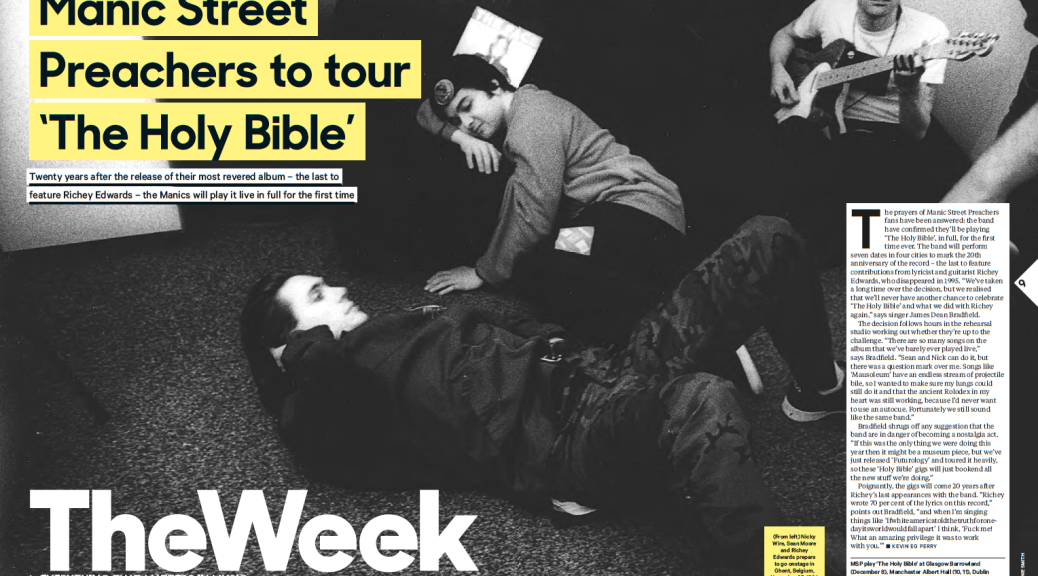
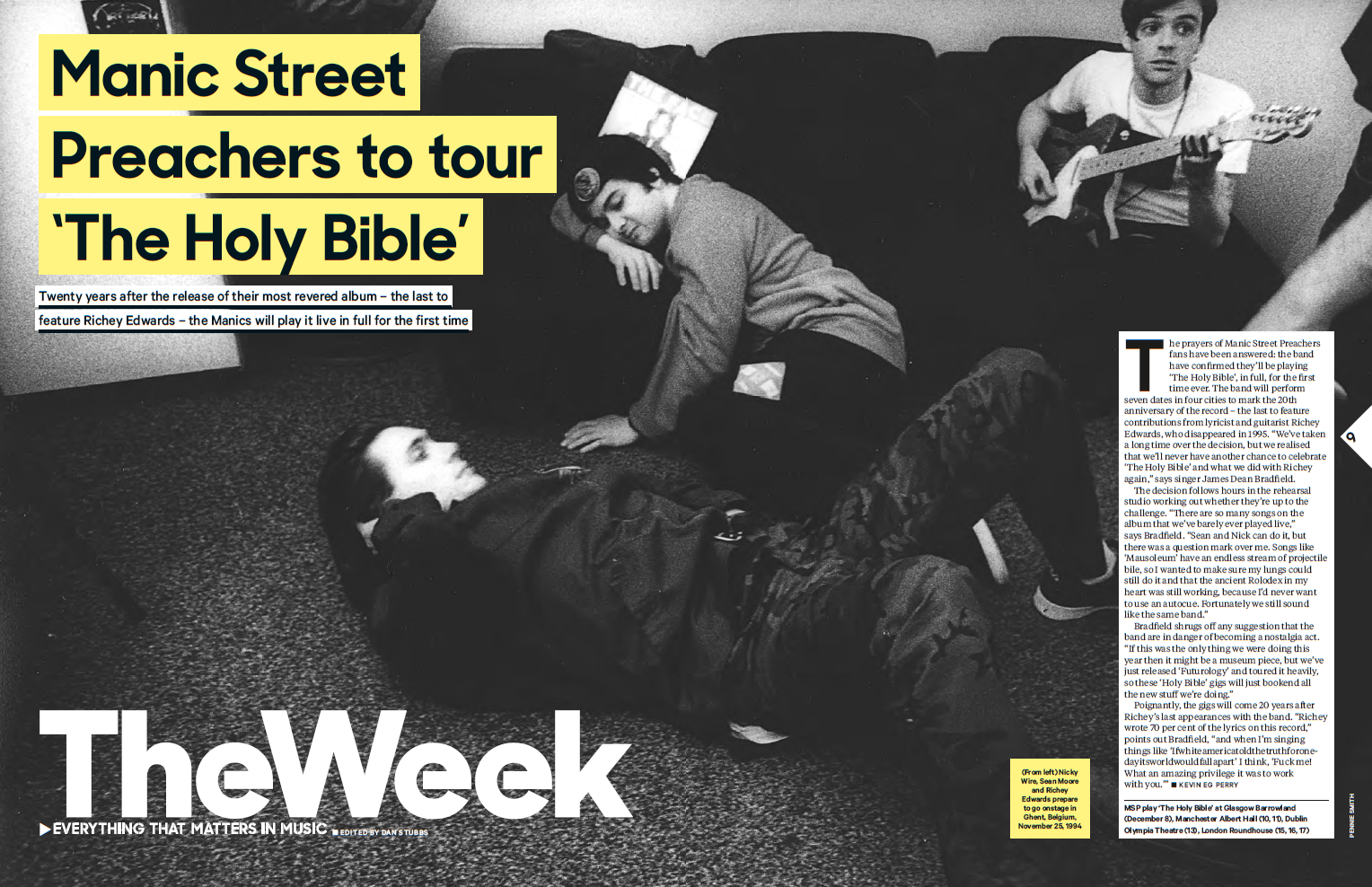 The prayers of Manic Street Preachers fans have been answered: the band have confirmed they’ll be playing ‘The Holy Bible’ in full for the first time ever. The band will perform seven dates in four cities to mark the 20th anniversary of the record – the last to feature contributions from lyricist and guitarist Richey Edwards, who disappeared in 1995. “We’ve taken a long time over the decision, but we realised that we’ll never have another chance to celebrate ‘The Holy Bible’ and what we did with Richey again,” says singer James Dean Bradfield.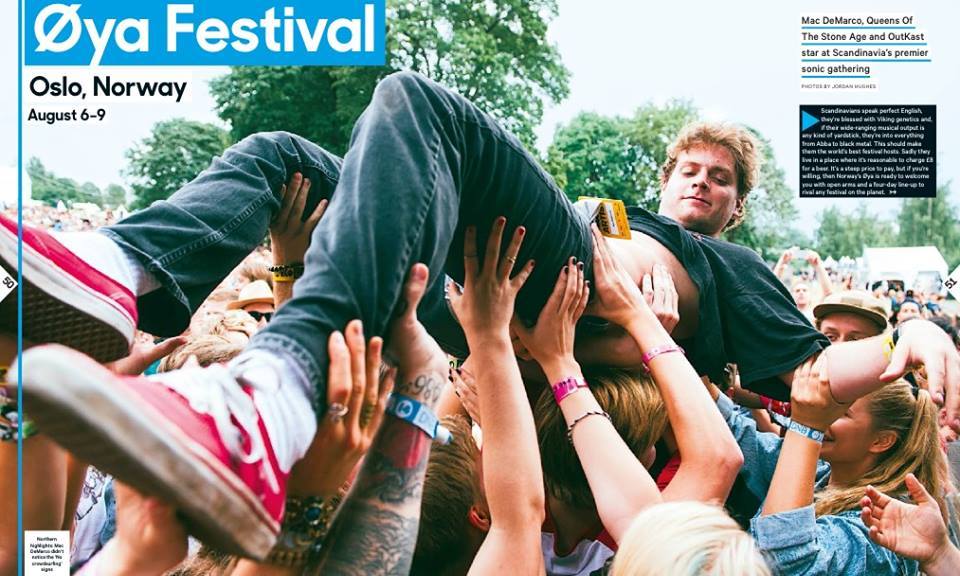

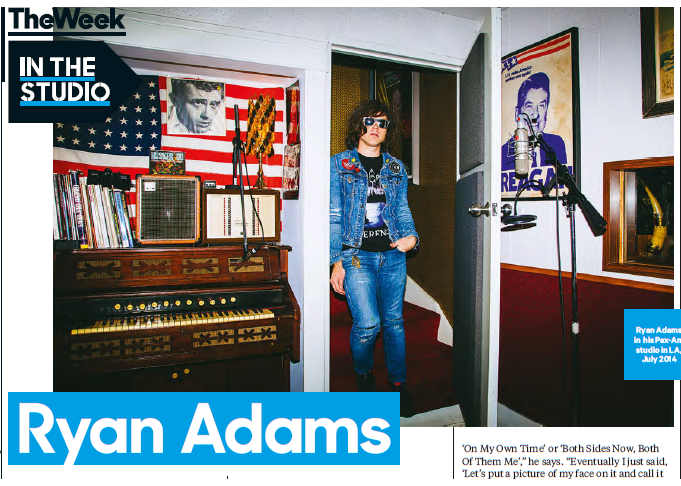


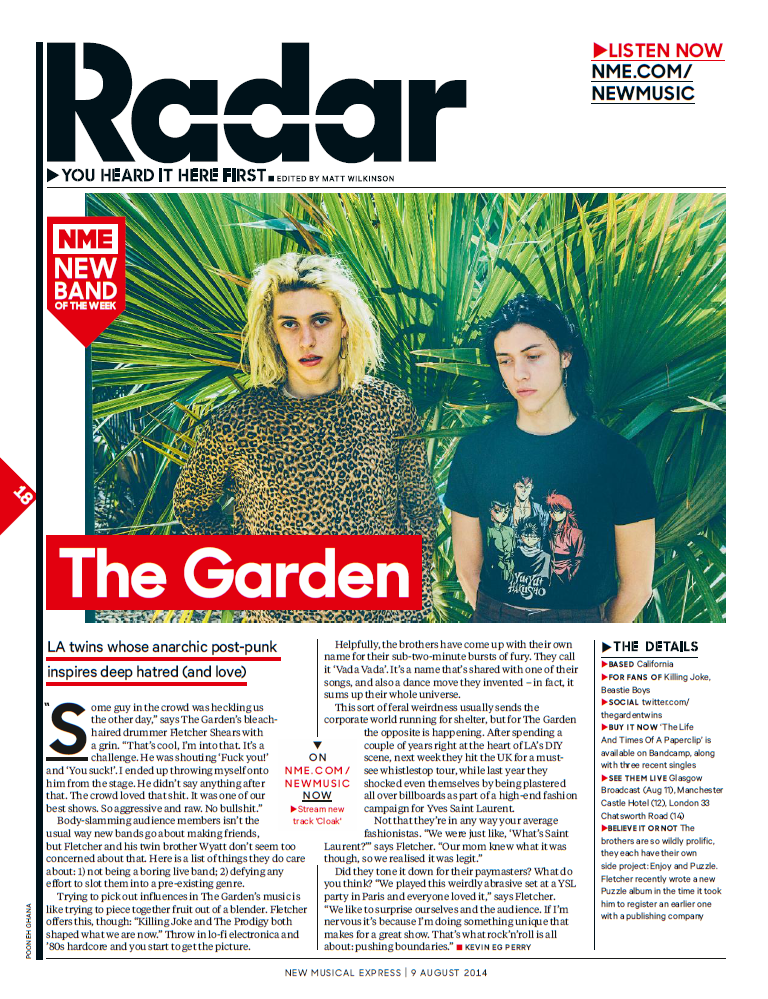


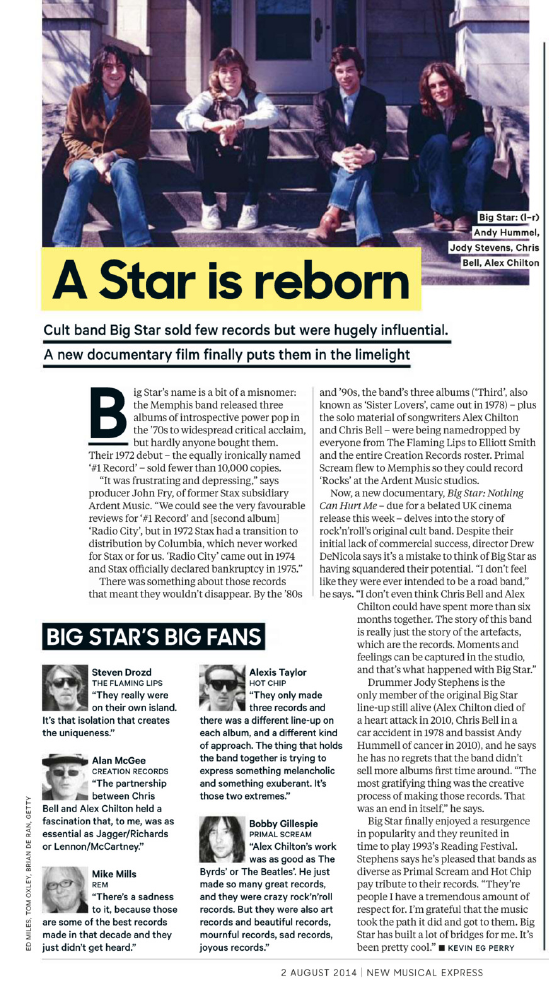


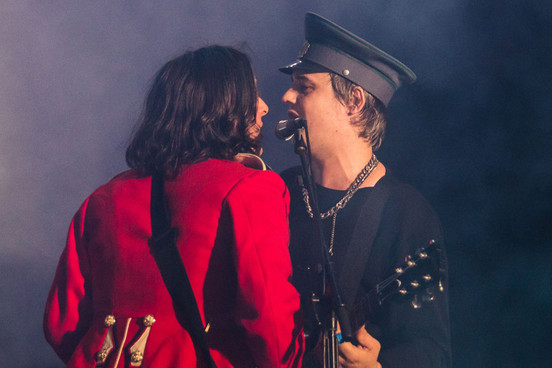
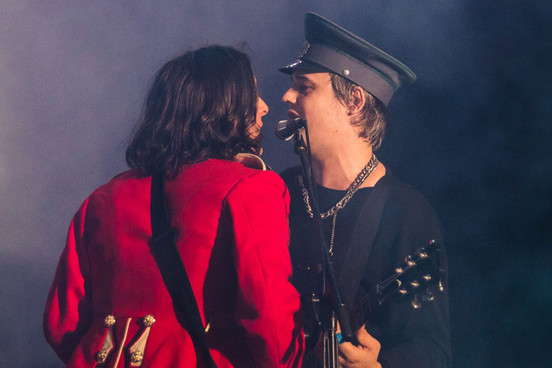


 There’s something about watching small planes land on one runway of Gdynia’s Babie Doły Military Airport while you’re watching The Black Keys headline a festival from the other which lets you know that Open’er is not like other festivals. Located on a sprawling airfield in northern Poland, things don’t tend to get started until gone 6pm – which is pretty civilised for those of us who are staying in the nearby beach resort town of Sopot. The festival site serves hundreds of gallons of Heineken each year but frowns on spirits, giving it a reputation as the sort of place serious music fans come to watch music, not just get out of their heads. That could be part of the reason they attract some of the world’s biggest bands and most exciting new artists here to entertain 60,000 Pole dancers over four days.
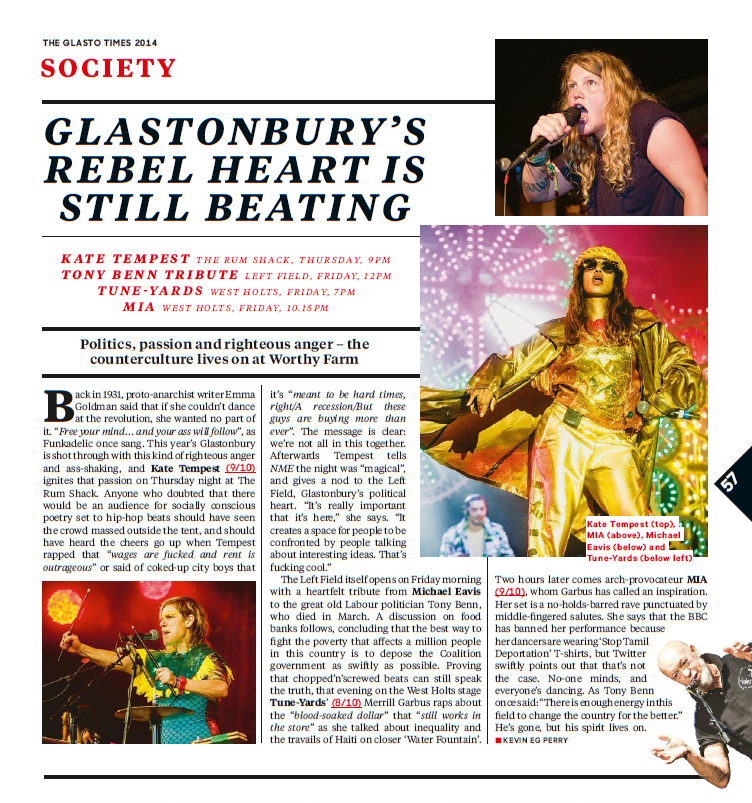


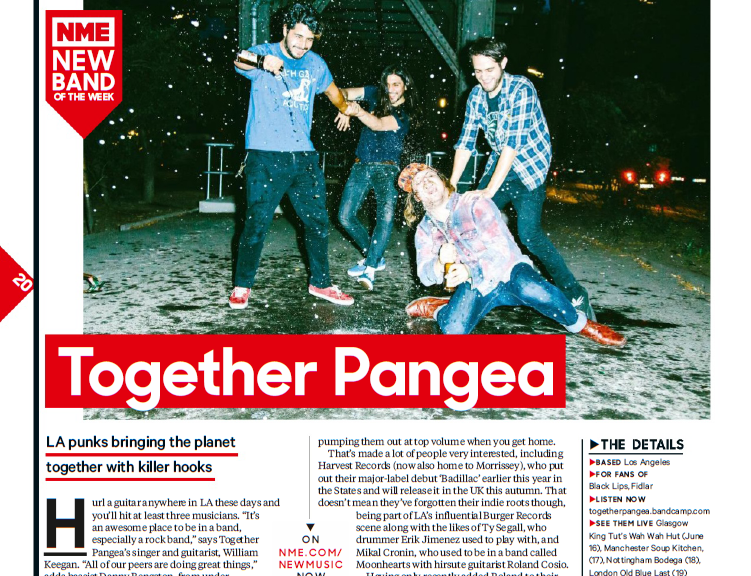

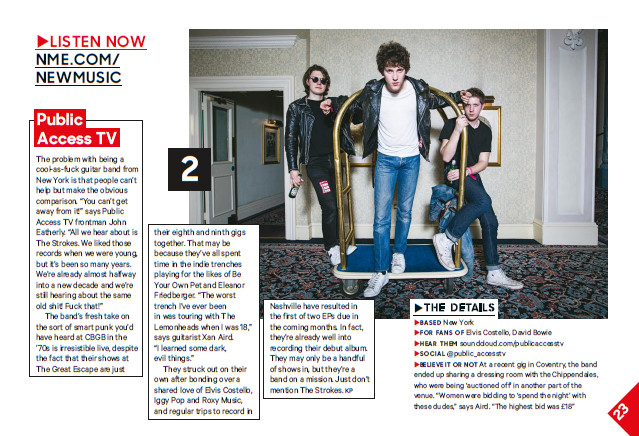


 When US singer-songwriter Elliott Smith died in 2003, aged just 34, he left behind him not only a beautiful and introspective body of work stretching over five albums and including the Oscar-nominated ‘Miss Misery’, but also a host of unreleased demos and song ideas.

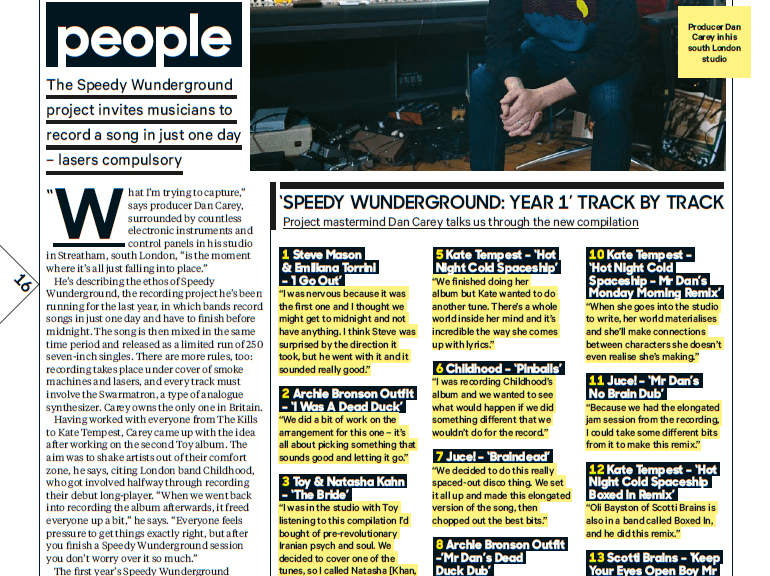
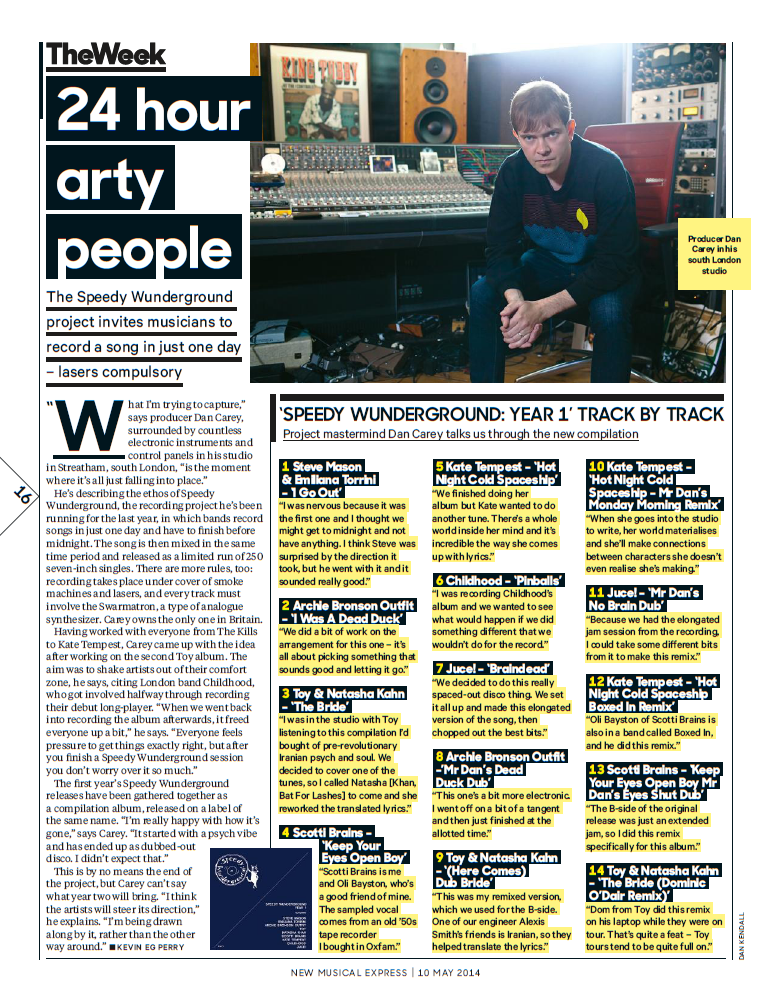
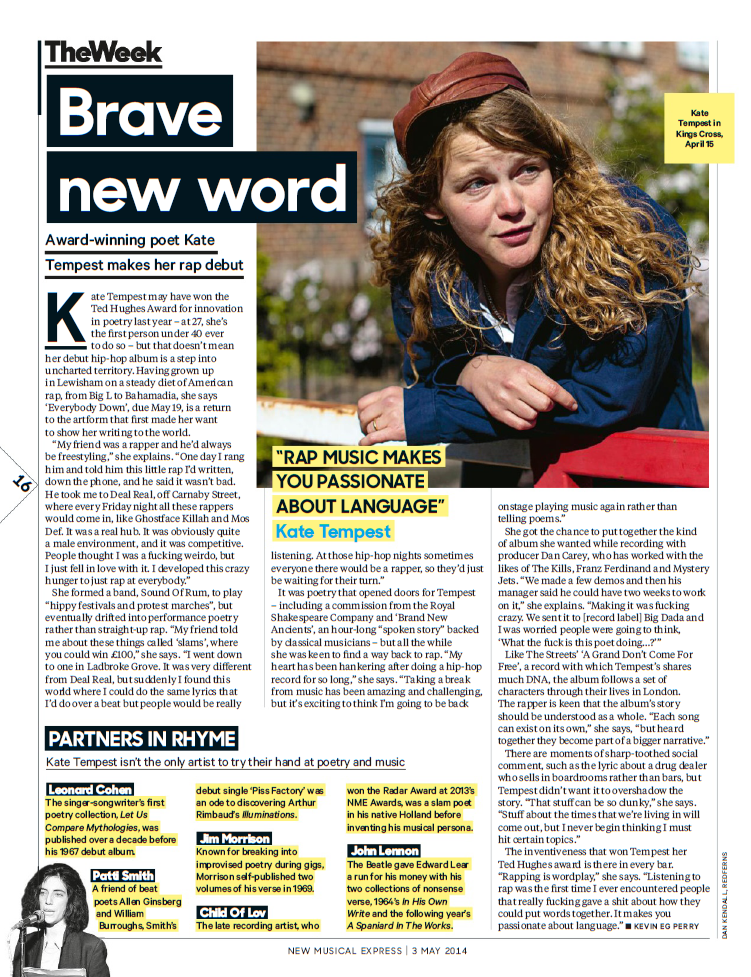
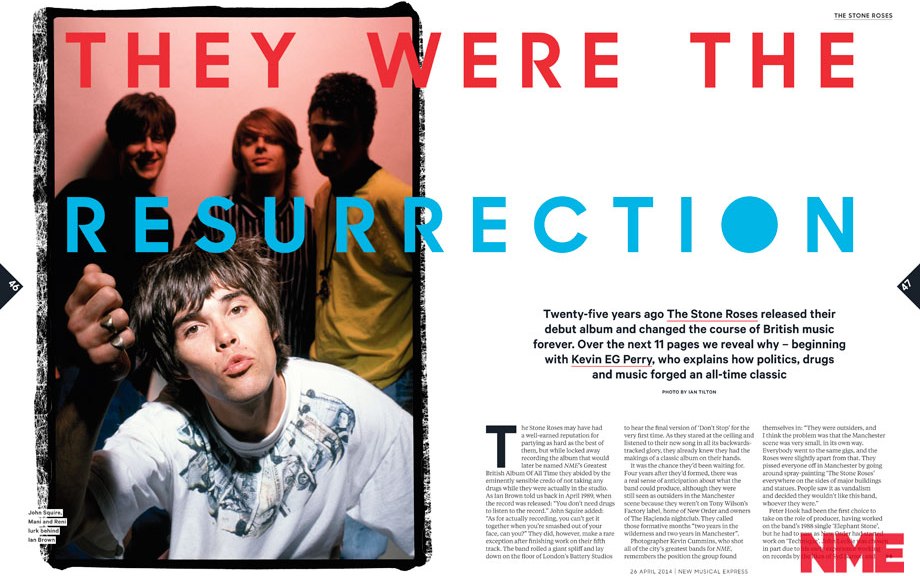
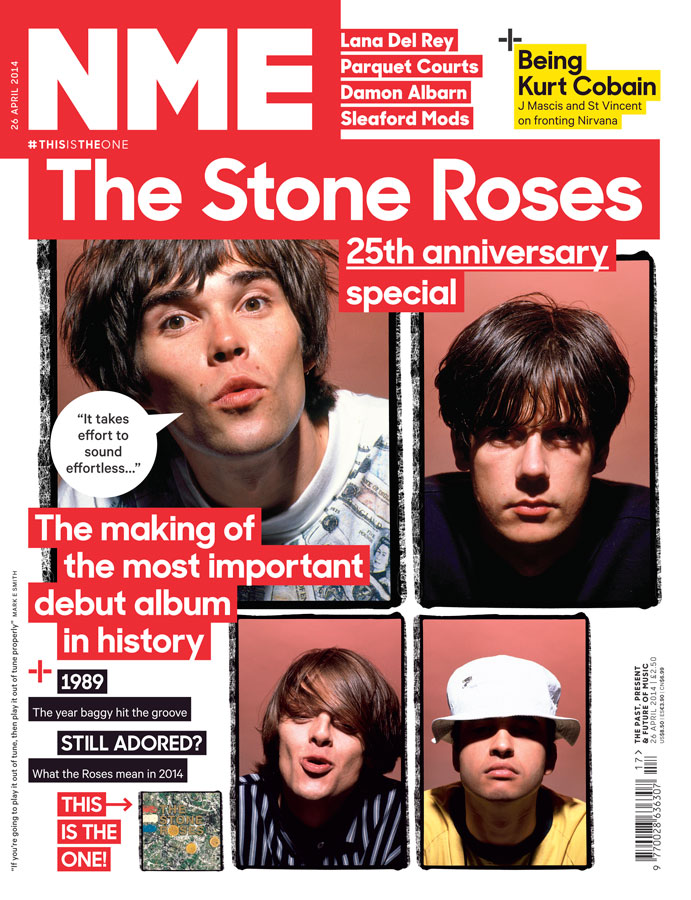
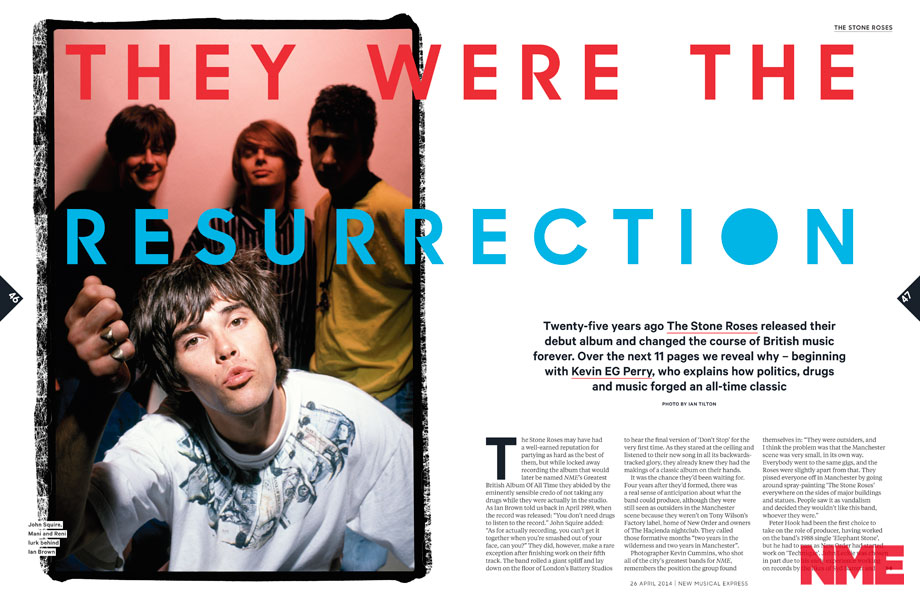


 Pussy Riot members Nadia Tolokonnikova and Maria Alyokhina have called for economic sanctions against Russia in the wake of their country’s military action in the Ukraine.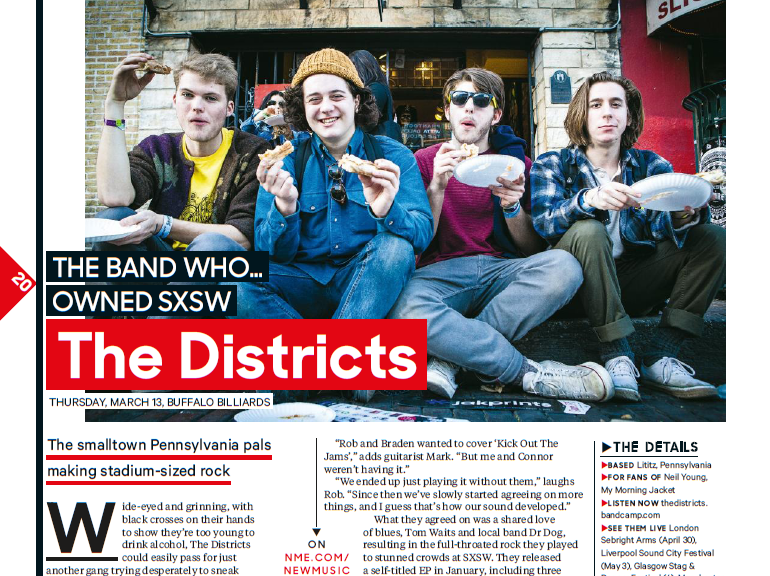
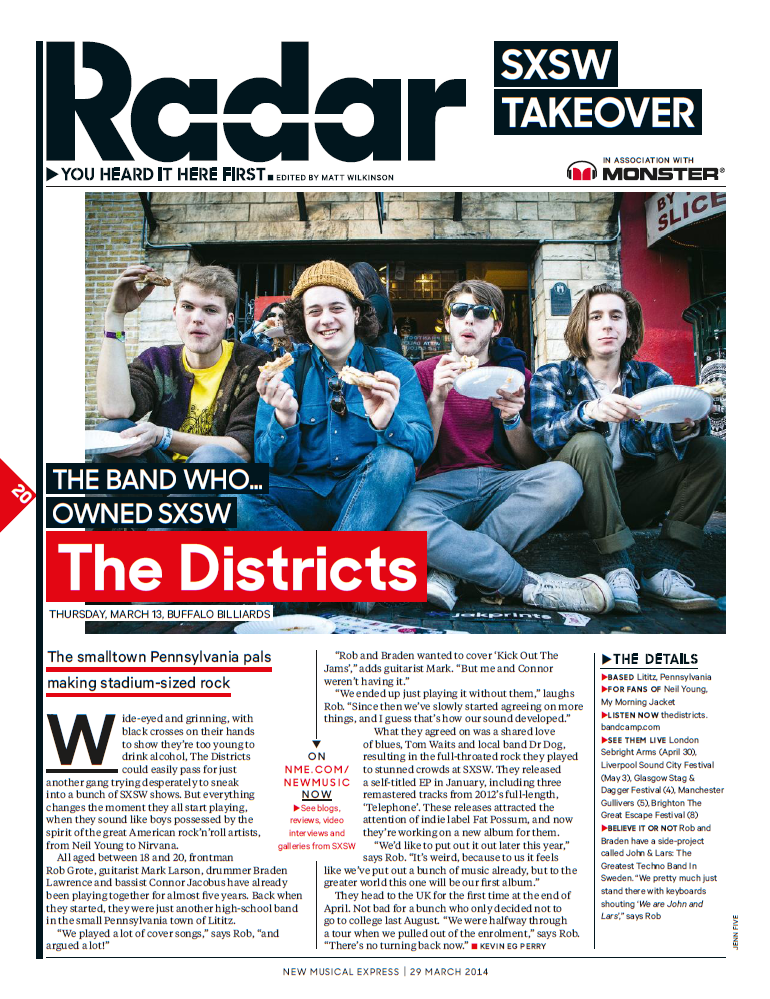




 My Wednesday at SXSW 2014 started with the surreal experience of wandering into a rented kitchen in the east of the city to find Kelis hard at work preparing jerk chicken and other tasty treats for her own food truck. Be assured that her ‘Feast’ line of sauces are no ordinary celebrity endorsement – Kelis is a trained saucier and the sort of boss that all her kitchen staff refer to her as ‘chef’. We’ll find out today whether her jerk chicken brings all the boys to the yard.
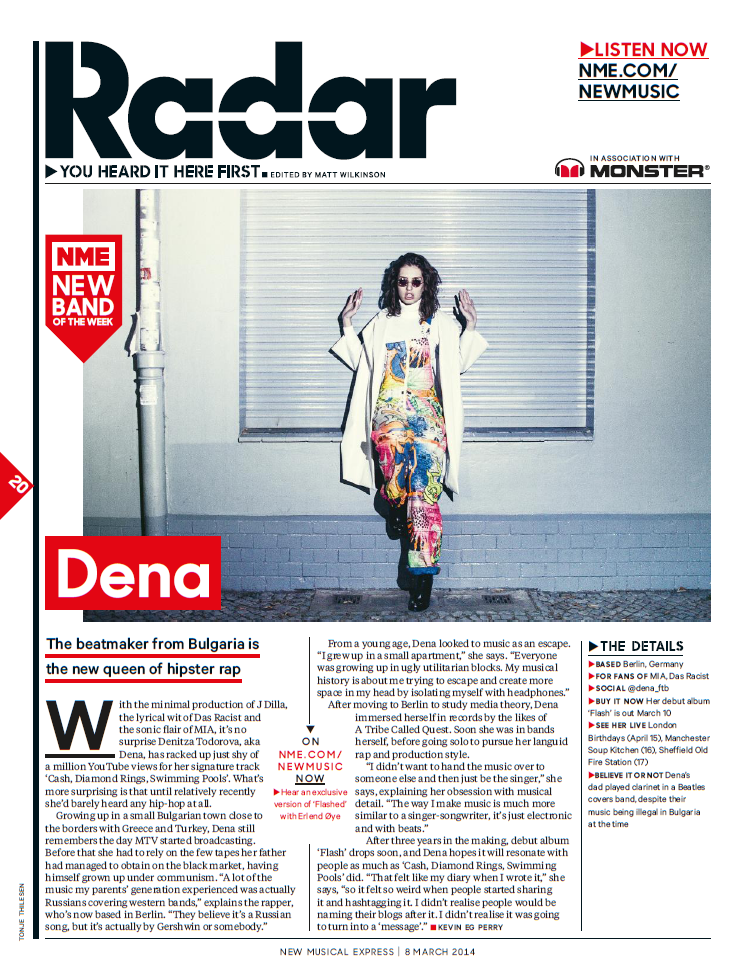
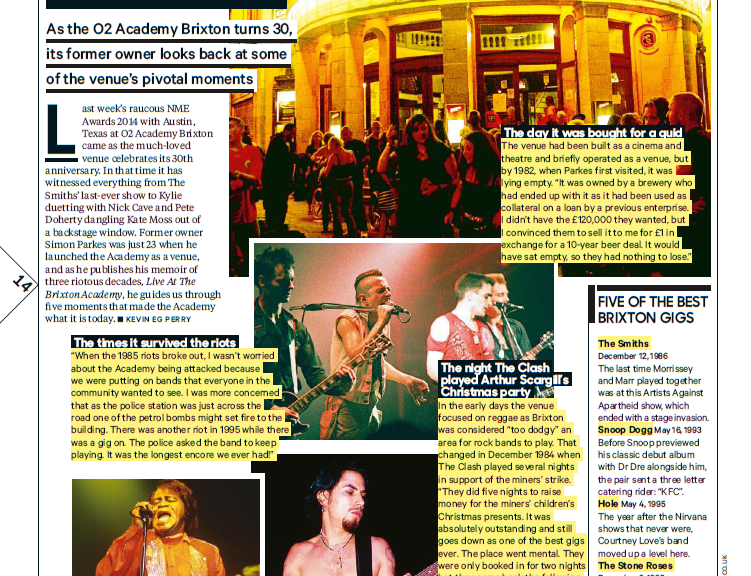

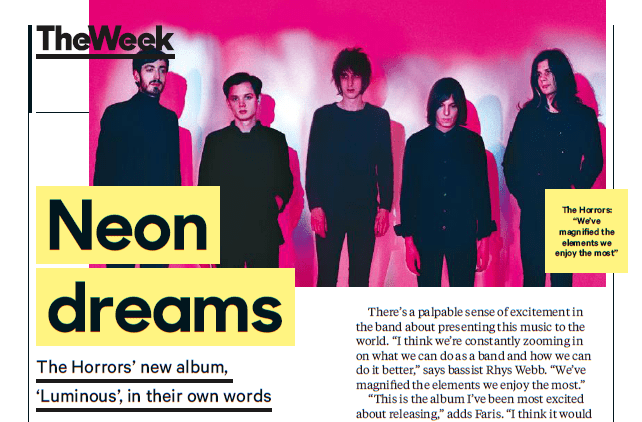
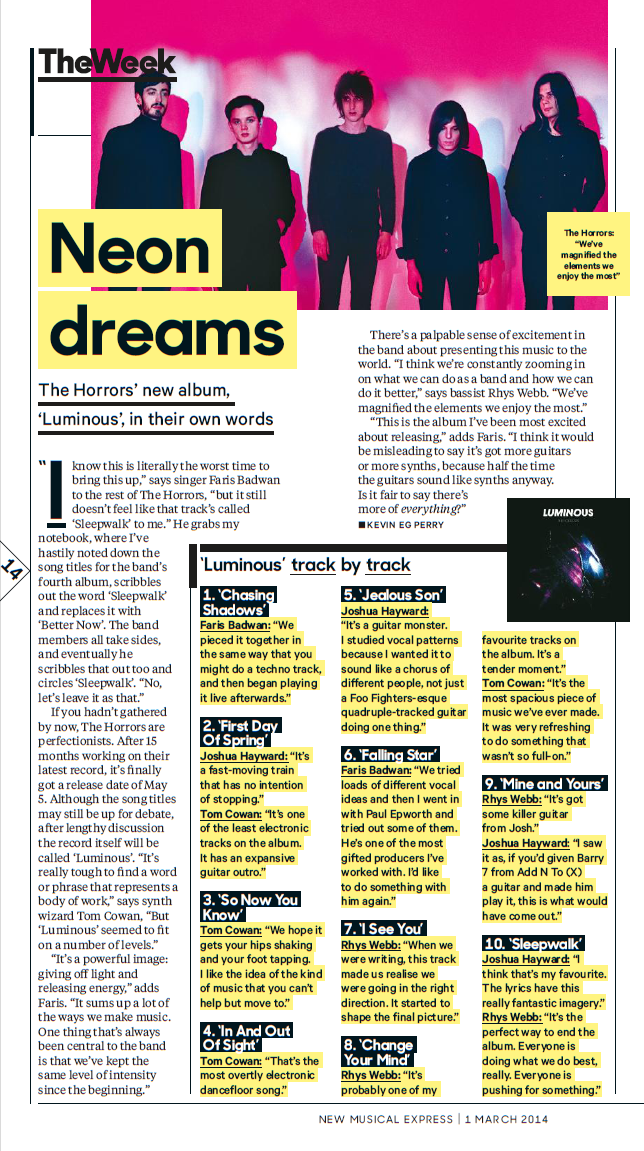
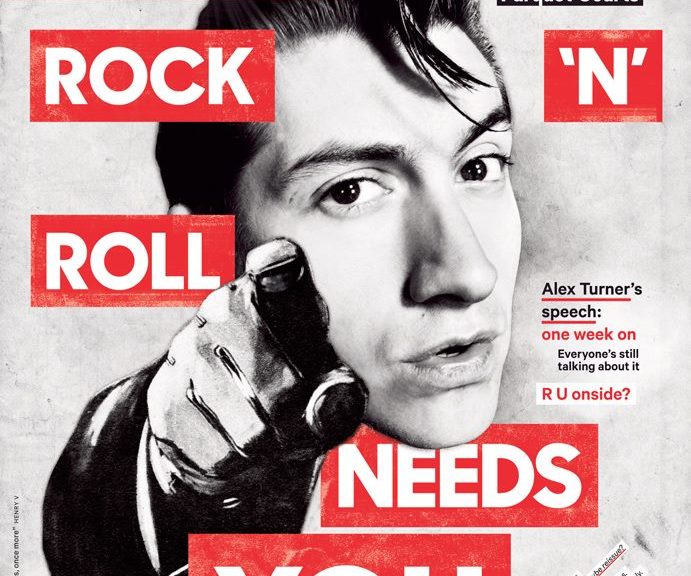
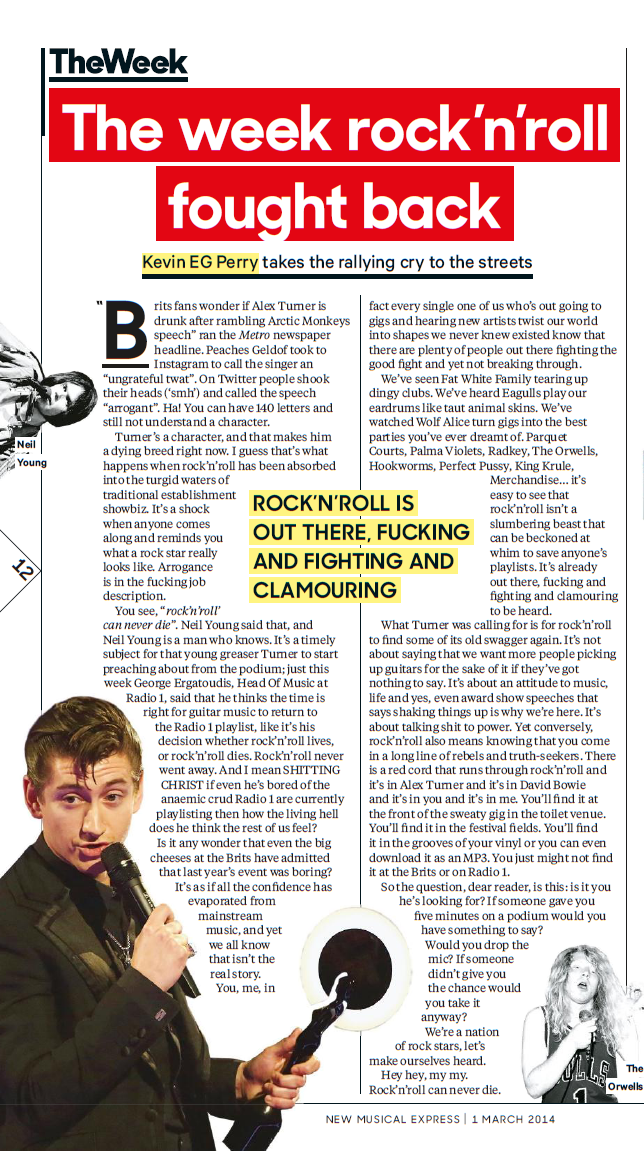
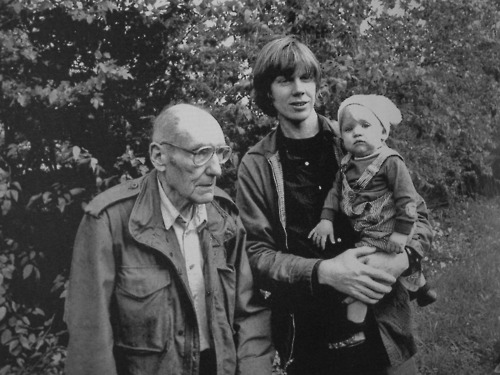
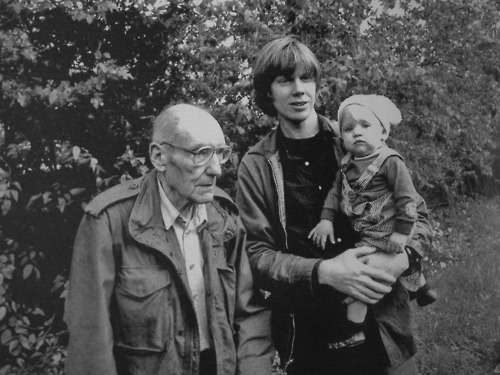
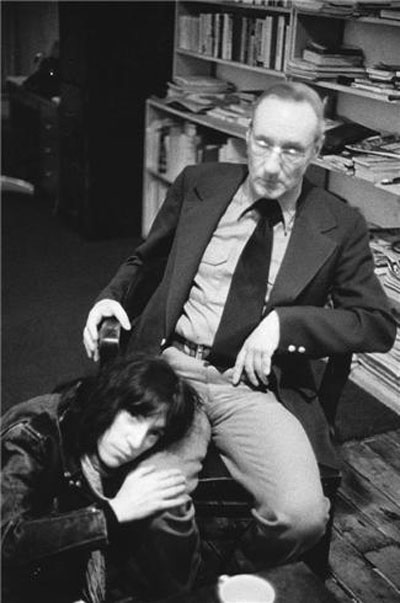
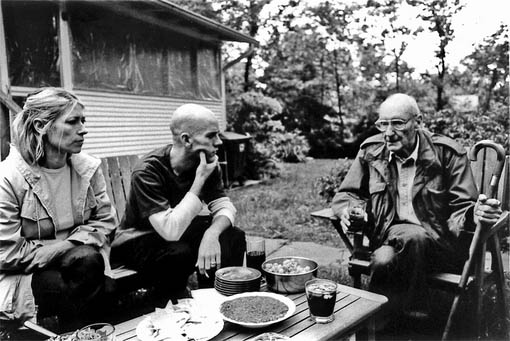
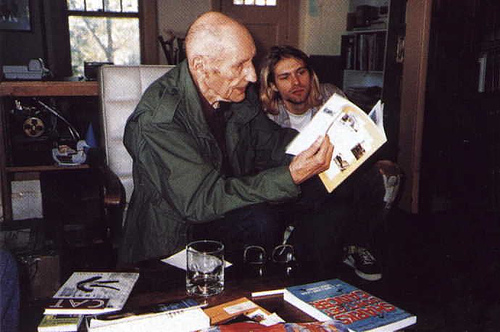
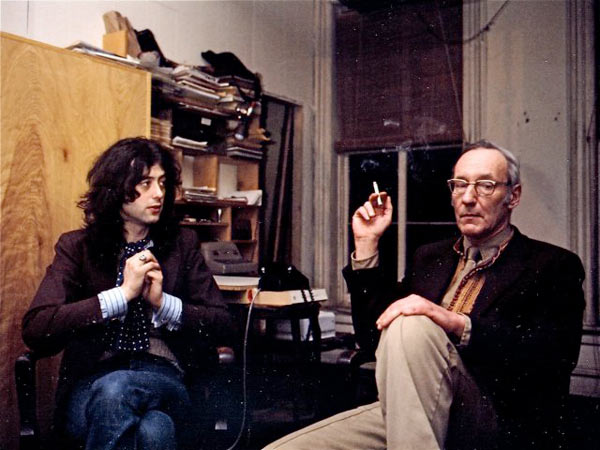

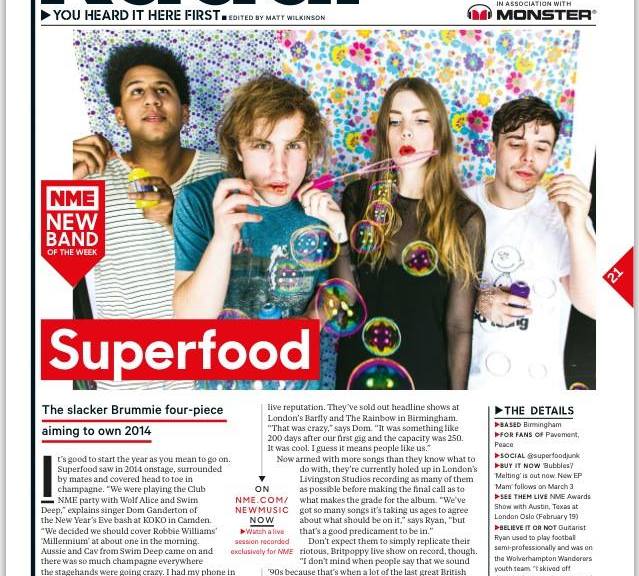

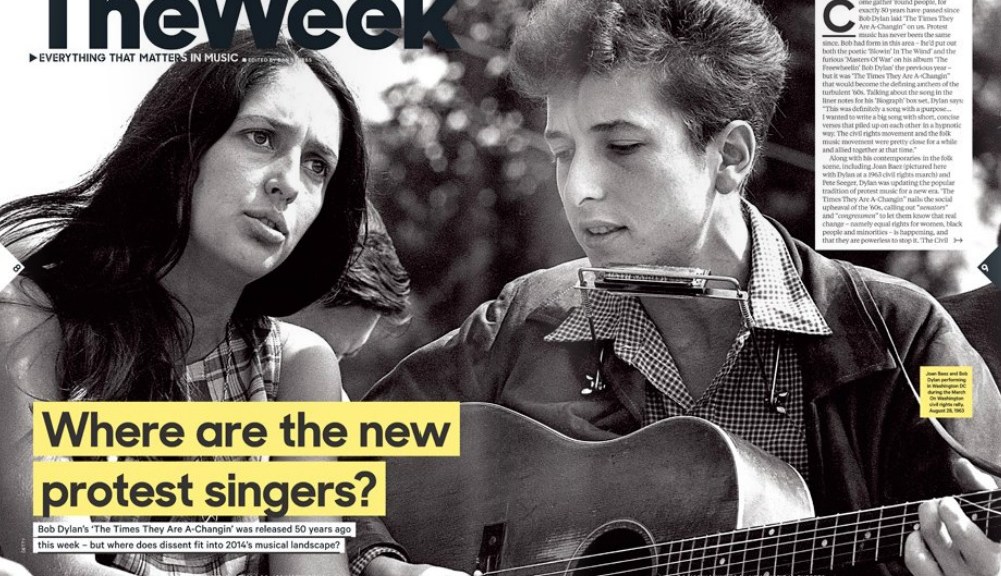


 NME Radar Artist Of The Week, 7 December 2013:





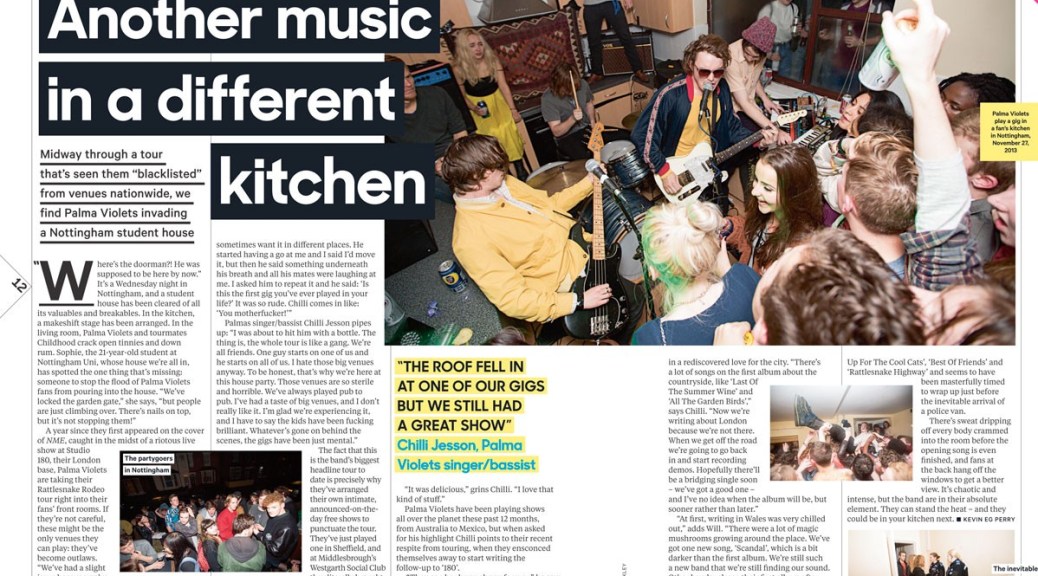


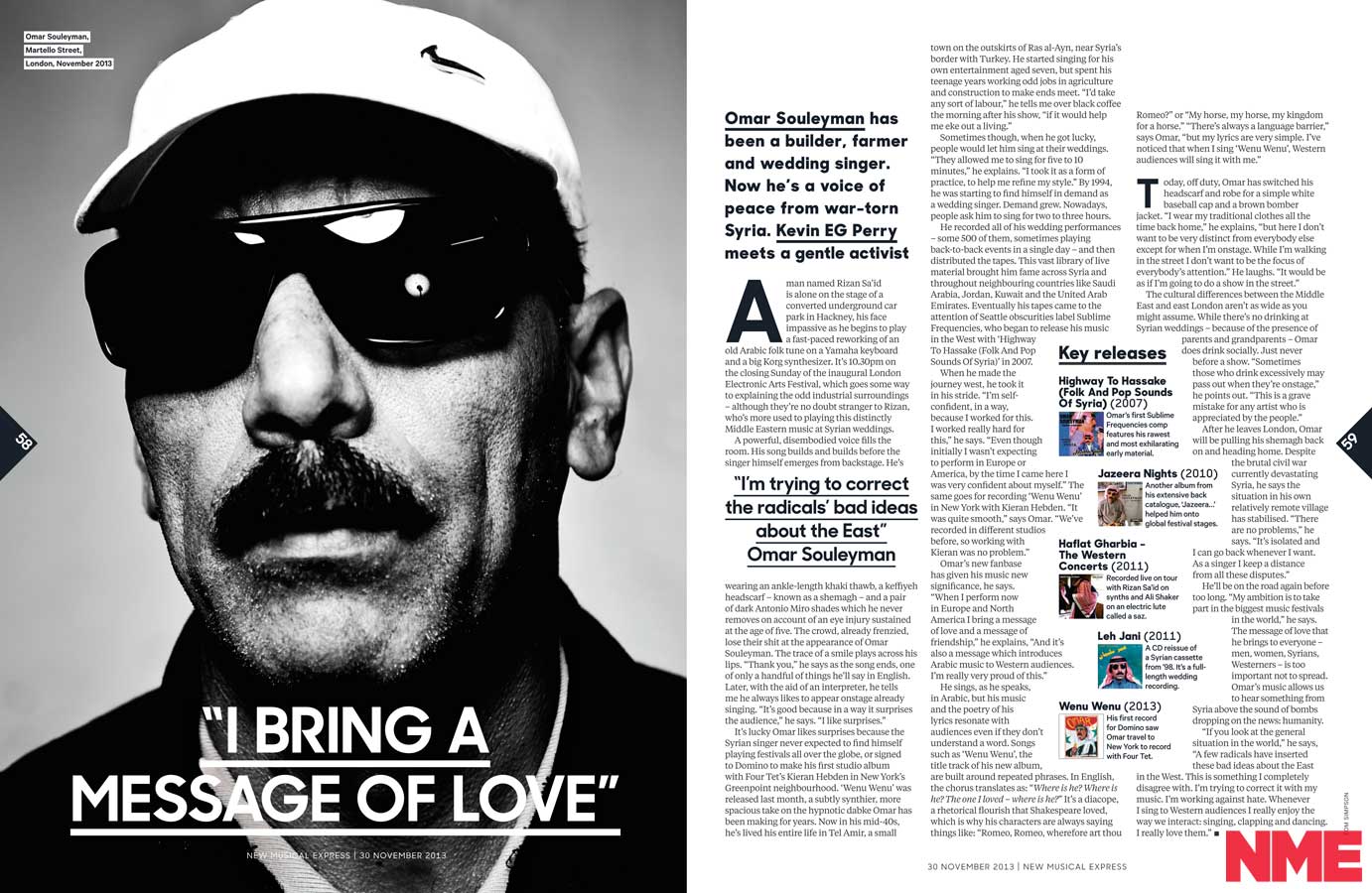
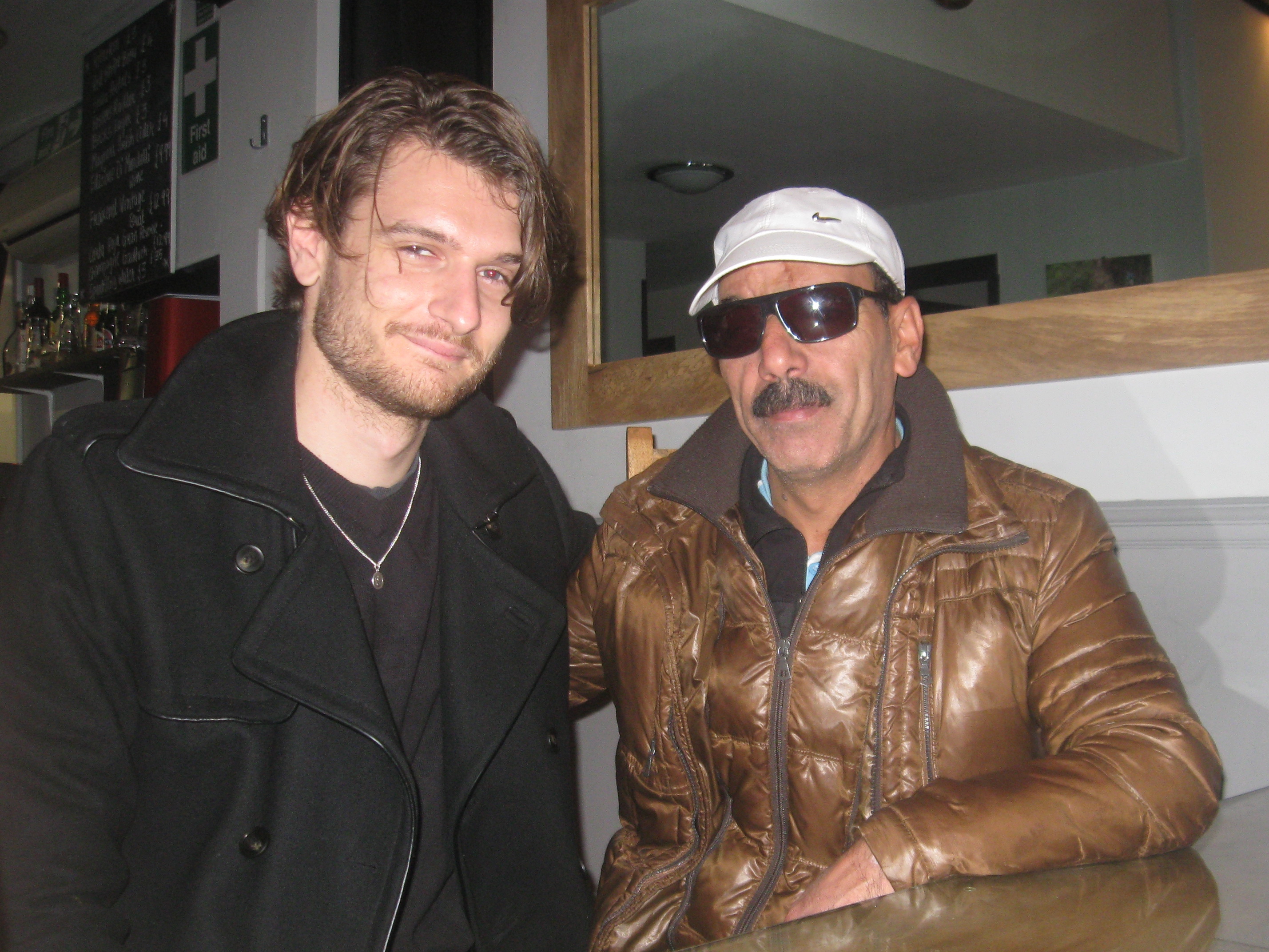


 Up on the roof of the studio after the photo shoot, the 38-year old – whose well-worn passport reads Mathangi Maya Arulpragasam – has changed into an oversized t-shirt bearing a kitsch Hindu print. She stands 5’5’’ in flat shoes but her presence is immediate. Maybe it’s that she’s talking sixteen-to-the-dozen. She riffs like Wikipedia incarnate, following ideas down rabbit holes like a kid with a short attention span who’s just discovered hyper-links. She laughs a lot. It’s a conspiratorial laugh, as if you’ve just caught her doing something she shouldn’t be and she’s trusting you not to call the police. Right now she’s curled over a laptop, pulling up Google Images to illustrate how she stumbled across the ideas that would inform ‘Matangi’, her fourth record. The one the record label didn’t get. The one they delayed and delayed because Maya hadn’t delivered what they expected.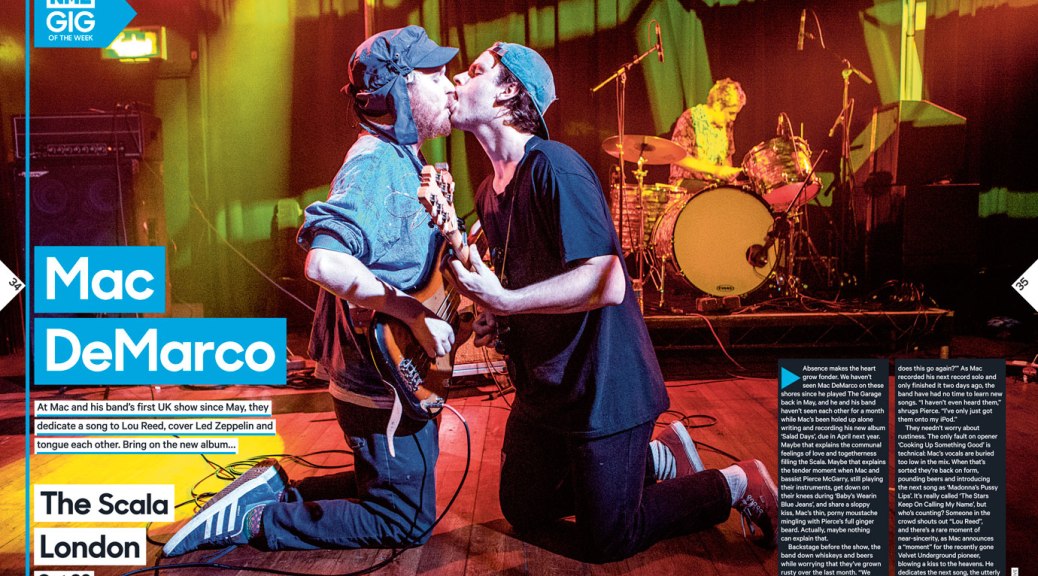


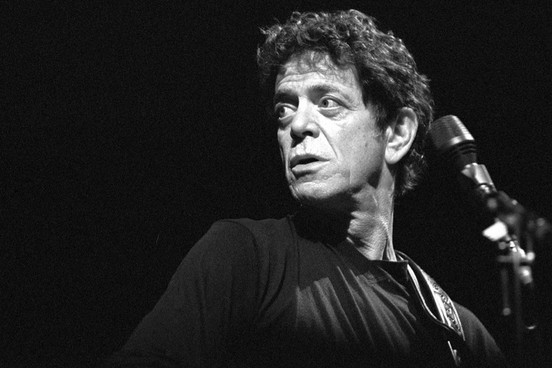
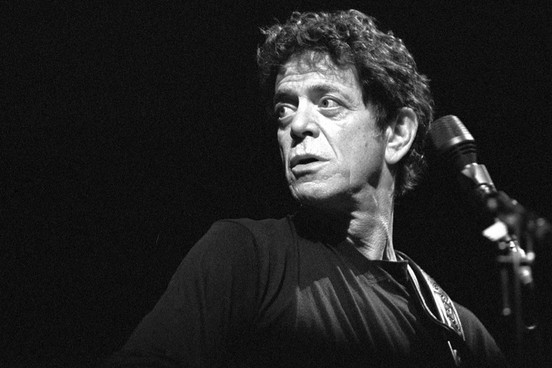
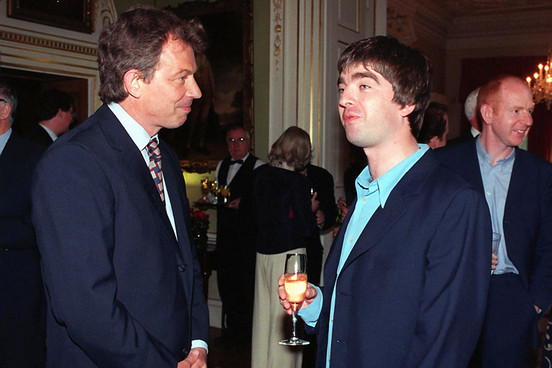
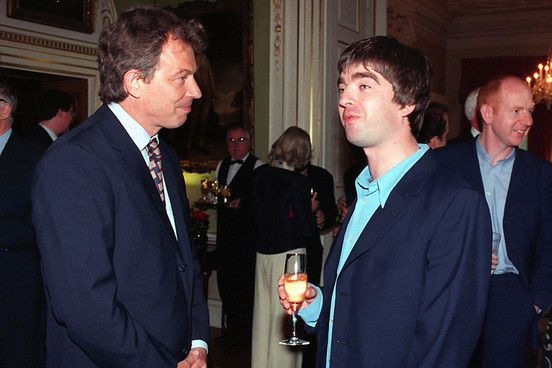
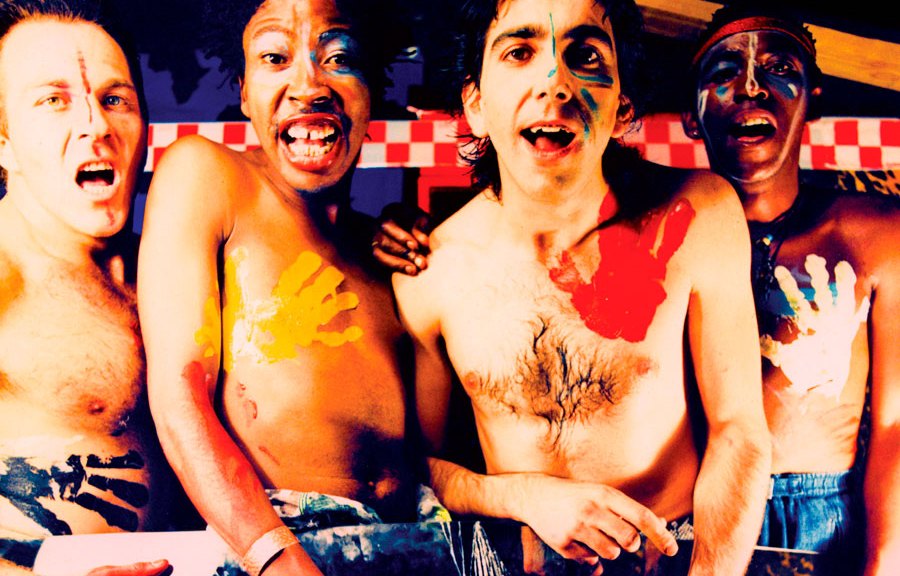


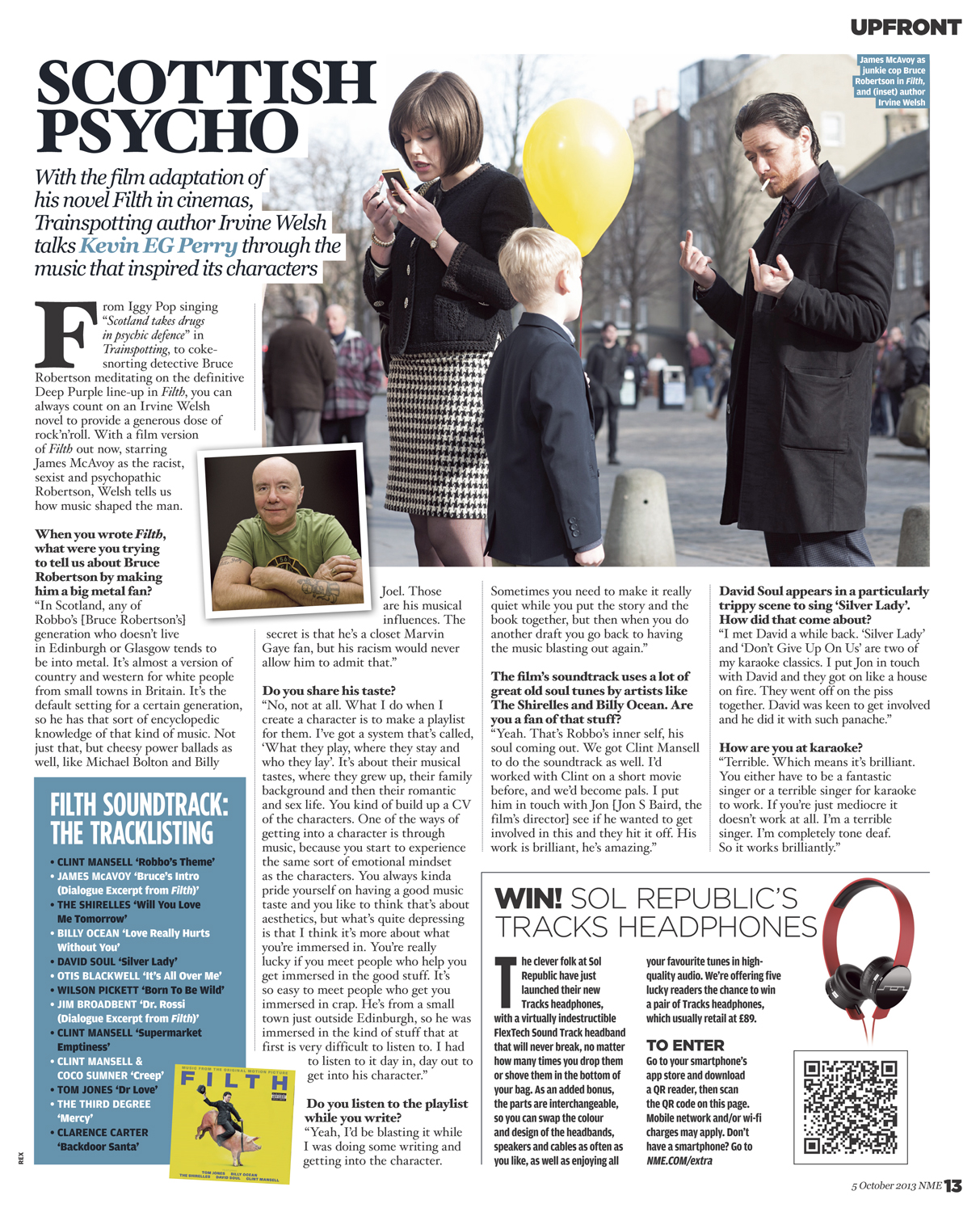


 Kevin EG Perry: Collected Works