How Me Too is changing British music

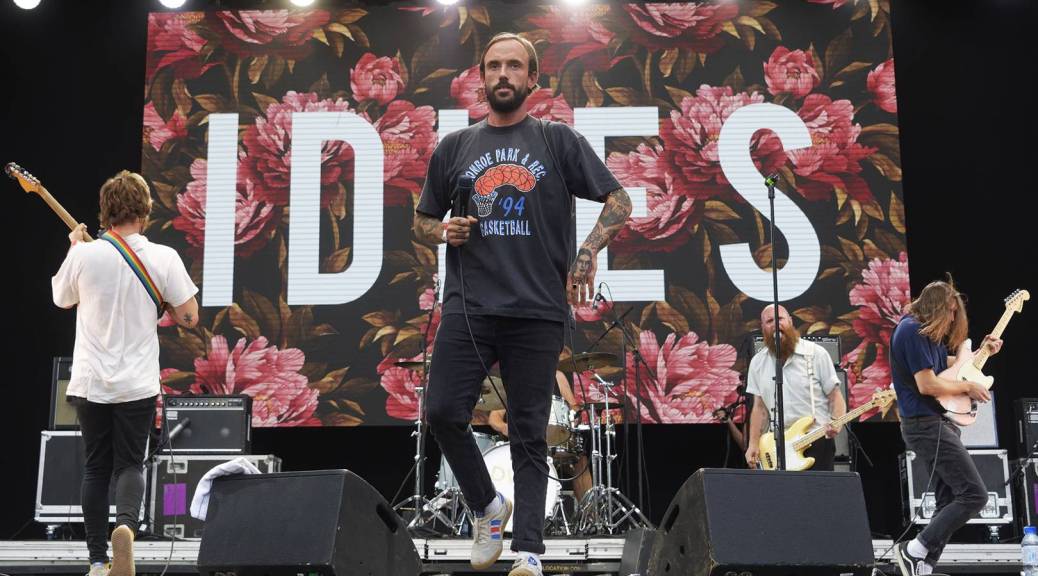
idles-gq-19feb19_shutterstock_b
In November last year, not long before he was announced as the winner of the 2019 Brits Critics’ Choice Award, 24-year-old singer-songwriter Sam Fender appeared on BBC Radio 5 to play a live version of his single “Dead Boys”. He explained on air that the song was inspired by the suicide of a close friend and by other young men in Fender’s hometown of North Shields who had also taken their own lives. For at least one listener, the song arrived just in time.

“Somebody emailed the studio to say that he had been on the way to kill himself,” Fender tells GQ. “He was listening to the radio. He said he stopped the car and just cried for ages, then he drove back and got help.”

Continue reading at British GQ.

Borat director Larry Charles: why I asked terrorists to tell me a joke

larry-charles-guardian-weekly

There are dark clouds over the beaches of Malibu, where a storm is raging. It all seems ridiculously out of place – and so does Larry Charles. The director of Curb Your Enthusiasm and Borat may live in the rarefied hills nearby, but as he emerges from the rain in his camouflage jacket, grey hoodie and long white beard, you can’t help thinking he’s exactly the sort of person who would trouble the Neighbourhood Watch.

His latest project, he tells me, was inspired by the feelings of restlessness he experiences living here in Hollywood’s gilded cage. “I didn’t want to wind up being complacent, safe and secure,” says Charles. “That isn’t why I got into comedy. I wanted to seek out what’s funny in different environments. I wanted to ask a member of Isis what they laugh about.”

Continue reading at The Guardian.

Trump got some things right in his State of the Union address, thanks to Kim Kardashian West

trump-sotuDuring a State of the Union in which Donald Trump at one point seemed to take personal credit for inspiring the record number of women now in Congress, most of whom ran in direct opposition to him, there was one woman whose tireless campaigning and pursuit of social justice played a pivotal role yet went unmentioned. When this speech is written up in the history books, they shouldn’t forget the name Kim Kardashian West.

In May last year, Kardashian met with Trump and Jared Kushner in the Oval Office to lobby generally for prison reform, and specifically to call for the release of Alice Marie Johnson, a 63-year-old woman who was given a life sentence in 1996 for her involvement in a cocaine trafficking organisation in Memphis.

Trump agreed to commute Johnson’s sentence, and today he invited her as one of his many stunt guests. Seated next to the looming Kushner, who always looks as if he’s caught in the midst of A Series of Unfortunate Events, Johnson wiped away tears as Trump said: “When I saw Alice’s beautiful family greet her at the prison gates, hugging and kissing and crying and laughing, I knew I did something right. Alice is with us tonight, and she is a terrific woman.”

Continue reading at The Independent.

Is time running out for R Kelly?

r-kelly-gqLizzette Martinez was a 17-year-old high school student hanging out at the mall in Miami when she met R Kelly by chance in 1995. Despite the incongruous setting she recognised him immediately – the previous year he’d had his first No1 hit with “Bump N’ Grind” – and after the briefest of conversations, she says one of his bodyguards passed her Kelly’s phone number. Martinez was an aspiring R&B singer and hoped this could be her big break. She rang Kelly and agreed to join him for dinner.

“When I met him I felt like I was hanging out with someone who was in high school,” Martinez tells GQ. “He’s a jokester. He’s very likeable when you don’t know his dark side. He uses his power and who he is to lure little girls in.”

Despite Martinez telling the then 28-year-old Kelly that she was 17, below the age of consent in Florida, she claims he took her virginity soon afterwards. She describes how, over the next four years, she became trapped in an increasingly manipulative, controlling and abusive relationship with him, during which she says he dictated what she wore and when she ate, repeatedly physically assaulted her and forced her to perform sex acts in front of his friends. “It doesn’t start that he’s going to control you completely, but that’s what it goes into,” she says. “I was expected to just sit in a dark room and wait for him.”

Continue reading at British GQ.

City of Rhythm

dakar-cityofrhythm

Inside a dingy underground corridor within the fortifications of the old slave-trading port of Gorée Island the only noise is a rusty chain rattling against a steel door. In the dim light, Fallou Kandji works a key into a heavy padlock and struggles with it until he hears a dull click. At the sound the young man, his short dreads hidden underneath a red woolen beret, flashes a magician’s smile before unlooping the chain and pushing the creaking door ajar. Heat rushes out like he’s just opened an oven. Inside is a small, low-ceilinged room with yellow paint flaking off the walls. Arranged around as if it were a stage are a full drumkit, a keyboard, stacks of speakers and a pair of kora – the West African string instruments which paved the way for acoustic guitars and the Delta blues. One wall is plastered with old gig posters, peeling in the sticky damp. This secret subterranean hideaway is the studio and rehearsal space of Civil Society, a reggae band who have brought music to a place that once reverberated only with the echoes of its horrifying past.

Gorée Island, sitting a little over a mile out from Dakar’s sheltered harbour, was Senegal’s most notorious slave port in the late 1700s. Now visitors come to reflect on the past at the House of Slaves, a museum and memorial containing the ‘Door of No Return’, an infamous passageway through which it is estimated many thousands of enslaved people were transported to the Americas. When President Obama visited the island in 2013 he took a moment to stand in the doorway and gaze out to sea. Later, he would say that the visit helped him ‘fully appreciate the magnitude of the slave trade’.

These days the island has been reclaimed as a place of life and hope. Many of those who live here are artists. As well as playing guitar with Civil Society, Fallou is also a painter. As he leads me along nameless alleys to the yard where he keeps his battered acoustic and displays his work we pass street vendors selling baguettes and kids playing football. We wave away the attention of his fellow artists loudly hawking their paintings, jewellery and ornate sculptures. They don’t seem too discouraged. They’ll get us on the way back.

‘Here on Gorée Island, people live through culture,’ explains Fallou as we walk. ‘Once people were brought here by slavery. Now people from many different cultures pass through. People were deported from here to America, Haiti, Cuba, Brazil… anywhere. When they come here now, I see only humans. When I look at you, I see myself. That’s what I try to show in my art, and in my music.’

We pass by the House of Slaves, and stop for a moment in front of a statue depicting a woman with her arms around a man as he breaks his chains and raises his fists in triumph. The newly freed pair are both standing on the West African drum known as a djembe.

‘This is the symbol,’ points out Fallou. ‘They are using their power to get their liberty. It represents what people believe in here on Gorée Island: that melody and harmony will pass around the world through communication.’

The djembe has been at the heart of West African music for many centuries. To learn more about the significance of this special drum, I take a ferry back to the mainland to visit the master drummaker and teacher Ibou Sene. He gives lessons on how to build and play the djembe at his small workshop, tucked away in the gardens behind the Cultural Centre in Derkle, near the centre of Dakar. As my taxi moves slowly through the gridlocked traffic the air is thick with fine Sahara dust. It takes my eyes a moment to adjust to the yellowy light, through which I see herds of white sheep gathered next to the highway. Their bleating mixes with engine noises and honking horns to create the city’s cacophony. The car in front has the name ‘Youssou N’Dour’ – one of Senegal’s most famous singers – painted across its spoiler. By the side of the road, three small boys sit back to back in a circle drumming with their hands on the bottoms of upturned petrol canisters.

‘The drum is very important here,’ explains Ibou when I arrive. We sit on plastic garden chairs outside his workshop, under the shade of a baobab tree, and he patiently shows me the subtle changes in hand shape and positioning which produce traditional djembe drum patterns. ‘These were the cell phones of my parents’ generation,’ he says. ‘If you heard a certain rhythm being played by people walking around the neighbourhood then you would know right away what had happened.’

These rhythms, which travelled across the sea from Senegal onboard slave ships, would go on to shape whole musical genres the world over. One man who understands how that happened better than most is Dread Amala, a reggae DJ and musical historian who for over 30 years has run Dakar’s best record stall, the Bufalo Soldier Music Shop. A tiny shack on a particularly dusty corner next to a petrol station at the Jet d’eau roundabout, from the outside it doesn’t look like the most promising place to find an exhaustive collection of world music. However, when I step inside I find the tiny space is piled high with vinyl records containing music from almost every country in Africa, as well as French and Cuban records, jazz, blues, rock and lots and lots of reggae. Reggae is Dread Amala’s passion, so it’s fitting that in the taxi on my way to meet him the radio is playing the South African artist Lucky Dube’s song ‘Serious Reggae Business’. I nod my head as he sings: ‘Some say it came from Jamaica / Some say it came from Africa…’.

Touching a needle down onto a reggae record from his own collection, Dread Amala sets about explaining how the music he loves originated in this part of the world. ‘In slave culture you had drumming from Senegal, Mali and Guinea,’ he says. ‘That’s why in reggae music, drumming is also very important. The origin of all international music: the blues, jazz, soul, reggae is Africa. It all came from here.’

It would be easy to lose hours rummaging through Dread Amala’s crates, but to really experience and understand the power of Senegalese music I’m going to have to see it live for myself. With this in mind I head downtown to Play Club, in the basement of the Hotel Al Afifa, a slightly seedy looking joint that appears largely unchanged since the swinging 70s. There are circular mirrors on the walls behind the bar and a well-dressed bartender shaking a daquiri in time to the music. Tonight’s main attraction, Woz Kaly, doesn’t come on until just after 1am. The set starts slow – showcasing the power of his voice singing in his native Wolof – before building to a hip-shaking intensity which has the crowded room dancing and singing along. It’s not quite like anything I’ve heard anywhere else in the world.

As it turns out, Dakar is running a surplus of spectacular live performers. After seeing Woz Kaly in action I sit down with local pop sensation Adiouza. Having been lucky enough to catch her own live show as well I know it’s filled with enough crowd-pleasing glamour and effortless dance moves to make her Senegal’s answer to Beyoncé. She modestly laughs off the comparison. ‘Beyoncé is a great singer,’ she says. ‘I listen to her songs, and other American singers as well, but my real inspiration is traditional African roots musicians and singers. In my music you can hear traditional and modern music coming together.’

Having released her first single in 2008, Adiouza has had a front row seat to see how in the last decade Dakar’s music scene has broaded its horizons beyond just the local style of pop, known as mbalax. ‘Dakar is the centre of Senegalese music and so there are a lot of different artists in different styles here,’ she says. ‘You can find artists who do reggae, hip-hop and Cuban music, but me I mix every type of music to find my own style.’

While Adiouza is happily mainstream, she keeps her ear close to the ground and is excited by the new sounds she’s heard around the city. ‘Right now mbalax is the most popular style in Senegal, but the young artists are inspired to do something different,’ she says. ‘There is a new style of music, Wolof beat, which is inspired by Nigerian music. Young people are trying to make modern-sounding music that they can export.’

To get a taste of what this new generation is listening to I get a taxi across town to Espace Vema, a nightclub beloved of Dakar’s cosmopolitan youth. It’s located in a once neglected industrial building next to the docks, and after a couple of strong drinks you could easily believe that you’d suddenly been beamed up and teleported to Brooklyn or one of the trendier parts of east London. Entering past a gaggle of smokers and a pair of burly bouncers, inside the white-walled warehouse space has exposed ducts overhead and sticky floors underfoot.

I’ve been invited here by Jahseen, one of the city’s most forward-thinking young artists. After growing up in Dakar she spent time living in Europe but was soon drawn home by the vibrancy that she could never quite find anywhere else. ‘This city is like the Silicon Valley of Africa,’ she says. ‘If you look around you’ll see that everybody is here: French, American, Chinese, Sri Lankan. I think you can feel that everybody is at ease here. Everybody works and everything works, you just have to wake up and do it’

Sure enough tonight the dancefloor is filled with people from every corner of the earth drinking, dancing and laughing together as the DJs seamlessly blend African and Western pop. It is late by the time we stumble out into the night, and the sound of the day’s relentless traffic has finally died away. All that’s left is the heartbeat of the city itself. It sounds like a drum.

Published in Lonely Planet Traveller, March 2019.

A Death at Uni: The British Student Who Died During an Initiation Ritual

1544701241421-ed-farmer

It was 5:45 in the early hours of Tuesday the 13th of December, 2016 when Newcastle University student Ed Farmer’s unconscious body was delivered to the city’s Royal Victoria Infirmary.

His clothes were soaking wet, part of his head had been shaved and his blood alcohol level was running at 400 milligrams of alcohol in every 100 millilitres of blood, over five times the legal drink drive limit. Doctors gave him a 1 to 2 percent chance of survival, but even that slim hope proved optimistic.

When he died the next day, Ed Farmer’s official cause of death was recorded as “a hypoxic brain injury, because his brain was deprived of oxygen due to cardio respiratory arrest”. What that means is that the excessive consumption of alcohol had led to fluid filling his lungs and starving his brain of oxygen. He was 20 years old.

Continue reading at Vice.

Scene Report: Carlos Capslock In São Paulo

Capslock 1 - Credit Felipe GabrielSão Paulo is the largest city in the western hemisphere, a vast and sprawling concrete jungle whose metropolitan area is home to some 21 million souls and more high-rises than anywhere else on earth. Yet as you walk the crowded streets it’s easy to spot buildings that have been left empty or abandoned, often half-hidden behind sheets that flap in the breeze, the architectural equivalent of Miss Havisham’s wedding dress. The best estimate is that there are more than 200,000 vacant buildings in the city.

For the DJ and cultural activist Paulo Tessuto, these spaces represent opportunities to party. Formerly a member of the diverse VoodooHop art collective which formed in 2009 to transform abandoned spaces for music and art projects, Tessuto went on to start his own spin-off DIY night, Carlos Capslock, dedicated purely to electronic music. “We started as a monthly night at Trackers, the first squat location we had in São Paulo,” remembers Tessuto. “After we had our third birthday party there, I started to search for new locations. We would just walk the streets, looking out for abandoned buildings that could become venues for parties.”

Continue reading at The Quietus.

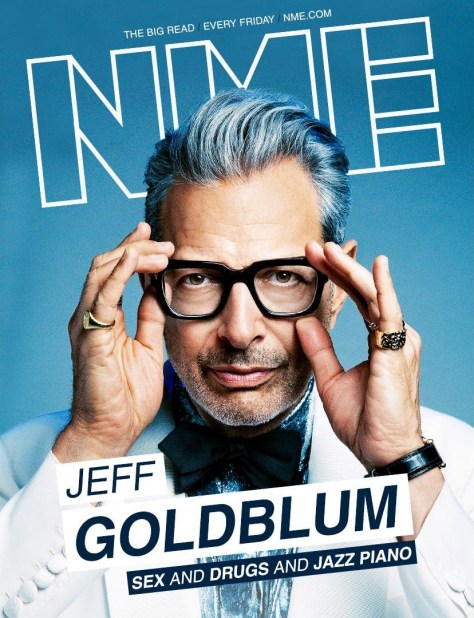
Jeff Goldblum: Sex and Drugs and Jazz Piano

jeff-goldblum-nme-cover

sdrJeff Goldblum lost his virginity the same night he made his professional stage debut. It was Tuesday July 27, 1971, and he was a gangly 18-year-old from Pittsburgh who had moved to New York the previous summer to follow his dream of becoming an actor. He was studying at the Neighborhood Playhouse under the great acting coach Sanford Meisner, and had managed to get a part in the chorus of a new musical adaptation of Two Gentlemen of Verona. Opening night at the Delacorte Theater in Central Park was a success, and afterwards some of the cast and crew ended up at dinner together.

“There was this woman who seemed exotically older to me,” recalls Goldblum, his eyes sparkling as we wait for our breakfast outside in the patio section of the Chateau Marmont. “I think she was in her late 20s. Nine or 10 years older than me. She worked in the costume department. She’d been married and was now separated, living in a loft in some place like Tribeca or SoHo. This was all exotic to me. We’d flirted a little bit. After the meal she said: ‘Let’s share a cab home.’ In the cab there was some, uh, um… kissing. She said: ‘Come to my house.’ We went there, and, well, I won’t go into all the details but that’s where I lost my virginity.”

A momentous evening, by anybody’s standards. I ask him if he felt like a different person the next day.

“Another mosaic piece was laid into the final thing, certainly,” he says. “I told her, just before we did it. I said: ‘I’ve gotta tell you, I’ve never done this before.’ She seemed to like that. She said: ‘Really? Really?’”

Continue reading at NME.

The new wave

atlas-sri-lanka-cover

Lucky Pathiniya Durage remembers the exact moment he first saw someone surfing. He was nine years old, and he was with his aunty going to the vegetable market in the tiny fishing village of Midigama, on the south-west curve of the teardrop-shaped island nation of Sri Lanka. The market looked out to sea at a spot where a mellow left hand wave breaks over a deep reef. As Lucky watched, he saw a man on a board riding the wave towards the shore. At that moment, something inside him changed forever. Thirty-three years later, sat in the warm sun outside the Lion’s Rest Hotel, his eyes light up at the memory. “I just had this feeling inside me,” he says. “I knew I wanted to do this.”

_ZNrZggA

Of course, in those days there was no surfing scene in Sri Lanka. This was long before surf schools, yoga retreats or the Lion’s Rest Hotel started appearing along this palm-fringed paradise coast. Lucky would learn later that the man he’d seen surfing – who turned out, predictably, to be an Australian – had been staying at a local home, sleeping on the floor.

IogIeYoQ

That simplicity didn’t deter Sri Lanka’s early surf pioneers. By the following year, Europeans, Australians and Japanese visitors were all coming to surf Coconut Point, near Lucky’s village. He would watch them intently, still determined to surf himself. Soon he resolved that there was nothing else for it. He would take matters into his own hands. “My friend and I decided we should try to make our own surfboard,” he remembers. “We decided to cut it out of a big tree. It took nearly two months to get it right. When we first went in with it, the foreigners were looking at us like, ‘What are they doing? Crazy boys!’”

The board was a long way from perfect. Lucky and his friend would get splinters in their stomachs until they learned to tie sponge to the surface with fishing line. After growing weary of constantly having to chase after the board when it got away from them they made themselves a leash using an old saline drip from the local hospital. All of it was worth it to get Lucky closer to his dream. “I was always in the ocean, always,” he says. “I knew where all the reefs were, and where the shallows were.”

That knowledge came in handy. One day he tried to warn an Italian couple not to go into the sea in a dangerous spot. Unable to understand his broken English, they went in anyway and soon the woman was being dragged under by a powerful current. Lucky chased after her through the shallow water he knew so well and pulled her to safety. He was still only 10 years old. It was around then people started calling him ‘Lucky’.

Nowadays, Lucky has achieved his dream of making his living from surfing. He is one of the few local Sri Lankans to be a qualified International Surfing Association instructor. “I’m always smiling,” he says. “Doing this makes me very happy. I see a lot of teachers who get angry with their students, but I don’t like that. I want to encourage them and give them confidence.”

As well as his own surf school, Lucky also offers lessons in conjunction with the Lion’s Rest Hotel – which looks out over Coconut Point, the same spot where he first started teaching himself to surf three decades ago. As we sit outside on the terrace we can hear the gentle, rhythmic sound of waves crashing on the beach. In front of the hotel, cows chew the cud as they stand about idly on the cricket pitch while colourful tuk tuks buzz down narrow sandy alleyways. To hear Lucky tell it, there’s no better place on earth to surf. “Sri Lanka has warm water,” he points out, astutely. “Europe is very cold, so you have to wear a wetsuit. Also, there are many surf breaks here so they don’t get too busy. And the King Coconut is native here. Did you ever drink a fresh coconut on the beach just after you finished surfing? That’s a very good feeling.”

It’s not just locals like Lucky who’ve fallen head over heels off a wave for Sri Lanka’s idyllic conditions. People come to experience them from all over the world. South African Jelaine Hermitte is an instructor who’s spent the last two years working here on the southern coast. She argues that it’s the perfect spot for people who want to learn to surf. “The waves are very friendly here and quite soft, which is perfect for beginners,” she says, drip-drying herself just a few feet from Weligama Beach. “You don’t get super powerful waves here like you do in Indonesia, for example, so it’s a great place to learn and build up your confidence. The whole place has a typical laidback island vibe: surfing, shorts and T-shirts, huts, coconuts, turtles and warm waves. What more could you ask for?”

Indeed, part of the attraction of Sri Lanka is that unlike many surf destinations there’s a lot happening on dry land as well. There is plenty of charm to stumble across on your journey – as befits the country which the ancient Persians referred to as ‘Serendip’, from which we get the word ‘serendipity’.

Whether it’s spotting elephants in Udawalawe National Park or waking up early to experience the buzz of Mirissa Fish Market, where tuna, hammerhead sharks and even manta rays line the docks, the wild variety of the natural world is always close at hand. Alternatively, you can spend time rejuvenating your body with an holistic massage conducted within in the ocean itself by Franco Rebagliati, the experienced surfer and masseuse who runs You Are The Sea. For many who come to Sri Lanka, the most natural companion to surfing is yoga. After all, assuming cobra pose will prepare you for perfectly for lying on a surfboard, while warrior pose isn’t a million miles from how you need to stand to successfully ride a wave.

A few minutes drive by tuk tuk from Lion’s Rest is Camp Poe, which offers simple safari tent lodging, meditative murals, a secluded pool and daily yoga and surf lessons. Sitting near the still blue water, yoga instructor Jessyca Eve Canizales explains why Sri Lanka stands out among the many yoga destinations she’s visited. “I think the melting pot of cultures here is really interesting,” she says. “The food is really remarkable, especially for a vegan or vegetarian lifestyle because it’s all tropical fruit and vegetables. People really appreciate you being here. It’s such a smiley place and I feel it’s safe for my children. I find there’s a reverence for the philosophy of buddhism here, a code of living, which extends beyond people’s specific religious beliefs. It’s a warm and textured place to be.”

For my own first ever surf lesson, I head 30 miles east of Weligama Beach to meet Steve Taylor of Tropicsurf. An Australian from Melbourne who like Lucky has been surfing since he was 10, he was attracted to living and working in Sri Lanka in part because his mother is from the island. He is based out of the Anantara Peace Haven resort in Tangalle, a five-star hotel sat on a rocky outcrop which offers the chance to stay in beautifully secluded villas that come complete with private pools.

Steve, however, has something more challenging in mind than a dip in an infinity pool. It doesn’t take him long to size me up. “Can you swim?” he asks seriously soon after we meet. “You have to be able to swim. My only rules are no life jackets…” his stony demeanour cracks into a cheeky grin “…and no budgie smugglers.”

We set off to find the perfect spot in an air-conditioned van, our surf boards following behind strapped to the roof of a tuk tuk. We pass down unassuming lanes past shacks with grass roofs until we find a deserted beach. The only thing keeping us company is a solitary cow on the beach who enjoys licking the saltwater off our boards. As far as the eye can see, we have the ocean to ourselves. “Surfing is about freedom,” Steve says. “You’re getting out amongst nature, and best of all nobody can get on their damn phones while they’re surfing!”

Lying on the beach, Steve guides me through the basics of how I’m going to stand myself up: arms out like chicken wings, leg crooked like a lizard, then popping up to standing. Before I know it, I’m out at sea, riding my first wave. An hour later, back on the shore, Steve has a serendipitous surprise for me. He cracks open a King Coconut as my reward and hands it to me to drink. Lucky was right. It’s a very good feeling.

Published in Atlas by Etihad, November 2018.

Warung: the Brazilian paradise that had to fight for the right to party

warung-beach-clubNo matter who is behind the decks come 7am, Warung Beach Club always has the same headline act. The main room of the 2,500-capacity temple to dance music on the Brazilian coast faces east towards the south Atlantic, which means God herself does the lighting. “When the sun comes up, it’s magical,” says club founder Gustavo Conti, standing on a terrace overlooking the beach. “That’s because nature is magical, and we’re here in it.”


The club, in the southern state of Santa Catarina, emerges from the Atlantic forest where the land meets the sea, enclosed by vegetation on all sides and built from wood, like a particularly ambitious treehouse. Next month, Warung celebrates its 16th anniversary. DJ Lee Burridge has been coming to play here for almost that long. “It’s one of those endlessly wonderful places that you never want to leave,” he says. “Where it is and what it’s built from give the sound a really warm resonance. Inside you can be hit over the head with a shovel musically, and outside you can be cuddled musically. There’s also a lot of beautiful, beautiful people dancing their asses off.”

Continue reading at The Guardian.

She’ll Take You There

Mavis-Staples-by-Chris-StrongWhy is NME writing about Mavis Staples in 2018? That’s a reasonable question, and it deserves an honest answer. We’ll get into that in a moment, but first I should say: Don’t worry, she’s not dead. Mavis Staples is alive, and despite being only a year shy of her 80th birthday she’s in such rude health that when she played the Ford Amphitheatre in Los Angeles this weekend her performance was alternately spellbinding and ass-kicking. Her voice sounded strong and pure and righteous, and she moved exuberantly around the stage and cracked jokes between songs. There is no sound on earth more joyful than Mavis Staples singing, except maybe Mavis Staples laughing.
Continue reading at NME.

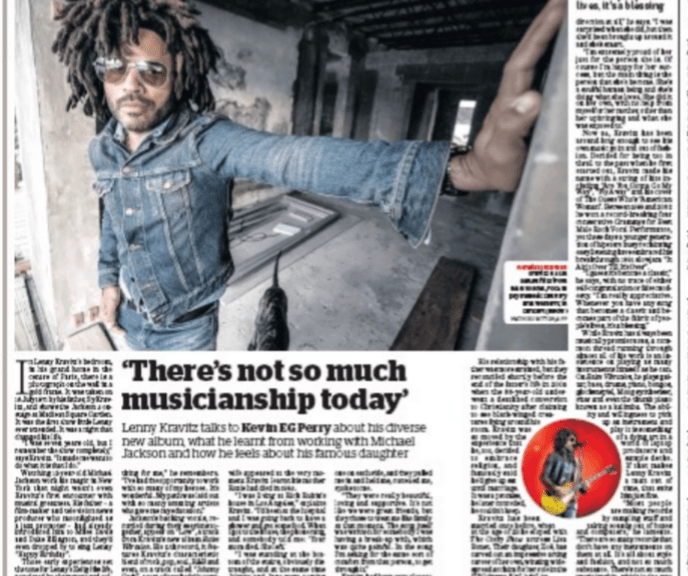
Lenny Kravitz: ‘There’s not so much musicianship today’

lenny-kravitzIn Lenny Kravitz’s bedroom, at his grand home in the centre of Paris, there is a photograph on the wall in a gold frame. It was taken on 16 July 1971 by his father, Sy Kravitz, and shows the Jackson 5 onstage at Madison Square Garden. It was the first show little Lenny ever attended. It was a night that changed his life.
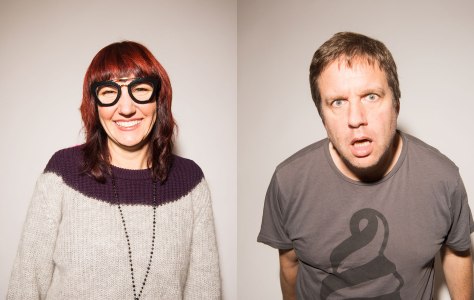
“I was seven years old, but I remember the show completely,” says Kravitz. “It made me want to do what it is that I do.”

Watching a 12-year-old Michael Jackson work his magic in New York that night wasn’t even Kravitz’s first encounter with musical greatness. His father – an NBC television news producer who moonlighted as a jazz promoter – had already introduced him to the likes of Miles Davis and Duke Ellington, and they’d even dropped by to sing Lenny “Happy Birthday”. Those early experiences set the tone for his Zelig-like life, populated by a cast of characters and collaborators featuring everyone from Mick Jagger to Al Green and David Bowie to Prince. He even ended up, years later, in the studio with Jackson himself. “There I was working with the person who started the whole thing for me,” he remembers. “I’ve had the opportunity to work with so many of my heroes. It’s wonderful. My path was laid out with so many amazing artists who gave me my education.”

Continue reading at The Independent.

In search of Sub Pop’s soul

nirvana

In 1988, underground radio DJ Jonathan Poneman and fanzine editor Bruce Pavitt quit their day jobs to dedicate themselves full-time to running their independent record label. 30 years later, I’m stood in a departure terminal at LAX looking across the tarmac at the Alaska Airlines Boeing 737-800 which will take me to Seattle. It’s covered in what looks like huge road case stickers that all read: ‘SUB POP’.

I have questions. How do you go from making a few scribbled notes in Seattle’s Uptown Espresso coffee shop to becoming one of the world’s most famous record labels, with your name painted down a plane’s fuselage? What was it about the remote Pacific North West that allowed it to incubate grunge, the sound that would change the world? And most pressingly: Does this mean they’ll let me play ‘God’s Balls’ by Tad over the tannoy?

The answer to one of those questions is: ‘No’. The rest will take some explaining.sub-pop-planeLet’s get right to the heart of this thing. Let’s ask somebody who was there. About 24 hours ago I was sitting in the baking LA heat listening to Mark Lanegan tell me – in that voice that sounds like gravel in a gale – about the first time he ever heard Sub Pop’s most famous signing. It was the tail end of the 80s and he was still living in Ellensburg, a small town smack in the middle of Washington state, and singing with Screaming Trees, when he got a phone call from his friend Dylan Carlson.
“He said: ‘Hey, my friend is playing a show at the Ellensburg Library and he’s a big fan of your music.’” remembers Lanegan. “‘Would you go down and watch him? Because there’s probably not going to be anybody there and it would be a thrill for him if you went.’ I went down there. When they started playing, I realised that I was hearing one of the best bands I had ever heard… and in the fuckin’ Ellensburg Library no less. It was Nirvana that were playing, and it was Kurt that he wanted me to meet.”

From that day on, Lanegan and Cobain became close friends. They shared a love of old blues records, not to mention heavy duty narcotics. Soon they were cooking up a half-baked plan to record an EP of Leadbelly covers together. Naturally, Sub Pop – the newborn label who had snapped up Nirvana for an initial outlay of just 600 bucks – were keen to put it out, but when it failed to materialise it was co-founder Poneman who rang Lanegan and asked if he wanted to make a solo record instead.

“I distinctly remember that the offer was for $13,000 for the first record,” says Lanegan. “Up until that point, my contribution to Screaming Trees songwriting basically amounted to changing some of the more egregious lyrics written by the guitar player to make them less embarrassing. I had never picked up a guitar or anything, but I knew that the records we’d made were for a strict $1,000 budget. I thought I could make a record for a thousand dollars and pocket the other twelve.”

IMG_6179.jpg

So Lanegan taught himself to write, and then wrote ‘The Winding Sheet’. He included the sole song salvaged from the ill-fated Leadbelly sessions: a version of ‘Where Did You Sleep Last Night?’, featuring both Cobain and Krist Novoselic. The album was a departure for both Lanegan and Sub Pop, but it turned into a success that would heavily influence the sound of Nirvana’s own famous MTV Unplugged performance. This story illustrates two important facts about Sub Pop: They were willing to gamble, but they knew their shit.

“I thought it was kind of weird because everything else on the label was hard rock, but they were into the idea and it obviously panned out for me. I owe him one!” says Lanegan, acknowledging the confidence Poneman showed in him. While he says his own relationship with them was “tempestuous” (they dropped him midway through the recording of follow-up, ‘Whiskey For The Holy Ghost’, only to later resign him and give him the money to finish it), Lanegan reserves high praise for the label.

“What really changed shit was Nirvana and Sub Pop,” he says. “Sub Pop had a genius for marketing and the way they promoted the label, with Nirvana of course being the shining star in their universe. In terms of Seattle at that time, I don’t think it had ever really happened before where a small city had so many bands going to the top of the Billboard charts. Soundgarden. Alice In Chains. Pearl Jam still play stadiums like they’re the Grateful Dead. It was an unprecedented phenomenon.”

I tell him I’m about to head north to visit the city for myself. ”Shit, man. I haven’t looked at the weather report but you might want to take an umbrella,” he drawls. I tell him I’ll be used to it, coming from Britain. “It’s uber-British,” he says. “People say Manchester is like Seattle. Bullshit. Seattle is like Manchester x100 weather-wise. It’s got the shittiest weather of any city in the world, hands down.”

SUBPOP-PICTURE

“A lot is said about the weather,” says Jonathan Poneman, sat in his office at Sub Pop HQ in downtown Seattle. Outside in the corridors are various bits of memorabilia, like a framed copy of a restraining order that K Records’ Calvin Johnson took out against Courtney Love, and a bit of wall ripped from that previous office that Kurt Cobain scrawled his address on. Poneman doesn’t know if it was the climate that made Seattle creative, although he does posit an alternative explanation: “I’ve heard it said that there are more books read per capita in Seattle than in any other major American metropolitan city,” he says. (This is true, at least according to Amazon, who happen to now be one of the city’s main employers.) “Although…” Poneman continues. “That may not be saying all that much at this point.”

While it’s easy to look back with hindsight and see the Seattle scene as fully formed from the get go – Sub Pop would put out debut releases by Mudhoney, Soundgarden and Nirvana all within a couple of years – Poneman says the reality was very different. “The thing that was most remarkable about Seattle was how spontaneous everything was,” he says. “There was no premeditation or calculation. We were just thinking about life-changing shows and mind-blowing bands.”

Suddenly, though, the outside world was starting to take notice. By 1992, the New York Times had decided they needed to find out what this grunge thing that was happening was all about. This lead to one of Sub Pop’s most infamous gags – Poneman passed a phone call from a reporter on to Megan Jasper, a mohawked receptionist who’d recently left the label and was by then working at Caroline Records. She promptly supplied the Times with a list of entirely made-up ‘grunge’ lingo which the newspaper of record faithfully printed. A loser was henceforth to be known as a “cob nobbler”. Hanging out was apparently referred to as “swingin’ on the flippity-flop”. Whatever happened to Jasper? She’s now Sub Pop’s CEO, obviously.

“They were doing a huge piece on Seattle. It was the front page of the Style section,” Jasper recalls. “I had had a shitload of coffee, and was just rattling a bunch of bullshit off. I honestly thought at some point we’d just laugh and say: ‘This is ridiculous’. That never happened.”

It’s a funny story, but it also illustrates just how strange, exotic and remote Seattle seemed to outsiders at that time. “You have to imagine that the writers for the New York Times are pretty intelligent people, we would hope,” says Jasper. “But there was this weird, dark corner of the country that so many people knew so little about.”

The years that followed the grunge boom weren’t always plain sailing for Sub Pop. Bruce Pavitt left the company acrimoniously in 1996, saying that he saw too much waste, and money being squandered. At least they managed to keep a sense of humour about it. Ten years ago, at their 20th anniversary, they announced they were celebrating ‘15 years of great music.’ “Every record label has its dark times, and we’re no exception,” says Poneman now. “I’ll leave it up to the discerning listener to decide which five years we were talking about. They weren’t always sequential.”

But Sub Pop weren’t finished yet. In 2001, The Shins’ debut record ‘Oh, Inverted World’ helped usher in a new era of indie. The Postal Service’s one-off 2003 album ‘Give Up’ gave the label an unexpectedly massive hit, their first platinum record since Nirvana’s ‘Bleach’. Fleet Foxes followed before the end of the decade, who in turn begat Father John Misty – now one of the label’s biggest success stories, and part of a genuinely eclectic roster that also includes Beach House, Pissed Jeans, Shabazz Palaces and – at least as far as their musical endeavors go – Rick and Morty.

nirvana_gallery

Leaving Sub Pop’s offices on my way to see Afghan Whigs play the label’s showcase beneath Seattle’s iconic Space Needle, I decide to stop off at the nearby Museum of Popular Culture. Inside, there’s a whole exhibition dedicated to Nirvana. Among the collection they have the first demo tape that Nirvana sent to Sub Pop, and the first contract they signed with the label, along with later curios like the original print off of the photo of the baby in the pool from the ‘Nevermind’ cover. It’s inscribed with the memorable line, from Geffen’s art director Robert Fisher: “If anyone has a problem with his dick we can remove it.”

It’s a great exhibition, although for anyone who grew up on Nirvana’s music there’s something odd about seeing that youthful energy literally trapped under perspex. It shouldn’t be strange to see them as an historical band – the 30 years that have gone by since their debut single ‘Love Buzz’ is exactly the same amount of time that separates ‘Love Buzz’ from The Everly Brothers crooning ‘All I Have To Do Is Dream’ – yet somehow it is. Go and put on ‘Bleach’ and tell me it doesn’t still sound vital.

The next morning it’s raining, just as Lanegan prophesied. I catch a ferry from downtown Seattle over to Alki Beach, where Sub Pop’s free birthday festival is taking place, and overhear a couple of young fans onboard.

“I wish Nirvana were still around to play today,” one of them muses.

There’s a widespread general murmur of approval at this thought. Everyone wishes they could have seen Nirvana.

“Then again,” the same fan eventually concludes. “If they were… you know they’d be charging for it.”

Moaning_NifferCalderwood_spf30_CC0A6347

Even with the label’s newest signings, the influence of Kurt Cobain still hangs in the ether. LA three-piece Moaning are one of the festival’s early highlights. Frontman Sean Solomon tells the crowd that at the first show he ever played, a Battle of the Bands, his band played ‘Molly’s Lips’ by The Vaselines in the style of Nirvana’s cover. “Our mics didn’t turn on so it was just the same two chords over and over again,” he recalls. “It was really embarrassing.”

Earlier, he’d told me how Sub Pop had always been the label he’d dreamed of signing with. “Everyone in the band has been friends since we were teenagers, and we’d always joke about getting signed to Sub Pop. It was the label we fantasised about. They were always, in my mind, the label I was supposed to be on.”

While the label have long outgrown the ‘grunge’ tag that they always bristled against anyway, Solomon says there’s still a certain vibe that unites the bands that Sub Pop sign. “I think we all have a sense of independence, and you can tell that the music is untouched,” he says. “A lot of labels get more involved than Sub Pop do. They really allow artists to do their thing, and they don’t interfere. In a lot of different productions it’s difficult to be an auteur, but I feel like the artists on Sub Pop have very clear visions, and I think that’s why so many of their records are my favourites. There’s a sense of authenticity, and I think that makes sense that the ‘grunge’ label continues to put out really authentic-sounding records.”

20180811-mudhoney_jim.bennett_spf30-022

Despite the grey, Manchester x100 drizzle, the rest of the birthday party goes off without a hitch. It’s estimated that 50,000 people show up. Father John Misty, Shabazz Palaces and Beach House all play on the beach. Loma frontwoman Emily Cross not only jumps into the crowd but manages to run out into the sea while the band plays on. Yet somehow the best band of the day end up being Mudhoney, playing some songs that are as old as the label itself. The past isn’t over, as Faulkner said. It isn’t even past.

The next day I take the inevitable pilgrimage to the house where Kurt died. There’s a steady stream of visitors to his memorial bench, seemingly unaware that his old record label had just celebrated an anniversary. Outside the gates of the house, I meet a young guy with long hair and a Nirvana T-shirt on. His name is Justin Huynh, and he’s come from Fort Worth, Texas. He’s 25 – five years younger than Sub Pop. “This was the must-do thing of my life,” he tells me.

There’s a solid wooden gate in front of the house, but he’s determined to get picture so he crouches down and pushes his phone underneath.

“Hi Kurt,” I hear him say. “I love you.”

Originally published by NME.


Born By The River

born-by-the-river

There isn’t a soul alive who knows the Mississippi River better than Captain Clarke ‘Doc’ Hawley. Now retired, the 82 year-old’s pilot’s license once extended over 1,300 miles of the river and its tributaries. In order to be granted this license he was required to draw that entire distance by hand, from memory, five miles to a page. As Mark Twain, a former riverboat pilot himself, wrote in his memoir Life On The Mississippi: ‘In order to be a pilot a man had got to learn more than any one man ought to be allowed to know.’

‘Not only do you draw the shape of the river, the sandbars and the bridges, but you draw what’s under the river as well,’ explains Captain Hawley, standing on the bridge of the Steamboat Natchez. We’re docked at the Toulouse Street Wharf in New Orleans, and outside the window cargo barges laden with grain pass silently along the Mississippi. ‘That’s more important than anything, because you need to know where not to drop anchor or you could hook into an oil line. After I drew from Cincinnati, Ohio down to here I thought I could go to work for Rand McNally forever.’

Needless to say, Captain Hawley did not go off to draw maps for a living. Instead he spent 60 years expertly guiding steamboats up and down the mighty river, which has its source at Lake Itasca in northern Minnesota and flows south for 2,320 miles before it finds the ocean in the Gulf of Mexico. It remains to this day an avenue of commerce, carrying 60% of U.S. grain shipments, 22% of oil and gas shipments and 20% of coal shipments. Yet even more important than its practical use has been its cultural impact on America. It was home to the native Mississippian culture long before Hernando De Soto became the first European explorer to set eyes on it in 1541. During the 20th century, blues, jazz, gospel, R’n’B, soul and rock’n’roll were all born within splashing distance of the river. There must be something in the water.

From his vantage point onboard, Captain Hawley had a unique view of how the culture that grew by the Mississippi shaped America. ‘Jazz really went up the river by boat first,’ he says. ‘Louis Armstrong’s first job was on a riverboat, the steamer Sidney in 1918. I can guarantee that the first jazz that was heard in St Paul, Minnesota was on a boat with a New Orleans band on the dance floor. I remember I was on the boats when rock came in. It was electric! It was a new rhythm that took over America.’

To Captain Hawley, life on the steamboat promised a life of adventure and excitement, just as it had to Mark Twain a century earlier. The river gave the writer, born Samuel Clemens, a way to escape small-town drudgery. He claimed it even gave him his nomme de guerre. ‘His name, in river-talk, means 12 feet,’ explains Captain Hawley. ‘‘Mark Twain’ means two fathoms, which was safe distance. To this day, the Corps of Engineers only guarantees 12 feet of water above Baton Rouge.’

Twain, or rather Clemens, grew up in Hannibal, Missouri – almost 800 miles upriver from New Orleans. His whitewashed boyhood home has been restored and converted into a museum, whose director Henry Sweets stands on the doorstep and points out the proximity of the river. Today it’s devoid of major traffic, a tranquil shadow of its former self. ‘In Twain’s day, the riverbank would have even closer to this house,’ he says. ‘You can imagine how watching the variety of people coming in by boat – from the wealthy to the enslaved – would have implanted the lure of the river in his mind. What’s out there to go and see? When you look at his writings, at Tom Sawyer, Huckleberry Finn, or later Pudd’nhead Wilson, you can see how the river was always an influence in his writing.’

Twain was born in 1835, just as the Mississippi steamboats entered their golden age. Their number jumped from just 20 in the 1810s to over 1200 in the 1830s. Many of the boats which ran between St Louis and New Orleans were used to move cotton, rice and other produce of fertile farmland, and there was no land anywhere more fertile than that formed by the thick layers of the Mississippi’s silt deposits.

That land is dotted with tiny rural farm towns like Dyess, Arkansas. It was here that Johnny Cash grew up, picking cotton in the fields from the age of five. The land was prone to flooding, as he described in his song Five Feet High and Rising.

His youngest sister, Joanne, who has a jet black streak in her white hair and her brother’s square jaw, remembers that singing was always part of family life. ‘The music came from the way we lived,’ she says, standing on the porch of the restored farm house in the midst of the paddy fields which stretch out for miles on every side. ‘Most all of Johnny’s songs that he wrote about this area were from experiences that we had here in this very house and on this land. It was a life of hard work, a lot of love, and singing together every day. Johnny was always writing songs and singing the truth.’

In 1954, when Cash was ready to record his songs, he went to Sun Studio in Memphis. By then the studio was already drawing in the greatest musical talent of the Mississippi Delta. The blues had been born in places like the Dockery Plantation, where Charley Patton, considered the godfather of the Delta blues, lived and worked. In 1941 Alan Lomax, touring the Delta to document the musical culture, recorded a then-unknown Muddy Waters at his home on the Stovall Plantation. They set a sound in motion which would soon be heard in ever corner of the planet. Just a decade later, at Sun, Ike Turner wrote Rocket 88 for Jackie Brenston, widely considered to be the first rock’n’roll song.

Memphis still moves to a beat. On Beale Street, the sounds of competing bands echo out of every bar. In the Blues City Cafe, Blind Mississippi Morris is onstage making his harmonica sing beneath a red neon sign that reads LIQUOR. As Morris roars through ‘One Way Out’, a woman takes her partner’s hands and places them on her own hips as she sways. The blues still has the power to move people. When the band takes a break, Morris reminisces about his youth in the plantation fields outside Clarksdale, birthplace of Ike Turner, John Lee Hooker, Sam Cooke and so many other greats.

‘Poverty is what made the blues,’ he says, his low, mellifluous tone cutting through the chatter of the busy venue. ‘It all started back in the cotton fields. Before they were playing music they were singing it a cappella, trying to make the day go. When you’re singing it, all of that is coming through your music. The things you’ve seen, like people being hung. Oh man, that was terrible.’

For Morris, the blues are a way to connect with people and help them to understand his life. ‘You try to tell a story in your music and make them feel exactly what you felt when you had to wake up every day not knowing what you were going to eat,’ he says. ‘All your money from the fields went to the store to pay your debts.’

Of course, blues and rock’n’roll would make a lot of money for some. Across town at Graceland, you can walk the hallowed hallways of Elvis Presley’s mansion, preserved just as the King left it – with a shag-carpeted Jungle Room in the den, and kitschy trinkets like his treasured porcelain monkey dotted about. While his vast wealth and fame may have earned him his regal sobriquet, the Memphis Sound was defined by Stax Records. Their studio is now a museum where you can soak up the energy still trapped in the room where R’n’B and soul hits by the likes of Sam and Dave, Isaac Hayes and The Staple Singers were all recorded.

Heading south from Memphis through the Mississippi Delta you drive through field after field of cotton and corn. The land is perfectly flat, leaving a vast canopy of sky above which is punctured by nothing taller than a Pecan tree or a church steeple. It was here where European and African culture came together on American soil. From the devastating pain of slavery, from the spiritual thirst of the church congregations and from the sexual heat of the juke joint dancefloors there came the most powerful outpouring of music the world has ever seen.

Many of those rhythms had originated with the slaves who arrived in America at the port of New Orleans, where Twain’s steamboat route ended, near the mouth of the Mississippi. On Sundays, enslaved men and women would come together to drum and sing, keeping their West African traditions alive. The Code Noir, which governed slave ownership in French Louisiana, decreed that they be given the day off as they were expected to convert to Catholicism.

‘Congo Square was the only place like it in the United States,’ says Dianne Honore, a New Orleans tour guide known as Gumbo Marie, as she stands in the square where the slaves congregated. Sheltering from the heat of the afternoon sun under her parasol, she explains how important this place would have been to people like her own sixth generation grandmother Catiche Destrehan, who was born a slave in the city in 1738. ‘Enslaved people would come to celebrate here, practicing their own dancing and their own music.’

The culture of circle dancing and drumming brought from West Africa evolved, as it paraded out of Congo Square, into the tradition of New Orleans jazz funeral processions. ‘We honour our deceased and we celebrate them,’ explains Honore. ‘Of course it’s a sad thing and we’re upset, but we want to celebrate their spirit and the energy that’s still around us.’

Jazz funerals proved to be just too much fun to have to wait until somebody died, so they in turn gave birth to the weekly tradition of brass band parades known as the Second Line. Each Sunday, a large crowd gathers outside a venue such as the Treme Center to meet the band – themselves known as the ‘First Line’. There’s a carnival atmosphere in the air as they dance together past brightly coloured homes and murals celebrating local icons like Louis Armstrong and Dr John. The Second Line flows through the streets, as powerful and irresistible as the Mississippi itself, gathering momentum with every new wave of people who run out of their homes to join in. Soon everyone around is caught in the current of the music, a fierce kind of joy ringing in their souls.

Originally published in Lonely Planet Traveller, September 2018.

Lads On Tour: Kasabian Reign In Spain

kasabian.cover

It’s the day after England’s emotional, last-gasp defeat to Croatia in the World Cup semi-final and noted football fanatics Kasabian are bouncing back the best way they know how: by playing a huge festival headline slot at Madrid’s mammoth Mad Cool festival.

Backstage, frontman Tom Meighan is sipping a cup of pre-show Yogi Tea that may be helping his voice but is doing nothing to calm his hyperactive personality. He shrugs off last night’s result. “It is what it is, we were never going to win it,” he shrugs. Right now he’s more interested in a bright orange graffiti marker somebody’s left lying around. “I haven’t seen one of these in years!” he cries with glee, grabbing it and setting about tagging every sheet of paper he can find.

Bandmate Serge Pizzorno cuts a more laidback figure. He’s laughing to himself at the length of the seemingly endless guitar solo we can hear emanating from Pearl Jam, who are currently onstage. “He’s shredding out there, isn’t he?” he grins. “The rest of the band must be like…” and he mimes impatiently tapping his watch.

Continue reading at NME.

Warren G on G-Funk, making Annie Lennox starstruck and the immortal ‘Regulate’

Warren-G-KEGP

Picture the scene. You’re deep in the sesh with a load of people you don’t really know and somebody asks you to pick the next tune. What do you choose? You need something everybody loves. You need a song any person between the ages of 18 and 39 knows all the words to. You need Warren G. You need Nate Dogg. You need ‘Regulate’.

I’ve been to a lot of parties in my life (yeah, I know. Legend.) and I’d estimate that I’ve heard ‘Regulate’ played loud and late more often than anything else. It’s rivaled only by Biggie’s ‘Juicy’ for its sheer ubiquity, and only by the Fresh Prince theme for the likelihood of someone being able to recite all the lyrics off the top of their head while mashed. Altogether now: ‘It was a clear black night, a clear white moon…’

What I’m saying is, ‘Regulate’ is a seriously big tune. It’s so big that it’s easy to let it overshadow what an integral figure Warren G has been for West Coast hip-hop. A new documentary, ‘G-Funk’, streaming from today on YouTube Premium, goes some way to redress that balance. It follows Warren from his early days in Long Beach growing up with Snoop and Nate Dogg, forming 213, his sometimes tense relationship with his step-brother Dr Dre, his influence on ‘The Chronic’ and how his signing for Def Jam – and not Death Row – changed the course of rap history.

To mark the release of the documentary, I hit the east side of the LBC on a mission trying to find Mr Warren G. We talked family, fame and G-funk. But first, a question that’s been bugging me for years:

What does ‘The rhythm is the bass and the bass is the treble’ mean?

“I don’t know! ‘Rhythm is life, and life is rhythm.’ I learned that from Jimmy Spicer. He always used to say that, so I said it, and then Nate took that part with his singing: ‘The rhythm is the bass and the bass is the treble.’ Chords. Strings. We brings. Melody. [Laughs]”

That’s made my day, just hearing you recite that. How does it feel to have created a song as universally loved as ‘Regulate’? I honestly don’t think there’s any song that gets played as reliably at parties in London to this day.

“It’s all good, man! It feels so good. I got the chance to go over to London and just really get a chance to feel it. I’mma tell you, I was thinking different because there were a lot of Jamaicans there! I was like: ‘This is crazy!’ but it was cool. You guys’ accents and everything, it was incredible to me, and the love I was getting was just incredible. I performed at Wembley when Snoop was doing it. He asked me to come out in his show, and when he pulled me out they lost it. Wembley went crazy! I was like: ‘Oh, shit!’ I was so nervous, but then I was like: ‘Damn, they really love me!’”

We do, it’s true. We really love you. In the documentary it’s clear that when you and Nate were making it that you were just trying to tell a story.

“That record was things that I went through, and friends of ours went through. We’d witnessed that and we’d been a part of it. We just told the story, and then on the hook we just let everybody’s imagination flow. After hearing that you’re going: ‘Wow, he went through this’ and then: [sings] ‘I laid all them busters down, I let my gat explode’ and you roll right back into it. It’s on again!”

You had no idea when you were making it how big it would become?

“No we didn’t know, man. I got to meet Annie Lennox, and so many different people that I didn’t think I would ever get to meet.”

Are you a big Annie Lennox fan?

“Annie Lennox couldn’t even hardly speak English! I’m serious, I was like: ‘Wait a minute! You’ve got ‘Sweet Dreams!’ She could speak English, but not fluent. I was like: ‘This is crazy!’ I told her: ‘You just don’t know how much I love you! You carried me through so much shit with ‘Sweet Dreams’.’ That was one of my theme songs when I was travelling from the United States to Europe. That was my theme song, my song to get myself right and think: I’m really out here. I’m really international.”

The title and the opening sample comes from the 80s cowboy movie Young Guns, doesn’t it?

“Yeah. I was a fan of Young Guns, that was one of my favourite movies at the time. I used to watch it all the time on VHS. I would watch it two or three times a day. We used to always say ‘Regulate’. Like: ‘Man, we’re gonna have to regulate this shit in here!’, ‘Fool, regulate the spot!’ or ‘Get on out of here, we’re gonna have to regulate this situation.’ We used to always say that, so when I heard him say: “We work for Mr. Tunstall as regulators. We regulate any stealing off his property – we’re damn good too!” it made me think of our crew, and who we was. The Death Row crew. I was over there, and I was part of it. I took the RCA jacks right out of the VHS and plugged it into a quarter-inch into my MPC60 – which I’ve still got! I’ve still got the Moog that ‘The Chronic’ was done on, and all the record crates. Don’t tell Dre! [Laughs]”

Dre is your older step-brother, but it comes across in the documentary that even though you worked on ‘The Chronic’ and introduced him to Snoop, he maybe didn’t always appreciate your contribution. There’s a moment where you turn up at the airport to join Dre and Snoop’s first tour, and everybody’s got a ticket but you. Were you upset with Dre for that?

“I wasn’t upset with him. I was upset at the way I was treated when I was ride or die. It wasn’t Dre! Suge [Knight] was the head of the company. I got treated different, and it just wasn’t cool. I wasn’t getting ready to sign or anything. Dre was like: ‘You should go and be your own man. Create you own life so you don’t have to deal with this shit.’”

Do you think if you’d signed with Dre and Suge Knight at Death Row at that point, maybe you’d never have made ‘Regulate’?

“Exactly. He was kind of like a saviour. He purposely did that to push me into doing my own thing. He knew I was dope already, and he would help me with whatever I needed. If I’d signed to Death Row I probably wouldn’t have made my own record. I’d probably be in jail. That’s how a lot of motherfuckers ended up, in jail, and I probably would have been right there with them.”

This documentary is a real reminder of how influential you were on G-Funk, and how influential G-Funk has been on hip-hop. Are you making new music?

“Yeah, I’m planning on dropping seven new songs around this documentary. Me and Snoop have been in the studio together. I’m constantly working. It would drive me crazy if I didn’t do no more music. I have other passions that I love doing too, like barbecuing. This is me. I always say: ‘Music and barbecue and love’ and then I say: ‘G-Funk’. That’s the good shit.”

Originally published by NME.

The Baby-Faced Far Right Terrorist Who Planned to Murder an MP

1531153999394-jack-renshaw

When the annals of great chat-up lines are written, it’s unlikely former BNP Youth spokesman Jack Renshaw will feature highly. On the evening of the 1st of July, 2017, he approached a girl in a nightclub in Warrington and told her: “I’m a terrorist.”

He was telling the truth. Earlier that night, at the Friar Penketh Wetherspoons on Barbauld Street, he had spoken of his plan to use a machete to murder his local MP, Labour’s Rosie Cooper. He would later testify in court that he had been “drunk and ranting” and that he’d “have probably talked to anyone that was there”.

He may well have been drunk, but he was deadly serious. At some point during the previous month he’d spent £54 on a 19-inch machete, which he intended to use as the murder weapon. Even before that, in May, his search history showed that he’d googled the phrase: “cutting the jugular artery”.

Renshaw said he believed that murdering Cooper would “send the state a message” – that message being: “If you beat a dog long enough, it bites” – and called his actions “white jihad”. Asked in court why he chose Cooper as his stand-in for the British state, he said simply: “She happened to be my local MP.”

Rosie Cooper was not his only intended victim. Renshaw also planned to take hostages after killing the MP so that he could lure Detective Constable Victoria Henderson to the scene. He had a vendetta against Henderson because she was investigating him for allegedly grooming children for sex, as well as several racial hatred offences. He told the jury that, unlike Cooper, the murder of Henderson “was personal”.

After killing the two women, he planned to reveal a fake bomb vest. He imagined the day would end with his suicide by police. He hoped to die a martyr to the far-right cause.

Continue reading at Vice.

Spirit of the night

barcelona.png

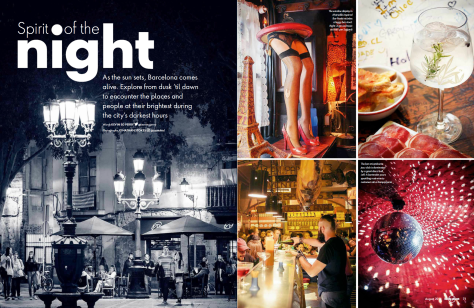
There is a correct way to drink absinthe, and it has a certain sense of theatre. On a quiet afternoon at Barcelona’s Bar Marsella the landlord José Lamiel Vallvé is demonstrating the time-honoured tradition. For this he requires: one glass of neat absinthe, a short silver fork, a pair of sugar cubes and a plastic bottle of water with – and this is the important part – a pin prick in the lid of the bottle. First, José balances the fork on the top of the glass of absinthe and places the sugar cubes into the cradle. Then, taking the water bottle, he squeezes a narrow jet very slowly over the sugar cubes. Keeping my eyes on the yellowy-green liquid, I see the magic start to happen. Ghostly tendrils appear, filling the glass until the liquid has become a misty emulsion. This is known, appropriately, as the ‘louche effect’.

Originally published in Lonely Planet Traveller, August 2018. Continue reading at Lonely Planet.

The Risen Star: Cardi B

cardi-b-gq

In 2011, when Cardi B lost her job at Manhattan’s Amish Market it was her former boss who suggested her new career path. “You have such a nice body,” he told her. “Why don’t you go across the street and work at Private Eyes?” She took his advice, but stripping couldn’t contain her outsized personality for long. Videos of her sharing her South Bronx street wisdom went viral, landing her on reality show ‘Love & Hip Hop: New York’ in 2015. It was only then that Cardi – born Belcalis Almanzar – began taking music seriously, leading some to assume that her rapping was merely a gimmick to bolster her celebrity. They were wrong. Her hit ‘Bodak Yellow’ was the biggest song of last summer, while this April the 25 year-old broke a record previously held by Beyoncé to become the woman with the most songs in the US charts simultaneously. Debut album ‘Invasion of Privacy’ proved that inside that ‘nice body’ was a sharp and savagely funny lyricist. In a culture dominated by the famous-for-being-famous, Cardi B is that rare thing: the reality star who turned out to be more talented than the competition. The Amish Market’s loss is everyone else’s gain.

Originally published in British GQ, August 2018.

Raising Arizona

abta-arizona-july-2018

abta-cover-july-2018The first thing I notice as I step off the plane is the desert heat. On average, Phoenix has 299 days of sunshine every year, while nearby Yuma is not just the sunniest place in the United States, but actually holds the world record for average annual sunshine: an incredible 4,300 hours of sun each year.

The heat and light make up not only the city’s climate, but its character. It was the temperature that drew the celebrated architect Frank Lloyd Wright to Phoenix. He first arrived in 1928 to work as a consultant on the Arizona Biltmore hotel, and returned a decade later, after his doctor told him that the weather would benefit his health, to build Taliesin West, his winter home, school and studio.

Taliesin West remains open to visitors, even though it still operates as one of the best architecture schools in the United States. Taking the guided tour of the school is an excellent route to understanding how Wright built his reputation as one of America’s great architects, and in particular to appreciating his ability to bring the outdoors inside. Sunlight streams into the drafting room where Wright drew up plans for his most famous work, the Guggenheim Museum in New York, and where students continue to work and learn from his example.

If they need further inspiration, the Phoenix Art Museum is a good place to start: the gallery sprawls over 26,500 square metres, and houses work dating from the Renaissance right up to the modern day. Highlights include a portrait of George Washington by Gilbert Stuart, modernist work by Georgia O’Keeffe and Anish Kapoor’s acclaimed sculpture Upside Down, Inside Out.

Even the greatest artwork struggles to compete with the majesty of the natural landscapes that lie on the doorstep, however. As I head out into the desert, I feel as if I have arrived in the Wild West of my childhood fantasies: giant saguaro cactuses dot the land, instantly familiar from cowboy films.

Saguaro grows an average of a foot per decade, so those that climb to 20 or 30 feet will have been standing on that same spot for around 250 years. It is easy to picture yourself as one of the early pioneers – although it is worth bearing in mind that widescreen depictions may not have been wholly accurate. In John Ford’s Three Godfathers, John Wayne finds himself stranded in the Arizona desert and hacks open a barrelhead cactus in order to drink the watery pulp. In reality, it would be so full of acids you would be likely to become very ill, so don’t forget your water bottle.

Of course, no visit to Arizona would be complete without paying a visit to the Grand Canyon. Entry to the national park – a three-and-a-half hour drive north of Phoenix – costs £24 per vehicle, a tiny price to pay for the majesty that awaits.

It is hard to describe the experience of standing on the cusp of The Abyss, the name given to one of the canyon’s many look-out points. What is remarkable is not just the size and scale of the canyon, but also the swathe of history it illuminates. It has been six million years since the Colorado River first found its way to the Gulf of California and began working its way down through the dirt and rock. The river now runs more than 1,500 metres below the Grand Canyon’s rim.

There are two very different ways of experiencing the Grand Canyon. One is to hike down into it. The most popular route, the Bright Angel Trail, descends 1,370 metres to the Colorado River, which means you have got to climb all the way back up. The other, rather more leisurely way to get inside the canyon is by helicopter. Maverick Helicopters depart from the airport near the small town of Tusayan, on the south side of the park, and 40-minute flights start from £140.

From the vantage point the flights provide, it is possible to see as far as the Painted Desert and to follow the river before diving through the Dragon Corridor, the widest and deepest part of the canyon. The most heart-stopping moment, however, is early on, when you are flying 15 metres above the Ponderosa pine treeline, and then suddenly there is nothing beneath you except the rushing waters almost a mile below.

But to visit Arizona and only see Phoenix and the Grand Canyon is to barely scratch the state’s surface. To the east of the National Park is the incredibly photogenic Horseshoe Bend, where the curve of the river has carved out a spectacular landmark. Nearby is Antelope Canyon, a narrow and now dry slot canyon, which creates an otherworldly landscape for visitors. Inside the canyon, photographers jostle for position, no surprise considering the world’s most expensive photograph was taken here: Peter Lik sold Phantom, an image of dust in the canyon appearing to take the form of a ghost, for $6.5m in November 2014.

Improbably, Arizona is also home to a burgeoning wine scene. Despite the heat, vineyards have sprouted up in the Verde Valley, near Sedona, and the food and wine being produced here is almost as spectacular as the red rock formations that loom over the town.

With all this and so much more to explore, and with direct flights already taking off from London, it looks like it’s time to get to Phoenix.

Cover story for ABTA Magazine, July 2018.

Your story to tell: How Pamela Des Barres paved the way for #MeToo

cof“She’s a good girl, loves her mama. Loves Jesus and America too. She’s a good girl, crazy ’bout Elvis. Loves horses and her boyfriend too. It’s a long day, livin’ in Reseda…”

I meet Pamela Des Barres for lunch at a Mexican restaurant in Reseda, the San Fernando Valley neighborhood where she grew up and now lives. She can’t say for certain whether Tom Petty was thinking of her when he wrote those lines, but it seems likely. ‘Free Fallin’’ was released two years after Pamela published her explosive memoir ‘I’m With The Band’ in 1987, and those lyrics echo the early chapters. “I always thought he must have written that song after reading it,” she says as we take our seats. “The girl growing up in Reseda, loving Jesus and horses. That’s all in the book, although I don’t know for sure.”

‘I’m With The Band’ became an instant bestseller, making Pamela the most famous groupie on the planet. “Groupie is just another word for love,” she tells me today, “And love of music and musicians.” Her memoir provides a window into something everyone wanted to know about: what it was like to be right there on the Sunset Strip, at the heart of the 60’s musical, cultural and sexual revolution. To be fought over by Jimmy Page and Mick Jagger, huff solvents with Jim Morrison and find yourself living out debauched fantasies with Keith Moon. These days, however, Pamela says people are more interested in hearing horror stories.

“People are always trying to make me say that musicians abused me and used me, and it just didn’t happen,” she says, defiantly. “I’ve said that all along. It was equal. There was an equal exchange of love and energy and fun between us and the musicians.”

She did have her own experiences of harassment, but they came later – particularly when she was trying to establish herself as an actor, in situations where the power dynamics were very different. In the book, she recounts the story of auditioning for a director who then offers her a massage and comes at her with a vibrator. “There was tonnes of that in my whole life,” she tells me. “There were so many assholes! I related so much to the women who came forward finally, having been through so much of that shit myself. I have plenty of ‘Me Too’ moments, plenty, but none with musicians.”

Pamela is rightfully entirely unabashed about her youthful escapades, but she was above the age of consent by the time she entered the swinging world of groupiedom. By contrast, in 2018 it’s shocking to read her stories of Jimmy Page going off with the then 13-year-old Lori Maddox, or her actor boyfriend Don Johnson leaving her for 14-year-old Melanie Griffith. Pamela tells me it’s impossible to judge that era by today’s standards, adding: “I was repulsed by it. I was totally turned off by it in many ways, but it was what was happening. You deal with what’s put in front of you. At that time, no-one thought: ‘Oh, we better call the police.’ It just didn’t happen that way. Lori’s mom knew what she was going on. Lori is a very good friend of mine, and has been for decades now. She’s proud of her history, she’s happy with it, she has no qualms about it, no regrets whatsoever. That’s what happened in those days.”

She doesn’t think there will ever be equivalents to the Operation Yewtree convictions for the rock stars of that era. “People ask me: ‘Do you think so-and-so is going to go down?’ No, they’re not going down,” she says. “The girls aren’t complaining. No women have come forward and said: ‘David Bowie abused me.’ It’s not going to happen. So that’s why. These women [in the #MeToo movement] came forward and felt abused and taken advantage of. In music, it was an equal exchange, and a very different dynamic.”

Pamela’s own introduction into the world of rock’n’roll came when a school friend, Victor Hayden, introduced her to his cousin Don Van Vliet – better known as Captain Beefheart – who in turn introduced her to Frank Zappa. “Zappa and Beefheart were my mentors!” says Pamela, letting out a laugh at her own good fortune. “Just that alone! They fed off each others’ genius, you know? I came across them so young that I was really sparked by their brilliance.”

It was Zappa who encouraged Pamela to form her own group, The GTOs (Girls Together Outrageously… or Orally… or Occasionally… or Often… these were such free times that even acronyms resisted consistent definition). Their sole record, ‘Permanent Damage’, was released in 1969 and remains a trippy, fascinating document of the Sunset Strip scene at that time. “Zappa always wanted to capture moments in time,” remembers Pamela. “He found this nutty group of dancers and he wanted to encapsulate our world. He thought we had something fun and interesting and useful to say. That encouraged us so much, that someone of his calibre would find us intriguing. He was a master at pulling stories out of people. He helped our creativity by believing in us and then encouraging.”

The emergence of The GTOs helps explain how Pamela went from fantasising about Mick Jagger at home in Reseda to making him her lover. “By the time I met him, he wanted to meet me,” she says. “I was in that situation with The GTOs. There was no internet, no Instagram, none of that, but people were talking about The GTOs. We were the first all-girl group in that rock’n’roll, far-out Zappa way. All the bands were very curious about us, especially the British bands.”

Pamela, of course, has plenty more rock’n’roll war stories, both exuberant and somber: watching Led Zeppelin from atop Page’s guitar amp, seducing Waylon Jennings, taking acid at the Joshua Tree Inn after the death of Gram Parsons or the moments after Altamont when a shaken and distraught Mick Jagger seriously considered leaving the music industry for good. For those, you’ll have to get your hands on ‘I’m With The Band’, which has just been republished in a revised edition. She has also written four more books, and continues to teach a writing workshop for women which has produced award-winners like the author Emma Cline.

It’s her writing that is her most important legacy. She might be best known for the people she partied and slept with in the 60s – immortalised by caricatures like Penny Lane in ‘Almost Famous’ – but really the line between Pamela and the current era of Me Too is a direct one. At a time, and on a subject, when women were expected to stay silent she decided to tell her own story loudly and proudly. She defined her own experiences, on her own terms. “I’m perceived as a loose, freaky woman, and I was a wild child I admit that,” she says, with a playful smile, “But I’m really proud that I was able to express myself in the book. It was the first time you could do that as a woman, in our timeframe.”

Originally published by NME.

Ramble On: Meet Greta Van Fleet, the post-millennial Led Zeppelin

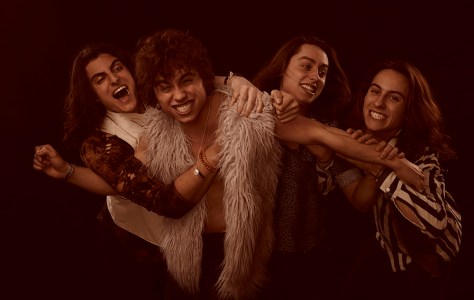
GVF.jpgThere’s this moment three minutes and twenty-five seconds into ‘Black Smoke Rising’, the last song on Greta Van Fleet’s double EP ‘From The Fires’, where the music has built with such unstoppable momentum that when singer Josh Kiszka roars: “YEEEAAAHHHHH” it feels as inevitable and powerful as an avalanche, or a tornado. It is rock’n’roll as elemental force. It is the sort of sound which makes this writer leap into the air to attempt an ill-advised scissor kick while his cat eyes him warily. It is very good.
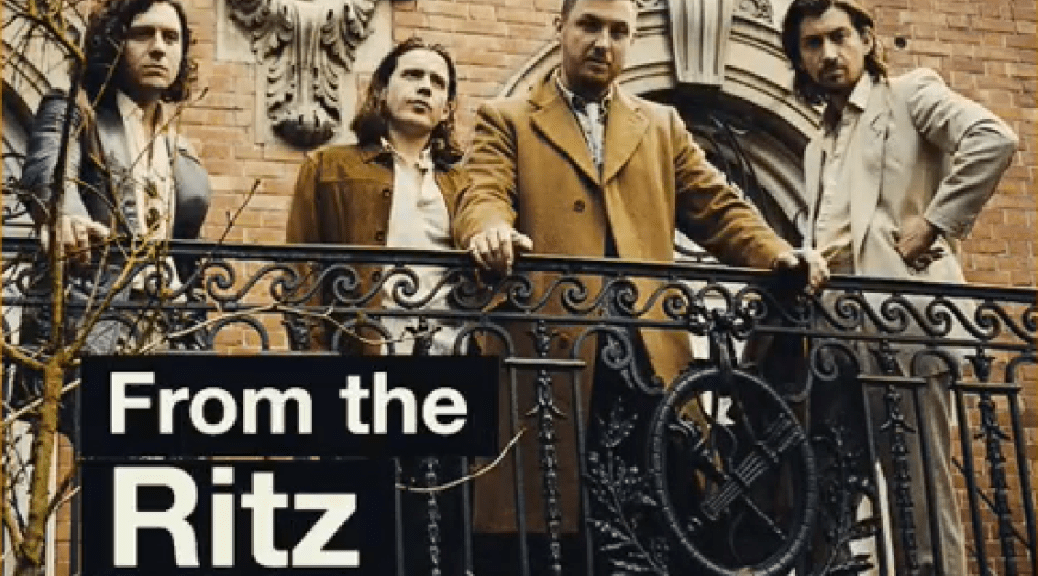
I tell this to Greta Van Fleet when I meet them backstage at Marathon Music Works in Nashville and Josh, a curly-haired, handsome cherub of a man, reassures me by saying he was feeling pretty much the same way when he first let out the aforementioned “YEEEAAAHHHHH”. He was responding instinctively to the music. “The song will, in a fashion, speak to you,” he says. “And you kind of just go with it.”

Continue reading at NME.

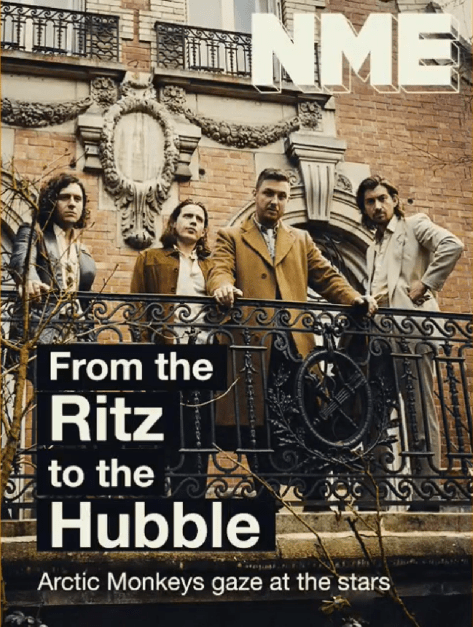
Alex Turner: Star Man

arctic-monkeys-nme-coverWhat do you mean, you’ve never seen ‘Blade Runner’?
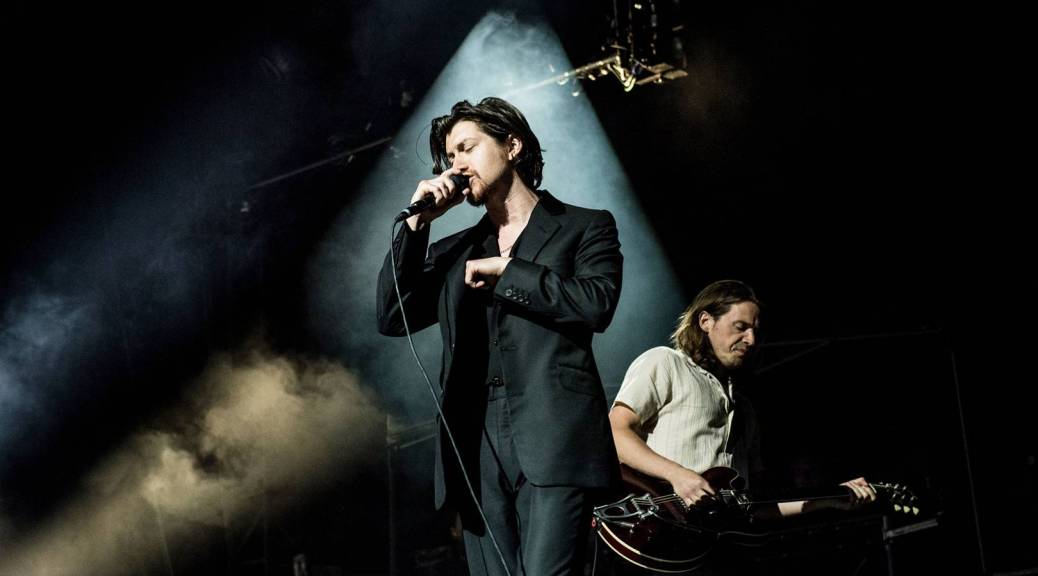
Alex Turner lives for moments like this. The strangled incredulity in the voices of those who simply refuse to believe that in this age of instant on-demand entertainment he’s never sat down to watch Harrison Ford hunt replicants. He loves it so much he wrote the line into ‘Star Treatment’, the opening track of the Arctic Monkeys’ sixth album ‘Tranquility Base Hotel and Casino’.

“When it’s at it’s absolute best, that scenario,” he says, with pure glee in his eyes, “And I’ve only seen this happen a couple of times, but it goes beyond: ‘What do you mean you’ve never seen ‘Blade Runner’?’ and gets to: ‘Oh my God, I envy you!’”

The memory of this makes him throw back his head and laugh, the sound echoing around the Masonic Lodge in Los Angeles’ Hollywood Forever Cemetery where in a few hours the band will play out on the lawn. He’s wearing a tan safari suit, a pair of yellow-tinted shades and a white shirt open so low you wonder why they even bothered putting buttons on it in the first place.

“I fucking love that shit,” he says, composing himself. “When it goes there, that’s like a fuckin’ slam dunk. ‘Oh I envy you!’ People are so involved in that stuff, aren’t they?”

It’s rare to see Turner this unguarded. Usually the 32-year-old talks like he writes: slowly, marshaling his thoughts in long pauses and choosing every syllable precisely. Yet back at the start of 2016, he found himself at a complete loss for words. He had no idea how to follow the multi-platinum international success of 2013’s ‘AM’. He was rattling around his home in Los Angeles, with his model girlfriend Taylor Bagley and their dog Scooter, not watching ‘Blade Runner’. Instead he was watching Fellini’s 1963 meta masterpiece ‘8½’.

If you want to understand how Turner arrived at ‘Tranquility Base Hotel and Casino’, ‘8½’ is the key to unlock it. It’s a film about a director with writer’s block, struggling to make a science-fiction movie – a towering spaceship set is under construction – but all the while being haunted by flashbacks of his youth.

“I’m not sure if ‘haunted’ is exactly the right word,” suggests Turner. There he goes again, always interrogating language. “It seems inherently negative and I don’t think it has to be, but yeah, things from his past are coming in and out, and it’s writing about writing.”

‘8½’ showed Turner a way forward. It combined a lot of the things he was struggling to talk about: his own writer’s block, the memories of his youth, and the science-fiction vocabulary which would allow him to explore it all without leaving himself too exposed.

So he went down to the old spare room, which he would later start referring to as the ‘lunar surface’, and which now contained a Steinway Vertegrand piano that the band’s manager Ian McAndrew had given him for his 30th birthday. Sitting down at the piano, he experienced his own Fellini-esque flashback. He tumbled back through time to before the house in LA, before headlining Glastonbury twice and the millions in the bank, back before even the electric excitement of that first album, to little 8-year-old Alex learning to play the piano with his dad, David.

“There’s something about the stuff I wrote on piano that definitely reminds me of the types of thing he would play, and still does even now,” he says. “There’s this bit in ‘One Point Perspective’, the sort of jazzy bit of that, that every time it comes around, when I sit there, it feels like something he would play. That’s the thing I’ve been playing whenever I’ve sat on a piano stool since I was a kid, but I never thought it would find its way into my compositions as much as it has on this record.”

As he sat there, playing his dad’s old chords, he experienced another flashback, to a now-teenage Alex in his parents’ garage writing ‘Whatever People Say I Am, That’s What I’m Not’. There is only one time in our conversation when Turner doesn’t pause or hesitate to answer, and it’s when I ask whether he thinks this record is lyrically the closest thing he’s ever written to their first.

“Absolutely I do, absolutely,” he cuts in, before the words are even out of my mouth. “I can’t put me finger on exactly why I think that, but I have been saying it a lot recently. It’s set in a completely different place, obviously, but there’s something in the lyrics that reminds me of something in that writing. I’m tempted to say that it’s something to do with how blunt it is. I think that was something I was trying to get away from, and perhaps I’ve returned to it now.”

So it makes sense that the album opens with one of the bluntest lines he’s ever written: “I just wanted to be one of the Strokes, now look at the mess you made me make.” He has found himself in a beautiful house, with a beautiful girlfriend, and he asks himself – how did I get here? “The first thing that line does is make me think about then and how much time seems to have suddenly passed,” he says. “I expected to change it, but by the time I got back around to it it seemed like it was exactly where it needed to be, and I was obviously attracted to how blunt it was.”

The album is littered with lyrics just as frank and direct as that one. On ‘Science Fiction’, he sings about his own creative process: “I want to make a simple point about peace and love but in a sexy way where it’s not obvious… So I tried to write a song to make you blush, but I’ve a feeling that the whole thing may well just end up too clever for its own good, the way some science fiction does.” If it wasn’t for the trappings of the fictional lunar hotel that he set about constructing around himself, this could have been a purely confessional, autobiographical record.

“And you could say because of those trappings, it’s allowed to be,” he suggests. Then he laughs to himself at what he’s just given away. “I just walked right into that one didn’t I? I think the way in to that was that I became interested in the idea that these worlds are created in science fiction stories that allow you to explore things that are rooted in this world.”

Things he would have found hard to explore without that device?

“Almost impossible,” he agrees.

One of those subjects is his own personal failings, a topic he keeps prodding like a wound that won’t heal. He sings about: “Things that I just cannot explain to you and those that I hope I don’t ever have to”, and the album closes with the line: “I’ve done some things that I shouldn’t have done. But I haven’t stopped loving you once.” Rather than writing more songs about love and lust, did he find himself drawn to writing songs of regret?

“Oh, you devil!” he laughs at this line of questioning. Understandably, he’s not going to be drawn on the specifics, but he did think it was time to stop singing about love. “I think ‘Sweet Dreams, TN’ from the Puppets album seemed like the place to leave that, for the time being,” he says. “All that is is a love letter, I don’t know how much more detail you could go into. Also, it was suggested to me by a friend: ‘What about not doing that for a moment’. I think I was arriving at that place meself anyway.”

As well as allowing him to be more introspective, the science fiction setting also gave Turner space to write about modern life. One of the album’s best tracks, ‘Four Out Of Five’, concerns a taqueria on the roof of the titular lunar hotel complex with the unlikely name: ‘The Information-Action Ratio’. It’s a phrase Turner lifted from Neil Postman’s 1985 book ‘Amusing Ourselves to Death’, which also heavily influenced Father John Misty’s ‘Total Entertainment Forever’ on last year’s ‘Pure Comedy’. Turner says the phrase ended up as the name of the taqueria by happy accident. It just so happened that the words came in on the backing vocals he recorded with drummer Matt Helders just as the lyrics mentioned the taqueria.

“The implication of course is that that’s the name of the thing,” he explains. “But what a wonderful name for a taqueria on the roof of a lunar hotel complex! But you’re more interested, I think, in why that phrase leapt out at me. I think one of the things I liked about that phrase is that you sort of know exactly what it is right away.”

The Information-Action Ratio is Postman’s prescient analysis of the way that a tidal wave of information and entertainment renders all of us on the receiving end utterly helpless as to how to decipher which of it is useful or useless. In other words, you’re not alone if you feel overwhelmed by 24-hour rolling news coverage, Twitter feeds and the constant, pinging updates on your phone.

“Exactly,” he says. “And phonetically it’s quite alluring, I think.”

Once Turner had corralled all these disparate ideas into ‘Tranquility Base Hotel and Casino’, he assembled the band – Helders, guitarist Jamie Cook, bassist Nick O’Malley and producer James Ford – and they decamped first to Vox Studios in Los Angeles and then to La Frette, the 19th century mansion-cum-recording studio in northern France where Nick Cave & The Bad Seeds recorded ‘Skeleton Tree’. There, the five were joined by a host of other musicians including their touring keyboard player, Tom Rowley, Tame Impala’s Cameron Avery, Klaxons’ James Righton, Mini Mansions’ Zach Dawes and Tyler Parkford, and drummer Loren Humphrey. They all played together in the same room, inspired by the lush recording sessions for the Beach Boys’ ‘Pet Sounds’ and the idea of Phil Spector’s ‘Wall of Sound’, as heard on Dion’s ‘Born to Be With You’ and Leonard Cohen’s ‘Death of a Ladies’ Man’, some of Turner’s favourite records. “You see those images from those recording sessions and it just looks so exciting,” says Turner. “Primarily I think I love those albums and I wanted my album to be a bit like them.”

Yet when it came to the vocals, they found that it was the lines Turner recorded on his vintage 8-track Tascam 388 in splendid isolation at home that needed to be retained for the record, impossible to better wherever else they tried them.

In a way, that’s fitting. ‘Tranquility Base Hotel and Casino’ is full of songs which sound like they’re being narrated by a reclusive rock star. On ‘One Point Perspective’, he’s dancing at home alone in his underwear, only distracted by the suggestively named “Mr Winter Wonderland” who keeps making him lose his train of thought. Like David Bowie’s ‘Space Oddity’ and Elton John’s ‘Rocket Man’, these are songs that are ostensibly about space travel but use that as a metaphor to talk about the isolating nature of fame.

Where ‘Tranquility Base Hotel and Casino’ joins the dots is by extending that idea to all of us. These days we’re all isolated, living in our own bubbles overwhelmed and rendered apathetic by the alienating stream of information pouring in on our screens. We seek refuge in frivolity. “Everyone’s on a barge floating down the stream of great TV,” as Turner sings on ‘Star Treatment’. We can have everything we want delivered to us on-demand. “You push the button and we’ll do the rest”, the slogan from a very early 1888 Kodak advert, repurposed for ‘The World’s First Ever Monster Truck Front Flip’, that could also describe every app on whatever device you’re reading these words on. Is Turner telling us that in 2018 we’re all becoming more like reclusive rock stars, sat in our pods with every form of entertainment ever devised available to us at the push of a button, slowly realising that having our desires met instantly may not actually make us happy?

“I find it hard to disagree with anything you’re saying,” he says finally, after another of those lingering pensive pauses. “I can’t resist. I’m trying to think of something that I can say that relates that I didn’t say on the record. Of course, I suppose. Of course.”

Originally published by NME, 11 May 2018.

Hollywood Forever: The Arctic Monkeys return

arctic-monkeys-gq-8may18_getty_bJohnny Ramone, Jayne Mansfield, Cecil B. DeMille: The stars were out last night at Hollywood Forever Cemetery in Los Angeles, the silent majority joining the lairy still-living to see Alex Turner unveil his latest sashay towards songwriting immortality.

The Arctic Monkeys release their sixth album this coming Friday. Titled Tranquility Base Hotel and Casino, it is in parts a sort of glam, retro-futuristic concept album about a lunar hang-out where Bowie’s “Starman” and Elton John’s “Rocket Man” might meet up for a martini. Counter-intuitively, it’s also Turner’s most introspective collection of songs to date.

Continue reading at British GQ.

I Spent 10 Days at a Silent Retreat and Would Really Like My Phone Back Now Please

Silent-MeditationImagine a world without sex, drugs, and rock’n’roll. Then remove cigarettes and alcohol from the equation. For good measure, why not banish meat too. And then to top it all off, let’s pretend that neither speaking nor reading exist on our plane. This is the reality of a Vipassana silent retreat, and in this world there’s only one thing to do: meditate.

Allegedly the same meditation technique that Gotama the Buddha harnessed in order to achieve spiritual enlightenment and reach nirvana, the practise of Vipassana stretches back about 2500 years into the past and its spread is global, even if its teacher is no longer with us here on Earth. Burmese Vipassana master S.N. Goenka passed away in 2013, but his wisdom now lives on in the audio and video recordings that participants on a retreat are privy to.

Continue reading at Vice.

Chuck D: ‘51 per cent of the US voted pro-Trump, Kanye’s not alone in being crazy’

chuck-dIf you ever find yourself in a hip hop themed pub quiz, try to make sure Chuck D is on your team. Not only is he one of the greatest and most influential MCs in the history of rap, he’s also blessed with the sort of encyclopedic knowledge and staggering recall that places him among the genre’s foremost historians and custodians. Chuck was there, and he got receipts.

Born Carlton Douglas Ridenhour in Queens, New York in 1960, Chuck formed Public Enemy in the late Eighties. Records like 1988’s “It Takes A Nation Of Millions To Hold Us Back” and 1990’s “Fear Of A Black Planet” became instant classics, transforming the genre and proving that hip hop could simultaneously be politically incisive and sonically explosive.

He’s currently looking back on those early years with the launch of a new compilation album, Hip-Hop The Golden Era 1979-1999, which brings together 72 choice cuts from the likes of NWA, Run-DMC, Sugarhill Gang, Eric B & Rakim, the Beastie Boys and, of course, Public Enemy themselves.

But Chuck is looking forwards too. He’ll be back on the road this summer with Prophets Of Rage, a supergroup which also features Tom Morello, Tim Commerford and Brad Wilk of Rage Against the Machine, B-Real of Cypress Hill, and his longtime Public Enemy collaborator DJ Lord.

Here, he shares his memories of hip hop’s “golden era” before weighing in on the future of the genre – and why Kanye might not have ended up as a Trump supporter if he was following more than one person on Twitter.

Continue reading at British GQ.

Pa’l Norte 2018: Franz All Over The World

FRANZFERDINAND_5156_JF

Alex Kapranos is wearing a jacket with Day of the Dead-style skulls embroidered on the chest, and that’s not the only way that Mexico is close to the Franz Ferdinand frontman’s heart.

“I think there’s a certain energy that we have to our music which really clicks with people in Latin America,” he says, leaning forward on a sofa in the band’s dressing room backstage at Monterrey’s Pa’l Norte festival. “There’s a real kind of openness and warmth to people here. It’s our natural environment, I think.”

They might be 5,000 miles from Glasgow, but they’re made to feel right at home by the 105,000 people squeezed into Parque Fundidora for the festival. Rock’n’roll that you can shake your hips to is very much the order of the weekend at Pa’l Norte, with Queens of the Stone Age and Muse also turning in sets that are seductive, rather than headbanging.

After the festival, Franz will be continuing their Mexican love affair with their own headline show in Mexico City – a place they’re returning to for the first time since one of their crowds trashed a venue. “It was a big arena, and the crowds in Mexico are really intense,” says Kapranos. “The first four or five rows of seats in the arena got completely destroyed. Hopefully we’re not playing a seated arena this time!”

The band’s love for this part of the world extends beyond the joy of playing to vast crowds. Drummer Paul Thomson has spent time in Puerto Vallarta, famous for being the town where Richard Burton and Elizabeth Taylor holed up while Burton was shooting ‘The Night of the Iguana’, while Kapranos recently explored the Yucatán Peninsula. “It’s incredible,” he says. “I hired a car and drove all around there. They have these cenotes, these underwater caves where you can swim completely underwater, and they have these strange albino fish that never see sunlight. The food down there is astonishing, things like Sopa de Lima. For me, in Mexico, but also in any city or country around the world, the best thing to do is get yourself lost. To turn the GPS off on your phone and see where you end up. Watch people, talk to people. Those are some of the best surprises you can get. The London perspective is often not to talk to strangers, but when you find yourself in other parts of the world that’s sometimes the best thing you can do.”

Now back at work, they’ve been introducing fans to tracks from new album ‘Always Ascending’, which was released in February. It’s an experimental, playful record – but Kapranos says it’s still been generating the requisite energy when played live. “It’s experimental in the sense that it’s lots of stuff that you haven’t maybe heard on our previous records, but it still sounds like Franz Ferdinand, and there’s still bangers on it,” he says. “It might sound different to our other records but people still want to get up and dance to it.”

The band will spend much of the rest of the year on the road – with key dates including a Glasgow homecoming at TRNSMT Festival at the end of June, a headline show at the Roundhouse in September and their first ever trip to Ukraine. “Nowadays, in the age of social media, you’re very aware of where your fans are,” says Kapranos. “We’ve had a lot of feedback from people from Ukraine for a long time. ‘When are you going to come?’ So finally this year we’re going to get to see it.”

For Franz fans who want to catch the band in an exotic locale without leaving Britain, they headline Festival No. 6 this September in Portmeirion, the curious Welsh tourist village that was designed by architect Clough Williams-Ellis in the style of an Italian village and featured in cult TV show The Prisoner. “I’m really excited about,” says Kapranos. “I’m a huge fan of The Prisoner, and I’ve never been to Portmeirion before.”

Thomson, though, has been before. “I went when I was 16 with a bunch of guys, because of The Prisoner,” he reminisces. “I’m not sure you’d call it a lads’ weekend. Maybe a virgin’s weekend? I’ll be returning a man this summer.”

Originally published by NME.

Shame: ‘Everyone’s political – it’s just whether they choose to share it’

ShameBackstage at the Teragram Ballroom in Los Angeles, Shame frontman Charlie Steen – still slicked with sweat after the south London five-piece’s thrillingly visceral set – is reeling off stories about how strange their first ever cross-country tour across America has been. They’re a band who collect outlandish tales like other bands collect hangovers and STDs.

“We were in Louisville, Kentucky,” he tells me. “Me and Eddie, our guitarist, went to the liquor store to get cigarettes and there was a guy stood next to us who was completely blue. We got carded, and the blue guy went: ‘Are you boys German or sumthin’?’ We said no, we’re British. Then he said: ‘Oh we’ve got a lot of them stationed here.’ He started going on about how North Carolina made the wrong decision. We didn’t know what he was talking about.”

It turns out they’d had an encounter with one of the Blue Fugates of Kentucky, an Appalachian mountain family who all carry the rare skin condition methemoglobinemia which turns their skin a shade of blue.

“The band we were on tour with, Protomartyr, said they look out for them every time they’re in Kentucky. We just stumbled upon him in the liquor store,” says Steen, still sounding as if he hadn’t quite believed his own eyes. “It’s like seeing a unicorn.”

Steen takes a pull on a beer while the rest of the band – guitarists Sean Coyle-Smith and Eddie Green, bassist Josh Finerty and drummer Charlie Forbes – prod at the wreckage of a birthday cake on the dressing room table.

Continue reading at The i.

A Young Photographer Takes on Thailand’s Monarchy

MtHS6Thai army soldiers entered an art gallery in downtown Bangkok one June day in 2017 and forcibly removed several pieces by the photographer Harit Srikhao. The 22-year-old’s work had clearly touched a nerve with Thai authorities, although he’s still not exactly sure why he was targeted by the dangerously overzealous critics.

“I’ve been offered a lot of explanations, official and unofficial alike, but none of them make sense,” he says. “It just goes to show the lack of freedom of thought in my country, and how ridiculously the government use their power to bully citizens. Most importantly, it is an affirmation that art is indeed a very, very powerful weapon.”

Srikhao wields this weapon with a hallucinogenic flourish. From his base in Pathum Tani, a northern suburb of Bangkok, he creates work that offers a savage satirical perspective on his country’s political landscape. His pictures depict a fantastical world in which traditional hierarchies are upended, the sanctity of the Thai monarchy is punctured and government propaganda images are rendered absurd. He alters his own photos by cutting and pasting by hand in hopes of revealing a deeper truth: “I use hand collage instead of Photoshop because I want to perform surgery on the pictures.” He explains, “I want to show the traces of how reality has been made oblique.”

Continue reading at Playboy.

Baaba Maal on being the sound of Black Panther’s Wakanda

WOMAD Festival
To soundtrack the moment in Black Panther when we’re first transported to Wakanda, director Ryan Coogler and score composer Ludwig Göransson knew they needed something special. They found it in Baaba Maal, the legendary Senegalese singer whose unique vocals echo out as we soar over the country’s hilltops. Maal is singing in his native Fula language about the death of an elephant, a metaphor for a fallen monarch.

For the filmmakers, working with Baaba Maal was an opportunity to incorporate African music alongside Kendrick Lamar’s more high-profile soundtrack. For Maal himself, it was a chance to lend his voice to a new kind of storytelling about his home continent: “I like the story a lot, and the challenge of telling the story,” he tells NME. “I confess, I didn’t know the film would have the impact that it has had now! It’s unbelievable. I really, really like the film but I didn’t expect all of that!”

Maal, whose most recent album ‘The Traveller’ was produced by The Very Best’s Johan Hugo in 2016, knows all about combining traditional and modern forms of music and storytelling. “I’m very traditionalist, but also very modern in the way that I love electronic sounds and the way technology changes culture,” says Maal. “The way it comes across in the film is that the culture is ancient, but also it talks to the future as well.”

The collaboration came about after Göransson travelled to northern Senegal to meet Maal at his home in the town of Podor, and then spent several weeks learning about the music of the region. “I’m always touring in very remote places in Senegal, so when he arrived I told him I was going on tour and invited him to go with me,” says Maal. “We left from my hometown, Podor, and then we visited every part of north Senegal. I thought he’d enjoy the tour and also find some inspiration. Then when we came back we jumped in the studio and he recorded me as well as all the other musicians he wanted to record for Black Panther.”

When creating the sound of Wakanda, Maal says that Göransson was not just inspired by the shows he saw on tour but also by the music being made by the public. In Senegal, locals often pay tribute to important figures like Maal by playing drums for them outside their home or when welcoming them into a new town or village.

“When you follow a band like my band around Senegal, it’s not just the band themselves who are going to inspire you, it’s also the population,” says Maal. “Everywhere we go people welcome us and play music. There are a lot of ceremonies in the daytimes. If you’re there and you listen and watch it will give you a lot of inspiration. I think that sort of music is also connected to the story of Black Panther. He heard a lot of songs about kings, and about kingdoms, that have been passed down since ancient times, so I think that was good for him.”

Throughout the score, certain instruments are associated with certain characters. Michael B. Jordan’s Killmonger is often accompanied by the sound of a Fula flute. For Chadwick Boseman’s T’Challa, the score uses the talking drum, a popular West African instrument which can mimic the tone of human speech. “The talking drum is an instrument which comes from far away in the past but leads to the future,” explains Maal. “When you play it, it sounds as if it could fill up the universe.”

Originally published by NME.

Sister Nancy is the first lady of dancehall

SISTER-NANCY-AND-LEGAL-SHOT-SOUND-SYSTEMIt was 1982 in Kingston, Jamaica, and Sister Nancy – the first ever female dancehall DJ – realised that she needed one final song to complete her debut album. Recording at Channel One Studios with a band that included the legendary Sly and Robbie rhythm section, she went to the mic and freestyled ‘Bam Bam’ over Ansell Collins’ ‘Stalag 17’. It’s fair to say she nailed it.

‘Bam Bam’ went on to become one of the most influential reggae songs of all time, sampled at least 80 times on tracks including Kanye’s ‘Famous’ and Jay-Z’s ‘Bam’. More importantly, ‘Bam Bam’ itself has stood the test of time. Almost four decades on there is still almost nothing that sounds better played loud in the sun.

Yet Sister Nancy saw little reward from the song’s success. Contractually cut out from receiving any royalties, she left music behind and moved to New Jersey where she took a job in a bank. It was only in the last four years, after the song enjoyed another resurgence, that she was finally able to get her hands on some of her backdated royalties and return to playing live. Ahead of her European tour this summer, Sister Nancy shares her remarkable story:

How did you first get involved in making music when you were growing up in Jamaica?

“It was always a part of me. Music is a part of us, but it was my bigger brother Brigadier Jerry who motivated me to do something with it. I went to see him DJ, and I thought if he could do it then I could do it as well. I didn’t think about it, I just did it. It was always a part of my family. It’s not that my brother was encouraging me with words, I just followed what he was doing because I liked it.”

You became the first ever female dancehall DJ – were there other women working in music in Jamaica at the time?

“There weren’t many of us. There was one, Muma Liza, who was a harmonizer with Kojak, but I was the one who came and took it to the dancehall. I started off with three tracks: ‘Papa Dean’, ‘Money Can’t Buy Me Love’ and ‘Proud A We’. Then I did a couple more singles: ‘One Two’ and ‘Transport Connection’. After I did those, ‘One Two’ started to take off and was doing well so that’s when I was asked to do an album. So that’s how my album ‘One, Two’ came about.”

Is it true that ‘Bam Bam’ was a late addition?

“Yes that’s right, ‘Bam Bam’ was the last track I put on the album. I had nine songs done and I needed to do one more but it was very hard for me, you know? There was an older song called ‘Bam Bam’, so I decided to do a ‘Bam Bam’ too. So that’s how I did the last track and finished the album. I freestyled it, I only wrote it down after. It’s timeless. It’s been 36 years, and ‘Bam Bam’ is still there. It’s not going anywhere.”

Despite the huge success of ‘Bam Bam’, you initially didn’t see much money from it. Are you getting properly paid these days?

“Yes, I’m getting the royalties now. I wasn’t getting anything for 34 years, but in 2014 after they used it in a Reebok commercial I decided to sue them. Now I own 50% of the ‘One, Two’ album. At least I’m getting something now, I never used to get anything.”

So when Kanye sampled ‘Bam Bam’ for ‘Famous’ in 2016 did he have to ask your permission?

“No, he didn’t have to ask me because I don’t own the song. The song is owned by Westbury Music, who are based in England. Kanye would have had to go through them, and then they gave him authorisation to use it. Then they make sure I get my royalties from the sample too.”

That’s good. What did you make of ‘Famous’?

“It’s not the first time I’ve heard someone sample ‘Bam Bam’. When I heard him do it I just thought: ‘Well, that’s good for me.’ Whatever way he takes it, it’s very good for me because it keeps me moving. Do you know what I’m saying? It keeps me working. Then Jay-Z did the same thing. It’s a blessing.”

You went back to Jamaica with Jay-Z, didn’t you?

“Yeah that’s right. He wanted me to appear in the video for ‘Bam’ that he was making with [Damian] Marley. I spent three days down there with him. It was nice, but a man is just a man. Jay-Z is just a man, same as you. He’s no different.”

You’re playing the Positive Vibration festival in Liverpool this summer. At your shows do you still see a lot of young people getting into your music?

“It’s always been like that! Sometimes I wonder how they know about me after so long. I’ve been doing this for 41 years. I don’t know how they hear about me, but it’s mostly young people at my shows when I’m performing all over the world. There’s a few older folks like me, but mostly it’s younger people. They’ll have the ‘One, Two’ album or a couple of singles and they bring them to me to sign.”

What is it about your music that keeps connecting with new generations?

“I don’t know what causes it, but I’m going to say that they’re in love with the songs and they’re in love with me… or my voice! I think it’s my voice, and ‘Bam Bam’. You can’t not love ‘Bam Bam’. I don’t know what to say about it. ‘Bam Bam’ is just ‘Bam Bam’! Whatever it is, I’m grateful.”

Originally published by NME.

The Art Of The Deal

the-art-of-kim-deal-nme

“You guys are such dorks!” says Kim Deal, which is a fair assessment because I’ve just told her about the time teenage me and a friend went to see her band The Breeders in homemade T-shirts that said: ‘Cool as Kim Deal’.

Sure, I’m a dork, but I’m in good company. The former Pixies bassist inspires devotion, whether it’s Kurt Cobain naming Breeders’ ‘Pod’ as an album that changed his life or Thom Yorke saying he was uncomfortable playing after Pixies because it’s “like the Beatles opening for us.”

As The Breeders prepare to release fifth album ‘All Nerve’, Kim talks us through her rock’n’roll life:

  1. JOINING PIXIES (BECAUSE THEY MADE HER LAUGH)

In January 1986, a week after moving to Boston from her hometown of Dayton, Ohio, Kim spotted an ad in the Boston Phoenix placed by future Pixies bandmates Charles Thompson (Black Francis) and Joey Santiago. “Most of those adverts were guys going: ‘Looking for blonde singer aged 19-22. Hair must be between shoulder length and mid-back.’ or: ‘Looking for drummer with a PROFESSIONAL ATTITUDE’,” she explains. “So: ‘Looking for someone into Peter, Paul and Mary and Hüsker Dü. No chops.’ caught my eye. I thought it was funny.”

  1. HER IRONIC PSEUDONYM

On the first two Pixies releases, ‘Come On Pilgrim’ and ‘Surfer Rosa’, Kim was credited as Mrs John Murphy, taking her then husband’s name as an arch feminist joke. “Somebody said that when I worked in a doctor’s office,” she explains. “‘My name is not Ethel. My name is Mrs Howard Rosenstein.’ Holy shit! I need to show her respect by calling her by somebody else’s name!”

  1. WRITING THE BEST PIXIES SONG (AT LEAST ACCORDING TO KURT)

‘Surfer Rosa’ only featured one song with lyrics by Kim – ‘Gigantic’, a voyeuristic ode to a well-endowed man – but it made such an impression on Kurt Cobain that in 1992 he said: “I wish Kim was allowed to write more songs for The Pixies, because ‘Gigantic’ is the best Pixies song and Kim wrote it.” Kim reacts modestly: “Well, it’s better than somebody saying: ‘Oh God, you suck.’”

  1. FORMING THE BREEDERS

Kim formed The Breeders with Throwing Muses guitarist Tanya Donelly, and their debut 1990 album ‘Pod’ was hugely influential – not least on Nirvana. “I think they got Steve Albini to record ‘In Utero’ because they really liked ‘Pod’,” says Kim. “I remember Dave Grohl saying he really liked the drum sound, but I always felt bad for Dave because the drum sound for ‘Pod’ sounds huge because there’s so much empty space for the drums to ring out. Poor Dave had all these guitars and bass playing all the way through.”

  1. TOURING WITH NIRVANA

Nirvana were such fans that in 1992, a year after ‘Nevermind’ made them mind-bogglingly successful, they invited The Breeders to join their tour. It was an eye-opening experience for Kelley, who had joined on guitar, and new drummer Jim Macpherson. “The first show with Nirvana was one of Macpherson’s first shows out of Dayton, Ohio ever,” laughs Kim. “He asked Dave Grohl: ‘What are those big black boxes?’ Dave is like: ‘You idiot, they’re monitors. You listen to the band through them!’ I think that’s why Nirvana enjoyed touring with us so much: to see it through other people’s eyes.”

  1. MAKING ‘CANNONBALL’ WHILE PIXIES SPLIT

Black Francis unilaterally disbanded Pixies in 1993, but Kim had the perfect riposte. “I was in the studio literally recording ‘Cannonball’ when Kelley came down the hallway and said: ‘Pixies broke up’. I said: ‘Okay, get out of my way,’” remembers Kim. The song was named NME’s Song of the Year and 25 years on remains a timeless indie rock staple. “I don’t think anyone thought it would get played on the radio,” says Kim. “I wasn’t thinking: ‘This is it! This is my ticket!’”

  1. BECOMING AN INDIE ICON

The success of ‘Cannonball’ and second Breeders album ‘Last Splash’ helped seal Kim’s image as the embodiment of rock star cool. During the ‘90s she was the subject of tribute songs from the Dandy Warhols (‘Cool As Kim Deal’) and Japanese rockers The Pillows (‘Kim Deal’). “I loved it but was kind of horrified at the same time,” says Kim. “I’ve never heard the Dandy Warhols one. Are they actually saying I’m cool or are they being facetious? I’ve listened to The Pillows because I can’t understand what they’re saying. They’re probably singing about their cat called Kim Deal.”

  1. GETTING THE BAND BACK TOGETHER

In 2013, Kim reunited with Kelley, Jim and bassist Josephine Wiggs to play shows marking the 20th anniversary of ‘Last Splash’. When the year was over, they were offered more gigs. “That’s when my OCD kicked in: ‘Wait, that’s not the 20th anniversary anymore,’” says Kim. “Our friends told us we should release another album. We kept adding stuff to our setlist and that started the recording of the album.”

  1. TEAMING UP WITH THE GENERATION SHE INSPIRED

The result is ‘All Nerve’, a strange and visceral rock album which features, among many other things, a Courtney Barnett guest appearance on ‘Howl At The Summit’. For Kim, it was a chance to collaborate with someone she’d first heard of as a fan. “She’d covered ‘Cannonball’,” explains Kim. “They did a pretty good version: shambolic and kind of casual.”

  1. NEVER STOPPING

While it’s been 10 years since last Breeders album ‘Mountain Battles’, Kim says she hopes there’ll be another sooner and bristles against the suggestion she’s not prolific – pointing to her solo 7 inch series and busy touring schedule. “I want to defend myself. I do music constantly but sure, I’m ‘not prolific’,” she says, her voice dripping with sarcasm. “Let’s go with that.”

Originally published in NME, 9 March 2018.

Oscars 2018: The artist behind the Harvey Weinstein statue speaks out

harvey-weinstein-casting-couch

With just a couple of days to go before this year’s Oscars, a lifesize gold-coloured model of Harvey Weinstein perched on a ‘casting couch’ has appeared in Hollywood near the venue for the ceremony. In his right hand he holds an Oscar statue, suggestively clasped above his groin. The artwork is a collaboration between British-born street artist Plastic Jesus and Joshua ‘Ginger’ Monroe, the artist behind the naked Donald Trump statues. GQ caught up with Plastic Jesus this morning in LA:

GQ: What’s the message behind this piece of work?

Plastic Jesus: The idea behind this piece is that Harvey Weinstein was this iconic figure in the industry. In terms of profile, I don’t think there’s anybody to compare with him. I chose to come to LA, as so many other people do, pursuing a dream. There would have been so many people who came here hoping to be actors or actresses and the opportunity to get somewhere near Harvey for a meeting or a dinner would have been an absolute dream. For some, that dream clearly turned into a nightmare. The idea for this piece was that I wanted people to be able to come and sit down on the sofa next to Harvey. Knowing what we now know about Harvey, in terms of his abuse of power, sexual harassment and rape, what does it feel like sitting next to him? This icon who turned out to be a monster.

Continue reading at British GQ.

Kevin EG Perry is a writer for The Independent, The Guardian, GQ, NME, Empire, Wallpaper*, Vice, Lonely Planet Traveller and other reputable publications