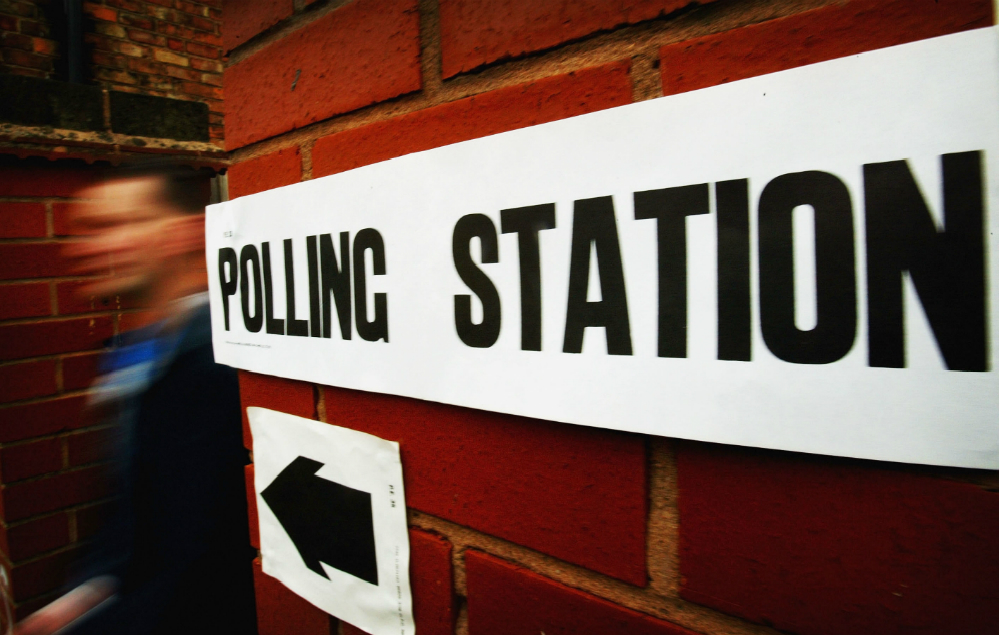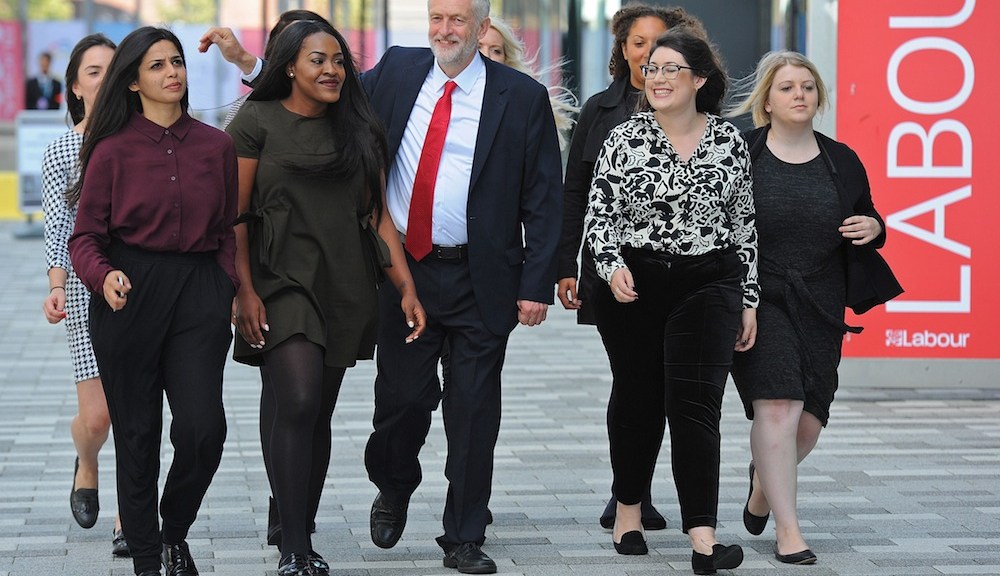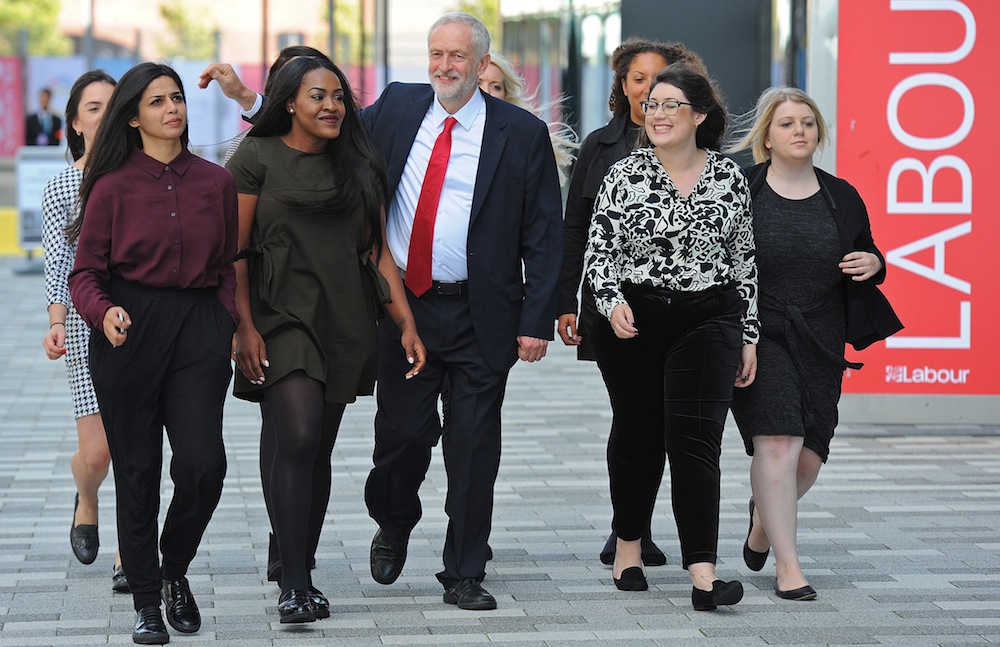
18-year-old Eli Aldridge has been selected as a Labour candidate for the General Election on 8 June – a day after his A Level exams start. The aspiring MP for Westmorland & Lonsdale explains how you too could get started on the road to Westminster

When did you first get involved in politics?
“In the aftermath of the 2015 election, my disappointment about the result spurred me to think about how I could make a difference. The Labour Party seemed the obvious choice for me.”
Nothing But Thieves announced themselves to the world in emphatic style when their 2015 self-titled debut sold over 250k copies, racking up over 174 million track streams along the way. This September 8 they return with their second album, Broken Machine, of which new single ‘Amsterdam’ is the first taste. When we gave frontman Conor Mason a ring to ask him what we should expect, we found him in Ukraine where the band are currently filming the ‘Amsterdam’ video:
The election this June is a weird one for any number of reasons. Conducted beneath the cloud of Brexit, it’s also notable for likely being the last one we’ll be able to squeeze in before global Armageddon. Enjoy it while you can!
Another weird thing about it is simply that it’s happening in June. The last three general elections have all been held in early May, and it’s possible this subtle shift in the date could have a big impact on how young people vote – or more specifically, where they vote. Holding the election after many students have finished exams could mean that more vote in their home constituencies, and 68% of those surveyed said this was their plan. It’s hard to call exactly how this might impact the result. It may mean that there’s a reduced impact from concentrated blocks of students voting in university seats. At the same time, some students may be going home to cast potentially powerful votes in marginal constituencies.
People who work in advertising love going viral. They love it even more than cocaine and stealing money from the tiny fists of children. They can’t get enough of it, yet it remains mysterious. Advertisers spend hours upon hours reading tea leaves or consulting tarot cards to try to divine the specific rubric which makes some ideas meme-worthy while others wilt and die without a retweet to their name.
In this election, Theresa May’s “strong and stable leadership” catchphrase has already taken on the qualities of a meme. Thanks to her adherence to the three Rs of repetition, repetition, repetition, the slogan has become one of the few things even the most casual of election observers will have picked up.
Before he was the eponymous tortured detective in Luther, before he was a regal Nelson Mandela in Long Walk to Freedom, before he was even The Wealth of Nations-toting drug kingpin Stringer Bell in The Wire, Idris Elba was a schoolboy on a bus in east London being pelted with eggs by racists.
“My school, Trinity, was just off the Barking Road, which would take all the National Front supporters to the football at West Ham,” he remembers, leaning forward on a sofa in a production office, in London’s Holborn, that smells of expensive candles and industriousness.
It was past one o’clock on the Monday morning of last year’s Glastonbury, around the time thoughts usually turn to proper beds, showers, and drinking anything other than warm cider. But the sweat-slicked crowd squeezed into the Rabbit Hole didn’t want any of that. They wanted to hear En Vogue’s Don’t Let Go collide with King Crimson’s 21st Century Schizoid Man. They wanted Destiny’s Child’s Bootylicious segueing into Rage Against the Machine’s Killing in the Name. They wanted, as their full-throated chant put it: “Charlotte! Charlotte! Charlotte fucking Church!” The former child soprano’s Late Night Pop Dungeon is a riotous set that sees her cover an eclectic mix of disco hits, rock anthems and cult pop curios and is responsible for the most Church-based excitement since Martin Luther nailed the ninety-five theses to a door in 1517.
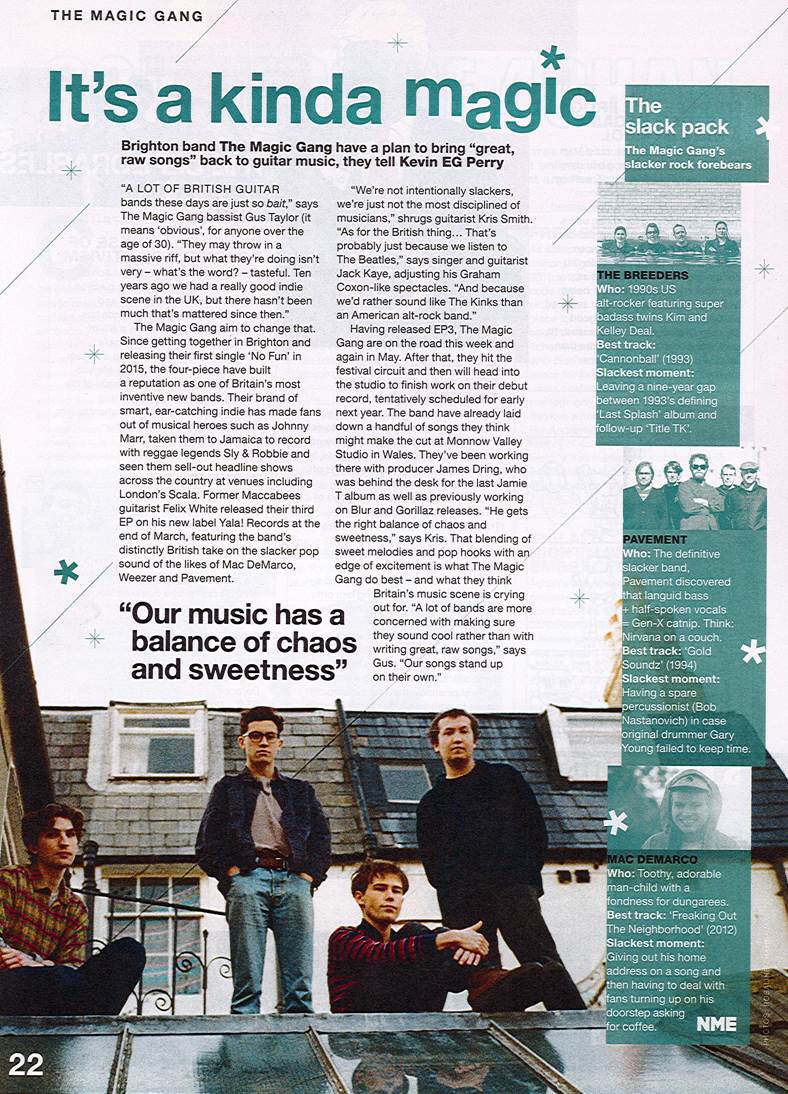
A lot of British guitar bands these days are just so bait,” says The Magic Gang bassist Gus Taylor (it means ‘obvious’, for anyone over the age of 30). “They may throw in a massive riff, but what they’re doing isn’t very – what’s the word? – tasteful. Ten years ago we had a really good indie scene in the UK, but there hasn’t been much that’s mattered since then.”
The Magic Gang aim to change that. Since getting together in Brighton and releasing their first single ‘No Fun’ in 2015, the four-piece have built a reputation as one of Britain’s most inventive new bands. Their brand of smart, ear-catching indie has made fans out of musical heroes such as Johnny Marr, taken them to Jamaica to record with reggae legends Sly & Robbie and seen them sell-out headline shows across the country at venues including London’s Scala. Former Maccabees guitarist Felix White released their third EP on his new label Yala! Records at the end of March, featuring the band’s distinctly British take on the slacker pop sound of the likes of Mac DeMarco, Weezer and Pavement.
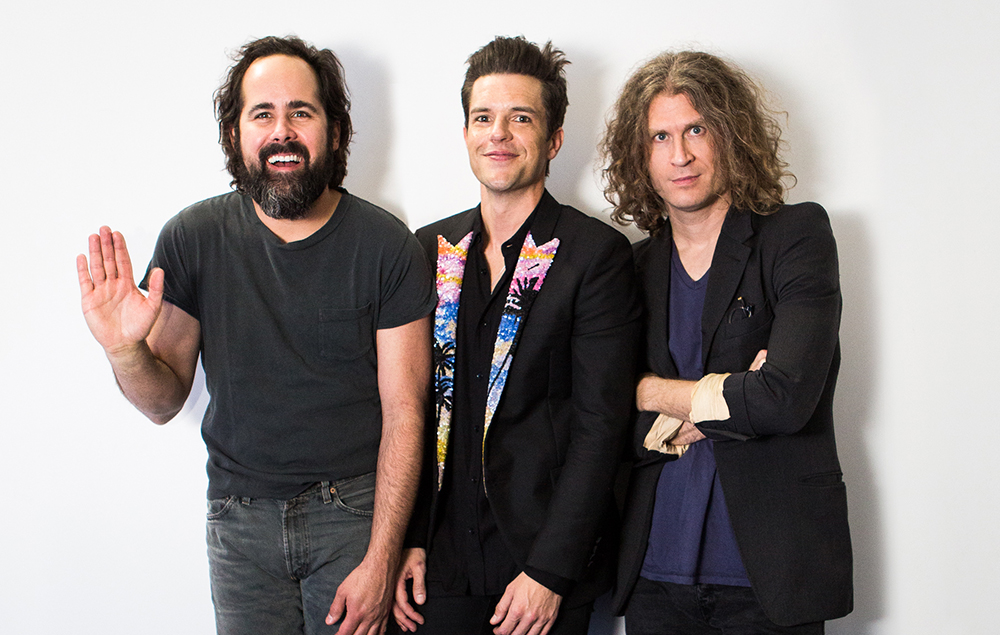
We’re backstage at Pa’l Norte festival in Monterrey, northern Mexico, about half an hour before The Killers are due onstage for their headline set, and Brandon Flowers is trying to convince guitarist Dave Keuning that now is perhaps not the ideal time to start experimenting with mixology.
“No,” sighs the singer, “don’t mix vodka and tequila.”
You can’t blame him for getting into the Mexican national spirit. Brandon himself has been in town for a few days, acclimatising to the late March heat and sampling the very best of the local cuisine. A couple of nights earlier he’d been spotted at Tacos Primo, a great local joint that serves the best tacos I’ve ever eaten. Each taco costs just 15 Pesos each (about 64p) for bistec or carnitas, and the secret to their superlative taste seems to be frying the tortillas in the steak fat.
“I think the tortilla is a really important part,” concurs Brandon. “We were watching their process at Primo. You could put anything in a good tortilla and it would be really great.”
Brandon’s a man of the world, so I want to know how he ranks them against his personal lifetime of taco-eating? “They were up there with the best tacos I’ve ever had,” he confirms, although he points me towards another couple of contenders: “When we’re in Guadalajara we have a place on the street that we go, Tacos Jorge. At home in Vegas, it’s got to be Tacos El Gordo, ‘fat taco’.”
There you have it. Never let it be said that NME doesn’t ask the meatiest questions. I also take the opportunity to grill the band on the progress of their fifth album. “It’s sounding good,” offers drummer Ronnie Vannucci Jr of their new songs. “We have a problem with taking two steps forward and one step back, so that makes it take longer. We keep asking ourselves: ‘What does a fourpiece band do? How do you keep it fresh?’ It’s a constant exercise in experimentation.”
The band confirm that the record will be out this year, and that they’ll have new material to play by the time they headline Hyde Park on July 8. There’s no new stuff tonight, so the 85,000 people packed into Monterrey’s Parque Fundidora have to settle for just being reminded how many indie dancefloor fillers the band have written over the years. Which is a lot, even if you just listen to their debut. Watching thousands of Mexicans scream along to ‘Somebody Told Me’, ‘Smile Like You Mean It’, ‘Jenny Was A Friend Of Mine’, ‘All These Things That I’ve Done’ and ‘Mr Brightside’ in 2017, you’re tempted to conclude that ‘Hot Fuss’ has aged better than any of its early-00s peers. After the show, like so many rock stars, Brandon Flowers only has one thing on his mind. “We’re going again tonight,” he says. “Straight from the stage to Tacos Primo.”
There is, of course, more to Monterrey than just criminally good tacos. A bustling industrial city with a population a little over one million, it’s also home to a decent live music scene. Café Iguana in Barrio Antiguo is a great indie club with at least four live rooms, including one in an old-fashioned theatre where the end of an indie band’s set was signalled by the thick red curtains immediately drawing shut across the stage. You don’t get that at Birthdays. The best cocktails in town are at Río Mississippi 105-B, who do frankly obscene things with mezcal.
Then there’s Pa’l Norte itself, a sprawling festival which runs its two main stages with ruthless efficiency. Located side-by-side, the moment a band on the first stage finishes the next band starts up on the second stage. Never a moment wasted, although when you’re supposed to pop for a wee or to the bar is anyone’s guess. In what might be a stroke of genius, there’s also a third, smaller stage just to the right of the two main ones. Known as the Sorpresa (‘Surprise’) stage, the line-up is unannounced and the secret sets last just 5 or 10 minutes, making them perfect for one-hit wonders. Wondering why there’s a five-minute gap between Kaskade finishing and Jason Derulo starting? Surprise! Here’s Las Ketchup singing their 2002 novelty single ‘The Ketchup Song’. Got 10 minutes before The Offspring come on? Surprise! Here’s Redfoo playing the only two LMFAO songs you’ve heard of, and another one you haven’t, and taking his trousers off and wiggling his dick in his tiny pants, and making you wonder whether anyone else could make a 10-minute set feel 40 minutes too long.
Speaking of sexually inappropriate men with bad hair, it wouldn’t be 2017 without Donald Trump. MIA performed her weekend-stealing high-energy set in front of a huge metal wall dividing the stage in two. If you somehow missed the significance of that, just 200km south of the border, she spelled it out by getting her DJ to play Edwin Starr’s ‘War’ and singing along: “Wall, what is it good for? Absolutely nothing.” Having stuck her middle finger up at Trump, she decides to “pull up on the politics” and play what she calls “the most romantic song I’ve ever written.” It’s ‘Teqkilla’ – like I said, in Mexico everyone gets into the local spirit eventually.
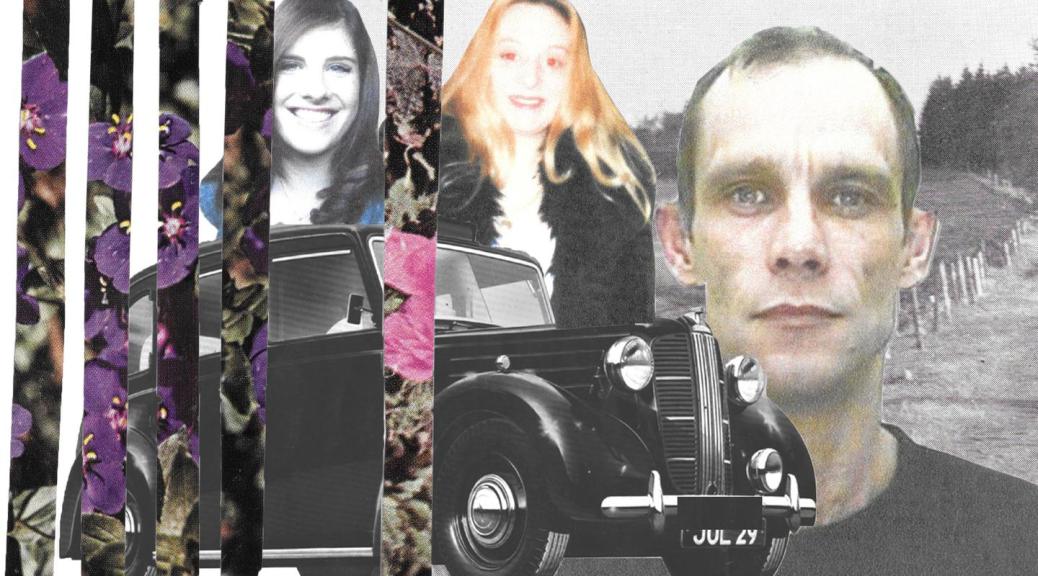
When Detective Sergeant Steve Fulcher heard that taxi driver Christopher Halliwell – the lead suspect in the disappearance of Sian O’Callaghan five days earlier – had refused to tell officers anything during his arrest, he made a decision that, in a cop show, would be described as “not doing things by the book”. In the real world, Fulcher’s actions were later described by the Independent Police Complaints Commission (IPCC) as a “catastrophic” breach of the Police and Criminal Evidence Act.
While officers were driving Halliwell from the scene of his arrest, in an Asda carpark, to Gablecross police station in Swindon, Fulcher called them and told them to instead take the suspect to Barbury Castle, an Iron Age hill fort. Fulcher met Halliwell on the wind-swept hilltop at 12:11PM on Thursday the 24th of March, 2011. He led him 50 yards away from the officers and their police cars to talk. Their conversation was recorded by the only other person there, a civilian note-taker:
Fulcher: “Are you going to tell me where Sian is?” Halliwell: “I don’t know anything.” Fulcher: “Are you going to show me where Sian is? What’s going to happen, if you tell us where Sian is – that whatever you will be portrayed – you would have done the right thing.” Halliwell: “I want to go to the station.” Fulcher: “Are you prepared to tell me where Sian is?” Halliwell: “You think I did it.” Fulcher: “I know you did it.” Halliwell: “Can I go to the station?” Fulcher: “You can go to the station. What will happen is that you will be vilified. If you tell me where Sian is you would have done the right thing.” Halliwell: “I want to speak to a solicitor.” Fulcher: “You are being given an opportunity to tell me where Sian is. In one hour’s time you will be in the press.” Halliwell: “I want to speak to a solicitor.” Fulcher: “You will speak to a solicitor. I’m giving you an opportunity to tell me where Sian is. By the end of this cycle you will be vilified. Tell me where Sian is.”
Long minutes of silence passed. Finally, Halliwell said: “Have you got a car? We’ll go.”
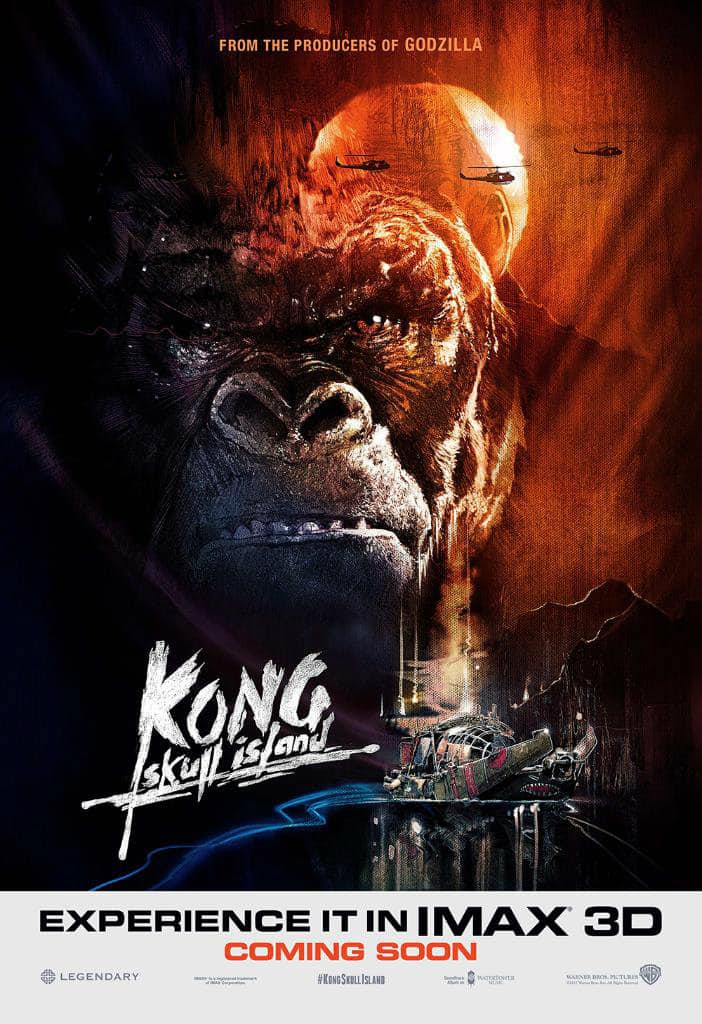
Kualoa Ranch is a 4000-acre private nature reserve in Hawaii, most recognisable as Jurassic Park. Back in December 2015, I flew over to witness its transformation into Skull Island, a place where King Kong meets Apocalypse Now. Tom Hiddleston and director Jordan Vogt-Roberts were on hand to explain:
You decided to call two of your characters Conrad and Marlow…
Hiddleston: “The idea of Conrad and Marlow really came from Jordan. That was such a great inspiration as a spine. I think there’s something intrinsically exciting and cinematic about putting a group of disparate characters in the same place on a boat and sending them down a river. I think ‘Heart of Darkness’ has inspired so many stories like that.”
Vogt-Roberts: “This is my own personal ‘Heart of Darkness’! ‘Apocalypse Now’ is a huge reference point. The initial talking points for this movie in my mind were: ‘Man, you know what I’ve never seen? A monster movie with the aesthetic of ‘Apocalypse Now’. With Hendrix playing, with The Stones playing, with The Doors playing… thinking about the imagery and the chaos of ‘Apocalypse Now’, what was going through everyone’s mind.”
Are we going to get those things on the soundtrack?
Vogt-Roberts: “Yes! I want to see Kong punching a helicopter while Jimi Hendrix plays. But our movie… ‘Apocalypse Now’ is one of the best films of all time, and while there’s a loose inspiration there we’re ultimately making a very big and accessible movie. ‘Apocalypse Now’ is almost Malick-esque in the way that it has to wash over you, and I don’t quite think that’s opening on 3,000 screens these days. There are aesthetic inspirations, and inspirations in terms of the madness that this place takes on and the journey that going up the river has for these people, but, you know, it’s an easy talking point on the movie when you look at a lot of these things. We’re going for something bigger than that, more adventurous than that.”
What sort of hero is Hiddleston’s Conrad?
Vogt-Roberts: “There’s a bit of Steve McQueen in there. Tom’s so great, and charming, and textured. We initially were talking about making him American. One of the big things that came out was instantly separating him from Packard and the rest of his men. In the context of a movie that takes place in the shadow of Vietnam – those are generally very uniquely American stories – a lot of the conversations about Tom it became clear that it was a way to make the movie feel bigger, more worldly and to give him a different perspective on what was going on at that time. There actually were a lot of British soldiers in Vietnam, which is something which is downplayed pretty significantly. It’s viewed as a uniquely American war, which it wasn’t quite. There were a lot of avenues that led us there, a lot of it was just really trying to create clear and concise sides.”
Hiddleston: “Indiana Jones of course came up, as an icon and a silhouette, in a way. He’s somebody who has an intellectual passion and becomes an adventurer. We always wanted Conrad to be that. We knew we couldn’t make him like Martin Sheen in ‘Apocalypse Now’ because that’s a very heavy character – another iconic performance – but this needed more wit. It’s an adventure film. It will be spectacular – I know that already having been on this for nine weeks. I’ve seen it. It needs to be fun. Having made a couple of films on this scale, the ones that are the most successful have a balance of weight and drama and also of wit.”
It’s two days before the NME Awards and, in a rehearsal room in London’s King’s Cross, a group of musicians are gathering to prepare a very special performance. What unites them is a belief that we’re in a time of crisis and we all need to do what we can to raise our voices.
Almost six years ago, a ferocious civil war broke out in Syria. With much of the country now controlled by so-called ISIS, there’s still no end in sight. Just like the victims of wars in Afghanistan and Iraq, millions of ordinary Syrians were left with little choice but to flee for their lives. They packed a few belongings into plastic bags and set off with their children in tow. Most ended up in neighbouring countries Turkey, Lebanon and Jordan, but some kept going and made the precarious journey to Europe. Many of those who hoped to come to Britain ended up at a camp in Calais, France, which at its peak was a makeshift home for 15,000 refugees.
For a time, the crisis made headlines, but before long our collective gaze drifted to Brexit, Trump and Bake Off. While we looked away, a million new refugees from Syria, Iraq and Afghanistan arrived in Europe last year. The camps in Calais and elsewhere were closed down, leaving many people homeless on the streets of Paris. In Britain, we’ve given refuge to just a few thousand. In the last few weeks, the Government announced that a scheme which promised to rehome 3,000 unaccompanied children in the UK will be scrapped after letting in just 350. That decision alone makes the idea of Britain as a compassionate country sound like cheap fiction – and it’s why the charity movement Help Refugees is currently in the process of suing the Home Office.
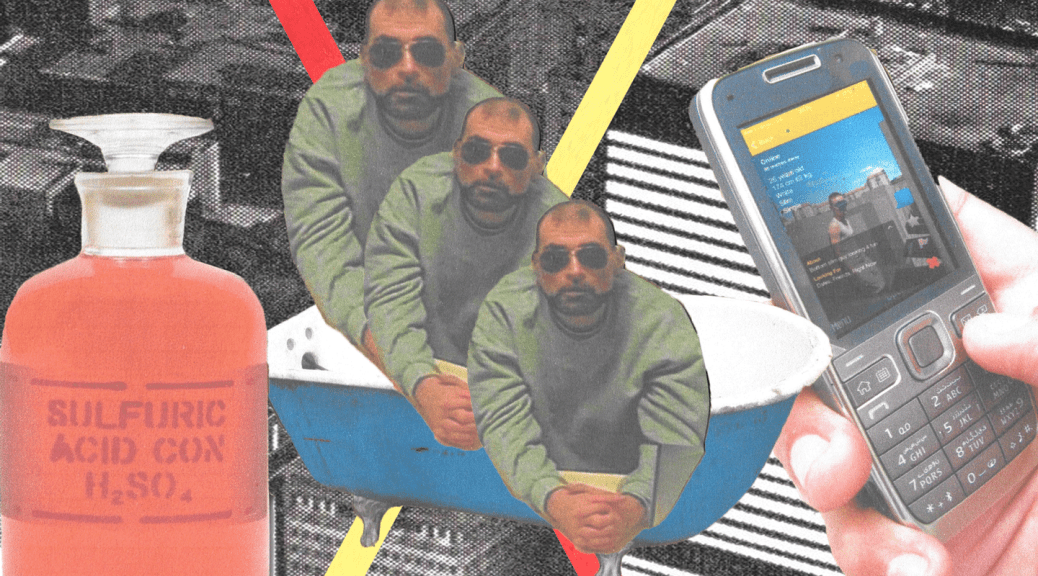
When the smell of rotting human flesh became too much for the residents of Block E to take, the caretaker on The Peabody Estate first tried to mask it with bubblegum-scented air spray. When that didn’t work, somebody eventually decided to call the police.
That was on Thursday the 7th of April last year. Almost a week earlier, on the night of Friday the 1st, a man who would later be identified in court only as “CD” found himself lost on the estate while looking for a chemsex party he’d been invited to by someone named “Domination London” on “gay fetish app” Recon. The Peabody Estate, which originally opened in 1876, lies a few minutes south of the Thames, between London Bridge and the Tate Modern. Its desirable location means a one-bed studio apartment there will set you back £1,300 a month in rent, but its various blocks can be difficult to navigate for the uninitiated.
Eventually, CD found the right door and rang the buzzer. There was no answer, so he rang it again. And again.
Eventually a man’s voice answered. It said: “Hello, sorry, we are having kind of a situation here.”
CD didn’t know what the voice meant by “a situation”, so he asked what was going on. The voice explained that somebody was feeling ill, but said not to worry because they were taking care of it. CD asked if there was anything he could do to help, and the voice said no, everything was under control, but the party was cancelled. The voice, CD would later testify, “sounded concerned, a little bit upset. He did not sound too worried.” As he walked away, CD thought to himself that perhaps somebody was throwing up on the carpet.
The voice on the other end of the intercom belonged to a 49-year-old Italian named Stefano Brizzi. He later told police why he hadn’t let CD in; he’d invited a few men to join his party, he explained, “but they didn’t arrive, and when one did arrive I was right in the middle of strangling Gordon.”
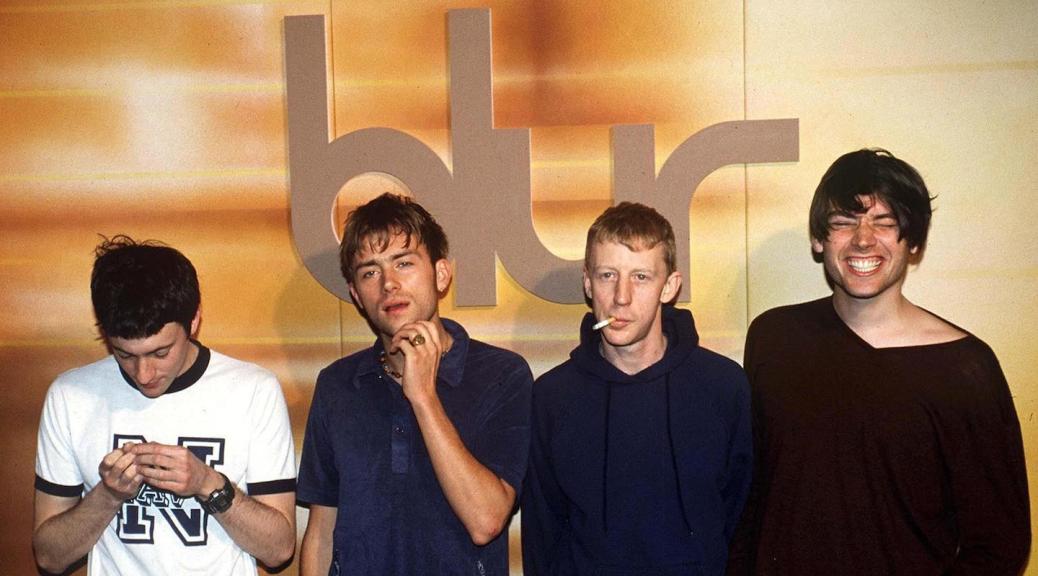
The other day I found myself watching Central Intelligence, a 2016 goofball action romp starring Dwayne ‘The Rock’ Johnson as a unicorn-loving super-spy who saves the world by teaming up—for reasons which are still not altogether clear to me—with his old schoolmate, an accountant played by Kevin Hart. Look, I know it’s not going to win any Oscars but I was on a plane at the time. Nobody wants to strap in to 12 Years A Slave at 35,000 feet. Anyway, there’s a scene where the pair jump out of a skyscraper together through a plate glass window in a hail of bullets. I’m sure you know the type, whether or not you’ve had the pleasure of Central Intelligence. As the glass shatters and they burst into the air, the voice you hear isn’t The Rock’s or Kevin Hart’s, but the sheer, uncut exhilaration of Damon Albarn screaming: “WOOOO-HOOOOO!” It’s a dumb moment in a dumb film, but hearing “Song 2” in a Hollywood blockbuster almost exactly 20 years after it first came out was a weird and timely reminder of what a transformative impact that song, and the self-titled album it appears on, had on Blur’s relationship with America and their whole career.
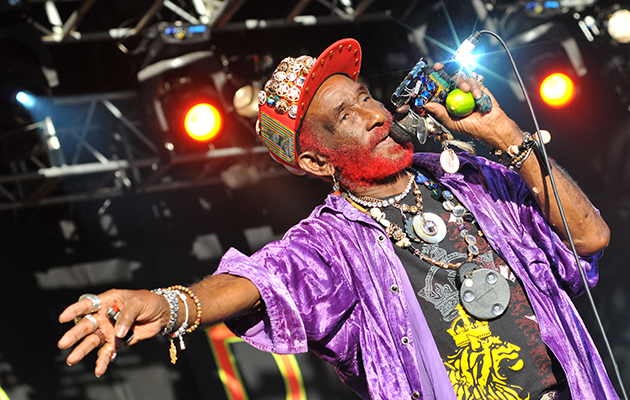
If the history of reggae was the Old Testament, Lee ‘Scratch’ Perry would be God. He was there, making it happen. In 1968 he released ‘People Funny Boy’, one of the first ever reggae tunes. Two years later he was approached by Bob Marley to produce the second and third Wailers albums. From that moment, musicians from Perry’s house band The Upsetters, named after his song ‘I Am The Upsetter’, became part of the definitive line-up of Marley’s band.
Perry himself went on to record with everyone from The Clash to Paul McCartney, and he was more than just a producer. He was a guide and a friend in times of need. In 1980, when Macca was arrested in Japan for possession of 7.7 ounces of cannabis, Perry sent a letter to Tokyo’s Minister of Justice, pointing out “the Herbal powers of marijuana in its widely recognized abilities to relax, calm and generate positive feeling”. Perry made it clear he was writing in his personal capacity as a “creator of nature’s LOVE, light, life and all things under the creation sun, positive feelings through songs, good times and no problems.” McCartney was later released.
On March 5, Lee ‘Scratch’ Perry is coming to London’s Village Underground to play a dub reggae DJ set. I called him up at his home in Jamaica to find out how preparations were going, and received the following transmission from the mountain top:
Hi Lee. What should we expect when you play in London in March?
“Say to people in London that God is coming. God is coming. God is coming to save all the people that love God. If you love God, share in that. We will conquer. Conquer the Roman Empire. Conquer politicians. Conquer kings and conquer queens. Conquer princes and conquer princesses. Rastafari!”
I will tell the people of London. Do you have good memories from when you’ve come here before?
“I conquered. I conquered the markets. I conquered bread markets. I conquered chicken markets. I conquered blood-suckers and I conquered vampires. In the name of Jah and the golden lion. Jamaica! Are you ready?”
I’m ready.
“By the God of thunder. By the God of lightning. By the God of Christ. God will conquer. In the name of Marcus Garvey. I am in Jamaica now. Jamaica is the country of magic. Jamaica is the country of science. It’s the confluence of magic. Give that magic to American rappers. Give that magic to Aleister Crowley. [Singing:] ‘Follow me, I’m the pied piper.’”
You’ve had a long career – 60 years – but who’s the most talented musician you ever worked with?
“A bass player named Boris Gardiner. A drummer named Mikey. A guitarist named Chinna. A guitarist named Ernest Ranglin. A piano player named Winston, Winston is dead now. They played in my band The Upsetters, after the others went to play with Bob Marley.”
Your London show will be a couple of weeks before your 81st birthday. How do you plan to celebrate?
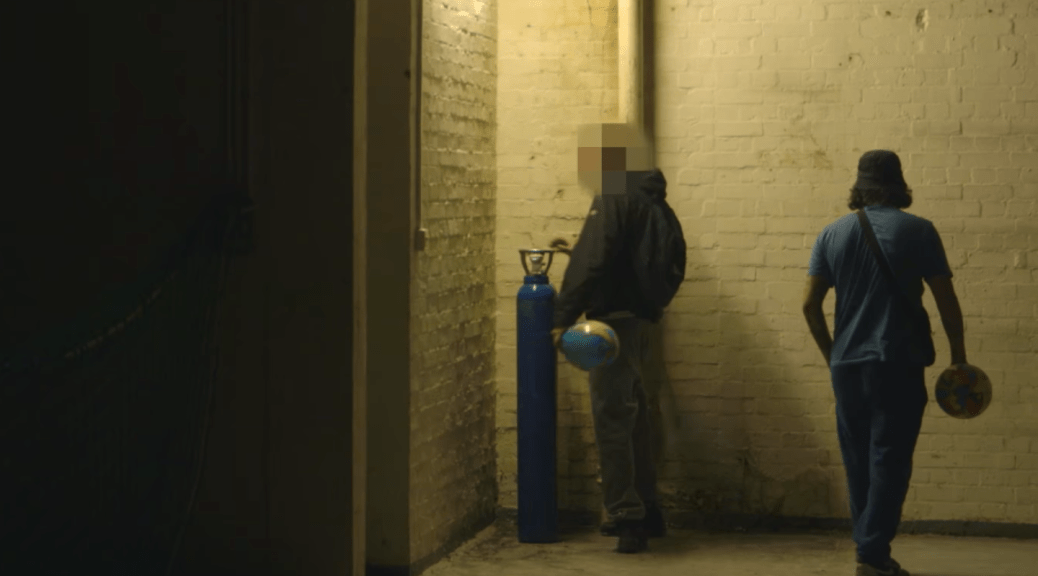
You can get a lot of things for free on the NHS, but a five foot cylinder of nitrous oxide isn’t supposed to be one them. Mind you, that hasn’t stopped plenty of people figuring out that stealing NOS cylinders from hospitals in order to sell the gas in balloons at parties, festivals and raves can be a highly lucrative venture. With punters happy to spend £2 to £5 on each balloon, even a smaller 3ft cylinder can be converted into about £700 of pure profit.
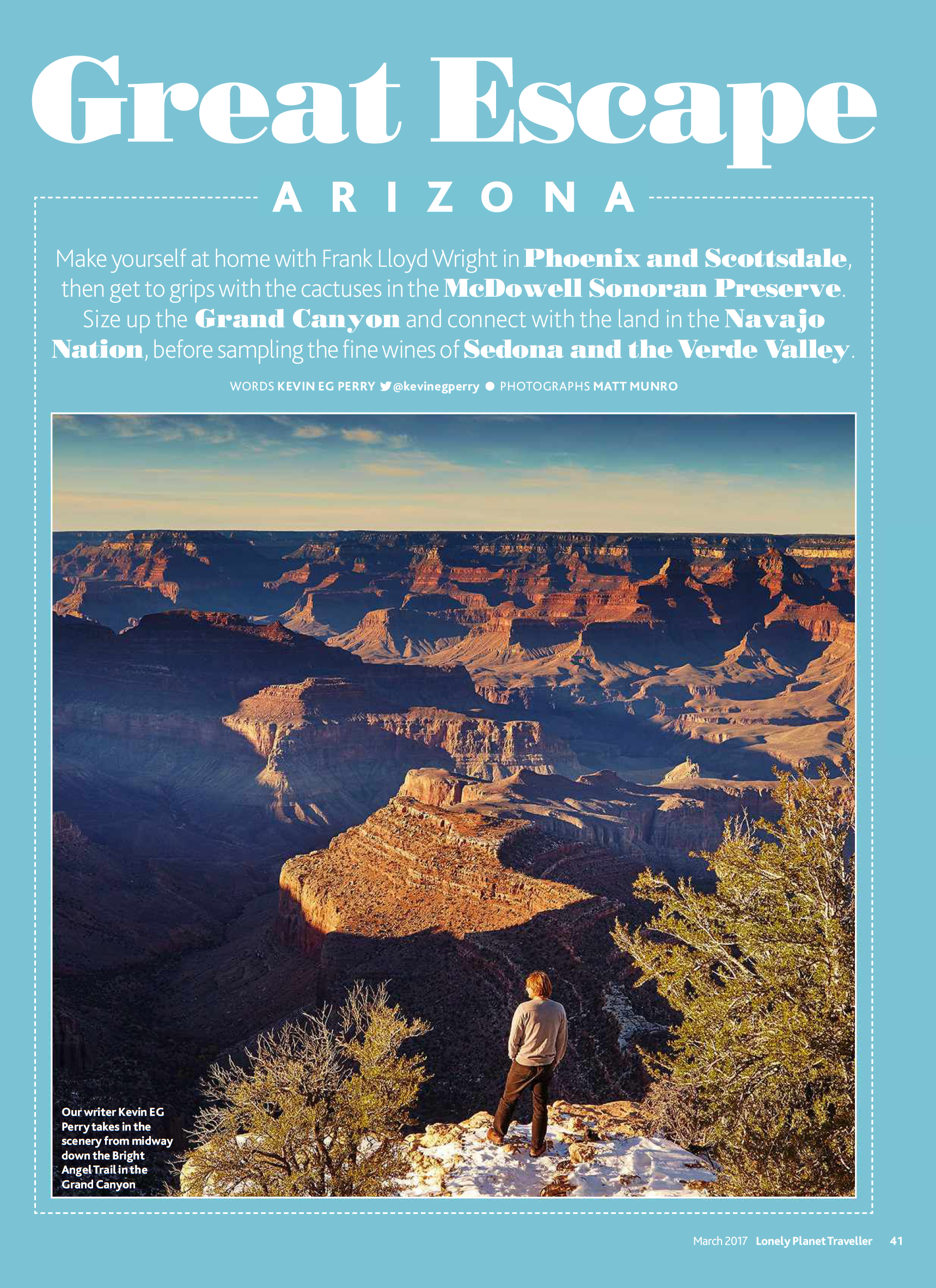
1. Phoenix and Scottsdale Discover why Frank Lloyd Wright found inspiration in these twin cities – and see the architect’s influence writ large
At dusk, downtown Scottsdale’s Valley Ho Hotel looks like the sort of place Don Draper would come to get away from it all. As the sun sets, guests sip cocktails by the patio fire pit, reclining on loungers that mix retro and modern design as if they were drawn for The Jetsons, then magicked into reality.
Yet this is no ersatz recreation of ’50s cool – it’s the real thing. Opened in 1956, the Valley Ho was a magnet for the likes of Bing Crosby, Tony Curtis and Janet Leigh. In 1957 it hosted the wedding reception of Robert Wagner and Natalie Wood, and it’s said that Zsa Zsa Gabor and her daughter Francesca rode horses around the hotel. Presumably not while the wedding was still going on.
‘We were a resort community back then, so Hollywood stars came here, because the paparazzi wouldn’t follow them,’ explains Ace Bailey, who runs an art and architecture tour in Scottsdale. ‘They could come here for “recreation” and maintain their anonymity.’
That much hasn’t changed. ‘To this day, the hotel will not release its current guest list to anybody except hotel staff, so it’s very discreet,’ adds Bailey, before reeling off a list of contemporary Hollywood stars she’s spotted hanging around the lobby recently.
The Valley Ho is not alone. Scottsdale and Phoenix are dotted with superb examples of mid-century architecture and design, much of which displays the fingerprints of the man generally regarded as America’s greatest architect, Frank Lloyd Wright.
Wright came to Phoenix in 1928 to work as a consultant on the Arizona Biltmore Hotel. A decade later, he returned to build Taliesin West, his winter home, school and studio 26 miles from Phoenix. The real genius of Wright’s design is his ability to ‘bring the outside in’. In the living room, the sunlight streaming through the glass walls and translucent roof makes the garden feel like just another part of one contiguous space.
In the drafting room where Wright created perhaps his best-known work, New York’s Guggenheim Museum, a group of young architects scratches away. They are students at the Frank Lloyd Wright School of Architecture and just as in Wright’s day, they are encouraged to get their hands dirty. They have to build their own rudimentary abode in the nearby desert to ensure they truly understand the basics of designing shelter.
And the students are spoilt for inspiration. Phoenix Art Museum sprawls over 26,500 square metres, housing work from the Renaissance to today. In one hallway, adults and children alike lose themselves in their distorted reflections in the polished surface of Anish Kapoor’s sculpture Upside Down, Inside Out. Further on, they wander through American art history from an iconic portrait of George Washington by Gilbert Stuart to modernist work by Georgia O’Keeffe.
Across town at the Scottsdale Museum of Contemporary Art, visitors gaze at Knight Rise, an installation by the Californian artist James Turrell that frames the sky in a disorientating fashion. Upon leaving, they’re hit by a riot of colour from graffiti artist James Marshall, also known as Dalek.
Even public buildings, like the Scottsdale City Hall and Library, are prime examples of Southwestern architecture, influenced by the clay adobe dwellings once built by the native Hopi people. ‘It’s minimalist, without any froufrou,’ says Bailey. ‘We’ve got great neighbourhoods full of mid-century architecture, as well as structures that are true adobe compounds. It’s quite a mix.’
The blurring of past and present is still going on back at the Valley Ho, where the drinkers are determinedly stretching the cocktail hour into the night. They’ve moved indoors to sit beneath concrete block walls that show Frank Lloyd Wright’s undying influence. While they toast to the future, the music in the air is pure Rat Pack.
From central Scottsdale, follow the Arizona 101 Loop north for 35 minutes to reach the edge of the McDowell Sonoran Preserve.
2. McDowell Sonoran Preserve
Hit the dusty trail between majestic saguaro cactuses as you explore the archetypal desert of the American West
Like the wagon trains that once traversed this desert, the sun is heading west. As the light moves, the shape of the huge boulder known as Cathedral Rock seems also to warp and mutate as shadows pass across its face. In the foreground, giant saguaro cactuses stand proud and tall. Instantly familiar from their appearance in many hundreds of Westerns, they are also ancient markers. The saguaro grow an average of a foot per decade, so those towering 20 or 30 feet will have stood on that spot for around 250 years. They are the constant watchmen in the ever-changing landscape, yet adventure guide Phil Richards has a more immediate concern.
The ground is scattered with balls of jumping cholla, a cactus that looks so cuddly it has earned the nickname ‘teddy bear cactus’. Phil has just lightly placed one of these balls onto his arm to demonstrate their strength and he’s already struggling to prise it free from his flesh with a length of wood.
‘They may look soft, but if they get onto you they won’t let go,’ he explains, pointing out the strong barbs that cover the plants. They’re known as “jumping” because they latch on so hard even when brushed past that cyclists and hikers will swear they jumped out at them. Their real purpose is to hook themselves onto passing rodents and when the poor creatures try to burrow down, they’ll find themselves stuck to the cactus and inadvertently doing the job of planting it. Invariably, the animal is killed in the process. ‘This gives rise to their other name,’ says Phil darkly. ‘The “skeleton cactus”.’
For a desert, the Sonoran has a relatively lush terrain and is covered in plant life that blooms in spring. However, that doesn’t make it an easy place to survive. Phil takes issue with John Ford’s 1948 western 3 Godfathers, in which John Wayne finds himself stranded in this very desert. In need of water, he hacks the top off a barrelhead cactus and squeezes the pulp into his flask.
Sadly, this sort of thing only works in the movies. In truth, the moisture in a barrelhead is so filled with acids that it will most likely give you diarrhoea – not useful if you’re already dehydrated and stranded in a desert.
‘This is a unique desert,’ says Phil. ‘We’ve got about 3,500 varieties of plant out here, including a number of cactuses found nowhere else, and that’s because of the climate. We don’t get a hard freeze.’
The desert, ranging from Sonora in Mexico to the south of California, covers a swathe of Arizona. Here in the McDowell Sonoran Preserve, there are 30,200 acres of protected land: nothing can be built and no motorised vehicles may travel its 146 miles of trails.
‘It’s very peaceful here,’ says Phil, whose transport of choice is the mountain bike. ‘The only things you hear are your gears shifting and your wheels on the gravel.’ His quiet progress provides many opportunities to spot desert wildlife – he points out Gila monsters (venomous lizards), tusked, pig-like javelinas and grazing mule deer.
He says that it’s the beauty of the land itself, though, that keeps him coming back day after day, whether he’s guiding a group or not. ‘You can never get enough of the desert,’ he says, ‘so the best way to get more is just to ride out to a different spot.’
With that, he’s off again, dashing along a sandy trail, but still mindful enough to keep clear of the jumping cholla.
Take Interstate 17 north until you reach Flagstaff, then US-180 onwards to Grand Canyon National Park. It’s about a four-hour drive.
3. The Grand Canyon Bear witness to the USA’s greatest landscape of all, then clamber down into it
The Grand Canyon gives no warning. Approaching from the south through the great thickets of ponderosa pine that make up the Kaibab National Forest, there is no indication of the spectacle to come. Deer dance between the trees, seemingly oblivious to their proximity to the void. Only at the precipice does the canyon reveal itself, the earth simply dropping away to reveal one of nature’s most audacious wonders. It is a mile deep and 18 miles across at its widest point. Gazing out at this great chasm of red rock shifts your perspective in a skipped heartbeat. The scale of it humbles man’s greatest constructions: stack three Empire State Buildings on top of one another and you still wouldn’t reach the rim. One lookout stop says it all: The Abyss.
It is not just the size of the canyon that startles but the sweep of history it illustrates. It is six million years since the Colorado River first found this route to the Gulf of California, and began slicing down through the soft top layers of dirt and rock. On it went, patiently cutting through sandstone and limestone before it reached its current level more than 1,500 metres below the rim. It is still getting deeper, although at a slower rate now that it has reached the hard basement rock. The river is now 730 metres above sea level and scientists believe it will keep going down, millimetre by millimetre, year after year, until it reaches the level of the sea, where all rivers stop.
To better understand the canyon, it’s necessary to leave your perch on the brink and descend into it. Hikers Katie and Nic Hawbaker, from nearby Flagstaff, have done so several times. Today, they’re climbing the Bright Angel Trail, the Grand Canyon’s most popular, which descends 1,370 metres to the Colorado River. From there, it joins the River Trail leading to Phantom Ranch in the canyon base, where they camped last night.
‘It’s totally different at the bottom,’ says Katie. ‘It’s magical. We can’t imagine how long it took to carve out the canyon or where the river was initially. It’s just so deep.’
Another way to attempt to get to grips with the sheer scale of the place is to get over it. From a Maverick Helicopters’ chopper, it’s possible to see the Painted Desert and follow the Colorado River before diving through the Dragon Corridor, the widest and deepest part of the canyon. For peak impact, though, it’s hard to beat the early moment when you’re ambling along 15 metres above the treeline of the ponderosas, then suddenly you’re 1,500 metres over the rushing waters.
It’s all a far cry from 1893, when hotelier Pete Berry first opened a crude cabin at Grandview. Berry had come to the canyon in 1890 as a prospector and staked the Last Chance copper claim 915 metres below. The ore was rich, but the vast cost of transporting it to the rim doomed the whole operation.
Before long, President Theodore Roosevelt realised the canyon needed to be protected. He made it a national monument in 1908, having declared: ‘Let this great wonder of nature remain as it now is. Do nothing to mar its grandeur, sublimity and loveliness. You cannot improve on it. But what you can do is to keep it for your children, your children’s children, and all who come after you, as the one great sight which every American should see.’
Leave Grand Canyon National Park by the East Gate and continue along Arizona 64 until you reach Cameron. Then take US-89 north towards Page. Allow two hours in total.
4. Antelope Canyon & the Navajo Nation Watch the sunlight paint pictures in Antelope Canyon, teeter on the edge of Horseshoe Bend and get close to the land in a traditional Navajo hogan
It is a cool, still morning and Baya Diné is awake early to tend to her flock. As the curly horned Navajo-Churro sheep graze across the wide-open plains, her big white Maremma sheepdog Elvis keeps the stragglers in check. Baya knows every inch of this land as if it were a part of her, from the spectacular curve of Horseshoe Bend a few miles north to Antelope Canyon in the east.
Baya’s family has farmed here for 15 generations. Her ancestors lived in hogans, homes built with cedar and juniper logs, and packed with earth, which could be taken down and moved seasonally. Baya herself grew up in her grandmother’s hogan, a permanent wooden structure which still stands and was, improbably, built with pieces of the set left over from the making of the 1965 epic The Greatest Story Ever Told, after her grandfather appeared in the film as an extra. Baya’s grandmother, who had always lived in buildings made of earth, considered it a palace.
‘My grandmother lived here the way the Navajo had lived for many generations,’ Baya explains. ‘She herded her sheep through this land and then down the ridge all along to where the town of Page is now. This is a harsh environment and they were just trying to survive, foraging and living off the land. They were one with it, really. This was part of them and their way of life.’
Baya’s land is in the west of the Navajo Nation, which at 16 million acres is the largest Native American reservation in the US. Although her ancestors moved their homes to different spots regularly, they have left no trace beyond a few petroglyphs, arrowheads and shards of broken pottery.
‘You’d never know now where their homes were,’ says Baya. ‘These days there are buzzwords, like “sustainable” and “green-built”, but that was just a way of life for Native Americans. They reused and recycled way before it was the thing to do.’
On the land where Baya now stands, the ancient Navajo stories say there was an antelope birthing area. The animals also gave their name to the nearby Antelope Canyon, although the Navajo refer to the area as ‘Tsé Bighánílíní’, which translates as ‘the place where water runs through rocks’.
Entering the now-dry canyon on a Navajo-run tour, visitors are awed into hushed tones when they see how water has sliced a narrow crevasse through the sandstone. Inside the slot canyon there’s an otherworldly atmosphere, as the only light comes from sunbeams playing tricks upon the canyon walls as they fall 40 metres. Flash flooding is still a danger and tour guides with torches pause to point out where previous floods have lodged trees high between the canyon walls.
Photographers jostle each other for the best spots and angles – no surprise considering the world’s most expensive photograph was taken here. Landscape photographer Peter Lik sold Phantom, an image of dust in the canyon appearing to take the form of a ghost, for $6.5m in November 2014.
West of Antelope Canyon, on the other side of the small town of Page, sits Horseshoe Bend, where photographers have no such problem competing for a spot. The only danger here is getting too close to the 300-metre drop that overlooks the meandering path of the Colorado River as it travels west from Lake Powell to the start of the Grand Canyon itself. This is that same canyon on a more intimate scale and among the tourists taking selfies there are also joggers from Page who come simply to marvel at nature’s signature, carved deep into the earth. Standing on the precipice, it’s easy to understand what Baya means when she explains why the Navajo have stayed in this place for so long. ‘This land,’ she says, ‘has its own special power.’
Take US-89 south to Flagstaff and then switch to US-89A for the scenic drive through the valley to Sedona. The trip will take around three hours.
5. Sedona & the Verde Valley Reap the harvest of Arizona’s growing wine scene and dine beneath majestic red rocks
It’s early on Sunday afternoon and winemaker Eric Glomski is welcoming guests to Page Springs Cellars. Some have come to enjoy the sunshine on a stroll through the vineyards, but most are here to while away the hours on the top deck of the cellar, uncorking bottles to taste the fruits of the fields that stretch out below.
Eric is something of a viticultural celebrity in these parts. He used to run the Arizona Stronghold winery with an actual rock star, Tool frontman Maynard James Keenan, and he bought the Page Springs Cellars site in 2003. Wandering into the vineyards past the fast-flowing brook which gives the winery its name, you’d be forgiven for thinking you’re in Burgundy in France or Portugal’s Douro Valley.
‘Everyone asks, isn’t it too hot and dry in Arizona to grow grapes?’ says Eric. ‘I remind them that grapes originated in the Middle East, Lebanon and Syria, so they’re very adaptive. There are different microclimates throughout the state. If I were to liken us to anywhere, in terms of climate, we’re closest to parts of Spain, France and Italy – some of the homelands of grape growing.’
So, here in the Verde Valley, Eric finds terroir to suit the grapes. One side has limestone soil, just as at Châteauneuf-du- Pape in France, while the other side is volcanic, like on Sicily’s Mount Etna. ‘We’re also trying new things,’ he says. ‘Just because it works somewhere else doesn’t mean it will work here.’
So far, something is working. This is just one of 22 vineyards that have sprung up in the valley to feed Arizona’s burgeoning wine scene. Perhaps the most scenic is Barbara Predmore’s Alcantara vineyard at the confluence of the Verde River and Oak Creek, where she also hosts weddings at a palatial villa that looks like it’s been transported wholesale from Ancient Rome.
While the grapes may be grown down here, most of it seems to get drunk up the valley in Sedona. Here the landscape changes again, adding imposing red rock formations that rise from the earth like Martian mountains and have attracted ambitious climbers for decades.
It’s not just the scenery that brings people to this laid-back town. New Age types have also long been attracted by the belief that benevolent swirling vortexes of ‘subtle energy’ emanate from the land. The result is a town with a thriving arts scene and plenty of vegetarian cafés, including Chocola Tree, where you can pick up a kale smoothie while recharging your crystals. The emphasis on organic, locally grown food extends to high-end restaurants, the star of the scene being Mariposa, a Latininspired grill. Chef Lisa Dahl has grown used to hearing about the impact Sedona’s panoramic views have on her customers. ‘I’ll never forget one guy telling me that sitting on the patio is like being on the ocean,’ she says. ‘There’s a level of serenity you feel here that’s overwhelming.’ As Lisa heads back to the kitchen, burgers, tostadas, cocktails and local wine appear. Maybe there’s something to these swirling energy vortexes after all.
Inauguration Day in The Big Easy… Dancing to reclaim the streets in Trump’s America… Rallying cries in front of City Hall… Six-foot vagina in the nightclub… Hope in the dark…
“New Orleans is a glorious mutation.” — Anthony Bourdain, quoted on the marquee of The Joy Theater, Canal Street.
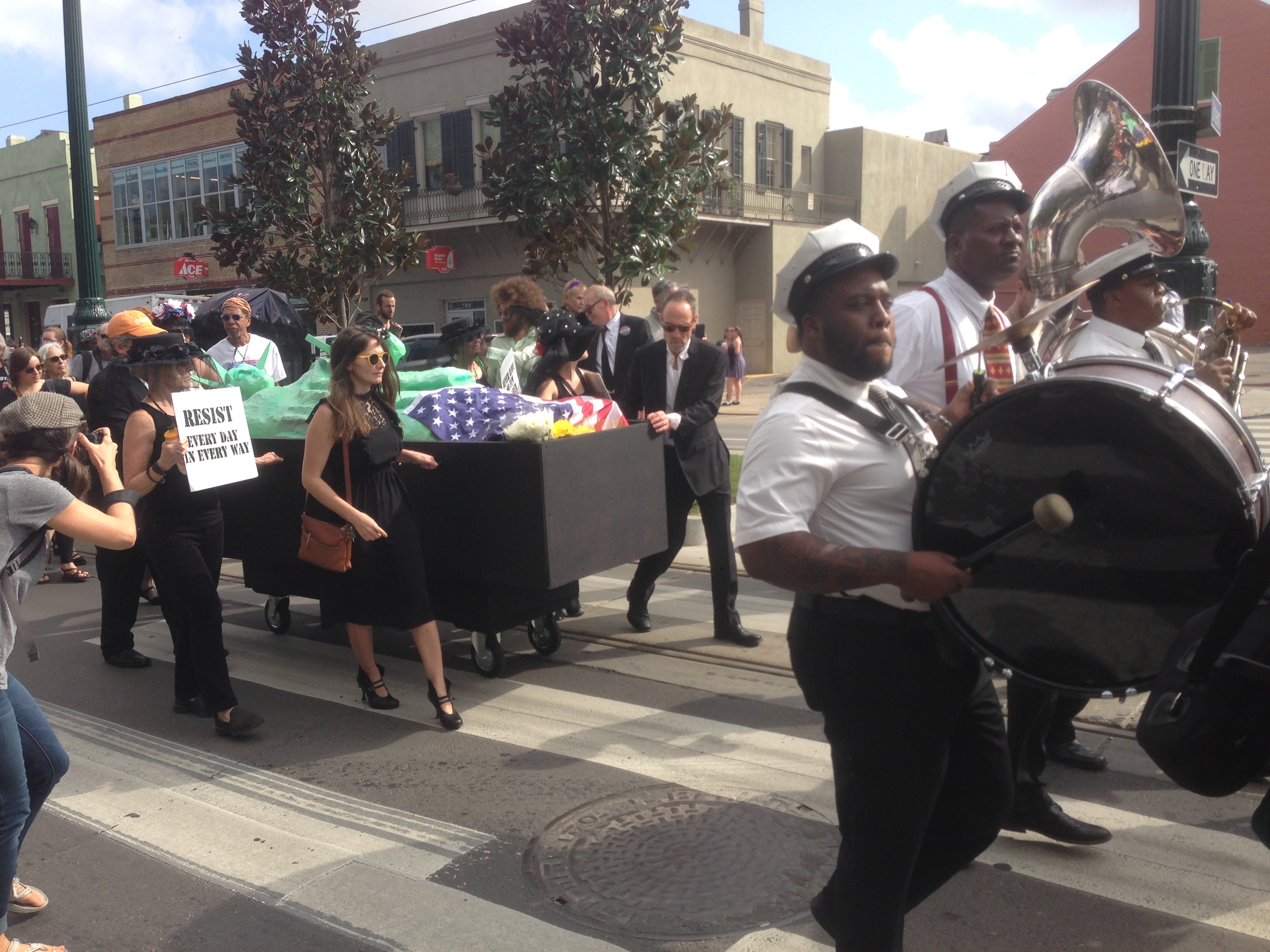
In the beginning, the coffin holds hopes and dreams. It’s half past ten on the morning of Donald Trump’s inauguration. New Orleans is hot and sticky and only getting hotter. In front of the arched gateway of Louis Armstrong Park, the open casket is filling up with notes from mourners putting their fears for the next four years into words:
“I am scared my future as a woman is over.”
“Equal rights are not extra rights.”
“RIP: Free Appropriate Public Education”
Watching over the couple of hundred protesters is an eight-foot papier-mâché Statue of Liberty, a tear streaked down her cheek. A group of older women pose in front of it, chanting: “Upbeat and defiant.” At eleven o’clock, the marching band strike up a mournful tune and Lady Liberty is lowered into her resting place.
The parade sets off down North Rampart Street and soon the music becomes celebratory, like Live And Let Die told me a New Orleans funeral should be. (“Whose funeral is it?” “Yours.”) Umbrellas and parasols punch the air. Just as in a film, people run out of their houses to join in.
Cops on motorbikes clear the route, blocking the traffic on busy Canal Street to allow the procession to pass down the main road past the front of the Ritz Carlton. People are still joining the parade, whether for the politics or just the marching brass, but not everyone is impressed. In front of the Marriott, a big man in an even bigger blue t-shirt turns to his buddy: “Like the dude isn’t going to give his inauguration speech because of a few protesters!”
A little further down the road I meet Jeff Saunders, a volunteer with The Next Right Thing, the group who organised the funeral. He explains why the big blue man was missing the point:
“Most of the people I’ve talked to in the crowd are talking about getting more involved in local politics. There’s no negativity at all. People are feeling energised.”
The procession stops for a while on the Moon Walk, the riverside promenade created in the 1970s by Mayor Moon Landrieu. Just before one in the afternoon there’s an announcement to the waiting crowd that they’re “not gonna throw her in the drink”. Instead, the flowers from her casket are distributed to be thrown symbolically into the river. They drift away on the brown murk.
Lowering Lady Liberty into the Mississippi wouldn’t have been quite in keeping with the mood of the day. Americans are a naturally optimistic people, and they’re big on symbolism. Another announcement is made:
“We’re going to keep marching. The band will start playing ‘Didn’t She Ramble’, because she did, didn’t she? She had a good run. As we walk towards Frenchmen Street her arm will go back up and her torch will be lit. She will rise again!”
Going down Decatur Street, just in front of the statue of Joan of Arc, the parade meets its first vocal Trump supporter. He’s the archetype, the Platonic ideal of a Trump fan in a coordinated colour scheme: White ‘Trump’ t-shirt, red ‘Make America Great Again’ hat. White arms, red face. Tiny stars and stripes waving above his head. He chants: “Trump not hate! Trump not hate!” The funeral procession responds only by vigorously dancing at him.
Political puns have made me cringe ever since ‘Bliar’, but grudging respect to the lady with the ‘Hair Twitler’ sign for wringing three puns out of two words.
The funeral procession comes to a halt at Washington Square Park around two o’clock, but this is not the end for Lady Liberty. “She’s still alive, we just need to fight for her!” someone shouts.
It’s not even the end for the day. Statue and coffin are taken across town to Duncan Plaza, in front of City Hall, where the day’s main protest rally begins at three. On the way, teenage drug dealers mingle with the couple of thousand protesters heading into the park. Their sales pitch suggests they’ve either misunderstood the purpose of the rally or are mocking the anti-capitalists:
“I got those Donald Trump bags. Smoke this shit and it’ll get you rich.”
On stage in Duncan Plaza, beneath a banner reading ‘Power To The People’, fifteen different speakers explain in turn how the issues closest to them will be affected by Trump entering the White House. Housing. Health. Mass Incarceration. Immigration. The environment. The list goes on and on. The repeated message is one of solidarity: “We are here to inaugurate our own unity.”
Worst sign of the day: “1984 — Orwell Rising From His Tomb — 2017.” Poor old George. Fight Franco and try to warn people about the rise of surveillance fascism and they still treat your name like a zombie dictator’s.
The rally becomes another march, many times the size of the funeral procession. As it passes the Sheraton, the windows crowd with hotel workers on their phones filming the crowd’s chants: “No Trump. No KKK. No fascist USA.” I see Lady Liberty pass by in her coffin again. Sure enough, her flame is now glowing orange again.
After seven, walking alone down Frenchmen Street, I pass a man with a soundsystem hooked up to the back of his bike. He’s playing a rap tune on a loop that just repeats the line: ‘Fuck Donald Trump.’ I ask him what it is. He says: “It’s called ‘Fuck Donald Trump’.” Someone else passes and high-fives him.
Sun down, yellow moon. They’re throwing an ‘Anti-Inaugural Dance Party’ at Poor Boys Bar on St Bernard Avenue. On Facebook they quote the writer Michael Ventura, who wrote during the Reagan era:
“It can be a beautiful thing to dance all night during evil times.”
When I first walk in, I notice a woman sat at the bar with a Guy Fawkes mask in front of her. Earlier in the day, someone with a Guy Fawkes avatar responded to my tweet about Lady Liberty’s jazz funeral:
I mention this to her. “People are anti-government from all sides,” she says. These days, everyone wants to burn down parliament.
There’s a stall in the corner of Poor Boys being manned by a woman in a six-foot vagina costume. She is Amy Irvin, founder of the New Orleans Abortion Fund. I’d seen her earlier at the jazz funeral too. “It’s protest, but it’s a satirical protest,” she says. “This is very New Orleans, it’s very us. Trump’s policies threaten all of us, and this is a way for folks who are supporters of these issues to come together.”
I ask her about the work she does at the NOAF and she explains, with memorised statistics and figures, exactly how limited abortion access is in Louisiana. I nod and scribble notes, trying to ignore the fact that her face is poking out from between cushioned labia.
Outside, there’s another stall where a woman is giving away free trigger locks. These are padlocks that you place around your gun to stop your kids picking them up and accidentally shooting themselves. I tell her it’s mad she lives in a country where these things are needed. She doesn’t smile.
On the final stall I meet the fabulous Nathalie Nia Faulk, the spokesperson for the New Orleans LGBT Community Center. After she tells me about the work the Center does, I ask her about Trump. She’s not concerned.
“We’ve been in this fight already. We’ve been organising. Nothing’s changed. I’m not scared. Trump doesn’t worry me. We’ve been doing this already, and now we’re going to do it better and we’re going to do it stronger.”
After the jazz funeral, the rally, the march and the party, I tell her it seems to me that today isn’t just about Trump. When I was a teenager and marched against the Iraq war, I might have been naïve to believe we’d actually stop the war but I don’t think I was the only one who thought that’s why we were doing it. This is different. Nobody actually thinks they’re going to impeach Trump today. Rather these marches are about the protesters themselves turning to one another and saying: ‘Look, I know we’ve been complacent but we’re in for a fight now and I’m here for it.’
Nathalie nods enthusiastically, and says:
“Isn’t that glorious, though? People are actually getting involved. At some point, people were saying: ‘I don’t vote, that doesn’t fit me.’ Half of our generation were like that. At some point we all have to come together, and I think these demonstrations are that place, right? If you vote, that’s cool, if you don’t vote, that’s cool, but we all know that this is not okay, so what are we gonna do about it?”
I expected fear and despondency on Inauguration Day. Instead there was jazz, and dancing, and a lot of people telling each other it’s going to be alright. ‘Trump’s in the White House?’ says New Orleans. ‘We’re on the streets.’
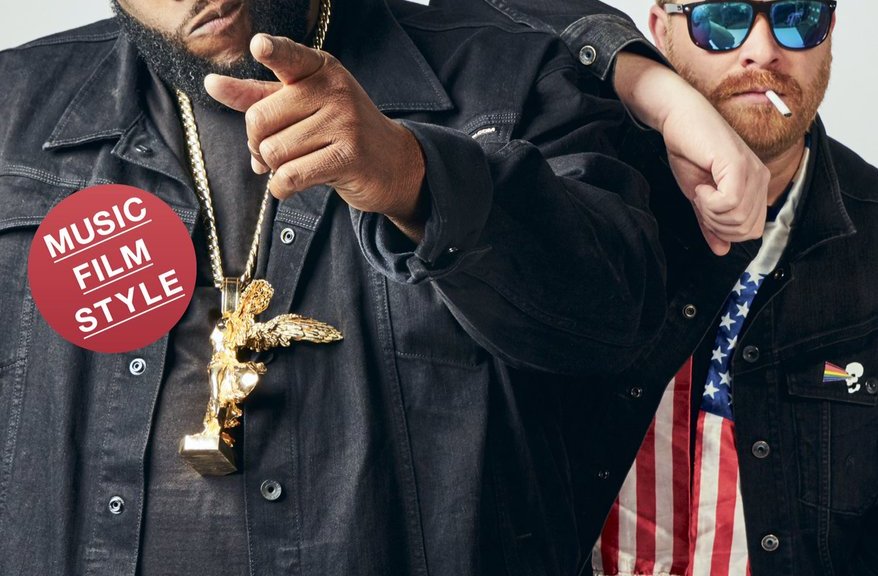
This week, Donald Trump will place one of his tiny hands on the Bible and his puckered lips will accept the US presidency: the first Twitter troll with a nuclear arsenal. Holed up at a secret location in Nashville, preparing for a tour that’s due to come to the UK and Europe at the end of March, firebrand rap duo Run The Jewels are somehow managing to see the funny side.
“As a guy who grew up on dystopian science fiction you can’t help but be morbidly amused,” says El-P, looking for a chink of light in the darkness. “It’s scary but hilarious, in a fucked-up way. It’s the folly of man. It’s also incredibly dangerous and deadly. The stakes themselves make the gallows humour that much more potent. But that’s me. If I had an executioner’s gun to the back of my head and he farted, I’d laugh.”
Beside him, his sparring partner Killer Mike leans in. “I’ve watched every inauguration since Reagan,” he says, in that Deep South baritone. “But this is the first time the President is gonna be sitting there tweeting: ‘I told y’all, fools.’”
In the Showtime drama Billions, about a US Attorney going after a corrupt hedge fund manager, the very first shot of the pilot episode shows Paul Giamatti bound and gagged on the floor. A dominatrix appears, putting out a cigarette on his chest and then helpfully alleviating the burn by pissing on him. By the end of the episode, we’ve learned that this woman is his wife.
It’s a hell of a way to make a first impression. For Maggie Siff, who plays the psychiatrist-turned-dominatrix, it presented both a challenge and an opportunity. “The sex stuff I was nervous about,” she says. “I’m not really an exhibitionist, yet I thought it was a really interesting component of their marriage. It felt smart. It made me want to know about that marriage, who those people were to each other and how they arrived there.”
It also makes her – in a show full of macho characters – quite literally the boss?
“And in a very literal sense it makes her the boss, yes,” she laughs. “She’s comfortable in that role.”
Siff and I are having breakfast in a hotel in Lower Manhattan, and over fruit and coffee she’s lamenting how rare it is to be offered such a powerful and complex female role. As an actress she’s become accustomed to being presented with barely-sketched stereotypes. “There’s the bitchy wife, the bitchy ex-wife, the sardonic best friend… there’s a lot of those tropes,” she says. “There’s just a disproportionate number of male writers, and directors, and producers, so the stories that are getting told are slanted that way. You get so used to that as a woman.”
It’s a particularly challenging situation for young actresses who are so keen to find work when they’re starting out that they find themselves playing roles they may inwardly cringe at. Siff, who grew up in the Bronx before studying English at Bryn Mawr, a women’s liberal arts college in Pennsylvania, and theatre at NYU’s Tisch School of the arts, remembers this time of her life well. “When you start out as a scrappy theatre artist just trying to pay back your student loans, you go through several years where you’re panning for gold,” she says. “I wasn’t picky at all. Your standard for what is acceptable goes down because you have to do things just to survive.”
After years working in regional theatre her television break came in her early 30s when she was cast to play department store heiress Rachel Menken in Mad Men. It was a role close to her heart. “Somehow I just knew that part was mine, no matter how many times I went back to audition for it,” she says “I just had this feeling like I knew who that person was. She reminded me of my grandmother, who grew up in the Lower East Side as a Jewish woman. I just thought: ‘Nobody else knows this character as much as I do.’ That’s a very unusual feeling, but it does happen rarely.”
Just as Mad Men was taking off, Siff won her next major part in biker drama Sons of Anarchy. It turned into a six-year job, filming for six months a year in California. She spent her summers there and her winters back in New York with her first love, theatre.
“I never think about quitting acting, but sometimes I do think: ‘When can I just go back to theatre?’” she says, pointing out that on the stage there’s less of a struggle to find great female roles. “It’s nice to go back to jobs where it’s purely an artistic exercise and not a commercial enterprise. I feel like that’s really where you get into the trouble spots. I’d also like to do more teaching, or things where the love that I have for the craft doesn’t have to be constantly slimed by the sexism that is really hard to avoid.”
Finding good roles is a perennial problem for actresses, and one that exacerbates off-screen problems of gender inequality too. When there are fewer great female roles to go around – and fewer female roles in general – it places actresses in a difficult bargaining position which in turn leads to the pay gap that’s recently been such a heated topic of debate in Hollywood. So – I ask Siff – what’s the solution?
“I don’t know, I’m trying to figure it out!” she laughs. “I go round and round because as a working actor you have to figure out how much power you actually have and how to use it. I’m not Scarlett Johansson, I’m not a box office draw in mainstream movies, so I feel like all I can do is be very selective about the kind of jobs that I choose to take. It’s about the kind of stories that I’m choosing to tell.”
The challenge for actresses continues even after they’ve won roles. Often, Siff says, they find themselves having to battle for how their character’s stories will develop. “You have to cross your fingers, especially when you sign on to do television, that the creators and directors are going to stay true to the course of what is promised from the outset,” she says. “Within creative projects you have to fight for the character continuing to have an interesting voice, and also fight for things like how many women are in the writers’ room. I do all that. I try to talk to people about that and make people conscious of it.”
One of the things which drew her to Billions was the chance to play a woman who’s on an equal footing with a cast of powerful men which includes Paul Giamatti as a US Attorney and Damian Lewis’ charismatic hedge fund manager. Siff’s character, Wendy Rhoades, is caught between the two as the wife of Giamatti’s character and a colleague of Lewis’.
“In the pilot the thing that was apparent to me was that she was this strong, unusually smart woman,” says Siff. “She’s really her own woman, and that’s really what attracted me. In terms of the story, yes she is married to somebody, she is somebody’s wife – as a woman you get used to being somebody’s wife, or somebody’s girlfriend, or somebody’s paramour or whatever – but she’s also in the workplace. What she does is of interest to people. She holds power in a similar way to which men do, and that’s interesting.”
Alongside her television work, Siff has also turned to independent films with the hope of telling more nuanced stories about women. This includes 2016’s A Woman, a Part, written and directed by the avant-garde filmmaker Elisabeth Subrin. “She approached me about it and told me what the story was and I thought: ‘Oh, that sounds interesting,’” says Siff, “and familiar.”
The film follows a successful television actress who has a nervous breakdown and returns to New York from Los Angeles to try and reclaim her old friendships and her theatre roots. For Siff, her only concern was that the film might be a little too close to the bone. “It was terrifying because it felt too close,” she says. “I thought: ‘Are people going to think this is me?’ It’s not me, but it’s a story that I’m really interested in telling and when else am I going to get the opportunity to tell this story? Elisabeth calls herself a feminist filmmaker and 50% of the crew were women, so the whole ethos behind the making of the film really had that at its heart.”
One positive change that Siff has observed has been the move of so much talent and money from film to television, where she argues there are more opportunities for actresses, particularly older women. “Films is a shrinking industry, and I think the energy of that has gone over to television,” she says. “The gift of that is there’s this ever-expanding opportunity for women, and for people of colour. You don’t need to get an audience of 16 million people for it to be a hit, so it’s more artisanal. Look at Orange Is The New Black, which has Blair Brown, an amazing theatre actress who’s 70 years old. She has this great arc on that show right now. I look at people like her and think that things are changing.”
In the decade Siff has spent working in television since she was first cast opposite Jon Hamm in Mad Men, she’s seen first-hand how women’s roles have slowly grown more powerful. Where once she had to contend with Don Draper storming out of a board room because he wouldn’t be spoken back to by a woman, now she’s crunching a stiletto’d heel onto Paul Giamatti’s chest. Even so, she points out there’s still some way to go before we see more strong female-led stories on our screens.
“The thing I find myself grappling with is how many macho shows I’ve been on,” she says. “You get to be a certain age, and as a 40 year-old woman you look back on your career and think: ‘How much of it has been spent shining a light on a man?’, you know?”
Sam Rockwell wants to dance. He’s having his photograph taken in a 120-year-old warehouse in Brooklyn but it’s a warm day and he’s starting to feel lethargy creep through his bones. “What music have we got?” he asks. “We need to wake up. Have you got any James Brown?”
Somebody fiddles with an iPhone and soon the godfather of soul is echoing off the exposed brickwork. This is Rockwell’s jam. He starts rolling his shoulders and then his feet follow, moonwalking him across the dusty floor. If you’ve seen a Sam Rockwell film in the past 20 years you’ve probably noticed the way he moves. He danced his way from his indie breakthrough in 1997’s Lawn Dogs to blockbusters such as Iron Man 2. He danced to wind-up Nicholas Cage in Matchstick Men and to impress George Clooney in Confessions of a Dangerous Mind. Even when his character was sick and depressed in Moon he still managed to throw some shapes to Walking on Sunshine.
Like a lot of teenage boys, he started dancing to impress a girl. Her name was Michaela, and he met her at a school dance. Until then he’d been a shy kid who smoked a lot of weed, but that changed when his friends Leroy and Charles started taking him to parties. “I tried to get over my shyness by dancing, and that’s what happened,” he says. He runs a hand through his beard and smiles at the memory. “I’ve been dancing ever since.”
—
Acting was the family business. When Sam Rockwell was born on 5 November 1968 in Daly City, just south of San Francisco, both his parents Pete and Penny were actors. “It was in the blood,” he says.
After his parents separated, when he was five, their lives took different paths on opposite coasts. His father, raising his only son in San Francisco, took a series of blue collar jobs to support them. He was a postman, a taxi driver, a union organiser and finally a printer. Years later, when he started acting again, it was in small roles in his son’s films like Frost/Nixon and Better Living Through Chemistry. His mother lived in New York and entrenched herself in the city’s bohemian theatre scene. Her son would visit during the summers and his first appearance on the stage, aged 10, was playing Humphrey Bogart opposite his mother in a skit that riffed on Casablanca at a small theatre in the East Village.
Back west, Rockwell attended the San Francisco School of the Arts where he joined an improv group called Batwing Lubricant along with Margaret Cho, who would become a stand-up, and Aisha Tyler, who Rockwell dated for a while and who now voices Lana Kane in Archer. There’s video online of them all making their first tentative steps into performance and even a moment where they must sit and tell the camera what they want from life. A voice echoes over the tannoy: “Sam, what do you want to be?” Rockwell – 18 years old, a long earring dangling from his left ear – shrugs. “I want to go out and, I don’t know, seek adventure,” he replies.
Thirty years later, he winces at his wide-eyed younger self. “Oh my God, so terrible,” he mutters, but he concedes he got what he wished for. “Oh absolutely, there’s been a lot of adventures.”
—
The adventures began with a move to New York to enrol at the William Esper Studio in Manhattan, met he Terry Knickerbocker, the acting coach he still works with to this day. It was there that Rockwell really began to approach acting as an art and to think seriously about his craft. “That was when I got it,” says. “When I studied Meisner that’s when it kicked in.”
The Meisner technique is an approach which focuses on getting actors out of their own heads so they can react instinctively to the scene. It’s something Rockwell still applies to his roles, and so that I can understand his process he guides me through a simple Meisner exercise.
“You’re wearing a grey shirt,” he says.
“I’m wearing a grey shirt,” I reply.
“You’re wearing a grey shirt?”
“I’m wearinga grey shirt.”
Through this repetition we’re quickly responding simply to tone of voice, inflections and emphasis. “It’s a very naked exercise,” he explains. “You have to just be. Everything percolates to the surface. It’s peculiar. It’s about listening to your subtext and staying in tune with what your vibe is. It’s great training for life.”
Armed with a newfound confidence in his ability to act and live in the moment, Rockwell began to win small parts in films like Last Exit To Brooklyn and Teenage Mutant Ninja Turtles. He illegally sublet a room on Thompson Street in Manhattan from some other actors, paying them $484 a month, and supported himself working as a waiter, or delivering burritos by bicycle, and briefly as an assistant to a private investigator. In 1992 he became one of the founder members of the Labyrinth Theater Company. He was part of a scene of up-and-coming actors that included Mark Ruffalo, Liev Schreiber, Ethan Hawke and, most influentially, Phillip Seymour Hoffman.
“Phil directed me in a play and I learned a lot from him,” says Rockwell. “In the theatre, it has to cost you something. You have to get up there and lose a little piece of yourself every night. He demanded a lot of us, but you knew that he could walk the walk.”
Although they were the same age, Rockwell considered Hoffman a mentor. He took the actor’s death in February 2014 hard. “We all miss Phil,” he says. “Phil was the guy. It was really a big hit for me.”
I apologise for making him talk about something that’s clearly still so raw, but he waves his hand. “That’s alright. That’s real,” he says. “What are you going to do? You’ve got to keep living, and doing it the way Phil used to do it. He didn’t phone it in, that’s for sure.”
—
Rockwell got his break with stand-out roles in 1996’s Box of Moonlight and 1997’s Lawn Dogs which led to a part in his first major production, The Green Mile, in 1999. “It took me 10 years before I started to make a living,” he says. “It can be tough. Even when you’re successful it’s always precarious. Everybody has goals. Hopefully they’re more artistic goals rather than being famous or being big on Twitter or whatever the hell else.”
Immediately after The Green Mile Rockwell was cast in Galaxy Quest, but he was initially hesitant to take a role in a comedy. “I was reluctant because I really wanted to do what Sean Penn or Daniel Day Lewis were doing,” he says. “Then I realised: Sean Penn did Fast Times at Ridgemont High. It was an amazing movie, and it meant I met Alan Rickman and Sigourney Weaver.”
Those contacts paid off when he was cast as the villain in the 2000 remake of Charlie’s Angels. With the script going through constant rewrites, Rickman was one of the actors Rockwell asked help him punch up the role. Another was Kevin Spacey: “I had this cheesy line, and he said: ‘Why don’t you put the gun to your head when you say it?’ That really helped. Liev Schreiber came up with a funny line, and Mitch Glazer, Bill Murray’s writer, helped too.”
This is a theme Rockwell returns to when talking about building his characters. He’ll soak up as many influences as he can. He’s not afraid to ask for help. As he puts it: “Sometimes it takes a village, you know?”
—
Rockwell will also totally immerse himself in his subject, as he did before playing former The Gong Show host Chuck Barris in 2002’s Confessions of a Dangerous Mind. “I hung out with Chuck all the time,” he says. “I had him tape my lines and I learned a Baltimore accent.”
It was a perfect lead role for Rockwell, a chance for his irreverent energy to shine where another actor might have turned in a mechanical impersonation. However, it nearly didn’t happen. Rockwell was director George Clooney’s first choice but studio boss Harvey Weinstein wanted somebody else.
“I was at the Chateau Marmont and bumped into Ben Stiller,” recalls Rockwell. “He was a little shy around me. He said: ‘You’re going in tomorrow, right?’ I said: ‘For what?’ ‘For the movie, for George, for Confessions.’ I said: ‘Yeah, how’d you know?’ He went: ‘I went in today.’ So I found out the night before my screen-test that Ben Stiller was up for it too. I freaked out. I couldn’t sleep.”
Rockwell dealt with his nerves the same way he’s done since that school dance all those years earlier. “George had a boom box and we put some James Brown on,” he remembers. “I started dancing to try and shake out the nerves. George filmed it, we started improvising and he kept it in the screen test. I’ve always danced to relax.”
Rockwell won the part, although only after Clooney embedded his golf club in an office wall arguing with Weinstein. Clooney’s passion was well-founded: Rockwell shone, and his dancing stayed in the picture.
—
Rockwell could now take his pick of roles. Having grown up on a diet of movies like Taxi Driver, Badlands and Midnight Cowboy, his taste led him towards darker independent films like Choke and Moon. The latter, featuring his bravura performance as a pair of lunar-mining clones, came about after director Duncan Jones offered him the role of a child molester in a film he was trying to get made called Mute. Rockwell turned the part down but the two fell into conversation about their favourite science-fiction films.
“We talked about the working-class aspect of Alien and Outland,” Rockwell remembers. “In Alien, Harry Dean Stanton rolling cigarettes in a Hawaiian shirt grounds you, so when the monster shows up you sort of believe it. Duncan took that conversation and had Nathan Parker write this script about these clones. Then we infused a little humour into it, because it’s such a dark story.”
To build his cloned characters, Rockwell decided the film needed a touch of De Niro. He often incorporates his favourite films into his own performances. “Taxi Driver is very prevalent in Moon,” he says. “And also very much in Seven Psychopaths, where there’s a conscious nod to Travis Bickle.”
—
When we see Sam Rockwell on screen, his performances look as effortless as his dancing. What we can’t see is the work that has gone in to crafting every moment. For Rockwell, work starts with his coach Terry Knickerbocker and then he’ll look for great performances to incorporate. Moon, for example, blends not just Taxi Driver but also Dustin Hoffman in Midnight Cowboy and Jeremy Irons’ dual role in Dead Ringers. Then he’ll immerse himself in the knowledge and skills his character needs, whether riding with police for his upcoming role as a cop in Three Billboards Outside Ebbing, Missouri or learning to speak the Sioux language Lakotafor this year’sSitting Bull drama Woman Walks Ahead. What ends up on screen is his unique take on everything he’s absorbed, brought to life with his own sense of adventure.
In 2014 Rockwell played a cowboy stuntman on stage in Sam Shepard’s Fool For Love and had to lasso a chair every night. He thinks of this when I ask him to place his finger on what it is that makes him so good at what he does.
“I would hope it’s a little bit of talent, but mostly hard work,” he says. “I think it’s true that if you do something over and over again then practise makes perfect. There were some days with the lasso where I’d be lassoing like shit. I’d take a break, come back to it, clear my mind. If you put in that time, an hour a day, it does pay off. It’s got to pay off.”
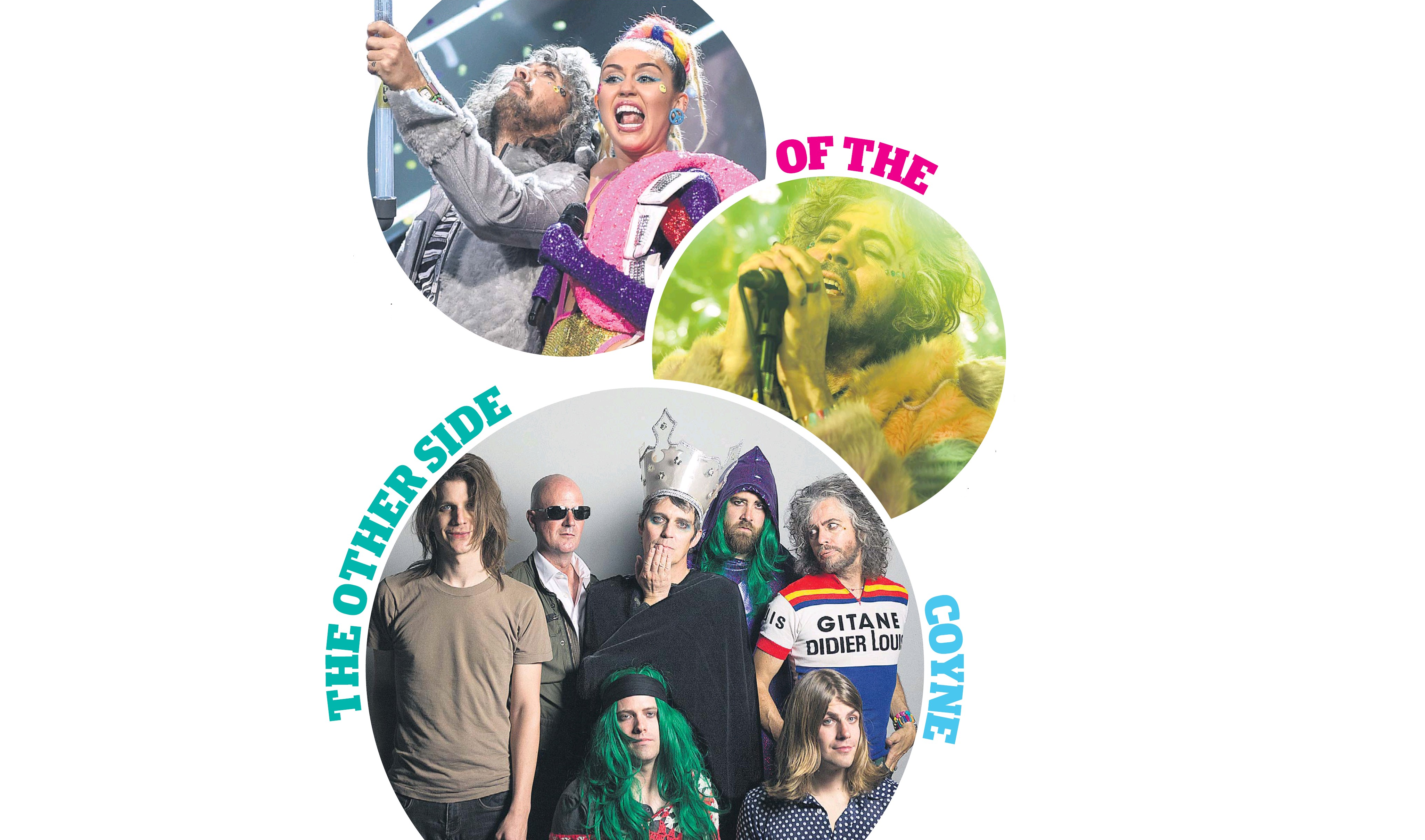
It’s almost a surprise that Wayne Coyne doesn’t roll up to our interview in his giant hamster ball. The Flaming Lips frontman is so defined in his Wayne Coyne-ness that, waiting around, it’s hard not to picture him as he appears onstage: an intergalactic pirate smothered with fake blood and confetti, flanked by dancing pandas, his boulder-sized fists raised aloft to shoot green lasers into the sky. This is a man whose life is such a carnival of oddness that he’ll sometimes forget he’s carrying a solid gold hand grenade, which didn’t go over well when he took it through customs at Oklahoma City’s airport back in 2012. When he wanders into the lounge of his Clerkenwell hotel engulfed in a baggy hoodie, he can’t help but seem down to earth measured against his reputation. Despite the glitter in his snowy ringlets and the glue-on plastic diamonds studded around his right eye, he’s human after all.
We live in a “post-truth” world now, don’t we? You know it, Donald Trump knows it, even the lexicographers charged with keeping dictionaries hip know it. But while we might know it, many of us still don’t fully understand it. How can such a large chunk of the voting population just not give a fuck about the facts?
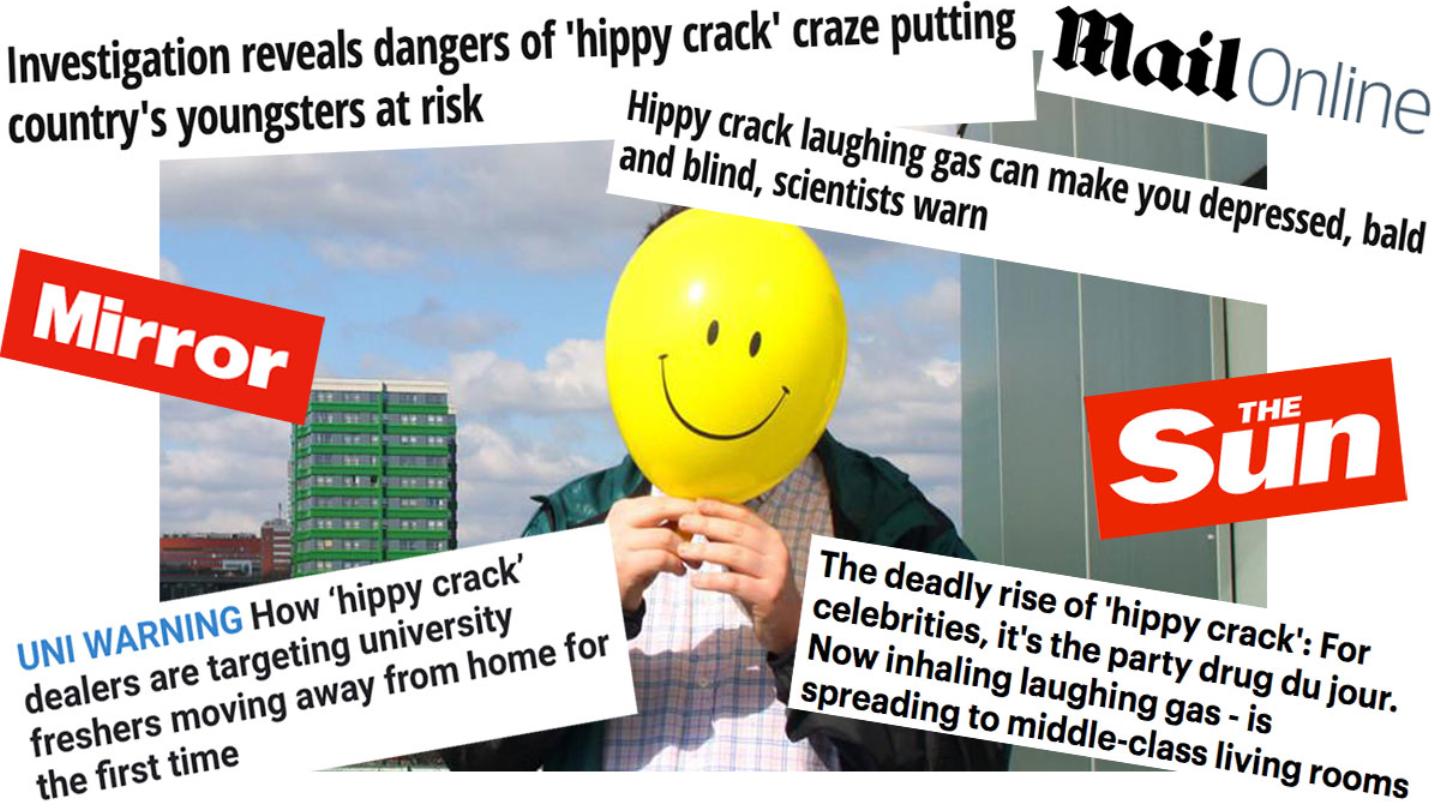
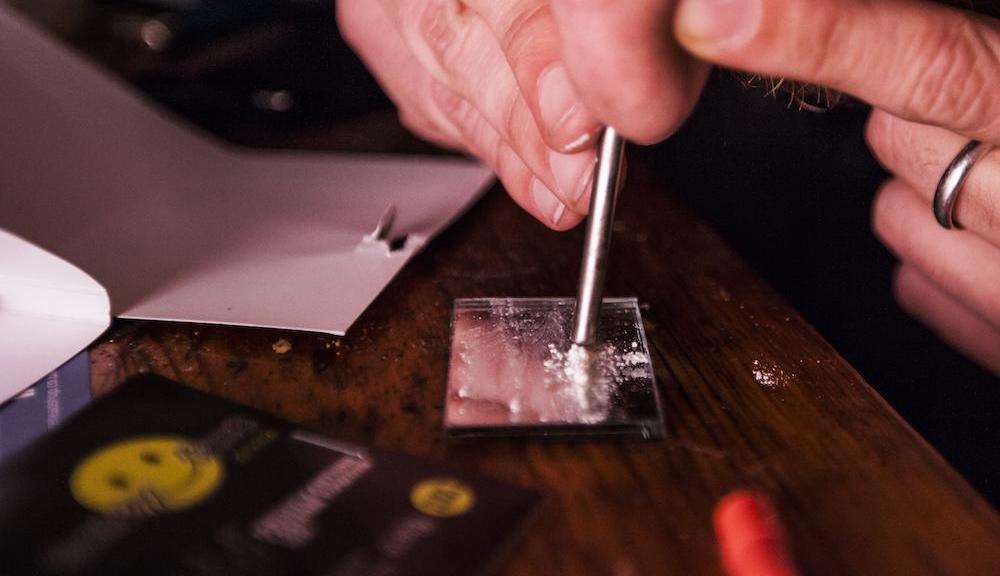
One lucky set of people who’ve at least had a little more time to comprehend this concept are those who follow British law. Drug legislators were “post-truth” before it was cool, very much leading the way when it came to ignoring experts and just reacting to whatever the red tops were making a fuss about. And this year was a big win for the tabloids: when the Psychoactive Substances Act came into force on the 26th of May, making it illegal to sell hitherto “legal highs” or nitrous oxide, it was a direct result of the moral panic they’d started themselves.
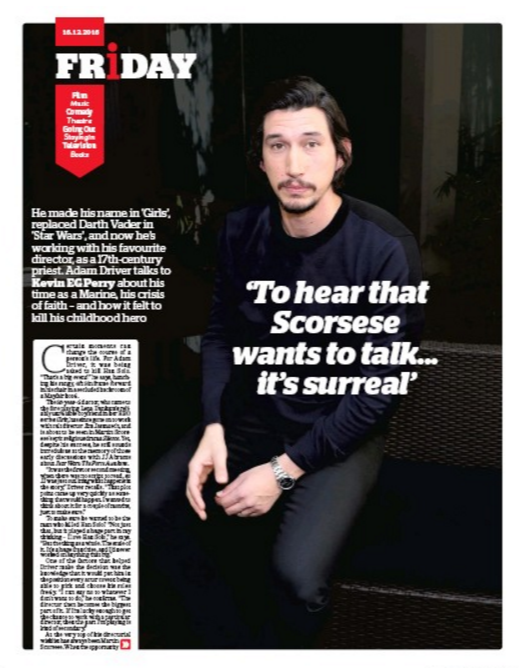
There are certain moments that can change the course of a person’s life. For Adam Driver, it was being asked to kill Han Solo.


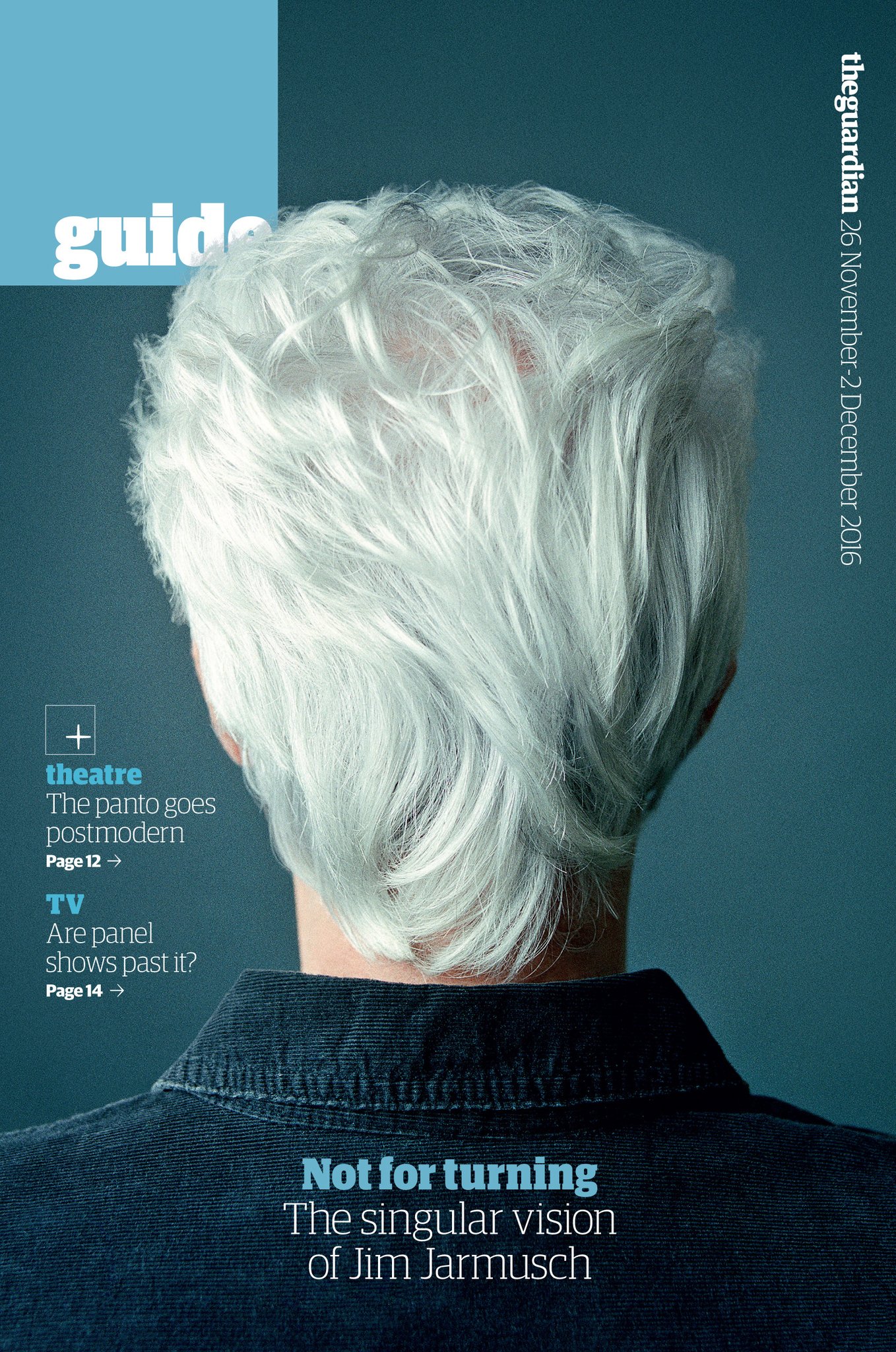
“That’s a big event!” he says, hunching his rangy 6ft 3in frame forward in his chair in a secluded backroom of a Mayfair hotel. The 33-year-old actor made his name playing Lena Dunham’s reliably unreliable boyfriend in her HBO series Girls, has since gone on to work with cult director Jim Jarmusch and will soon be seen in Martin Scorsese’s epic religious drama Silence. Yet despite his success he still sounds incredulous at the memory of those early discussions with JJ Abrams about Star Wars: The Force Awakens.
“It was the first or second meeting, when there was no script to read, so JJ was just outlining what happens in the story,” Driver recalls. “That plot point came up very soon as something that would happen. I wanted to think about it for a couple of months just to make sure.”
To make sure you wanted to become the man who killed Han Solo?
“Not just about that, but that played a huge part in my thinking – I love Han Solo,” he says. “But also, the thing as a whole. The scale of it. It’s a huge franchise, and I’d never worked on anything that big.”
One of the factors that helped Driver make the decision was the knowledge that it would put him in the position every actor covets: being able to pick and choose his roles freely.
“I can say no to whatever I don’t want to do,” he confirms. “The director then becomes the biggest part of it. If I’m lucky enough to get the chance to work with a particular director then the part I’m playing is kind of secondary.”
At the very top of Driver’s directorial wishlist has always been the name ‘Martin Scorsese’. When the opportunity came four years ago to audition for Silence, the director’s longterm passion project, Driver leapt at it. Production was delayed, but eventually Driver was invited to meet Scorsese at his home.
“I thought it was still between a few different people,” says Driver. “I didn’t know that at the end of the meeting he was going to offer me the part. It was surreal. He’s a filmmaker who in my mind is the tip of the pyramid to work with. To hear that he wants to talk to you about a role made it a formality on my part. I would have said yes regardless of what it was.”
What it was turned out to be the part of a Portuguese Jesuit missionary in Scorsese’s adaptation of Shūsaku Endō’s 1966 novel. He plays the doubting counterpoint to Andrew Garfield’s lead as the pair travel to Japan to seek their teacher, played by Liam Neeson, who is rumoured to have apostatised. Driver threw himself into the role by losing nearly a third of his weight, undertaking a week-long silent retreat at St. Beuno’s Jesuit house in Wales, and immersing himself in the novel.
“I latched on to this idea of the crisis of faith,” says Driver. “All the characters have a different relationship to it. I based my character on St Peter, because I loved the idea of someone who has committed their life to something but at the same time they’re openly doubtful of what it is they’re doing and questioning why they wanted to do it to begin with. I think that’s a healthy part of creating something and something that I understand.”
It’s also a role that spoke to Driver’s childhood. He was born in California, on 19 November 1983, but when he was seven his mother Nancy took him and his older sister April to her hometown of Mishawaka, Indiana. When his mother remarried it was to Rodney G. Wright, a Baptist minister, but Driver experienced a crisis of faith of his own. “I was raised in a religious household,” he says, “but now I don’t subscribe to any religion.”
Rather than the church, it was film that helped Driver find his place in the world. “My grandfather – my mom’s dad – recorded movies on VHS,” he remembers. “He catalogued them and wrote the title and a brief description and kept them in a laminated book that me and my sister could look through. He kept 500 movies, and 100 tapes were by his bed. It made me realise that these are important artefacts.”
After getting a taste of theatre at high school, Driver applied for a place at the prestigious New York drama school Juilliard but his application was rejected. Then 9/11 happened. Driver was 17 years old and still living with his parents when he decided to enlist. He served as a Marine for two years and eight months, but before his unit deployed to Iraq he broke his sternum mountain biking and was medically discharged. He applied to Juilliard once more. This time he was accepted.
“I thought civilian problems compared to the military would be small and easily manageable, which is an illusion,” he laughs. “It’s hard to be alive regardless what your job is. It gave me this false sense of confidence that I could manage being an actor.”
It was three years after graduating from Juilliard that he won his breakthrough part in Girls, although he remembers at the time simply being happy to have found “steady employment”. “The job turned out so much better than I expected,” he says. “I was just happy to be making more money than I had in the theatre.”
His kinetic physical presence and awkward charisma caught the eye of the sorts of directors he’d always dreamed of acting for. Stephen Spielberg cast him in Lincoln and the Coen Brothers even got him singing in Inside Llewyn Davis. Most recently, he played the eponymous lead in Jim Jarmusch’s Paterson, a paean to the New York School poets and the beauty of everyday romance. “Jim reached out to me and, again, only as kind of a formality I read the script,” says Driver. “I think he’s brilliant, and his movies are.”
Joining the cast of Star Wars and working with Jim Jarmusch and Martin Scorsese is the sort of fantasy wishlist any young actor might draw up. Is Driver living the dream?
“Yeah, but I definitely had no masterplan,” he laughs. “I’ve been kind of spoiled by it. I’m very aware it’s a director’s medium, so if I can be lucky enough to still keep working with great directors then that’s the only game plan I have.”
There’s a line in Jim Jarmusch’s 1986 film Down By Law that seems apposite in November 2016. It goes: “My mama used to say that America’s the big melting pot. You bring it to a boil and all the scum rises to the top.”
Over tea in a Paris hotel, Jarmusch considers whether he’d agree. “Kind of appropriate, but also kind of cynical,” he says finally. “But it’s a scary and sad time with these creeps coming to the top. I think we all have to be vigilant around the world now with Brexit, and Marine Le Pen in France. There’s a lot of scary shit, you know?”
Jarmusch is 63 but looks exactly as he has for the last 30 years. He’s wearing dark glasses indoors and is dressed as if he may at any moment be called on to play guitar with the Velvet Underground. His hair is that crown of pure white that makes him look like David Lynch’s beatnik brother. It turned that way when he was 15 due to an inherited condition. Tom Waits once said it must have made him an “immigrant in the teenage world”, casting Jarmusch as a lifelong outsider.
He made his first film, 1980’s Permanent Vacation, with a grant he was supposed to use to pay his tuition fees. Ever since, his meditative stories about society’s waifs and strays have blurred the line between mainstream movies and arthouse cinema. Films such as 1995’s “psychedelic western” Dead Man and 1999’s Ghost Dog, about a mafia hitman who follows the code of the samurai, established him as a singular voice in US film with a taste for subverting genre. He remains fiercely independent and has never made a film for a major studio. The only thing that’s changed over the years are his vices. The director of Coffee And Cigarettes no longer touches either. He quit coffee in 1986, and cigarettes followed a few years ago.
“I have caffeine in tea – and sugar, that’s a vice,” he says. “I drink only dry white wine and very dry champagne, but not daily. I don’t drink hard alcohol and I don’t drink any other stuff. I love weed, but I don’t smoke now. Maybe I will again. I’m just trying to be, you know, clear.”
A lot of us have had a rough time in 2016, but spare a thought this Christmas for the families of the poor men and women of the once proud legal highs industry. There’ll be no presents under the tree for their kids this year, not since the Roflcopter factories were shuttered and all the Meow Meow labs closed down. Things just haven’t been the same since the 26th of May this year, when the Psychoactive Substances Act came into effect, banning the sale of legal highs in the UK.
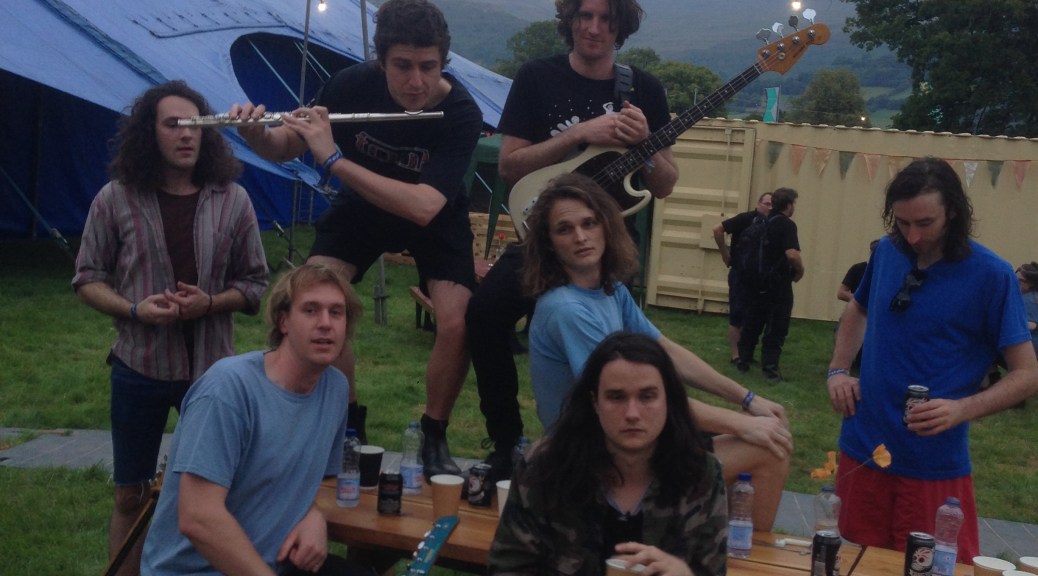
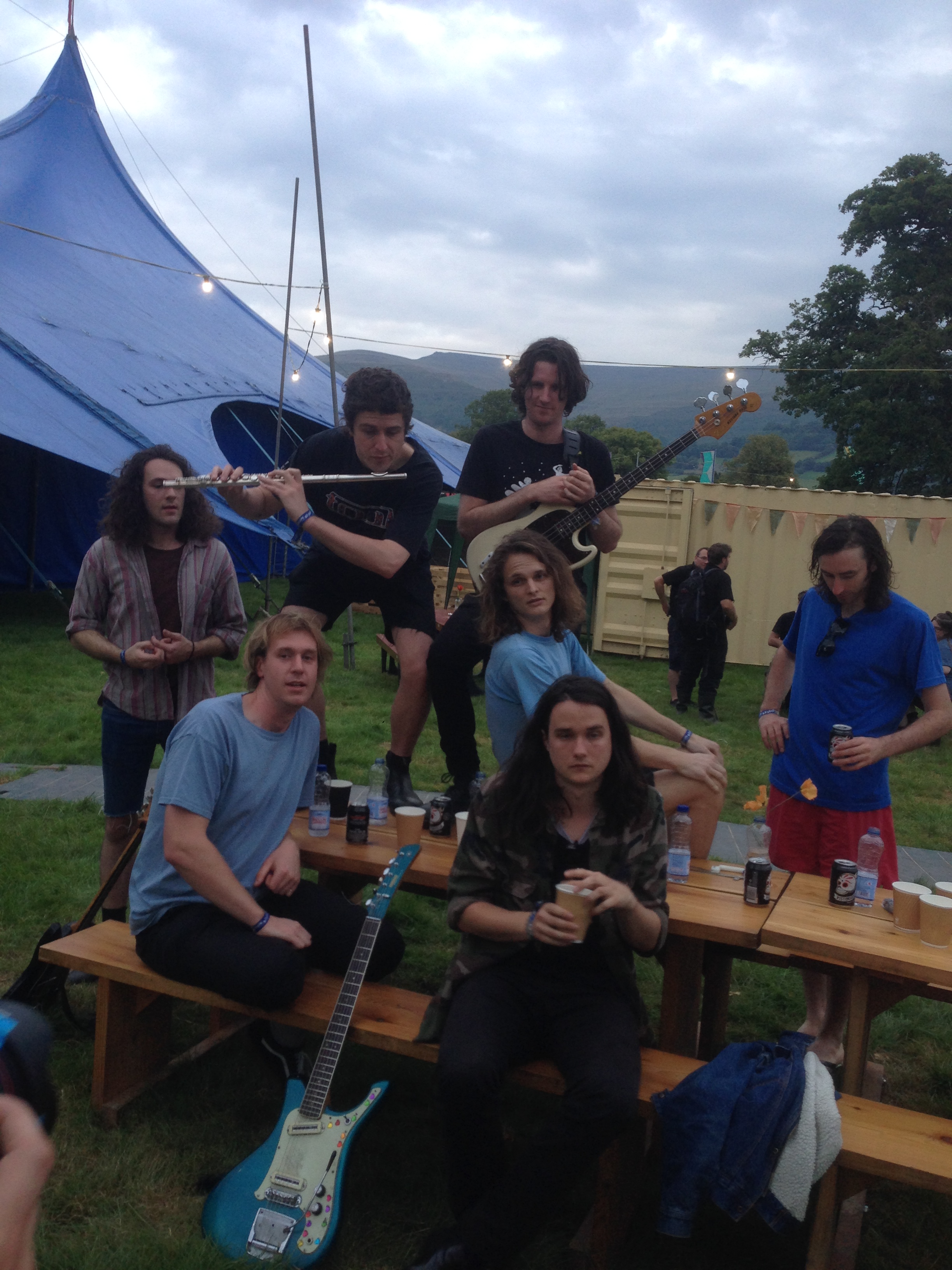
When the law was introduced, some police chiefs said it would be impossible to enforce. And at first glance it looks like they were right. Go online and you’ll still find products being sold that look very similar to all of the formerly legal party powders that are now illegal to sell in the UK. However, my first thought is that, to be sold, they must be legal, meaning they also must not have any kind of “psychoactive effect” on the human brain, because otherwise they’d be blocked under the act.
There was only one way to find out: buy a load of them and review them one by one. So I set off for Camden, spiritual home of the British head shop, to find out what had managed to slip through the ban.
“We don’t sell that stuff any more – all banned now,” one shopkeeper on the high street told me. “Stop taking that shit!” shouted another, which was a bit rich considering his shop was 90 percent bongs. I think they thought I was a narc, and you can’t blame them for being wary given that police raided those same shops as the ban was coming in.
The last place still promising you “a one stop shop for all your party needs” this side of the dark web is the online ICE head shop, which will still deliver a range of “research chemicals” straight to your door. I ordered the lot.
What with all the time-consuming acid trips and having to grow your hair long, psych-rock hasn’t generally attracted a lot of people with a strong Protestant work ethic. That’s at least until bizarrely titled Melbourne seven-piece King Gizzard & The Lizard Wizard gave the genre a shot in the arm and made everyone else look downright idle by releasing eight records in the last four years. Now they’ve upped the ante even further, announcing that in 2017 they’ll release no fewer than five new albums.
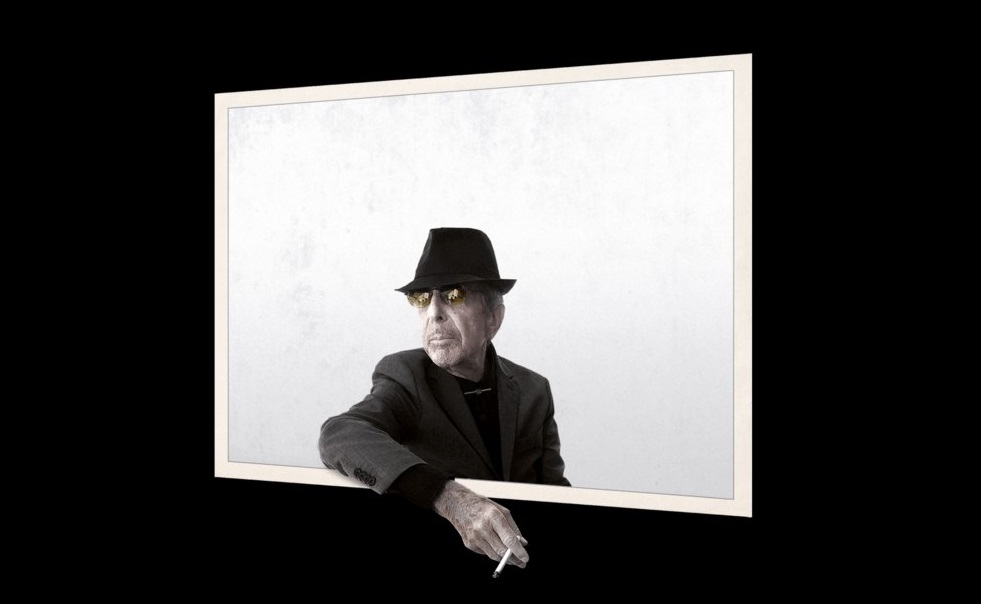
“I figured I’m no good at chilling,” says Stu Mackenzie, frontman, flautist and master of understatement. “Over the years I’ve tried to keep myself super busy so I don’t go insane. If I’m going to be a musician and a creative person, I may as well be a productive creative person.”
As anyone who’s seen King Gizzard live can attest, they’re not the sorts to do things half-arsed. At Green Man this year their extensive lineup meant they had two drummers firing like twin engines and still had manpower left over for three guitars, a harmonica, a theremin and even the odd bit of Mackenzie’s flute. Everything was played very loud at 1,000mph, and the effect on the crowd was to create a circle pit of sweaty bodies who swirled into a vortex as if they were being sucked down a festival-sized plughole.
Death is an impossible idea to stare at for too long. “The mind blanks at the glare,” as Larkin wrote. We can spend our lives trying to ignore the knowledge of our sure extinction but it will wait on the horizon either way. It lurks out of sight unless we muster the courage to raise our eyes from our lives to see it.
Leonard Cohen was brave enough to look up. It will be said that his death at the age of 82, which was reported this morning, is another tragedy in a year that appears to have been mainly constructed from disasters. I’m not so sure that it should be called a tragedy to die with such grace and wisdom. If there is such a thing as a good death, it appears at least from a distance that Cohen found it.
He was doing good work until the very end. Just three weeks ago today, on his birthday, Cohen released his fourteenth record ‘You Want It Darker’. It is a remarkable record, full of poetry, black humour and, of course, intimations of mortality. On the title track he uses the word ‘Hineni’, the Hebrew word meaning ‘Here I am’. He sings: “Hineni, hineni, I’m ready, my lord.” Cohen’s songs were always touched by death but by the end, after a lifetime of contemplation and Zen meditation, they’d achieved a state of humble acceptance when facing the abyss.
There is more evidence of his grace in the letter he wrote this July to Marianne Ihlen, his former lover and muse, who was then on her deathbed. In the face of death it is easy to slip into inanities or meaningless platitudes, but that was not Cohen’s way. He wrote: “Well Marianne it’s come to this time when we are really so old and our bodies are falling apart and I think I will follow you very soon. Know that I am so close behind you that if you stretch out your hand, I think you can reach mine. And you know that I’ve always loved you for your beauty and your wisdom, but I don’t need to say anything more about that because you know all about that. But now, I just want to wish you a very good journey. Goodbye old friend. Endless love, see you down the road.”
He saw clearly what was coming. A few months ago, after reciting the words of a new song to the New Yorker editor David Remnick, Cohen told him: “I don’t think I’ll be able to finish those songs. Maybe, who knows? And maybe I’ll get a second wind, I don’t know. But I don’t dare attach myself to a spiritual strategy. I don’t dare do that. I’ve got some work to do. Take care of business. I am ready to die. I hope it’s not too uncomfortable. That’s about it for me.”
He was right of course. It is hard to speak so plainly about death, but he achieved it. The simplicity of Cohen’s language – both in speech and in song – is thoroughly deceptive. Kris Kristofferson once told him that he wanted to have the opening lines of ‘Bird of the Wire’ inscribed on his tombstone. They are simple, short and perfect: “Like a bird on the wire, like a drunk in a midnight choir, I have tried in my way to be free.”
Cohen would work on songs and poems for months, turning sentences patiently. ‘Hallelujah’ took him five years. He was wise but he was also fucking funny. Just put on ‘The Future’ or ‘Everybody Knows’ or ‘Tower of Song’. I once asked him for advice about writing – or at least I tried. He was in London to release his album ‘Old Ideas’ in January 2012, a masterfully crafted record that felt like the return of old truths and forgotten melodies. In front of a room full of music journalists I was allowed the microphone to speak. At those sorts of events there’s always one: the babbling fool who just starts talking and never gets close to a question or a point. Mortifyingly, in front of the great poet, that was me. I think eventually he just gathered that I needed some help. “I’m reminded of the advice my old friend Irving Layton, who has passed away now but probably is the greatest Canadian poet that we’ve ever produced, and a very close friend,” he said. “I would confide in him, and after I’d told him what I planned to do and what my deepest aspirations were, he’d always say to me, ‘Leonard, are you sure you’re doing the wrong thing?’”
Take Leonard’s advice. Do the wrong thing instead of the ordinary thing, which is to call his death a tragedy, dash off a Facebook update or a tweet about how sad it is, post a meme comparing him to Bowie and Harambe and then carry on regardless. The harder thing to do, the wrong thing, is to look death as squarely in the eye as Cohen managed and to meet it with his clarity, his humour, and his grace. Then ring the bells, that still can ring…
Because of you I grew up wanting to drink martinis in exotic locations. Was being James Bond as much fun as it looked?
I’ve been lucky all my life. From the time I started making movies and television I played heroes. Never had to say too much, got the girl, won all the fights, got to keep the clothes. What more can you ask for?
Not a lot. What is being a man all about, in your book?
It occurs to me that the first three letters of ‘manners’ is ‘man’, and manners maketh the man. It’s about how you’re brought up. Don’t be afraid of people thinking you’re too nice. If people mock you, well, as my friend Tony Curtis would say: ‘Fuck ’em, feed ’em fish.’ That’s a great philosophy in life.
What’s the best piece of advice you ever got?
My first week in theatre when I came out of the army, the director said to me: ‘You’re not very good. Smile when you come on.’ So I smiled, and I’ve spent my life smiling.
You’ve said your favourite of your Bonds is The Spy Who Loved Me. Why?
Obviously the song: ‘Nobody Does It Better’. I mean, modesty forbids me…
It was your idea to drop the fish out of the window of the Lotus after you drive out of the sea, wasn’t it?
That’s right. Cubby [Broccoli, Bond producer] said: ‘Roger, you’re in a car that’s underwater and watertight. How does the fish get in there?’ I said: ‘It’s a movie, Cubby.’ It stayed in, and it gets a big laugh.
You’re always self-deprecating about your acting but there’s a great scene in that film where you tell Anya you killed her boyfriend. You quickly turn from charming to ice cold.
It’s funny you say that, the director Lewis Gilbert always mentioned that scene. Maybe it was lit right! It’s easier to joke about yourself than to go on about having to work hard as an actor. Bullshit. Get up, say the line, don’t bump into the furniture. In the 70s there was an article criticising Laurence Olivier and Marlon Brando for thinking of themselves as ‘great artists’. It finished by saying the only actors who made the profession acceptable, through their self-deprecating humour, were David Niven and Roger Moore. The next morning there was a letter from Niven with the article attached. Across the top he’d written: ‘It pays to be a cunt!’
You got all the best lines as Bond: ‘Sheer magnetism’, ‘Keeping the British end up, sir’. Which was your favourite?
In The Man With The Golden Gun when I’m – when Bond – is asking the gunsmith where something or other is. I line up a rifle right at his balls and say: ‘Speak now, or forever hold your piece.’
What’s the key to delivering a one-liner?
Timing. A great example of that is Jack Benny. The villain says: ‘Your money or your life!… Well?’ ‘I’m thinking it over!’
Forget ‘shaken, not stirred’, how do you make a perfect vodka martini?
I prefer gin. The way to make a proper gin martini is you take a martini glass and rim it with the zest of a lemon. As much zest as you can get. Then put it in the deep freeze. Take a teaspoon full of Vermouth, Noilly Prat, put it in a glass, shake it around and then throw it away. Into that glass you put two jiggers of gin. Take that, put that in the deep freeze. When the time comes, take the glasses out and pour the liquid into the martini glass. There should be a slight film on it, like oil. Put it to your lips and drink it, with three olives on the side.
That sounds quite time consuming, frankly.
If a drink’s worth having it’s worth doing properly. If you’re going to have vodka, by the way, have Grey Goose.
Are you on commission?
No. Jesus, I wish I were. With gin, I like Gordon’s.
You’re a British icon – the spy with the Union Jack parachute – but since Brexit we seem to be a country struggling to figure out who we are. How do you see Britain’s place in the world?
I hope we continue to be important contributors to alleviating the effects of poverty. I don’t like the newspaper campaigns taking the government to task for the amount of money it gives other countries.
Should we be taking in more refugees?
I drive around England quite a lot. We have an awful lot of space, we really do. It’s because we’re a fortunate society that people want to come here. If they’re coming here for non-economic reasons then that’s all the more reason to take them. If they’re coming for economic reasons and have something to contribute then I don’t blame the poor bastards for getting out. They’re doing exactly what the British did 400 years ago.
You recently turned 89 – what’s the secret of your longevity?
George Orwell once wrote: “If you want a vision of the future, imagine a boot stamping on a human face – forever.”
Now we know that’s a GIF, endlessly looping.
I’ve heard about another guy cursed with visions of the future so I’ve come to a haunted house to find him. It looks like the one you probably had nightmares about as a kid: gothic architecture, vines creeping up the walls and floorboards that creak like escaping ghouls. Bad news, friend. That nightmare haunted house is real and it’s in Henley-on-Thames.
In the dimly lit hall is one of those eerily realistic paintings of the house itself that you keep peering at, half expecting to see yourself trapped in a window. Beneath it stands the man I’m looking for, supervising as one of his stories is brought to life. “I suppose you’re like a guide,” he says of his role here. “Like someone who’s seen these fabulous visions, and then the people from the village are asking: ‘What did you see beyond the mist?’ And you’re telling them.” Charlie Brooker pauses for a beat. “That’s the cuntiest way I could think of to describe it.”
In its five years on our screens Charlie Brooker’s Black Mirror has given us a string of dead-on predictions. They range from the expected – people filming their entire lives in 2011 episode The Entire History of You two years before Google Glass – to the rather less expected. “Who would have thought,” asks Brooker, “That the [prime minister] pig-fucking episode would be the most accurate one?”
After two series and a Christmas special for Channel 4, Brooker and fellow producer Annabel Jones will premiere the third series of Black Mirror exclusively on Netflix tomorrow. It’s a move that granted the pair an increased budget, which Brooker says has all been put to good use. “There’s more things you can do with it,” he says. “We have episodes set in California, and a bit of CGI. The scale of it is different. The fact that the actors are clothed and have shoes. That it was written on a golden typewriter…”
Our supposed soothsayer is taking the absolute piss. What they’ve actually been spending the money on is stars like Bryce Dallas Howard and Kelly MacDonald and directors like Atonement’s Joe Wright and 10 Cloverfield Lane’s Dan Trachtenberg. In fact, Trachtenberg is hard at work right now upstairs in this haunted house. We can hear the echoing screams of Wyatt Russell – son of Kurt, last seen in Richard Linklater’s Everybody Wants Some – being dragged around unsure of what’s real and what’s not.
When the scene is over, Trachtenberg explains how Brooker has managed to become so attuned at bringing our fears to life. “You can see the show in his personality,” he points out. “He’s observational, and he’s always finding the irony in things. He’s a concerned guy but his worries are often very funny. They’re not funny to him! He’s really worried, but the way he expresses them are funny for us.”
Trachtenberg is directing an episode called Playtest, which sees Russell’s character thrown into a terrifyingly immersive computer game. It’s one of six new episodes and, as Brooker explains on-set, he’s relished the freedom the new format has afforded him:
Now that you’re off conventional TV, were you tempted to indulge yourself in sprawling episodes?
Brooker: “We could make it eight hours long! If I could come up with a story where someone is stuck in a short time-loop we could keep them there for eight hours.”
Like those LPs with a circular groove at the end?
“Exactly. You could do that with ‘White Bear’. You could loop that episode again and again and again and just change the date that he crosses off. I’ll have to do that sometime… a little art installation for someone…”
Have Netflix been hands on?
“They’re very supportive and they’ve been very involved in that they’ve got an opinion on everything. I would say 99% of the time I agree with what they say, but they don’t impose things or give you instructions, it’s more suggestions. Most of the time what they’re saying is irritatingly well thought out and cogent and clever. You can’t go: ‘Bloody execs coming in and tinkering with my art!'”
Having six episodes this time must’ve given you more scope to explore different genres?
“Yeah, you kind of have to. Over six you need a wider variance in tone, otherwise it just becomes predictable. We’re not always necessarily going to have bleak endings, which is historically what we have had.”
So are we in for happy endings?
“Well, this is Black Mirror so… we don’t want people getting up and showing shoes at the screen because…”
Because you’ve made them happy and they’re furious?
“…because they smiled. Well, hopefully they will smile, occasionally, through the anguish. It’s a weird one. What people think the show is slightly depends on which episodes they’ve seen, obviously. If you’ve watched ‘Entire History Of You’ it feels like its commentary on personal relationships and technology, if you’re looking at ’15 Million Merits’ it’s more a satirical, cheerful dystopia. That’s a sarcastic version of now.”
Was that episode autobiographical?
“It turned out that way. We did jokingly refer to it as ‘The Screenwipe Story’, just in that the guy is railing against stuff and then ends up on TV. The original ending was slightly different, and I thought it was quite neat. Because he was constantly having to look at how many merits they were generating, in the original ending he ended up looking at how many ratings his show was generating. It was difficult to shoehorn that in, although it’s implied. It’s all allegorical. I was thinking of weird old Plays for Today that used to be on in the 80s, which probably happened by accident and wouldn’t be on today anywhere. There was this thing called ‘The Year of the Sex Olympics’, which was by Nigel Kneale, who did ‘Quatermass’. It’s not what it sounds like!”
That’s on Channel 5 now, I think.
“It probably is! It’s from 1968 and it’s got Leonard Rossiter in it and Brian Cox, not the physicist the actor, obviously. It predicts reality TV with quite a bizarre degree of accuracy. I watched it with my wife and we were going: ‘This is… now?’ There’s a bit of it which sort of predicts TV execs looking at Twitter, in a weird way. The entire population is kept dull by watching shows called things like the Tittedy Bum Dance Hour, and The Sex Olympics, and Fat People Falling Down, and that sort of thing… or is that our world? I’m getting mixed up. Anyway, to gauge how the shows are going down the producers have a panel of viewers who are sitting there constantly with a camera on their face, there’s about nine people on this panel, and they look at their facial expressions and go: ‘Oh no, they’re not liking it!’ That’s people looking at Twitter! Then they basically invent Big Brother in it. They say: ‘What we need is a show that’s completely unscripted. We’ll just get some people and put them in a house.’ It’s a bit like Survivor because they say: ‘Let’s put them on an unihabitated island and just have cameras on them 24 hours a day.’ They do that within the show. Obviously, there are all sorts of elements that seem quite clunky or old and creaky by today’s standards, but it was really ahead if its time. At the time I saw it I was thinking that you don’t really get those weird, one-off Plays for Today anymore where it’s just set in a giant onion because someone’s had the notion of doing that. You don’t get that sort of weirdness happening so much anymore, certainly not for one episode. So it was a very deliberate attempt to make something set in a bizarre universe that doesn’t really make sense and is just sort of ‘allegory land’. It felt like a statement of intent to do that early on. Some of these new episodes are set in quite odd environments.”
Does having a bit more budget help with that?
“Generally you can although often restrictions are quite good. You still have to approach it practically. We don’t have $50 million, but there’s definitely more you can do. There’s an episode called ‘Hated In The Nation’, which is a 90 minuter… roughly, we haven’t seen the first cut yet. It might be six minutes! It won’t be six minutes… That’s got a relatively large cast and lots of locations, and is on a scale that we probably couldn’t have done before. It’s got a pain-in-the-arse driverless car in it. It’s about two female police officers, not Cagney and Lacey or Rosemary and Thyme. They’re played by Kelly Macdonald and Faye Marsay.”
Is that your crime procedural episode?
“Kind of. It’s might start off like that. It’s closer to Scandi-noir than it is to… Rosemary and Thyme, for instance. It’s Scandi-noir meets Black Mirror, set in Britain. It becomes apparent quite quickly that it’s a bit odd. All the new episodes are atypical, but that one in particular is very different to anything we’ve done before because doing a police procedural is different. It’s sort of plot-driven rather than character-driven. You’re not focusing so much on a protagonist, which I guess is where the ‘procedure’ comes in.”
Is it strange for you to be on set like this and just oversee the director?
“I’m not always on set, but when I am I often tend to be chipping in on a logic point. Sometimes I’ll notice something and think: ‘Oh shit, I should change that line.’ Sometimes I’ll watch something and think: ‘That’s not how I interpreted it’ so you’ll go and have a conversation with the director. Generally if I’m here and there’s an issue it’s to do with logic. ‘We can’t do that, because this is a world where no-one has a phone!’ or that sort of thing. In this episode there was a debate about the level of reality that was going on. It was to do with whether an object would break. Could that object break? We worked out that it couldn’t, then we decided that actually, given the wider logic, it could. I can’t really explain it better than that! It’s ‘Inception’ levels of… hang on, that wouldn’t happen because that person isn’t really there. It’s that sort of thing, which is always the case. It was the case on ‘White Bear’, and the Christmas special was a nightmare in terms of the fucking levels of reality going on in that. It was imperative in that episode that you could see the blocking when you jumped in to someone’s head to see their point of view. It quite quickly became a mindfuck. There are scenes where people are walking around as blurred out silhouettes, and to do that we had to get all the extras to wear replicas of the clothes they’d worn in the other scene but in chroma key blue.”
Chroma key blue replicas of everything they’re wearing?
“Yeah. There’s a guy in a turban so he had to get a blue one. They were all wearing blue masks and gloves. Then we also had to have John Hamm for the reverse, so we had a blue John Hamm wandering around. It was quite a headache, and that tends to happen a lot.”
I’m sure someone will be swiftly along on Twitter to point out any logic errors
“They quite often do. Sometimes they identify a plot hole and they genuinely have and you think: ‘Oh, shit’ but sometimes they’re identifing something that you knew but went: ‘Oh, fuck it. Most people won’t notice or care and if they do it won’t matter.’ That happened with ‘The National Anthem’ a lot. There are a few little plot holes, which I think are addressed within it, but that are kind of implausible. Broadly it works, but that’s probably the most divisive episode we’ve done, I’d say. That’s why we’re going to do a sequel where he has to make a pig cum. No, we’re not going to do that.”
Do you write with an audience in mind, particularly now that the show has become an international success?
“No, I don’t really know who they’re aimed at. Sometimes you sort of think… well, the cliche is that you aim it at yourself, because you can’t really second guess who’s going to watch it. I don’t know that people are different around the world. I always concentrate more when I’m watching a show with subtitles, so I think lots of foreign TV is brilliant. That’s just because you can’t get distracted and go on Twitter when you’re reading this book that just happens to have people and furniture behind it.”
How do you think this series will be received?
“I can’t work it out. It’s the same but different. You don’t want it to be ‘the same’ because that’s the same, but you don’t want it to be too different. I’m probably not the best judge of how different it is. We’ve got more playful episodes than we’ve done before, and we’ve got heavier episodes than we’ve done before as well. We haven’t seen the final cut yet, so God knows what they’ll be like!”
As a writer, do you feel like you’ve already seen the episodes?
“You see them when you’re writing them, weirdly. I always think of writing as a bit like programming, which is a really unromantic way of looking at it, but it’s similar, I think, not that I’ve ever programmed anything, in that I’ll sometimes notice bugs later and think: ‘Oh fuck!’ Quite often I’ll slightly overwrite it and then when I go back and edit it and start hacking away at the stage directions I’ll realise I forgot to mention something and I’ve broken the logic of something completely. When I’m writing things, when you get on a roll with it, you tend to be seeing it so you’re sort of describing what’s happening, in some way. Getting to that state is the tricky bit. I tend to write very quickly once I know what I’m doing, and generally speaking… one of them this time round was a real pig to do. I kept rewriting and rewriting it, but otherwise they’ve come out relatively easily. I tend to now plans things a bit more than I used to, because it saves you time in the long run. I’ll write up the treatment firstwhere I broadly outline what’s going to happen, kind of the bullet point version of it. Then I’ll plot it out and write the scenes. It always massively changes, but if you didn’t have that road map to start with you’d go mental. I tend to go nocturnal when I’m writing. I tend to write at night… standing up, now, which is probably the biggest change!”
Didn’t Donald Rumsfeld have a standing desk?
“I don’t have a standing desk, I just got a cheap thing off Amazon which is like a stand that you put a laptop on because I wasn’t sure if I wanted to commit to the whole standing desk thing. What’s good about it is you just waste less time. You don’t sit there and think: ‘I’ve got to write a scene with a helicopter in it’ and then go on Wikipedia and look up helicopters, and then before you know it you’re watching episodes of Airwolf on YouTube.”
So you’re tricking yourself into writing quickly because you want to sit down?
“Yeah, you’re slightly uncomfortable the whole time but nowhere near as uncomfortable as you’d think. You’re writing, and then you go and sit down for a little rest.”
Do you have to unplug the internet?
“I tried that for a while. Standing up is better. It’s when you’re sat there slouching that you end up going on the internet constantly. I tried it before. I had a bit of software called Freedom that cuts off your internet connection. I discovered that it would work but a bit, but what’s terrifying about it is how often you would forget. You’d go to check your email and it would say: ‘Connection Error’ and you’d think: ‘What? Oh yeah, of course, I switched the internet off’ and then later you’d go back to it again, like a lab rat. You’d keep going back looking for that little dopamine hit. So I was using it for a bit, and it just cuts off your internet connection, so then I’d just start using my phone. I’d be sitting there staring at my phone, so that didn’t work either. I was talking to the novelist Ned Beauman, who might be doing something with us for the second season. He locks his phone in a kitchen safe, which is a perspex box with a timer on it. He locks it in there for hours and then goes off and works, so he can’t get to it. I haven’t tried that because I worry there’ll be an emergency.”
Ned’s also an advocate of wearing ear plugs to help you work.
“That’s a bit much. I’ll play music, but I can’t listen to anything with lyrics. I suppose it’s a similar thing to going nocturnal. There’s just fewer distractions. During the day you slightly feel like you should be outside, or you feel that time is ticking away, whereas at night you should either be asleep or doing that. I plot things out using Scrivener. I’m evangelical about using Scrivener to start with, and then I somehow segue into using Final Draft at some point in the process. I don’t do any of those things like having a system… I scarcely know what the first, second and third acts are, but I guess when you look back you go: ‘Oh, that’s adhered to that structure.’ I can’t keep all that stuff in my head about the hero’s quest or whatever. I think it’s masturbation, basically, or it’s interesting but it’s like music theory. Being told why a song is catchy isn’t the same. You kind of intrinsically know when something has gelled. Where we are in the cycle at the moment is that after we’ve done the last few days of shooting I’m about to start getting back into the writing process.”
Have you written the next six episodes yet?
“No.”
Not at all?
“I know what some of them are. I know what quite a few of them are. It’s partly balancing. There was one that I wanted to do in this series but there was a similarity with something we’d done in the second season. Now I think enough water has gone under the bridge that we can do it. There’s quite a few ideas that have got the same sort of technological underpinning, so I know I can’t do all of those unless I come up with something like the Christmas special which is a portmanteau. That was a clearing house for lots of ideas I’d had that weren’t long enough to sustain a full episode, but I realised they could fit together. I’ve got a clear idea of what quite a few of them are. As for the others, they often start from a germ of an idea that it would be good if there was something a bit like this… but I don’t know quite what it is. Here’s a thing I’ve noticed, and then extrapolate from that. That’s slightly terrifying, because if it doesn’t happen we’re fucked!”
You’re not tempted to bring in other writers?
“Well, I said about Ned. For this run of six, two of them were written with other writers. There’s a guy called Will Bridges, who’s been writing on one of the episodes, and Mike Schur and Rashida Jones writing on one of the other ones. We’ve done that, and we’ll do that again for the second batch. It’s a difficult one for people to come in and slot into, because it’s probably a more idiosyncratic show than I realised when I first set it up. They are all different, and you could have almost anything happen in it, and it does have technology, but it doesn’t tend to be… I find it hard to articulate what a Black Mirror story is, but I know it when I think of it. The thing that lets me know I’ve hit on a good idea is when I start getting worried that someone else is going to do it. We’ve been quite lucky that that hasn’t quite happened yet. I start getting a real panic that I’ll see a trailer for a film with the same premise. It’s all a very different muscle to doing comedy stuff. It’s a completely different mode of thinking.”
Have the episodes you’ve made before measured up to how you first imagined them?
“Generally they’re better. It’s weird because they’re often really similar, but better because along the way you work out all sorts of ways of doing things. Sometimes things happen which are not what you envisioned at all, but which turn out to work and be a better idea. Generally speaking, bits that don’t work are things that didn’t work on the page, I always find. It’s pretty close. We’re involved in every aspect, including the edit, dubbing, all the designs… I get very nerdy about the typeface used on the phones, and all that sort of stuff. We don’t tend to do too much of that stuff that you get in Hollywood movies, which is getting better, but it always used to be that if the hero received an email there’d be a giant animation of an envelope spinning around. We don’t tend to do those kind of histrionic computers. We want our technology to feel real, or basically magic. In that respect, because I’m chipping in at every stage, it’s close to what I envisioned. That’s really what you’re being asked about: is this what you pictured? It’s amazing what difference things can make. Even at the stage of the audio mix you can alter something which massively affects a scene, for better or worse. Continuing to be involved in that stage does make a difference. That’s the thing I always forget about how long the gestation period is. From the inception of the idea through pre-production, production, post-production there’s a constant barrage of questions and decisions. Then people watch it and go: ‘Huh!’ It’s very different to doing topical comedy shows. That’s very intense for a very short period of time, and then its done and nobody is ever going to watch it again. Who’s still watching 2013 Wipe now? No-one. It’s a very different discipline.”
Does that make a difference to how much pressure you feel?
“It’s the same amount of pressure compressed into less time. The pressure is about the same. When you’re doing topical stuff… the weirdest one was when I was doing the live thing. That was immense pressure in an afternoon. Terrifying, and then it would be over in three or five minutes, my chunk. Then there’d be another fifty minutes on air. It was always a bit surreal when it finished. I was done for the week. I didn’t know what to do with myself. With this, it’s a constant low-level pressure. It’s enjoyable. It’s problem solving, a lot of the time.”
Has Black Mirror become your main job now?
“Certainly at the moment. We’ve postponed doing Weekly Wipe and stuff like that because you can’t really do it at the same time. We’ve postponed that for a bit. I’m doing the end of year show. It’s all-consuming, which means you can’t consume anything else…”
Is this what you feel happiest doing?
“I’m not happy doing anything. What is happiness? No… um… yeah, I think so. It’s a constant challenge.”
[Someone comes to announce that catering has arrived…]
“Shall we go and get some soup? He said, hungrily. We’ve set up a soup kitchen outside. I’d say it’s… It’s fucking cold. Jesus. Who broke the bloody weather?… I’ve got to stop swearing. I swear all the time… In terms of what I’m happiest doing, I like variety. Which is stupid, because generally all the things I’ve ever done have either been short runs or… Dead Set was one story, but it was a short one. Black Mirror is a different story each episode. Topical shows again are different every week. It’s bloody stupid, really, because it’s difficult! It means you don’t get many recurring characters… Philomena Cunk, I guess would be one. It seems to be the way I’m wired, for whatever reason.”
Even TV Go Home had that variety.
“Yeah. I started doing that specifically because I wanted to do something with comic strips. I did a website where I put comic strips up. But comic strips take so long to do, and are such a pain in the arse, and I wasn’t the world’s greatest cartoonist, so I thought that I should be doing something that I could just regularly update. So I started doing that because it was easy and bitty. I set myself the goal of doing it once a fortnight. At the time it was probably the most disciplined I’d ever been. It became quite popular, and that was what got me the job on The Guardian and things like that.”
What made you decide to do spoof TV listings?
“It wasn’t really my idea. It’s a thing that’s been done in novelty comedy books since year dot. I’d forgotten but rediscovered recently that when I was about 16 I was doing stuff for a comic called Oink and I’d written a Radio Times parody for that. So I’d been doing it for yonks. That was the prototype, I suppose. At the time I started doing TV Go Home it felt like TV was in a slightly transitional period. There were things that overtook the listings, like Touch The Truck. Also, if you think about… it was pre-I’m A Celebrity. When you’ve got Matt Willis from Busted eating a kangaroo anus on TV, what’s the point of writing a satirical listing? You can’t really outdo that.”
Does Donald Trump make you feel the same way about political satire? Where can you go?
“Hes terrifying, because he’s shameless. Literally shameless, in that you cannot shame him. He’ll just come out with a blizzard of lies. There’s that old saying that the bigger the lie, the more people will believe it. What he does is comes out with a constant confetti of little lies so he never really gets called out, because there’s always another one… as soon as you start to go: ‘Hang on a minute, that didn’t happen you fucking liar!’ he’s come out with another ten lies. What do you do when it’s someone who just lies all the time? You’ve got no idea what he really believes, or really represents. He’s a terrifying, weird, comb-overed blank. He’s kind of like the nightmare vision of a President. He’s the guy from the fucking Deadzone, but you can also see that he’s appealing because he’s none-of-the-above. He’s the anti-candidate, but he’s the worst possible person to step into that role. Maybe it’s all a situationist art prank, I don’t know. I feel like I won’t sleep soundly until after November, even though the election is nothing to do with me. It may be happening overseas, but you kinda feel like… I don’t really want to have to start digging a bunker.”
How do you feel about Hillary Clinton?
“I don’t know much about her, but I know she’s not particuarly popular. It’s almost a perfect storm. There are few people I can imagine would do a worse job than Trump, so I would be inclined to look at it in that reductive way. I don’t know too much about her, but I understand that she’s not well liked in the States, to put it mildy. It’s not exactly a popularity contest. I keep telling myself that sanity and pragmitism will prevail, and people will go: ‘I hate Hillary, but at least she’s not him.’ I read PJ O’Rourke say he’ll vote for Hillary, because he thinks she’s wrong on every issue, but she’s wrong within normal parameters. I feel like I won’t be able to watch the news on the night of the election, because I’ll worry too much about it. I’m nothing if not a worrier. The Black Mirror version of that reality is that you wake up and Trump’s won, so maybe it’s good for business.”
How do you rate Nathan Barley, looking back now?
“I think, apart from anything else, the fucking cast we had on it… Benedict Cumberbatch is in it, Ben Whishaw… And it was weirdly prescient. It was slightly informed by my experiences writing in the video games world in the 90s. I wanted to transition from that to writing for newspapers but I didn’t know how to do it.”
“Dutch wine”?
“Dutch wine. That was what I felt like. I wouldn’t know how to begin writing for a Sunday newspaper because I don’t have that whole… It’s like everyone else knows something I don’t. Dan Ashcroft’s desperation was informed by that lack of a sense of direction. We predicted a lot of things by accident. In Nathan Barley he’s got that phone he carries around with him all the time, the Wasp T12. I remember at the time we thought it should have all sorts of different functions. It’s sort of got apps, but they’re physical. He could open it up and it had DJ decks, and it could project things. If we’d thought of apps you could use on a screen we could have made a fortune. It basically is an iPhone isn’t it. At the time it came out I remember people going: ‘Oh, this is a bit two-years-ago. The dot com bubble has burst. That moment’s passed. Now it looks like an alternate reality where everyone has slightly older technology.”
Do you find yourself reading and watching a lot of near-future satire? Have you read things like Super Sad True Love Story?
“No. I try not to read things or watch things, generally. Don’t get me wrong, I’ll watch and read things that are not in the same ballpark, but for instance I haven’t seen the film Her because loads of people have said to me: ‘That’s quite Black Mirror, you should watch that.’ I don’t want to watch it because I’ll be too angsty. If it’s brilliant I’ll get twisted up. If I think it’s rubbish I’ll get twisted up. If I think it’s just okay I probably won’t like that either. I kind of can’t. Although I did watch Ex Machina, which I enjoyed. I tend to avoid sci-fi near-future things if I can, partly because I’ll see something and go: ‘We’re trying to do something like that!'”
Do you worry it would end up in your writing?
“Not so much. We’ve done episodes that are ostensibly in a similar world to other things. There have been stories before about nightmarish Orwellian futures, so I don’t worry too much about overlap. Her came out around the same time as our episode Be Right Back, but they’ll have been in production for ages. People always gleefully tweet me these things, and horrible news stories as well. ‘Someone was killed by an iPhone falling on their head, that’s a bit Black Mirror isn’t it?’ I’m the first to be informed of all of that shit. Increasingly it’s product launches. People tweet me saying: ‘Apple have launched a thing that’s just like the home-controlling egg from the Christmas special!’ or the Samsung contact lenses. I think a lot of our stuff is quite out there, so I don’t think anything like that will happen this time…”
You say that now…
“I say that now. That’s true. Who’d have thought the pig fucking episode would be the most accurate one? I didn’t know anything about that. It’s the one thing people always ask me. I didn’t. I’d never heard that rumour. When that story broke I was quite weirded out. I was quite worried, for a short period, that maybe reality is a simulation designed to confuse me. It was so weird. It was such a weird thing. The day before someone had sent me a link to an article that was: ‘Look at all these things Black Mirror predicted’ and it said in the article: ‘Obviously not the prime minister one…’ I genuinely thought it was too weird a coincidence. It was too specific. If I’d known about it I wouldn’t have bothered writing a thing about it, I’d have just run around yelling it at people.”
What do you think really happened with Cameron? Did they just want to make him deny it?
“It was a weird old story, wasn’t it? There was supposed to be one source. You would think, that if the logic follows that he always felt he was born to rule even at Bullingdon, then you’d think he would have the wherewithal to think: ‘Maybe I shouldn’t fuck a pig’s head in front of everyone.’ I could imagine some tomfoolery, but actually putting your knob in a pig’s mouth? I find that hard to believe. I would image it’s an embroidered version of something. God knows. It seemed to be motivated as a revenge story. I felt quite sorry for him, although it was funny. In The National Anthem the Prime Minister is the most sympathetic person in it. It was too funny for people not to enjoy. It was like a carnival on social media. It was eerie how it did play out on the news as it did in our episode, in that they pussyfooted around it and how they would even manage to describe it. That really did play out exactly as it did in the episode, which is bizarre because they must have been having the same conversations in the newsrooms. ‘Everyone on the internet is talking about, how do we describe it? It’s breakfast, we can’t have people choking on their bacon.’ I don’t know. I’m hoping that doesn’t happen again. I don’t want to predict more things. It would be quite bleak.”
Do you ever get those tweets about things being a bit Black Mirror and think: ‘God that is quite a good idea’?
“Occasionally, but it’s easy to lose sight of the fact that originally the point of the series wasn’t to be technological. I’ve discovered that if we sit there trying to think of stories on the basis that: ‘Oh, Google are doing a thing…’ it’s hard to come up with. It tends to be more broad ‘What if?’ ideas that lend themselves to some sort of technological element. Really, we use technology in this show in the same way that The Twilight Zone would use magic or the supernatural, it’s a means by which magical things happen. Which is sort of how it happens in real life. When the show first came out there was a period when I’d have believed anything. The first time you use Uber it’s like magic. What I just do this and the car appears? That’s amazing. I did a show a couple of years ago for the BBC called How TV Ruined Your Life. As part of that, one of the things we did was went out and vox-popped people. One episode was on progress. We went and showed people a promotional video we’d mocked up for a mobile phone that let you call through time so that you could ring yourself in the future so you could remind yourself of something. We showed it to people and a surprising number took that at face value, because you’re so accustomed to believing miracles. The Time Phone allowed you to call through time and it also had a laser so you could boil a cup of tea in seconds. People went: ‘That’s clever, when’s it out?’ because why wouldn’t it be? In fact, you could ring yourself in the future. I could imagine a service that you call and record a voice message and then it’s timed to call you back in the future: ‘Hey Charlie, remember that you’re living in a dystopian nightmare?’ So the ideas for Black Mirror either tend to be a funny ‘What if?’ about a situation or things like The National Anthem that take a ridiculous scenario and treats it seriously. All the thematic layers were secondary. You realise that if you commit to it then there’s all sorts of other things you can be saying. When people talk to me about Black Mirror ideas they’re often coming at it from a worthy, issues point of view, whereas I usually start with a popcorny idea, a hooky premise, that means people will say: ‘I’ve just watched this mental thing where a man fucked a pig.’ Well, hopefully not that, that’s a spoiler. Hopefully we’re adhering to that. It’s weird when you look at the episodes across the series. You go: we’ve got a poignant one, we’ve got a lighter one… now we need an absolutely devastating one.”
‘What’s the worst thing you can possibly imagine?’
“Yeah, often it’s that kind of thing. Here’s a set-up, now what’s the worst thing that could happen now? What’s the worst thing that could possibly happen to anyone? We’ve had a couple of examples of that. In White Christmas, what happens to Raph Spall’s character is pretty much the worst thing that could happen to anyone. Living for eternity experiencing Christmas Day in a house that isn’t there, on your own, with the body of a child whose death you were responsible for, while Wizzard’s ‘I Wish It Could Be Christmas Every Day’ plays on an eternal loop and every time you smash the radio it gets louder.”
“LOL!”
“Yeah, it always makes me laugh. Whenever we come up with an endpoint like that I always fucking piss myself. That’s when you know it’s perfect. That would be horrendous! Let’s have a good laugh about it!”
For most pilgrims it is a long way to Lake of Stars festival. This year the event returned to its original site at Chintheche Inn in northern Malawi, seven hours by bus from the capital Lilongwe. Many artists come from further afield still, across Africa and Europe. Alongside them this year were groups of refugees making their own journey from Malawi’s Dzaleka camp.
These included the Amahoro Drummers, a traditional Burundian group who perform with the tall karyenda drums balanced precariously on their heads. And yet most of the two dozen drummers have lived in exile their whole lives, member Simon Nzigamasabo tells me. “Maybe 95% of us – including myself – have never seen Burundi,” he says. “I was born in Tanzania in 1985 and learned how to play this drum there. Our leaders in the camps always wanted the children to see a positive side of their country.”
A few years ago, Alexander Skarsgård turned up at a Hammarby football match in Stockholm noticeably… what’s a polite way of putting this? Worse for wear? “I was shitfaced,” says Skarsgård. “I went up in front of the crowd and started doing this chant. Someone put it on YouTube. I’m very drunk, going: ‘You fucking cunts, listen to me!’ I thought: ‘This is real embarrassing.’”
During the bleak hangover that followed, the 40-year-old Swedish actor thought he might have torpedoed a career that had just seen him get the part of Tarzan in this summer’s blockbuster. In fact it made him an even more perfect fit for the role. “Warner Bros had said they needed someone primal and animalistic,” he says. “So my agent sent them the video, saying: ‘Isn’t this motherfucker primal enough for you?’”
Another one of the half-million people who watched it was John Michael McDonagh, writer-director of The Guard and Calvary, who was on the lookout for a hard-drinking detective for his pitch-black buddy comedy War On Everyone. “He saw the video and went: ‘That’s the guy,’” says Skarsgård. “It got me the job. The moral of the story is: Make a fool of yourself and people will love you. Remember that, kids.”
In Imperium you play an FBI agent undercover with white supremacists. What’s the most disturbing thing you learned?
It’s all fairly disturbing. I was more surprised by the mundane stuff. I imagined that white supremacists would go on internet forums and say horrible things about black people and Jews. I didn’t imagine they’d be swapping poems.
Which conspiracy theories are you a fan of?
I love the idea that aliens might have built the Pyramids or interceded in our progress as a civilisation. I don’t believe that, but I love hearing people talk about it.
What did you think when you read the Swiss Army Man script and realised you’d be playing a flatulent corpse?
That it was, yeah, kinda weird, but mostly what struck me was how funny and inventive it was. There was something really exciting about the levels of imagination at work. I immediately thought: “Holy shit, this is going to be something cool.”
Look, here’s a bit of hard-won wisdom for you: Rocking up on your first day in student halls wearing a belt buckle with a slide-out Zippo lighter in it and immediately pinning up a Fear and Loathing poster does not make you look as cool and dangerous as you think it does. You are not ‘vibey’. Put out the joss sticks, the whole floor can still smell the soapbar spliffs you smuggled up from Devon. In time your German roommate will learn that no, it isn’t all “totally legal” here since “they changed the law”. He won’t be glücklich. Oh, and apparently no one else has brought a desktop computer to uni with them since 1998.
Lauri Love will be extradited to the US to face charges related to his alleged involvement in #OpLastResort, a UK judge has ruled today.
Speaking at Westminster Magistrates’ Court this afternoon, Judge Nina Tempia said: “I will be extraditing Mr Love, by which I mean I will be passing the case to the Secretary of State.”
The ruling, which lasted under five minutes, was attended by Love, his parents, and around 40 supporters. Leaving court, some of his supporters derided the decision, shouting: “Bullshit, kangaroo court!”
Love, a 31-year-old electrical engineering student, is set to face three separate trials in New York, New Jersey, and Virginia. #OpLastResort was a series of online protests that followed the death of Aaron Swartz in early 2013. Love is accused of hacking US systems including some belonging to NASA and the FBI and could face a prison sentence of up to 99 years in the US.
Love was advised that he has a 14-day leave to appeal, which would see the case go to the High Court. Outside court, Love’s legal team confirmed they would be lodging an appeal.
Love himself said, “I’m not going to comment too much, because I haven’t read [the full ruling], and I have to. I want to thank everyone for their support, and to thank the judge for giving us the opportunity to win at a higher court and set a stronger precedent. I think this only helps the cause of supporting better justice, but it’s unfortunate for me and my family that we have to go through another six months or a year of legal stuff, but it’s what we have to do.”
Just after 9pm on Sunday 11 August 1996, Noel Gallagher stepped on stage in front of 125,000 people for the second night running, jabbed his index finger at them and bellowed:
‘This is history. Right here. Right now. This is history!
“I thought this was Knebworth,” deadpanned brother Liam, standing front and centre. “What are you on about? ‘Ah, we’re all going to History for the weekend to watch Oasis.’ It’s not on the map, our kid…”
Both brothers were, for once, right. Oasis at Knebworth was history in the making. Those two nights in a muddy field near Stevenage were the high-water mark not just for their band but for a wave of British culture that transformed the country at the end of the last century. For better or for worse, the energy of a whole generation was coming to a head.
Luton isn’t the most glamorous airport in the world. It isn’t even the most glamorous airport around London, but it’s where Major Lazer find themselves at 1:20pm on Friday 15 July, piling out of a private jet and into the first of a fleet of blacked-out minivans waiting on the tarmac. They’re already an hour behind schedule. Even private jets have their drawbacks. Nobody ever tells you about the delays.
“When we fly from Burbank to Las Vegas on Southwest airlines we’ve only had one delay ever,” Diplo reminds Jillionaire and Walshy Fire as they pull away, bleary-eyed but sipping on nothing stronger than bottled water. “On private jets I’ve had like 30 delays. What the fuck is the point?”
Talk about First World problems, but these are the things that might concern you too if you flew more often than a commercial airline pilot (Diplo estimates he took 300 flights last year) and your entire life was planned out minute by minute. Last night the trio, who’ve been performing together since 2011, headlined Benicassim in Spain. Tonight they’ll do the same at London’s Lovebox, then tomorrow it’s Longitude in Ireland and then on to Vieilles Charrues in France. Four straight nights of headline shows. More pressingly, Diplo needs to get to a meeting with his management and then to his own solo DJ set at Lovebox this afternoon. From the outside, Major Lazer looks like a non-stop carnival of debauchery, basslines and booty shaking. From the inside, it’s run with military precision.
Hence the bottled water. Their rider is more Gwyneth Paltrow than Mötley Crüe, all coconut water, green smoothies and Kombucha, although Diplo says he “drank a whole bottle of rum in Cuba.” That was back in March, when Major Lazer played the biggest show of their career – one of the biggest shows of anyone’s career – in front of an estimated 400,000 people in Havana. “I might drink a whole bottle of rum once every six months,” he says. “Then I can’t drink rum again. We’re too old to party too hard.”
So far, stuck on the road between Luton and London, the reality of life in Major Lazer isn’t quite living up to billing. “As you can see, it’s pretty lame,” says Diplo. “The three of us in a car drinking water. Every once in a while we might meet a girl, but we usually don’t because we have to go to the airplane.”
He shrugs. “We’re pretty normal guys, you know?”
At 2:45pm, we arrive at their hotel in Fitzrovia and Diplo runs in for his meeting with his management. Despite what he says, there’s nothing normal about his workload. As well as Major Lazer’s relentless tour schedule, recording with Skrillex as Jack Ü and producing for the likes of Beyoncé and Madonna, he’s also still hands-on running his label Mad Decent. He has other investments in companies like Snapchat, and his total net worth is estimated at around $15 million. On top of all that, in a week’s time Major Lazer will release ‘Cold Water’, intended as the first of a series of big singles leading up to their new album next January.
Featuring Justin Bieber and Mø, the laidback dancehall of ‘Cold Water’ is a sort of coming together of Diplo’s two biggest tracks of last year: Jack Ü and Bieber’s ‘Where Are Ü Now’ and Major Lazer and Mø’s ‘Lean On’. Weirdly, given that it’s now racked up over 1.49 billion views (making it the ninth most-watched YouTube video of all time) and helped push Major Lazer up to the status of major festival headliners, they originally didn’t intend to release ‘Lean On’ themselves. It was offered to both Rihanna and Nicki Minaj who each turned it down.
“We felt like any song we did would be bigger with a Beyoncé or a Nicki Minaj on it,” explains Diplo. “I’m a producer at heart, but I realised that it’s way better to do it ourselves. I think the power of the superstar has significantly gone down in the last ten years. I’ve always worked in an industry where your goal is to give it to the biggest star. That’s gone now. I tried to shop that record around and people didn’t understand it. Now, every song on the radio sounds like ‘Lean On’.”
Before ‘Lean On’, it was Beyoncé’s sampling of their track ‘Pon De Floor’ on 2011’s ‘Run The World’ that convinced them that they could have mainstream radio success without compromising their sound. “‘Pon de Floor’ was never a big hit, it was kinda underground,” says Diplo. “It took two years for somebody else to put it on the radio. It made us think: ‘Why are we doing all this stuff for other people and then waiting a year to get sampled? Let’s just be trend-setters on the radio.’ We realised that no-one’s got an edge with reggae and dancehall, and it’s such a massive undercurrent.”
At a time when the divisive, racist politics espoused by the likes of Donald Trump are running rampant, its significant that the music Major Lazer make is a truly global soundclash, drawing on Caribbean and African beats but also working in European, Indian and North and South American influences. For Diplo, this all stems from his childhood growing up as little Wes Pentz in southern Florida, where, he says: “Haitians, Latinos, Cubans, white kids, Jewish kids and hood kids were all in the same neighbourhood and the same schools. Miami is the most diverse place for human beings I’ve ever been to.”
As a white man, he’s been accused of cultural appropriation for profiting from all these varied traditions. He argues he’s simply responding to the music around him. “When I grew up no-one told me what I was supposed to listen to,” he says. “On the radio, Miami bass was always the thing for me, and heavy metal, that was big in Florida too. My parents listened to country. Rap was on the radio. I grew up and I loved music. I didn’t think: ‘Oh, I’m white I’ve got to play a guitar.’ I never had a guitar.”
He laughs. “I really fucked that up. I only had turn-tables. I wish I got a guitar, then I wouldn’t have so much criticism. For me, the band that is most influential to us is The Clash. Nobody said: ‘You’re culturally appropriating’ when they made ‘Rock The Casbah’. It was just music. That was 30 years ago. How are we that weird? I think what makes a great artist is someone who can change the direction of music, not someone who stays in the same position all the time. Otherwise music would be so fucking boring.”
It was in Miami too that he learned how artists could build an audience by hustling mixtapes, not by signing to a major label. He’s recently worked again with his once girlfriend MIA on a new track ‘Bird Song’, although she’s struggled to release it due to interference from her label. “Even from back in the day I told her not to sign that deal with Interscope,” he says. “I was like: ‘What’s the point?’ The point was to become bigger and more popular and work with Timbaland and all that stuff, but none of that matters if you own your own music. We’re independent. We do our music on our own in America. I think what you learn in the underground is how to make money out of nothing.”
Diplo arrives at Lovebox just after 4pm, the first of the trio to arrive at Major Lazer’s backstage village. It’s a VIP section within the VIP section, a little enclave with security at the entrance, separate dressing rooms for them and their dancers, offices for their crew and even their own catering and toilet. Huge steel flight boxes have been upended and opened up to create wardrobes for the dancers. In the main dressing room, a set of decks have been set up so that Diplo can DJ – and not just to keep him entertained.
“We’re always working on music on tour,” he explains. “We have these set-ups backstage so we can play music and fine-tune mixes, work on new music and try different ideas. We cut vocals on tour sometimes. We never waste any time. We don’t have any time to waste.”
A little after 5pm he jumps on to a chauffeured golf buggy which careens off around Victoria Park in search of his DJ set, except nobody’s actually quite sure where it’s supposed to be. Somebody told Diplo he was on after Chronixx, but we can hear him disappearing in the distance. Eventually we find the West Stage, one of the festival’s smaller venues. “Damn, they’re getting smaller all the time,” he jokes.
Backstage his decks are being readied. They’re on wheels so they can be pushed out into centre stage when he goes on. Diplo is bouncing around, apparently untroubled by his lack of sleep. Just before his decks are wheeled on he dives underneath them so he can be wheeled on unseen. When he jumps out, the crowd erupts and he rewards them with a set that features everything from Kanye and Beyoncé to snatches of Whitney Houston and the Lion King soundtrack. He finishes the set standing up on the decks, arms outstretched as the crowd bounces to ‘Where Are Ü Now’.
The set feels rehearsed and faultless, but afterwards he says it was entirely spontaneous. In fact, he’s a little annoyed that he couldn’t find everything he wanted to play. “I fucked up and couldn’t find a couple of tunes,” he admits. “I usually try not to play any Major Lazer, but I dropped one in.”
With their headline set just a few hours away, it raises the question of why he bothers – most performers would probably be happy just to take the pay cheque for the main slot and kick back in the afternoon. Back in the golf buggy, he shrugs it off, saying: “Why not? I’m here anyway, I might as well get paid for a Diplo set. What else am I gonna do, sit in my hotel room?”
He adds, though, that he’s driven by the desire to cram as much as he physically can into his career. He spends half his week in LA with his two young sons, Lockett and Lazer, and says he has: “no social life, it’s only my kids. I probably won’t do this so much when they’re older. You only get a short window so I want to do as much as I can.”
Back inside Major Lazer’s VIP area, Jillionaire and Walshy Fire have arrived and are hanging out with Mø, who’ll come on to close the show with them tonight. Just before they go on, Diplo is pogoing around his dressing room, Djing topless. “Building vibes,” as Jillionaire puts it. “It’s a family atmosphere,” he explains. “Our whole crew is here, and we’re going to make it an even bigger family with everyone who’s here today.”
They huddle backstage dressed in full cricket whites, an outfit they picked up after touring in India. It takes less than 20 seconds from Diplo shouting: “London” until the first volley of pyrotechnics, and soon all you can smell onstage is the metallic scent of fireworks. In front of them, thousands of Londoners lose their shit to a set that’s euphoric and totally unpretentious, concerned only with the making and having of good times.
Even after the set, their work is never over. They head straight from Lovebox to Tape, a 250 capacity club in Mayfair, for Diplo’s third set of the day. He takes back what he said about not partying hard. “I mean, we do,” he says. “We sleep like three hours a night. On tour we do everything we can. We want to take advantage of every moment we’re out here alive. That’s our high.”
There are dark storm clouds gathering…F-16 fighter jets boom overhead, the thunderous sound of their engines interspersed with all-too-real thunderclaps. Johnny Depp is locked in a chain gang, scuttling sideways across the stark desert of the Bardenas Reales, in north-eastern Spain, but the microphones can’t pick up what he’s saying over the noise. The group approach the veteran French actor Jean Rochefort, poised atop a horse that refuses to move even when a member of the film crew gives a weighty push to its buttocks. Rochefort shifts uncomfortably in the saddle, feeling pain shoot through him from a herniated disc in his back. Finally, the storm breaks. It’s the only thing on this film set working on cue. As the rain lashes down, transforming the desert into a pit of quicksand, the director tilts his head back and roars into the heavens. “Which is it?” Terry Gilliam demands of the storm, “King Lear or The Wizard of Oz?”
That was just the second day of shooting during Gilliam’s attempt to film his epic The Man Who Killed Don Quixote in September 2000. Although millions of dollars had already been spent on the film-maker’s adaptation of Miguel de Cervantes’s classic Spanish novel, the hobbling production didn’t last much longer.
Two men who saw the whole sorry mess unfold were Keith Fulton and Lou Pepe. They thought they’d be working on a behind-the-scenes ‘making-of’ feature about Gilliam’s film and instead ended up making Lost in La Mancha, an excruciating documentary about a film falling apart at the seams.
“We were slow on the uptake, because it was hard to believe a production of that scale was going to come to its knees,” says Fulton now and Pepe agrees: “We were somewhat blinded to it, because Terry was a bit of a hero to us. As a young film-maker, you’re not taught about all the movies that don’t get made.”
Since that time, Lost in La Mancha has itself become a cult classic, while Gilliam’s pet project has become a byword for blighted film productions. But, 16 years on, he may finally turn his Quixotic dream into a reality. In May, at the Cannes Film Festival, the director announced he was going at it again with an all-new cast featuring Star Wars villain Adam Driver as his lead and his old Monty Python compadre Michael Palin as Don Quixote. He vowed to return to the festival next year with the finished film.
If he does, it will be a Herculean achievement. Indeed, Gilliam’s attempts to bring Quixote to the screen has been a story almost as epic as that of Cervantes’s protagonist. In total, he has now been working on The Man Who Killed Don Quixote for 27 years, over twice as long as the 12 years it took Richard Linklater to make Boyhood – and that featured a boy growing up in real time. In that period, Gilliam has found and lost a galaxy of stars – Depp and Rochefort, Ewan McGregor and Robert Duvall, Jack O’Connell and John Hurt – and seen seven iterations of the story ground into the dust. If he finally pulls it off this year, he may at least avoid the unwanted record of overtaking the 28 years it took Canadian animator Richard Williams to make his passion project, The Thief and the Cobbler.
He’s not even the first director to struggle to bring Don Quixote to the screen. Orson Welles began filming test footage for his own film version back in 1955, yet was met with so many setbacks along the way that the film remained unfinished at the time of his death in 1985, although a version of it was cobbled together by the Spanish director Jesús Franco and released in 1992.
Gilliam’s own journey began when he was still a wide-eyed 48-year-old in 1989, fresh from steeringThe Adventures of Baron Munchausen through its own wildly overbudget production. He’d called producer Jake Eberts, of Goldcrest Films, and said: “I’ve got two names for you and I want $20 million. One of the names is Don Quixote and the other is Terry Gilliam.” Eberts replied, “You’ve got your money.”
It seemed like a natural fit. Miguel De Cervantes’s sprawling 1605 novel, The Ingenious Gentleman Don Quixote of La Mancha, is concerned with the same questions of madness vs sanity, and fantasy vs reality, that have defined Gilliam’s films. The book tells the tale of an old man so obsessed with reading romantic stories about brave and noble knights that he sets out to live as one, gathering together a suit of armour from the things he finds around his house. His helmet is a shaving basin. His horse, Rocinante, is an old nag. His squire, Sancho Panza, is a fat peasant. Undaunted, Quixote sets off in pursuit of adventure and believes he finds it, regardless of what’s really going on. Where others see windmills, he sees giants to battle. Instead of whirling sails, he sees flailing arms.
“I think he’s heroic because he refuses to accept the limitations of reality,” explained Gilliam in Cannes. “He’s determined to see the world in a heroic, magical, spectacular way.”
Faced with the challenge of adapting the whole of Cervantes’s 900-page work for the screen, Gilliam decided instead to write a new story which would bring Quixote into the contemporary world – or at least send a representative back into his. Inspired by Mark Twain’s A Connecticut Yankee in King Arthur’s Court, he wrote a screenplay with his collaborator, Tony Grisoni, in which an advertising executive also named Toby Grisoni was sent back to the 17th century and mistaken by Quixote for Sancho Panza – and thus The Man Who Killed Don Quixote was born.
The first disaster struck quickly, when Eberts’s promised $20 million fell though. It would be 11 years before filming began, a period in which Gilliam made The Fisher King (1991), Twelve Monkeys(1995) and Fear and Loathing In Las Vegas (1998). It was on the latter that Gilliam believed he’d found his leading man. After his Gonzo odyssey as Raoul Duke, Johnny Depp was lined up to play Grisoni. His then partner, Vanessa Paradis, was cast as his love interest and Rochefort was Gilliam’s Quixote. With Depp as the lead, the film secured a budget of $32.1m and began shooting in Spain.
Everything that could go wrong went wrong. Preproduction was dogged by financial and scheduling problems and then, on the day that filming was due to start, Rochefort, who has been learning English for seven months in order to take this role, failed to board his flight to the set. He had severe prostate pain, with it only later emerging that he had an infection that would prevent him riding a horse – crucial for playing Quixote. They weren’t helped by their choice of location. The desert of the Bardenas Reales was chosen by Gilliam to double for La Mancha, but the storm that halted filming also transformed the sun-bleached location he’d picked into a quagmire. As the delays piled up and the money disappeared, first assistant director Phil Patterson told Gilliam, “We can’t make the film – not the film you want to make.”
After the collapse of that production, the film’s screenplay ended up in the hands of the insurance company. Some directors would have written off the project then and there – and for a time, Gilliam did, working on The Brothers Grimm and Tideland, both released in 2005. Yet behind the scenes, he refused to give up on Quixote and by 2008, he had won back legal ownership of his story. With Depp still attached and Robert Duvall replacing Rochefort, it seemed the project was back on. The film went back into preproduction and in an interview with The Independent, Gilliam said, “We’re going to completely reshoot it. The intervening years have taught me that I can actually write a much better film. I’m so excited it’s going to get done at last.”
It wasn’t to be. The money evaporated once more, leaving Gilliam clutching at air. As the years slid by, Depp was himself replaced by McGregor, but once again funding fell through. In 2013, Gilliam was still struggling along with his quest. He told Deadline, “Certain things just possess you and this has been like a demonic possession I have suffered through all these years. The very nature of Quixote is that he’s going against reality, trying to say things aren’t what they are, but how he interprets them. In a sense, there is an autobiographical aspect to the whole piece.” In November of the following year, Gilliam announced he was trying to drum up support once again with a whole new cast attached: Jack O’Connell as Grisoni, and John Hurt as Quixote. By now, the sound of the sky falling in must have been as familiar as birdsong.
You could be forgiven, then, for taking this May’s announcement that production is back on with a spadeful of salt. Yet Gilliam is more positive about the film than at any point since 2000. This seems to be down to Portuguese producer Paulo Branco, a frequent Wim Wenders collaborator who is known in the European film industry for being the man who can make the impossible real.
“I first met Terry in February and very fast we decided to do the film together,” Branco tells me from his base in Lisbon. “It’s a real pleasure to take on this mythic project. Terry, like all artists, is a dreamer. That’s why he’s completely fascinated by Don Quixote. I think the dreamers of this world sometimes want their dreams to come true. That’s why he’s so keen to make this film a reality.”
Working together, the pair have raised a budget of €17m and secured what Gilliam calls “the perfect cast”. He says lead Adam Driver is “the first actor involved in this project who’s actually reading the book”, while adding, “Thank God for Star Wars”, for transforming the former Girls actor into a bankable leading man. He adds that Palin will be ideal for Quixote because, while the character is “old, ridiculous, foolish [and] a pain in the ass… You’ve got to love him…”.
Wisely, filming – scheduled to begin this month – will move from the blighted location in La Bardenas Reales to new ones in Portugal, Spain and the Canary Islands. “In Spain, we’ll shoot near Madrid, in La Mancha and near Toledo,” says Branco. “In Portugal, in Tomar, near the Convento de Cristo. It’s a beautiful place and when the film opens, I hope people will want to come and see the places we shot.”
Will the curse of Don Quixote finally be lifted in 2016, exactly 400 years since the death of Cervantes? Gilliam is now 75, nearly 30 years older than he was when he began his quest, but his refusal to abandon his dream has not surprised those who’ve worked with him. “I hope he can pull it off,” says Lou Pepe, “but at the same time, pulling it off isn’t the point. The striving is the point. In the larger human context, the fact that there are people out there like Terry, who don’t give up on big visions, is important for inspiring the rest of us.”
Tellingly, Gilliam has now written his own struggles into the story. The latest synopsis reveals that his protagonist Toby Grisoni once shot his own film version of Don Quixote in a pretty Spanish village as a young and idealistic film student, and it is only when he returns as a jaded publicist that his strange journey begins.
“People used to say I was Don Quixote, because I was a fantasist and a dreamer and I’d go up against reality, fail, and then get up again,” reflected Gilliam in Cannes. “I don’t think I’m Don Quixote. I’m actually Sancho Panza. Don Quixote is the film and I’m following it. It’s like one of those dream-nightmares that never leaves you until you kill the thing.”
Kevin EG Perry is a writer for The Independent, The Guardian, GQ, NME, Empire, Wallpaper*, Vice, Lonely Planet Traveller and other reputable publications