“He’s a penny pincher.” Ask a Toronto taxi driver how their crack-smoking, stupor-drunk mayor Rob Ford ever gained so much support and he’ll give you a simple answer. He’s known as the man who cuts waste. You can’t escape austerity anywhere, yet Canada’s music scene is thriving. I came here to find out why.
The next morning, before the award of the annual Polaris Music Prize, I have breakfast downtown with founder Steve Jordan. In Award Show years, the Polaris is only a baby – Jordan started the award in 2006, inspired by way the Mercury Prize shortlist introduced him to a host of obscure and interesting new British music each year. “A lightbulb went off,” he says. “I was thousands of miles away, but I was discovering records through them.”
He wanted to do the same for Canadian music, so he rounded up 190 Canadian journalists to vote for their favourite home-grown albums of the year. Unlike the slightly murky, label-led Mercury submission process, the journalists were given free reign to nominate whichever records they wanted to. Then each year a new ‘Grand Jury’ of 11 is drawn up, with each record on the 10-strong shortlist having its champion. Like the Mercurys the winner is decided on the night of the award, so when we meet Jordan has no idea who will win. “The only thing I know for sure,” he says, “is that whoever wins, half our audience will be shocked and the other half will tell us we’ve been too predictable.”
The prayers of Manic Street Preachers fans have been answered: the band have confirmed they’ll be playing ‘The Holy Bible’ in full for the first time ever. The band will perform seven dates in four cities to mark the 20th anniversary of the record – the last to feature contributions from lyricist and guitarist Richey Edwards, who disappeared in 1995. “We’ve taken a long time over the decision, but we realised that we’ll never have another chance to celebrate ‘The Holy Bible’ and what we did with Richey again,” says singer James Dean Bradfield.
Clough Williams-Ellis, the man who conjured Portmeirion into existence, was a dreamer all his life. In his youth the second son of the Reverend John Clough Williams-Ellis imagined another life for himself. “As a child I just lamented that my lot was cast in Victorian non-conformist Wales instead in some such sparkling city as decadent 18th Century Venice,” he later remembered.
Full piece in British Ideas Corporation, Festival No. 6 Special
HE’S not just a pretty (expensive) hat. Pharrell Williams believes he’s tuned into how we’ll be curing diseases in the future. You see, music isn’t a matter of life and death to him – it’s much more important than that. On a flying visit to London the most successful and ubiquitous producer of his generation took the time to explain his philosophy to Loaded. “I believe in the medicinal property of music,” he tells us. “I believe in maximising the therapeutic and holistic properties of music and what it can do for you.”
Replacing medicine with melodies might sound far-fetched, but as well as having three million-selling UK singles in the last year alone, Pharrell is also a scholar of world musical traditions. “The Tibetans have singing bowls that they tune chakras with,” he points out, referring to the Buddhist belief that upturned bells of different pitches can affect the body’s seven energy points. “In the Western world there are certain songs that come on and make people feel better. When people are feeling melancholy and down and they need something to relate to they can play a blues record and it can help purge them and get those feelings out. There are such incredible degrees of music, frequency-wise, that I believe science will prove that we’ll be able to use exact musical notes to cure certain things.”
It isn’t hard to see how Pharrell’s unreserved faith in the power of music has made him the man he is in 2014. He’s on a run of singles which make him the envy of every other songwriter and producer on the planet – and he’s done it a full decade after he last dominated pop music. At 41, Pharrell Williams is having the year of his life.
I FIRST spoke to Pharrell back in April 2013, at the start of his annus mirabilis. I was in California attending Coachella in the company of Daft Punk, who were at the festival to premiere the video for their omnipresent global hit ‘Get Lucky’ on the big screens. In typical Daft Punk fashion the stunt was completely unannounced, so when the video first burst into life showing Pharrell fronting a fantasy band with Nile Rodgers on guitar and the robots on bass and drums, half the festival sprinted across the field thinking they were about to catch an impromptu live set. In truth, Daft Punk’s Thomas Bangalter and Guy-Manuel de Homem-Christo were down the front of the VIP area, unrecognizable without their helmets, watching amongst the crowd with wide grins splayed across their faces.
The next day, Daft Punk hosted a party at the house they were renting in Palm Springs: Bing Crosby’s former villa, where JFK and Marilyn Monroe are said to have consummated their affair. As the piña coladas flowed, Bangalter explained to me why they’d chosen Pharrell to front the band he described as being their “dream scenario in a dream environment”. “We’re fans of hip-hop and Pharrell as a performer, as a singer, as a rapper and as a human being is someone who we consider to be extremely special,” he said. “It felt like a perfect match for creating this one-time band with Nile and the robots. It was exciting on a musical level and a symbolic level. Most of all, his talent as singer and a performer made him the perfect candidate for us.”
Nile Rodgers, the legendary Chic guitarist and producer of hits for the likes of David Bowie, Madonna and Mick Jagger is arguably the man whose career Pharrell has most modeled his own on. He was similarly full of praise for his new collaborator. “Sometimes you meet a person and you have an idea of who they are but then you meet them and they go beyond it,” Rodgers told me. “I love Pharrell. As a person, as an artist, as a human being, he went way beyond any preconceived notion I had of him, which was already pretty cool! He had done a record that really paid homage to me, with Justin Timberlake. I remember meeting him at the Grammys and he walked up on me and just bowed down and said: “Hey man, I’m sorry but I couldn’t help it.” I said: “Dude, don’t worry! If you don’t think I stole ‘Good Times’ from somebody else you’re crazy!” ‘Good Times’ was not a completely original idea by any stretch of the imagination! When we finally got the chance to work together and we got to talk I thought to myself: “I love this dude!” He’s unbelievably cool.”
Pharrell himself didn’t make it to Daft Punk’s pool party. He was at home in Miami, where his exhausted-sounding manager told me he was producing two different artists simultaneously. When I called him from California he was unusually taciturn. It tells you something about Pharrell’s sweetness of character that despite the fact Bangalter and de Homem-Christo were splashing around in their trunks in front of me, Pharrell was still earnestly referring to them as “the robots”. “I’m very excited for the robots, man,” he said, speaking about the anticipation for their record ‘Random Access Memories’. “They deserve it. Those guys are super-rare. This is all a part of their masterful calculation. I’m thankful to just be a digit in their equation. I’m such a small part. I was just happy to be there and be a part of it. I’m just as much a voyeur of their process as you are.”
When I told him about Nile Rodgers’ tribute to him, Pharrell was effusive in returning the praise. “I was pleasantly surprised that Daft Punk got him to work on the album because I had been working on music previously that was imitating him. It was the coolest thing. His playing is exquisite. He’s just a genius.”
With Pharrell and Rodgers together at last, ‘Get Lucky’ was unstoppable. It hit the top ten in over 32 countries, and for a while it seemed impossible to go to a nightclub anywhere on earth without hearing it. I personally saw people getting down to it on dancefloors everywhere from Lilongwe in Malawi to Bogota, Colombia. It picked up Grammys for both Record of the Year and Best Pop Duo/Group Performance, and at the ceremony in January this year Pharrell, Rodgers and Daft Punk were joined by Stevie Wonder to perform their hit. In sales terms it shifted 9.3 million copies, making it one of 2013’s biggest singles. But not the biggest. That would be Robin Thicke’s Pharrell-produced ‘Blurred Lines’, which sold 14.8 million copies. Solo hit ‘Happy’ sold another 10 million. By the end of 2013, Pharrell was only really competing against himself. The internet was supposed to have divided us all into specific camps, atomizing popular music and ending the era of this kind of ubiquitous super-hit. To understand how Pharrell bucked that trend, we have to go right back to the beginning.
PHARRELL Williams was born on 5th April 1973 in the east coast city of Virginia Beach, a seven hour drive south of New York City. The eldest of three sons born to Southern handyman Pharaoh Williams and his wife Carolyn, a teacher. “My mum thought her sons could do no wrong. She lived for us,” he told the Evening Standard in 2012. “There was plenty of discipline, but we knew we were loved. My dad is a nice guy, Southern, old-fashioned. He restores cars now. My mum has just gotten her doctorate in education.”
At age 12 Pharrell met his future production partner Chad Hugo at a summer band camp where he was playing keyboards and drums while Hugo played saxophone. The pair soon became just as interested in production as in playing their instruments. “I was a teenager and we were desperately making music, Chad and I,” he remembered later. “We loved taking Depeche Mode and A Tribe Called Quest tracks and recreating them, taking them apart and figuring out how those things worked. It was kind of cool because that’s what we’d do every day after school.”
Outside of music, Pharrell was always the kid with his head in the stars. From a young age he was bewitched by the astrophysicist Carl Sagan’s groundbreaking documentary series ‘Cosmos’. “I can only aspire to be someone that people learn as much from as they’ve learned from Carl Sagan,” he would say later. “Carl Sagan is to me what Tribe Called Quest was to us for music.”
Eventually he had Chad formed an R&B band called The Neptunes with Shay Haley, who would stay with them after they became N.E.R.D, and schoolmate Mike Etheridge. It was after a high school talent show performance that the young band came to the attention of the producer Teddy Riley, who Pharrell says “pretty much changed my life.” “His studio was like a five minute from my high school,” he said later. “He sent a scout over and they saw us and the rest was history.”
Riley, a member of R&B group Blackstreet as well as a Grammy-winning producer for the likes of Michael Jackson and Usher, took Pharrell and Chad Hugo under his wing. However, it took a while for the young, excitable Pharrell to get a hang of the discipline of record production. He made a nuisance of himself until one of Riley’s engineers took him to one side for a quiet talking to. “Teddy had layers of people around him in his compound,” remembered Pharrell, speaking to the Canadian interviewer Nardwuar. “Some of the engineers were cool and some were not so nice. They meant business. They didn’t want kids running round the studio getting in the way, and quite honestly that’s probably what we did. My studio etiquette when I first came to the studio was so wrong. Teddy would play a chord and I’d shout: ‘Hey, why don’t you change it to this chord?’ The engineer would just look at me and give me the dirtiest look. I’ll never forget, a guy called Jean Marie gave me the best lesson in the world. He sat me down and said: ‘Look, Teddy’s the boss. When he’s working, you don’t say anything. You’re lucky to be in the room. You sit quiet and you listen to everything that he’s doing. You absorb everything that you can. When you have the opportunity to ask him a question, you ask him a question, but you don’t just jump out. You’ve got to have better studio etiquette than this. I believe in you, and I see what Teddy sees in you and Chad, but you have to calm down.’ Chad was quiet. Chad wouldn’t say anything, but I was like the young, hot-headed, fiery Aries. I’d be going: ‘Change that chord! Change the snare!’ They were like: ‘Pipe down!’”
Pharrell’s first ever writing credit came in 1992, when he was just 19. He wrote a verse for Riley to perform on Wreckx-N-Effect’s hit ‘Rump Shaker’. “I remember being a kid in high school and I was definitely unfocused,” he said later. “I had another year to go, and when that record came out it was an amazing feeling. I was from Virginia Beach, Virginia, where there wasn’t really a music industry at all.” Later that same year he made his debut vocal appearance on a record, chanting “S-W-V” towards the end of a remix of girl group SWV’s track ‘Right Here’.
Success didn’t come overnight, but Pharrell kept his head down and worked under the tutelage of Riley, bouncing ideas off his partner Hugo. The pair dusted off their old band’s name, The Neptunes, and started using it for their own production work. When Riley’s group Blackstreet released their debut self-titled record in 1994, The Neptunes were credited as co-producers on album track ‘Tonight’s The Night’. Over the next couple of years, the duo produced a handful of other singles as they searched for a sound they could call their own. They found it in 1998, working on a track called ‘Superthug’ for the rapper Noreaga. The single hit number 36 on the Billboard charts, but more importantly for Pharrell and Chad Hugo it introduced the world to ‘The Neptunes sound’. In 1999, a mutual friend introduced the pair to a 20-year-old aspiring singer named Kelis Rogers. They never looked back.
KELIS and Pharrell hit it off immediately. The Neptunes had been invited to produce a track for Ol’ Dirty Bastard, a founding member of the Wu-Tang Clan, and they came up with the possibly lunatic idea of pairing the fearsome rapper’s rasp with the debutant singer’s sultry hook. The result was magic. ‘Got Your Money’ sounded like nothing else before or since, and the single announced Kelis as a major new talent.
They followed that up with an album ‘Kaleidoscope’ which included ‘Caught Out There’, featuring Kelis’ unforgettable shouted “I hate you so much right now” refrain. It peaked at number four, giving The Neptunes their first hit here in the UK. Meanwhile, things were getting complicated outside the studio for Pharrell and Kelis, who had become involved. “We never dated,” she clarified in a 2012 interview with Complex magazine. “We have the same relationship now that we did then, with the exception of the sexual part. I used to care too much. I began to feel that all men cheat. [I felt] all cynical and gross.”
The impact Kelis had on Pharrell’s life extended to his wardrobe. In a recent Vogue interview, he credited his interest in fashion to meeting her at this point in his life. “I’d just signed this girl called Kelis, and back then all I wore was Ralph Lauren’s Polo, because that was the thing,” he said. “And Kelis turned to me and said, ‘You’ve got to get out of this box.’ She introduced me to Prada and Gucci. It was thanks to Kelis I discovered a life outside of monograms.”
Follow-up single ‘Good Stuff’ (featuring Pusha T back when he was still calling himself Terrar) further refined their sound. Bigger artists were beginning to seek them out, and by the following year Jay-Z helped The Neptunes score their first US number one single with ‘I Just Wanna Love U (Give It 2 Me)’. It’s a mark of the respect they were now held in that Hova shouts them out on the track, promising to “Get you bling like the Neptune sound”, yet at the same time Pharrell was still so little known that despite singing the song’s chorus he was uncredited on the album sleeve and doesn’t even appear in the music video.
The time was coming for Pharrell to step out of the shadow of the production desk and into the limelight. 2001 saw the release of N.E.R.D’s debut album ‘In Search Of…’, named by the still space-obsessed Pharrell in honour of a supernatural TV show hosted by Leonard Nimoy. Originally released only in the UK, where Kelis’ Neptunes-produced records had fared better than in the States, the album was by Pharrell’s modern standards only a modest hit. Singles ‘Lapdance’ and ‘Rock Star’ edged into the Top 20, but they did serve to establish Pharrell as a frontman in his own right. Meanwhile their production work was producing bigger and bigger hits. The same month ‘In Search Of…’ hit the shelves, they had their first worldwide number one with Britney Spears’ ‘I’m A Slave 4 U’. Britney had hand-picked The Neptunes to work with after becoming obsessed with their work with Jay-Z.
Despite the phenomenal pace and quality of their output, Pharrell was still finding time to have fun. It was around this time that the lifelong non-smoker had his first serious experience with marijuana, which he had asking a friend to bake into brownies so he could try it without toking. He ate two, got the munchies and then ate four more. That’s when things got really trippy. “It was like straight-up, ‘Big Lebowski’ running from the bowling pins weird shit,” he remembered later. “I went to use the bathroom and passed out on the toilet.”
Maybe Pharrell should count himself lucky he didn’t take to heavy drug use. In 2002 the Neptunes were on a run of hit singles that remains pretty much unparalleled in modern times – well, at least until Pharrell did it again in 2013. In 2002 the duo were behind the desk for Nelly’s ‘Hot In Herre’, N’Sync’s ‘Girlfriend’, Beyoncé’s ‘Work It Out’, Busta Rhymes’ ‘Pass The Courvoisier, Part II’ and Britney’s ‘Boys’ to name but five. When Justin Timberlake wanted to go solo at the end of the year it was Pharrell he called. The Neptunes produced the bulk of his album ‘Justified’, including a trio of massive singles in ‘Señorita’, ‘Like I Love You’ and ‘Rock Your Body’. The following year, 2003, they were behind Snoop Dogg’s ‘Beautiful’, Kelis’ ‘Milkshake’ and Jay-Z’s ‘Change Clothes’. June also saw Pharrell release his first single as a solo artist with ‘Frontin’’, which featured Jay-Z and hit the top 10 on both sides of the Atlantic.
In 2004, N.E.R.D. released their second album, ‘Fly or Die’. As if to emphasise the point that everything was going Pharrell’s way, lead single ‘She Wants To Move’ starred Mis-Teeq singer Alesha Dixon who he’d apparently spotted in a magazine photoshoot and ended up dating. In September, Pharrell and Snoop released ‘Drop It Like It’s Hot’ which remained his biggest hit until 2013 and went on to be named the most popular rap song of the decade by Billboard. He wasn’t just making pop music anymore. By this point, Pharrell was pop music.
STAYING humble is pretty hard after a run like the one Pharrell was on. With the 2005 launch of his clothing line, Billionaire Boys Club, Pharrell was becoming a brand. When news emerged that he would release a debut solo record ‘In My Mind’ at the end of the year, expectations couldn’t have been higher. Alarm bells started to ring when he announced the record would be delayed because it still needed more work, and then disappeared for a full six months. When it was finally released in July 2006, it was met not with a bang but a critical whimper.
Looking back, Pharrell believes the album’s relative failure was due to an uncharacteristic failure to be true to himself. “‘In My Mind’ was just purpose-oriented toward, like, competing and being like my peers—the Jays and the Puffs of the world, who make great music,” he told GQ earlier this year. “But their purposes and their intentions are just completely different than what I have discovered in myself that I wanted to achieve in [second album G I R L].”
“I felt like I had amassed this big body of work, most—not all—but most of which was just about self-aggrandizement, and I wasn’t proud of it,” he added. “So I couldn’t be proud of the money that I had; I couldn’t be proud of all the stuff that I had. I was thankful, but what did it mean? What did I do? And at this point, where I came from, I’m just throwing it in that kid’s face, instead of saying, “Look at all the fish I have, and look how much we’re going to eat.” It should’ve been—at least a part of it—teaching them how to fish.”
After his single with Kanye West, the unfortunately named ‘Number One’ entered the American Billboard charts at a lowly 57, Pharrell began to take his eyes off music for a while. He kept busy, of course. There was still Billionaire Boys Club to run alongside his other clothing line, Ice Cream, and he also designed sunglasses for Louis Vuitton and “bulletproof”-inspired jackets for Moncler. He invested in an eco-friendly textile company, Bionic Yarn. He started his own YouTube channel called ‘i am OTHER’. In 2007 he dropped a cool $12.525 million on the 9,000 square foot penthouse apartment of Miami’s beachfront Bristol Tower. 40 floors up, the three-level apartment has its own pool – and Pharrell promptly decorated it like a Sixth Form common room, with huge Family Guy paintings and a Ms. Pac Man machine.
Perhaps the biggest change in Pharrell’s life occurred when girlfriend Helen Lasichanh – usually billed as a model/designer but in reality too secretive to be either – gave birth to their son Rocket in 2008. Fatherhood gave the once confirmed bachelor a new perspective on both life and the music he’d been making. “He’s changed my world,” he said, looking back. When one interviewer asked him how he’d changed, Pharrell replied with genuine humility: “My son teaches me. It’s crazy, he teaches me. This is one of those times in your life when you’re like, ‘Think about that one interview when someone asked you a serious question, and it just hit me…’ When you asked me about my son and my answer to you was, ‘He teaches me?’ Like, that was bizarre to me.”
N.E.R.D. released two more albums, 2008’s ‘Seeing Sounds’ and 2010’s ‘Nothing’ but they were met with little fanfare. Inspired by his young son, Pharrell produced the soundtrack to animated kids romp ‘Despicable Me’, which was at least received better reviews than either N.E.R.D album. After years as an innovator at music’s bleeding edge, Pharrell seemed destined to slide into family-friendly mediocrity.
In 2012, when Miley Cyrus began work on her fourth album, the one that she was hoping would reinvent her and cast off her squeaky-clean Disneyfied, Hannah Montana image for good, she wanted Pharrell to produce. Incredible as it seems now, her management team actually counseled her against it. He hadn’t had a hit in years. As far as they were concerned, he was all washed up.
MILEY got her way, as she usually does. She had seen how Pharrell’s production had helped Justin and Britney cast off their Disney pasts, but perhaps she also sensed that the time was right for a Pharrell renaissance. “Everything he did with, like, Justin and Britney made Pharrell a legend,” Miley would say. “But that wasn’t really his time.”
At the same time he was working with Miley on the album that would become ‘Bangerz’, Pharrell’s name was again beginning to appear in all the right places. 2012’s critical darling Frank Ocean fended off the overbearing approaches of Kanye West, but he was happy to work with the Neptunes man on ‘Channel Orange’ single ‘Sweet Life’. “To me he’s a singer/songwriter,” said Pharrell of the former Odd Future member. “But his album itself is incredible. He’s super talented. To me he’s like the Black James Taylor. He’s lyrical – he’s got a great perspective and super sick melodies. I haven’t seen anybody bob and weave through chords with such catchy melodies in a long time – that’s why I liked working with him.” Meanwhile the year’s breakthrough rap success story was Kendrick Lamar – and sure enough Pharrell was behind the desk for album track ‘good kid’.
It was late 2012 when Daft Punk invited Pharrell to Paris to hear the tracks that Nile Rodgers had already laid down for ‘Random Access Memories’. He’d been fans of, and friends with, “the robots” for 10 years by this point – ever since he first heard ‘One More Time’ while both acts were signed to Virgin Records. “It was just the emotion of that track,” he told me. “It’s great, emotional music.”
He described going into Daft Punk’s Parisian workshop as “magic”. Rather than discussing any of their previous work, he told me that they immediately started playing him Rodgers’ riffs to see what he’d come up with. “They just played me music and asked me to write to it,” he says. “It was an interesting back and forth. It was pretty cool.”
It’s tempting to think that Pharrell had himself in mind when he wrote the now famous opening line “Like the legend of the phoenix / All ends with beginnings”. After his meteoric rise and quiet fall back to earth, Pharrell’s star was very much back in the ascendancy again. Before July 2013, only 135 songs had sold more than a million copies in the entire history of the British charts. That month, Pharrell added two more when ‘Get Lucky’ and ‘Blurred Lines’ passed the milestone within weeks of each other.
He still wasn’t done. He had written a song called ‘Happy’ for CeeLo Green, but Green’s record label turned it down as the singer was due to release a Christmas album. Pharrell recorded it himself, released it on the soundtrack to ‘Despicable Me 2’, sold yet another million singles in the UK and scored himself an Oscar nomination to boot. “I’m still amazed with what people have done with ‘Happy’,” he said later. “At the end of the day I know that people like what I’m doing. But everything with that song has been done by the fans. When I hear it all the time on the radio and see it on TV it’s changed me because I realise all I can do is release a song and then what happens after that isn’t up to me.”
In a music industry we’re constantly being told is floundering, Forbes estimates that Pharrell earned $22 million between June 2013 and June 2014 and predicts that he’ll increase those earnings next year thanks to a meatier touring schedule. To commercial success add critical acclaim. In January 2014, Pharrell won four Grammys – more than he’d won in his entire career up to that point. This included the coveted Producer of the Year title – a full decade after he first won with The Neptunes. You wouldn’t have wanted to be the guy who had told Miley that Pharrell was a has-been that night.
GRAMMY wins are one thing, but all anyone was really talking about the next morning was Pharrell’s hat. The Vivienne Westwood buffalo hat he wore to the awards, last seen on Sex Pistols impresario Malcom McLaren circa 1982 became a meme overnight and showcased Pharrell’s idiosyncratic knack for using high fashion to make bold statements. His decision to wear it on the red carpet saw an immediate upsurge in interest that for a while knocked out Vivienne Westwood’s website completely. For a few months it became his signature style before, with impeccable timing, he realised the look had been done to death and auctioned the hat off to raise money for the children’s charity he set up with his mother. He denied his intention had ever been to stand out for the sake of it. “I don’t know that the aim should be to stand out,” he said. “I think the aim, well for me specifically, the aim would be to just express myself and be who I am and your clothing should be a byproduct of that.”
Pharrell must have realised that the cultural landscape of 2014 was vastly different to the one he first emerged onto a decade ago. While an awards ceremony hat being immediately transformed into a thousand Twitter memes was one thing, the furore that had grown around the allegedly sexually predatory ‘Blurred Lines’ and it’s accompanying video, starring three topless models Emily Ratajkowski, Jessi M’Bengue and Elle Evans, seemed briefly to threaten his nice guy reputation.
In an interview with Channel 4 News in May 2014, interviewer Krishnan Guru-Murthy seemed to get under his skin with his line of questioning about ‘Blurred Lines’. “Did I touch the women sexually in the video?” he responded rhetorically. “Let me ask you something, in a high fashion magazine when women have their boobs out is there something sexual there too? If you ask the director who created it – who was a woman – she was inspired by high fashion magazines where women do have their boobs out. I love women, I love them inside and out. That song was meant for women to hear and go, ‘You know, I’m a good woman and sometimes I do have bad thoughts.”
Pharrell, who at the end of last year finally married Helen Lasichanh, the mother of his son Rocket, in a ceremony in Miami, denied that his second solo album ‘G I R L’ was in any way a response to charges of chauvinism. “‘G I R L’ is the album that I’ve always dreamt of making and I was set free and reminded by the executives of Columbia when they gave me the opportunity to do the record,” he said. “They kind of just said ‘Go and make the record that you want to make and we’ll support you’. Certain people were offended by ‘Blurred Lines’, well really the video and some of the lyrics. I mean, it says ‘You don’t need no papers,’ meaning there’s no paperwork on your life and that man is not your maker. Anyway, we all come from women and that seemed like the perfect segue and the perfect way to tee up the importance of making ‘G I R L’. So, no, I had my own reasoning. I’ve always wanted to make this record, you know. I didn’t know it would be called ‘G I R L’ but I always wanted to make a record that wasn’t about me, to be honest and that’s why I’m so elated that I was able to pull it off. ‘G I R L’ is something that I needed to say for a long time.”
With ‘G I R L’ proving more successful than his first solo album or his recent N.E.R.D. records – it’s even spawned a Comme des Garçons fragrance he’s “super proud” of – Pharrell now finds himself on his biggest ever solo tour. He recently collaborated with one of his longtime heroes Spike Lee on a live web broadcast of one performance, while this September he’ll bring the tour to the UK for a date in Manchester before finishing off with two shows at London’s O2 Arena in October. For a man who started off seeing himself as a producer rather than a performer, “the man beside the man” as he often puts it, a major tour without even his N.E.R.D. bandmates is a new challenge. “I think it’s a different part of the process,” he said recently. “I think for me most of the magic is the alchemy of it all. You know, being in a studio at the moment when it’s almost done and you feel it, you see what it’s like at the end of the rainbow or whatever. When you go out to perform it you’re re-living that sort of magical moment that you felt in the studio and you’re kind of forgetting where you are. So although I’m in front of the fans and I get to hug the girls and tell them thank you so much for being so supportive, I’m also partially still back in the studio when it was all happening, in my head.”
LISTENING back to the string of hits from the last two decades that bear Pharrell’s fingerprints – from ODB and Kelis, Jay-Z and Snoop, Justin and Britney through to Daft Punk and Robin Thicke – it becomes difficult to imagine how contemporary pop would sound without him. It certainly becomes easier to see why he believes music can heal the sick. The one thing that runs through all of Pharrell’s music like a red cord is an exuberant, seductive belief that music can make us better, fitter and, in the end, well, happy. We don’t have to look to the future to experience music as medicine – we’re already dosed to the eyeballs on it.
“We know that music on a broader level can help people who would otherwise feel isolated or vulnerable and make them feel better,” says Pharrell, summing up his philosophy. “This is a thing I believe. I’m always walking around saying the same thing over and over again.”
Scandinavians speak perfect English, they’re blessed with Viking genetics and if their wide-ranging musical output is any kind of yardstick they’re into everything from Abba to black metal. This should make them the world’s best festival hosts. Sadly they live in a place where it’s reasonable to charge £8 for a beer. It’s a steep price to pay, but if you’re willing then Norway’s Øya is ready to welcome you with open arms and a four-day line-up to rival anywhere on the planet.
Wednesday afternoon is kicked off by Philadelphia teens The Districts, who recently lost guitarist Mark Larson to a crippling education addiction. New guy Pat Cassidy slots right into a band that still sounds as ferocious as a hurricane on a cattle ranch.
Next was sleepy LA-based stoner Jonathan Wilson, who was just missing a fug of weed smoke to engulf his languorous jams. Norwegian crowds are just so well behaved. Fortunately nobody told Queens of the Stone Age, because no sooner had Josh Homme turned up than he started chanting: “Nicotine, Valium, Vicodin, Marijuana, Ecstasy and Alcohol… C-C-C-Cocaine.” If you open a festival headline set with ‘Feel Good Hit Of The Summer’ then you’ve basically already won. When Homme hollers: “We came from a long way to get shitfaced and have a party with y’all”, we’re happy to oblige.
On Thursday night the festival is invaded by future funk from Atlanta, Georgia. Janelle Monáe’s flawless live show is furiously energetic and expertly choreographed but still flashes with human moments – like when she introduces ‘Cold War’ by asking: “Do you believe women should be paid the same as men? Are you tired of what’s going on in Israel?” or when she closes her set flagrantly contravening the numerous ‘No Crowd Surfing’ signs.
There’s only one band in the world that can really follow her, and fortunately they’re here in Oslo. Monáe’s mentors Outkast play a dream set: opening with ‘B.O.B’, punctuated by ‘Rosa Parks’ and ‘Ms Jackson’, featuring solo spots for ‘GhettoMusick’ and the still peerless ‘Hey Ya!’, then closing with a run of ‘Roses’, ‘So Fresh, So Clean’ and a version of ‘International Players Anthem’ which features André 3000 stood on a turntable getting a full-blown case of the giggles. It’s moments like which banish any thought that this is a cynical milking of the anniversary cash cow: they’re clearly having a ball.
Friday sees Neutral Milk Hotel play an exuberant, ragged set which while light on introspective moments clearly thrills their substantial Norwegian fanbase. Speaking of local heroes, Röyksopp play a ravey headline set. They’re clad in neon yellow like kids on their cycling proficiency test but sound like Scandinavia’s answer to the Pet Shop Boys. They tag-team out for Robyn, who could teach the likes of Miley a thing or two about graphic stage-show foreplay, before Röyksopp reappear and the trio blast through their collaborative ‘Do It Again’ EP.
While the pop half of the Norwegian musical dichotomy is on the main stage, over in a venue that looks uncannily like an abbatoir another huge crowd is getting their fill of Black Metal. Mayhem deliver on every count: they’re fast and heavy; their frontman is grasping a human skull; and a hapless roadie struggles manfully to set alight a pig’s head in true Spinal Tap style.
Saturday saw Norway’s usually coy dancers finally lose their shit – and it was Syrian Wedding singer/techno wizard Omar Souleyman who brought out the most uninhibited dancing of the weekend.
After finally cutting lose, the Norwegian crowd were more than ready to get Oslo, down and dirty with Mac DeMarco. Mac and his band rock up direct from Gothenburg having not slept for two days and with new guitarist Andy White, once of Tonstartssbandht, in tow in place of Peter Sagar who’s left the band to work on his Homeshake solo project. Andy gets his most prominent moment early on when he’s left to play an epic guitar solo while Mac and bassist Pierce shotgun beer cans. “Now it’s a rock n roll show…” Mac belches. “Or at least it’s a redneck white trash show.” The band brings out the Norwegian eccentric streak: a girl thrusts a whole cabbage into the air when he opens with ‘Salad Days’ and the crowd are more than happy to surf him almost back to the sound stage, where he has to join Janelle Monáe on the naughty step. Even more than the reformed Slowdive or local headliner Todd Terje, who both play later, this is Mac’s day. He celebrates by spending the afternoon doing flips off a backstage diving board. Salad days indeed.
Ryan Adams’ 14th studio album could have been an entirely different beast. A couple of years ago he wrote and recorded a different record with producer Glyn Johns, who worked on 2011’s ‘’Ashes & Fire’. Then he sat down and listened to it. “It was just slow, adult shit,” Adams remembers now. “I’m just over that.”
So he scrapped the whole thing, leading to an awkward dinner with his manager and distributors. “I had to say: ‘By the way, I just spent $100,000 dollars or more on this record, but I’m shelving it,’” he laughs.
The thing was, his mind was elsewhere. While he’d been recording at Sunset Sound’s famed Studio B, construction had finished on his adjacent personal studio Pax Am. He says: “The whole time we were recording at Studio B I was thinking ‘I should be next door. I should be experimenting. I should just be writing for a whole year.'”
So that’s what he did. “They must have thought I was completely fucking mental. More than normal,” he says. “But I did it. 75 songs and numerous bags of weed later I have a record and enough singles to last me forever. I’m on the writing streak of my life. Things could not be cooler.”
The resulting self-produced album is scrappier and punkier than much of Adams’ previous work. “The records I like sound more like this record,” he says. “I love bands like The Wipers, Homestead Records bands like Antietam and New Zealand bands like The Verlaines, The Chills and The Clean.”
It still retains traces of Los Angeles AOR like Tom Petty and Fleetwood Mac, although Adams credits this to geography. “Well, I do live in LA. It would be weird if it sounded like a North Dakota album. I’d be like: ‘Damn, I gotta change what kind of weed I’m smoking.’”
The album’s eponymous title reflects how personal it is. “This seemed like a less pretentious way of saying that I recorded it myself at my own studio, rather than calling it ‘On My Own Time’ or ‘Both Sides, Now, Both Of Them Me’,” he says. “Eventually I just said ‘Let’s put a picture of my face on it and call it my fucking name.’”
Adams is adamant that whether or not people like his new direction is none of his concern. “I’m too old to care who likes my records,” he says. “It’s all bullshit anyway. People make judgements about records but the music is eternal. I like ‘Be Here Now’. I don’t even care if Noel Gallagher doesn’t like it because you know what? I will take two bong hits and that record will blow my mind. I’ve never spent a day hating something. You don’t get a do-over. If you make it to 80 and you’re dying they don’t say: ‘Remember that day you spent blogging about hating Pink Floyd? We’re giving you a 24 hour rebate. It’s a special on life. You get the time back you spent being a useless fucking computer blogger.’ I haven’t heard about that happening. I don’t give a fuck what somebody else likes because I’m busy being passionate and being creative. I will say though… it is funny as fuck when Noel Gallagher doesn’t like something. He can really sum it up, man.”
At first, Yung Lean’s Yoshi City video is just like any other young up-and-coming rapper’s. The teenager hangs out of a moving car surrounded by his crew. There’s a phone in his hand, a fag in his mouth. But the familiar rap tropes are scrambled into a kind of super-internet pastiche. His ride’s a sensible Smart car; his crew, sullen adolescents from Stockholm who call themselves the Sad Boys. Beside him sits not Cristal but a bright pink My Little Pony. And there’s Lean himself: a chubby-cheeked cherub, more Directioner than Chicago South Side, who deadpans about being a “lonely cloud”. “We just thought it was funny,” he says later. “I’m not really into My Little Pony, I’m not a ‘Brony’, just to clear that up.”
Some guy in the crowd was heckling us the other day,” says The Garden’s bleach-haired
drummer Fletcher Shears with a grin. “That’s cool, I’m into that. It’s a challenge. He was shouting ‘Fuck you!’ and ‘You suck!’. I ended up throwing myself onto him from the stage. He didn’t say anything after that. The crowd loved that shit. It was one of our best shows. So aggressive and raw. No bullshit.”
Body-slamming audience members isn’t the usual way new bands go about making friends, but Fletcher and his twin brother Wyatt don’t seem too concerned about that. Here is a list of things they do care about: 1) not being a boring live band; 2) defying any effort to slot them into a pre-existing genre.
In June, Death from Above 1979 singer, lyricist and drummer Sebastien Grainger joked to NME that if the press don’t like their new record, it’s their own fault because they’ve been “fucking asking for it.” Today, speaking from his home in Los Angeles, Grainger wants to clear something up. “We didn’t make this record because people wanted us to or because we saw some sort of commercial opportunity,” he says. “We made this record because it felt right.” The duo may have taken their time waiting for the opportune moment – it’s been 10 years since the release of their only previous album, cult classic ‘You’re A Woman, I’m A Machine’ – but ‘The Physical World’ comfortably delivers on a decade’s worth of expectations. It’s a dance record for punks and a punk record for dancers, marked by bassist Jesse F. Keeler’s muscular riffing and Grainger’s subversive lyrical wit. Their combination of powerful, complex musicianship and great rock’n’roll song-writing continues to mark them as a band. “When we started out we were coming out of a scene that was about math-rock and various subgenres of hardcore,” explains Grainger. “We wanted to be as straight-ahead as possible. We wanted to be the AC/DC of hardcore. That’s still one of our goals.”
Big Star’s name is kind of a misnomer. The Memphis band released three albums of introspective, melancholic power pop in the Seventies to widespread critical acclaim – but barely anyone bought them. Their 1972 debut – the equally ironically named ‘#1 Record’ – sold fewer than 10,000 copies, in part because of their label’s distribution issues.
“It was frustrating and depressing,” says their producer John Fry, of former Stax subsidiary Ardent Music. “We could see the very favourable reviews for both ‘#1 Record’ and ‘Radio City’, but in 1972 Stax had an ill-fated transition to distribution by Columbia, which never worked for Stax or for us. ‘Radio City’ came out in 1974 and Stax officially declared bankruptcy in 1975. It was a pretty quick series of events, and yes, it was discouraging.”
However, there was something about those records that wouldn’t let them die. By the 80s and 90s those three albums, plus the solo material of songwriters Alex Chilton and Chris Bell, were being name-dropped by everyone from The Flaming Lips to Elliott Smith and the entire Creation Records roster. Primal Scream flew to Memphis so they could record ‘Rocks’ at the Ardent Music studios. “It was like a pilgrimage to go there and record in the same studio that Alex Chilton and Big Star had [used]” said Bobby Gillespie later. “[They were] a huge inspiration to Primal Scream when we started.”
Now a new documentary, ‘Big Star: Nothing Can Hurt Me’, delves into the story of rock’n’roll’s original cult band. Despite their initial lack of commercial success, director Drew DeNicola says it’s a mistake to think of Big Star as having squandered their potential. “People usually want to know why it didn’t happen. What was the problem?” he says. “I feel like the seeds of their own destruction were in the making of that band. I don’t feel like they were ever intended to be a road band. I don’t even think Chris Bell and Alex Chilton could have spent more than six months together. That’s what I like about this story. The story of this band is really just the story of the artefacts, which are the records. Moments and feelings can be captured in the studio, and that’s what happened with Big Star.”
Drummer Jody Stephens is the only member of the original Big Star line-up still alive, and he says he has no regrets that the band didn’t sell more albums first time around. “The most gratifying thing was the creative process of making those records. That was an end in itself,” he says. “I was really thrilled to be a part of that. All these years later I’m still getting to play the music, so no, it wasn’t frustrating.”
The band finally enjoyed a resurgence as their reputation grew among musicians – particularly in the UK. The band reformed in the 90s for occasional shows, including headlining a stage at Reading Festival in 1993. Stephens says it’s gratifying when bands as diverse as Primal Scream, The Flaming Lips and Hot Chip pay tribute to their records. “They are all people I have a tremendous amount of respect for. I’m grateful that the music took the path it did and got to them, and that they enjoy it. Being in Big Star has built a lot of bridges for me. It’s been pretty cool.”
It was Björk who spotted Michel Gondry’s talent as a filmmaker. He was still the drummer in French pop band Oui Oui when she saw a music video he’d made for them and hired him to direct her own ‘Human Behaviour’. Since then he’s shot videos for everyone from Daft Punk and The White Stripes to The Rolling Stones and Paul McCartney, while also becoming the director and Oscar-winning screenwriter of films like ‘Eternal Sunshine of the Spotless Mind’ and ‘The Science of Sleep’.
All Gondry’s films have a playful, surrealist visual language which the director traces back to the movies and books he loved as a child, including Boris Vian’s 1947 novel ‘L’Écume des Jours’. It’s fitting that he’s now had the chance to adapt the book for the big screen as he says it was Vian’s ideas that were in his head when he first started directing for Björk. “That’s what’s great about him as a writer: every adolescent in France reads him and it sparks your creativity,” explains Gondry. “It shows you that literature can be really free but at the same time romantic and modern. It’s on the border of surrealism, which really inspired me. Those ideas about using dreams, juxtaposing different images, showing constant creativity and also sometimes nonsense – all of that was in me when I started to direct.”
In English, the film will be called ‘Mood Indigo’ after a Duke Ellington piece which underscores the film’s story of a newlywed couple forced to face an unexpected crisis. Ellington’s music holds particular significance for Gondry. “I grew up listening to Duke Ellington,” he says. “He was my dad’s God. The day he died in ’74, my dad was so devastated that we didn’t speak all night at the dinner table. Later on, when I learned more about jazz I realised just how unique Duke Ellington is. He took the same orchestra on the road for 50 years, and his was one of the only swing orchestras to survive the 60s and 70s. He was an innovator throughout his whole life.”
While Gondry is now the veteran of seven feature films, he believes he’ll always return to directing music videos. Earlier this year he shot Metronomy performing ‘Love Letters’ inside a hand-painted rotating set. “It’s very important to me,” he explains. “It’s where I come from and I don’t want to renounce it. It’s how I form my building blocks to tell stories in feature films. It refreshes my creativity.”
He doesn’t have his next music video shoot lined up yet, although he says he’s a fan of Belgian pop artist Stromae. “Most of the people I want to make videos for are dead, like Serge Gainsbourg,” he says. “I really wanted to do a Michael Jackson video but it never happened. I wasn’t famous enough when he was alive.”
The inventiveness and wit that Björk saw in Gondry’s work is still there, running like a red cord through ‘Mood Indigo’, ‘Eternal Sunshine…’ and his music videos. “Each video I’ve done I’ve tried something different,” he says. “When I grew up I wanted to be an inventor or a scientist or a painter. To be able to just have an idea and then put it into the real world and materialise it is really exciting.”
I’ve spoken to some of NME’s resident Libertines scholars and we think that the last time Pete Doherty, Carl Barât, Gary Powell and John Hassall all took to a stage together anywhere in mainland Europe was most likely 20 February 2003, at Loppen in Copenhagen. As with much Libertines lore the truth is clouded with uncertainty and a fog of drugs, but in any case it was certainly over a decade ago.
The most surprising thing about their return to continental gigging in Lisbon was that they turned up not just on time but even fractionally early – starting into ‘The Delaney’ promptly before quarter past midnight, after the strains of Vera Lynn’s ‘We’ll Meet Again’ had died away from over the tannoy. While The Libertines turned up, it’s worth noting that not a lot of Portuguese did – the crowd was smaller than it had been for Arctic Monkeys and The Black Keys, and very sparse indeed compared to the more mainstream likes of Bastille and Imagine Dragons. Of the hardcore who did turn up, most seemed to be British exiles enjoying a weekend in the sun with their heroes. What the Portuguese missed was a predictably ramshackle set, but it shone in brief flashes like pearls in muck. Here’s a motley handful:
You must have been pleased with the pretty much unanimous praise for Lost In The Dream?
“Obviously, you know, making the record I wanted to make the best thing I thought I could make, and the thing that represented the band and my friends the best way, and also that I could be like this is a step up for me. I don’t know, I feel really humbled by the whole thing because it has taken off. I feel like it’s given us so many opportunities in terms of making the band better. At the end of the day all anyone wants to do is be in an awesome band. That’s all we ever really wanted to do: play music together.”
Have you started working on the next record yet?
“I have a few songs that I’ve kinda been working on. I don’t really write with like an acoustic guitar and a pen and paper. I’ll have some ideas and I’ll put them in my phone, play them into my phone, and then I’ll listen to them and work on some lyrics. I’ll sometimes play them in soundcheck and get some sounds going and sometimes play them in rehearsal.”
How was playing Glastonbury?
“I grew up with a lot of my favourite bands playing Glastonbury. All the music mags I would read… Reading and Glastonbury… so to play it, on the Pyramid Stage, the main stage, was amazing. We played early in the afternoon, and it was pouring. It stopped raining before we played, and then right when we were about two songs in the sun came out. It was awesome. It was one of those magical things.”
Did you run into anyone you’re a fan of at Glastonbury?
“Well, on YouTube I watch this thing called Rig Rundown, by Premier Guitar. Most of the time they’ll talk to the techs. They’ll do like Dan Auerbach’s guitar rig, explained by his guitar tech. I’ve watched all of them. Eric Johnson’s is the best one. Everyone should watch the Eric Johnson one. His pedal board is like… all these guys now have these big crazy pedal boards which are MIDI controlled. Eric just has a couple of pedals on a slab of wood that he made and two tape echoes. It’s great. On the Dan Auerbach one, his guitar tech is backstage changing the pedals with his hands. There’s one with Josh Klinghoffer from the Red Hot Chili Peppers, and his guitar tech is this old British guy who’s probably guitar teched for like 50 million guys, and he goes through his whole rig. They just find the whole thing hilarious. He plays through all these old Marshalls and Hiwatts, and the guy’s saying that these things are ready to explode at any moment. I like watching them. Billy Corgan actually does his own, and it’s amazing. There’s so many great moments, in so many different ways of it being great.”
There’s something about watching small planes land on one runway of Gdynia’s Babie Doły Military Airport while you’re watching The Black Keys headline a festival from the other which lets you know that Open’er is not like other festivals. Located on a sprawling airfield in northern Poland, things don’t tend to get started until gone 6pm – which is pretty civilised for those of us who are staying in the nearby beach resort town of Sopot. The festival site serves hundreds of gallons of Heineken each year but frowns on spirits, giving it a reputation as the sort of place serious music fans come to watch music, not just get out of their heads. That could be part of the reason they attract some of the world’s biggest bands and most exciting new artists here to entertain 60,000 Pole dancers over four days.
Back in 1931, proto-anarchist writer Emma Goldman told the world that if she couldn’t dance at the revolution, she wanted no part of it. “Free your mind… and your ass will follow”, as Funkadelic put it. This year’s Glastonbury is shot through with this kind of righteous anger and ass-shaking, and Kate Tempest ignites that passion on Thursday night at the Rum Shack. Anyone who doubted that there would be an audience for socially-conscious poetry set to hip-hop beats should have seen the crowd massed outside the tent. They should have heard the cheers go up when Tempest rapped that “wages are fucked and rent is outrageous” or said of city boys buying coke that it’s “meant to be hard times, right / a recession / but these guys are buying more than ever.” The message is clear: we’re very much not all in this together. After her set Tempest said the night was “magical”, and gave a nod to the Left Field, Glastonbury’s political heart. “I think it’s really important that it’s here,” she says. “It creates a space for people to be confronted by people talking about interesting ideas. That’s fucking cool.”
The Left Field itself opens on Friday morning with a heartfelt tribute from Michael Eavis to the great old Labour politician and orator Tony Benn, who died in March. Turning that energy to practical action, a discussion on food banks immediately followed that concluded that the best way to fight the food poverty which affects a million people in this country is to remove the Conservative party from power as swiftly as possible.
Proving that chopped’n’screwed beats can still speak truth to power, that evening on the West Holts stage tUnE-yArDs’ Merrill Garbus rapped about the “blood-soaked dollar” that “still works in the store” as she talked about inequality and the travails of Haiti on ‘Water Fountain’. Two hours later on the same stage was arch provocateur MIA, who Garbus has called an inspiration. Her set is a no holds bar rave punctuated by middle-finger salutes to authority like: “Cause it’s not me and you / It’s the fucking banks!” on the pounding ‘Bring The Noize’. As Tony Benn said: “There is enough energy in this field to change the country for the better.” He’s gone, but his spirit lives on.
It was 1967 when Palm Island first got its name. Until then this speck of land in the southern tail of the Caribbean had been known by the less salubrious moniker ‘Prune Island’. In truth, it was little more than a swamp when John Caldwell first set foot on it. If you mention Caldwell’s name to any old sea salt they’ll tell you he was the mad American who set off to sail from Panama to Australia at the end of WWII in search of Mary, his wartime bride. He had little idea how to sail and not much on board beyond two cats and a book on navigation. Before long he was wrecked in a hurricane somewhere off Fiji and nursed back to health by the islanders. After he finally made it to Australia and was reunited with Mary he wrote a book, ‘Desperate Voyage’ which recounted various tall tales from his time at sea, like the time he was forced to survive by frying shoe leather in engine oil.
The experience did little to put him off sailing. In the Sixties he, Mary and their two sons chartered a boat around the Caribbean and he developed a habit of carrying sprouting coconuts which he’d plant when they made land. It was in this way that Prune Island became Palm Island, as the new trees reclaimed dry land from the marshes. In 1966 he leased the island from the government of St Vincent & The Grenadines for 99 years, at a rate of $1 per annum, with the aim of opening a resort there. He changed the name of the island, just as the islanders had changed his. By this point, everyone was calling him Johnny Coconut.
My first sighting of the island Johnny Coconut built was from the window of our little 19-seater DHC-6 Twin Otter before it turned to land on the nearby Union Island. We’d had to wave goodbye to the luxury of Virgin’s Upper Class in Barbados. Needless to say there is no landing strip on Palm Island so we made the final leg of our journey by boat. The island is just 135-acres of green, edged with a golden border and stretched almost flat in the turquoise sea. It’s the sort of desert island where, if you were to become stranded, you’d take your time about organising a rescue. It’s no surprise to learn that just a well-skimmed stone away is Petit Tabac, where Johnny Depp uttered the deathless line: “But why is the rum gone?”
I wasn’t there to worry about pirates. GQ had asked me to go there to meet De La Soul’s DJ Maseo, who had been booked to play on the beach. It was an offer I couldn’t refuse.
The morning after we landed I went to visit Maseo at his villa. I’d been up late the night before drinking some sort of peanut-infused local rum. Maseo immediately saw that I was a man in need of help and quickly whipped up a batch of scrambled eggs. “This is the best hangover cure,” he assured me, with that distinctive laugh that Damon Albarn loved so much he sampled it for the opening of Gorillaz‘s ‘Feel Good Inc.’ With no false modesty he added: “I make the best damn scrambled eggs in the motherfucking world. I-Hop got nothing on me. Denny’s got nothing on me.” He was right too. The man makes damn fine scrambled eggs.
Later on we settled down to talk about how he’d ended up on Palm Island. “It’s been somewhat of a Bucket List thing to come to the Caribbean,” he explained. Gesturing behind him at the beach, he added: “It’s a piece of paradise. It’s very tranquil. If you have a technology habit, you might not want to be here. This is a total switch-off, where you can come to revive.”
In keeping with the laidback vibe it was to be a silent disco – the first of its kind in the Caribbean and the first that Maseo had played. “The ambience of it will be really interesting,” he said. “It’s more relaxing. It’ll be cool to see people actually partying in headphones. There’s no speakers and there’s no club. It’s outdoors, but the heat won’t bother me and the wind won’t bother me in terms of what I want to achieve. It’ll be mellow.”
There was still a day to fill before the set so, leaving Maseo to his iPod and his eggs, I set off on the resort’s Catamaran Yannis to explore the nearby islands and inlets. Dotted around Palm Island are all sorts of spots where we could snorkel, chasing little fishes between the rocks and swimming side by side with sea turtles. There’s nothing that’ll remind you that you’re in someone else’s habitat faster than following a turtle while a stingray passes serenely by in the opposite direction. It’s hard to conceive that somewhere on the same planet the District Line still trundles on.
When the sun went down the party started back on Palm Island. We got out of our wet clothes and into a dry martini, or at least an excellent mojito. Maseo’s set opened with De La Soul’s greatest hits before sliding into a series of hip-hop and soul classics, and it was mellow just like he promised. You soon forgot the headphones because there are few dancefloors on the planet where waves lap gently at the edges and you can look straight up into a star-filled sky. There’s even a ‘cool breeze on the rocks’, as De La Soul once said. In that moment we were one island nation under a groove, and the great thing about being stranded in the place Johnny Coconut dreamed up is that the rum is never gone.
Before she was a sweary, capslock-bashing feminist icon and the undisputed Queen of Twitter, Caitlin Moran was a music journalist. Writing for the now defunct Melody Maker from the age of 16 left her with a barrel-load of rock’n’roll stories, many of which she’s now worked into her thinly-fictionalised autobiographical novel ‘How To Build A Girl’.
Holding court in a backroom at London’s Groucho Club, she reels off many of these tales – including her dad picking her up from a Manic Street Preachers gig and wanting to tell Richey Edwards to “cheer up”, and going to a deserted funfair in Milan with the Beastie Boys where they all got “caned out of our tiny fucking minds.”
One story stands out above the rest, and that’s the “seven or eight hours” she spent talking to Courtney Love for a feature on Hole in 1994. “During that conversation she told me about losing her virginity, the first time she fucked Kurt, the first time Kurt took E, all this stuff,” says Moran. “I left pretty much everything off the record apart from this one bit where she said Billy Corgan was a really great fuck. Two weeks later, Kurt killed himself. Everett True from Melody Maker rang me up and said: ‘The rumour I’m hearing is that Courtney was fucking Billy Corgan while Kurt was in rehab. He saw your interview about Billy being a great fuck and that’s why he skipped going back to rehab and shot himself.’ I was hearing this on my 18th birthday. I’d turned 18 and killed the spokesperson for my generation. Soz!”
The Smashing Pumpkins had been the first band Moran ever reviewed live – an occasion which makes it into the novel, in which her dad tells Billy Corgan that the grunge icons are “a tight little unit.” A few years after Cobain’s death, she ran into Corgan again. “I told him that Courtney had said he was a really great fuck,” she says. “He paused for a bit and then he said: ‘Well if Courtney says I’m a great fuck, I probably am.’ He looked at me, and I’ve never fancied him in my life, but the way he looked at me made it very clear he would know his way around a vagina. I went very red and very stuttery. Eventually I blurted out: ‘You look like [80s children’s TV puppet] Mooncat. We had to wrap up quite quickly after that.”
Beneath the tales of rock’n’roll excess, ‘How To Build A Girl’ is really a bildungsroman that deals with the awkward way in which teenagers come to terms with their own sexuality. “I wrote this book because I’d read ‘50 Shades of Grey’ and it terrified and annoyed me in equal measure,” explains Moran. “One in three women in this country have read that book, which has a teenage girl protagonist, which is rare, and yet the plot is her being spanked on the clitoris with a hairbrush in exchange for an iPad from a shady, fucked-up pervy billionaire. Ladies! Let me tell you a story about what would really happen if you were a teenager and went out with someone who is powerful and into pervy sex. It was mainly to stop women going out with fucking asshats that I wrote this book.”
This is the VICE Guide to Europe 2014. A travel guide featuring: pork, anarchists, bicycles, politicians, fishermen, racists, tear gas, cocaine, pizzas, techno, beer, football fans, bands and waiters.
De La Soul are currently celebrating the 25th anniversary of 3 Feet High and Rising by playing huge shows around the world, but nobody’s enjoying 2014 more than their DJ Maseo. The man born Vincent Mason has scored the sweetest gig in music: two nights playing silent discos at a pair of Caribbean resorts. I met him at his villa on Palm Island in the Grenadines ahead of the first date at the beginning of June. He’ll play a second date at Galley Bay in Antigua in September, and both sets will be recorded for future performance exclusively on the islands. On the beach in paradise, I found the man with the most distinctive laugh in hip-hop in the mood to talk Dilla, anniversaries and red, red wine.
What’s new in the world of De La Soul?
We’re working on a new album called You’re Welcome, I’ve been working on a project called DJ Conductor and I’ve also been working with an artist called Bill Ray. For me, music these days is on a project-by-project base and is conceptual more than anything. You can never rush the art process. Touring never stops, and that’s always been a significant part of what we do. Thank God for the technology nowadays that puts you in a place where you can still create. A flight can turn into a studio session, until you have to record vocals… but then a hotel room can turn into a vocal booth.
You’re celebrating the 25th anniversary of 3 Feet High and Rising this year. What’s it like to be in that first generation of rappers celebrating seminal records?
Well, hip-hop is the youngest genre. We’ve finally hit another milestone where we have another level of rappers who’ve reached their 40s and 50s and have a certain level of success with making records. The era before us didn’t have that success with making records and them having a global appeal. There were so many of us but there’s only a select few of us that are able to tour, and that’s down to the work we put in 25 years ago and the lessons we learned from the school we were among at that time. It feels good to say that I’m part of the old school, if you want to call it that. There were a lot of lessons to be learned, from a creative standpoint, a performance standpoint and from a business standpoint. I feel good to have caught those lessons and still be doing viable business today, whether it’s DJing on my own or rocking with the group.
What do you know now that you didn’t know 25 years ago?
The music business. 25 years ago all I knew was the music I was making, but I didn’t know the business that went along with it. Now I know the business and I know my place within it. Back then the opportunities that presented themselves seemed very different because the day before I would have been mopping floors or working at a gas station.
What’s the best thing you can cook?
I do the best scrambled eggs. Don’t use oil. You gotta make them with butter. Not margarine, butter. Mix them in a bowl with a little salt and pepper. They don’t need much time on the heat, just enough to get them fluffy.
What’s your DJ ‘Get Out Of Jail Free’ card?
When all else fails, play Michael Jackson. Everybody loves Michael Jackson. There are certain people who are really fans of Prince. Prince is a great musician, one of my favourites, but he can be hit-or-miss at times in the party. I think people listen to Prince a little more intimately, you know what I’m saying?
Why did you decide to put out the Smell The D.A.I.S.Y mixtape using J. Dilla beats?
That was our way of honouring Dilla, celebrating his life as much as everybody else has and donating to the foundation. I think it came out pretty well. It’s pretty much revised lyrics from old material on new Dilla stuff, so that’s kind of cool.
What’s the on tour purchase you’ve regretted the most?
These turntable needles I brought in Japan. I forgot the names of them but they were supposed to be skip-less needles but they sucked! They didn’t hold up and the needle wore out really, really fast. They cost about $300, I was had!
What should no man have in his wardrobe?
A man should never wear a thong. Ever. Ever, ever, ever, ever. Briefs are cool, fam, but underwear up the crack? Nah.
What current hip-hop trend needs to end right now?
I can’t advocate nothing like that. That would attack the freedom. I mean, I could honestly say that based on the freedom that exists a lot of shit is whack, but I couldn’t advocate ending it because that would tamper with the freedom.
What’s your drink of choice?
Red wine. I like Merlot more than everything else. I’m still learning. I’m still a novice, but I like red wine over everything I’ve tasted.
What’s your hangover cure?
Some scrambled eggs, man! Scrambled eggs and water. Keep hydrating yourself. That’s the best way. Protein and water. That’s the best way to do it… or have another drink. [Laughs] It’s one or the other. It’s like the best way to cure seasickness: jump in the water!
What’s the most important item on your rider?
My sound specs. That’s more important than anything on the catering rider. Me, I prefer a buy-out anyway where I can go get my own food! The sound specs are the most important to me because I need to know we have the quality of equipment to make the show as it should be.
Who’s the most stylish man in hip-hop?
Puff Daddy’s very stylish. No homo. Puff always had good style and good taste. I’ve personally bought Sean John because I like it. I got some Sean John stuff free, but I’ve bought it as well because I truly like it. He’s got a good fashion sense because he knows what he wants and he knows what the people like as well.
Where’s the strangest place you’ve heard De La Soul?
Places like Lithuania, Bulgaria, Beirut… just to know that our music has been played there enough that they’ve asked us to go and play for them.
What was the best record in your mother’s record collection?
Byron Lee and the Dragons. They’re a calypso band. That group used to have the backyard parties rocking. I’ve been thinking recently about playing more Calypso in my DJ sets. Byron Lee and the Dragons and Mighty Sparrow were two Calypso records that my Mum used to love. She’s not from the Caribbean, but they were big in my household. She loved Fleetwood Mac too!
What’s the best advice you’ve ever received?
“Be yourself.” My music teacher taught me that. 25 years later I’m still the same person. You change the things that are necessary. You evolve as a person. You travel to a lot of different places and you learn new things, but I think I’m the same guy that I was 25 years ago. I’ve always been myself and been honest about my flaws. Through everything I’ve achieved, I’ve always been myself. I think that’s been the ticket to success, along with the talent and the camaraderie that I have with the two other guys. The way we came in is the way we’ll go out. Being ourselves is what truly got us this far. I don’t plan on changing. I’m in my mid-40s now. People don’t change much in their mid-40s!
Hurl a guitar anywhere in LA these days and you’ll hit at least three musicians. “It’s an awesome place to be in a band, especially a rock band,” says Together Pangea’s singer and guitarist William Keegan. “All of our peers are doing great things,” adds bassist Danny Bengston, from under a thatch of bleached-blonde hair. “Bands like The Garden and Cherry Glazerr are new to the scene but they’re coming in and doing amazing things really quickly. The kids are going bonkers. When we played our first headline show at The Echo we were barely even able to be onstage because of the amount of kids jumping up.”
Yes, the build-up to today’s European elections has been dominated entirely by a one-man publicity machine. But that doesn’t mean that there aren’t other groups of narcissists out there who aren’t at least as deserving of your attention. So, before you go to cast your vote for UKIP, let’s review some party political broadcasts from other groups – groups who also refuse to adhere to the staid PR conventions of Westminster’s “Big Three”, like using decent microphones and not putting giant CGI monsters in your videos.
I’m sat in a coffee shop just off Shoreditch High Street when Alex Turner walks in, removing a pair of Ray Bans as he steps through the door. Everyone here is far too cool to stare, but there are turned heads and lingering looks as he makes his way to my table. He doesn’t swagger or strut. He’s wearing a brown suede jacket and skinny jeans, but what sets him apart are the details: the dark quiff that could have been sculpted by the King himself and the insouciance that can only really come from having headlined Glastonbury twice by the age of 27.
Right now he’s enjoying a rare month off. After we order coffee he tells me he’s been back at his place in east London, and that he spent the previous evening dusting off his CD collection. ‘I pulled out “The Songs of Leonard Cohen” and it still had a sticker on it. £14.99!’
Money well spent, I suggest. ‘Totally,’ he agrees. ‘Fucking “Suzanne”: what a song! I don’t have an Instagram account, but if I did I’d have grammed it, saying exactly that: “Money well spent.”’
It must be nice for him to be home, enjoying the simple pleasures of rummaging through old albums? ‘I’m not even sure where home is,’ Turner sighs. ‘Probably Terminal 5. There is a strange sense of calm about arriving back at Heathrow.’
He’s spent a lot of time in the air these last eight years. The Arctic Monkeys’ record-breaking debut ‘Whatever People Say I Am, That’s What I’m Not’ launched Turner, drummer Matt Helders and guitarist Jamie Cook into the stratosphere almost overnight in 2006, with fourth member Nick O’Malley joining to replace original bassist Andy Nicholson soon after. Since then the gang of schoolmates have established themselves as Britain’s biggest contemporary rock ’n’ roll band. Last year’s heavy, sultry and tremendous ‘AM’ (their fifth album) topped the charts in nine countries and set them up for a pair of huge shows in Finsbury Park this week.
Some of the fans flocking to see them will be teenagers too young to remember the band as Yorkshire urchins, trackie bottoms tucked into their socks. There are others, however, who remember it all too well: critics who’ve accused the Arctics’ frontman of now pretending to be something he’s not. At the outset Turner wrote songs about drinking and dancing and falling out of taxis, and described those nights just the way you and your mates would, if only you were blessed with a sharper turn of phrase. Now Turner spends much of the year in LA, dates a model and dresses like a screen idol – somewhere between James Dean and Marlon Brando in ‘The Wild One’. Has he been blinded by the bright lights of Stateside success? Whatever people say about Alex Turner, who is he now?
Not a man who takes himself entirely seriously, it turns out. ‘I wish I could be that guy,’ he says, when I ask him about his International Rock Star persona. He tells me he’s happiest when he’s writing, plucking new songs out of the ether. What’s the hardest part of his job? ‘Probably the same thing,’ he deadpans, in that muttering, sub-Elvis drawl he’s cultivated. He’s taking the piss out of himself. He’s too self-aware, probably too Northern, to believe his own smooth rhetoric. ‘I wish I could be the guy who says those sort of lines,’ he says. ‘I catch myself too quick.’This February, at The BRIT Awards, that self-awareness landed him in the eye of a tabloid storm. Collecting the first of the band’s two awards, for Best British Album and Best British Group, Turner made a now notorious speech about how ‘rock ’n’ roll seems like it’s faded away sometimes, but it will never die’.
He was accused of arrogance (as if that’s such a sin in a rock star) but Turner maintains that the celebration of his genre needed voicing. ‘I was trying to present an option in an entertaining way,’ he says. ‘In a room like that, where we were the only guitar band, it’s easy to start feeling like an emissary for rock ’n’ roll. If that’s what people were talking about after the Brits rather than a nipple slipping out, that’s a good thing. In a way, maybe it is a nipple slipping out.’
Raised on a diet of Britpop, Turner can’t have imagined being in Britain’s biggest rock band and having to make that sort of clarion call. I ask him if he ever feels like the Arctics are an Oasis without a Blur to lock horns with. He laughs. ‘It would be really arrogant to say that there’s just us. There are others but there are very few bands on the radio. It doesn’t have to be that way. I think that’s where that speech was coming from.’
Turner is the sort of man who chooses his words carefully, occasionally retrieving a comb from a pocket so that he can attend to his quiff and buy a few more seconds of thought. Award shows don’t come naturally. ‘As perverse as this may sound, I don’t really enjoy being the centre of attention,’ he says. ‘It’s all right during a show, because I’d argue it’s the song or the performance that’s the centre of attention. It’s not like me opening my birthday presents in front of everybody. I’m not a big fan of that. I think making a speech falls into that category. It’s like getting a trophy for a race that you didn’t really know you were running. There’s a twisted side to it. I can come off as ungrateful, but fuck it. That’s just the truth.’
That subtle sleight-of-hand to keep a part of himself out of the limelight may also explain the bequiffed, leather-clad character he’s created, although he’s quick to dismiss the idea that the band are keeping it any less ‘real’ than when they started out. ‘Tracksuits are as much of a uniform as a gold sparkly jacket,’ he says. ‘We made a decision to keep dressing like that at the start. It’s as contrived as anything else. It’s a sort of theatre.’
So don’t expect him to dig out a pair of shorts for Finsbury Park (‘Unless I’m within splashing distance of water I won’t be caught dead in them, as a rule’). He’s happy that audiences seem more excited to hear tunes from ‘AM’ than old stuff (‘Still got it!’), but he’s self-effacing about what’s made this record such a success. ‘I think the production is what makes people move. The words are just me blabbing on, the usual shit.’
Our time’s up but Turner’s in no hurry. We sit and chat about books, and as befits the sharpest lyric writer of his generation he’s the sort of reader who can quote his favourite novels. He’s a fan of Conrad and Hemingway, but above all Nabokov. He recites a line about internalised anger from ‘Despair’: ‘I continued to stir my tea long after it had done all it could with the milk.’
After an hour or so, it’s time for a smoke. As we leave the coffee shop the manager stops us. He’s noticed the turned heads. ‘Excuse me,’ he asks me, ‘are you the singer in a band?’ Alex Turner laughs out loud. He doesn’t need his ego massaging. He’s a bona fide rock ’n’ roll star.
The problem with being a cool as fuck guitar band from New York is that people can’t help but make the obvious comparison. “You can’t get away from it!” says Public Access TV frontman John Eatherly. “All we hear about is The Strokes. We liked those records when we were young but it’s been so many years. We’re already almost halfway into a new decade and we’re still hearing about the same old shit. Fuck that.”
When US singer-songwriter Elliott Smith died in 2003, aged just 34, he left behind him not only a beautiful and introspective body of work stretching over five albums and including the Oscar-nominated ‘Miss Misery’, but also a host of unreleased demos and song ideas.
The birth of the Mick’n’Keef songwriting partnership
“1960 was pretty boring and 1961 was boring,” Keith Richards told NME’s Brendon Fitzgerald, casting an eye back over the Sixties in a 1995 interview. “1962 I started playing with the Stones and things started to get interesting…”
By the time The Stones released their debut LP, 50 years ago in April 1964, things were getting very interesting indeed. Their manager in those early years was dynamic impresario Andrew Loog Oldham, and he says now that the record represented everything the band had been working towards. “I think the fact that the band had been able to make an album at all was a wonderful surprise,” he says.
“Your recording career went in increments: First the singles, then the EPs, then if it was all going well you were allowed to do an album. It was a highpoint for The Stones – we did not know what a marketing tool was in those days. Recording an album was just a wonderful validation of the work they’d put into being The Rolling Stones.”
That debut self-titled album, which was recorded at London’s Regent Sound Studios over five days in January and February 1964, was mainly made up of covers of songs by American R’n’B and blues artists like Jimmy Reed, Willie Dixon and rock’n’roll pioneer Chuck Berry. It was Oldham who encouraged the band to start writing their own material, locking Jagger and Richards in a kitchen until they came up with something original. “The R’n’B barrel of songs was getting lighter every day,” Oldham explains. “I had thought about the band trying James Ray’s ‘If You Gotta Make A Fool Of Somebody’, then somebody told me Freddie & The Dreamers had just done it. I knew they had to write and I was lucky that Mick and Keith went for it. A group that doesn’t write is like a plane without a parachute.”
Further encouragement to start writing for themselves had come in 1963, when Oldham had made use of his former role as The Beatles’ publicist to arrange for Lennon and McCartney to give The Stones a song they’d just written. “I bumped into John and Paul getting out of a cab outside Leicester Square tube station,” he explains. “They were slightly tipsy, therefore more clairvoyant than usual. “Andy, what’s wrong?” said John. He and Paul could call me Andy as I had until recently done their London PR. I told them we had nothing to record for our second single and that the Stones were rehearsing half a block away at Ken Colyer’s jazz club. “We’ve got a song,” they said in unison. They always had songs. They may have said the song was nearly finished, they forgot to mention that they’d recorded it 10 days before with Ringo singing. The song was ‘I Wanna Be Your Man’. They came and played it to the Stones. The moment I heard Brian play the bottle neck guitar I knew we had something good. I was so amazed I left for Paris to buy a pair of boots. The Stones recorded it with Eric Easton, my partner at the time.”
In the end the album contained a trio of original songs. Jagger and Richards contributed ‘Tell Me (You’re Coming Back)’ while two songs ‘Little By Little’ and ‘Now I’ve Got a Witness (Like Uncle Phil and Uncle Gene)’ were credited to Nanker Phelge, a pseudonym the band used for group compositions. The Phil and Gene referred to in the title were Phil Spector and Gene Pitney, who had been in the studio when they were recorded. Spector helped Jagger write ‘Little By Little’, and even ended up playing maracas on it.
The album was a huge hit, becoming one of the year’s biggest selling records in the UK and staying at number one for 12 weeks. However, NME interviews the time paint a picture of a modest, self-effacing group. In May 1964, Mick Jagger described the album simply as “the kind of stuff we like playing. I think the real R’n’B fans will know what we’re doing on it.” Keith Richards added: “I like it really, you know, I think it is good. It is something we have always wanted to do, to record these numbers.”
In later bootleg recordings, collected on ‘Voodoo Brew Two’, Richards describes how innocent he was in those early years. He says that when he first learned the blues standard ‘Cocaine’, he didn’t even know what the substance was, and had certainly never taken it. Looking back, Oldham says this was as much about the band’s work ethic as anything else. “It’s not just that we were innocent, we were very, very busy trying to get ahead,” he points out. “I’ve read so much revisionist crap about who took what when. It was not a competition. The first drug was the work.”
‘Sticky Fingers’ and decamping to France for the ‘Exile…’ sessions
With all the myths and legends that shroud The Rolling Stones like thick plumes of cigarette smoke, maybe the story that gets forgotten most is just how hard they worked. In 1969, finishing a brief American tour and with ‘Let It Bleed’ already done and dusted but not due for release until December 5, the band were already itching to start recording again. On December 2 they paid a brief impromptu visit to a new recording studio they’d heard stories about. Muscle Shoals Sound in Alabama had been started up by a renegade group of house musicians from the nearby FAME studio, which was then a soul hit factory. Writer Stanley Booth was touring with the band at the time. “I’d never seen any band work as hard as the Rolling Stones,” he says. “They really inspired me to work harder as an artist. At Muscle Shoals they cut three tracks: ‘Wild Horses’, ‘You Gotta Move’ and ‘Brown Sugar’ and they played for three days straight. At the end of the session Charlie went back to the drum-set and started playing again. Keith said, “Look at that! That’s a rock’n’roller”.”
Those three tracks would all make their way onto ‘Sticky Fingers’, with further recording sessions following at London’s Olympic studios and in the band’s Mighty Mobile studios which they had taken to Stargroves, Mick Jagger’s Hampshire estate. In April 1971 Jagger sat down with NME for a track-by-track run through of their upcoming album, which we said “gets back a bit to the roots that made The Stones.” He called ‘Wild Horses’ “my favourite ballad” and joked that ‘Bitch’ is “our tribute to all dog lovers.” Later that year, Keith Richards told NME: “When I first heard the completed album I was amazed how together it was. It took a long time to get it finished, but it hangs together very well. It still feels like the old Stones. All told, I think its one of our best.”
‘Sticky Fingers’ was the first record not to feature any contribution from Brian Jones, and Richards would say later that Mick Taylor’s increased presence in the band changed the way he wrote. “Some of the ‘Sticky Fingers’ compositions were rooted in the fact I knew Taylor was going to pull something great,” he wrote in his autobiography ‘Life’.
When the album came out in May 1971 it was a smash. It spent four weeks at number one before returning for another week in mid-June. Legendary rock writer Lester Bangs picked it as his album of the year, saying he’d played it more than any other record. At this point, The Stones were the biggest band in the world – albeit by default because their biggest rival for that title had just split. As NME’s Ritchie Yorke wrote in June 1971: “With the passing away of The Beatles and the lack of critical acceptance of such hugely successful bands as Led Zeppelin and Grand Funk, it could well be that the Stones are the top group in the world at present.”
It’s a mark again of just how hard The Stones worked and how prolific they were during the late Sixties that the 16-month gap between ‘Sticky Fingers’ and its follow-up ‘Exile On Main Street’ was described by NME at the time as “what seems like an eternity”. The 1972 record, which had initially had a working title of ‘Tropical Diseases’, was written and recorded when the band had decamped to Richards’ former Nazi villa Nellcôte, in the south of France.
Mick Jagger told NME’s Roy Carr at the time: “We recorded the album in this disgusting basement which looked like a prison. The humidity was incredible. I couldn’t stand it. As soon as I opened my mouth to sing my voice was gone. It was so humid that all the guitars were out of tune. By the time we managed to tune up to start one number, they were out of tune by the time we got to the end.”
Richards added in NME in April 1972: “Making this album was a much more relaxed affair than usual. Not being done in a proper studio, it was a question of who ever was around just picking up the appropriate instruments and laying down the tracks.”
Later Richards would remember it as arguably the most productive period of his and Jagger’s working relationship. They would force themselves to produce one or two songs a day, and the guitarist says that pressure spurred them to create. “You’d be surprised when you’re right on the ball and you’ve got to do something and everybody’s looking at you going, OK, what’s going to happen?” he wrote in ‘Life’. “You put yourself up there on the firing line – give me and blindfold and a last cigarette and let’s go. And you’d be surprised how much comes out of you before you die.”
Glastonbury & Hyde Park 2013
“Sorry to keep you all hanging around but the waiting is over,” announced Keith Richards with a pirate’s grin in 2012. After months of speculation, the greatest rock’n’roll band in history were returning to action. “I’ve always said the best place for rock and roll is on the stage,” he added, “and the same is true for the Stones.”
Half a century since their first gig at the Marquee Club on Oxford Street, on 12 July 1962, rumours had been running back and forth all year that the band would dust off their guitars to mark their 50th anniversary. They’d been on hiatus since wrapping up a two-year world tour in support of ‘A Bigger Bang’ in 2007. So it was: in October they released their first original single in six years, ‘Doom and Gloom’, and announced two shows at London’s O2 Arena and then a further pair in New York and New Jersey.
The shows gave the band a chance to bury some very old hatchets, with former members Bill Wyman and Mick Taylor invited back as guests. Those four initial dates were seen as a toe in the water: after five decades together, unprecedented longevity for a rock’n’roll band, could The Stones still hack it on the world’s biggest stages? A further 18 date tour of the USA proved that there was still life in the old dogs.
By this point in their careers there was very little that they still had left to achieve, but surely the most egregious omission from their CV was that they’d never performed at Britain’s biggest festival. In 2013 the band finally announced that they’d be paying a long overdue visit to Worthy Farm. Keith Richards said he felt the band were “destined to play Glastonbury.” “I look upon it as the culmination of our British heritage,” he added. “It had to be done and it’s gonna be done.”
Their triumphant headline set drew right from the depths of their five decade legacy. They opened with 1968’s ‘Jumpin’ Jack Flash’ and closed the night with the oldest song on the setlist, 1965’s ‘(I Can’t Get No) Satisfaction’. It was clear the band relished living up to the sense of occasion the festival provided, reworking the ‘Beggars Banquet’ track as ‘Glastonbury Girl’ and indulging in a spot of pyrotechnics, not least the mechanical phoenix perched on top of the Pyramid Stage that lurched into life as the band played ‘Sympathy For The Devil’.
They rounded off their 50th anniversary tour by returning to Hyde Park for a pair of shows. If Glastonbury was about proving themselves on a new stage, Hyde Park was a return to a former stomping ground that was inevitably tinged with nostalgia. Their set was designed to evoke memories of their show in 1969, when Mick Taylor had made his debut and the band had set off on the run of releases which cemented their legend. Mick Jagger played up the significance, pulling on a white top designed to look like the one he’d worn then, and claiming it was: “Just something I found in the back,” adding: “I just wanted to go back to my closet and see whether it still fitted.”
Even after the triumphs of Glastonbury and Hyde Park, the show stays on the road. As they wrapped up their 2013 tour, they announced dates which will take them across Asia, Europe and Australia this year. There’s no rest for the wicked.
“I can rest on my laurels,” Keith wrote towards the conclusion of his memoir ‘Life’, “I’ve stirred up enough crap in my time and I’ll live with it and see how somebody else deals with it. But then there’s that word “retiring.” I can’t retire until I croak. There’s carping about us being old men. The fact is, I’ve always said, if we were black and our name was Count Basie or Duke Ellington, everybody would be going yeah, yeah, yeah. White rock and rollers apparently are not supposed to do this at our age. But I’m not here just to make records and money. I’m here to say something and touch other people, sometimes in a cry of desperation: “Do you know this feeling?””
Looking back now, former manager Andrew Loog Oldham says that when he and the band were locked away in Regent Sound Studios recording that debut album they had no idea that people would still be talking about it in half a century’s time. “I didn’t think about it,” he explains. “Back then people didn’t live that long a lot of the time, unless they had good genes and money.”
As it turns out The Rolling Stones had one and soon got the other. They tried to tell us: “If you try sometimes you just might find / You get what you need.”
“What I’m trying to capture,” says producer Dan Carey, surrounded by countless electronic instruments and control panels in his Streatham, London studio, “is the place where it’s all just falling into place.”
He’s describing the ethos of Speedy Wunderground, the recording project he’s been running for the last year which sees bands record songs in just one day, finishing before midnight. The song is then mixed in the same time period and a limited run of 250 7 inch vinyl is produced. There are more rules too: recording takes place under cover of smoke machines and lasers, and every track must involve the Swarmatron, a type of analogue synthesiser. Carey owns the only one in Britain.
There’s this guy who paints houses for a living. He has a pick-up truck and a pug dog, who he loves very much. The guy has to change his health insurance so he goes for a check-up, and afterwards they ask him to come in to talk about his results with a counsellor, which is never good news. So he goes in and he’s sat across the desk from this well-dressed, middle-aged woman with a folder of results. She says: “I’m sorry to tell you this, but you’ve tested positive for HIV.”
She says: “Do you know how serious this is?”
She starts to weep with the stress of having to tell him this news, but he’s lost in thought. He’s thinking how every night before he goes to sleep he jerks off into a Kleenex and drops it off the side of the bed, and every morning his dog has shredded and eaten most of it. He’s thinking that he’s killed the one thing in the world that he loves, and that loves him.
She’s going on and on about how they need to do viral load tests and what treatment might be best, and eventually he has to stop her and he says: “Can you just shut up? I’ve just got one question that I need answering.”
“I need you to tell me if I could have transmitted the AIDS virus to my pug dog?”
The woman’s face freezes into a lip-trembling mask of horror. This woman who has dedicated her life to social work and helping others. He can’t see her move but he can hear her wooden chair creaking. She’s leaning as far back as she can trying to get away from him, until it finally dawns on him and he says:
“Oh! You think I fucked my dog!”
So he tells the story about the tissues, and she is so relieved to know that she hasn’t devoted her life to counselling the sort of person who fuck pug dogs that she bursts out laughing. They’re able to laugh and to move past the impossible moment. She explains that the ‘H’ in HIV stands for ‘Human’, and they’re able to talk about what they need to talk about.
Telling that story is the reason Chuck Palahniuk isn’t allowed to speak at Barnes & Noble anymore. When he came to London, at the tail end of last year, it was one of many stories that he told onstage at Madame JoJo’s. I’d been asked to compère the night, which meant that as well as having to finally nail the pronunciation of his surname (it’s Paula-nick) I also got to sit beside Chuck and witness the effect his stories have on an audience. The way the atmosphere seemed to decompress as the audience inhaled as one and the room lost cabin pressure. Then the nervous snorts that punctuated the story and finally the lurch of redemptive laughter as we, like the man and his counsellor, moved past the impossible moment.
A few days later I met Chuck again at a genteel little guest house just off Soho Square. It was the sort of place that has oil paintings on the walls and marble busts in all the alcoves. We found a quiet place to talk in a small library with book-lined walls and a real fire burning in the hearth. In person, he speaks softly and thoughtfully. It was not the sort of atmosphere in which you would expect to be haunted by a story about fearing you’ve given your pug AIDS, yet here we were.
Chuck told me that he was sent the story, which is apparently true, by the house painter himself after he had read Palahniuk’s short story ‘Guts’. Although it was his debut 1996 novel Fight Club that made his name, ‘Guts’ burnished his reputation when ambulance-loads of people started passing out whenever he read it in public. The fact that the house painter felt comfortable sending his story to Chuck illustrates something important about his art. “It’s partly about creating the opportunity and the freedom for other people to make that same admission,” he says. “When I go up and read ‘Guts’ I humiliate and debase myself in a public way. It gives the audience this superiority that gives them the freedom to risk that kind of debasement in order to admit something about themselves.”
You can read ‘Guts’ in full here, and I urge you to do so if you haven’t. Hurry back, I’ll hold my breath. The first time I ever read that story, I was talking to a good-looking girl at a party about how much Fight Club had blown apart my young world and she told me I had to read this short story by the same writer. In fact, she said, I should read it aloud to the whole party. This is a good example of why you shouldn’t try to impress good-looking girls at parties. Chuck gets a hoot out of this when I tell him. “You had no idea where it was going?” he asks. “What a laugh that was.”
For those who need reminding, it’s a series of three escalating stories about the things that young men will do to make stroking their own penises feel more intense, each with more horrendous consequences than the last. To make matters even worse, Chuck says that like the pug dog tale each of these stories are essentially true.
“I’d been carrying around two parts of ‘Guts’ since my college days,” he says. He knitted them together, tinkering with details – like standardising all their ages to 13 – but the stories themselves were obtained with good old-fashioned journalistic initiative. “The carrot story took a lot of drinking. I had to get my friend so drunk. The candle story came from another friend who had been in the military and had been discharged and now was going to college. He phoned me and asked me to pick up all of his homework for several classes. It took a lot of over-the-phone manipulation. I eventually said: ‘I will not pick up your homework until you tell me what happened’. I had to threaten him to get that story.”
So Chuck carried those two stories around with him, looking for a third to complete the set. “I knew I needed a third act, and I needed a bridge verse as well. I thought of it like a song, with three verses and a bridge. For the bridge verse, I used that passage about how most of the last peak of teen suicide was really kids choking to death. I love to read forensic science textbooks. I started to notice that medical examiner procedural textbooks started to include a new chapter in the 1990s about how to identify auto-erotic asphyxiations where the crime scene has been manipulated by loving friends and family. I wanted to include that information as a sort of big voice observation, before we land in the ultimate anecdote. That’s how the story went together: like a song, with three verses and a bridge.”
He found his third verse when he was hanging out at a sexual compulsive support group, doing research for his 2001 novel Choke. “I asked this very thin man how he stayed in such good shape, and he explained that he couldn’t eat meat. I asked why, if it was an allergy, and he said no, he just had a reduced large intestine. It took a lot of talking before he eventually told me that he’d had a radical bowel resectioning, and why. I kind of embroidered it a little. There’s no way you could survive losing that much intestine. He did not bite through it, but he did have a prolapsed bowel from doing that and he did have to somehow wrench it out of the machinery to save his life. He told me the whole thing face-to-face, but it was a very gentle unpacking.”
At Madame JoJo’s, Chuck read a new short story, ‘Zombie’, which you can read in full here. Again, speaking as someone with your best interests at heart I advise you to go and do so immediately. Chuck thinks it’s a new standard bearer for his work: “It’s nice, every few years, to bring out something that’s really strong, that becomes the signature scandalous thing. For so long it was Fight Club. Then it became something else. Then ‘Guts’ carried the weight for a long time. I think this year’s story, ‘Zombie’, will be another perennial story.”
What floored me when I heard Chuck read ‘Zombie’ was the fact that while it starts out with typically Palahniukian helpings of dark humour, cynicism and nihilism, ultimately the story rejects those ideas in favour of an essential optimism: the existential meaning that can be provided by our sense of community.
“For me, it’s a big breakthrough,” he agrees. “I see my generation as snarky because it was our default identity in the face of the earnestness of the hippies at Woodstock. All of that was a sincere attempt to save the world. Our reaction to that was punk and new wave and with them cynicism, irony and sarcasm. We needed to be to be the reverse of the preceding generation. I want another option. I’m not going to live forever, so why not risk the ultimate transgression for my generation: to be sentimental and to be vulnerable. I think the breakthrough in the story is where the character says: “I don’t even know what a happy ending is.” I think my generation doesn’t believe in happy endings. The first step to resolving that is to admit that we have no idea what a happy ending would be anymore. By making the admission, we’re opening the vulnerability to maybe make it happen.”
Admitting we don’t know what a happy ending looks like, now that our old belief systems are gone, is the first step to finding one. ‘Zombie’ seems to echo that old Gramsci line: “The challenge of modernity is to live without illusions without becoming disillusioned.”
Likewise, Fight Club was about finding a device, almost a game, by which to deal with existential angst. It’s about bravery in the face of the void, as Philip Larkin wrote in ‘Aubade’: “Courage is no good, it means not scaring others. Being brave lets no one off the grave.”
“Beyond just being stoic about it, I liked the idea of being playful about it,” says Chuck. “I think so many discoveries come through the joy of play. Fight Club was about finding a game that would allow the impossible thing to be explored. I was so confronted by violence that I thought if there was a consensual, structured way that I could explore violence, experience violence, inflict violence, then I could develop a greater understanding and mastery and I wouldn’t have that fear. Fear of death is why I started going to those terminal illness support groups and volunteering in hospices, so that I would see at least what the physical process was and how other people dealt with it. As a young adult in my mid-twenties I would at least be taking some action, and have some experience of the thing, so that it wouldn’t be preying on me all the time. It looks like such an impossible thing to die. I think I wrote that into the character of Madison when I wrote Doomed. When she looks at her Grandmother’s hand she sees age spots and wrinkles and thinks: ‘How am I ever going to accomplish that?’ I look at my own hands now and see liver spots that my grandmother had. I remember being a child and thinking ‘Wow! How did those happen?’ It seems so miraculous to find them on my own hand now.”
We’ve reached a terminal point, so let’s go back to the beginning.
Chuck Palahniuk was born on 21 February 1962 in a city called Pasco in Washington State. His family history is bloodier than fiction. His grandfather killed his grandmother, and then himself. Chuck’s father, who was three years old, was at home at the time. “His earliest memories were of being in the house and hiding while his father was trying to find him and kill him.”
Chuck’s father worked on the railroad, an itinerant lifestyle which he and his brother swore they’d never repeat. Now his brother works in Angola, with a family in South Africa, while Chuck spends a third of his time on the road. “We’ve both ended up with my father’s life,” he says with a wry smile.
He says he didn’t learn how to read or write until he was eight or nine, in the third grade. “I think I was the last child in my class. I was filled with terror that I was going to be left behind. When I finally was able to read and write I was filled with such joy that I think that’s why I attached so much to it.”
Chuck talks passionately about how raising a child helps you to understand your own upbringing and to question all your assumptions about the world. “A child is a constantly quizzing thing,” he says. However, he’s talking about the experiences of his friends. Chuck is gay, a subject he doesn’t usually talk about in interviews, but in the context of raising a child I ask whether he’s considered surrogacy or adoption.
“No!” he says immediately. “I devour biographies and writers make really terrible parents. Kurt Vonnegut, Norman Mailer, William Burroughs – oh my God! They were all self-involved and self-obsessed and all of their children suffered.”
Does he recognise that in himself?
“Yeah, I’m completely selfish. I’m just glad that my partner is really good at letting me be obsessed with what I’m obsessed about. I’m really blessed. We’ve been together for twenty years, since before I started to write, so he’s kind of seen me through one persona into a completely different persona. When we met I was working at Freightliner, he was working stocking aircraft for an airline. We both had these very blue-collar lives, and now our lives are completely different.”
Chuck was in his thirties before he started attending creative writing workshops. He learned to write standing on a bar. His teacher, Tom Spanbauer, would arrange public readings in sports bars. “People were involved in sports on televisions or playing pool or pinball or videogames,” says Chuck. “I remember seeing friends of mine trying to read heartfelt memoir that was so subtle and emotionally sensitive that they would be weeping and no-one would give a shit. When it came my turn to stand on the bar and read I made sure that the thing that I read drew the attention of the entire bar, and it worked.”
In Spanbauer’s workshops he studied short-story writers like Mark Richard and his “extraordinary” collection The Ice At The Bottom Of The World, Thom Jones’ “amazing” The Pugilist At Rest and Denis Johnson’s collection Jesus’ Son. Chuck also adored Kurt Vonnegut, and learned from his work the beauty of the repeated chorus, as in Slaughterhouse Five‘s ‘So it goes’. Palahniuk loves them because of “that wonderful way that they keep the past always present, and they provide a standard transition that allows you to move past the impossible moment. I love those cultural ways which we have of getting past that moment where nothing can be said.”
His writing routine is still informed by his early experiences of reading stories aloud in a noisy bar, and he’s wary of the internet, a place where stories grow stale. “I almost never go to the internet for anything, except for maybe to check the spelling of a name, because if it’s on the internet then it’s not fresh. It’s not something original. It really takes talking to people to draw out these fantastic, unrealised new things. I write longhand. I tend to do what they used to call brain-mapping, where you have an idea and you gather everything you can in relation to that idea. I’ll compile notebooks full of handwritten notes exploring every facet of the thing I want to ultimately write about. Then at some point it will start to crystallise and I’ll sit down at a keyboard. When I talk about writing Fight Club in six weeks, or next year’s novel Beautiful You which I wrote in six weeks, I’m really talking about the keyboarding part. The writing took a year or more, but the keyboarding took six weeks.”
Chuck’s way of dealing with the writer’s terror of the blank page is to physically put himself in the places where stories happen. “I want to be in the world,” he says. “I want to be interacting with people and I want to produce something that can compete with the real world. I want to write in largely the same circumstances in which my work will be consumed, in places like bars or airports or hospitals, where people are surrounded by stress and distraction. If I can produce the work in those circumstances I think it’s more likely that people can consume the work there.”
He says the best piece of advice he’s received about writing was from Joy Williams’ essay ‘Uncanny Singing That Comes from Certain Husks’, where she writes: “A writer isn’t supposed to make friends.” Chuck grins as he recites those words. “I just so love that. The idea that you don’t write something in order to be liked. It transcends that. That has nothing to do with genuine writing. It moves me to think about that. “You don’t write to make friends.””
Just as you don’t write to make friends, he argues that when he’s first pitching a story to an editor, it’s less important that they like it and more important that they simply can’t forget it. “Eventually they will recognise some value in it,” he explains. “I think my short stories especially have a depth to them that very few people get. Very few people recognise the fantastic sadness at the end of ‘Guts’. I’m glad that they don’t. It’s nice that they come out of it with a lot of laughs, but occasionally I get a letter from someone saying that when the father has reduced his son to the idiot family dog, that’s heartbreaking, that’s the saddest thing I’ve ever read, and the fact that somebody recognises that makes it all worthwhile. Even if just one person gets it. It’s so gratifying.”
Iris Murdoch said that “every book is the wreck of a perfect idea,” and I want to know whether Chuck still struggles with sealing an unforgettable idea or an ear-catching bar tale in the wax of prose. He says: “That’s the way it used to be. I used to be in love with the idea but now I realise that what I’m in love with is just the tiniest seed of the idea. The idea is going to grow and evolve and bring me to something I could never comprehend in the first place. I can’t be the person who came up with the idea and be the person who has the answer at the end. I’m going to have to grow and evolve through the whole process as well. So I accept that struggle, and that there are going to be unpleasant parts in that struggle where I’m just stymied, but that eventually we all work through those. It’s like my Eiffel Tower story… do you mind if I tell that?”
Not at all.
“Years ago I was in Paris and my publisher threw me this dinner party. Everyone at this party was smoking. I had arrived the day before, so I was jetlagged, and my schedule was just dense with obligations. I was so tired and I knew the day after and the day after and the day after were going to be an ordeal. The last thing I wanted to do was stay up late at this dinner party listening to people speak French, which I don’t speak, and breathing their cigarette smoke. I was so angry because they were just ignoring me. They were talking about whatever they were talking about and it was getting later and later, so I finally begged a couple, who were very drunk, to take me back to my hotel. They were so drunk that they would get lost. They would sit through green lights and run red lights. I was terrified that I would be killed in a car accident. We seemed to be aimlessly driving through Paris, in one direction and then back in the same direction. Just criss-crossing Paris aimlessly. Finally, they pulled up on a kerb near the Eiffel Tower. They parked on the kerb, they left the engine running, they threw the doors open, they jumped out and then screamed: “Chuck, run!” They abandoned the car and started running across the plaza towards the Eiffel Tower. These policemen started to approach us, and I didn’t know what to do so I chased after them. I was just running. They were screaming back at me: “Run, run, we’ve got to run!” I thought maybe they had drugs, and we were about to be arrested for possession. The police were chasing us. As we got underneath the Eiffel Tower they stopped and started screaming: “Look up! Look up!” The Eiffel Tower was all lit up. It was blazing with lights. When you’re under the centre – I didn’t know this – and you look up, it’s this tapering, blazingly bright tunnel that flares in on all sides. We were standing under the very centre looking up at this tunnel that seems to stretch into infinity. As I’m looking up into this tunnel, out of breath and drenched in sweat, my heart is pounding… everything vanishes. All of creation just winks out. There is nothing. Not a sound. Not a light. All I can hear is this collective gasp of breath. The few people who were there at that moment all inhaled at the same moment. I became disorientated in this total darkness and my knees buckled. I had to grasp the pavement because I had such vertigo in that moment of complete nothingness.”
“It turned out that for the whole dinner party what they had been debating was what experience I had to have while I was in Paris? What was the most striking thing that they had to show me? They all decided that I needed to be underneath the Eiffel Tower at midnight when they shut off the lights. They flip all the lights off with a single switch and the whole thing goes to darkness. The entire evening, including the meander through Paris, had been a delaying tactic, so that I would arrive out-of-breath underneath the centre of the Eiffel Tower at exactly the right moment. The whole thing had been a conspiracy to bring me to an ecstasy that I couldn’t conceive of. I had been so filled with rage, and so sure that they hated me and I hated them, and this was such a reversal that it really was an ecstasy. It was a weeping euphoria. Since then it has changed how I feel about writing. That it may be gruesome and torturous in this moment, but the next moment might be an ecstasy greater than anything I could have imagined. The book might not be exactly that seed that you fell in love with, but what it ends up as might be something so beyond who you were when you came up with that idea that it might be this deliverance to something extraordinary. It’s changed how I feel about life too. Maybe life itself, with all of its moments of irritation and suffering might be a conspiracy to bring us to an ecstasy that now we can’t even conceive of.”
Kate Tempest may have won the Ted Hughes award for innovation in poetry last year – the first person under 40 ever to do so – but that doesn’t mean her debut hip-hop album is a step into unchartered territory. Having grown up in Lewisham on a steady diet of American rap, from Big L to Bahamadia, she says her debut album ‘Everybody Down’ is a return to the artform that first made her want to show her writing to the world.
“My friend was a rapper and he’d always be free-styling,” she explains. “One day I rang him and told him this little rap I’d written, down the phone, and he said it wasn’t bad. He took me to Deal Real, off Carnaby Street. It’s an amazing place. Every Friday night all these rappers would come in, like Ghostface Killah and Mos Def. It was a real hub. It felt so alive. It was obviously quite a male environment, and it was competitive. People thought I was a fucking weirdo but I just fell in love with it. I developed this crazy hunger to just rap at everybody.”
She formed a band, Sound of Rum, to play “hippy festivals and protest marches”, but eventually drifted into performance poetry rather than straight-up rap. “My friend told me about these things called ‘Slams’, where you could win £100,” she says. “I went down to one in Ladbroke Grove. It was very different from Deal Real, but suddenly I found this world where I could do the same lyrics that I’d do over a beat but people would be really listening. At those hip-hop nights sometimes everyone there would be a rapper, so they’d just be waiting for their turn.”
Poetry opened doors for her, including a commission from the Royal Shakespeare Company and ‘Brand New Ancients’, an hour-long “spoken story” backed by classical musicians. All the while she was keen to find a way back to rap. “My heart has been hankering after doing a hip-hop record for so long,” she says. “Taking a break from music has been amazing and challenging, but it’s exciting to think I’m going to be back on stage playing music again rather than telling poems.”
She got the chance to put together the record she wanted when she got studio time with the producer Dan Carey, who’s worked with the likes of The Kills, Franz Ferdinand and Mystery Jets. “We made a few demos and then his manager said he could have two weeks to work on it,” she explains. “Making it was fucking crazy. We sent it to Big Dada and I was worried people were going to think ‘What the fuck is this poet doing…?’”
The album follows a set of characters through their lives in London, and Tempest is keen that the album’s story be understood as a whole. “The idea is that each song can exist on its own,” she says, “but that heard together they become part of a bigger narrative.”
There are moments of sharp-toothed social comment, as with the drug dealer who sells in boardrooms rather than bars, but Tempest didn’t want that to overshadow the story. “That stuff can be so clunky,” she says. “Stuff about the times that we’re living in will come out, but I never begin thinking I must hit certain topics.”
The inventiveness that won Tempest that Ted Hughes award is there in every bar. “Rapping is wordplay,” she says. “Listening to rap was the first time I ever encountered people that really fucking gave a shit about how they could put words together. It makes you passionate about language.”
The Stone Roses may have had a well-earned reputation for partying as hard as the best of them, but while locked away recording the album that would later be named NME’s Greatest British Album of all Time they abided by the eminently sensible credo of not taking any drugs while they were actually in the studio. As Ian Brown told us back in April 1989, when the record was released: “You don’t need drugs to listen to the record.” John Squire added: “As for actually recording, you can’t get it together when you’re smashed out of your face, can you?” They did, however, make a rare exception after finishing work on their fifth track. The band rolled a giant spliff and lay down on the floor of London’s Battery Studios to hear the final version of ‘Don’t Stop’ for the very first time. As they stared at the ceiling and listened to their new song in all its backwards-tracked glory, they knew already they had the makings of a classic album on their hands.
It was the chance they’d been waiting for. Four years after they’d formed, there was a real sense of anticipation about what the band could produce, although they were still seen as outsiders in the Manchester scene because they weren’t on Tony Wilson’s Factory label, home of New Order and owners of the Hacienda nightclub. They called those formative months: “two years in the wilderness and two years in Manchester.”
Photographer Kevin Cummins, who shot all of the city’s greatest bands for NME, remembers the position the group found themselves in: “They were outsiders, and I think the problem was that the Manchester scene was very small, in its own way. Everybody went to the same gigs, and The Roses were slightly apart from that. They pissed everyone off in Manchester by going around spray-painting ‘The Stone Roses’ everywhere on the sides of major buildings and statues. People saw it as vandalism and decided they wouldn’t like this band whoever they were.”
They also had to contend with the fact that they hadn’t exactly been 100% transparent about how many actual songs they’d written. When they signed to Silvertone, a ‘new’ indie label which was actually a division of the terminally uncool Jive records, they’d told everyone they had “thirty or forty songs” in the bag. The truth was they had about eight. Fortunately, they had also had bags of self-confidence and an iron-clad belief that they could knock out the rest in a couple of weeks.
The band’s lack of songs was unbeknown to the record’s producer, John Leckie. Peter Hook had been the first choice to take on the role, but he had to pass as New Order had started work on ‘Technique’. Leckie was chosen in part due to his early experience working on records by the likes of Syd Barrett and John Lennon, which meant he’d learned his tricks of the trade from the likes of George Martin and Phil Spector. This meant a lot to John Squire, who was brought up listening to the Beatles as well as Elvis and Peggy Lee compilations. He told NME’s Simon Williams: “I didn’t hear a bad song until I left home.” Ian Brown was less attached to his musical upbringing, admitting: “I had an uncle who tried to get me into Led Zepellin.” Squire sympathised: “Horrible thing to do to a 10-year-old, isn’t it?”
Rehearsals began at Stockport’s Coconut Grove studios in June 1988 and then quickly stopped again, as Leckie soon realised the band needed to get their act together. He drilled each of them individually and before long they were playing as one. “The Roses’ strong point was that they all wanted to be the front man,” Leckie recalled later. “Somehow we made them into a group.”
Over the week or so the band wrote ‘Bye Bye Badman’, ‘Made of Stone’ and ‘Shoot You Down’ – songs which mixed Byrdsian 60s jangle with the new wave of acid house that was igniting raves the length and breadth of the country. They also reworked ‘I Am the Resurrection’, which had previously been played much faster, basing the new version on the fact that Mani would constantly sit around playing the bassline from The Beatles’ ‘Taxman’. Reni and John Squire would come in and play over the top, and eventually what started as a joke morphed into one of the band’s signature tunes.
With the sessions now going well the band decamped to London, moving into Battery Studios in Willesden. The album was recorded outside of working hours, from seven at night until sometimes as late as seven the next morning. Their living conditions weren’t exactly idyllic either. Mani would later recall: “We were sharing this house with The Bhundu Boys and we’d still be sat up all night doing hot knives while the odd business man would come and go in the morning. Hot knife frenzy. No wonder that LP sounds so mellow and laid-back. We were constantly stoned to fuck. Hot knives and trips were the order of the day.”
That’s not to say they weren’t putting the work in. “It takes effort to sound effortless,” as Ian Brown told us. “Like, it’s hard work not working. Being on the dole takes great endurance ‘cos you have to use your imagination, otherwise you’ll stagnate.”
Somehow, the weird alchemy of the band, the producer and the situation all came together to create gold. Everything they touched turned into a classic. Cultural commentator and former NME writer John Harris was a teenager in Manchester when the album was released. He remembers: “There was a club called DeVilles which had an indie night that I went to most Saturdays. I remember thinking what a big record it was because one night the DJ played every track from it over the course of two hours. He even played ‘Don’t Stop’, which is quite hard to dance to but we gave it a go.”
As well as the fact that every single one of the tracks was groovy enough to pack a dancefloor, there was a real intellectual weight behind the music. “Even on songs that we’ve got that are about a girl, there’s always something there that’s a call to insurrection,” said Brown, quoted in Simon Spence’s biography ‘The Stone Roses: War and Peace’. “People have to tune in, we don’t make it obvious because that would be less exciting for us.”
Sometimes their political statements were subtle, like the lemons on the album sleeve that reference the fact that the student protestors in Paris in 1968 sucked them to counteract the effect of being tear-gassed by the police. Other times, they wore their radical colours on their sleeve, as with scurrilous lyrics like: “Every member of parliament trips on glue”, from ‘(Song For My) Sugar Spun Sister’. As Harris points out: “The second side opens with ‘Elizabeth My Dear’. You weren’t in any doubt where they were coming from. They want to kill the Queen! How much more blunt can you get?”
Harris argues that The Stone Roses managed to find a way of engaging with politics without the hectoring sloganeering of the more overtly political bands of the era. “There’s this cliché around that acid house washed rock music of all its political aspects,” he says. “But Thatcher was still around in ’88, and Manchester hadn’t recovered from what Thatcher had done to it. Although it was more subtle in The Stone Roses’ case, it was in there and it was in their interviews. You instantly understood where they were coming from when they were admiringly referencing Tony Benn. Channel 4 had a season of programmes marking the 20th anniversary of Paris ’68. Quite soon after that out comes this record which, in the shape of ‘Bye Bye Badman’, has a song that references it. That placed them in the context not just of Thatcher and the 80s, but in the lineage of the Sex Pistols and the Sixties counterculture. I’m sure they sparked a lot of interest in Paris ’68.”
Away from politics, the band were less keen to get specific about their subject matter. Squire told us that ‘Made of Stone’ could be about anything we wanted it to be, and was generous enough to give us his own take: “It’s about making a wish and watching it happen, like scoring the winning goal in a cup final… on a Harley Electroglide… dressed as Spiderman.”
He at least gave a clue as to the genesis of ‘I Am The Resurrection’, saying that the Lord himself had literally given them a sign: “That’s to do with church publicity. There was a church in town that had a big yellow dayglo sign up with that line on it.”
Ian Brown was quick to pour scorn on any suggestion that the song might be mocking religion: “No, because I believe in God. There must be some substance to Christ ‘cos the myth has lasted so long, like 2000 years… but it’s convenient ‘cos you don’t have to make your mind up until you get to the gates.”
Mani, typically, sounded less convinced. “Heaven was just created to give us something to look forward to after all this shit,” he added.
While Kevin Cummins remembers that the NME office was “very excited about the record. We got a very early copy and played it to death,” it received only a lukewarm 7/10 review written by Jack Barren. As the months went by, however, the album seemed to grow in stature.
Former Melody Maker writer Simon Reynolds puts this down to the band capturing a prevailing sense of positivity: “Even though the lyrics are quite angry and political, there’s an optimism to the music that seemed to catch the feeling of the year. It was what everyone wanted. The other good music that was around at that time was quite dark and twisted in a fatalistic escapist way, with bands like My Bloody Valentine or Sonic Youth. The Stone Roses were seeing what was happening at warehouse parties in the north so they had another idea. Young people were coming together to create resistance through optimism.”
By November, the band were ready to grace the cover of NME and Kevin Cummins came up with the idea of shooting them as a Jackson Pollock-influenced John Squire painting. “It’s an era defining picture, along with Shaun Ryder on the ‘E’,” says Cummins, who set up both pictures to capture the mood of a country that was falling in love with taking Ecstasy for the first time. “They were two great NME covers. They were full of acid colours, and captured the zeitgeist in terms of the drugs people were taking and so on. It was an explosion, really.”
The photo shoot was suitably anarchic: “John opened a gallon tin of paint and just threw it across the room,” remembers Cummins. “I thought: ‘Jesus, this is going to be such a mess!’ Gradually he built the colours up. I’d ask him to add different colours and he’d get paint on a brush and throw it across them, splattering it. Then he’d paint himself and get into the shot. It was playful that I chose sky blue and white as the base colour, ‘cause he’s a Man United fan and I support Man City. That was my way of getting one over on them really.”
At the end of the year NME named ‘The Stone Roses’ the second best album of 1989, after De La Soul’s ‘3 Feet High And Rising’. The group cleaned up at the NME Awards, taking home Band of the Year, New Band of the Year, LP of the Year and Single of the Year for ‘Fool’s Gold’.
But even at their moment of greatest triumph, there were already cracks beginning to show. The pressure of a band who had been knocking around for four years suddenly being pushed into the stratosphere by their flawless record was almost too much, and their live performances were struggling to keep pace. When NME sent Stuart Maconie to crown them Band of the Year the talk soon turned to whether or not their recent Alexandra Palace show had turned out to be an anti-climax. Their biggest gig to date, on November 18 1989, was branded by Mani: “Crap. It was a disaster.”
Brown was more defensive. “It wasn’t crap. It was under par,” asserted the frontman. “We were struggling all night against the sound. There were a lot of nothing moments but there were a lot of good moments too.”
None of this, neither disappointing live shows nor the prolonged wait for ‘The Second Coming’, could dent the first album they’d cast in stone. Cummins says that even a quarter of a century ago he knew there was something about ‘The Stone Roses’ which meant we’d still be talking about it now. “I think it had that timeless feel and quality to it straight away,” he says. “When that record came out we played it to death and it sounded fresh every time we played it. The fact that they came back and reunited and did those gigs playing those songs and still sounded like a new band is a testament to that.”
Two and a half decades later, The Stone Roses continue to show the way. When the band did reform in 2011, their acolytes queued up to pay tribute. Noel Gallagher told NME: “In the cold light of day what you’re left with is the music, and what it boils down to is that they wrote the greatest songs of the late ‘80s. Without that band there would not have been an Oasis.” Tom from Kasabian added: “I must have only been eight or nine when they made that first album, but it’s a record that’s always been massively important to me.”
The Roses’ attitude lived on too. Ask Alex Turner what the best piece of advice he’s ever been given is and he’ll tell you this story: “We were at the NME Awards, the first time we were there and Ian Brown was presenting us with an award. Afterwards they take you to do a photo shoot. It was us and Ian Brown. He’s got the award and the swagger. We’re doing this photo shoot and the photographer’s like: ‘Oh yeah, Alex, could you just turn to your left?’ Ian Brown looked at me and said: ‘Don’t turn left for no-one.’”
When the author Joseph Heller was asked why he’d never written another book as good as ‘Catch-22’, he quickly pointed out: “Nobody else has, either.” Few would argue that The Stone Roses ever quite reclaimed the peak they’d reached in 1989, but when their debut was as unimpeachably classic as ‘The Stone Roses’ who can blame them? Ian Brown remembers John Leckie approaching him when they’d finished the album and telling him: “This is really good. You’re going to make it.” With typical ten-storey confidence, Brown thought to himself: “I know”. This was the one they, and we, had been waiting for.
Who knew an earworm could change your life? Three years ago, Nick Murphy stumbled home from DJing in a bar and sat down in front of Ableton to make a beat. “I’d obviously had too much to drink,” he grins. “When I was writing it I thought it was going to be an original, but I had ‘No Diggity’ in my head. I totally get the words wrong. Nobody’s pulled me up on that yet…”
The next day he stuck his reworked, and reworded, cover on YouTube for his friends to hear. Within two months it was the top track on Hype Machine. Emails and offers started to flood in, which meant he could focus on music – although his day job at a bookshop had been pretty good for a voracious reader. “I just read all day and spoke to weirdos,” he says. “You should have seen the place, it was like ‘Black Books’.”
He’s spent the last two years writing “about 80” tracks, culled to 12 for debut record ‘Built On Glass’. He adheres to Hemingway’s maxim that you have to write ninety-one pages of shit to get one page of masterpiece. “That’s it,” he laughs. “I got plenty of shit.”
‘Built On Glass’ is his own chance to write something that connects with people. “The big lesson is that no-one gives a shit,” he says. “but if you write a song that’s good enough people are happy to listen to your problems. It’s no longer whining, it’s art!”
When was the last time you went online? Within the last hour? The last five minutes? Are you, in fact, checking your emails on your phone with one hand while you flip through this magazine? Are you half-wondering what you might tweet about it?
In 2014, the internet is where most of us live. That goes for the whole planet. Once in a small café in Koraput, a rural town in Orissa, in the east of India, a teenage boy asked me ‘what’s your name?’ Within moments he was showing me my own Facebook profile on his smartphone screen. That’s in a place that never got landlines.
When we lived in towns, we marched on the streets to get our voices heard. Now it’s easier than ever to mobilise mass protests online, particularly thanks to campaigning sites like Avaaz and Upworthy, but it’s also easier than ever for those in power to ignore them.
The Rock and Roll Hall of Fame usually has about as much as common with the primal urgency of real, genuine rock and roll as masturbating alone into a crusty sock does with the felt reality of human love. It tends to be a chance for very rich old men to pat other very rich old men on the back and congratulate them on how many CDs they managed to shift before some bastard invented mp3s and kicked the arse out of the whole business. It’s like people looked at the rebellion and power of rock music and decided that what it really needed was an institution with a lengthy list of rules about who or what should be considered ‘great’. And guess what? It was usually rich old men. Fuck that.
This is what made it so surprising when Dave Grohl and Krist Novoselic used the occasion of Nirvana’s induction into the canon of rock to do something actually cool. Twenty years on from the death of arguably the greatest frontman to ever strike a guitar in anger, they invited four singers to take his place for one night only: Kim Gordon, Joan Jett, St Vincent and Lorde.
These provocative, leftfield choices span genres and generations – they’re 60, 55, 31 and 17 respectively – but you’ll have spotted they do have one thing in common: they’re all women.
Let’s put this in the context of the Rock and Roll Hall of Fame: out of the 304 bands, artists and other assorted honourees who have been inducted into the Rock n’ Roll Hall of Fame, 266 of them are entirely male. There are only 38 bands or artists with at least one female member, making up just 12.5% of the acts. The Hall of Fame has found room for half a dozen “sidemen” and session musicians deemed to have played on enough recordings to make them notable, but not for Nina Simone, Kate Bush, Salt-N-Pepa or Siouxsie Sioux.
Guess who else isn’t in the Hall of Fame? Joan fucking Jett. When the former Runaways singer and guitarist took to the stage at Brooklyn’s Barclays Centre – the woman, lest we forget, who gave the world ‘I Love Rock’n’Roll’ – to join Nirvana to tear through ‘Smells Like Teen Spirit’ she was reminding everyone in the room just how narrow-minded a place the Hall of Fame has always been.
Without wanting to put words in the mouth of a man long gone, it’s easy to imagine that Kurt would have got a hell of a kick out hearing those four women singing his words. As St Vincent herself said of Nirvana on the night: “Those guys were feminists in the early ’90s, when it wasn’t hip to be, and they were rad and forward-thinking. If you’re going to play these songs again, do it from a little bit of a different angle.”
If a guy ever tells you a man can’t be a feminist, punch him in the cock. Kurt loved the Riot Grrl movement. He was inspired by artists like PJ Harvey, Marine Girls, The Slits and Joan Jett, and in turn he’s inspired a generation that includes St Vincent and Lorde. He was proud to be a feminist and so am I. It’s probably time the Rock and Roll Hall of Fame caught up.
When Colombian National Police finally put a bullet through Pablo Escobar’s head in December 1993, he was running what was probably the most successful cocaine cartel of all time, worth some $25 billion (£15 billion). You can do pretty much anything you want with that kind of money, and Escobar did, building houses for the poor, getting himself elected to Colombia’s Congress and running much of the northeastern city of Medellín as his own personal fiefdom.
In 1978 he bought up a vast tract of land outside the city and set about building Hacienda Nápoles, the sort of sprawling complex that you’d expect the world’s richest drug dealer to inhabit, complete with its own array of wild animals. When he died, the land was ignored for a decade and fell into disrepair. The house was looted by locals who were convinced he’d stashed money or drugs in the walls, and the hippos turned feral.
Eventually, some bright spark hit upon the idea of reopening the estate as an adventure park. They kept the name, gave it a Jurassic Park-style makeover and reopened it to the public, creating the ultimate family-friendly tourist destination: a still pretty run-down complex with some dinosaur figurines, some hippos and the enduring, unavoidable legacy of a man whose cartel were responsible for anywhere between 3,000 to 60,000 deaths.
Barely out of his teens, Rowan Jones is already an old pro. Having first started making beats on a downloaded demo of FruityLoops at just 13, by 17 he was playing dubstep as Dream at places like Cable, Ministry of Sound and Fabric.
“I’ve been DJing in clubs since before I was old enough to be in clubs,” he admits. “I’ve never been out as a punter. I was either making tunes or I was locked in the green room, doing things I shouldn’t be doing.”
At the grand old age of 18 he realised he’d “kind of hit a wall”. Route 94 was born when he sent ‘Window’, a house track he’d been working on, to New York Transit Authority. “I didn’t think much of it,” he says. “But then he put it in a FACT mix. People started going mad for it and it dawned on me: ‘Shit, I’m actually quite good at this’.”
The deep house of ‘My Love’ shows the direction he’s heading under the tutelage of new manager Artwork. “Because I’m so young having people like him and Skream around is amazing,” he says. “I can take a leaf out of their books.”
This summer he’ll play “every festival”, but for now he’s home in Richmond with his mum, a music fanatic who plays everyone from Michael Jackson to Roy Davis Jr. “I love working in my bedroom,” he says. “I know people pay thousands of pounds for massive studios, but it’s pointless if you just make shit tunes.”
Ellesmere Port is an industrial town in the north west of England, 13 miles south of Liverpool. There’s not a lot going on around here. It used to be that young people would go and get jobs at the oil refinery or the chemical plant. Some of them got jobs in the car factories that secrete the Vauxhall Astras that flow along the town’s major arteries as if in convoy. But times are changing. Nowadays kids leaving school are more likely to end up working in the big retail park that’s grown up on the other side of town, shifting Ellesmere Port’s centre of gravity geographically as well as economically. The kids that can get out move to the cities and forget all about Ellesmere Port, telling their new friends they’re from the nearby well-heeled city of Chester instead.
Pussy Riot members Nadia Tolokonnikova and Maria Alyokhina have called for economic sanctions against Russia in the wake of their country’s military action in the Ukraine.
Speaking at Tallinn Music Week in the Estonian capital, Alyokhina said: “Tomorrow we plan to be in Kiev in order to support Ukraine. Then we go to the European Parliament to call for sanctions against Russia. It must be understood that economic sanctions will hurt ordinary Russians, but maybe it has got to the point where Russians are too comfortable sat on the couch, and this will shake them and force them out onto the streets to express their opinions.”
Asked by NME how the rest of the world should react to Vladimir Putin’s aggression in Ukraine’s Crimea region, Tolokonnikova replied: “The problem with Putin is that it’s impossible to talk to him because he doesn’t seem to understand when he is told.”
Wide-eyed and grinning, with black crosses on their hands to show they’re too young to drink alcohol, The Districts could easily pass for just another gang trying desperately to sneak into a bunch of SXSW shows. But everything changes the moment they all start playing, when they sound like boys possessed by the spirit of great American rock’n’roll, from Neil Young to Nirvana.
Saturday (March 15) marks three years since the conflict began in Syria. During this time, more than 100,000 people have died and a staggering eight million have had to flee their homes. This week vigils have been held in Trafalgar Square and across the world in Russia, Jordan, America and France where people come together to light candles and to show that their thoughts are with the long-suffering Syrian people.
My Wednesday at SXSW 2014 started with the surreal experience of wandering into a rented kitchen in the east of the city to find Kelis hard at work preparing jerk chicken and other tasty treats for her own food truck. Be assured that her ‘Feast’ line of sauces are no ordinary celebrity endorsement – Kelis is a trained saucier and the sort of boss that all her kitchen staff refer to her as ‘chef’. We’ll find out today whether her jerk chicken brings all the boys to the yard.
In an anonymous but well-fortified lean-to somewhere down a back alley in South London, Graham Johnson is deep in conversation with a man he describes as a “local warlord”. Johnson is a usually a talkative Scouser, but at the moment he’s letting the physically imposing figure who greeted me with a finger-crushing handshake hold court. Johnson explained earlier that the guy’s business is “protection, in the nicest possible way.” He rarely grants this sort of audience. He’s a busy man. Wholesale drug dealers and fraudsters pay him insurance money, and in return they can operate safe in the knowledge that they’re protected against theft by other gangs. Above the gangster’s desk are pinned remembrance cards from the funerals of a host of London underworld figures, and under the watchful eyes of Ronnie Biggs he’s currently telling a wildly entertaining story about the time he extorted compensation money for a drug dealer who’d be dobbed in to the police by a family member. He’d made sure the snitch paid the dealer’s family £20,000 “plus a Big Mac” for him. The deal almost went south when they forget to bring him his Big Mac. In short, Guy Ritchie would cast this guy without a second’s hesitation.
For Johnson, this is just another day at the coal face. One of Britain’s finest investigative journalists, his career relies on the fact that he’s trusted by newspaper editors and criminals alike. He needs underworld figures to be able to open up to him, and more often than not they do. “People like to talk,” Johnson tells me later. “Most of them don’t want to be criminals. Crime is all about capitalism. All the criminals we met today, and 99% of the ones you’ll ever meet, all consider themselves just another part of the economy. There’s the Canary Wharf economy, and there’s organised crime. These guys all consider themselves to be at the extreme end of capitalism. They don’t think they’re any different to the rogue traders in Canary Wharf.”
Now 45, Johnson started his career at local paper Falmouth Packet before moving to the South West News Service. Since then he’s spent 20 years writing for tabloids, starting with the News of the World. He moved to the Sunday Mirror in 1997 and spent six years as the paper’s Investigations Editor before leaving in 2005. He’s been freelance since. Nowadays his work usually appears in The Sun, on Panorama or in documentaries for Vice like ‘Fraud’, ‘The Debt Collector’ and ‘How To Get Away With Stealing’. He’s also written a shelf-load of fiction and non-fiction books, including ‘Powder Wars’, ‘Druglord’ and ‘Hack’.
In 20 years he’s only had one contract taken out on him, which seems like pretty good going, and a testament to his conciliatory skills. “It was for £100,000,” remembers Johnson. “I’d written a series of articles and a couple of books [including ‘Druglord’] about a villain called John Haase. He ended up going back to prison for 22 years, and he put the contract out on me. My reporting put him away, end of story, and smashed his little firm to bits. But that’s quite rare. Usually I try to do things by negotiation and compromise.” It was for his reporting on Haase that Johnson was described in Parliament as an “investigative reporter supreme”.
Having been in the thick of the tabloid scrum for the last two decades, Johnson couldn’t be less surprised by their current travails. He knows firsthand how poisonous their working environment has been to any noble concept of what journalism could be. “I think Leveson is great,” he says. “Newspapers were a cartel. Instead of selling drugs they sold stupid stories. In the race to get ever stupider stories, they started to do evil things. It was a corrupt corporate culture based on bullying, and that only has a finite life. You know it’s going to go tits up. Me and [his partner] Emma were both sacked by Rebekah Brooks. We knew they were all gangsters because we used to work for them.”
He looks back with regret at what his time at the News of the World made of him. “Being binned by the News of the World was the greatest thing that ever happened to me, because otherwise I would be in the dock now. I may still end up in the dock. I’ve done some terrible things. I was a member of the tabloid einsatzgruppen. I was a member of a Nazi Death Squad, and when I came to your village everyone there was getting metaphorically wiped out: men, women and children, by my little firm. I didn’t care because I had no conscience.”
After moving to the Sunday Mirror, Johnson was again forced to watch as a once-proud investigative paper was thoroughly declawed. “Working on newspapers, you come to learn why tabloids are so great. You learn what you need in the mix. You need some showbiz stories, you need some crime stories, you need some human interest stories and some politics. You need your John Pilger and all that.” Then at the Sunday Mirror we dealt with editors who started to say: ‘We don’t want any of that. All we want is celebrity stories. We’re going to bet the farm on Big Brother’, and they did. Sales went down. The editors would say: ‘Listen, this is not because we’ve made bad editorial decisions.’ This is not because we put a lottery winner on the front of the paper. This is because B&Q is open on a Sunday, so people are going to B&Q instead of buying the paper. Then when the internet came along, it was: ‘Oh, we’ll blame it on the internet.’ They got more and more desperate and it got deeper and deeper.’”
Johnson blames privately-educated editors for losing touch with their own readers. “They’re out of touch and then they all feed off each other. Tina Weaver used to go to the Labour Party conference. I was there for 10 years and she never mentioned the Labour Party. She never mentioned socialism. She never mentioned pay and conditions. And this is from The Mirror, the ‘left-leaning’ tabloid. I knew the whole Labour thing was a fraud from the inside. Once a year, to make it look like it wasn’t a fraud, Tina Weaver would get in a Merc and get chauffer driven to the party conference to meet other privately educated leaders. It was all a fraud.”
You can’t have legions of privately educated people running a newspaper,” he continues. You need a good mix. That’s your readers. But listen, I’ve got nothing against privately educated people. Like it says in this book, if you’ve got the money then you should spend lavishly on it…” At this point he reaches into a wide pocket on the front of his rain jacket where I’d seen his stash his notepad along with a well-worn book with its cover missing. He throws the book down on the table. It is Marcus Aurelius’ ‘Meditations’.
In 2005, Johnson had a nervous breakdown and left the Sunday Mirror. It took him two years to return properly to journalism, and in that time he sought solace and direction in studying philosophy. “I got into the stoics and the ‘Meditations’,” he says. “That’s why I always have a copy of that. You need it, honestly. When you’re a crime reporter you need it because all day you’re surrounded by people telling stories like the warlord we met earlier. He’s not evil, but he’s capable of evil things. You meet a lot worse than him, so you need to get your head together. I use that. I always carry that. I read it in my downtime. I had a nervous breakdown because I just told so many lies. When you’re in the tabloids you’re just telling lies to everyone. You’re telling lies to your readers, your contacts, everyone.”
Now that he’s out of the newsroom and working to his own rhythms, Johnson can see that the tabloid environment pushed him towards that inevitable breakdown. “When I started out on the NCTJ I was a pretty bad reporter,” he says. “Well, I was a good reporter, but I played fast and loose with the code. I didn’t really care about the journalism. It was just about stories and ambition. I was corrupt. All I wanted to be was a Fleet Street hotshot. I went to work at the News of the World, and that’s great if you’re corrupt, because they’re corrupt as well.”
Today, Johnson is an advocate for a different kind of journalism. The kind that’s disappearing from newsrooms. “After I left the News Of The World I decided to be the best reporter I could, and play it straight. Now I consider myself a reasonably good reporter. I don’t break the law. I don’t fabricate any stories at all, yet we get big world exclusives week-in, week-out. We deliver. We don’t use Google and all that crap. We don’t get stories off the internet. It’s just banging doors and running round. Half the fucking reporters at the Mirror won’t come out of the office. On top of their office is a bank, underneath is bank: they think they work in a bank. They think getting stories is like trading in credit default swaps or something. They think you don’t have to leave the office to do it. They’ve lost all connection with their readership. That’s why traditional newspapers have been going down for many years. The phone-hacking thing has just demoralised their confidence further, but the truth is you can’t get stories off Twitter, or fucking Facebook, or however people do it. You’ve got to go out and get stories.”
With the minimal production of J Dilla, the lyrical wit of Das Racist and the sonic flair of MIA, it’s no surprise the Berlin-based rapper has racked up just shy of a million YouTube views for her signature track ‘Cash, Diamond Rings, Swimming Pools’. What’s more surprising is that until relatively recently she’d barely heard any hip-
hop atall.
Growing up in a small Bulgarian town close to the borders with Greece and Turkey, Dena still remembers the day MTV first started broadcasting. Before that she had to rely on the few tapes her father had managed to obtain on the black market, having himself grown up under communism. “A lot of the music my parents’ generation experienced was actually Russians covering Western bands,” explains Dena. “It’s so crazy. They believe it’s a Russian or Bulgarian song but actually it’s something super-famous by Gershwin or somebody.”
Last week’s raucous NME Awards bash at Brixton Academy came as the much-loved venue celebrates its 30th anniversary. Having witnessed everything from The Smiths’ last ever show, Kylie duetting with Nick Cave and Pete Doherty dangling Kate Moss out a backstage window, it’s now surprise that Pete’s erstwhile Libertines sparring partner Carl Barat has admitted: “Brixton was always the one.” Former owner Simon Parkes was just 23 when he launched the Academy as a venue, and as he publishes his memoir of three riotous decades, Live At The Brixton Academy, he guides us through 5 moments that made the Academy what it is today.
Dubai’s towering skyline has erupted from the desert in just two decades, and if you’re one of the ten million tourists who visit each year you’ll know that it’s a town built on excess. It’s a city of glass summoned into reality in the middle of a desert. Pity the tireless window cleaners. Everything must be bigger and grander than everything else that’s gone before – and after a while, it all gets a bit much. When a man is tired of Dubai, where does he go?
Ras Al-Khaimah – an hour’s drive or a short hop on a seaplane – is positioning itself as the new alternative destination within the United Arab Emirates. If Dubai is where you go to shop, party and date, Ras Al-Khaimah is where you retreat to unwind in real luxury. At the Emirate’s flagship Waldorf Astoria, even the trained falcons that keep the pigeons from defacing the roof are fed only quail.
The 346-room beachfront hotel, which opened last August, is just as sprawling and as opulent as you’d expect in a part of the world where there’s plenty of land and apparently no shortage of marble. It looks and feels like a palace, so it’s no surprise when we spot Ras Al-Khaimah’s ruler Sheikh Saud Bin Saqr Al Qasimi over sushi at its Japanese restaurant UMI.
There’s a decent cocktail bar on the 17th floor, but with much less of a nightlife scene than Dubai what the Waldorf Astoria really lends itself to is a couples’ retreat. The charming personal concierge was more than happy to provide roses for the room – £41 for a dozen, although they turned their noses up at spreading them on the bed (plays havoc with the linen, apparently). They can also arrange a private dining area at Marjan, the Middle Eastern restaurant overseen by Lebanese celebrity chef Joe Barza, or organise a champagne-fuelled cruise on the Arabian gulf onboard Tony Fresco’s Freedom catamaran. There are several pools, the well-appointed spa offers a “VIP couples’ journey” and the bathroom provisions mean you never have any excuse for not smelling as Salvatore Ferragamo intended.
Less than a decade ago the main industry here was pearl diving, and companies like RAK Pearl can still let you prise your very own trophies from oyster shells. However, to really impress your date head inland into the Arabian desert where – with another quiet word to the concierge – you can arrange to explore the seemingly endless horizons by 4×4 until you see, as if by mirage, the hotel’s own staff waiting to serve high tea atop the dunes. Alternatively, maybe a champagne reception would be more appropriate – after all, it seems only right to take advantage of Ras Al-Khaimah’s offer of a certain style of decadence that Peter O’Toole, Lawrence of Arabia himself, would surely have approved.
The UKIP press officer said he hadn’t heard of VICE, and he wanted us to leave. Our photographer Cian Oba-Smith was trying to check his bags into the cloakroom when the guy – a former journalist himself – popped up behind us and told the attendant to immediately return them. “These boys are going now,” he breathed. He didn’t like the way Cian had been taking photos of the UKIP gift shop and the raffle on the way in, but who could resist shooting a pewter bulldog with the Union Jack on his back and the EU flag between his teeth? Maybe the two of us looked pretty out of place at a conference that was, with a couple of exceptions, a sea of white hair and skin, but eventually we managed to talk him into letting us stay – provided we behaved.
“I know this is literally the worst time to bring this up,” says singer Faris Badwan to the rest of The Horrors, “but it still doesn’t feel like that track’s called ‘Sleepwalk’ to me.” He grabs my notebook, where I’ve hastily noted down the song titles for the band’s fourth album, and he scribbles out the last one ‘Sleepwalk’ and replaces it with ‘Better Now’. The band members all take sides, and eventually he scribbles that out too and circles ‘Sleepwalk’. “No, let’s leave it as that.”
If you hadn’t gathered by now, The Horrors are perfectionists. After 15 months working on their latest record it’s finally got a release date of 5th Although the song titles may still be up for debate, after lengthy debate the record itself will be called ‘Luminous’.
“Brits fans wonder if Alex Turner is drunk after rambling Arctic Monkeys speech” ran the Metro headline. Peaches Geldof took to Instagram to call the singer an “ungrateful twat with glaring insecurity issues.” On Twitter people shook their heads (‘smh’) and called the speech “arrogant”. Ha! You can have 140 letters and still not understand a character.
Turner’s a character, and that makes him a dying breed right now. I guess that’s what happens when rock’n’roll has been absorbed into the turgid waters of traditional establishment showbiz. It’s a shock when anyone comes along and reminds you what a rock star really looks like. Arrogance is in the fucking job description.
You see, “rock’n’roll’ can never die”. Neil Young said that, and Neil Young is a man who knows. It’s a timely subject for that young greaser Turner to start preaching about from the podium: just this week George Ergatoudis, head of music at Radio 1, said that he thinks the time is right for guitar music to return to the Radio 1 playlist, like it’s his decision whether rock’n’roll lives, or rock’n’roll dies. Rock’n’roll never went away. And I mean SHITTING CHRIST if even he’s bored of the anaemic crud Radio 1 are currently playlisting then how in the living hell does he think the rest of us feel?
Is it any wonder that even the big cheeses at the BRITs have admitted that last year’s event was boring? It’s as if all the confidence has evaporated from mainstream music, and yet we all know that isn’t the real story.
You, me, in fact every single one of us who’s out going to gigs and hearing new bands twist our worlds into shapes we never knew existed know that there are plenty of bands out there fighting the good fight and yet not breaking through.
We’ve seen Fat White Family tearing up dingy clubs. We’ve heard Eagulls play our ear drums like taut animal skins. We’ve watched Wolf Alice turn gigs into the best parties you’ve ever dreamt of. Parquet Courts, Palma Violets, Radkey, The Orwells, Hookworms, Perfect Pussy, King Krule, Merchandise… it’s easy to see that rock’n’roll isn’t a slumbering beast that can be beckoned at whim to save anyone’s playlists. It’s already out there, fucking and fighting and clamouring to be heard.
What Turner was calling for is for rock’n’roll to find some of its old swagger again. It’s not about saying that we want more people picking up guitars for the sake of it if they’ve got nothing to say. It’s about an attitude to music, life and yes, even award show speeches that says shaking things up is why we’re here. It’s about talking shit to power. Yet conversely, rock’n’roll also means knowing that you come in a long line of rebels and truth-seekers. There is a red cord that runs through rock’n’roll and it’s in Alex Turner and it’s in David Bowie and it’s in you and it’s in me. You’ll find it at the front of the sweaty gig in the toilet venue. You’ll find it in the festival fields. You’ll find it in the grooves of your vinyl or you can even download it as an MP3. You just might not find it at the BRITs or on Radio One.
So the question, dear reader, is this: is it you he’s looking for? If someone gave you five minutes on a podium would you have something to say? Would you drop the mic? If someone didn’t give you the chance would you take it anyway?
We’re a nation of rock stars, let’s make ourselves heard.
Hey hey, my my.
Rock’n’roll will never die.
Originally published in NME, 1 March 2014.
Kevin EG Perry is a writer for The Independent, The Guardian, GQ, NME, Empire, Wallpaper*, Vice, Lonely Planet Traveller and other reputable publications

 “He’s a penny pincher.” Ask a Toronto taxi driver how their crack-smoking, stupor-drunk mayor Rob Ford ever gained so much support and he’ll give you a simple answer. He’s known as the man who cuts waste. You can’t escape austerity anywhere, yet Canada’s music scene is thriving. I came here to find out why.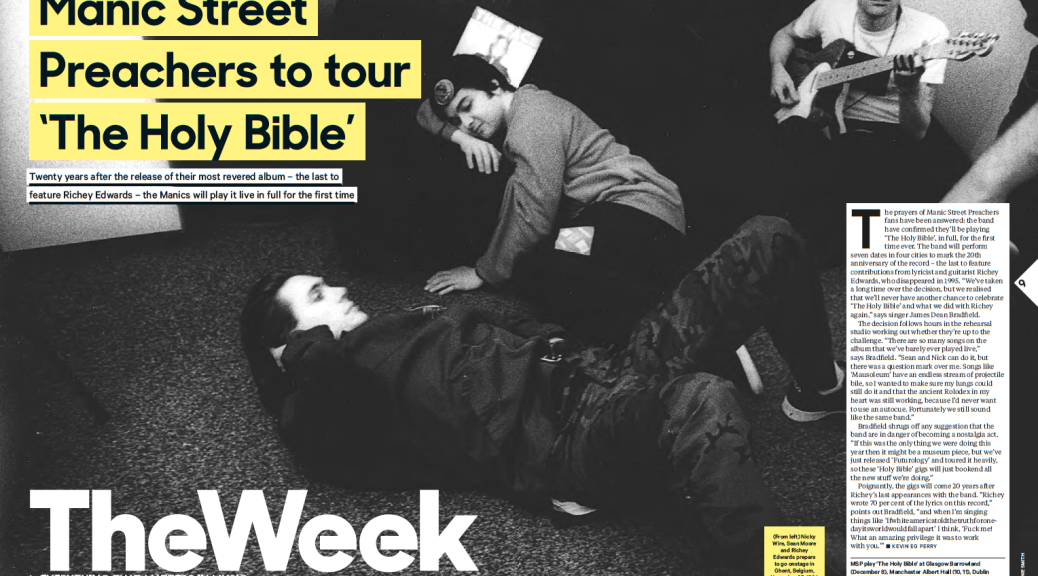
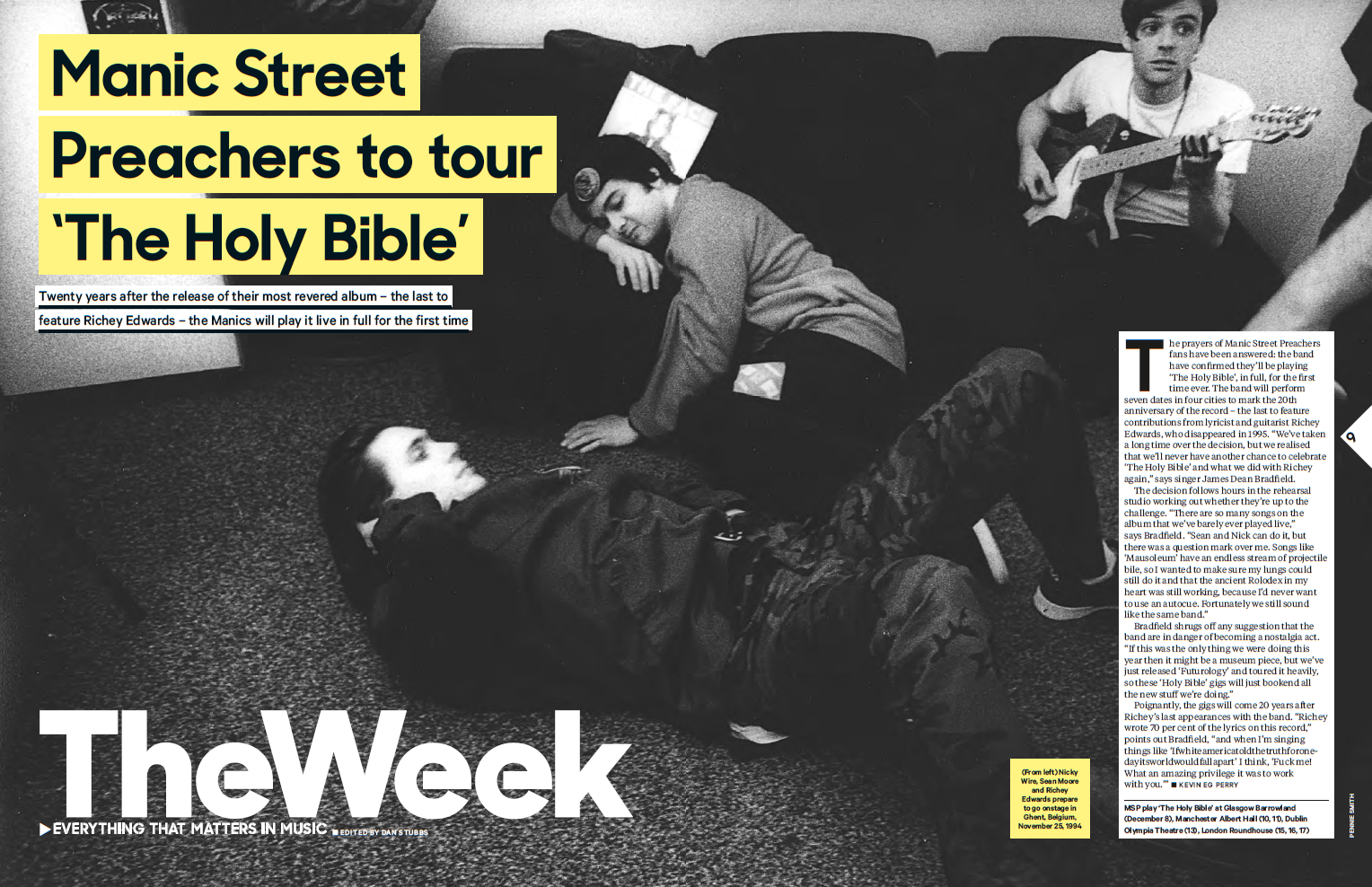
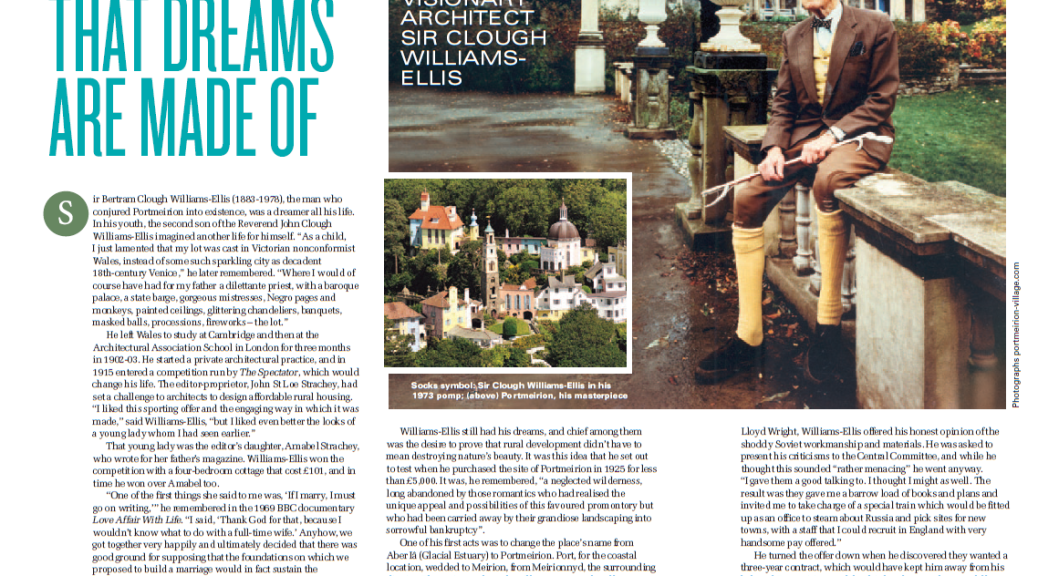
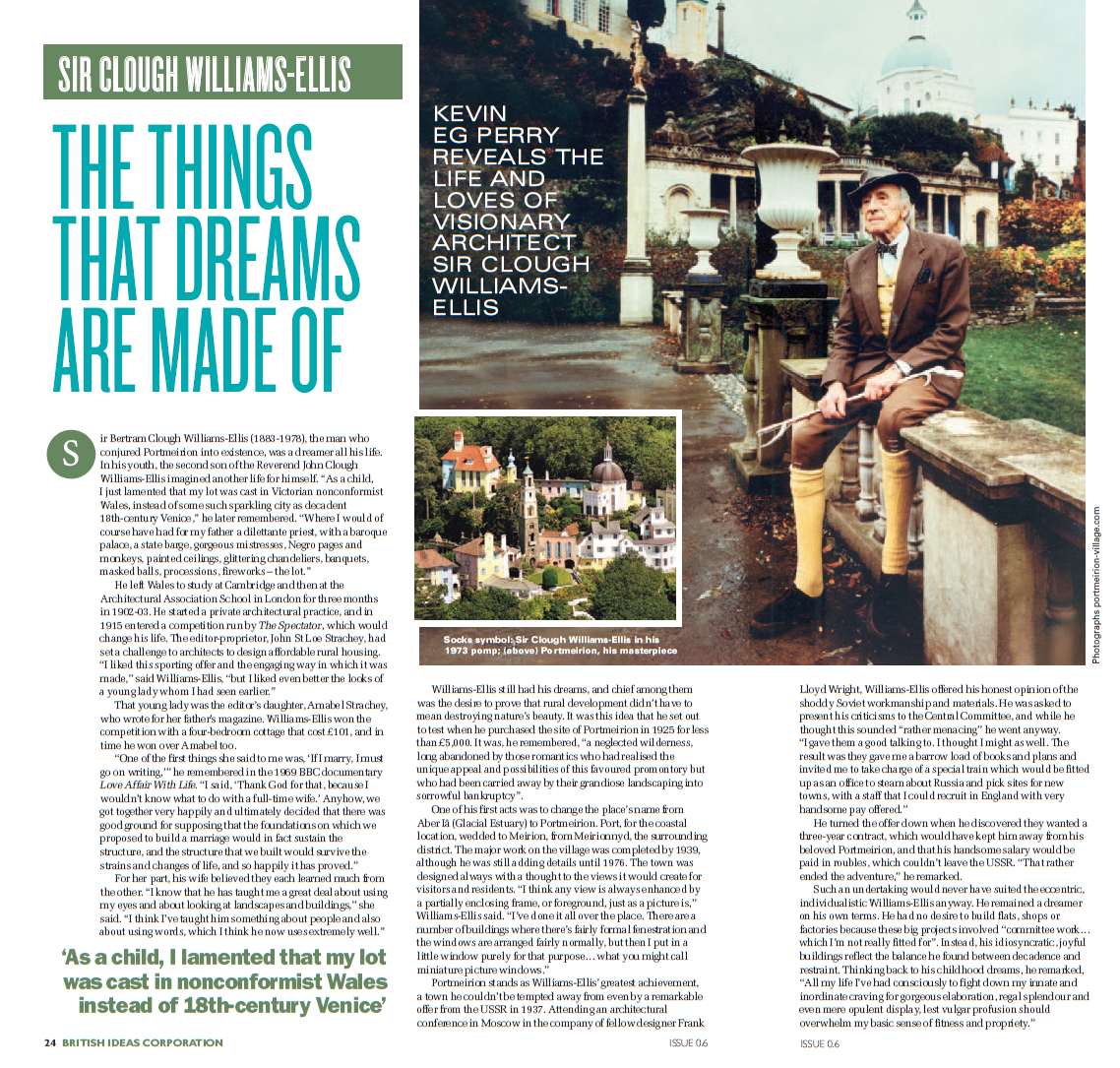

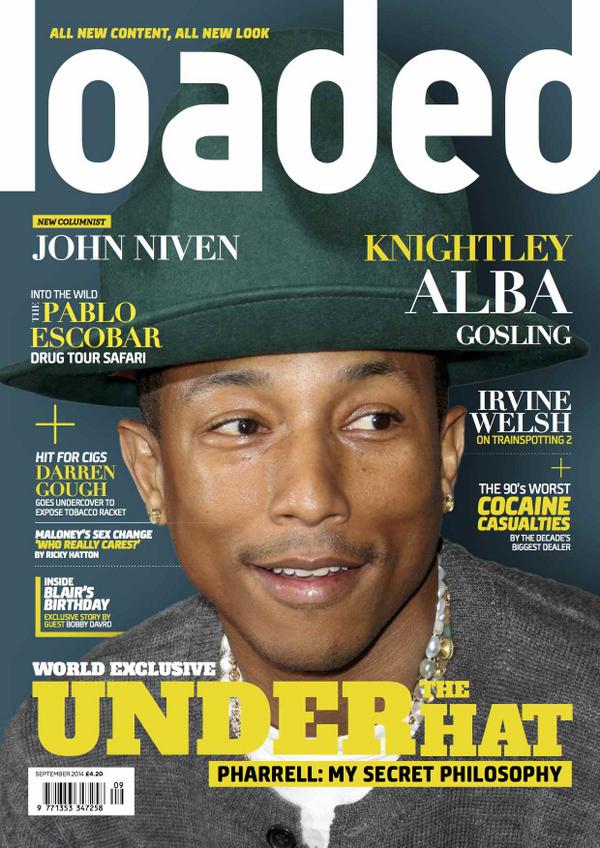
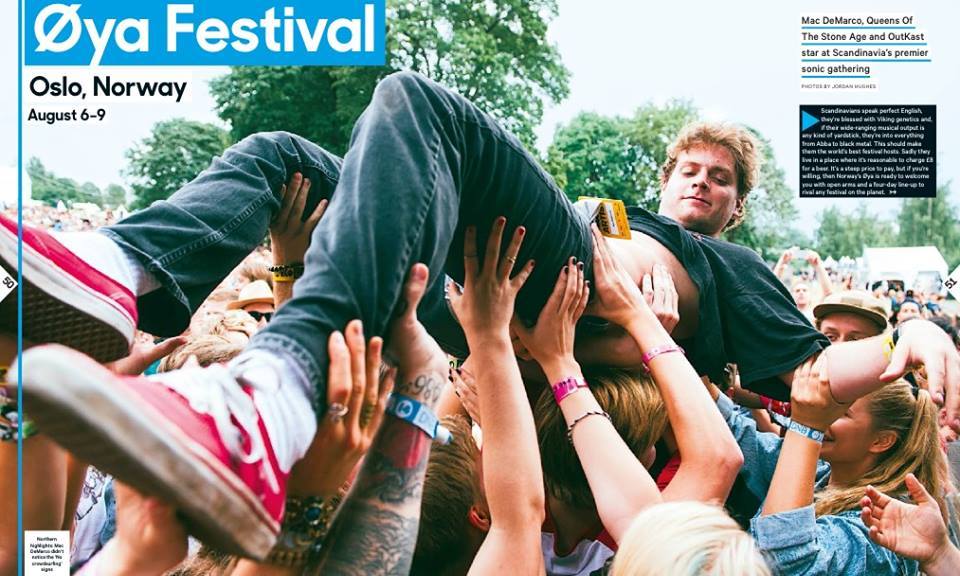

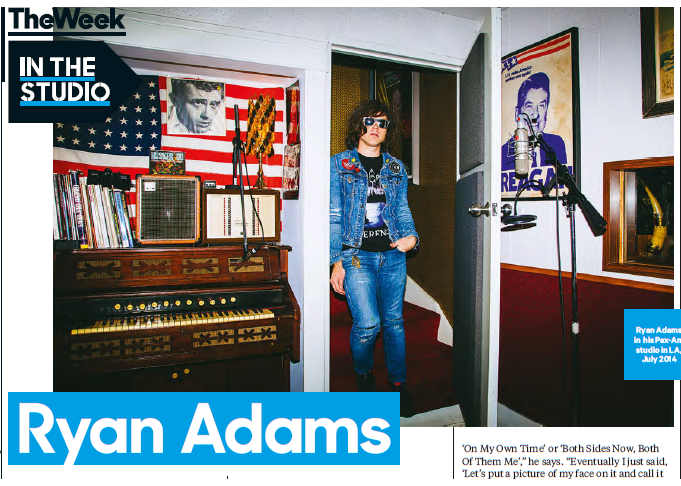


 At first, Yung Lean’s Yoshi City video is just like any other young up-and-coming rapper’s. The teenager hangs out of a moving car surrounded by his crew. There’s a phone in his hand, a fag in his mouth. But the familiar rap tropes are scrambled into a kind of super-internet pastiche. His ride’s a sensible Smart car; his crew, sullen adolescents from Stockholm who call themselves the Sad Boys. Beside him sits not Cristal but a bright pink My Little Pony. And there’s Lean himself: a chubby-cheeked cherub, more Directioner than Chicago South Side, who deadpans about being a “lonely cloud”. “We just thought it was funny,” he says later. “I’m not really into My Little Pony, I’m not a ‘Brony’, just to clear that up.”
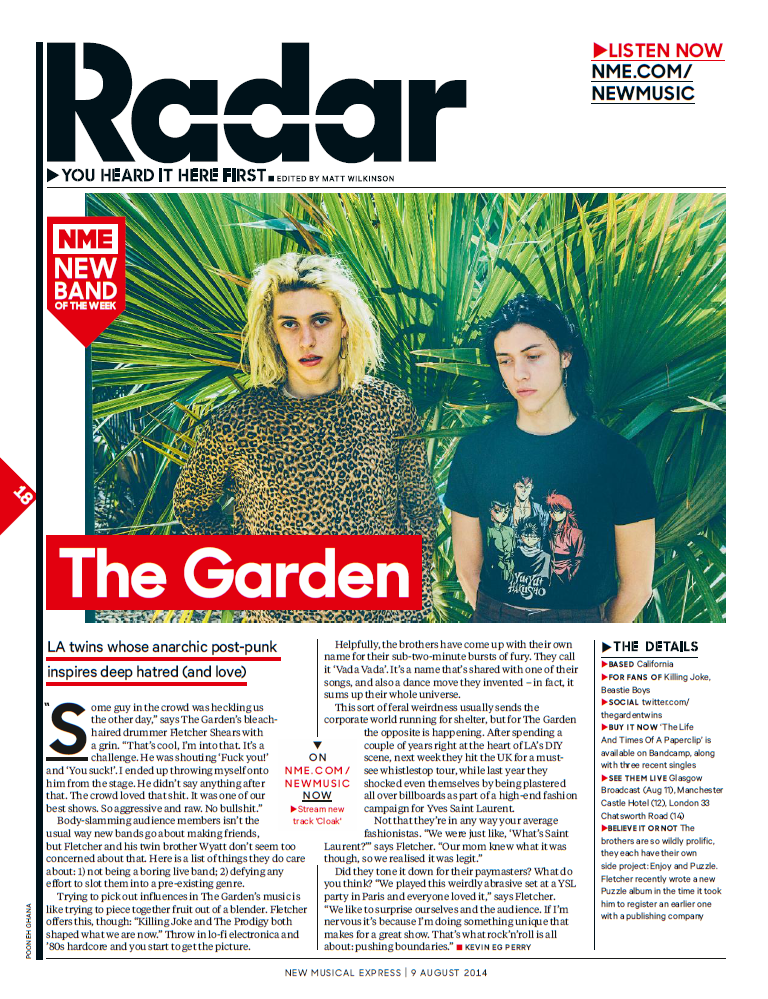


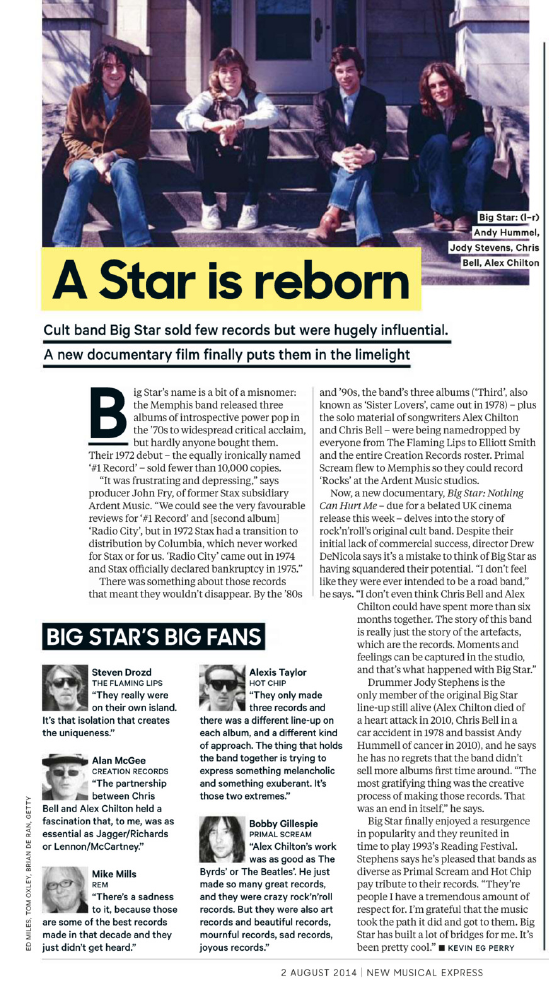


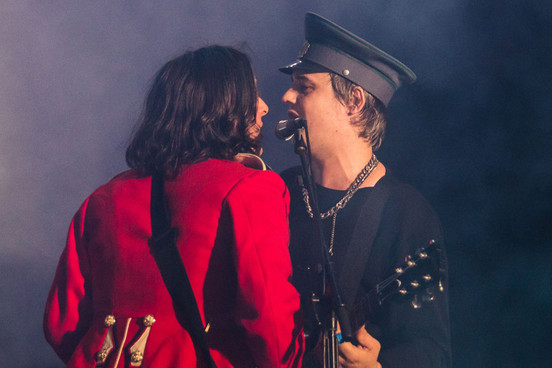
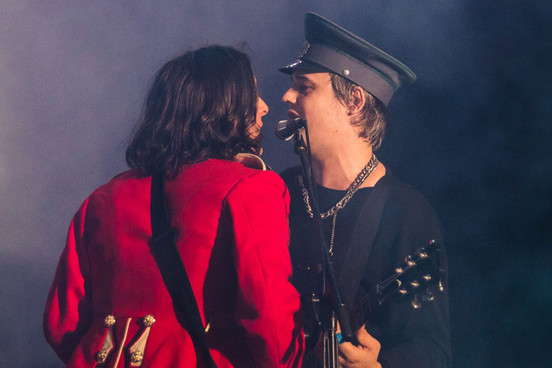
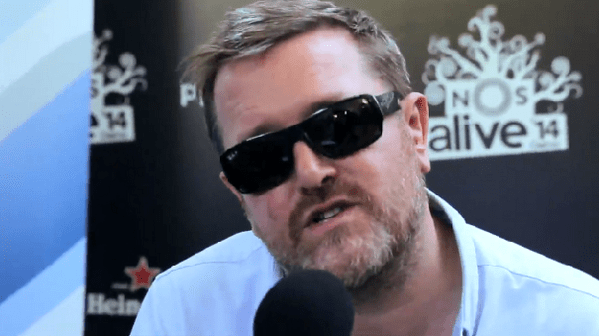


 There’s something about watching small planes land on one runway of Gdynia’s Babie Doły Military Airport while you’re watching The Black Keys headline a festival from the other which lets you know that Open’er is not like other festivals. Located on a sprawling airfield in northern Poland, things don’t tend to get started until gone 6pm – which is pretty civilised for those of us who are staying in the nearby beach resort town of Sopot. The festival site serves hundreds of gallons of Heineken each year but frowns on spirits, giving it a reputation as the sort of place serious music fans come to watch music, not just get out of their heads. That could be part of the reason they attract some of the world’s biggest bands and most exciting new artists here to entertain 60,000 Pole dancers over four days.
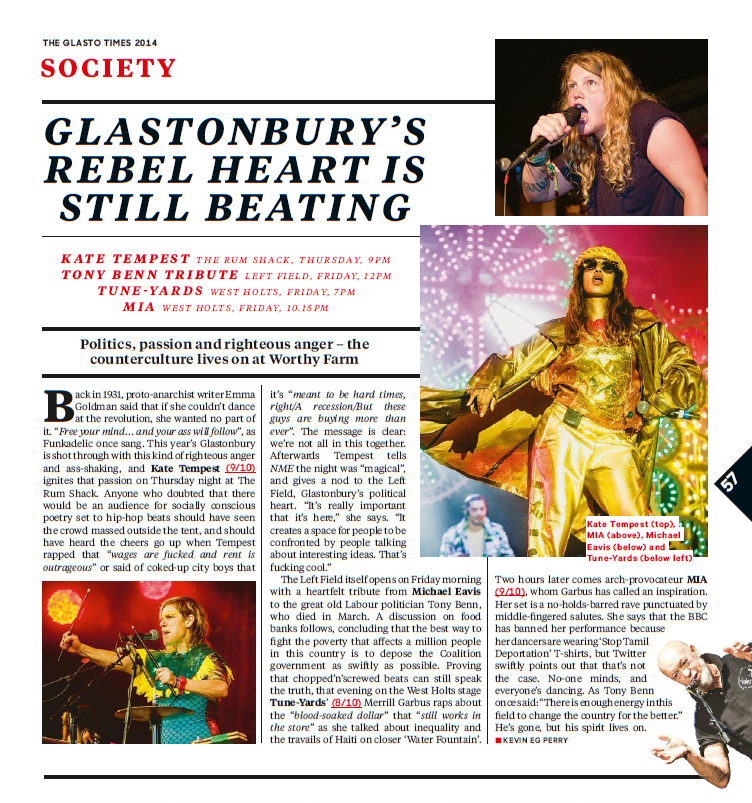

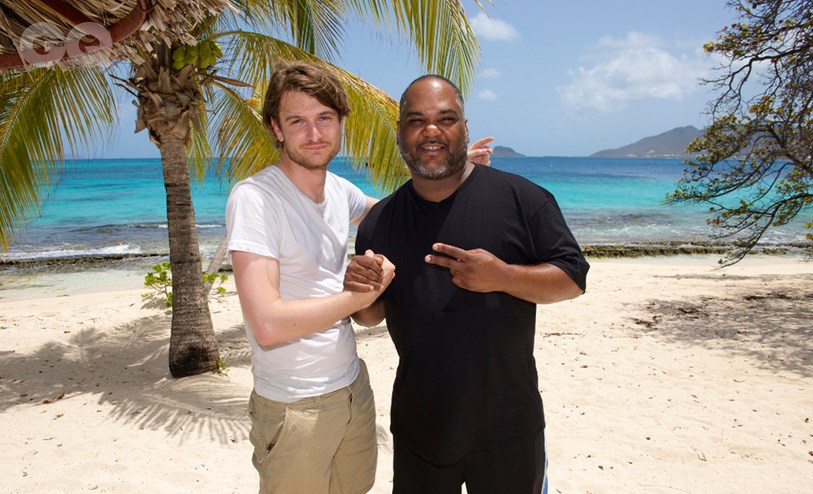



 This is the VICE Guide to Europe 2014. A travel guide featuring: pork, anarchists, bicycles, politicians, fishermen, racists, tear gas, cocaine, pizzas, techno, beer, football fans, bands and waiters.
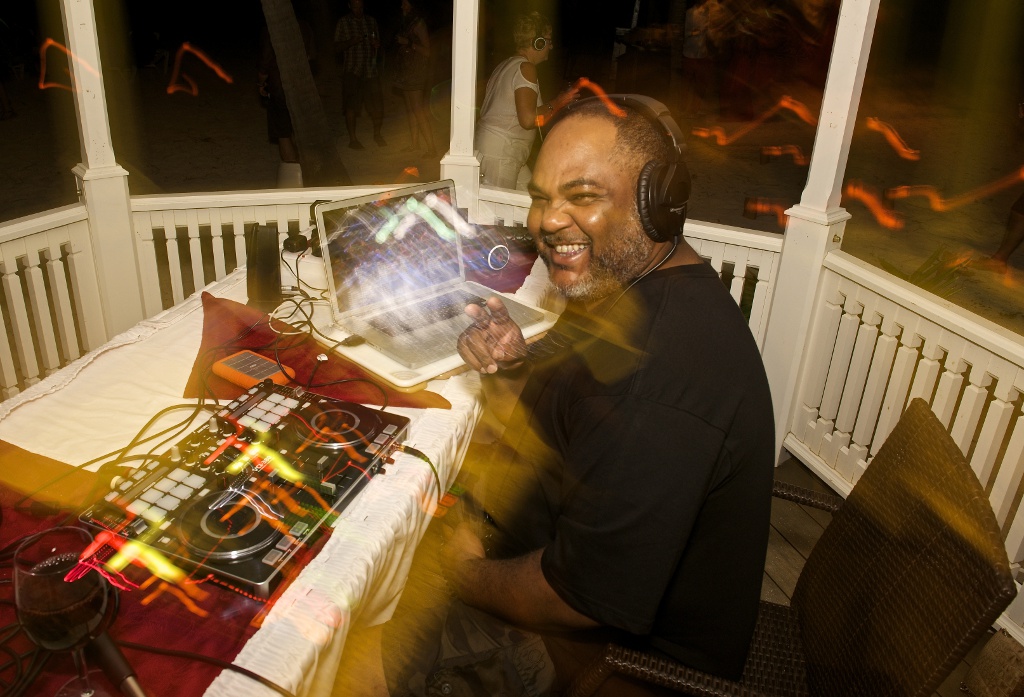
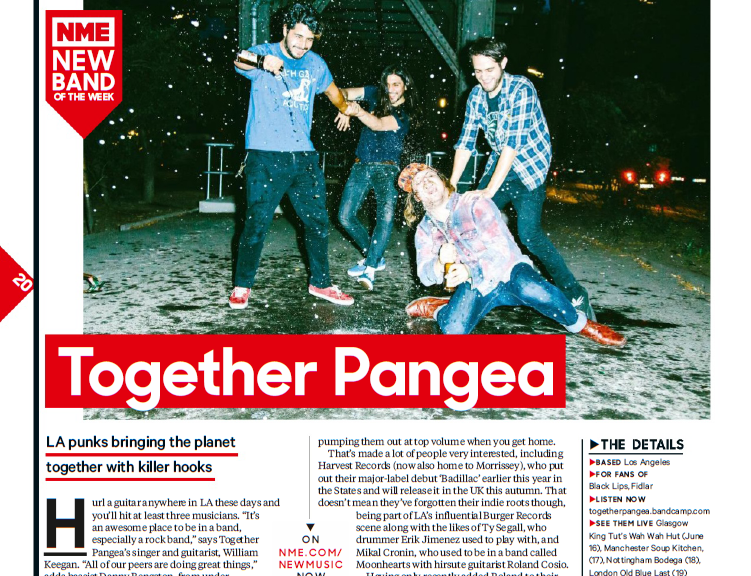


 Yes, the build-up to today’s European elections has been dominated entirely by a one-man publicity machine. But that doesn’t mean that there aren’t other groups of narcissists out there who aren’t at least as deserving of your attention. So, before you go to cast your vote for UKIP, let’s review some party political broadcasts from other groups – groups who also refuse to adhere to the staid PR conventions of Westminster’s “Big Three”, like using decent microphones and not putting giant CGI monsters in your videos.
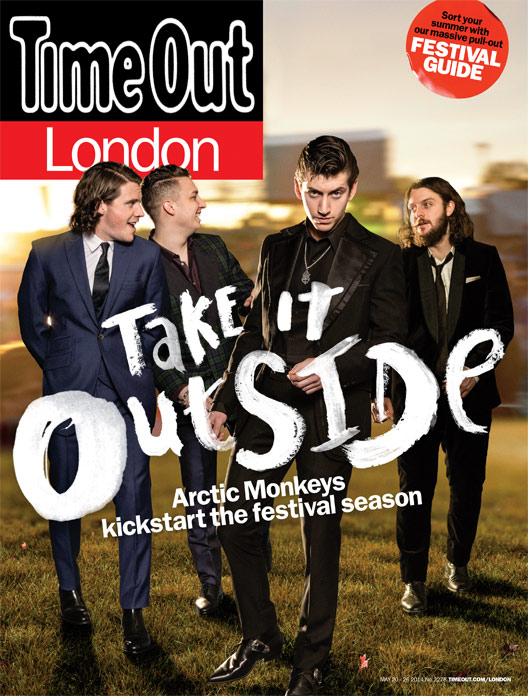
 I’m sat in a coffee shop just off Shoreditch High Street when Alex Turner walks in, removing a pair of Ray Bans as he steps through the door. Everyone here is far too cool to stare, but there are turned heads and lingering looks as he makes his way to my table. He doesn’t swagger or strut. He’s wearing a brown suede jacket and skinny jeans, but what sets him apart are the details: the dark quiff that could have been sculpted by the King himself and the insouciance that can only really come from having headlined Glastonbury twice by the age of 27.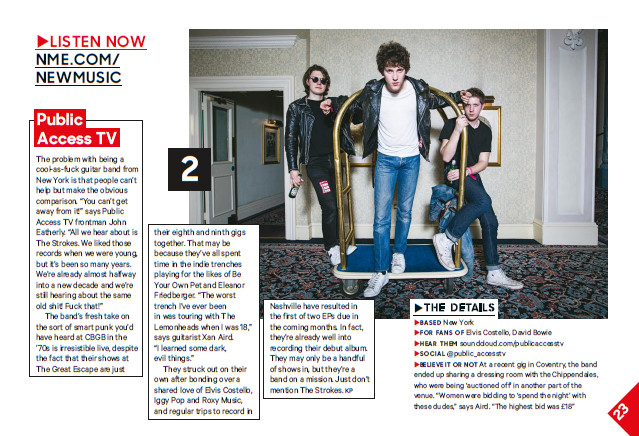

 When US singer-songwriter Elliott Smith died in 2003, aged just 34, he left behind him not only a beautiful and introspective body of work stretching over five albums and including the Oscar-nominated ‘Miss Misery’, but also a host of unreleased demos and song ideas.

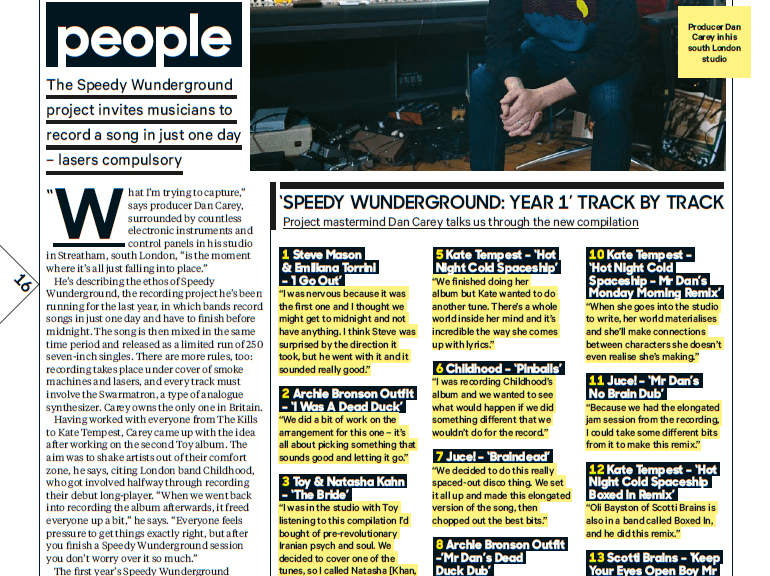
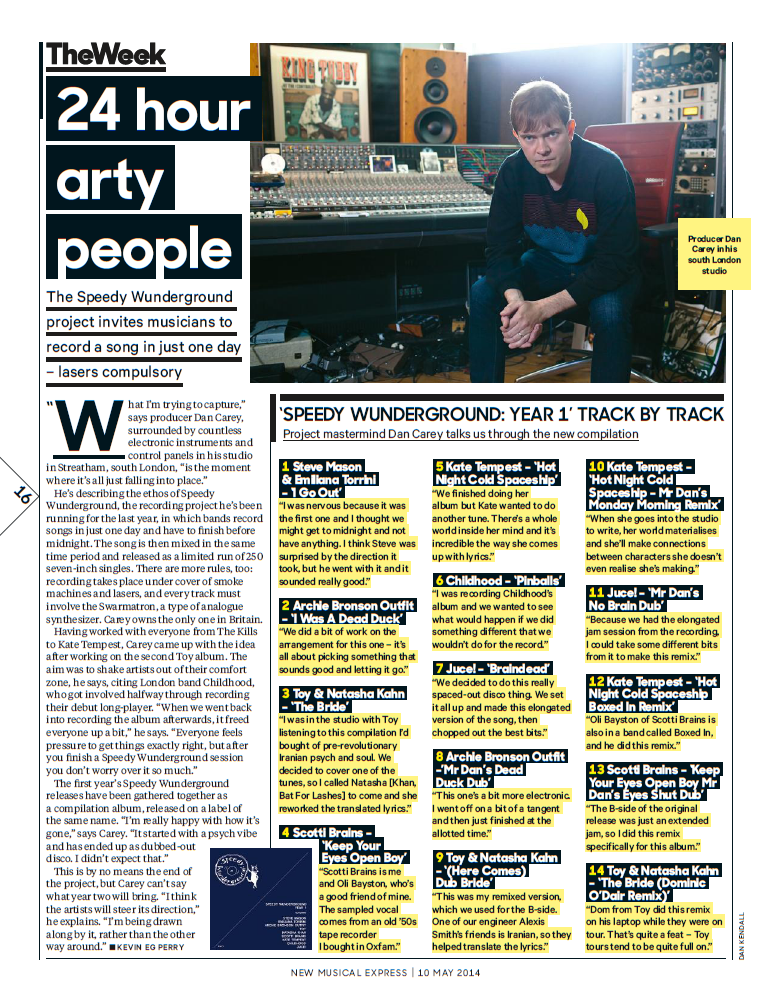

 There’s this guy who paints houses for a living. He has a pick-up truck and a pug dog, who he loves very much. The guy has to change his health insurance so he goes for a check-up, and afterwards they ask him to come in to talk about his results with a counsellor, which is never good news. So he goes in and he’s sat across the desk from this well-dressed, middle-aged woman with a folder of results. She says: “I’m sorry to tell you this, but you’ve tested positive for HIV.”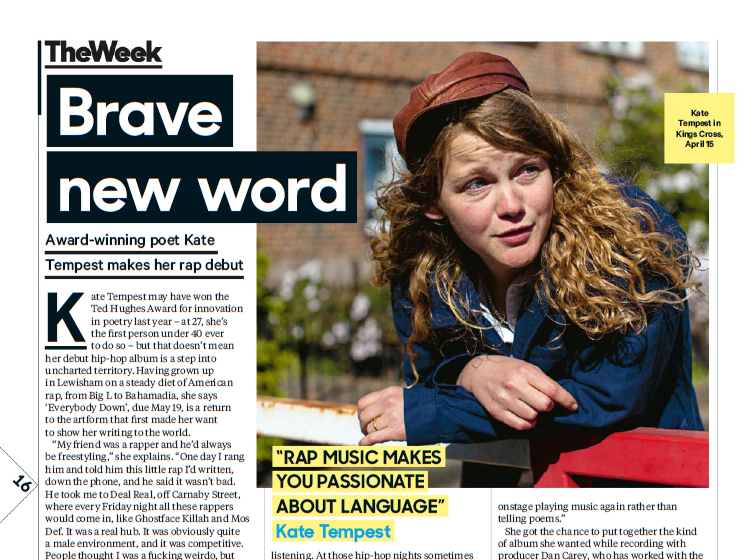
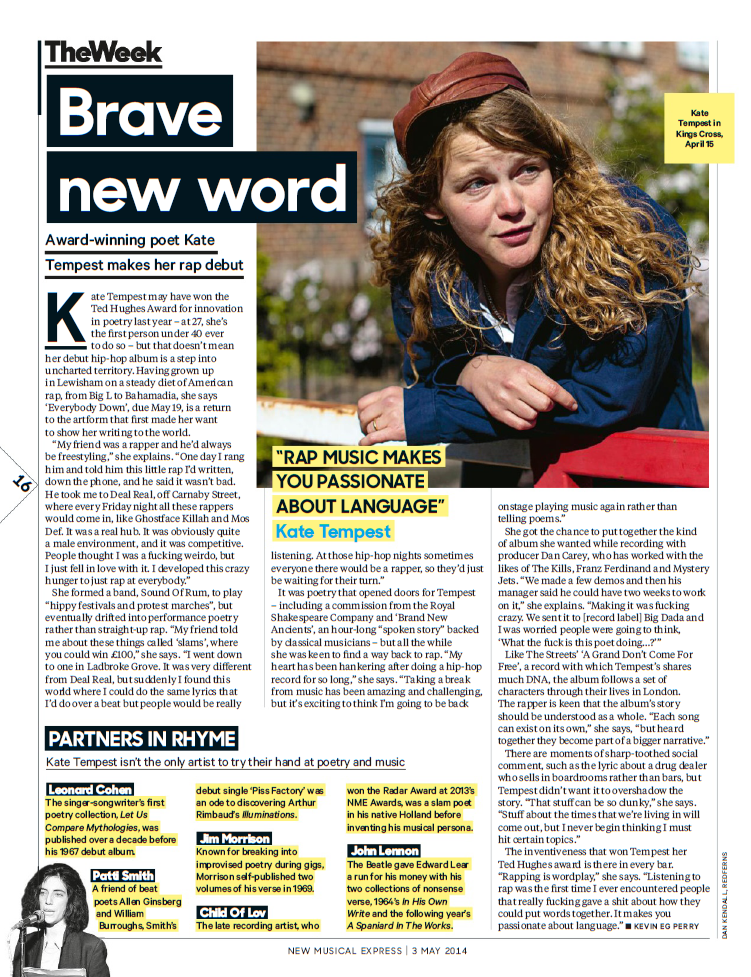
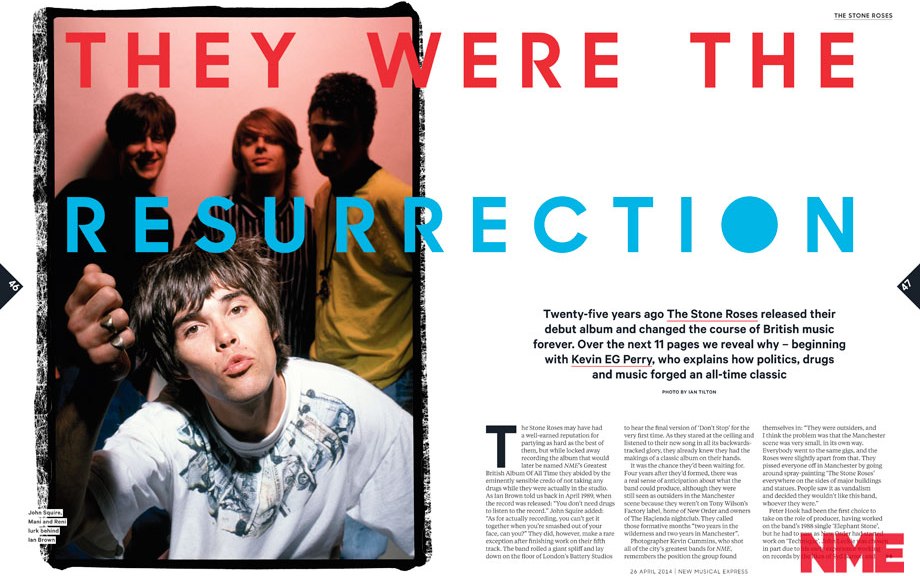
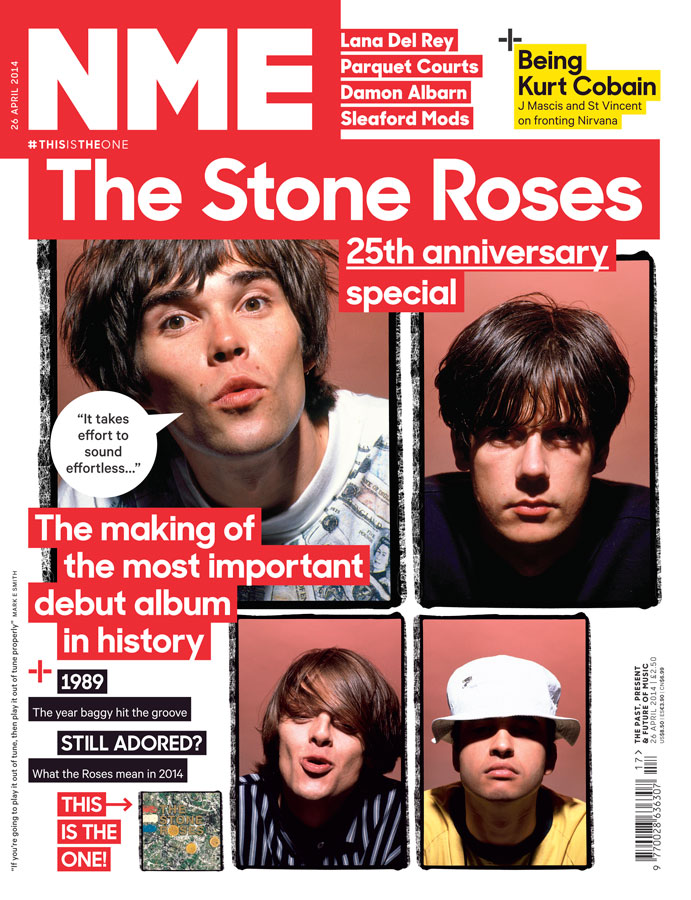
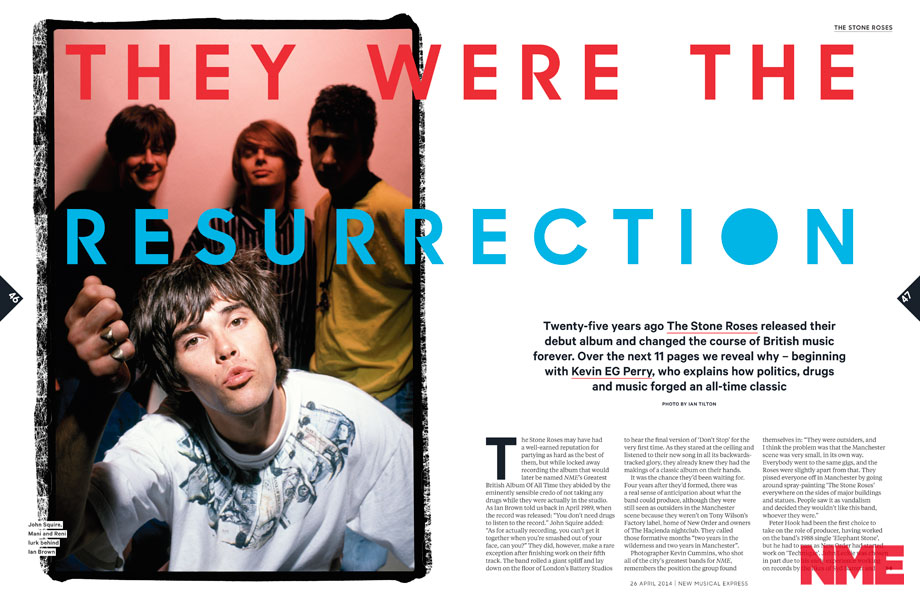



 When was the last time you went online? Within the last hour? The last five minutes? Are you, in fact, checking your emails on your phone with one hand while you flip through this magazine? Are you half-wondering what you might tweet about it?


 When Colombian National Police finally put a bullet through Pablo Escobar’s head in December 1993, he was running what was probably the most successful cocaine cartel of all time, worth some $25 billion (£15 billion). You can do pretty much anything you want with that kind of money, and Escobar did, building houses for the poor, getting himself elected to Colombia’s Congress and running much of the northeastern city of Medellín as his own personal fiefdom.


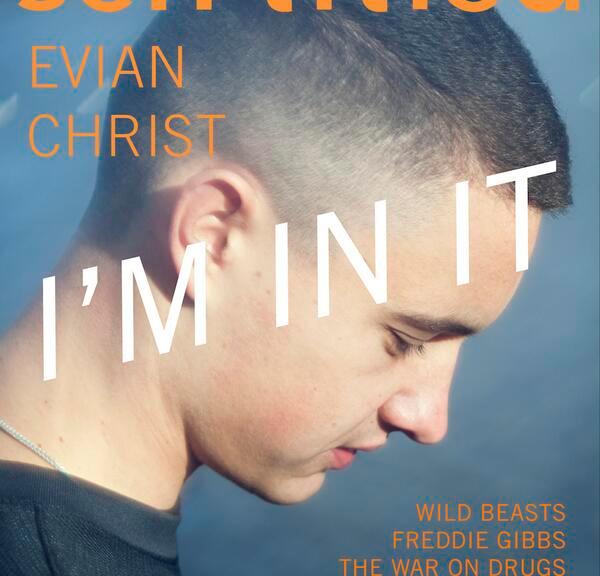


 Pussy Riot members Nadia Tolokonnikova and Maria Alyokhina have called for economic sanctions against Russia in the wake of their country’s military action in the Ukraine.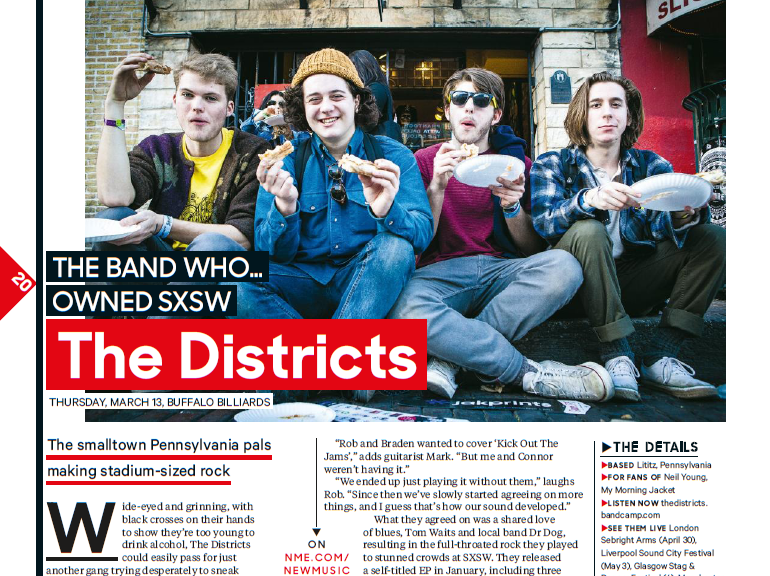





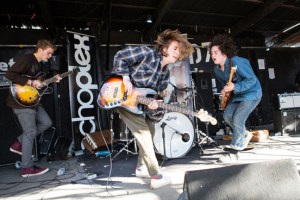 My Wednesday at SXSW 2014 started with the surreal experience of wandering into a rented kitchen in the east of the city to find Kelis hard at work preparing jerk chicken and other tasty treats for her own food truck. Be assured that her ‘Feast’ line of sauces are no ordinary celebrity endorsement – Kelis is a trained saucier and the sort of boss that all her kitchen staff refer to her as ‘chef’. We’ll find out today whether her jerk chicken brings all the boys to the yard.
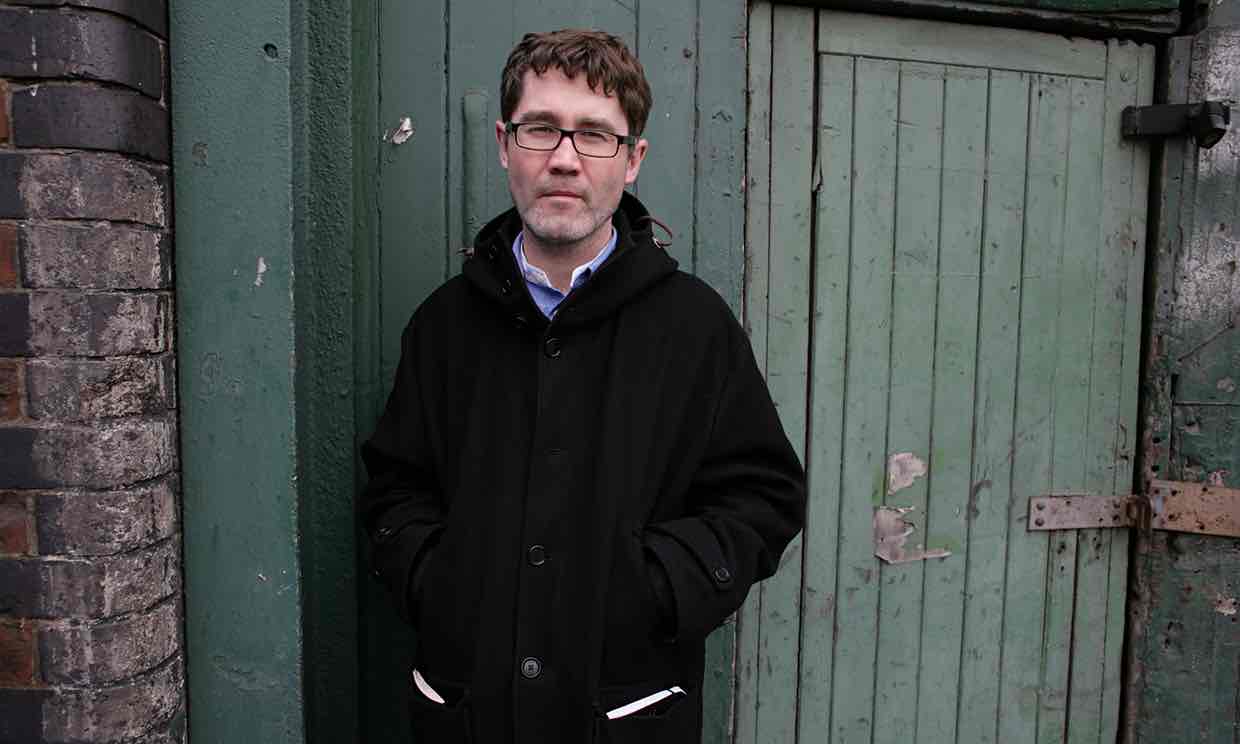 In an anonymous but well-fortified lean-to somewhere down a back alley in South London, Graham Johnson is deep in conversation with a man he describes as a “local warlord”. Johnson is a usually a talkative Scouser, but at the moment he’s letting the physically imposing figure who greeted me with a finger-crushing handshake hold court. Johnson explained earlier that the guy’s business is “protection, in the nicest possible way.” He rarely grants this sort of audience. He’s a busy man. Wholesale drug dealers and fraudsters pay him insurance money, and in return they can operate safe in the knowledge that they’re protected against theft by other gangs. Above the gangster’s desk are pinned remembrance cards from the funerals of a host of London underworld figures, and under the watchful eyes of Ronnie Biggs he’s currently telling a wildly entertaining story about the time he extorted compensation money for a drug dealer who’d be dobbed in to the police by a family member. He’d made sure the snitch paid the dealer’s family £20,000 “plus a Big Mac” for him. The deal almost went south when they forget to bring him his Big Mac. In short, Guy Ritchie would cast this guy without a second’s hesitation.
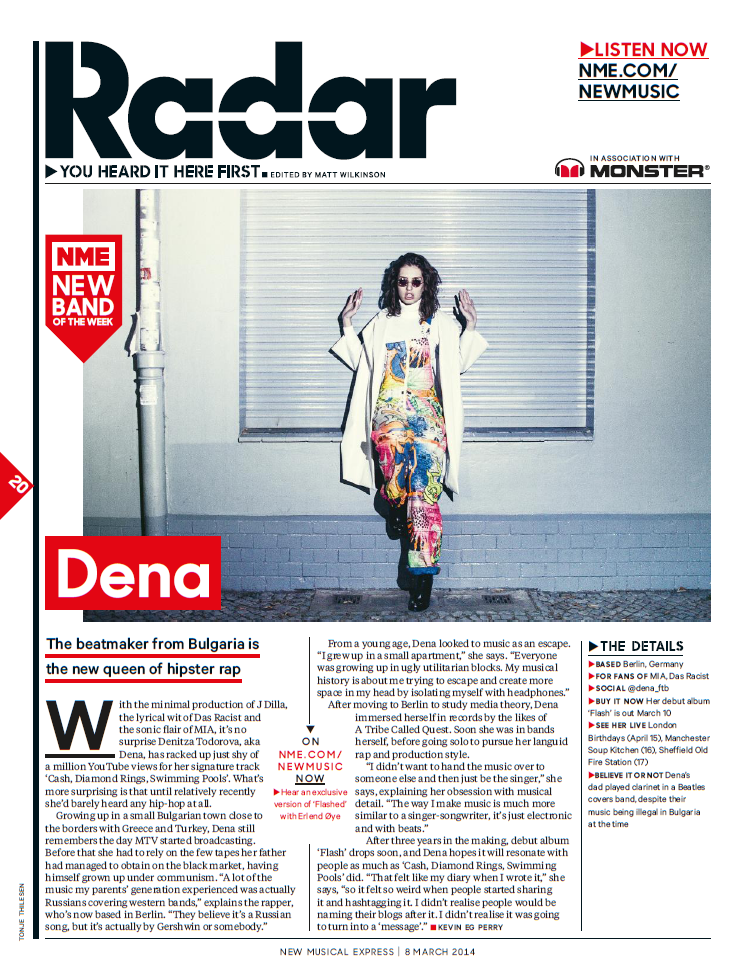
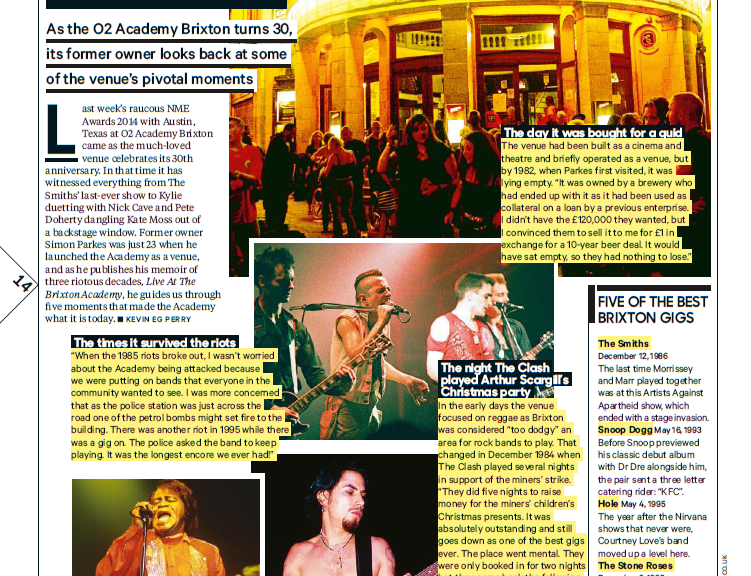


 Dubai’s towering skyline has erupted from the desert in just two decades, and if you’re one of the ten million tourists who visit each year you’ll know that it’s a town built on excess. It’s a city of glass summoned into reality in the middle of a desert. Pity the tireless window cleaners. Everything must be bigger and grander than everything else that’s gone before – and after a while, it all gets a bit much. When a man is tired of Dubai, where does he go?
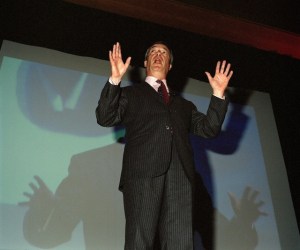
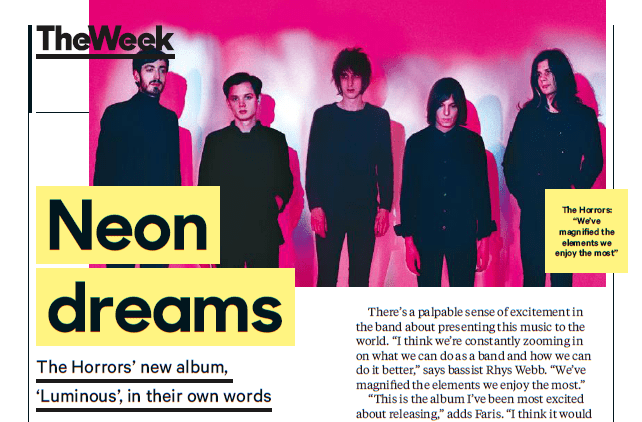
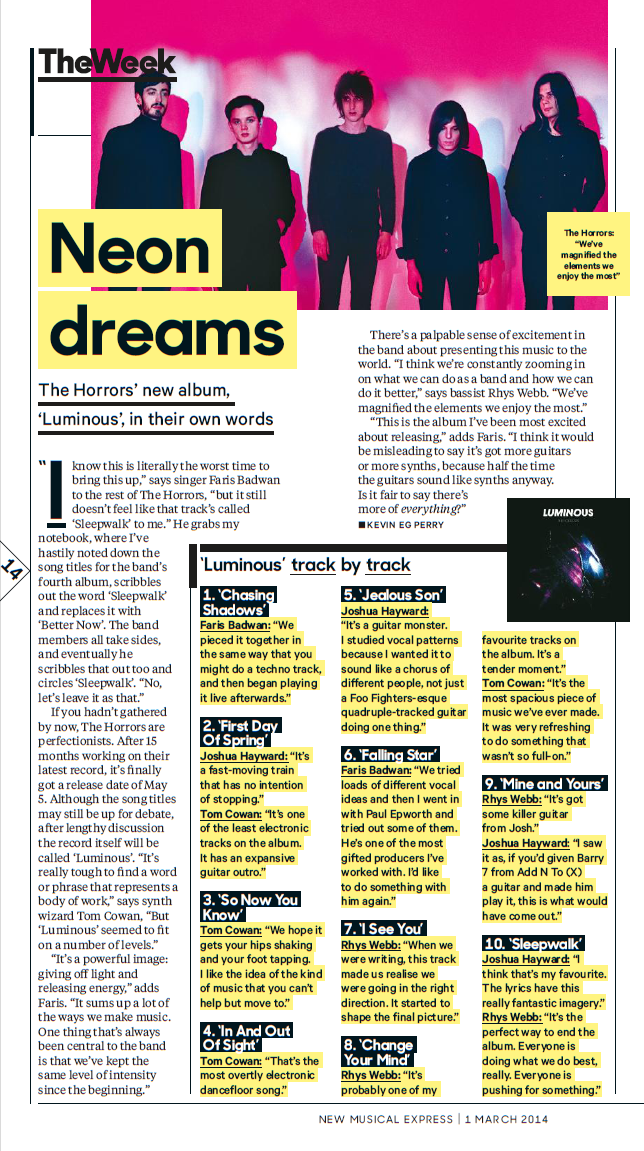
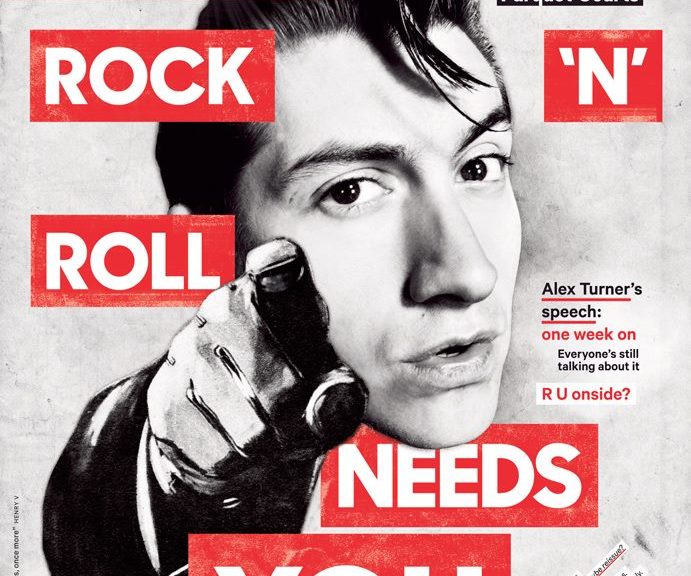
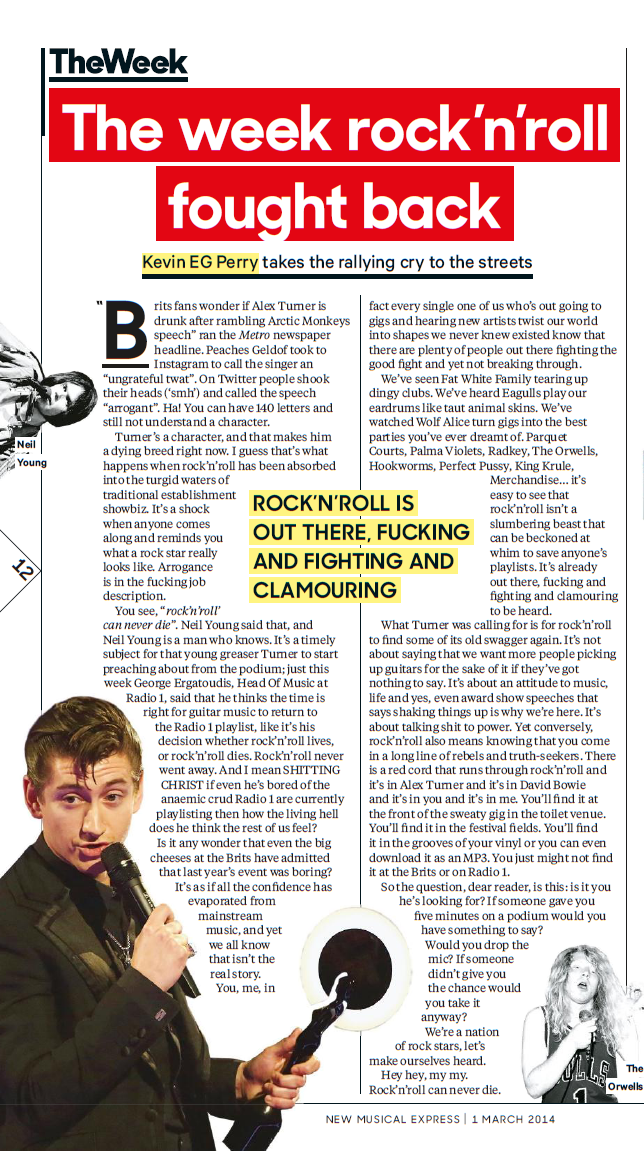
 Kevin EG Perry: Collected Works