

Published in N by Norwegian, May 2018.
Published in N by Norwegian, May 2018.
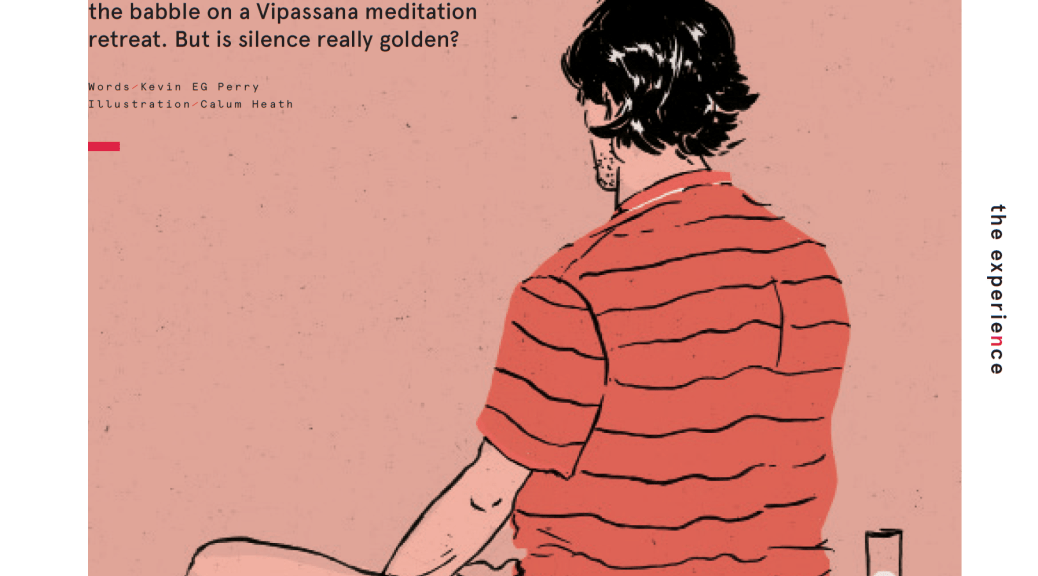
 Imagine a world without sex, drugs, and rock’n’roll. Then remove cigarettes and alcohol from the equation. For good measure, why not banish meat too. And then to top it all off, let’s pretend that neither speaking nor reading exist on our plane. This is the reality of a Vipassana silent retreat, and in this world there’s only one thing to do: meditate.
Allegedly the same meditation technique that Gotama the Buddha harnessed in order to achieve spiritual enlightenment and reach nirvana, the practise of Vipassana stretches back about 2500 years into the past and its spread is global, even if its teacher is no longer with us here on Earth. Burmese Vipassana master S.N. Goenka passed away in 2013, but his wisdom now lives on in the audio and video recordings that participants on a retreat are privy to.
 If you ever find yourself in a hip hop themed pub quiz, try to make sure Chuck D is on your team. Not only is he one of the greatest and most influential MCs in the history of rap, he’s also blessed with the sort of encyclopedic knowledge and staggering recall that places him among the genre’s foremost historians and custodians. Chuck was there, and he got receipts.
Born Carlton Douglas Ridenhour in Queens, New York in 1960, Chuck formed Public Enemy in the late Eighties. Records like 1988’s “It Takes A Nation Of Millions To Hold Us Back” and 1990’s “Fear Of A Black Planet” became instant classics, transforming the genre and proving that hip hop could simultaneously be politically incisive and sonically explosive.
He’s currently looking back on those early years with the launch of a new compilation album, Hip-Hop The Golden Era 1979-1999, which brings together 72 choice cuts from the likes of NWA, Run-DMC, Sugarhill Gang, Eric B & Rakim, the Beastie Boys and, of course, Public Enemy themselves.
But Chuck is looking forwards too. He’ll be back on the road this summer with Prophets Of Rage, a supergroup which also features Tom Morello, Tim Commerford and Brad Wilk of Rage Against the Machine, B-Real of Cypress Hill, and his longtime Public Enemy collaborator DJ Lord.
Here, he shares his memories of hip hop’s “golden era” before weighing in on the future of the genre – and why Kanye might not have ended up as a Trump supporter if he was following more than one person on Twitter.

Alex Kapranos is wearing a jacket with Day of the Dead-style skulls embroidered on the chest, and that’s not the only way that Mexico is close to the Franz Ferdinand frontman’s heart.
“I think there’s a certain energy that we have to our music which really clicks with people in Latin America,” he says, leaning forward on a sofa in the band’s dressing room backstage at Monterrey’s Pa’l Norte festival. “There’s a real kind of openness and warmth to people here. It’s our natural environment, I think.”
They might be 5,000 miles from Glasgow, but they’re made to feel right at home by the 105,000 people squeezed into Parque Fundidora for the festival. Rock’n’roll that you can shake your hips to is very much the order of the weekend at Pa’l Norte, with Queens of the Stone Age and Muse also turning in sets that are seductive, rather than headbanging.
After the festival, Franz will be continuing their Mexican love affair with their own headline show in Mexico City – a place they’re returning to for the first time since one of their crowds trashed a venue. “It was a big arena, and the crowds in Mexico are really intense,” says Kapranos. “The first four or five rows of seats in the arena got completely destroyed. Hopefully we’re not playing a seated arena this time!”
The band’s love for this part of the world extends beyond the joy of playing to vast crowds. Drummer Paul Thomson has spent time in Puerto Vallarta, famous for being the town where Richard Burton and Elizabeth Taylor holed up while Burton was shooting ‘The Night of the Iguana’, while Kapranos recently explored the Yucatán Peninsula. “It’s incredible,” he says. “I hired a car and drove all around there. They have these cenotes, these underwater caves where you can swim completely underwater, and they have these strange albino fish that never see sunlight. The food down there is astonishing, things like Sopa de Lima. For me, in Mexico, but also in any city or country around the world, the best thing to do is get yourself lost. To turn the GPS off on your phone and see where you end up. Watch people, talk to people. Those are some of the best surprises you can get. The London perspective is often not to talk to strangers, but when you find yourself in other parts of the world that’s sometimes the best thing you can do.”
Now back at work, they’ve been introducing fans to tracks from new album ‘Always Ascending’, which was released in February. It’s an experimental, playful record – but Kapranos says it’s still been generating the requisite energy when played live. “It’s experimental in the sense that it’s lots of stuff that you haven’t maybe heard on our previous records, but it still sounds like Franz Ferdinand, and there’s still bangers on it,” he says. “It might sound different to our other records but people still want to get up and dance to it.”
The band will spend much of the rest of the year on the road – with key dates including a Glasgow homecoming at TRNSMT Festival at the end of June, a headline show at the Roundhouse in September and their first ever trip to Ukraine. “Nowadays, in the age of social media, you’re very aware of where your fans are,” says Kapranos. “We’ve had a lot of feedback from people from Ukraine for a long time. ‘When are you going to come?’ So finally this year we’re going to get to see it.”
For Franz fans who want to catch the band in an exotic locale without leaving Britain, they headline Festival No. 6 this September in Portmeirion, the curious Welsh tourist village that was designed by architect Clough Williams-Ellis in the style of an Italian village and featured in cult TV show The Prisoner. “I’m really excited about,” says Kapranos. “I’m a huge fan of The Prisoner, and I’ve never been to Portmeirion before.”
Thomson, though, has been before. “I went when I was 16 with a bunch of guys, because of The Prisoner,” he reminisces. “I’m not sure you’d call it a lads’ weekend. Maybe a virgin’s weekend? I’ll be returning a man this summer.”
 Backstage at the Teragram Ballroom in Los Angeles, Shame frontman Charlie Steen – still slicked with sweat after the south London five-piece’s thrillingly visceral set – is reeling off stories about how strange their first ever cross-country tour across America has been. They’re a band who collect outlandish tales like other bands collect hangovers and STDs.
“We were in Louisville, Kentucky,” he tells me. “Me and Eddie, our guitarist, went to the liquor store to get cigarettes and there was a guy stood next to us who was completely blue. We got carded, and the blue guy went: ‘Are you boys German or sumthin’?’ We said no, we’re British. Then he said: ‘Oh we’ve got a lot of them stationed here.’ He started going on about how North Carolina made the wrong decision. We didn’t know what he was talking about.”
It turns out they’d had an encounter with one of the Blue Fugates of Kentucky, an Appalachian mountain family who all carry the rare skin condition methemoglobinemia which turns their skin a shade of blue.
“The band we were on tour with, Protomartyr, said they look out for them every time they’re in Kentucky. We just stumbled upon him in the liquor store,” says Steen, still sounding as if he hadn’t quite believed his own eyes. “It’s like seeing a unicorn.”
Steen takes a pull on a beer while the rest of the band – guitarists Sean Coyle-Smith and Eddie Green, bassist Josh Finerty and drummer Charlie Forbes – prod at the wreckage of a birthday cake on the dressing room table.
Published in Lonely Planet Traveller, May 2018.
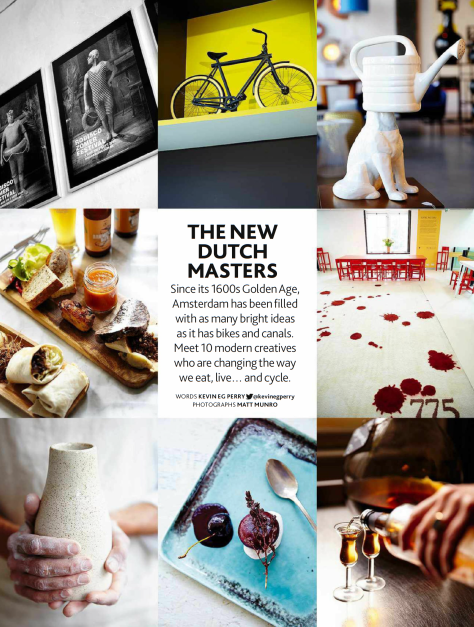
 Thai army soldiers entered an art gallery in downtown Bangkok one June day in 2017 and forcibly removed several pieces by the photographer Harit Srikhao. The 22-year-old’s work had clearly touched a nerve with Thai authorities, although he’s still not exactly sure why he was targeted by the dangerously overzealous critics.
“I’ve been offered a lot of explanations, official and unofficial alike, but none of them make sense,” he says. “It just goes to show the lack of freedom of thought in my country, and how ridiculously the government use their power to bully citizens. Most importantly, it is an affirmation that art is indeed a very, very powerful weapon.”
Srikhao wields this weapon with a hallucinogenic flourish. From his base in Pathum Tani, a northern suburb of Bangkok, he creates work that offers a savage satirical perspective on his country’s political landscape. His pictures depict a fantastical world in which traditional hierarchies are upended, the sanctity of the Thai monarchy is punctured and government propaganda images are rendered absurd. He alters his own photos by cutting and pasting by hand in hopes of revealing a deeper truth: “I use hand collage instead of Photoshop because I want to perform surgery on the pictures.” He explains, “I want to show the traces of how reality has been made oblique.”

To soundtrack the moment in Black Panther when we’re first transported to Wakanda, director Ryan Coogler and score composer Ludwig Göransson knew they needed something special. They found it in Baaba Maal, the legendary Senegalese singer whose unique vocals echo out as we soar over the country’s hilltops. Maal is singing in his native Fula language about the death of an elephant, a metaphor for a fallen monarch.
For the filmmakers, working with Baaba Maal was an opportunity to incorporate African music alongside Kendrick Lamar’s more high-profile soundtrack. For Maal himself, it was a chance to lend his voice to a new kind of storytelling about his home continent: “I like the story a lot, and the challenge of telling the story,” he tells NME. “I confess, I didn’t know the film would have the impact that it has had now! It’s unbelievable. I really, really like the film but I didn’t expect all of that!”
Maal, whose most recent album ‘The Traveller’ was produced by The Very Best’s Johan Hugo in 2016, knows all about combining traditional and modern forms of music and storytelling. “I’m very traditionalist, but also very modern in the way that I love electronic sounds and the way technology changes culture,” says Maal. “The way it comes across in the film is that the culture is ancient, but also it talks to the future as well.”
The collaboration came about after Göransson travelled to northern Senegal to meet Maal at his home in the town of Podor, and then spent several weeks learning about the music of the region. “I’m always touring in very remote places in Senegal, so when he arrived I told him I was going on tour and invited him to go with me,” says Maal. “We left from my hometown, Podor, and then we visited every part of north Senegal. I thought he’d enjoy the tour and also find some inspiration. Then when we came back we jumped in the studio and he recorded me as well as all the other musicians he wanted to record for Black Panther.”
When creating the sound of Wakanda, Maal says that Göransson was not just inspired by the shows he saw on tour but also by the music being made by the public. In Senegal, locals often pay tribute to important figures like Maal by playing drums for them outside their home or when welcoming them into a new town or village.
“When you follow a band like my band around Senegal, it’s not just the band themselves who are going to inspire you, it’s also the population,” says Maal. “Everywhere we go people welcome us and play music. There are a lot of ceremonies in the daytimes. If you’re there and you listen and watch it will give you a lot of inspiration. I think that sort of music is also connected to the story of Black Panther. He heard a lot of songs about kings, and about kingdoms, that have been passed down since ancient times, so I think that was good for him.”
Throughout the score, certain instruments are associated with certain characters. Michael B. Jordan’s Killmonger is often accompanied by the sound of a Fula flute. For Chadwick Boseman’s T’Challa, the score uses the talking drum, a popular West African instrument which can mimic the tone of human speech. “The talking drum is an instrument which comes from far away in the past but leads to the future,” explains Maal. “When you play it, it sounds as if it could fill up the universe.”
 It was 1982 in Kingston, Jamaica, and Sister Nancy – the first ever female dancehall DJ – realised that she needed one final song to complete her debut album. Recording at Channel One Studios with a band that included the legendary Sly and Robbie rhythm section, she went to the mic and freestyled ‘Bam Bam’ over Ansell Collins’ ‘Stalag 17’. It’s fair to say she nailed it.
‘Bam Bam’ went on to become one of the most influential reggae songs of all time, sampled at least 80 times on tracks including Kanye’s ‘Famous’ and Jay-Z’s ‘Bam’. More importantly, ‘Bam Bam’ itself has stood the test of time. Almost four decades on there is still almost nothing that sounds better played loud in the sun.
Yet Sister Nancy saw little reward from the song’s success. Contractually cut out from receiving any royalties, she left music behind and moved to New Jersey where she took a job in a bank. It was only in the last four years, after the song enjoyed another resurgence, that she was finally able to get her hands on some of her backdated royalties and return to playing live. Ahead of her European tour this summer, Sister Nancy shares her remarkable story:
How did you first get involved in making music when you were growing up in Jamaica?
“It was always a part of me. Music is a part of us, but it was my bigger brother Brigadier Jerry who motivated me to do something with it. I went to see him DJ, and I thought if he could do it then I could do it as well. I didn’t think about it, I just did it. It was always a part of my family. It’s not that my brother was encouraging me with words, I just followed what he was doing because I liked it.”
You became the first ever female dancehall DJ – were there other women working in music in Jamaica at the time?
“There weren’t many of us. There was one, Muma Liza, who was a harmonizer with Kojak, but I was the one who came and took it to the dancehall. I started off with three tracks: ‘Papa Dean’, ‘Money Can’t Buy Me Love’ and ‘Proud A We’. Then I did a couple more singles: ‘One Two’ and ‘Transport Connection’. After I did those, ‘One Two’ started to take off and was doing well so that’s when I was asked to do an album. So that’s how my album ‘One, Two’ came about.”
Is it true that ‘Bam Bam’ was a late addition?
“Yes that’s right, ‘Bam Bam’ was the last track I put on the album. I had nine songs done and I needed to do one more but it was very hard for me, you know? There was an older song called ‘Bam Bam’, so I decided to do a ‘Bam Bam’ too. So that’s how I did the last track and finished the album. I freestyled it, I only wrote it down after. It’s timeless. It’s been 36 years, and ‘Bam Bam’ is still there. It’s not going anywhere.”
Despite the huge success of ‘Bam Bam’, you initially didn’t see much money from it. Are you getting properly paid these days?
“Yes, I’m getting the royalties now. I wasn’t getting anything for 34 years, but in 2014 after they used it in a Reebok commercial I decided to sue them. Now I own 50% of the ‘One, Two’ album. At least I’m getting something now, I never used to get anything.”
So when Kanye sampled ‘Bam Bam’ for ‘Famous’ in 2016 did he have to ask your permission?
“No, he didn’t have to ask me because I don’t own the song. The song is owned by Westbury Music, who are based in England. Kanye would have had to go through them, and then they gave him authorisation to use it. Then they make sure I get my royalties from the sample too.”
That’s good. What did you make of ‘Famous’?
“It’s not the first time I’ve heard someone sample ‘Bam Bam’. When I heard him do it I just thought: ‘Well, that’s good for me.’ Whatever way he takes it, it’s very good for me because it keeps me moving. Do you know what I’m saying? It keeps me working. Then Jay-Z did the same thing. It’s a blessing.”
You went back to Jamaica with Jay-Z, didn’t you?
“Yeah that’s right. He wanted me to appear in the video for ‘Bam’ that he was making with [Damian] Marley. I spent three days down there with him. It was nice, but a man is just a man. Jay-Z is just a man, same as you. He’s no different.”
You’re playing the Positive Vibration festival in Liverpool this summer. At your shows do you still see a lot of young people getting into your music?
“It’s always been like that! Sometimes I wonder how they know about me after so long. I’ve been doing this for 41 years. I don’t know how they hear about me, but it’s mostly young people at my shows when I’m performing all over the world. There’s a few older folks like me, but mostly it’s younger people. They’ll have the ‘One, Two’ album or a couple of singles and they bring them to me to sign.”
What is it about your music that keeps connecting with new generations?
“I don’t know what causes it, but I’m going to say that they’re in love with the songs and they’re in love with me… or my voice! I think it’s my voice, and ‘Bam Bam’. You can’t not love ‘Bam Bam’. I don’t know what to say about it. ‘Bam Bam’ is just ‘Bam Bam’! Whatever it is, I’m grateful.”
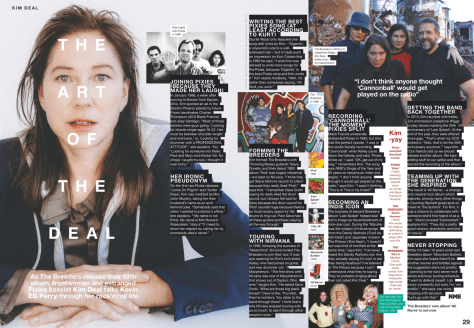
“You guys are such dorks!” says Kim Deal, which is a fair assessment because I’ve just told her about the time teenage me and a friend went to see her band The Breeders in homemade T-shirts that said: ‘Cool as Kim Deal’.
Sure, I’m a dork, but I’m in good company. The former Pixies bassist inspires devotion, whether it’s Kurt Cobain naming Breeders’ ‘Pod’ as an album that changed his life or Thom Yorke saying he was uncomfortable playing after Pixies because it’s “like the Beatles opening for us.”
As The Breeders prepare to release fifth album ‘All Nerve’, Kim talks us through her rock’n’roll life:
In January 1986, a week after moving to Boston from her hometown of Dayton, Ohio, Kim spotted an ad in the Boston Phoenix placed by future Pixies bandmates Charles Thompson (Black Francis) and Joey Santiago. “Most of those adverts were guys going: ‘Looking for blonde singer aged 19-22. Hair must be between shoulder length and mid-back.’ or: ‘Looking for drummer with a PROFESSIONAL ATTITUDE’,” she explains. “So: ‘Looking for someone into Peter, Paul and Mary and Hüsker Dü. No chops.’ caught my eye. I thought it was funny.”
On the first two Pixies releases, ‘Come On Pilgrim’ and ‘Surfer Rosa’, Kim was credited as Mrs John Murphy, taking her then husband’s name as an arch feminist joke. “Somebody said that when I worked in a doctor’s office,” she explains. “‘My name is not Ethel. My name is Mrs Howard Rosenstein.’ Holy shit! I need to show her respect by calling her by somebody else’s name!”
‘Surfer Rosa’ only featured one song with lyrics by Kim – ‘Gigantic’, a voyeuristic ode to a well-endowed man – but it made such an impression on Kurt Cobain that in 1992 he said: “I wish Kim was allowed to write more songs for The Pixies, because ‘Gigantic’ is the best Pixies song and Kim wrote it.” Kim reacts modestly: “Well, it’s better than somebody saying: ‘Oh God, you suck.’”
Kim formed The Breeders with Throwing Muses guitarist Tanya Donelly, and their debut 1990 album ‘Pod’ was hugely influential – not least on Nirvana. “I think they got Steve Albini to record ‘In Utero’ because they really liked ‘Pod’,” says Kim. “I remember Dave Grohl saying he really liked the drum sound, but I always felt bad for Dave because the drum sound for ‘Pod’ sounds huge because there’s so much empty space for the drums to ring out. Poor Dave had all these guitars and bass playing all the way through.”
Nirvana were such fans that in 1992, a year after ‘Nevermind’ made them mind-bogglingly successful, they invited The Breeders to join their tour. It was an eye-opening experience for Kelley, who had joined on guitar, and new drummer Jim Macpherson. “The first show with Nirvana was one of Macpherson’s first shows out of Dayton, Ohio ever,” laughs Kim. “He asked Dave Grohl: ‘What are those big black boxes?’ Dave is like: ‘You idiot, they’re monitors. You listen to the band through them!’ I think that’s why Nirvana enjoyed touring with us so much: to see it through other people’s eyes.”
Black Francis unilaterally disbanded Pixies in 1993, but Kim had the perfect riposte. “I was in the studio literally recording ‘Cannonball’ when Kelley came down the hallway and said: ‘Pixies broke up’. I said: ‘Okay, get out of my way,’” remembers Kim. The song was named NME’s Song of the Year and 25 years on remains a timeless indie rock staple. “I don’t think anyone thought it would get played on the radio,” says Kim. “I wasn’t thinking: ‘This is it! This is my ticket!’”
The success of ‘Cannonball’ and second Breeders album ‘Last Splash’ helped seal Kim’s image as the embodiment of rock star cool. During the ‘90s she was the subject of tribute songs from the Dandy Warhols (‘Cool As Kim Deal’) and Japanese rockers The Pillows (‘Kim Deal’). “I loved it but was kind of horrified at the same time,” says Kim. “I’ve never heard the Dandy Warhols one. Are they actually saying I’m cool or are they being facetious? I’ve listened to The Pillows because I can’t understand what they’re saying. They’re probably singing about their cat called Kim Deal.”
In 2013, Kim reunited with Kelley, Jim and bassist Josephine Wiggs to play shows marking the 20th anniversary of ‘Last Splash’. When the year was over, they were offered more gigs. “That’s when my OCD kicked in: ‘Wait, that’s not the 20th anniversary anymore,’” says Kim. “Our friends told us we should release another album. We kept adding stuff to our setlist and that started the recording of the album.”
The result is ‘All Nerve’, a strange and visceral rock album which features, among many other things, a Courtney Barnett guest appearance on ‘Howl At The Summit’. For Kim, it was a chance to collaborate with someone she’d first heard of as a fan. “She’d covered ‘Cannonball’,” explains Kim. “They did a pretty good version: shambolic and kind of casual.”
While it’s been 10 years since last Breeders album ‘Mountain Battles’, Kim says she hopes there’ll be another sooner and bristles against the suggestion she’s not prolific – pointing to her solo 7 inch series and busy touring schedule. “I want to defend myself. I do music constantly but sure, I’m ‘not prolific’,” she says, her voice dripping with sarcasm. “Let’s go with that.”

With just a couple of days to go before this year’s Oscars, a lifesize gold-coloured model of Harvey Weinstein perched on a ‘casting couch’ has appeared in Hollywood near the venue for the ceremony. In his right hand he holds an Oscar statue, suggestively clasped above his groin. The artwork is a collaboration between British-born street artist Plastic Jesus and Joshua ‘Ginger’ Monroe, the artist behind the naked Donald Trump statues. GQ caught up with Plastic Jesus this morning in LA:
GQ: What’s the message behind this piece of work?
Plastic Jesus: The idea behind this piece is that Harvey Weinstein was this iconic figure in the industry. In terms of profile, I don’t think there’s anybody to compare with him. I chose to come to LA, as so many other people do, pursuing a dream. There would have been so many people who came here hoping to be actors or actresses and the opportunity to get somewhere near Harvey for a meeting or a dinner would have been an absolute dream. For some, that dream clearly turned into a nightmare. The idea for this piece was that I wanted people to be able to come and sit down on the sofa next to Harvey. Knowing what we now know about Harvey, in terms of his abuse of power, sexual harassment and rape, what does it feel like sitting next to him? This icon who turned out to be a monster.
 The Tower Bar, near the eastern end of the Sunset Strip, is one of Hollywood’s most elegant celebrity hangouts. Tucked away on the ground floor of the Sunset Tower Hotel, in what was once the mobster Bugsy Siegel’s apartment, it’s the sort of place where it’s no surprise to see Dita Von Teese waiting in a corner booth, perfectly poised in a floral Zac Posen dress.
Already the world’s most famous burlesque dancer, not to mention a model and fashion designer, Dita Von Teese is about to add another string to her bow by releasing her first album. On the self-titled record, the former Mrs Marilyn Manson eschews her ex-husband’s goth rock in favour of sensual Gainsbourg-esque seduction, on songs which were written for her by contemporary French sleaze-pop merchant Sébastien Tellier.
Over a martini, she tells us how her collaboration with Tellier came about, the highest compliment Hunter S Thompson ever gave her and discusses her reaction to the Harvey Weinstein scandal and #MeToo.
 Sometime after the talking-head segment on how to make an award-winning anal scene, but before the stage invasion that led Lil Wayne to declare he’d “died and gone to heaven”, this year the AVN Awards – known as the “Oscars of porn” – spent a few minutes facing the reality and finality of death.
The ceremony, which was held on Saturday night at the Hard Rock Casino in Las Vegas, is not usually an arena which grapples with mortality. This time was different. When Greg Lansky, the creator of adult studios Tushy, Vixen and Blacked Studios, collected his Director of the Year award, he said only a quick thank you before inviting the producer Kevin Moore to speak in his place. Moore’s wife, the porn star August Ames, took her own life on the 5th of December last year at the age of 23.
 Mark E Smith, the singer, leader and sole constant member of The Fall, has died. While his cause of death has not yet been announced, last year he was forced to cancel tour dates due to what the band’s manager Pamela Vander referred to at the time as “bizarre and rare medical issues.” The phrase ‘bizarre and rare’ could equally serve as an epitaph for his life and singular body of work.
Smith was born in Broughton, Salford in 1957 before his family moved to nearby Prestwich while he was still young. He attended Stand Grammar School, which he left at 16. He got a job in a meat factory, and later worked on the Manchester docks as a shipping clerk. He experimented with drugs at a relatively young age, once claiming to have taken LSD even before he drank alcohol or started smoking.
 The barmaid at Gulliver’s, on Oldham Street in Manchester, spotted Mark E Smith walking in with me and had poured out a pair of double whiskeys before we reached the bar. That still left the question of what I was going to drink.
Mark E Smith, The Fall frontman who has died today aged 60, will be remembered as one of post-punk’s great frontmen, a poet with a genuinely unique and provocative style, and an occasionally combative interviewee. Along with his music, personally I’ll remember him most as one of the most entertaining men I was ever lucky enough to go for a drink with.

In a disused factory in Marsa, a 15-minute drive outside the Maltese capital, Valletta, a man in a grubby tracksuit takes a circular saw to the sharp edge of a steel structure. Sparks fly around him, but the man, his eyes shielded only by plastic sunglasses, works with a determination born of obsession. The air is thick with the smell of hot metal, spray paint and cigarette smoke. To mark the last days before Lent, some people make pancakes. Roderick Zerafa builds Carnival floats.
His creation towers over him. At 20-feet tall and 12-feet wide, it’s bigger than the trucks on the industrial estate outside. The steel base supports a plywood skeleton, then the whole thing is covered with papier-mâché and painted neon bright. It has an engine for a heart, powering mechanisms that make each of the float’s gargantuan figures dance in robotic motion. The result looks like something from the fevered imagination of Terry Gilliam. It has taken 23-year-old Roderick nine months to build, helped by a team that started with half a dozen volunteers before swelling to five times that many in the weeks before Carnival. Tomorrow it will make its first appearance in front of both the public and the judges, who’ll decide which team of float builders will take home this year’s coveted Carnival crown.
Much like the concurrent celebrations in Rio de Janeiro and New Orleans, Carnival in Malta is a boisterous party that’s taken very seriously by the locals. The run-up to Lent has great significance for the largely Catholic population, who have no fewer than 359 churches to choose from, despite the fact that the Republic of Malta’s three inhabited islands – Malta, Gozo and tiny Comino – have a combined area smaller than the Isle of Wight. Sitting atop sandy-coloured cliffs, the islands’ fields and vineyards are punctuated by historic towns where it often looks as if little new has been built since the 1600s. Malta’s location in the heart of the Mediterranean, just south of Sicily, has historically given it such strategic importance that before claiming its independence in 1964, it had been ruled at various times by every empire that hoped to control the surrounding seas. The Phoenicians, Carthaginians, Greeks, Romans, Byzantines, Moors, Normans, Sicilians, Spanish, French and British each left a trace of their culture behind, from the Baroque Roman Catholic cathedrals to the bright red phone boxes and pillar boxes which dot the streets as if they’ve been Photoshopped in from postcards of London, clues to the 164 years for which Malta was ruled from Britain.
If Roderick is nervous, he doesn’t show it. He’s not a professional artist. In fact, by day he’s an air-conditioner repairman, but he comes from a long line of Carnival builders. This year, he’s working alongside his father, Raymond, and it’s a significant anniversary, as 2017 marks 10 years since the death of his grandfather. ‘I never had any academic instruction – these skills were passed from father to son,’ Roderick says. ‘My grandfather used to make horse-drawn carnival carts, then my father developed from carts to floats.’
Every year a whole new float with an original theme must be built from scratch. Outside the factory, the remnants of last year’s constructions are disintegrating. Nightmarish heads and gnarled hands rise like ghosts out of bodies that have been turned to pulp by the elements, a reminder of Carnival art’s intentional transience.
This year, Roderick and Raymond have chosen as their theme the Maltese folk tales of Gahan, a sort of hapless but loveable village idiot character. The float depicts him in the midst of various misunderstandings. He carries a door, because he was told to ‘pull it behind him’, and he’s boiling baby chickens because his mother told him to keep them warm. Roderick has embellished the classic tale with contemporary allusions – the role of Gahan’s furious schoolteacher is modelled to look exactly like Norman Lowell, a far-right Maltese politician. ‘I wanted to include a bit of politics,’ says Roderick mischievously. ‘The Maltese like politics and festivals. We’re either celebrating or we’re sad, one or the other.’
Roderick’s ambitious vision has come at great personal expense. Not only have he and his team of helpers spent countless hours working without pay, they’ve also thrown a series of barbecues and other fundraisers in order to pay for the materials. In all, the float has set them back many times what they can possibly hope to win in the competition. ‘It’s cost us €20,000, the first prize is only €3,000,’ says Roderick. ‘My father always says, “That son of mine is going to ruin me!”’
What motivates the Carnival builders of Malta is a combination of family, tradition and a fierce competitive streak. Roderick’s float is just one of 21 being built this year. His chief rival for the top prize is Charles Briffa, who at that moment is across town hard at work putting the finishing touches to his own float, based on the Italian circus performer Moira Orfei. Charles has 27 years of float-building experience, working in his spare time around his job as a sales rep. ‘We used to say this was our hobby,’ he says, ‘but right now it’s more like a full-time job.’
First prize isn’t awarded for the float alone. The judges also consider the accompanying dance teams and their elaborate handmade costumes. At the Mystic Dancers school in Kalkara, across the harbour from Valletta, Stephania Gellel has just taken her team through their paces for the last time. They’ll be joining another float themed around The NeverEnding Story. Rehearsals started twice a week back in September, but since the beginning of January, they’ve been rehearsing every evening from Monday to Thursday, from 8.30pm to 10pm. On top of that, on Friday, Saturday and Sunday, they work on their costumes or help with the float. In a week’s time they’ll get their lives back, but Stephania isn’t sure how to feel about that. ‘At the end of the rehearsals, everyone is saying, “What are we going to do now?” We’ll miss the sense of community.’
Roderick, Charles and Stephania are all participating in a festival that dates back thousands of years. Humans have been celebrating the triumph of spring over winter since at least as far back as 10,000 BC. The Maltese islands are dotted with the remains of megalithic temples, predating Stonehenge and the Egyptian pyramids, where fertility rites would have taken place. Carnival in Malta, in its relatively modern form, can be traced back to 1470, and the festival took on particular prominence in 1535, during the reign of the Knights of St John. The Knights were an order of Catholic warrior monks who’d been forced to give up their previous home of Rhodes when it was invaded by the Ottoman Empire. In 1530, Charles I of Spain gave them the islands of Malta as their new home and five years later, Grand Master Piero de Ponte boosted the Malta Carnival with a series of lavish masked balls for the island’s nobility. Not wanting to be left out, local villagers made their own costumes out of sacks and sheets, and played uproarious music in the streets. Many dressed in drag and they delighted in satirising the ruling elite.
In some ways, little has changed. While the Valletta Carnival has Malta’s grandest procession, with the largest and most complex floats, the anarchic atmosphere of those early Carnivals is preserved on neighbouring Gozo. Located three miles northwest of the main island of Malta, for most of the year Gozo is a quaint and bucolic outcrop which looks as if a patch of Tuscany has somehow sheared off from mainland Europe. Its craggy coastline encircles a series of vineyards and sleepy villages, yet during Carnival, the small, conservative town of Nadur has gained an unlikely reputation as the zenith of Carnival weirdness. Teenagers and young people travel from across the Maltese Islands to join the party, dressing in homemade costumes and stumbling blind drunk down the cobbled streets. The atmosphere is somewhere between Glastonbury at four in the morning and a Halloween rave. While the floats in Nadur can’t compete with Roderick’s artistic expertise, they make up for it with savage satirical wit. This year’s procession is led by terrifying men in bald-headed goon masks, sloppily attempting to build ‘The Great Wall of Mexico’ and spraying wet sand from a cement mixer at anyone they pass. Following them, Donald Trump and Hillary Clinton leer out from a float promising a re-run of the 2016 US election.
Behind them comes a traffic jam of party buses. You wait all year for one and then six come along at once, each pounding out their own soundtrack. To stand in the centre of Nadur Carnival on the Saturday night is to withstand an onslaught of music from every direction: the dance tunes from the buses almost drown out the rock band covering Led Zeppelin and Kiss, while in Pupu’s Bar, grandfathers with tambourines and harmonicas play traditional folk beats, and Batman and a Smurf polka dance with Frankenstein’s monster.
A Day-Glo troll shouts over the din. His name is Jonathan and he’s taken the ferry over from Malta. ‘I’ve been coming here for six years, since I was 18,’ he says. ‘I wouldn’t go back to Carnival in Valletta now – it’s more for children. Me and my friends are in Gozo for three nights, we’ve even booked Monday off work.’
Back in Valletta on Sunday, crowds pack the streets as the sun beats down out of an afternoon sky the colour of old jeans. The city was built by the Knights of St John as a heavily fortified port, and its high walls and uniform grid design reflect its military origin. The straight, narrow streets fall and rise, and many have broad staircases designed to be climbed by knights laden down by heavy armour. Over the years, the 16th-century limestone architecture has been augmented with Baroque flourishes and colourful window boxes. The city’s main landmark is St John’s Co-Cathedral, whose imposingly blank exterior disguises the lavish decoration within.
After passing the Cathedral and squeezing down Archbishop Street, each float in turn emerges into St George’s Square, where a stage has been set up. When Roderick’s float arrives, he watches as his creation’s mechanical heart brings his characters to life. The gigantic Gahan spreads his arms wide in shock, while his mother lifts her petticoats and his schoolteacher brandishes his cane. On the stage, 35 dancers in traditional Maltese outfits twirl in perfect synchronisation. ‘Everything went well,’ he says with relief, but he’s not sure if his team have done enough to win. ‘There’s always something new, that’s what makes it a challenge. It brings out the best in everyone.’
The results are announced on the morning of Ash Wednesday, the first day of Lent. After a year of preparation and building, Roderick learns his team has won. ‘It’s a special moment for my family,’ he says. ‘I want to dedicate this to my grandfather.’
As for the €3,000 cheque, he says his first priority is to throw a party for everyone who was involved. ‘It’s my way of saying thank you,’ he says. ‘The families of our helpers have had to make sacrifices as well. I want to show them my appreciation.’
His thoughts, however, are already turning to next year. ‘We’ll start again from scratch,’ he says. ‘The boost we had this year just makes us want to get even better.’
As soon as Easter is over, Malta’s Carnival builders will go back to the drawing board. They’re living evidence that Carnival is about more than just a wild party. It’s a celebration of the ancient magic that occurs when people come together to build something bigger than themselves.
Published in Lonely Planet Traveller, February 2018.

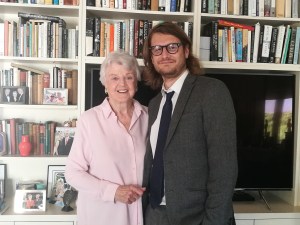 Angela Lansbury lives a few miles west of Beverly Hills, in a house that looks as if it’s been uprooted from the Home Counties. The moment I arrive, she bustles me into her living room like a no-nonsense headmistress. Immediately, I glance a photograph of her with the Clintons, then the awards that cluster around her bookshelves – five Tonys and six Golden Globes, for roles as various as Jessica Fletcher in the long-running crime series Murder, She Wrote and Mrs Lovett, the pie-making accomplice of Sweeney Todd in Stephen Sondheim’s musical. On her mantelpiece sits her honorary Oscar, engraved with the words ENTERTAINMENT ICON. “Pick it up,” she says. “Isn’t that the heaviest thing you’ve ever felt?”
 There’s an old joke, famously repeated in Alan Moore’s Watchmen, that goes like this: “Man goes to doctor. Says he’s depressed. Says life seems harsh and cruel. Says he feels all alone in a threatening world where what lies ahead is vague and uncertain. Doctor says: ‘Treatment is simple. Great clown Pagliacci is in town tonight. Go and see him. That should pick you up.’ Man bursts into tears. Says: ‘But doctor, I am Pagliacci’.”
Yesterday Bill Murray, America’s foremost sad clown, offered a couple of insights into how he writes his own prescription for Pagliacci’s complaint. He self-medicates with music, poetry and literature.
Early in the day a video appeared in which Murray recounts the time Hunter Thompson advised a depressed Murray: “We’re going to have to rely on John Prine for his sense of humour.” Sure enough, the great folk singer’s song ‘Linda Goes To Mars’ proved to be the first thing in a long while to tease a laugh out of Murray.
Then last night, he appeared on stage at the Wiltern in Los Angeles for a very special performance accompanied by the renowned German cellist Jan Vogler, the violinist Mira Wang and pianist Vanessa Perez. Murray’s readings of hand-picked poems, passages from favourite books and a handful of songs were interspersed with the musicians’ performances of Bach, Schubert and Ravel. Think of it as a highbrow version of that unwatchably bad Netflix Christmas special he made a couple of years ago.
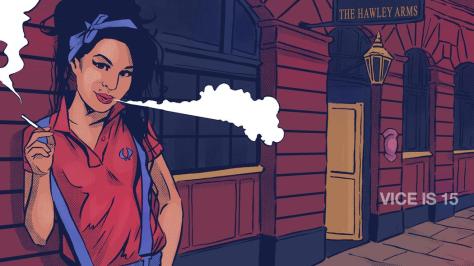 Late on 9 February 2008, a Saturday night, I left a gig at Koko and made my way up Camden High Street in north London toward my house. I didn’t get very far before I was stopped by a policeman who told me that Camden was “on fire”, which struck me as unusual. Going the long way round, I found myself stood on a bridge over Regent’s Canal watching the most famous pub in British indie music burn.
 On a bright, clear afternoon in Hollywood, Philip Glass is considering why it might be that, aged 80, he has outlasted his younger friends and collaborators, David Bowie and Lou Reed. He traces it back to the excesses of the Seventies, an era whose hedonism he deliberately observed from the sidelines.
“I didn’t have the money to corrode my body as some of my friends did,” he says wryly. “When I was a young man I was afraid of that lifestyle and I stayed away from it. I hate to put it so crudely, but I gained an extra 20 years of life.”
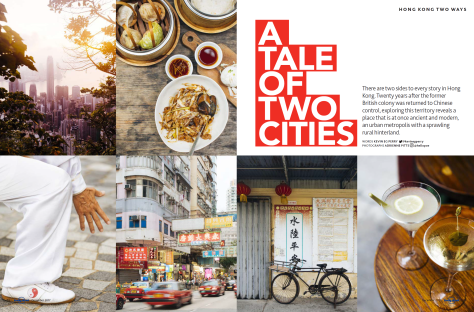
TAKE A HIKE
IN THE CITY…
It’s still before dawn when the first joggers set off along the Lugard Road, the tarmacked path which circles The Peak, the highest point on Hong Kong island. It’s only when they reach a break in the surrounding canopy of trees that they see the city laid out below them. From this perspective, Hong Kong looks like a vast collection of toy skyscrapers, somehow amassed by a child, with over 7,800 high-rises reaching towards the heavens. As the sunlight breaks through the clouds it lifts the film noir gloom from the city, revealing the colours of the day. Looking down, the closest tower blocks are painted in muted beige and pink while beyond them tower the gleaming glass obelisks of the bustling commercial centre. Some of these joggers will soon be heading towards them to start their working days. For now, they continue to pad around The Peak as the dawn chorus intensifies with the sun and butterflies dart through the air. This is a city that rewards the early birds.
OR IN THE COUNTRY
A world away from the heaving crowds on the streets of downtown Hong Kong, on the MacLehose Trail you’re more likely to have your path crossed by a scuttling land crab. Chirping crickets replace the sound of traffic. The long and winding route curls around the Sai Kung Peninsula before heading west across the New Territories and is evidence of a startling, oft-forgotten fact about Hong Kong: despite being one of the planet’s most densely populated places, less than 25 per cent of its total area has been concreted. The vast majority of its land remains as it always has been: grassland, woodland and shrubland. This makes for unexpectedly fine hiking. Soon after setting out eastward on the MacLehose Trail, walkers are afforded perfect views down over the shimmering waters of the High Island Reservoir and up towards Sai Wan Shan, a grand peak which itself will be dwarfed further along the trail by the New Territories’ central mountains. When the trail reaches the coast it dips down towards the gorgeous wave-lapped beaches of Long Ke and Sai Wan, where sweaty hikers reward themselves by stripping off and splashing into the cool water.
ADMIRE THE ARCHITECTURE
IN THE AIR…
In the shabby courtyard a trash fire burns in a metal barrel. An old woman sweeps the dusty floor outside Cleanly Cleaners, just along from a salon named Hair Show and a little shop with an old neon sign advertising foot massages. In the centre of the square, a gaggle of tourists are taking pictures of one another on their phones, crouching low to the ground to find an angle which can capture the huge edifice behind their friends. This is one of Hong Kong’s most photographed buildings, yet it’s not a temple or seat of government. Yick Fat was built in 1972 as simply another public housing tenement block, but it’s become an emblem of a city where lives are lived bunched close, one on top of another. The building is just one of five densely built residential buildings on the block, together comprising 2,243 flats that are home to around 10,000 people. Above the heads of the amateur photographers, laundry hangs from windows on each of the 19 floors beside precariouslybalanced air conditioners. Satisfied with their photos, the tourists disappear, leaving behind the residents of this monument to urban living.
OR BY THE SEA
Hong Kong takes its name from a phonetic Anglicisation of a Cantonese phrase meaning ‘Fragrant Harbour’, although it’s hard to imagine anyone ever describing the traditional fishing village of Tai O as ‘fragrant’. In the quiet streets that run past market stalls, the air is thick with the smell of drying fish and octopus, fried fish bladder and fermented shrimp paste. Built around an inlet on the western coast of mountainous Lantau Island, Tai O is a time capsule of Hong Kong as it was before high commerce arrived. The Tanka people have lived here for centuries much as they do now, in simple homes built mainly from tin which jut out over the water on stilts with fishing boats moored alongside them like cars in driveways. They are the only motor vehicles to be seen as the narrow streets are fit only for bicycles, tricycles and wheelchairs. Nowadays most of the fishermen are retirees, like 77-year-old Mr Fung. He gave up work 30 years ago, encouraged by his three sons and two daughters. ‘It is very tough to be a fisherman,’ he says. ‘During my youth the catch was good, and we could sell it to mainland China. Then after a while the catch got smaller and my children asked me to stop.’ Mr Fung’s children now all work in the city, in construction, but still return home at weekends to see their dad and enjoy the simpler life outside the concrete metropolis.
RAISE A GLASS
IN THE CLOUDS…
In a city of tall buildings, the tallest of them all is the International Commerce Centre in West Kowloon. At its summit sits Ozone, which at 490m is by some measures the highest bar in the world. It’s so high, in fact, that the views of the distant city below are often obscured by thick banks of cloud which make the ground appear and disappear like a mirage. The bar’s signature cocktail, the HK Skyline, is designed to pay tribute to its lofty location. Served inside a smoke-filled glass container, the sweet, grapefruit-tinged concoction comes topped with champagne bubbles. It is made using rum from a mountaintop Guatemalan distillery that produces its spirit entirely 2,300m above sea level. Priced at a fittingly sky-high £32, it is a favourite of the local high-rollers who begin to gather amid the tourists at the end of the working day, throwing their money around and admiring the busy city far below.
OR ON THE STREET
Wan Chai is a frenetic neighbourhood just to the east of Hong Kong’s Central district, full of offices and teeming shops. However, one step into the retro interior of Tai Lung Fung and it’s easy to forget all that completely. The décor recalls the Hong Kong of the cult 1960 film The World Of Suzie Wong, with Chinese lanternshaped fairy lights, a dragon-like qilin head on the wall watching over everything, and menus designed to resemble old newspapers. The soundtrack is largely ’80s, featuring Cantonese synth pop such as Chinese star Alan Tam’s Love Trap, which seems to create a conducive atmosphere for regulars to hang out and swap gossip over cocktails. The place is co-owned by friends Lavina Smith and Sam Leung, whose pet African grey parrot taps along the bar and plays with her cat. Their signature drink is the Plum Classic (above right), made with plum wine sourced from a local woman. ‘Every season she gets fresh plums from the New Territories, so it’s 100 per cent made in Hong Kong,’ explains Lavina. ‘Every year we buy about 100 litres, so we have a very limited amount of cocktails that we can sell each season.’
SAIL AWAY
IN GRAND STYLE…
It is just after noon when the 92ft wooden junk sets off from Tsim Sha Tsui pier to start its first lap of Victoria Harbour. The boat’s blue and white sails flap in the cool breeze, decorated with stylised Ming dragons which give them the look of fine vases or ancient ceramics. Out on the water, their fluttering is the only sound above the chilled Balearic soundtrack emanating from somewhere below deck, while the smell of the air is tinged by salt. The boat is designed to evoke another age. For over 1,800 years, junks were used as everything from cargo ships to floating homes, but today this vessel simply hops between stops on a loop of the harbour, passing cruise ships and tiny fishing rafts as it goes, and offering the chance to see the city as once many first-time visitors did: from the sea.
OR IN COMMUTER STYLE
In the late afternoon, as the Star Ferry sets off to cross Victoria Harbour once more, it is carrying a broad cross-section of Hong Kong: young and old, locals and tourists, commuters and families. Small children clamber on the seats excitedly while, nearby, men in suits check their mobiles and pensioners doze. Each day the ferry takes more than 55,000 people back and forth between Kowloon and Hong Kong Island; that’s 20 million journeys every year. The ferries arrive and leave as regularly as subway trains and are exceptionally cheap. When they started running in the 1880s, the boats were powered by steam; these days the journey is completed on diesel-electric ferries decked out with wood-panelling and much needed air-conditioning. Arriving on the other side of the harbour in around five minutes, the great mingled masses file off as their replacements board to continue the ferry’s endless cycle.
HAVE A BITE TO EAT
ON TREND…
It’s Saturday evening and the customers perched on stools at the wooden counter that surrounds Little Bao’s openplan kitchen are being exquisitely tortured. They must wait and watch as their food is prepared right in front of them, and try to ignore the rich scent of frying Szechuan chicken wafting in their direction. Luckily, the diners’ torture is short-lived. This is Hong Kong’s unique take on fast food, the brainchild of celebrity chef May Chow, regarded as one of the best in Asia. ‘It’s American and Chinese together,’ explains her sous-chef Sam Ng. ‘We always use Cantonese food ideas and then give it a little twist.’ Their signature dish, the bao from which the restaurant takes its name, are Cantonese steamed buns that are served like burgers filled with chicken or pork belly. Their surprise hit has been ice cream bao, which sees smaller bao deep-fried like doughnuts and then filled to make a green tea or caramel ice cream sandwich. ‘We never thought the ice cream bao would be so popular, but it was mindblowing,’ says Sam. ‘People wait for two hours just to get the ice cream. Hong Kong people are crazy about desserts, they always have another stomach for it.’
OR IN THE PAST
At Joy Hing, a traditional hole-in-the-wall joint on a noisy commercial street in Wan Chai, they do things the old-fashioned way. Founded towards the end of the Qing dynasty, in around 1900, their speciality is char siu – Cantonese barbeque. The rich smell of roasting meats lures in passers-by, while barbecued geese and ducks hang by their necks in the window and a whole pig is suspended tail-up from a hook. In front of the carcass the chef works methodically with his cleaver, the sound of his chopping competing with the whir of ancient fans working overtime to cool the hot air. He serves up a plastic plate overflowing with meat plus rice or noodles, and a mug of milky tea, for just £3. This sort of food at those sorts of prices breeds a loyal fan base. Queues form around the block twice a day when the nearby offices release their workers. One man at a battered Formica table explains he’s been coming here for over 40 years. In front of him sits a plate of roast duck and noodles, cooked the same way it has been here for over a century.
TAKE IN SOME ART
IN A MODERN WAY…
Street art in Hong Kong didn’t really catch on until 2014 when an organisation called HK Walls started linking artists with walls they could legally decorate. Nowadays, an hour-long walking tour takes groups past work by a host of internationally acclaimed graffiti artists. Appearing early on in the tour is perhaps the city’s most famous mural: the layered stencil painted by local artist Alex Croft (above left). It depicts Kowloon Walled City, a densely packed den of prostitution, gambling and drug abuse, much of which was controlled by Chinese triad criminal gangs before its demolition in 1994. ‘It represents a way of life that was a lot different to what we know today,’ says Alex. ‘The rumours of what went on behind the walls of that building are still talked about today: a lawless place that if the police entered some of them might not come out. I didn’t plan for the painting to be up on the wall for as long as it has been but it has brought me good luck along the way ever since.’
OR IN A TRADITIONAL WAY
Reassuringly for the novice artist, traditional Chinese ink-brush painting is not overly interested in achieving photo-like realism. ‘We’re not so concerned with details,’ explains art teacher Carole Leung. ‘We’re just trying to capture two things: the form, and the spirit. How do you paint spirit?’ That’s a question she sets about answering in her lessons, at the end of which her students will have produced their very own piece of art to take home with them. Carole teaches in her intimate studio inWan Chai, with Spanish guitar playing softly on the stereo and endless pots of oolong tea on hand. As her students learn how to delicately render bamboo shoots and leaves using just black ink and different edges of a brush they are also introduced to the traditional artist’s meditative discipline. The artform dates back to the 5th century AD, and Carole is determined to keep it alive by passing on the lessons of her own teacher ShumWing Kwong. ‘He passed away last year, but his notes are like gold,’ she says. ‘I want to pass them on, but also to modernise them too by introducing more colour.’ Her own radiant work on the walls shows what is possible – although matching them might take longer than the allotted two hours.
ENJOY A DAY OUT
WITH THE GRACEFUL…
William Ng and Pandora Wu have discovered the secret of eternal youth, and they’re willing to share. ‘I’m 80 years old,’ says William with a grin after leading a tai chi class on a bakingly hot morning without breaking a sweat. ‘Doing tai chi can make you stay young,’ he explains. ‘Pandora is over 70. It’s unbelievable! She’s like a magician.’ The graceful martial art may be slow-moving, but William’s students go through a full-body workout requiring total concentration. They seem to have tapped into something deep and serene. If William is to be believed, that’s because the gentle exercise regulates and harmonises every part of your body from your blood circulation to your digestive system. William and Pandora teach classes in a park on the harbourside three mornings each week, often throwing in a little kung fu and qi gong, a similarly languid holistic practice. They say it’s not just good for their bodies and souls – it’s keeping a tradition alive. ‘When visitors come to Hong Kong they want to touch and feel Chinese culture,’ says William. Fortunately for future visitors, he’s got his very own elixir of life to keep him going. ‘I won’t stop until God says he wants to see me!’ he says, and lets out a childlike laugh.
OR WITH THE GAMBLERS
The Sunday afternoon air is so hot and muggy that it seems hard to walk through, never mind race horses in. Yet that’s exactly what the thousands of fans and gamblers out at Sha Tin Racecourse have come to see. There has been horse racing in Hong Kong since 1841 and it didn’t take long for this colonial sport, originally intended only for the British elites, to become incredibly popular with the locals. Nowadays the huge stand at Sha Tin has an official capacity of 85,000 – a figure which is easily reached at Chinese New Year, a time when it is considered auspicious to bet on a horse. Opposite the stand, white and pastelcoloured tower blocks rise, giving the course the perfect Hong Kong backdrop. As the race draws near, old men hoik and spit as they rustle their sporting newspapers and betting slips. There is a lingering smell of cigarette smoke, and nobody can quite keep still as nervous, fidgety energy fills the arena. Then, finally, they’re off. The crowd is quiet until the horses and their jockeys reach the last 100m. That’s when the shouting and hollering begins. They bellow the number of their pick in Cantonese as the pack nears the finish. Then number four – Booming Delight – surges forward and pulls clear at the line. The crowd is split: some curse, others punch the air. The victors head inside to collect their spoils.
Published in Lonely Planet Traveller, December 2017.
 The memorials start even before you get to the Hollywood Bowl. On the freeway off-ramp, there are kids going car to car in the crawling traffic selling somber black T-shirts bearing the legend: ‘Chester Bennington 1976-2017’.
Those dates, just 41 years apart, serve as a reminder of just how dangerous we are to ourselves. Chester took his own life, as so many others do. In Britain, suicide remains the single biggest killer of men under 45.
Chester touched a lot of lives in his too-few years. Climbing the hill towards the entrance to the Bowl, the longest queue is not to get inside but to get to the memorial wall erected near the gates, where fans are signing their names and leaving messages about the impact the Linkin Park singer had on their lives.
It is difficult to get a handle on the tenor of the night. At times the fans are exuberant, sharing happy memories or marvelling at the long journeys people have made to be here. Other times emotions run high. The opening act DJ Z-Trip chokes on tears as he introduces his final tune ‘Walking Dead’, a song that he and Chester collaborated on. It is the first time in the evening Chester’s voice echoes around the Bowl, but not the last.
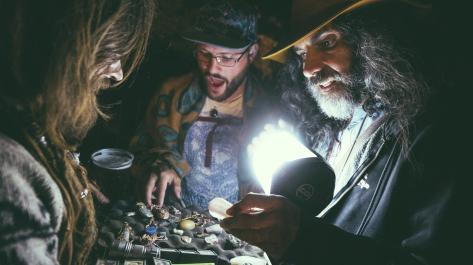 It’s a hot, dusty Sunday afternoon in the Joshua Tree desert. I’m in a tent trying to hold my body in something I’ve just been told is called a warrior pose while Wolves In The Throne Room’s “Prayer of Transformation” gives way to Sleep’s “Holy Mountain”. This is black metal yoga at Desert Daze festival, and it’s surprisingly meditative. “Yoga teachers tend to focus on things that are light and positive,” explains Alissa Nelson, our black metal yogi, “That can be great, but when people are in a certain place that doesn’t resonate. Black metal can be dark and gory, but it plays on that dark aspect that’s in all of us.”
Black metal yoga is just one of a whole roster of strange events being held in the festival’s Mystic Bazaar. Next up is something promisingly called “plant activation meditation”, then a little later it’s the ominously titled ‘defense against the dark arts’. Elsewhere, an entire venue has been given over to a five-hour ‘deep drone cycle’. Make of that what you will, but only 50 miles from the site of Coachella it’s impressive to see a wholly different conception of what a music festival is and what it might be for. Along with the chance to see the likes of Iggy Pop, Spiritualized and Courtney Barnett & Kurt Vile, Desert Daze also offers probably the closest thing an American rock festival has to the hippy spiritualism of Glastonbury’s healing fields.
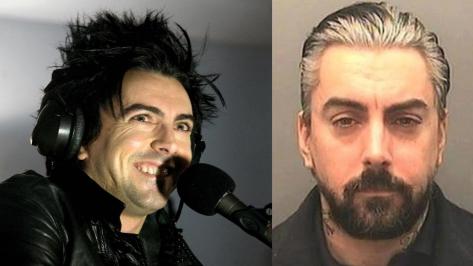
When Ian Watkins was sentenced for his child sex crimes in December of 2013, they were described by the presiding judge as having “plumbed new depths of depravity”.
Among other offences, the former Lostprophets singer admitted he had attempted to rape an 11-month-old baby boy with the help of the child’s mother, and conspired with a second mother to rape her infant daughter. Watkins had also slept with and urinated on a 16-year-old fan of his band, among a string of other similar offences. The judge specifically commented on “the delight that Watkins evidently has when engaging in the most terrible offences involving tiny children”.

Published in NME, 13 October 2017.
 The Californian sky was clear over San Bernardino and the temperature was touching 36°C as ‘Fuckin’ In The Bushes’ rang out and Liam Gallagher strutted onstage at CalJam. The day after the release of his debut solo album, Our Kid looked in fine fettle – as well he should. You could wait for a lifetime to spend your days in the sunshine.
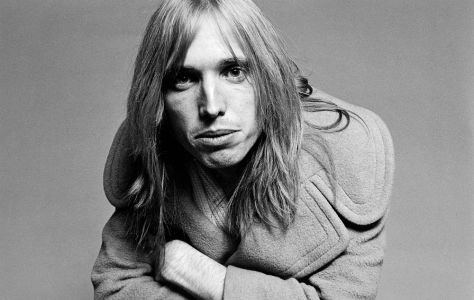 Tom Petty died today in a hospital bed in Santa Monica. The songs he wrote – ‘Free Fallin’’, ‘American Girl’, ‘Runnin’ Down A Dream’ and many, many others – will live as long as there are people listening to rock’n’roll records.
 Jordan Cardy, a 21-year-old who goes by the name of Rat Boy, inspires the sort of fevered devotion that often seems to follow those with his initials. His fans start arriving six hours early for the launch of his debut album, Scum, gathering in the cold and damp, graffiti-covered tunnel beneath London’s Waterloo station. One of the first to arrive is 16-year-old Saskia, who deftly explains Rat Boy’s appeal. “He sings about being poor quite a lot, and I find that really relatable,” she says. “He’s singing about things everyone our age is feeling.”
The list of topics covered on Scum includes: signing on, fake IDs, worrying about a third world war, getting sacked from Wetherspoons and “living off mum”, Critics often compare Rat Boy to oik-rock precursors such as Jamie T, the Beastie Boys and early Blur – both Damon Albarn and Graham Coxon appear on the record – but his fans also see more highbrow influences. “He reminds me of Salvador Dalí,” says 16-year-old Luke. “His style is always a bit weird and abstract.”
Rat Boy is not merely reflecting millennial fears back to his fans; he is refracting their world through a surrealist prism. Through his hand-drawn artwork, the videos he storyboards himself and the fake radio station that plays between songs on his album, he has built a Technicolor universe, populated with garish characters and brands, that is inspired as much by Grand Theft Auto, Tarantino movies and Spike Jonze skateboard videos as it is by indie bands.
 Narcos is the hit Netflix series that since 2015 has been telling the story of the rise (Season One) and fall (Season Two) of Colombian cocaine kingpin and hippo enthusiast Pablo Escobar. Anyone who knows their druglords will have realised that tale could only have one ending. Sure enough, Season Two ended with (historical spoiler alert) Escobar shot through the head on a Medellin rooftop.
But the story of the cocaine trade obviously didn’t end there. If it had, how would Be Here Now have gotten made? In fact, the Cali cartel rose to take over Escobar’s business, and that means the mission isn’t over for DEA agent Javier Pena. Pedro Pascal, who plays Pena, argues that the change of focus means the series is just getting interesting.
“When people say there can’t be a Narcos without Escobar I’m like: ‘Are you kidding? What world do you live in?’,” he says. “The show isn’t called Escobar. Cocaine sales go up after he’s dead. That alone tells you what we’re up against in Season Three. It’s an empire that’s now seemingly impossible to take down because it isn’t one target in the way that Escobar was. You won’t know what to expect. Even if you Google the shit out of it, you still won’t be able to predict exactly how it goes down.”

On the Wednesday before Burning Man 2017, President Donald Trump surfed into Reno, Nevada on a wave of outrage following a speech in Phoenix the previous night where he’d sided with white supremacists and claimed that protesters who sought to pull down Confederate statues were “trying to take away our culture.”
The casinos and motels of Reno were already filling with those of us on our way to the desert for the most logistically challenging of world festivals, stocking up on bicycle locks, water bottles and leopard-print thongs, so the standing joke as Trump arrived in town was that the President must also be on his way to Black Rock City. “He’d probably turn up in the desert still wearing his suit,” smirked a taxi driver in midtown, before changing his tune. “He would definitely go though. He’s not afraid of anything. You’ve got to give him some credit for that.”

 1. Valle de Guadalupe
Eat, drink and be merry amid the rolling hills of Baja California’s wine country
As the sun sets behind towering pine trees, casting long shadows across the Mogor-Badan vineyard, Paulina Deckman is reminiscing about the first time she came here to eat. It was six years ago, and dinner was so good she married the chef.
Drew, her Michelin-starred now-husband, had just opened Deckman’s en el Mogor as an open-air venue to showcase the best of the ranch’s fresh meat, fruit and vegetables alongside the plentiful seafood from the nearby port of Ensenada. ‘For my husband and me, this is the Disneyland of the ingredient,’ says Paulina. ‘We serve in our restaurant the bounty of the Baja.’
Baja California’s Valle de Guadalupe is a special place for food and wine. Cooled by the Pacific Ocean, its microclimate is similar to that of the Mediterranean. And it’s a climate that makes it easy to grow things. The weather is temperate and the hills are green. Squint and you might be in Tuscany. Knock back too much local wine and you may think you’ve woken up in Napa Valley.
Then there’s the seafood. Every morning in Ensenada, oysters, shrimp, marlin, crab, tuna and more are piled high onto the stalls at the Mercado de Mariscos. Serving up a plate of pearly white scallops, Paulina remarks: ‘These are a signature from Baja California. They’re so fresh they would have been in the water this morning.’
Deckman’s takes the ‘farm-to-table’ philosophy pioneered by Alice Waters’ Chez Panisse in Berkeley, California in the ’70s and goes one step further. Rather than bringing the farm to its diners’ plates, it brings its diners to the farm. Everyone eats outdoors, beneath the shade of the pine trees, with the scent of the kitchen’s woodfired stoves in their nostrils. ‘Sometimes people complain about the flies, but we are on the farm and we have to understand the context,’ says Paulina, deftly shooing one away from a tray of oysters. ‘We may serve fancy food, but this is not a fancy place.’
Drew and Paulina are vocal supporters of Waters’ ‘slow food’ movement, that necessary corrective to an obsession with fast-food restaurants. ‘Here, our food chains are as short as possible,’ says Paulina. ‘We try to be a zero-km restaurant. Everything the ranch produces, we serve.’
And it’s not just Deckman’s. Other restaurants in the valley are following their lead. Nearby TrasLomita also has its own farmyard and vegetable patch growing ingredients at their sister vineyard, Finca La Carrodilla. Chef Sheyla Alvarado’s signature dish, tostadas de ceviche verde, combines finely cubed jícama (Mexican turnip) and yellowtail from the fish market with their own home-grown coriander. At the recently opened Fauna at boutique hotel Bruma, chef David Castro Hussong offers a modern reimagining of Mexican comfort food.
The valley’s climate also makes it an especially good place to make wine. The potential of Valle de Guadalupe was spotted early on, with the conquistador Hernán Cortés requesting vines from Spain as early as 1521. However, it’s only in the last decade that wineries have begun to flourish. That leaves plenty of space for innovation. At Decantos Vínícola, Alonso Granados has devised the world’s first winery without a single electronic pump. Believing they can spoil the taste by treating the wine too roughly, his system relies simply on a process of decanting.
While he’s evangelical about his innovation, his other mission is to demystify the winemaking process for the emerging class of Mexicans who want to have a bottle of red alongside their cerveza, tequila and mezcal. ‘It’s not only production that we do here,’ he says. ‘We want people to visit and have fun. In the old days, wine was only for kings. These days, it’s for everyone.’
Take Highway 3 to Ensenada and then Highway 1 south for three hours until the turn off on your left for San Pedro Mártir National Park
 2. San Quintín & San Pedro Mártir
Explore the peninsula’s rugged, unspoilt heart where condors soar and cowboys still ride
Marcial Ruben Arce Villavicencio was eight the first time he sat on a horse. It bolted and threw him off, but Marcial got back in the saddle. Forty-six years later he’s still riding. He’s been a cowboy all his life, just like his father and his grandfather.
Marcial’s ranch, Rancho Las Hilachas, is just south of San Quintín and is home to 250 cows that wander freely over the 2,700 acres. It takes Marcial and the other cowboys three months to round them up, during which time they camp and eat under the stars. They do many things the old-fashioned way here in Baja California’s dusty heartland. From a young age the cowboys must learn to be handy with a rope. ‘When an animal is wild, you have to lasso it,’ explains Marcial. ‘That’s one of the toughest things to learn. It’s what makes taking care of so many animals hard – it’s like having hundreds of children.’
At least he can count on his own faithful steed Algodón (‘Cotton’), a bay-coloured Criollo horse. Algodón will stay with him long after the cows have been exported across the border to the USA where they are worth at least £600 each. Marcial maintains that his cows are worth every penny. ‘This job is satisfying, but the process of looking after a cow is a responsibility,’ he says. ‘You have to give them a good life, let them run and be happy. When you eat the steak, you will know by the flavour if you did well.’
Marcial doesn’t worry that more costefficient commercial farming might one day kill off his time-worn way of life. ‘We’re not afraid of competition from farms like that, because we think people value this more.’
With Marcial herding his cows through the foothills, the Sierra de San Pedro Mártir rises behind him on the horizon. The mountain range is home to a 170,000-acre national park, which is a sanctuary for bighorn sheep and mule deer as well as cougars, bobcats and coyotes. The thick pine forests, punctuated occasionally by craggy rock faces, make the perfect environment for hikers and horse riders.
At the very top of the park stand several deep-space telescopes that make up the Observatorio Astronómico Nacional. The location was chosen because of its lack of night-time cloud cover and light pollution, meaning that professional astronomers and amateur stargazers can glimpse the vast Milky Way. And that’s not the only impressive sight to be seen above. Near the entrance to the park is a rocky outcrop where California condors gather. In most places the graceful birds can only be spotted circling high in the air, but here they swoop low overhead, their huge wings making a loud crack as they glide down to Earth.
Back on the ranch, Marcial tends to his own animals. Then, with the last of the day’s sunlight fading away, he takes his place on an old sofa outside to open a few beers with his son and brother-in-law. ‘I can’t imagine going anywhere else,’ he says. ‘We don’t do this for tourism. This is the way we live. If you want to learn about ranches and the cowboy lifestyle then this is the best place to come because we’re not pretending. That’s the special thing about this place.’
Rejoin Highway 1 and head south for four hours until the left-hand turn-off towards Bahía de los Ángeles, another hour away.
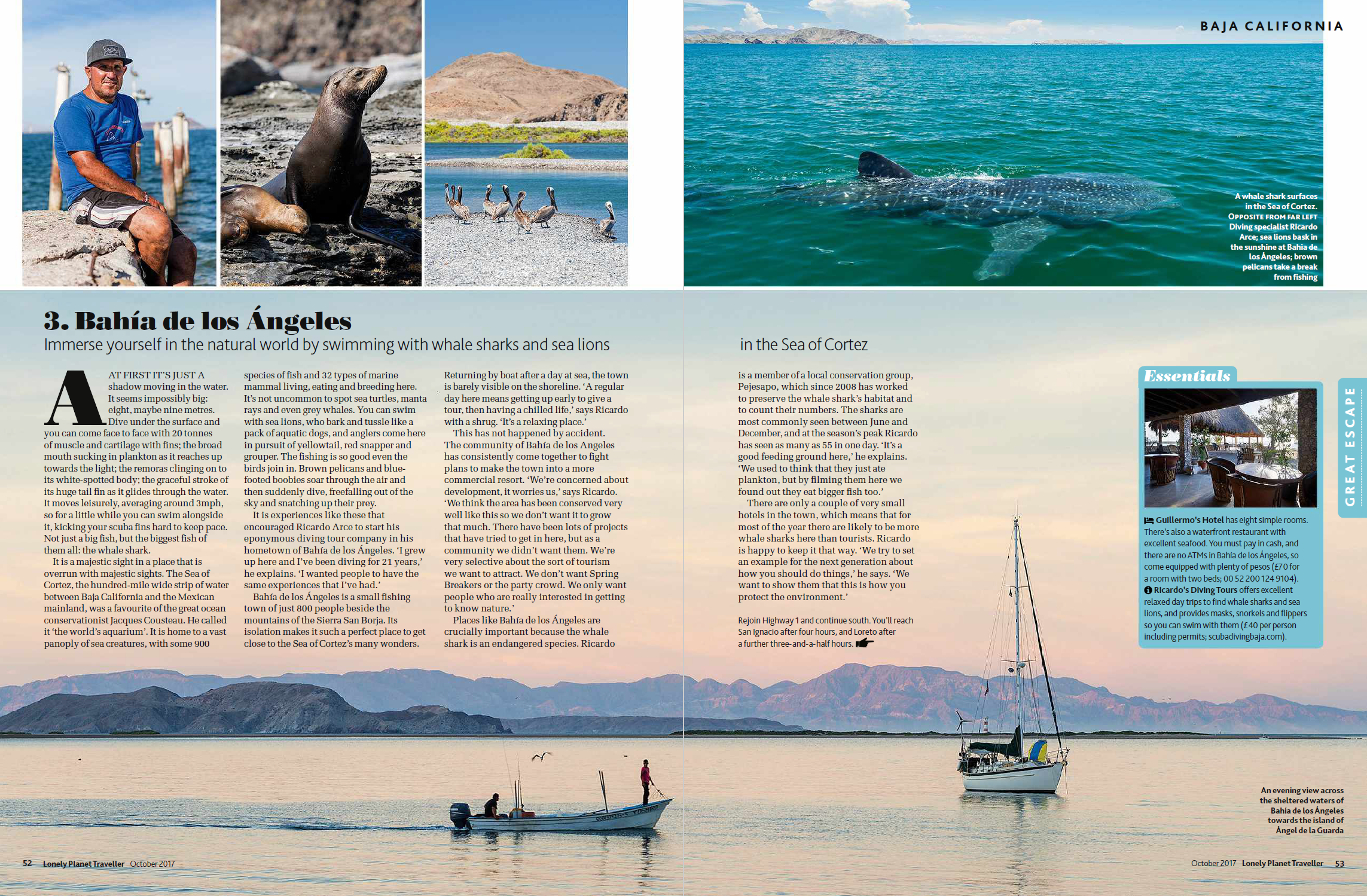 3. Bahía de los Ángeles
Immerse yourself in the natural world by swimming with whale sharks and sea lions
At first it’s just a shadow moving in the water. It seems impossibly big: eight, maybe nine metres. Dive under the surface and you can come face to face with 20 tonnes of muscle and cartilage with fins; the broad mouth sucking in plankton as it reaches up towards the light; the remoras clinging on to its white-spotted body; the graceful stroke of its huge tail fin as it glides through the water. It moves leisurely, averaging around 3mph, so for a little while you can swim alongside it, kicking your scuba fins hard to keep pace. Not just a big fish, but the biggest fish of them all: the whale shark.
It is a majestic sight in a place that is overrun with majestic sights. The Sea of Cortez, the hundred-mile wide strip of water between Baja California and the Mexican mainland, was a favourite of the great ocean conservationist Jacques Cousteau. He called it ‘the world’s aquarium’. It is home to a vast panoply of sea creatures, with some 900 species of fish and 32 types of marine mammal living, eating and breeding here. It’s not uncommon to spot sea turtles, manta rays and even grey whales. You can swim with sea lions, who bark and tussle like a pack of aquatic dogs, and anglers come here in pursuit of yellowtail, red snapper and grouper. The fishing is so good even the birds join in. Brown pelicans and bluefooted boobies soar through the air and then suddenly dive, freefalling out of the sky and snatching up their prey.
It is experiences like these that encouraged Ricardo Arce to start his eponymous diving tour company in his hometown of Bahía de los Ángeles. ‘I grew up here and I’ve been diving for 21 years,’ he explains. ‘I wanted people to have the same experiences that I’ve had.’
Bahía de los Ángeles is a small fishing town of just 800 people beside the mountains of the Sierra San Borja. Its isolation makes it such a perfect place to get close to the Sea of Cortez’s many wonders. Returning by boat after a day at sea, the town is barely visible on the shoreline. ‘A regular day here means getting up early to give a tour, then having a chilled life,’ says Ricardo with a shrug. ‘It’s a relaxing place.’
This has not happened by accident. The community of Bahía de los Angeles has consistently come together to fight plans to make the town into a more commercial resort. ‘We’re concerned about development, it worries us,’ says Ricardo. ‘We think the area has been conserved very well like this so we don’t want it to grow that much. There have been lots of projects that have tried to get in here, but as a community we didn’t want them. We’re very selective about the sort of tourism we want to attract. We don’t want Spring Breakers or the party crowd. We only want people who are really interested in getting to know nature.’
Places like Bahía de los Ángeles are crucially important because the whale shark is an endangered species. Ricardo is a member of a local conservation group, Pejesapo, which since 2008 has worked to preserve the whale shark’s habitat and to count their numbers. The sharks are most commonly seen between June and December, and at the season’s peak Ricardo has seen as many as 55 in one day. ‘It’s a good feeding ground here,’ he explains. ‘We used to think that they just ate plankton, but by filming them here we found out they eat bigger fish too.’
There are only a couple of very small hotels in the town, which means that for most of the year there are likely to be more whale sharks here than tourists. Ricardo is happy to keep it that way. ‘We try to set an example for the next generation about how you should do things,’ he says. ‘We want to show them that this is how you protect the environment.’
Rejoin Highway 1 and continue south. You’ll reach San Ignacio after four hours, and Loreto after a further three-and-a-half hours.
 4. San Ignacio & Loreto
Uncover the history of Baja California through the churches built by Jesuit missionaries in the 17th and 18th centuries
As the midday sun beats down on the white façade of the Misión San Ignacio, its door creaks open. The church’s warden, Francisco Zúñiga, steps through, gesturing to the aged wood. ‘This is original,’ he says, ‘from 1728.’
That makes the door older than many towns here in Baja California. The largest city on the peninsula, Tijuana, was founded in 1889. While the native history here is long – there are cave paintings by the Cochimí people which are thought to date from as far back as 7,500 years ago – the history of modern settlements didn’t begin until the arrival of Jesuit missionaries from mainland Mexico in 1683. It was 1697 before they founded the first Spanish town on the peninsula, Loreto, a three-and-a-half hour drive further south from San Ignacio.
They came by boat from Sinaloa, unsure whether they were approaching an island or a peninsula. They first landed at modern-day La Paz, but were driven north by the native Pericúes and Guaycura people, and eventually ended up near Loreto. Their first attempt at constructing a church, Misión San Bruno, was abandoned in 1685 due to a shortage of food and water.
In 1697, another Jesuit group led by the Italian priest Juan María de Salvatierra arrived in Loreto and tried again to construct a mission. This church, the Misión de Nuestra Señora de Loreto Conchó, proved more successful and the settlement became the first Spanish-claimed territory on the peninsula, and the base from which the missionaries expanded their evangelical work throughout the region. The church still stands in Loreto, next to a museum dedicated to the history of the Jesuits.
However, as the museum’s custodian Hernán Murillo explains, the missionaries who made it as far north as San Ignacio saw a fall in the number of their flock due to an unforeseen danger, which would be repeated across the continent. ‘There’s an expression here: “The bells that call the wind,”’ he says. ‘The San Ignacio mission was started by the Jesuits and finished by the Franciscans, but by the time they completed the mission, they were seeing the effects of Westerners arriving with diseases that the locals didn’t have immunity to. By the time the Mission was finished there weren’t many people left to go to the church. That’s why we say there were only bells to call the wind.’
Today, the village surrounding the Misión San Ignacio is home to just 700 people, while Loreto is a larger town of 15,000. Until 1777 Loreto governed the whole state, which at the time stretched all the way up into what is now the USA, and much of the town’s architecture still bears out that colonial legacy.
Loreto is easy to explore on foot and is arranged around a central square, Plaza Juárez. From there it’s just a short stroll up the tree-lined Avenida Salvatierra to the mission. Restored several times after centuries of earthquake damage, it retains an inscription above the door which attests to how important it once was, translating as: ‘The head and mother church of the missions of upper and lower California’. Inside, behind the altar, sits an elaborately decorated Baroque retablo that was transported here at great expense from Mexico City.
For a town with such a rich history, Loreto is now a peaceful place. As dusk falls in the Plaza Juárez, couples sit outside a restaurant named 1697 sipping beers as they listen to a guitar player. They gaze across the square to the imposing Spanish Colonial city hall. Underneath the word ‘Loreto’ it bears a stone legend, naming the town as the ‘Capital Histórica de las Californias’. But now, like the beer drinkers themselves, it is a town left alone with its memories.
From Loreto, take Highway 1 south for a little over four hours until you reach La Paz.
 5. La Paz
Swim, kayak or paddle board your way around white-sand beaches and rocky coastlines
The sun is dipping low in the sky over Balandra Beach, 17 miles north of La Paz, but the groups of friends and families who’ve come to while away a Sunday afternoon by the sea are determined to eke out every last moment of the day’s heat. As the tide comes in, two men lift their plastic picnic table up out of ankle-deep water and carry it to shore, a half-drunk bottle of rum still balanced on it precariously.
Further up the beach, a group of teenage acrobats from Tijuana are taking it in turns to throw each other, pirouetting high into the air, until inevitably – perhaps the result of too many cervezas – they miss their catch. The fallen gymnast just laughs it off, rolling over in the soft, white sand. American pop music pumps from an unseen stereo. Kayaks of green and orange return to the bay, easy to spot against the turquoise sea. As sunset approaches the sky becomes a miraculous shade of red. Even the clouds appear to have been dyed pink, like candyfloss. Families take it in turns to traipse to the far end of the bay to take the obligatory selfies in front of Balandra’s signature mushroom rock.
As they clamber back up the dusty brown slopes dotted with cardón cactuses to where they’ve left their cars, it is easy to see why people are drawn here from across Mexico, attracted by the white sand and the warm azure water. A cracked tile sign near some government-built sunshades declares that they were ‘Hecho con Solidaridad’ – ‘Made with solidarity.’ It’s a beach that welcomes all with open arms.
By contrast, out at sea lie some more exclusive beaches. Espíritu Santo, a 31-square-mile island in the Sea of Cortez ringed by mangroves and volcanic rock formations, was declared a Unesco Biosphere Reserve in 1995 and the number of visitors there are carefully limited. It is officially uninhabited, although at certain times of the year it is possible to stay overnight on the island at Camp Cecil, a series of safari tents set up with real beds and furniture on the long stretch of La Bonanza Beach. Live-in chefs Giovanni and Ivan serve up excellent Baja Med fare, and can organise everything from kayaking and snorkelling to bird watching and nature hikes.
Espíritu Santo is an hour by motorboat from La Paz, and it’s common to see schools of dolphins playing in the boat’s wake. For the more adventurous, it’s also possible to reach the island by kayak or stand up paddle board. The next day in La Paz, on the long stretch of beach in front of the city’s Malecón, paddle board instructor Sergio García of Harker Board Co. is giving enthusiastic lessons to the uninitiated. A former professional basketball player from Chihuahua, he moved to La Paz seven years ago, drawn like many others by the relaxed beach lifestyle.
‘I first visited La Paz when I was 16,’ he says, keeping a watchful eye on his students out in the bay. ‘I knew it was a beautiful place, so I always thought I’d like to come back and make my life here. It’s a small town growing up quickly. You have a good quality of life here, better than in the other states of Mexico. It’s a really peaceful place, tranquil and calm.’
García learned to paddle board when he moved here, and now the sport has taken over his life. ‘In my free time I paddle board as well!’ he says with a laugh. ‘La Paz is a perfect place for stand up paddle boarding because you have warm water all the time. Sometimes there is wind and sometimes you have waves, so it’s good for beginners and for experts. Here, let me show you…’
He tosses his board into the water and clambers in, then with long strokes paddles swiftly out into the bay. Like life itself in this place where the desert meets the sea, he makes it look easy.
Photographs by Justin Foulkes.
The problem with talking to musicians about music is that you can end up talking about anything but. Interviews become about about rock star beefs or who they’re dating, when all you really want to know is: “Why do your songs make my heart swell up until it feels like it’s going to burst?” I mean, is there a secret chord or something?
Adam Granduciel, who records as The War On Drugs, has had at least one weird rock star beef (with noted asshole Mark Kozelek) and is dating a genuine celebrity (Krysten Ritter, latterly of Breaking Bad, currently of some iteration of the interminable Marvel universe) but if we’re going to find out he writes music to make the heart swell then we’re going to have to find out how his desire to become an painter led to him crisscrossing America, how he learned to live with his anxiety and, in the end, what he hears when he’s listening for that special moment. But before all that, the first thing you should know about him is that he’s the sort of guy who’s so obsessed with the way sound is recorded that he collects studio T-shirts.
 Brands run the world. By the time the average American child is three years old, they’ll be able to recognise 100 brand logos. Likewise, when the average British teenager starts double-dropping pingers on a weekend they’ll soon learn their Mitsubishis from their Teslas, their Skypes from their Spongebobs, their Anonymous masks from their puckering Donald Trumps.
Brands can be useful when they tell us something about a product’s origin and quality, and the same goes for drugs. While it’s true that ecstasy manufacturers frequently use similar or identical stamps to brand wildly different products, reviews of certain batches of the drug doing the rounds in a given place at a certain time can help to identify potentially dodgy pills. That can mean more than the difference between a great night and throwing up in the smoking area. Sometimes it can mean life or death.
That’s where PillReports.net comes in.
 Prophets of Rage played their first ever show in Poland last night at Open’er 2017, with Chuck D telling the audience they want to: “Make Poland rage again.”
The supergroup, made up of Rage Against The Machine’s Tom Morello, Brad Wilk and Tim Commerford, Public Enemy’s Chuck D and DJ Lord, and Cypress Hill’s B-Real, didn’t allow the gathering rain clouds to dampen their righteous ire.
They opened with their version of Public Enemy’s ‘Prophets of Rage’, the track from 1988’s ‘It Takes a Nation of Millions to Hold Us Back’ from which they take their name. The rest of the set was dominated by Rage Against The Machine’s greatest hits, although they also found time to play a handful of Cypress Hill tracks and an instrumental version of Audioslave’s ‘Like A Stone’, dedicated to Chris Cornell.
Before playing the song, guitarist Tom Morello announced: “Not that long ago a good friend of ours and a musical comrade passed away. Please give an enormous ovation for Chris Cornell. We loved him very much too. We’d like to sing a song in his memory. If you know the words, sing along. If you don’t, say a prayer for peace.”
Morello’s guitar bore the legend ‘Arm The Homeless’ on the front, and ‘Fuck Trump’ on the reverse. Before playing final song ‘Killing In The Name’, B-Real thanked the crowd and said: “We came together to talk about and against injustice and fuckery. We hope we connected with you today to make a change in the world. Dangerous times call for dangerous songs. Here’s a dangerous fucking song.”

Early in his career, David Merlini learned that one of the benefits of being an escape artist is not having to worry when you’re stopped by the police. It was the mid-90s, and he had just bought his first car, a silver Maserati. Not bad for a 17-year-old in Budapest. There was just one minor problem: he didn’t have a driving licence. So he came up with a ruse. Whenever he got pulled over, he’d say that his license was in the boot. When they popped it open it would be full of chains and padlocks.
“What are you doing with all these?” they’d demand.
“I’m an escape artist.”
“Is that right? Could you escape from my handcuffs?”
They’d snap on their police-issue cuffs and moments later Merlini would hand the bracelets back to them. By this point, they’d have invariably forgotten all about needing to see his licence. As if by magic.
Yet there is no trickery in this story. They were real policeman with real handcuffs, and Merlini really wrestled free of them. Even Merlini’s name is real, and appears on the driving licence he’s rather belatedly acquired.
Teller, the shorter half of Penn & Teller, once told Esquire magazine that: “Sometimes magic is just someone spending more time on something than anyone else might reasonably expect.” Merlini knows that to be true. He has spent his whole life learning to escape.
Merlini was born in Budapest on 31 October 1978 to an Italian father and a Hungarian mother. They knew something was different about their son by the time he reached the age of four. He showed no interest in Matchbox cars, Lego or football. The only toys he wanted to play with were padlocks and handcuffs. His only passion was for magic. Not long after, his father moved the family to Turin in northern Italy. Coincidentally, the city is home to the biggest society of European magicians: The Circolo Amici della Magia di Torino. A chance meeting with one of its founders led to Merlini joining the club when he was just 13, after an examination period of six months. He was the youngest member ever admitted.
It was in their library of magic that Merlini made a discovery that changed his life. He began to read about the life of Harry Houdini, the greatest escape artist of all. Here was a man who had shared Merlini’s love for combining magic with padlocks and handcuffs. What’s more, both men had been born in Budapest – one district away from each other – but left Hungary as young children. Houdini had died at the age of 52 on 31 October 1926. Exactly 52 years later, Merlini had been born. “Then and there it was decided,” says Merlini. “I will stage again all of his illusions, all of his escapes, but with a modern key. I will modernise these amazing escapes that he performed.”
He didn’t waste any time. Merlini made his first public appearance at the age of 14, in the theatre tent of Budapest’s Sziget festival. Just two years later, he was upside down over the main stage at the same festival escaping from a straitjacket while suspended by his feet from a burning rope. It was a variation on a trick Houdini himself had performed outside newspaper offices to guarantee himself press coverage, and it had a similar effect for Merlini. “In 1995 in Hungary it was something that had never been seen before,” he remembers. “There was massive media attention, which fuelled my passion. I made a statement that every year I would present a new stunt, something amazing. The year after I was locked in a steel box and lowered into the Danube river.”
Quickly succeeding in his goal to recreate Houdini’s escapes, Merlini then raised the stakes even higher. “Escape artists all do the same gigs. They get chained, they escape,” he explains. “I always wanted to create something of my own.”
The first show he devised himself was performed in Budapest’s Hero’s Square in 2001. Merlini was strapped in a regulation straitjacket and then welded into a steel and reinforced glass container filled with water. The water was then frozen, and 33 hours later the one ton ice block was melted with chainsaws and flame-throwers. Merlini then staggered out and escaped from the straitjacket. After that, the stunts got bigger every year. One year he was embedded in a block of concrete and lowered into the Danube. The next he was launched inside the largest non-governmental non-military rocket every commissioned by an individual. “After I was launched in the rocket, I said: ‘What else can I do?’” he laughs.
His answer to that was to be named Best Escape Artist at the World Magic Awards in Los Angeles in 2007. He picked up the award after performing a variation on his ice block escape where he was instantly frozen with liquid nitrogen. Two years later, on the starting grid before a Formula 1 race in Bahrain, he broke the world record for the longest breath-hold underwater with a staggering time of 21 minutes and 29 seconds.
The trick with Merlini is that there is no trick. “A magician creates an illusion by, for example, using the dice to roll a certain number, and maybe the dice is prepped, and the trick is possible because of an apparatus,” he says. “On the other hand, the escape artist is the apparatus itself. The secret behind my escapes is how to hold your breath, how to open locks underwater, how to resist very uncomfortable and harsh conditions. It wouldn’t be right to say it’s trickery, because the trick is the man itself.”
Having performed all over the world, Merlini returned to Budapest to open The House of Houdini last year. An apartment in Buda Castle has been transformed into a shrine to Merlini’s hero. Handcuffs and lock-picks that once belonged to the great escape artist, as well as his old family bible inscribed with his birth name Erik Weisz, sit side by side with props from a recent Houdini television series starring Adrien Brody, for which Merlini taught him the basics of escapology. There are also regular magic shows, every half an hour, literally providing a stage for a new generation of young Hungarian illusionists.
Before it opened, there was nothing to mark Houdini in the city of his birth. Merlini couldn’t allow that to continue. “Houdini is still an icon,” he says. “The museum is here because I hope he will still be an icon in 100 years, because that’s what he deserves. He had the class and the straight-forward style all mixed in one. He was unique. We have amazing magicians again today who are very successful, but I doubt if in 100 years there will be many names still up for future generations.”
Merlini and Houdini capture the imagination because in escaping from the ties that bound them, they represent something essential in the human condition. The French philosopher Jean-Jacques Rousseau once wrote that: “Man is born free, but is everywhere in chains.” Houdini and those who’ve followed him show us that we can throw them off. “We all have our manacles and our chains,” says Merlini. “It’s just a question of how we can escape from them.”

1. Party on, dudes
Holzmarkt, Germany
When Berlin’s fabulous open-air venue Bar25 closed in 2010, it was with a five-day party and a great deal of sadness. The club had helped rejuvenate a barren patch of industrial wasteland by the river Spree and it seemed inevitable that the now-prime real estate would be sold to investors.
Except, the story didn’t end with the sprouting of luxury high-rises. Instead, the land was leased back to Bar25’s owners, who set about envisioning a collectivist utopia – the perfect society in microcosm – on the riverbank where East Germany once met West. It would be a place where anyone could contribute and feel well looked after in return, where the planet’s resources and wildlife would be preserved, and where the party wouldn’t have to stop.
It took Juval Dieziger and Christoph Klenzendorf eight years but finally, this spring, their dream became reality with the opening of Holzmarkt. At first glance it’s simply the site of a great riverside bar, Pampa, and a club, Kater Blau, with an onsite restaurant, Katerschmaus – all popular with locals. But look beyond the beers and music, and you’ll find a ramshackle urban village, built out of wood and recycled materials, and hiding a nursery, doctor’s surgery, children’s theatre and cake shop. If you have some form of expertise – from medical knowhow to circus skills – Holzmarkt is the place to barter with it.
“Holzmarkt wants to attract people from all over the world and delight, inspire and connect them,” say the founders. “Here, they will find peace and fun, work and entertainment… For us, sustainability and change are not a contradiction.” The 12,000sqm site has four entrances and no gates. It’s open to all, even animals, with specially designed riverbank portals for use by beavers, ducks and otters. “Jointly, citizens and the city have won,” the owners add. “Holzmarkt will be a sanctuary for humans and beavers alike.”
2. Embrace woolly ideas
Lammas, Wales
“It’s totally possible to live a first-world lifestyle without it costing the Earth,” says Tao Wimbush, one of the founders of the Lammas Ecovillage in Pembrokeshire. His statement’s true in both senses – since 2009, Wimbush’s comfortable existence has been as cheap as it is sustainable.
Lammas is ‘off-grid’, meaning members of this pioneering community create their own power and rely on their skills to solve problems. Not that there are many within this lush enclave on the UK’s western edge. Happy cows chew the cud, the soil bursts with fresh produce and beautiful houses spring up without the help of any big development companies.
“In the village, we’ve all got computers, internet, washing machines, stereos…” Wimbush points out. The difference is that residents know exactly how much of the community’s solar and hydroelectrically generated power each appliance needs. “I’ve got two teenagers and they know that when they turn on their hairdryer it’s going to take 900 watts of power, so they check it’s available before they turn the hairdryer on. If it’s not, they can reroute power by turning off other appliances.”
Eating organic isn’t an optional luxury, it’s a necessity and houses are literally packed with natural materials. “We insulate our homes with sheep’s wool. It came straight off the sheep’s back and into a cavity in our timber-framed house,” says Wimbush. “We’ve proved that it’s totally possible to build affordable, healthy, high-performance houses with local, naturally available materials. The house I’m living in cost £14,000 [€16,000] and is more effectively insulated than the average suburban home.” It goes to show: it’s better to keep a sheep than be one.
3. Put your art into it
Christiania, Copenhagen
Pothole repairs are an issue that all towns face, but a workaday chore? Not in the ‘free town’ of Christiania. The autonomous neighbourhood in Copenhagen is famous Europe-wide, not least for its relaxed approach to cannabis, but also for its louche and lovely aesthetics. Here, potholes are as likely to be filled with marble mosaics or glazed tiles as asphalt.
“Beauty is just as important as function,” says Britta Lillesøe, an actress and the chairwoman of the Christiania Cultural Association. “Christiania is a town for people expressing themselves artistically in everyday life.”
Ever since it was founded as a squat in 1971, Christiania has attracted those who don’t feel they fit in anywhere else. “We accept and tolerate deviant ideas and behaviour, because we know that by judging others we judge ourselves,” says Lillesøe. “Being different is a way to be yourself.” However, those differences have a way of binding people together – forming what she calls an ‘urban tribe’. “Individualism and collectivism come together in the tribal spirit, which is beyond the political,” she says. “It honours tradition and yet despises worn-out ways. We are a bridge between the prehistoric and the future, between the shamanistic vision and the age of Aquarius.” Couldn’t have put it better myself.
4. Don’t stop till you get enough
Marinaleda, Spain
In 1979, 2,500 labourers in Andalusia found they had no land, no prospects and nothing left to lose. All around them they saw fields that weren’t being farmed and they decided to act.
It took 12 years of relentless protests, including whole-village hunger strikes, occupations of the farmland they were demanding and a march to the Andalusian capital, Seville, but by the turn of the 90s, the battle had been won and the land around the village of Marinaleda was handed over.
“Eventually, the local government decided it was more trouble than it was worth, bought the land from a duke and gave it to the people,” says journalist Dan Hancox, whose book The Village Against the World details the labourers’ struggles. During the almost three decades since, the people of Marinaleda have created their own narrative. “They have their own TV channel and radio station, which might sound ridiculous for a village of 2,500 people, but that’s what makes it fascinating,” says Hancox. “They party together at their own feria [festival] in July, which always has a revolutionary theme – one year it was Che Guevara. The village even has its own colour scheme: green for their rural utopian ideal, red for the workers’ struggle and white for peace.”
Che would surely approve.
5. Make love not war
Metelkova, Slovenia
The army barracks in the centre of Slovenia’s capital, Ljubljana, have not historically been the sort of place you’d want to spend a night on the tiles. Built by the Austro-Hungarian Empire in the late 19th century, they have at various times been home to soldiers from Fascist Italy, Nazi Germany and the authoritarian Socialist Federal Republic of Yugoslavia, none of whom were renowned for being much fun at the disco – which explains the glorious irony that since 1993 the barracks have been transformed into Metelkova, a home for artists and one of the most successful urban squats in the world. Moreover, the alternative city-state was home to Ljubljana’s first gay and lesbian clubs – Klub Tiffany and Klub Monokel respectively – and has since been used as a base for a whole variety of campaigns against racism and other forms of abuse. Even the mayor of Ljubljana, Zoran Janković, has been won over by the squat.
“Metelkova is a centre of urban culture,” he said in 2015. “It’s a place for critical reflection, civic engagement – and with its activities, it is establishing Ljubljana as an area where ideas of all generations can freely flow.”
If former Nazi army bases can become beacons of hope and togetherness, surely anywhere can.


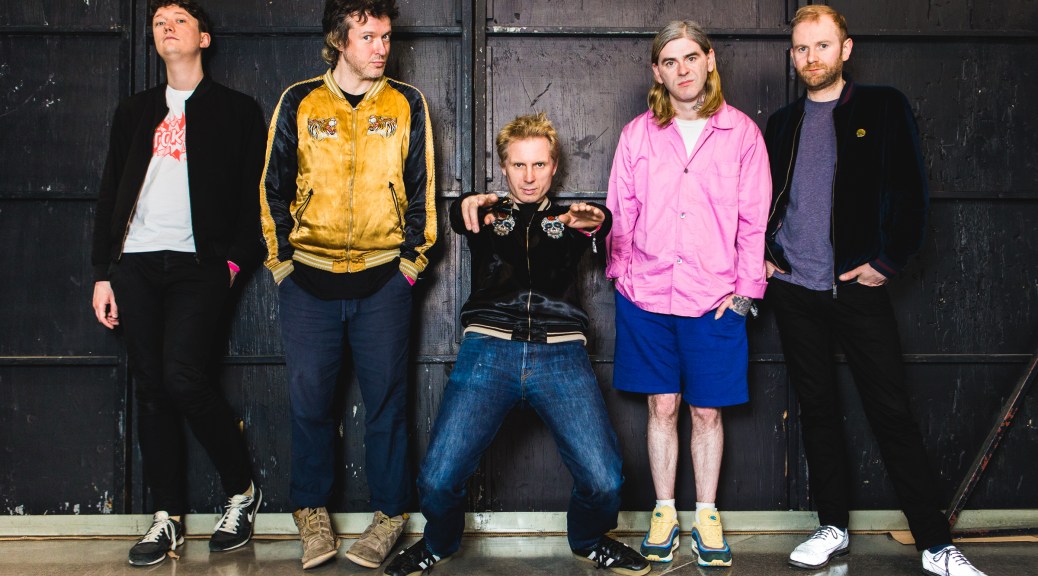



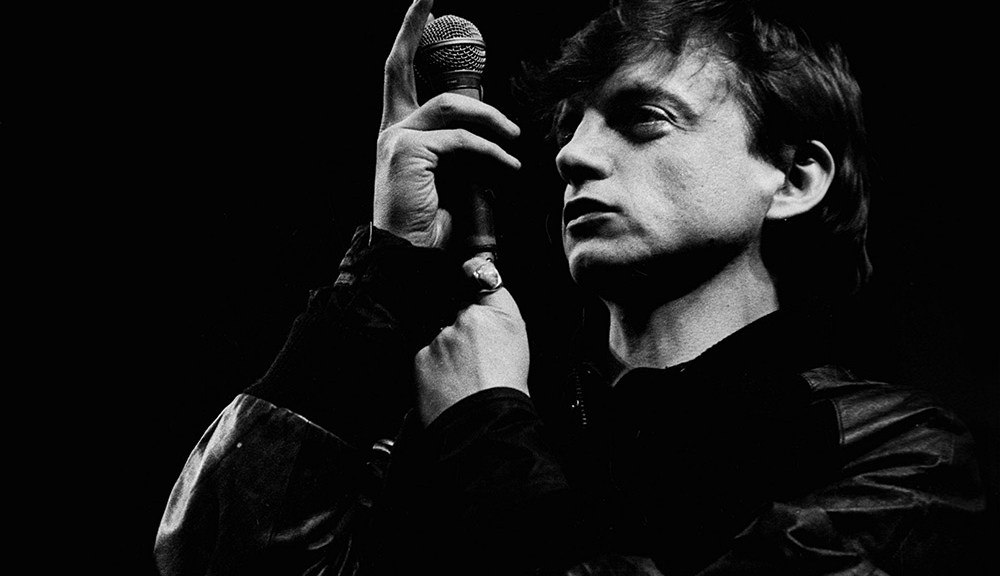


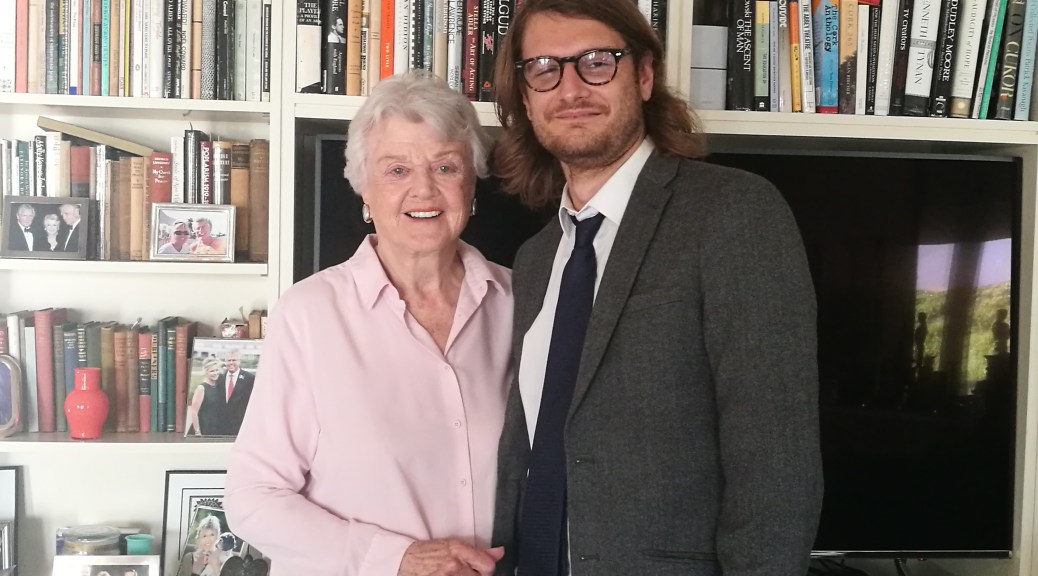

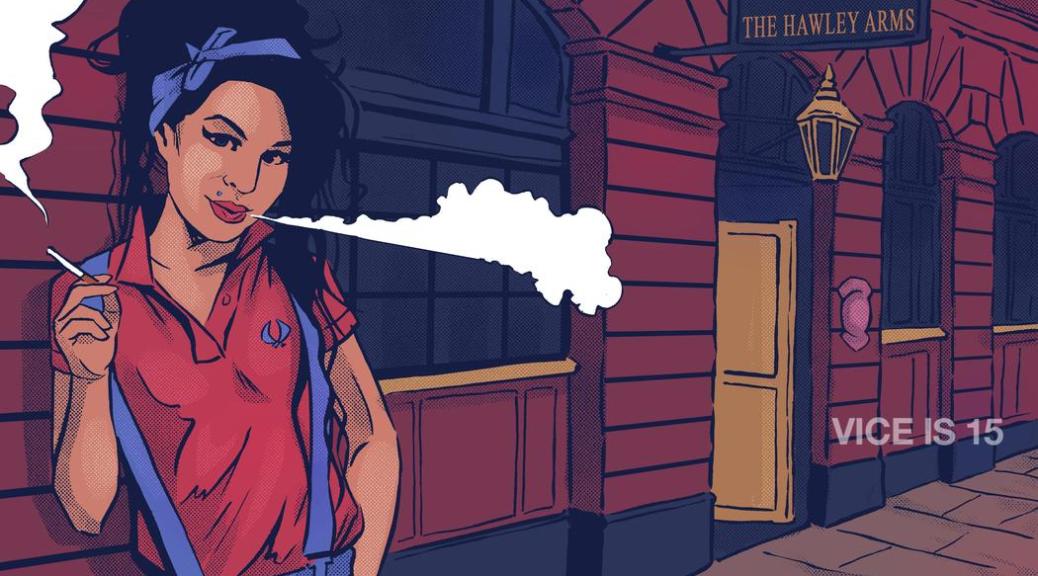


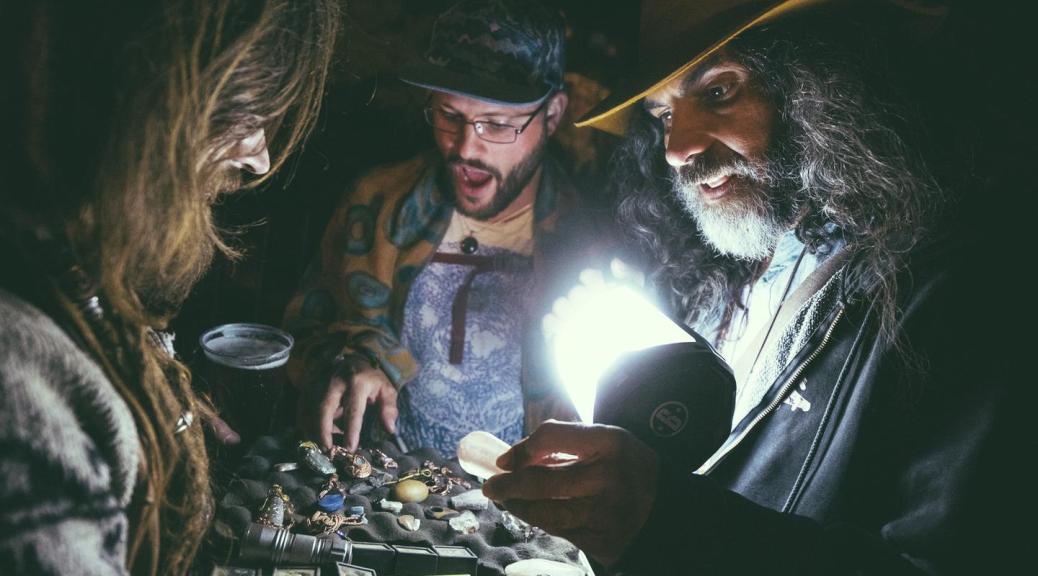





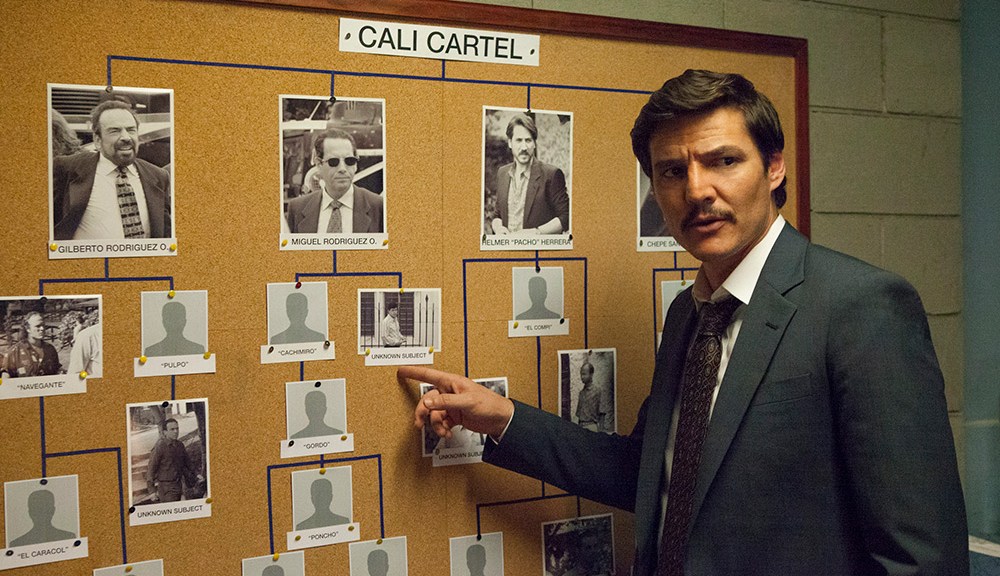
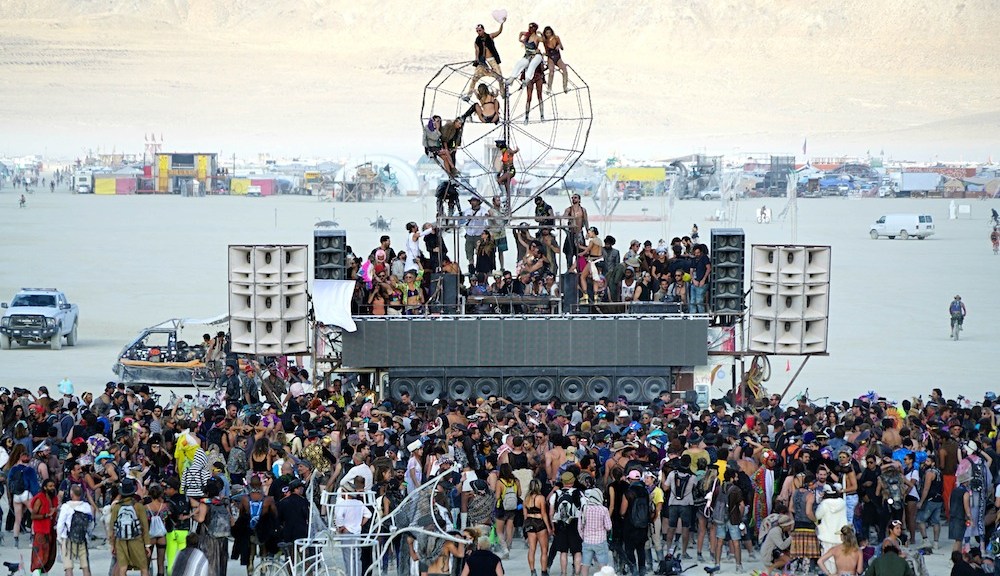



















 Kevin EG Perry: Collected Works