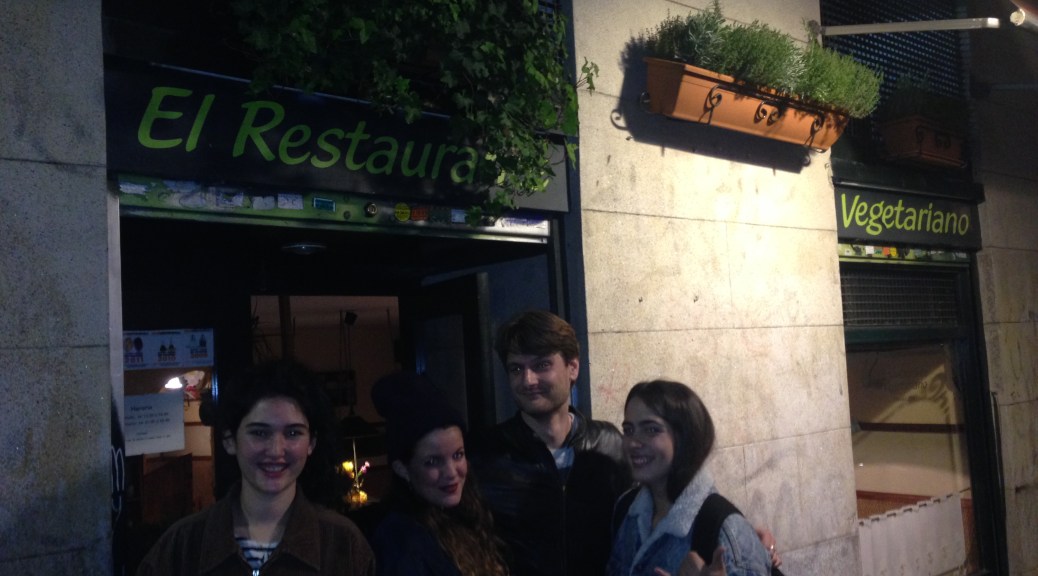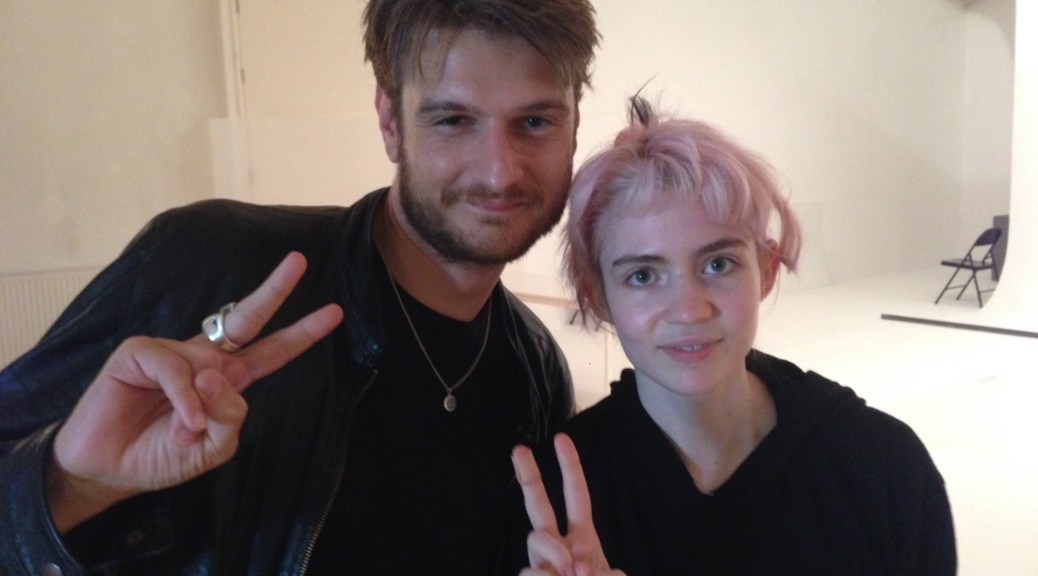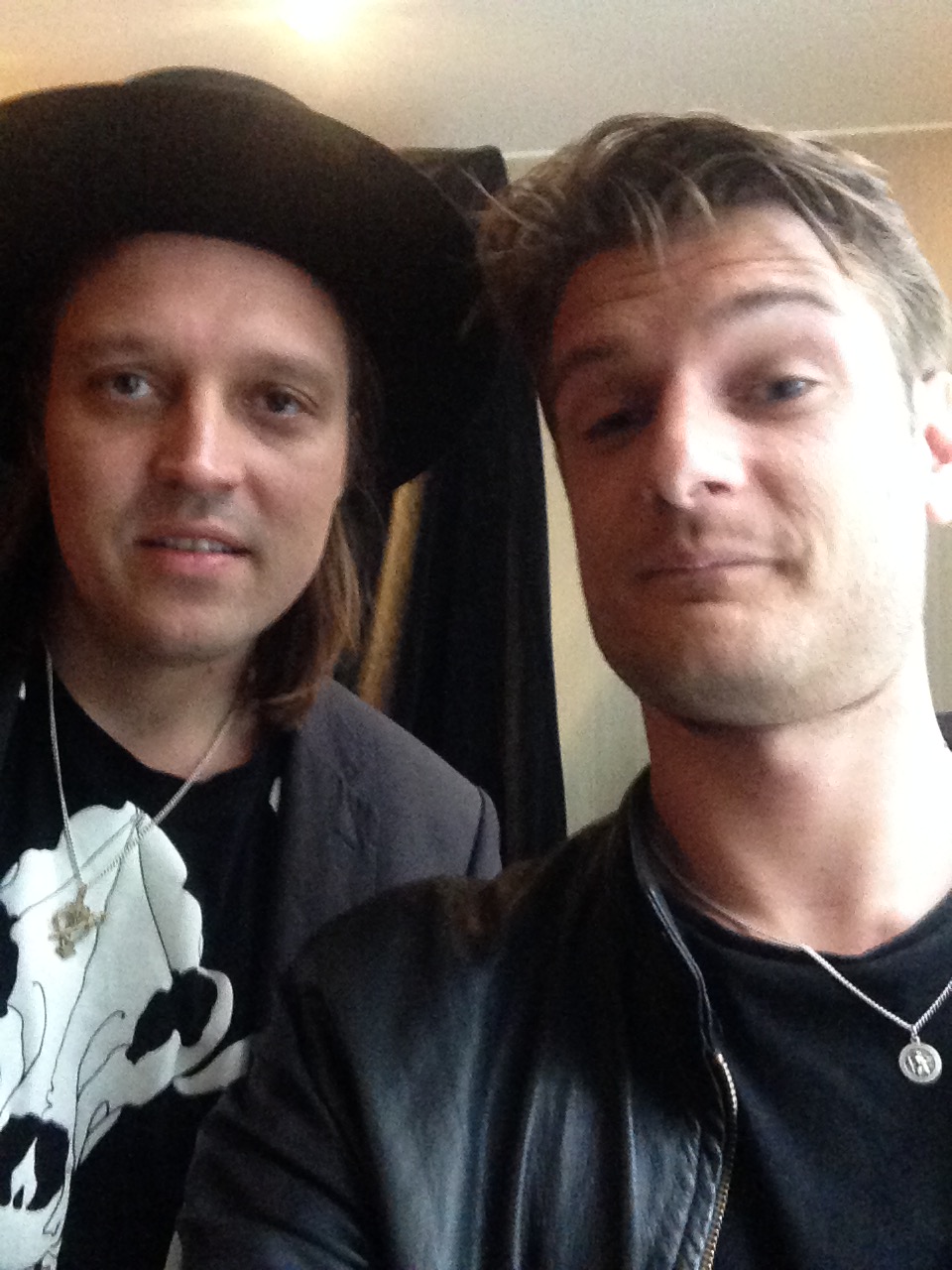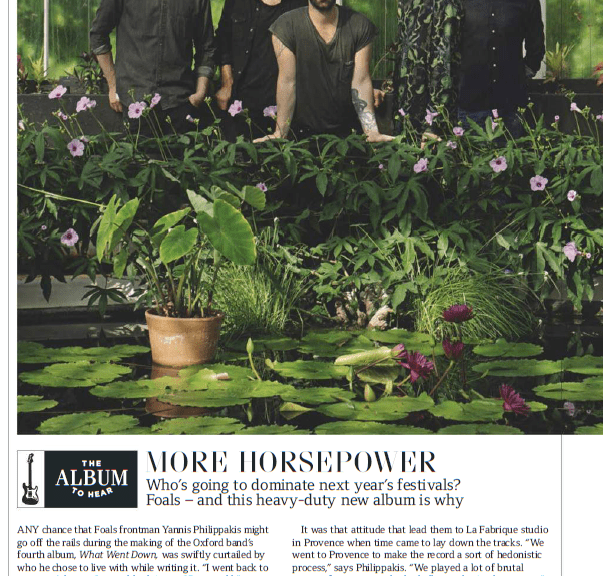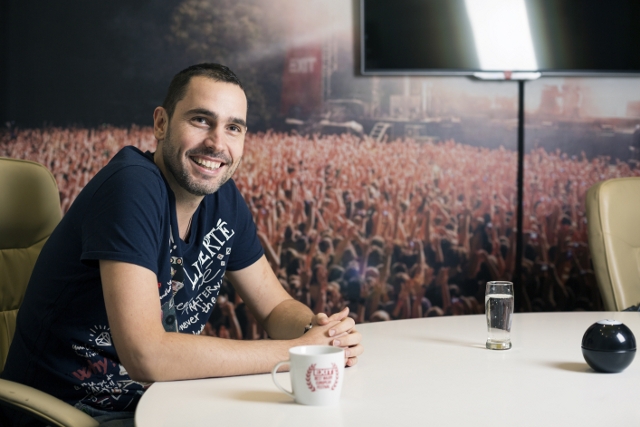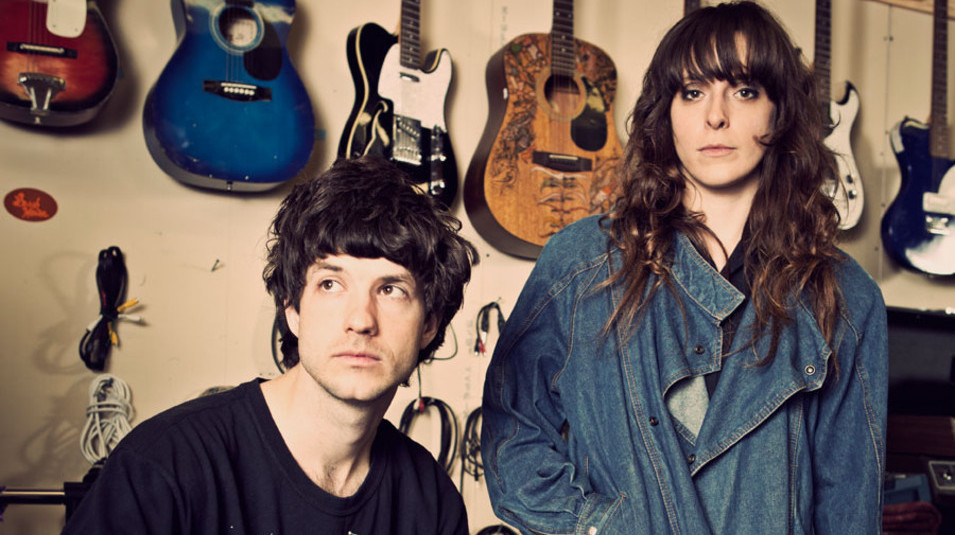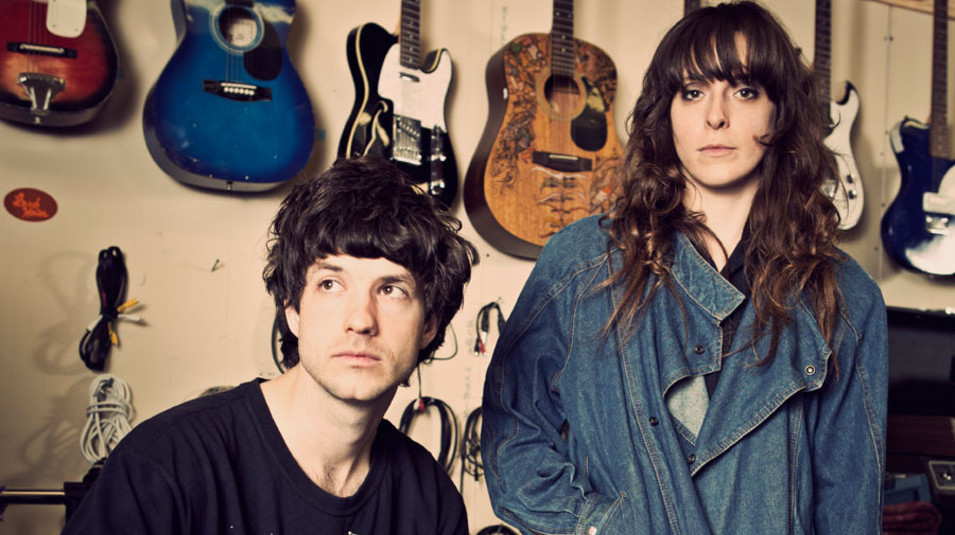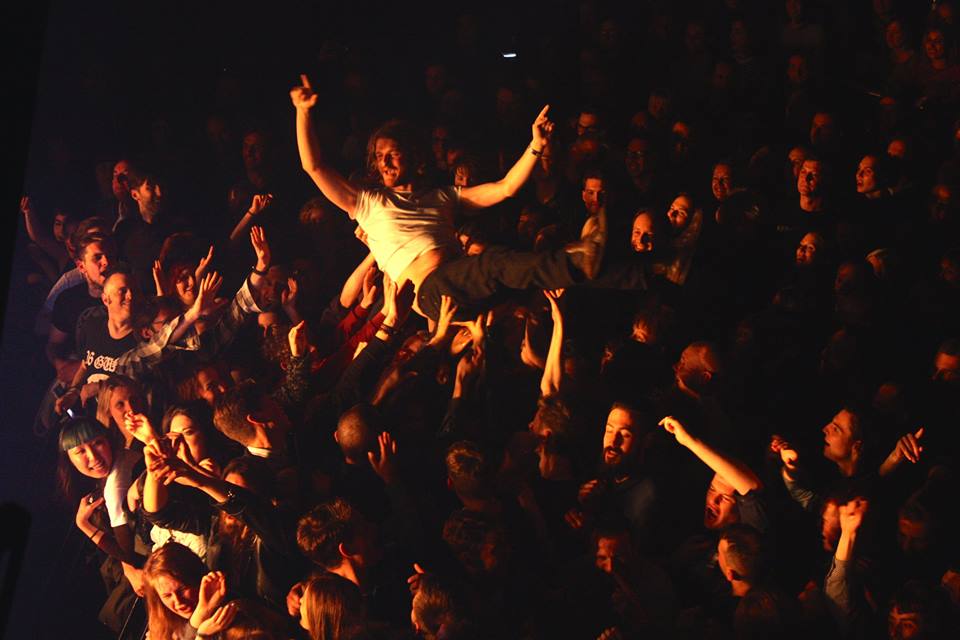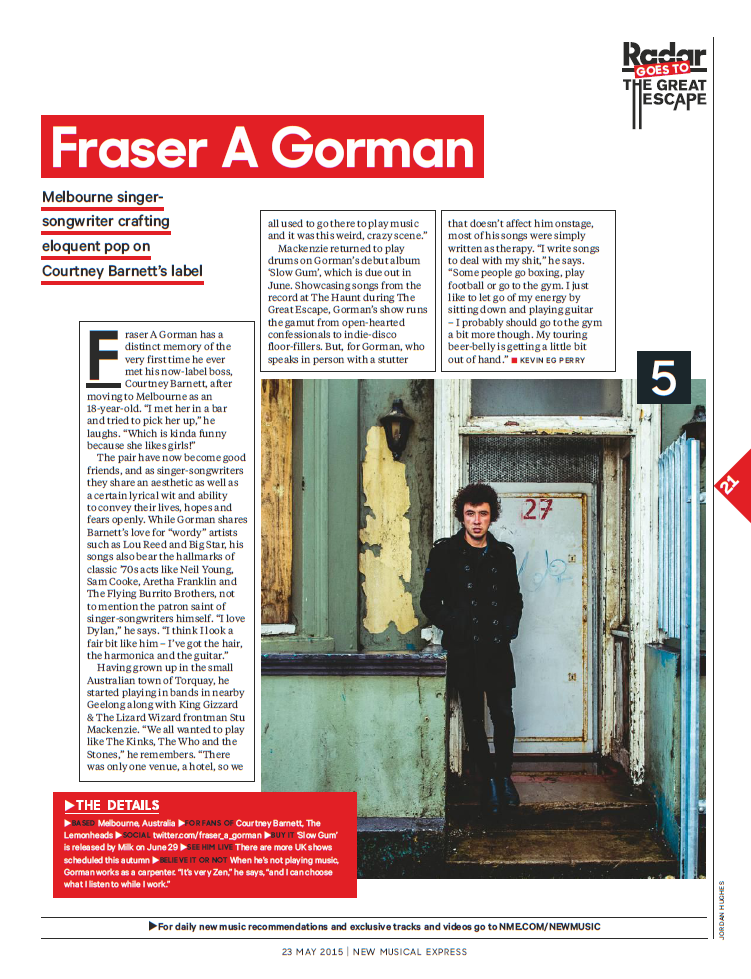
A live show by grunge siblings Drenge is an all-out assault on the senses, but don’t just take our word for it. “We met Kanye West when we did Later… With Jools Holland and he told us he liked the aggression in our music,” says drummer and younger brother Rory Loveless. “He was talking about wanting to put more aggression into his own music. Yeezus was out by then, but I’d be interested to hear what his next album sounds like. Maybe there’s a sprinkling of Drenge inspiration in there. Drengespiration.”
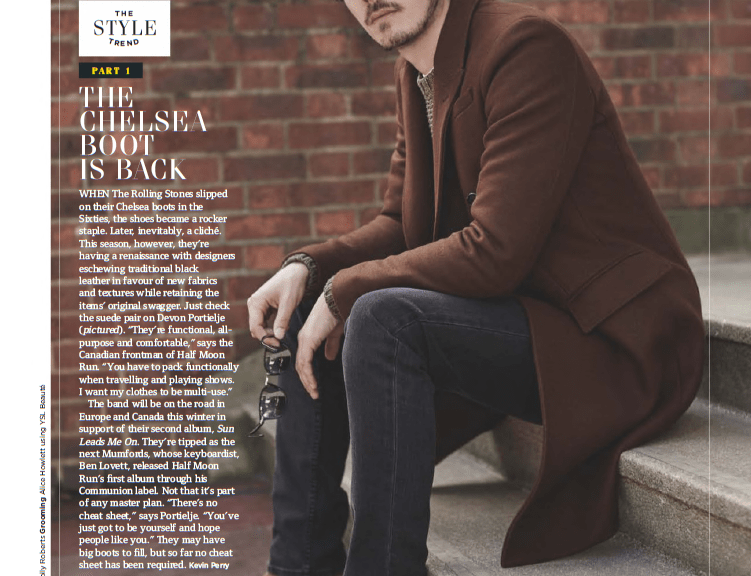
The Chelsea boot, rebooted
Living the Highlife: the global party scene taking world music into the future
If a DJ can play Chicago house next to Detroit techno or German electro without anyone missing a beat, then why shouldn’t they also drop some Angolan kuduro, Brazilian baile funk or South African kwaito into the mix? That’s the philosophy behind the crossover dance scene spearheaded by Highlife, a club with more passport stamps than David Attenborough’s cameraman. Five years since its first night at Glasgow’s Stereo, the club’s mix of UK funky, Afrofuturism and Middle Eastern beats has built a mini empire that extends to a compilation series and Rinse FM radio show.
Fear And Loathing Goes Graphic
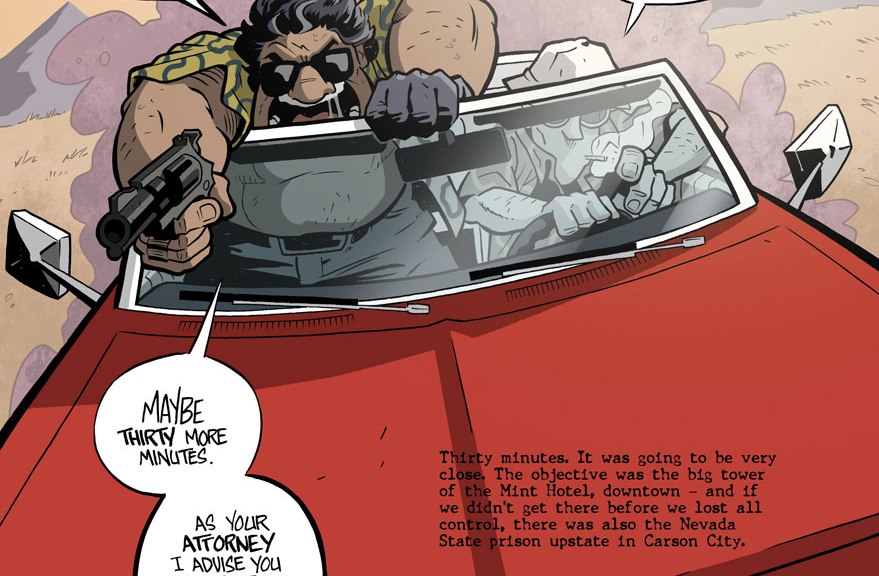
When Tom Wolfe called Hunter S Thompson the “greatest American comic writer of the 20th century”, there’s no way he could have seen this coming. It’s been 44 years since Fear And Loathing In Las Vegas was first blasted into ink, and it’s now been reimagined as a graphic novel by Canadian artist Troy Little.
Thompson’s drug-twisted Vegas odyssey lends itself to the comic format. “Things can be much more plastic and malleable in this medium then in real life, which suits the story” says Little.
The comic’s been critically praised, but the jury’s out on whether Thompson himself would‘ve warmed to it. He fired director Alex Cox from the Fear And Loathing film for trying to animate a particularly righteous passage known as ‘the wave speech’. “Write your own story,” Thompson barked, “just don’t fuck with mine and make it into a cartoon.”
Little was well aware of that exchange. “I can see his concern about having his work ‘Mickey Moused’,” he says. “I was careful to stick to the source material. That said, I fully expect nothing less than a savage haunting foisted upon me.”
Originally published in Shortlist, 5 November 2015.
Songhoy Blues on fighting Mali’s musical oppression
Like money, oil and funny cat gifs, music is such a basic part of our shared culture that it’s hard to imagine what society would feel like without it.
Yet in Mali in 2012, music was banned outright in the north of the country. Following a presidential coup, Islamist extremists took control of some regions and swiftly set about implementing an extreme version of Sharia law that outlawed all forms of music. They destroyed radio stations, burned instruments and tortured musicians. Yet as they were spreading their darkness, the jihadists could have had no idea that they would end up inspiring one of the most visceral bands to emerge this year: Songhoy Blues.
Today, Johanna Schwartz’s remarkable documentary ‘They Will Have To Kill Us First’ is released in the UK. The film follows the stories of Songhoy Blues as well as fellow musicians Kharia Arby, Fadimata “Disco” Walet Oumar and Moussa Sidi as they fight to keep their music alive and perform the first public concert in Timbuktu since music was banned.
Oumar Toure, one of Songhoy Blues’ guitarists, tells me he believes the Islamist mujahedeen feel threatened by music. “The mujahedeen hate the influence that Western music has,” he explains. “The philosophy behind it, the entertainment and leisure it promotes. For them the only way to control the city is to control the media and to put their propaganda on the radio.”
Oumar points out that it was only after the band members were forced to flee to the Malian capital Bamako, in the south of the country, that they even thought about starting to make music together. “The band started after the meetings we had during the occupation of the northern in 2012,” he says. “In those meetings we were asking what we can do for the north and the idea came about to create a band to express ourselves and what is going on here.”
His bandmate, Garba Toure, adds that it remains too dangerous to return to their homes in the north, although they’d like to. “”To return whilst there are still weapons and attacks that are increasing day by day and there is no stability?” he asks rhetorically. “Right now, it’d be difficult to return.”
However, he adds that their dream is to see music return to all the places where the extremists have banned it. “Of course!” he says. “Music is one of Mali’s greatest cultural resources and without it we can’t celebrate weddings, baptisms, birthdays, every day life, like we want to. Conflict needs music for resolution, that’s why we play.”
For Oumar, it’s through continuing to perform and by refusing to be silenced that Songhoy Blues can help music return to their hometowns. “Our music denounces the justification which various groups use when hurting people,” he says. “The rebels have their Kalashnikovs. For us, our guitars are our Kalashnikovs. It’s how we can fight back.”
North Star
The Magic Gang hang Tuff with Sly & Robbie
There’s something in the air at Tuff Gong Studios, and it’s not just what the engineer’s smoking. There are awards everywhere, from a Grammy in the control room to the certificate outside proclaiming Bob Marley’s place in the High Times Cannabis Hall of Fame, but more than all that there’s just something special about standing in the room where deathless songs like ‘Could You Be Loved’, ‘Buffalo Soldier’ and ‘Redemption Song’ were recorded.
Located at 220 Marcus Garvey Drive in Kingston, Marley’s former studio is a cottage industry, home to one of Jamaica’s biggest live recording rooms, a vinyl pressing plant and even a run-down record shop. For the next couple of days, it’s also home to Brighton four-piece The Magic Gang, who’ve been flown out to record here by Converse Rubber Tracks.
The band – guitarists Kris Smith and Jack Kaye, bassist Gus Taylor and drummer Paeris Giles – quickly make themselves at home, but they’re clearly appreciative of the sun-kissed opportunity they’ve been gifted.
“When we first sent our music to Converse Rubber Tracks we said we wanted to record at Tuff Gong because the thought of coming here was just unimaginable,” says Jack. “We didn’t expect to ever be able to come to Jamaica and work in such an amazing place. We chose it as a pipe dream – and then obviously it worked out, which is incredible.”
“It’s the place we would least expect to come as a band,” adds Gus. “I’d love to come back to Jamaica for a holiday, but I can’t imagine that we’d tour here. It’s half-way across the world, and such a different vibe. We could have gone to record in America or Abbey Road but it wouldn’t have been the same.”
Everyone at Tuff Gong seems to have a story to tell, not least Chow, the studio’s main engineer. He first met Bob Marley in London in 1975, and the singer was so impressed by the Malaysian’s technical know-how that he invited him to move to Kingston to help him build a studio, first at his house at 56 Hope Road and then here, at the former site of Federal Studios. Chow has been living here ever since. He kicks back and watches ‘Titanic’ in a side room while The Magic Gang record, but he’s always on hand with a spotlight and a screwdriver to fix any equipment that goes haywire – and to remind the band of what hallowed ground they’re treading.
“He said about the Fender twin amp that Jack was using: ‘I think Bob played through this, it’s been here since then’,” says Paeris. “That’s just amazing. Chow is a living legend.”
The band have barely got their instruments set up when a couple more living legends walk through the door. Converse Rubber Tracks have invited Sly & Robbie, the most famous rhythm section in reggae history, to help produce their session. Given that the pair have previously worked with everyone from Jimmy Cliff and Peter Tosh to Bob Dylan and Chaka Demus & Pliers, they’re not bad people to have behind the mixing desk. “Don’t worry,” mutters Kris after their superfluous introduction. “We know who you are.”
There’s clearly a few starstruck nerves at first, but before long Robbie is sat behind the mixing desk singing along with the band’s three-part harmonies and Sly is humming their basslines.
“When they first walked in I literally didn’t know what to say,” admits Kris later. “I was thinking: ‘That looks like Sly Dunbar… that is Sly Dunbar… and there’s Robbie.’ I couldn’t really say anything. I was speechless. This has been the most surreal experience of my life.”
Sly & Robbie may have the easy-going air of men who’ve been playing reggae for 40 years but some estimates say they’ve recorded or played on over 200,000 tracks. You don’t build up a library like that without a fierce work ethic beneath the laidback disposition. “They worked us hard,” says Kris. “One of us was flat during a group vocal and Robbie came in and stood next to us while we were singing. He rooted out the culprit.”
“It was terrifying,” laughs Jack “But I’m sure that experience is going to better us.”
Robbie takes a hands-on approach with the band, and knows instinctively how to coax the best performances out of them. At one point, after listening to Kris record a guitar part, he simply instructs him to play it again as if he’s playing a gig. The performance is instantly improved.
“It was just business as usual,” says Kris. “They were cracking on with it in the same way that we were. I get the impression that they were able to tell that we’re sincere and hard-working. Jamaica’s a very musical country, and everyone’s very passionate about it. I think that if you come across in your truest way that’s always well received, regardless of where you come from or what you’re doing.”
While the two tracks that The Magic Gang record here – ‘Happy Birthday’ and ‘Wanna Get To Know Ya’ – are intricate indie pop songs, a long way from reggae, there’s a musical affinity that Sly & Robbie pick up on. Sly tells Gus that his bassline reminds him of a Motown tune, and asks him why the band chose Tuff Gong. “I think you made the right choice anyway,” he laughs. This studio holds a lot of memories for him too – it was in this room that he first recorded as a drummer, back when it was called Federal Studios. “When I was 14, this is where I made my first recording on The Upsetters’ ‘Night Doctor’,” he says. “It’s a special place to cut a record.”
“I love the way Sly and Robbie work,” Gus says later. “They pick up on things that we wouldn’t necessarily pick up on. They’re not meticulous in the sense of musical perfection, but they’re meticulous in terms of the vibe of the song, and the performance. Rather than making a sonically perfect piece of music, it’s totally about the feel of the song. The songs we’ve recorded with them do sound like they were recorded at Tuff Gong. You can just hear it within the drums. On ‘Wanna Get To Know Ya’ we used proper room mics and it just sounds like that room.”
Outside of the studio, the band soak up the Jamaican atmosphere. Kris roots out classic reggae seven inches at Rockers International, one of the few record shops still standing on the famed Orange Street, and Paeris goes to check out the Weddy Weddy Wednesday party at Stone Love, one of the original Jamaican soundsystems that’s been running since 1972. The resident MC calls it the “University of dancehall, an institute of higher learning.” The same could go for the whole island. No matter which back street you turn in Kingston there always seems to be music coming from somewhere, as if you’ve been cast in a remake of ‘The Harder They Come’ and all the music is diegetic. As a country it has resisted the cultural homogenisation that’s spread across so much of the globe: Jamaica remains unmistakeably Jamaican.
“I was expecting it to be much more Westernised, more into celebrity culture and materialism,” says Gus as the band prepare to fly back to Britain with their freshly cut recordings in tow. “It’s still totally how you imagine it was 20 years ago. Everyone’s still doing their thing, and no-one’s compromised their way of doing things.”
“I’ve never met so many characters in so little time,” adds Jack. “The thing I found most overwhelming was how welcoming everyone was. We’re this new band that no-one had obviously seen or heard of before, just coming in and working in their space, but they made us feel totally welcome.”
Better than any souvenir they could bring home from their time in Jamaica is the knowledge that they’ve got two fresh tunes, indelibly stamped with that Tuff Gong air, and that they’ve made a couple of new fans in high places in Sly & Robbie. Back in the control room, Robbie cracked a wide grin at the idea of giving them any advice. “They’ve just got to keep doing what they’re doing and do everything with attitude,” he said. “They’re on the right track. They’re making magic music.”
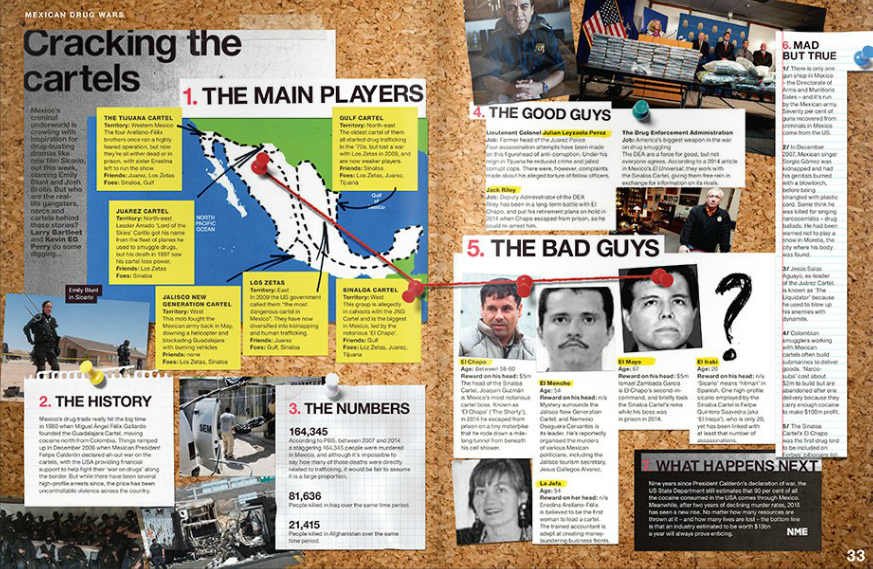
Cracking The Cartels
How Iceland Went From Bust To Boom

It was only a matter of time before Iceland went bust. For decades, the people on this volcanic island in the middle of the Atlantic had made their money from fishing and aluminium smelting. Then, in the 2000s, they started making money from international finance. Lots of money. By 2007, Iceland’s three biggest banks were worth $140bn, 10 times the size of the country’s economy. The banks pulled this off by promising unrealistically high rates of return to foreign clients and buying up companies, real estate and even football clubs around the world. There was no way they could keep paying their bills and so, on 6 October 2008, the whole house of cards came crashing down overnight. Billions were wiped out in the flicker of a computer screen as the global financial crisis took hold.
Not that you’d notice walking around Reykjavik today, where an army of cranes pluck the city into new shapes. On Laugavegur, the main drag, tourists pose with Vikings and trolls, while restaurants lure in hipsters with gourmet hot dogs slathered in pulled pork. At night, the bars throng with Icelanders taking great pleasure in introducing their visitors to Brennivín, the powerful local schnapps. Clinking glasses punctuate spirited chatter.
And the reason for the cheery scenes? Instead of licking their wounds, this country of 329,000 people took it upon themselves to find a fix, creating a blueprint for how to plot a 21st-century economic recovery in the process.
Magnús Sveinn Helgason is a great example. As a financial journalist and member of Iceland’s Althing Special Investigative Commission on the Collapse of the Financial System, Helgason has had a front-row seat for the whole ride. Nowadays, he gives ‘Walk The Crash’ tours of Reykjavík, where he helps visitors understand how the banks went down and how the country got back up again.
“I started the tour because every other tourist I meet is interested in hearing about either the collapse or the recovery,” he says. “They want to hear about the fall of our corporate Vikings, the marauding financiers who went around the world, not robbing monasteries, but buying up department stores.”
Tourism has played a huge part in this success story. In fact, last year, it became Iceland’s biggest industry – overtaking fishing – and you can see the results in the place we’re staying. Slap-bang in the business district, the Fosshotel Reykjavik is the city’s biggest hotel, with 320 rooms. Since opening in the summer, its been operating at near full capacity.
So, what caused the boom? Helgason attributes it – perhaps counterintuitively – to the impact of the crash and to the island’s volcanic eruptions in April 2010. “You had the currency collapsing, making it cheaper to visit, then you had the Eyjafjallajökull eruptions,” he says. “For the country, this was massive, free, international advertising.”
While Helgason’s tour is the most direct example of Icelanders turning their economic disaster into a tourism opportunity, the country abounds with specialists who’ve used their knowledge to offer visitors something they won’t find anywhere else. Take Hreinn Elías, who cofounded Arctic Surfers in 2010 and was thus perfectly positioned to benefit from the tourism swell. “Iceland is a unique location for surfers,” he says. “We have world-class waves and scenic locations, but it’s not enough to just know the spots. Here, you have to be on the move to find the best surf. That’s what people come to us for.”
Established destinations, like the Blue Lagoon, have also benefitted from this upswing in attention. Founder and CEO, Grimur Saemundsen, who’s currently building a luxury hotel at the lagoon, to open in 2017, says: “The last five years have been an adventure for us. It’s undisputed that the growth in tourism since 2010 has played a major role in reestablishing the economy of Iceland. We’re now the biggest sector in the economy and the biggest employer. The banking crash created a vacuum that the tourism industry stepped into.”
While the island’s unique geography is part of its draw, the country also has a busy cultural calendar. Here, its small size is a definite advantage. Halla Helgadóttir, who runs Iceland’s design week in March, says that designers from a variety of disciplines come here to share ideas; while Stella Soffía Jóhannesdóttir, of the Reykjavik International Literary Festival, tells an anecdote that illustrates just how intimate their events are. “When David Sedaris spoke here, he said he was used to audiences of 3,000. Here, he spoke to 100 people,” she says. “That makes our festival an opportunity to meet your favourite authors in very unusual circumstances.”
Mingling among the tourists heading to Iceland since the crash have been some of Hollywood’s top directors. Prior to 2006, only three foreign films had been shot in the country. Since then, it’s provided locations for almost 20, including Christopher Nolan’s Batman Begins and Interstellar, Ridley Scott’s Prometheus and several seasons of Game of Thrones.
“More than 14% of visitors come here because they saw Iceland in a foreign film or TV show,” says Iceland’s film commissioner, Einar Tómasson. “With things like Game of Thrones filming here every year, I think people see the great landscapes and think, ‘Let’s go there. It’s so different’. One of our strengths is that our locations are so diverse. Within two hours, you have glaciers, lagoons, waterfalls, rivers, lakes, green valleys, black deserts and lava sculptures. It’s all packed together.”
As well as the locations, film studios also come in search of technical expertise. Daði Einarsson opened a division of visual-effects studio Framestore in Iceland shortly before the crash in 2008 and was able to buy the company out to form independent studio RVX in 2012. They’ve since provided effects for films including 2 Guns and this year’s mountaineering epic, Everest.
Einarsson says that, in the years following the crash, Icelandic companies benefited from a surge of talented workers returning to the labour market. “There had been a huge brain drain into the banking sector from basically everything else,” he says. “Nobody could compete with it in terms of wages or the sexiness of the industry at that time. Obviously, the crash was a catastrophe in many ways, but on the other side, it’s caused an influx of talent back into the workforce to do new things. After a year or so, there were a bunch of new entrepreneurs and start-ups. In some ways, we tried to create our way out of trouble.”
One of those new start-ups was Plain Vanilla, an app company that created QuizUp, the fastest-growing iPhone game ever. Thor Fridriksson founded the company in 2010 and agrees with Einarsson that the crash created the incentive for people like him to follow their dreams. “If the crash hadn’t happened, and I was coming back from Oxford with student debt on my back, and had the option to go into a well-paid job at a bank, I probably would’ve done that,” he says. “It wasn’t on offer, so I did something else. The worst thing for entrepreneurism is if there’s too much luxury. It’s almost always born out of some sort of need.”
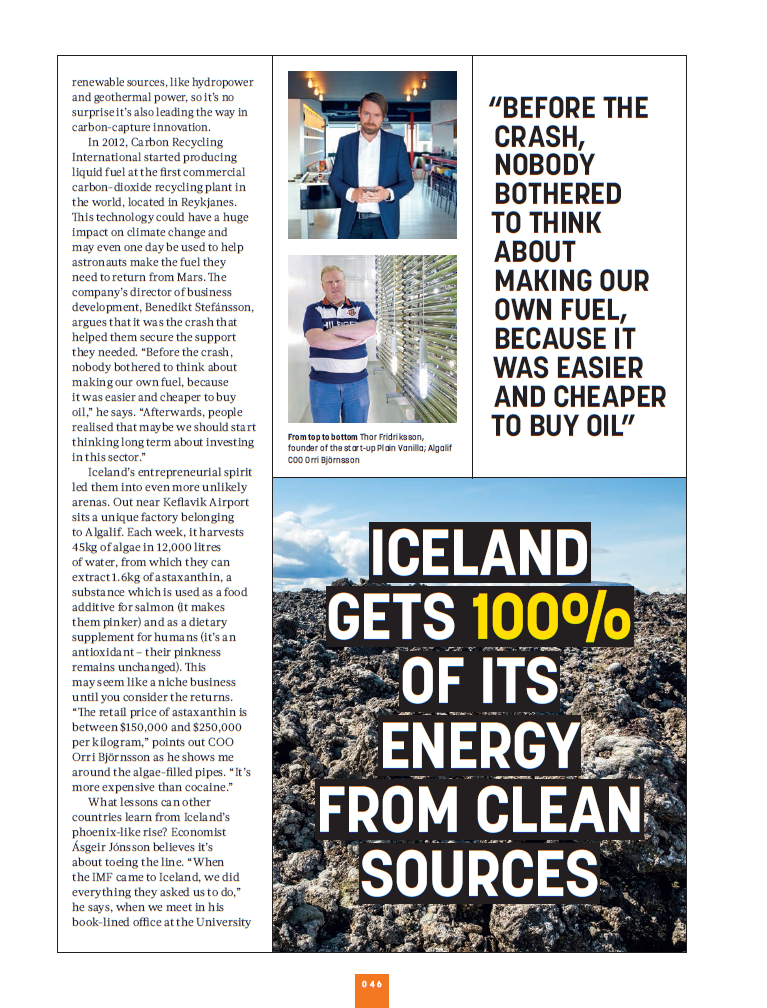
It’s not just in entertainment and arts that Iceland’s entrepreneurs have flourished. The country already generates all of its electricity from renewable sources, like hydropower and geothermal power, so it’s no surprise it’s also leading the way in carbon-capture innovation.
In 2012, Carbon Recycling International started producing liquid fuel at the first commercial carbon-dioxide recycling plant in the world, located in Reykjanes. This technology could have a huge impact on climate change and may even one day be used to help astronauts make the fuel they need to return from Mars. The company’s director of business development, Benedikt Stefánsson, argues that it was the crash that helped them secure the support they needed. “Before the crash, nobody bothered to think about making our own fuel, because it was easier and cheaper to buy oil,” he says. “Afterwards, people realised that maybe we should start thinking long term about investing in this sector.”
Iceland’s entrepreneurial spirit led them into even more unlikely arenas. Out near Keflavik Airport sits a unique factory belonging to Algalif. Each week, it harvests 45kg of algae in 12,000 litres of water, from which they can extract 1.6kg of astaxanthin, a substance which is used as a food additive for salmon (it makes them pinker) and as a dietary supplement for humans (it’s an antioxidant – their pinkness remains unchanged). This may seem like a niche business until you consider the returns. “The retail price of astaxanthin is between $150,000 and $250,000 per kilogram,” points out COO Orri Björnsson as he shows me around the algae-filled pipes. “It’s more expensive than cocaine.”
What lessons can other countries learn from Iceland’s phoenix-like rise? Economist Ásgeir Jónsson believes it’s about toeing the line. “When the IMF came to Iceland, we did everything they asked us to do,” he says, when we meet in his book-lined office at the University of Iceland, where he’s an associate professor of economics. Iceland didn’t owe money either: “The Icelandic government had almost no debt when it got into the crisis. We kept the debts private. That’s what the IMF said: ‘No socialisation of losses’. Sovereign debt is not the same as private debt.”
For struggling economies, Nobel prize-winning economist Paul Krugman strongly recommends ‘doing an Iceland’. For Krugman, that entails allowing your banks to collapse, devaluing your currency (if you have your own), introducing capital controls on money leaving the economy and trying to avoid paying back foreign debts. Though, of course, not all nations have the same circumstances.
However, back on the ‘Walk The Crash’ tour, through the quiet streets of Reykjavik, Magnus Sveinn Helgason is arguing that Krugman has missed the most critical element in Iceland’s recovery. It’s the thing that binds together everyone from Arctic surfers and location directors to app designers and algae farmers. “The basis of Iceland’s prosperity has always been our human, social and cultural capital. That was not destroyed in the crash,” says Helgason. “You could have destroyed that if you had ripped apart the social contract and imposed brutal austerity measures. Icelanders got through because we really did feel that we were all in it together. That’s what other countries should learn from this recovery: the importance of society. If you’re in it together, you can get through it together.”
Arcade Fire: ‘The major record labels are completely clueless’

It’s late in the evening after the premiere of The Reflektor Tapes at the Toronto International Film Festival, and Arcade Fire are throwing a party at Rhum Corner, a local Haitian bar. Win Butler, unmissable at 6ft 5in in a widebrimmed hat, works the room, thanking those who worked on the film and hugging friends. Beside him, his wife and co-bandleader Régine Chassagne dances to the insistent rhythm coming over the soundsystem. “This is rara music,” she shouts over the beat. “You hear it all the time in Haiti.”
The Reflektor Tapes is an oblique, impressionistic documentary about the making of Arcade Fire’s fourth album and, like this bar, it’s full of visions of Haiti. Fittingly for a film about a record Butler called a “mash up of Studio 54 and Haitian voodoo,” director Khalil Joseph eschews a straightforward making-of narrative, and instead offers glimpses of what the band saw when visiting the island shortly after winning the Grammy for Album of the Year for The Suburbs in 2011. Butler and Chassange had first travelled to Haiti in 2008 and had been involved in charity work there since long before the devastating earthquake of January 2010.
The visits were something of a homecoming for Chassagne, whose parents fled the country in the 1960s when President François “Papa Doc” Duvalier’s Tonton Macoute death squads were murdering his political enemies. Understandably, they were never keen to return themselves.
“I never knew my [paternal] grandfather, because he was taken away, and my mother’s extended family were massacred as well,” says Chassagne. “My mother had a very traumatic experience, so for her it was never an option to go back. After she passed away, I decided to go in 2008 because I wanted to see it for myself. It was only when I got there that I began to understand my own tics. Everything made so much sense.”
Chassagne and Butler, the couple at the heart of Arcade Fire, met while studying at Montreal’s McGill University in 2001. They wrote a song on the first night they spent together (“Headlights Look Like Diamonds”), married in 2003, and released the first Arcade Fire album Funeral the following year. It included a song called “Haïti”, which Butler encouraged his wife to write after becoming fascinated with the stories he’d hear around her uncle and aunt’s dinner table while celebrating Haitian Christmas. “It was always something that she was sort of scared to talk about,” says Butler. “I remember writing that song with Regine and really pushing her to talk about this stuff.”
Despite Chassagne’s family background, Reflektor was accused in publications, including The Atlantic, of cultural appropriation. In The Reflektor Tapes, Chassagne discusses the fact that her immediate family are all darker skinned than she is, suggesting that these same criticisms wouldn’t have been levelled if she didn’t appear to be “white”. In Toronto, she argues, this shouldn’t matter anyway. “It’s interesting because I see this criticism more from people who are not Haitian, or who couldn’t even pinpoint which part of the songs have a Haitian influence,” she says. “I think it’s silly to put barriers between musical genres. Every kind of music is a combination of different influences. Music is a language that everybody talks. It brings people together, and that’s the point.”
Even if The Reflektor Tapes marks a full stop to the band’s work around their last album, they say it won’t be the last time they’re influenced by Haitian musicians. “You can’t unhear the Beatles,” reasons Butler. “It’s not like we ever had any interest in making this our ‘Haitian’ record. If I didn’t talk about it, I don’t know that people would have necessarily picked up on it, except there’s congas on there.”
As well as capturing the band’s travels in Haiti, and recording sessions in Jamaica and Montreal, The Reflektor Tapes teases out the band’s intellectual journey since 2011, notably Butler’s fascination with Søren Kierkegaard’s essay “The Present Age”. The film offers the quotation: “The present age is one of understanding, of reflection, devoid of passion, an age which flies into enthusiasm for a moment only to decline back into indolence.”
While that line sounds as if it could have been written while Kierkegaard was casting his eye down his Twitter feed, it dates from 1846. In the past Arcade Fire have been cast as anti-technology because of Facebook-baiting lyrics like “We’re so connected, but are we even friends?” on Reflektor’s title track. However, Butler says that idea is false and agrees that our click-short attention spans can’t be blamed on the internet or smart phones. “I don’t give a shit about iPhones,” he says. “When I was a kid it was: ‘TV is going to rot your brain’. Every era has something to take its place.”
Butler and Chassagne laid their technology-friendly credentials bare in March when they became two of the few rock musicians involved in the launch of Jay Z’s Tidal streaming service. The event ended up being roundly mocked for presenting millionaire artists as charity cases asking for the public’s support, and with double the monthly subscription price of main competitor Spotify, the app has so far failed to take off.
Butler says he doesn’t regret their involvement, but he accepts the launch gave an unfortunate impression. “None of the artists knew anything about the PR,” he says. “It was a poorly managed launch, but conceptually the thing that we liked about Tidal was that it’s HD streaming quality.”
He lays the blame for Tidal’s struggle squarely at the door of major labels. “They dictated that Tidal has to cost $20,” he says. “The major label music industry has completely ruined every aspect of their business. At every step of the way they’ve had the tools offered to them to create an industry that works, and they’ve completely blown it. That’s why we never had any interest in signing a contract with one of these companies because they’re clearly completely clueless.”
Having kept the band resolutely independent, tied only to tiny indie label Merge, Butler defends their involvement with Tidal as a way of seeking solutions that the music industry have missed. “It seems silly, for fear of being embarrassed, to not at least sit at the table with Jay Z, Kanye and Daft Punk and talk about art and music and how it’s going to be distributed,” he says.
In a little over a decade, Arcade Fire have grown from indie eccentrics into one of the biggest bands in the world – and Butler shows no false modesty in his belief that they’ve earned their place, literally, at music’s top table. “I think that we’ve ended up there because we work really hard and our records are really great,” he says, matter-of-factly. “All I care about is the work. I don’t care if people recognise me when I leave this building. I’d really prefer if they didn’t, but I really do care about the work. David Bowie came to our first show in New York, which blew my mind, but now I see him as … not a contemporary, but like a professor. I see our band as trying to carry on that same spirit of what Bowie was doing, or Bruce Springsteen, or Radiohead, or any of these bands that were bold enough that I heard them in suburban Houston.”
At one point in The Reflektor Tapes, Butler’s brother and bandmate Will says the band would be happy for their music to be remembered anonymously. Butler agrees with the sentiment. More important than any personal recognition, he says, is the idea that their own songs can become part of that chain of musical influence.
It was, fittingly, in Haiti that Butler and Chassagne saw that in action when, several years after that first 2008 trip, a group of teenagers dragged them to watch their band practice in Jacmel, southern Haiti. “Their apartment looked like mine when I was 19,” remembers Butler. “There was a drum kit in the corner and a bass. These kids from rural Haiti were playing, and it was Arcade Fire inspired. I mean, the name of the band is Fire Flame. It was the craziest thing. One of the kids got into Neil Young because he got on some bad internet connection in Haiti and found Arcade Fire and followed a link and then learned Neil Young songs on an acoustic guitar.”
A grin as wide as the brim of his hat breaks across his face. “That is cool,” he says. “To me, that’s the point of the whole thing.”
Originally published in The Independent, 20 September 2015.
Hippy, Chic
“Whoever wins, we’re fucked”: On The Punk Rock Frontline of Anti-Government Protests in Guatemala
Something huge is happening where I am in Guatemala right now, and it’s good news if you’re in the vuvuzela business. Before the weekend some 70,000 protestors were making an earth-shaking racket in Constitution Square in the capital of Guatemala City, calling on their President, Otto Pérez Molina, to resign so that he can be arrested on corruption charges. It was just the latest in a series of demonstrations that have been going on every Saturday since April.
The president will be gone by the end of the year anyway, as there are elections planned for September 6 and Molina can’t run again. But that’s not enough for the protesters, who call themselves, simply, ‘The Movement’. They want him arrested to prove that the country can take corruption seriously. The problem is that Guatemala’s political class are so crooked they need servants to help them screw their clothes on every morning. The demonstrators are calling for a total overhaul of the system. One of their chants is: “En estas condiciones no queremos elecciones” – “In these conditions, we don’t want elections.”
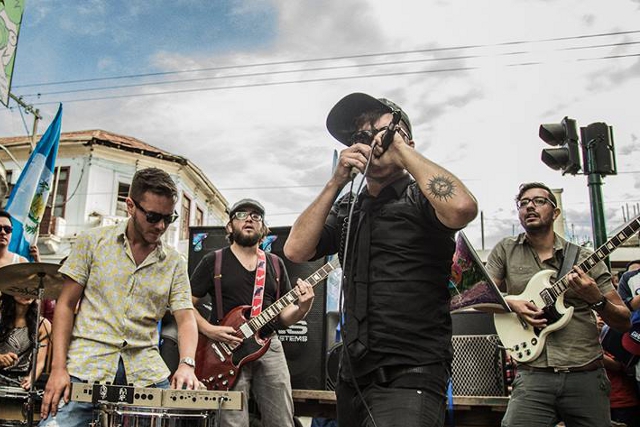
When I was in the square last Saturday I bore witness to quite a surreal scene, as a band turned up to play an impromptu guerrilla gig right at the centre of the protests, dragging their kit into the midst of the demonstration on a wooden donkey cart. They were handing out hymn sheets as they set up, which named them as El Suchi. The protests have drawn a broad cross-section of Guatemalan society, but everyone from businessmen to elderly street-traders seemed to be united by the anger and frustration that was channelled in this band’s performance – which, as contemporary protest music bylaws decree, sounds a bit like Rage Against The Machine.
When they finished their set, I grabbed frontman Daniel Garcia to thank him for drowning out the vuvuzela and to ask him how he and his band came to contribute the righteous soundtrack to Guatemala’s uprising:
The Libertines: ‘Play the dodgy pub at the end of the street. You could get a blowjob.’
‘We used to squat around here,’ says Pete Doherty, gesturing out of the window. ‘Albion Towers. There, the place opposite the Scala.’ ‘That was my little belfry,’ adds Carl Barât. ‘There’s a tiny little room at the top.’ We’re in the St Pancras Renaissance Hotel. It’s the perfect place for The Libertines to complete the circle: a London gothic fantasy. The Sir John Betjeman suite bears the stamp of its current occupants: the table is covered in empty cocktail glasses, one of which serves as a mausoleum for a steady stream of dead Marlboro Lights.
Barât picks up a book of the late poet laureate’s and reads from ‘A Child Ill’: ‘Oh little body, do not die…’ as we wait for our drinks; they’re called Ring of Roses, a potent concoction of vodka, champagne and elderflower. The summer evening is falling outside: all the scene needs is Chatterton dead on the couch. You can never accuse The Libertines of not staying in character.
A lot has happened since Doherty and Barât, along with drummer Gary Powell and bassist John Hassall, first stuck a needle in the arm of British rock ’n’ roll. Among music’s millionaire rappers and business-class casuals, the Libs wore their wit and mercurial intelligence on their sleeve. The press loved them: in 2002 the NME put them on the cover before they’d had a record out. Their vision of an English ‘Albion’ was a composite of Pete & Dud, ‘Steptoe and Son’ and ‘Oliver!’, with a distinctive London seediness and swagger. At their heart was the singular relationship between Doherty and Barât: loving, co-dependent, doomed. If Britpop had looked to the ’60s, the Libs were the Romantic poets, more Keats than Kinks.
And like the Romantics, they carried the shadow of their own destruction. They were – initially in the best possible way, subsequently in the very worst possible way – a shambles. Within two years of the release of their acclaimed debut, ‘Up the Bracket’, they had disintegrated in a mess of drugs, amateur burglary and prison. Doherty was appointed artist-in-residence to the tabloid media. A reunion looked unlikely.
But now they’re back, with a third album, ‘Anthems for Doomed Youth’. Recorded at Karma Sound Studios in Thailand, close to where Doherty recently completed rehab, the record represents a chance at redemption. After a triumphant set at Glastonbury, they’re headlining Reading Festival and Leeds Festival, and their return is a breath of smoky air to 2015’s clean-living music scene. Maybe we need their uncompromising devotion to the spirit of rock ’n’ roll more than ever. As new single ‘Gunga Din’ snarls: ‘It feels like nothing’s changed/Oh, fuck it, here I go again…’
Does this city inspire you?
Carl: ‘It’s endlessly a source of inspiration. It’s home, isn’t it?’
Pete: ‘My girlfriend has never lived in London, so all the time, when I take her out, I’m telling her stories and reliving things. It must get a little bit annoying for her after a while – “You worked there as well?”’
Was there a moment when the band’s relationship clicked again after the initial awkwardness of getting back together?
Carl: ‘By the time we were in Thailand there was no awkwardness. We were just really eager to get on with [recording the album]. I guess it all clicked when we pressed record and started playing “Gunga Din”…’
Pete: ‘Yeah, that’s true. Just playing together in a room like that.’
Have you noticed changes in each other?
Pete: ‘I never really used to take much notice before, but now we’re being asked to analyse the changes and the differences, just to placate the naysayers. I’m scared to share a microphone with him now because people say it’s a gimmick. Sometimes I do rush over [to the mic], but that’s only because after you’ve had a few drinks and smoked a certain amount you get that really nice smell on your breath. You know, like when your lover has got that winey, smoky taste. Not that Carl’s my lover… I’d rather toss off a frog.’
Carl: ‘That’s why he moved to France.’
Speaking of the two of you as lovers, have you read any Libertines fan fiction?
Pete: ‘Don’t mention that! He gets really annoyed.’
Carl: ‘I wouldn’t even know where to look for it.’
Pete: ‘He’s lying. Someone pointed us in the direction of it. It’s fucking weird, man, isn’t it? A lot of effort has gone into it. There’ll be a poetic stream of consciousness and then suddenly, BANG! My cock will appear in Carl’s ear. I think it must be written by someone close to us, because apart from the actual sex side of things, which obviously isn’t true, some of it’s quite close to life.’
You seem to be getting on better now. Are you older and wiser?
Carl: ‘I think we just understand things a bit better. We called down the thunder, and by fuck did we get it: like a piledriver that squashed the four of us. Now we’re realising a bit what things mean. How little time there is.’
Pete: ‘Maybe it’s the opposite. Maybe we really understood what things meant then, but things are different now in all our worlds. Carl’s got two little children who he loves. They call him daddy, because, well, that’s what he is. He’s a different person. There’s something in his eyes that wasn’t there before. Something fast approaching happiness.’
Now you’re back together, I see you’re still finishing each other’s…
Carl: ‘…Sandwiches.’
Exactly. How did you deal with being in the tabloids all the time?
Pete: ‘To be honest I’ve always been more of a TLS reader myself. I never really bothered. Sometimes you can’t avoid it, when it’s in your face when you’re buying milk.’
Carl: ‘I’m more interested in the crossword.’
Pete: ‘Or you find yourself in the fucking dock because someone’s taken a picture of you from a funny angle that makes it look like you’re doing something you’re not. The tabloids can fucking kiss it, man. As soon as I get 12 Number Ones I’ll buy them out and have a huge bonfire. All the fucking journalists will be tied up, gagged and bound in flammable gaffer tape. All the people saying “Pete Doherty’s put on weight”: they’ll see! I’ll lose a stone as the sweat pours from me while their carcasses go up in flames. The squeals of their last breaths…’
Carl: ‘It’s been a long day.’
You’re headlining Reading Festival. Will that feel like a homecoming?
Carl: ‘Reading is always a homecoming. It’s where I first stood in the mud and didn’t understand why someone was shouldering me to the ground. I got up with a bloody nose and realised that it was fun. It was abrasive love, and that’s what people do in front of a band that they love.’
Is there a pressure on you returning to the fans after ten years?
Carl: ‘A lot of them weren’t there then. You see a lot of 15-year-olds in the front row. We’ve just got to do what we do. If what we do is true but it isn’t good enough, then that’s a whole different issue.’
Pete: ‘Pressure really only exists when you have two opposing forces. If all the forces are pushing in the same direction then you just let the energy flow, and utilise it. There’s no one out there now to prove anything to.’
Does it feel more permanent now?
Carl: ‘We’re forever in the moment. There never has been any permanency to our state of mind.’
What advice would you give to a young band just starting out?
Pete: ‘You should start that question “Is there any advice…”’
Is there any advice…?
Pete: ‘No.’
Carl: ‘Nothing apart from “Keep the faith!” It’s the hardest thing in the world, and the easiest.’
Pete: ‘Just don’t listen to the naysayers who say that it’s a crap idea to put on this certain event at this certain place. Just do it. Play the really dodgy pub at the end of the street. You could meet a songwriting partner. You could get a blowjob. I don’t know.’
Carl: ‘You could get both, if you read the fan fiction.’
Do you still get nerves before big shows?
Pete: ‘That ain’t even the word, mate. “Nerves” ain’t even the word. Heebie-jeebies.’
Carl: ‘Fucking fear. Terror.’
It hasn’t changed with age?
Pete: ‘The day we just skip on [stage], we’ll knock it on the head.’
Carl: ‘That is the metaphor of “The Elves and the Shoemaker”. At the end, they’re given clothes and they all go away happy.’
Pete: ‘That’s what we’re looking for. The day the demons go away.’
Carl: ‘Then we won’t need to play songs any more.’
So that’s The Libertines in 2015: the same but different, as vital as ever. How long they will hold it together this time is anyone’s guess. ‘Gunga Din’ also contains a warning: ‘The road is long/If you stay strong/You’re a better man than I.’ What makes The Libertines unique also makes them uniquely fragile. The Ring of Roses cocktails arrive. ‘Chew the elderflower,’ advises Doherty. Then: ‘How old are you?’ ‘Twenty-nine,’ I reply.
He leans in conspiratorially. ‘Got any drugs?’
The Wolfpack
More Horsepower
We Spoke To The Guy Who’s Turned The Rolling Stones’ Story Into A Dickensian Novel
Have you ever pictured The Rolling Stones as the heroes of their own picaresque novel – the rogueish heroes battling their way through a corrupt and venal society as sketched by Dickens, Thackeray or Henry Fielding? Probably not, to be honest, yet you have to admit the idea of Jagger and Richards cocking a snoot at authority and living on their wits does make a certain amount of sense. It made so much sense to Simon Goddard, author of Ziggyology and Mozipedia, that he’s reimagined the story of the band in Rollaresque, a new novel, complete with sketch illustrations by Mr Chadwick. I spoke to Goddard to find out why he wanted to retell the ‘rakish progress’ of The Rolling Stones…
Lusts
It was while trawling round Paris in search of the ghosts of Oscar Wilde and Ernest Hemingway that Andy Stone and his younger brother James were inspired to start a band. “We met some cool people and ended up going to loads of parties,” says Andy. “We realised it’s not just about visiting these old haunts, it’s about finding the equivalent scene now.”
They did seek inspiration from decadent French poet Rimbaud though, even if they couldn’t actually understand him. “James bought me Rimbaud’s Illuminations for my birthday, but he bought the French edition by mistake,” explains Andy. “We wrote a song based on what we envisioned the book might be about. One of the good things about being brothers is that it doesn’t matter so much when one of us does something fucking weird, it can still spark something off.”
Sea Dance’s Founders are Harnessing the Power of Rave to Prevent Another Balkan War
In England, all we really ask of a festival is that it gives us somewhere to get fucked, dance like twats with our mates and enjoy a few days escape from confronting the essential futility of all human endeavour.
In the countries of the former Yugoslavia, however, festivals can mean something rather more revolutionary. Here in the Balkans nobody has forgotten that just 16 years ago NATO planes were dropping bombs over Belgrade. Saturday July 11 this year marked the 20th anniversary of the Srebrenica massacre in Bosnia and Herzegovina, the most horrific act of genocide in Europe since the end of World War II. At the memorial this year, Serbian prime minister Aleksandar Vucic, who once claimed that for every Serb that was killed in the war they would kill 100 Muslims, was pelted with stones by an angry crowd. Deep wounds don’t heal easy.
Which is what makes it so remarkable that the following weekend, on a beach in Montenegro, the Bosnian band Dubioza Kolektiv could stand on stage and ask: ‘Who’s Serb?’, ‘Who’s Croat?’ and ‘Who’s Bosnian?’ and get nothing but cheers from an audience drawn from all over the region who wanted nothing more from each other than to drink, dance and maybe have a cheeky snog sometime late during Gramatik’s set.
Beach House in the studio
Th
eir band may be called Beach House, but when Baltimore dream-pop duo Victoria Legrand and Alex Scally were ready to record their fifth album they headed to a little place in the country. “It’s called Studio in the Country,” explains Scally, “and it was built in the 70s to be a premier studio way out in the middle of nowhere in Louisiana. Stevie Wonder recorded there, and Kansas recorded ‘Dust In The Wind’ there. It was the spot for a little while. It’s such a cool studio, but in the worst possible place. Studios are the coolest places in the world, but nobody even goes to them anymore because no-one wants to spend the money.”
Tink
Tink, real name Trinity Home, was 19-years-old and watching TV in her parents’ basement in Chicago suburb Calumet City when she got the call from Timbaland. “I thought my manager was playing with me,” she remembers. “But then she put him through. He said: ‘I like your song, you’re talented. I want to meet you.’ How crazy is that?”
The song in question was ‘Don’t Tell Nobody’, which Timbaland was being played by its producers Da Internz. Two days later, Tink was on a plane to meet him. “I was nervous as fuck,” she says. “But he was humble to me! That blew my mind. He told me he started in his basement. I was like: ‘Damn! I record in my basement too right now!’”
In fact, Tink had already recorded and released five mixtapes from her parents’ basement, starting with ‘Winter’s Diary’ when she was 17. She had been singing in a church choir since she was a child, but got the confidence to perform when she posted a clip of herself freestyling over Clipse’s ‘Grindin’ to her brother’s Facebook page. Her mixtapes showcased the two sides of her: the soulful balladeer and the rapper with Minaj-like flow.
What she didn’t have yet was one coherent sound. That’s where Timbaland, who’s producing her debut LP in Miami, comes in. “For a long time I was searching,” she says. “The music I’m doing with Tim now is still my voice and message, but his production has a sound nobody can duplicate.”
Exit Through The Fortress
Serbia’s Exit Festival celebrated its fifteenth birthday this summer with its biggest ever year. When John Newman and Manu Chao headlined on Saturday night there were 52,000 people inside the Petrovaradin Fort in Novi Sad, breaking the event’s previous attendance record set back in 2007. This year’s festival was a particularly memorable one for its founder Dušan Kovačević, who proposed to his girlfriend onstage midway through Capital Cities’ covers-filled set on Sunday night. The main stage also witnessed an exemplary greatest hits performance from Faithless, Motörhead’s Lemmy growling his way through ‘Ace of Spades’ and a Hudson Mohawke set whose basslines threatened to shake the very foundations of the 18th Century fortress.
The festival’s famed dance arena, which runs past 8am each day, drew crowds equal to the main stage. The weekend saw huge sets from the likes of Hardwell and Oliver Heldens on Friday night, Martin Garrix, MK and local hero Marko Nastić on Saturday night and Leftfield live and Dixon on Sunday night. The wildest party of the festival though was saved for Simian Mobile Disco and Roman Flügel’s back-to-back set at sunrise on Monday morning. They were joined by dancers dressed as roman centurions as they gave Exit 2015 a euphoric send-off. You won’t find many better dance arenas in world music – believe us, we’ve looked.
For Mixmag, September 2015.
Read: Exit and Sea Dance’s Founder is Harnessing the Power of Rave to Prevent Another Balkan War
Rocky All Over The World

The 1,000-square-foot Wedgewood Suite at London’s opulent Langham Hotel, all antique bookcases and porcelain horses, looks like the sort of place minor royalty would stay if Buck Palace was overbooked. The sofa alone probably costs more than a decent family car, but this is no time to get distracted by the upholstery.
“Do you mind if I roll up some bud?” asks 26-year-old hip-hop icon A$AP Rocky. He grins and heads off into another room to retrieve a bag of weed and a pack of Backwoods cigars, one of which he deftly unrolls so he can make a blunt.
Rocky is sharing the suite with Joe Fox, a young British singer and guitarist who featured on five tracks on Rocky’s most recent album, ‘At.Long.Last.A$AP’, which came out at the end of May. The story of how Rocky and Joe Fox met is so good that most people assume it’s made up, but both men swear this is how it happened: Rocky was leaving Soho’s Dean Street Studios at around 4am after a long night of recording. Joe approached him, not recognising him, hoping to sell him a CD. Rocky asked Joe to play a song. He did, Rocky loved it, they jumped in an Uber and the rest is history. Joe, who was homeless at the time, moved into Rocky’s hotel room and jumped straight from busking on the streets to appearing on an American Billboard Number One album.
“When I met him, he had this weird energy,” Rocky says of Joe, who’s currently out. “He was so full of hope and light. We totally disregarded the fact that he was homeless. What mattered was that he had a voice and I knew that the world needed to hear it.”
It’s also clear that Rocky sees Joe as a kindred spirit. “He has so many chicks, man,” Rocky says. “It’s weird, because he always had chicks but… Jesus, man. I’m impressed because I never seen someone get chicks like him – unless they were A$AP.”
Meeting Joe in London just one of the reasons Rocky has come to think of the capital as his adopted home. He recorded 15 of ‘At.Long.Last.A$AP’s 18 tracks in the city, either at Dean Street or Red Bull Studios. It had been his dream to come to the city since he was 14. “I really love it, man,” he says. “I don’t know what it is. The energy kinda reminds me of New York, but better.”
Rocky has built a circle of London-based friends and collaborators that takes in everyone from cloud rap crew Piff Gang to Sam Smith, who he ran into late last night at Soho House. “Coming here feels nostalgic to me,” he says. “There’s some sort of connection, like I belong here. I can’t really explain being from somewhere else and claiming another place! I never thought I would have to explain that in life, but apparently here we are.”
Rocky was actually born in Harlem, New York, named Rakim Mayers after hip-hop legend Rakim. He made his name with the woozy 2011 mixtape ‘Live.Love.A$AP’, which demonstrated his ability to assimilate numerous rap styles, while also introducing the rest of Harlem’s A$AP Mob (including rappers A$AP Ferg and A$AP Nast) to the world. 2013’s major label debut ‘Long.Live.A$AP’ was a more conventional affair, spawning international mega-hits ‘Fuckin’ Problems’ and Skrillex collaboration ‘Wild For The Night’ (62 million and 42 million YouTube views respectively). Yet Rocky’s experimental new record ‘At.Long.Last.A$AP’ feels like another left-turn. This is deliberate: he’s intent on rejecting the pop world he courted on his last album.
“Think about where mainstream is, and how far from mainstream my music is,” he says. “The biggest artists have to make pop music. I know how to make that music, I just hate it. Pop sounds like some Space Jam bubblegum fucking shit. If you listen to my first mixtape and you listen to the last album, they kind of connect. That middle project had a few mainstream joints on there. Whatever. I had a song with Florence + The Machine on there [‘I Come Apart’].” He gives the impression that the Florence collaboration was a label exec’s idea of what he should be doing to cross over, whereas the collaborators on his new album were strictly hand-picked – even Rod Stewart, who he calls a “jiggy motherfucker”.
Rocky draws languidly on the blunt. While smoking weed everyday isn’t rare in the rap world, his musical experimentation has been coloured by the embrace of more psychedelic drugs. “LSD freed me from a lot,” he explains. “Where I come from, recreational drugs are like marijuana or something like that. Shit like acid is foreign. Only white people do it, that’s the mentality in the hood.”
He begins to tell me the story of the first time he ever had a proper acid trip – here in London, with LSD – when he’s interrupted by a knock at the door.
“This is the infamous Joe Fox,” says Rocky, by way of introduction.
“Are you doing an interview?” Joe asks.
“Yeah, but sit down, chill,” says Rocky. “It’s good vibes, man.”
Fox spots the blunt. “Oh, it’s lit.”
“It’s always lit. You know it’s always lit,” chides Rocky. Joe sits down on the sofa, but barely has time to get comfortable before Rocky asks: “So you fuck both of them bitches last night?”
“Just one,” says Fox.
“Ahh, shit!” sighs Rocky. “It’s weird, motherfuckas don’t just want to be fucking one bitch no more. It’s two or better.”
“You have to remember that that’s not how society does it,” laughs Fox. “Sometimes you’re like: ‘Oh yeah, threesomes aren’t normal’.”
“You want to know something though?” asks Rocky. “I think threesomes are normal now.”
“They’re normal to you,” says Fox.
“I’ll tell you this much,” says Rocky, “before I was famous, they weren’t normal but I damn sure was trying every chance I got, and I got lucky sometimes. Now it’s common. It’s just sex, man. I love a woman with confidence who’s comfortable with her sexuality. I’m a weirdo: I don’t want a virgin. I don’t. That’s boring. You’re gonna cheat on that girl, man. What about a girl that’s open-minded? What about a girl who knows that you’re a man and sometimes you might slip? I need to be honest enough to be able to tell that girl: ‘I messed up last night, and I fucked another girl.’ I don’t expect it to be OK, I expect repercussions, but I expect the friendship to be able to stand it.”
Rocky’s talk of women and sex is not held back by the recent furore over his song, ‘Better Things’, which contained the following lyrics: “I swear that bitch Rita Ora got a big mouth / Next time I see her might curse the bitch out / Kicked the bitch out once cause she bitched out / Spit my kids out, jizzed up all in her mouth and made the bitch bounce.” He must have known how nastily misogynistic those lines are, so was he expecting the repercussions?
“I thought it was going to be like the ’90s,” he shrugs, “and people would let art be art.”
He laughs at his own faux-naivety, but continues: “You know, when you had Eminem saying all types of shit he didn’t have to explain that shit in interviews or on the radio or on camera or shit. People just said what they said and you had to listen to the next song to hear how they felt.”
Does he understand why people call him a sexist? “No, not at all. I think it’s a misunderstanding. When I talk about an experience I’ve had with a woman, I’m talking about an experience. That’s that. I don’t go around saying women are just hos. Do I think they’re less of a person compared to a man and the human race? No.”
Rocky argues that he doesn’t even talk about sex that often in his lyrics. “I don’t really talk about the orgies too much. I do love bad bitches, I do have a fuckin’ problem, but that’s really old. The only time I talked about orgies in the press was that one time doing LSD at SXSW. That was a big deal because I was high. Man, it was incredible.”
How often does he sleep with a new woman?
“I meet chicks. I don’t fuck a new chick every night… or do I?” Rocky seems genuinely unsure at this point. “I don’t… do I, Joe?”
“If you average it out, man,” replies Fox, sagely. “Sometimes I think you do that shit to be time effective. You’ll sleep with six girls in a night just so you can work for five days.”
That’s too big a claim even for Rocky’s ego. “Nah, he’s lying! I do not sleep with six girls a night. I might sleep with three girls at once but not every day. That’s lying on my own penis if I said that.”
When he reflects on his behaviour, Rocky suggests he’s motivated by a sense of mortality – particularly after the deaths of his father at the end of 2012, and his friend and collaborator A$AP Yams, who died in January this year. “I’m 26 and people try to pressure me to be like this role model,” he says. “I’m not no role model because I’m not perfect. I’m only human. When you ask a guy who’s 26, who’s been famous for barely three years, really, and who lost his father and his best friend and Robin Williams in that whole time period… I look at life like I need to be having motherfuckin’ orgies!”
As such, he’s reluctant to comment on politics. Referring to his recent talk at the Oxford Union, he says: “I was asked a question about whether I think it’s important for as an artist like me to talk about what’s going on in Ferguson and Baltimore, and the police brutality towards urban people in America. I was like: ‘I have an opinion on that, but as far as the subject matter I don’t really think that’s something I should be talking about unless I’m making a difference. I was in London recording the whole time this shit has been going down. For me, I’m in it because obviously I’m from America, my people are from America and I’m black but at the same time my reach isn’t only to them. If I have a responsibility, it wouldn’t only apply to black people. Right now, why are people trying to pressure me to be a fuckin’ spokesperson when in reality my art reaches out to all people of different backgrounds? The culture, the movement, is bigger than one race.”
So what does Rocky see as his artistic responsibilities? “It’s my responsibility as a black man and as an artist to inspire and to make a way and shed light on how to be successful or artistic and express yourself to the youth. That’s what my job is.”
Rocky feels at home doing that job in London. Here in Britain, he’s found plenty of like-minded souls willing to indulge his appetite for sex, drugs and making trippier music. While recording ‘At.Long.Last.A$AP’ he stopped worrying about trying to please the world. “If people like pop music, and the masses love it apparently, then I think the masses like shitty music. How many billion people were listening to ‘Gangnam Style’? This album I think is dope. I think it’s hard. Either you like it or you hate it, and that’s fine. I don’t expect everybody to like it.”
He drops the dying blunt into a fine china teacup. “A$AP Rocky is not for everybody, clearly.”
Open’er 2015: Father John Misty says he has “no interest in writing about love anymore”
Josh Tillman, who performs as Father John Misty, has written my favourite album of the year: ‘I Love You, Honeybear’. I spoke to him on his tourbus backstage at Poland’s Open’er Festival 2015:
What can you tell me about the writing of ‘Chateau Lobby #4 (in C for Two Virgins)’?
“To be honest, the details around that song are pretty salacious, and I’m not sure I want them circulating in the British imagination. It’s really just a tune about the first few months of being in love with someone. It’s definitely the most sentimental thing I’ve ever written, which gave me some problems when it came time to record it. In terms of the context of the album… I know the music media isn’t crazy about context… but within the context of the album I feel like it gives the other tunes… I feel like the song has a chance to breath. It’s sort of a welcome respite from the very thorough angst of the rest of the album. Isn’t that a great story, that I just told? A classic. Tell it again! Tell the story about ‘Chateau Lobby #4’!”
How did your wife react when you played it to her?
“She went ‘Ah!’” [Clutches bosom]
Was that the desired effect?
“Yeah, yeah. Actually, it was more like ‘Ah!’” [Smiles and clutches bosom]
Did you feel comfortable sharing so much detail about your life?
“I’d be in the wrong business… you know? I think that’s just the job. I’m grateful to have something to share, you know what I mean? I definitely was writing some real bullshit for a little while, between these two albums and before meeting Emma. [I’m inside, I’m gonna take these off. I’m inside.] I think the anxiety about sharing comes after the fact. During the mixing phase I remember having quite a bit of anxiety. It’s part of the deal.”
And your wife doesn’t mind?
“No, I mean she’s kinda the one… I mean, our lives are one and the same, at this point, and we both view it that way. I think that she was very much the person holding me accountable as an artist, because my instinct was to obscure how personal and how meaningful the songs, and the experiences therein, were to me. My instinct is to kind of, if I can, inject some element of ‘Just kidding!’ to the songs. I tried that and it just wasn’t… it was horrible. The songs just laid there like wet shit, when that attitude was applied to it. She was very much the person who was like: ‘You need to be a man. You wrote these songs, and now you must suffer the consequences.’ She’s very inspirational in that regard.”
I take it she has a highly-attuned bullshit sensor.
“Well yeah, we both do. That’s part of the reason we work. More often that not… I don’t believe in love as a ‘thing’. I don’t believe you can write about love as a ‘thing’. I think love is a context. It’s a perspective, you know? It’s a perspective that allows you to address things honestly, which is I think the irony in the fact that so many love songs are rooted in some kind of fantasy that I don’t recognise. If you have love at your disposal, if you have that perspective, I think you’re able to look at things for what they really are. I think that’s what’s exciting to me about having intimacy with another person who’s willing to kind of go that much further inside yourself, and inside the other person. Literally and figuratively. Anyway…” [Waggles eyebrows].
Is there a nod to Leonard Cohen’s ‘Chelsea Hotel No. 2’ in the title?
“Oh, the numeral? I don’t know why he has that… maybe… no, that wasn’t the intention. I recorded the song like four times, kinda for the reasons I was describing earlier, where it was just like I couldn’t get to what was vital about the song, because what was vital about the song was it’s sort of blind romanticism, and that was what I was having such a hard time acknowledging. It had that component, and it just needed to be acknowledged. It needed horns and whatever else it needed. It needed exuberance, which isn’t typically my forte.”
You usually mask it with gags?
“Yeah, I mean not the gags so much, but just the unchecked angst, or the unchecked scepticism about myself, and about the whole enterprise of love or intimacy.”
It seems to be counterbalanced by songs like ‘The Night Josh Tillman Came To Our Apt.’
“It’s a love song. It’s very devotional. Any time you write a song about someone, any time someone inspires you enough to write a song, whether it’s been distorted or not, distorted by ego or whatever, it’s still devotional. It’s passion. Everybody knows this shit, but love and hate… are not so different. Deep thoughts!”
Speaking of Leonard Cohen, your cover of ‘I’m Your Man’…
“I love that song.”
Seems to contain a lot of the DNA…
“Oh, absolutely.”
…of the Father John Misty character
“Yeah…? What character? It’s not a character. It’s just a name. It’s just a sequence of phonetic sounds. He doesn’t exist. There’s no cartoon character, do you know what I mean? But I feel like that song is good extra credit in terms of the album and the issues that I wanted to address. I think in that song he’s posing this age old question of ‘What is it that a woman wants from a man?’ It’s like: they want everything. It’s the same thing with men. What do men want out of a woman? What does anyone want out of a companion? They want everything. They want what they need when they need it. It’s incredible. That’s our attitude towards everything. It’s our attitude towards God, and life, and other people. We’re very reckless when it comes to what we need. I love acknowledging that. So often songs say: ‘I will be whatever you need’ or ‘I can be whatever you need’, which is bullshit. Coming out and saying: ‘I need everything. I need you to be everything’ is really cathartic. It’s great.”
Where do you go from here? Will you continue to write about love?
“I have no interest in writing about love anymore, or for a while. I’m kinda worn out on that. I’m proud of it. I feel like for me it was an accomplishment because, at the time that I undertook it, it felt so far out of my wheelhouse. Right now… I have the next album written.”
What’s it about?
“Well, I don’t want to confuse the issue. I feel like writing about intimacy afforded me a really unexpected level of clarity, so turning that perspective outwards is essentially what the next album is all about.”
So more along the lines of ‘Bored In The USA’?
“I would say ‘Bored In The USA’ and ‘Holy Shit’. Those two are a good indicator of where I’m going. The album after that is just pure vodka. Just The Vodka Album… I don’t know what that means.”
Does being in a happy and stable relationship change the sort of things you want to write about?
“I don’t know. Happiness and stability means different things to different people. Like I was just saying about clarity, I definitely think it broadens your perspective and broadens what you’re able to write about. At the time that I wrote ‘Fear Fun’ I was convinced that all I could really write about was getting fucked up and being bummed about it. I thought that anything outside of that I was out of my depth. I was really surprised at the outcome of going into such unchartered territory for myself with this one. I really don’t… certainly at some point I will absolutely run out of juice. It happens to everybody. I will put out some really… I’m sure there’s some horrible music from me on the horizon, but I’m not sure that that’s just yet.”
Interviewed for NME.
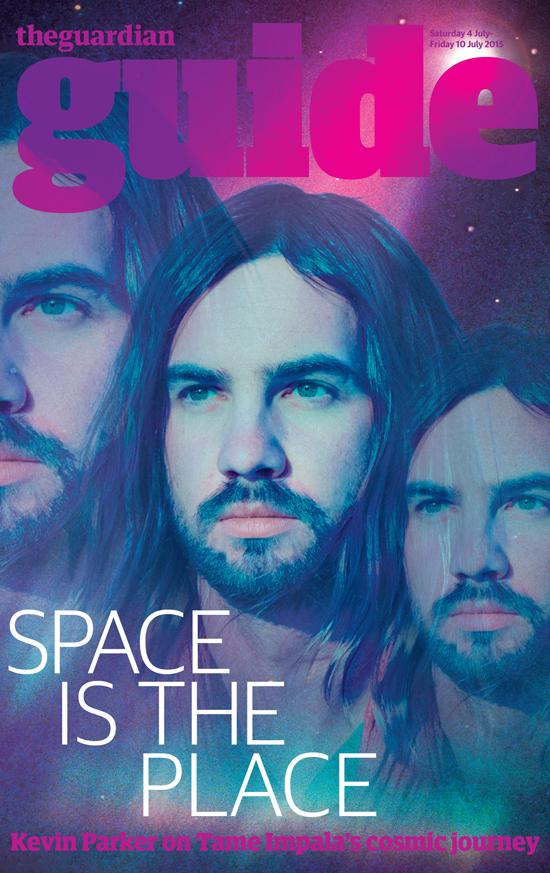
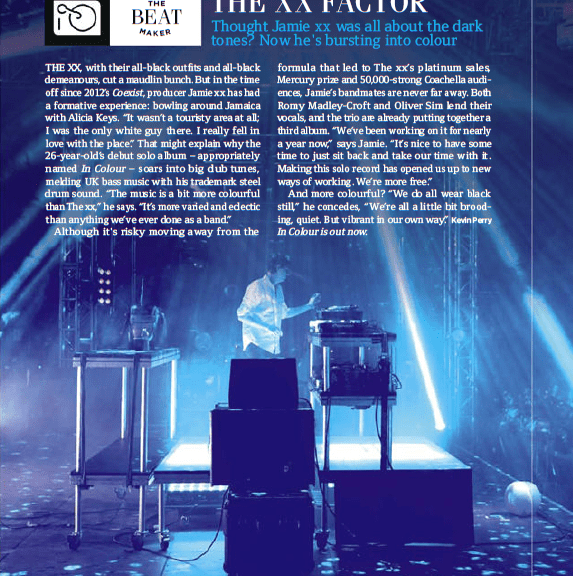
Tame Impala’s Kevin Parker, from psych-rock stoner to disco infiltrator

It’s a few days before Glastonbury, and Kevin Parker – the 29-year-old Australian musical polymath behind Tame Impala – is in west London rehearsing for his appearance at the festival with Mark Ronson. Somewhat extravagantly, Ronson has hired out the entirety of the Hammersmith Apollo for the week as a practice room. Presumably he can afford it, though. “Have you ever heard of a little song called Uptown Funk?” jokes Parker.

While there have been odder musical pairings, at first glance it seems incongruous that Parker, a long-haired rocker who has the permanent air of a man wearing sandals, is working with a superproducer more associated with the clean-cut likes of Bruno Mars. It’s just one illustration of how far Parker’s home-produced records have taken him. “The scale that things happen on with Mark is about five levels above how we do it with Tame Impala,” says Parker.
For much of the last five years, Parker has been acclimatising to the shifts in scale that success brings. His acclaimed 2010 debut, Innerspeaker, ushered in a new wave of young psych rock bands such as Pond, Toy and Hookworms, and turned a whole new generation of fans on to the transcendental power of scuzzy, droning guitars. The follow-up, 2012’s Lonerism, gave Parker platinum album sales, award wins and a Grammy nomination. Psych obsessives the world over suddenly had a new anthem in Elephant, three-and-a-half minutes of throbbing riffs that brought joy to the hearts of Floyd and Zeppelin fans alike. Before long, Kendrick Lamar was rapping over a remix of his single Feels Like We Only Go Backwards and Parker was collaborating with his heroes the Flaming Lips.
When we sit down for a drink at a hotel near the Apollo, Parker is so laidback he’s in danger of falling off his chair. This might seem appropriate for a practitioner of woozy music, but less so for a guy noted for his obsessive perfectionism. Maybe it’s the calm before the storm. Lonerism earned Parker legions of new fans, from Ronson to the army of beards who’ll be wigging out when Tame Impala headline End Of The Road festival in September, but he’s about to ask them to follow him in an entirely new direction. His latest album, Currents, ditches the heavy wall of psych and Tomorrow Never Knows-style loops, and instead we get a collection of Michael Jackson-influenced disco. Parker denies his decision had anything to do with the genre’s Get Lucky-fuelled resurgence, or even his collaboration with Ronson. In his unflappably mellow manner, he puts it down to a more personal Damascene moment.
Glastonbury 2015: Patti Smith joined by the Dalai Lama
There are some things that could only ever happen at Glastonbury, and Patti Smith welcoming the Dalai Lama onstage midway through her electric show on the Pyramid Stage to wish him a happy birthday is undoutbtedly one of them. His Holiness the Dalai Lama, who earlier spoke about the importance of global unity and oneness at the Stone Circle, will turn 80 on July 6. As an early birthday present Smith read a new poem that she had written for the occasion:
Thai For Heroes
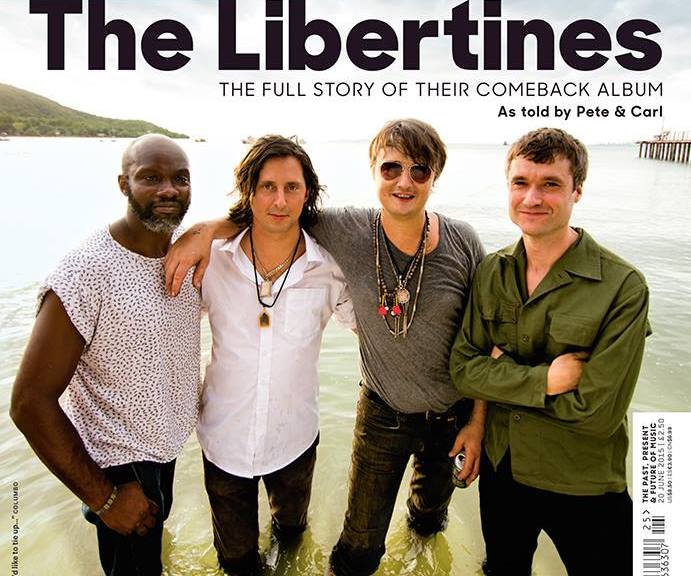
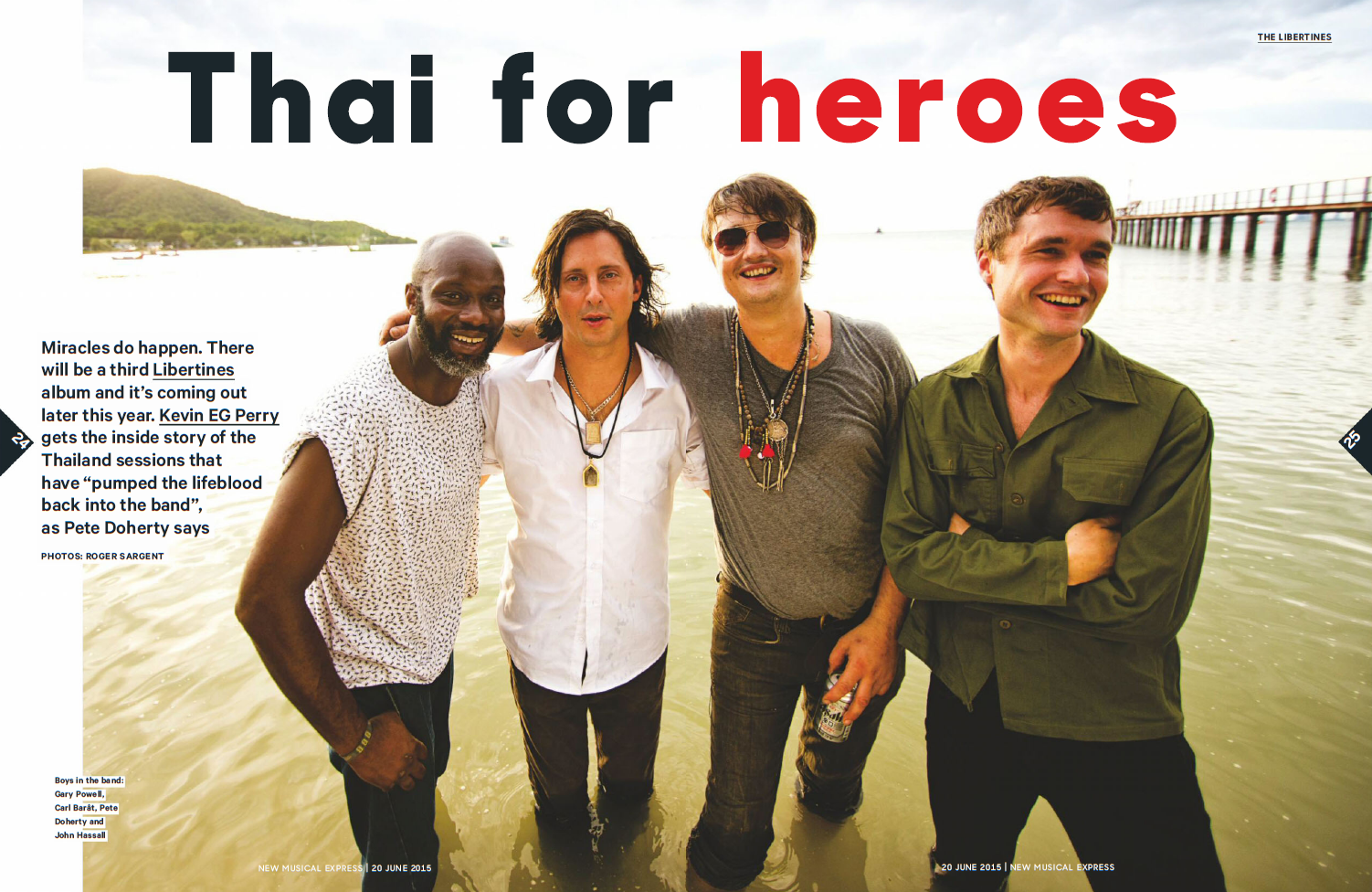
In Thailand, they have a saying about deeply improbable events. They say châat nâa dton-bàai, meaning it will happen ‘one afternoon, in your next reincarnation’. In England, we’d say ‘when hell freezes over’ or ‘when The Libertines record a new album’. Yet, somehow that most improbable of days has arrived. For the first time in over a decade, Pete Doherty and Carl Barât sat down nose to nose and wrote new songs together. Then they recorded them with bassist John Hassall and drummer Gary Powell over a five-week period at Thailand’s Karma Sound studios. From that studio built on an old snake pit, where recording sessions were punctuated by visits to the notorious vice den of Pattaya, their third album has finally emerged. It’s the moment anyone who ever dreamed of Albion has been waiting ten years for – the Libertines included. “People are going to love it,” says Pete, who’s still ensconced in his Thai bolthole, “There’s a miracle aspect to actually getting it done and all getting together to do it. We’re all really proud of it.” “It’s unbelievable,” says Carl, back in London and still sounding like he can scarcely believe what’s going on. “It’s staggering that we’ve got to the point where we’ve actually got an imminent release for the fucking Libertines. Are you kidding me? Honestly, I’m still kind of pinching myself. Is this really going to happen? It’s mental, but I guess it is.”
Cover story for NME, 20 June 2015. Continue reading.
When Love Techs Over
Back in the annals of time when we all lived in tiny hamlets, young men would have to set off on arduous quests towards the bright lights of the big cities just so they could find a wife who wasn’t either their sister or their cousin. These days you just have to reach into your pocket to be presented with a local selection of some of Tinder’s 50 million active users, 1.2 million of them in London alone.

Every day, Tinder users swipe 1.5 billion times and create 21 million matches. If you can’t get a life partner, on-off casual lover or awkward late-night hook-up out of that lot you should probably just call it a day and head back home to the hamlet.
The media loves a good death of technology story – just look at the way the demise of Facebook has been being confidently predicted ever since your parents discovered it – yet in Tinder’s case, as in Mark Twain’s, the reports have been greatly exaggerated. While the papers have been predicting rival app Happn could be the one to assume Tinder’s crown, it remains the fact that in London less than a quarter of the number of people have used it as are on Tinder, and many of those won’t have returned when they spotted the lower levels of activity. It’s the same as dating ever was – if you’re looking to meet someone, you head to the busiest club, not the quiet pub with the old men playing backgammon in the corner.
Tinder has recently tried to monetise its massive market dominance by introducing some paid features, but the great advantage it maintains over its rivals is its simplicity. Apps like OkCupid and Hinge rely on you creating an extensive profile, while Happn has actually taken a step backwards by allowing you to attempt to ‘charm’ people who haven’t already matched with you.
On Tinder, every conversation is predicated on the fact that there’s already at least a passing mutual attraction. That means it all comes down to how you present yourself and what you have to say for yourself when someone sparks up a conversation. As long as you can delete the cheesy pictures of you next to a sedated tiger, drop the sleazy chat-up lines and never, ever talk about your penis, Tinder is still very much the place to be for one simple reason: it’s where everyone else is too.
We Talked About How Fucked Greece Is With Everyone At Athens’ Plisskën Festival
In the last five years, Greece has become as synonymous with their interminable financial crisis as it has always been with democracy, philosophy and yogurt. Just last week, the left wing government lead by Syriza put two fingers up to the International Monetary Fund and told them that they’re not going to pay them back the €300m they were supposed to until at least the end of June, when they absolutely promise they’ll come up with the full, erm, €1.5billion they now owe them.
Even the world’s sharpest economists seem unsure about what the future holds for the country. This cloud of uncertainty that hangs over Athens really sucks for young people, because they just want to do the same things young people everywhere want to do: get drunk, smoke cheap cigarettes, buy inexplicably pricey trainers, and awkwardly make out to Perfume Genius.
That’s why this weekend some four thousand of them headed to Plisskën Festival at the Hellenic Cosmos Cultural Centre in downtown Athens. There they moshed to Savages, lost their shit to Evian Christ, and generally tried to ignore the endless headlines telling them how monumentally fucked they are. That was, until I turned up with my dictaphone and started reminding everyone about it. Here’s my conversations with the kids and performers on site, about what it’s like trying to have a good time when your entire country is, like a geopolitical Azealia Banks, broke with expensive taste.
The XX Factor
Professor David Nutt on legal high ban: “The government are miserable sods”
Last week, the Government announced that it’s going to outlaw “any substance intended for human consumption that is capable of producing a psychoactive effect” – except from those it deigns to allow like caffeine, certain medicines and booze. It’s a move which in theory means the end of the road for nitrous balloons, poppers and that stash of legal highs being sold next to the bongs at festival stalls and in your local head shop. While some might celebrate the fact that you’ll no longer be kept awake in your tent by the insistent ‘woosh’ of balloons being filled, a lot of people will probably see it as a dark day for civil liberties and personal choice. Also, given the difficulty of policing this area, the law may not have much practical use at all. To get an expert’s opinion on what the new law will mean, I spoke to Professor David Nutt, the government’s former chief drug advisor. Since his sacking in 2009, Professor Nutt has been campaigning for drugs policy to be based on scientific evidence rather than political whim. He told me why he believes the new law is “pathetic” – an attack on fun by the government’s “miserable sods”:
Laughing gas balloons have become incredibly popular at festivals over the last few years. How dangerous is inhaling nitrous oxide?
“Well, if you take one of the canisters that they use for treating women in childbirth for four or five days then you will certainly end up damaging the vitamin B in your blood, but two balloons every hour for a couple of hours aren’t going to affect anyone. Outlawing nitrous oxide truly is pathetic. Some of the greatest minds in the history of Britain, the people that made British science, used nitrous oxide. Wordsworth and the Romantic poets used nitrous oxide. The guy who popularised the use of nitrous oxide, Humphry Davy, was friends with Wordsworth and Coleridge. Nitrous oxide has been around as a medicine and a way of people understanding a different way of feeling for 200 years. Banning it now is pathetic. They’ll be putting yellow stars on drug takers’ foreheads soon. It is a peculiar attack on being anything other than a member of the Bullingdon Club – but they did drugs, didn’t they? I think this is just about young people enjoying themselves, and they hate that because they’re miserable sods.”
Why do you think the government is bringing this law in?
“What’s going on is that they want to stop people using highs that are sold at head shops. I don’t know if you’ve noticed, but it’s been driven by an organisation called the Local Government Association, and these people hate the idea of head shops. They’re supported by Police Exchange, which is a very right wing group. They’re basically an outpost of right wing US Republican thinking on drugs. What they want to do is get rid of head shops because they don’t like the idea that head shops could be doing anything useful. They may also be funded by the drinks industry at arm’s length… I’ve got no proof of that, but it wouldn’t surprise me. They want to get rid of head shops because they don’t like the idea of people doing drugs other than alcohol, for reasons I don’t understand. They concocted this lie that 97 people died last year from legal highs, which is not true. Of those 97 deaths, almost all of those were related to illegal drugs. They’ve concocted and continue to perpetuate this lie. In fact, my view is that there are almost no deaths from legal highs at all. There are millions of people using them, but the most dangerous ones have disappeared. I don’t think there are any really dangerous legal highs out there at present – but this is about politics, it isn’t about saving people’s lives. What will happen is this will drive people onto the internet or underground. No-one will know what they’re getting and there will be no quality control. In head shops, people are largely getting what they wanted. Now it will all be underground or on the internet, and my own personal belief is that harms will rise significantly.”
Will they actually be able to police the sale of poppers and nitrous oxide?
“Well you can buy poppers to disinfect your house. You can buy poppers in the supermarket, and you can buy nitrous oxide to foam up your cream. Are they going to stop people doing that? They haven’t thought this through. It’s all just a silly gesture. They’ve said they won’t prosecute people for possession or for personal use but they will prosecute people trying to sell it. The Act isn’t clear at present, but we think that trying to purchase it on the internet might end up being an offence. I think people will get around that, but they could in theory be prosecuted for buying stuff knowing that it was going to change their brain.”
How will they choose which substances are exempt from the ban?
“The Home Secretary will make her mind up and a drug will be in or out depending on her whim. It doesn’t appear that they’re going to take any notice of what scientists say. She’s going to decide whether a drug is a psychoactive or not. They’re going to exempt tea, coffee, alcohol… and I don’t know what else. Probably antidepressants, antipsychotics and all that sort of stuff. They haven’t defined what a psychoactive substance is. Most medical treatments of the brain are psychoactive. It hasn’t been thought through at all. It may all flounder because it may be impossible to write a law that isn’t so full of holes it disintegrates. On the other hand, they could just write a law which is useless, like in Ireland which encorages deaths because of backstreet use. Deaths in Ireland have gone up since they banned head shops, not gone down.”
Because people don’t know what they’re getting?
“Absolutely, and also because when you’re going to illegal dealers you’re also going to be offered heroin and cocaine. Heroin has been illegal for 50 years and we still have 1,200 deaths from people seeking opiates. It’s not as if banning has ever been shown to work. In fact, we know it doesn’t work because most of the drugs involved in those 97 deaths are banned – but people are still using them. They’re not being sold in head shops, by the way. The deaths are not coming from head shops. The deaths are coming from people getting them illegally. Head shops don’t sell illegal drugs. They’re the good guys. They’re selling drugs which are known to be relatively safe. Attacking head shops is like attacking sex shops because you think they lower the tone of your town.”
Given the difficulty of policing this area, do you think this law will actually have a big impact or is it just political grandstanding?
“I think it will make things a lot worse. Head shops will struggle. They may go back to selling these substances to as ‘bath salts’ or ‘plant food’. Then there will be some test prosecutions. It’s difficult to know. One suspects the law actually may fail if it’s enacted and there are test prosecutions which fail. That will be some time away, and a lot of head shops may just give up because they decide it’s not worth the effort. Trying to offer a safer alternative to alcohol is not really appreciated in this country – which is kind of weird, really. You want to deny people a safer drug than alcohol? It’s a weird, weird world. Science is out the window here. This is all politics.”
Tracing France’s History in the Heroin Trade
A couple of weeks ago I found myself sat outside a bar in Marseille’s Panier district, the old town, waiting for the daughter of the man who I’d been told was the city’s “last Godfather”. Before he died in his cell in Baumettes Prison in 1984, Gaëtan Zampa was so feared and respected in the south of France that even some of the police who pursued him were reluctant to actually catch him. “You don’t like to put a lion in a cage,” they’d say.
Slaves: meet the young Kent punks putting the party in the political
It’s just gone 8pm and Slaves’ dressing room at the Wedgewood Rooms in Portsmouth is a picture of domestic bliss. Guitarist Laurie Vincent, 22, is darning turn-ups on to the orange jumpsuit he’ll wear onstage. Isaac Holman, 23, Slaves’ singer and almost certainly the only stand-up drummer currently with a major-label record deal, is ironing a pair of business slacks with meticulous care.
Vincent takes a break from sewing to ask me to rub argan oil into a fresh tattoo of a 1940s deep-sea diver that covers half his back. The harmony of the scene is spoiled only by the smell: the rich notes of the oil mingle in the air with the strange pancake aroma that’s emanating from Holman’s sweat-soaked trousers and the fetid stench of a blocked toilet next door. Ah, so this is that glamorous rock’n’roll we’ve heard so much about.
“I haven’t even pooed,” laments Vincent. “I wish I could poo.”
If things go to plan, Slaves won’t have to put up with backed-up toilets for much longer. This is the first night of the band’s first full headline UK tour, which is almost entirely sold-out across the country. After signing to Virgin/EMI last March, they were named on the BBC’s Sound Of 2015 list in January, and recent singles Hey and The Hunter both became fixtures on primetime Radio 1. They’ve used this exposure to build a rabid fanbase that, in Portsmouth tonight, will include not only screaming 18-year-old girls but also their fathers, nodding and declaring Slaves “a proper old-school punk band”.
James Ellroy, the godfather of crime fiction, on the dark days of the LAPD
James Ellroy has a habit of introducing himself as “the demon dog, the foul owl with the death growl, the white knight of the far right, and the slick trick with the donkey dick” – which must be time consuming at parties.
The 67-year-old is the author of over a dozen novels – including LA Confidential and The Black Dahlia– which put him in serious contention to be considered the greatest living crime writer of our time. He’s also a scholar – and a fierce defender – of the LAPD.
His latest work, LAPD ’53, is a nonfiction collaboration with Glynn Martin of the Los Angeles Police Museum. The pair had planned a photographic history of the force but, having combed the archives, they realised that 1953 alone provided enough disquieting crime scene photography and lurid stories to fill their book. As he tells the story of each of the featured crimes, Ellroy’s prose is wildly entertaining and frequently hilarious, full of wisecracks and hepcat affectations.
However, the book is also shot through with what he calls his “reactionary nostalgia”: his unshakeable belief that America’s current ills could be solved by returning to the social conservatism of the 1950s.
We called up Ellroy at the Los Angeles Police Museum where the author, who speaks with same shit-talking, machine-gun wit as his characters, was in pugnacious form. We asked him whether poring over sixty-year-old photos of mutilated corpses got his creative juices flowing, whether LA is still a “perv zone” and if he really thinks that the American police can go on without reform after the deaths of Michael Brown, Eric Garner and so many others.
The Great Escape 2015: Fraser A Gorman
Fraser A Gorman has a distinct memory of the first time he ever met his now-label boss Courtney Barnett after moving to Melbourne as an 18-year-old. “I met her in a bar and tried to pick her up,” he laughs, “Which is kinda funny because she likes girls.”
The pair have now become good friends, and as singer-songwriters they share an aesthetic as well as a certain lyrical wit and ability to convey their lives, hopes and fears openly. While Gorman shares Barnett’s love for “wordy” artists like Lou Reed and Big Star, his songs also bear the hallmarks of classic 70s acts like Neil Young, Sam Cooke, Aretha Franklin and The Flying Burrito Brothers, not to mention the patron saint of singer-songwriters himself. “I love Dylan,” he says. “I think I look a fair bit like him, I’ve got the hair, the harmonica and the guitar.
Having grown up in the small Australian town of Torquay, he started playing in bands in Geelong along with King Gizzard and the Lizard Wizard frontman Stu Mackenzie. “We all wanted to play like the Kinks, the Who and the Stones,” he remembers. “There was only one venue, a hotel, so we all used to go there to play music and it was this weird, crazy scene.”
Mackenzie returned to play drums on Gorman’s debut album ‘Slow Gum’, which is due out in June. Showcasing songs from the record at The Haunt during The Great Escape, Gorman’s show ran the gamut from open-hearted confessionals to indie disco floor-fillers. But for Gorman, who speaks in person with a stutter that doesn’t affect him onstage, most of his songs were simply written as therapy. “I write songs to deal with my shit,” he says. “Some people go boxing, play football or go to the gym. I just like to let go of my energy by sitting down and playing guitar – I probably should go to the gym a bit more though. My touring beer-belly is getting a little bit out of hand.”
The Great Escape 2015: Ho99o9
Not content with merely inspiring mosh pits, Ho99o9 (it’s pronounced ‘Horror’) are the sort of band who want to be down there in them. During their Great Escape set at Patterns it doesn’t take long before co-vocalist Eaddy is off the stage and in the pit, shirtless and screamin into his mic. A few days earlier, at their first ever London show at Electrowerkz, Eaddy and bandmate The OGM had begun the show in the crowd: one wearing a wedding dress, the other with a plastic bag over his head.
Although they’ve now moved to LA, Ho99o9’s shows pull together the disparate influences they witnessed growing up in New Jersey, on the outskirts of New York, where The OGM says they bonded over “girls” and going to “punk shows, rap shows and art shows.” All those elements combine in a visceral mix the pair have been honing since they first played together in 2012. “We went into it headfirst with our eyes closed,” remembers Eaddy. “We weren’t really expecting anything or trying to be a certain way.”
There’s more to them than killer lives shows. Their music – drenched in blood- and-gore imagery straight from horror films and slasher flicks – stands up to repeated playback. “Our music is diverse,” says Eaddy. “A lot of it is built for the live show, but a lot of it you can take home, listen to it, vibe to it, drive to it, bash your head against the wall to it or just chill and smoke a doob to it.”
There’s a new EP due on June 8 before they return to the UK in August to play Reading and Leeds. If their Great Escape debut is anything to go by, they’ll no doubt end up as one of the most talked about bands of the summer. “We want to make a statement with our presence,” says Eaddy. “It’s a powerful force. It’s like Mike Tyson entering the ring. You’re thinking: ‘This motherfucker’s about to do some damage.’ It’s heavyweight title shit.”
Catfish & The Bottlemen: Van McCann on setting off “a little bomb in the music industry”
At first, he thinks it must have started raining. It’s August 2014, moments before Catfish And The Bottlemen are due onstage at Reading Festival, and Van McCann can see crowds of people running towards the tent, pushing their way forward to squeeze inside. Then he looks outside and sees there’s nothing but sunshine. “That’s when I knew it was real,” he says. “I thought they were just coming in because it was pissing it down, but it was still sunny. When we went on they knew all the songs. Our album wasn’t even out yet. It was mental.”
After tearing through their set, Van walked offstage and noticed the band’s management team were crying tears of joy. “I think everyone was kind of taken aback,” he says. “Playing T In The Park and then Reading and Leeds last year were real game-changers for us. Before that we’d been playing 50-100 capacity venues, and they’d been crazy – but then at the festivals it was just as crazy and there were 4,000 more people.”
A lot has happened since then. In the past six months, the band released debut album ‘The Balcony’, which duly hit the Top 10 and went gold. Meanwhile, their live reputation has grown to the point that they sold out two nights at London’s 5,000-capacity O2 Academy Brixton this November – within nine minutes of tickets going on sale. “That’s 10,000 tickets,” marvels Van. “Could we have sold 20,000 in 20 minutes? You’re on your way to stadiums then, aren’t you?”
Cover story for NME, 16 May 2015. Continue reading.
Everything Everything on new album ‘Get To Heaven’: “All these songs are absolutely killer”
Now trending: Hudson Mohawke
Fat White Family’s Lias Saudi on gentrification and the disappearance of squat culture
Rudimental talk festivals, Ed Sheeran and Snoop Dogg getting smoky
Rudimental are one of London’s great homegrown success stories. Their Mercury Prize-nominated 2013 debut album ‘Home’ spawned a slew of massive hits including ‘Feel the Love’, which launched the career of John Newman, and ‘Waiting All Night’ which did the same for Ella Eyre. Fresh from touring America in the company of their old mate Ed Sheeran, this summer sees Piers Agget, Amir Amor, DJ Locksmith and Kesi Dryden return to the UK to take the Friday headline slot at this year’s Lovebox festival in Victoria Park. They also have a brand new record primed for imminent release. We caught up with Amir Amor to find out how they’re handling their swift rise.
The Sound Of The Summer
“We’ve opened Pandora’s Box”
For the past year, Carl Barât has been launching his new band The Jackals while cranking The Libertines back into action. As of last week, it’s full steam ahead with the latter – Barât signed off Jackals duties on April 16 at London’s Scala, where the band were joined by a full brass section. After that it was back home to pack. “I’ve been waking up in the morning with Libertines lyrics in my head, hurriedly getting the typewriter out, then figuring out brass arrangements for the Jackals in the evening,” said Barât, before the show. “But I’m off to Thailand tomorrow for a month’s recording. This is the album. The big push.”
Joining the band in Southeast Asia (Pete Doherty’s just returned from Laos on what Barât described as “a visa run”) is the album’s newly appointed producer. After much speculation about who’d take up the mantle (Noel? Clash man and ‘Up The Bracket’ producer Mick Jones?) their choice is surprising – it’s Jake Gosling, who was previously Grammy-nominated for his work on Ed Sheeran’s mega-hit ‘The A Team’. Barât explains: “We had wish lists flying back and forth, from the [John] Leckies through to the [Paul] Epworths and Stephen Street. What it boiled down to was that we wanted to try something a bit new. We wanted someone who is just getting their thing going, rather than someone who is just going to put us through their machine. This isn’t a heritage band making a heritage album.”
Barât also confirmed that while the new record has been written in full, the band intend to keep writing creating during the process. “The feeling’s great,” he said. “We’ve been sparking. The pistons are all firing. I’m genuinely excited, and can’t wait to get this stuff out there. It’s nice to be back in that position. We’ve all been waiting to write this record for ages.”
Although he concedes the band have something to live up to, Barât insists they are not overly concerned with the past. “We try not to think too much about out legacy,” he said. “The energy that we had and used in our music hasn’t left us. We’re still as driven and full of wonder about the world, but now we have more experiences and more to say to each other, and to the world. It’s exciting. We need to get it done now. Now we’ve started this process we’ve opened Pandora’s Box, so we’ve at least got to have a drink with these demons.”
It means The Jackals, who Barât recruited via open auditions in a London pub, are back on the shelf for a short while. “It’s dawned on the band that we’re at the sunset of this cycle now,” said Barât. “We’ve been in the trenches together, but I think now they’re going to knuckle down and figure out what it is they’ve got to say and what I can bring to it. As much as I prize this thing with The Jackals, and doing the hard work touring on a shoestring, with The Libertines we’ve done all that and more. It’s been a tumultuous ride. When I’m back in a room with those boys, that’s all that exists. We have history, and songs that we can just lie back and fall into. If I lie back in this band I’ll just fall into the drumkit…”
Originally published in NME, 25 April 2015.
Between Rock And A Hard Place
If ever a band was equally loved and loathed it is Mumford & Sons. Their first two albums have sold over three million copies each and they’ve cracked America in a way that no British band has managed since Coldplay. Their brand of earnest folk rock has taken them to The White House, where they played for Obama, and Glastonbury, where they headlined in 2013. Yet the same sincerity that’s won them legions of fans has brought them an equal number of detractors. They are gentlemen of the middle of the road: wildly successful, but deeply uncool.
Kevin Perry Goes Large In The Med’s New Party Capital, Malta
If you work for the tourist board of a small Mediterranean island, British clubbers are presumably seen as something of a mixed blessing. Sure, they’re going to fill your hotels, eat at your restaurants and buy enough sambuca to double your GDP, but they’re also going to get lairy, keep their soundsystems going until 4am and end up performing drunken sex acts on your picturesque cobbled streets.
It’s a chance Malta were willing to take this Easter when they invited Annie Mac to put on the inaugural Lost & Found festival over the long weekend. The island is no stranger to hard-partying Brits. Oliver Reed died of a heart attack here in 1999 at the age of 61 after drinking eight beers, three bottles of rum, a few rounds of whiskeys and a couple of cognacs – all the while beating five Royal Navy sailors at arm-wrestling. It’s a miracle they’ve got any booze left at all.
Welcome Back To The Terrordome
As Public Enemy’s ‘Fear Of A Black Planet’ turns 25 it couldn’t be more relevant. It stands as a masterpiece of righteous anger and furious energy. Lyrically, tragically, tracks like ‘911 Is A Joke’ and ‘Fight The Power’ returned to the forefront of the cultural discourse last year after the deaths of Eric Garner and Michael Brown at the hands of the American police. Musically, The Bomb Squad’s ability to create order from a white noise chaos of sampled loops, stolen riffs and radio chatter foreshadowed the coming technological overload of the 21st Century.
Yet the year leading up to the release of their third record had been the most difficult in Public Enemy’s already storied history. Having formed on Long Island, New York in 1982, the band’s sample-heavy production style and Chuck D and Flavor Flav’s politically-charged lyrics quickly made them one of the most revered rap groups on the planet. Their debut record ‘Yo! Bum Rush The Show’ was named the best album of 1987 by NME critics, beating the likes of Prince’s ‘Sign O’ The Times’ and The Smiths’ ‘Strangeways, Here We Come’. They repeated the trick the following year, when ‘It Takes A Nation Of Millions To Hold Us Back’, which included hits like ‘Bring The Noise’ and ‘Don’t Believe The Hype’, was named NME’s best album of 1988 ahead of records by REM, Morrissey and The Pogues.
Yet in 1989, the group found themselves embroiled in an ugly controversy. Professor Griff, the group’s ‘Minister of Information’, told Melody Maker that: “If the Palestinians took up arms, went into Israel and killed all the Jews, it’d be alright.” When grilled on this point by David Mills, of the Washington Times, Griff went further still, saying: “Jews are responsible for the majority of the wickedness in the world.” Chuck D first apologised for him, then called a press conference to announce that Griff would be suspended from Public Enemy. A week later, the group’s label boss, Russell Simmons of Def Jam, announced that Chuck D had disbanded Public Enemy “for an indefinite period of time”.
Within a couple of months, Chuck D returned to deny that the group had disbanded, but by now a shadow had been cast over the band. This was the context in which they wrote ‘Fear Of A Black Planet’ – knowing that their next release could make or break them.
Predictably, they didn’t back down. ‘Welcome To The Terrordome’, released ahead of the album in January 1990, saw Chuck D rapping lines that many took to relate directly to the anti-Semitism controversy: “Crucifixion ain’t no fiction/So-called chosen frozen/Apology made to whoever pleases/Still they got me like Jesus”. Later, Chuck said that he wrote the song over the course of a two day road trip to Allentown, Pennsylvania in the midst of the controversy. “I just let all the drama come out of me,” he told Billboard magazine. “‘I got so much trouble on my mind/I refuse to lose/Here’s your ticket/hear the drummer get wicked”. That was some true stuff. I just dropped everything I was feeling.”
Although rightly apologetic for Griff’s anti-Semitism, Public Enemy didn’t let the controversy stop them writing angrily and graphically about the social problems they’d witnessed in American culture. Most withering of all was ‘911 Is A Joke’, in which a scornful Flavor Flav highlights differing police response times in black and white neighbourhoods. The song is a classic example of the symbiotic writing relationship between the group’s two frontmen: Chuck D wrote the incendiary title and then passed it to his partner to build a song around. “It took a year, but Flavor was saying he had a personal incident that he could relate that to,” Chuck said. “At the end of the year when it was time for him to record he was ready. Keith [Shocklee, Bomb Squad] had the track, and it was the funkiest track I heard. It reminded me of uptempo Parliament/Funkadelic.”
After skewering the police, Public Enemy then reset their sights and took aim at capitalism as a whole. ‘Who Stole The Soul?’ was their furious attack on the commodification of black culture, and Chuck D has called it one of their “most meaningful performance records”. They weren’t just calling for words or token apologies: they wanted action. “We talk about reparations,” he remembered later. Whoever stole the soul has to pay the price.”
The album closes with the incendiary, insurrectionary rage of ‘Fight The Power’. Like the best protest music, it is a song written with a specific political target in mind, which has now become a universal anthem of political resistance. On a recent European tour, Chuck D told NME that the song grows stronger as it takes on the historical context of wherever it is played. “In Belgium, we dedicated ‘Fight The Power’ to the Democratic Republic of Congo,” he said. “The memory of Patrice Lumumba [first democratically elected prime minster of Congo, who fought for independence from Belgium] will not be in vain. You always have to be aware where you’re going to when you step into somebody’s home. That’s the thing that sets us apart as different. We’re not the normal rap group.”
Sonically, too, they were no normal group. Sprawling over 20 tracks, ‘Fear Of A Black Planet’ is hip-hop at it’s most musically ambitious. Having toured as a support act for the Beastie Boys (as referenced in the radio phone-in samples that make up ‘Incident At 66.6 FM’), they were inspired by the sample-laden ‘Paul’s Boutique’, released in 1989, to add soul and jazz influences without dialling down any of the anger of their earlier recordings.
Beastie Boys were in turn equally inspired by a band they considered their heroes. Adam Yauch later said: “Public Enemy completely changed the game, musically. No one was just putting straight-out noise and atonal synthesizers into hip-hop, mixing elements of James Brown and Miles Davis; no one in hip-hop had ever been this hard, and perhaps no one has since. They made everything else sound clean and happy, and the power of the music perfectly matched the intention of the lyrics. They were also the first rap group to really focus on making albums – you can listen to ‘…Nation of Millions…’ or ‘Fear Of A Black Planet’ from beginning to end. They aren’t just random songs tossed together.”
It’s a testament to Public Enemy’s vision as songwriters that out of the controversy of uncertainty of 1989 they were able to forge a masterpiece of both social commentary and musical innovation. Echoes of their anger and ambition can still be heard, 25 years on, in the verses and activism of Kendrick Lamar, Run The Jewels and Young Fathers.
‘Fear Of A Black Planet’ continues to challenge and provoke listeners, precisely because it doesn’t offer easy solutions to society’s ills. Reviewing the album for Melody Maker in 1990, Simon Reynolds summed it up: “Public Enemy are important, not because of the thoroughly dubious ‘answers’ they propound in interview, but because of the angry questions that seethe in their music, in the very fabric of their sound; the bewilderment and rage that, in this case, have made for one hell of strong, scary album.”
Wytches’ Brew
Hyena
When you’re a grunge band in the sleepy Shropshire town of Telford, devoid of indie clubs and rock bars, you have to make your own fun. The first night frontman Jake Ball, bassist Josh Taylor, guitarist Dom Farley and drummer Reuben Gwilliam spent together as a four-piece, they overindulged, as teenagers do, on their parents’ red wine. “It’s become known as ‘the night of the black sick’,” says Jake. “Somebody was sick on my face. That was the grossest moment of my life.”
Full piece in NME, 11 April 2015.
In The Name Of The Fathers
Last October, Young Fathers upset the bookies by winning the Mercury Prize with their debut LP ‘Dead’. The trio were quickly sketched in the tabloid press as a publicity-shy Scottish hip-hop group making difficult, experimental music, not least because they refused to speak to any right-leaning newspapers – like The Sun, Daily Express, Daily Mail, Daily Star, The Times and The Telegraph. For the Edinburgh trio, it wasn’t a case of shunning the limelight, but a clear and conscious political decision. “We’ve had that rule for years,” explains producer and vocalist Graham ‘G’ Hastings. “There are certain publications that are cross-the-line evil to us because of their Islamophobia and homophobia.”
Two Sun journalists discussed their refusal to speak to the paper on Twitter. “Young Fathers sound, er, pretentious utter cocks. Fuck ’em and eat ’em,” one wrote. The other replied: “Absolute pricks… Never getting in The Sun again.”
“That’s the kind of cunts you’re dealing with,” says G. “We thought there were other bands around who wouldn’t talk to them, but that whole way of thinking has been deleted. If you cause a fuss about something, like talking about Palestine, people say: ‘Oh what are you starting that for?’ That’s why we want as many people as possible to know we exist. Even if they hate us, it still changes their perception of what’s real in the world. We’re not saying that they should take all the shite songs off the radio. We’re just asking for a bit of contrast.”
Young Fathers’ cosmic, gorgeously arranged new album, ‘White Men Are Black Men Too’, is purpose-built to provoke that kind of debate. “We’re asking: ‘What is a white man?’ ‘What is a black man?’ ‘What is a Muslim man?’ ‘Are women sexualised?’” says G. “The title is a multifaceted, metaphorical statement. We live in a world that’s not equal. We all know that. The question is how do we start a conversation where people will feel that they can be open enough to express themselves?”
The question comes back to the essence of the band, too, who bristle at being pigeonholed as a Scottish hip-hop group. The truth is that Young Fathers are a global pop band. To call them Scottish makes as little sense as calling your iPhone Chinese – the parts may have been assembled there, but the ideas, design and components come from all over the planet. Young Fathers’ bearded singer Alloysious Massaquoi was born in Liberia. Dreadlocked co-vocalist Kayus Bankole’s parents are Nigerian and raised him partly in the USA. G was born and raised in Edinburgh, and it’s G who’s chiefly responsible for the beats, which blend everything from Afropop to soul to gospel to blues to indie. There are stickers on vinyl copies of ‘White Men…’ which direct shops to ‘File under Rock and Pop’.
“We keep having to tell people that we’re pop,” says G. He’s sat with his bandmates between piles of instruments and books in their manager Tim Brinkhurst’s tiny basement studio in Leith, in the north of Edinburgh. “We didn’t want to be considered a leftfield, strange group, and if you say that the album’s hip-hop you’re just fucking lying. It’s just not fucking true. That’s just a tag that we’re stuck with because of how we look. It’s borderline racist. Unfortunately eye always beats ear. People go on what they see first.”
Alloysious, who goes by Ally, nods: “If we were all white and making the kind of music we do I don’t think we’d get these comparisons.”
Young Fathers see themselves as the antidote to the lazy media pigeonholing that says all black musicians must be rappers and all white musicians play guitar. Kayus, the quietest of the three, explains it in more personal terms. “I have a little nephew and he’s really into music,” he says, “but if people are constantly portrayed as belonging to a certain bracket of music then he’s going to think that’s how things should be. It’s easy for the media to put things into narrow categories, but that confines people. That’s what we’re getting at with the title of this album.”
Young Fathers have been making music together since the age of 14, since meeting at a club night at Edinburgh’s Bongo Club that played hip-hop, bashment and dancehall. It’s there that Kayus was introduced to British rappers like Roots Manuva and Blak Twang, while Alloysious remembers discovering Sean Paul and “amazing pop songs”.
G just remembers having his mind blown. “It was the sort of place I couldn’t go to with my mates who I grew up with,” he says. He was given a dead arm by his old friends when they found out he’d visited it. Their idea of a night out was drinking hooch and having a fight at a youth centre disco. No dancing allowed.
“When I got into The Bongo Club and saw these guys and everybody else dancing I thought: ‘Fucking hell! People are dancing in public!’” says G. “I joined in, like it was nothing, but inside I was thinking: ‘THIS IS FUCKING AMAZING!’ It was so liberating to be able to express yourself. Nobody was pointing at you and going: ‘Who do you think you are? You think you’re special?’ It was something that had been missing from my life.”
After the music had finished and they could hear each other speak, G invited Ally and Kayus to come and visit his mum and dad’s house. “They’d come round and I’d make a beat on this software that I bought for £10,” he explains. “I put it onto a CD, then you’d press record on the karaoke machine. We’d put the mic up in the cupboard, and then crowd round it. We’d try and do it in an arrangement. We were literally pushing each other, because you only had one take. I think that ethos has stuck with us.”
The band are all now 27, and in the intervening years have held down all manner of jobs to support their musical ambition. That makes them a rare working class success story in 2015. “Middle class bands are the most content, tasteless cunts around,” says G. “They’re so comfy that understanding anything with a bit of bite or grit about it seems like rocking the boat. They’re taking up space. They don’t realise they have a duty to show society a broad spectrum of stuff. Instead all their mates, who should have sold fucking insurance, start a band. Working class bands have been eradicated.”
‘Young Men Are Black Men Too’ was recorded mainly in Berlin, although even with their Mercury Prize winnings (£20,000) Young Fathers had no intention of hiring a flash studio. Instead they just drove their usual gear over to Germany and set up in a similar basement to the one where they made ‘Dead’.
The record draws together the issues of race, power and class that pervade the band’s conversation today. Take ‘Sirens’, which deals with police violence over a driving rhythm. “We say “the police are on cocaine” because when you see videos online of policemen shooting unarmed men, it’s like they’re on coke,” says G. “They can do whatever they want and get away with it.”
Perhaps the strangest song on the record is ‘Nest’, which was commissioned for a Nestlé advert. Nestlé have been the subject of a long-running boycott due to their aggressive marketing of baby milk powder in the developing world, which has been linked to the spread of disease and increased malnutrition. When the band were approached their first reaction was to tell the multinational to, in G’s words, “go fuck themselves.” Instead, the band decided to accept the commission and planned to spend their fee on a high-profile anti-Nestlé billboard campaign. Even the song they wrote was trolling: “We made them a song which says ‘baby’ about 100 times in it. All the lyrics are about ‘Feed me mama’ and ‘Food for the village’,” explains G. “We sent it to them and they said they fucking loved it!” In the end it fell through, but Young Fathers kept the song.
Undoubtedly, satirising multinationals and asking difficult questions about race places Young Fathers outside of what’s currently considered mainstream pop music – but that’s pop music’s problem, not theirs. They’re on a mission to make pop a more interesting place. That means having to put up with being misunderstood.
“It’s too much work for the media to say that people are complicated,” says Ally. “It’s simpler to just pass judgement and place people in a box. The people in charge don’t want new ideas or change because they don’t know what it spells. It could be the end of their reign. That means TV and radio doesn’t want change. If they were putting out interesting ideas, it would make people realise that change is possible. That’s what we’ve got to do.”