Category Archives: The Independent

Ai Weiwei: ‘Lego is no different from Rembrandt or Van Gogh’s paint’

On 3 April 2011, Ai Weiwei was going through customs at Beijing Capital International Airport when he was stopped by plain-clothes members of the secret police. They told the dissident artist that they just wanted to talk, but instead they took him outside to a van, put a black hood over his head, and drove him in darkness for two hours to an undisclosed location.

When Ai realised he was being held in a detention centre, he had no idea how long his stay might last. “They told me I would be sentenced to over 10 years,” says the man who six months earlier had filled Tate Modern’s Turbine Hall with 100 million hand-painted porcelain sunflower seeds – seemingly identical, but each totally unique. He remembers his interrogators emphasising the cruelty of their threat. “At that time, my son was less than two and they said that when I was released he would be 13. The secret police told me very clearly: ‘Your son will never recognise you as his father.’ That touched me.”

This was just the latest in a long series of harassments that Ai suffered after he angered the government by collecting and publicising the names of 5,219 children who had died when their shoddily built schools collapsed in the 2008 Sichuan earthquake. He is a vocal critic of the Chinese authorities, and there have been brutal consequences. In 2009, he was punched so hard in the head by a secret policeman that he suffered a brain haemorrhage.

In the end, Ai spent 81 long days and nights in a padded cell measuring 12 feet by 24 feet, a size he estimated by counting the floor tiles. If the intention was to crush the rebellious spirit that has defined his defiant 35-year art career, it failed. Ai has the build of a boxer and the mentality of a fighter. Rather than crumbling as the state flexed its power, he found purpose in reflecting on his relationship with his young son and with his own father, Ai Qing, a celebrated poet who was denounced during Chairman Mao’s purges in 1957.

“I said to myself: ‘I have to write down what happened to me, and to my father, so that I can leave it to my son,’” he says. “It was only in detention that I realised there were so many things about my father I didn’t know. This is often the way with parents and children – you think you know everything, but you don’t. You never really investigate or ask questions directly, so that became a sorrow in my life because it’s something I can never catch up on.”

Continue reading at The Independent.

Flying Lotus: ‘I’ve been an anime fan forever, but I never thought I’d be part of this world’

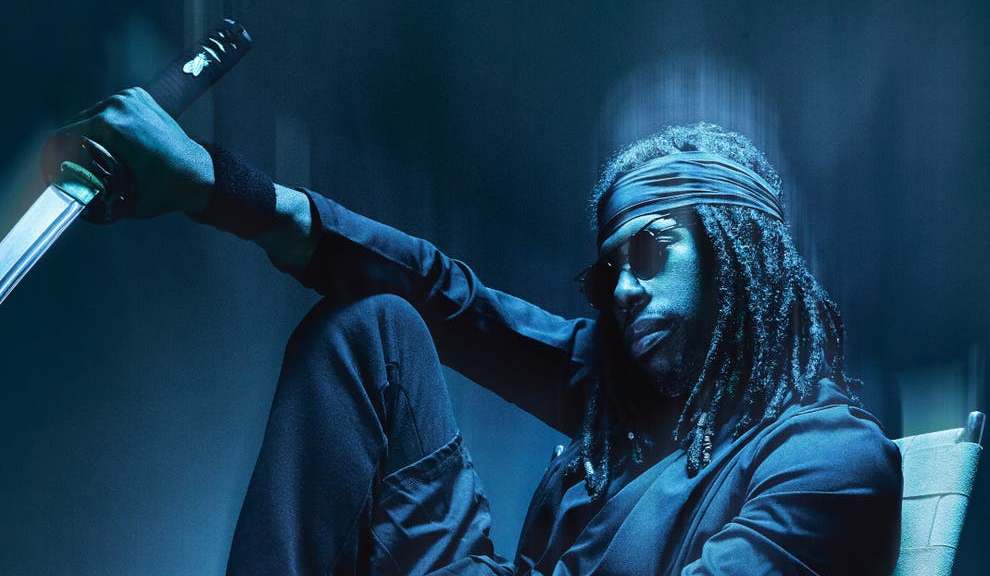
Before Flying Lotus was Flying Lotus – genre-defying musical innovator and founder of influential label Brainfeeder – he was Steven Ellison: an anime-obsessed teenager sketching his favourite Dragon Ball Z characters in the margins of his school books. Now, together with The Boondocks co-director LeSean Thomas and recent Oscar-nominated actor Lakeith Stanfield, the 37-year-old is bringing his lifelong passion to the screen as an executive producer, writer and composer for the new Netflix anime series Yasuke

“It’s weird, I never thought I’d be on some shit like this ever in my life,” a still bemused-sounding Ellison tells me over the phone from his home in Los Angeles. “I’ve been a fan of anime for forever, but I never thought the day would come where I’d be part of this world.”

Continue reading at The Independent.

Back’n’Vaxxed: Foo Fighters team up with AC/DC singer to rock Vax Live – but J Lo’s mum steals the show

In any year, the line-up assembled for Global Citizen’s Vax Live concert – filmed on Sunday night to be televised next weekend – would be an impressive one: performances from Jennifer Lopez, Foo Fighters, J Balvin, Eddie Vedder and HER interspersed with speeches from Prince Harry, Selena Gomez, Ben Affleck, Jimmy Kimmel, Chrissy Teigen and David Letterman. In May 2021, it represents something even more significant: the first time live music has been played in front of a mass audience in LA County since the outbreak of the pandemic in March last year.

If you were looking for an ideal venue to signify a fresh beginning, the SoFi Stadium in Inglewood would be it. The $5bn new home for Los Angeles’ NFL teams the Rams and the Chargers had been scheduled to open last July with a pair of Taylor Swift concerts. After the pandemic put paid to those best-laid plans, the stadium finally opened for NFL games in September but as yet, they’ve all taken place behind closed doors. That made Vax Live’s invited audience of 27,000 key frontline workers – a fraction of the 70,000 capacity – the first crowd to ever enter the suitably futuristic stadium, which resembles a giant stainless-steel cross-section of an internet router. As Letterman put it from the stage: “Honest to God, I’ve never been in a spaceport before. You could play football in here!” 

Continue reading at The Independent.

Anthony Bourdain’s ‘lieutenant’ on finishing his guide to World Travel without him

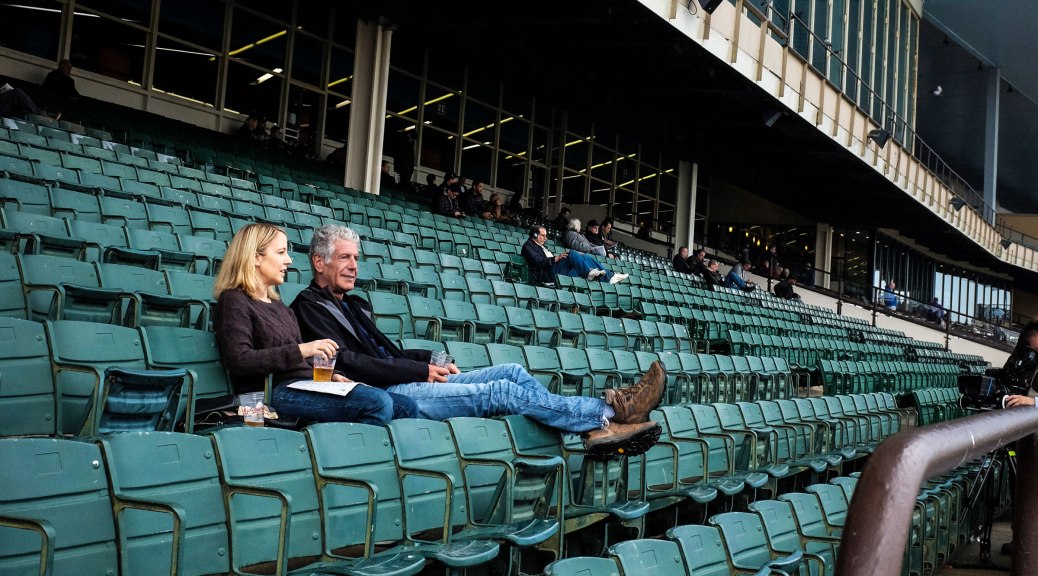
One afternoon in the spring of 2018, Anthony Bourdain sat down at his dining table in the Manhattan high-rise apartment he’d lovingly styled after a bungalow at one of his favourite hotels, the Chateau Marmont in Hollywood, to begin work on his first travel guide. Across the table, armed with a longlist of every country the former chef had visited since 2000 while making his acclaimed gonzo travel shows A Cook’s TourNo Reservations and Parts Unknown, was Laurie Woolever, Bourdain’s longtime assistant and co-author, whom he often referred to as his “lieutenant”.

Woolever and Bourdain first met in 2002 when her former employer Mario Batali recommended her to him as a recipe tester and editor for his first book of recipes, Anthony Bourdain’s Les Halles Cookbook. They next worked together in 2009, after Woolever had a child and decided to leave her job as a magazine editor. An optimistic email looking for part-time work sent to various contacts brought just one reply: from Bourdain, who empathised as his own daughter was just a year older, and offered her a job as his assistant. Her role grew over the years and after co-writing the best-selling 2016 cookbook Appetites, Bourdain and Woolever were looking for another project. A travel guide seemed a natural next step. “We wanted to bring together some of the best and most interesting places that Tony had seen in all his time travelling the world,” remembers Woolever. “He was extraordinarily busy, so to get that hour [to work on the book] felt very, very precious. I had no idea at the time that that would be it.”

Continue reading at The Independent.

Rude Girl Rocks: Meet the 83-year-old reggae matriarch who brought Jamaican music to the world

When it comes to Jamaican music, Patricia Chin has heard it all. The 83-year-old, known as “Miss Pat”, has been a fixture of the island’s music industry for over 60 years. Today she runs VP Records, the world’s largest reggae music and distribution company, making her a crucial music mogul for the island’s music. DJ Kool Herc, who along with his sister Cindy Campbell is considered the founder of hip-hop, once said of the sweet-natured 4ft 11in entrepreneur: “What Berry Gordy was to Motown Records, Patricia Chin is to the reggae industry.”

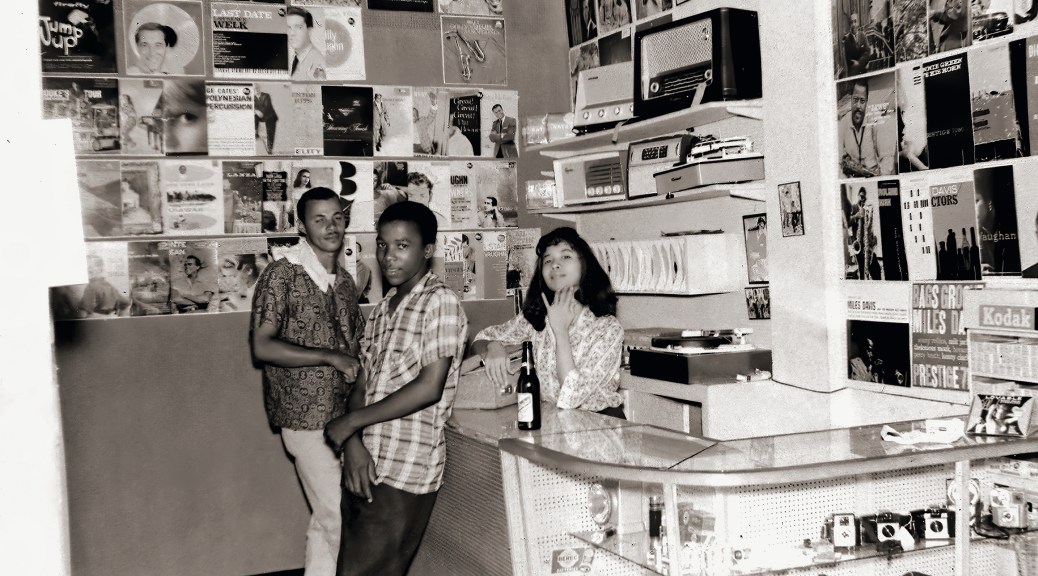
It all started in a former ice cream shop in Kingston, which Miss Pat and her husband Vincent opened as Randy’s Record Mart in 1959. In her new memoir, Miss Pat: My Reggae Music Journey, out this week, she describes how it was there she developed her legendarily encyclopaedic knowledge of ska, rocksteady, reggae, dub and dancehall. It was there, too, that Jamaica’s homegrown musical explosion in the Sixties and Seventies took place, bringing those sounds and styles to the world.

Continue reading at The Independent.

Carl Hiaasen: ‘They’re gonna have to drag Trump out of the White House’

Few writers understand the violence lurking in the American psyche better than Carl Hiaasen. For more than four decades, the 67-year-old has been vividly chronicling crime and corruption in his native Florida, first as a reporter and columnist for the Miami Herald and then in a string of savagely hilarious crime novels. Still, nothing could have prepared him for the devastating events of 28 June 2018 when Jarrod Ramos, a lone gunman with a grudge against Maryland newspaper The Capital, entered its newsroom in Annapolis carrying a pump-action shotgun and killed five people, injuring two more. Among those left dead by the largest killing of journalists in US history was the paper’s assistant editor, Rob Hiaasen – Carl’s younger brother.

With Ramos still awaiting trial, Hiaasen began the slow process of returning to writing while carrying a grief that threatened to overwhelm him. “It took a long time after Rob was killed to start up again, I’ll tell you that,” says Hiaasen, speaking from his home in Vero Beach, 140 miles up the coast from Miami. “You have to cauterise your feelings to sit down and write something funny when, believe me, nothing about my life was funny.”

The resulting novel, Squeeze Me, is dedicated to Rob’s memory. It’s also very funny indeed. Hiaasen says he felt he owed it to his brother to keep going. “He had the best sense of humour of our whole family, and he would have been pissed off if he thought that I stopped writing those kind of books just because of what happened,” he says. “In this country, sadly, the community of people who have lost family members to mass shootings or street violence is absurdly huge. It’s like a tidal wave that never stops breaking through your family.”

In spite of this tragic background, Squeeze Me is vintage Hiaasen. Since making his debut with 1986’s Tourist Season, his novels have frequently pitted the natural world and those who defend it against grotesque, avaricious villains. In Squeeze Me, both sides are drawn straight from our stranger-than-fiction reality. In one corner, the fugitive Burmese pythons that have made their home in the Everglades since the early Nineties. In the other, America’s grotesque and avaricious president.

Continue reading at The Independent.

Toots Hibbert: ‘I think The Clash were as black as me’

In the 1960s, Frederick “Toots” Hibbert didn’t just give the emerging genre of reggae its most soulful voice – he also gave it a name. A slip of the tongue while rehearsing with his group the Maytals one day and “streggae” – Jamaican patois for someone in ragged clothes – became “reggae” in Toots’s mouth. When the Maytals released “Do the Reggay” in 1968, they intended to name a passing dance craze. Instead the newly minted word stuck to the sound they and the Wailers were helping to shape: a faster, brighter evolution of the rocksteady beat. “I never knew it was gonna be so prevalent, or so good,” says Toots, now 77, of reggae’s worldwide success. “But it feels good to know I was the one who put the ‘R’ in the music.”

Today he’s at home in the yellow-walled studio he calls the Reggae Center, part of his pink stucco compound in the Red Hills area of Kingston. Endearingly he’s listening to his own new record, Got to Be Tough, his first in a decade. Who can blame him? The album is a joy: a riotous platter of not just reggae but also R&B, funk and soul that showcases Toots’s impressive range. He says the album comes with a timely message. “I’m giving a warning and telling you that you gotta be tough,” he explains. “Towards this Corona thing that’s going around, you have to be tough. To overcome it, you have to be strong.” He’s a little hazy on the specifics, and avoids even calling his songs protest music. “I don’t call it political,” he says. “My music is just a story that tells the truth.”

Continue reading at The Independent.

Aaron Paul, class war and Common People: How Westworld plans to win back fans

When husband-and-wife showrunning team Jonathan Nolan and Lisa Joy first launched their reimagining of Michael Crichton’s 1973 movie Westworld on HBO back in 2016, they were by no means alone in wanting to explore how the development of lifelike AI robots might challenge our understanding of what it means to be human. Alex Garland’s Ex Machina and Channel 4’s Humans had both been released in the previous couple of years, and in 2017 replicants would return to the big screen in Blade Runner 2049. The fear of a coming robot rebellion loomed large in the zeitgeist.

In Westworld at least, the robots took the upper hand. After a highly acclaimed first season, however, some fans were turned off by a second outing which grew increasingly meandering and solipsistic. The third season, which begins next week, is a substantial reboot for the show: the android hosts have finally broke free of the titular Wild West-themed amusement park, where visitors would act out their violent and sexual fantasies. Now we will see them seeking vengeance in the outside world for the first time.

But this new direction is no knee-jerk response to fans’ reactions. “In truth, we pitched this season as we walked out the door having just pitched the pilot, way back when to HBO,” says Nolan, as the cast gather at the Four Seasons hotel in Beverly Hills to launch their comeback. “We always knew that we’d get to the real world.”

Continue reading at The Independent.

Jackson Browne: ‘My generation were idealistic and naive but we were right about so many things’

warren-zevon-jackson-browneThe morning after our interview I get a call from Jackson Browne. I stare at my phone in bleary-eyed confusion, trying to remember if one of the all-time great singer-songwriters had let slip anything scandalous he might be eager to recant, but when I pick up I hear his warm Californian tones overflowing with enthusiasm. “I just realised I didn’t finish telling you about Rick!”

Continue reading at The Independent.

Jason Schwartzman: ‘My uncle Francis Ford Coppola thinks Marvel films are despicable, but I’d be happy to act in one’

jason-schwartzmanJason Schwartzman is a sharp and witty presence onscreen, yet somehow our interview begins with pure old-fashioned slapstick. In a hotel room at the Four Seasons in Beverly Hills, he is attempting to turn off the television but only succeeds in pushing the volume louder and louder. “GAME TIME,” an announcer booms. “No, it’s not game time,” Schwartzman mutters back, still scrabbling around the set to silence the racket. The remote control has vanished, as remote controls are wont to do. Eventually, he gives up and yanks out the plug. “Pulled the power!” he grins triumphantly. “It’ll probably be a pain in the ass to set that up again, but I had to kill it somehow.”
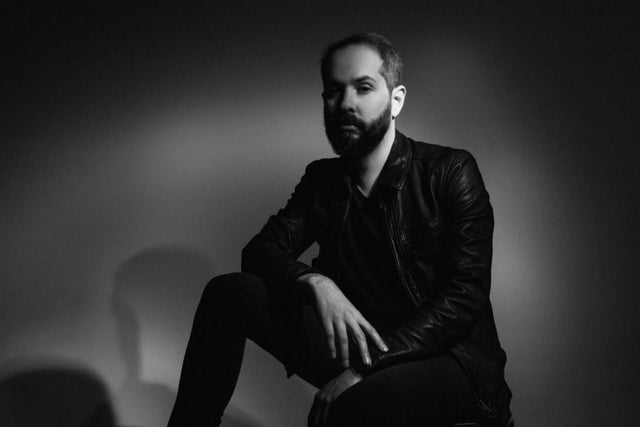
Now that the recalcitrant device has been dealt with he takes a seat, dapper in a navy blue suit and tie with a pale pink shirt. His hair is slicked back above a neat moustache, as if he might be about to audition to play Clark Gable. A bundle of nervous energy, he still looks younger than his 39 years, but less boyish than he did in his floppy-haired youth. “I’m not cute like you,” Seth Rogen’s character lamented to Schwartzman in Funny People a decade ago, “I don’t look like Jackson Browne.”

Continue reading at The Independent.

Cigarettes After Sex: “It kills the magic if someone asks, ‘What’s our song gonna be?'”

20190715_CigarettesAfterSex_EbruYildiz_178-e1571393854807
Greg Gonzalez writes songs like intimate diary entries: explicit, erotic and nakedly autobiographical. That was all well and good when he started out in 2008, before anyone was really listening, but in 2016, his band Cigarettes After Sex became an overnight internet sensation eight years in the making.

It was in January of that year that his song “Nothing’s Gonna Hurt You Baby”, which had been released to little fanfare four years earlier, went belatedly and unexpectedly viral.

It has now been played 95 million times on YouTube alone, helping the band’s 2017 self-titled debut album find an audience eager for its gauzy, hypnagogic melancholy and X-rated lyrics. The question is, does this success mean that now every potential romantic partner expects to be memorialised in song?

Continue reading at The i.

The Lumineers: ‘Addiction is complex — there are so many shades of grey’

lumineers.jpgToronto is in the grip of film festival fever, and while The Lumineers may be one of the most successful bands in the world – their 2012 breakthrough track “Ho Hey” has been streamed almost 500 million times on Spotify alone – that doesn’t make them immune to the excitement.

In the lobby of the Hotel InterContinental, frontman Wesley Schultz has spotted Wagner Moura on an escalator. “That’s the guy from Narcos, dude!” he nods to drummer Jeremiah Fraites. “We love your show!” shouts Fraites. Moura gives the pair a cautious thumbs-up.

The bandmates could almost pass for film stars themselves. The long-haired Schultz looks not unlike a young Kurt Russell, while Fraites, in his pork pie hat, is a dead ringer for Woody Harrelson.

In fact, they’re in town for the premiere of III – either a short film or a long music video, depending which way you look at it, which dramatises their third album, a concept record of the same name which is released today.

Continue reading at The i.

Trump got some things right in his State of the Union address, thanks to Kim Kardashian West

trump-sotuDuring a State of the Union in which Donald Trump at one point seemed to take personal credit for inspiring the record number of women now in Congress, most of whom ran in direct opposition to him, there was one woman whose tireless campaigning and pursuit of social justice played a pivotal role yet went unmentioned. When this speech is written up in the history books, they shouldn’t forget the name Kim Kardashian West.
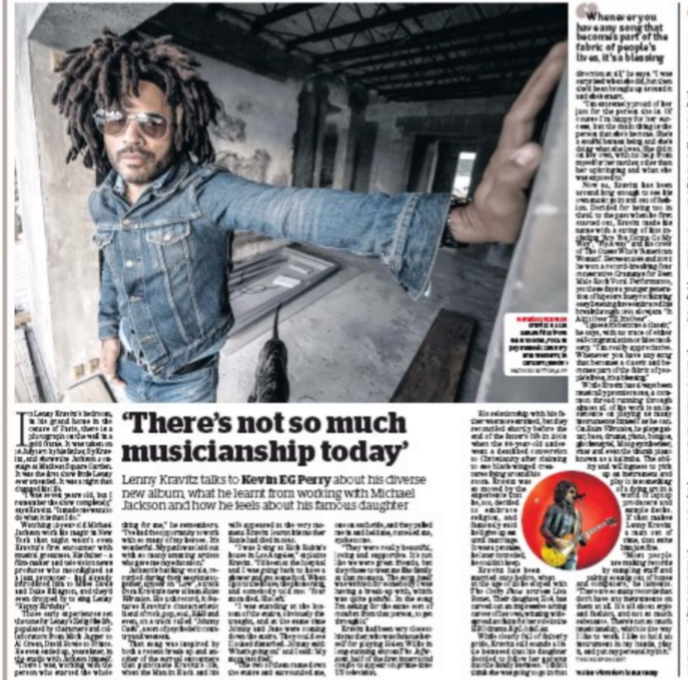
In May last year, Kardashian met with Trump and Jared Kushner in the Oval Office to lobby generally for prison reform, and specifically to call for the release of Alice Marie Johnson, a 63-year-old woman who was given a life sentence in 1996 for her involvement in a cocaine trafficking organisation in Memphis.

Trump agreed to commute Johnson’s sentence, and today he invited her as one of his many stunt guests. Seated next to the looming Kushner, who always looks as if he’s caught in the midst of A Series of Unfortunate Events, Johnson wiped away tears as Trump said: “When I saw Alice’s beautiful family greet her at the prison gates, hugging and kissing and crying and laughing, I knew I did something right. Alice is with us tonight, and she is a terrific woman.”

Continue reading at The Independent.

Lenny Kravitz: ‘There’s not so much musicianship today’

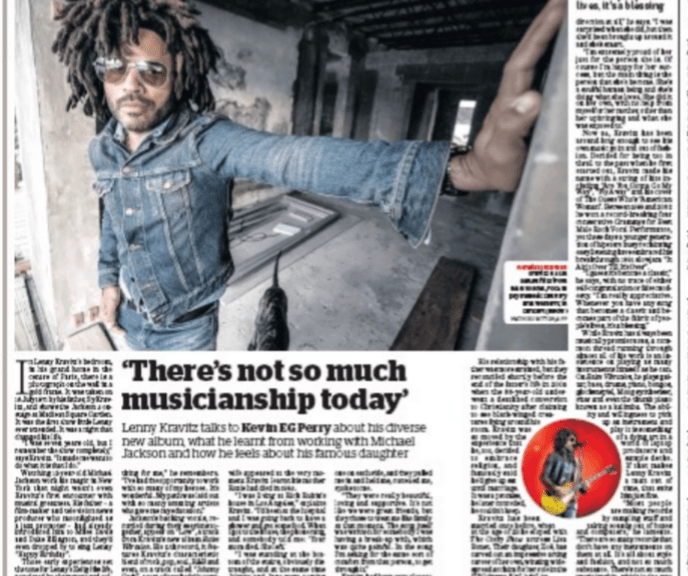
lenny-kravitzIn Lenny Kravitz’s bedroom, at his grand home in the centre of Paris, there is a photograph on the wall in a gold frame. It was taken on 16 July 1971 by his father, Sy Kravitz, and shows the Jackson 5 onstage at Madison Square Garden. It was the first show little Lenny ever attended. It was a night that changed his life.
“I was seven years old, but I remember the show completely,” says Kravitz. “It made me want to do what it is that I do.”

Watching a 12-year-old Michael Jackson work his magic in New York that night wasn’t even Kravitz’s first encounter with musical greatness. His father – an NBC television news producer who moonlighted as a jazz promoter – had already introduced him to the likes of Miles Davis and Duke Ellington, and they’d even dropped by to sing Lenny “Happy Birthday”. Those early experiences set the tone for his Zelig-like life, populated by a cast of characters and collaborators featuring everyone from Mick Jagger to Al Green and David Bowie to Prince. He even ended up, years later, in the studio with Jackson himself. “There I was working with the person who started the whole thing for me,” he remembers. “I’ve had the opportunity to work with so many of my heroes. It’s wonderful. My path was laid out with so many amazing artists who gave me my education.”

Continue reading at The Independent.

Shame: ‘Everyone’s political – it’s just whether they choose to share it’

ShameBackstage at the Teragram Ballroom in Los Angeles, Shame frontman Charlie Steen – still slicked with sweat after the south London five-piece’s thrillingly visceral set – is reeling off stories about how strange their first ever cross-country tour across America has been. They’re a band who collect outlandish tales like other bands collect hangovers and STDs.
“We were in Louisville, Kentucky,” he tells me. “Me and Eddie, our guitarist, went to the liquor store to get cigarettes and there was a guy stood next to us who was completely blue. We got carded, and the blue guy went: ‘Are you boys German or sumthin’?’ We said no, we’re British. Then he said: ‘Oh we’ve got a lot of them stationed here.’ He started going on about how North Carolina made the wrong decision. We didn’t know what he was talking about.”

It turns out they’d had an encounter with one of the Blue Fugates of Kentucky, an Appalachian mountain family who all carry the rare skin condition methemoglobinemia which turns their skin a shade of blue.

“The band we were on tour with, Protomartyr, said they look out for them every time they’re in Kentucky. We just stumbled upon him in the liquor store,” says Steen, still sounding as if he hadn’t quite believed his own eyes. “It’s like seeing a unicorn.”

Steen takes a pull on a beer while the rest of the band – guitarists Sean Coyle-Smith and Eddie Green, bassist Josh Finerty and drummer Charlie Forbes – prod at the wreckage of a birthday cake on the dressing room table.

Continue reading at The i.

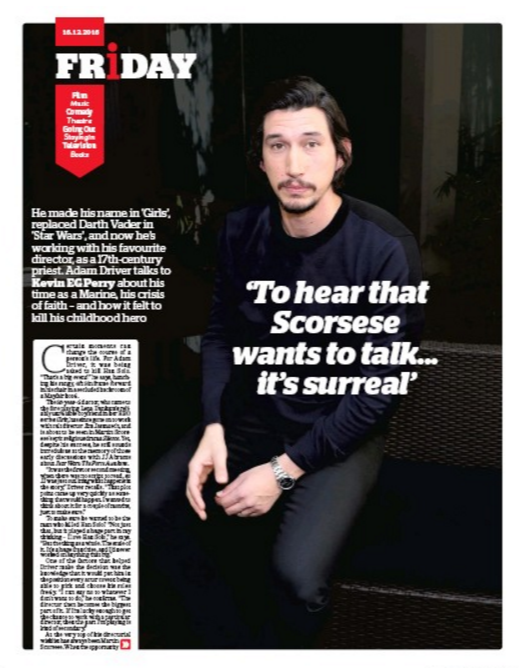
Adam Driver: “To hear that Scorsese wants to talk… it’s surreal”

adam-driverThere are certain moments that can change the course of a person’s life. For Adam Driver, it was being asked to kill Han Solo.

“That’s a big event!” he says, hunching his rangy 6ft 3in frame forward in his chair in a secluded backroom of a Mayfair hotel. The 33-year-old actor made his name playing Lena Dunham’s reliably unreliable boyfriend in her HBO series Girls, has since gone on to work with cult director Jim Jarmusch and will soon be seen in Martin Scorsese’s epic religious drama Silence. Yet despite his success he still sounds incredulous at the memory of those early discussions with JJ Abrams about Star Wars: The Force Awakens.

“It was the first or second meeting, when there was no script to read, so JJ was just outlining what happens in the story,” Driver recalls. “That plot point came up very soon as something that would happen. I wanted to think about it for a couple of months just to make sure.”

To make sure you wanted to become the man who killed Han Solo?

“Not just about that, but that played a huge part in my thinking – I love Han Solo,” he says. “But also, the thing as a whole. The scale of it. It’s a huge franchise, and I’d never worked on anything that big.”

One of the factors that helped Driver make the decision was the knowledge that it would put him in the position every actor covets: being able to pick and choose his roles freely.

“I can say no to whatever I don’t want to do,” he confirms. “The director then becomes the biggest part of it. If I’m lucky enough to get the chance to work with a particular director then the part I’m playing is kind of secondary.”

At the very top of Driver’s directorial wishlist has always been the name ‘Martin Scorsese’. When the opportunity came four years ago to audition for Silence, the director’s longterm passion project, Driver leapt at it. Production was delayed, but eventually Driver was invited to meet Scorsese at his home.

“I thought it was still between a few different people,” says Driver. “I didn’t know that at the end of the meeting he was going to offer me the part. It was surreal. He’s a filmmaker who in my mind is the tip of the pyramid to work with. To hear that he wants to talk to you about a role made it a formality on my part. I would have said yes regardless of what it was.”

What it was turned out to be the part of a Portuguese Jesuit missionary in Scorsese’s adaptation of Shūsaku Endō’s 1966 novel. He plays the doubting counterpoint to Andrew Garfield’s lead as the pair travel to Japan to seek their teacher, played by Liam Neeson, who is rumoured to have apostatised. Driver threw himself into the role by losing nearly a third of his weight, undertaking a week-long silent retreat at St. Beuno’s Jesuit house in Wales, and immersing himself in the novel.

“I latched on to this idea of the crisis of faith,” says Driver. “All the characters have a different relationship to it. I based my character on St Peter, because I loved the idea of someone who has committed their life to something but at the same time they’re openly doubtful of what it is they’re doing and questioning why they wanted to do it to begin with. I think that’s a healthy part of creating something and something that I understand.”

It’s also a role that spoke to Driver’s childhood. He was born in California, on 19 November 1983, but when he was seven his mother Nancy took him and his older sister April to her hometown of Mishawaka, Indiana. When his mother remarried it was to Rodney G. Wright, a Baptist minister, but Driver experienced a crisis of faith of his own. “I was raised in a religious household,” he says, “but now I don’t subscribe to any religion.”

Rather than the church, it was film that helped Driver find his place in the world. “My grandfather – my mom’s dad – recorded movies on VHS,” he remembers. “He catalogued them and wrote the title and a brief description and kept them in a laminated book that me and my sister could look through. He kept 500 movies, and 100 tapes were by his bed. It made me realise that these are important artefacts.”

After getting a taste of theatre at high school, Driver applied for a place at the prestigious New York drama school Juilliard but his application was rejected. Then 9/11 happened. Driver was 17 years old and still living with his parents when he decided to enlist. He served as a Marine for two years and eight months, but before his unit deployed to Iraq he broke his sternum mountain biking and was medically discharged. He applied to Juilliard once more. This time he was accepted.

“I thought civilian problems compared to the military would be small and easily manageable, which is an illusion,” he laughs. “It’s hard to be alive regardless what your job is. It gave me this false sense of confidence that I could manage being an actor.”

It was three years after graduating from Juilliard that he won his breakthrough part in Girls, although he remembers at the time simply being happy to have found “steady employment”. “The job turned out so much better than I expected,” he says. “I was just happy to be making more money than I had in the theatre.”

His kinetic physical presence and awkward charisma caught the eye of the sorts of directors he’d always dreamed of acting for. Stephen Spielberg cast him in Lincoln and the Coen Brothers even got him singing in Inside Llewyn Davis. Most recently, he played the eponymous lead in Jim Jarmusch’s Paterson, a paean to the New York School poets and the beauty of everyday romance. “Jim reached out to me and, again, only as kind of a formality I read the script,” says Driver. “I think he’s brilliant, and his movies are.”

Joining the cast of Star Wars and working with Jim Jarmusch and Martin Scorsese is the sort of fantasy wishlist any young actor might draw up. Is Driver living the dream?

“Yeah, but I definitely had no masterplan,” he laughs. “I’ve been kind of spoiled by it. I’m very aware it’s a director’s medium, so if I can be lucky enough to still keep working with great directors then that’s the only game plan I have.”

Originally published in The i, 16 December 2016.

“It’s all or nothing – that’s why it works”

thekills-i“Three margaritas!” Jamie Hince exclaims to a waiter, his voice filled with joy. It is Cinco de Mayo after all, or close enough. Mayo, at least. Either way, The Kills are celebrating. We’re in a hotel bar near Covent Garden and Hince and bandmate Alison Mosshart are toasting the impending release of their fifth album, Ash & Ice.

It’s a fittingly louche title for a Kills record, named by Hince after he dropped a fag end into a cocktail glass at the end of a long night of hard partying. In the 14 years they’ve played together as a garage rock duo, Hince, 47, and Mosshart, 37, have garnered a reputation for both incendiary live shows and being the last standing at the end of any given night. Strangely, they’re both arguably now more famous for their extracurricular activities: Mosshart for fronting Jack White side-project The Dead Weather; and Hince for marrying, and now separating from, Kate Moss.

Not that all the tabloid attention has helped the band much. “All it’s done is made people who I could have told in advance they’re not going to like my band, listen to a song and then say: ‘This is shit!’,” says Hince, to Mosshart’s amusement.

“If you go on YouTube and look at the likes on our videos, we’ve got an amazing amount of thumbs down,” continues Hince. “I think that’s all those people who are checking us out because they’ve seen me in the paper going: ‘This is shit!’ Then again, we did say at the start that we wanted to be a polarising band of idiots.”

Continue reading at iNews.

Sage against the machine

bobby-gillespie-independentIf you only listen to one album named after a book by the radical French psychiatrist Félix Guattari this year, make it Primal Scream’s Chaosmosis.

Bobby Gillespie, the band’s indefatigable leader, may once have been known as one of rock’n’roll’s great hedonists but these days, at 53 and almost eight years sober, he’s never happier than when discussing critical theory.

When I meet him for lunch in north-west London, he tells me he actually lifted the portmanteau from the Italian Marxist theorist Franco “Bifo” Berardi’s 2015 book Heroes, which references Guattari’s work, who uses it to explain how we each absorb the mass of disconnected information the contemporary world throws at us.

Continue reading at The Independent.

FIFA on the campaign trail: Jérôme Champagne says expanding the World Cup to 40 teams is ‘pure fantasy’

Jerome-ChampagneFifa presidential candidate Jérôme Champagne has dismissed electoral rival Gianni Infantino’s promise to expand the World Cup to 40 teams as “demagoguery” and “pure fantasy.”

With just two weeks to go until the Fifa Extraordinary Congress on February 26, where Sepp Blatter’s successor will be elected, Champagne has claimed that expanding the World Cup as Infantino has proposed would be unnecessarily expensive and time-consuming.

Speaking from his office in Zurich, Champagne said: “It sounds very appealing, but the reality is that the World Cup of 32 teams is already too costly and too complicated to organise. [Expanding] would reduce our ability to improve stadiums and public transportation. Secondly, a World Cup of 40 would need ten groups of four or eight groups of five. If you’re coming from a club background, you’d say that the calendar is already too full. We have to protect the leagues and the clubs and the players.”

Continue reading at The Independent.


Arcade Fire: ‘The major record labels are completely clueless’

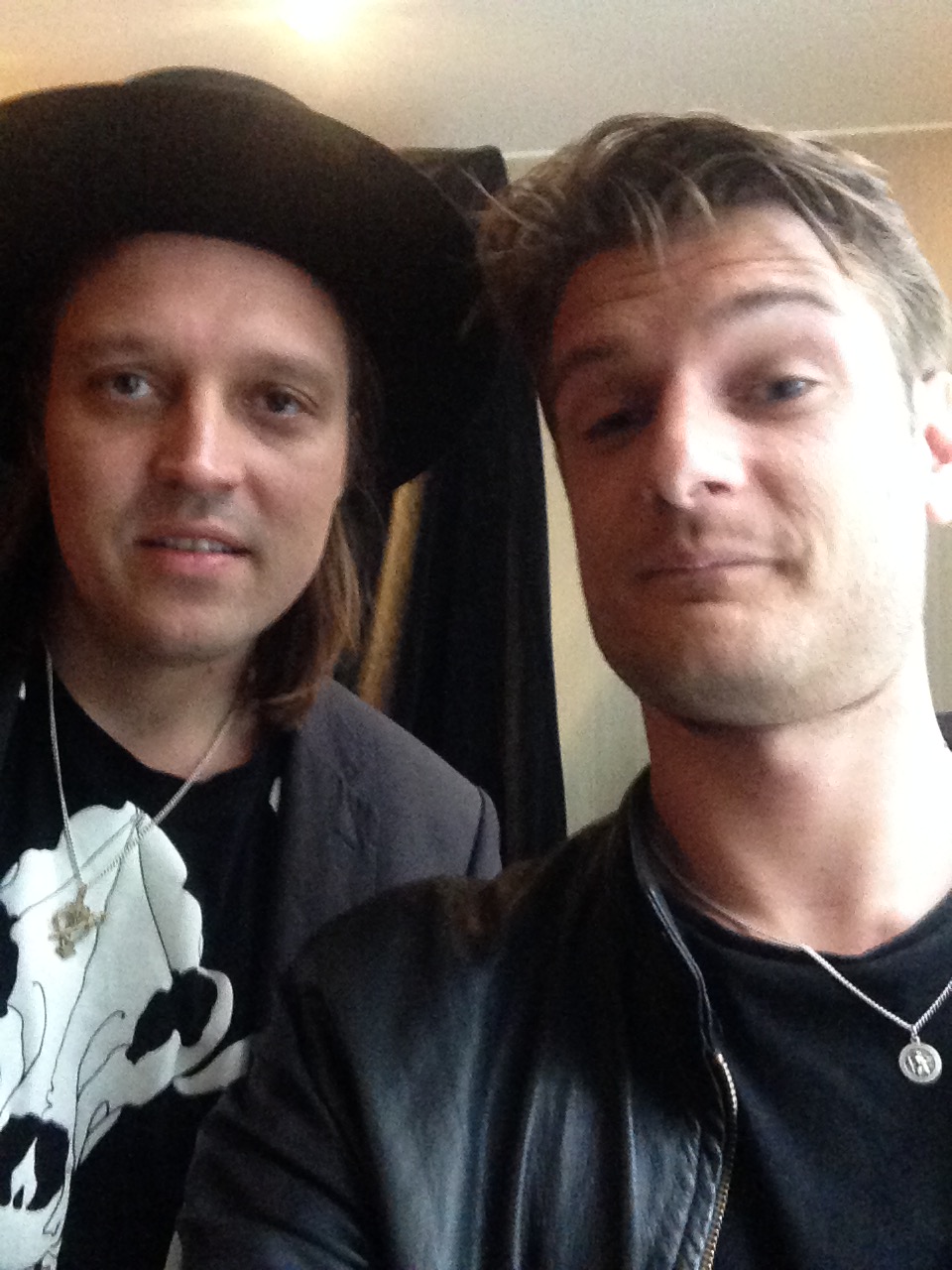
arcade-fire-independent-on-sundaywin-butler-kegpIt’s late in the evening after the premiere of The Reflektor Tapes at the Toronto International Film Festival, and Arcade Fire are throwing a party at Rhum Corner, a local Haitian bar. Win Butler, unmissable at 6ft 5in in a widebrimmed hat, works the room, thanking those who worked on the film and hugging friends. Beside him, his wife and co-bandleader Régine Chassagne dances to the insistent rhythm coming over the soundsystem. “This is rara music,” she shouts over the beat. “You hear it all the time in Haiti.”

The Reflektor Tapes is an oblique, impressionistic documentary about the making of Arcade Fire’s fourth album and, like this bar, it’s full of visions of Haiti. Fittingly for a film about a record Butler called a “mash up of Studio 54 and Haitian voodoo,” director Khalil Joseph eschews a straightforward making-of narrative, and instead offers glimpses of what the band saw when visiting the island shortly after winning the Grammy for Album of the Year for The Suburbs in 2011. Butler and Chassange had first travelled to Haiti in 2008 and had been involved in charity work there since long before the devastating earthquake of January 2010.

The visits were something of a homecoming for Chassagne, whose parents fled the country in the 1960s when President François “Papa Doc” Duvalier’s Tonton Macoute death squads were murdering his political enemies. Understandably, they were never keen to return themselves.

“I never knew my [paternal] grandfather, because he was taken away, and my mother’s extended family were massacred as well,” says Chassagne. “My mother had a very traumatic experience, so for her it was never an option to go back. After she passed away, I decided to go in 2008 because I wanted to see it for myself. It was only when I got there that I began to understand my own tics. Everything made so much sense.”

Chassagne and Butler, the couple at the heart of Arcade Fire, met while studying at Montreal’s McGill University in 2001. They wrote a song on the first night they spent together (“Headlights Look Like Diamonds”), married in 2003, and released the first Arcade Fire album Funeral the following year. It included a song called “Haïti”, which Butler encouraged his wife to write after becoming fascinated with the stories he’d hear around her uncle and aunt’s dinner table while celebrating Haitian Christmas. “It was always something that she was sort of scared to talk about,” says Butler. “I remember writing that song with Regine and really pushing her to talk about this stuff.”

Despite Chassagne’s family background, Reflektor was accused in publications, including The Atlantic, of cultural appropriation. In The Reflektor Tapes, Chassagne discusses the fact that her immediate family are all darker skinned than she is, suggesting that these same criticisms wouldn’t have been levelled if she didn’t appear to be “white”. In Toronto, she argues, this shouldn’t matter anyway. “It’s interesting because I see this criticism more from people who are not Haitian, or who couldn’t even pinpoint which part of the songs have a Haitian influence,” she says. “I think it’s silly to put barriers between musical genres. Every kind of music is a combination of different influences. Music is a language that everybody talks. It brings people together, and that’s the point.”

Even if The Reflektor Tapes marks a full stop to the band’s work around their last album, they say it won’t be the last time they’re influenced by Haitian musicians. “You can’t unhear the Beatles,” reasons Butler. “It’s not like we ever had any interest in making this our ‘Haitian’ record. If I didn’t talk about it, I don’t know that people would have necessarily picked up on it, except there’s congas on there.”

As well as capturing the band’s travels in Haiti, and recording sessions in Jamaica and Montreal, The Reflektor Tapes teases out the band’s intellectual journey since 2011, notably Butler’s fascination with Søren Kierkegaard’s essay “The Present Age”. The film offers the quotation: “The present age is one of understanding, of reflection, devoid of passion, an age which flies into enthusiasm for a moment only to decline back into indolence.”

While that line sounds as if it could have been written while Kierkegaard was casting his eye down his Twitter feed, it dates from 1846. In the past Arcade Fire have been cast as anti-technology because of Facebook-baiting lyrics like “We’re so connected, but are we even friends?” on Reflektor’s title track. However, Butler says that idea is false and agrees that our click-short attention spans can’t be blamed on the internet or smart phones. “I don’t give a shit about iPhones,” he says. “When I was a kid it was: ‘TV is going to rot your brain’. Every era has something to take its place.”

Butler and Chassagne laid their technology-friendly credentials bare in March when they became two of the few rock musicians involved in the launch of Jay Z’s Tidal streaming service. The event ended up being roundly mocked for presenting millionaire artists as charity cases asking for the public’s support, and with double the monthly subscription price of main competitor Spotify, the app has so far failed to take off.

Butler says he doesn’t regret their involvement, but he accepts the launch gave an unfortunate impression. “None of the artists knew anything about the PR,” he says. “It was a poorly managed launch, but conceptually the thing that we liked about Tidal was that it’s HD streaming quality.”

He lays the blame for Tidal’s struggle squarely at the door of major labels. “They dictated that Tidal has to cost $20,” he says. “The major label music industry has completely ruined every aspect of their business. At every step of the way they’ve had the tools offered to them to create an industry that works, and they’ve completely blown it. That’s why we never had any interest in signing a contract with one of these companies because they’re clearly completely clueless.”

Having kept the band resolutely independent, tied only to tiny indie label Merge, Butler defends their involvement with Tidal as a way of seeking solutions that the music industry have missed. “It seems silly, for fear of being embarrassed, to not at least sit at the table with Jay Z, Kanye and Daft Punk and talk about art and music and how it’s going to be distributed,” he says.

In a little over a decade, Arcade Fire have grown from indie eccentrics into one of the biggest bands in the world – and Butler shows no false modesty in his belief that they’ve earned their place, literally, at music’s top table. “I think that we’ve ended up there because we work really hard and our records are really great,” he says, matter-of-factly. “All I care about is the work. I don’t care if people recognise me when I leave this building. I’d really prefer if they didn’t, but I really do care about the work. David Bowie came to our first show in New York, which blew my mind, but now I see him as … not a contemporary, but like a professor. I see our band as trying to carry on that same spirit of what Bowie was doing, or Bruce Springsteen, or Radiohead, or any of these bands that were bold enough that I heard them in suburban Houston.”

At one point in The Reflektor Tapes, Butler’s brother and bandmate Will says the band would be happy for their music to be remembered anonymously. Butler agrees with the sentiment. More important than any personal recognition, he says, is the idea that their own songs can become part of that chain of musical influence.

It was, fittingly, in Haiti that Butler and Chassagne saw that in action when, several years after that first 2008 trip, a group of teenagers dragged them to watch their band practice in Jacmel, southern Haiti. “Their apartment looked like mine when I was 19,” remembers Butler. “There was a drum kit in the corner and a bass. These kids from rural Haiti were playing, and it was Arcade Fire inspired. I mean, the name of the band is Fire Flame. It was the craziest thing. One of the kids got into Neil Young because he got on some bad internet connection in Haiti and found Arcade Fire and followed a link and then learned Neil Young songs on an acoustic guitar.”

A grin as wide as the brim of his hat breaks across his face. “That is cool,” he says. “To me, that’s the point of the whole thing.”

Originally published in The Independent, 20 September 2015.