Category Archives: NME

Malian musicians call for peace – and Glastonbury helps their music play loud

2013AfricaExpressPress210113

Can you imagine a place without music? In the north of Mali, in West Africa, Islamist extremists have taken control of vast swathes of the country and set about imposing a restrictive social code which includes the banning of all forms of music. It’s a cruel irony that this is happening in a place known all over the world for the richness and beauty of its musical culture. Among the areas that have now fallen silent are Timbuktu, near the site of the famous Tuareg ‘Festival Au Désert’, and Niafunke, the hometown of the legendary triple-Grammy-winning guitarist Ali Farka Toure.

Can you imagine a place without music? In the north of Mali, in West Africa, Islamist extremists have taken control of vast swathes of the country and set about imposing a restrictive social code which includes the banning of all forms of music. It’s a cruel irony that this is happening in a place known all over the world for the richness and beauty of its musical culture. Among the areas that have now fallen silent are Timbuktu, near the site of the famous Tuareg ‘Festival Au Désert’, and Niafunke, the hometown of the legendary triple-Grammy-winning guitarist Ali Farka Toure.

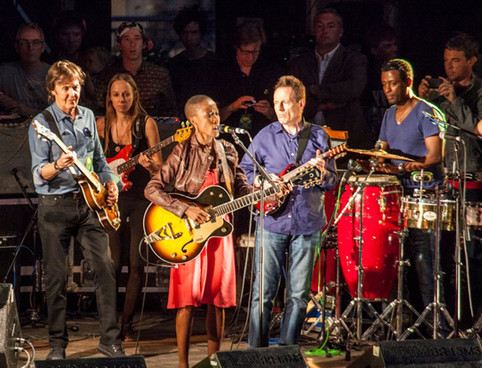
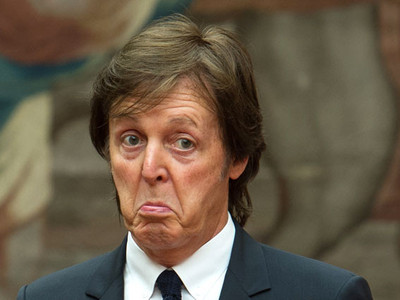
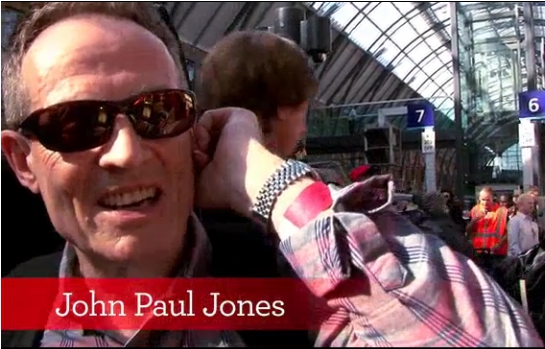
Glastonbury Festival last week declared their solidarity with Mali’s silenced musicians by announcing Rokia Traore as the first act on this year’s line-up. They also pledged that every day a singer from the country will open the Pyramid Stage. If you’re not already a fan of Traore then you should know she comes highly endorsed: at this summer’s Africa Express concert in London she was joined onstage for a gorgeous performance of ‘Dounia’ by both Paul McCartney and Led Zeppelin’s John-Paul Jones.

The banning of music is not without precedent, but recent history shows that somehow songs finds a way to survive. In Afghanistan until 2001, music, dancing and television were all banned under the Taliban’s rule. However, as Havana Marking’s 2010 documentary ‘Afghan Star’ showed, by the end of the decade the unlikely saviour of the ‘Pop Idol’ format was helping a culture find its voice. The remarkable documentary illustrates that even under the Taliban music continued to live on out of earshot of the authorities. The film opens with young boy, blind in both eyes, singing his heart out straight to camera. He can’t be more than six or seven, but when he finishes he says that without music, human beings would be unhappy. A reality his parents’ generation lived through. In another incredible scene, unearthed footage from the early ’80s shows an Afghan electro-pop band who look and sound as if they’ve just walked off the set of Top of the Pops. It’s evidence that pop music wasn’t as alien to Afghan culture as the Taliban tried to make it seem.

Hopefully the people of northern Mali will not have to live without music for as long as the Afghan people did, with international attention now being drawn to the country. Meanwhile, Fatoumata Diawara recently gathered over 40 of the country’s most renowned musicians to record a song called ‘Mali-ko’ (Peace / La Paix). The group, collectively called ‘Voices United for Mali’, includes local legends like Amadou and Mariam, Toumani Diabate and the late Ali Farka Toure’s son Vieux. With any luck, by the time Glastonbury arrives the song will be able to be heard not just in Pilton but on the streets of Timbuktu and Niafunke too.

Originally published by NME.

Wrapped Up In Books

cave-cohenThere have been truckloads of great rock memoirs: Keith Richards’ Life, Patti Smith’s Kids, Mark E Smith’s Renegade, R Kelly’s Soulacoaster, but how many lyricists have made the leap from songwriting to longform fiction? And have any of them been any good?

Continue reading at NME.

Do You Remember The Last Time?

Pulp-NME

Backstage during Pulp’s raucous return to Sheffield, two huge shaven-headed roadies are watching Jarvis Cocker cavort around the stage and throw himself off speakers, whipping the crowd into a frenzy with every thrust of his impossibly sharp hips. Eventually, during the long, strange intro to ‘Party Hard’, one turns to the other, a baffled look slapped across his face. He tilts his head towards Jarvis and mutters: “There’s something not quite right about him.”

34 years after Jarvis decided to form a band during a boring economics lesson, Pulp remain elegant outsiders. They’re still the band that every mis-shape, mistake and misfit and in the country see themselves in. When they stepped in to headline Glastonbury at the last minute back in 1995, Jarvis told us: “If a lanky get like me can do it, and us lot yeah, you can do it too.” Their underdog triumph made it cool to be different. They weren’t afraid to be smart or literate. Their songs were like Philip Larkin poems rebuilt for the indie disco.

But all things must pass. Rumours are flying around that this will be their final UK show, with only a pair of dates on the Coachella Cruise remaining of their reunion tour. Fittingly, they’re playing at the arena home of the Sheffield Steelers ice hockey team. The rink has been boarded over with chipboard floors but it’s still there, frozen under their fans’ feet. Pulp are being put on ice.

It was even colder outside, but that didn’t deter the Pulp ‘hardcore’, who’ve been arriving since 8am. Someone brought a marker pen to write the order they arrive in on their hands. That way they can huddle together for warmth but still keep their strict positions in the queue. A fan called Susanne is wrapped in silver foil, like a collapsed marathon runner.

The first to arrive was Melina, who had flown over from Georgia in the USA just to see the show. “It’s my first time in the UK,” she says.  “I’m so sad that I’m leaving again tomorrow. I first saw Pulp on television when I was 16. I fell in love right there and then.” She’s one of many international fans who’ve made the pilgrimage, knowing this could be the last chance to see their idols in the flesh.

The fans are younger than you’d expect for a reformed Britpop group. Another early arrival is Alice, who at 17 has been alive exactly half the time that Pulp have been a band. “When I saw them at Reading Festival it changed my life,” she giggles. “I was just like: “Marry me, Jarvis!” I can’t wait for ‘This Is Hardcore’, when Jarvis does his thrusting.”

Another fan, from Australia, sums up why Pulp are the sort of band worth queuing all day for: “It’s because of the people that Pulp write about. You don’t hear about people like me unless you listen to a Pulp song.”

There are 12,000 people at the Sheffield Arena who feel the same way, so Pulp have to work hard to make the show feel intimate. Before the band go on, drummer Nick Banks says: “We’re going to play a lot of songs tonight. We’ll play all the ones they want to hear, so I don’t think they’ll be leaving disappointed, but hopefully they’ll also hear some stuff they might not have heard for a long time – or even ever.”

Against the odds, Pulp manage to transform this cavernous sports warehouse into a local club. They have a fake fireplace on stage, beside which Jarvis nonchalantly sips red wine. The best touch, though, is what Jarvis describes as toilet paper-powered “time travel”. In the band’s early days they would festoon venues with rolls of it, in lieu of the pricier pyrotechnics they can deploy today. After inviting the audience to cover the whole arena in long white paper streaks of the stuff, they then reach way-back into their collective history, fishing out 1983’s My Lighthouse’ – accompanied by Jarvis’ sister Saskia – 1985’s brilliant ‘Little Girl (With Blue Eyes)’ and 1991’s disco-drenched ‘Countdown’.

The whole show is a barnstorming triumph, from the opening shimmy of ‘Do You Remember The First Time?’ through to the collective ecstasy of ‘Common People’ and the anthemic ‘Mis-Shapes’.

Longtime collaborator Richard Hawley joins them onstage for a chunk of the set, most visibly when he plays the solo on ‘Born To Cry’ live for the first – and possibly last – time. He won’t be joining the band for their cruise-ship shows, so tonight is particularly poignant for him. He tells me later: “I’ll be seeing them off with a tearful hanky at the pier, I think, but it seems fitting to wave them off into the sunset.”

He adds his own thoughts on the significance of Pulp: “The only shame about them not doing anything new is that they could put a real spin on what’s happening in our country and the fuckwits that lead us, although in a way it’s already been said with songs like ‘Common People’. Jarvis’ lyrics aren’t just of a period of time, they still make sense. We’ve stills got cunts in charge. As long as there are dickheads like Cameron and his ilk, Pulp will always have relevance. Also emotionally they still resonate. Their songs go beyond political ranting to something far more subtle and important than that.”

Later in the night, at Pulp’s party for friends and family at The Blue Shed, you can see the baton being passed to a new generation as Pulp bassist and Palma Violets producer Steve Mackey hugs his protégés as Arctic Monkeys tunes blast across the dancefloor. Chilli from the Palmas is full of praise for their mentor: “Steve Mackey is a king! I saw Pulp at Hyde Park, but tonight the one! This was a whole different level, even if all the Sheffield references did make us feel a bit left out. I could tell how much they put into it emotionally.”

Emmy the Great describes the gig as definitely in the top three shows she’s ever seen, “possibly the top one.” She adds: “I saw a girl just behind me by the mixing desk, wearing a T-shirt with Pulp written on every square inch of her body. At the end she was just weeping, but I understood because that’s how this band makes people feel. Their first show may have been in 1980 but they’re still so good and so relevant.”

At the end of the night, Jarvis hosts a small party in his dressing room. It’s a chance to ask him exactly what it meant to him to come back and play in Sheffield. “The thing is,” he says, “even though I haven’t lived here for a very long time I always get in a right fluster when we come to Sheffield. Tonight was no exception. It had highs, and lows, and it was funny. There were lots of friends and family here, and that’s what piles the pressure on even more. Your mother’s there, your sister’s there – even onstage singing with yer. I think it went okay. I think we made a connection. The toilet rolls were good. It’s hard to play a big place like this. It’s an arena, so it doesn’t have any atmosphere of its own. You have to try and make an atmosphere happen. We were trying to take this shed, where anybody will play, and make it feel like a Sheffield thing and an intimate thing.”

So the only remaining question is: is this really it, Jarvis? The last ever Pulp show on terra firma? “Ooh, I can’t…” He cracks a smile and trails off. “Certainly for a while, yeah. I don’t believe in saying that it’s the last one forever. There was enough pressure on tonight without saying: ‘This is it: the final show.’ It’s not really your call, do you know what I mean? Ten years ago when we played at the Magna, it felt like: “Ooh, right, this is the end.” You can try to tie everything up neatly, but you just have to see what life throws at yer. I think that’s the way life works. You can’t impose a structure on it. So… we’ll see. But it’s it for now.”

Originally published in NME, 5 January 2013.

Keith Richards’ Most Kick Ass Riffs

KeithRichards02PA251010

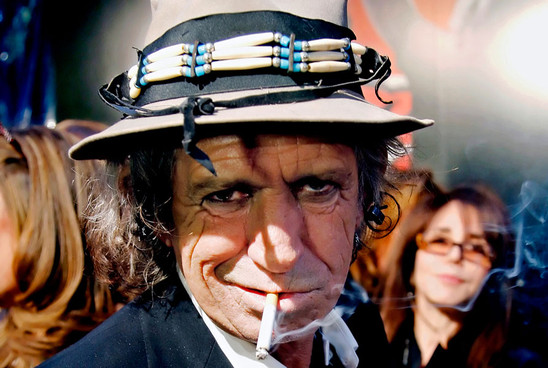
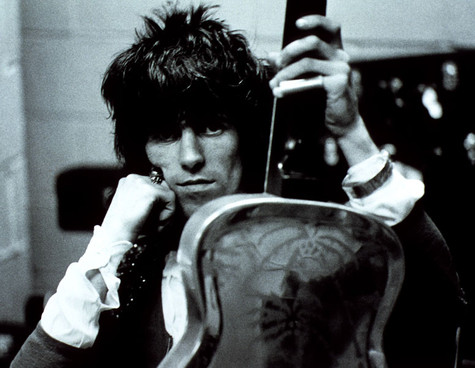
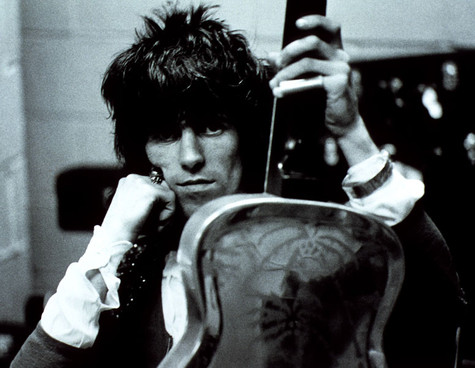
If rock’n’roll could be turned into flesh and made to walk the earth, it would look and sound a lot like Keith Richards. It’s not the skull ring, the elegantly wasted appearance or the chemically-enchanced bloodstream that does it – although that all helps – but the fact that he has an unerring knack of hoovering up pretty much all of the greatest guitar riffs ever written.

Continue reading at NME.

Poutine Age Riot

2012DONOTUSEdeathgripspicbymikeburnell211112Any city whose staple food is chips, gravy and cheese curd is alright by me. Montreal’s proud, surprisingly not overweight, citizens call it ‘poutine’ and even if you don’t rock up at notorious 24hr joint La Banquise until four in the morning they’ll still be queuing around the ice cold block for it. I was in town last week for the annual M For Montreal festival, Canada’s new band festival and worthy rival of the likes of SXSW and The Great Escape. In a handful of crammed city centre venues the festival cheerfully slathered some of the year’s best international acts over a generous helping of Canada’s finest homegrown bands. I put on my warmest, furriest hat and headed out into the frozen night to see what I could find. These are the bands worth writing home about:

Death Grips
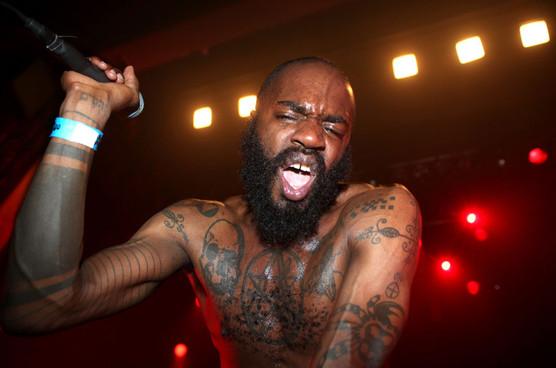
M For Montreal pulled off something of a festival coup by bagging Death Grips, and the Californians were easily the pick of the international bands. Yeah, so it’s a bit of a shame that touring without production guru Andy ‘Flatlander’ means they’re playing to a pre-recorded backing track, but even that doesn’t take too much away from Zach Hill’s monstrous drumming, which seems him breaking drum sticks and hammering the skins with his fists, or from the visceral power of MC Ride in full flow. A ferocious live proposition.

Blue Hawaii
Initially sold to us on the Grimes connection (they’re signed to Arbutus Records and have opened for Montreal’s current indie queen on various occasions) it took about 4 seconds of their set in Casa Del Popolo on Wednesday night for it to become clear that they’re in no need of riding anybody’s coat-tails. Singer Raph is blessed with an immediately captivating voice while her boyfriend Agor works all kinds of magic on synths and drums. The first band of the week to get everyone dancing, I next saw them in an underground illegal warehouse manfully battling to keep playing on while the party was shut down around them. Well played.

Suuns
Dark, experimental rockers Suuns were much feted at the beginning of 2011 when they released debut album ‘Zeroes QC’, but on the evidence of their set following Blue Hawaii at Casa Del Popolo their second record ‘Images Du Futur’, due next March, will be one of the highlights of 2013. You can hear lead single ‘Edie’s Dream’ now – but here’s a tip for when you’re raving about them later: it’s pronounced ‘Soons’, not ‘Suns’.

No Joy
There was a whole lot of shoegazing going on at M For Montreal, so for any band to stand out they had to be doing something special. Thank the Lord then for No Joy, who actually have the songs to back up the de rigueur hazy guitar sounds. Their ‘Negaverse’ EP, released this year, has been blowing Montreal’s collective minds, but personally I’m just a sucker for anyone who dedicates a great rock tune to Philip Larkin.

Duchess Says
Regardless of the sprawling lineup, the one band all the organizers were raving about in private were Duchess Says. Something of a Montreal institution having formed a little under a decade ago, they brought their driving Stooges-with-synths to the skull-covered environs of the Katacombes. I didn’t see a better live performer all week than Annie-Claude Deschênes, who wails like Karen O and spent most of the show walking upright over the crowd, held aloft by a sea of hands. The devout down the front would swear she could do the same on water.

Mac DeMarco
There could be only one victor of this year’s festival, however, and that was Mac DeMarco. Montreal will be dominating end-of-year album lists across the world and across genres thanks to year-defining records by such disparate musicians as Grimes and Leonard Cohen, but Mac’s the next big thing. His record ‘2’ is full of deceptively simple riffs and laidback jamming with snatches of everyone from The Modern Lovers to Pavement. He was welcomed back to Sala Rossa as a returning hero, and had already won the audience over before the final charming moment of crowd-surfing with his girlfriend in his arms while ‘Together’ played out. If that wasn’t enough, the next night he turned up at a warehouse party playing drums and then bass with the brilliant Walter TV (who you can hear here). There’s nothing else to say but light up a Viceroy and dance.

Originally published by NME.

Tom Morello on 20 years of Rage Against The Machine

TomMorelloRage Against The Machine matter in a way few bands ever do. Righteously angry and fiercely intelligent, they also proved that political rock didn’t have to suck. They made rap manifestos that rocked and heavy riffs you could dance to.

Their debut album went off like a bomb twenty years ago this month. Over the next two decades the shockwaves changed countless lives, including mine. To mark the anniversary the band are re-releasing the record in a box set that also contains footage from the band’s first ever public performance at Cal State Northridge in 1991 as well as their Finsbury Park victory concert in 2010. They’ve also thrown in the original demo tape of 12 songs that they recorded before they’d even played a show.

I don’t need a calendar-based excuse to listen again to Tom Morello’s incendiary guitar riffs, but it doesn’t hurt. Morello’s a genuine Harvard-educated political heavyweight as well as a technical pioneer who famously used his guitar’s toggle switch to simulate a DJ’s scratching. I caught up with the rebel with a cause to find out what he remembers about making the album, politicising a generation of fans and the moment it all kicked off at Reading.

It’s been two decades since you released ‘Rage Against The Machine’. How does it feel?

In some ways time has just flown by, but in other ways I never thought I’d live this long! Looking back at 20 years of “Fuck you, I won’t do what you tell me” has been really energising and I’m so glad that we’re able to put out this box set for the people who I’ve always considered the fifth member of Rage Against The Machine: the fans.

If you could somehow speak to yourself in 1992, would you give yourself any advice?

Oh yeah. The success of the band outpaced the emotional maturity of all four of us. We were swept up in it. We were offered a record deal after our second show. It took a while for the band for the break the US, but ‘Killing In The Name’ exploded in the UK shortly after it was released. We didn’t really pay the normal dues together, where bands build a brotherhood of solidarity. We were thrust straight onto the cover of the NME! The one thing I would say to myself would have been to press pause and really check in with each other as friends and as brothers to see where everybody was at and how everyone was doing as opposed to just pressing forward with the next gig.

What do you remember about recording those first demos together?

Let’s make it clear that we had no ambition beyond writing songs that we liked. We thought that the disparate genres of music that we were combining would be wholly unacceptable to the general consciousness. We didn’t even dream of an indie record feel. That was just off the board. We didn’t even think we would be able to book club shows. At a rock club nobody wanted to hear anybody rap and at rap clubs they certainly didn’t want to hear Zach. Then the band’s politics as well: there was nothing like that ever on the radio. Then there was the ethnic make-up of the band: there were no bands with a half-black guy and then a Chicano and a half-Jewish guy. So we wrote those songs for this first record with complete surety, without any aspirations to even book a club show let alone get a record deal. I reckon that’s one of the reasons we connected, because we were so unafraid, and we didn’t have any commercial aspirations. We made that whole first demo, recording 12 songs, before we even played a show.

Was there a moment when you realised things had exploded?

It was Reading ‘93. We had been to the UK a couple of times to play club shows, and we were still opening up for House Of Pain back in the United States and opening up clubs, and we were somewhere middle of the bill at Reading. When we came out it was like the whole country was pogoing. It was unbelievable. Clearly every one of the 65,000 people knew every lyric and were just going ape shit. We were like ‘Wow, what’s happened?’ It was really then that it occurred to us that there more might have been going on than we expected.

Are you proud of what the band achieved in terms of engaging fans politically, or do you sometimes wish you could have changed society more?

First of all there has never been a more popular band with politics as radical as Rage Against The Machine. We planted a flag on the political rock Mount Everest. There are bands that are political who have sold more records but they’re not as radical. There are bands who are more radical – well, maybe – than Rage Against The Machine but they haven’t come near to the same global popularity. That’s something we can be very proud of. You can look at it on a global scale and a personal scale. Bands like The Clash and Public Enemy changed me and encouraged me to pursue a life of activism and charity work. I meet people every day who tell me that Rage Against The Machine has done that to them. A number of the founders of the Occupy movement on a global scale have cited this particular record as the thing that politicised them. So any work that they do is in part because of those ten tracks! So that’s on a personal level. Certainly on a global level there have been specific issues that the band have been involved in, such as different union struggles in the US, where there have been great successes. There have been other goals, such as the Zapatistas’ goal in Mexico, which may have not been fulfilled to the fullest, but Rage has been a link in the chain of a long history of musical artists who stand with and for the oppressed and continue to put wind in the sails of future generations of rebels. That’s something to be proud of.

Why do you think there aren’t more bands today engaged with politics?

In the wake of Rage Against The Machine’s success in 1992/93, there were a lot of bands who were kind of emasculated versions of Rage. They played commercially successful rock/rap music without the politics. I can’t name two bands who even attempted to do what Rage did. That makes me feel very fortunate to have made the acquaintance of Zach, Tim and Brad and have that perfect storm come together.

What’s been your proudest moment with Rage Against The Machine?

Wow. I would say just lasting 20 years. It’s the fans who are the reason why we connect so viscerally with our global audience because the raw emotion that you feel in the music in the performances and in Zach’s lyrics is real. The entire band’s history is a tightrope walk. At any moment that raw emotion could tear the band apart. The other side is that if it could be harnessed it could be the biggest band of all time and maybe start a global revolution! [Laughs] The band somehow picked a path, directed by fate and luck and chance and the vectors of day to day living, where we were able to get some good work done but left some work undone. I’m proud of the fact that 20 years later we’re all alive and able to celebrate the 20 year anniversary. Sometimes I feel like our fans have been underserved by us. Maybe we haven’t toured as much as our fans would have liked, or brought out as many records as they’d have like, but this moment in time is for them. Here’s all of it. Here are shows from 1993 in a Philadelphia bar that you weren’t at, but now you get to enjoy forever. This band lit a lot of fires.

How important has the UK been to the band?

The UK is where Rage first broke, so thank you. The UK is where Rage had our first ever number one ‘pop single’, so thank you. It’s been a love affair with the UK since day one, so sincerely thank you for the support y’all have shown us over the last 20 years.

Originally published at NME.

Plan B Predicts A Riot

Sleepy London town might seem like no place for a street fighting man this autumn, but in an interview with Radio One this week Plan B predicted that we could see a repeat of last August’s riots. He thinks the government is “out of touch”, and hasn’t done enough to solve the problems which initially provoked the unrest.

He’s not the only one.

Nobody wants to see a return of the destruction and violence that ended with 3,000 arrests, but plenty have said it could happen. This includes many of the police officers who were interviewed for an LSE study into the riots. One superintendent from Manchester said: “I don’t think anything has changed between now and last August, and the only thing that’s different is people have thought: riots are fun.”

Similarly, a Centre for Social Justice report argued that the crackdown that followed the riots has itself led to more gang violence, as younger members battle to replace their arrested leaders.

The strangest fact for anybody who remembers how earth-shaking the riots felt at the time is how little has changed. The government has ploughed on with funding cuts for all manner of youth services, while since last August youth unemployment has increased. Today in the UK there are over a million unemployed 16- to 24-year-olds, 12% more than when the riots kicked off a year ago. It’s particularly difficult to find work with any sort of criminal record, as those 3,000 arrested for their part in the riots will be finding out. Anger and resentment about how young people are policed still runs through many areas of Britain’s cities like kindling.

This is why it’s so inspiring to see Plan B taking a stand. In an age when it’s routine for musicians to worry more about the state of the record industry than the wider world, and to avoid getting political for fear of being seen as divisive, he’s switched-on and saying things like: “Through music and through film we can change people’s perception of the problem and show them the reality of it.”

He’s also putting his money where his mouth is. He recently said that’ll be donating £1 from every ticket sale from his 2013 arena tour to his new charity, Each One Teach One, which will give money to people doing good work in communities who aren’t receiving financial support.

David Cameron could pick up a lot from watching Plan B. He doesn’t have to learn how to rap, act or direct films but he does have to learn how to listen.

Originally published by NME.

Why The Fuck Are Bands Lending Indie Cred To Tax-Dodging Starbucks?

Drop those twee red cups and step away from the seasonal shortbread, Starbucks are releasing their very own Christmas album. It’s called ‘Holidays Rule’ and features actual real life Beatle Paul McCartney alongside the likes of The Shins, Rufus Wainwright, Sharon Van Etten and fun.

Aside from the face-punching banality of yet another sleighful of indie darlings being shoved out to gurgle their way through Christmas standards, there’s a far more insidious evil at work here.

A recent Reuters investigation has revealed that Starbucks haven’t paid a penny in corporation tax in Britain for the last three years. In total, they’ve paid £8.6m in UK taxes on £3bn of sales since 1998. In the midst of a crippling recession and with public services being cut in every borough of the land, Starbucks have been using a policy of ‘transfer pricing’ to create the impression that they’re losing money in Britain and thus avoid having to pay tax.

Good lawyers have ensured that Starbucks haven’t broken the law, just played the system. As campaigning group UK Uncut put it: “Starbucks continue to avoid tax at a time of unprecedented and unnecessary public spending cuts. We must keep the pressure up so that the government cracks down on tax avoidance and ends its disastrous austerity policies.” I don’t have much to add to that, except to say that one of the bands who play on ‘Holidays Rule’ are Ohioan rockers Heartless Bastards. Starbucks could have saved everyone time by just calling the whole record: ‘Merry Christmas From The Heartless Bastards’.

One of the most frustrating things about miserly Starbucks counting their beans in a way that would make Ebenezer Scrooge look like a beacon of philanthropy is their hypocrisy when it comes to their public image. In a statement responding to the recent investigations they claimed to be “compliant” tax payers who balance the “need to operate a profitable business with a social conscience.” This is exactly why it’s so upsetting to see the likes of Macca, Rufus and James Mercer queuing up to make Christmas music for them. It plays into the image that Starbucks like to maintain of being cool, friendly and ethical while ruthlessly exploiting every tax loophole they can find when they think people aren’t looking.

There must be better ways for indie bands to celebrate the oncoming holidays than by sweetening the reputation of a multinational coffee brand. If Starbucks really want to get into the Christmas spirit this year, they can start by paying their fucking taxes.

Originally published by NME.

Tijuana Dance With Somebody?

Feliz Día de los Muertos! Time to crack some skulls, it’s the Day Of The Dead. Mexico’s most famous holiday is a chance for friends and family to gather together and remember those who are no longer with us while also enjoying the blind rush that comes from gnawing on a skull made of pure sugar. I was in Mexico City last month to cover the Corona Capital festival for NME, and while bands like Suede, New Order and The Maccabees showed that even in troubled economic times Britain can always rely on our booming musical exports, there were also plenty of local delicacies to be sampled. I rounded up the cream of Mexico’s music press to give you the lowdown on what’s hot south of the border, so pour yourself a cerveza with a shot of mescal on the side and hear this:

Continue reading at NME.

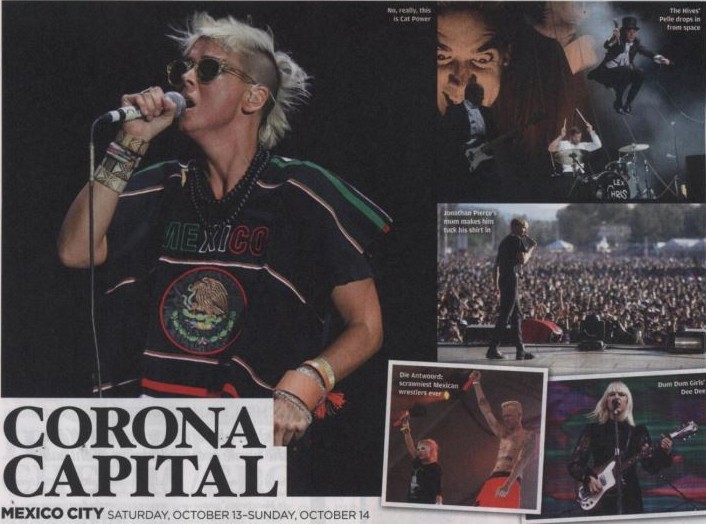
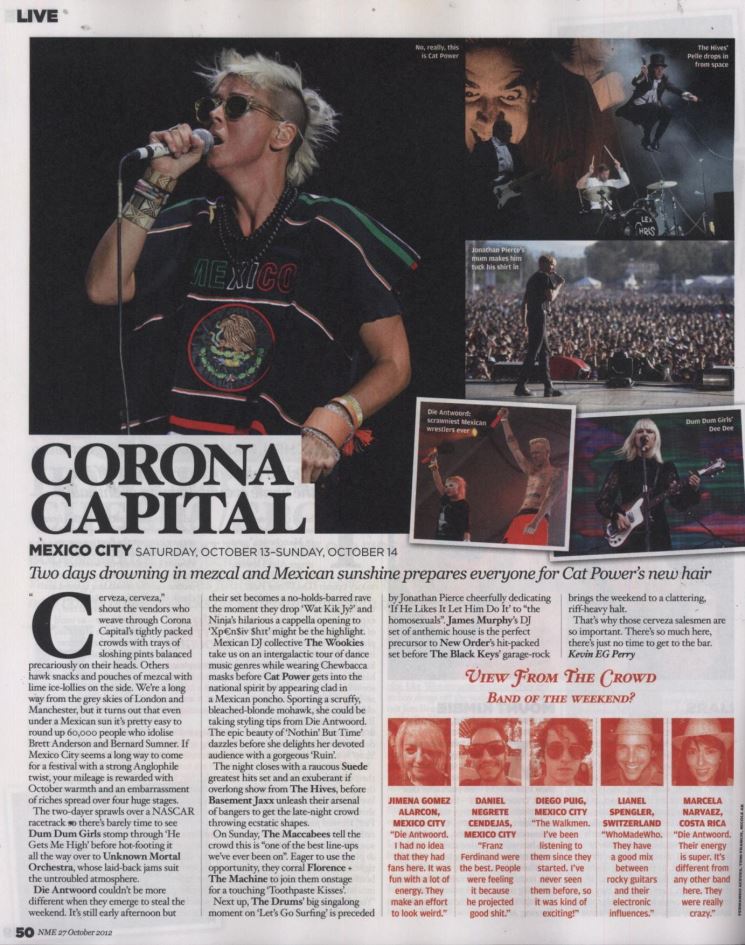
Mexico City’s Corona Capital Festival 2012

“Cerveza, cerveza,” shout the vendors who weave through even Corona Capital’s most tightly-packed crowds with trays of sloshing pints balanced precariously on their heads. Others hawk snacks and pouches of mezcal with lime ice lollies on the side. We’re a long way from the grey skies of London and Manchester, but it turns out that even under a Mexican sun it’s pretty easy to roundup 60,000 people who idolise Brett Anderson and Bernard Sumner.

If Mexico City seems a long way to come for a festival with a strong Anglophile twist, your mileage is rewarded with October warmth, all the tacos you can eat and an embarrassment of riches spread over four huge stages.

The two-dayer sprawls over a NASCAR racetrack so I barely have time to see Dum Dum Girls stomp through ‘He Gets Me High’ before I have to hot-foot it all the way to Unknown Mortal Orchestra, whose laidback jams suit the untroubled atmosphere.

Die Antwoord couldn’t be more different when they emerge to steal the weekend. It’s still early afternoon but their set becomes a no-holds-barred rave the moment they drop ‘Wat Kik Jy?’ Ninja’s hilarious acapella opening to ‘Xp€n$iv $h1t’ might be the highlight.

Mexican DJ collective The Wookies take us on an intergalactic tour of dance music genres while wearing Chewbacca masks before Cat Power gets into the national spirit by appearing clad in a Mexican poncho. Sporting a scruffy bleached blonde Mohawk, she could be taking styling tips from Die Antwoord. She stalks the stage with the sort of confidence that was unimaginable from her shows a few years ago. The epic beauty of ‘Nothin’ But Time’ dazzles before she delights her devoted audience with a gorgeous ‘Ruin’.

The night closes with a raucous Suede greatest-hits set and an exuberant if overlong show from The Hives before Basement Jaxx unleash their arsenal of bangers to get the late-night crowd throwing ecstatic shapes.

On Sunday, The Maccabees tell the crowd this is “one of the best lineups they’ve ever been on”. Eager to use the opportunity they corral Florence & The Machine to join them onstage for a touching ‘Toothpaste Kisses’. Next up, The Drums’ big singalong moment on ‘Let’s Go Surfing’ is preceded by Jonathan Pierce cheerfully dedicating ‘If He Likes It Let Him Do It’ to “the homosexuals”. James Murphy’s DJ set of anthemic house is the perfect precursor to New Order’s hit-packed set before The Black Keys bring the weekend to a clattering, riff-heavy halt.

That’s why those Cerveza salesmen are so important. There’s so much here, there’s just no time to get to the bar.

Originally published in NME, 27 October 2012.

Beth Ditto’s ‘Coal To Diamonds’

“They fuck you up, your mum and dad,” wrote Philip Larkin. “They may not mean to, but they do.” If Phil thought families in Hull were bad, he should hear what they get up to in America’s rural Deep South. Beth Ditto’s frank and heartfelt memoir starkly captures the seemingly endless permutations of emotional and physical abuse that her extended family handed down to one another. It’s heart-wrenching to read the litany of awful things that can happen when children are left to raise children and even incest becomes routine. In one devastating scene, she tells her first boyfriend she can’t remember a time before her uncle abused her. Back in 2006, Ditto caused a minor uproar from animal rights organisations after telling NME that when she was a child her family had shot and eaten squirrels. Seen in the context of her childhood, it’s baffling that people were more upset about the animals than the welfare of the children hunting them for food.

Continue reading at NME.

Why Nas Is Right About ‘Girls’

It seems everyone with a beating pulse and a warm internet connection has already passed judgment on Lena Dunham’s TV show ‘Girls’, despite it only airing in the UK for the first time last night. There seems to be a consensus forming that while sure, it may be keenly observed, whip smart and downright hilarious, it speaks only to a narrow audience of young people who have enjoyed the same privileges and life chances as the characters it depicts. Most controversially, it’s been noted that despite a contemporary New York setting, all of these central characters are white.

Not everyone sees this as a problem. When I interviewed Nas for this magazine, I asked him what the best thing he’d seen on television recently was. This is what he said: “‘Girls’. It’s a new show on HBO. It’s dope. It’s real: it’s about real people, real things and it makes you feel like you’re not alone out here. There are more people who are more alike in ways that you would never know. And it’s funny, too!”

Continue reading at NME.

Mick Jagger hints at future Rolling Stones tour

Mick Jagger has suggested that The Rolling Stones’ 50th anniversary shows this year will not be their last, and has said he’d love to take the band to Australia.

Asked on the red carpet at the premiere of new Stones documentary Crossfire Hurricane earlier this evening (October 18) if they would be heading Down Under, Jagger said: “Not this week! We’re going to go and rehearse this week but I hope to go to Australia. I haven’t been there in years.”

Continue reading at NME.

The Bond Themes That Could Have Been

Adele: we’d been expecting her. Nobody was too surprised when the woman with the best-selling musical release of last year was officially announced as Skyfall’s Bond girl. Her theme song premieres early tomorrow morning at – when else? – 00:07, but we’ve already heard a snippet leaked online and the signs are good: strings to make John Barry swoon and Adele’s voice on fine form. The only people bound to be upset are Muse, who had suggested that their new track ‘Supremacy’ would have made an ideal Bond theme.

As much fun as it would have been to hear Matt Bellamy’s histrionics over some iconic opening graphics, it was about time 007 returned to the Shirley Bassey school of classic belted Bond themes like ‘Goldfinger’ and ‘Diamonds Are Forever’ rather than the rockier tracks chosen since Daniel Craig took over that famous tuxedo. Jack White might be a bona fide guitar genius and we all love a bit of Soundgarden, but Chris Cornell’s ‘You Know My Name’ and White’s collaboration with Alicia Keys on ‘Another Way To Die’ are hardly classic entries in the Bond canon.

Still, Muse can console themselves with the fact that they’re not the first people to miss out on the coveted Bond job. Back in 1965, Johnny Cash submitted a song he hoped could become the theme song for Thunderball. As much as I love the original Man In Black, I can’t help but be relieved the producers chose Tom Jones instead. Cash’s theme is less Savile Row suits and more Rawhide cowboy chaps:

Another Bond hopeful was Alice Cooper, who submitted this unpolished slab of bar-room rock for The Man With The Golden Gun. Not his finest 2 minutes 45, and Bond did well to escape this particular fate:

If there’s one person who must feel cheated about being passed over as a Bond girl though, it’s Debbie Harry. Blondie’s submission for 1981’s For Your Eyes Only was included on their album ‘The Hunter’ but here’s what it would have looked like over the credits:

While Jarvis Cocker is just as much of a quintessential British man as James Bond, it’s maybe not surprising that the Bond producers passed over Pulp’s submission for Tomorrow Never Dies. Recorded under the film’s original name, ‘Tomorrow Never Lies’, this knowing, self-aware song would have been a departure from the Bond theme’s typical bombast:

So Muse shouldn’t feel too hard done by at not being granted their licence to thrill. Many great bands have taken a shot, but only a few hit the target. Still, there’s always the next film. Never say never (again).

Originally published by NME.

In praise of the climax of ‘Let It Bleed’

Two great songs one after another could be considered a coincidence, but three in a row is something quite special. Inspired by a post on Reddit, we’ve been wondering what the best three-song streak in the history of albums is? Reddit user ‘ghost_of_lectricity’ kicked things off by suggesting that it could be either ‘Kid A’, ‘The National Anthem’ and ‘How to Disappear Completely’ from Radiohead’s ‘Kid A’ or ‘Gates of Eden’, ‘It’s Alright Ma (I’m Only Bleeding)’ followed by ‘It’s All Over Now, Baby Blue’ from Bob Dylan’s ‘Bringing It All Back Home’.

Both worthy choices, and there’s plenty of options that immediately spring to mind. That bit on ‘Sound Of Silver’ where LCD Soundsystem casually follow the hilarious punk blast of ‘North American Scum’ with the two best songs of the last decade: ‘Someone Great’ and ‘All My Friends’ for example. However, my absolute favourite trio is probably the climax of The Rolling Stones’ 1969 classic ‘Let It Bleed’.

Continue reading at NME.

Damon Albarn: ‘I want to write a new opera’

Damon Albarn has revealed that he’s keen to write another opera following the success of last year’s production of Dr Dee.

Speaking at the English National Opera (ENO) in London this morning (October 3), the Blur frontman said: “I’ve got a really good idea. I’m not going to say what it is, but it’s interesting.”

Albarn was at ENO to help launch Undress For The Opera, a new scheme to attract younger people to the opera with lower prices and a relaxed dress code. Albarn backed the idea, saying: “I quite like dressing up, but I also like to have the choice. I like the ritual of dressing up to go and see something, but at the same time you don’t have to.”

Continue reading at NME.

Beyond ‘Gangnam Style’ – A Beginner’s Guide To K-Pop

While Psy’s ‘Gangnam Style’ this week became the first K-pop song ever to top the British charts, some of the genre’s purist fans argue he isn’t the best introduction. In this week’s NME Grimes argues that Psy’s success is down in part to the fact that he’s actually a rarity: a K-pop star with a big personality. In the heavily manufactured world of K-pop, that makes him heroically odd.

Since the Nineties, South Korea have been churning out pop hits faster than David Guetta can say “Feat. Nicki Minaj” and their success in countries like Japan, Taiwan, Singapore and Thailand means their tunes are being pumped into the ears of about a billion and a half listeners. For a country of fifty million people, that’s some feat.

The man credited with getting the scene started is South Korean pop impresario Lee Soo-man. Rather than hosting talent shows like Western counterpart Simon Cowell, Soo-man’s system relies on recruiting very young singers and dancers who are then put through years of rigorous training before being forged into groups. His first major successes were late Nineties boy group H.O.T. and girl group S.E.S., who are credited with sparking the ‘Idol craze’ for manufactured pop groups. H.O.T. had a hit back in 1997 with the presciently titled ‘We Are The Future’:

Lee Soo-man now runs SM Entertainment, the largest record label in South Korea. Their roster includes a new boy band, Shinee, and two of today’s biggest girl groups: Girls’ Generation and f(x). Unlike Western acts who sometimes seem locked in a battle to out-scandalise each other, K-Pop acts deal in more wholesome subject matter and shy away from explicit references to sex and drinking. Girls’ Generation also have a massive nine members, which is indicative of the way the efficient K-pop machine can favour choreographed style over individual personalities.

One of the biggest groups to come all the K-Pop production line in recent years are BIGBANG. Their video for ‘Fantastic Baby’ features the boy band wearing Gaga-style outfits and embracing riot chic. Oh, and there’s a “Boom Shakalaka” breakdown that suggest someone somewhere along the line has been listening to Sly & The Family Stone. They end up slouched on thrones: Kanye and Jay-Z, they’re coming for you.

Big Bang’s girl group equivalents on their label YG Entertainment are 2NE1, and the two groups collaborated on ‘Lollipop’:

BIGBANG’s de facto leader G Dragon is also a solo star in his own right and his been in the limelight since he was 8 as part of a group called Little Roora – making even Justin Bieber look like something of a dinosaur. Unlike the distance former child stars like Britney like to put between their sweet Mickey Mouse club beginnings and their grown-up incarnations, G Dragon still dances around at gigs to recordings of himself singing as a cherubic child. To be honest he doesn’t look that much older now:

Solo rapper Psy is a relatively recent signing to YG, and had been seen as something of an outsider. If the crossover success of ‘Gangnam Style’ has surprised some K-pop fans, it really shouldn’t have. While Korean labels have long had their hearts set on cracking the lucrative western market with their well-drilled groups, by injecting a sense of humour into the already over-the-top world of K-pop videos it’s the man nicknamed the “Bizarre Rapper” who’s gone global.

Originally published by NME.

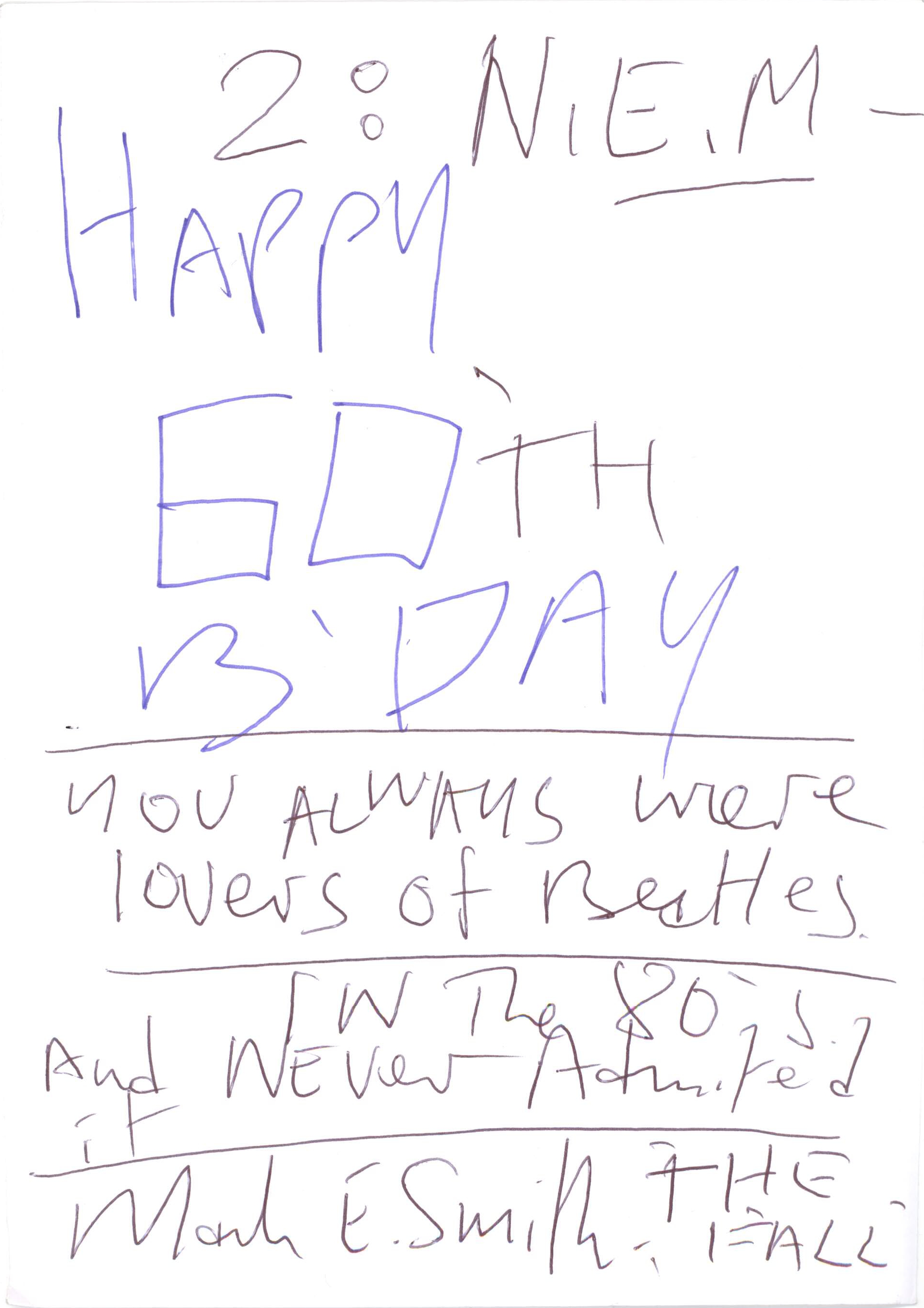
Mark E Smith wishes NME “Happy 60th B’day”

mes-nmeWhat do you remember about being interviewed for your first NME cover in 1981?

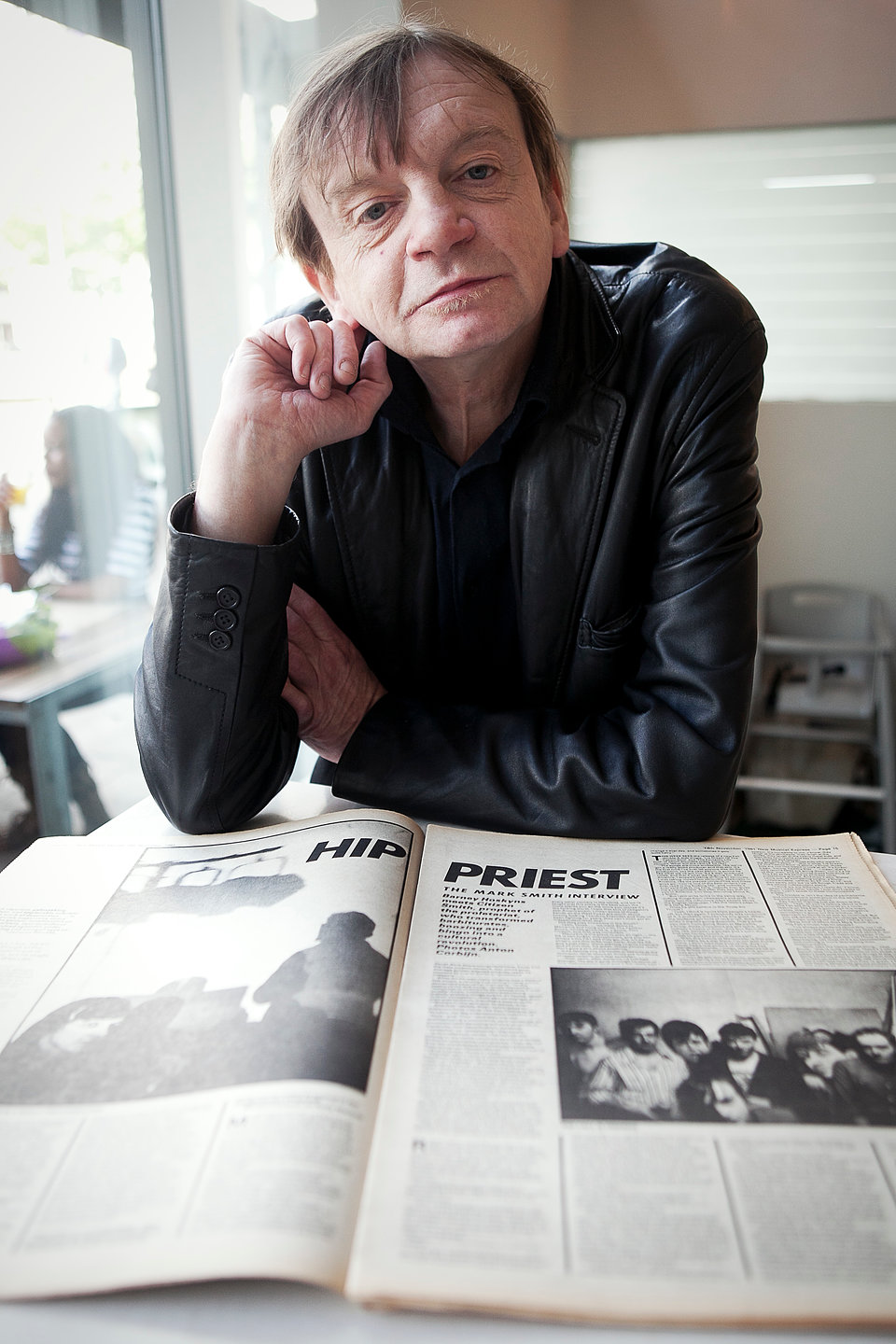
Mark E Smith: That was a time of great stress. I didn’t have time to read interviews, but I remember doing it very distinctly. We were just back from our second American tour. We’d been in Georgia where we just played ‘Hip Priest’ for about 20 minutes. When we came off this fella said to me: “If you get back up and do an encore, buddy, I’ll kill ya!” The actual interview with Barney Hoskyns was in this big hall in Birmingham. Nico was on with us that night as well. That was weird for me. Me and my best friends at school had liked the Velvet Underground since we were about 14. Then Nico moved in with John Cooper Clarke about four bloody streets away! I opened the curtains in me mam’s house one day and saw Nico walking past! Dead strange. In them days New York might as well have been Mars. I couldn’t really talk when I met her, I was still a bit starstruck. It was interesting to see the six or seven person line-up from 1981 in that magazine, and a bit depressing, really! They were great players but the ones I’ve got now are much better. I always think we haven’t even started yet. Coincidentally I did listen to ‘Hex Enduction Hour’ last week for the first time in ages and it was impressive. On reflection, I was a bit very nasty to the group!

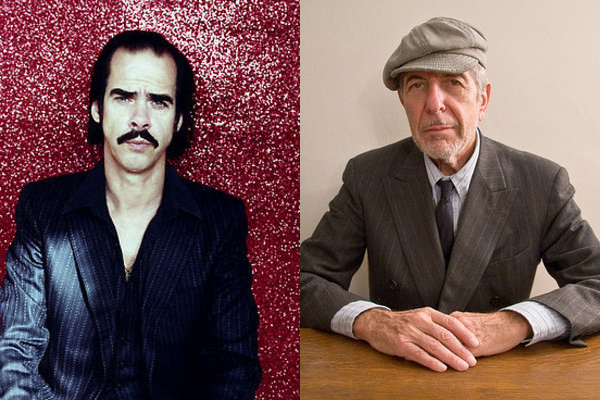
In 1989 we got you together with Nick Cave and Shane MacGowan for an NME pop summit. You seemed hell bent on winding the other two up, is that right?

Of course! I remember it being a fun interview. Loads of people wrote to me, this was before the internet, saying: “I don’t know how you bleeding get away with saying things like that, Mark!” I don’t think I’ve talked to either of them since. Not surprising, I suppose.

What do you think of the bands that the NME have championed more recently?

I didn’t mind The Libertines at all. I thought they were alright. They wanted to meet me. When they played in Manchester they were put in this sort of compound with yellow accident tape roping them off. I thought, he’s not that bloody outrageous is he?

Were you pleased that the NME supported The Fall in the early 80s?

Yeah, you’ve got to remember that in them days no record company would come anywhere fucking near us. We’d left Rough Trade and we were on a heavy metal label. With The Fall you’re always living day-by-day. Nobody understood us. As John Cooper Clarke says: “It was the time of the ‘guitars are dead’ mob”.

Had you always been an NME reader?

Yeah, I first got the NME in about ’74 and I used to read people like Nick Kent and Charles Shaar Murray. I remember the first time we were ever in the NME was when Paul Morley mentioned us in a live review in about 1978. My sister still has a copy of that first cover that my mother bought. NME was always good because it had the freedom to put shit like us on the cover. That’s admirable. The Fall got bad reviews from the NME as well but it didn’t bother me. I thought that passion was good. A review in a newspaper might say something was “slightly disappointing” but the NME would say it was “totally crap”. I like reading bad reviews, I don’t read the good ones!

Originally published in NME’s 60th Birthday Issue, 29 September 2012.

Shut Up And Play The Hits

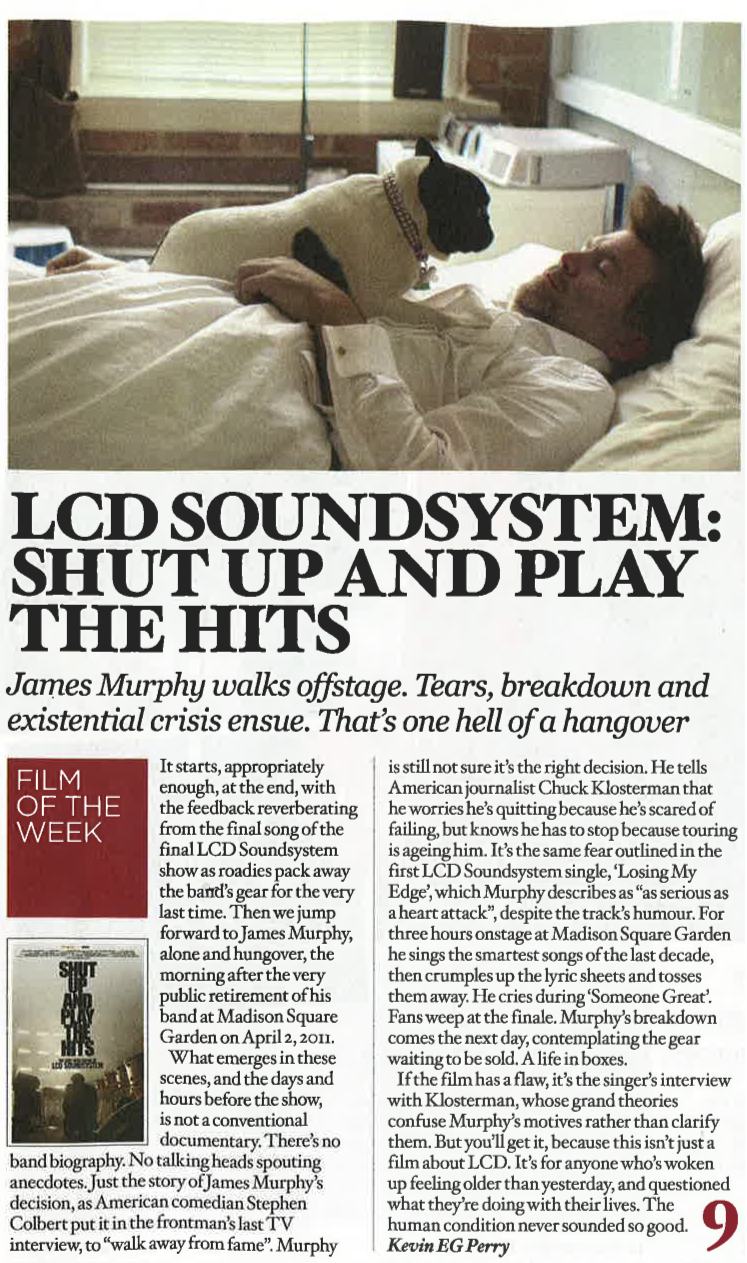
It starts, appropriately enough, at the end. It starts with the feedback reverberating from the final song of the final LCD Soundsystem show as roadies pack away the band’s gear for the very last time. Then we jump forward to James Murphy, alone and hungover, the morning after the very public retirement of his band at Madison Square Garden on April 2, 2011.

Continue reading at NME.

Reading Festival 2012

Alt-J spring a surprise
BBC Introducing, Friday, 14:40

Alt-J turned up early and eager to make their Reading debut three hours ahead of their scheduled slot. The crowd initially seem nonplussed as the a cappella harmonies of ‘Interlude I’ struggle against the earth-shaking noise emanating from the main stage, but the band riding high on their acclaimed debut ‘An Awesome Wave’ soon win them over. When they close their short set with the smooth groove of ‘Matilda’ newly-converted fans form triangles with their fingers and chant for more. A brief introduction, but Alt-J are shaping up for bigger things.

The Cure’s marathon victory
Main Stage, Friday, 21:00

“Thank you, and hello… again,” smiles Robert Smith, cloaked in mist and mystery, as The Cure return to Reading Festival after a third-of-a-century wait. He’d promised that their epic two-and-a-half hour headlining set would be an education for the band’s young fans and they didn’t hold back from delving deep into their back catalogue. Most of the audience weren’t even born the last time The Cure played here, in 1979, but timeless classics like ‘In Between Days’ and ‘The Lovecats’ have every soul in the field twirling and waltzing. At other times, Smith’s kohl-rimmed eyes seem close to tears. ‘Pictures Of You’ is so deeply sad it makes you wonder how he summons the emotional fortitude to sing it show-in, show-out. The sinister ‘Lullaby’ is a work of condensed theatre. He doesn’t talk much or pause long between songs, but Smith still manages to throw in a few flashes of humour. “At least it’s the right day, eh?” he shrugs before the glorious ‘Friday I’m In Love’. The band around him are on imperious form, with ex-Bowie sideman Reeves Gabrels on guitar and bassist Simon Gallup stalking the stage like Paul Simonon in his prime. Gallup’s best moment is ‘The Forest’ which he ends by tearing at his bass like a lumberjack hacking up wood. Inevitably there are times during the sprawling set that the pace slackens and the atmosphere lulls, but it’s never long before the band shake themselves out of it. If the main set is designed to teach and test the fans, the triumphant encore is their reward. ‘The Lovecats’ is so irresistibly danceable that even the most lethargic camper finds their feet moving. Perhaps the band are nodding to their own and the audience’s stamina when they suggest ‘Let’s Go To Bed’, but they still find time for ‘Why Can’t I Be You?’ and an ecstatic ‘Boy’s Don’t Cry’. Before that final song, Smith says: “33 years on and still standing here singing…” As he leaves he adds: “See you again!” Hopefully sooner this time.

Enter Shikari smash the ‘System…’
Main Stage, Saturday, 17:30

Rou Reynolds has only been onstage for about 45 seconds when he decides to leap off it. Enter Shikari’s opening double punch of ‘System…’ and ‘…Meltdown’ has just begun and their hyperactive frontman is already throwing himself, still head-banging, from not just the stage but any raised platform in sight. It’s a hell of an entrance, and the assembled masses cheer the band like returning heroes fresh from battle. “We are Enter Shikari. We’ve been abusing musical genres using technology since 2003,” says Rou by way of introduction, “What are you saying, Reading?” What Reading is saying is that they’re as ready as he is to throw themselves around to tunes like ‘Sorry, You’re Not A Winner’ and ‘Destabilise’. The band keep faith with the setlist that’s proved so successful for them across festival shows this summer, and pounding riffs and beats flow into each other seamlessly. The only times Rou ceases his perpetual motion is when he grabs hold of the huge dashboard he has set up on stage to drop the band’s mighty dubstep wobble. It has more knobs and dials to twiddle than the cockpit of a Concorde, and it’s just as likely to smash the sound barrier. Before ‘Juggernauts’ Rou announces: “A few years ago we broke the world record for crowd surfing to this song.” They come close to breaking that record again as hundreds of bodies ride the wave towards the stage. They don’t curb their impassioned rhetoric on the big stage, and while ‘Gandhi Mate, Gandhi’ Rou tells the adoring crowd: “Our lives begin to end the moment we fall silent about the things that matter.” The rain starts to fall but it can’t dampen the spirits of the tightly-packed audience and it soon stops trying. “There are 627,000 hours in an average human lifespan,” Rou informs us before ‘Zzzonked’, “We appreciate so much that you spent one of those hours with us.” Nobody seems to regret their choice. This is the band’s fourth year running playing Reading, and while on ‘Destabilise’ they sing: “We don’t belong here” they can’t be talking about the main stage. Thousands of moshing fans say this is exactly where they belong.

At The Drive-In finally take command
NME Stage, Saturday, 22:15

Cedric Bixler-Zavala arrives onstage pushing a broom. “What the fuck are you doing here?” he asks the audience in mock surprise, “We still have to clean this fucker.” Tidying up after The Cribs hacked apart their instruments isn’t exactly what he would’ve expected from their long-awaited return to the UK, but he’s in high spirits. “I just got in from Vegas and guess whose ass I was taking photos of?” he jokes. The band launch into ‘Arcarsenal’ to open a set mainly drawn from ‘Relationship Of Command’. They admit it’s “kind of funny” to be touring the album 12 years on and it’s nowhere near the biggest crowd the NME stage sees over the weekend, but the adoring faithful never thought they’d see this. The band themselves still seem unsure about their reunion. Guitarist Omar Rodríguez-López spends the entire show looking like he’s stuck with a charmless man at a party he’d rather not be at. Thank God for Cedric, who moves like he’s getting an electric shock every time he touches the floor. The band might not be having the time of their lives, but even Omar’s frown can’t dent the sheer visceral power of closers ‘Catacombs’ and ‘One Armed Scissor’.

Originally published in NME, 29 August 2012.

The state of rap today… according to Nas

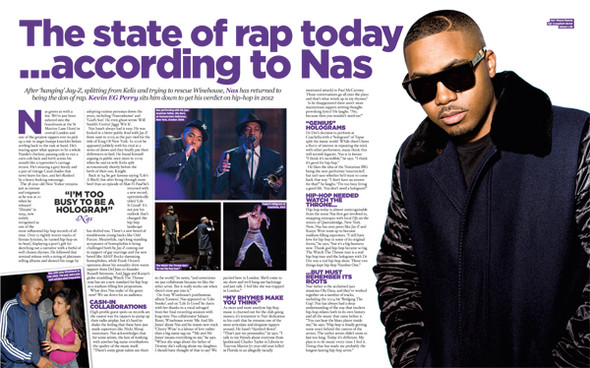
Nas greets us with a fist. We’ve just been ushered into the boardroom at the St Martins Lane Hotel in central London and one of the greatest rappers ever to pick up a mic in anger bumps knuckles before settling back to the task at hand. He’s tearing apart what appears to be a whole Nando’s chicken, pausing only to run a corn-cob back and forth across his mouth like a typewriter’s carriage return. He’s wearing a grey hoody and a pair of vintage Cazal shades that never leave his face, and he’s flanked by a heavy-looking entourage.

The 38-year-old New Yorker remains just as intense and enigmatic as he was aged 20 when he released ‘Illmatic’ in 1994, now widely recognised as one of the most influential hip-hop records of all time. Over ten tightly-woven tracks of literate lyricism he turned hip-hop on its head, displaying a poet’s gift for sketching out a narrative with a fistful of well chosen rhymes. He followed that seminal release with a string of platinum-selling albums and showed his range by adopting a string of personas down the years like ‘Nastradamus’ and ‘God’s Son’. He even ghost-wrote Will Smith’s ‘Gettin’ Jiggy Wit It’.

Despite his talent shining through from a young age, Nas hasn’t always had it easy. He was locked in a bitter public feud with Jay-Z from 1996 to 2005 as the two great rappers vied for the title of ‘King of New York’. In 2006 he appeared publicly with his rival at a series of shows and they finally put their differences to bed. He found himself arguing in public once more in 2009 when he and ex-wife Kelis split acrimoniously shortly before the birth of their son, Knight.

Back in ’94 he got famous saying: ‘Life’s A Bitch’, but after living through more beef than an episode of ‘Man Vs Food’ he’s returned with a new record optimistically titled ‘Life Is Good’. It’s not just his outlook that’s changed: the hip-hop landscape has shifted too. There’s a new breed of troublesome young turks like Odd Future setting their sights on offending everyone all the time, while in contrast A$AP Rocky has taken a stand as a voice against rap’s homophobia. Meanwhile Jay-Z and Kanye’s all-conquering, globe-straddling ‘Watch The Throne’ tour has set a new standard for hip-hop as a stadium-filling live proposition. Having been there in the crucible of New York from the very beginning, Nas is ideally placed to pass judgement. To get a real sense of the state of hip-hop in 2012, we sat down for an audience with the Don.

Collaborations should mean something: like Nas and Amy Winehouse

High-profile guest-spots on each other’s records are the easiest way for rappers to pump up their radio airplay, but it’s hard to shake the feeling that these have just made superstars like Nicki Minaj increasingly mercenary. Nas acknowledges that for some artists, the lure of working with another big name overshadows the quality of the music itself. “There’s some great talent out there in the world, and sometimes we just collaborate because we like the other artist. That’s cool, but it really works out when there’s time put into it.”

On ‘Life Is Good’ he duets with Amy Winehouse thanks to a vocal salvaged from her final recording sessions with long-time Nas collaborator Salaam Remi. Winehouse wrote ‘Me and Mr Jones’ about Nas and it’s clear that for him new track ‘Cherry Wine’ is both a labour of love and that song’s spiritual successor. “‘Me and Mr Jones’ means everything to me. I love that record. When she sings about the father of Destiny she’s talking about my daughter. I thought that was a clever line. I should have thought of that to say! We partied here in London. She’d come to my show and we’d hang out backstage and just talk. I feel like she was trapped in London.”

“My rhymes make you think”

As more and more anodyne hip-hop music is churned out for the club-going masses, it’s testament to Nas’s dedication to his craft that he remains one of the most articulate and eloquent rappers around. He hasn’t “dumbed down”. “That’s just my personality,” he says. “I talk to my friends about everyone from Charles Taylor in Liberia to Trayvon Martin to Paul McCartney. Those conversations go all over the place and that’s what winds up in my rhymes.”

Is he disappointed there aren’t more mainstream rappers writing thought-provoking lyrics? He laughs: “No, because then you wouldn’t need me!”

“Genius” Holograms

Dr Dre’s decision to perform at Coachella with a “hologram” of Tupac split the music world. While there’s been a flurry of interest in repeating the trick with other performers, many think this will tarnish the legacy of the greats. Nas, however, is very much in favour. “I think it’s incredible. I didn’t see it live but I think it’s good for hip-hop music. It was amazing.”

He likes the idea of the Notorious B.I.G. being the next performer ‘resurrected’ with the technology, but isn’t sure whether he’d want to come back that way after he’s gone: “I don’t have an answer for that! I’m too busy living a good life. You don’t need a hologram, I’m here!”

“Hip-hop needed Watch The Throne”

Hip-hop as it is today is almost unrecognizable from the scene Nas first got involved in, swapping mixtapes with local DJs on the streets of Queensbridge, New York. Now, Nas has seen peers like Jay-Z and Kanye West team-up to become stadium-filling superstars. He likes what he sees. “I still have love for hip-hop in some of its original forms, but it’s a big business, a big industry now. Thank God hip-hop became so big. The ‘Watch The Throne’ tour is a real hip-hop tour and the hologram with Dr Dre was a real hip-hop show. Those two things kept hip-hop number one.”

But it should also remember its roots

Nas’s father is the jazz musician Olu Dara and they’ve worked together on a number of tracks including the 2004 hit ‘Bridging The Gap’. Nas has always had a deep understanding of the way that modern hip-hop relates both to its own history and the music that came before it. “You can hear the blues player inside of me. Hip-hop music is finally getting some years behind the careers of the artists. For whatever reason the earlier artists didn’t seem to last too long in this crazy business. Today it’s different. My plan is to do music every time I feel it. Doing that has made me probably the longest-lasting hip-hop artist.”

“Homophobia is not hip-hop’s concern

There’s an ongoing debate about homophobia in rap, most recently sparked by the deliberately provocative and offensive lyrics spouted by Odd Future’s Tyler, the Creator. In contrast, fellow young upstart A$AP Rocky recently told NME that he respects gay men and women. Nas, however, dismisses the idea that sexuality is a major issue. “Do I think rap music is homophobic? I don’t think that’s the concern of rap music at the moment. Rap is the street, rap is sex and money. They don’t have time to think about homophobia or anything like that. It’s about ass, ass, ass – female ass! It’s about women, money, it’s about being the flyest of the fly- that’s hip-hop.”

On ‘Back When’, from his new record, Nas points out that some rappers use offending others due to their sexuality or race as a mask for their own weaknesses: “I say: “You seem to blame all your shortcomings on sex and race, the Mafia, homosexuals and all the Jews. You might as well blame all your shortcomings on your foes the Jews, it’s hogwash point of views, stereotypical, anti-Semitic like the foul words Gibson spewed.” That’s Mel Gibson. That’s me just saying to let go of the illusions of someone holding you back.”

“Game-changing” artwork

Nas wants to be known as the man with “the best album covers in rap”, and for new record ‘Life Is Good’ he’s taken the tabloid-baiting decision to pose with ex-wife Kelis’ wedding dress slung over his knee. “People have heard about my divorce. I’ve always had a private life but if people today want to get on the internet and talk then it’ll happen. For me, the cover was very therapeutic. I’m a storyteller, and it has that old bluesman vibe to it. I have so much to say on this record about myself personally. It feels like a record close to my soul. That’s the blues. My record cover: that’s the blues.”

He’s fiercely proud of the influence his ‘Illmatic’ artwork has had: “Think about how many album covers since then have been like that: Notorious B.I.G. and U2 all the way to Lil’ Wayne and Jill Scott. It changed the game.”

Regrets? I’ve had a feud

Rivalries like Tupac vs. Notorious B.I.G. have long been a feature of the hip-hop world, and Nas had his own ongoing feud with Jay-Z. With previously unseen footage from 2002 of Nas’s preparations for an inflammatory attack on Jay-Z recently surfacing, does Nas look back on his career with any regrets?

“No”

Not even about the time he commissioned a animatronic dummy of Jay-Z and a set of gallows so he could ‘hang’ him onstage?

Nas clamps the toothpick he’s been fiddling with between his teeth and shakes his head slowly to dismiss the question. Since the footage has come out he’s repeatedly refused to discuss or even acknowledge it. From a corner of the room a low voice mutters: “That’s not okay, man.”

Nas’s expression doesn’t flicker, but before we’re escorted out we try to defuse the situation by telling him that the new record is up there with his very best. He pauses and then his face cracks into a smile as the tension dissolves and we bump fists again. “Life is good, man,” he shrugs, “Life is good.”

Originally published in NME, 18 July 2012.

Chris Moyles To Quit The Radio 1 Breakfast Show? Thank Christ!

There was a moment on Chris Morris’ old radio show when he told a story about a naked DJ, up on the roof and smeared with jam, who shouted out: “I’m Chris Moyles, please forgive me!” and the windows all around flew open, and a thousand voices cried out; “No fucking way.”

As Moyles finally relinquishes control of the Radio 1 Breakfast Show from his sweaty grasp, the time has come to ask whether we forgive him.

Do we forgive him for the decades of grating laddish sexism? For year after year of desperately unfunny and nauseatingly self-aggrandising anecdotes? For saying on-air of Charlotte Church that he would “lead her through the forest of sexuality now that she had reached 16”? For his continual failure to understand why using the word “gay” as an insult isn’t okay? For being a boorish poster boy for anti-intellectualism of all kinds? For his unshakeable belief that the sound of his own voice trumps every piece of music produced since the dawn of recorded time?

Whatever you think of Moyles’ replacement Nick Grimshaw’s presenting style, he has over the last half-decade popped-up at countless review shows and album playbacks (in fact I saw him at a Nas listening session just the other day) and, excitingly, given the impression that he might actually quite like music. This already puts him at least one step ahead of Moyles, not to mention the fact that he wasn’t named LGBT charity Stonewall’s Bully Of The Year 2006.

Chris Moyles, the end-result of a belief that you can never under-estimate the intelligence of radio listeners, is now a host without a party. Who knows where the hot-air balloon of his own egotism will take him now? Perhaps he’ll go door-to-door singing novelty songs while surrounded by a troupe of idiot sycophants repeating his sole joke over and over like a mantra. Perhaps he’ll take a vow of silence as penance. Perhaps he’ll strip naked and smother himself in jam on the Radio 1 rooftop, taking his pleasure where he can find it in the abject misery of his self-knowledge. But should we forgive him? No fucking way.

Originally published by NME.

Durban Hymns – There’s More To African Music Than ‘Graceland’

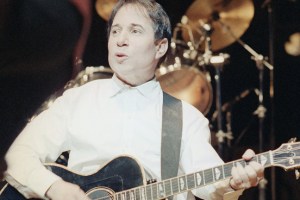
This Sunday Paul Simon will bring ‘Graceland’ back to London, 25 years after the original tour was picketed by protestors including Paul Weller, Jerry Dammers and Billy Bragg who argued that Simon was wrong to break the cultural boycott of apartheid-era South Africa.

The BBC marked the occasion this week by broadcasting ‘Under African Skies’, a documentary about the album’s controversial recording process and tour. It’s a fascinating film, including an emotionally tense meeting between Paul Simon and Dali Tambo, who founded Artists Against Apartheid and led the protests.

What’s really interesting is hearing from the South African musicians who made the decision to play with Simon, and how they justified it to themselves, the protestors and their countrymen. Koloi Lebona, a producer who helped to assemble some of the musicians involved, summed it up when he said: “When I brought musicians to the ‘Graceland’ sessions I was patently aware that there was a cultural boycott. It was risky, but our music was always regarded as ‘third world music’. I thought, if our music gets the chance to be part of mainstream music, surely that can’t do any harm?”

Continue reading at NME.

It’s Time Twitter Fanbases Learned Some Self-Control

If you ever find yourself doubting the number of ways it’s possible to misspell a term of abuse, simply tweet that you’re not that fussed about a contemporary pop star. In the last couple of days both Frank Turner and London-based copywriter Holly Brockwell have discovered that there’s no limit to the crimes against the English language that some fans will commit in their eagerness to defend their heroes.

Continue reading at NME.

“The Clash had a message… so have we.”

On a breezy spring afternoon, Brian Fallon is holding court outside a scruffy café in central London. Over cigarettes and “awful” coffee, The Gaslight Anthem leader is setting out the game plan. “With this record we wanted to recapture some of our earlier stuff,” he says of forthcoming album Handwritten, out July 23, wistfully recalling the basements and barrooms of New Jersey where the band first cut their teeth. “We wanted to play fast and have people sing along because that’s what our community was about. It was about having a blast in a basement. What would it be like if that basement got 50 times bigger? How cool would that be?”

His bandmates, guitarist Alex Rosamilia, bassist Alex Levine and drummer Benny Horowitz, nod knowingly. They’ve already seen it happen once. At the beginning of 2008 Brian was earning more from construction work that he was from the band. When ‘The 59 Sound’ was released later that year by indie label Side One Dummy they hoped it might sell 100 copies. It did. Then it sold 249,900 more, including 65,000 in the UK. That whirlwind of success changed everything fast, and Brian admits there were times he forgot he was supposed to be having fun: “There was a period when it was tough. We were maybe taking ourselves too seriously and taking the press too seriously. It was taking the light out of the fact that I don’t have to go on a roof and pound in nails anymore. I’d say to myself: ‘I’m sorry you’re tired of answering Bruce Springsteen questions, but it’s a lot cooler than what you were doing before.’”

Those Springsteen questions were hard to shake off for a while, particularly after the Boss joined them for their Glastonbury set in 2009 and then invited Brian to duet with him during his own headlining slot. While the band appreciated his patronage, they’ve always been eager to step out of the shadow he casts across their home state. That ambition led them to sign with Mercury Records this year, but it wasn’t a decision they took lightly. “We didn’t know what was going to happen,” Brian explains. “How many times have you seen a band sign to a major label and the album doesn’t even come out? All we knew was that we’d better write a record that we’re happy with or else we’re in trouble. I don’t want to have 50,000 people singing my songs if I don’t like them. I’d rather be poor playing songs I love than filthy rich playing songs I hate.”

The band have never been shy about admitting that they’d love the chance to play to huge crowds, and this time round the record feels unashamedly built for stadium shows.  “We make no bones about that,” Brian nods. “I would love to play Wembley Arena or those big Foo Fighters-style shows. It’s gotta be so much fun. You’ve got to be conscious about it, though. Look at The Clash. They had a message. If hundreds and thousands and millions of people are listening to what you say, and you’re saying: “Hey man, you should get back to your records and the joy you found in music.” That’s a cool message.” Benny agrees with a grin: “It’s better than just saying “Here’s my cash”. We’re not singing about boats and ho’s.”

What the band are singing about on this record is the loss of romance and mystery in an era when all human knowledge is just a tap of the fingers away. Benny says his favourite ever Gaslight Anthem lyric is this one, from album closer ‘National Anthem’: “Now everybody lately is living up in space/Flying through transmissions on invisible airwaves/With everything discovered, just waiting to be known” As he points out: “The internet has completely changed what we can comprehend and the way we comprehend it, but it makes certain things feel artificial.”

Their no-frills authenticity defines them as a band, but it feels like a shame that Brian has felt the need to dial down some of his literary references in an attempt to broaden the band’s appeal. Naturally, he disagrees: “We didn’t want to make a record that’s above people’s heads. We wanted to make it in the language that we speak. Straight to the point, trim the fat. There’s no need to prove that we’ve read TS Eliot. Yeah, we’ve read it, and yeah, it’s cool, but we don’t need to prove that.”

Having felt that 2010’s ‘American Slang’ had been waylaid by their disparate personal lives, for this record the band took the decision to move to Nashville as a unit. They rented a house where they could work 24 hours-a-day and holed themselves up with legendary producer Brendan O’Brien, whose CV includes the likes of Springsteen and Neil Young. The result is that on tracks like ‘45’, ‘Keepsake’ and ‘Too Much Blood’ the band’s message comes backed by a full-throttle all-American rock sound that sits somewhere between Tom Petty’s ‘Full Moon Fever’ and Pearl Jam’s ‘Backspacer’.

The band have an unabashed love of a good pop hook, and on ‘Handwritten’ they aren’t afraid to be catchy. “Music doesn’t have to suck in order to be cool,” says Brian. “Don’t forget, Radiohead wrote some catchy songs. I’m not just talking about ‘Creep’, I’m talking about ‘Karma Police’ and ‘Fake Plastic Trees’. Those are catchy pop songs! It gets the point across. For instance, our song ‘Here Comes My Man’ is somewhere between ‘I’m Waiting For The Man’ by the Velvet Underground and ‘Single Ladies’ by Beyonce. I’m totally serious. Those two songs somehow mashed up in my brain. It’s the first time I’ve written from a girl’s point of view, and it’s basically Lou Reed meets “If you liked it then you should have put a ring on it.””

As Fallon knows, groups like Radiohead and The Clash have shown that it’s possible to tilt at being the biggest band in the world without compromising your song-writing, your experimentalism or your ideals. That’s the reason The Gaslight Anthem got together in the first place. Brian still remembers a mixtape a friend of his mother gave him when he was 12, filled with bands like Bauhaus, The Ramones and The Replacements. “I’ll never forget listening to that stuff on headphones. I remember thinking: “Did those bands know when they were writing that stuff that there would be kids who’d make those songs their lives?” The most important thing being said was not from a Congressman on television, it was a band from wherever saying it to you in your headphones. I always hoped, maybe presumptuously, that people would do that with our band.”

On ‘Handwritten’, The Gaslight Anthem’s atavistic message is one of nostalgia for the authenticity of the offline world. They want to remind people how much fun it can be to turn off their computers and experience something real. Brian grins as he spells it out: “We just want to get everybody in the room together, singing along and having a good time because in this age that doesn’t happen very often.”

Originally published in NME, 9 June 2012

Why Plan B should write Britain’s alternative national anthem

News reaches us from across the Atlantic that the American people have taken a vote and chosen none other than Bruce Springsteen as the man they’d most like to compose a new national anthem for their star-spangled country, beating the likes of Dolly Parton, Bob Dylan, Stevie Wonder and Jay-Z.

We can all agree that’s a fine result for democracy from a country with a frankly patchy recent record, and let’s not let the fact that this is an entirely spurious Vanity Fair pop quiz result spoil our fun. It seems apposite at a time when Union Jack bunting is clogging the country’s arteries to ask who the British Boss is who could be drafted in to pen a replacement for ‘God Save The Queen’?

Continue reading at NME.

Mark E Smith and the Mystery Jet

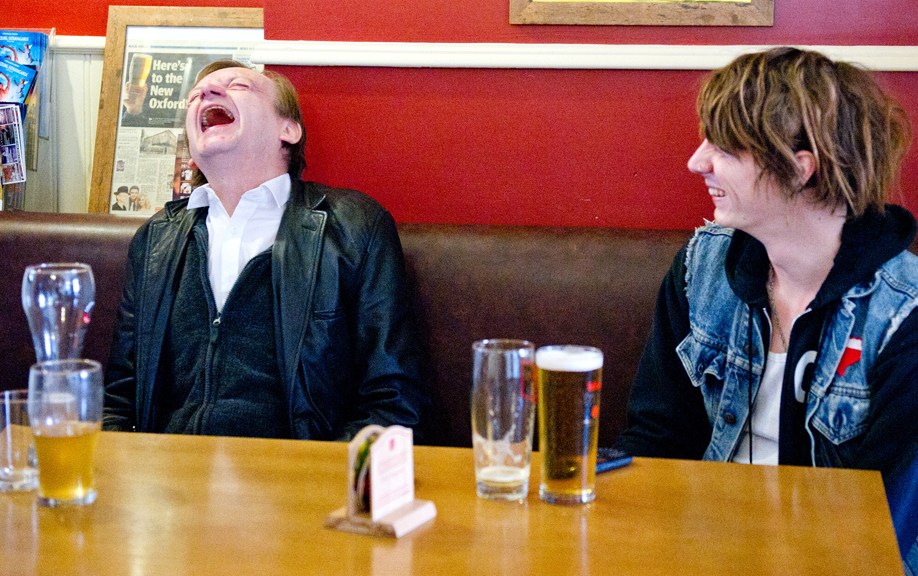
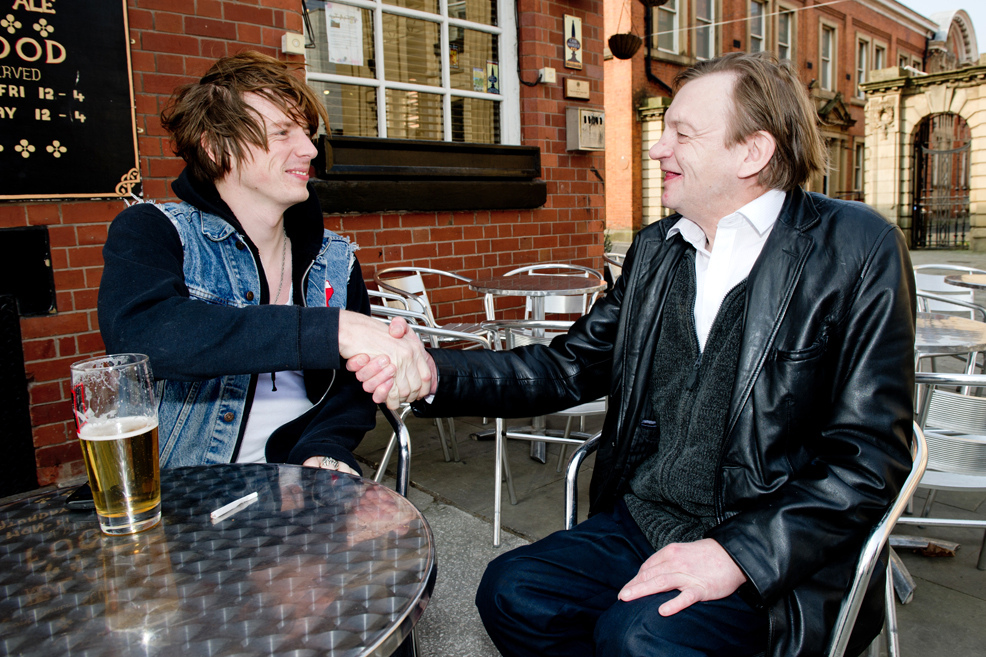
“Do you ever suffer from hallucinations?” In a quiet corner of Salford’s New Oxford pub, Mark E Smith looks Blaine Harrison straight in the eye and then asks again: “Do you ever see things that aren’t there?” Half a beat goes by before he pops out his dentures and gurns toothlessly as Blaine jumps back in his seat more in shock than horror. Moments later Mark’s teeth are back in place and he’s shaking his head sadly. “I think you’re seeing things, matey.” The day had unquestionably taken a turn for the surreal. How had this happened? The pints of Sparta ale with whisky chasers had been a factor. We had come here with the best of intentions. We had come to meet the infamous ringleader of The Fall. Since forming in 1979 the band’s uncompromising union of raw punk rock and motorik rhythms has produced no less than 29 records while Mark, the sole constant, “doesn’t fucking know” how many band-mates he’s got through. “Mark’s incredibly fascinating,” Blaine had said earlier. “I’m looking forward to having a pint and a conversation. Anything could happen.” We’re also here to find out what the often irascible punk poet of the proletariat thinks of ‘Greatest Hits’, the new Mystery Jets track which mentions him by name. “The lyric is about a couple breaking up and dividing their record collection,” Blaine explained. “He’s saying to her: “You can keep all your Belle & Sebastian records, but I’m keeping ‘This Nation’s Saving Grace’. You only listen to it when you’re pissed, and when you sober up you ask why I’m still listening to Mark E Smith.” I think it’s complimentary, I just hope he does too.”

NME: Blaine, when did you first hear The Fall?

Blaine: My first encounter was when I was 17. I read an interview with Mark in a book about the Eighties musical underground called Tape Delay then went out and bought ‘This Nation’s Saving Grace’. It seems like the public have always been quite confused by The Fall, but I think in the Eighties they were trying to be a pop band.

Mark: Yeah, but we were real pop and they weren’t. Boy George wasn’t pop. Spandau Ballet wasn’t pop. That was fashion.

Blaine: ‘This Nation’s Saving Grace’ introduced me to Damo Suzuki and Can. Do you think The Fall were almost a British Krautrock band?

Mark: Sort of. It’s funny because in Germany they’ve said the same thing, that they hadn’t realised how good those old groups were until they heard The Fall. That’s an achievement, isn’t it?

Blaine: Have you met Damo Suzuki?

Mark: Yeah.

Blaine: Was he a nice guy?

Mark: Fucking bonkers! When I met him he was selling Japanese cars in Düsseldorf. Who’s going to buy a Japanese car in fucking Germany?

Blaine: I also went out and got the first Fall record, ‘Live At The Witch Trials’. Where did your fascination with the occult come from?

Mark: I knew people who were sort of pseudo-witches, so the title was just to annoy them. It’s the same now with Twilight or Buffy The Vampire Slayer, particularly in America. It’s a big rebellion for them. I see it when I go through the Midwest, where to be into vampires or werewolves is like spitting in your dad’s face. To us it’s Carry On Dracula, but to them it’s very serious because they all go to church every Sunday.
mes-blaineNME: Have you heard the Mystery Jets, Mark?
Mark: I’ve heard ‘Greatest Hits’ and it’s a fucking good song. I’m not just saying that.

Blaine: Thank you.

Mark: I won’t say it again!

Blaine: You’re influenced by people like Bo Diddley, Johnny Cash and Gene Vincent. What do you like about rockabilly?

Mark: The simplicity, as I’m not really a musician. Do you play a lot?

Blaine: I see myself more as a songwriter. I learnt the guitar through wanting to write songs but I don’t go into music shops and play ‘Stairway to Heaven’.

Mark: I’ve never really done much on the guitar. Mine’s only got two strings. It’s just A and E and then I get the group to embellish it.

Blaine: Was your dad into rockabilly?

Mark: No, there was no music in my house. Well, my sisters had singles but I was a latecomer. I was more interested in writing poetry. Nothing in music satisfied me. I still write every day. How do you operate?

Blaine: I sing stuff into my Dictaphone. I don’t think writing music should be laborious. There’s a Keith Richards quote which I love where he says that songs are just floating around and you need to have a radar to pick them up. If you stay up late enough you can catch them.

Mark: You’ve got to trap them.

Blaine: Yeah. Nick Cave says he puts on a suit every day and goes to his office. I couldn’t do that. They just appear now and then.

NME: Is there a bit more labour involved for you, Mark?

Mark: Correct. There’s no secret to being creative.

Blaine: What do you mean by that?

Mark: [Sticks his tongue out]

NME: I love that Keith Richards line too, but I think there’s also graft involved.

Mark: And half a gram of heroin and some Afghani black! He doesn’t just smoke skunk, does he? If he thinks there’s so many songs flying around why is he still playing the same ones after 50 years?

Blaine: A lot of your lyrics feel like things that have been overheard in the pub, particularly characters like Carry Bag Man, Wireless Enthusiast and Hip Priest. Is that how you write a song, rather than autobiographically?

Mark: I do try to write objectively, not subjectively. People say all the time: “Oh, you’re the Hip Priest!” but it’s not about me. ‘Carry Bag Man’ isn’t about me. I don’t go around with carrier bags full of drugs, do I? What do you do? Was your missus really moaning that you’d taken half her record collection?

Blaine: Yeah, a lot of the records mentioned in that song were records that I didn’t want to part with when I had a break-up, but it’s sort of a fictionalised account.

Mark: Well that’s good. You got it out of your system, didn’t you? Good riddance to bad rubbish as regards her, and you got a good fucking record.

Blaine: Your girlfriends and partners have often been in the band. What’s it like touring with your wife?

Mark: What’s it like touring with your dad?

Blaine: [Laughs]

Mark: So what have you got in the Jets? A guitarist, a bass player and a drummer?

Blaine: Yeah, and a pedal-steel player because this one’s an Americana record. We spent quite a lot of last year living in Austin, Texas.

Mark: You’re joking!

Blaine: No, we did.

Mark: [Incredulous] What, the whole group? With your dad?

Blaine: Yeah. Well he came out, but it was really the four of us plus wives and girlfriends. I’ve always wanted to live in America. It’s a ridiculous place. Texas is fascinating. We got obsessed with the suicide cults, like Waco and Heaven’s Gate. That’s all on the record.

Mark: That takes me back. When we were in Austin in 1981 the mixing guy and the drummer were kidnapped by these fucking weirdoes. Me and the bass player had to go and rescue them. They were being seduced! The guy running the place had a fucking cane and looked like Lucifer personified. He was a member of the KKK. There were all these birds in miniskirts with their tits out. They were all very attractive. We were looking through the blinds and we could see the drummer and the sound guy in the middle of all this. I said, “We’ve got to get them out!” Me and the bass player did this sort of weird attack. We broke in through the fucking skylight. We got them, but they weren’t very pleased about it. They were in their underpants with hard-ons and white powder all over their faces. I said: “Get in the van, you fucking cunts! Say goodbye to Austin, matey. You’re going back to the misery.”

Originally published in NME, 14 April 2012.