Category Archives: NME

The Mark E Smith NME obituary: 1957 – 2018

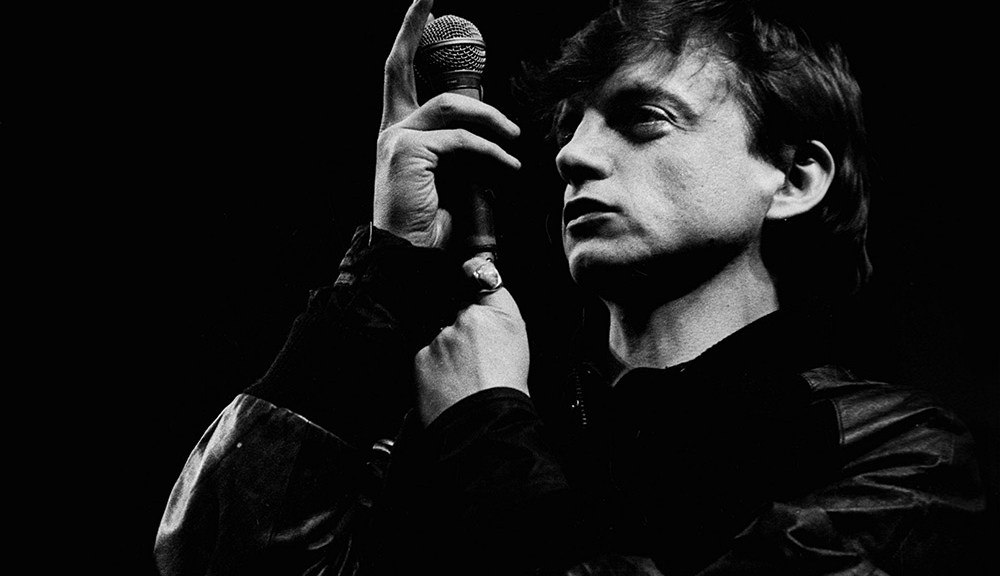
2018_markesmith_getty_250117Mark E Smith, the singer, leader and sole constant member of The Fall, has died. While his cause of death has not yet been announced, last year he was forced to cancel tour dates due to what the band’s manager Pamela Vander referred to at the time as “bizarre and rare medical issues.” The phrase ‘bizarre and rare’ could equally serve as an epitaph for his life and singular body of work.

Smith was born in Broughton, Salford in 1957 before his family moved to nearby Prestwich while he was still young. He attended Stand Grammar School, which he left at 16. He got a job in a meat factory, and later worked on the Manchester docks as a shipping clerk. He experimented with drugs at a relatively young age, once claiming to have taken LSD even before he drank alcohol or started smoking.

Continue reading at NME.

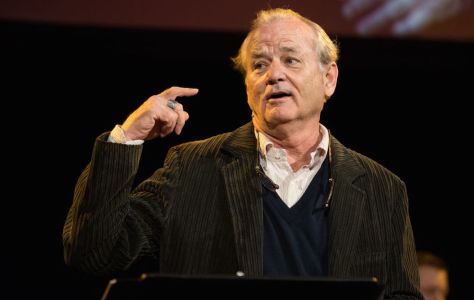
Twain, Hemingway and Waits: Bill Murray plays America’s Greatest Hits

T.J. Martell 42nd Annual New York Honors Gala - InsideThere’s an old joke, famously repeated in Alan Moore’s Watchmen, that goes like this: “Man goes to doctor. Says he’s depressed. Says life seems harsh and cruel. Says he feels all alone in a threatening world where what lies ahead is vague and uncertain. Doctor says: ‘Treatment is simple. Great clown Pagliacci is in town tonight. Go and see him. That should pick you up.’ Man bursts into tears. Says: ‘But doctor, I am Pagliacci’.”

Yesterday Bill Murray, America’s foremost sad clown, offered a couple of insights into how he writes his own prescription for Pagliacci’s complaint. He self-medicates with music, poetry and literature.

Early in the day a video appeared in which Murray recounts the time Hunter Thompson advised a depressed Murray: “We’re going to have to rely on John Prine for his sense of humour.” Sure enough, the great folk singer’s song ‘Linda Goes To Mars’ proved to be the first thing in a long while to tease a laugh out of Murray.

Then last night, he appeared on stage at the Wiltern in Los Angeles for a very special performance accompanied by the renowned German cellist Jan Vogler, the violinist Mira Wang and pianist Vanessa Perez. Murray’s readings of hand-picked poems, passages from favourite books and a handful of songs were interspersed with the musicians’ performances of Bach, Schubert and Ravel. Think of it as a highbrow version of that unwatchably bad Netflix Christmas special he made a couple of years ago.

Continue reading at NME.

Linkin Park’s Chester Bennington memorial was a celebration of life

linkin-park-chester-benningtonThe memorials start even before you get to the Hollywood Bowl. On the freeway off-ramp, there are kids going car to car in the crawling traffic selling somber black T-shirts bearing the legend: ‘Chester Bennington 1976-2017’.

Those dates, just 41 years apart, serve as a reminder of just how dangerous we are to ourselves. Chester took his own life, as so many others do. In Britain, suicide remains the single biggest killer of men under 45.

Chester touched a lot of lives in his too-few years. Climbing the hill towards the entrance to the Bowl, the longest queue is not to get inside but to get to the memorial wall erected near the gates, where fans are signing their names and leaving messages about the impact the Linkin Park singer had on their lives.

It is difficult to get a handle on the tenor of the night. At times the fans are exuberant, sharing happy memories or marvelling at the long journeys people have made to be here. Other times emotions run high. The opening act DJ Z-Trip chokes on tears as he introduces his final tune ‘Walking Dead’, a song that he and Chester collaborated on. It is the first time in the evening Chester’s voice echoes around the Bowl, but not the last.

Continue reading at NME.

Pedro Pascal on Narcos beyond Escobar

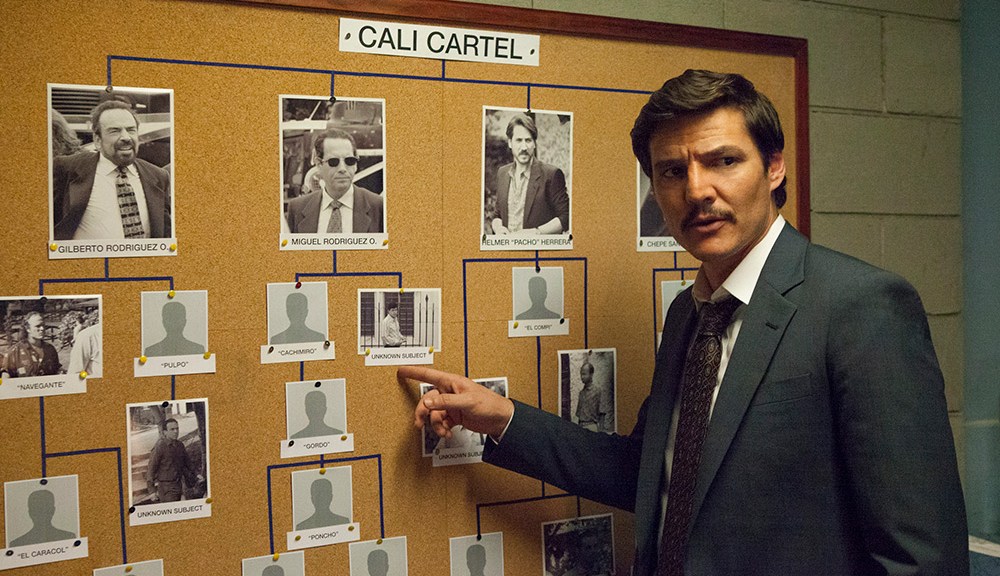
2017_Narcos_Netflix_210717Narcos is the hit Netflix series that since 2015 has been telling the story of the rise (Season One) and fall (Season Two) of Colombian cocaine kingpin and hippo enthusiast Pablo Escobar. Anyone who knows their druglords will have realised that tale could only have one ending. Sure enough, Season Two ended with (historical spoiler alert) Escobar shot through the head on a Medellin rooftop.

But the story of the cocaine trade obviously didn’t end there. If it had, how would Be Here Now have gotten made? In fact, the Cali cartel rose to take over Escobar’s business, and that means the mission isn’t over for DEA agent Javier Pena. Pedro Pascal, who plays Pena, argues that the change of focus means the series is just getting interesting.

“When people say there can’t be a Narcos without Escobar I’m like: ‘Are you kidding? What world do you live in?’,” he says. “The show isn’t called Escobar. Cocaine sales go up after he’s dead. That alone tells you what we’re up against in Season Three. It’s an empire that’s now seemingly impossible to take down because it isn’t one target in the way that Escobar was. You won’t know what to expect. Even if you Google the shit out of it, you still won’t be able to predict exactly how it goes down.”

Continue reading at NME.

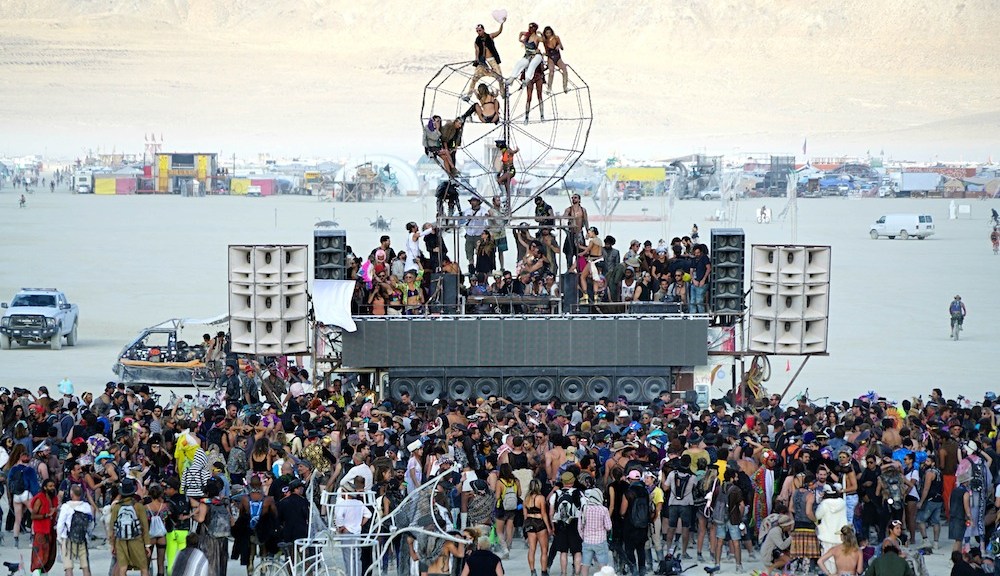
Burning Man 2017: Dancing in the dark in Trump’s America

Burning Man 2017 Preparations

On the Wednesday before Burning Man 2017, President Donald Trump surfed into Reno, Nevada on a wave of outrage following a speech in Phoenix the previous night where he’d sided with white supremacists and claimed that protesters who sought to pull down Confederate statues were “trying to take away our culture.”

The casinos and motels of Reno were already filling with those of us on our way to the desert for the most logistically challenging of world festivals, stocking up on bicycle locks, water bottles and leopard-print thongs, so the standing joke as Trump arrived in town was that the President must also be on his way to Black Rock City. “He’d probably turn up in the desert still wearing his suit,” smirked a taxi driver in midtown, before changing his tune. “He would definitely go though. He’s not afraid of anything. You’ve got to give him some credit for that.”

Continue reading at NME.

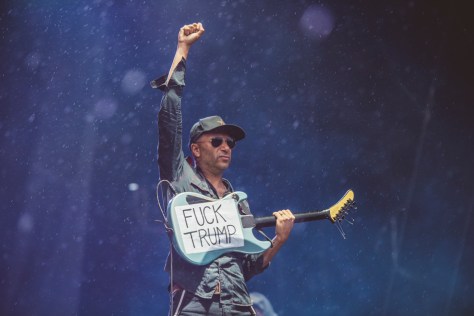
Open’er 2017: Prophets of Rage reign in the rain as they make Polish debut

ProphetsOfRageProphets of Rage played their first ever show in Poland last night at Open’er 2017, with Chuck D telling the audience they want to: “Make Poland rage again.”

The supergroup, made up of Rage Against The Machine’s Tom Morello, Brad Wilk and Tim Commerford, Public Enemy’s Chuck D and DJ Lord, and Cypress Hill’s B-Real, didn’t allow the gathering rain clouds to dampen their righteous ire.

They opened with their version of Public Enemy’s ‘Prophets of Rage’, the track from 1988’s ‘It Takes a Nation of Millions to Hold Us Back’ from which they take their name. The rest of the set was dominated by Rage Against The Machine’s greatest hits, although they also found time to play a handful of Cypress Hill tracks and an instrumental version of Audioslave’s ‘Like A Stone’, dedicated to Chris Cornell.

Before playing the song, guitarist Tom Morello announced: “Not that long ago a good friend of ours and a musical comrade passed away. Please give an enormous ovation for Chris Cornell. We loved him very much too. We’d like to sing a song in his memory. If you know the words, sing along. If you don’t, say a prayer for peace.”

Morello’s guitar bore the legend ‘Arm The Homeless’ on the front, and ‘Fuck Trump’ on the reverse. Before playing final song ‘Killing In The Name’, B-Real thanked the crowd and said: “We came together to talk about and against injustice and fuckery. We hope we connected with you today to make a change in the world. Dangerous times call for dangerous songs. Here’s a dangerous fucking song.”

Continue reading at NME.

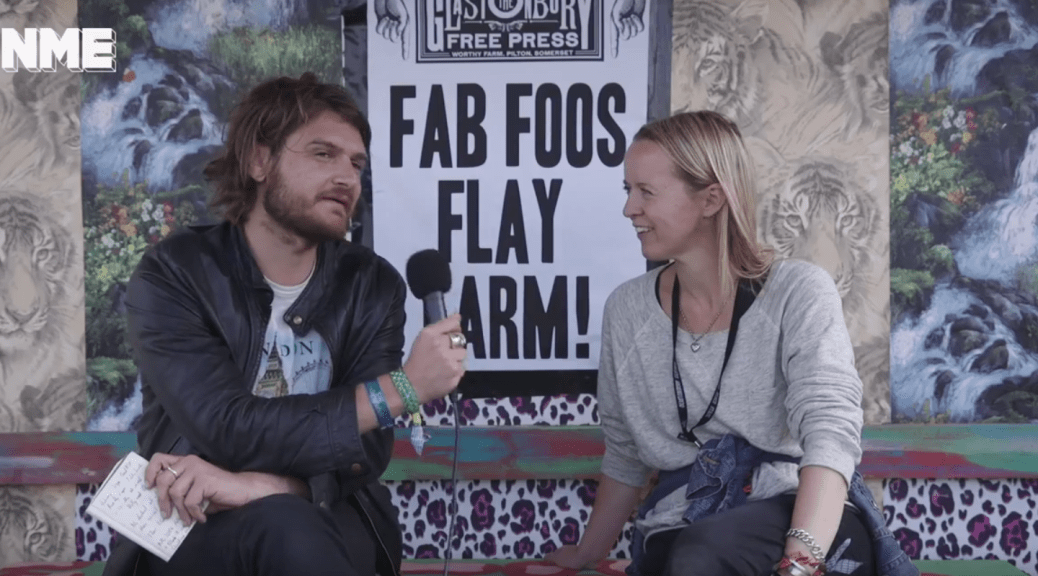
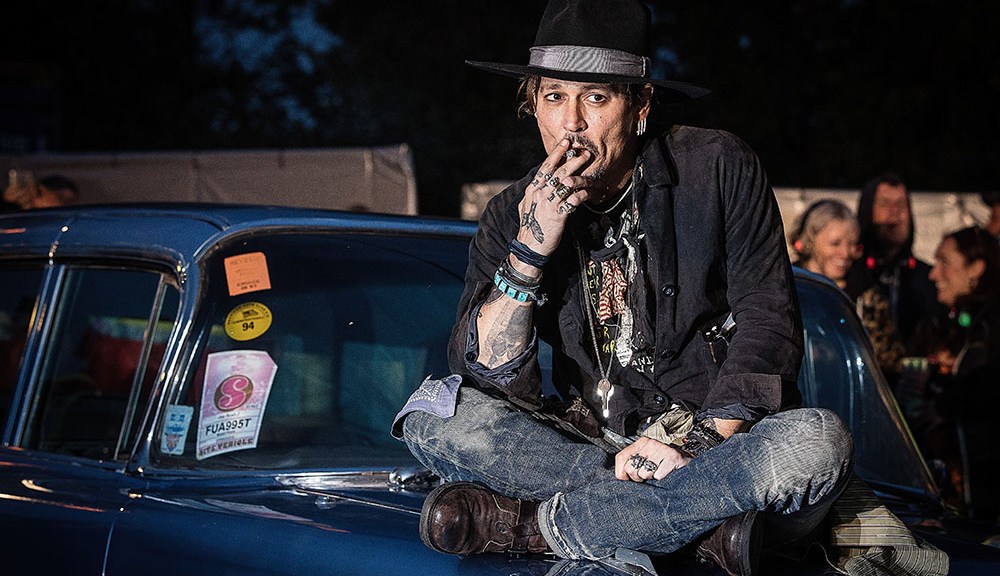
Glastonbury 2017: Johnny Depp – “When was the last time an actor assassinated a President?”

Johnny Depp appeared at Glastonbury Festival tonight, and used his appearance to joke that “maybe it’s time” that an actor once more assassinated the President of the United States.

Addressing the audience at the Cineramageddon stage, before a screening of his 2004 film The Libertine, Depp was told by the audience that as it’s Glastonbury he could say whatever he wants.

“Oh thank you,” he replied. “Fuckin’ A. I’m moving here then! Jesus Christ. Can we bring Trump here?”

Responding to a chorus of boos from the crowd, he continued: “No, no, no, you’ve misunderstood completely. I think he needs help… and there are a lot of wonderful dark places he could go. A lot of Doc Martens… It’s just a question… I’m not insinuating anything, but… by the way, this is going to be in the press, and it will be horrible… but I like that you’re all a part of it. When was the last time an actor assassinated a President?”

As the crowd cheered his reference to the 1865 assassination of Abraham Lincoln by the actor John Wilkes Booth, Depp added: “I want to clarify, I’m not an actor. I lie for a living. However, it’s been a while! And maybe it’s time!”

Earlier, Depp had expressed his appreciation for Julien Temple’s new Cineramageddon stage, saying: “Look what this thing is! It’s incredible what he’s invented here. It’s a beautiful sort of madness.”

He introduced the film, in which he plays John Wilmot, the second Earl of Rochester, by saying: “I made this film to try to bring to England a poet that they missed because he was written off as a jokester, or just a kind of wit, but he was actually very deep.”

Published by NME.

Celebrate Towel Day with Disaster Area: The loudest band in the Galaxy

douglas-adamsDouglas Adams was many things: a novel writer, a radio-maker, a sane man in an increasingly insane universe, but most of all he was a hoopy frood who really knew where his towel was.

For the uninitiated, Adams described in the Hitchhiker’s Guide To The Galaxy why a towel is: “about the most massively useful thing an interstellar hitchhiker can have.” As a result, every year since his death in 2001 fans have remembered him by celebrating Towel Day on May 25th. Which is today. I can’t think why people would still be quoting lines like:

“It is a well-known fact that those people who must want to rule people are, ipso facto, those least suited to do it… anyone who is capable of getting themselves made President should on no account be allowed to do the job.”

But perhaps you can.

Continue reading at NME.

Roger Moore: Keeping The British End Up

Not long ago I found one of my school notebooks from 1995, when I would have been 9 years old. I’d obviously been asked to fill in responses to a sort of pop quiz questionnaire. I’d written, in my neat childish hand: “If I could be any famous real person I would be Roger Moore, because in some of my favourite movies Roger Moore plays the lead role.”

No prizes for guessing that I meant James Bond. In fact, a few lines later I go on to summarise the plot of Ian Fleming’s short story ‘A View To A Kill’, which I’m not sure I should have been reading at 9. I described the violent tale about assassins in Versailles as “the best story book I have ever read.”

I’m telling you this so you understand that when I say Roger Moore was my childhood hero, I really mean it. His was the life I wanted: full of glamorous locations, bottomless cocktails and always ready with a pun and a raised eyebrow. I’m not sure I fully understood what he meant by “Keeping the British end up, sir” at the end of The Spy Who Loved Me, or why Q’s Moonraker line: “I think he’s attempting re-entry, sir” was so funny, but I howled at them anyway. I probably thought he was talking about kissing.

I finally got to meet my hero last year, shortly before what was to be his final appearance on stage at the Royal Festival Hall in November. I bought a three-piece suit for the occasion, because there was no way I could go to meet James Bond wearing a t-shirt.

The first thing I said to him was: “Thank you.” I told him how much his films had meant to me, and how excited they had made me to go out and explore the world. “You’re welcome!” he said, with a grin. “I’ve been lucky all my life. From the time I started making movies and television I played heroes. Never had to say too much, got the girl, won all the fights, got to keep the clothes. What more can you ask for?”

He was, exactly as you’d imagine, endlessly charming company. He was self-deprecating about his own acting ability, but he taught me how to make the perfect Martini (with gin, not vodka) and how to deliver the perfect one-liner. He said his own favourite was from The Man With The Golden Gun: “When I’m, when Bond, is asking the gunsmith about Scaramanga. He’s got a rifle that I’m lining up. I’m asking him where’s something something. I’m pointing the gun right at his balls and I said: ‘Speak now, or forever hold your piece.’ Which I love. I love that line.”

Roger Moore has always been tied up with my idea of what it means to be British. How could it not be, when he was the man who skied over the cliff edge only to be saved by a Union Jack parachute? After Brexit, and with the Conservative government going back on its promise to take in refugees from Syria, I wanted to know what he thought Britain’s role in the world should be.

“I hope we continue to be important contributors to alleviating the effects of poverty,” he said. “I don’t like the newspaper campaigns that take the government to task for the amount of money it gives to other countries. Yes, some of it gets abused, but it’s important.”

When I asked him whether as a country we should take in more refugees, he replied: “I drive around England quite a lot. We have an awful lot of space, we really do. It’s because we’re a fortunate society that people want to come here. If they’re coming for non-economic reason then that’s all the more reason we should take them. If they’re coming for economic reasons, if they have something to contribute, then I don’t blame the poor bastards for getting out! They’re doing exactly what the British did 400 years ago.”

As much as we might picture Roger Moore living the good life on the Riviera, or turning up as Bond somewhere exotic wearing a safari suit, he dedicated his own life to campaigning against war and poverty for UNICEF. “I went to El Savador on my first UNICEF field trip, and learnt first-hand about what life was like in a favela,” he told me. “You see a very different world to the world that Bond saw,”

For me, Roger Moore embodied an idea of Britishness totally at odds with the insular worldview and false nostalgia of Brexit. He hated the idea that we should cut our overseas aid budgets, or build walls to keep out refugees. He spoke about a Britain that goes out into the world and makes it a better place for everyone. For that, he’ll always be my hero.

Originally published by NME.

Register to vote – and take a +1

polling-station-politics-election-GettyImages-51071763-041917

Today is the last day to register to vote in the upcoming Most Important General Election Of Your Lifetimeᵀᴹ.

You may think this need not bother you. We know that you, dear, sweet, devastatingly good-looking and politically-engaged NME reader that you are, have already registered to vote. Of course you have. You went along to https://www.gov.uk/register-to-vote and spent a few minutes making sure you can make your voice heard on the 8th June. Well done you.

But don’t recline smugly on your laurels just yet, there’s still something that you could do today that might, at the risk of mildly overstating things, Change The Future Of The Country Forever. It’s time to text a mate and remind them to register. This is, after all, not just about individuals but about whole generations. We know that in the 2015 election, only 43% of people aged 18-24 and 54% of people aged 25-34 cast their vote, compared to a massive 78% of over-65s voted.

Continue reading at NME

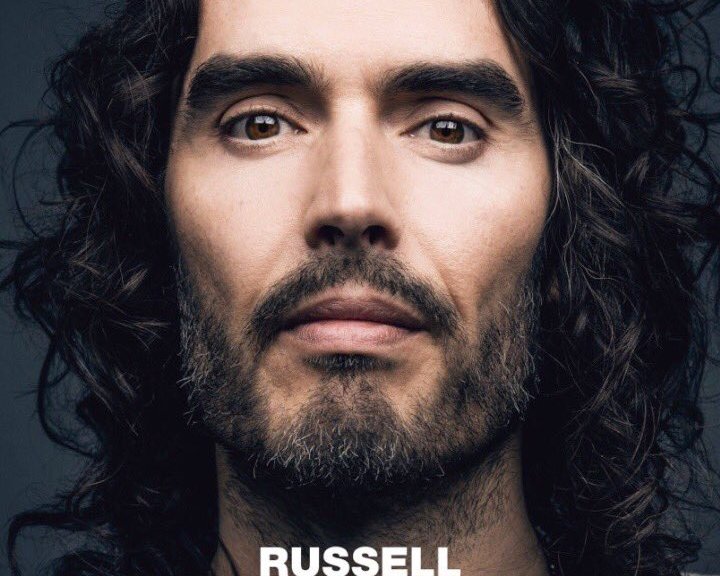
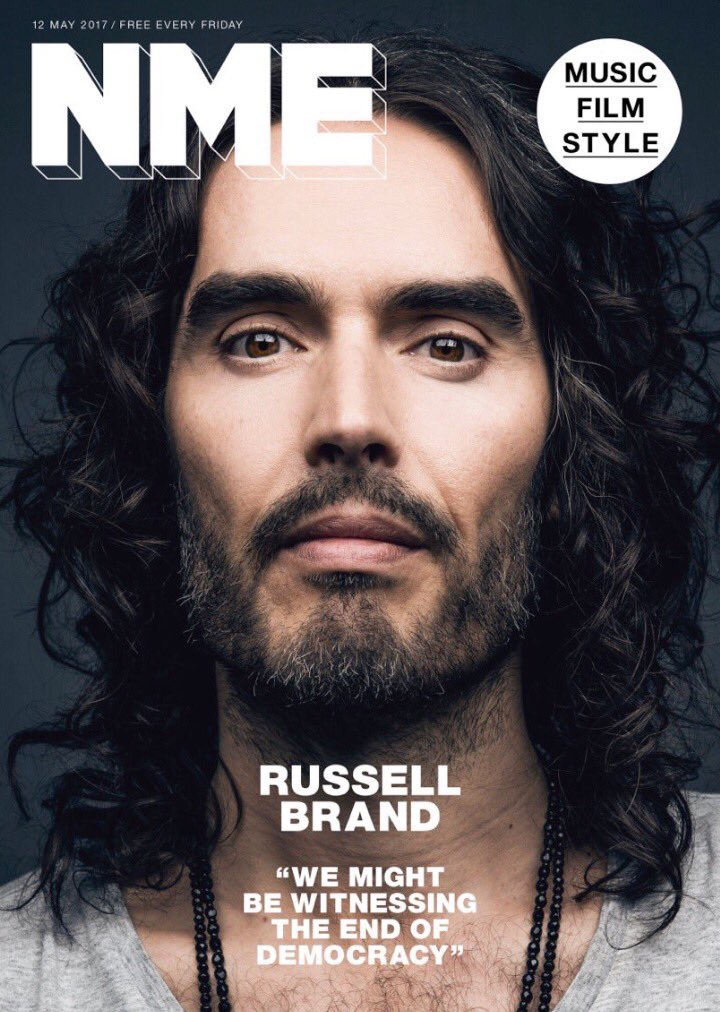
Russell Brand: “We might be witnessing the end of democracy”

russell-brand-nme

Russell-Brand-KEGP

Russell Brand has been many things in his 41 years: stand-up comedian, heroin addict, movie star, Andrew-Sachs-offending national disgrace, reality TV host and three-time winner of The Sun’s ‘Shagger of the Year’, to name but six. And just when it looked like he was set to spend the rest of his days fopping around Hollywood as the token English eccentric, he recast himself as a real-life revolutionary.

In October 2013, Brand used a Newsnight interview to call for “a socialist egalitarian system based on the massive redistribution of wealth, heavy taxation of corporations and massive responsibility for energy companies and any companies exploiting the environment”. It was a far cry from making knob gags on a Big Brother spin-off, but it struck a chord with a public who at the time could only tell the difference between the three major political parties by looking at what colour tie their leader had on. Brand threw himself into activism, writing a book called Revolution, launching his YouTube channel The Trews and getting involved in the successful campaign to save the New Era housing estate in Hackney from redevelopment.

The media, however, largely focused on just one aspect of the original interview: the fact he’d told Jeremy Paxman that he didn’t think people should vote. Then, on the eve of the 2015 election, Brand changed his mind and urged people to vote for Labour’s Ed Miliband – who promptly lost resoundingly, and resigned.

In the wake of the election, Brand retreated from public view. He enrolled in a degree while the tabloids mocked his decision to move to a £3.3m house near Henley-on-Thames with his fiancée Laura Gallacher, who last year gave birth to a daughter they gave the deliberately un-celebrified name Mabel. Having licked his wounds, Brand is resurrecting himself with a stand-up tour, Re:Birth, and a new show on Radio X. We meet him in the luxurious gardens of Danesfield House, a fancy hotel near his home that’s so decidedly un-insurrectionist that George Clooney had his wedding after-party here. He’s watching his “recalcitrant hound”, a German Shepherd named Bear, lollop through the gardens. The dog, he says, has “self-control issues… I don’t know where he’s picked that up from.”

While he can’t resist that knowing joke at his own expense, Brand in person now cuts a calm, sage figure. Wearing a Trews T-shirt and gym gear, hair tied up in a bun, beard flecked with grey, he’s more Zen yoga enthusiast than marauding sex pirate. He may be less vocal with his righteous ire, but he still believes, despite mounting evidence to the contrary, that society need not be so venal. He even recently filmed himself registering to vote for the first time, meaning Britain’s most notorious non-voter could be about to cast his first ballot. Which raises the question…

Continue reading at NME.

Cover story for NME, 12 May 2017.

How to run for Parliament (while doing your A Levels)

EliAldridge18-year-old Eli Aldridge has been selected as a Labour candidate for the General Election on 8 June – a day after his A Level exams start. The aspiring MP for Westmorland & Lonsdale explains how you too could get started on the road to Westminster

When did you first get involved in politics?

“In the aftermath of the 2015 election, my disappointment about the result spurred me to think about how I could make a difference. The Labour Party seemed the obvious choice for me.”

Continue reading at NME.

Nothing But Thieves on new single ‘Amsterdam’, tour plans and taking advice from Muse’s Matt Bellamy

nothing-but-thieves.png

Nothing But Thieves announced themselves to the world in emphatic style when their 2015 self-titled debut sold over 250k copies, racking up over 174 million track streams along the way. This September 8 they return with their second album, Broken Machine, of which new single ‘Amsterdam’ is the first taste. When we gave frontman Conor Mason a ring  to ask him what we should expect, we found him in Ukraine where the band are currently filming the  ‘Amsterdam’ video:

Continue reading at NME.

93% of students say they’re registered to vote – but will it bring change?

The Labour Leader Addresses Party Conference

The election this June is a weird one for any number of reasons. Conducted beneath the cloud of Brexit, it’s also notable for likely being the last one we’ll be able to squeeze in before global Armageddon. Enjoy it while you can!

Another weird thing about it is simply that it’s happening in June. The last three general elections have all been held in early May, and it’s possible this subtle shift in the date could have a big impact on how young people vote – or more specifically, where they vote. Holding the election after many students have finished exams could mean that more vote in their home constituencies, and 68% of those surveyed said this was their plan. It’s hard to call exactly how this might impact the result. It may mean that there’s a reduced impact from concentrated blocks of students voting in university seats. At the same time, some students may be going home to cast potentially powerful votes in marginal constituencies.

Continue reading at NME.

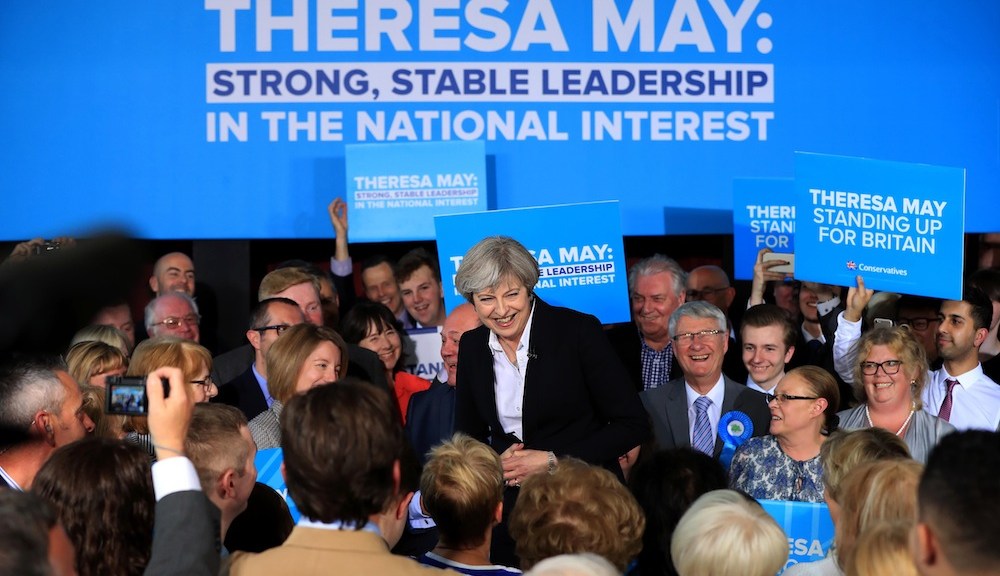
Theresa May’s ‘strong and stable’ catchphrase is just a bad meme

BRITAIN-POLITICS-VOTE-CONSERVATIVE

People who work in advertising love going viral. They love it even more than cocaine and stealing money from the tiny fists of children. They can’t get enough of it, yet it remains mysterious. Advertisers spend hours upon hours reading tea leaves or consulting tarot cards to try to divine the specific rubric which makes some ideas meme-worthy while others wilt and die without a retweet to their name.

In this election, Theresa May’s “strong and stable leadership” catchphrase has already taken on the qualities of a meme. Thanks to her adherence to the three Rs of repetition, repetition, repetition, the slogan has become one of the few things even the most casual of election observers will have picked up.

Continue reading at NME.

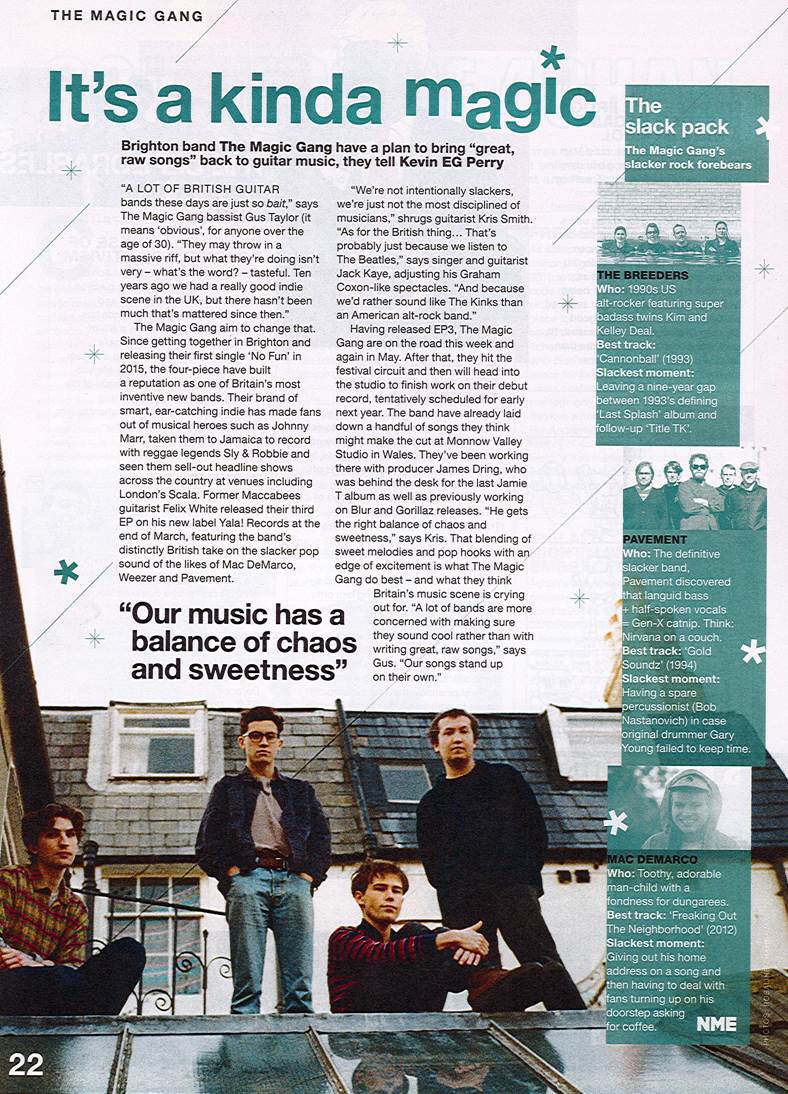
It’s A Kinda Magic

the-magic-gangA lot of British guitar bands these days are just so bait,” says The Magic Gang bassist Gus Taylor (it means ‘obvious’, for anyone over the age of 30). “They may throw in a massive riff, but what they’re doing isn’t very – what’s the word? – tasteful. Ten years ago we had a really good indie scene in the UK, but there hasn’t been much that’s mattered since then.”

The Magic Gang aim to change that. Since getting together in Brighton and releasing their first single ‘No Fun’ in 2015, the four-piece have built a reputation as one of Britain’s most inventive new bands. Their brand of smart, ear-catching indie has made fans out of musical heroes such as Johnny Marr, taken them to Jamaica to record with reggae legends Sly & Robbie and seen them sell-out headline shows across the country at venues including London’s Scala. Former Maccabees guitarist Felix White released their third EP on his new label Yala! Records at the end of March, featuring the band’s distinctly British take on the slacker pop sound of the likes of Mac DeMarco, Weezer and Pavement.

Continue reading at NME.

Pa’l Norte 2017: Señor Brightside

KILLERS_03_Mexico_Jenn_Five

We’re backstage at Pa’l Norte festival in Monterrey, northern Mexico, about half an hour before The Killers are due onstage for their headline set, and Brandon Flowers is trying to convince guitarist Dave Keuning that now is perhaps not the ideal time to start experimenting with mixology.

“No,” sighs the singer, “don’t mix vodka and tequila.”

You can’t blame him for getting into the Mexican national spirit. Brandon himself has been in town for a few days, acclimatising to the late March heat and sampling the very best of the local cuisine. A couple of nights earlier he’d been spotted at Tacos Primo, a great local joint that serves the best tacos I’ve ever eaten. Each taco costs just 15 Pesos each (about 64p) for bistec or carnitas, and the secret to their superlative taste seems to be frying the tortillas in the steak fat.

“I think the tortilla is a really important part,” concurs Brandon. “We were watching their process at Primo. You could put anything in a good tortilla and it would be really great.”

Brandon’s a man of the world, so I want to know how he ranks them against his personal lifetime of taco-eating? “They were up there with the best tacos I’ve ever had,” he confirms, although he points me towards another couple of contenders: “When we’re in Guadalajara we have a place on the street that we go, Tacos Jorge. At home in Vegas, it’s got to be Tacos El Gordo, ‘fat taco’.”

There you have it. Never let it be said that NME doesn’t ask the meatiest questions. I also take the opportunity to grill the band on the progress of their fifth album. “It’s sounding good,” offers drummer Ronnie Vannucci Jr of their new songs. “We have a problem with taking two steps forward and one step back, so that makes it take longer. We keep asking ourselves: ‘What does a fourpiece band do? How do you keep it fresh?’ It’s a constant exercise in experimentation.”

The band confirm that the record will be out this year, and that they’ll have new material to play by the time they headline Hyde Park on July 8. There’s no new stuff tonight, so the 85,000 people packed into Monterrey’s Parque Fundidora have to settle for just being reminded how many indie dancefloor fillers the band have written over the years. Which is a lot, even if you just listen to their debut. Watching thousands of Mexicans scream along to ‘Somebody Told Me’, ‘Smile Like You Mean It’, ‘Jenny Was A Friend Of Mine’, ‘All These Things That I’ve Done’ and ‘Mr Brightside’ in 2017, you’re tempted to conclude that ‘Hot Fuss’ has aged better than any of its early-00s peers. After the show, like so many rock stars, Brandon Flowers only has one thing on his mind. “We’re going again tonight,” he says. “Straight from the stage to Tacos Primo.”

There is, of course, more to Monterrey than just criminally good tacos. A bustling industrial city with a population a little over one million, it’s also home to a decent live music scene. Café Iguana in Barrio Antiguo is a great indie club with at least four live rooms, including one in an old-fashioned theatre where the end of an indie band’s set was signalled by the thick red curtains immediately drawing shut across the stage. You don’t get that at Birthdays. The best cocktails in town are at Río Mississippi 105-B, who do frankly obscene things with mezcal.

Then there’s Pa’l Norte itself, a sprawling festival which runs its two main stages with ruthless efficiency. Located side-by-side, the moment a band on the first stage finishes the next band starts up on the second stage. Never a moment wasted, although when you’re supposed to pop for a wee or to the bar is anyone’s guess. In what might be a stroke of genius, there’s also a third, smaller stage just to the right of the two main ones. Known as the Sorpresa (‘Surprise’) stage, the line-up is unannounced and the secret sets last just 5 or 10 minutes, making them perfect for one-hit wonders. Wondering why there’s a five-minute gap between Kaskade finishing and Jason Derulo starting? Surprise! Here’s Las Ketchup singing their 2002 novelty single ‘The Ketchup Song’. Got 10 minutes before The Offspring come on? Surprise! Here’s Redfoo playing the only two LMFAO songs you’ve heard of, and another one you haven’t, and taking his trousers off and wiggling his dick in his tiny pants, and making you wonder whether anyone else could make a 10-minute set feel 40 minutes too long.

Speaking of sexually inappropriate men with bad hair, it wouldn’t be 2017 without Donald Trump. MIA performed her weekend-stealing high-energy set in front of a huge metal wall dividing the stage in two. If you somehow missed the significance of that, just 200km south of the border, she spelled it out by getting her DJ to play Edwin Starr’s ‘War’ and singing along: “Wall, what is it good for? Absolutely nothing.” Having stuck her middle finger up at Trump, she decides to “pull up on the politics” and play what she calls “the most romantic song I’ve ever written.” It’s ‘Teqkilla’ – like I said, in Mexico everyone gets into the local spirit eventually.

Published by NME.

“It’s simple: We need to help”

choose-love

It’s two days before the NME Awards and, in a rehearsal room in London’s King’s Cross, a group of musicians are gathering to prepare a very special performance. What unites them is a belief that we’re in a time of crisis and we all need to do what we can to raise our voices.

Almost six years ago, a ferocious civil war broke out in Syria. With much of the country now controlled by so-called ISIS, there’s still no end in sight. Just like the victims of wars in Afghanistan and Iraq, millions of ordinary Syrians were left with little choice but to flee for their lives. They packed a few belongings into plastic bags and set off with their children in tow. Most ended up in neighbouring countries Turkey, Lebanon and Jordan, but some kept going and made the precarious journey to Europe. Many of those who hoped to come to Britain ended up at a camp in Calais, France, which at its peak was a makeshift home for 15,000 refugees.

For a time, the crisis made headlines, but before long our collective gaze drifted to Brexit, Trump and Bake Off. While we looked away, a million new refugees from Syria, Iraq and Afghanistan arrived in Europe last year. The camps in Calais and elsewhere were closed down, leaving many people homeless on the streets of Paris. In Britain, we’ve given refuge to just a few thousand. In the last few weeks, the Government announced that a scheme which promised to rehome 3,000 unaccompanied children in the UK will be scrapped after letting in just 350. That decision alone makes the idea of Britain as a compassionate country sound like cheap fiction – and it’s why the charity movement Help Refugees is currently in the process of suing the Home Office.

Continue reading NME cover feature, 24 February 2017.

Vampires, magic and Bob Marley: Calling Lee ‘Scratch’ Perry

leescratchperry_gettyimages-174492623

If the history of reggae was the Old Testament, Lee ‘Scratch’ Perry would be God. He was there, making it happen. In 1968 he released ‘People Funny Boy’, one of the first ever reggae tunes. Two years later he was approached by Bob Marley to produce the second and third Wailers albums. From that moment, musicians from Perry’s house band The Upsetters, named after his song ‘I Am The Upsetter’, became part of the definitive line-up of Marley’s band.

Perry himself went on to record with everyone from The Clash to Paul McCartney, and he was more than just a producer. He was a guide and a friend in times of need. In 1980, when Macca was arrested in Japan for possession of 7.7 ounces of cannabis, Perry sent a letter to Tokyo’s Minister of Justice, pointing out “the Herbal powers of marijuana in its widely recognized abilities to relax, calm and generate positive feeling”. Perry made it clear he was writing in his personal capacity as a “creator of nature’s LOVE, light, life and all things under the creation sun, positive feelings through songs, good times and no problems.” McCartney was later released.

On March 5, Lee ‘Scratch’ Perry is coming to London’s Village Underground to play a dub reggae DJ set. I called him up at his home in Jamaica to find out how preparations were going, and received the following transmission from the mountain top:

Hi Lee. What should we expect when you play in London in March?

“Say to people in London that God is coming. God is coming. God is coming to save all the people that love God. If you love God, share in that. We will conquer. Conquer the Roman Empire. Conquer politicians. Conquer kings and conquer queens. Conquer princes and conquer princesses. Rastafari!”

I will tell the people of London. Do you have good memories from when you’ve come here before?

“I conquered. I conquered the markets. I conquered bread markets. I conquered chicken markets. I conquered blood-suckers and I conquered vampires. In the name of Jah and the golden lion. Jamaica! Are you ready?”

I’m ready.

“By the God of thunder. By the God of lightning. By the God of Christ. God will conquer. In the name of Marcus Garvey. I am in Jamaica now. Jamaica is the country of magic. Jamaica is the country of science. It’s the confluence of magic. Give that magic to American rappers. Give that magic to Aleister Crowley. [Singing:] ‘Follow me, I’m the pied piper.’”

You’ve had a long career – 60 years – but who’s the most talented musician you ever worked with?

“A bass player named Boris Gardiner. A drummer named Mikey. A guitarist named Chinna. A guitarist named Ernest Ranglin. A piano player named Winston, Winston is dead now. They played in my band The Upsetters, after the others went to play with Bob Marley.”

Your London show will be a couple of weeks before your 81st birthday. How do you plan to celebrate?

“Smoke it up.”

Published by NME.

Diamond Geezers

run-the-jewels-nme

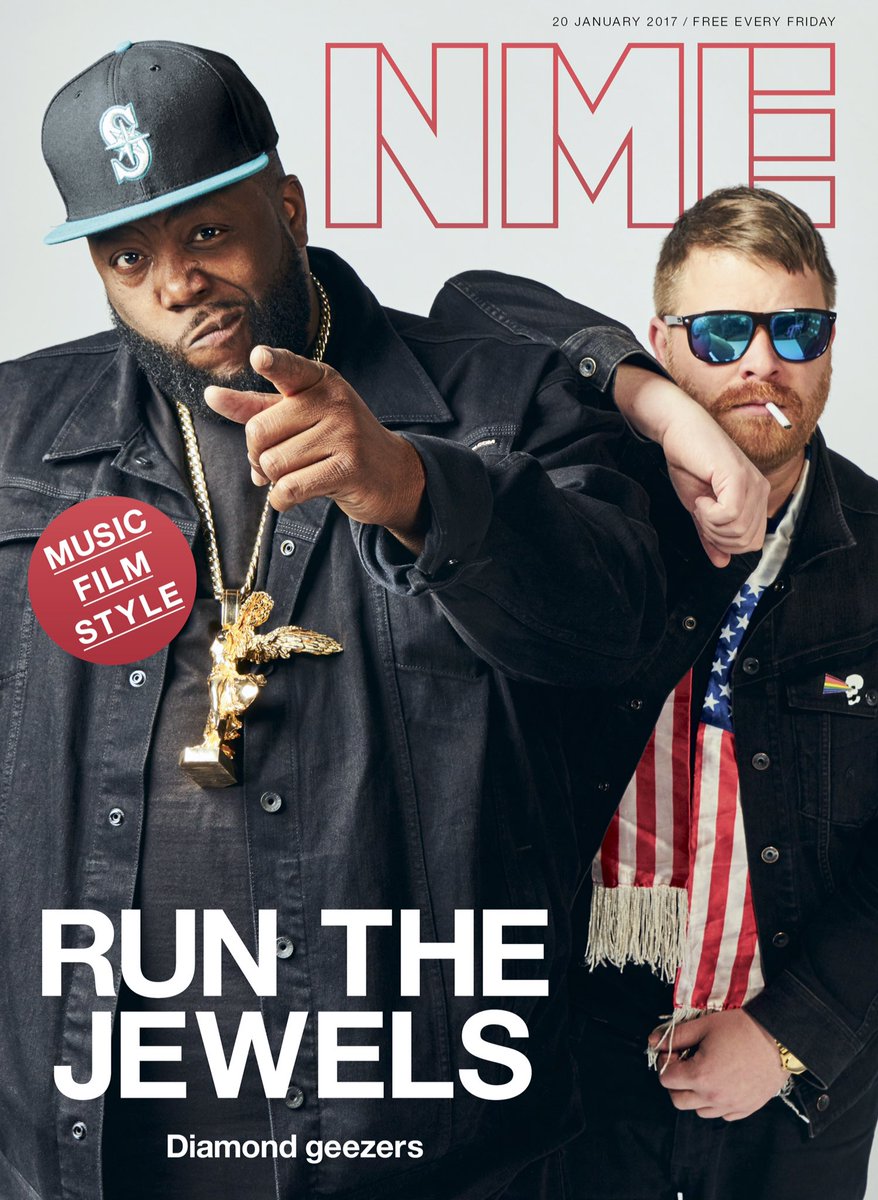
run-the-jewels-nmeThis week, Donald Trump will place one of his tiny hands on the Bible and his puckered lips will accept the US presidency: the first Twitter troll with a nuclear arsenal. Holed up at a secret location in Nashville, preparing for a tour that’s due to come to the UK and Europe at the end of March, firebrand rap duo Run The Jewels are somehow managing to see the funny side.

“As a guy who grew up on dystopian science fiction you can’t help but be morbidly amused,” says El-P, looking for a chink of light in the darkness. “It’s scary but hilarious, in a fucked-up way. It’s the folly of man. It’s also incredibly dangerous and deadly. The stakes themselves make the gallows humour that much more potent. But that’s me. If I had an executioner’s gun to the back of my head and he farted, I’d laugh.”

Beside him, his sparring partner Killer Mike leans in. “I’ve watched every inauguration since Reagan,” he says, in that Deep South baritone. “But this is the first time the President is gonna be sitting there tweeting: ‘I told y’all, fools.’”

Continue reading.

Published in NME, 20 January 2017.

Hey, That’s The Way To Say Goodbye

leonard-cohen-darker

Death is an impossible idea to stare at for too long. “The mind blanks at the glare,” as Larkin wrote. We can spend our lives trying to ignore the knowledge of our sure extinction but it will wait on the horizon either way. It lurks out of sight unless we muster the courage to raise our eyes from our lives to see it.

Leonard Cohen was brave enough to look up. It will be said that his death at the age of 82, which was reported this morning, is another tragedy in a year that appears to have been mainly constructed from disasters. I’m not so sure that it should be called a tragedy to die with such grace and wisdom. If there is such a thing as a good death, it appears at least from a distance that Cohen found it.

He was doing good work until the very end. Just three weeks ago today, on his birthday, Cohen released his fourteenth record ‘You Want It Darker’. It is a remarkable record, full of poetry, black humour and, of course, intimations of mortality. On the title track he uses the word ‘Hineni’, the Hebrew word meaning ‘Here I am’. He sings: “Hineni, hineni, I’m ready, my lord.” Cohen’s songs were always touched by death but by the end, after a lifetime of contemplation and Zen meditation, they’d achieved a state of humble acceptance when facing the abyss.

There is more evidence of his grace in the letter he wrote this July to Marianne Ihlen, his former lover and muse, who was then on her deathbed. In the face of death it is easy to slip into inanities or meaningless platitudes, but that was not Cohen’s way. He wrote: “Well Marianne it’s come to this time when we are really so old and our bodies are falling apart and I think I will follow you very soon. Know that I am so close behind you that if you stretch out your hand, I think you can reach mine. And you know that I’ve always loved you for your beauty and your wisdom, but I don’t need to say anything more about that because you know all about that. But now, I just want to wish you a very good journey. Goodbye old friend. Endless love, see you down the road.”

He saw clearly what was coming. A few months ago, after reciting the words of a new song to the New Yorker editor David Remnick, Cohen told him: “I don’t think I’ll be able to finish those songs. Maybe, who knows? And maybe I’ll get a second wind, I don’t know. But I don’t dare attach myself to a spiritual strategy. I don’t dare do that. I’ve got some work to do. Take care of business. I am ready to die. I hope it’s not too uncomfortable. That’s about it for me.”

He was right of course. It is hard to speak so plainly about death, but he achieved it. The simplicity of Cohen’s language – both in speech and in song – is thoroughly deceptive. Kris Kristofferson once told him that he wanted to have the opening lines of ‘Bird of the Wire’ inscribed on his tombstone. They are simple, short and perfect: “Like a bird on the wire, like a drunk in a midnight choir, I have tried in my way to be free.”

Cohen would work on songs and poems for months, turning sentences patiently. ‘Hallelujah’ took him five years. He was wise but he was also fucking funny. Just put on ‘The Future’ or ‘Everybody Knows’ or ‘Tower of Song’. I once asked him for advice about writing – or at least I tried. He was in London to release his album ‘Old Ideas’ in January 2012, a masterfully crafted record that felt like the return of old truths and forgotten melodies. In front of a room full of music journalists I was allowed the microphone to speak. At those sorts of events there’s always one: the babbling fool who just starts talking and never gets close to a question or a point. Mortifyingly, in front of the great poet, that was me. I think eventually he just gathered that I needed some help. “I’m reminded of the advice my old friend Irving Layton, who has passed away now but probably is the greatest Canadian poet that we’ve ever produced, and a very close friend,” he said. “I would confide in him, and after I’d told him what I planned to do and what my deepest aspirations were, he’d always say to me, ‘Leonard, are you sure you’re doing the wrong thing?’”

Take Leonard’s advice. Do the wrong thing instead of the ordinary thing, which is to call his death a tragedy, dash off a Facebook update or a tweet about how sad it is, post a meme comparing him to Bowie and Harambe and then carry on regardless. The harder thing to do, the wrong thing, is to look death as squarely in the eye as Cohen managed and to meet it with his clarity, his humour, and his grace. Then ring the bells, that still can ring…

Published by NME, 11 November 2016.

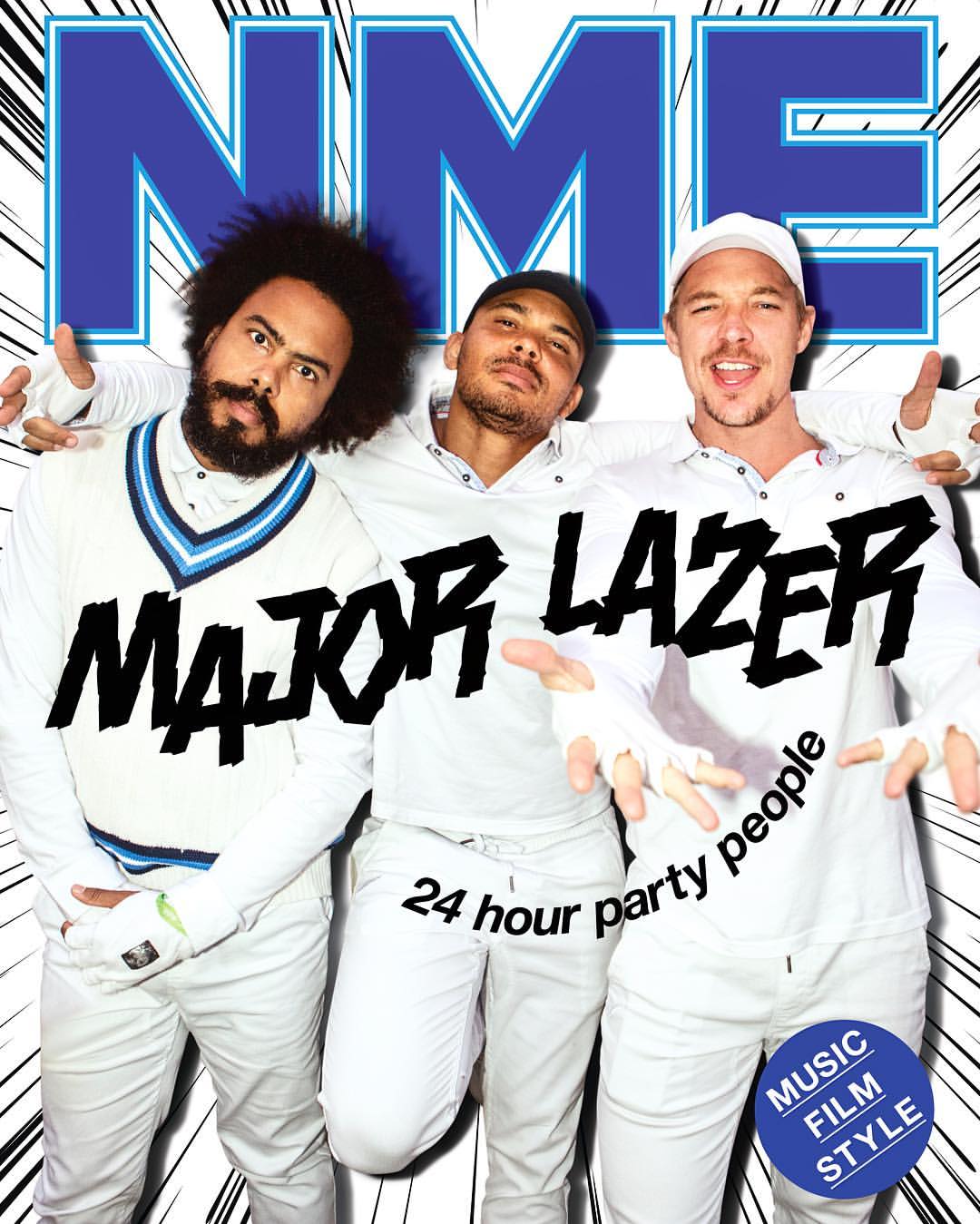
Major Lazer: 24 Hour Party People

Major Lazer

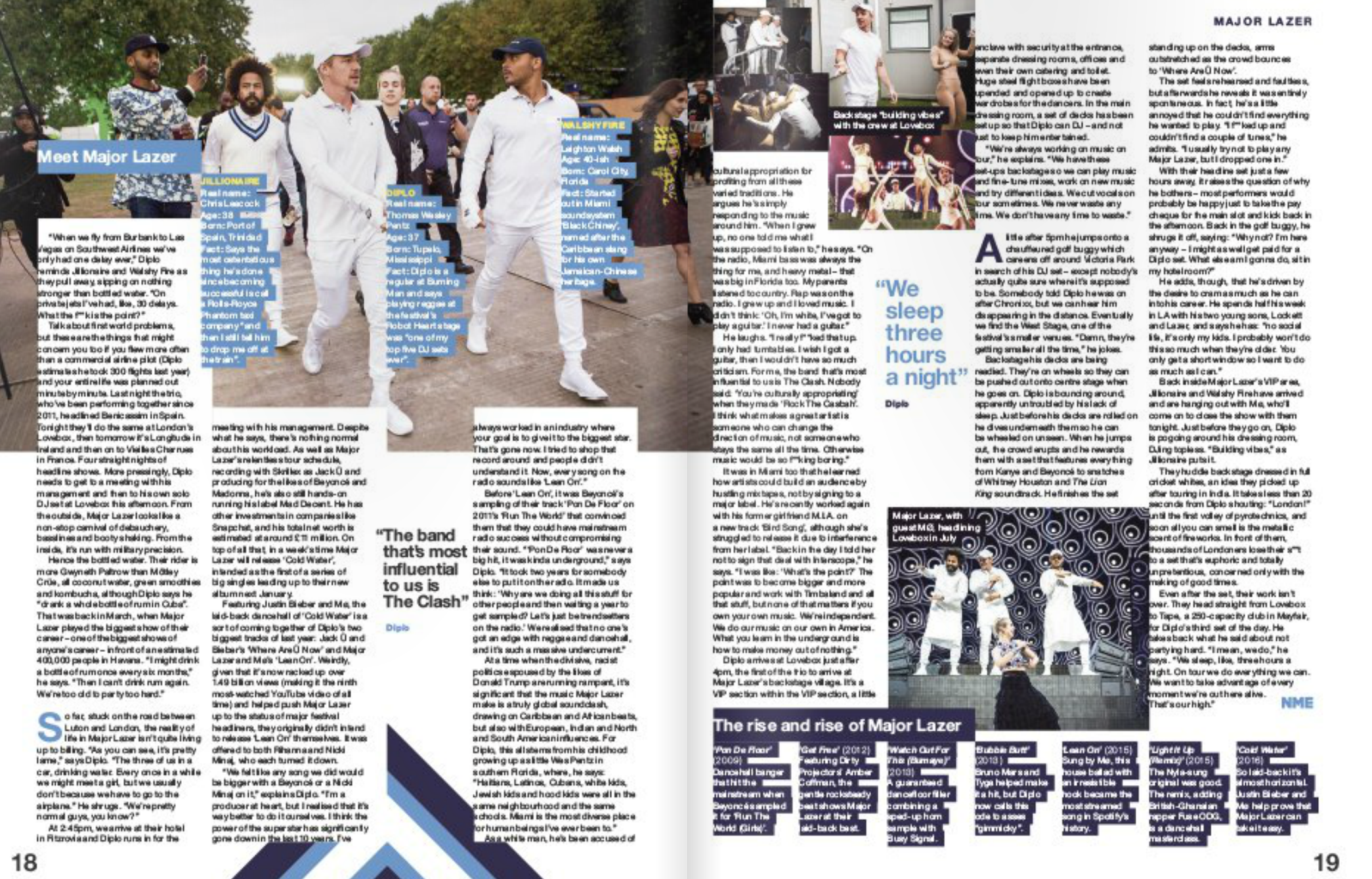
major-lazer1Luton isn’t the most glamorous airport in the world. It isn’t even the most glamorous airport around London, but it’s where Major Lazer find themselves at 1:20pm on Friday 15 July, piling out of a private jet and into the first of a fleet of blacked-out minivans waiting on the tarmac. They’re already an hour behind schedule. Even private jets have their drawbacks. Nobody ever tells you about the delays.

“When we fly from Burbank to Las Vegas on Southwest airlines we’ve only had one delay ever,” Diplo reminds Jillionaire and Walshy Fire as they pull away, bleary-eyed but sipping on nothing stronger than bottled water. “On private jets I’ve had like 30 delays. What the fuck is the point?”

Talk about First World problems, but these are the things that might concern you too if you flew more often than a commercial airline pilot (Diplo estimates he took 300 flights last year) and your entire life was planned out minute by minute. Last night the trio, who’ve been performing together since 2011, headlined Benicassim in Spain. Tonight they’ll do the same at London’s Lovebox, then tomorrow it’s Longitude in Ireland and then on to Vieilles Charrues in France. Four straight nights of headline shows. More pressingly, Diplo needs to get to a meeting with his management and then to his own solo DJ set at Lovebox this afternoon. From the outside, Major Lazer looks like a non-stop carnival of debauchery, basslines and booty shaking. From the inside, it’s run with military precision.

Hence the bottled water. Their rider is more Gwyneth Paltrow than Mötley Crüe, all coconut water, green smoothies and Kombucha, although Diplo says he “drank a whole bottle of rum in Cuba.” That was back in March, when Major Lazer played the biggest show of their career – one of the biggest shows of anyone’s career – in front of an estimated 400,000 people in Havana. “I might drink a whole bottle of rum once every six months,” he says. “Then I can’t drink rum again. We’re too old to party too hard.”

So far, stuck on the road between Luton and London, the reality of life in Major Lazer isn’t quite living up to billing. “As you can see, it’s pretty lame,” says Diplo. “The three of us in a car drinking water. Every once in a while we might meet a girl, but we usually don’t because we have to go to the airplane.”

He shrugs. “We’re pretty normal guys, you know?”
major-lazer2

At 2:45pm, we arrive at their hotel in Fitzrovia and Diplo runs in for his meeting with his management. Despite what he says, there’s nothing normal about his workload. As well as Major Lazer’s relentless tour schedule, recording with Skrillex as Jack Ü and producing for the likes of Beyoncé and Madonna, he’s also still hands-on running his label Mad Decent. He has other investments in companies like Snapchat, and his total net worth is estimated at around $15 million. On top of all that, in a week’s time Major Lazer will release ‘Cold Water’, intended as the first of a series of big singles leading up to their new album next January.

Featuring Justin Bieber and Mø, the laidback dancehall of ‘Cold Water’ is a sort of coming together of Diplo’s two biggest tracks of last year: Jack Ü and Bieber’s ‘Where Are Ü Now’ and Major Lazer and Mø’s ‘Lean On’. Weirdly, given that it’s now racked up over 1.49 billion views (making it the ninth most-watched YouTube video of all time) and helped push Major Lazer up to the status of major festival headliners, they originally didn’t intend to release ‘Lean On’ themselves. It was offered to both Rihanna and Nicki Minaj who each turned it down.

“We felt like any song we did would be bigger with a Beyoncé or a Nicki Minaj on it,” explains Diplo. “I’m a producer at heart, but I realised that it’s way better to do it ourselves. I think the power of the superstar has significantly gone down in the last ten years. I’ve always worked in an industry where your goal is to give it to the biggest star. That’s gone now. I tried to shop that record around and people didn’t understand it. Now, every song on the radio sounds like ‘Lean On’.”

Before ‘Lean On’, it was Beyoncé’s sampling of their track ‘Pon De Floor’ on 2011’s ‘Run The World’ that convinced them that they could have mainstream radio success without compromising their sound. “‘Pon de Floor’ was never a big hit, it was kinda underground,” says Diplo. “It took two years for somebody else to put it on the radio. It made us think: ‘Why are we doing all this stuff for other people and then waiting a year to get sampled? Let’s just be trend-setters on the radio.’ We realised that no-one’s got an edge with reggae and dancehall, and it’s such a massive undercurrent.”

At a time when the divisive, racist politics espoused by the likes of Donald Trump are running rampant, its significant that the music Major Lazer make is a truly global soundclash, drawing on Caribbean and African beats but also working in European, Indian and North and South American influences. For Diplo, this all stems from his childhood growing up as little Wes Pentz in southern Florida, where, he says: “Haitians, Latinos, Cubans, white kids, Jewish kids and hood kids were all in the same neighbourhood and the same schools. Miami is the most diverse place for human beings I’ve ever been to.”

As a white man, he’s been accused of cultural appropriation for profiting from all these varied traditions. He argues he’s simply responding to the music around him. “When I grew up no-one told me what I was supposed to listen to,” he says. “On the radio, Miami bass was always the thing for me, and heavy metal, that was big in Florida too. My parents listened to country. Rap was on the radio. I grew up and I loved music. I didn’t think: ‘Oh, I’m white I’ve got to play a guitar.’ I never had a guitar.”

He laughs. “I really fucked that up. I only had turn-tables. I wish I got a guitar, then I wouldn’t have so much criticism. For me, the band that is most influential to us is The Clash. Nobody said: ‘You’re culturally appropriating’ when they made ‘Rock The Casbah’. It was just music. That was 30 years ago. How are we that weird? I think what makes a great artist is someone who can change the direction of music, not someone who stays in the same position all the time. Otherwise music would be so fucking boring.”

It was in Miami too that he learned how artists could build an audience by hustling mixtapes, not by signing to a major label. He’s recently worked again with his once girlfriend MIA on a new track ‘Bird Song’, although she’s struggled to release it due to interference from her label. “Even from back in the day I told her not to sign that deal with Interscope,” he says. “I was like: ‘What’s the point?’ The point was to become bigger and more popular and work with Timbaland and all that stuff, but none of that matters if you own your own music. We’re independent. We do our music on our own in America. I think what you learn in the underground is how to make money out of nothing.”

Diplo arrives at Lovebox just after 4pm, the first of the trio to arrive at Major Lazer’s backstage village. It’s a VIP section within the VIP section, a little enclave with security at the entrance, separate dressing rooms for them and their dancers, offices for their crew and even their own catering and toilet. Huge steel flight boxes have been upended and opened up to create wardrobes for the dancers. In the main dressing room, a set of decks have been set up so that Diplo can DJ – and not just to keep him entertained.

“We’re always working on music on tour,” he explains. “We have these set-ups backstage so we can play music and fine-tune mixes, work on new music and try different ideas. We cut vocals on tour sometimes. We never waste any time. We don’t have any time to waste.”

A little after 5pm he jumps on to a chauffeured golf buggy which careens off around Victoria Park in search of his DJ set, except nobody’s actually quite sure where it’s supposed to be. Somebody told Diplo he was on after Chronixx, but we can hear him disappearing in the distance. Eventually we find the West Stage, one of the festival’s smaller venues. “Damn, they’re getting smaller all the time,” he jokes.

Backstage his decks are being readied. They’re on wheels so they can be pushed out into centre stage when he goes on. Diplo is bouncing around, apparently untroubled by his lack of sleep. Just before his decks are wheeled on he dives underneath them so he can be wheeled on unseen. When he jumps out, the crowd erupts and he rewards them with a set that features everything from Kanye and Beyoncé to snatches of Whitney Houston and the Lion King soundtrack. He finishes the set standing up on the decks, arms outstretched as the crowd bounces to ‘Where Are Ü Now’.

The set feels rehearsed and faultless, but afterwards he says it was entirely spontaneous. In fact, he’s a little annoyed that he couldn’t find everything he wanted to play. “I fucked up and couldn’t find a couple of tunes,” he admits. “I usually try not to play any Major Lazer, but I dropped one in.”

With their headline set just a few hours away, it raises the question of why he bothers – most performers would probably be happy just to take the pay cheque for the main slot and kick back in the afternoon. Back in the golf buggy, he shrugs it off, saying: “Why not? I’m here anyway, I might as well get paid for a Diplo set. What else am I gonna do, sit in my hotel room?”

He adds, though, that he’s driven by the desire to cram as much as he physically can into his career. He spends half his week in LA with his two young sons, Lockett and Lazer, and says he has: “no social life, it’s only my kids. I probably won’t do this so much when they’re older. You only get a short window so I want to do as much as I can.”

Back inside Major Lazer’s VIP area, Jillionaire and Walshy Fire have arrived and are hanging out with Mø, who’ll come on to close the show with them tonight. Just before they go on, Diplo is pogoing around his dressing room, Djing topless. “Building vibes,” as Jillionaire puts it. “It’s a family atmosphere,” he explains. “Our whole crew is here, and we’re going to make it an even bigger family with everyone who’s here today.”

They huddle backstage dressed in full cricket whites, an outfit they picked up after touring in India. It takes less than 20 seconds from Diplo shouting: “London” until the first volley of pyrotechnics, and soon all you can smell onstage is the metallic scent of fireworks. In front of them, thousands of Londoners lose their shit to a set that’s euphoric and totally unpretentious, concerned only with the making and having of good times.

Even after the set, their work is never over. They head straight from Lovebox to Tape, a 250 capacity club in Mayfair, for Diplo’s third set of the day. He takes back what he said about not partying hard. “I mean, we do,” he says. “We sleep like three hours a night. On tour we do everything we can. We want to take advantage of every moment we’re out here alive. That’s our high.”

Cover story for NME, 2 September 2016.
Open’er 2016: LCD Soundsystem play first gig in Poland in nine years

LCDSoundsystem_Opener2016_1_AH

LCD Soundsystem played their first show in Poland in nine years as they headlined Open’er festival in Gdynia tonight (July 1).

After the opening trio of ‘Us v Them’, ‘Daft Punk Is Playing At My House’ and ‘I Can Change’, LCD’s James Murphy addressed the audience, saying: “It’s been a long time since we played here… 2007. That’s almost ten years. So you’re ten years older now, there’s no escaping it.”

The band’s last appearance in the country was also at Open’er, when they performed on the Main Stage ahead of Björk. Later in the set, after a moving performance of ‘Someone Great’ and an ecstatic ‘Losing My Edge’, Murphy told the crowd: “You guys have been tremendously great. It’s been nine years and we didn’t know what to expect, but it’s been really fun.”

As fans roared their appreciation, Murphy added wryly: “We’re going to meet your enthusiasm with a slow song…” before ‘New York, I Love You But You’re Bringing Me Down’. They closed their set with ‘Dance Yrself Clean’ and ‘All My Friends’.

Continue reading at NME.

Glastonbury 2016: Meet The Spider-Men

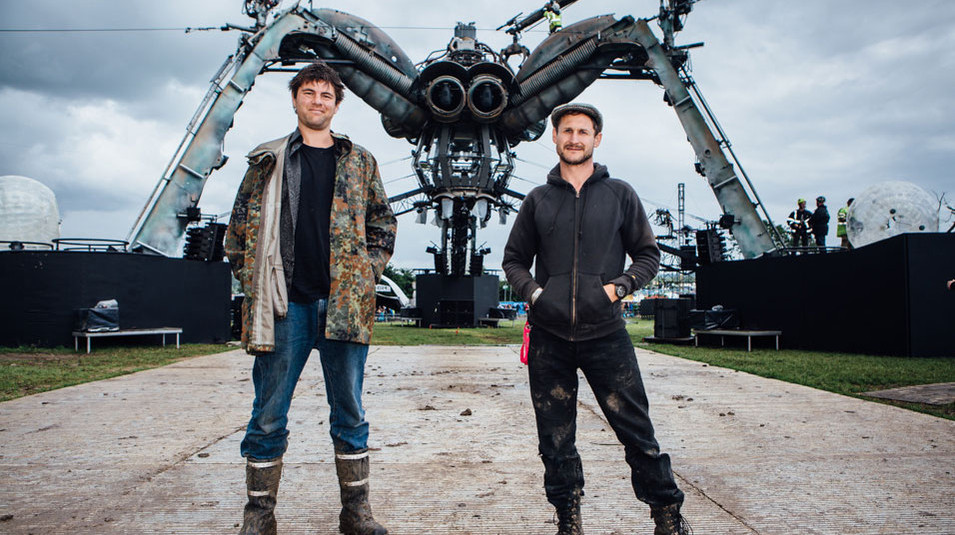
arcadia-andy-fordZiggy Stardust had his Spiders from Mars, and here at Glastonbury there’s a nest of mechanical spiders that are every bit as otherworldly. They live in Arcadia, which also doubles as a home for DJ sets, hi-tech high-wire acts and enough pyrotechnics to flame-grill a small country. The creature’s masters and designers are Pip Rush and Bertie Cole, who’ve both been coming to Glastonbury since they were kids and have been running an area at the festival since 2008. Arcadia now operates with a full-time staff of 50 and an on-site team of several hundred. We headed backstage to meet them and learn more about our giant arachnid friend.

Continue reading at NME. 

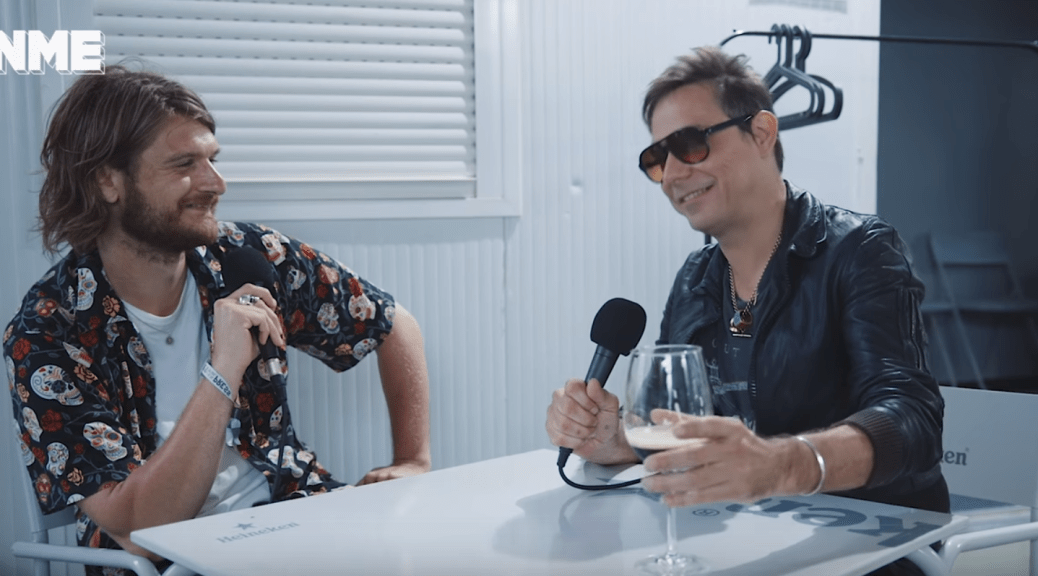
Kills. Thrills. Spills.

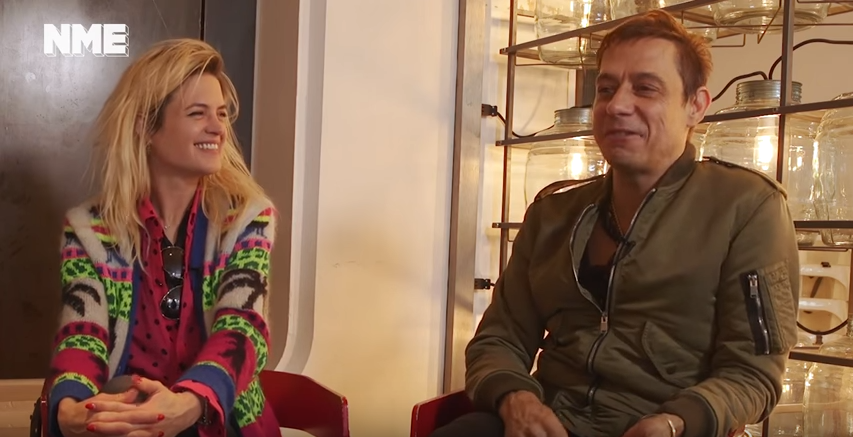
The-KillsJamie Hince is giving me the finger, but he swears he can’t help it. Three years ago, just after work had begun on the new record by The Kills, the duo he formed with American singer Alison Mosshart in 2000, Hince slammed a car door shut on the middle digit of his left hand. His doctor then gave him a shot of cortisone for a pre-existing case of ‘trigger finger’, a common guitarist’s ailment that affects the tendons. When Hince went on holiday to Morocco, he managed to contract a deep bone infection that rotted the inside of his hand.

“At one point, I was pulling my tendon out of my hand,” explains Hince, as Mosshart grimaces beside him. We’re sat in a restaurant underneath the brutalist towers of London’s Barbican watching Hince ditch his red wine so he can waggle an imaginary tendon at us. “It was,” he adds, somewhat unnecessarily, “a nasty scene.”

The upshot is he can no longer bend that middle digit, so he’s had to relearn how to play guitar while giving a permanent one-fingered salute. You imagine Johnny Cash would be proud. While Hince now shrugs off the setback – “It doesn’t make too much difference, really” – there was a time when he thought he may have to give up the instrument. It was out of that adversity that The Kills’ fifth record took shape. Limitations, as Mosshart sagely points out, “set you free sometimes”.

Keeping things simple has worked for The Kills before. Their lo-fi debut, 2003’s ‘Keep On Your Mean Side’, was recorded in Hackney’s Toe Rag Studios in just two weeks. Mosshart and Hince had first met when she was the singer in Florida punk band Discount and he, 10 years older and with a series of band splits behind him, was almost ready to quit music. They bonded over a shared love of poetry, obscure novels and The Velvet Underground. Musically, they kept things sparse and primal: just her voice, his guitar and a drum machine.

This time around, Hince’s damaged finger led him to buy synths and keyboards that he could play one-handed. “I felt like maybe I wouldn’t be a guitar player any more,” he explains. “That absolutely changed the way I was writing. We’d get together and Alison’s demos would be on acoustic guitar, like mine used to be, and mine would have all this electronic stuff going on.”

That coming together of guitars and Kraftwerk-indebted electronics is all over the resulting record, which was recorded at a rented house in Los Angeles and then at New York’s Electric Lady Studios. It got the name ‘Ash & Ice’ after Hince put a cigarette out in a drinks glass at some late-night party. It’s a suitably debauched image for a man who was a fixture in the Primrose Hill party set even before his marriage to Kate Moss in 2011.

Hince and Moss have reportedly now split, and the guitarist began the writing process for this record by setting off to ride the Trans-Siberian Railway alone. “On that trip my imagination was going crazy,” he says. Onboard he wrote ‘Siberian Nights’, a song about “a homoerotic version of Vladimir Putin where he’s taken a day off and he just wants a cuddle from a man. He’s going: ‘I can’t keep this up.’ He just wants some warmth from a masculine body.” Expect to see Putin waving a rainbow flag at a Kills show soon.

Mosshart found her own measure of solitude when she ensconced herself at Hedgebrook, a women’s writers’ retreat on Whidbey Island off the coast of Seattle. “You live in a cabin for 10 days. There’s no one there. You have no phone, no internet and you work,” she explains. “I think that kind of thing used to be far more common, but in the modern world it just doesn’t happen.”

It led Mosshart to write some of the most brutally frank songs of her life. ‘Heart Of A Dog’, named after the Mikhail Bulgakov novel she was reading at Hedgebrook, is a desperate declaration of loyalty to a lover, while she says her gut-wrenching vocal performance on ‘Hum For Your Buzz’ was born out of “total frustration”.

Mosshart is something of a creative whirlwind. Both she and Hince agree she writes and works at a faster pace than he does, so she found another creative outlet working with Jack White. They formed The Dead Weather in 2009 and released three albums in the following six years. On top of that, on the road she turns the band’s dressing rooms into private art studios and last year she held her first show at the Joseph Gross Gallery in New York.

She’ll have to pack up her paints again now as The Kills are heading back out on tour across America this month. They return to Europe in June, including a stop at the Isle of Wight Festival, and then the following month they’re due to visit Moscow. Assuming Putin lets them leave the country, they’ll play a full UK tour in October.

For a band as famed for their electrifying live shows as their records, Hince’s injury could have stopped them in their tracks. However, having come through warm-up shows in Amsterdam, Paris and London unscathed, they’re itching to get back on the road. “At the moment, playing shows just feels right,” says Hince.

After five years away, The Kills are back. They’ve dealt with injuries and setbacks in the best possible way: by learning to play music with one middle finger raised.

Published in NME, 17 June 2016.

Champions! Leicester have won the league, Kasabian are having a party

kasabian-leicester-nme
“So it’s a no to ‘Chat Shit, Get Banged’, then?”

It’s Monday May 16, a couple of hours before Kasabian play a surprise set at Leicester City’s Premier League victory parade, and frontman Tom Meighan is on the phone trying to sort out his stage outfit. His first choice was an unofficial T-shirt emblazoned with star striker Jamie Vardy’s infamous motto, but the club have just stepped in and nixed it. Somebody’s obviously decided that ‘Chat Shit, Get Banged’ is a bit aggro for a family-friendly party.

The thing is, there aren’t any adults around. A whole city’s childhood dreams have come true and the air is full of pure, unadulterated chaos. Nobody expected to be here. Leicester City started the season as 5,000-1 outsiders to win the title. To put that in context, around the same time the odds of LMFAO headlining Glastonbury this year were only 100-1. Leicester were a club that had never won England’s top flight in the entirety of their 132-year history, so even the most passionate of fans – a category that includes both Meighan and guitarist Serge Pizzorno – would never have dared to dream this day would come.

Continue reading at NME.

The real face of UK migrants

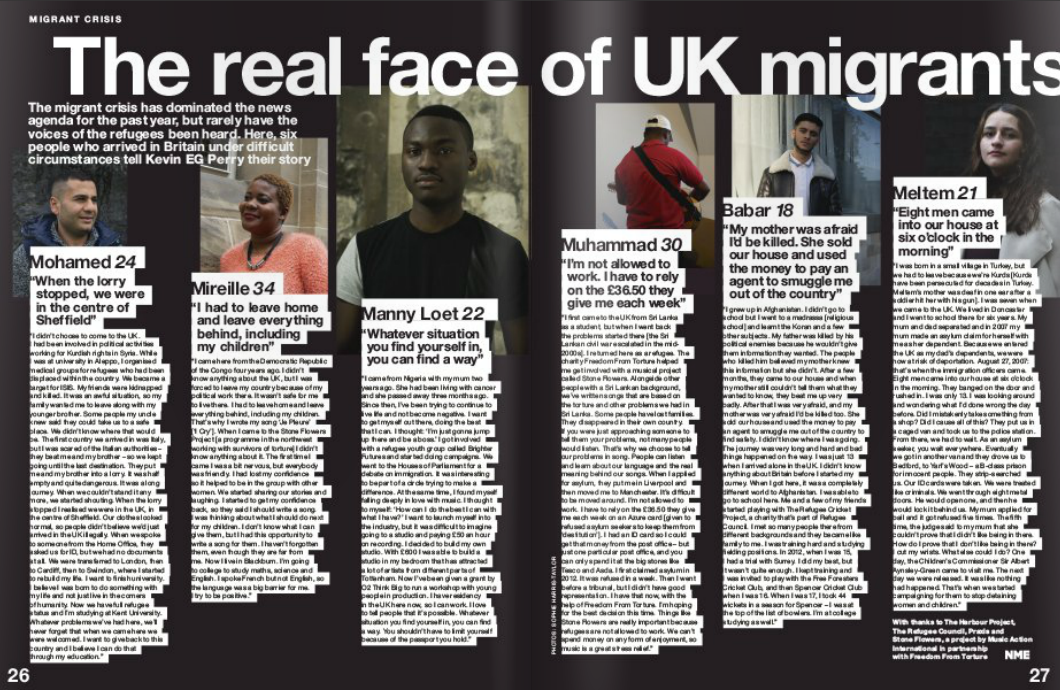
migrantsThe migrant crisis has dominated the news agenda for the past year, but rarely have the voices of refugees and migrants themselves been heard. Here, six people who arrived in Britain under difficult circumstances tell their stories

Mohamed, 24

“When the lorry stopped, we were in the middle of Sheffield”

“I didn’t choose to come to the UK. I had been involved in political activities working for Kurdish rights in Syria. While I was at university in Aleppo, I organised medical groups for refugees who had been displaced within the country. We became a target for ISIS. My friends were kidnapped and killed. It was an awful situation, so my family wanted me to leave along with my younger brother. Some people my uncle knew said they could take us to a safe place. We didn’t know where that would be. The first country we arrived in was Italy. I was scared of the Italian authorities. They beat me and my brother. That’s why we decided to stay with those people until the last destination. They put me and my brother into a lorry. Just the two of us. It was half empty, and quite dangerous. It was a long journey. When we couldn’t stand anymore we started shouting and screaming. When the lorry stopped I realised we were in the UK. We were in the centre of Sheffield. Our clothes looked normal, so people didn’t believe we’d just arrived in the UK illegally. When we spoke to someone from the Home Office they asked us for ID. I said: ‘We’ve just come now!’ We had no documents at all. We were transferred to London, then to Cardiff, then to Swindon. It was there that I started to rebuild my life. I want to finish university. I believe I was born to study. I believe I was born to be, not an important person, but to do something with my life and not just to live in the corners of humanity. Now we have full refugee status and I’m studying at Kent University. Whatever problems we’ve had here, we’ll never forget that when we came here we were welcomed. I want to give back to this country, and I believe I can do that through my education.”

Mireille, 34

“I had to leave home and leave everything behind, including my children”

“I came here from the Democratic Republic of Congo four years ago. I didn’t know anything about the UK, but I was forced to leave my country because of my political work there. It wasn’t safe for me to live there. I had to leave home and leave everything behind, including my children. That’s why I wrote my song ‘Je Pleure’ (‘I Cry’). When I came to the Stone Flowers project I didn’t know anything about it. It was my therapist who introduced me to it. She said I should go and see if I liked it. The first time I came I was a bit nervous, but everybody was friendly. I had lost my confidence so it helped to be in the group with other women. We started sharing our stories and laughing. I started to get my confidence back, so they said: ‘You should write a song.’ I wrote my first song, which was called ‘Soleil’. It was just a poem, but the group turned it into a song and it was so beautiful. It made me feel I could do more. I continued writing and started spending more time with the group, which had been hard for me because I’d been alone and cut myself off from people. I was thinking about what I should do next for my children. I don’t know what I can give them, but I had this opportunity to write a song for them. I haven’t forgotten them, even though they are far from me. Now I live in Blackburn. I’m going to college to study maths, science and English. My therapist encouraged me to go to college because I spoke French but not English, so language was a big barrier for me. I try to be positive.”

Manny Loet, 22

“Whatever situation you find yourself in, you can find a way”

“I came from Nigeria with my mum two years ago. She had been living with cancer, and then she passed away three months ago. Since then I’ve been trying to continue to live life and not become negative. I want to get myself out there, doing the best that I can. I thought: ‘I’m just gonna jump up there and be a boss.’ I got involved with a Refugee Youth Group and Brighter Futures and started doing campaigns. We went to the Houses of Parliament to do a debate on immigration. It was interesting to be a part of that circle trying to make a difference. At the same time, I found myself falling deeply in love with music. I thought to myself: ‘How can I do the best I can with what I have?’ I want to launch myself into the industry, but it was difficult to imagine going to a studio and paying £50 an hour on recording. I decided to build my own studio. With £600 I was able to build a studio in my bedroom that has attracted a lot of artists from different parts of Tottenham. Now I’ve been given a grant by O2 Think Big to run a workshop with young people in production. I’ve written a song called ‘Let Me Go’ which is about a lady who’s in an abusive relationship. I put it on for some friends of mine and they got really excited because it inspires people to get out of bad situations. I have residency in the UK here now, so I can work. I love to tell people that it’s possible. Whatever situation you find yourself in, you can find a way. You shouldn’t have to limit yourself because of what passport you hold.”

Muhammad, 30

“I’m not allowed to work. I have to rely on the £36.50 they give me each week”

“I first came to the UK from Sri Lanka as a student but when I went back to Sri Lanka that’s when the problems started back home [The Sri Lankan civil war escalated between 2005-2009]. I returned here as a refugee. The charity Freedom From Torture helped me get involved with the Stone Flowers musical project. Together with the other people from a Sri Lankan background we’ve written songs that are based on the torture and other problems we had in Sri Lanka. Some people have lost families. They disappeared in their own country, and nobody can find where they are. If you were just approaching someone to tell them your problems, not many people would listen. That’s why we choose to tell our problems in song. People can listen and learn about our language and the real meaning behind our songs. When I applied for asylum they put me in Liverpool and then moved me to Manchester. It’s difficult to be moved around. I’m not allowed to work. I have to rely on the £36.50 they give me each week. I had an ID card so I could get that money from the post office – only one particular post office. Now I have an Azure card. You can’t take any money out. You can only spend it at the big stores like Tesco and Asda, not the small ones. I first claimed asylum in 2012. It was refused in a week. Then I went before a tribunal, but I didn’t have good representation. I have that now, with the help of Freedom From Torture. I’m hoping for the best decision this time. Things like Stone Flowers are really important because as refugees we’re not allowed to work. We can’t spend money on any form of enjoyment, so music is a great stress relief.”

Babar, 18

“My mother was afraid I’d be killed. She sold our house and used the money to pay an agent to smuggle me out of the country”

“I grew up in Afghanistan until I was about 12. I didn’t go to school but I went to a Madrassa and learnt the Koran and a few other subjects. My father was killed by his political enemies because he wouldn’t give them information they wanted. The people who killed him believed my mother knew this information but she didn’t. After a few months they came to our house and when my mother still couldn’t tell them what they wanted to know they beat me up very badly. After that I was very afraid and my mother was very afraid I’d be killed too. She sold our house and used the money to pay an agent to smuggle me out of the country to find safety. I didn’t know where I was going. The journey was very long and hard and bad things happened on the way. I was just 13 when I arrived alone in the UK. I didn’t know anything about Britain before I started my journey. When I got here, it was a completely different world to Afghanistan. I was able to go to school here. Me and a few of my friends started playing with The Refugee Cricket Project, which is a charity that’s part of Refugee Council. I met so many people there from different backgrounds and they became like family to me. I was training hard and studying fielding positions. In 2012, when I was 15, I had a trial with Surrey. I did my best, but it wasn’t quite enough. I kept training and I was invited to play with the Free Foresters Cricket Club, and then Spencer Cricket Club when I was 16. When I was 17, I took 44 wickets in a season for Spencer. I was at the top of the list for bowlers, and I’m at college studying as well.”

Meltem, 21

“Eight men came into our house at six o’clock in the morning”

“I was born in a small village in Turkey, but we had to leave because we’re Kurds [Kurds have been persecuted for decades in Turkey, including the banning of their political parties and language. Meltem’s mother was left deaf in one ear after a soldier hit her so hard with his gun her ear drum popped.] I was seven-and-a-half when we came to the UK. We lived in Doncaster and I went to school there for six years. My mum and dad separated, and in 2007 my mum made an asylum claim for herself with me as her dependent [However, if this claim was rejected they could be deported]. August 27th: that’s when the immigration officers came. Eight men. They took us. They came into our house at six o’clock in the morning. They banged on the door and rushed in. I was only 13. I was looking around and wondering what I’d done wrong the day before. Did I mistakenly take something from a shop? Did I cause all of this? Next they put us in a caged van and took us to the police station. From there, we had to wait. As an asylum seeker, you wait everywhere. Eventually we got in another van and they drove us to Bedford, where Yarl’s Wood is. They strip-searched us. Our ID cards were taken. We were treated like criminals. We went through eight metal doors. He would open one, and then he would lock it behind us. Yarl’s Wood is a B-class prison for innocent people. My mum applied for bail and it got refused five times. The fifth time, the judge said to my mum that she couldn’t prove that I didn’t like being in there. How do I prove that I don’t like being in there? I cut my wrists. I did it as proof. They need everything to be documented, right? What else could I do? One day, the Children’s Commissioner, Sir Aynsley-Green, came to visit me. The next day we were released. It was like nothing had happened. That’s when we started campaigning for them to stop detaining women and children.”

With thanks to The Harbour Project, the Refugee Council, Praxis and Stone Flowers, a project by Music Action International in partnership with Freedom from Torture.

Originally published in NME, 1 April 2016.

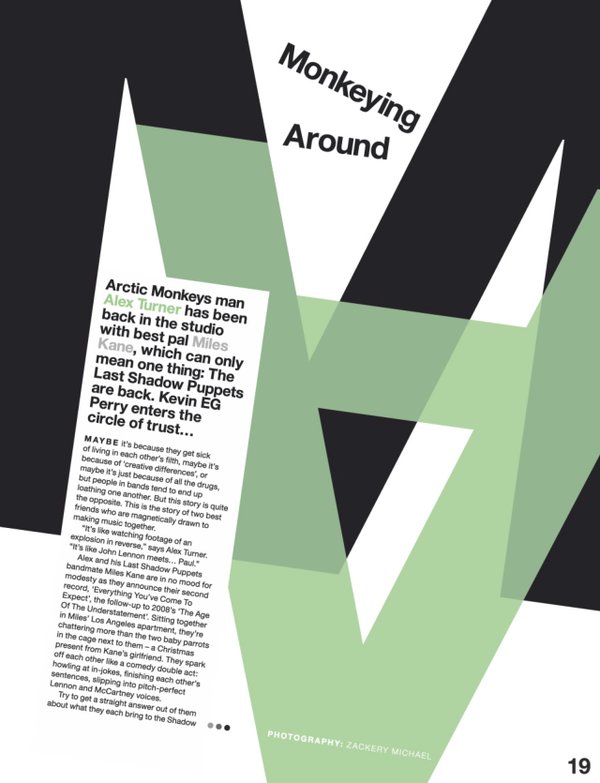
Monkeying Around

last-shadow-puppets-nme
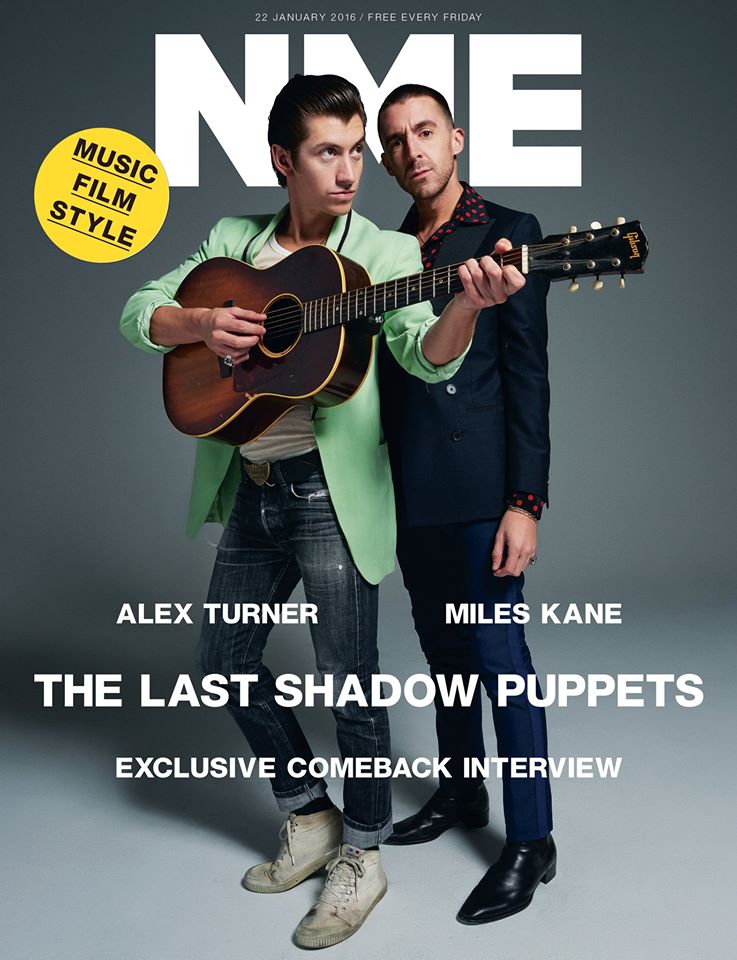
last-shadow1Maybe it’s because they get sick of living in each other’s filth, maybe it’s because of ‘creative differences’, or maybe it’s just because of all the drugs, but people in bands tend to end up loathing one another. But this story is quite the opposite. This is the story of two best friends who are magnetically drawn to making music together.
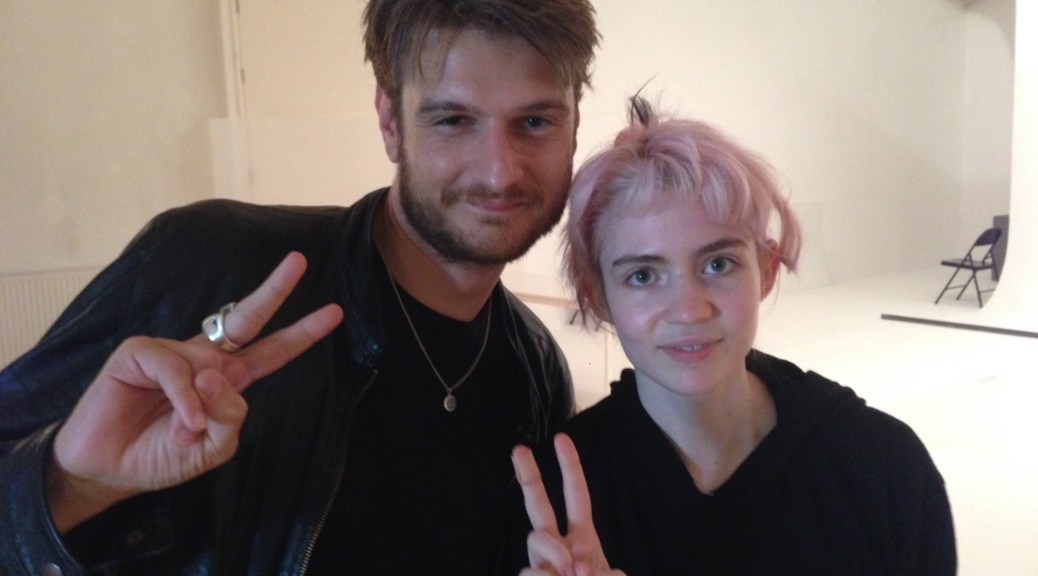
“It’s like watching footage of an explosion in reverse,” says Alex Turner. “It’s like John Lennon meets… Paul.”

So much for the age of the understatement. Alex and his Last Shadow Puppets bandmate Miles Kane are in no mood for modesty as they announce their second record, ‘Everything You’ve Come To Expect’, the follow-up to 2008’s ‘The Age Of The Understatement’.

Sitting together in Miles’ Los Angeles apartment, they’re chattering more than the two baby parrots in the cage next to them – a Christmas present from Kane’s girlfriend. They spark off each other like a comedy double act: howling at in-jokes, finishing each other’s sentences, slipping into pitch-perfect Lennon and McCartney voices.

Continue reading NME cover story, 22 January 2016. 

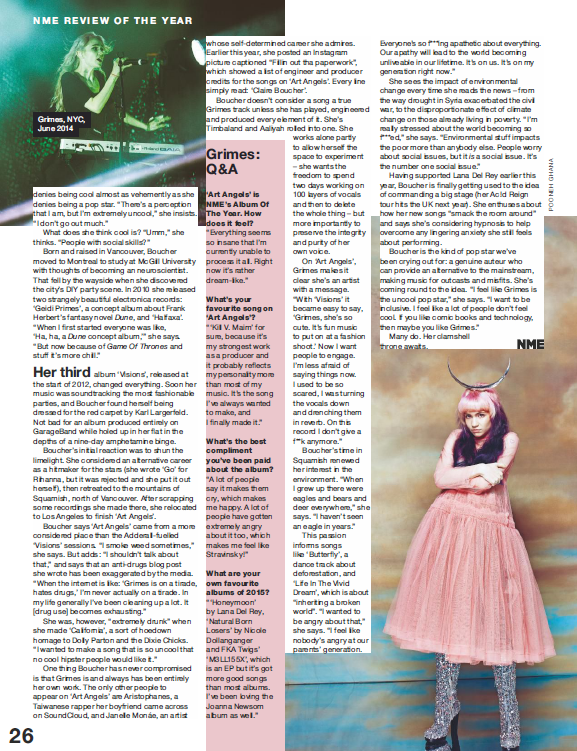
Grimes: “On this record I don’t give a fuck anymore”

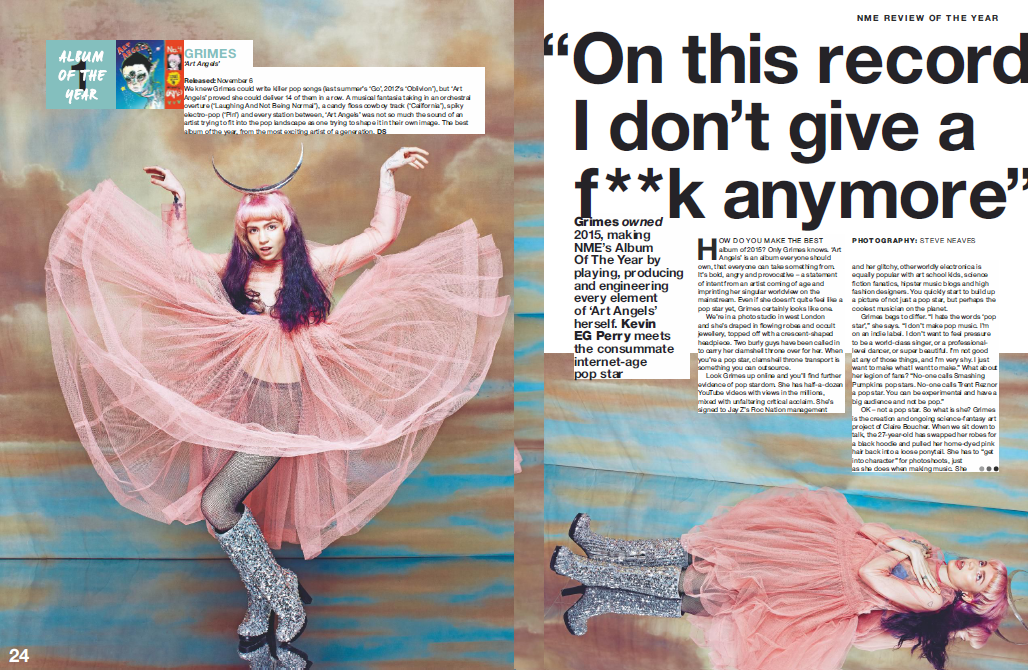
grimes-nme-covergrimes1How do you make the best album of 2015? Only Grimes knows. ‘Art Angels’ is an album everyone should own, that everyone can take something from. It’s bold, angry and provocative – a statement of intent from an artist coming of age and imprinting her singular worldview on the mainstream. Even if she doesn’t quite feel like a pop star yet, Grimes certainly looks like one.

We’re in a photo studio in west London and she’s draped in flowing robes and occult jewellery, topped off with a crescent-shaped headpiece. Two burly guys have been called in to carry her clamshell throne over for her. When you’re a pop star, clamshell throne transport is something you can outsource.

Look Grimes up online and you’ll find further evidence of pop stardom. She has half-a-dozen YouTube videos with views in the millions, mixed with unfaltering critical acclaim. She’s signed to Jay Z’s Roc Nation management and her glitchy, otherworldly electronica is equally popular with art school kids, science fiction fanatics, hipster music blogs and high fashion designers. You quickly start to build up a picture of not just a pop star, but perhaps the coolest musician on the planet.

Grimes begs to differ. “I hate the words ‘pop star’,” she says. “I don’t make pop music. I’m on an indie label. I don’t want to feel pressure to be a world-class singer, or a professional-level dancer, or super beautiful. I’m not good at any of those things, and I’m very shy. I just want to make what I want to make.” What about her legion of fans? “No-one calls Smashing Pumpkins pop stars. No-one calls Trent Reznor a pop star. You can be experimental and have a big audience and not be pop.”

kegp-grimesOK – not a pop star. So what is she? Grimes is the creation and ongoing science-fantasy art project of Claire Boucher. When we sit down to talk, the 27-year-old has swapped her robes for a black hoodie and pulled her home-dyed pink hair back into a loose ponytail. She has to “get into character” for photoshoots, just as she does when making music. She denies being cool almost as vehemently as she denies being a pop star. “There’s a perception that I am, but I’m extremely uncool,” she insists. “I don’t go out much.”

What does she think cool is? “Umm,” she thinks. “People with social skills?”

Born and raised in Vancouver, Boucher moved to Montreal to study at McGill University with thoughts of becoming an neuroscientist. That fell by the wayside when she discovered the city’s DIY party scene. In 2010 she released two strangely beautiful electronica records: ‘Geidi Primes’, a concept album about Frank Herbert’s fantasy novel Dune, and ‘Halfaxa’. “When I first started everyone was like, ‘Ha, ha, a Dune concept album,’” she says. “But now because of Game Of Thrones and stuff it’s more chill.”

grimes2Her third album ‘Visions’, released at the start of 2012, changed everything. Soon her music was soundtracking the most fashionable parties, and Boucher found herself being dressed for the red carpet by Karl Largerfeld. Not bad for an album produced entirely on GarageBand while holed up in her flat in the depths of a nine-day amphetamine binge.

Boucher’s initial reaction was to shun the limelight. She considered an alternative career as a hitmaker for the stars (she wrote ‘Go’ for Rihanna, but it was rejected and she put it out herself), then retreated to the mountains of Squamish, north of Vancouver. After scrapping some recordings she made there, she relocated to Los Angeles to finish ‘Art Angels’.

Boucher says ‘Art Angels’ came from a more considered place than the Adderall-fuelled ‘Visions’ sessions. “I smoke weed sometimes,” she says. But adds: “I shouldn’t talk about that,” and says that an anti-drugs blog post she wrote has been exaggerated by the media. “When the internet is like: ‘Grimes is on a tirade, hates drugs,’ I’m never actually on a tirade. In my life generally I’ve been cleaning up a lot. It [drug use] becomes exhausting.”

She was, however, “extremely drunk” when she made ‘California’, a sort of hoedown homage to Dolly Parton and the Dixie Chicks. “I wanted to make a song that is so uncool that no cool hipster people would like it.”

One thing Boucher has never compromised is that Grimes is and always has been entirely her own work. The only other people to appear on ‘Art Angels’ are Aristophanes, a Taiwanese rapper her boyfriend came across on SoundCloud, and Janelle Monáe, an artist whose self-determined career she admires. Earlier this year, she posted an Instagram picture captioned “Fillin out tha paperwork”, which showed a list of engineer and producer credits for the songs on ‘Art Angels’. Every line simply read: ‘Claire Boucher’.

Boucher doesn’t consider a song a true Grimes track unless she has played, engineered and produced every element of it. She’s Timbaland and Aaliyah rolled into one. She works alone partly to allow herself the space to experiment – she wants the freedom to spend two days working on 100 layers of vocals and then to delete the whole thing – but more importantly to preserve the integrity and purity of her own voice.

On ‘Art Angels’, Grimes makes it clear she’s an artist with a message. “With ‘Visions’ it became easy to say, ‘Grimes, she’s so cute. It’s fun music to put on at a fashion shoot.’ Now I want people to engage. I’m less afraid of saying things now. I used to be so scared, I was turning the vocals down and drenching them in reverb. On this record I don’t give a f**k anymore.”

Boucher’s time in Squamish renewed her interest in the environment. “When I grew up there were eagles and bears and deer everywhere,” she says. “I haven’t seen an eagle in years.”

This passion informs songs like ‘Butterfly’, a dance track about deforestation, and ‘Life In The Vivid Dream’, which is about “inheriting a broken world”. “I wanted to be angry about that,” she says. “I feel like nobody’s angry at our parents’ generation. Everyone’s so f***ing apathetic about everything. Our apathy will lead to the world becoming unliveable in our lifetime. It’s on us. It’s on my generation right now.”

She sees the impact of environmental change every time she reads the news – from the way drought in Syria exacerbated the civil war, to the disproportionate effect of climate change on those already living in poverty. “I’m really stressed about the world becoming so f***ed,” she says. “Environmental stuff impacts the poor more than anybody else. People worry about social issues, but it is a social issue. It’s the number one social issue.”

Having supported Lana Del Rey earlier this year, Boucher is finally getting used to the idea of commanding a big stage (her Ac!d Reign tour hits the UK next year). She enthuses about how her new songs “smack the room around” and says she’s considering hypnosis to help overcome any lingering anxiety she still feels about performing.

Boucher is the kind of pop star we’ve been crying out for: a genuine auteur who can provide an alternative to the mainstream, making music for outcasts and misfits. She’s coming round to the idea. “I feel like Grimes is the uncool pop star,” she says. “I want to be inclusive. I feel like a lot of people don’t feel cool. If you like comic books and technology, then maybe you like Grimes.”

Many do. Her clamshell throne awaits.

Cover story for NME, 4 December 2015.

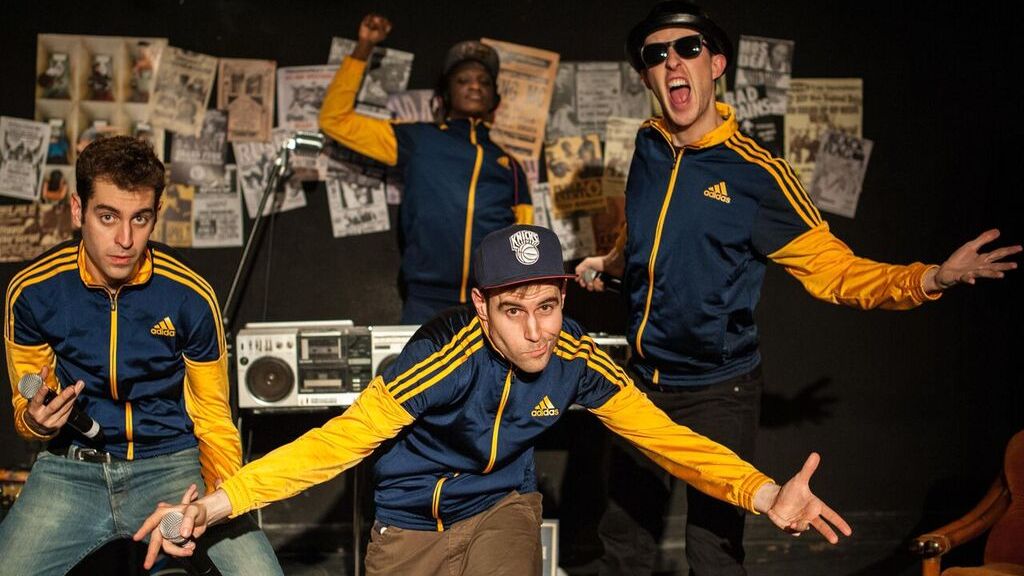
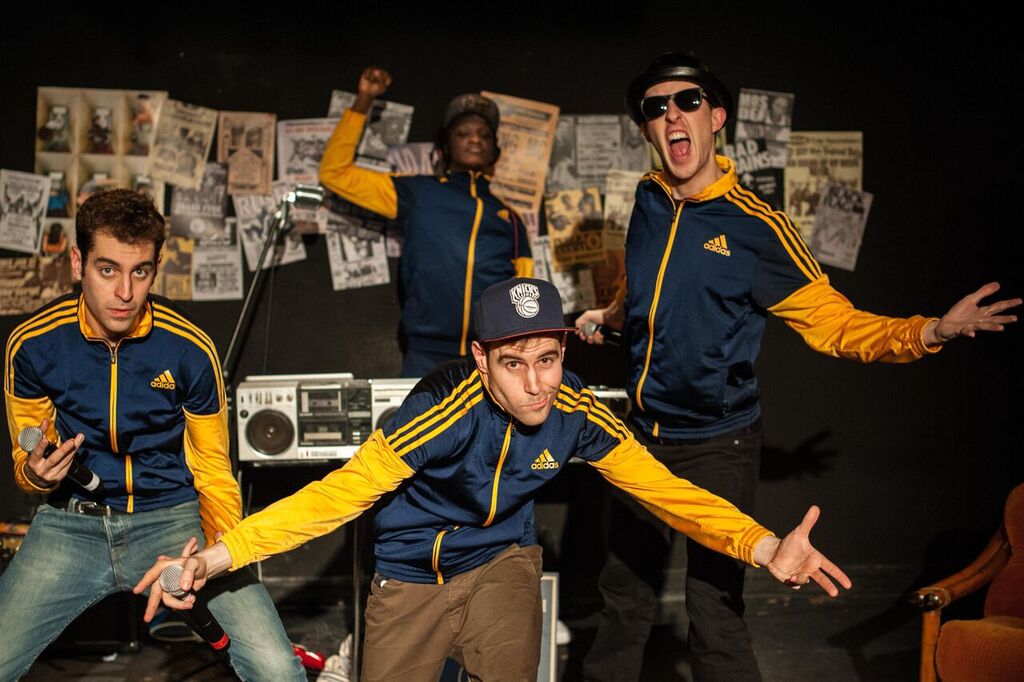
The Beastie Boys Story Is Now A Play With A Puppet Rick Rubin – But Does It Work On The Stage?

beastie-boys-joe-twiggFor the next three weeks at the Camden People’s Theatre in north London, you’ll find a show with a little story to tell about three bad brothers you know so well.

‘Licensed To Ill’ is an unofficial musical paying tribute to the 5 Borough’s finest: Ad-Rock, MCA and Mike D, better known as the Beastie Boys. It’s a show as inventive, colourful and playful as the music the band themselves made, condensing the lives of the three members into 90 minutes of gags, puppets and rap montages.

Continue reading at NME.

The Magic Gang hang Tuff with Sly & Robbie

sly-robbie-kegp

There’s something in the air at Tuff Gong Studios, and it’s not just what the engineer’s smoking. There are awards everywhere, from a Grammy in the control room to the certificate outside proclaiming Bob Marley’s place in the High Times Cannabis Hall of Fame, but more than all that there’s just something special about standing in the room where deathless songs like ‘Could You Be Loved’, ‘Buffalo Soldier’ and ‘Redemption Song’ were recorded.

Located at 220 Marcus Garvey Drive in Kingston, Marley’s former studio is a cottage industry, home to one of Jamaica’s biggest live recording rooms, a vinyl pressing plant and even a run-down record shop. For the next couple of days, it’s also home to Brighton four-piece The Magic Gang, who’ve been flown out to record here by Converse Rubber Tracks.

The band – guitarists Kris Smith and Jack Kaye, bassist Gus Taylor and drummer Paeris Giles – quickly make themselves at home, but they’re clearly appreciative of the sun-kissed opportunity they’ve been gifted.

“When we first sent our music to Converse Rubber Tracks we said we wanted to record at Tuff Gong because the thought of coming here was just unimaginable,” says Jack. “We didn’t expect to ever be able to come to Jamaica and work in such an amazing place. We chose it as a pipe dream – and then obviously it worked out, which is incredible.”

“It’s the place we would least expect to come as a band,” adds Gus. “I’d love to come back to Jamaica for a holiday, but I can’t imagine that we’d tour here. It’s half-way across the world, and such a different vibe. We could have gone to record in America or Abbey Road but it wouldn’t have been the same.”

Everyone at Tuff Gong seems to have a story to tell, not least Chow, the studio’s main engineer. He first met Bob Marley in London in 1975, and the singer was so impressed by the Malaysian’s technical know-how that he invited him to move to Kingston to help him build a studio, first at his house at 56 Hope Road and then here, at the former site of Federal Studios. Chow has been living here ever since. He kicks back and watches ‘Titanic’ in a side room while The Magic Gang record, but he’s always on hand with a spotlight and a screwdriver to fix any equipment that goes haywire – and to remind the band of what hallowed ground they’re treading.

“He said about the Fender twin amp that Jack was using: ‘I think Bob played through this, it’s been here since then’,” says Paeris. “That’s just amazing. Chow is a living legend.”

magicgangThe band have barely got their instruments set up when a couple more living legends walk through the door. Converse Rubber Tracks have invited Sly & Robbie, the most famous rhythm section in reggae history, to help produce their session. Given that the pair have previously worked with everyone from Jimmy Cliff and Peter Tosh to Bob Dylan and Chaka Demus & Pliers, they’re not bad people to have behind the mixing desk. “Don’t worry,” mutters Kris after their superfluous introduction. “We know who you are.”

There’s clearly a few starstruck nerves at first, but before long Robbie is sat behind the mixing desk singing along with the band’s three-part harmonies and Sly is humming their basslines.

“When they first walked in I literally didn’t know what to say,” admits Kris later. “I was thinking: ‘That looks like Sly Dunbar… that is Sly Dunbar… and there’s Robbie.’ I couldn’t really say anything. I was speechless. This has been the most surreal experience of my life.”

Sly & Robbie may have the easy-going air of men who’ve been playing reggae for 40 years but some estimates say they’ve recorded or played on over 200,000 tracks. You don’t build up a library like that without a fierce work ethic beneath the laidback disposition. “They worked us hard,” says Kris. “One of us was flat during a group vocal and Robbie came in and stood next to us while we were singing. He rooted out the culprit.”

“It was terrifying,” laughs Jack “But I’m sure that experience is going to better us.”

robbieRobbie takes a hands-on approach with the band, and knows instinctively how to coax the best performances out of them. At one point, after listening to Kris record a guitar part, he simply instructs him to play it again as if he’s playing a gig. The performance is instantly improved.

“It was just business as usual,” says Kris. “They were cracking on with it in the same way that we were. I get the impression that they were able to tell that we’re sincere and hard-working. Jamaica’s a very musical country, and everyone’s very passionate about it. I think that if you come across in your truest way that’s always well received, regardless of where you come from or what you’re doing.”

While the two tracks that The Magic Gang record here – ‘Happy Birthday’ and ‘Wanna Get To Know Ya’ – are intricate indie pop songs, a long way from reggae, there’s a musical affinity that Sly & Robbie pick up on. Sly tells Gus that his bassline reminds him of a Motown tune, and asks him why the band chose Tuff Gong. “I think you made the right choice anyway,” he laughs. This studio holds a lot of memories for him too – it was in this room that he first recorded as a drummer, back when it was called Federal Studios. “When I was 14, this is where I made my first recording on The Upsetters’ ‘Night Doctor’,” he says. “It’s a special place to cut a record.”

“I love the way Sly and Robbie work,” Gus says later. “They pick up on things that we wouldn’t necessarily pick up on.  They’re not meticulous in the sense of musical perfection, but they’re meticulous in terms of the vibe of the song, and the performance. Rather than making a sonically perfect piece of music, it’s totally about the feel of the song. The songs we’ve recorded with them do sound like they were recorded at Tuff Gong. You can just hear it within the drums. On ‘Wanna Get To Know Ya’ we used proper room mics and it just sounds like that room.”

Outside of the studio, the band soak up the Jamaican atmosphere. Kris roots out classic reggae seven inches at Rockers International, one of the few record shops still standing on the famed Orange Street, and Paeris goes to check out the Weddy Weddy Wednesday party at Stone Love, one of the original Jamaican soundsystems that’s been running since 1972. The resident MC calls it the “University of dancehall, an institute of higher learning.” The same could go for the whole island. No matter which back street you turn in Kingston there always seems to be music coming from somewhere, as if you’ve been cast in a remake of ‘The Harder They Come’ and all the music is diegetic. As a country it has resisted the cultural homogenisation that’s spread across so much of the globe: Jamaica remains unmistakeably Jamaican.

“I was expecting it to be much more Westernised, more into celebrity culture and materialism,” says Gus as the band prepare to fly back to Britain with their freshly cut recordings in tow. “It’s still totally how you imagine it was 20 years ago. Everyone’s still doing their thing, and no-one’s compromised their way of doing things.”

the-magic-gang“I’ve never met so many characters in so little time,” adds Jack. “The thing I found most overwhelming was how welcoming everyone was. We’re this new band that no-one had obviously seen or heard of before, just coming in and working in their space, but they made us feel totally welcome.”

Better than any souvenir they could bring home from their time in Jamaica is the knowledge that they’ve got two fresh tunes, indelibly stamped with that Tuff Gong air, and that they’ve made a couple of new fans in high places in Sly & Robbie. Back in the control room, Robbie cracked a wide grin at the idea of giving them any advice. “They’ve just got to keep doing what they’re doing and do everything with attitude,” he said. “They’re on the right track. They’re making magic music.”

Originally published by NME, 9 October 2015.

Kevin EG Perry is a writer for The Independent, The Guardian, GQ, NME, Empire, Wallpaper*, Vice, Lonely Planet Traveller and other reputable publications