Category Archives: Shortlist

The unbearable loneliness of pick-up artist bootcamp

trump-1“You know, I’m automatically attracted to beautiful – I just start kissing them. It’s like a magnet. Just kiss. I don’t even wait. And when you’re a star, they let you do it. You can do anything. Grab ’em by the pussy. You can do anything.”

It was back in 2005 that those grimy nuggets of “locker room talk” bubbled out of Donald Trump’s puckered lips on the Access Hollywood bus. That same year, Neil Strauss published The Game, a how-to guide for wannabe ‘pick-up artists’ that would go on to sell 2.5 million copies. It recommended tactics like “negging”, insulting a woman to reduce her self-esteem, and “caveman-ing”, which it defined as “to directly and aggressively escalate physical contact”.

It seems clear that the culture The Game was a part of helped carry Trump to the Presidency 12 years later. We now live in a world where grotesque machismo is so commonplace that his chief strategist Steve Bannon reportedly calls his White House rivals “cucks”. Bannon rose to prominence as chair of Breitbart News, which stoked the misogyny of Gamergate in 2014 and fuelled the rise of the Alt-Right. Many of its readers are the same young men who learned all they know about women from Reddit’s The Red Pill forum, which teaches that feminism is a lie and what women really want is to be dominated and manipulated by powerful men. Pick-up artist (PUA) philosophy has taken over the asylum.

So when I was invited to cover a three-day PUA ‘bootcamp’ run by a company called Love Systems, I was intrigued. If I wanted to understand what made these guys the way they are, this seemed like a good place to start.

Continue reading at Shortlist.

“I got the girl and won all the fights. What more can you ask for?”

kegp-roger-mooreBecause of you I grew up wanting to drink martinis in exotic locations. Was being James Bond as much fun as it looked?

I’ve been lucky all my life. From the time I started making movies and television I played heroes. Never had to say too much, got the girl, won all the fights, got to keep the clothes. What more can you ask for?

Not a lot. What is being a man all about, in your book?

It occurs to me that the first three letters of ‘manners’ is ‘man’, and manners maketh the man. It’s about how you’re brought up. Don’t be afraid of people thinking you’re too nice. If people mock you, well, as my friend Tony Curtis would say: ‘Fuck ’em, feed ’em fish.’ That’s a great philosophy in life.

What’s the best piece of advice you ever got?

My first week in theatre when I came out of the army, the director said to me: ‘You’re not very good. Smile when you come on.’ So I smiled, and I’ve spent my life smiling.

You’ve said your favourite of your Bonds is The Spy Who Loved Me. Why?

Obviously the song: ‘Nobody Does It Better’. I mean, modesty forbids me…

It was your idea to drop the fish out of the window of the Lotus after you drive out of the sea, wasn’t it?

That’s right. Cubby [Broccoli, Bond producer] said: ‘Roger, you’re in a car that’s underwater and watertight. How does the fish get in there?’ I said: ‘It’s a movie, Cubby.’ It stayed in, and it gets a big laugh.

You’re always self-deprecating about your acting but there’s a great scene in that film where you tell Anya you killed her boyfriend. You quickly turn from charming to ice cold.

It’s funny you say that, the director Lewis Gilbert always mentioned that scene. Maybe it was lit right! It’s easier to joke about yourself than to go on about having to work hard as an actor. Bullshit. Get up, say the line, don’t bump into the furniture. In the 70s there was an article criticising Laurence Olivier and Marlon Brando for thinking of themselves as ‘great artists’. It finished by saying the only actors who made the profession acceptable, through their self-deprecating humour, were David Niven and Roger Moore. The next morning there was a letter from Niven with the article attached. Across the top he’d written: ‘It pays to be a cunt!’

You got all the best lines as Bond: ‘Sheer magnetism’, ‘Keeping the British end up, sir’. Which was your favourite?

In The Man With The Golden Gun when I’m – when Bond – is asking the gunsmith where something or other is. I line up a rifle right at his balls and say: ‘Speak now, or forever hold your piece.’

What’s the key to delivering a one-liner?

Timing. A great example of that is Jack Benny. The villain says: ‘Your money or your life!… Well?’ ‘I’m thinking it over!’

Forget ‘shaken, not stirred’, how do you make a perfect vodka martini?

I prefer gin. The way to make a proper gin martini is you take a martini glass and rim it with the zest of a lemon. As much zest as you can get. Then put it in the deep freeze. Take a teaspoon full of Vermouth, Noilly Prat, put it in a glass, shake it around and then throw it away. Into that glass you put two jiggers of gin. Take that, put that in the deep freeze. When the time comes, take the glasses out and pour the liquid into the martini glass. There should be a slight film on it, like oil. Put it to your lips and drink it, with three olives on the side.

That sounds quite time consuming, frankly.

If a drink’s worth having it’s worth doing properly. If you’re going to have vodka, by the way, have Grey Goose.

Are you on commission?

No. Jesus, I wish I were. With gin, I like Gordon’s.

You’re a British icon – the spy with the Union Jack parachute – but since Brexit we seem to be a country struggling to figure out who we are. How do you see Britain’s place in the world?

I hope we continue to be important contributors to alleviating the effects of poverty. I don’t like the newspaper campaigns taking the government to task for the amount of money it gives other countries.

Should we be taking in more refugees?

I drive around England quite a lot. We have an awful lot of space, we really do. It’s because we’re a fortunate society that people want to come here. If they’re coming here for non-economic reasons then that’s all the more reason to take them. If they’re coming for economic reasons and have something to contribute then I don’t blame the poor bastards for getting out. They’re doing exactly what the British did 400 years ago.

You recently turned 89 – what’s the secret of your longevity?

Good doctors.

How would you like to be remembered?

‘He never left a bill unpaid.’

Originally published in Shortlist, 10 November 2016.

Daniel Radcliffe on God, flatuent corpses and not being a dick

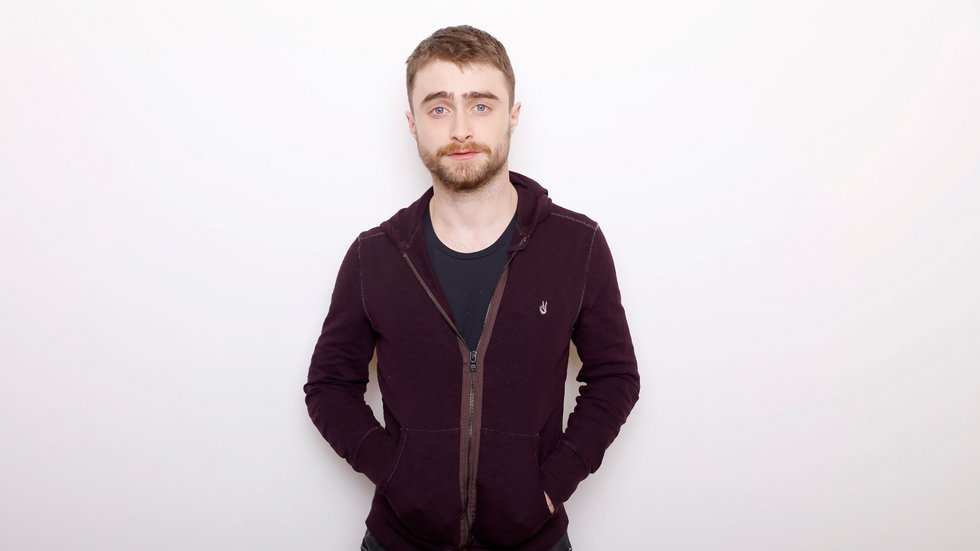
danielradcliffeIn Imperium you play an FBI agent undercover with white supremacists. What’s the most disturbing thing you learned?

It’s all fairly disturbing. I was more surprised by the mundane stuff. I imagined that white supremacists would go on internet forums and say horrible things about black people and Jews. I didn’t imagine they’d be swapping poems.

Which conspiracy theories are you a fan of?

I love the idea that aliens might have built the Pyramids or interceded in our progress as a civilisation. I don’t believe that, but I love hearing people talk about it.

What did you think when you read the Swiss Army Man script and realised you’d be playing a flatulent corpse?

That it was, yeah, kinda weird, but mostly what struck me was how funny and inventive it was. There was something really exciting about the levels of imagination at work. I immediately thought: “Holy shit, this is going to be something cool.”

Continue reading at Shortlist.

Jared Leto: Funny How?

jared-leto-shortlistJared-Leto-1Most lines of work would reward sending live rats, anal beads and “used condoms” to your colleagues with a chat in a quiet room with Jane from HR as she slowly reads you your rights.

If you are Jared Leto, and your job is to play The Joker, normal rules do not apply. The world simply imagines Margot Robbie letting out a shrill scream as she drops the little package with protruding claws and whiskers and thinks: “Well, what do you expect?”

The Joker is the defining comic-book villain, cruel and unhinged – and from the actors who play the part we also demand a certain mad intensity. Jack Nicholson had it, Heath Ledger had it and Jared Leto has it, too.

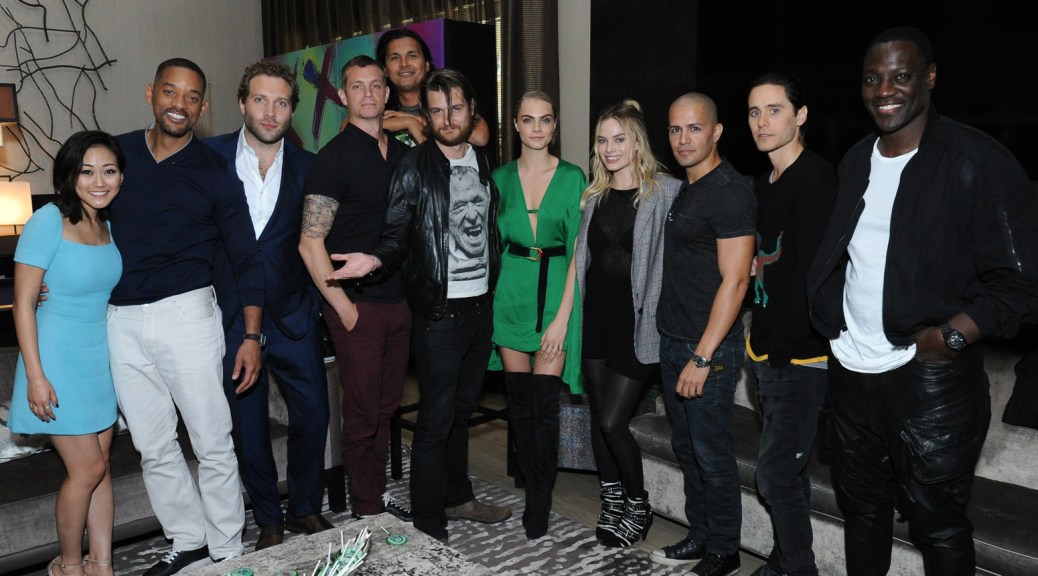
The first time I meet him we’re in Las Vegas, in a suite at Caesars Palace along with Will Smith, Margot Robbie, Cara Delevingne and half a dozen other people who are also in Suicide Squad. There are some big personalities in the room, but Jared Leto isn’t one of them. While Smith whoops and hollers, Leto almost melts into the sofa. He’s dressed in all black, down to the North Face hiking shoes on his feet. His short hair, also black, is scraped sharply back.

The press has been full of stories about all those weird gifts he’s been sending his cast-mates, and how he never broke character on set, so I ask him if he knows that old actor’s story about Laurence Olivier and Dustin Hoffman on the set of Marathon Man, where Hoffman has gone full ‘method’ and Olivier turns to him and says…

“Why don’t you just act?” says Leto, finishing the story. He nods, then says: “I don’t use the term ‘method’. I think it’s kind of a polluted word. What I do is just try to focus and commit as much as possible so that I can do the story, the film, the character and everybody else justice. That’s it.”

But is there something about playing The Joker – I ask, trying to get him to open up – that demands this intensity from you?

“Yes,” he says.

There’s nervous laughter around the room at this monosyllabic reply. We all wait for him to continue but he eyeballs me and says: “What d’you think?”

This is too much tension for a pro like Will Smith to bear, so he breaks in with that 1,000-watt Fresh Prince charisma and starts going: “I mean, I didn’t meet him until two days ago! I literally did not! We worked together for six or seven months, and two days ago was really the first time we ever had a conversation!” It’s a line that Smith has wheeled out to the world’s media several times recently, probably in an attempt to defuse similarly awkward silences.

Leto is still quiet, so I turn and ask: “How did you feel when you got the live rat, Margot?”

“I was… surprised,” says Robbie, and Smith claps and laughs and quotes her back: “’I was surprised!’ There’s an understatement!”

“I loved that stuff,” continues Robbie. “Jared was doing half my work for me. Harley is very much a part of a relationship. To have such commitment from the other half made my job a thousand times easier, and a thousand times more fun. I didn’t know what was going to happen when we got on set. It’s exciting to act opposite that.”

Then Joel Kinnaman starts telling this story about the day Leto had one of his henchmen deliver a dead pig to their rehearsal, so the rest of the cast kidnapped the henchman and tied him up and sent photos back to ‘Mr J’, as they call Leto, or The Joker, or both. Everyone starts piling in with extra details, until Kinnaman gets to the punchline where Robbie scrawled ‘SS’ on the guy’s head with a marker pen and someone had to point out the Nazi connotations. By this point everyone’s howling with laughter, all except Leto who’s just sitting back listening and slightly smirking at the chaos he unleashed.

Later on, just before I leave, Leto comes over to me again. He doesn’t say a word, just extends his fist and waits for me to bump it, which I do in awkward silence. Is this because he froze me out earlier? His face is unreadable. He’d make a killing at the poker tables downstairs.

KEGP-Suicide-SquadThe next time I speak to Leto, he’s much more forthcoming. There’s a lot to talk about. Since we first met, the US has seen Donald Trump confirmed as the presumptive Republican presidential candidate, while in Britain we’ve voted to leave the EU and the prime minister has resigned. Nobody seems to have the faintest clue where we’re all heading. The return of a villain like The Joker, who deals in the terror of chaos, couldn’t be better timed.

“I understand what you’re saying,” says Leto when I put this to him. “The Joker doesn’t have any rules. He says and does whatever he wants. I had a lot of fun having that freedom to say and do anything and everything. I think that’s compelling, because a lot of us are so restrained in life.”

Jared-Leto-2When he first won the part, Leto made the decision not to rewatch Heath Ledger’s Oscar-winning turn in The Dark Knight, but instead delved into the comic-book source material and researched Mexican narco gangs. “There was some consideration to the times we’re living in,” he says. “Cartel leaders are the closest thing we have, on this side of the pond at least, to complete anarchy and chaos. They’re people who have – or feel like they have – ultimate power. If you look at El Chapo, he probably has as many fans as he does enemies. It’s a similar kind of thing with The Joker.”

Having painstakingly built his own take on the character, Leto lived inside it for so long that he still finds himself “making jokes with The Joker’s sense of humour”. While he won’t be drawn on whether he’s signed up to play the part again, he does say it’d “be a blast if it happens”.

The Joker could become the defining role of a career that’s so far refused easy categorisation. Leto is 44 and has been famous for exactly half his life. In 1994 he was pretty-boy Jordan Catalano in My So-Called Life, but by the end of the decade Ed Norton had destroyed his beautiful face in Fight Club, and Christian Bale had introduced him to both Huey Lewis & The News and the sharp end of an axe in American Psycho.

In 2002, 30 Seconds To Mars, the band he formed with his older brother Shannon, released their self-titled debut record to little fanfare. Their 2005 follow-up A Beautiful Lie went platinum and made Leto one of the very few who’ve had real success as both an actor and a rock frontman.

If you ever want a reminder that you’re wasting your life, consider that Jared Leto has both an Oscar and the Guinness World Record for ‘Longest Concert Tour By A Rock Band’.

Jared-Leto-3He’s been so busy with the band, not to mention extra-curricular activities such as interviewing Edward Snowden for his documentary series Beyond The Horizon, that Leto’s only acted in two films since 2009. One is Suicide Squad, the other was Dallas
Buyers’ Club, which won him that Oscar for Best Supporting Actor in 2014.

“You know, the Oscar was unexpected. A total surprise,” he says. “I hadn’t made a movie in almost six years and I almost didn’t do that film. I remember we were on tour in Berlin. The last thing I was thinking about was making films. I wasn’t sure that I would ever make a film again.”

This is the key to Leto. He’s all or nothing. He’s either never going to make a film again, or he’s going to win an Oscar and then so immerse himself in The Joker that he finds himself Googling postage prices for live rodents. He’s not content to form a band as a side-project, he’s going to push it so hard that they end up spending a record-breaking two years solid on the road.

When I ask him what he does to unwind, he says he’s just come back from Majorca where he was doing a type of rock climbing known as deep-water soloing, or psicobloc, where, as he explains: “You climb over the water so you don’t need ropes. If you fall you just jump into the ocean. You can really fuck yourself up badly.”

Not exactly Netflix and chill, is it? The time I’ve spent with Leto, and the stories I’ve heard, have left me with a question. I try to phrase it as delicately as possible.

“Jared,” I say, “are you a bit weird?”

He pauses, mulling this over, then gives an answer about how “we’re all probably a little weird” then stops and really considers it.

“I’m aware that a lot of people don’t approach their work in the same way I do,” he says finally. “But that’s OK. Everybody has a different process, and I respect other people’s processes. I guess when you get the call to play The Joker, or certain other roles I’ve
played, it’s kind of great that you’re getting thought about for these transformational opportunities, these roles that are really challenging… I don’t think I’m at the top of anyone’s lists for the next romantic comedy…”

Which is why they’ll never make You’ve Got Anal Beads. Not that you’d want him to
be any different from how he actually is. Gloriously and intensely weird with an unnerving (and occasionally inappropriate) sense of commitment to his roles. In a world of conformity and uncertainty, Leto’s Joker could be the villain we need.

Cover story for Shortlist, 28 July 2016.

“The police need to say they made a mistake”

The Hard StopIf a riot is the language of the unheard, as Martin Luther King Jnr put it, then what happened across England in August 2011 needs to be listened to and understood. The violence, looting and arson that spread across the country resulted in five deaths and caused some £200 million worth of damage to businesses and property, but the police argued that it was first instigated by one man: Marcus Knox-Hooke.

Knox-Hooke and his friend Kurtis Henville grew up on the Broadwater Farm estate in Tottenham along with Mark Duggan, who had been shot dead by police on 4 August. Two days later they were attending a protest outside Tottenham Police Station asking for answers and justice for their friend when violence broke out. Their story is now being told in a new documentary called ‘The Hard Stop’. Filmmaker George Amponsah first met Knox-Hooke and Henville in 2012, and he followed them over the next two years as Knox-Hooke faced trial.

“When I first met Marcus, he had an electronic ankle tag and was being accused of being the man who started the riots,” explains Amponsah. “Given that at the time people were being sentenced to two years in prison for stealing a bottle of water in the riots it looked like they were going to throw the book at him. It felt like I was filming the last wishes and confessions of a condemned man, and he really wanted to set the record straight before he went and did his time.”

In the end, the accusation that Knox-Hooke started the riot was eventually dropped but he was found guilty of four other charges, including burglary and robbery, and sentenced to 32 months in prison. As well as following his trail, Amponsah the film was motived by trying to understand more about the life of Mark Duggan. Amponsah’s background is in making documentaries about ‘hard men’, like Danny Dyer’s Deadliest Men, Macintyre’s Toughest Towns and Ross Kemp’s Extreme Gangs. However, he says that meeting people like Knox-Hooke and Henville was a very different experience. “The first time I met Marcus and asked him to tell me what happened when Mark died he started crying,” he says. “My question was: if Mark Duggan was such a menace to society, so much so that the police had to use lethal force, then how come he was loved so much by his community?”

In the film, Knox-Hooke himself describes most of the rioters and looters as “opportunists”. What becomes very clear though is that those who were there on the initial protest had legitimate grievances about the way Duggan’s death – during the ‘hard stop’ by police that gives the film its title – and its aftermath was handled. Initially the police told the press that Duggan had died while shooting at them, which was not true. While an inquest later decided that he did have a gun in his possession when he was stopped, it was inside a sock and did not have any trace of his DNA on it. They concluded that he was unarmed at the time of his death.

“The police simply need to say they made a mistake,” says Amponsah. “Two things were concluded by the jury on that inquest: that he was unarmed, and that he was lawfully killed. It’s that ‘lawfully’ part that a lot of people have a problem with, including the coroner. That was why people took to the streets in Tottenham in 2011, and that was the spark that ignited a feeling that a lot of people had even if didn’t know Mark Duggan at all. They had all sorts of grievances about the state of the nation, the state of their lives and the state of society.”

In ‘The Hard Stop’, Amponsah traces the history of distrust between the police and the Broadwater Farm community back to the riots that happened on the estate in 1985, when Duggan, Knox-Hooke and Henville were all still children. Those riots occured a week after a woman named Dorothy ‘Cherry’ Groce was shot by police in Brixton, and were themselves sparked by the death of Cynthia Jarrett of heart failure during a police search of her home. In the resulting violence, PC Keith Blakelock was stabbed to death at Broadwater Farm.

It took until 2014 for the Metropolitan Police to apologise for the shooting of Cherry Groce, and Amponsah argues that Mark Duggan’s case needs to be handled much more swiftly if there’s to be any hope of resolving the breakdown between the police and the community they’re supposed to serve. “Can we wait 20 years for that apology?” he asks. “These events are cyclical. History repeats itself. What are we facing in terms of potential escalation when the next riot happens in five, ten or fifteen years time? My question is, can we afford to wait that long for the police to apologise?”

The larger issue is that even if it was Duggan’s death that sparked the protests that led to the riots in 2011, they could well have happened anyway. The kindling was already there, built by years of anger, frustration and resentment about the perceived unaccountability of the police. ‘The Hard Stop’ concludes with the statistic that in Britain since 1990 there have been over 1500 deaths either in custody or following police contact, but not a single conviction related to them.

It will take real change to restore trust in the police, and in a Britain now divided even further by the result of the EU referendum it’s more important than ever than we listen to the voices of the unheard.

“In 2011, there was a community in Tottenham who saw a member of their community killed in highly contentious circumstances by the police and it reopened a psychic, emotional scar that goes back to 1985 and the Broadwater Farm riot,” says Amponsah. “But then, after that happened in Tottenham it spread across London and then to other cities in England. Those people who were rioting had no knowledge of Mark Duggan. My point is, there were a lot of people rioting who were just pissed off with things in Britain, and with their lives in Britain. They felt a sense of unfairness and injustice and inequality and disillusionment. As of last week and our decision to exit Europe, I think we can clearly see that that is a widespread feeling. If you voted to leave, you’re very dissatisfied with the situation. If you voted for remain, you’re now very dissatisfied with the situation. So we’ve got a lot of very dissatisfied and disillusioned people in Britain, which are the same adjectives I was using to describe the people who took to the streets in 2011. It just takes a spark.”

Originally published in Shortlist, 14 July 2016.

Into The Deep

SAMSUNG CSCInhale. Take in as much air as you can and hold it until I tell you to stop. This is a story about how deep a single breath can take you.
The idea that we as humans don’t yet fully understand where our limits lie is an enticing one, and one that binds freedivers together. For his recent book One Breath, Adam Skolnick interviewed most of the world’s best. “I learned that humans have these capabilities that we’re not tapping into,” he tells me. “That’s what freedivers love to do: tap into this reservoir of human ability that most people don’t even approach.”

At some point during my first freediving lesson I found myself sinking through clear water with weights attached to my neck and hips, like a corpse dumped by mobsters. I was trying not to think about the phrase ‘he sleeps with the fishes’. I was trying not to think about anything at all. The first thing you have to learn is not to panic.

When you’ve been holding your breath for a while soon enough a thought will cross your mind: ‘I wonder how long that’s been?’ Just after that your muscles will start to tense up. There are sensors called chemoreceptors in your heart and skull and they’ve clocked there’s too much carbon dioxide building up in your system. Your body’s natural alarm is screaming at you to breathe. Ignore it. This is just your internal ‘20% battery remaining’ warning. Despite how it feels you still have oxygen left, so tell yourself to relax.

The other thing I was trying not to think about is how dangerous freediving can be even for those at the very top of the sport. Last August, one of the world’s best freedivers Natalia Molchanova died off the coast of Formentera in the Mediterranean. She lost touch with her group and never resurfaced. It wasn’t the first freediving tragedy. In November 2013, another diver named Nick Mevoli died while competing in the Vertical Blue competition in the Bahamas when fluid filled his lungs. These are not good things to dwell on while ten foot underwater

Okay, take a breath now. Did you notice what you just did? You exhaled for a long time before breathing in. This is your body flushing out the carbon dioxide. It’s a natural reaction, but it’s also bad news because what you need is to get oxygen into your system. Freedivers learn to perform just a short exhale, then a smooth inhale when they surface. This is important, because if you’re spending a long time underwater it’s often when you come back up that you can blackout or have what freedivers refer to, with a certain dark humour, as a ‘samba’. The medical term for this is an LMC (loss of motor control) and it’s marked by violent convulsions of your head, arms and legs. You know, like dancing a samba.

Because of the dangers of blacking out or drowning, you should always freedive with a buddy. Fortunately for me my buddy is Liv Philip, the British women’s freedive champion six times over and a woman capable of diving 65 metres (213ft) on a single breath.

Philip teaches freediving at a pool in Richmond, and she tells me that the sport is now attracting a broad swathe of people with different motivations, from triathletes who want to improve their ability in the water to high-flying city types just looking for a way to switch off. That’s one of the things about freediving: for an extreme sport, it’s remarkably zen. Becoming a serious freediver requires the ability to lower your heart rate and clear your mind of distractions.

“There’s a lot in the media at the moment about mindfulness and we get quite a few people coming at it from that angle,” explains Philip. “It’s about not trying to do something, but just being in the moment.”

As well as being responsible for attaching those weights to me, Philip also takes me through the basics of freedive breathing. She teaches me to prepare for a dive by fully exhaling for eight seconds, inhaling for four, and then repeating the process three times over. The difference is notable. My first time under the water I barely last sixty seconds, using her methods I can stay down for more than two minutes. Try it for yourself, it will be easier than last time.

The speed at which it’s possible to tap into potential you didn’t realise you had is a big draw for new freedivers, especially when you realise it’s actually possible to dive deeper than most scuba divers. Beyond around 60 metres, breathing in air is lethal. Freedivers can go deeper.

How much deeper nobody really knows. Records are being broken all the time. In the 1950s, scientists believed that the deepest a human could dive was about 30 metres (100 ft). After that, it was assumed the pressure would crush your ribcage and kill you.

The reason the pressure doesn’t kill you is thanks to an evolutionary trait known as the ‘mammalian dive reflex’. You have more in common with your average sea otter than you might think. As soon as you enter cold water, your body naturally lowers your heart rate and moves blood from your extremities into your core to protect your vital organs. This is why you’ll find you’re able to hold your breath much longer underwater than you could on land.

Freedivers never listened to the scientists anyway, and have gone on to beat their predicted maximum depth many times over. Some, like “the deepest man on earth” Herbert Nitsch, use a watersled to dive and a balloon to surface, allowing him to reach a staggering 831 feet in June 2012. Others, like Aleix Segura, inhale pure oxygen from cans before they go underwater. He smashed the Guinness World Record for the longest underwater breath-hold this February with a time of 24 minutes 3 seconds.

However, most purist freedivers eschew the use of oxygen canisters or watersleds. One of the appeals of the sport is that it can be done without any equipment at all.

William Trubridge is the current world record holder for the deepest dive without equipment or fins, having reached a depth of 101 metres (331 ft) in December 2010.  “It’s an idyllic sport because it’s a pure expression of human potential,” he tells me when I ask what spurs him to keep breaking records. “We’re exploring our own depths and the depths of the planet. Being a part of that process is exciting. There aren’t too many frontiers left on our planet, so if you’re part of that discovery of human limits it’s actually a really privileged place to be.”

For all the dangers, it’s that plunge into the unknown that keeps pushing freedivers deeper.

Now breathe.

WHAT EXTREME DEPTHS DO TO YOUR BODY

Heart
As soon as you so much as put your face into cold water, receptors on your skin instigate the mammalian dive reflex, the same reflex found in otters and dolphins. The first effect is to lower your heart rate, which means less oxygen is required in your bloodstream.

Fingers and toes
As you continue to dive, capillaries in your extremities start to close, stopping blood circulation to the furthest reaches of your body. This starts in your fingers and toes, then hands and feet, and eventually even arms and legs. It will give you cramp, but it also leaves more oxygen for where it’s most needed: your heart and brain.

Chest
Eventually, you will experience something known as ‘blood shift’. The blood from your extremities is now rushing into your core to support your lungs and prevent your chest from collapsing under the increased pressure.

Lungs
For the first few metres of your dive, you’ll have had to paddle down because your air-filled lungs will be buoyant, and trying to pull you towards the surface. At the 10 metre mark (33ft) the pressure on your body doubles and the contracting air shrinks your lungs to half their normal size. At 12 metres (40ft), you hit ‘negative buoyancy’ and will be able to fall without paddling.

Brain
Remarkably, your brain appears to survive this process unscathed. Freedivers below 30 metres (100ft) have recorded heart rates as low as 14 beats per minute, which is roughly a third of that of a person in a coma yet, thanks to the mammalian dive reflex, they’ve remained conscious and kept swimming.

Originally published by Shortlist, 21 April 2016.

Einstein: right again

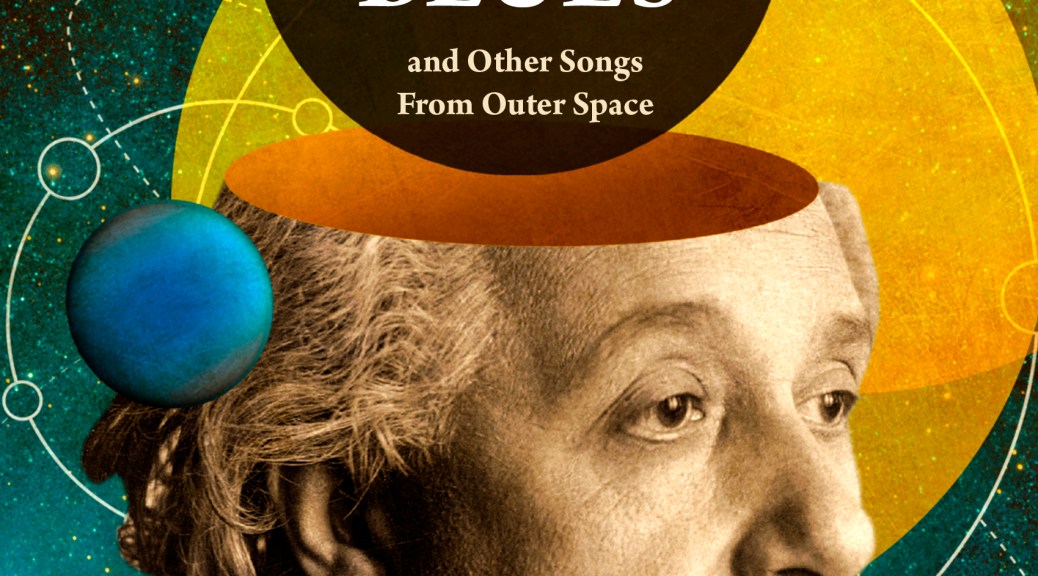
Black Hole Blues.jpgEinstein predicted gravitational waves in 1916, but it took us a century to find them. Astrophysicist Janna Levin’s new book explains how.

What are gravitational waves?

Gravitational waves are motions in the shape of spacetime. Just as mallets create waves in the shape of a drum, black hole collisions create waves in the shape of spacetime. By recording the ringing of spacetime, we can reconstruct the motion and size and shape of the mallets.

How was LIGO able to detect them?

LIGO suspends mirrors so that they’re free to bob on the passing gravitational wave. By measuring the distance between mirrors, the machine records changes in the shape of spacetime of less than one ten-thousandth of the width of a proton over 4 km’s.

What was the atmosphere like at LIGO when they were found?

People were incredulous – then ecstatic.

What are the implications of Einstein being proved right?

Not exactly a surprise. More important are the astronomical discoveries this new era will make possible. We have already heard the first gravitational wave sounds, observed the first black hole pair, and discovered black holes a few times bigger than expected. Who knows what’s next.

Published in Shortlist, 17 March 2016.

No, really: is there life on Mars?

ExoMars2016As Bowie tributes go, it’s extravagant: this Monday, the European Space Agency will launch the Trace Gas Orbiter on a seven-month mission to answer his enduring question: is there life on Mars? Or, as the ESA rather more scientifically puts it, “to search for evidence of methane and other trace atmospheric gases that could be signatures of active biological or geological processes.” It’s a triumph for scientists who’ve overcome 11 years of technological, political and financial problems since the mission was first approved back in 2005. So much for a god-awful small affair.
Published in Shortlist, 10 March 2016.

Savages: the angriest band in showbiz

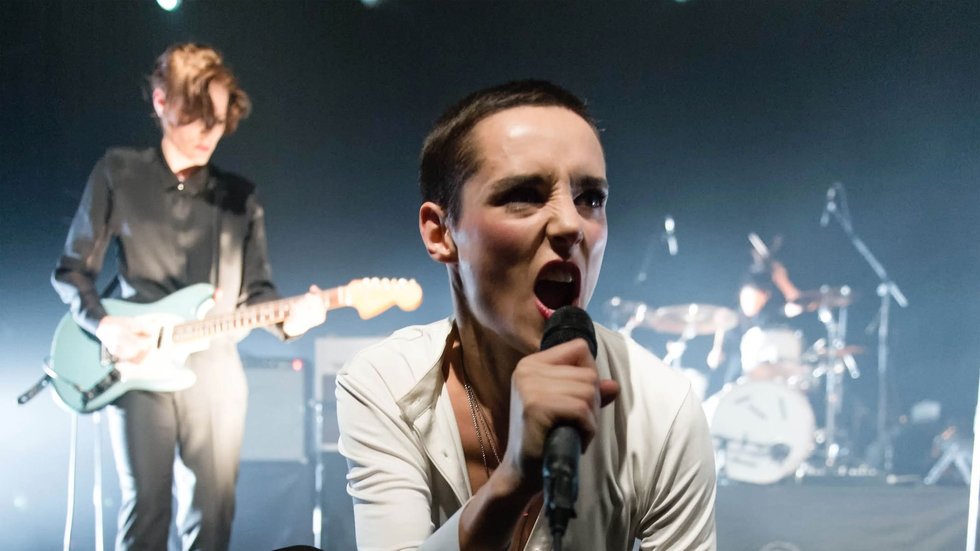
savagesSavages have a reputation for being about as funny as breaking your spine while trying to turn off an episode of The Big Bang Theory, but singer Jehnny Beth is laughing her arse off.
We’re sitting in a café in London, and I’ve only asked why T.I.W.Y.G., a recent single from the usually morose post-punk outfit’s second record, ends with a laugh track.

“What can I say?” she asks, composing herself. “We thought it would be surprising.”

Surprising is putting it mildly. Since the release of ferocious 2013 debut Silence Yourself, Savages have carved themselves a niche as Britain’s most confrontational band. To see them live is to witness raw power, with Fay Milton beating the drums of hell, while guitarist Gemma Thompson and bassist Ayse Hassan whip up a storm to back Beth’s snarl. Their return this month with album Adore Life sees them square up to the world again.

Continue reading at Shortlist.

John Lydon: The Art of the Frontman

johnlydon

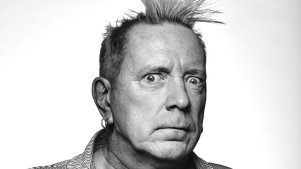
“I still get nervous. When I first started I thought it was just me. I’d watch other bands and think: “What confidence these singers have got!” Gradually you learn it’s normal. What you don’t learn is how to deal with it. I read books by actors on stage fright. I learned that nerves are an important gift. That’s what you need to get your adrenaline.”

“Laurence Olivier was one of the fellas I studied. People used to say: “Johnny Rotten, where did you get that image from?” I said: “Him as Henry V!” I wasn’t joking. It wasn’t based on the characters he portrayed as Henry V or Richard III, but how he dealt with stage fright. Alec Guinness was another one. It didn’t quite solve the nerves, but it taught me that they’re useful once you’re on stage.”

Continue reading at Shortlist.

Could Hyperloop come to the UK?

hyperloopDon’t like flying? How does being fired the length of the country at over 700mph in something not entirely dissimilar to Futurama’s vacuum tubes sound? Incredibly, this could soon be a reality. Hyperloop Transportation Technologies (HTT) have announced that they’ll start work on building a $6bn track in California this month which should be open by 2019 – and they want to bring it to Britain.

HOW DOES IT WORK?
The Hyperloop concept, dreamed up by Telsa and SpaceX entrepreneur Elon Musk in 2013, involves individual ‘pods’ running in sealed tubes. The air in the tubes is kept at very low pressure, while a cushion of high-pressure air supports the pods. This does away with the need for conventional rails or magnetic levitation. The pods are then fired along the tubes by linear induction motors in a system that Musk himself has described as “a cross between a Concorde and a railgun and an air hockey table.”

JUST HOW FAST CAN IT GO?
When HTT get their first track up-and-running in California they’ll be sending passengers down it at 160mph, slightly slower than Eurostar speeds. However, they’ll be testing empty carriages at up to 780mph. The aim is that eventually they’ll be able to move people at those speeds too.

COULD IT REALLY COME TO BRITAIN?
HTT have said that the UK is a candidate for the first ever construction of a full length Hyperloop, connecting London to Glasgow in as little as 30 minutes. While they’re confident their technology works, the bigger problem for HTT will be actually constructing the tubes. Given the speeds the pods will be travelling at, Hyperloop tubes need to be as flat and straight as possible. HTT have said they’d build the tubes on raised legs, and CEO Dirk Ahlborn argues they could be built over existing railways to reduce the cost of buying new land. Ahlborn tells Shortlist that he believes Hyperloop could end up replacing the government’s current High Speed 2 project.

“Our system produces more energy than we’re using, thanks to solar panels, wind and kinetic energy,” he says. “High Speed Rail doesn’t make sense economically. Once you have a system that generates income versus one that doesn’t recover your initial investment, I think every government will be switching over to the better system. For High Speed Rail projects that are starting now, there’s a huge possibility that they’re not going to be finished.”

Published in Shortlist, 12 November 2015.

The Sound and the Fury

drengeA live show by grunge siblings Drenge is an all-out assault on the senses, but don’t just take our word for it. “We met Kanye West when we did Later… With Jools Holland and he told us he liked the aggression in our music,” says drummer and younger brother Rory Loveless. “He was talking about wanting to put more aggression into his own music. Yeezus was out by then, but I’d be interested to hear what his next album sounds like. Maybe there’s a sprinkling of Drenge inspiration in there. Drengespiration.”

Continue reading at Shortlist.

Fear And Loathing Goes Graphic

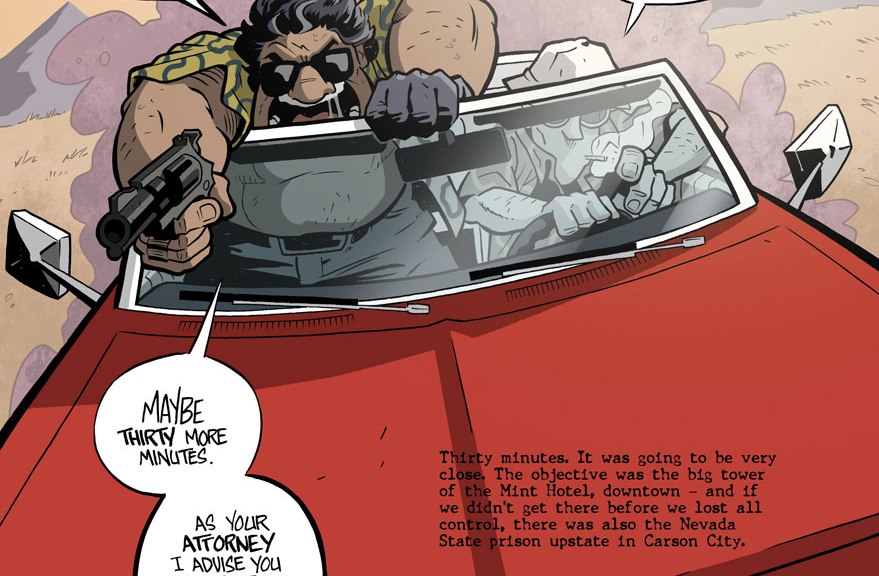
Fear-&-Loathing-29When Tom Wolfe called Hunter S Thompson the “greatest American comic writer of the 20th century”, there’s no way he could have seen this coming. It’s been 44 years since Fear And Loathing In Las Vegas was first blasted into ink, and it’s now been reimagined as a graphic novel by Canadian artist Troy Little.

Thompson’s drug-twisted Vegas odyssey lends itself to the comic format. “Things can be much more plastic and malleable in this medium then in real life, which suits the story” says Little.

The comic’s been critically praised, but the jury’s out on whether Thompson himself would‘ve warmed to it. He fired director Alex Cox from the Fear And Loathing film for trying to animate a particularly righteous passage known as ‘the wave speech’. “Write your own story,” Thompson barked, “just don’t fuck with mine and make it into a cartoon.”

Little was well aware of that exchange. “I can see his concern about having his work ‘Mickey Moused’,” he says. “I was careful to stick to the source material. That said, I fully expect nothing less than a savage haunting foisted upon me.”

Originally published in Shortlist, 5 November 2015.