At a time when Britain and America’s major festivals are becoming ever more homogenised, corporatised and sanitised, it’s good to know that there’s still somewhere on earth where a festival can be truly unique. It’s a long way from the English countryside – but if you have the opportunity to join the party at Malawi’s Lake of Stars you’d be a fool not to snatch it with both hands.
Russia’s six-and-a-half million square miles make it comfortably the largest country on Earth, but when was the last time you heard any of their music? Yeah, aside from t.A.T.u.’s ‘All The Things She Said’?
The only time the country ever hits the music press is when Vladimir Putin is either throwing a strop and locking up Pussy Riot or trying to enact his oppressive laws against ‘homosexual propaganda’. It’s not just Putin, either. When I was in the country this summer there was an incredible piece in The Moscow Times about a regional lawmaker who blamed homosexuals for the country’s problems and suggested: “the Cossack community should be allowed to physically punish gay people by flogging them in public with a leather whip.” In different hands, that could have been a hell of a party.
Despite a regime that lapses into such self-parody, Russian music is remarkably resurgent. I visited Moscow for the inaugural Subbotnik Festival and although the bill was mostly British the Muscovite hipsters were eager to talk up local bands and party in places like Red October Island and the painfully cool Solyanka. The latter’s art director Sasha Rozet told me that as well as bringing over DJs like Kode9 they also run: “house nights, Italo-disco nights and a gay night which is probably the most successful night in the club.” He shrugged when I incredulously asked if they’d had Putin angrily knocking at the door, and points out that earlier in the year they put on a Marc Almond show without incident.
So what’s everyone listening to, other than old Soft Cell hits? Denis Boyarinov, who runs a music site at colta.ru, recommends synthpoppers Tesla Boy as one of the “most successful indie bands in Moscow right now” and Pompeya who make “chilled music for the beach”. Check out the gorgeous ‘Y.A.H.T.B.M.F’ below:
The editor of listings magazine and all-round hipster bible Afisha, Alexander Gorbachev, tips Mujuice: “He is very, very talented. He’s a very good electronic musician who has played Sonar several times. He sings in Russian and I think it’s very ‘Russian’ in terms of melody. It’s
danceable and it’s clever.” Here’s ‘Get Well Soon’:
It’s impossible to throw a copy of ‘Unknown Pleasures’ in Moscow without hitting a Joy Division-inspired post-punk band. Motorama and Kino are established masters of the form, while in a similar vein the producers of local station Follow Me Radio called Trud, who were the only Russian band at Primavera this year, “the best group ever”. They also recommend checking out the Wavves-influenced rock of Glintshake, and my personal favourite, the strange and beguiling Curd Lake:
Pablo Padovani has friends in highly psychedelic places. A year ago, the Parisian multi-instrumentalist met Melody Prochet at a gig in Paris and was soon on the road as part of Melody’s Echo Chamber. Now, he’s returning to his solo project Moodoïd with an EP mixed by Tame Impala’s Kevin Parker.
If you’ve been hearing a lot about Chance The Rapper’s brilliant mixtape ‘Acid Rap’ (maybe you read his NME Radar profile?) then you might reasonably have decided to see if you could buy it from Amazon, the internet’s favourite consumer-industrial complex.
A quick search will reveal that you can: on import, currently retailing at a hefty £17.33. But there’s something fishy going on. You see, ‘Acid Rap’ is a free mixtape. You can download it direct from Chance’s website chanceraps.com now. If you didn’t know this, or if you assumed that by handing over some money for it you were helping to support an exciting artist at the beginning of his career, you’d be sadly mistaken. The CDs being sold on Amazon are bootlegs burned from the free mixtape by a mysterious company called Mtc. Chance isn’t seeing a single penny of that £17.33.
As an A&R scout during the hedonistic heyday of Britpop, John Niven’s first signing was a lounge singer who covered ‘Wonderwall’ and came within a hair’s breadth of beating Michael Jackson to the Christmas number one spot. Later he would prove his dedication to rock’n’roll by heroically declining to sign Coldplay. His 2008 novel Kill Your Friends, based on his time in the industry, is wickedly funny and dark as sin. His most recent book, Straight White Male, is about a writer coming to terms with his own mortality – but still manages to be filthier than a private Twitter message from Azealia Banks.
What made you leap from a record label to novel writing?
“I always knew I wanted to be a writer, but it seemed as if you were doomed to fail. I got a job in the music industry after university and was soon earning very good money, plus an expense account, and was being flown around the world. It’s hard to walk away from that, but in the end I thought: ‘Fuck it’. I’d burned all my bridges by that point. I wasn’t a very good A&R man.”
You passed over both Coldplay and Muse, right?
“That makes it sound like I had them sitting in my office and eventually told them to get fucked. It was just when those demos were doing the rounds I wasn’t keen. I’m still not really a massive fan of either band, but I guess if my job was to predict the public’s interest in them then I failed.”
How much was the bad behaviour in Kill Your Friends exaggerated?
“My friend Christian Tattersfield, who’s CEO of Warner Brothers UK now, said after he read it that people would think I was exaggerating but actually I’d underplayed it. It was a lunatic time. We were selling millions of records. Something like Portishead’s album sold a million plus at £15 a time. Now you’re lucky to get a fraction of that at £5 or £6. The volumes were huge and the profit margins were huge. If you take guys in their 20s and give them that kind of money it’s going to lead to some fairly excessive behaviour. Which it did.”
Any favourite tales of excess?
“Oh, they’re all in the book! I remember going to present the Orbital album at a marketing meeting having not been to bed to three days. When you’re older you think ‘Jesus!’, but when you’re in your 20s you’re testing your limits. As you get older it takes two or three days to get over a major bender.”
The protagonist of your new book, Kennedy Marr, is more sympathetic than Kill Your Friends’ Steven Stelfox.
“I’d hope so! You’d have to go a long way to be less sympathetic than Steven Stelfox.”
Did you set out to give this novel more of a heart?
“I wanted to make people cry as well as laugh. There’s an inherent sadness in the story. If you’ve lived your life in a certain way, by your early 40s there’s a fair old line of regrets queuing up.”
The book is very frank about Kennedy’s mortal terror of death.
“I can only echo his view from the book. When people say ‘What’s the point in being scared of death?’ or ‘We’ve all got to go sometimes’ I think: ‘Are you out of your fucking mind? Have you not thought this through?’ He also talks about the great hatred that those who write and create have for death, and how fiercely they run to embrace its opposites: laughter, life and love. If you’re engaged in creating things the idea of death is absolutely appalling.”
Speaking of death, is the record industry on its last legs?
“I don’t think it’s dying at all. The way people consume it and the way people get paid is changing, but I don’t think the music industry is dead by a long chalk. Years ago Nathan McGough, the Happy Mondays manager, was asked if he thought video games like Sonic The Hedgehog would destroy music. He said: “Music is about as primeval as fire-lighting and fucking.” It’s not going anywhere.”
Jagwar Ma know you should never make plans with a raver too early after a big Friday night. At this year’s Glastonbury, they weren’t too surprised or disappointed to see the John Peel tent nearly empty when they started setting up for their show early on Saturday afternoon. They knew people had hangovers to nurse. They assumed it would be a quiet one. They were wrong. “At some point the whole tent filled up with what they told us was 8,000 people,” says keyboardist and beatmaker Jono Ma. “That was life-changing for me, playing to a crowd like that.”
“It was a Sword in the Stone moment,” adds frontman Gabriel Winterfield. “Nothing went wrong. Little things always go wrong at a gig, but this was seamless.”
Lured in by the ecstatic groove the band showcased on their debut record ‘Howlin’, released earlier in June, the Glastonbury crowds were rewarded for dragging themselves out of their tents with one of the weekend’s biggest parties. Jono and Gabriel were joined by bassist Jack Freeman as they turned their early afternoon set into an all-out rave that pushed psychedelic guitar and old school house piano into a massive wall of sound.
What the gathered masses didn’t know is that the show almost didn’t happen at all. In the months leading up to the festival, Jono had been laid out by a mysterious and debilitating chronic illness. He lost 20% of his body weight. As he watched the crowds dance, those memories rushed through his mind. “A couple of weeks earlier I was in a bed. I wasn’t sure whether I was ever going to be able to play live music again.”
Watching the Glastonbury crowd lose their shit was the culmination of a journey that started in the suburbs of Sydney. Jono and his brother Dave grew up with a father whose hobby was training racing dogs, living in what Jono calls a “shitty fibre house in a shitty suburb, with six or seven greyhounds at any given time”. They escaped into music and art, with Dave eventually finding his way to England where he was essentially known as an extra member of Foals for a while, creating all the band’s early artwork and most of their music videos into the ‘Holy Fire’ era.
Gabriel, meanwhile, had music in his blood. His dad was a professional session musician who also played live in a jazz duo; one of Gabriel’s earliest memories is of standing at the side of the stage watching him play. Gabriel first got started platying guitar at the age of four. By the time he was 12, he had gotten heavily into Nirvana and Hendrix and had decided that if he was going to play guitar, he’d have to try out singing, too.
Growing up, the pair would regularly see each other playing around Sydney’s small venues circuit. Jono was in an electronic techno band called Lost Valentinos, who were reviewed in NME (“A skittering shitstorm of punk fury, disco beats and psychedelic excursions,” apparently) but whose major claim to fame was probably being forced to add the ‘Lost’ to their name in 2007 after they were hassled by Bobby Womack and his group the Valentinos. Gabriel learned his trade in Ghostwood, a band with shades of the Jesus and Mary Chain. Traces of both sounds can be heard in the music they make now, particularly live. “I’ve got that muscle memory from playing those shows, for sure,” says Gabriel. “I guess you carry those experiences with you.”
When their individual bands went on hiatus they both continued to write and record. In 2011, Jono worked with his brothers’ mates Foals on the early sessions for ‘Holy Fire’, taking the band to record in the wilds of the Australian outback and pushing them to experiment with new synths and instruments. Meanwhile, Gabriel was writing sixties-influenced songs that he eventually hoped to record. When the time came, Jono was the natural choice for a producer. Jono had other ideas. “When he came in I played Gabriel a track I had,” he says. “It was [2012 debut single] ‘Come Save Me’ without the vocals, and Gabriel had an idea for what they should be. We just recorded it and put them on, and then that became our first track and the beginning of the band. It’s grown organically since then.”
What started as an inadvertent collaboration has been tagged as a sort of “baggy revival”, hearkening back to the 80s ‘Madchester’ scene. Jono argues that relationship has been overstated, even as he accepts they share DNA: “It’s funny, I heard that during the recording of ‘Screamadelica’, Primal Scream were really into Phil Spector. Shaun Ryder was really into Sly and the Family Stone, and the Stone Roses were obviously really into Hendrix. They’re three of our favourite artists. Then you have the whole Chicago house and Detroit techno acid house scene, which influenced Madchester and us as well. We have common ancestry.”
The pair kept writing in Sydney, but when it came to recording the album proper they decided they would benefit from distance and isolation. They found it in a remote studio in La Briche, France, which Jono had helped to kit out with friend. “It meant we could go and live there and just focus on making music, which is what we did,” says Jono. “That’s where the record really evolved and we defined ourselves as an act.”
The band were aided at various points by Warpaint drummer Stella Mozgawa, who’s an old family friend of Jono’s, and by the producer and mixer Ewan Pearson, who took them to Berlin’s 24-hour techno sex club, Berghain, to introduce them to the European brand of endurance clubbing.
Back in April, a couple of months before ‘Howling’ would be released, Jagwar Ma supported The xx on their Australian tour. Once they got back from the trip, however, things started to get heavy for Jono. He started feeling unwell, but assumed it would clear up. After six weeks, he was only getting worse, and the band were forced to cancel a string of live dates when Jono was advised not to fly. Meanwhile, his doctors were baffled. They prescribed him one lot of medication, and then when that had no effect, they prescribed him others. “Nothing was working,” he explains. “It was really frightening. And even though I’d made the record, I thought I might not be able to be a touring musician ever again. That was really fucking scary.”
Making ‘Howlin’ had opened up a world for Jono that suddenly threatened to shrink back to the size of a hospital bed. “There was a moment where it looked like I was going to have done all the work and not get the reward of seeing people having a really good time to it at the end,” he says. He claims his doctors still don’t know what helped him recover, and personally credits the thought of missing out on Glastonbury as the Lourdes-like touch that got him back on his feet to dance a joyous victory rave. They’ve seized each day since. That’s another thing Jagwar Ma know. “You know what they say,” Gabriel says. “If life gives you lemons, have some fuckin’ tequila.”
“In all honesty, I can’t remember the first time I took acid,” says Chancellor Bennett, known to the 50,000 people who downloaded his mixtape in a single day as Chance The Rapper, “but I do remember when I started taking acid way too much!”
The laidback 20-year-old was tripping two or three times a week when he recorded the unsurprisingly titled ‘Acid Rap’, but he didn’t set out to make a ‘drug record’. “I didn’t do it to show people what it’s like to rap on acid,” he explains. “I did it because of how altered my mind was and how deeply I could analyse situations.”
Mick Farren died as he lived: onstage, in a spotlight, leading a band of Deviants.
The former NME writer was 69 when he collapsed at the Borderline on a Saturday night at the end of last month. He left behind a righteous body of work that included a dozen or so records with his band the Deviants and a mountain of countercultural writing that includes a startlingly prescient NME column from 1976: ‘The Titanic Sails At Dawn’.
In it, Farren set his coruscating sights on the “dazzlingly lit, wonderfully appointed Titanic that is big-time, rock-pop, tax-exile, jet-set show business.” Punctuated by his own capitalised exhortations from the ‘editor’, he predicted that this floating mausoleum, represented by the likes of The Stones, The Who and Rod Stewart, would soon be wrecked against the coming iceberg of punk. Yet 37 years on, how much has changed? Has anything?
At the time he quoted readers’ letters that rejected The Stones because who’d want to see “five middle aged millionaires poncing around” or pay “three quid to be bent, mutilated, crushed or seated behind a pillar or PA stack, all in the name of modern, seventies style super rock”? He lived to see five elderly millionaires carve Hyde Park into extortionately priced plots, and charge £95 for the cheapest.
(SO HISTORY PROVED HIM WRONG?)
No, he predicted all that too. He saw the danger in bands and promoters turning rock into a “safe, establishment form of entertainment”. When he asked whether rock and roll had “become another mindless consumer product that plays footsie with jet set and royalty” he was foreshadowing the day when Prince Harry would be at the side of the Pyramid Stage bopping along to ‘Paint It Black’.
Punk arrived, as he knew it would, but this Titanic proved unsinkable. He lifted his title from Dylan’s ‘Desolation Row’, and the iconoclastic spirit of the piece is captured in the next few lines: “The Titanic sails at dawn / And everybody’s shouting / ‘Which side are you on?’” Farren wanted us to pick sides. He wanted punk’s safety pins to puncture the inflated egos of heritage rock once and for all. In the end, we got both. The only thing that will stop The Stones’ circus is the same mortal fate that took Farren.
(OKAY, OKAY, SO WHAT’S THE POINT THEN?)
The point is that even if mainstream rock and roll has become toothless, primetime entertainment, that doesn’t have to be the only option. Farren believed above all that rock and roll could stay dangerous. Even then, and as a Sixties mover and shaker himself, he was resisting the atavistic urge to simply ape the sounds and styles of that most tediously retrodden of decades. He had seen the golden era from the inside, and knew that it existed in the “tiny margin of a still affluent economy, a margin that doesn’t exist today”.
(THAT SOUNDS FAMILIAR…)
It should. Even in the Seventies Farren was arguing that the real question was “not whether to compromise or not, but how much, and in what way”. Those are words to live by for a generation of musicians who have seen their income from record sales all but extinguished by the dawn of the internet era.
Farren wasn’t just a musician and a writer, he was also a militant political radical. He believed that rock music and writing could be a vehicle for real social change. He argued that rock’s salvation would only arrive when a new generation produced their own ideas to push out the old farts and their tired ways of doing things.
Farren concluded his column with the words: “Putting the Beatles back together isn’t going to be the salvation of rock’n’roll. Four kids playing to their contemporaries in a dirty cellar club might.”
As Simon Pegg and director Edgar Wright can tell you, you know you’re doing something right with your film soundtracks when disco legend Nile Rodgers tweets to say how much he loves the ‘White Lines’ zombie scene in Shaun Of The Dead.
Their new film, The World’s End, is the third in a loose trilogy that provides the final statement on the theme of perpetual adolescence that ShaunOf The Dead and Hot Fuzz both mined for hilarious gold. “We said that we’d call it the Three Flavours Cornetto trilogy as a tribute to Krzysztof Kieślowski,” explains Wright. While the Polish director’s films were based on the colours of the French flag and the political ideals of liberty, equality and fraternity, the three flavours of Cornetto represent the British filmmakers’ genre-hopping pastiches. That’s red for the gore-splattered Shaun Of The Dead, blue for police spoof Hot Fuzz and green in The World’s End for an apocalyptic end-of-the-world pastiche that pays homage to classic British sci-fi like John Wyndham’s ‘The Day Of The Triffids’.
What we do know is that when Pegg, Wright and co-star Nick Frost sat down to write a film about a group of mates who return to their teenage haunts for the pub crawl to end all pub crawls, they knew immediately that they needed a soundtrack packed with tunes by Blur, The Stone Roses and a host of other bands with the power to catapult their characters and much of the audience back to their adolescence.
“We decided really early on that all the music you’ll hear in the film would come from between about ’88 and ’92,” explains Pegg. “Apart from one track by The Doors, we’ve stuck by that. We started rummaging around our record collections and looking at old NMEs to see what was around.”
“It’s true,” adds Wright. “I looked through the NME singles of the year lists from ’88 to ’94 then cherry-picked the best stuff to make a playlist that we listened to while writing the film. It’s a very NME-centric compilation album – I mean there’s Primal Scream, Blur, Happy Mondays, Stone Roses, James, The Charlatans, Teenage Fanclub, Pulp, Inspiral Carpets, Silver Bullets, then Kylie Minogue, The Sundays and Suede all on there. That’s just the beginning. Music powers the film along in quite a few places. It revolves around the songs.”
In the film, Pegg’s character’s dream of reliving a failed pub crawl from their youth is an extension of the fact that his character is trapped in a cultural time-warp, as Wright explains: “Part of the idea with Simon’s character, who always wants to keep the party going forever, is that he basically had this amazing night in1990 and never wanted it to end. He’s sort of living by these hedonistic anthems, especially from the ‘second summer of love’. I like the idea that these songs that have never really gone away. They’ve become real anthems, and Simon’s character uses these songs as like his Bible. He lives by these songs and the soundtrack is crucial. When you see the song list at the end of the credits you’ll think: “Fucking hell, they’ve spent a lot of money on the soundtrack!””
While many of the biggest bands from that era, like Blur and The Stone Roses, are now a fixture on radio stations and on the live circuit, Pegg and Wright knew that relatively obscure songs would help catapult people right back to a very specific moment in time.
“‘Here’s Where The Story Ends’ by The Sundays’ takes me back to being a student,” says Pegg. “‘I’m Free’ by the Soup Dragons is anchored in that time, and while something like Primal Scream’s ‘Loaded’ has become an absolute proper classic, it still has its roots in that period of music which was very formative for me. It’s that age where you start to go to gigs a lot and start to discover music that’s not necessarily on national radio. Soul II Soul’s ‘Back to Life’ really reminds me of that era, as do band like Inspiral Carpets. More obscure stuff that isn’t in the film like Carter The Unstoppable Sex Machine came out of that sort of odd baggy time when dance and indie were starting to mix together.”
Wright adds that when they came to put the film together, a lot of the music fitted the film’s air of nostalgia perfectly. “A lot of them are deadly on point in terms of the theme of the movie. We’ve got ‘So Young’ by Suede, ‘I’m Free’ by Soup Dragons, ‘There’s No Other Way’ by Blur and ‘Do You Remember The First Time?’ by Pulp all in there. All those songs are either about youth or about looking back, and even the Kylie Minogue song we use is completely on point because it’s ‘Step Back In Time’. We created this massive 300 song playlist that we used to listen to whenever we wrote the script, and there were certain songs like ‘Join Our Club’ by Saint Etienne that just worked perfectly. It was fun to be very specific about the time frame and say: “This is the time when they were at college and this is the mixtape they would’ve had then.””
In a world where YouTube and Spotify playlists have become the norm, the film pays tribute to the noble art of the cassette mixtape. As Wright explains: “There’s a prologue in the film: three minutes at the start that say: ‘In 1990…’ and then you flash forward to the present day. You see the characters as teenagers, and then as adults. Both in the prologue and throughout the movie Simon’s character has a mixtape which Paddy Considine’s character made for him back in 1990. That starts the soundtrack of the film and then it sort of takes over.”
The idea of a man clinging to a friend’s mixtape was inspired by a real incident from Wright’s own life: “It actually happened to me. I went down to a wedding with a friend of mine from school in his car, and he was playing this AC/DC song on audio cassette and I said, “Oh my God, I haven’t heard this in ages. Didn’t I put this on tape for you?” and he goes, “Yeah this is it! This is the tape!” That exact dialogue is in the movie, but it really happened! In my friend’s defence, he had got it out as a joke, he didn’t just have it in the car. In our movie, Simon’s character has never let the tape leave the car.”
Like the characters in The World’s End, we’re rapidly running out of time. Before we let Pegg and Wright go to save the world again, there’s just time to ask the ultimate question. If you really were locked in a pub with the four horsemen of the apocalypse on the horizon, what would you stick on the jukebox?
“Jeez, that’s a massive question!” replies Pegg. “Well, The Beatles obviously. Probably the whole of ‘Revolver’. I just love them, I mean, if I was going to listen to music at the end of the world then it would have to be significant music, and you can’t get much more significant than the Beatles.”
Wright, on the other hand, would go out in a blaze of rock’n’roll glory: “I think you’d have to go out on a hedonistic note. I think if you were gonna start drinking and having sex with lots of people, probably ‘Screamadelica’ is your option. Go out with a bang, you know? Those song are party anthems for a reason.”
It’s 8pm on the Saturday night at Glastonbury and as Primal Scream walk off the Pyramid Stage after almost an hour as leaders of this musical kingdom thousands of voices ring out “Come together as one” in unison. In the wings, Ronnie Wood, Alex Turner, Jarvis Cocker, Jamie Hince and Kate Moss drink in the sound with smiles on their faces. Haim, whose harmonies backed the band at the end of the set, say they have “goosebumps”. Bobby Gillespie, a live wire in an electric pink suit, is the last man to leave the stage. When he finally makes it back to his dressing room, he calls the singing a “cosmic echo”.
And yet what he’s just pulled off on the most famous stage in world music is something far more impressive, more radical and more rock’n’roll than anything most bands even attempt. The Russian anarchist Emma Goldman once said that if she couldn’t dance, she didn’t want to be a part of the revolution, but by mixing good-time party hits like ‘Loaded’, ‘Rocks’ and ‘Movin’ On Up’ with a healthy selection from their furiously political new record ‘More Light’, Primal Scream have put anger and danger back on the dancefloor.
In 2013, we’ve grown strangely uneasy with the idea of our rock’n’roll stars as political agitators. Call it the ‘Bono effect’, but ordinarily we don’t like the idea of being preached at when we’re trying to get our rocks off. But ever since Woody Guthrie daubed “This Machine Kills Fascists” on his guitar, standing up for the voiceless and disenfranchised has been an essential part of what makes rock’n’roll what it is, and nobody knows that quite like Bobby Gillespie.
On the eve of Glastonbury, a few days after Bobby’s 51st birthday, we meet for a drink in London. He greets me with a lupine grin, like a wolf with a juicy secret. He looks good for his age, especially given the prodigious amount of Class As he’s been consuming for the better past of the last three decades. Now sober, we order two black coffees. An hour-and-a-half later, his is still almost untouched. He’s barely paused for breath in a passionate, informed and eloquent soliloquy on the state of the nation, the lack of dissent in popular culture and why he injected ‘More Light’ with more fight than a bagful of hungry terriers.
NME: Millions of people will be watching Glastonbury on primetime TV and it’s a become a social fixture. It might have started as a hippy, alternative festival, but it’s now the mainstream, isn’t it?
Bobby: “Yeah, but you could say that about all of music. We touch on those themes in ‘2013’. There’s no underground anymore. There’s a lack of dissent in culture, all across the arts and in society as a whole. We’re living in extremely right-wing, irrational, intolerant times and we’re being governed by an extremist right-wing government. There’s no protest from the arts. People don’t really see a way that things can change. There’s a great quote of JG Ballard’s where he said that there was no need to write science fiction novels anymore, because we’re living in one. Reality is stranger than fiction, and I agree with that.”
Does that give you an opportunity to seize that platform and use it as a way to disseminate a message of protest?
“Anything we’ve got to say we say in our music. We’re going to play songs like ‘2013’ and ‘River Of Pain’, which is a seven minute song about domestic violence from the point-of-view of the child. We’ll play older Primal Scream songs as well because it’s a festival and you want people to have a good time. You want to mix the art with the rock’n’roll. That’s what we’re about. We love art and we love rock’n’roll and we mix it, and sometimes it works and sometimes maybe it doesn’t work, but when it does work it’s fucking great.”
There’s a real sense of class war on the record, in lines like: “Thatcher’s children make their millions.”
“Yeah. “Thatcher’s children, make their millions. Hey. remember Robespierre!” I think that’s kind of a funny line, but really all those guys: bankers, politicians, prime ministers, Boris – they’re all around 42 or 43. They’re Thatcher’s boys. She gave birth to that ideology of free market capitalism and they’re taking full advantage of it. So yeah, I think it is class war. It’s not fashionable to use it anymore, but that’s what it is. There are distinct classes in the country and the gulf is getting wider. The people at the top have got way more of the money than they had 30-40 years ago. That’s a fact. There’s just so much greed.”
I tend to associate the phrase ‘class war’ with popular uprising, but what we’re seeing with the austerity cuts is a class war being waged by the upper classes against the most vulnerable people in society.
“I’ve always associated ‘class war’ with Marx. He was talking about the industrial revolution and how capitalist bosses were basically waging a war against the poor to make themselves rich. They were going to fucking hammer you. The problem with talking in terms of class is that people get alienated. They think: “Oh, if you’re working class you hate the middle class”. It’s not that at all, it’s just that the exploited class is always gonna be the working class. To me, it’s about the rest of society, whether they’re middle class, working class or underclass, against the cunts at the top who run the show. It’s about corporations and the governments who run countries on the behalf of those corporations. When Cameron and fucking Blair say Britain needs to be open for business, that means deregulating the workplace. It’s about stripping away people’s rights to create a precariat. There’s a class of people who live a precarious existence, without insurance or job security or any of the things that the unions fought for. It’s become a science-fiction situation where civil liberties are being taken away.”
America’s PRISM surveillance program for monitoring the public’s phonecalls and internet use is straight out of science fiction.
“It’s pure sci-fi, but I don’t know why anyone is so surprised. We’re living in a ‘science fiction reality’ so that’s what ‘More Light’ is about.
Every news headline this year seems to repeat of the same story about the abuse of government power. Take the Stephen Lawrence story, where police were trying to smear his grieving family.
“It’s incredible. I heard a top cop on BBC radio this morning saying we can’t change the laws about undercover policeman because the reason we have them, this is classic, is to infiltrate terrorists and organised crime groups. What? Every story we hear about them, they’re at anti-nuclear or anti-racist demos, or, in this case, a family whose son was murdered in a racial attack that the police didn’t bother investigating. Just ordinary people. It’s you and me. It’s a pretext. It’s like Bradley Manning. He’s seen as a terrorist, but to me he’s a real American. He was showing the world the real face of the USA. This is what we really do. We’re not about freedom, democracy and helping people rebuild their lives in their countries, we’re torturing, raping, looting and exploiting, the whole fucking shebang. It’s a brave guy that does that. He’s a brave guy. They tell us we need a bigger budget for MI6 to fight ‘The War On Terror’, but Britain, America and France helped create this worldwide Muslim fundamental movement to break down secular, nationalists or socialist indigenous movements in the Middle East. Israel and America helped create Hamas as an alternative to cause a schism among Palestinians, and now Hamas has become really powerful and they won’t deal with them! It’s the same as America in Afghanistan. They funded the mujahedeen against the Russians, we paid and armed them.”
We’re about to do the same fucking thing in Syria.
“It’s the same thing! It’s amazing. We’re arming Al Qaeda! It’s amazing. The rebels don’t want democracy, they want a caliphate. They’re medieval psychopaths who hate women. Anyway, the point is I’m just in a rock band but I’m trying to be conscious of this authoritarian shit. Facism, if and when it does come back, will be in a softer and more insidious way. It’s not going to be the jackboot and the rifle. You’re being watched at all times. Your rights are being taken away from you. We’re heading back to the beginnings of the 19th Century and slum conditions. More kids are in poverty now. Battered women’s refuges don’t exist anymore. Everything is an attack on the poor. It’s a class war. You look at the government’s cuts, and they’re aimed at hurting people, the poorest people in society. I don’t know. I’m just in a rock’n’roll band! I just want to get my rocks off!”
You say you’re “just in a rock’n’roll band” but political engagement is part of what people look for from artists. It’s important to hear you referencing people like Marx, Engels and Guy Debord on this record. Why do you think we haven’t heard more anger from younger bands?
“Well I’m a bit older and I come from a political family. I wouldn’t necessarily expect a younger person to read the same books that I do… well, actually they probably should be reading the same books that I do! We’ve always been on the left and always taken an outsider view. We haven’t voiced it in song so much before but that’s only because we didn’t know how to. I think I’ve become a better songwriter.”
Why did you decide to invite Haim to join you for your Glastonbury set?
“We did ‘Later with Jools Holland’ and the girls were on it. We really got on with them and thought they were cool. Our songs have those big choruses and they can really sing in harmony. They say sisters and brothers sing the closest harmonies. If I sing with my sons it’s bang on. It’ll be cool. It’ll be a pop moment.”
What does it mean to play ahead of the Rolling Stones?
“I’m focusing on playing with Primal Scream, but it’s a great slot. Saturday night before the Rolling Stones on the Pyramid Stage. There should be a lot of people there and we’re going to give them a good time, and have a good time ourselves. I’ve just got to work out what I’m going to wear!”
When you recorded ‘Movin’ On Up’ you brought in the producer Jimmy Miller, who worked with the Stones on their greatest albums: ‘Beggars Banquet’, ‘Let It Bleed’, ‘Sticky Fingers’ and ‘Exile On Main St.’ What did he bring to that record?
“We’d recorded ‘Movin’ On Up’ with somebody else but it needed more production. We came up with this idea: ‘Let’s fucking get Jimmy Miller! It’s fucking obvious.’ At that point I don’t think he had a great reputation in the music business. He was seen as somebody who had had his time, but he rose to the occasion and sorted it out. We’d recorded a lot of gospel vocals but he edited it and left just the best stuff in. He mixed that and ‘Damaged’ and they sounded incredible.”
Did you pick his brains for Stones stories?
“Aye, I asked him a couple of things. I asked him about Brian Jones. He told me that Brian’s last session was ‘No Expectations’, which is just too much. He told me the night that they got the news that Brian had died they were trying to cut ‘I Don’t Know Why’ by Stevie Wonder. Someone came in and said that Brian was dead and they all stopped for half an hour, forty-five minutes and nobody said anything. Then they started up again. He said Mick and Keith used to ask him to send Brian home. Jimmy said: “Listen, it’s your band, you do it!” Instead they’d just unplug him so he’d be playing but he wouldn’t be plugged into the mixing desk because he was so out of it. He told us about all that stuff, which I found fascinating. We tried to get him to work on the sessions that became ‘Give Out But Don’t Give Up’ but we were all a bit of a mess at that point.”
Those sessions were famously difficult, in part because of the band’s drug use. Is it right that you’re clean and sober now?
[Bobby picks up a glass of water and puts it to his face, looking at me through it]: “It’s a bit distorted! It’s just my choice. It’s not a big deal. I just had to change my life and I did it and that’s it. It’s simple.”
So you don’t have any regrets about drugs?
“Well, that’s a different question. I don’t wanna really talk about that stuff, but I think I stole for good reasons. In the end I wasn’t making myself happy and I made my life very difficult, so everything’s a lot better now and I made a good record so that’s the fucking result of getting clean. You know that’s all I need to say right now. I don’t care what anybody else does, I don’t expect anybody else to be or live like me but this is the best thing for me. Right now, I’m happy. Pretty happy. Reasonably happy.”
The next time I talk to Bobby he’s just come offstage after an incendiary Glastonbury set that showed flashes of antagonism – he doesn’t think the crowd were dancing enough, so he accuses them of being “dosed with valium” – but ends triumphantly. Introducing ‘Loaded’, he’d roared: “Take acid! Take speed! Take ecstasy!” and after the show he tells me with a grin: “It wasn’t a very druggy crowd, I can tell you that. Two years ago when we played ‘Screamadelica’ on the Other Stage everyone was fucked!” Mick Jagger must know exactly what he means, because during the Stones set later in the evening he changes the words to 1968’s ‘Factory Girl’ to ‘Glastonbury Girl’ and sings: “Waiting for a girl she took all my ecstasy / now she’s off with Primal Scream.” The thing about Primal Scream is that the mysterious Glastonbury girl won’t just be singing, dancing and getting her rocks off. She’ll be discovering that music can be about anger, intelligence and finding a world that isn’t as heartless, venal or corrupt as the one we find ourselves in. It’s isn’t only rock’n’roll, it’s life.
“One of the great laws of war is ‘Never invade Russia’,” as the probably apocryphal Field Marshal Montgomery line goes. It stands as pretty solid advice. Still, that didn’t deter Arctic Monkeys, Hurts, Foals, Jessie Ware and Savages from launching a British invasion of their own this summer, braving 30°C temperatures for the inaugural Subbotnik festival in Gorky Park, in the centre of Moscow.
The coolest woman in the world just quit her day-job. A statement on Pixies’ official Facebook page earlier today announced:
We are sad to say that Kim Deal has decided to leave the Pixies. We are very proud to have worked with her on and off over the last 25 years. Despite her decision to move on, we will always consider her a member of the Pixies, and her place will always be here for her. We wish her all the best.
Black Francis, Joey Santiago and David Lovering
It’s exactly two decades since Pixies broke up first time around. Back then, Francis announced the split in a radio interview, then called Joey Santiago and only informed Deal and David Lovering via fax. This time around, that statement makes it sound like the remaining three members may continue to work under the Pixies name.
If you found yourself scanning radio frequencies in Tripoli, capital of the still war-torn Libya, you might not expect to hit upon the latest slice of garage-psych from Temples or Savages’ ferocious manifesto ‘Shut Up’.
But if you were listening this week, you could well have done. The British Council’s weekly radio show, The Selector, broadcasts UK music to 39 countries scattered across the planet, with Libya just being the most recent addition to their roster.
Back in London, presenter Goldierocks lays out their philosophy: “We play everything from hip-hop through to thrash metal, jazz, blues, electronica… just whatever’s new and fresh and we feel represents the underground culture of the UK.”
Peace have a problem. It’s a little over an hour until they’re due onstage at Primavera and they can’t find their guitarist, Doug. He was last seen swimming naked in a rooftop hotel pool with a mysterious man named Joe as the sun came up over Barcelona. “Last night was eventful,” explains singer Harry Koisser. “It’s our first festival appearance of the summer, so if Doug shows up that’ll be a good sign. It’s not looking good. The meeting time was about an hour ago and he isn’t here. I don’t even have his number anymore. You get four chances to be in my phonebook, and he’s lost four phones. I’m not putting another number in for Doug Castle. He’s had his chance.”
I’ve come to Spain to find out what makes seeing music live at summer festivals such a trip, and it’s clear Peace have an intimate understanding of the ancient, tribal significance of people coming together to party under the full moon.
“Festivals were the first time I went on a weekend bender without parents and with just the lads,” says Harry. “We just watched some bands and had a good time. That’s why it’s weird that this year we’re playing them and it feels like we’re on the other side of a one-way mirror. I hope that people who come and see us are having the same sort of experience that we had. I discovered a lot of bands at festivals. Reading, especially. The first time I went to Reading was when I was 16, and everyone I had to beg my parents for a ticket for my birthday. I went, and the person I was meeting was called Hezzy, and when I found him he was in his underpants in an upside-down shopping trolley with three litres of Strongbow on his back. I was like: “Fair. I can dig.” I had a blast. I don’t know if it was just a thing about being from the Midlands, but a group of about 50 people would all go. You’d know people all over the shop, and people would introduce you to new bands all the time. It’s cool to think that people might come to see us from a group of people looking to have a fantastic time.”
Unsurprisingly, going to festivals as a band hasn’t changed their attitude to having a fantastic time, even if their group of friends has grown steadily more surreal. “We fucking got wasted last night,” Harry continues. “And then Harry Styles came to my party. He gave me a cheeky congratulations on my engagement. Fair play. Last night was a total… I got carried home by our manager. Apparently there were police and shit. I got way too into the festival spirit way too early. Total knockout. This morning was one of the hardest mornings of my life.”
Life backstage at a major international festival is both less glamorous and more fun than you might imagine. It is less glamorous because instead of hot tubs, gourmet chefs and monkey bartenders all you get is a series of stark grey portacabins and toilets only marginally more sanitary than the shitholes outside. It’s more fun because the beer is literally on tap, and it’s free and they let you pour it yourself. Although the security do get restless if you try to squirt it straight into your mouth.
Eventually, Peace’s guitar tech turns up with Doug in tow, full of stories about the enigmatic Joe: “He was a beautiful man. He wears lipstick. He’s got a lovely hairdo. Great personality, great legs, and we went for a little swim… from seven to ten this morning.” He pauses, and thinks for a minute. “If I see him today it’ll be so, so awkward. The last time I saw him I was naked.” Still, he has a pretty unanswerable defence for his adventures: “This hotel is full of bands,” he points out. “The question is: why am I the only one swimming naked at 10am?”
If the backstage area isn’t quite as glamorous as you’d hope, the rooftop of the 4-star Zero hotel opposite the site more than makes up for it. From up here you can look down over the Parc del Fòrum site, from the main stage and the Ferris Wheel to the smaller stages out by the sea. With a bit of a following wind you could probably get a decent distance on a punted TV set. Tame Impala are in relaxed mood, though, despite the fact that this festival trip has taken them further than probably any other band. They’ve come from all over the world, with Kevin Parker flying in from Australia and drummer Julien Barbagallo driving from France. “And we’re just doing this one festival,” points out Kevin. “We literally came all this way just to do Primavera, which shows how good we think it’s going to be!”
Julien chips in: “Where I come from in France, Primavera is the highlight of the year festival-wise. Every year it’s the best lineup that’s near France, so everyone comes here.”
With so many people coming from so far away and planning on having the best weekend of their year, can the bands actually feel the difference when everyone’s really up for it? “Ah no, we can totally tell the difference,” says Kevin. “We never lie when we tell the audience they’re the best crowd of the tour or something. I would never just say that. Each gig is it’s own kind of episode. The funny thing is, it’s super psychological. Even within the band. Sometimes we’ll get offstage and someone will say: “Man, that crowd didn’t give a shit.” Then someone else will say: “No man, they were totally transfixed.” That seems to be the keyword. It just proves that it’s completely subjective. The crowd could have been dead, or it could have been transfixed, and transfixed is like the best possible thing because they’re so into it they can’t even move. How you interpret it depends on how you’re feeling.”
Sitting by the pool across at the equally luxurious Princess hotel are festival headliners Phoenix. If anyone knows what a surreal trip music can take you on, it’s the men who stunned Coachella by bringing out R Kelly halfway through their set. The whole experience was made even more strange by the fact that he turned up so late they didn’t even meet the guy until they were already onstage.
“It’s true!” says guitarist Laurent Brancowitz with a wide, playful grin. “We prepared everything, but from a distance. We didn’t meet beforehand. We were onstage and we still didn’t know when he was going to turn up. As time went by I thought he wasn’t going to get there, so when he arrived with his cigar, his mobile phone and his diamond-encrusted microphone… I felt happy! We were almost as surprised as the crowd. We felt very lucky because we are part of the small community of people who worship R Kelly. We talked to Thomas from Daft Punk about it and he’s part of this community as well. Some people realise that he’s a genius, he’s just hiding it in a very unique way.”
Laurent’s own musical journey has been particularly odd, taking him from playing in garage band Darlin’ with the members of Daft Punk to headlining festivals alongside bands he once slept outside just to catch a glimpse of: “One of the first festivals I went to was an NME one, a long time ago in the ‘90s,” he says “Blur and Ride, the shoegaze band, played. I went to London with my backpack and a few friends and we slept in the streets. It was at The Marquee. We were very poor, and really cold, I remember. Now we are playing a festival along with Blur! It’s bizarre.”
Maybe it’s this sense of the magic of the occasion that makes the band appreciate festival shows so much. “There is something in the air, you know?” says Laurent. “It’s like the Olympic Games or something. At these events people know that it will only happen for one night or two nights, and then it’s gone. Not every festival gives you that feeling, but the Grand Chelem do, the Grand Slam: Glastonbury, those kind of festivals. Everybody is taking a small part in the history of entertainment. We love also to play under the full moon. There’s something pagan about it that connects us to our ancestors. We are very excited, so we come up with stupid ideas. We asked one of our favourite artists, Richard Prince, to design fake dollars bills for us.” He reaches into his bag and pulls out a stack of notes. “This is what he came up with. It’s really crazy. We’re going to fire 40,000 of those into the crowd. They’re going to be blown into the air during the song ‘Bankrupt!’. This guy is so big we never thought he would say yes, but he did. I think he liked the fact that we have a captive audience. This is the dream we had as kids. You can use the power that being in a band gives you to get a lot of hookers, or you can use it to contact Richard Prince. You have the choice!”
It’s all well and good to prepare for a headline slot from the comfort of a 4-star hotel, but to really find the beating heart of a festival you have to get down and dirty with a hardcore touring band, and there’s nobody more down and dirty than Mac DeMarco and his band. I head down to the Pitchfork stage to see them play the funniest and coolest set of the weekend, then try to head backstage to hang out. A particularly muscle-bound security guard with a crew-cut is having none of it, and I’m firmly turned away.
Not to be denied, I find a friend with a VIP pass who’s leaving the site and cut the wristband off his arm. Then I head offsite to buy some sellotape and stick the band onto my wrist. The perfect crime.
Backstage at the Pitchfork Stage is a series of dressing rooms which look to be swimming pool changing rooms in normal life. The clean white tiles and panelled doors give the impression of hanging out in a bathroom stall, which seems somehow fitting given the massive amount of recreational narcotics being consumed in there. I find Mac and his band and start drinking heavily until some guy comes in and takes our bottle of vodka, which pisses everyone off until someone points out, quite reasonably, that we’re in the wrong dressing room and it was probably his bottle all along. Nevermind, just outside there’s a bar with a pricelist which includes this listing for beer: “Cerveza – €0”. The Promised Land.
Mac is buzzing about having made his Primavera debut. “This place is crazy,” he says. “It’s like we’re being told: “You get to play in front of the ocean, and there’s a bajillion people, and it’s outside and it’s beautiful. Welcome!” It’s so sick. It’s crazy. It’s a little bit overwhelming sometimes. It’s hard before you have to play because it feels so overwhelming and you’re thinking about the fact that you have to play later, and then as soon as you’re done it’s like: “Fuck yeah! I can do whatever I want!””
I can see the crew-cut guard from earlier eyeballing me. He knows I’m a fraud, but I’m inside now and he knows in his heart I’ve already penetrated his inner sanctum. I eyeball him back, and down a free beer that tastes like victory. “People are coming here to party,” Mac continues. “I didn’t realise it goes to like four in the morning, which is fucking crazy. I’m just glad they didn’t slot us in at like 3:30 in the morning. I just wouldn’t be able to stay sober. It would be a very funky show. I think they know to put the dance-y, feel-good-in-the-middle-of-the-night stuff in the middle of the night. It’s very groovy.”
We head out into the night to see My Bloody Valentine over on the mainstage. Mac’s ginger-bearded bassist Pierce McGarry is alternating between playing chicken with the security cars that rumble past and, perhaps relatedly, worrying that the drip-drip-drip he can feel in his pants is his own piss. ‘Loved up’ would be a generous description of the general mood. ‘Wasted’ would be a more accurate one.
It’s approaching dawn when a man dressed in a tuxedo, wielding a novelty oversized wand and calling himself The Magician finally gives into the unstoppable psychic energy of the summer and plays ‘Get Lucky’. “Come on dude, they’re playing Daft Punk,” shouts Pierce as he leads Mac and the rest of the band towards the dancefloor. It seems so fitting, in its way, because like the thousands of other people still awake on this spit of land jutting into the Mediterranean, we’re up all night and it’s impossible not to feel lucky. It doesn’t quite feel like real life though, maybe just a backstage we’re going through.
When Klaxons made their return to the UK festival stage at The Great Escape last month, almost half of their 11-song set was made up of new material. The new songs – ‘Children Of The Sun’, which shares a name with the play by Maxim Gorky, ‘Invisible Forces’, ‘Love Frequency’, ‘Rhythm Of Life’ and ‘New Reality’ – are all expected to appear on the London band’s third album and retain their urgent, irresistibly danceable sound. The as-yet-untitled record could well be released this year, three years after 2010’s ‘Surfing The Void’. Having picked up 2007’s Mercury Prize for debut album and defining artefact of the new rave scene, ‘Myths of the Near Future’, the disappointing reaction to its follow-up record now puts Klaxons in the difficult position of being dismissed by some as a band who’ve already had their time in the sun. Early reports on the new album suggest they’re going all-out to right that wrong, with DJ Erol Alkan and Tom Rowlands of The Chemical Brothers on production duties, plus input from LCD Soundsystem’s James Murphy. We sat down with the band to find out more on their new ventures…
Four years on from 2009’s ‘Tonight:’, Franz Ferdinand return with their fourth studio album ‘Right Thoughts, Right Words, Right Action’. Should we call it a comeback? Alex Kapranos isn’t so sure. He says life on the road has kept the band lean.
“We’ve been playing gigs over the last couple of years, so we didn’t stop touring completely,” he points out. “If you’re a band that’s purely in the studio you lose the sense of who you are live. It can become quite boring. So playing live meant we could keep that connection to people. It was only when we announced the record last week that I considered that people would be deciding whether they wanted another Franz Ferdinand record, but we had a really lovely, positive response. ”
He’s sat with bandmate Nick McCarthy in the latter’s Sausage Studios, the recording space in East London with the wurst name in music. Kapranos still spends most of his life north of the border while McCarthy has lain down roots in the capital, and bandmates Robert Hardy and Paul Thomson also live at opposite ends of the country. With recording taking place either here, at Kaprano’s Scottish base or with guest producers in Stockholm and Oslo, the band believe their working relationship has actually blossomed. “I think when you listen to a record you can tell, even if it’s the darkest kind of music, you can always tell if the people are getting on,” observes McCarthy. “If they’re enjoying each other’s company and being in a room together.”
That sense of enjoyment is certainly there on a record which returns to the jaunty exuberance of their self-titled 2004 debut. It’s a change of direction after ‘Tonight:’ “That felt like a tangent,” points out McCarthy, before Kapranos continues: “This record feels very ‘us’, and very ‘us’ in an undistracted way. We deliberately cut ourselves off from thinking about how it was going to land in the world and just enjoyed ourselves.”
The album title, ‘Right Thoughts, Right Words, Right Action’, is offered as the answer to a cryptic message left in a postcard which inspired the album’s opening track: “Come home, practically all, is nearly forgiven”. Kapranos never intended the slogan as a political rallying cry, although he can’t resist pointing out: “I think a lot of politicians could benefit from applying it to their lives and really thinking, acting, and doing it right!”
What the record does concern itself with is lyrical themes that veer from the expanding universe and Greek mythology to the futility of work and the inappropriateness of pop music at funerals. Are Franz Ferdinand feeling existential?
“I think we’re too stupid to think of it like that,” says Alex with a grin. He pauses before jumping back in: “There’s lots of different things in just one song, never mind across a whole album, so sometimes it does the songs a disservice to try to sum them up in a few words. For me, the best kind of music is music that I can get an instant buzz off, I listen to it and it makes me feel fucking good, or maybe it’s dark and melancholic but I still feel some kind of immediate buzz from plugging into somebody’s humanity. It’s got to have that, and that can be all you get from it. But for me, I want there to be a little bit more. I want it to be a hole that you can crawl through into a whole universe. We put a lot of ourselves into putting that universe there, but if all you want is the little buzz then that’s there as well.”
With ‘Random Access Memories’ finally out, Chic guitar legend and Daft Punk collaborator Nile Rodgers talks to me about 2013’s most hyped record.
How did you become involved with the record?
“We’ve known each other for a very, very long time and every time we’ve had the opportunity to get together it’s been completely chaotic. So finally the brilliant thing that Thomas and Guy-Man did is they just came to my apartment in New York! It was so smart because it was just the three of us sitting there face-to-face. Three artists who have mutual admiration for each other and have had it for such a long time. We actually sat around joking about the times that we’d missed each other… “Oh yeah, do you remember in St Tropez when we were supposed to meet up?” “Remember Paris when I ended up sat at the head of your record company’s house for three hours?” It was a wonderful moment when we could just laugh and laugh about the irony of the situation. The only way we could really have a chance to chill out and just be artist-to-artist was for them to come to my apartment. That meeting was the smartest thing and the most perfect way to do this. It was great because they didn’t have their gear and I didn’t have my gear. All I had was one acoustic jazz guitar. We just sat there and started talking and I picked up my axe and started jamming and playing some ideas. They said: “That’s how we want to make this record. We want to make this record exactly the way you made records back in the day. You just start playing, from the beginning to the end. You just play.” I said: “Oh, I know how to do that!” That’s what R&B and Dance records were, back in the day. We just went in there and we had charts or a template and then we’d just play this long, linear journey from beginning to middle to end.”
Did Daft Punk have a firm idea of what they wanted before they came to you?
“They may have had a solid idea. I think they’re too smart to have not had a solid idea, but they didn’t need to speak to me in those terms. Some of the brightest artists, and I always use Bowie as the great reference point: the smartest artists can speak to you in very abstract terms but you hear them clear as a bell. It’s almost as if we were spies breaking a code. They can speak to me in incredibly coded language and it’s 100% clear as a bell to me. When they started talking, and I started to realise that they were talking about making an old-school record, or using old-school techniques to make a record that’s timeless, a record that represents the past, the present and the future, it didn’t take a lot of explanation at all. I went: “Oh, I know what you mean” and I went and got an old fashioned guitar, an old jazz guitar from the 30s or 40s, and started playing new music on that thing. They went: “Yes! That’s exactly what we mean!” You can take something old that’s organic and beautiful and it’s made of wood and it resonates. Top-of-the-line craftsmanship went into that thing, and then you use it to play something modern, something that it wasn’t designed to do. When that guitar was made, it was made to play in a big band with Duke Ellington or something. It wasn’t made to play at 120 beats-per-minute with a vocoder next to you. All of a sudden, you mix these things together and they sound wonderful because they represent the past, the present, which is what you’re doing now, and hopefully if you do it right, it’ll sound fresh and wonderful and relevant to somebody 30 years from today. That’s what I think classic music is all about. I happen to be a jazz freak, so when I listen to Cab Calloway sing ‘Reefer Man’ I feel like it’s happening right now. I get into it. I want to dance jitterbug or lindy hop even though I can’t. It doesn’t feel like I’m listening to old fashioned music. It feels like I could walk outside and everybody would be wearing zoot suits.”
Giorgio Moroder told us they used a different microphone to record him depending on which era he was talking about.
“I get that! That’s a perfectly funny and sound example of how they think. They would use three mics to represent the past, present and future. That’s exactly correct. I love that. The things that’s really cool is that most listeners won’t hear that. They won’t hear it now. 10 years from now, when they get older, when they’re playing it for their kids or their friends, they’ll be saying: “Oh man, I remember when Daft Punk dropped this record.” They’ll listen to it and I have a feeling that they will have the same kind of feeling that I get now when I walk into a club and there are 16 and 17 year olds dancing to ‘Good Times’. They’re acting like it’s something brand new and cool, and I’m thinking to myself: “Wow, that’s so amazing.” You need to have that kind of passion, and the intellectual credibility and knowledge, to pull this off. You don’t have to make records like this, trust me. They didn’t have to do it this way. They chose to do it this way because they were either paying homage to something that they love and trying to recapture the feeling that made them want to make music, or inspired them to make the music that they made, but they also realised that in order to do that, you had to realise that the music that was being made at that particular time was inspired by people who were living before them. We are living in three different musical eras when it comes to making classic music. When it comes to making throwaway music, the sort of thing that everybody loves and then after five years it doesn’t really move you anymore. They say you ‘grow out of it’, and it’s true. We all do ‘grow out of’ a lot of stuff, but the stuff that’s classic, even though our styles may change, when we listen to that music it still gives off that feeling. It still conjures that primal or intellectual or spiritual or artistic thing in us. I know that’s the truth with me. I never grow up. The records that I heard when I was younger are still amazing to me.”
Why do you think Daft Punk wanted to record with a live band and musicians like yourself?
“I don’t know, but that’s OK! They didn’t have to explain why to me because I didn’t really care. They just told me what they wanted to do and I said: “You mean, like this…” and I ran and grabbed my old jazz guitar and started playing and they said: “Exactly like that!” The next thing you know I’m in the studio doing that thing. That wonderful, organic thing. When it came to my guitar playing, I started to show them some of the old tricks we used to do. They got so into it that they couldn’t believe how we used to do it. They were blown away by it. It was a wonderful experience for me because I saw that they were just as enthralled with what I did. They wanted to get first-hand knowledge of how we accomplished that. Every little Chic trick that we used, I showed them. It was like: “Wow, this is cool”. You can hear it on ‘Get Lucky’. The truth is, I can’t play that live because that’s two of me. I can play it something like that! It’s like now, when you see a Chic show, it sort of sounds the same as it did on record. To the average person in the crowd, when I play ‘Le Freak’ they think it sounds like the record but it really doesn’t. There’s two of me playing the guitar in that record!”
Are they reacting against EDM?
“That didn’t come up while we were working. W e were just artists making music. There was no big, holistic statement to make other than: “I wanna make great music right now.” The thing that I love about them is that they carry that holistic vision through on every level. The visuals and the music videos, it’s all part of a certain artistic commitment. There was one moment that moved me in a way I’ve only been moved a couple of times before. I can count those times on my hand. When we first played ‘Let’s Dance’ and ‘Good Times’ for a room full of strangers, and I saw their reaction. When I first heard Diana Ross outside of a recording studio, in a nightclub. People responded in a visceral, primal, spiritual way. Doing the music video for the next Daft Punk single, after days of shooting, when we finally did the first full playback from beginning to end it was the first time the extras heard it. They were weeping. They were hugging each other. They weren’t crying because of exhaustion. I’ve seen this before and it’s people going: ‘Something important just happened, and we’re a part of that thing.’ I was crying too! I kept thinking to myself: ‘Thank God I have my own trailer so they don’t see me like this. I’m supposed to be in control.’ I’d been up onstage jamming my butt off, and they were all into it, but then I went from Mr Riff Machine to welling up and saying: ‘I understand just how you feel, guys…’ It was funny and it was sweet and it was wonderful. In today’s world of pop music, how often does that happen? Not very often, man. Whatever happens with this record, the truth is I was a part of that moment and it was unbelievable. You can’t manufacture that moment, it’s totally real. It’s incredible to be part of something so truthful and organic. You don’t get that so much anymore because we’re so concerned with the hits. I’ve been lucky, because after 1980 I didn’t really have to have hits anymore! I could just live on royalties from that point on, but I love making music with creative people. I love people like David Bowie who can talk to me in abstract terms and make it sound like child’s play.”
What are they actually like to work with in the studio? Is it hard work trying to get exactly what they want or are there fun moments?
“Well, you can’t work with me without laughing! It’s impossible! As seriously as I take my job, and that’s very seriously, the most extreme personalities in the universe are always laughing and joking when I’m in the studio. I’m so thankful that I get to do this for a living that we’re in there cracking up. Also, you’ve got to remember that when you’re in this linear mode of doing an old school recording there are so many new events that are springing up during the course of the recording that the looks on the artists’ faces tell me what’s going on. Every time I looked up I’d see Guy-Man smiling and Thomas smiling and I’d think: ‘Wow, this shit is really fucking happening!’ They got to experience what I’ve experienced all my life, which is a bunch of really amazing musicians jamming and having a really great time, and then you hear something and you analyze it and say: “Wait a minute, let me try this” and you see that smile come over their face again. We had a blast, and I guarantee you that my parts were nothing but fun! I taught them a lot of old school Chic tricks. They love learning about old techniques and they love getting smarter. I think that’s the cool thing. They’ve remained teachable, as have I. I love when people show me something new.”
That’s the great thing about this record, it sounds like they’re really having fun and experimenting with things that are new and weird.
“Have you heard that track with Paul Williams, ‘Touch’? Wow. It’s one of the most amazing things I’ve ever heard. I just love it. I absolutely love it. Having made as many records as I have with Bowie, it felt very Bowie-esque to me. I love this album. Had I not played on it or wrote for it, and I’d just bought it as a fan, I’d probably be sitting at home grinning from ear to ear. It’s so cool to me. It’s great in the way that I’ve heard on many classic records in the past, and it does that thing to my soul that those records have done. I don’t get a chance to feel that way that much nowadays! I’m not putting other artists down, because people work in very different ways, and it’s all relevant, but when I work with someone who is being that artistic and clever and is touching your soul. To me, you touch the soul with simplicity. Complexity has to be deciphered. It’s like digesting a food, it might be wonderful and interesting to the palette when it’s complex, but it’s still got to get through your system. When music is so complicated that you have to think about it, that’s not what’s great. What’s great is when you just experience it and then you think about it afterwards and you think: “What the fuck did I just hear?” That’s what I like about this record. Some moments make you think first, but some moments just make you groove and dance and smile. When you analyse it after the fact you think: “Did they really just do that?””
What did you think when you heard the finished record?
“It feels like an old friend come home. That’s the truth. If I’d just bought this and listened to it I’d sit there for the first hour just laughing and going: “That’s so cool! I can’t believe they did this!” I’d be unbelievably impressed by the amount of sincerity and dedication spent on making a record this authentic. It’s not retro. It’s not a retro record at all. I think what they were thinking is that certain types of gear can give you the old school organic elements that still touch people in a particularly special way. If you know that that’s a fact, then let’s get that and stick in our music! There are certain things about analogue recording, certain types of synthesisers, my guitar… there’s a reason why I’ve played the same guitar on every single record for the past 35 years. I’ve got a million guitars, but when it comes to making hits, that’s my job, and I bring out The Hitmaker. I know that that guitar sounds a certain way. You can hear it on ‘Get Lucky’. I could play another guitar and I’ll sound like Nile, but I won’t sound like that. That’s the only one that sounds like that. When you listen to this record, you can tell that people have toiled over. That’s what I hear when I listen to it. It feels like a perfect record, that I love.”
Did Daft Punk mention any Chic tracks that they really wanted to try and capture something similar to?
“No, not at all. That’s what was smart. They know that I don’t want to know anything. I want to be surprised. I never want to hear anything before I get to the studio. I’m a professional. If you have the music written out, I can play it right there on the spot. If you don’t have it written out, I will write it out and play it from beginning to end. When I was young, I made my reputation by being fast. I don’t care what it is, or how complicated it is, I can walk into the studio and play it. So no, they didn’t tell me anything, I just went to the studio.”
Where was that?
“Very few people know this, but the studio I recorded with them at was the same studio where we recorded the very first Chic single. The song that broke Chic was ‘Dance, Dance, Dance (Yowsah, Yowsah, Yowsah)’ and we recorded it at Electric Lady. What was funny for me was that was the neighbourhood I grew up in. I knew that studio way before Jimi Hendrix bought it. I knew it when it was a nightclub called Generation. I’ve been in that room throughout my entire life. When I was a teenager in New York the legal drinking age was 18, so being 15 or 16 I could get into that bar. I used to go to that joint every night and drink and jam.”
That fits the theme of the record perfectly, those random memories…
“It couldn’t have been more perfect. Not only do you get Nile Rodgers with his two classic Chic recording guitars, in the place where he made the very first Chic single, in a building I was in before Jimi Hendrix even made it a studio. I saw Jeff Beck there. I remember when Jethro Tull played there and they got their amps stolen, and they made an announcement and one of the Hell’s Angels eventually returned it! We’re talking serious history in that room. I’m not superstitious or anything, but you can’t deny there’s something wonderful trapped inside those walls. I’ve done a lot of records there. I did INXS there. I did Hall & Oates. I worked with D’Angelo there, I worked with The Roots there. Walking into that studio feels like going home, and this record feels like an old friend that’s come home. It’s no accident that they contacted me in New York and we went down to Electric Lady. They were eating it up, and I love sharing that!”
Are you looking forward to bringing Chic to Glastonbury?
“Oh man, live shows are sort of what we live for! The last night of my musical partner [and Chic bassist] Bernard Edwards’ life, he looked out at the audience from backstage at our show at the Budokan and he said: “Man, we did it.” I said: “What are you being philosophical about?” He said: “We did it. They didn’t come to see us, they came to hear us.” It’s ironic to work with Daft Punk because they’re sort of the modern version of Chic. With Chic we were this faceless band and the music was the star. We called it the ‘Chic mystique’. If you look at our credits we never tell you who plays what. We were as ambiguous as possible. When I play Glastonbury I get to be this faceless guy who comes up and says: “Okay guys, these are all my songs. Have a good time!” It’s never about ego, it’s about playing this body of work at a festival like Glastonbury, which I’ve heard about for gazillions of years. One of the most prestigious festivals ever. Not only do we get to play, we’re headlining our stage! Wow! You mean I get to play my full show? Are you kidding me? 15 or 20 songs? Are you kidding me? This is going to be amazing!”
Do you think Daft Punk will play live again soon?
“I can’t make any comment. You should ask them about that.”
It’s Friday night in the Californian desert and the sun has just set on the opening day of the Coachella festival. In between bands, 80,000 bronzed American hipsters are milling around waiting for something to happen. Then it does. There’s a deafening crackle of interference as the screens beside each stage erupt into static. The words ‘Transmission Intercepted’ flash up. Then that irresistible ‘Get Lucky’ groove starts. The Daft Punk logo appears in lights before the video cuts to Pharrell Williams singing and Chic’s Nile Rodgers playing guitar and – wait – is that the robots themselves as the rhythm section? “Oh shit!” People are sprinting across the fields towards the screens. “No fucking way!” They’re trying to point and dance and fumble for their camera-phones all at the same time. Every one of them has a sloppy grin splashed across their face, including, right down at the front of the VIP section, unmasked and anonymous, the two French mavericks who’ve just stolen an entire festival without even putting on their helmets.
Why all the excitement? With 1997’s ‘Homework’, 2001’s ‘Discovery’ and 2005’s ‘Human After All’, Thomas Bangalter and Guy-Manuel de Homem-Christo established themselves as the most innovative dance music producers of their generation. Then in 2006 they built themselves a huge pyramid which debuted at Coachella before touring the world, coming to Hyde Park in 2007 and revolutionising the way electronic music would be performed live. They made making dance music look easy. Too easy. In their wake came legions of laptop producers capable of following their heroes’ formula and nothing more. So the band changed tack. They spent two years writing the score for Tron: Legacy with an 85-piece orchestra, and then they disappeared.
Now they’re back, with ‘Random Access Memories’, a record that almost nobody has heard. The band have refused to give a copy to their label. They claim not to have one themselves. They sent one copy off to the factory to get pressed, and the only others exist in unmarked, locked briefcases that their assistants carry around the globe. I’m the only NME writer who was allowed to hear it when it was in London. It sounded like the score for an 80s sci-fi blockbuster set in a 70s disco. It sounded like everything at once, and nothing I’d ever heard before.
Two days after that first sighting at Coachella I arrive at Bing Crosby’s $3.5 million estate in the nearby hills where the pair are staying for the festival. The front door is open. I let myself in and walk through an opulent living room which opens onto the outdoor pool, where the longhaired Guy-Man is doing lengths in a pair of tiny black shorts. Thomas spots me from the kitchen. He’s pouring a bottle of champagne into glasses of Pimm’s and wearing an equally small pair of bright blue shorts, a lightweight white shirt and a pair of tinted brown sunglasses that, along with his curly black hair and beard, give him the air of someone running a drug lab on Miami Vice. He welcomes me and hands me one of the cocktails he’s just made, then starts to tell me about their temporary home. “This is the room where JFK and Marilyn Monroe had their affair,” he says, pointing to a bedroom. “There’s a lot of history in this house.” They might still speak with French accents, but Daft Punk have taken up residence right at the heart of the American dream.
The sun is high in the sky and unbearably hot, so we find a shaded spot by the pool and Guy-Man comes straight out of the water to join us, still wearing just those short shorts. Not only are Daft Punk human after all, I’m now uniquely placed to confirm they’re human all over.
Giving humanity to digital music is what ‘Random Access Memories’ is all about. Before coming to California I’d spoken to the legendary disco producer Giorgio Moroder, who contributes his life story to one of the album’s strangest and most ground-breaking tracks, and he’d given me a clue to the pair’s intentions: “Thomas told me something very interesting. He said that this record is about going back to the roots of dance. He said that with technology today you don’t have to be a musician or an engineer. You just have to know a little bit about the computer and you can make great songs, but unfortunately they all sound the same.”
Thomas and Guy-Man can’t help but agree that they wanted to react against the EDM monster they unwittingly helped to create. “It’s great to see how influential our records have been on electronic music,” says Thomas. “We’re flattered by the respect we get, but we’ve been waiting for the last 10 years for some kid to come along and say: ‘Daft Punk have got it all wrong!’ That’s what it needs. When we started out it was in opposition to our environment. We were probably partly responsible for creating today’s vicious cycle. We want to break it. Technology has made making music, in a really cool way, more accessible to everybody. At the same time it kind of diminishes some of the power of the music. It’s like a magic trick when everybody knows how it’s done. Can there still be a magician when everyone is a magician?”
Do they ever listen to the likes of Skrillex or Deadmaus for pleasure?
“Deadmaus? No. I wouldn’t listen to Deadmaus for pleasure,” says Thomas. “Skrillex we have a lot of respect for because in some sense he might be the kid. He’s said that he saw our live show with the pyramid in 2007 and it made him want to make music, but it feels like he’s not copying our formula. He might be the kid that breaks the cycle, but we don’t listen to a lot of electronic music. We never did…”
Guy-Man leans back in his chair and gives a Gallic shrug: “I don’t know the EDM artists or the albums. At first I thought it was all just one guy, some DJ called EDM.”
Because it all sounds the same anyway?
They both crack up. “A little bit, yeah!” says Guy-Man. “Maybe it’s just one guy called Eric David Morris,” suggests Thomas.
Guy-Man continues: “It’s high energy music that’s really efficient on the body. It’s like an energy drink or something. It really works, and I totally admit that’s what we did at the start. We were playing raves and we wanted that energy when we played. More and more I’m into the emotions that you can get from music. EDM is energy only. It lacks depth. You can have energy in music and dance to it but still have soul.”
The irony in all this is that it’s taken a pair of robots to point out that contemporary pop music is lacking heart. There’s an idea in robotics called the ‘uncanny valley’. It says that while we generally like humanoid robots, say Daft Punk or C-3PO, when a robot looks more like an actual human, while still being slightly off, it freaks us the fuck out.
Thomas argues this is happening to music: “Pop music is into the uncanny valley. For example, take autotune. Autotune as an effect is very fun. We put it in the same category as the Wah Wah pedal. It’s pleasing to the ear and creates those funky artefacts, a bit like the clavinet in Stevie Wonder’s ‘Superstition’. The other use of autotune is the invisible one, where you put the voices of the performers in and you set the thresholds so you can’t hear the autotune is there. It makes the voice ‘perfect’. If you’re using it to solve small imperfections you’re creating something that isn’t human. Would you autotune Roger Daltrey on ‘Tommy’? Or Simon and Garfunkel? It stops being a fun robotic effect and becomes like a clone from some paranoid and terrifying sci-fi movie.”
Having figured out exactly what sort of music they didn’t want to make, Daft Punk were also acutely aware of the stage of their careers they found themselves at. “We’re music lovers, and we realised that bands who’ve been together for 20 years usually don’t put out their best records,” Thomas explains. “We had to find a way to break that curse.” Their answer was to set about recording ‘Random Access Memories’ entirely with live musicians. Once they’d decided that, the album became one big game of ‘Ultimate Band’. They could pick anyone in the world, so who did they want?
They started with Paul Williams, a composer and songwriter who’s also the star of their favourite film: Phantom of the Paradise, a kitschy musical horror film from 1974 that mashes up The Phantom of the Opera, The Picture of Dorian Gray and Faust. Thomas describes one of the tracks he worked on, the epic, multi-faceted ‘Touch’, as “the pivotal track on the record.”
“‘Touch’ was the first track we started working on and almost the last to finish because it was the most complex,” he explains. The track switches from a crooner’s love song to a disco tune to a robot-sung ballad and back again seemingly at random. “We recorded 250 tracks to make that one song. Conceptually, it’s an interesting metaphor for the concept of the album: the similarities between the hard drive and the brain. It’s about the random way that memories are ‘downloaded’ into your train of thought. It also fits into the tradition of psychedelia. The most important records in music, whether it’s Led Zeppelin or Pink Floyd, or ‘The White Album’ or ‘Sgt. Pepper’s’, or ‘Quadrophenia’ or ‘Tommy’, are the ones that are totally crazy and take you on a journey for miles and miles.”
As well as Williams, they also brought in Julian Casablancas because they – like everyone else on the planet – always secretly wanted to be in The Strokes. “They’re probably our favourite contemporary rock band,” says Thomas. “Julian as a songwriter, a singer, a guitar player, a melodist and also as a rocker – in terms of the attitude – he’s got it totally right. We had a rock band when we were 17 and when we heard The Strokes’ first record we went: ‘Wow, that’s the band we dreamed of being.’”
Guy-Man agrees with a sigh: “If our first band Darlin’ had stayed together longer, we would have wanted to be The Strokes.”
The band they’ve chosen to put together for their first singles, however, goes straight back to their love of disco. They’ve brought together Chic guitarist Nile Rodgers with his spiritual heir, Pharrell Williams. For Daft Punk, recording with Nile at New York’s legendary Electic Lady studios was an android’s dream come true. “When we met each other 26 years ago, the first tape we listened to was Jimi Hendrix’s ‘Electric Ladyland’,” explains Thomas. “Then we were so inspired by Chic records, so 20 years later when you find yourself recording guitar parts with Nile Rodgers in Jimi Hendrix’s former studio… it’s crazy!”
When I speak to Pharrell, he’s equally excited to have the chance to work with his hero: “I was pleasantly surprised that they got Nile to work on the album because I’d been working on music previously that was imitating him. It was the coolest thing. His playing is exquisite. He’s just a genius.”
As for Daft Punk, Pharrell sweetly refuses to believe they’re anything but the robotic pioneers they appear to be: “I’m very excited for the robots, man. They deserve it. Those guys are super-rare. This is all a part of their masterful calculation. I’m thankful to just be a digit in their equation.”
Another suggestion that Daft Punk might really be from another world comes from the album’s final track ‘Contact’, which samples NASA recordings from Apollo 17 and sounds not unlike a huge pyramid blasting off into space. Over piña coladas by the pool, collaborator DJ Falcon tells the story of the moment they finished it: “When we came to finally listen to the finished track in the studio we could feel the intensity the noise was causing. Right at the end of the track, the speakers in the studio blew out! I’m talking like one second left. That’s the end of the album! It was such a rock’n’roll vibe, like smashing your guitar at the end of the show. The studio was fucked up, but we just smiled at each other and said: ‘Fuck that!’ We closed the door on the studio and went home.”
With the record finished, the band’s attention turned to the slow process of unveiling it to world. They’ve managed to keep the record shrouded in the sort of secrecy that makes David Bowie seem chatty. “We’re throwing a surprise party,” explains Thomas, “so we don’t want it to be spoiled. The record company doesn’t have the record. We don’t have the record. Our friends don’t have the record. It just sits in a factory somewhere and in a few briefcases that are travelling round to play to journalists. The scenario is a little James Bond, but it’s fun.”
The same goes for their robot alter-egos and the anonymity they have no desire to lose. Anyone can be famous, but it takes a special sort of person to be a superhero. “We don’t have an ego about wanting everyone to know who we are,” says Thomas. “This way it’s like we have superpowers but nobody knows who we are. We’ve created something world famous, and at the same time we’re anonymous. Even seven years ago when we played Coachella and did that tour it really felt like the robots and Daft Punk became so much bigger than ourselves. We try to direct them, but they belong to everybody.”
With the subject of touring in the air, it seems like the time to press them on whether they have any plans to climb back inside that pyramid. They both shrug. “Not any time soon,” says Thomas. “We want to focus attention on the record itself, but also the nature of this record makes it not really possible to tour it. Maybe in the future we’ll have the ability to add some of these songs into our repertoire, whether in the way we have been touring in the past or in different ways – but that’s something we’ll experiment with in the future.”
Could they tour with a live band? “We haven’t thought about it.”
Guy-Man steps in, a little exasperated: “Even our friends are asking us when we are going to be touring! They haven’t even heard the album yet! The record is full of so much stuff. There’s a lot to digest. You can live with it for a longer period of time than you would with another album. Touring will come later.”
For now, the only people who’ve heard this music live are some video extras who got very lucky. When I speak to Nile Rodgers, he says it’s that moment he can’t forget: “It moved me in a way I’ve only been moved a couple of times before. I can count those times on my hand. When we first played ‘Let’s Dance’ and ‘Good Times’ for a room full of strangers, and I saw their reaction. When I first heard Diana Ross outside of a recording studio, in a nightclub. People responded in a visceral, primal, spiritual way. Doing the music video for the next Daft Punk single, after days of shooting, when we finally did the first full playback from beginning to end it was the first time the extras heard it. They were weeping. They were hugging each other. They weren’t crying because of exhaustion. I’ve seen this before and it’s people going: ‘Something important just happened, and we’re a part of that thing.’ I was crying too! I kept thinking to myself: ‘Thank God I have my own trailer so they don’t see me like this. I’m supposed to be in control.’ I’d been up onstage jamming my butt off, and they were all into it, but then I went from Mr Riff Machine to welling up and saying: ‘I understand just how you feel, guys…’ It was funny and it was sweet and it was wonderful.”
“It was special,” agrees Thomas. “It’s funny, because it was in that context where no-one’s heard anything and then you have 150 people together hearing it for the first time.”
Right now, the whole planet seems desperate for that moment. Having been teased for so long, ‘Get Lucky’ broke Spotify’s streaming records and jumped to the top of worldwide charts the moment it was released in full. In an age where almost all music is just a click away, everyone wants what they can’t find.
Thomas smiles: “It’s the same for a musician. When music is easy to make it’s not as exciting. Some of these pop tracks right now aren’t just a click away to hear, they’re a click away to create. In the end, whether people like this record or not, the way we’ve made it has been unique.”
We’ve been talking for a couple of hours, and it’s time for lunch. The band’s friends and collaborators have slowly been arriving and diving into the pool, while a barman has taken up his station mixing more piña coladas. Most importantly, a publicist has produced an unmarked, locked briefcase. After we eat, Thomas and Guy-Man go back to plotting how they’ll reveal their remaining secrets. Their work is never over. Then someone asks me the question I’ve been hoping to hear all day. The question we’re all waiting for: “So, do you wanna listen to the record?”
The Canadian poster-boy for slacker delinquents, Mac DeMarco has garnered a reputation for putting on some of the most raucous live shows around. One of the biggest hitters at this year’s South By Southwest, he’s set to take next week’s Great Escape festival by storm. From his bizarre DIY videos to his lascivious debut ‘Rock And Roll Night Club’ and it’s follow-up ‘2’, DeMarco is master of Jonathan Richman-like calypso-soaked riffage. But what terrible skeletons lurk in his closet? From transvestites shooting heroin to naked U2 covers, he tells us about some of the strange and terrible experiences have made Mac DeMarco the man he is today…
SMACK SHOOTIN’ TRANSVESTITES
“My first memories of going to bars are from when I was 16 and had a fake ID. I went to one with my friend Jeremy, who’s a bit older, and there was this famous Canadian transvestite there. Her legal name is Lexi Tronic Supersonic. She even has cheques with that name on. There was a photographer there, and she had this band on and was doing heroin in the club while he took pictures. Jeremy went up to her, trying to feel if she had a cock or a pussy. That was pretty fucked up to see that at that age.”
JERKIN’ OFF AT THE VET’S
“The first job I had was at a vet’s when I was 14. It sucked. I’d sweep the floors. I’d walk the dogs, but they were all fucking sick with diarrhoea. They’d be all feeble and bummed out. I didn’t have to put them down, but afterwards they’d just leave them out, chilling. It was sketchy. I jacked off a lot, in the kennel bathrooms. I got bladder infections. It was filthy in that kennel. Touching sick animals then jacking off has got to be bad. I was working in a medical setting, so it really should have crossed my mind.”
ANAL DRUMSTICKS AND NAKED U2 COVERS
“One night in Montreal before a show I got so fucking drunk I loaded my iPod with backing tracks I could sing over, including one specific U2 track. I wasn’t even supposed to be playing. I went onstage, and then… I don’t even know what happened. People were taking off my pants, someone was pouring beer on me, I was screaming and then I turned around and shoved two drumsticks up my ass, right at the crescendo of ‘Beautiful Day’, when the vocals were really soaring. This kid videoed it and it got on YouTube. My aunt sees the video, and my mom, and my grandma too for that matter, my whole family. It was right around the time of that zombie bath salts thing, so they thought I was smoking bath salts or meth or something. So that’s what the song ‘Freaking Out The Neighbourhood’ is about.”
CRAZED STRIPPER FANS
“I was playing a rock’n’roll show at a house party. This girl I knew who’d become a stripper was there. While I was playing she kept coming up to me and grabbing me and hitting her head against mine. She swung at me and I fell back on the bass drum. She sat on me while I was lying on the drum and I had my guitar on top of me, digging into me. I was going: ‘Argh!’ but she was like: ‘Yeaahh!’, grinding her ass on me. It was fucked up. Eventually I got up and everyone said: ‘Don’t punch him!’, so she turned around and punched my friend Chris in the face instead.”
SHITTY TOURING
“When we tour in America we do it by car. I don’t know why we did this, because there were definitely places to stop, but when we first did it for some reason we were infatuated with pissing in jugs. I took a shit in a Cheetos bag at one point. We’d make these little tents in the corners of the car and then jack off. Looking back it’s like: ‘Why the fuck did we do those things? It’s disgusting!’ But you know… we were 18-year-olds on tour, really living it up.”
TEACHIN’ COMPUTERS TO THE VIETNAMESE
“I signed up for community work in Vancouver. They normally put you downtown to teach homeless people how to use the internet. I really needed the money. Instead they put me in a high school where half the kids were my age. I was Mr DeMarco. Then they put me in a community centre. I taught these old Vietnamese couples how to plug their computers in. They were totally chill. All they wanted was to search for pictures of the Yangtze, because that’s where they all went on honeymoon. Then they’d be like: ‘I don’t need to look at this thing anymore.’”
SMOKIN’ LIKE STEVE MCQUEEN
“‘Ode To Viceroy’ is about a brand of cigarettes. I like them because they’re cheap. People wave them at me at shows now. The thing is, Viceroy is owned by British American Tobacco. It’s a giant company and I think they’re like: ‘Okay, this is the shittiest tobacco that we can’t put in any other cigarettes so we’re going to put it in Viceroy’. It used to be a big cigarette in the States. Steve McQueen used to endorse them. I think it was a nicer smoke in the Fifties and Sixties, but now it’s just the cheapest cigarette you can get.”
Lots of studios have a history, but none quite like Hansa. It’s the ‘Hall By The Berlin Wall’ where Bowie and Iggy came to record ‘“Heroes”’ and ‘Lust For Life’ in the middle Seventies and where Nick Cave was strung out on heroin in the Eighties. Now it’s home to three brothers from Bath who are living in the flats on the top floor and spending fourteen hours a day recording incendiary, primal blues rock.
That’s not to say they’re too concerned about the weight of history. “We’re not looking towards the past,” says drummer Tim. “We’re a forward-thinking band. It’s great that all those guys recorded here, but we’re obsessed with modern records as much as we are old-school ones.”
“But we did find out,” chips in singer Will, “that a break we used in one of our songs from Iggy Pop’s ‘Nightclubbing’ was recorded in the same fucking studio. It comes full-circle. That’s fucking cool.”
One listen back to the album sessions and it’s clear Hansa’s reputation is in safe hands. The record is full of the sort of hook-filled, strutting rock songs that Jack White would sell his sister for, shot through with a trace of Bristol trip-hop.
“We used to have other people in the band and be quite strict about the type of music we’d make, but we had an epiphany when it became just the three of us,” Will explains. “I remember us being on holiday in the sun and listening to ‘Can’t You Hear Me Knocking’ by The Rolling Stones. We thought: ‘This is the point of music. From then on it’s just been about writing music that you can fucking get into and groove to.”
It’s the sort of music that just begs to be heard in a sweaty underground bar, so we pile into taxis and head across town to White Trash. It’s the sort of place where you can get a tattoo, eat a heart-punishing burger, down a shot of whisky, smoke a cigarette, meet a beautiful stranger and watch a life-changing rock’n’roll show all without leaving your barstool.
The band are instantly at home. Their set is fast, swaggering and deafeningly loud. “If we had it our way we would be playing shows 365 days of the year,” says guitarist Ollie backstage. “And if we weren’t doing that then we’d be in the studio. We find it so natural because we’ve been playing music together since we were 14. Being in Berlin and actually getting paid to do it is the dream.”
They’re not stopping here: they’ll spend April touring the UK with Willy Moon ahead of hitting this summer’s festival circuit. Their sights are trained on the top of the bills: “We’ve always dreamed big,” says Will. “We want to sell a million fucking records and headline every festival around the world. If you’re not thinking huge then what’s the fucking point?”
Before that they’ve got a city to take. “Berlin doesn’t look open, but once you explore you realise how cool it is,” says Ollie. “We’ve been to bars in DVD shops and an old dentist surgery. Maybe it’s pot luck but we haven’t found a bad one yet – and we’ve been to a lot of bars…”
Tonight we end up in Chalet, a tumble-down Kreuzberg mansion which dates from the 19th Century and must have been a stately home in its time. Now it’s overrun by hordes of gorgeous German party kids. And why not? As The Family Rain know: who needs history when you’ve got right now?
“God damn, it’s bright in here.” Dave Grohl winces and draws the curtains out of respect for his burgeoning hangover. It’s midday and he thinks he got to bed maybe four hours ago. He’s making the most of his time in London. Last night he swung by his favourite Soho rock hangout The Crobar before attempting to pay a visit to burlesque club The Box, which turned out to be closed. That didn’t stop the party, but one hanger-on nearly did. “There was this English singer with us who was completely wasted. We almost had to throw him out,” he explains. Which of this country’s hard-living rockers is he referring to? You’ll never guess: “Have you heard of this band… Blue?”
That’s right, the greatest drummer of his generation spent last night being tailed by conspiracy-spouting pop crackpot Lee Ryan. “The guy kept telling us how many million records he’s sold,” Grohl shrugs. “I was like, really? You?”
The mind recoils at the idea of the pair propping up a bar, but then Grohl does have a reputation for being “the nicest guy in rock” and he’s no stranger to surrounding himself with a weird and varied cast of characters. Last night he played a show with his Sound City Players, a band that included the Foo Fighters as well as Grohl’s former Nirvana bandmate Krist Novaselic, Cheap Trick guitarist Rick Nielson and 80s heartthrob Rick Springfield. They’re in town to for the premiere of his documentary, Sound City, which tells the story of the legendary LA recording studio where Neil Young, Fleetwood Mac, Rage Against The Machine, Arctic Monkeys and many more all laid down masterpieces. The place holds a special significance for Grohl, because it was there that Nirvana went in 1991 to record ‘Nevermind’.
As he sits down for a revitalising breakfast of sausage and eggs, Grohl opens up to us in-depth for the first time since he was named Godlike Genius at the 2011 NME Awards. There’s a lot to talk about, from his plans for the next Foo Fighters record to how his musical idol Paul McCartney came to front a reunited Nirvana lineup and why he still wants to throttle the charlatans who produce manufactured pop.
NME: Your film starts with Nirvana in a beat-up van going to Sound City to record ‘Nevermind’. When did you realise how big that record would get?
Dave: When I joined Nirvana they had demoed ‘In Bloom’ and ‘Lithium’ with the original drummer Chad so there was already this buzz about the band. We signed to the David Geffen Company and they gave us money to go down to Los Angeles to record ‘Nevermind’. I don’t know why we picked Sound City. I think it was because of the board, which was an old Neve, and because it was cheap. It was like $600 a day. Our budget wasn’t much because nobody thought anything was going to happen with the record. When we got there we were surprised that it was such a shithole, but we weren’t accustomed to the finer things in life anyway. It was such a quick session and nobody thought anything was going to come of it. We only took three pictures while we were making the record. That’s all there is to document the making of that record, other than the record. It was so far outside Hollywood that none of the fucking posh A&R people would ever come out. I asked our manager if I should worry, and he said: “No, consider yourself lucky! You don’t want those assholes there.” We recorded in April and the record came out in September and then we were just touring in the van as we’d usually do. Things started to change by Christmas. I knew things were going well because our per diem went like from $7 to $10 a day. It was a sweet gig! Audiences started getting bigger and bigger and by the end of the tour the album was gold. Something was happening with the other bands too: Pearl Jam, Soundgarden and Alice in Chains. In two months, everything changed.
What was it like to go back into that room at Sound City where it all started?
The first time I went back after we recorded ‘Nevermind’ I went in and right as you walk in the front door there’s a huge Nirvana plaque. It was an incredibly emotional experience for me because when I first walked in to Sound City I thought: ‘Oh my god, what a shithole.’ Then I looked at the wall and saw Fleetwood Mac, Tom Petty and Neil Young. I couldn’t believe that these legendary records had been made there, because it was such a dump. It was good to think that another kid would say the same thing when he walked in the front door: “I can’t believe ‘Nevermind’ was made here, it’s a shithole.”
What’s the wildest thing you got up to at Sound City?
Once I was producing a band called Verbena and it was the singer’s birthday so I bought him this mini motorcycle that went fucking 45mph. We spent an entire afternoon jumping the ramp that goes up to the parking lot like Evel Knievel. It was the stupidest, most dangerous thing I’ve ever done in my entire life. There were countless nights where we’d just abandon the session and start drinking. It’s not like you were going to mess anything up in there. Once you got into that back hallway where it was really dark and all the walls were carpeted, some really nasty shit went on there. It was fun.
When Sound City closed you bought the soundboard. Now you’ve got it in your studio are you desperate to record the next Foo Fighters record on it?
Yeah, but it’s funny because I’ve just made the biggest infomercial for my studio. We’re getting calls from really popular bands who want to come and record on the Sound City board. I’m fucked because it’s my studio and I don’t have anywhere to go! I think the reason they sold the board to me was because they knew I wasn’t going to chop it up and sell it for parts. I wanted to use it the way it’s supposed to be used. That thing hasn’t been turned off, other than like power outages and earthquakes, for forty years. You’re not supposed to turn boards off, and those tubes have been glowing for forty fucking years.
You’ve saidyou’ll start working on the next Foo Fighters record as soon as you get home. When can we expect to hear it?
Eventually! We have a lot of music, we just need to turn it in to a record. You know, I think we do best when we step away from things and regroup. One of the reasons we’ve been a band so long is that we eventually learned how to say no to things. I mean, we’re on hiatus now and we’re busier than we’ve ever been in our life. Pat Smear calls it ‘I hate us’! We can’t spend that much time away from each other because we’ve been friends for a really long time. Whenever we get back together just to do something as silly as the Sound City project it’s always fun. The next record is going to be good. I’m looking forward to it.
When will you next going be onstage as the Foo Fighters in the UK?
I don’t know. Not any time soon.
Five years?
I can’t wait that long! God damn, if I waited five years I’d almost be 50 years old! I’ve got to come back before then. You’d have to fucking wheel me onstage…
Well if it was Reading it wouldn’t be the first time someone was pushed onstage in a wheelchair…
[Laughs] Exactly! You don’t want to go through all that again.
Last year at Reading there were rumours you’d cover Nirvana. Is that something you’d ever consider?
Every once in a while we talk about it. For the Sound City gig here in London we were thinking about musicians that we could invite because Stevie Nicks and John Fogerty couldn’t make it. Someone came up with the idea of doing a Nirvana song with Polly, PJ Harvey. Kurt loved her, and we love her, and we thought: “Yeah, what would we do?” I said: “God, what if we were to do ‘Milk It’ from ‘In Utero’ with Polly singing?” We all looked at each other like: “Woah, that would be amazing…” and then she couldn’t do it! The thing is, it’s sacred ground. If we were ever to do something like that it would have to be right because you want to pay tribute. There’s a reason Foo Fighters don’t do Nirvana songs, and it’s a good reason.
At that Hurricane Sandy benefit show a lot of people thought you were reforming Nirvana with Paul McCartney…
When he came to our studio to record with us that day we didn’t know what to expect. Some musicians need to know what they’re going to do before they get in the studio, others are just willing to get weird and experiment and jam. Paul likes to just walk in and see what happens, which I have so much respect for because he’s fearless. He has a confidence that you don’t find in a lot of musicians because he’s really good! I knew that we weren’t going to do a Beatles song and I was pretty sure we weren’t going to do a Nirvana song, so when I talked to him he said: “Well, why don’t we just write something?” I said “Oh great, that takes the pressure off!” Then with the Hurricane Sandy benefit he called and said “Hey, um, I’m doing this benefit, would you like to play?” I said: “Of course.” He said: “Maybe you could play a bit of drums. Hey, why don’t we do the Sound City song?” I would never have suggested that! I wouldn’t have been like: “Hey Paul, let’s do one of my songs”, you know? So I asked Krist and Pat and it just happened. Of course, there was a lot of speculation. People didn’t know what our intentions were, but I was really happy that we were the one band that went out there and did a song that no-one had ever heard. A song that no-one knew existed at that point! We’d kept it a real secret.
What was your most surreal moment with him?
We were in the studio and he says: “Go in there and double my vocal”, and I said: “Ok, you mean put a harmony on it?” “No, no just sing what I sang. Me and Lennon used to do it all the time…” Like, what?! Who am I? What’s going on here? This is crazy! I had to pinch myself. Even had we not filmed it or recorded it, that still would have been the most special day of my entire life. It was so awesome to sit with my absolute hero, my musical hero, the person that influenced me more than anyone else and to record on the board that I think is responsible for me being here. It was incredible.
Your film emphasises the importance of bands playing together and sounding shitty while learning their craft rather than taking the X Factor route to the top. What is it that talent shows lack?
I think people should feel encouraged to be themselves. Music is meant to be a basic expression and it should be entirely human, like hearing someone speak or watching someone move. One person’s Beethoven can be another person’s fucking Throbbing Gristle. That’s what bums me out about those shows where people are judged so harshly by fucking musicians that hardly even play an instrument on their own fucking albums! It makes me really mad. I swear to God, if my daughter walked up on stage and sang her heart out and some fucking billionaire looked at her and said: “No, I’m sorry you’re not any good”, I’d fucking throttle that person, I swear to God. Who the fuck are you to say what’s good or bad? If you were to put Keith Moon up on stage and have him judged by prolific fusion drummers they would say: “Well, your time’s not great, you’re all over the place, you’re hitting rim-shots when you weren’t supposed to, your cymbal work is a little sloppy….” It’s ridiculous. It homogenises music so that everyone sounds like fucking Christina Aguilera. I mean, really? In my world I listen to fucking drummers that sound like they’re falling down the stairs as much as I love listening to a beautiful disco track where someone’s got perfect time like Tony Thompson. People need to understand that if you’re passionate about something and you’re driven to do it then don’t be fucking scared, do it. The next time someone says you’re not that good a singer, say: “Fuck you!” I interviewed Neil Young, and he said in his first band someone said to him: “The band’s really great but honestly you shouldn’t be the singer. Please, don’t sing.” If Neil Young had listened to that person, we wouldn’t have Neil Young!
The Foo Fighters are supposed to be on hiatus but you’re working harder than ever. Can you ever imagine retiring?
Retiring? You should see the house I have to make payments on! No, look, I’ve had jobs. I’ve had shitty jobs: manual labour, pizza restaurants, fucking record stores, whatever. This is not a job. I’ve already retired. I retired the fucking day that ‘Nevermind’ went gold. The thing is, I have more opportunities thrown at me now than ever before in my life and the hardest part is doing as little as possible. I get all these amazing opportunities and you’d be crazy not to take them.
You get called the ‘nicest guy in rock’, but don’t you need to have an edge to be successful in music?
Evidently not! I think that it’s important that you try to treat the people that work with you with respect and that you try to take as much time as you can with the people that come up to say hello. Sometimes it gets overwhelming when you just want to sit down and have a fucking drink and you can’t, but it could be worse. I have this motto in life: ‘It could be worse’. Some people have a ‘It could be better’ mentality, but not me. Even when it’s bad, it could get worse, believe me. I don’t have any complaints.
With that it’s time for Dave Grohl to head off into the sunset. He’s got to start whipping those Foo Fighters songs into shape, not to mention maintaining his reputation as the world’s most in-demand drumslinger-for-hire by playing with everyone from Queens Of The Stone Age to RDGLDGRN. Judging by his unstoppable workrate, don’t be surprised to see him back prowling a UK stage before too long. It means too much to him not to. “You know it’s funny, recording at Sound City and playing the Reading Festival happened within six months of each other,” he says. “It was such a crazy year in my life. I was 22, I was a child. I was so dumb, but all those huge experiences happened in a short period of time so I look back on that period in a very romantic light. To be young, and to have the world in the palm of your hand… I wouldn’t change a thing.”
If you only know The Flaming Lips as electric-hued purveyors of highly-polished psychedelic pop and hosts of the world’s most euphoric live shows, their new album might be a jolt. Aptly titled ‘The Terror’, it’s a dark and abrasive record that stares into the abyss and yet, somehow, still manages to find some beauty amid the fear and dread. Truth is, this band have always been more comfortable than most dealing with the big existential questions, from when they started out as a mind-bending punk band recording songs about ‘Jesus Shootin’ Heroin’ right through to smuggling a blunt and jarring reminder of humanity’s fragile mortality into their most universally adored anthem. Over glasses of single malt at a well-appointed hotel in London’s Clerkenwell, Wayne Coyne gets heavy on everything from the mysteries of free will, reinventing The Flaming Lips and the importance of getting fucked up now and again.
The Flaming Lips are a hard band to pin down. I first discovered you when ‘Yoshimi…’ came out, but then for Christmas my dad bought me your early box-set ‘Finally The Punk Rockers Are Taking Acid’.
Hahaha! Well, he’s ruined it for you then! You thought we were those people who made ‘Yoshimi…’, and then that record ruined it for you!
I was like: ‘What the fuck is this shit?’ It blew my mind.
‘Yoshimi…’ is so refined. We made it on purpose to use commercial music as an experiment. We were listening to fucking Nelly Furtado and shit like Madonna. I mean we loved it but we were using it as a palette. It’s so well made. It’s a trick because we sound like we really know what we’re doing and the truth is we don’t know what we’re doing.
The abrasiveness of ‘The Terror’ seems to hark back to The Flaming Lips’ earlier, more experimental material: songs like ‘Jesus Shooting Heroin’.
Bizarre songs like that, yeah. When we were young we had no guide. You kind of just make what you can. Sometimes you wish that you knew more about production, but it is what it is. We’ve made 16 records now and it does lead you into this world which helps you understand about sound and how you can use it to evoke certain things. The main thing you learn about music is that if something’s good, don’t fuck it up. The really good things that happen in music are collisions. In the beginning, we took punk rock in the same sense as John Lydon said it: anarchy. In music and art, do whatever the fuck you want, just fucking do it. It quickly turned into punk rock being a particular look and sound. That isn’t what we thought of it. We thought it was just: “You’re fucking free.” When we proclaimed ourselves The Flaming Lips we asked ourselves: “How long will this last?” We thought it would last six months and then we’d be back at our restaurant jobs. We thought that would be the end of the story but the fucking story never ended. You keep thinking that someone is gonna knock on the door: “Flaming Lips, we know it’s all bullshit, it’s over”. “Okay you caught me, I surrender” but nobody has yet. We’re the living, breathing, somewhat successful embodiment of this retarded belief that you can do whatever you want and we really do live by that.
How did writing ‘The Terror’ compare to previous albums?
Sometimes you feel compelled to follow a sound. When we were making ‘The Soft Bulletin’ we didn’t think about making it, we just followed a sound. That really means rejecting all these other sounds. You might not know what you like, but you know what you hate. I think ‘The Terror’, in a sense, is the same thing. I don’t think people will look at like ‘The Soft Bulletin’, with whatever that means to people, but I think for us it feels like we’ve self-destructed again, not in the same way but with the same intensity. The minute we said: ‘This is how we’re gonna be as a band forever’, absolutely the next second we were completely different and utterly changed. I think we’re onto probably the third phase, the third version, of The Flaming Lips.
What gives you ‘The Terror’?
When you’re young, you feel that it’s you that’s saying: “I want this”, “I don’t want that” or “I’m rejecting that”. It feels as though it’s something that we decide from the front of our minds. For me, when it comes to ‘The Terror’ the shocker line is: “We don’t control the controls.” The intense way that we love is not something that we have a say over. It’s a part of our subconscious life that probably comes from our parents or from whatever our bullshit DNA has made us. It’s like the reason you’re tall and have hair and the reason the other guy is short and doesn’t. We don’t decide, dude! Something in us gets to decide. When you’re young you can say: “My eyes were decided by my DNA but the music I listen to isn’t.” As you get older, it starts to seem like you don’t really know how much of anything you get to decide. That’s ‘The Terror’. ‘The Terror’ is that it appears everything is normal and alright but inside you is a fear that says: ‘I don’t know.’ That’s why this music is full of anxiety and feels stressful. It feels depressing but it’s kind of triumphant. You know something now, but the thing you know is disturbing.
‘The Terror’ also seems to speak about mortality and the existential terror that comes from our knowledge of it. That’s the ultimate thing you can’t control. It reminds me of ‘Aubade’ by Philip Larkin, do you know it?
Yeah, I’ve read it, it’s cool. As far as control goes, well, you can kill yourself. That would give you some control, although even that is probably something that is innate in you. It’s probably part of your personality, that’s the twist on all of it. You don’t know, of everything you reach for, how much is you wanting it and how much you’ve been pre-ordained to want it, but loving something helps us not feel so alone. That’s part of it too, we’re trapped in the isolation of our own minds. Fear can make part of you say that you’ll live in the middle. “I won’t lust for this and I won’t care about that.” That’s another form of ‘The Terror’. Who wants to fucking live like that? You can’t live in this fucking nothing grey zone where nothing is gained and nothing is lost. You have to surrender. All the great things require that you give in. You can’t even have an orgasm if you’re too fucking scared and hold back. It’s the same in the moment where you’re conscious that you’re falling asleep. It’s God. It’s everything. That’s the most beautiful thing that happens to you, but you have to surrender.
Even a song like ‘Do You Realize??’ contains seeds of terror within it.
It does. I mean, it’s a very optimistic world with some terrible seeds in the middle, whereas ‘The Terror’ is the just the seeds themselves. I don’t think the success of ‘Do You Realize??’ is because we’re clever or because we’re such good songwriters. There are almost a million songs that play that exact same thing. That chord change is used so often because it works. Whatever kind of mind it is listening to it, if you like The Beatles you like these chord changes. It plays on you in a way that is optimistic and it appears to be telling a story that you already know which is a good story. Then I start singing these words and then right at the time when you’re at your most comforted in the song, I tell you this horrible line, that “Everyone you know, someday, will die,” and it’s almost as if you go: “It’s okay,” and you take it in because that’s what the music and everything has done. That isn’t because we’re smart or anything, that’s just dumb fucking luck that that momentum or whatever allowed that to happen. I understand that’s how it is for most really great artists. It’s just a dumb luck combination and I see that now. At the time I didn’t see that. I remember asking Steven: “What do you think of this?” and when I went to that line he said: “Dude, that’s a Wayne classic right there, man. You got it!” But even then you don’t have any idea that people are gonna play it at funerals or that it’s gonna take on this other meaning.
When you look back at your life, what advice would you have given your younger self?
I was very serious back then about making myself be an artist. All my brothers and older sister, they’re great people but they’ve all been on some level or another a drug addict. I was very serious. I didn’t want to indulge in everything because I’d be as vulnerable as them and end up addicted to the same drugs. It’s very difficult to keep pursuing music and art when life become too much of a calamity. However, if I could I would probably tell myself: “Wayne, for two weeks you get to be as serious and work as hard as you fucking can, but on this night, get fucked up.” I think it would’ve served me well because I would’ve had some relief. I think that’s the reason I do drugs and stuff now. I understand that I’m broken in the way that I will take things very seriously and I will work too hard and be too intense, but then I’ll get fucked up and not care that much. When I come back to myself, some of the things I was so serious about won’t worry me. It allows you, if you’re lucky, some perspective.
Sometimes you need to take a holiday from your own head, don’t you?
Yeah, and back then I didn’t value that, I thought these lazy assholes, all they wanna do is get drunk. I wanna make music I wanna make art but, you know, I’d tell myself to have fun.
If you’d just recorded an electro concept album about a teenager zombified by a collision with a mysterious red Ferrari Testarossa, how would you announce it to the world? If you’d throw a party at a sprawling Ferrari showroom in Paris with a free champagne bar and inviting Daft Punk, Justice and Sebastian Tellier, then congratulations – you’re ready to step into Kavinsky’s world.
It’s a world that the Parisian DJ, born Vincent Belorgey, has built for himself from the ground-up. Everything about debut LP ‘Outrun’ adheres to his idiosyncratic aesthetic, founded on a love of fast cars, Eighties fashion and the sort of cinematic electro purpose built for neon-lit streets. “The best place to listen to my music is in your car,” he says over espressos. “It’s not made for clubs… or if it is I want to know about that club! I chose the character because I didn’t want to be on the front cover in black and white, sat next to a fireplace, looking moody. I wanted a story.”
Nicolas Winding Refn liked the story so much he used the Lovefoxx-featuring ‘Nightcall’ on the soundtrack of his 2011 Ryan Gosling-flick Drive, propelling the track towards 30 million YouTube hits. Such is Kavinsky’s hedonistic lifestyle, the first time he saw the film he’d spent the day in Paris downing whisky with Skrillex.
When they rocked up to the exclusive screening he still wasn’t sure when his tune would turn up. “I was like: “Where the fuck is my music?”” he says. “I thought maybe it would be over the end titles. I couldn’t wait. Then there was the black screen and: POW! I was jizzing in my pants! I grabbed hold of Skrillex and went: “Fuck, it’s my music! Man, this is the shit!” Then I felt a tap on my shoulder and some guy told me to shut up because he couldn’t hear the film!”
The stage is wired. The bands are wired. The crowd is wired. We’re all totally wired. Behind the scenes the bands try to play it cool while sizing each other up. Everybody’s got that nervy feeling, shuffling their feet like they’re waiting for a blind date. It’s up to four boys from B-Town to break the ice, and as soon as Peace saunter onstage to open the 2013 edition of the NME Awards Tour with ‘Higher Than The Sun’ it’s clear that this – this tour, this gig, this night, this whole thing – is going to be a righteous kind of Fun.
We rocked up to Newcastle’s Academy last Thursday (February 7) to meet up with Django Django, Miles Kane, Palma Violets and Peace as the NME Awards Tour 2013 burst into life. Here’s what went down. It gets messy.
3:47pm Early Birds
Django Django have been here since early morning, catching up on some sleep in their bus after coming all the way up from Sussex where they’ve been working on new material. Miles Kane is here too, wearing a spectacular fur coat and fresh from a couple of warm-up shows which “blew the cobwebs away”. There is no sign of Peace or Palma Violets.
4:41pm Peace In
Peace arrive, falling off the back of a lorry full of kit.
4:27pm Palmas Arrive
Palmas arrive and pile off their tiny van, stretching their legs after five hours on their bus. Drummer Will is philosophical, pointing out that after touring the States even the length of the UK feels like a relatively civilised distance now. Daniel, a Palmas super fan from Newcastle, has brought along his NME New Bands Issue so that Palma Violets can sign their joint cover with Haim. Someone has drawn a comedy moustache on Will’s face. He’s not happy.
4:41pm Dinner Time
Miles Kane is telling everyone he meets about the “brilliant” king prawn linguini he’s just tucked into. There’s a moment of farce when the catering staff are baffled by the fact that Chilli from Palma Violets has the same name as his dinner order.
7:04pm Class Of ‘13 Photo Call
With all the bands now sound-checked, everyone piles into Django Django’s dressing room for the group photo. This is the first time that the bands have met each other, so spirits are high and there’s instant camaraderie.
7:11pm Peace Reminisce
Grabbing a quick smoke before they kick the tour off, Peace are reminiscing about the last time they were in Newcastle. They got kicked out of the 24 hour Gregg’s by the sausage roll shop’s bouncer, and then broke onto the city centre ice rink. Unfortunately the band then got stuck on the ice. “Not so funny now, are you, you cunts?” was the bouncer’s unhelpful response.
7:28pm Peace Onstage
Peace run through their pre-gig rituals before opening the NME Awards Tour 2013 to the roar of the Newcastle crowd. Backstage, Miles Kane has popped into Django Django’s dressing room to compare notes and get acquainted.
8:21pm Palmas Singalong
Palma Violets are onstage and the whole crowd is bouncing along to ‘Best Of Friends’. At the end of their set, Chilli gives the crowd the option of choosing between ‘We Found Love’ and ‘Fourteen’. They choose the latter night-bus anthem.
9:37pm Kane & Able
Miles Kane is onstage, to the delight of the assembled mod masses. Backstage, Chilli is having a fag and reiterating that ‘Fourteen’ is definitely about a bus, not an underage female.
10:04pm Django Unchained
Headliners Django Django have just taken to the stage, but out the back of the venue there’s roughly 100 kids at the stage door getting the Palmas to sign their stolen tour posters. There’s also a hefty contingent of fans waiting for Miles Kane to emerge.
10:48pm Django’s Climax
The Toon crowd lose their shit when Newcastle is name-dropped into ‘Skies Over Cairo’. Django finish up with ‘Default’ and ‘Life’s A Beach’ to send their fans home ecstatic.
11:26pm Birthday Girl
It’s Doug from Peace’s girlfriend’s birthday, and he’s take her out for a night of pheasant and champagne. Back at the venue, Palmas and Peace pile into one dressing room to sing her a raucous ‘Happy Birthday’.
12:04am Bar Hopping
The problem with being in an indie bar with Peace and Palma Violets is that every single fucker wants to hug them before we get to the bar. A girl asks me to sign her tits and I write “Read NME” across them. Is this terrible and sexist? Definitely. I am not proud of myself.
12:45am Naughty Stuff
REDACTED This bit is totally illegal, with a soundtrack by Jefferson Airplane.
12:58am Peace On Ice
Peace return to the scene of the crime and vault onto Newcastle’s city centre ice rink. A bouncer makes a half-hearted attempt to catch them, but Peace nimbly outskate him despite their lack of appropriate footwear.
1:02am To Digital
A plan is forged to go to local club Digital
1:07am Digital Bar
This plan is abruptly halted by over-zealous security who don’t like the look of us.
1:09am Gay Bar!
Peace and Palma Violets head next door to Roxy’s, a gay bar. The transvestite DJ is playing Happy Hardcore.
1:28am Fall Guys I’m having a heated argument about the merits of Mark E Smith with Doug Peace. Pete from Palmas skilfully defuses the situation.
2:09am Peace Out Peace duck out.
2:47am No Thanks A middle-aged gentlemen offers to “suck off” Chilli and I in Roxy’s toilets. We decline, pretending to be a couple.
3:04am Good Night Palma Violets kicked out of Roxy’s. They are crowned victors of the opening night. Only another 12 to go…
When I was 13 I used to have a coughing fit every time James sang about sex. It was the opening lines of their hit single ‘Laid’ that did it: “This bed is on fire with passion and love / The neighbours complain about the noises above / But she only comes when she’s on top.” This sounded unbelievably filthy to my young ears, so when my mum made a disapproving comment after overhearing it blaring out of my bedroom I was so mortified that I’d desperately try to drown out the offending lines with an impromptu hacking cough if I thought she was within earshot.
The trouble is I had to do this a lot. James were barely off my stereo when I was a teenager – the first band to get me excited about music and, fittingly, the first band I ever saw live, at the Great Hall at Exeter University on 26 October 2000. They were even better than I’d imagined they’d be, with singer Tim Booth flailing himself into a hypnotic trance. When I heard that James were releasing their first ever boxset, ‘The Gathering Sound’, I took the chance to finally talk to Booth about growing up, life-changing gigs and blowing Brian Eno’s mind.
James in Exeter in 2000 was my introduction to live music. Do you remember the show, or have those old tours just blurred into one long gig?
I think I was sick. I may have had the flu. It’s interesting: when you get sick before a concert it strips you down so you’ve got nowhere to hide. They can either be the worst gigs you do, or some of the best. I seem to remember that being a really beautiful one, because I was just so vulnerable. Certain gigs jump out and I have memories of, and then other gigs I haven’t got a clue. I remember fantastic gigs or very bad gigs.
Is it important to you to feel vulnerable as a musician?
I have an inherited liver disease which I’ve had it all my life. It’s probably saved my life, because I can’t indulge too much in alcohol or drugs – which go hand in hand with my profession! I think having periods of severe illness gives you a strange perspective. I’ve nearly died a couple of times. Being brought close to the end, to near death, is always a good place to write from. It’s a real leveler and it’s made me look for what people would term “spiritual answers”, which really just means coming to terms with the fact that you’re going to leave this world. All of us at some point go: “What the fuck happens next?” I think that’s true of most religions – it’s everyone going: “What the fuck happens next?”
I think the fact that you were tackling those big, existential questions is what drew me to James as a teenager.
Great, I’m so happy that’s what you found. That’s what we put down there. There were artists who similarly reached out to me, especially in my teens when you’re fucking confused and asking: ‘What the fuck is this about?’ You know it’s all a fucking mess and piece of shit – or you can do! Then there are certain things that you read and you go: ‘Thank God! I’m not alone!’ They seem to have a bead on this. For me, it was Patti Smith and the writers Doris Lessing and Albert Camus. ‘The Outsider’ is one of those books where you go: ‘Oh thank God! I’m not alone.’ I love that we were part of that daisy chain, that paper chase.
I had the same experience reading Camus. What was it about Patti Smith that you connected with?
Well, speaking of Camus: there’s that amazing scene in ‘The Outsider’ where he’s imprisoned and they want the priest to come to him and he’s telling them to fuck off even as he’s about to die. So when you hear Patti Smith’s opening line on ‘Horses’: “Jesus died for somebody’s sins, but not mine,” you realise it’s all about taking responsibility for your own life and your own sins. You also realise that within what is called ‘sin’ there’s a huge amount of power and energy. Part of what makes us individuals is sometimes doing taboo things we definitely would have been burned for hundreds of years ago by the authority. I particularly remember hearing Smith’s song ‘Birdland’ the night I was told my father was going to die. It was the first time I’d ever really listened to it and it’s about a boy losing his father. So I think that went in at a very deep level, and probably unconsciously made me become a singer and a lyricist. She was a poet, so words became hugely important to me.
What was the first gig you went to as a fan?
The very first one was when somebody dragged me to Hawkwind, with Motorhead opening for them. The second one, which was more of a conscious choice, was Steve Harley and Cockney Rebel. I think the third was the White Riot tour [The Clash, The Jam, The Buzzcocks, The Slits and Subway Sect]. That was the point from when I never looked back. That was the point from when it made sense. The fourth might have been Iggy Pop, and I was lost after that! There was no hope for me!
In 13 years I still haven’t seen many performers go into the sort of trancelike state that you do during a James show – when did you start dancing like that?
I don’t know. It was just something I could do. I used to take songs when no one else was around and I’d throw myself around the room, often ending up crying or shouting or screaming. It was my choice of release. You can see the power of dance from the fact that 100 years ago it was banned in many Christian countries, on pain of death, because it was seen as a very sinful thing. Look at Elvis! His dancing is Shamanic. Then early Iggy was the most beautiful thing I’d ever seen on stage. In my 30s I met a woman who taught dance as a way of going into trances, but she recognized that that’s what I already did. You get into an ecstatic state. It’s a great place to write songs from, and an amazing place to see the world from. There’s a tradition going back to the Sufis of dancers writing poetry. It’s a tradition of ecstatic worship.
‘Sometimes’ is a personal favourite, how did you write that?
Oh, thank you! We jammed it in our rehearsal room at Beehive Mill in Manchester. We knew it would be a big song, so we sent the demo to Brian Eno. Everyone wanted to work with Eno, and they still do! He rang me up at 9 o’clock in the morning and said he’d record with us. ‘Sometimes’ was the main song he talked about. I hadn’t got the lyrics for it at the time. I had the bit about the boy who wanted to be struck by lightning but no chorus. In the studio I had to keep telling him I wasn’t ready to record it yet, because I hadn’t finished the lyrics. We had this layout where we’re in a circle around him with the recording console is in the middle of the room. Eventually we say: “Okay Brian, we’re ready to record ‘Sometimes’.” I’d got the chorus ready and I hadn’t told them. He’s prowling around the floor while we were playing the start of the song, just waiting to see what I’d got. I sang the chorus and he kind of went white and sat down while we were playing. I thought: ‘Oh shit, he doesn’t like it’. When we finished he didn’t say anything. He had his head in his hands on the desk and we all crowded round him and eventually he looked up and he said: “I’ve just experienced one of the highlights of my musical life.” We went: “Woah!” We were completely blown away. That someone we held in such high esteem could have such a physical, tangible reaction to that song. His reaction was one of our highlights of our musical life!
Just to burst our balloon and bring us down to Earth, I was going through customs in Manchester airport once, and one of the customs guys is frisking me and he goes: “You’re in that band James?” I go: “Yeah.” He says: “That song ‘Sometimes’: does the chorus lyric bear any relationship to the verse?” I said: “Not really.” And he said: “Thought not. I’m a Morrissey man myself.”
Everyone’s a critic.
Everyone’s a critic, and there are just some lyrics that don’t make sense. The chorus in some ways doesn’t connect with the verse – I don’t know why I’m singing that chorus but I’m singing that fucking chorus because I know it’s the right chorus for that song. Some of my favourite songs lyrically don’t make sense – the Pixies: what the fuck are they singing about on most of their songs? Then there are other lyrics that I want to make sense all the way through. Lyrics are a mystery, in terms of what works and what doesn’t. Lyrics are important to me. Some of those Patti songs hit me in the subconscious even though they don’t necessarily make literal conscious sense.
Speaking of lyrics, the opening lines of ‘Laid’ used to make me so embarrassed I’d have to cough over the word “comes” if my mum was around.
Well, I just hope you don’t still cough whenever sex is discussed. A censored version was released with the line: “But she only hums when she’s on top”. Normally I refuse to censor our lyrics, but I found that quite witty.
Gilles Peterson’s Worldwide Awards show, hosted at Koko last weekend, is one of the best places on the planet to hear the cream of the world’s grooviest, jazziest and most eccentrically experimental tunes.
The show itself featured standout performances from Mala’s hypnotically groovy ‘In Cuba’ project, the staggeringly talented Natalie Duncan, funky Bossa Nova legend Marcos Valle and the impossibly cool Neneh Cherry. If you haven’t heard Cherry’s mind-blowing cover of Suicide’s ‘Dream Baby Dream’ yet, you can rectify that travesty immediately with the Spotify playlist below. We caught up with Mr Peterson backstage to get his take on 2012’s highlights and the coming trends for 2013.
Kevin EG Perry is a writer for The Independent, The Guardian, GQ, NME, Empire, Wallpaper*, Vice, Lonely Planet Traveller and other reputable publications

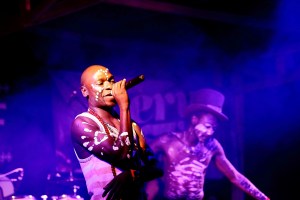




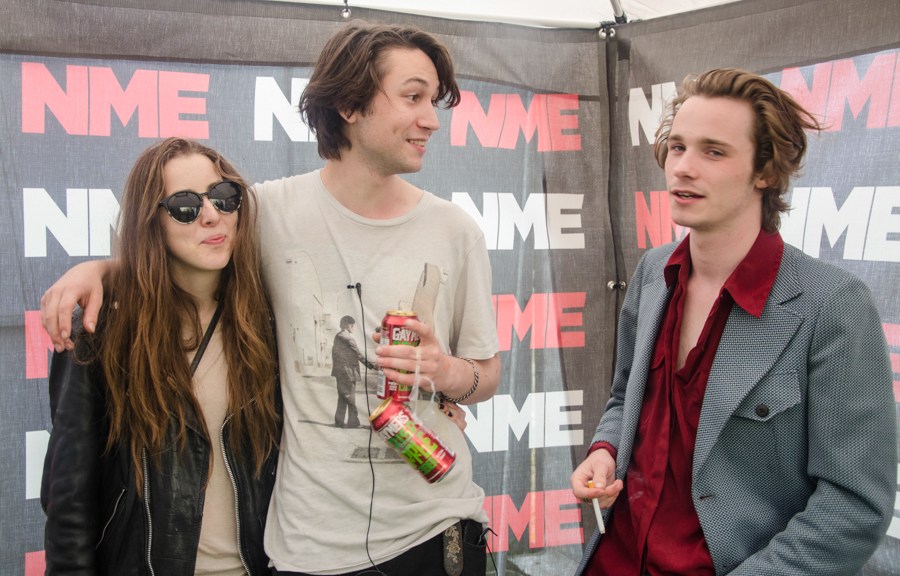


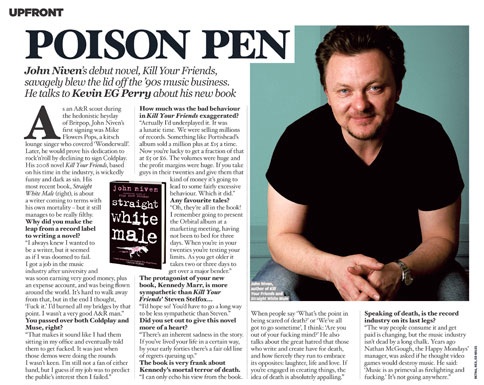

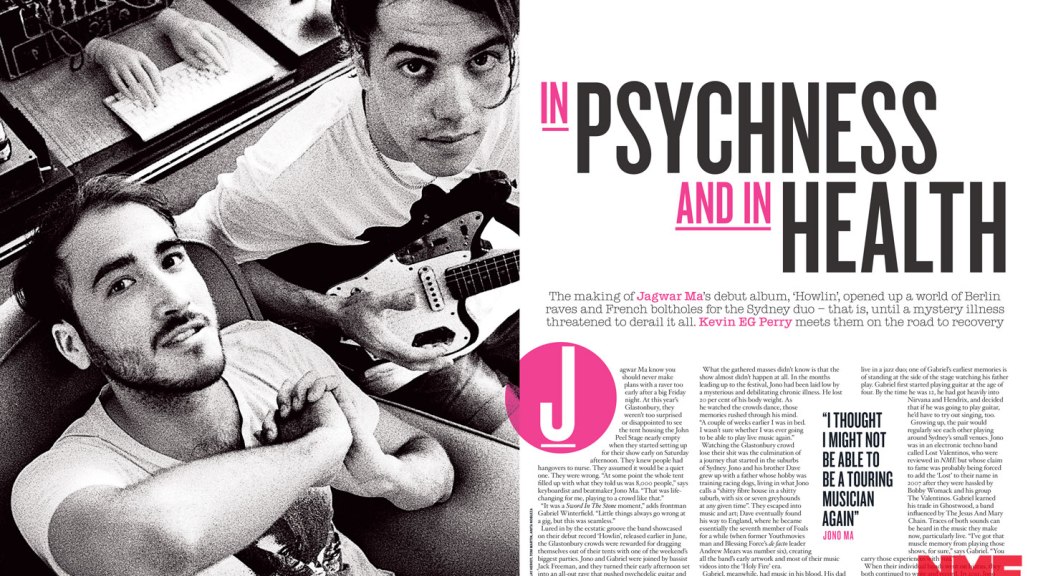
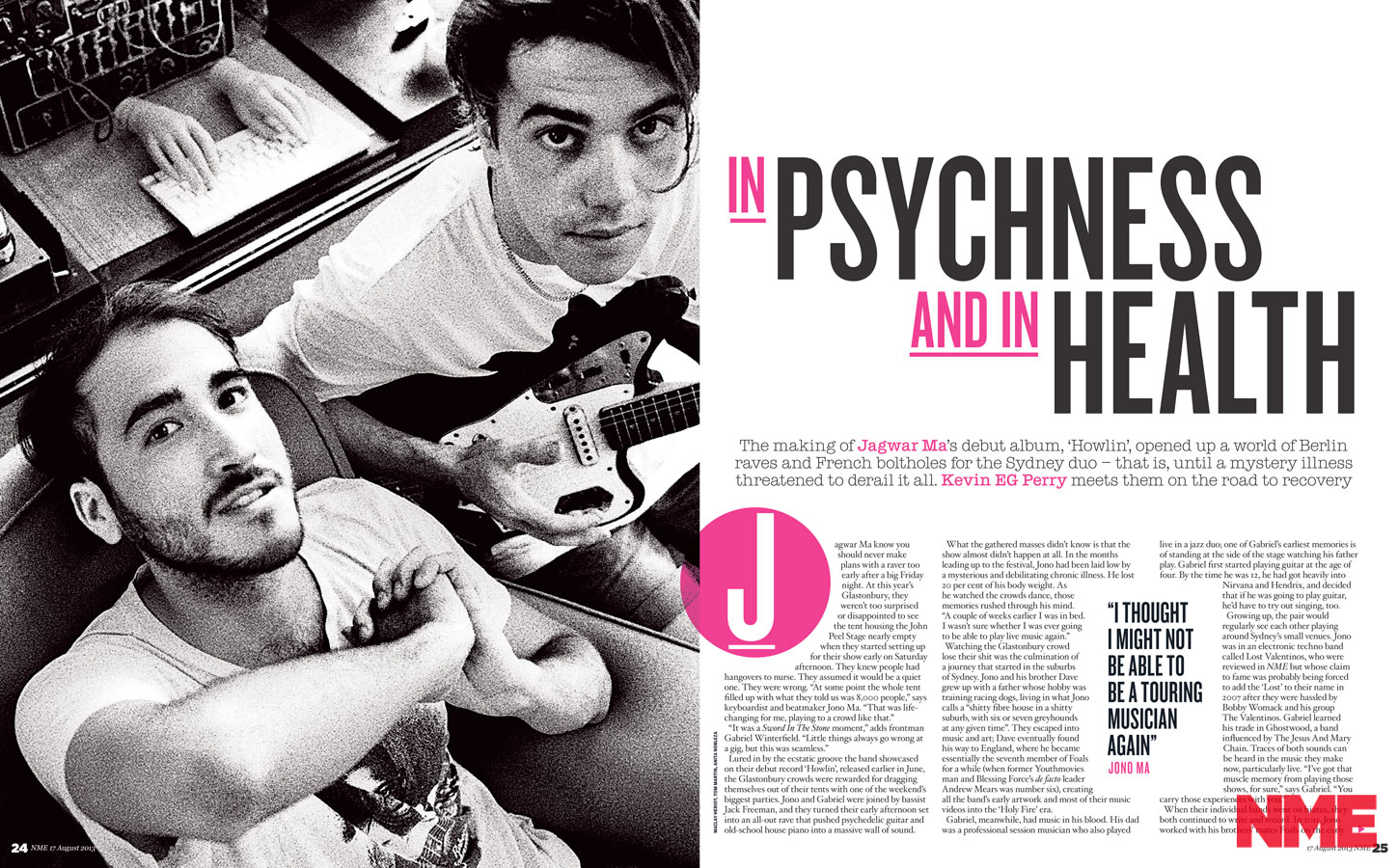
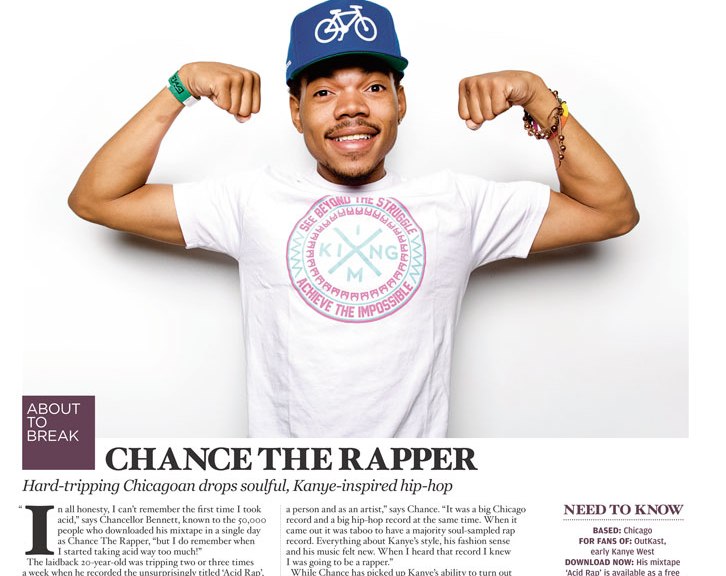
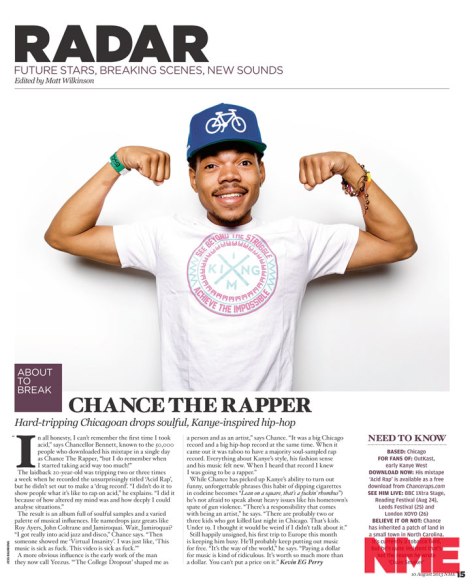 “In all honesty, I can’t remember the first time I took acid,” says Chancellor Bennett, known to the 50,000 people who downloaded his mixtape in a single day as Chance The Rapper, “but I do remember when I started taking acid way too much!”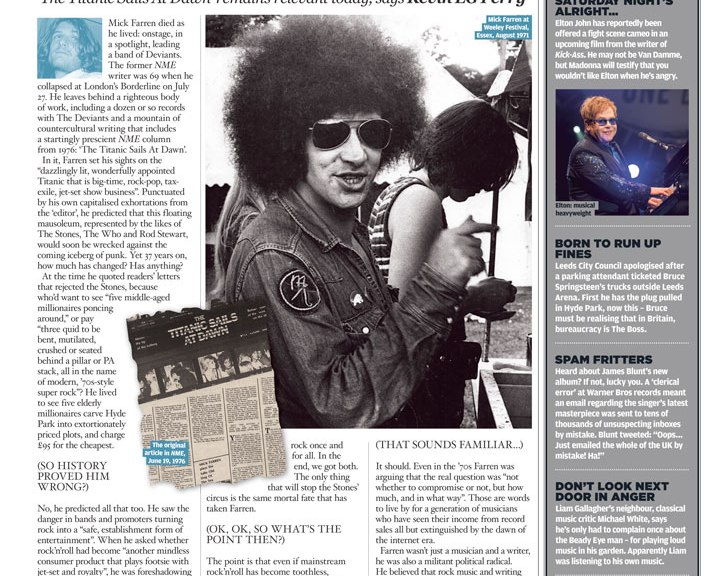


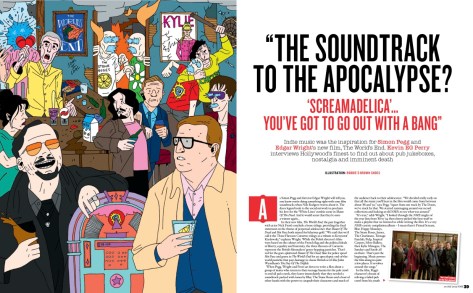


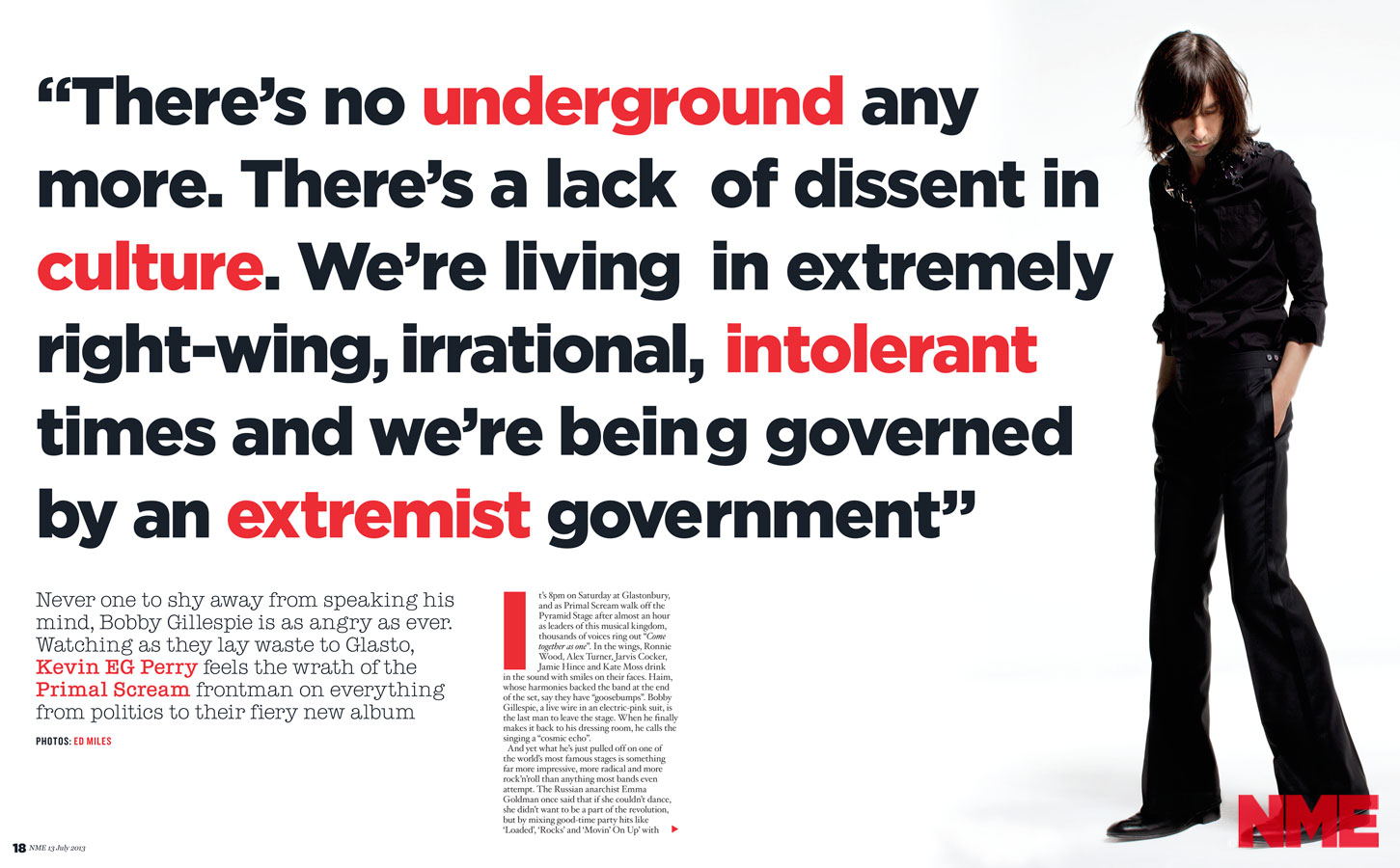
 NME: Millions of people will be watching Glastonbury on primetime TV and it’s a become a social fixture. It might have started as a hippy, alternative festival, but it’s now the mainstream, isn’t it?


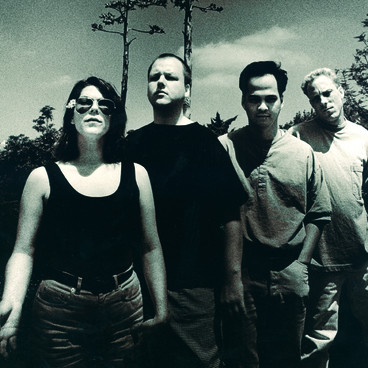



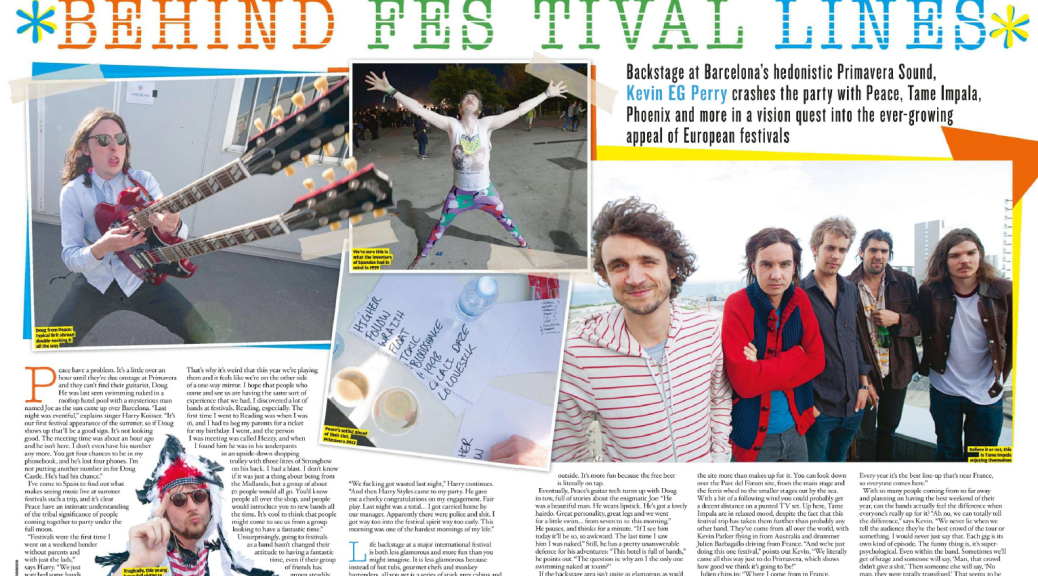
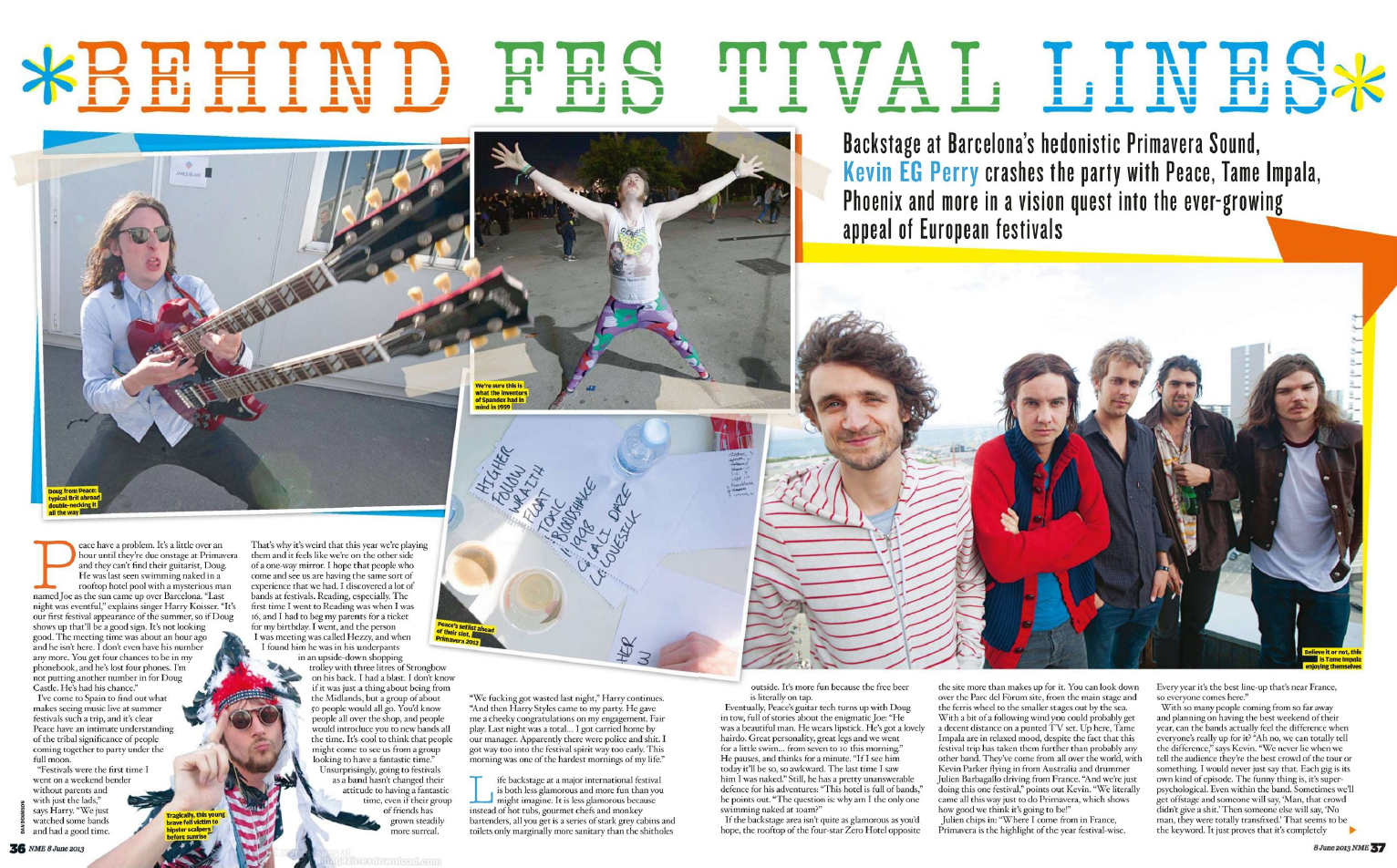


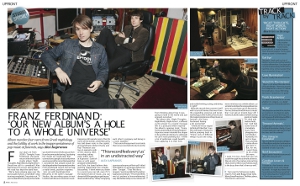
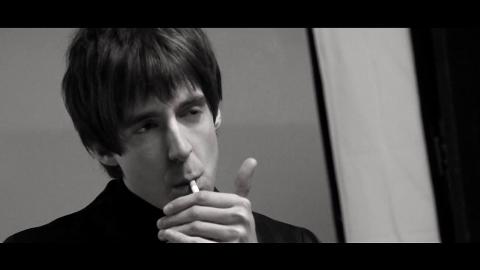


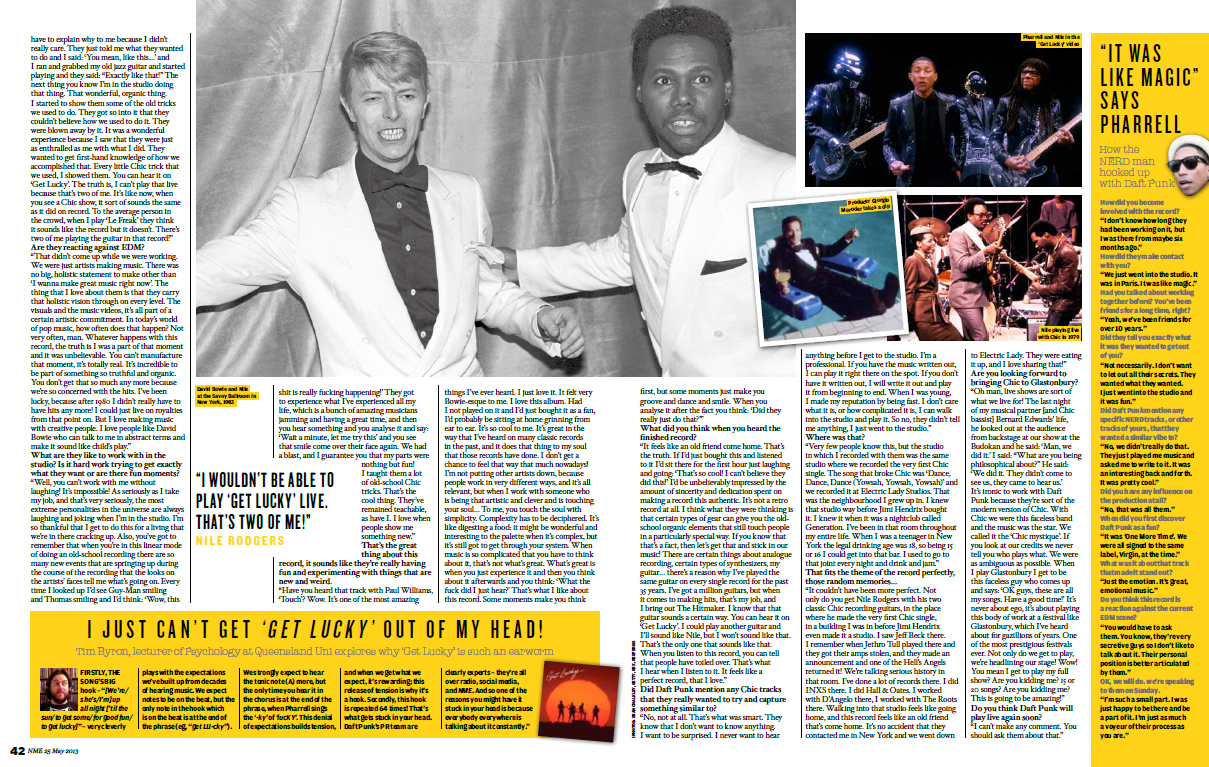

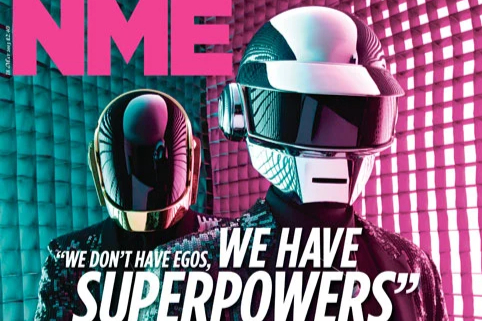
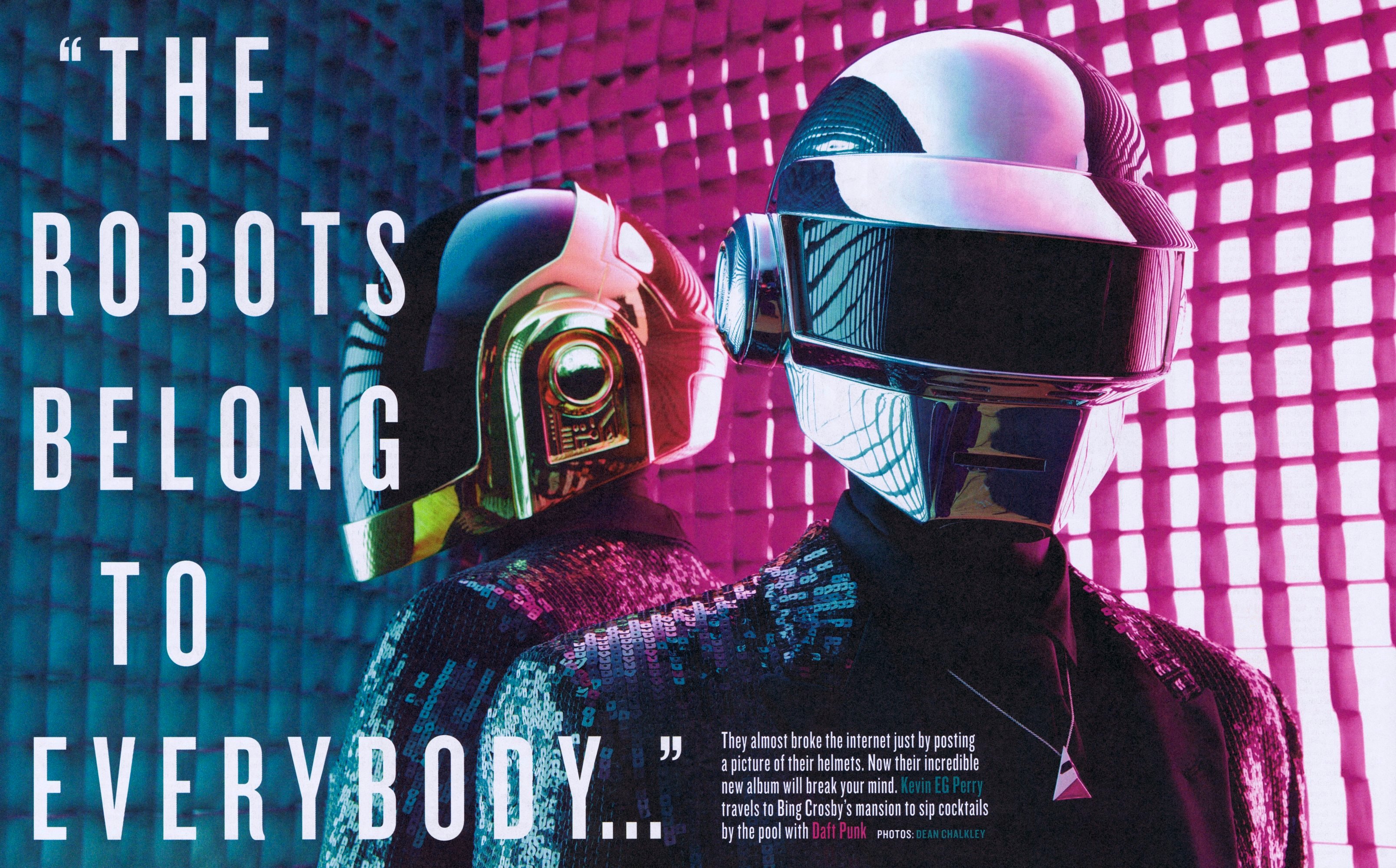
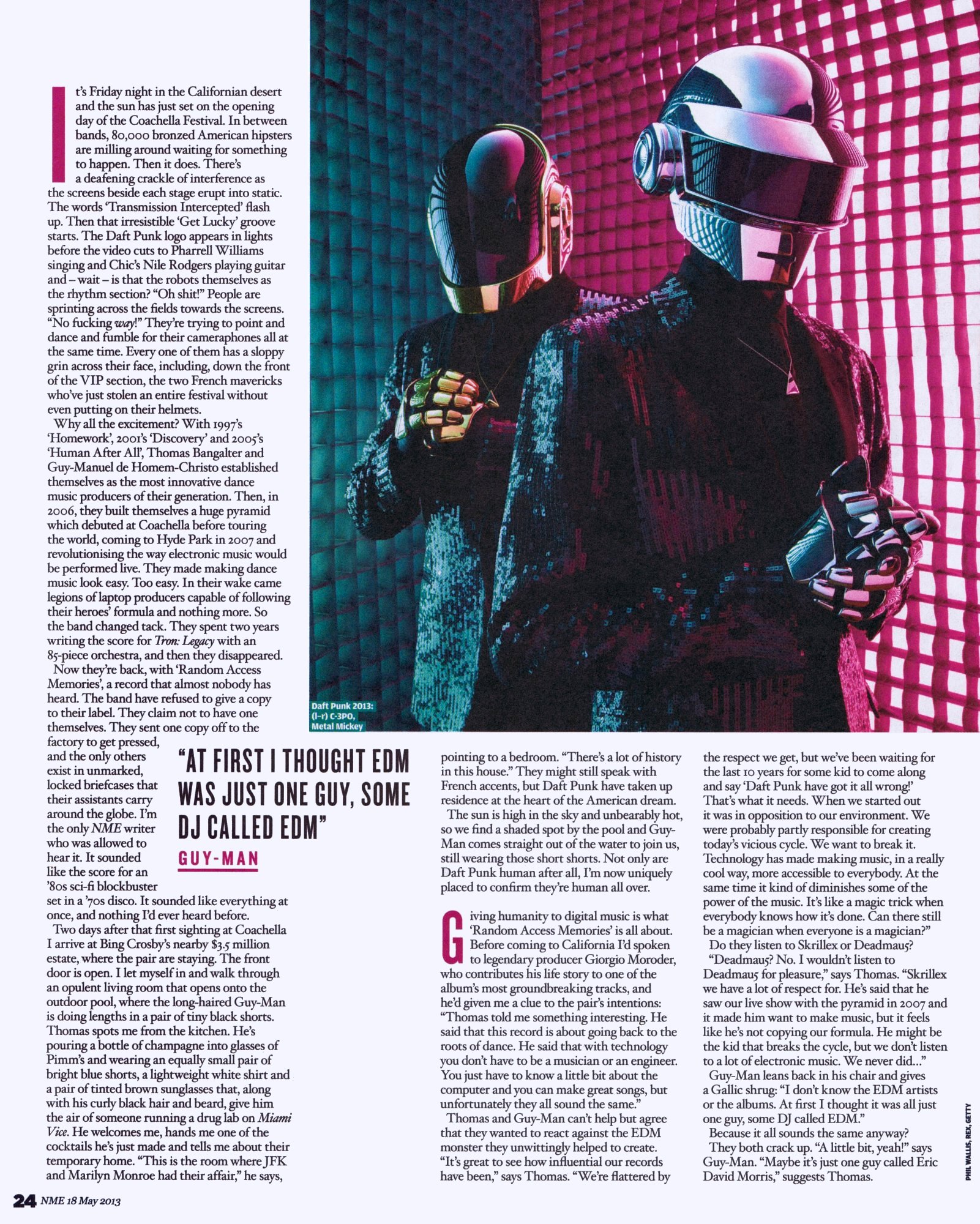

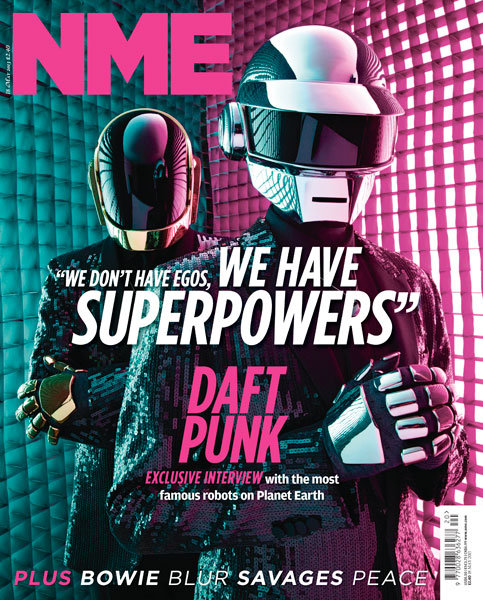

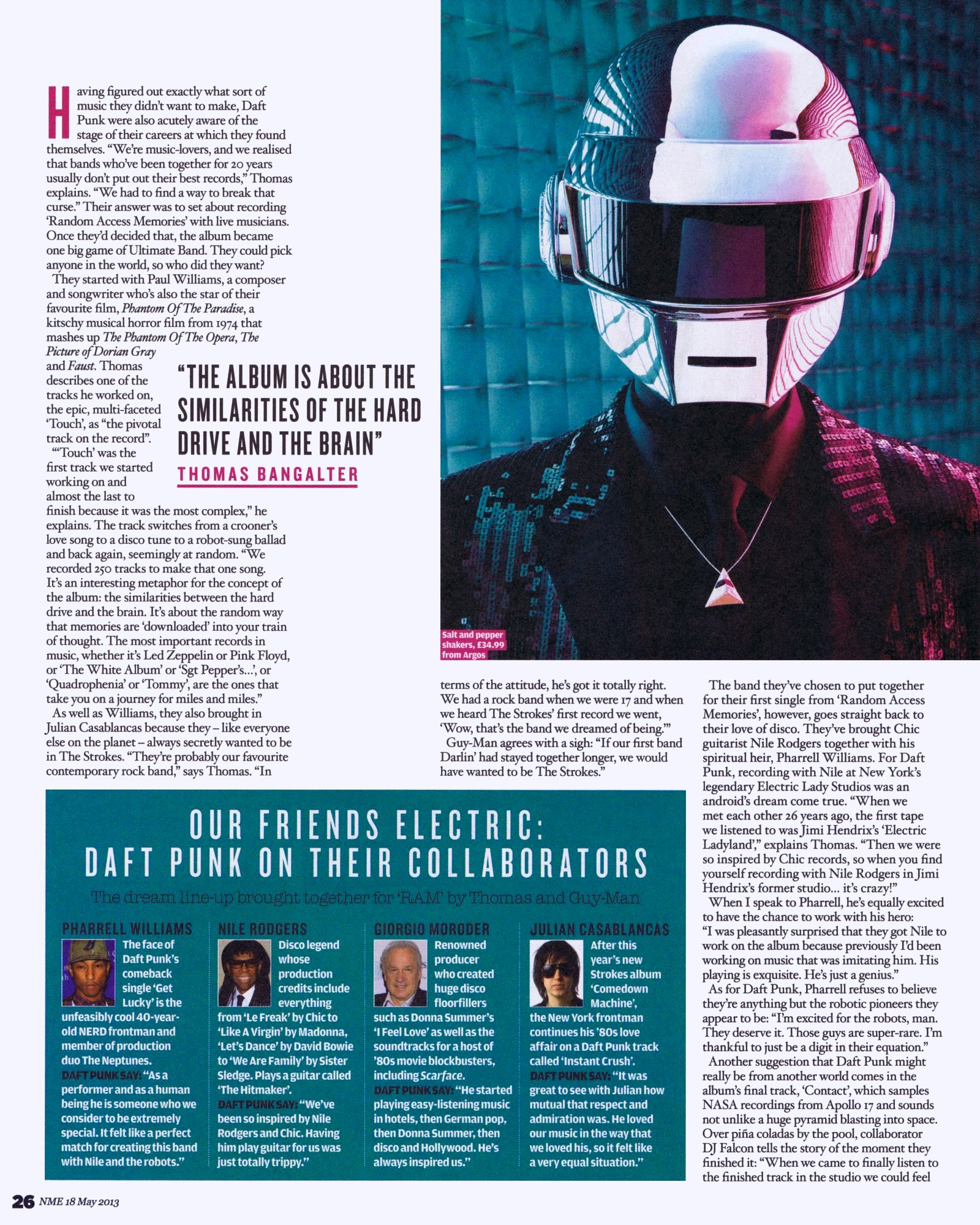
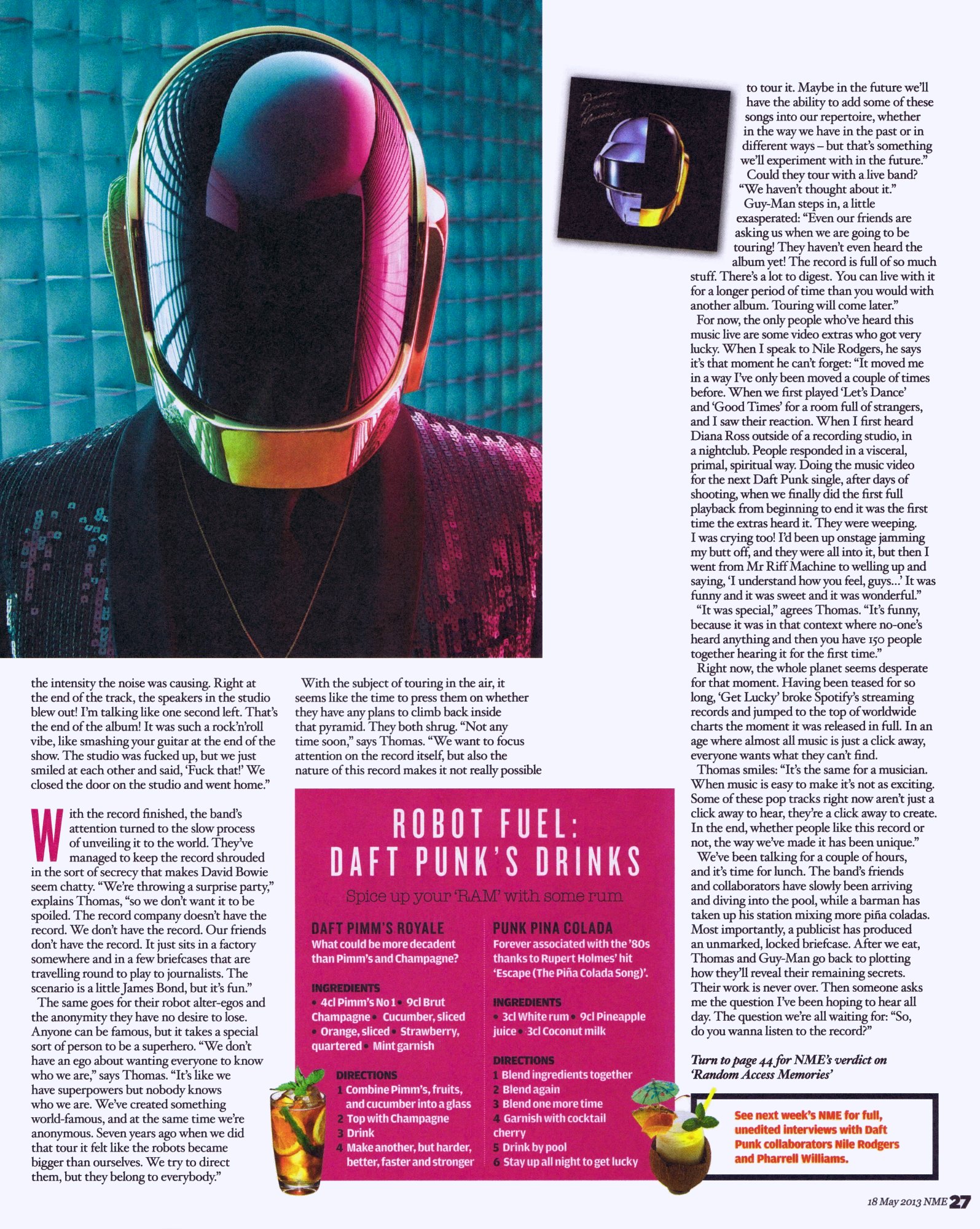





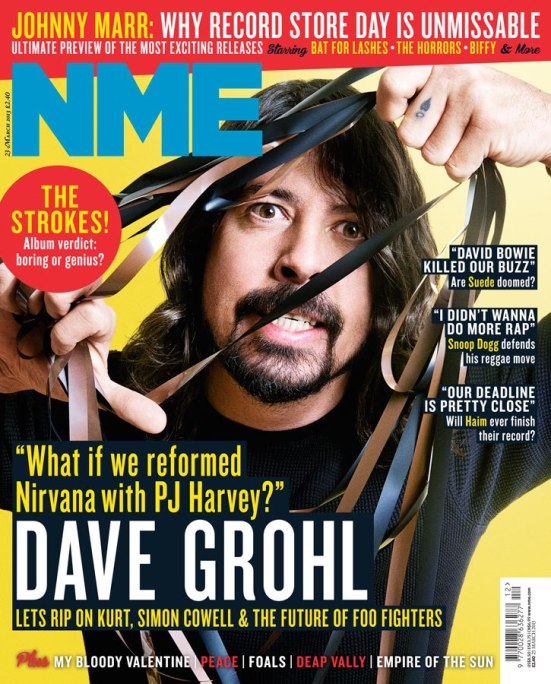




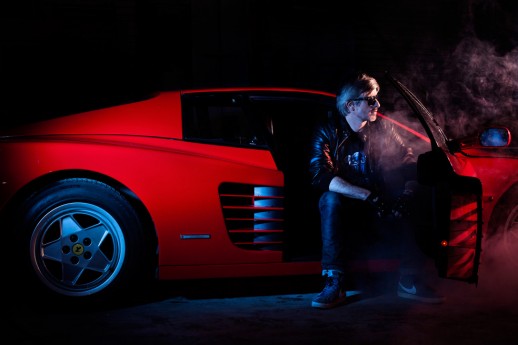
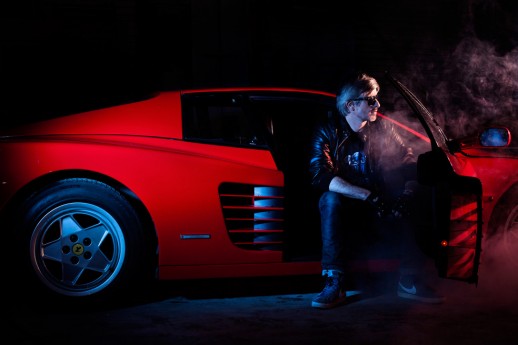 If you’d just recorded an electro concept album about a teenager zombified by a collision with a mysterious red Ferrari Testarossa, how would you announce it to the world? If you’d throw a party at a sprawling Ferrari showroom in Paris with a free champagne bar and inviting Daft Punk, Justice and Sebastian Tellier, then congratulations – you’re ready to step into Kavinsky’s world.

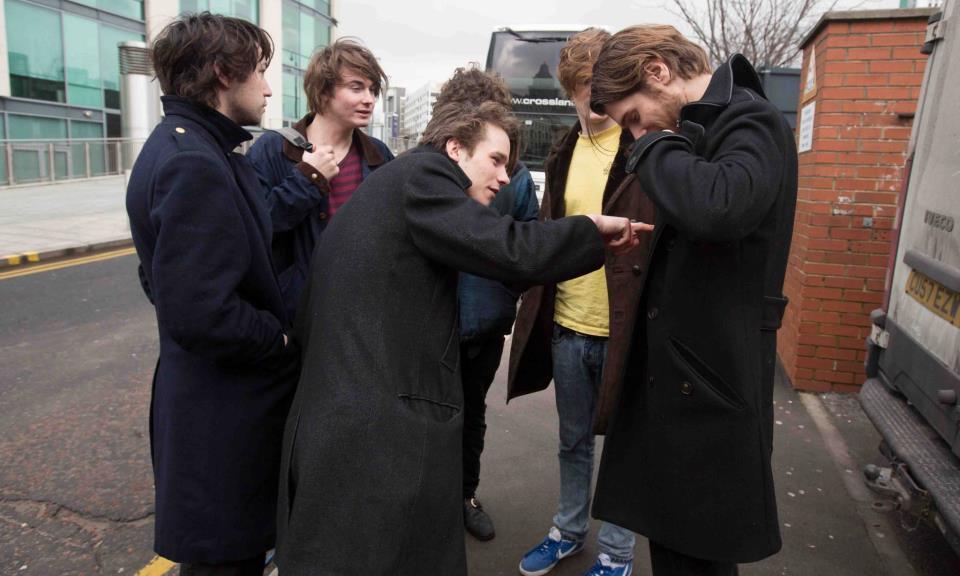
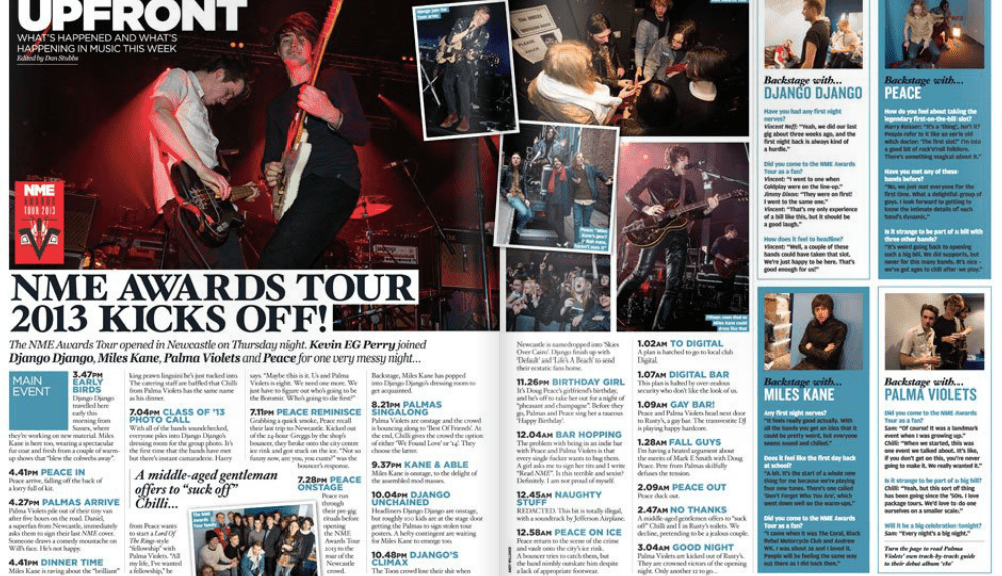

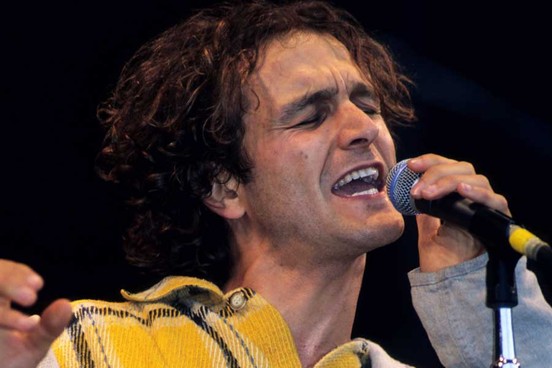

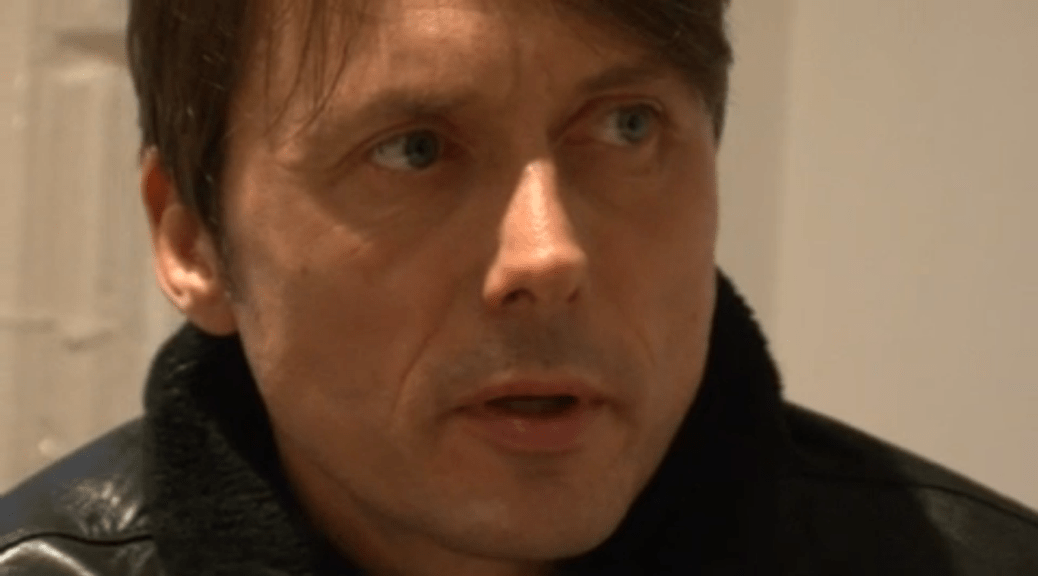
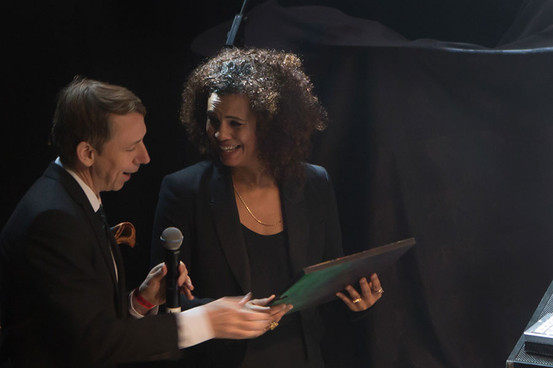
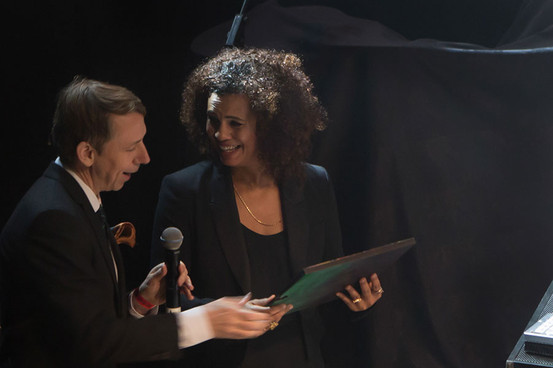
 Kevin EG Perry: Collected Works