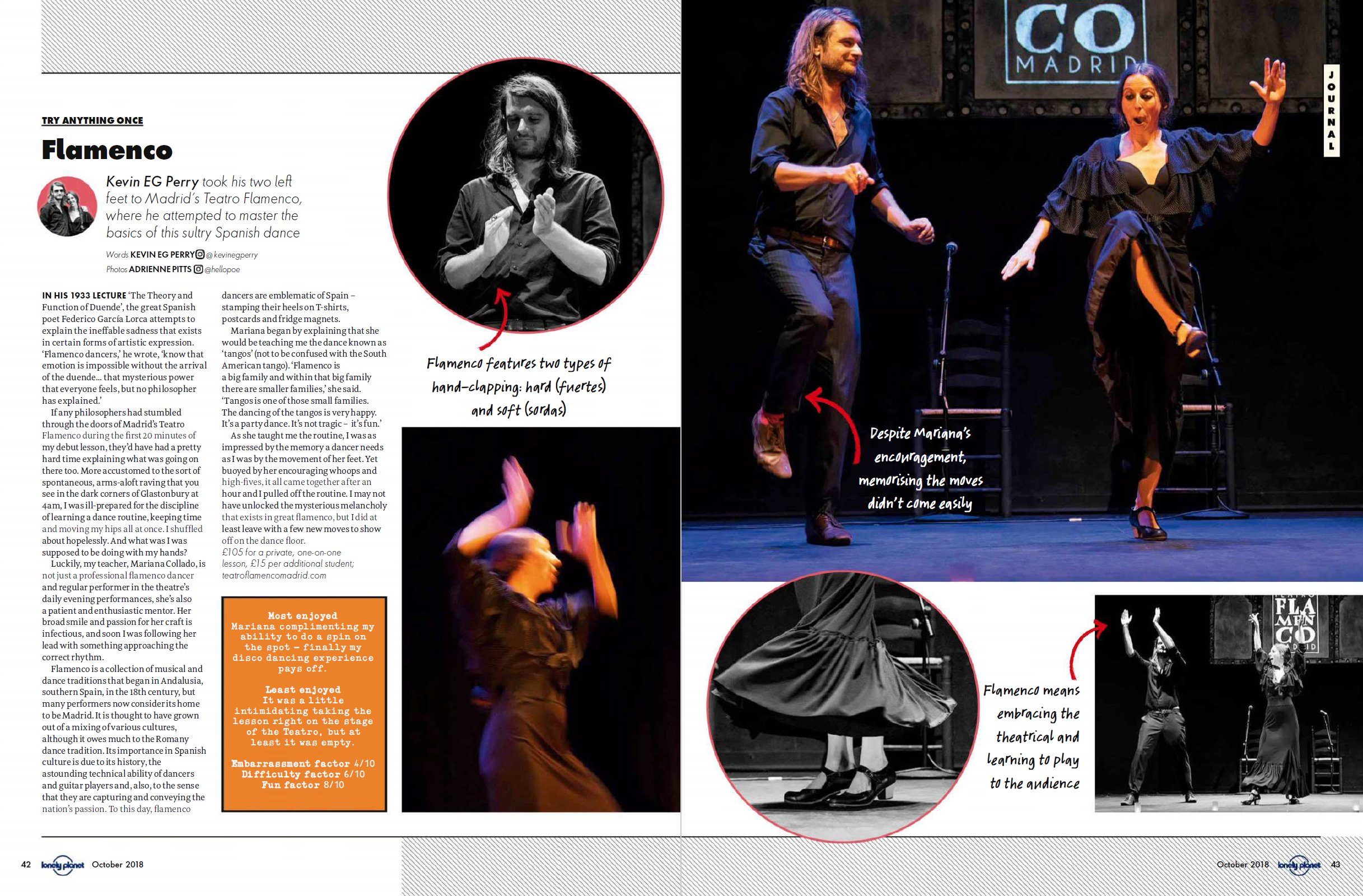
Category Archives: Lonely Planet Traveller

How a gift to the city of LA became a world-famous stargazing spot

In 1781 José Vicente Feliz was one of four soldiers who guarded settlers as they founded El Pueblo de Nuestra Señora la Reina de los Ángeles, the town that would one day become Los Angeles. Feliz went on to become the settlement’s first commisionado, or mayor. As a reward for his service, the Spanish King Carlos III awarded him one of the first land grants in California’s history. The 6647-acre area in the hills to the east of the settlement took the name Rancho Los Feliz.

In 1882 Griffith J. Griffith, who was born in Glamorganshire in Wales before making his fortune in California mining, purchased a large swath of Rancho Los Feliz. Fourteen years later, Griffith donated 3015 acres of the land to the city of Los Angeles, calling it “a Christmas present.” He told the Los Angeles City Council at the time of his dream for Griffith Park. “It must be made a place of rest and relaxation for the masses, a resort for the rank and file, for the plain people,” he said. “I consider it my obligation to make Los Angeles a happy, cleaner, and finer city.”

Toward the end of his life, Griffith visited the Mount Wilson Observatory in the San Gabriel Mountains. The experience of gazing out at the universe profoundly affected him. “Man’s sense of values ought to be revised,” he commented. “If all mankind could look through that telescope, it would revolutionize the world.” When he died in 1919, Griffith left money in his will to be used to build an observatory that would make astronomy accessible to the general public. Construction began on June 20, 1933, and the Griffith Observatory opened its doors on May 14, 1935. Admission has always been free, in accordance with Griffith’s wishes.

The observatory’s prime location on the south-facing slope of Mount Hollywood makes it visible from much of Los Angeles. The surrounding Griffith Park, now expanded to 4310 acres, remains one of the largest urban parks in the United States. The arid climate means there is always a risk of brush fires, and the hills still contain pockets of wilderness. Mountain lions, cougars and coyotes all call Griffith Park home.

Continue reading at Lonely Planet.

Lost in the Dust

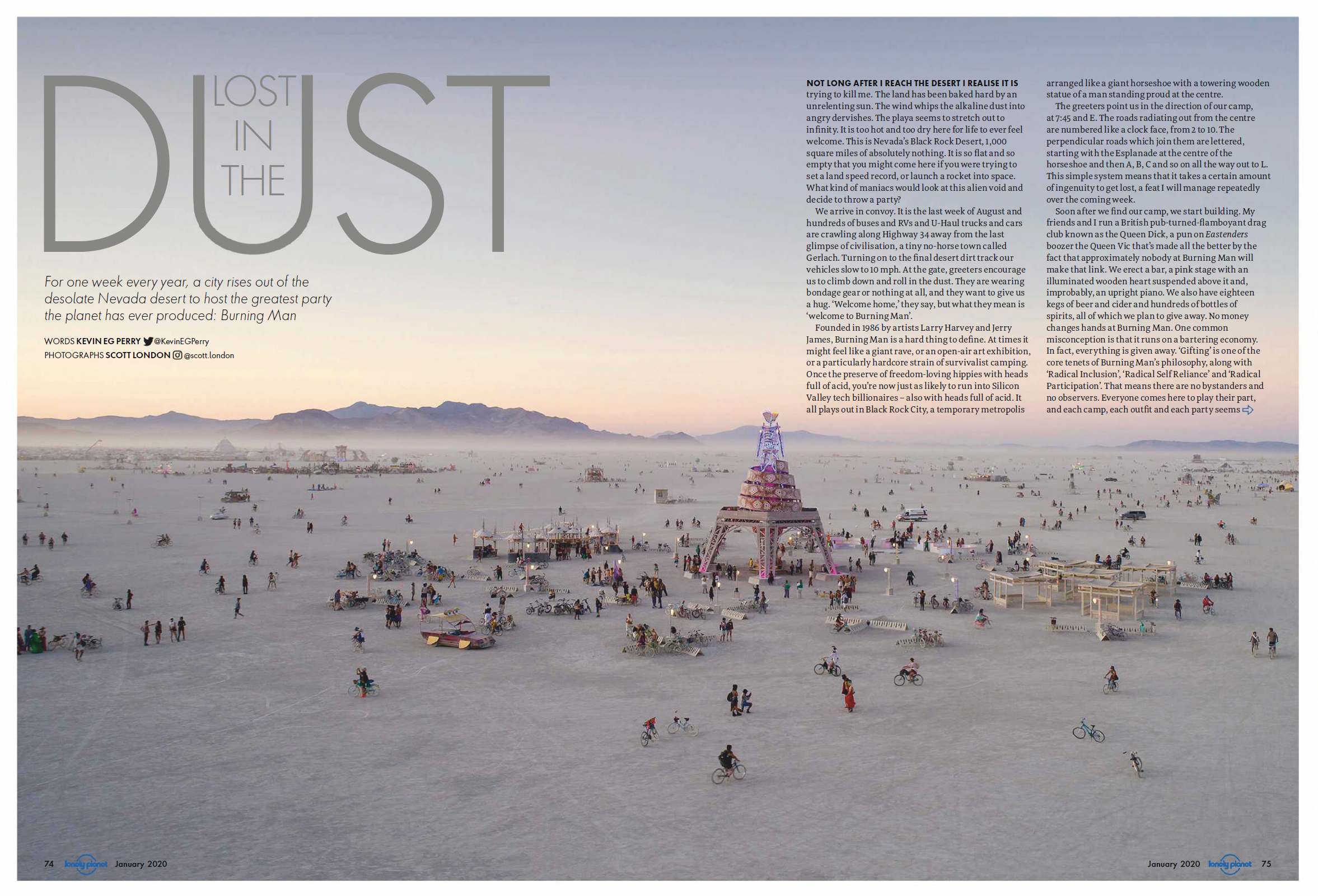
burning-man-lonely-planetNot long after I reach the desert I realise it is trying to kill me. The land has been baked hard by an unrelenting sun. The wind whips the alkaline dust into angry dervishes. The playa seems to stretch out to infinity. It is too hot and too dry here for life to ever feel welcome. This is Nevada’s Black Rock Desert, 1,000 square miles of absolutely nothing. It is so flat and so empty that you might come here if you were trying to set a land speed record, or launch a rocket into space. What kind of maniacs would look at this alien void and decide to throw a party?

We arrive in convoy. It is the last week of August and hundreds of buses and RVs and U-Haul trucks and cars are crawling along Highway 34 away from the last glimpse of civilisation, a tiny no-horse town called Gerlach. Turning on to the final desert dirt track our vehicles slow to 10mph. At the gate, greeters encourage us to climb down and roll in the dust. They are wearing bondage gear or nothing at all, and they want to give us a hug. “Welcome home,” they say, but what they mean is welcome to Burning Man.

Founded in 1986 by artists Larry Harvey and Jerry James, Burning Man is a hard thing to define. At times it might feel like a giant rave, or an open-air art exhibition, or a particularly hardcore strain of survivalist camping. Once the preserve of freedom-loving hippies with a head full of acid, you’re now just as likely to run into Silicon Valley tech billionaires – also with a head full of acid. It all plays out in Black Rock City, a temporary metropolis arranged like a giant horseshoe with a towering wooden statue of a man standing proud at the centre.

The greeters point us in the direction of our camp, which is at 7:45 and E. The roads radiating out from the centre are numbered like a clock face, from 2 to 10. The perpendicular roads which join them are lettered, starting with the Esplanade at the centre of the horseshoe and then A, B, C so on all the way out to L. This simple system means that it takes a certain amount of ingenuity to get lost, a feat I will manage repeatedly over the coming week.

Soon after we find our camp we start building. My friends and I run a British pub-turned-flamboyant drag club known as the Queen Dick, a pun on Eastenders boozer the Queen Vic that’s made all the better by the fact that approximately nobody at Burning Man will make that link. We erect a bar, a pink stage with an illuminated wooden heart suspended above it and, improbably, an upright piano. We also have eighteen kegs of beer and cider and hundreds of bottles of spirits, all of which we plan to give away. No money changes hands at Burning Man. One of the most common misconceptions is that it runs on a bartering economy. In fact, everything is given away. ‘Gifting’ is one of the core tenets of Burning Man’s philosophy, along with ‘Radical Inclusion’, ‘Radical Self Reliance’ and ‘Radical Participation’. That means there are no bystanders and no observers. Everyone comes here to play their part, and each camp, each outfit and each party seems more outlandish than the last. Burning Man is what happens when 70,000 people ask: ‘Is this too much?’ and nobody ever tells them: ‘Yes, that’s too much.’

On the first night after the pub is built I take my bike and cycle out into the deep playa. I watch as the sun sets over the city, purple hues filling the sky over a distant mountain range, the bleached light of day fading into the black of night. The horizon glows with countless neon lights, but these are unreliable landmarks. As well as the camps there are hundreds of slow-moving vehicles, known as art cars, and they move across the playa with no obvious logic. Pyramids and towering sheep, fire-breathing dragons and even a scale replica of the Golden Gate bridge are never to be found where you left them. Each of them throbs to the beat of their own soundsystem, and some of Burning Man’s most infamous nightspots – with names like Mayan Warrior and Robot Heart – are mobile. At one point, feeling disorientated, I hitch my bike to the side of a ship gliding past and climb up on deck. I grip the rigging and gaze out awestruck. Sometimes in life you need something to hold on to, even if that’s a giant neon pirate ship in the desert. Now the real game begins. Where on Earth did I leave the pub?

As I try to cycle back in the vague direction of 7:45 and E I pass revelers wearing outfits just as elaborate and creative as the art cars. There are BDSM punks and stilt-walkers in ballgowns, Mad Max warriors and models in bikinis. One night I see a couple dressed in khakis and fleece jumpers with cameras slung around their necks. I spend the rest of the week debating whether this strange vision was simply people wearing their ordinary clothes or arch conceptualists who’ve managed to put together the one costume that’s truly transgressive.

Just as I’m starting to become exhausted from cycling over the uneven playa I spot a rest stop. A little warren of sofas in the middle of the desert. It’s as if Burning Man has anticipated my exact desire, which of course it has. Throughout the week this happens time and again. Feeling hungry? Here’s a camp passing out quesadillas. Growing weary? This place will give you a coffee, although they may insist on spanking you to earn it. Struggling in the heat of the day? There’s a lounge full of people misting you with cool water. In need of a strong cocktail? Well, take your pick. This phenomenon comes with its own maxim: ‘The playa provides.’ Slowly, moment by moment and place by place, the desert is starting to feel a little less inhospitable.

Eventually I stagger back into the welcoming bosom of the Queen Dick. My friends are dancing on the bar and pouring shots into the mouths of a crowd of people I’ve never seen before. It feels good to be home. Night becomes day and day becomes night. Each morning in the pub I swap breathless tales about the things I’ve seen and found and am rewarded with stories of things I hadn’t even imagined. Everyone comes to Burning Man for different reasons. Everyone’s Burning Man is different.

There is only one universal communal experience, and the clue’s in the name. On the penultimate night we leave our bikes behind and walk to the man. All 70,000 of us gather together, at the centre of our new community, to watch him burn. We sit in a vast ring, whooping and cheering when he goes up in flames and then lingering a while as the heat prickles our faces. The next day we begin to dismantle the pub. When we’re finished we sweep the ground meticulously, making sure not even a scrap of plastic is left behind. Litter is taken very seriously at Burning Man. It’s known as MOOP (‘Matter Out Of Place’) and creating it is an unforgivable faux pas. By the time we all leave, the desert will look as blank and foreboding as it did when we first arrived.

Belatedly, I am coming to understand the significance of the desert. It is easy to become distracted by Burning Man’s dizzying lights and sounds, the chaos and the hedonism, but beneath it all is this grand blank slate. Every dancefloor, every piece of art, everything you see and touch has been built by someone expressly for you to enjoy. Everything has a purpose. On this sprawling canvas we come together to build whatever we like, wear whatever we like, be whoever we like. For this brief and wondrous grain of time, it’s home.

Published in Lonely Planet Traveller, January 2020.

That Fiji Feeling

fiji-lonely-planet.png

I regret to inform you that we have all been wildly misinformed about pineapple. I’d been going through life fishing rings of the stuff out of tin cans onto gammon and indulging my controversial affection for it on pizza, so I cavalierly assumed I had a pretty good idea of what it tastes like. I was wrong. I realise my mistake the moment I casually bite into a slice of freshly-picked pineapple and it explodes in my mouth: sweet and rich. It’s like hearing Beethoven’s Fifth when you’d been expecting a drunk banging on a bin. It’s as if happiness itself had a taste.

At the moment of my epiphany I’m standing in the kitchen of Sala Lacabuka’s home, in the tiny village of Vacalea. With a population somewhere around 80, it sits on a hilltop towards the eastern end of Kadavu, Fiji’s fourth largest island. The house was built by hand by her husband Seimisi and is painted a slightly deeper shade of blue than the vast sky above. When Sala started preparing dinner – tuna, spinach, eggplant and the tropical root vegetable, taro – Seimisi picked a baby pineapple from one of the plants outside and sliced it up to serve as a snack. We eat greedily, while above our heads shiny DVDs hang from the ceiling, catching the fading light. Sala’s incongruous choice of decoration is a complete box set of Scrubs.

Outside the window every child in the village – from toddler to teenager – is engaged in an energetic game of pani, a local game roughly equivalent to dodgeball. Behind them the sunset is beginning to turn the horizon candy-floss pink. Earlier, approaching the village by boat, thick green vegetation had made the whole place appear uninhabited, and there are no cars or roads on this side of the island. At 411km2, Kadavu is just slightly bigger than the Isle of Wight – but home to an awful lot more palm trees swaying over white sandy beaches. The sea is turquoise and clear. Pineapples grow freely. If you were ever shipwrecked on Kadavu, you probably wouldn’t be in any particular hurry to be rescued. For their part, the islanders don’t seem to be in any particular hurry about anything. Sala’s catchphrase is: ‘Take your time, no rush.’

I’d come to Fiji to find out why people here are so happy. A 2017 Gallup poll found that 92% of people who live in Fiji describe themselves as ‘happy’ or ‘very happy’, the highest proportion anywhere in the world. This statistic comes as no surprise to Seimisi, who as well as growing most of the food we’ll eat tonight also farms kava, the root crop used to make a mildly sedating drink which is Fiji’s main form of social lubrication. As we sit down to dinner, joined by their children Lusiana and Samuela, Seimisi points to the bountiful natural harvest spread out on the table in front of us as one of the reasons why Fijians are so content.

‘No money, no worries,’ he says. ‘In your country, you need to have money. Here you can pull up cassava and taro from the ground and get fish from the sea. In the evening you can drink kava. You may have no money, but you have no worries either.’

Be hospitable

The plentiful food also helps to facilitate Fiji’s culture of generosity and hospitality. Sala, who works as a manager at the nearby Matava Resort, invites guests to come and stay in her village. She’s just as welcoming to her own neighbours. ‘We keep our door open,’ she says, and she means this literally. The front door has been propped open all day. ‘We’re eating now, and whoever walks past we’ll say: ‘Come, have dinner!’ Anyone can just walk in if they feel like coming in. If they’re starving they’ll just come straight away and we’ll serve them food. Families don’t cook just the right portion. We cook extra so that we can invite anyone to come and have a meal with us.’

This sense of tight-knit community is strengthened by the islanders’ rich folklore and collective mythology. Over the dinner table Lusiana cuts off her parents to eagerly regale us with the story of Dakuwaqa, the fearsome Fijian shark god who was only defeated in battle by an octopus who lived in the shallow waters around Kadavu. ‘When they fought, the octopus wrapped his arms around the shark and used two of them to block the shark’s nostrils,’ explains Lusiana. ‘The shark surrendered and promised he would never bite or eat any Kadavu people.’ Local fishermen claim Dakuwaqa has protected them from shark attacks ever since.

After dinner I settle down for bed on a foam mattress in Sala’s living room and am quickly lulled to sleep by the quiet of the village. A chorus of cockerels breaks the silence a little before 6am, but another couple of hours pass before Sala appears in the kitchen to start shaping dough to bake into fresh buns. ‘In island life this is how we do breakfast,’ she says with a shrug. ‘There’s no rush.’

Most of the men who live in Vacalea are farmers, like Seimisi. For those women who don’t work in tourism like Sala there are more traditional forms of employment, such as weaving grass mats from pandanus leaves. A couple of doors down from Sala’s house I meet Kelera Raivasi, who learned to weave this way when she was just six years old. ‘All through Fijian history people have been weaving like this,’ she says. ‘The skill is passed from grandmother to mother to daughter.’

She sits on the mat as she works, happy to chat away as the weaving has long since become second nature. Her eyes light up when she hears that I plan to visit Bouma National Park on Taveuni, another island 200 miles to the north-east. Slightly larger than Kadavu, it is known as Fiji’s ‘Garden Isle’ because of the incredible diversity of its flora and fauna. By chance Kelera’s in-laws live there, and she’s spotted an opportunity to display that characteristic Fijian generosity. ‘The head man of that village is called Iosefo, he’s my husband’s father,’ she explains as she fetches two sulus, the Fijian sarong. ‘Can I give you these to take to him and his wife? He looks after the waterfalls. They’re beautiful.’

Cherish nature

Bouma National Park lives up to Kelera’s billing. A three-hour hike through the teeming rainforest reveals three waterfalls, each forming its own perfect pool. After the long climb I can’t resist the chance to dive in, washing the sweat from by body in the cool, fresh water. From vantage points near the top of the trail the island appears entirely untamed, a sea of green from which coconut palm trees grow like church spires. As I walk downhill, hibiscus, gardenia and heliconia flowers provide bright splashes of colour while frogs and purple shore crabs cross my path. In a small village near the entrance to the park I meet Chief Iosefo Raupuga, who welcomes me to his simple home and happily accepts Kelera’s sulus. As we talk, he points out that this pristine natural environment can’t be taken for granted. His community had to fight for it.

He explains that in the 1980s, a Korean logging company did a deal with the most powerful chief on the island to turn Taveuni’s trees into timber. They even went so far as to construct a sawmill. However, the chief still needed to get the assent of the various village chiefs, which at that time included Iosefo’s father. They all refused, the deal fell through and the barely-used sawmill fell into disrepair. In a poetic twist, the mill itself is now part of the forest, overgrown and tied up with vines. A tall, unfelled palm towers over the forgotten doorway.

‘They turned down a lot of money,’ says Iosefo. ‘They decided the island was more important. They were thinking of future generations, and I think they made a wise choice. Now we’re reaping the benefits of it. Money comes into the village from the tourists who visit the waterfalls every day.’

Like everyone I meet, Iosefo quickly agrees with the portrayal of Fijians as happy people. ‘We’re happy because we live as a community,’ he says. ‘We live as neighbours among these beautiful surroundings and we can always go and talk to the other villagers, our brothers and sisters.’

Live and let live

This sense of togetherness is another clue towards understanding Fijian happiness. Importantly, it even extends across what other countries would called ‘religious and cultural divides’. While around 64% of the population identifies – like Sala and Seimisi – as Christian, the sizable Indo-Fijian population helps explain why 28% of the population are Hindu.

Many of those Indo-Fijians live on nearby Vanua Levu, which at 12 times the size of Taveuni is significantly larger than the two previous islands I’ve visited and has much to explore. On the south coast near Savusavu I stroll along a white sandy beach and swim surrounded by tiny but curious fish. The island’s biggest town, Labasa, is home to almost 30,000 people – a heaving metropolis by Fijian standards built around one main street, with a bustling market and a busy bus station. Just outside of town is one of Fiji’s most significant Hindu religious sites: Naag Mandir, literally ‘Snake Temple’. The red and yellow building contrasts sharply against the rolling hills and is built around a three metre tall rock which resembles, from certain angles, a cobra. Some Hindus believe that this island is the place referred to in their scriptures as Ramanaka Dweep, where Lord Krishna sent a snake god.

When I visit, the rock is garlanded in red, yellow and white flowers. Although the priest’s chanting echoes around the room, there is a sense of stillness. Families from as far afield as Australia and New Zealand kneel, pray and give offerings of apples, bananas, coconuts and milk. The air is thick with the smell of burning camphor.

After the families leave the priest introduces himself as Anil Maharaj, and explains why people travel such distances to pray here. ‘They come to have their desires fulfilled,’ he explains. ‘Their problems are solved and their sicknesses are healed.’ He adds that religious tensions in Fiji are non-existent. ‘There are never any problems here,’ he says. ‘It’s a beautiful country. People are very happy.’

In Fiji that happiness springs from many wells. It’s easiest to see in the natural beauty of those untouched beaches and waterfalls, but it rises too from the strength of the communities that protect them. It’s there in the spirit of hospitality, the giving of gifts for no reason, and sometimes it’s in places you might not expect it – like that first bite of really fresh pineapple.

Published in Lonely Planet Traveller, January 2020.

Vienna’s hot spots

heurigerWhen the sun is shining in Vienna, there are few better places to be than the gardens of the Prater. Home to a sprawling amusement park – notable for the Ferris wheel where Orson Welles delivered his nihilistic monologue in The Third Man – it also contains one of the city’s most famous beer gardens. The Schweizerhaus has existed in this location in one form or another since 1766, and its reputation rests on doing two simple things very well: perfectly-soft, meaty pork knuckles the size of rugby balls, and glass tankards filled with beer so frothy that it’s impossible to drink them without getting bubbles on your nose.

‘Every year I always go to the Schweizerhaus with my friends,’ says Johann Diglas, whose family have run coffeehouses in Vienna since 1875. ‘We have a few beers and then summer has officially begun.’ We are sat in the hedge-lined garden of Café Diglas in Schottenstift, where Johann is sipping a white wine spritzer. ‘It’s half wine and half soda water. It’s very traditional for Austria,’ he says. Locals will tell you that the drink was invented in the country as an easy way to create bubbly wine. I discover, too, that drinking outdoors is intimately intertwined with Viennese culture. ‘Since the 1800s, people in Austria have felt that the coffeehouse is like their living room. Gardens like this one are the living rooms of summer.’

That concept, with all its welcoming ambience, is played out all over the city. At Heuer Am Karlsplatz, which shares a building with the Kunsthalle Wien art gallery, I have beer and burrata on a smart outdoor patio which has proven so popular they’ve had to set up wooden picnic tables and chairs in the adjoining park to cope with the overflow. At Glacis Beisl, a restaurant specialising in Wiener schnitzel, they serve their craft lagers in wine glasses – a world away from the foaming beers at the Schweizerhaus – but it’s their spacious courtyard that’s the real draw. I also spend an evening among the hundreds of Viennese who visit the Ottakringer brewery’s outdoor events during the summer, listening to Austrian cover bands play classic rock while drinking beers under the very silos they’re made in.

Looking for a view over the city, I head to the Dachboden bar on the roof of the 25Hours Hotel. It’s a fashionable hangout, with a disassembled drum-kit suspended over the bar, an extensive cocktail list and great views over the baroque MuseumsQuartier. However, for me, the best views in town are to be had from the bar on the roof of the Hotel Lamée. Here I sip a spritzer of my own while looking across at the majesty of St Peter’s Church – just 400 metres away – the most striking landmark on a skyline dotted with spires.

A short walk brings me to the Donaukanal, which borders Vienna’s city centre and was once an arm of the Danube before being converted into a regulated canal. The last 15 years have seen a rejuvenation of the area, particularly since the opening of Strandbar Herrmann in June 2005 demonstrated the appeal of water-side drinking.

Hermann remains one of the best, with deckchairs set up on a patch of sand and a young, hip crowd whiling away their day drinking bottles of beer and nodding their heads to reggae. Wandering further down the canal, I find Blumenwiese, which serves frozen daiquiris and puts an altogether more upmarket spin on the beach bar idea. By this point I’m ready to cool off with a swim, but the canal water doesn’t look too inviting. This is where Badeschiff Wien comes in: two barges that are permanently moored in the canal and house both a bar and a shimmering blue swimming pool.

Refreshed after my dip, I hop on a D Tram and head 20 minutes out of the city centre to my last stop, Heuriger Schübel-Auer. Will it, I wonder, be worth the journey? A ‘Heuriger’ is a type of traditional wine tavern located close to a vineyard; Schübel-Auer’s is just two blocks away. Before the city expanded, it was surrounded by fields, and stepping into the courtyard, I feel transported back in time to a rural idyll. It’s no surprise when you consider that the place has been owned and run by the same family since 1711, and that the table I sit down at is shaded by the branches of a 150-year-old chestnut tree. Wrought-iron lamp posts complete the atmosphere, although their powers aren’t needed in the dappled sunlight. The signature drink here is a DIY version of a white wine spritzer: one of their own bottles of wine served with an accompanying soda siphon. I mix my drink and put my feet up. As living rooms go, this will take some beating.

For Lonely Planet Traveller.

The Hills Are Alive!

the-hills-are-alive.png

It’s only an hour until stage time in Salzburg but right now the star of the show is wedged sideways between the green folds of the scenery, looking a little lifeless. Tonight’s performance is Rodgers and Hammerstein’s The Sound of Music, performed here in the same city where the musical is set, and where the real Von Trapp family singers once lived. Maria, the singing nun-turned-fairy stepmother made famous by Julie Andrews, is sandwiched between the scenery because, when the time comes, the meadows will spring into motion at exactly the same moment she does. Here at the Marionette Theater, the hills really are alive.

The Maria waiting patiently amid the folded fields is just one of five puppet Marias who play their part in this show, each with a different hand-stitched costume that’s been painstakingly minaturised. Another Maria, wearing a dark blue dress with a white apron, is shyly dancing on her strings towards the edge of the stage where the theatre’s creative director Barbara Heuberger is perched. ‘Oh God!’ gasps Barbara, still moved by the grace of the puppet even after 20 years working here. ‘That smashes me. It’s just a dead piece of wood, but it can express something so powerful.’

The Marionette Theater only started performing The Sound of Music in 2007, at Barbara’s suggestion, but the theatre itself has been here for over a hundred years. It opened on 27 February 1913 with a performance of Mozart’s comic opera Bastien und Bastienne, and has been bewitching children and adults alike ever since. In 1964, while shooting the film version of The Sound of Music, director Robert Wise found himself so enamoured with the puppets that he became determined to include them in his movie. Theatre boss Hermann Aicher declined to get involved because he was about to tour America, but Wise was undeterred and hired his own puppeters to produce the famous ‘The Lonely Goatherd’ sequence. ‘I think that’s the biggest mistake in the history of this theatre,’ says Barbara with a laugh. ‘But we’re the reason why there are puppets in the film.’

For Barbara, it made perfect sense for the theatre to repay the compliment by staging The Sound of Music as their first musical after a century of operas. She understands, too, why 300,000 visitors come to Salzburg every year in search of its magic. ‘It’s got wonderful music, and it’s a story with heart,’ she says. ‘Maria is the great mother, the mother for everyone. She came to the rescue of this poor captain, and even if the real Maria wasn’t actually like that with the children it doesn’t really matter.’

How Do You Solve A Problem Like Maria?

The fact that the true story of the Von Trapps did not play out exactly as it does in the musical can come as a surprise to some of those hundreds of thousands of fans who make the pilgrimage here from around the world. The actual home of the Von Trapps, Villa Trapp, is not quite as grand as the version which appeared on screen but is nonetheless a beautiful stately home that dates from 1863. It is now a hotel, with a photograph of the seven singing Von Trapp children lined up above the sweeping central staircase, a beautifully restored parlour full of antique furniture and a breakfast room where guests eat together around a single large dining table, just as the family would have done. It’s run by the husband and wife team of Christopher Unterkofler and Marianne Dorfer, who have dedicated themselves to preserving the real story of the Von Trapp family.

‘It’s true that the captain went into town to ask for a house teacher,’ explains Christopher, an ebullient former journalist who hasn’t lost his knack for telling a good story. We’re stood in the sun on Villa Trapp’s well-kept lawn, part of a 3.5 hectare estate which remains one of the largest in Salzburg. ‘Maria was a teacher at Nonnberg Abbey, not a nun. She intended to become one but the Mother Superior was unhappy with her temper. Maria’s nickname was ‘The General’, so you can imagine what she was like. In reality, the characters were vice-versa. The captain was the charming Julie Andrews-type, and she was more stern, like Christopher Plummer. On the other hand, you have to be fair, she did take on a family with seven kids and she had to rule somehow.’

While Maria’s temperament may have been romanticised, much of the story really did happen as it appears in The Sound of Music. The children did form a successful singing troupe, Captain Von Trapp did use individual whistle calls to summon each of them, and they really did flee from the Nazis because Von Trapp refused to serve in their navy – although in reality they made their escape by train to Italy, rather than hiking over the mountains to Switzerland.

It’s also true that Maria and Captain Von Trapp married in the convent church at Nonnberg Abbey, where she had once dreamed of becoming a nun. Visible from around Salzburg with its distinctive red onion dome, the nunnery is still active to this day. I climb an ancient set of stone stairs to reach the church, which contains beautifully preserved Romanesque wall paintings that date from 1150. The most spectacular view, however, is from outside the priory gates. Looking south, jagged mountain-tops seem to fade gradually into the blue of the sky as if some long forgotten Romantic artist had sat down and painted an exquisite backdrop for the whole city.

My Favourite Things

Whatever the truth about the mortal Von Trapp family, it’s the timeless pull of Robert Wise’s film that has been drawing people to Salzburg ever since it was released in 1965. Wandering down from the Abbey through the narrow cobbled streets of the city it’s easy to spot familiar sights from the film: the vast Baroque cathedral, and the Rock Riding School hall where the climactic concert takes place. In the fruit and vegetable market in Universitätsplatz I stop to eat a juicy tomato, like the ones Julie Andrews juggles with. Wherever I go there seems to be music echoing from around every corner, whether it’s a choir in the cathedral or an a capella group rehearsing in a beer hall. The sound bounces off the cobbles, mingling with the gentle clip-clop of horses pulling carriages and the splashing of water in the fountains.

A little further out is Schloss Leopoldskron, the grand house whose lakeside location was used for the scene where Julie Andrews and the children fall noisily into the water. Today the park beside the lake is quiet and tranquil, even though it’s a bright and warm Saturday afternoon. A group of men sit around on the bank of the lake with a hookah, their fishing lines dangling in the water, hoping for carp. Swans glide serenely over the placid surface. The house itself looks chocolate-box perfect on the far shore, with Hohensalzburg Fortress hovering over its shoulder. Just as in the film, the castle is a constant landmark, always in view somewhere above and beyond the workaday city.

One of the most famous Salzburg locations in The Sound of Music is the Mirabell Gardens, where Julie Andrews and the children perform their choreographed song-and-dance routine of ‘Do-Re-Mi’. Tour guide and dedicated Sound of Music superfan Trudy Rollo has no qualms about launching into her own rendition as we climb the steps towards the rose hill, and I find myself joining in. It’s as if everyone else in the gardens has been secretly waiting for this moment. Soon others have gathered around us, hesitantly singing and then breaking into applause at this impromptu moment of joyful abandon and reverance for the music that has drawn so many of them here.

Trudy is not surprised that The Sound of Music is still winning new fans half a century after it was released, or that they’re drawn to Salzburg. ‘It’s a good family film,’ she explains. ‘There’s no rampant sex scenes or major violence. Good wins over evil. Every time I watch that opening scene on a big screen, with Julie doing her twirl on up on the mountain, I still think: ‘Wow!’ It’s just so beautiful.’

Climb Ev’ry Mountain

The exact same thought comes into my own head while I look out at the rolling green hills surrounding the Posch’n Hütte, a wooden mountain cabin high up in Salzkammergut, the Austrian lake district. Taking a hike over the nearest ridge I watch as clouds roll into the valley below. Although just a short drive from Salzburg, the cabin feels like it inhabits another time. Even the air tastes sweeter. This is splendid isolation, cut off from the modern world without phone signal or wifi.

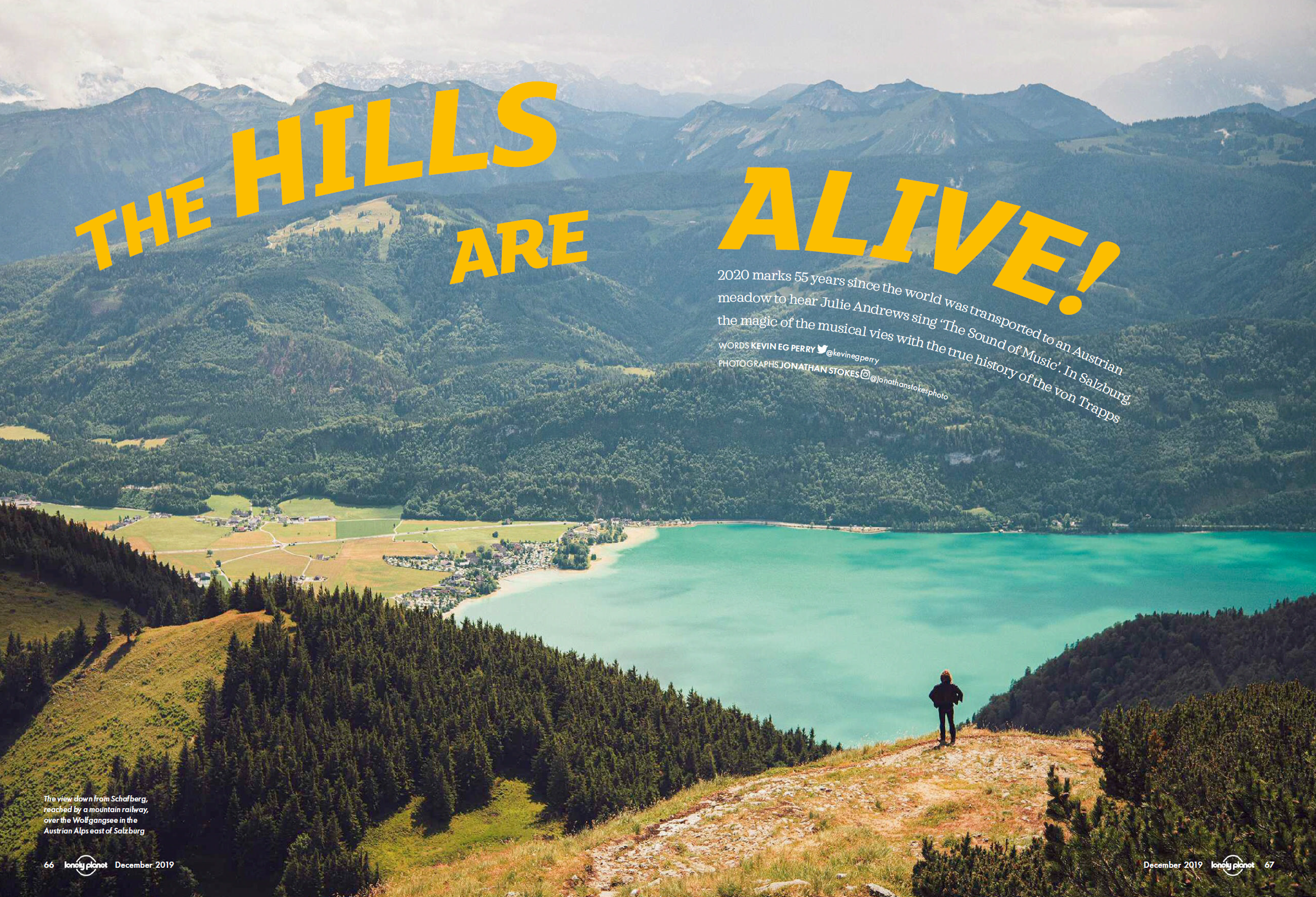
In nearby St. Wolfgang there’s a steam-powered cog railway up the Schafberg mountain which had a brief cameo in The Sound of Music, taking Maria and the children to the meadow where she teaches them to sing with ‘Do-Re-Mi’. As the track curves up the hillside at an incredible gradient the little engine chugs along, pushing – not pulling – the carriages through thick forests which eventually break to allow spectacular views over Lake Wolfgang. Within minutes we’re up above the clouds, looking out at grazing cows seemingly unphased by the altitude.

‘It’s wonderful here,’ says Martin Bahr, a train driver on the SchafbergBahn who grew up dreaming of working on these steam engines. ‘We have the lake and the mountains. I can go swimming, I can go out on a boat. I think it’s one of the most beautiful places in the world.’

Martin knows about the train’s brief appearance in The Sound of Music, but he’s more concerned with the noise a steam train makes all by itself. ‘For many people,’ he says. ‘It’s music.’

At the summit of Schafberg, a short climb from the train station, is a hotel serving good coffee and apple strudel. Directly behind the building is a terrifyingly sheer drop, a fact mitigated only by its breathtaking views. As I look down at the rough-hewn peaks reflected in shimmering lakes and the church spires jutting up from little towns I can’t help but think of those famous aerial shots which open The Sound of Music. Rather than taking the train back down, it feels better to walk down through the soft green grass of the meadows, listening to the music of the passing trains, the clanking of cow bells and – with apologies to Rodgers and Hammerstein – to sing:

“Stone-cobbled streets
And trains powered by steam
Nuns in old churches and strudel with cream
Beautiful puppets that dance on their strings
These are a few of my favourite things…”

Published in Lonely Planet Traveller, December 2019.

“We make movies come to life”: behind the mask of Hollywood Boulevard’s superheroes and villains

Spongebob Squarepants.jpg

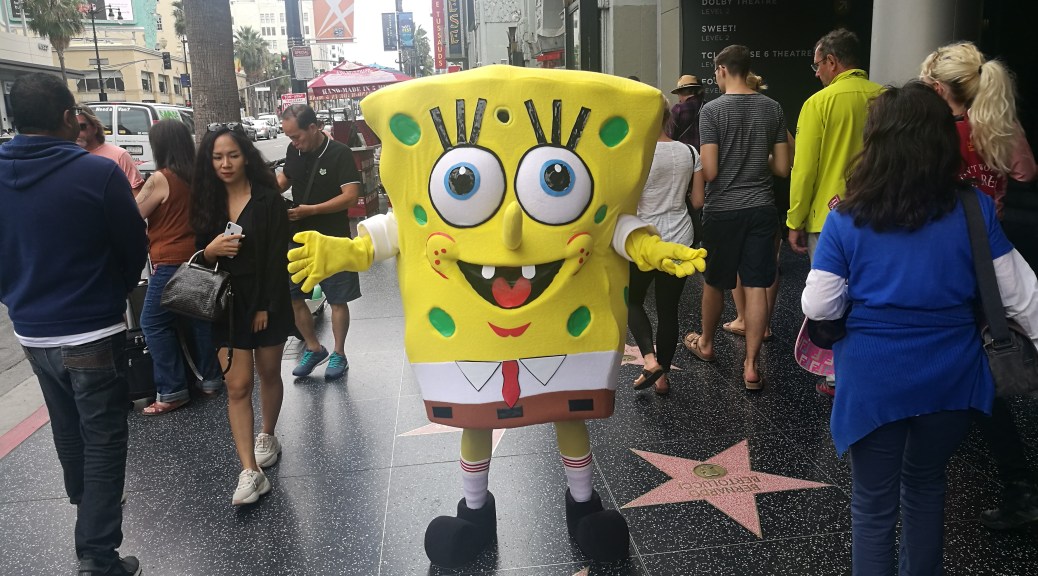
For the last 17 years, Bernard Golden has been living with a secret identity. By night he may be an unassuming security guard at Netflix’s office in Los Angeles but by day crowds of shy children and laughing adults gather around him on Hollywood Boulevard to pose for photos and exchange a few high-pitched words. All it takes is for Bernard to pull on his bright yellow costume and he’s transformed. He is no longer Bernard Golden. He’s SpongeBob SquarePants.

Continue reading at Lonely Planet.

How this LA bar earned its own star on the Hollywood Walk of Fame

6 Musso Martini Photo Credit Tina Whatcott-Echeverria

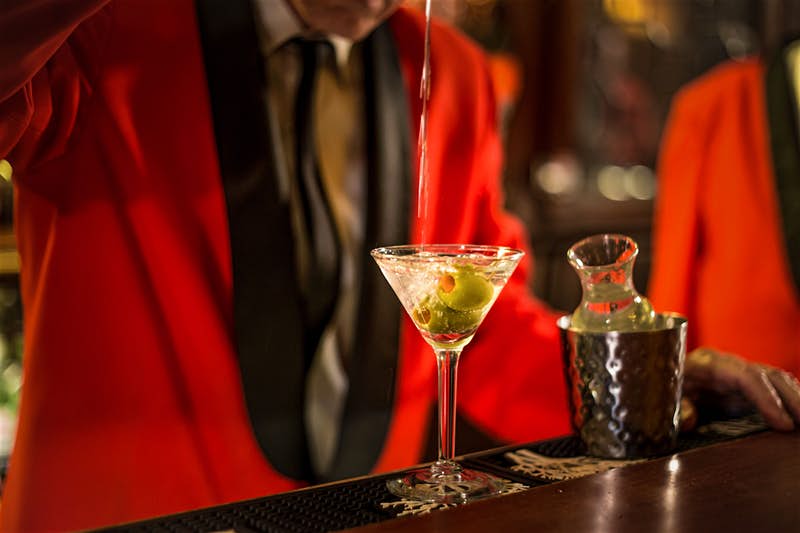
It takes a certain quality to make it in Hollywood, but sticking it out for an entire century requires something else altogether. On Friday, Musso & Frank Grill became the first restaurant in Hollywood to reach that milestone, celebrating 100 years of serving up their famed martinis.

Opened on 27 September 1919 by the eponymous Frank Toulet and Joseph Musso, Musso & Frank Grill was originally known as Francois until they adopted the current name in 1923. In those days the offices of the Screen Writers Guild were just across the street, and the restaurant and bar quickly proved popular with the city’s literary heavyweights. Regulars included John Fante, Dorothy Parker, Raymond Chandler and William Faulkner. The latter was said to have had a habit of mixing his own mint juleps behind the bar, something you probably shouldn’t try today.

Continue reading at Lonely Planet.

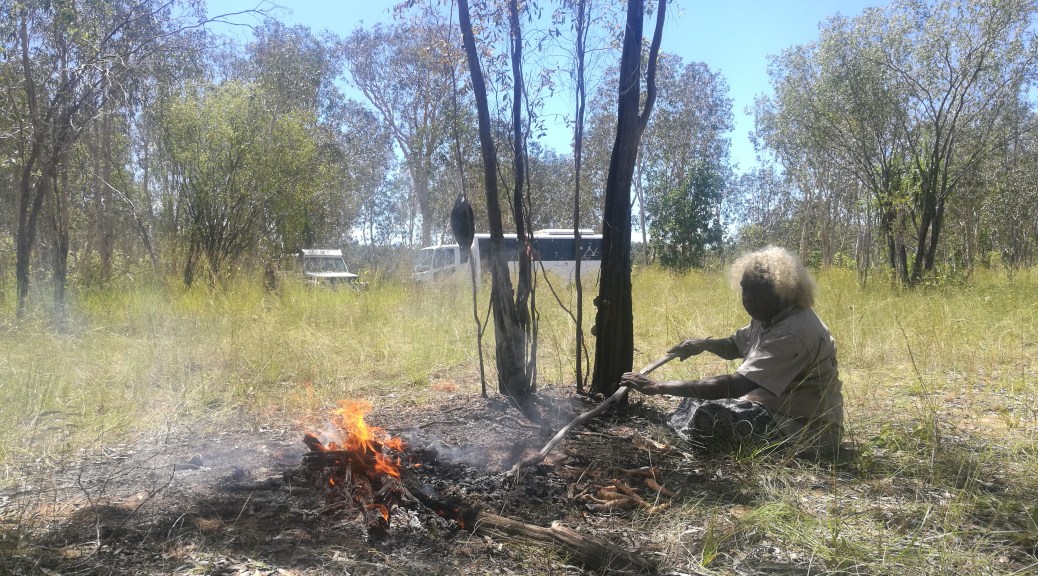
The truth about Australia’s bush tucker

davWhether or not you’ve sat through an episode of I’m a Celebrity… Get Me Out Of Here!, you’re probably familiar with the concept of a ‘bush tucker trial’. Since the TV reality show set in the Australian jungle first appeared on screens, the phrase has become synonymous with celebrities being challenged to eat a variety of unsavoury-looking insects and animal parts.

This deliberately unappetising portrayal of bush tucker does the name a disservice, because insects and other food foraged from the bush can be genuinely nutritious and surprisingly delicious. There are Aboriginal communities in Australia who have been living off diets pretty much unchanged for the last 60,000 years, and many experts believe that in the future, as competition for food increases across the planet, insects and bugs may be seen as an increasingly desirable source of protein.

Continue reading at Lonely Planet.

City of Rhythm

dakar-cityofrhythm

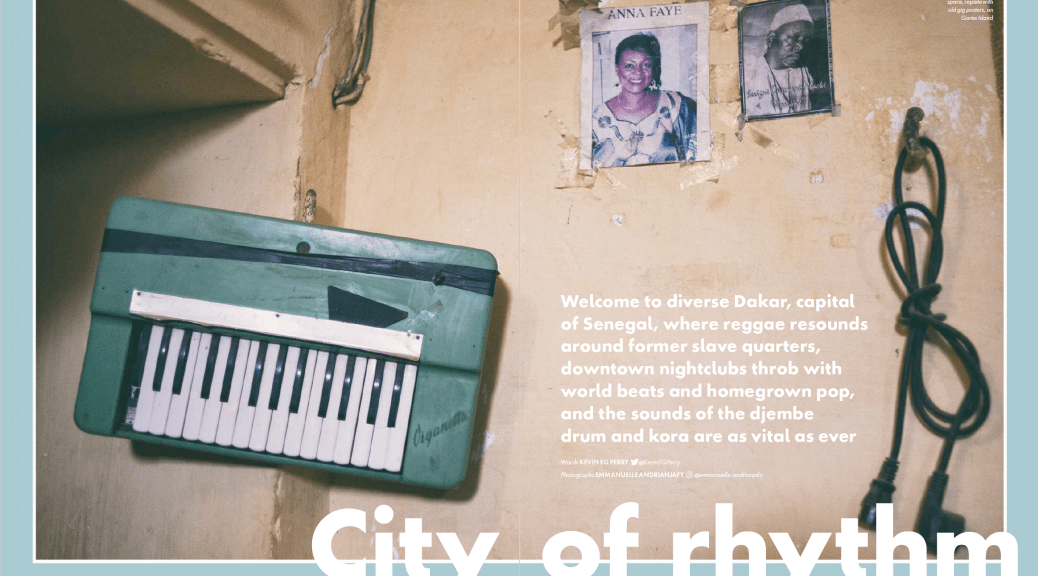
Inside a dingy underground corridor within the fortifications of the old slave-trading port of Gorée Island the only noise is a rusty chain rattling against a steel door. In the dim light, Fallou Kandji works a key into a heavy padlock and struggles with it until he hears a dull click. At the sound the young man, his short dreads hidden underneath a red woolen beret, flashes a magician’s smile before unlooping the chain and pushing the creaking door ajar. Heat rushes out like he’s just opened an oven. Inside is a small, low-ceilinged room with yellow paint flaking off the walls. Arranged around as if it were a stage are a full drumkit, a keyboard, stacks of speakers and a pair of kora – the West African string instruments which paved the way for acoustic guitars and the Delta blues. One wall is plastered with old gig posters, peeling in the sticky damp. This secret subterranean hideaway is the studio and rehearsal space of Civil Society, a reggae band who have brought music to a place that once reverberated only with the echoes of its horrifying past.

Gorée Island, sitting a little over a mile out from Dakar’s sheltered harbour, was Senegal’s most notorious slave port in the late 1700s. Now visitors come to reflect on the past at the House of Slaves, a museum and memorial containing the ‘Door of No Return’, an infamous passageway through which it is estimated many thousands of enslaved people were transported to the Americas. When President Obama visited the island in 2013 he took a moment to stand in the doorway and gaze out to sea. Later, he would say that the visit helped him ‘fully appreciate the magnitude of the slave trade’.

These days the island has been reclaimed as a place of life and hope. Many of those who live here are artists. As well as playing guitar with Civil Society, Fallou is also a painter. As he leads me along nameless alleys to the yard where he keeps his battered acoustic and displays his work we pass street vendors selling baguettes and kids playing football. We wave away the attention of his fellow artists loudly hawking their paintings, jewellery and ornate sculptures. They don’t seem too discouraged. They’ll get us on the way back.

‘Here on Gorée Island, people live through culture,’ explains Fallou as we walk. ‘Once people were brought here by slavery. Now people from many different cultures pass through. People were deported from here to America, Haiti, Cuba, Brazil… anywhere. When they come here now, I see only humans. When I look at you, I see myself. That’s what I try to show in my art, and in my music.’

We pass by the House of Slaves, and stop for a moment in front of a statue depicting a woman with her arms around a man as he breaks his chains and raises his fists in triumph. The newly freed pair are both standing on the West African drum known as a djembe.

‘This is the symbol,’ points out Fallou. ‘They are using their power to get their liberty. It represents what people believe in here on Gorée Island: that melody and harmony will pass around the world through communication.’

The djembe has been at the heart of West African music for many centuries. To learn more about the significance of this special drum, I take a ferry back to the mainland to visit the master drummaker and teacher Ibou Sene. He gives lessons on how to build and play the djembe at his small workshop, tucked away in the gardens behind the Cultural Centre in Derkle, near the centre of Dakar. As my taxi moves slowly through the gridlocked traffic the air is thick with fine Sahara dust. It takes my eyes a moment to adjust to the yellowy light, through which I see herds of white sheep gathered next to the highway. Their bleating mixes with engine noises and honking horns to create the city’s cacophony. The car in front has the name ‘Youssou N’Dour’ – one of Senegal’s most famous singers – painted across its spoiler. By the side of the road, three small boys sit back to back in a circle drumming with their hands on the bottoms of upturned petrol canisters.

‘The drum is very important here,’ explains Ibou when I arrive. We sit on plastic garden chairs outside his workshop, under the shade of a baobab tree, and he patiently shows me the subtle changes in hand shape and positioning which produce traditional djembe drum patterns. ‘These were the cell phones of my parents’ generation,’ he says. ‘If you heard a certain rhythm being played by people walking around the neighbourhood then you would know right away what had happened.’

These rhythms, which travelled across the sea from Senegal onboard slave ships, would go on to shape whole musical genres the world over. One man who understands how that happened better than most is Dread Amala, a reggae DJ and musical historian who for over 30 years has run Dakar’s best record stall, the Bufalo Soldier Music Shop. A tiny shack on a particularly dusty corner next to a petrol station at the Jet d’eau roundabout, from the outside it doesn’t look like the most promising place to find an exhaustive collection of world music. However, when I step inside I find the tiny space is piled high with vinyl records containing music from almost every country in Africa, as well as French and Cuban records, jazz, blues, rock and lots and lots of reggae. Reggae is Dread Amala’s passion, so it’s fitting that in the taxi on my way to meet him the radio is playing the South African artist Lucky Dube’s song ‘Serious Reggae Business’. I nod my head as he sings: ‘Some say it came from Jamaica / Some say it came from Africa…’.

Touching a needle down onto a reggae record from his own collection, Dread Amala sets about explaining how the music he loves originated in this part of the world. ‘In slave culture you had drumming from Senegal, Mali and Guinea,’ he says. ‘That’s why in reggae music, drumming is also very important. The origin of all international music: the blues, jazz, soul, reggae is Africa. It all came from here.’

It would be easy to lose hours rummaging through Dread Amala’s crates, but to really experience and understand the power of Senegalese music I’m going to have to see it live for myself. With this in mind I head downtown to Play Club, in the basement of the Hotel Al Afifa, a slightly seedy looking joint that appears largely unchanged since the swinging 70s. There are circular mirrors on the walls behind the bar and a well-dressed bartender shaking a daquiri in time to the music. Tonight’s main attraction, Woz Kaly, doesn’t come on until just after 1am. The set starts slow – showcasing the power of his voice singing in his native Wolof – before building to a hip-shaking intensity which has the crowded room dancing and singing along. It’s not quite like anything I’ve heard anywhere else in the world.

As it turns out, Dakar is running a surplus of spectacular live performers. After seeing Woz Kaly in action I sit down with local pop sensation Adiouza. Having been lucky enough to catch her own live show as well I know it’s filled with enough crowd-pleasing glamour and effortless dance moves to make her Senegal’s answer to Beyoncé. She modestly laughs off the comparison. ‘Beyoncé is a great singer,’ she says. ‘I listen to her songs, and other American singers as well, but my real inspiration is traditional African roots musicians and singers. In my music you can hear traditional and modern music coming together.’

Having released her first single in 2008, Adiouza has had a front row seat to see how in the last decade Dakar’s music scene has broaded its horizons beyond just the local style of pop, known as mbalax. ‘Dakar is the centre of Senegalese music and so there are a lot of different artists in different styles here,’ she says. ‘You can find artists who do reggae, hip-hop and Cuban music, but me I mix every type of music to find my own style.’

While Adiouza is happily mainstream, she keeps her ear close to the ground and is excited by the new sounds she’s heard around the city. ‘Right now mbalax is the most popular style in Senegal, but the young artists are inspired to do something different,’ she says. ‘There is a new style of music, Wolof beat, which is inspired by Nigerian music. Young people are trying to make modern-sounding music that they can export.’

To get a taste of what this new generation is listening to I get a taxi across town to Espace Vema, a nightclub beloved of Dakar’s cosmopolitan youth. It’s located in a once neglected industrial building next to the docks, and after a couple of strong drinks you could easily believe that you’d suddenly been beamed up and teleported to Brooklyn or one of the trendier parts of east London. Entering past a gaggle of smokers and a pair of burly bouncers, inside the white-walled warehouse space has exposed ducts overhead and sticky floors underfoot.

I’ve been invited here by Jahseen, one of the city’s most forward-thinking young artists. After growing up in Dakar she spent time living in Europe but was soon drawn home by the vibrancy that she could never quite find anywhere else. ‘This city is like the Silicon Valley of Africa,’ she says. ‘If you look around you’ll see that everybody is here: French, American, Chinese, Sri Lankan. I think you can feel that everybody is at ease here. Everybody works and everything works, you just have to wake up and do it’

Sure enough tonight the dancefloor is filled with people from every corner of the earth drinking, dancing and laughing together as the DJs seamlessly blend African and Western pop. It is late by the time we stumble out into the night, and the sound of the day’s relentless traffic has finally died away. All that’s left is the heartbeat of the city itself. It sounds like a drum.

Published in Lonely Planet Traveller, March 2019.

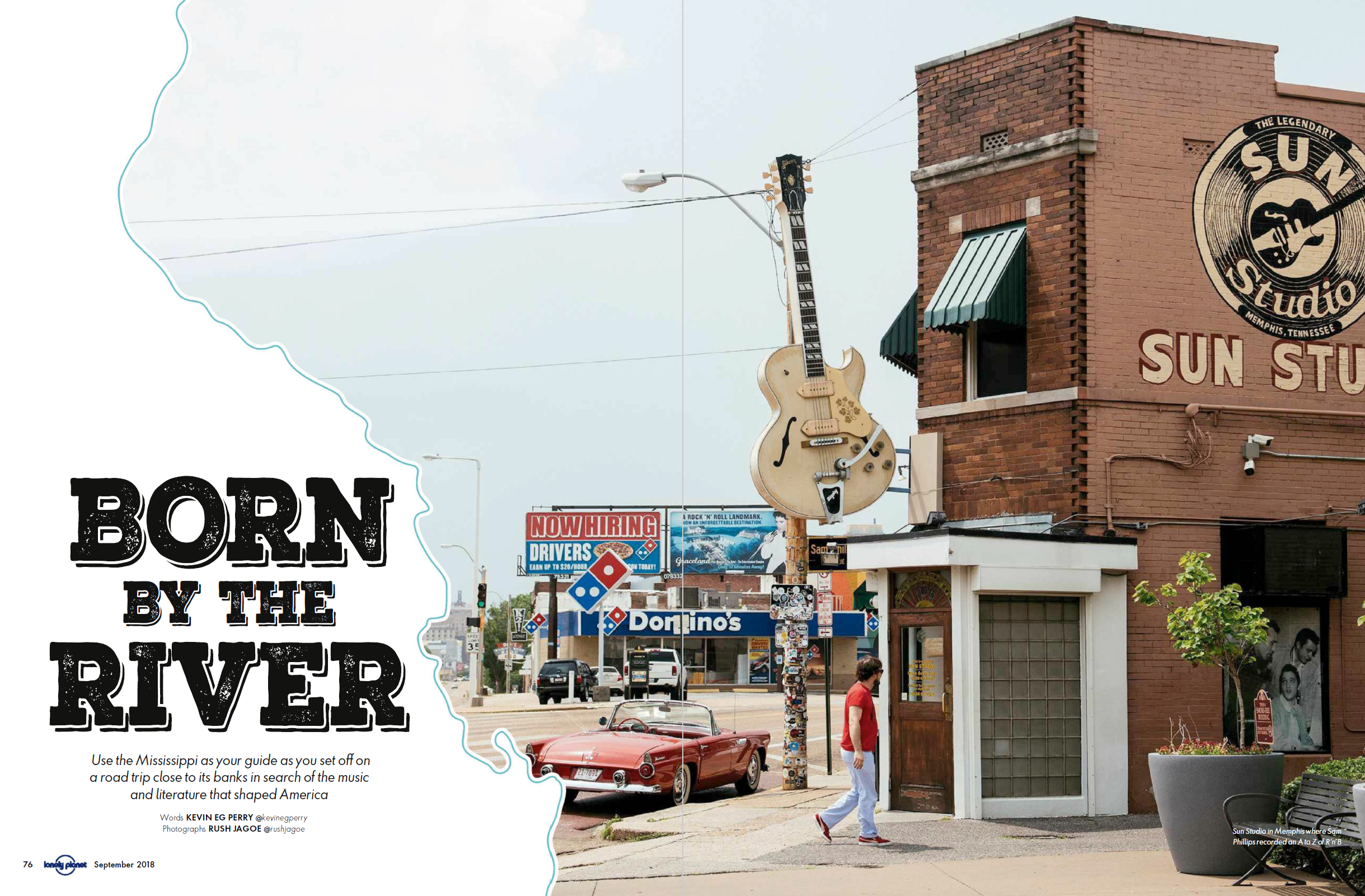
Born By The River

born-by-the-river

There isn’t a soul alive who knows the Mississippi River better than Captain Clarke ‘Doc’ Hawley. Now retired, the 82 year-old’s pilot’s license once extended over 1,300 miles of the river and its tributaries. In order to be granted this license he was required to draw that entire distance by hand, from memory, five miles to a page. As Mark Twain, a former riverboat pilot himself, wrote in his memoir Life On The Mississippi: ‘In order to be a pilot a man had got to learn more than any one man ought to be allowed to know.’

‘Not only do you draw the shape of the river, the sandbars and the bridges, but you draw what’s under the river as well,’ explains Captain Hawley, standing on the bridge of the Steamboat Natchez. We’re docked at the Toulouse Street Wharf in New Orleans, and outside the window cargo barges laden with grain pass silently along the Mississippi. ‘That’s more important than anything, because you need to know where not to drop anchor or you could hook into an oil line. After I drew from Cincinnati, Ohio down to here I thought I could go to work for Rand McNally forever.’

Needless to say, Captain Hawley did not go off to draw maps for a living. Instead he spent 60 years expertly guiding steamboats up and down the mighty river, which has its source at Lake Itasca in northern Minnesota and flows south for 2,320 miles before it finds the ocean in the Gulf of Mexico. It remains to this day an avenue of commerce, carrying 60% of U.S. grain shipments, 22% of oil and gas shipments and 20% of coal shipments. Yet even more important than its practical use has been its cultural impact on America. It was home to the native Mississippian culture long before Hernando De Soto became the first European explorer to set eyes on it in 1541. During the 20th century, blues, jazz, gospel, R’n’B, soul and rock’n’roll were all born within splashing distance of the river. There must be something in the water.

From his vantage point onboard, Captain Hawley had a unique view of how the culture that grew by the Mississippi shaped America. ‘Jazz really went up the river by boat first,’ he says. ‘Louis Armstrong’s first job was on a riverboat, the steamer Sidney in 1918. I can guarantee that the first jazz that was heard in St Paul, Minnesota was on a boat with a New Orleans band on the dance floor. I remember I was on the boats when rock came in. It was electric! It was a new rhythm that took over America.’

To Captain Hawley, life on the steamboat promised a life of adventure and excitement, just as it had to Mark Twain a century earlier. The river gave the writer, born Samuel Clemens, a way to escape small-town drudgery. He claimed it even gave him his nomme de guerre. ‘His name, in river-talk, means 12 feet,’ explains Captain Hawley. ‘‘Mark Twain’ means two fathoms, which was safe distance. To this day, the Corps of Engineers only guarantees 12 feet of water above Baton Rouge.’

Twain, or rather Clemens, grew up in Hannibal, Missouri – almost 800 miles upriver from New Orleans. His whitewashed boyhood home has been restored and converted into a museum, whose director Henry Sweets stands on the doorstep and points out the proximity of the river. Today it’s devoid of major traffic, a tranquil shadow of its former self. ‘In Twain’s day, the riverbank would have even closer to this house,’ he says. ‘You can imagine how watching the variety of people coming in by boat – from the wealthy to the enslaved – would have implanted the lure of the river in his mind. What’s out there to go and see? When you look at his writings, at Tom Sawyer, Huckleberry Finn, or later Pudd’nhead Wilson, you can see how the river was always an influence in his writing.’

Twain was born in 1835, just as the Mississippi steamboats entered their golden age. Their number jumped from just 20 in the 1810s to over 1200 in the 1830s. Many of the boats which ran between St Louis and New Orleans were used to move cotton, rice and other produce of fertile farmland, and there was no land anywhere more fertile than that formed by the thick layers of the Mississippi’s silt deposits.

That land is dotted with tiny rural farm towns like Dyess, Arkansas. It was here that Johnny Cash grew up, picking cotton in the fields from the age of five. The land was prone to flooding, as he described in his song Five Feet High and Rising.

His youngest sister, Joanne, who has a jet black streak in her white hair and her brother’s square jaw, remembers that singing was always part of family life. ‘The music came from the way we lived,’ she says, standing on the porch of the restored farm house in the midst of the paddy fields which stretch out for miles on every side. ‘Most all of Johnny’s songs that he wrote about this area were from experiences that we had here in this very house and on this land. It was a life of hard work, a lot of love, and singing together every day. Johnny was always writing songs and singing the truth.’

In 1954, when Cash was ready to record his songs, he went to Sun Studio in Memphis. By then the studio was already drawing in the greatest musical talent of the Mississippi Delta. The blues had been born in places like the Dockery Plantation, where Charley Patton, considered the godfather of the Delta blues, lived and worked. In 1941 Alan Lomax, touring the Delta to document the musical culture, recorded a then-unknown Muddy Waters at his home on the Stovall Plantation. They set a sound in motion which would soon be heard in ever corner of the planet. Just a decade later, at Sun, Ike Turner wrote Rocket 88 for Jackie Brenston, widely considered to be the first rock’n’roll song.

Memphis still moves to a beat. On Beale Street, the sounds of competing bands echo out of every bar. In the Blues City Cafe, Blind Mississippi Morris is onstage making his harmonica sing beneath a red neon sign that reads LIQUOR. As Morris roars through ‘One Way Out’, a woman takes her partner’s hands and places them on her own hips as she sways. The blues still has the power to move people. When the band takes a break, Morris reminisces about his youth in the plantation fields outside Clarksdale, birthplace of Ike Turner, John Lee Hooker, Sam Cooke and so many other greats.

‘Poverty is what made the blues,’ he says, his low, mellifluous tone cutting through the chatter of the busy venue. ‘It all started back in the cotton fields. Before they were playing music they were singing it a cappella, trying to make the day go. When you’re singing it, all of that is coming through your music. The things you’ve seen, like people being hung. Oh man, that was terrible.’

For Morris, the blues are a way to connect with people and help them to understand his life. ‘You try to tell a story in your music and make them feel exactly what you felt when you had to wake up every day not knowing what you were going to eat,’ he says. ‘All your money from the fields went to the store to pay your debts.’

Of course, blues and rock’n’roll would make a lot of money for some. Across town at Graceland, you can walk the hallowed hallways of Elvis Presley’s mansion, preserved just as the King left it – with a shag-carpeted Jungle Room in the den, and kitschy trinkets like his treasured porcelain monkey dotted about. While his vast wealth and fame may have earned him his regal sobriquet, the Memphis Sound was defined by Stax Records. Their studio is now a museum where you can soak up the energy still trapped in the room where R’n’B and soul hits by the likes of Sam and Dave, Isaac Hayes and The Staple Singers were all recorded.

Heading south from Memphis through the Mississippi Delta you drive through field after field of cotton and corn. The land is perfectly flat, leaving a vast canopy of sky above which is punctured by nothing taller than a Pecan tree or a church steeple. It was here where European and African culture came together on American soil. From the devastating pain of slavery, from the spiritual thirst of the church congregations and from the sexual heat of the juke joint dancefloors there came the most powerful outpouring of music the world has ever seen.

Many of those rhythms had originated with the slaves who arrived in America at the port of New Orleans, where Twain’s steamboat route ended, near the mouth of the Mississippi. On Sundays, enslaved men and women would come together to drum and sing, keeping their West African traditions alive. The Code Noir, which governed slave ownership in French Louisiana, decreed that they be given the day off as they were expected to convert to Catholicism.

‘Congo Square was the only place like it in the United States,’ says Dianne Honore, a New Orleans tour guide known as Gumbo Marie, as she stands in the square where the slaves congregated. Sheltering from the heat of the afternoon sun under her parasol, she explains how important this place would have been to people like her own sixth generation grandmother Catiche Destrehan, who was born a slave in the city in 1738. ‘Enslaved people would come to celebrate here, practicing their own dancing and their own music.’

The culture of circle dancing and drumming brought from West Africa evolved, as it paraded out of Congo Square, into the tradition of New Orleans jazz funeral processions. ‘We honour our deceased and we celebrate them,’ explains Honore. ‘Of course it’s a sad thing and we’re upset, but we want to celebrate their spirit and the energy that’s still around us.’

Jazz funerals proved to be just too much fun to have to wait until somebody died, so they in turn gave birth to the weekly tradition of brass band parades known as the Second Line. Each Sunday, a large crowd gathers outside a venue such as the Treme Center to meet the band – themselves known as the ‘First Line’. There’s a carnival atmosphere in the air as they dance together past brightly coloured homes and murals celebrating local icons like Louis Armstrong and Dr John. The Second Line flows through the streets, as powerful and irresistible as the Mississippi itself, gathering momentum with every new wave of people who run out of their homes to join in. Soon everyone around is caught in the current of the music, a fierce kind of joy ringing in their souls.

Originally published in Lonely Planet Traveller, September 2018.

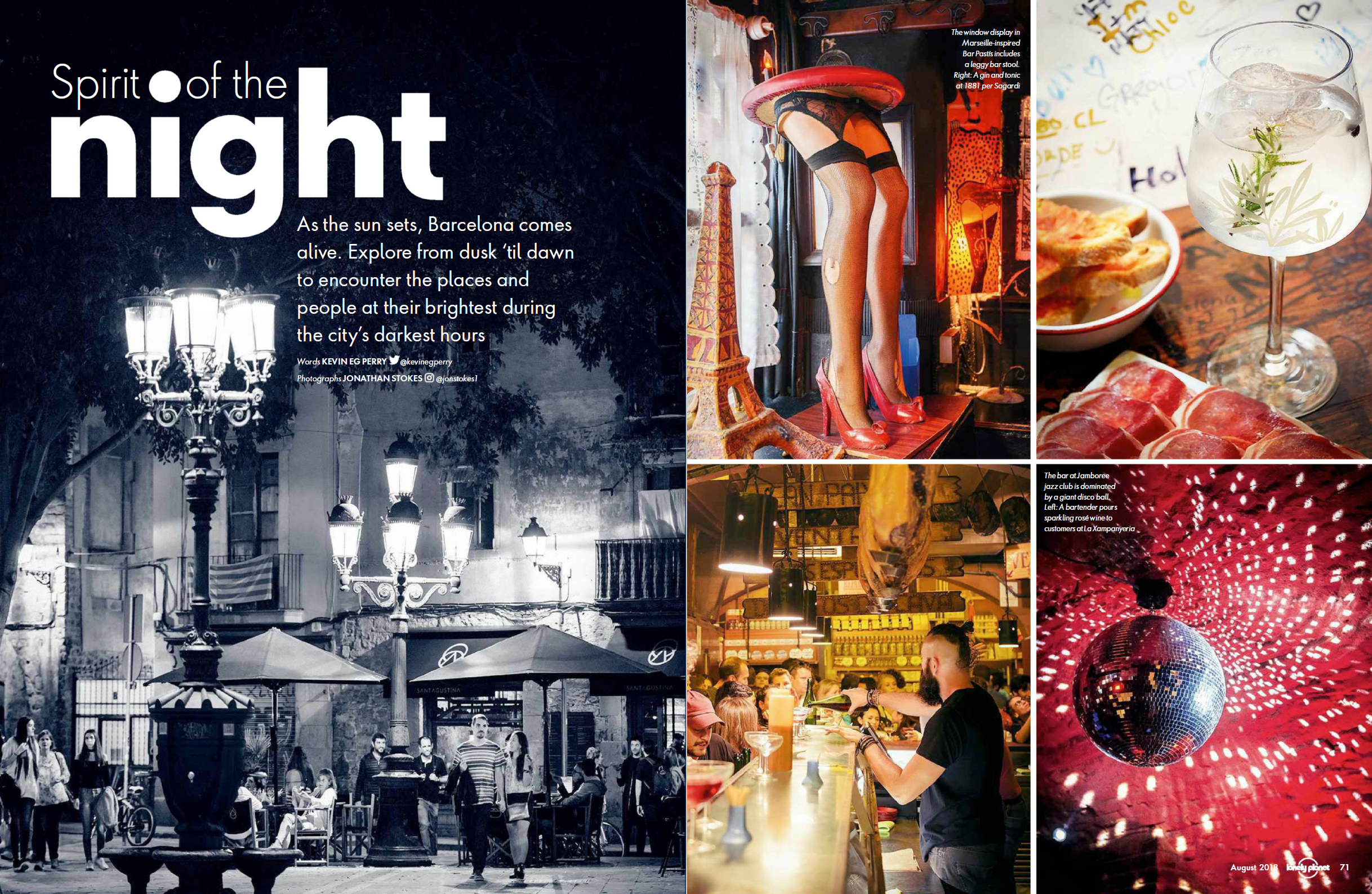
Spirit of the night

barcelona.png

There is a correct way to drink absinthe, and it has a certain sense of theatre. On a quiet afternoon at Barcelona’s Bar Marsella the landlord José Lamiel Vallvé is demonstrating the time-honoured tradition. For this he requires: one glass of neat absinthe, a short silver fork, a pair of sugar cubes and a plastic bottle of water with – and this is the important part – a pin prick in the lid of the bottle. First, José balances the fork on the top of the glass of absinthe and places the sugar cubes into the cradle. Then, taking the water bottle, he squeezes a narrow jet very slowly over the sugar cubes. Keeping my eyes on the yellowy-green liquid, I see the magic start to happen. Ghostly tendrils appear, filling the glass until the liquid has become a misty emulsion. This is known, appropriately, as the ‘louche effect’.

Originally published in Lonely Planet Traveller, August 2018. Continue reading at Lonely Planet.

The Carnival Builders

the-carnival-builders-malta

In a disused factory in Marsa, a 15-minute drive outside the Maltese capital, Valletta, a man in a grubby tracksuit takes a circular saw to the sharp edge of a steel structure. Sparks fly around him, but the man, his eyes shielded only by plastic sunglasses, works with a determination born of obsession. The air is thick with the smell of hot metal, spray paint and cigarette smoke. To mark the last days before Lent, some people make pancakes. Roderick Zerafa builds Carnival floats.

His creation towers over him. At 20-feet tall and 12-feet wide, it’s bigger than the trucks on the industrial estate outside. The steel base supports a plywood skeleton, then the whole thing is covered with papier-mâché and painted neon bright. It has an engine for a heart, powering mechanisms that make each of the float’s gargantuan figures dance in robotic motion. The result looks like something from the fevered imagination of Terry Gilliam. It has taken 23-year-old Roderick nine months to build, helped by a team that started with half a dozen volunteers before swelling to five times that many in the weeks before Carnival. Tomorrow it will make its first appearance in front of both the public and the judges, who’ll decide which team of float builders will take home this year’s coveted Carnival crown.

Much like the concurrent celebrations in Rio de Janeiro and New Orleans, Carnival in Malta is a boisterous party that’s taken very seriously by the locals. The run-up to Lent has great significance for the largely Catholic population, who have no fewer than 359 churches to choose from, despite the fact that the Republic of Malta’s three inhabited islands – Malta, Gozo and tiny Comino – have a combined area smaller than the Isle of Wight. Sitting atop sandy-coloured cliffs, the islands’ fields and vineyards are punctuated by historic towns where it often looks as if little new has been built since the 1600s. Malta’s location in the heart of the Mediterranean, just south of Sicily, has historically given it such strategic importance that before claiming its independence in 1964, it had been ruled at various times by every empire that hoped to control the surrounding seas. The Phoenicians, Carthaginians, Greeks, Romans, Byzantines, Moors, Normans, Sicilians, Spanish, French and British each left a trace of their culture behind, from the Baroque Roman Catholic cathedrals to the bright red phone boxes and pillar boxes which dot the streets as if they’ve been Photoshopped in from postcards of London, clues to the 164 years for which Malta was ruled from Britain.

If Roderick is nervous, he doesn’t show it. He’s not a professional artist. In fact, by day he’s an air-conditioner repairman, but he comes from a long line of Carnival builders. This year, he’s working alongside his father, Raymond, and it’s a significant anniversary, as 2017 marks 10 years since the death of his grandfather. ‘I never had any academic instruction – these skills were passed from father to son,’ Roderick says. ‘My grandfather used to make horse-drawn carnival carts, then my father developed from carts to floats.’

Every year a whole new float with an original theme must be built from scratch. Outside the factory, the remnants of last year’s constructions are disintegrating. Nightmarish heads and gnarled hands rise like ghosts out of bodies that have been turned to pulp by the elements, a reminder of Carnival art’s intentional transience.

This year, Roderick and Raymond have chosen as their theme the Maltese folk tales of Gahan, a sort of hapless but loveable village idiot character. The float depicts him in the midst of various misunderstandings. He carries a door, because he was told to ‘pull it behind him’, and he’s boiling baby chickens because his mother told him to keep them warm. Roderick has embellished the classic tale with contemporary allusions – the role of Gahan’s furious schoolteacher is modelled to look exactly like Norman Lowell, a far-right Maltese politician. ‘I wanted to include a bit of politics,’ says Roderick mischievously. ‘The Maltese like politics and festivals. We’re either celebrating or we’re sad, one or the other.’

Roderick’s ambitious vision has come at great personal expense. Not only have he and his team of helpers spent countless hours working without pay, they’ve also thrown a series of barbecues and other fundraisers in order to pay for the materials. In all, the float has set them back many times what they can possibly hope to win in the competition. ‘It’s cost us €20,000, the first prize is only €3,000,’ says Roderick. ‘My father always says, “That son of mine is going to ruin me!”’

What motivates the Carnival builders of Malta is a combination of family, tradition and a fierce competitive streak. Roderick’s float is just one of 21 being built this year. His chief rival for the top prize is Charles Briffa, who at that moment is across town hard at work putting the finishing touches to his own float, based on the Italian circus performer Moira Orfei. Charles has 27 years of float-building experience, working in his spare time around his job as a sales rep. ‘We used to say this was our hobby,’ he says, ‘but right now it’s more like a full-time job.’

First prize isn’t awarded for the float alone. The judges also consider the accompanying dance teams and their elaborate handmade costumes. At the Mystic Dancers school in Kalkara, across the harbour from Valletta, Stephania Gellel has just taken her team through their paces for the last time. They’ll be joining another float themed around The NeverEnding Story. Rehearsals started twice a week back in September, but since the beginning of January, they’ve been rehearsing every evening from Monday to Thursday, from 8.30pm to 10pm. On top of that, on Friday, Saturday and Sunday, they work on their costumes or help with the float. In a week’s time they’ll get their lives back, but Stephania isn’t sure how to feel about that. ‘At the end of the rehearsals, everyone is saying, “What are we going to do now?” We’ll miss the sense of community.’

Roderick, Charles and Stephania are all participating in a festival that dates back thousands of years. Humans have been celebrating the triumph of spring over winter since at least as far back as 10,000 BC. The Maltese islands are dotted with the remains of megalithic temples, predating Stonehenge and the Egyptian pyramids, where fertility rites would have taken place. Carnival in Malta, in its relatively modern form, can be traced back to 1470, and the festival took on particular prominence in 1535, during the reign of the Knights of St John. The Knights were an order of Catholic warrior monks who’d been forced to give up their previous home of Rhodes when it was invaded by the Ottoman Empire. In 1530, Charles I of Spain gave them the islands of Malta as their new home and five years later, Grand Master Piero de Ponte boosted the Malta Carnival with a series of lavish masked balls for the island’s nobility. Not wanting to be left out, local villagers made their own costumes out of sacks and sheets, and played uproarious music in the streets. Many dressed in drag and they delighted in satirising the ruling elite.

In some ways, little has changed. While the Valletta Carnival has Malta’s grandest procession, with the largest and most complex floats, the anarchic atmosphere of those early Carnivals is preserved on neighbouring Gozo. Located three miles northwest of the main island of Malta, for most of the year Gozo is a quaint and bucolic outcrop which looks as if a patch of Tuscany has somehow sheared off from mainland Europe. Its craggy coastline encircles a series of vineyards and sleepy villages, yet during Carnival, the small, conservative town of Nadur has gained an unlikely reputation as the zenith of Carnival weirdness. Teenagers and young people travel from across the Maltese Islands to join the party, dressing in homemade costumes and stumbling blind drunk down the cobbled streets. The atmosphere is somewhere between Glastonbury at four in the morning and a Halloween rave. While the floats in Nadur can’t compete with Roderick’s artistic expertise, they make up for it with savage satirical wit. This year’s procession is led by terrifying men in bald-headed goon masks, sloppily attempting to build ‘The Great Wall of Mexico’ and spraying wet sand from a cement mixer at anyone they pass. Following them, Donald Trump and Hillary Clinton leer out from a float promising a re-run of the 2016 US election.

Behind them comes a traffic jam of party buses. You wait all year for one and then six come along at once, each pounding out their own soundtrack. To stand in the centre of Nadur Carnival on the Saturday night is to withstand an onslaught of music from every direction: the dance tunes from the buses almost drown out the rock band covering Led Zeppelin and Kiss, while in Pupu’s Bar, grandfathers with tambourines and harmonicas play traditional folk beats, and Batman and a Smurf polka dance with Frankenstein’s monster.

A Day-Glo troll shouts over the din. His name is Jonathan and he’s taken the ferry over from Malta. ‘I’ve been coming here for six years, since I was 18,’ he says. ‘I wouldn’t go back to Carnival in Valletta now – it’s more for children. Me and my friends are in Gozo for three nights, we’ve even booked Monday off work.’

Back in Valletta on Sunday, crowds pack the streets as the sun beats down out of an afternoon sky the colour of old jeans. The city was built by the Knights of St John as a heavily fortified port, and its high walls and uniform grid design reflect its military origin. The straight, narrow streets fall and rise, and many have broad staircases designed to be climbed by knights laden down by heavy armour. Over the years, the 16th-century limestone architecture has been augmented with Baroque flourishes and colourful window boxes. The city’s main landmark is St John’s Co-Cathedral, whose imposingly blank exterior disguises the lavish decoration within.

After passing the Cathedral and squeezing down Archbishop Street, each float in turn emerges into St George’s Square, where a stage has been set up. When Roderick’s float arrives, he watches as his creation’s mechanical heart brings his characters to life. The gigantic Gahan spreads his arms wide in shock, while his mother lifts her petticoats and his schoolteacher brandishes his cane. On the stage, 35 dancers in traditional Maltese outfits twirl in perfect synchronisation. ‘Everything went well,’ he says with relief, but he’s not sure if his team have done enough to win. ‘There’s always something new, that’s what makes it a challenge. It brings out the best in everyone.’

The results are announced on the morning of Ash Wednesday, the first day of Lent. After a year of preparation and building, Roderick learns his team has won. ‘It’s a special moment for my family,’ he says. ‘I want to dedicate this to my grandfather.’

As for the €3,000 cheque, he says his first priority is to throw a party for everyone who was involved. ‘It’s my way of saying thank you,’ he says. ‘The families of our helpers have had to make sacrifices as well. I want to show them my appreciation.’

His thoughts, however, are already turning to next year. ‘We’ll start again from scratch,’ he says. ‘The boost we had this year just makes us want to get even better.’

As soon as Easter is over, Malta’s Carnival builders will go back to the drawing board. They’re living evidence that Carnival is about more than just a wild party. It’s a celebration of the ancient magic that occurs when people come together to build something bigger than themselves.

Published in Lonely Planet Traveller, February 2018.

Hong Kong: A Tale Of Two Cities

hong-kong-lonely-planet

TAKE A HIKE

IN THE CITY…
It’s still before dawn when the first joggers set off along the Lugard Road, the tarmacked path which circles The Peak, the highest point on Hong Kong island. It’s only when they reach a break in the surrounding canopy of trees that they see the city laid out below them. From this perspective, Hong Kong looks like a vast collection of toy skyscrapers, somehow amassed by a child, with over 7,800 high-rises reaching towards the heavens. As the sunlight breaks through the clouds it lifts the film noir gloom from the city, revealing the colours of the day. Looking down, the closest tower blocks are painted in muted beige and pink while beyond them tower the gleaming glass obelisks of the bustling commercial centre. Some of these joggers will soon be heading towards them to start their working days. For now, they continue to pad around The Peak as the dawn chorus intensifies with the sun and butterflies dart through the air. This is a city that rewards the early birds.

OR IN THE COUNTRY
A world away from the heaving crowds on the streets of downtown Hong Kong, on the MacLehose Trail you’re more likely to have your path crossed by a scuttling land crab. Chirping crickets replace the sound of traffic. The long and winding route curls around the Sai Kung Peninsula before heading west across the New Territories and is evidence of a startling, oft-forgotten fact about Hong Kong: despite being one of the planet’s most densely populated places, less than 25 per cent of its total area has been concreted. The vast majority of its land remains as it always has been: grassland, woodland and shrubland. This makes for unexpectedly fine hiking. Soon after setting out eastward on the MacLehose Trail, walkers are afforded perfect views down over the shimmering waters of the High Island Reservoir and up towards Sai Wan Shan, a grand peak which itself will be dwarfed further along the trail by the New Territories’ central mountains. When the trail reaches the coast it dips down towards the gorgeous wave-lapped beaches of Long Ke and Sai Wan, where sweaty hikers reward themselves by stripping off and splashing into the cool water.

ADMIRE THE ARCHITECTURE

IN THE AIR…
In the shabby courtyard a trash fire burns in a metal barrel. An old woman sweeps the dusty floor outside Cleanly Cleaners, just along from a salon named Hair Show and a little shop with an old neon sign advertising foot massages. In the centre of the square, a gaggle of tourists are taking pictures of one another on their phones, crouching low to the ground to find an angle which can capture the huge edifice behind their friends. This is one of Hong Kong’s most photographed buildings, yet it’s not a temple or seat of government. Yick Fat was built in 1972 as simply another public housing tenement block, but it’s become an emblem of a city where lives are lived bunched close, one on top of another. The building is just one of five densely built residential buildings on the block, together comprising 2,243 flats that are home to around 10,000 people. Above the heads of the amateur photographers, laundry hangs from windows on each of the 19 floors beside precariouslybalanced air conditioners. Satisfied with their photos, the tourists disappear, leaving behind the residents of this monument to urban living.

OR BY THE SEA
Hong Kong takes its name from a phonetic Anglicisation of a Cantonese phrase meaning ‘Fragrant Harbour’, although it’s hard to imagine anyone ever describing the traditional fishing village of Tai O as ‘fragrant’. In the quiet streets that run past market stalls, the air is thick with the smell of drying fish and octopus, fried fish bladder and fermented shrimp paste. Built around an inlet on the western coast of mountainous Lantau Island, Tai O is a time capsule of Hong Kong as it was before high commerce arrived. The Tanka people have lived here for centuries much as they do now, in simple homes built mainly from tin which jut out over the water on stilts with fishing boats moored alongside them like cars in driveways. They are the only motor vehicles to be seen as the narrow streets are fit only for bicycles, tricycles and wheelchairs. Nowadays most of the fishermen are retirees, like 77-year-old Mr Fung. He gave up work 30 years ago, encouraged by his three sons and two daughters. ‘It is very tough to be a fisherman,’ he says. ‘During my youth the catch was good, and we could sell it to mainland China. Then after a while the catch got smaller and my children asked me to stop.’ Mr Fung’s children now all work in the city, in construction, but still return home at weekends to see their dad and enjoy the simpler life outside the concrete metropolis.

RAISE A GLASS

IN THE CLOUDS…
In a city of tall buildings, the tallest of them all is the International Commerce Centre in West Kowloon. At its summit sits Ozone, which at 490m is by some measures the highest bar in the world. It’s so high, in fact, that the views of the distant city below are often obscured by thick banks of cloud which make the ground appear and disappear like a mirage. The bar’s signature cocktail, the HK Skyline, is designed to pay tribute to its lofty location. Served inside a smoke-filled glass container, the sweet, grapefruit-tinged concoction comes topped with champagne bubbles. It is made using rum from a mountaintop Guatemalan distillery that produces its spirit entirely 2,300m above sea level. Priced at a fittingly sky-high £32, it is a favourite of the local high-rollers who begin to gather amid the tourists at the end of the working day, throwing their money around and admiring the busy city far below.
 
OR ON THE STREET
Wan Chai is a frenetic neighbourhood just to the east of Hong Kong’s Central district, full of offices and teeming shops. However, one step into the retro interior of Tai Lung Fung and it’s easy to forget all that completely. The décor recalls the Hong Kong of the cult 1960 film The World Of Suzie Wong, with Chinese lanternshaped fairy lights, a dragon-like qilin head on the wall watching over everything, and menus designed to resemble old newspapers. The soundtrack is largely ’80s, featuring Cantonese synth pop such as Chinese star Alan Tam’s Love Trap, which seems to create a conducive atmosphere for regulars to hang out and swap gossip over cocktails. The place is co-owned by friends Lavina Smith and Sam Leung, whose pet African grey parrot taps along the bar and plays with her cat. Their signature drink is the Plum Classic (above right), made with plum wine sourced from a local woman. ‘Every season she gets fresh plums from the New Territories, so it’s 100 per cent made in Hong Kong,’ explains Lavina. ‘Every year we buy about 100 litres, so we have a very limited amount of cocktails that we can sell each season.’

SAIL AWAY

IN GRAND STYLE…
It is just after noon when the 92ft wooden junk sets off from Tsim Sha Tsui pier to start its first lap of Victoria Harbour. The boat’s blue and white sails flap in the cool breeze, decorated with stylised Ming dragons which give them the look of fine vases or ancient ceramics. Out on the water, their fluttering is the only sound above the chilled Balearic soundtrack emanating from somewhere below deck, while the smell of the air is tinged by salt. The boat is designed to evoke another age. For over 1,800 years, junks were used as everything from cargo ships to floating homes, but today this vessel simply hops between stops on a loop of the harbour, passing cruise ships and tiny fishing rafts as it goes, and offering the chance to see the city as once many first-time visitors did: from the sea.

OR IN COMMUTER STYLE
In the late afternoon, as the Star Ferry sets off to cross Victoria Harbour once more, it is carrying a broad cross-section of Hong Kong: young and old, locals and tourists, commuters and families. Small children clamber on the seats excitedly while, nearby, men in suits check their mobiles and pensioners doze. Each day the ferry takes more than 55,000 people back and forth between Kowloon and Hong Kong Island; that’s 20 million journeys every year. The ferries arrive and leave as regularly as subway trains and are exceptionally cheap. When they started running in the 1880s, the boats were powered by steam; these days the journey is completed on diesel-electric ferries decked out with wood-panelling and much needed air-conditioning. Arriving on the other side of the harbour in around five minutes, the great mingled masses file off as their replacements board to continue the ferry’s endless cycle.

HAVE A BITE TO EAT

ON TREND…
It’s Saturday evening and the customers perched on stools at the wooden counter that surrounds Little Bao’s openplan kitchen are being exquisitely tortured. They must wait and watch as their food is prepared right in front of them, and try to ignore the rich scent of frying Szechuan chicken wafting in their direction. Luckily, the diners’ torture is short-lived. This is Hong Kong’s unique take on fast food, the brainchild of celebrity chef May Chow, regarded as one of the best in Asia. ‘It’s American and Chinese together,’ explains her sous-chef Sam Ng. ‘We always use Cantonese food ideas and then give it a little twist.’ Their signature dish, the bao from which the restaurant takes its name, are Cantonese steamed buns that are served like burgers filled with chicken or pork belly. Their surprise hit has been ice cream bao, which sees smaller bao deep-fried like doughnuts and then filled to make a green tea or caramel ice cream sandwich. ‘We never thought the ice cream bao would be so popular, but it was mindblowing,’ says Sam. ‘People wait for two hours just to get the ice cream. Hong Kong people are crazy about desserts, they always have another stomach for it.’

OR IN THE PAST
At Joy Hing, a traditional hole-in-the-wall joint on a noisy commercial street in Wan Chai, they do things the old-fashioned way. Founded towards the end of the Qing dynasty, in around 1900, their speciality is char siu – Cantonese barbeque. The rich smell of roasting meats lures in passers-by, while barbecued geese and ducks hang by their necks in the window and a whole pig is suspended tail-up from a hook. In front of the carcass the chef works methodically with his cleaver, the sound of his chopping competing with the whir of ancient fans working overtime to cool the hot air. He serves up a plastic plate overflowing with meat plus rice or noodles, and a mug of milky tea, for just £3. This sort of food at those sorts of prices breeds a loyal fan base. Queues form around the block twice a day when the nearby offices release their workers. One man at a battered Formica table explains he’s been coming here for over 40 years. In front of him sits a plate of roast duck and noodles, cooked the same way it has been here for over a century.

TAKE IN SOME ART

IN A MODERN WAY…
Street art in Hong Kong didn’t really catch on until 2014 when an organisation called HK Walls started linking artists with walls they could legally decorate. Nowadays, an hour-long walking tour takes groups past work by a host of internationally acclaimed graffiti artists. Appearing early on in the tour is perhaps the city’s most famous mural: the layered stencil painted by local artist Alex Croft (above left). It depicts Kowloon Walled City, a densely packed den of prostitution, gambling and drug abuse, much of which was controlled by Chinese triad criminal gangs before its demolition in 1994. ‘It represents a way of life that was a lot different to what we know today,’ says Alex. ‘The rumours of what went on behind the walls of that building are still talked about today: a lawless place that if the police entered some of them might not come out. I didn’t plan for the painting to be up on the wall for as long as it has been but it has brought me good luck along the way ever since.’

OR IN A TRADITIONAL WAY
Reassuringly for the novice artist, traditional Chinese ink-brush painting is not overly interested in achieving photo-like realism. ‘We’re not so concerned with details,’ explains art teacher Carole Leung. ‘We’re just trying to capture two things: the form, and the spirit. How do you paint spirit?’ That’s a question she sets about answering in her lessons, at the end of which her students will have produced their very own piece of art to take home with them. Carole teaches in her intimate studio inWan Chai, with Spanish guitar playing softly on the stereo and endless pots of oolong tea on hand. As her students learn how to delicately render bamboo shoots and leaves using just black ink and different edges of a brush they are also introduced to the traditional artist’s meditative discipline. The artform dates back to the 5th century AD, and Carole is determined to keep it alive by passing on the lessons of her own teacher ShumWing Kwong. ‘He passed away last year, but his notes are like gold,’ she says. ‘I want to pass them on, but also to modernise them too by introducing more colour.’ Her own radiant work on the walls shows what is possible – although matching them might take longer than the allotted two hours.

ENJOY A DAY OUT

WITH THE GRACEFUL…
William Ng and Pandora Wu have discovered the secret of eternal youth, and they’re willing to share. ‘I’m 80 years old,’ says William with a grin after leading a tai chi class on a bakingly hot morning without breaking a sweat. ‘Doing tai chi can make you stay young,’ he explains. ‘Pandora is over 70. It’s unbelievable! She’s like a magician.’ The graceful martial art may be slow-moving, but William’s students go through a full-body workout requiring total concentration. They seem to have tapped into something deep and serene. If William is to be believed, that’s because the gentle exercise regulates and harmonises every part of your body from your blood circulation to your digestive system. William and Pandora teach classes in a park on the harbourside three mornings each week, often throwing in a little kung fu and qi gong, a similarly languid holistic practice. They say it’s not just good for their bodies and souls – it’s keeping a tradition alive. ‘When visitors come to Hong Kong they want to touch and feel Chinese culture,’ says William. Fortunately for future visitors, he’s got his very own elixir of life to keep him going. ‘I won’t stop until God says he wants to see me!’ he says, and lets out a childlike laugh.

OR WITH THE GAMBLERS
The Sunday afternoon air is so hot and muggy that it seems hard to walk through, never mind race horses in. Yet that’s exactly what the thousands of fans and gamblers out at Sha Tin Racecourse have come to see. There has been horse racing in Hong Kong since 1841 and it didn’t take long for this colonial sport, originally intended only for the British elites, to become incredibly popular with the locals. Nowadays the huge stand at Sha Tin has an official capacity of 85,000 – a figure which is easily reached at Chinese New Year, a time when it is considered auspicious to bet on a horse. Opposite the stand, white and pastelcoloured tower blocks rise, giving the course the perfect Hong Kong backdrop. As the race draws near, old men hoik and spit as they rustle their sporting newspapers and betting slips. There is a lingering smell of cigarette smoke, and nobody can quite keep still as nervous, fidgety energy fills the arena. Then, finally, they’re off. The crowd is quiet until the horses and their jockeys reach the last 100m. That’s when the shouting and hollering begins. They bellow the number of their pick in Cantonese as the pack nears the finish. Then number four – Booming Delight – surges forward and pulls clear at the line. The crowd is split: some curse, others punch the air. The victors head inside to collect their spoils.

Published in Lonely Planet Traveller, December 2017.

Great Escape: Baja California

lonely-planet-october-2017

baja-1-valle-de-gaudelupe1. Valle de Guadalupe
Eat, drink and be merry amid the rolling hills of Baja California’s wine country

As the sun sets behind towering pine trees, casting long shadows across the Mogor-Badan vineyard, Paulina Deckman is reminiscing about the first time she came here to eat. It was six years ago, and dinner was so good she married the chef.

Drew, her Michelin-starred now-husband, had just opened Deckman’s en el Mogor as an open-air venue to showcase the best of the ranch’s fresh meat, fruit and vegetables alongside the plentiful seafood from the nearby port of Ensenada. ‘For my husband and me, this is the Disneyland of the ingredient,’ says Paulina. ‘We serve in our restaurant the bounty of the Baja.’

Baja California’s Valle de Guadalupe is a special place for food and wine. Cooled by the Pacific Ocean, its microclimate is similar to that of the Mediterranean. And it’s a climate that makes it easy to grow things. The weather is temperate and the hills are green. Squint and you might be in Tuscany. Knock back too much local wine and you may think you’ve woken up in Napa Valley.

Then there’s the seafood. Every morning in Ensenada, oysters, shrimp, marlin, crab, tuna and more are piled high onto the stalls at the Mercado de Mariscos. Serving up a plate of pearly white scallops, Paulina remarks: ‘These are a signature from Baja California. They’re so fresh they would have been in the water this morning.’

Deckman’s takes the ‘farm-to-table’ philosophy pioneered by Alice Waters’ Chez Panisse in Berkeley, California in the ’70s and goes one step further. Rather than bringing the farm to its diners’ plates, it brings its diners to the farm. Everyone eats outdoors, beneath the shade of the pine trees, with the scent of the kitchen’s woodfired stoves in their nostrils. ‘Sometimes people complain about the flies, but we are on the farm and we have to understand the context,’ says Paulina, deftly shooing one away from a tray of oysters. ‘We may serve fancy food, but this is not a fancy place.’

Drew and Paulina are vocal supporters of Waters’ ‘slow food’ movement, that necessary corrective to an obsession with fast-food restaurants. ‘Here, our food chains are as short as possible,’ says Paulina. ‘We try to be a zero-km restaurant. Everything the ranch produces, we serve.’

And it’s not just Deckman’s. Other restaurants in the valley are following their lead. Nearby TrasLomita also has its own farmyard and vegetable patch growing ingredients at their sister vineyard, Finca La Carrodilla. Chef Sheyla Alvarado’s signature dish, tostadas de ceviche verde, combines finely cubed jícama (Mexican turnip) and yellowtail from the fish market with their own home-grown coriander. At the recently opened Fauna at boutique hotel Bruma, chef David Castro Hussong offers a modern reimagining of Mexican comfort food.

The valley’s climate also makes it an especially good place to make wine. The potential of Valle de Guadalupe was spotted early on, with the conquistador Hernán Cortés requesting vines from Spain as early as 1521. However, it’s only in the last decade that wineries have begun to flourish. That leaves plenty of space for innovation. At Decantos Vínícola, Alonso Granados has devised the world’s first winery without a single electronic pump. Believing they can spoil the taste by treating the wine too roughly, his system relies simply on a process of decanting.

While he’s evangelical about his innovation, his other mission is to demystify the winemaking process for the emerging class of Mexicans who want to have a bottle of red alongside their cerveza, tequila and mezcal. ‘It’s not only production that we do here,’ he says. ‘We want people to visit and have fun. In the old days, wine was only for kings. These days, it’s for everyone.’

Take Highway 3 to Ensenada and then Highway 1 south for three hours until the turn off on your left for San Pedro Mártir National Park

baja-2-san-quintin2. San Quintín & San Pedro Mártir
Explore the peninsula’s rugged, unspoilt heart where condors soar and cowboys still ride

Marcial Ruben Arce Villavicencio was eight the first time he sat on a horse. It bolted and threw him off, but Marcial got back in the saddle. Forty-six years later he’s still riding. He’s been a cowboy all his life, just like his father and his grandfather.

Marcial’s ranch, Rancho Las Hilachas, is just south of San Quintín and is home to 250 cows that wander freely over the 2,700 acres. It takes Marcial and the other cowboys three months to round them up, during which time they camp and eat under the stars. They do many things the old-fashioned way here in Baja California’s dusty heartland. From a young age the cowboys must learn to be handy with a rope. ‘When an animal is wild, you have to lasso it,’ explains Marcial. ‘That’s one of the toughest things to learn. It’s what makes taking care of so many animals hard – it’s like having hundreds of children.’

At least he can count on his own faithful steed Algodón (‘Cotton’), a bay-coloured Criollo horse. Algodón will stay with him long after the cows have been exported across the border to the USA where they are worth at least £600 each. Marcial maintains that his cows are worth every penny. ‘This job is satisfying, but the process of looking after a cow is a responsibility,’ he says. ‘You have to give them a good life, let them run and be happy. When you eat the steak, you will know by the flavour if you did well.’

Marcial doesn’t worry that more costefficient commercial farming might one day kill off his time-worn way of life. ‘We’re not afraid of competition from farms like that, because we think people value this more.’

With Marcial herding his cows through the foothills, the Sierra de San Pedro Mártir rises behind him on the horizon. The mountain range is home to a 170,000-acre national park, which is a sanctuary for bighorn sheep and mule deer as well as cougars, bobcats and coyotes. The thick pine forests, punctuated occasionally by craggy rock faces, make the perfect environment for hikers and horse riders.

At the very top of the park stand several deep-space telescopes that make up the Observatorio Astronómico Nacional. The location was chosen because of its lack of night-time cloud cover and light pollution, meaning that professional astronomers and amateur stargazers can glimpse the vast Milky Way. And that’s not the only impressive sight to be seen above. Near the entrance to the park is a rocky outcrop where California condors gather. In most places the graceful birds can only be spotted circling high in the air, but here they swoop low overhead, their huge wings making a loud crack as they glide down to Earth.

Back on the ranch, Marcial tends to his own animals. Then, with the last of the day’s sunlight fading away, he takes his place on an old sofa outside to open a few beers with his son and brother-in-law. ‘I can’t imagine going anywhere else,’ he says. ‘We don’t do this for tourism. This is the way we live. If you want to learn about ranches and the cowboy lifestyle then this is the best place to come because we’re not pretending. That’s the special thing about this place.’

Rejoin Highway 1 and head south for four hours until the left-hand turn-off towards Bahía de los Ángeles, another hour away.

baja-3-bahia3. Bahía de los Ángeles
Immerse yourself in the natural world by swimming with whale sharks and sea lions

At first it’s just a shadow moving in the water. It seems impossibly big: eight, maybe nine metres. Dive under the surface and you can come face to face with 20 tonnes of muscle and cartilage with fins; the broad mouth sucking in plankton as it reaches up towards the light; the remoras clinging on to its white-spotted body; the graceful stroke of its huge tail fin as it glides through the water. It moves leisurely, averaging around 3mph, so for a little while you can swim alongside it, kicking your scuba fins hard to keep pace. Not just a big fish, but the biggest fish of them all: the whale shark.

It is a majestic sight in a place that is overrun with majestic sights. The Sea of Cortez, the hundred-mile wide strip of water between Baja California and the Mexican mainland, was a favourite of the great ocean conservationist Jacques Cousteau. He called it ‘the world’s aquarium’. It is home to a vast panoply of sea creatures, with some 900 species of fish and 32 types of marine mammal living, eating and breeding here. It’s not uncommon to spot sea turtles, manta rays and even grey whales. You can swim with sea lions, who bark and tussle like a pack of aquatic dogs, and anglers come here in pursuit of yellowtail, red snapper and grouper. The fishing is so good even the birds join in. Brown pelicans and bluefooted boobies soar through the air and then suddenly dive, freefalling out of the sky and snatching up their prey.

It is experiences like these that encouraged Ricardo Arce to start his eponymous diving tour company in his hometown of Bahía de los Ángeles. ‘I grew up here and I’ve been diving for 21 years,’ he explains. ‘I wanted people to have the same experiences that I’ve had.’

Bahía de los Ángeles is a small fishing town of just 800 people beside the mountains of the Sierra San Borja. Its isolation makes it such a perfect place to get close to the Sea of Cortez’s many wonders. Returning by boat after a day at sea, the town is barely visible on the shoreline. ‘A regular day here means getting up early to give a tour, then having a chilled life,’ says Ricardo with a shrug. ‘It’s a relaxing place.’

This has not happened by accident. The community of Bahía de los Angeles has consistently come together to fight plans to make the town into a more commercial resort. ‘We’re concerned about development, it worries us,’ says Ricardo. ‘We think the area has been conserved very well like this so we don’t want it to grow that much. There have been lots of projects that have tried to get in here, but as a community we didn’t want them. We’re very selective about the sort of tourism we want to attract. We don’t want Spring Breakers or the party crowd. We only want people who are really interested in getting to know nature.’

Places like Bahía de los Ángeles are crucially important because the whale shark is an endangered species. Ricardo is a member of a local conservation group, Pejesapo, which since 2008 has worked to preserve the whale shark’s habitat and to count their numbers. The sharks are most commonly seen between June and December, and at the season’s peak Ricardo has seen as many as 55 in one day. ‘It’s a good feeding ground here,’ he explains. ‘We used to think that they just ate plankton, but by filming them here we found out they eat bigger fish too.’

There are only a couple of very small hotels in the town, which means that for most of the year there are likely to be more whale sharks here than tourists. Ricardo is happy to keep it that way. ‘We try to set an example for the next generation about how you should do things,’ he says. ‘We want to show them that this is how you protect the environment.’

Rejoin Highway 1 and continue south. You’ll reach San Ignacio after four hours, and Loreto after a further three-and-a-half hours.

baja-4-san-ignacio4. San Ignacio & Loreto
Uncover the history of Baja California through the churches built by Jesuit missionaries in the 17th and 18th centuries

As the midday sun beats down on the white façade of the Misión San Ignacio, its door creaks open. The church’s warden, Francisco Zúñiga, steps through, gesturing to the aged wood. ‘This is original,’ he says, ‘from 1728.’

That makes the door older than many towns here in Baja California. The largest city on the peninsula, Tijuana, was founded in 1889. While the native history here is long – there are cave paintings by the Cochimí people which are thought to date from as far back as 7,500 years ago – the history of modern settlements didn’t begin until the arrival of Jesuit missionaries from mainland Mexico in 1683. It was 1697 before they founded the first Spanish town on the peninsula, Loreto, a three-and-a-half hour drive further south from San Ignacio.

They came by boat from Sinaloa, unsure whether they were approaching an island or a peninsula. They first landed at modern-day La Paz, but were driven north by the native Pericúes and Guaycura people, and eventually ended up near Loreto. Their first attempt at constructing a church, Misión San Bruno, was abandoned in 1685 due to a shortage of food and water.

In 1697, another Jesuit group led by the Italian priest Juan María de Salvatierra arrived in Loreto and tried again to construct a mission. This church, the Misión de Nuestra Señora de Loreto Conchó, proved more successful and the settlement became the first Spanish-claimed territory on the peninsula, and the base from which the missionaries expanded their evangelical work throughout the region. The church still stands in Loreto, next to a museum dedicated to the history of the Jesuits.

However, as the museum’s custodian Hernán Murillo explains, the missionaries who made it as far north as San Ignacio saw a fall in the number of their flock due to an unforeseen danger, which would be repeated across the continent. ‘There’s an expression here: “The bells that call the wind,”’ he says. ‘The San Ignacio mission was started by the Jesuits and finished by the Franciscans, but by the time they completed the mission, they were seeing the effects of Westerners arriving with diseases that the locals didn’t have immunity to. By the time the Mission was finished there weren’t many people left to go to the church. That’s why we say there were only bells to call the wind.’

Today, the village surrounding the Misión San Ignacio is home to just 700 people, while Loreto is a larger town of 15,000. Until 1777 Loreto governed the whole state, which at the time stretched all the way up into what is now the USA, and much of the town’s architecture still bears out that colonial legacy.

Loreto is easy to explore on foot and is arranged around a central square, Plaza Juárez. From there it’s just a short stroll up the tree-lined Avenida Salvatierra to the mission. Restored several times after centuries of earthquake damage, it retains an inscription above the door which attests to how important it once was, translating as: ‘The head and mother church of the missions of upper and lower California’. Inside, behind the altar, sits an elaborately decorated Baroque retablo that was transported here at great expense from Mexico City.

For a town with such a rich history, Loreto is now a peaceful place. As dusk falls in the Plaza Juárez, couples sit outside a restaurant named 1697 sipping beers as they listen to a guitar player. They gaze across the square to the imposing Spanish Colonial city hall. Underneath the word ‘Loreto’ it bears a stone legend, naming the town as the ‘Capital Histórica de las Californias’. But now, like the beer drinkers themselves, it is a town left alone with its memories.

From Loreto, take Highway 1 south for a little over four hours until you reach La Paz.

baja-5-la-paz5. La Paz
Swim, kayak or paddle board your way around white-sand beaches and rocky coastlines

The sun is dipping low in the sky over Balandra Beach, 17 miles north of La Paz, but the groups of friends and families who’ve come to while away a Sunday afternoon by the sea are determined to eke out every last moment of the day’s heat. As the tide comes in, two men lift their plastic picnic table up out of ankle-deep water and carry it to shore, a half-drunk bottle of rum still balanced on it precariously.

Further up the beach, a group of teenage acrobats from Tijuana are taking it in turns to throw each other, pirouetting high into the air, until inevitably – perhaps the result of too many cervezas – they miss their catch. The fallen gymnast just laughs it off, rolling over in the soft, white sand. American pop music pumps from an unseen stereo. Kayaks of green and orange return to the bay, easy to spot against the turquoise sea. As sunset approaches the sky becomes a miraculous shade of red. Even the clouds appear to have been dyed pink, like candyfloss. Families take it in turns to traipse to the far end of the bay to take the obligatory selfies in front of Balandra’s signature mushroom rock.

As they clamber back up the dusty brown slopes dotted with cardón cactuses to where they’ve left their cars, it is easy to see why people are drawn here from across Mexico, attracted by the white sand and the warm azure water. A cracked tile sign near some government-built sunshades declares that they were ‘Hecho con Solidaridad’ – ‘Made with solidarity.’ It’s a beach that welcomes all with open arms.

By contrast, out at sea lie some more exclusive beaches. Espíritu Santo, a 31-square-mile island in the Sea of Cortez ringed by mangroves and volcanic rock formations, was declared a Unesco Biosphere Reserve in 1995 and the number of visitors there are carefully limited. It is officially uninhabited, although at certain times of the year it is possible to stay overnight on the island at Camp Cecil, a series of safari tents set up with real beds and furniture on the long stretch of La Bonanza Beach. Live-in chefs Giovanni and Ivan serve up excellent Baja Med fare, and can organise everything from kayaking and snorkelling to bird watching and nature hikes.

Espíritu Santo is an hour by motorboat from La Paz, and it’s common to see schools of dolphins playing in the boat’s wake. For the more adventurous, it’s also possible to reach the island by kayak or stand up paddle board. The next day in La Paz, on the long stretch of beach in front of the city’s Malecón, paddle board instructor Sergio García of Harker Board Co. is giving enthusiastic lessons to the uninitiated. A former professional basketball player from Chihuahua, he moved to La Paz seven years ago, drawn like many others by the relaxed beach lifestyle.

‘I first visited La Paz when I was 16,’ he says, keeping a watchful eye on his students out in the bay. ‘I knew it was a beautiful place, so I always thought I’d like to come back and make my life here. It’s a small town growing up quickly. You have a good quality of life here, better than in the other states of Mexico. It’s a really peaceful place, tranquil and calm.’

García learned to paddle board when he moved here, and now the sport has taken over his life. ‘In my free time I paddle board as well!’ he says with a laugh. ‘La Paz is a perfect place for stand up paddle boarding because you have warm water all the time. Sometimes there is wind and sometimes you have waves, so it’s good for beginners and for experts. Here, let me show you…’

He tosses his board into the water and clambers in, then with long strokes paddles swiftly out into the bay. Like life itself in this place where the desert meets the sea, he makes it look easy.

Photographs by Justin Foulkes.

Published in Lonely Planet Traveller, October 2017.

Great Escape: Arizona

great-escape-arizona

1. Phoenix and Scottsdale
Discover why Frank Lloyd Wright found inspiration in these twin cities – and see the architect’s influence writ large

At dusk, downtown Scottsdale’s Valley Ho Hotel looks like the sort of place Don Draper would come to get away from it all. As the sun sets, guests sip cocktails by the patio fire pit, reclining on loungers that mix retro and modern design as if they were drawn for The Jetsons, then magicked into reality.

Yet this is no ersatz recreation of ’50s cool – it’s the real thing. Opened in 1956, the Valley Ho was a magnet for the likes of Bing Crosby, Tony Curtis and Janet Leigh. In 1957 it hosted the wedding reception of Robert Wagner and Natalie Wood, and it’s said that Zsa Zsa Gabor and her daughter Francesca rode horses around the hotel. Presumably not while the wedding was still going on.

‘We were a resort community back then, so Hollywood stars came here, because the paparazzi wouldn’t follow them,’ explains Ace Bailey, who runs an art and architecture tour in Scottsdale. ‘They could come here for “recreation” and maintain their anonymity.’

That much hasn’t changed. ‘To this day, the hotel will not release its current guest list to anybody except hotel staff, so it’s very discreet,’ adds Bailey, before reeling off a list of contemporary Hollywood stars she’s spotted hanging around the lobby recently.

The Valley Ho is not alone. Scottsdale and Phoenix are dotted with superb examples of mid-century architecture and design, much of which displays the fingerprints of the man generally regarded as America’s greatest architect, Frank Lloyd Wright.

Wright came to Phoenix in 1928 to work as a consultant on the Arizona Biltmore Hotel. A decade later, he returned to build Taliesin West, his winter home, school and studio 26 miles from Phoenix. The real genius of Wright’s design is his ability to ‘bring the outside in’. In the living room, the sunlight streaming through the glass walls and translucent roof makes the garden feel like just another part of one contiguous space.

In the drafting room where Wright created perhaps his best-known work, New York’s Guggenheim Museum, a group of young architects scratches away. They are students at the Frank Lloyd Wright School of Architecture and just as in Wright’s day, they are encouraged to get their hands dirty. They have to build their own rudimentary abode in the nearby desert to ensure they truly understand the basics of designing shelter.

And the students are spoilt for inspiration. Phoenix Art Museum sprawls over 26,500 square metres, housing work from the Renaissance to today. In one hallway, adults and children alike lose themselves in their distorted reflections in the polished surface of Anish Kapoor’s sculpture Upside Down, Inside Out. Further on, they wander through American art history from an iconic portrait of George Washington by Gilbert Stuart to modernist work by Georgia O’Keeffe.

Across town at the Scottsdale Museum of Contemporary Art, visitors gaze at Knight Rise, an installation by the Californian artist James Turrell that frames the sky in a disorientating fashion. Upon leaving, they’re hit by a riot of colour from graffiti artist James Marshall, also known as Dalek.

Even public buildings, like the Scottsdale City Hall and Library, are prime examples of Southwestern architecture, influenced by the clay adobe dwellings once built by the native Hopi people. ‘It’s minimalist, without any froufrou,’ says Bailey. ‘We’ve got great neighbourhoods full of mid-century architecture, as well as structures that are true adobe compounds. It’s quite a mix.’

The blurring of past and present is still going on back at the Valley Ho, where the drinkers are determinedly stretching the cocktail hour into the night. They’ve moved indoors to sit beneath concrete block walls that show Frank Lloyd Wright’s undying influence. While they toast to the future, the music in the air is pure Rat Pack.

From central Scottsdale, follow the Arizona 101 Loop north for 35 minutes to reach the edge of the McDowell Sonoran Preserve.

2. McDowell Sonoran Preserve
Hit the dusty trail between majestic saguaro cactuses as you explore the archetypal desert of the American West

Like the wagon trains that once traversed this desert, the sun is heading west. As the light moves, the shape of the huge boulder known as Cathedral Rock seems also to warp and mutate as shadows pass across its face. In the foreground, giant saguaro cactuses stand proud and tall. Instantly familiar from their appearance in many hundreds of Westerns, they are also ancient markers. The saguaro grow an average of a foot per decade, so those towering 20 or 30 feet will have stood on that spot for around 250 years. They are the constant watchmen in the ever-changing landscape, yet adventure guide Phil Richards has a more immediate concern.

The ground is scattered with balls of jumping cholla, a cactus that looks so cuddly it has earned the nickname ‘teddy bear cactus’. Phil has just lightly placed one of these balls onto his arm to demonstrate their strength and he’s already struggling to prise it free from his flesh with a length of wood.

‘They may look soft, but if they get onto you they won’t let go,’ he explains, pointing out the strong barbs that cover the plants. They’re known as “jumping” because they latch on so hard even when brushed past that cyclists and hikers will swear they jumped out at them. Their real purpose is to hook themselves onto passing rodents and when the poor creatures try to burrow down, they’ll find themselves stuck to the cactus and inadvertently doing the job of planting it. Invariably, the animal is killed in the process. ‘This gives rise to their other name,’ says Phil darkly. ‘The “skeleton cactus”.’

For a desert, the Sonoran has a relatively lush terrain and is covered in plant life that blooms in spring. However, that doesn’t make it an easy place to survive. Phil takes issue with John Ford’s 1948 western 3 Godfathers, in which John Wayne finds himself stranded in this very desert. In need of water, he hacks the top off a barrelhead cactus and squeezes the pulp into his flask.

Sadly, this sort of thing only works in the movies. In truth, the moisture in a barrelhead is so filled with acids that it will most likely give you diarrhoea – not useful if you’re already dehydrated and stranded in a desert.

‘This is a unique desert,’ says Phil. ‘We’ve got about 3,500 varieties of plant out here, including a number of cactuses found nowhere else, and that’s because of the climate. We don’t get a hard freeze.’

The desert, ranging from Sonora in Mexico to the south of California, covers a swathe of Arizona. Here in the McDowell Sonoran Preserve, there are 30,200 acres of protected land: nothing can be built and no motorised vehicles may travel its 146 miles of trails.

‘It’s very peaceful here,’ says Phil, whose transport of choice is the mountain bike. ‘The only things you hear are your gears shifting and your wheels on the gravel.’ His quiet progress provides many opportunities to spot desert wildlife – he points out Gila monsters (venomous lizards), tusked, pig-like javelinas and grazing mule deer.

He says that it’s the beauty of the land itself, though, that keeps him coming back day after day, whether he’s guiding a group or not. ‘You can never get enough of the desert,’ he says, ‘so the best way to get more is just to ride out to a different spot.’

With that, he’s off again, dashing along a sandy trail, but still mindful enough to keep clear of the jumping cholla.

Take Interstate 17 north until you reach Flagstaff, then US-180 onwards to Grand Canyon National Park. It’s about a four-hour drive.

3. The Grand Canyon
Bear witness to the USA’s greatest landscape of all, then clamber down into it

The Grand Canyon gives no warning. Approaching from the south through the great thickets of ponderosa pine that make up the Kaibab National Forest, there is no indication of the spectacle to come. Deer dance between the trees, seemingly oblivious to their proximity to the void. Only at the precipice does the canyon reveal itself, the earth simply dropping away to reveal one of nature’s most audacious wonders. It is a mile deep and 18 miles across at its widest point. Gazing out at this great chasm of red rock shifts your perspective in a skipped heartbeat. The scale of it humbles man’s greatest constructions: stack three Empire State Buildings on top of one another and you still wouldn’t reach the rim. One lookout stop says it all: The Abyss.

It is not just the size of the canyon that startles but the sweep of history it illustrates. It is six million years since the Colorado River first found this route to the Gulf of California, and began slicing down through the soft top layers of dirt and rock. On it went, patiently cutting through sandstone and limestone before it reached its current level more than 1,500 metres below the rim. It is still getting deeper, although at a slower rate now that it has reached the hard basement rock. The river is now 730 metres above sea level and scientists believe it will keep going down, millimetre by millimetre, year after year, until it reaches the level of the sea, where all rivers stop.

To better understand the canyon, it’s necessary to leave your perch on the brink and descend into it. Hikers Katie and Nic Hawbaker, from nearby Flagstaff, have done so several times. Today, they’re climbing the Bright Angel Trail, the Grand Canyon’s most popular, which descends 1,370 metres to the Colorado River. From there, it joins the River Trail leading to Phantom Ranch in the canyon base, where they camped last night.

‘It’s totally different at the bottom,’ says Katie. ‘It’s magical. We can’t imagine how long it took to carve out the canyon or where the river was initially. It’s just so deep.’

Another way to attempt to get to grips with the sheer scale of the place is to get over it. From a Maverick Helicopters’ chopper, it’s possible to see the Painted Desert and follow the Colorado River before diving through the Dragon Corridor, the widest and deepest part of the canyon. For peak impact, though, it’s hard to beat the early moment when you’re ambling along 15 metres above the treeline of the ponderosas, then suddenly you’re 1,500 metres over the rushing waters.

It’s all a far cry from 1893, when hotelier Pete Berry first opened a crude cabin at Grandview. Berry had come to the canyon in 1890 as a prospector and staked the Last Chance copper claim 915 metres below. The ore was rich, but the vast cost of transporting it to the rim doomed the whole operation.

Before long, President Theodore Roosevelt realised the canyon needed to be protected. He made it a national monument in 1908, having declared: ‘Let this great wonder of nature remain as it now is. Do nothing to mar its grandeur, sublimity and loveliness. You cannot improve on it. But what you can do is to keep it for your children, your children’s children, and all who come after you, as the one great sight which every American should see.’

Leave Grand Canyon National Park by the East Gate and continue along Arizona 64 until you reach Cameron. Then take US-89 north towards Page. Allow two hours in total. 

4. Antelope Canyon & the Navajo Nation
Watch the sunlight paint pictures in Antelope Canyon, teeter on the edge of Horseshoe
Bend and get close to the land in a traditional Navajo hogan

It is a cool, still morning and Baya Diné is awake early to tend to her flock. As the curly horned Navajo-Churro sheep graze across the wide-open plains, her big white Maremma sheepdog Elvis keeps the stragglers in check. Baya knows every inch of this land as if it were a part of her, from the spectacular curve of Horseshoe Bend a few miles north to Antelope Canyon in the east.

Baya’s family has farmed here for 15 generations. Her ancestors lived in hogans, homes built with cedar and juniper logs, and packed with earth, which could be taken down and moved seasonally. Baya herself grew up in her grandmother’s hogan, a permanent wooden structure which still stands and was, improbably, built with pieces of the set left over from the making of the 1965 epic The Greatest Story Ever Told, after her grandfather appeared in the film as an extra. Baya’s grandmother, who had always lived in buildings made of earth, considered it a palace.

‘My grandmother lived here the way the Navajo had lived for many generations,’ Baya explains. ‘She herded her sheep through this land and then down the ridge all along to where the town of Page is now. This is a harsh environment and they were just trying to survive, foraging and living off the land. They were one with it, really. This was part of them and their way of life.’

Baya’s land is in the west of the Navajo Nation, which at 16 million acres is the largest Native American reservation in the US. Although her ancestors moved their homes to different spots regularly, they have left no trace beyond a few petroglyphs, arrowheads and shards of broken pottery.

‘You’d never know now where their homes were,’ says Baya. ‘These days there are buzzwords, like “sustainable” and “green-built”, but that was just a way of life for Native Americans. They reused and recycled way before it was the thing to do.’

On the land where Baya now stands, the ancient Navajo stories say there was an antelope birthing area. The animals also gave their name to the nearby Antelope Canyon, although the Navajo refer to the area as ‘Tsé Bighánílíní’, which translates as ‘the place where water runs through rocks’.

Entering the now-dry canyon on a Navajo-run tour, visitors are awed into hushed tones when they see how water has sliced a narrow crevasse through the sandstone. Inside the slot canyon there’s an otherworldly atmosphere, as the only light comes from sunbeams playing tricks upon the canyon walls as they fall 40 metres. Flash flooding is still a danger and tour guides with torches pause to point out where previous floods have lodged trees high between the canyon walls.

Photographers jostle each other for the best spots and angles – no surprise considering the world’s most expensive photograph was taken here. Landscape photographer Peter Lik sold Phantom, an image of dust in the canyon appearing to take the form of a ghost, for $6.5m in November 2014.

West of Antelope Canyon, on the other side of the small town of Page, sits Horseshoe Bend, where photographers have no such problem competing for a spot. The only danger here is getting too close to the 300-metre drop that overlooks the meandering path of the Colorado River as it travels west from Lake Powell to the start of the Grand Canyon itself. This is that same canyon on a more intimate scale and among the tourists taking selfies there are also joggers from Page who come simply to marvel at nature’s signature, carved deep into the earth. Standing on the precipice, it’s easy to understand what Baya means when she explains why the Navajo have stayed in this place for so long. ‘This land,’ she says, ‘has its own special power.’

Take US-89 south to Flagstaff and then switch to US-89A for the scenic drive through the valley to Sedona. The trip will take around three hours.

5. Sedona & the Verde Valley
Reap the harvest of Arizona’s growing wine scene and dine beneath majestic red rocks

It’s early on Sunday afternoon and winemaker Eric Glomski is welcoming guests to Page Springs Cellars. Some have come to enjoy the sunshine on a stroll through the vineyards, but most are here to while away the hours on the top deck of the cellar, uncorking bottles to taste the fruits of the fields that stretch out below.

Eric is something of a viticultural celebrity in these parts. He used to run the Arizona Stronghold winery with an actual rock star, Tool frontman Maynard James Keenan, and he bought the Page Springs Cellars site in 2003. Wandering into the vineyards past the fast-flowing brook which gives the winery its name, you’d be forgiven for thinking you’re in Burgundy in France or Portugal’s Douro Valley.

‘Everyone asks, isn’t it too hot and dry in Arizona to grow grapes?’ says Eric. ‘I remind them that grapes originated in the Middle East, Lebanon and Syria, so they’re very adaptive. There are different microclimates throughout the state. If I were to liken us to anywhere, in terms of climate, we’re closest to parts of Spain, France and Italy – some of the homelands of grape growing.’

So, here in the Verde Valley, Eric finds terroir to suit the grapes. One side has limestone soil, just as at Châteauneuf-du- Pape in France, while the other side is volcanic, like on Sicily’s Mount Etna. ‘We’re also trying new things,’ he says. ‘Just because it works somewhere else doesn’t mean it will work here.’

So far, something is working. This is just one of 22 vineyards that have sprung up in the valley to feed Arizona’s burgeoning wine scene. Perhaps the most scenic is Barbara Predmore’s Alcantara vineyard at the confluence of the Verde River and Oak Creek, where she also hosts weddings at a palatial villa that looks like it’s been transported wholesale from Ancient Rome.

While the grapes may be grown down here, most of it seems to get drunk up the valley in Sedona. Here the landscape changes again, adding imposing red rock formations that rise from the earth like Martian mountains and have attracted ambitious climbers for decades.

It’s not just the scenery that brings people to this laid-back town. New Age types have also long been attracted by the belief that benevolent swirling vortexes of ‘subtle energy’ emanate from the land. The result is a town with a thriving arts scene and plenty of vegetarian cafés, including Chocola Tree, where you can pick up a kale smoothie while recharging your crystals. The emphasis on organic, locally grown food extends to high-end restaurants, the star of the scene being Mariposa, a Latininspired grill. Chef Lisa Dahl has grown used to hearing about the impact Sedona’s panoramic views have on her customers. ‘I’ll never forget one guy telling me that sitting on the patio is like being on the ocean,’ she says. ‘There’s a level of serenity you feel here that’s overwhelming.’ As Lisa heads back to the kitchen, burgers, tostadas, cocktails and local wine appear. Maybe there’s something to these swirling energy vortexes after all.

Published in Lonely Planet Traveller, March 2017.
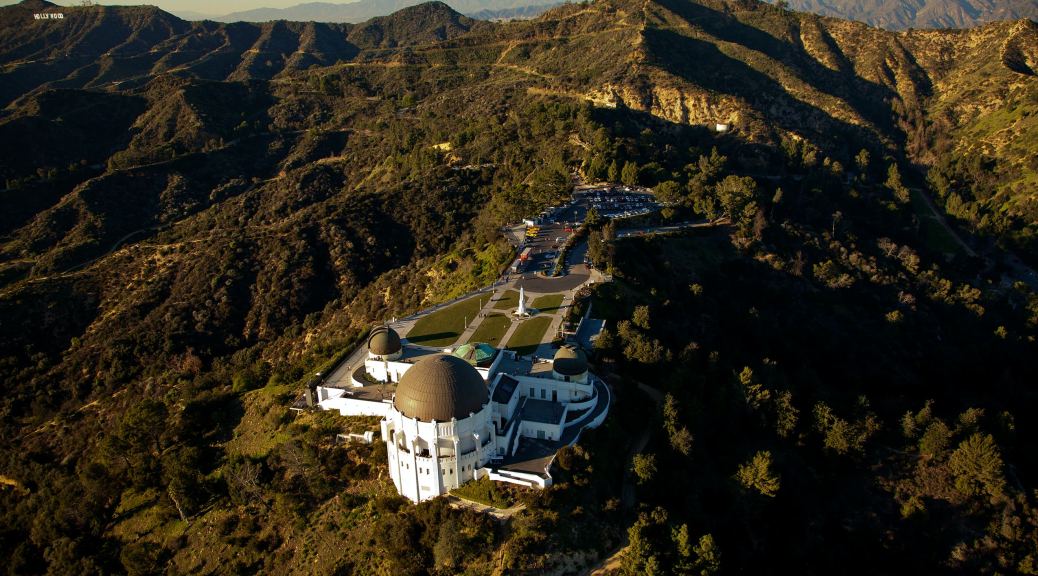
Yukon: After The Gold Rush

after-the-gold-rushIf the bulldozers on Tony Beets’ gold mine ever break down he could just use his bare hands. They are gigantic and caked in dirt, the way God’s must have looked the day he created the mountains. Tony came to the Yukon in 1982 for the same reason thousands before him did during the Gold Rush of 1896–1899, but the old stories don’t interest him much.

‘The history is the least of my concerns, to be honest with ya,’ he drawls. ‘It’s nice, but they could have left a little more.’

Despite a century’s worth of miners striking it lucky, there is still enough gold in these hills to have made Tony a rich man. His straggly hair and beard may disguise it but his net worth is estimated at over $5 million. ‘We strictly came here for the money,’ he says. ‘Let’s say that worked. We’re a little spoiled now, but like I always say…’ He holds up those dusty articulated fists. ‘It was earned.’

Tony mines near the Klondike River, where gold was first discovered on Rabbit Creek by Skookum Jim, George Carmack and Tagish Charlie in August 1896. The area proved so rich that when the first prospectors arrived back in San Francisco in July 1897 their ship’s cargo was worth over a million dollars. The news sparked a Gold Rush which led 100,000 people to attempt the long, punishing journey to the Klondike. Realising that these stampeders would be even easier to mine than the hills, a barkeeper named Joseph Ladue built a sawmill and staked out a townsite on the mud flats at the confluence of the Klondike and the Yukon. He named the new town Dawson, and it became home to the miners, and to the pimps, hustlers and dancing girls who followed in their wake.

Dawson City remains an outlaw town. ‘You can do things the way you want here,’ says Tony. ‘A lot of places are regulated and over-regulated, but here you can still tell the odd guy to go fuck himself and it works just fine.’

Wandering Dawson at dusk the only thing missing from the scene is a pair of dueling gunslingers. The buildings of wood and tin haven’t changed since the 1900s, the saloons still have swing doors and the streets are little more than dirt tracks. Dawson is still the end of the road. Keep going north and the only towns you’ll find are in the Arctic Circle. That means a certain breed of character washes up here like nuggets in the bend of a river. On any given night in bars like The Pit at the Westminster Hotel you’re likely to hear tall tales from guys like Duncan Spriggs, the former landlord who’ll tell you about the time he rode a horse from Vancouver to San Francisco. Or Dana Meise, who walked across Canada from the Atlantic to the Pacific and claims to have fought no less than three grizzly bears along the way.

No bar sums up the spirit of Dawson quite like the Downtown Hotel. Their signature drink is the ‘Sourtoe Cocktail’, served with a genuine severed human toe resting in it. Dawson is not a place concerned with Health and Safety regulations. The story goes that in the early 1970s a man named Captain Dick Stevenson came across the toe of a Prohibition-era bootlegger pickled in a jar of overproof rum. Yukoners refer to anyone who hasn’t spent the harsh winter here as a ‘cheechako’, while anyone who has survived one becomes a ‘sourdough’. Captain Dick decreed that in order to become an honorary ‘sourdough’, one must kiss the ‘sourtoe’. To date, over 67,000 have.

Like the miners, the dancing girls are still here too. Most nights in Dawson end at Diamond Tooth Gertie’s, Canada’s oldest casino and home, three times a night, to a Can-Can show hosted by the eponymous ‘Gertie’. One of the most famous dance hall stars of the Gold Rush era, she’s currently played by Amy Soloway, a singer from Nova Scotia who moved to Dawson eight summers ago to take the role. ‘Gertie was a very smart lady, and she knew what men liked, especially lonely men: liquor, gambling and ladies. She was the baddest chick in 1898,’ says Amy. ‘When I go and mingle after the shows I meet miners and feel transported back. It’s still very much alive.’

Not everybody comes here for the gold, but it has a way of pulling you in. Leslie Chapman and her husband Bill just wanted to live off the grid when they moved from Calgary in 1974 and built a cabin near the Alaskan border. Soon they started finding gold dust and after staking their claims they built a house in Dawson where Leslie now works as a goldsmith making jewellery mostly from the spoils of their own mine. She has an electronic scale on the counter, accurate to 1/100th of a gram, and often miners pay her directly with dust pulled from their pockets. That’s not what keeps her here though. ‘The Yukon means freedom,’ she says. ‘That’s the reason I came. We still have so much open, unclaimed land in its natural state. So many people in the world can’t even see the stars anymore. That’s not a problem here.’

The Yukon is a good place for people who like space. The territory stretches over a slice of land twice the size of Great Britain but its total population is just 37,000. Over 27,000 of those live in the capital Whitehorse, leaving the rest to scatter themselves thinly in small towns, tiny villages or self-sufficient cabins in the wilderness. The roads that cut through the Yukon stretch for mile after mile through seemingly endless woods of spruce, pine and fir and it’s rare to see more than a handful of fellow travellers. It’s only when you reach higher ground, above the tree line, that you can really get a sense of the scale of the place and just how remote the few cabins you pass are from anything resembling a town or city.

It’s the same across the border. Heading west from Dawson takes you over the Top of the World Highway to Chicken, Alaska, another gold-mining town that settlers initially planned to name after the many ptarmigan that lived in the area. However, none of them could agree how to spell ‘ptarmigan’, so ‘chicken’ was chosen to avoid embarrassment. It now has a population of 50 in the summer, although that drops to just four in the winter.

Susan Wiren owns and runs Downtown Chicken, a miniature high street consisting of a shop, a saloon and the Chicken Creek Cafe. She came here 28 years ago after growing up in New Jersey and laughs at the RV drivers who pass through complaining about the road conditions and expecting to find phone signal, wi-fi or ATMs. ‘They have no idea what it’s like,’ she says. ‘We have a generator that makes our own electricity and we drive a 150 mile round-trip to get supplies. When you live out here, everything logistically is difficult.’

Nobody will claim that life here is easy, but it does offer the opportunity to live in a place still largely unchanged by human hands. 350 miles south from Chicken, following the Alaska Highway back into the Yukon you’ll find Kluane National Park. It’s 8,500 square miles of protected land is home to black and grizzly bears, bald eagles, caribou and Brent Liddle, a naturalist and trail guide. The park has been Brent’s natural habitat since he was posted to the small town of Haines Junction in 1975 by Parks Canada and he has dedicated his life to exploring it. ‘When I first came here I really had the sense of being at the end of the world,’ he says, ‘but the more you live here you lose that sense of isolation. You’re busier in a remote community than you would be in a city where everything is provided for you. There are a lot of lonely people in cities.’

In Kluane, you get a sense of how untouched the whole of the Yukon would still be if nobody had ever struck gold here. The mountains that tower over the glacial lakes look just as they must have done when the pioneers first made their way among them. Kluane is home to Canada’s highest peak, the snow-engulfed Mount Logan which rises 19,525 feet in the midst of the largest non-polar icefield in the world, a glacial area where mankind still rarely treads. The only way to understand the vastness of this unforgiving land is from the air. There are peaks in Kluane that were never glimpsed by human eyes until the first National Geographic flight over the icefields in 1935, and many are still unnamed. Occasionally the ice offers up preserved artifacts of the area’s earliest human inhabitants, such as throwing spears, stone tools and even human bones belonging to the Champagne and Aishihik First Nations. ‘People who think the Yukon is all about the Gold Rush are looking at it through a very narrow lens,’ points out Brent. ‘It was an interesting period, but the First Nations history preceded it by 10,000 years.’

However, even in Kluane the Gold Rush left its mark. Unsignposted near the banks of Kluane Lake is Silver City, once a staging post for stampeders travelling north to Dawson. Now it’s a true ghost town, where rusty tin cans and broken glass litter the ground and trees twist through the tumbledown cabins as nature unhurriedly reclaims the land.

Silver City was just one stop on a journey that would have taken months in 1898. Most of those who joined the Gold Rush took steam ships from San Francisco and Seattle up to the port of Skagway, Alaska, now overrun by cruise ship tourists. From there, they faced a treacherous hike over to Bennett in British Columbia. There they built boats and began the 500 mile journey along the lakes, rivers and rapids which lead all the way to Dawson.

There were plenty of opportunistic hoteliers and saloon keepers in Bennett who, like Joseph Ladue, set out to profit from the influx of people. Among them was a German immigrant named Frederick Trump, grandfather of Donald, whose family had changed their surname from the rather less auspicious Drumpf. He ran the Arctic Hotel, which was described in letters to the Yukon Sun newspaper as being rife with prostitution. Its popularity helped make Trump his fortune. ‘It’s a shame,’ observes Brent wryly, ‘that nobody robbed him back then.’

These days, the crowds that made Trump rich are long gone. Brent leads hikes through parts of Kluane where it is not humans but bears, scratching their backs on trees to mark their passage, who have left their mark. Along the way he stops to demonstrate which mushrooms and berries can be eaten safely.

When the sun disappears behind the mountains to the west the only light for miles around comes from his own solar-powered cabin in the woods. In the cool, still evening it is easy to understand why the writer Jack London named one of his Yukon novels The Call of the Wild. More than gold, it is that call that still draws those who hear it to live here. ‘The Yukon,’ as Brent puts it, ‘picks its own people.’

As the night draws in the cabin is shrouded in the perfect darkness impossible in towns or cities. There are no lights visible anywhere on the earth, but the sky above glitters with gold dust.

Originally published in Lonely Planet Traveller, December 2016.