Norm Macdonald’s Nothing Special is quite the opposite

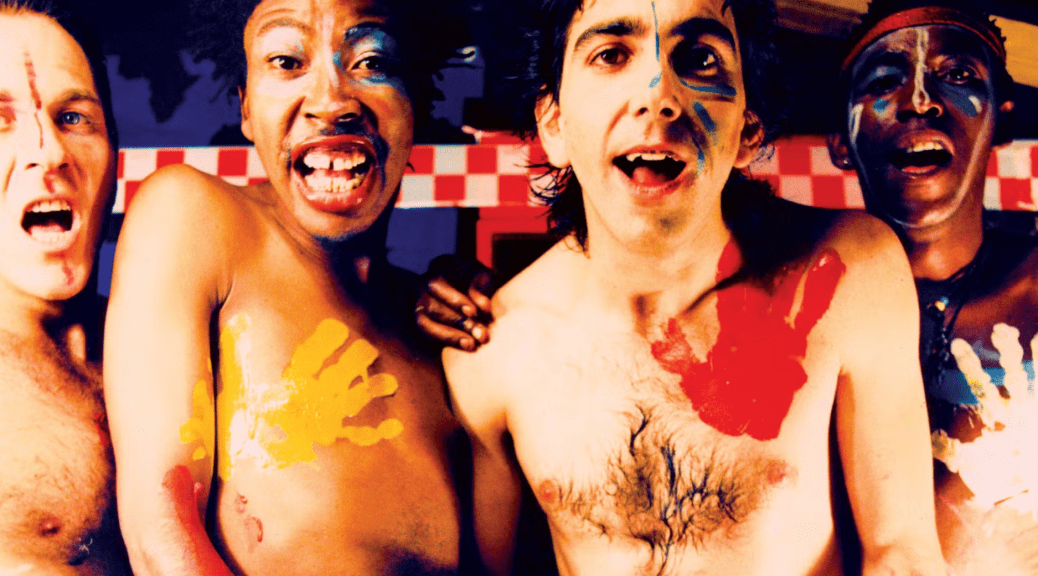
The death of Norm Macdonald last year came as a shock to almost everybody but him. The stand-up and former Saturday Night Live cast member died from acute leukemia in September 2021, but had been diagnosed nine years prior and made the decision to keep the information from anyone but close friends and family. During that time the comedian enjoyed a career resurgence, releasing a Netflix special, Hitler’s Dog, Gossip & Trickery, in 2017 and hosting chat show Norm Macdonald Has a Show on the same streaming service in 2018. He was working on another hour-long stand-up special when Covid hit in 2020, and prior to undergoing a medical procedure decided to tape the material himself because, as he told those close to him, he “didn’t want to leave anything on the table in case things went south.”
Although the operation itself was a success, Macdonald died before he was able to record the show in front of an audience. All we have, then, is what he made at home, headphones on and speaking directly to the camera, as if calling in to history’s most entertaining Zoom meeting. On occasion he’s interrupted by his ringing phone (“Hello! I’ve got to phone you back on account of I’m doing a special on the TV!”) and his own barking dog. He handles the canine heckler superbly. “The thing is, you’ve got to be ready,” he says as he resumes his material without missing a beat. “You’ve got to be ready for anything this world throws at you.”

Continue reading at The Independent

George RR Martin: ‘I don’t understand how people can come to hate so much something that they once loved’

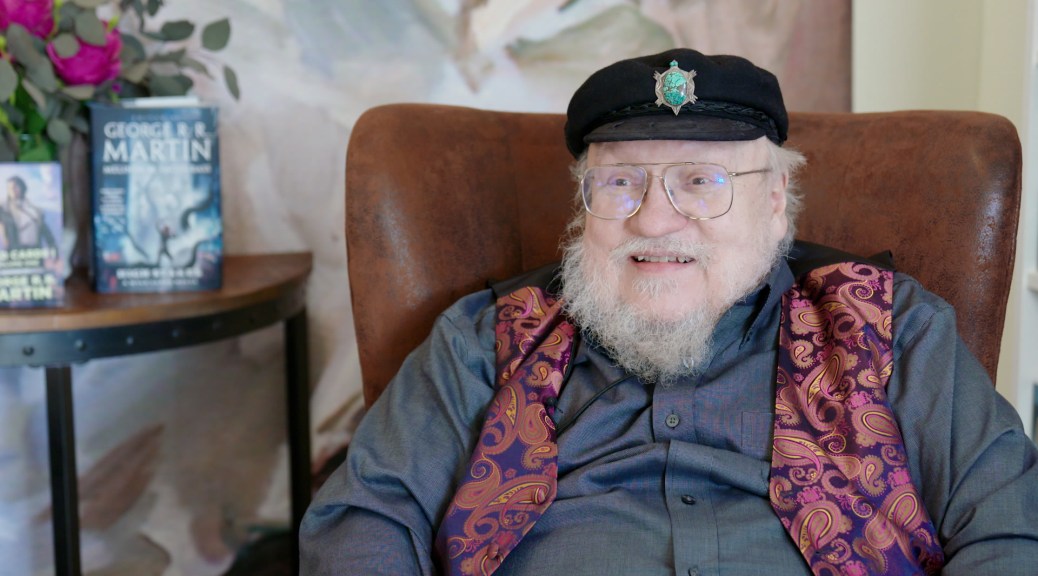
George RR Martin has spent a lifetime telling stories, so it’s strange to see him lost for words. We’re in the back room of Beastly Books, surrounded by the colourful volumes of his work that line the shelves of the charming little shop he opened three years ago in his adopted home of Santa Fe, New Mexico. Sunk in a high-backed brown leather chair in front of a wall-sized mural of John Singer Sargent’s Edwardian-era oil painting Nonchaloir (Repose), the author has been playing raconteur for the last hour. Eyes twinkling behind silver-framed glasses, he’s been telling the fantastical tale of the son of a longshoreman from New Jersey who grew up reading Shakespeare, Tolkien, and Marvel comic books, and went on to write his own bestselling epic fantasy series A Song of Ice and Fire, which in turn became the record-breaking, award-hoarding, television-conquering HBO series Game of Thrones.

The runaway success of the show made Martin rich beyond even the wildest fever dreams of a lifelong science-fiction writer, but it’s his first-hand experience of the viciousness of a particular type of hyper-online fan that’s left him uncharacteristically stumped. “I don’t understand how people can come to hate so much something that they once loved,” he says. “If you don’t like a show, don’t watch it! How has everything become so toxic?”

Continue reading at The Independent

Valeria Luiselli: ‘Borders are testing grounds for brutality’

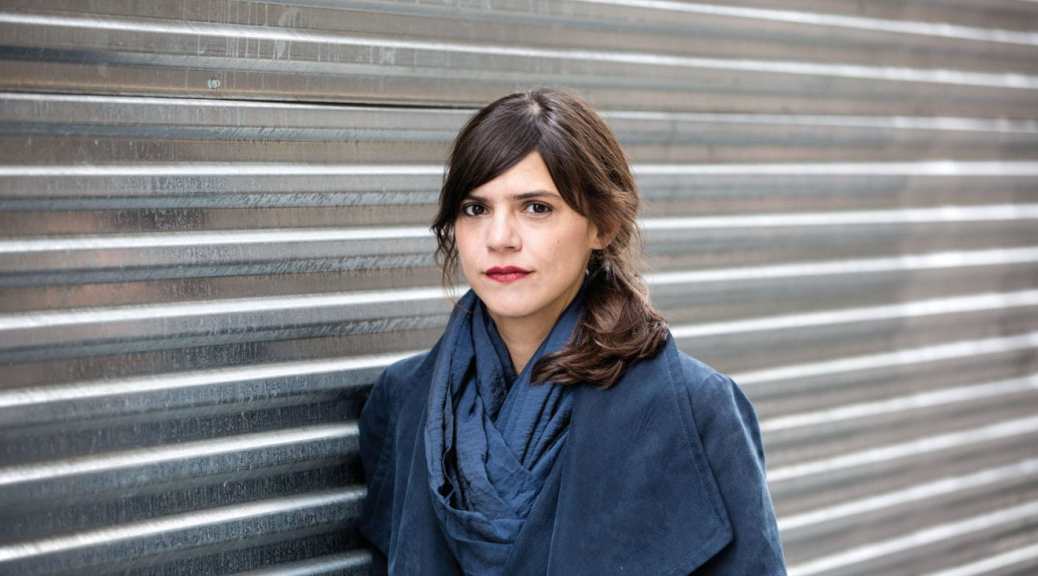
Although a bustling audience has gathered to see author and immigration activist Valeria Luiselli speak at the Santa Fe Literary Festival, a hush falls over the room in anticipation of a preview of her current project. The silence is broken by the mechanical clanking of a copper mine and Luiselli’s recorded impressions mingling with the voices of miners and other locals who she met and interviewed around the border town of Bisbee, Arizona. The gorgeous, revelatory soundscape is just a 12-minute extract from a planned 24-hour sonic essay, Echoes From The Borderlands, which Luiselli is in the process of creating in collaboration with audio specialists Leo Heiblum and Ricardo Giraldo. She tells the assembled crowd she believes the format can help us slow down and appreciate stories in a deeper way than the relentless onslaught of visual media online. “You can’t scroll through sound,” she says with a smile.

Afterwards, backstage in the festival’s Green Room, Luiselli tells me that the idea to create an archive and document of life on the border first came to her in the town of Shakespeare, New Mexico. Originally a mining camp, Shakespeare became a ghost town and later a venue for Wild West reenactments, a place where men, dressed up as Billy The Kid, would hold shoot-outs with nameless caricatures of Native Americans and Mexican Bandits.

“This project started, in my mind at least, while I was interviewing a couple of reenactor cowboys about reenactment, and about what gets told, what gets reenacted and what is left out,” says Luiselli, who became determined to document otherwise forgotten stories. “At first I thought it was a four year project, but now I’m really thinking it’s a 10-year project. We need to get more funds for it. We have some support from a museum in New York, but it all hinges upon our capacity to travel and then to have time to transform what we gather during those very concentrated trips into material that’s going to be interesting.”

Continue reading at The Independent

Don Winslow: ‘We’re fighting Trump and the Trumpists, and the imitators’

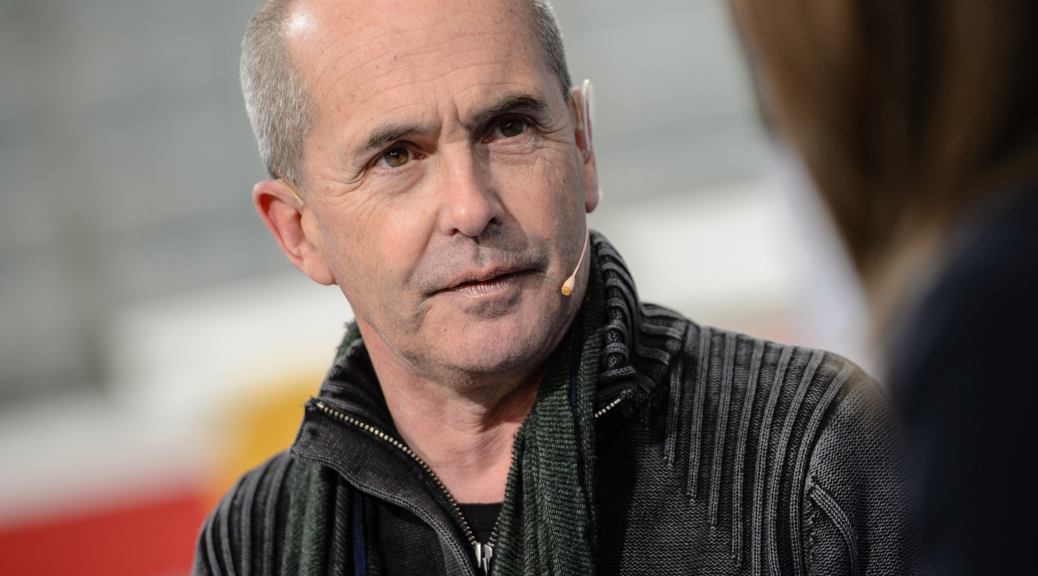
Early on Saturday morning, onstage at the Santa Fe Literary Festival, Don Winslow spotted a suspicious figure quietly approaching through the audience on hands and knees. “Oh, you’re a photographer!” the 68-year-old author exhaled a moment later. “I was wondering who was crawling up here. You understand that a lot of people really don’t like me?”

In the three decades since the publication of his debut private eye novel A Cool Breeze on the Underground, Winslow has managed to make himself his fair share of enemies. He received some particularly unwelcome attention after spending 23 years exhaustively researching drug cartels for his revelatory and award-winning Cartel Trilogy. “I was getting threats from drug traffickers,” he tells me, shortly after making it safely offstage. “I didn’t, and don’t, take them terribly seriously because there’s no upside for them to kill an American writer in America. It would be very bad for business, and at the end of the day they’re business people.”

These days Winslow is much more wary about a different sort of menace.

“Now the threats come from the right wing,” he explains. “It’s the Proud Boys. Again, I don’t take it terribly seriously. Most of those people are physical as well as moral cowards. I can take care of myself, but I’m definitely more aware of my surroundings at events like this.”

Continue reading at The Independent

‘He was making fun of these motherfuckers’: Why George Carlin’s radical underdog comedy is still so relevant

When news broke of a leaked proposal to overturn Roe v Wade – the landmark ruling that enshrines abortion rights in the US – it didn’t take long for George Carlin’s name to start trending. The late stand-up quickly went viral earlier this month thanks to a widely shared routine from his 1996 HBO special Back In Town, in which he takes aim at the anti-abortion movement. “They’re not pro-life,” he preaches, his long grey hair pulled back into a ponytail. “They’re anti-woman.”

Over a quarter of a century after it was first delivered, and 14 years after Carlin’s death from heart failure at 71, many on social media felt Carlin’s routine perfectly captured the prevailing anger. “What’s really interesting is that no one else’s routine went viral,” says Judd Apatow, who has directed the eagerly awaited two-part documentary George Carlin’s American Dream. “Even though there have been hundreds of comedians since George Carlin, no one had a bit that you would even put up to say: ‘Here’s another great bit that discusses this.’ He was the best.”

Continue reading at The Independent

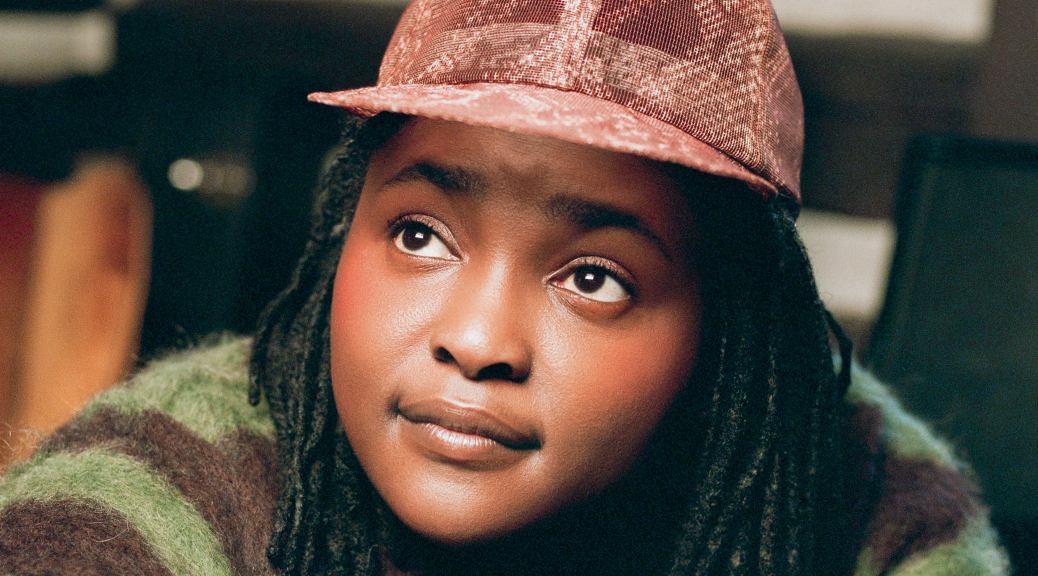
Joy Oladokun: ‘You might want me to sing pretty love songs, but as an artist there are things I need to talk about’

For decades, West Hollywood’s Troubadour has been the place where singer-songwriters come to cut their teeth. The fabled venue played a crucial role in the rise of artists like Carole King, Jackson Browne and Elton John, and tonight it’s the turn of Joy Oladokun to take centre stage. It’s not an opportunity the 30-year-old takes lightly. Bathed in the spotlight, she starts talking about a song she wrote in the immediate aftermath of George Floyd’s murder.

“There’s no country in the world that kills as many of its citizens as we do,” she says, before pointing out that she was born in 1992, the year Los Angeles was shaken by riots sparked by police brutality. Three decades later and the same old bigotries persist. No wonder Oladokun found herself moved to capture the moment in music. “This is the best way I know to heal the world, and that’s why I do this job,” she tells the audience. “To make this world better for people like us, and people unlike us.” With that, she launches into an incendiary version of her perceptive single “I See America”, interpolating the crunching riffs and wailed lyrics of Nirvana’s “Smells Like Teen Spirit” to create a monstrous mash-up that reverberates like a scream of frustration echoing across generations.

It’s a heart-stopping moment in a show packed full of them, and one that Oladokun has come to realise can receive a very different reception depending on where in the US she’s performing. “There was a show I played at the Ryman in Nashville where a guy booed me and walked out when I was just introducing the song,” she recalls, speaking to me on the phone from her tourbus somewhere in “Pennsylvania-ish”. Needless to say, that experience has not deterred Oladokun from speaking her truth. “You might just want me to sing pretty love songs,” she says, “but as an artist there are things I need to talk about.”

Continue reading at The Independent

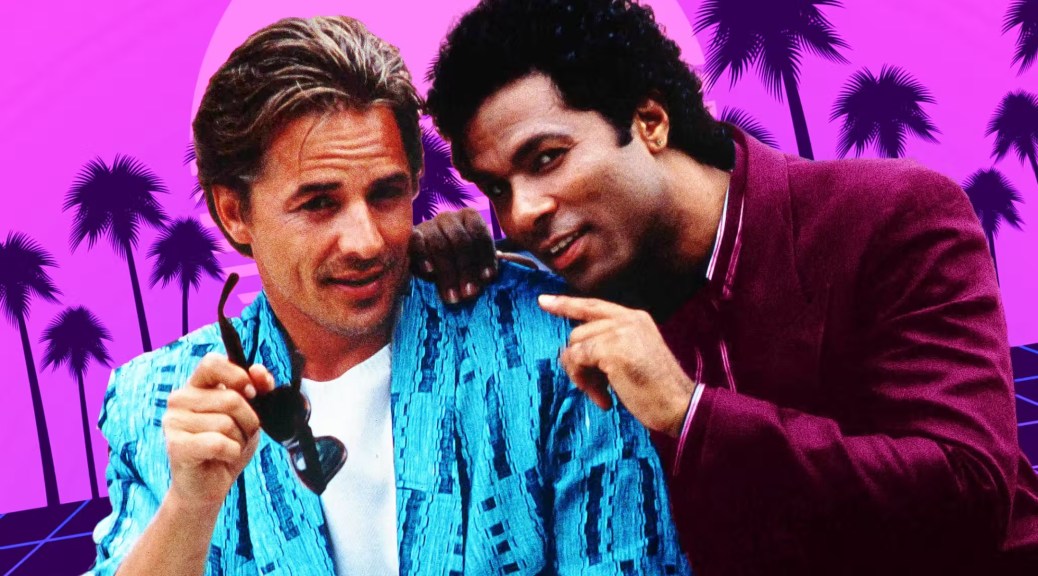
‘American Casablanca’: How Miami Vice reinvented noir for the MTV generation

As Hollywood legend has it, Miami Vice began life with just two words scrawled on a scrap of paper by NBC executive Brandon Tartikoff: “MTV cops.” The television landscape had been revolutionised on 1 August 1981 by the launch of MTV, which ushered in an era of slick, glamorous music videos with high concepts and higher budgets.

When Miami Vice debuted in 1984, the show lived up to its initial pitch with a rock’n’roll soundtrack, fast cars and a flashy wardrobe provided by Armani, Versace and Hugo Boss. But it was also darker and more cynically subversive than it has since been given credit for.

A hugely popular hit throughout its six-year run, the show was rebooted in 2006 by original executive producer Michael Mann as a film starring Colin Farrell and Jamie Foxx which has gone on to become a cult favourite. As Mann returns to the small screen with Tokyo Vice – a new series based on US journalist Jake Adelstein’s memoir about crime in Japan – it’s worth remembering just how ground-breaking the original Miami Vice really was.

Continue reading at The Independent

Paul McCartney proves he was the coolest Beatle all along

Paul McCartney didn’t used to be cool. Even back in the Nineties, when the Beatles-indebted Britpop scene was in its pomp, “Macca” always seemed like a cheesy elder statesman. He was a bit dad jeans. A bit Alan Partridge. Both thumbs seemingly fixed permanently aloft. It was John Lennon, the band’s truculent rebel, who the Gallagher brothers deified and all the hip young bands wanted to imitate. Back then, Lennon’s “Imagine” seemed like a secular hymn, a sincere manifesto for a better world. These days it’s that song out-of-touch celebrities sing to show how out-of-touch they are.

If Lennon’s stock has fallen in the last three decades, McCartney’s has only risen. A passionate vegetarian who has long been vocal about the need to protect the planet, his inherent niceness is now lauded as a virtue. Most recently, his reputation has been further burnished by the release of Peter Jackson’s immersive Get Back documentary, which delighted Beatles fans by taking them inside the recording of the band’s final album, Let It Be, and made it crystal clear just how much of a driving force McCartney really was in the creation of that record, and in the band in general.

The spry 79-year-old’s current tour, which arrived at Los Angeles’ SoFi Stadium on Friday night (13 May), nods to the impact of Jackson’s film with its title: Got Back. Over the course of two-and-a-half hours, which seem to fly by, it lives up to the promise of that name. Early on in the show, McCartney says he and his well-drilled backing band will play “some old songs, some new songs and some in-between songs”, but the balance is generously tipped in favour of the classics. Of the 36 songs he plays 21 are Beatles songs, while another is his heartfelt tribute to Lennon: 1982’s “Here Today”, written in the wake of his old friend’s murder in 1980, and delivered here with devastating sincerity. He even makes room for a pre-Beatles song, “In Spite Of All The Danger”, which McCartney wrote in 1958 and was the first tune ever recorded by The Quarrymen. He introduces it by recalling the day in Liverpool he and his bandmates – Lennon and George Harrison as well as “Colin and Duff” – put in £1 each to pay to cut the song onto shellac. Moments later, when he’s leading a Californian stadium packed with 70,000 fans singing along to it, it’s hard not to be stunned by the recognition of everything McCartney achieved in the intervening 64 years.

Continue reading at The Independent

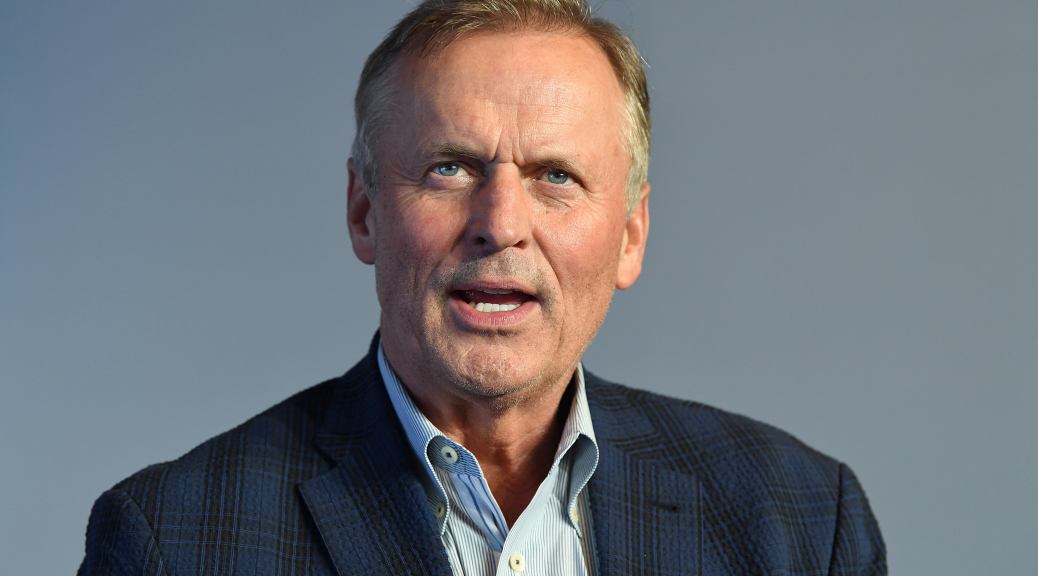
John Grisham: ‘Non-lawyers who write legal thrillers often get things so wrong’

In 1984, 29-year-old John Grisham was a small-town lawyer working at the DeSoto County courthouse in Hernando, Mississippi when he witnessed a trial that changed his life. Two young sisters had been attacked and raped in a remote farmhouse just miles from his law office, and as he listened to the 12-year-old give her harrowing testimony, Grisham began to wonder what would happen if the girls’ father decided to take justice, or vengeance, into his own hands. In that moment, the seed of Grisham’s debut thriller A Time to Kill was planted. “I saw the spark because I happened to be in the right place at the right time,” says Grisham, now 67. “Most lawyers are good storytellers because they tend to embellish and they see a lot of crazy behaviour. I had never written before, never thought about it. But I recognised a great story.”

Eventually published in 1988, A Time to Kill marked the start of a literary career that has seen Grisham grow into one of the world’s bestselling authors. His books have sold 300 million copies worldwide, including no less than 28 consecutive number one fiction bestsellers over the past three decades. His first big hit came in 1991 with his second novel, The Firm, a rollercoaster legal thriller about an ambitious young attorney who finds himself in the grasp of organised crime. It spent 47 weeks on the bestseller lists on its way to being crowned the year’s highest-selling novel and was adapted into an acclaimed film starring Tom Cruise and Gene Hackman in 1993. “The Firm set me free,” recalls Grisham. “It found a market real fast, became popular, then went nuts when the movie came out. Suddenly I was bored with the practice of law and realised I could make more money writing about it.”

Continue reading at The Independent

Graham Nash: ‘I don’t think anybody can tell the real story of what happened with CSNY, not even us’

In August 1968, 26-year-old Graham Nash arrived in Los Angeles for a three-day trip, which he planned to spend sequestered with his new love, Joni Mitchell. Arriving at Mitchell’s picturesque bungalow in Laurel Canyon, Nash found the singer-songwriter hanging out with a couple of her friends, fellow musicians Stephen Stills and David Crosby. The pair played him a new song they’d been working on, “You Don’t Have to Cry”. After asking them to repeat it twice, Nash joined in to create a flawless three-part harmony. This debut Crosby, Stills and Nash performance took place with Mitchell as their audience of one. It’s a scene so perfect that you’d think it was contrived if it showed up in a biopic. “Isn’t it?” says Nash, now 80, down the line from his home in New York’s East Village. “Yet that’s exactly what happened. I’ve had a lot of those moments in my life.”

Thus began the on-again, off-again tale of one of the first and greatest folk-rock supergroups: Crosby of Californian folk-country combo The Byrds, Stills of Canadian-American rockers Buffalo Springfield and Nash of Mancunian pop group The Hollies. After releasing their sublime self-titled record in 1969, the trio added a fourth member, Stills’ former Buffalo Springfield bandmate Neil Young, before making their live debut in Chicago as a warm-up for playing the gigantic Woodstock festival. They soundtracked the era’s counterculture and continued in various iterations until splitting, seemingly for good, following a final Crosby, Stills and Nash tour in 2015. In the years since, Nash has been back on the road alone. New album Graham Nash: Live captures him in the northeastern United States in September 2019 revisiting his two solo records, 1971’s Songs for Beginners and 1974’s Wild Tales.

The disintegration of Crosby, Stills and Nash has been largely attributed to an acrimonious fall-out between Nash and Crosby, so it’s notable that several of the plainly autobiographical songs on those albums were written at a time when their friendship was at its deepest. In 1969, after the tragic death of Crosby’s girlfriend Christine Hinton in a road accident, Nash pledged to stay by his friend’s side. “We went around the world drinking, quite frankly,” he remembers. “Courvoisier and Coca-Cola, what a drink! I knew that David was in deep, deep depression about Christine. I knew that he was very fragile. I feared for his life for a short moment.”

Continue reading at The Independent

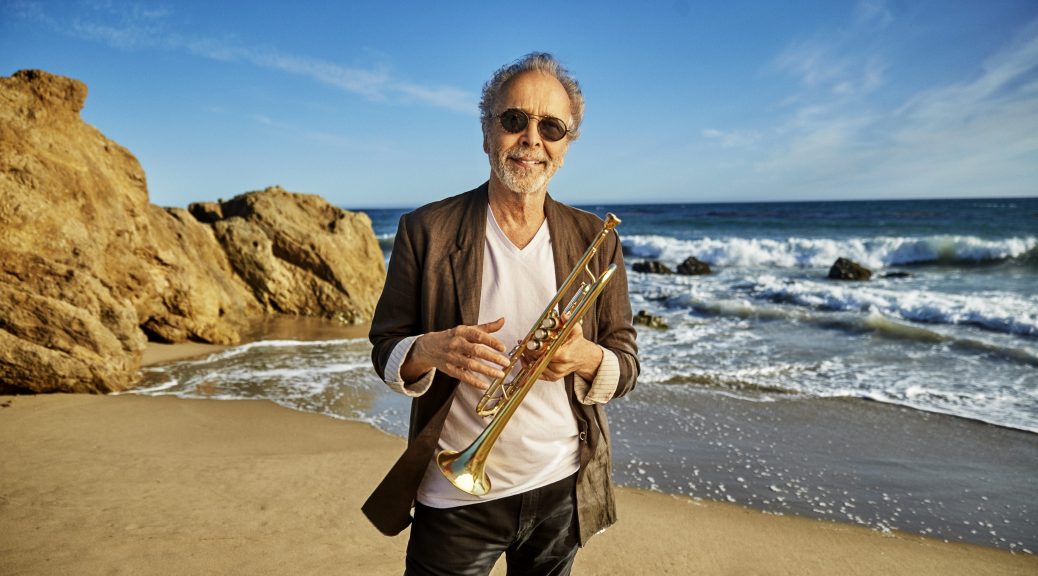
Herb Alpert: ‘I was rich, I was famous and I was miserable’

Nobody soundtracked the swinging Sixties like Herb Alpert & the Tijuana Brass. For 81 consecutive weeks, from October 1965 to April 1967, the Los Angeles-born trumpeter and his group always had at least one record in the US top 10, sometimes as many as four at a time. In 1966 they sold 13 million records, making them bigger than the Beatles. Their playfully kitsch album art became iconic, while their joyous instrumentals were inescapable, scoring everything from adverts for beer and motor oil to hit TV shows like The Dating Game. It was a level of success that the son of immigrants from a small town near Kyiv was wholly unprepared for. I had the American dream,” says Alpert, now 87, on the phone from his oceanfront home in Malibu. “I was rich, I was famous and I was miserable.”

Alpert first blew a trumpet at the age of eight, while a student at Melrose Elementary School. “I was fortunate there was a music class and a bunch of instruments, and I happened to pick up the trumpet,” he remembers. “It’s been awfully good to me.” He was encouraged by his father Louis, a tailor with a talent for the mandolin, and his mother Tillie, who taught violin. When their neighbours complained about their son practising, his mum told them he’d just play louder. They were determined to give him a better childhood than the life they’d left behind. “My father was born in a little shtetl outside of Kyiv,” explains Alpert. “It’s a terrible situation that’s going on there now. It’s heart-rending and confusing. Man’s inhumanity to man is just mind-boggling.”

In the late Fifties, Alpert formed a songwriting team with famed lyricist Lou Adler. They landed a job as staff writers for LA-based label Keen Records, whose star artist Sam Cooke was then topping the charts with “You Send Me”. “Sam was delightful, intelligent and very engaging,” recalls Alpert. “I learned a lot from him. He was a mentor, even though he didn’t know it.” Cooke showed Alpert how a performer could elevate even second-rate material. “One day he came up to me and said: ‘Herbie, what do you think of this lyric?’” says Alpert. “I thought it was the corniest thing I’d ever seen. I didn’t say that to him! I said: ‘Well, what’s the song like?’ He picked up his guitar and transformed this corny lyric into something magical. I thought to myself: ‘Man, it ain’t what you do, it’s the way you do it.’ I think that’s the big lesson in art.”

Continue reading at The Independent.

Coachella 2022: Måneskin: ‘We wanted to raise our voice for something meaningful’

The flamboyant Italian rock band Måneskin have come a long way since forming in 2016, when they started their career busking on the streets of Rome.

They shot to fame in their home country after finishing second in the Italian version of The X Factor in 2017. International recognition followed after they won the last year’s Eurovision Song Contest for Italy with their irrepressible anthem “Zitti e buoni” (which translates as “Shut Up and Behave”).

Now, the Seventies-obsessed band are on a mission to revive the lost art of rock’n’roll in America. Backstage at Coachella, singer Damiano David, bassist Victoria De Angelis, guitarist Thomas Raggi, and drummer Ethan Torchio tell us their impressions of the Californian festival.

Continue reading at The Independent.

Coachella 2022: Youngest ever headliner Billie Eilish triumphs with Gorillaz in her midst

Three years ago, Billie Eilish made a shaky start to her Coachella career. Held at the festival’s Outdoor Theatre, the then 17-year-old’s set was blighted by technical mishaps: she arrived on stage over half an hour late, forgot some of the words to “All the Good Girls Go to Hell”, and worst of all, brought out special guest Vince Staples for “&burn” only for his microphone to entirely fail to work, leaving him rapping in silence. Not ideal, then.

Still, she had fond memories of that weekend, too. After all, it was backstage here in Indio that Eilish met her teen idol Justin Bieber. In footage captured for RJ Cutler’s 2021 documentary Billie Eilish: The World’s a Little Blurry, the pair meet and embrace for the first time. Eilish had grown up worshipping the Canadian singer, who is eight years her senior, and the moment marked a sort of emotional crossing of the Rubicon for Eilish as she was quite literally welcomed into the world of pop superstardom by the icon she’d deified.

Across just two feted albums (and a Bond theme for good measure), Eilish has become a Grammy magnet and an all-round alt-pop sensation. Mixing retro tones with mordant lyrics about issues both universal and specific to her life – everything from teenage heartbreak to NDAs and paparazzi – Eilish sings with a voice that veers from whispering to full-throttle belting without ever losing its intimacy.

Continue reading at The Independent.

Coachella 2022: Danny Elfman’s ‘strange little show’ among festival’s most memorable

Danny Elfman is by some margin the oldest artist performing at this year’s youth-focused Coachella. However, on the basis of his eclectic show at the festival’s Outdoor Theatre stage late on Saturday night (16 April), his age is the least unusual thing about him.

For a start, there can be few 68-year-old composers around who would choose to perform topless so as best to show off a heavily tattooed torso. More pertinently, there are few composers of any age who could make a full orchestra sound like a garage punk band, as Elfman often does throughout his hour-long set. But Elfman – a master of the macabre, whose dark, eerie scores are practically synonymous with Tim Burton’s films – has never been your typical Hollywood songwriter

“Hello Coachella,” he says, not long after playing deranged 2021 single “Insects” and then a section of his bombastic orchestral score from 2002’s Spider-Man. “My name’s Danny Elfman, and I’ve got a strange little show for you.” He’s not kidding.

Continue reading at The Independent.

Coachella 2022: Arcade Fire deliver catharsis and anthems at intimate show

Given that they headlined the closing night of Coachella in 2014, it was a double surprise when Canadian indie rock titans Arcade Fire were announced as a last minute addition to the bill for the Mojave Tent on Thursday (14 April) – a day before the California music festival kicked off.

A double-whammy, there was, firstly, shock that they were playing at all, and second that they would be appearing in a relatively intimate setting.

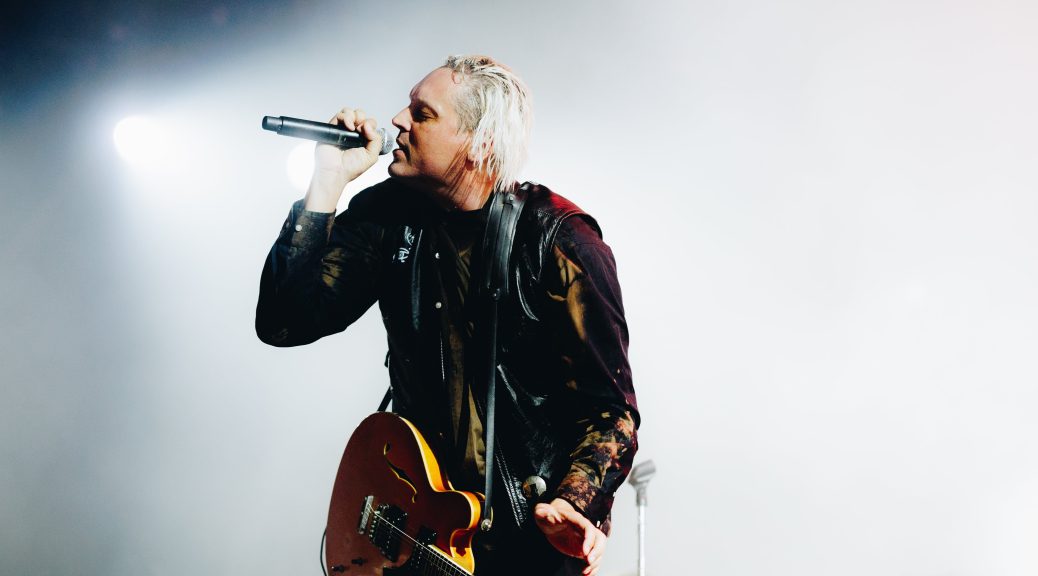
An eager crowd of thousands are still squeezing their way into the tent as the seven-piece band enthusiastically bound onto the stage five minutes early, so hearts are in mouths when frontman Win Butler halts proceedings after just a few bars of their opening song to urgently call for a medic for someone in the front row. Thankfully help arrives swiftly and soon the band launch back into their recent Nigel Godrich-produced single “The Lightning I, II”, with Butler’s longtime partner Régine Chassagne bashing away at her keyboard behind him, as their voices come together in a hymn to sticking it out and sticking together.

Continue reading at The Independent.

‘The reality of screaming girls is kind of terrifying’: An oral history of Hanson’s ‘MMMBop’

When “MMMBop” first bounded onto the airwaves a quarter of a century ago, it sounded like nothing else around. Released on 15 April 1997, it arrived at the tail-end of grunge and with Britpop in full swing, a blast of irresistibly catchy pop rock influenced by classic R&B and soul and sung by a band of brothers too young to have a drink to toast their success. The song soared to the top of the charts in a dozen countries, including Britain and the US, making the long-haired Hanson siblings international sensations overnight.

The trio had formed five years earlier in Tulsa, Oklahoma, after the family arrived back in the States after a stint in South America, where the boys’ accountant father was auditing operations in the oil and gas industry. As they travelled they listened religiously to a compilation of hits from the late Fifties, featuring golden oldies “Good Golly, Miss Molly” by Little Richard, “Splish Splash” by Bobby Darin and “Rockin’ Robin” by Bobby Day.

“It was rock’n’roll in its absolute essence,” remembers lyricist and middle brother Taylor Hanson. “That music became really ingrained in our psyche as our connection to America.”

The power of that influence would become clear when the young brothers went ahead and crafted a perfect pop hit of their very own.

The story of “MMMBop” begins in the Hanson family garage in 1994, when guitarist Isaac was 14, keyboardist Taylor was 11 and drummer Zac was nine.

Continue reading at The Independent.

Drugs, Dolls and Johnny Depp: The Viper Room’s demolition is the end of a Hollywood era

Today, the Sunset Strip is a shadow of its former self. In the Sixties, the infamous two-mile stretch of Sunset Boulevard was the heart of Los Angeles’ emerging counterculture, a place where world-famous actors Jack Nicholson and Peter Fonda joined young hippies in riots against a 10pm curfew. Fast-forward to the Eighties and bands like Guns N’ Roses, Van Halen and Mötley Crüe were staying up long past their bedtimes as the area transformed into the whisky-soaked home of hair metal. These days the counterculture is long gone and the bulldozers are circling. In February, the iconic former home of Tower Records, which went bankrupt in 2006, was torn down to make way for a new branch of skatewear brand Supreme. Last month, it was announced that The Viper Room, the rock’n’roll dive once owned by Johnny Depp, will soon be demolished and replaced with a 12-storey glass high-rise. “Just what the Strip needs!” jokes Steve Cohn, Depp’s former construction manager and a Viper Room regular in the Nineties. “There’s so much crap like that. It’s so sad.”

When it opened, on 14 August 1993, The Viper Room was the hottest ticket in town. Despite the cave-like venue’s miniscule capacity of just 250, the stellar bill on that first night featured Tom Petty & The Heartbreakers, Evan Dando of the Lemonheads and Pogues frontman Shane MacGowan. A who’s who of Hollywood watched from the crowd, with directors Quentin Tarantino, Jim Jarmusch and Tim Burton rubbing shoulders with stars like Dennis Hopper, Christina Applegate and Patricia Arquette. The building had been converted from a grocery shop into a music venue in 1947 by mobster Mickey Cohen, a fact proudly noted by a zoot-suited Depp. “I really love the idea of clubs from the Twenties, Thirties and Forties,” he told the LA Times on its opening night“Like long slinky dresses, gin fizzes and witty banter?” one party-goer asked. “No wit, I don’t want any wit here,” Depp zinged back. What he did hope to create, he said, was a club where celebrities “won’t feel like they’re on display”.

Continue reading at The Independent

Father John Misty: How the most online man in folk rock disappeared

There was a time, not so long ago, when Josh Tillman – best known by his stage name Father John Misty – was almost as famous for his bizarre social media antics as he was for making wry, sardonic folk rock records. In the year that followed the release of his breakout second album, 2015’s I Love You, Honeybear, Tillman would fill his popular Instagram account with all manner of idiosyncratic images: hundreds of stills from virtual world Second Life, dozens of stock photos of men taking selfies, iPhone videos of sunsets and a whole series of himself just staring at his phone.

His Twitter presence was just as trollishly absurd. In June 2016, he claimed to have been responsible for the theft of a crystal from an organic juice bar in Los Angeles. He then released a series of tongue-in-cheek, straight-to-social media songs claiming to be unused Prius jingles, rejected promos for streaming service Pandora and his own “official lyrics” for the theme tune to Netflix’s House of Cards. When President Trump fired FBI chief James Comey in May 2017, there was a jaunty Father John Misty song about the incident on Twitter the very next day.

Always hungry for fresh content, the online pop culture news economy ate it up. Pitchfork placed Father John Misty at the top on their list of “The Top 30 Artists You Need to Follow on Social Media”, writing: “On the one hand, @fatherjohnmisty is an extension of Tillman’s mission to cast a sardonic modern gaze on faded rock’n’roll archetypes; on the other, it’s a great outlet for an incorrigible prankster who gets off when people don’t get it.” It’s true that even many of his most dedicated fans seemed to be left entirely perplexed by the whole performance. Typical comments included: “I don’t understand this page” and “Get off your phone and live brother trust me.”

Continue reading at The Independent.

Fred Armisen: ‘England is endlessly beautiful. I still haven’t gotten over it’

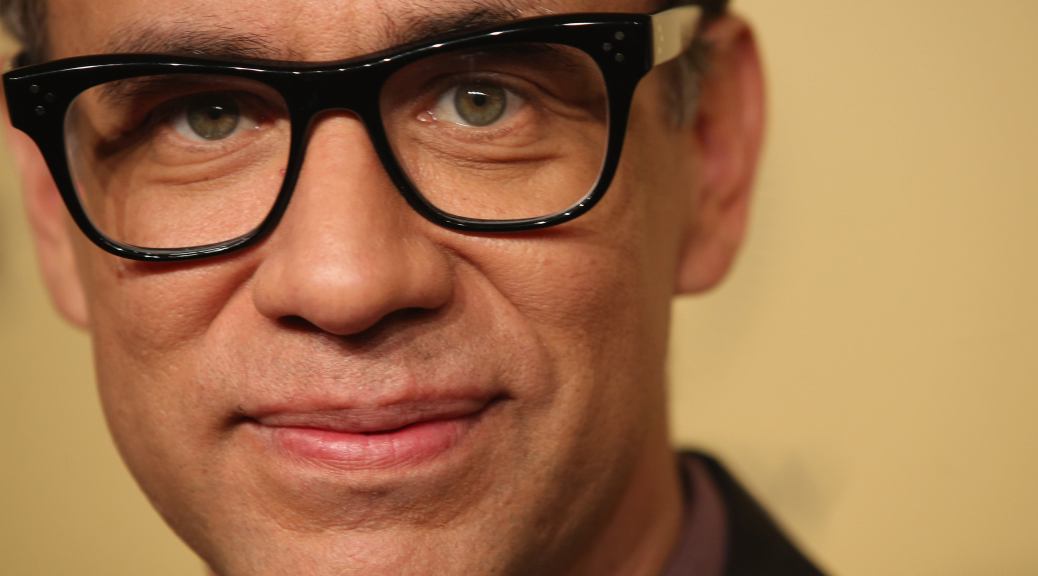
Fred Armisen was born in Mississippi, grew up on Long Island, lives in Los Angeles and created a hit sketch show about Portland, yet the 55-year-old comedian says there’s nowhere he’d rather while away his days than the English countryside. “Any small town where a street curves a little bit, and it’s all cobblestone, and there’s a little white shop,” he says wistfully, speaking over video call from a hotel room in Manchester. “There’s a Boots nearby, and a coffee shop. You can hear the sound of cars and people talking. It’s a little chilly. I’ve got my jacket on. That’s the perfect spot. That’s where I want to be.”

By luck or design, Armisen has lately found plenty of reasons to keep himself sequestered in his British happy place. He’s just spent the week in Wales filming for the fourth season of Documentary Now!, the mockumentary series he co-created in 2015 with fellow Saturday Night Live alumni Bill Hader and Seth Meyers. It’s previously been announced that the new run will include a parody of 1996 boxing documentary When We Were Kings called How They Threw Rocks, about a fictional Welsh sport, but Armisen is keeping tight-lipped about how production is going so far. “It’s so chaotic and things change so much,” he demurs. “I want to wait until we’re done.”

What he can talk about is The Bubble, Judd Apatow’s new pandemic-set Netflix comedy about the travails of a group of high-profile actors forced to quarantine together as they film Cliff Beasts 6, the latest instalment in a big-budget Hollywood franchise packed with CGI flying dinosaurs. Loosely inspired by the havoc Covid restrictions reportedly played with production of the forthcoming Jurassic World: Dominion, the film’s ensemble cast includes Karen Gillan, David Duchovny, Leslie Mann and Pedro Pascal. It was shot between February and April last year at Shepperton Studios in Surrey and at Cliveden House, a stately home on the border of Buckinghamshire and Berkshire so grand that The Beatles used it to double for Buckingham Palace in Help!.

Continue reading at The Independent.

There’ll never be another action hero like Bruce Willis

Early in 1987, producers Larry Gordon and Joel Silver were on the hunt for an action hero. They were working on a rollercoaster tale about terrorists hijacking a high-rise tower in Los Angeles and the script called for a muscle-bound bruiser.

For contractual reasons, Frank Sinatra was top of the list for Die Hard. Ol’ Blue Eyes had first refusal as he’d been the star of 1968’s The Detective, which like Die Hard was based on author Roderick Thorp’s thriller novels.

When the 70-year-old crooner confirmed his terrorist-fighting days were long behind him, producers went straight to the most obvious candidate: Arnold Schwarzenegger. The Terminator, Commando and Predator star said no, preferring to try his hand at comedy alongside Danny DeVito in Twins. The rejections kept coming: Richard Gere, Burt Reynolds, Harrison Ford, Sylvester Stallone, Nick Nolte, Don Johnson and Mel Gibson all passed.

Way down the list was Bruce Willis. He passed too, citing commitments to Moonlighting, the private detective TV show in which he starred opposite Cybill Shepherd. Then, the fates aligned. “As it turns out, a miracle happened,” Willis told Entertainment Weekly in 2007. “Cybill Shepherd got pregnant and they shut down the show for 11 weeks – just the right amount of time for me to run around over at Nakatomi Tower.”

Continue reading at The Independent.

Everywhere Man: At 93, James Hong just gave the definitive performance of his career

With 672 credits to his name, James Hong has almost certainly appeared in more films and television shows than any other actor in the history of Hollywood. In an extraordinary career that stretches back to the mid-Fifties, the 93-year-old has played everyone from Faye Dunaway’s butler in Chinatown to a designer of replicant eyeballs in Blade Runner.

He was the villainous sorcerer David Lo-Pan in Big Trouble in Little China and Cassandra’s high-kicking, back-flipping dad in Wayne’s World 2. He’s turned up in every sitcom from Seinfeld and Friends to The King of Queens and The Big Bang Theory. You’ve heard his voice in Mulan, every Kung Fu Panda movie, and even Pixar’s latest heartwarming hit Turning Red. If acting can be considered the inhabiting of another life, however briefly, then it’s reasonable to assume that James Hong has lived more lives than just about anybody else.

It’s also therefore fitting and utterly remarkable that the nonagenarian has just made one of the best films of his career, and that it happens to be a story about multiple lives. Everything Everywhere All at Once is a hard movie to describe succinctly. It falls somewhere between a Douglas Adams-penned martial arts flick, a particularly good Rick and Morty episode, and that bit in The Bell Jar where Sylvia Plath writes about a young woman and a fig tree, where the protagonist’s many possible lives branch off in front of her while she sits there starving to death because she can’t choose one for fear of losing all the others.

Continue reading at The Independent.

WeCrashed: Why the real villain of the WeWork drama is venture capitalism

In 2010, self-described “serial entrepreneur” Adam Neumann and architect Miguel McKelvey founded the shared-workspace company WeWork. It seemed they’d found a profitable way to take advantage of two significant trends: the surplus of relatively low-cost office space left vacant following the 2008 financial crisis, and a rise in the number of workers turning to freelancing or creating their own start-ups. The company grew quickly from its first location in New York’s SoHo district, and within a few short years it was being described using the much sought-after name given by investors to any start-up valued at over $1bn. WeWork was a unicorn.

That was only the beginning. As WeWork grew so did the scale and grandiosity of Neumann’s ambitions. They rapidly opened hundreds of new locations across North America, Europe and Israel, as well as expanding into luxury gyms (Rise by We), private schools (WeGrow) and co-living accommodation (WeLive). Neumann pitched his company to excitable investors as more than just a real estate company. WeWork, he claimed, was actually more like a tech start-up, and he was offering the chance to invest in a “physical social network”. By January 2019 the company had achieved a valuation of $47bn, making it the third-highest valued privately-owned company in the world, placed just behind Uber and Airbnb.

In September 2019, that valuation came tumbling down almost overnight. WeWork was preparing for its initial public offering (IPO), when it would begin offering shares on the stock market and transition from private to public ownership. It also meant that for the first time the company would have to make its internal finances public. They weren’t good. WeWork was losing $219,000 every hour it operated, putting it in a position where it was too broke to even lay off staff as it couldn’t afford to pay their severance packages. At least one job loss was guaranteed by these revelations: on 24 September 2019, Adam Neumann was forced to resign as CEO of WeWork.

Continue reading at The Independent.

John Lurie: ‘If I could teach people anything, it would be about living in the moment’

Early in 2006, the American artist John Lurie finished work on a watercolour he titled Bear Surprise. The painting depicts the animal in a meadow standing on its hind legs in front of a couple having sex on a picnic blanket, with the bear saying: “Surprise!” Within weeks the picture was uploaded to a Russian blog with the speech bubble altered to read “Preved”, a portmanteau that translates as “Hello Bear”.

This strange image captured the imagination of the Russian-language internet and by May that year The Moscow Times reported it had “gained vast popularity with the speed of an avalanche”. Lurie’s wayward bear has gone on to be referenced in Russian films and TV shows and has appeared in countless further memes, even flying improbably through the sky on a poster advertising the Russian edition of Newsweek. Last month, as Russian troops invaded Ukraine, Lurie posted his original artwork on Twitter once again. “Preved!” he wrote. “What the fuck Russia? Let Putin know he is alone in this horror.”

Needless to say, Lurie never expected any of his artworks to go viral on the other side of the planet, least of all that image. “Bear Surprise is a really bad painting,” he declares modestly from his home in the Caribbean. “That that one, of all my paintings, was out there like that – and you cannot believe the level that it was out there – just feels weird.” It goes to show that once you put art out into the world there is no telling where it might end up, a lesson echoed by Lurie’s own peripatetic journey through music, film and, most recently, his deeply contemplative and unconventional HBO series, Painting With John. During the first season, he paired footage of his artistic talents with wild tales about taking cocaine with the musician Rick James and the time Barry White’s speaking voice made his testicles vibrate. Bob Ross, this is not.

Continue reading at The Independent.

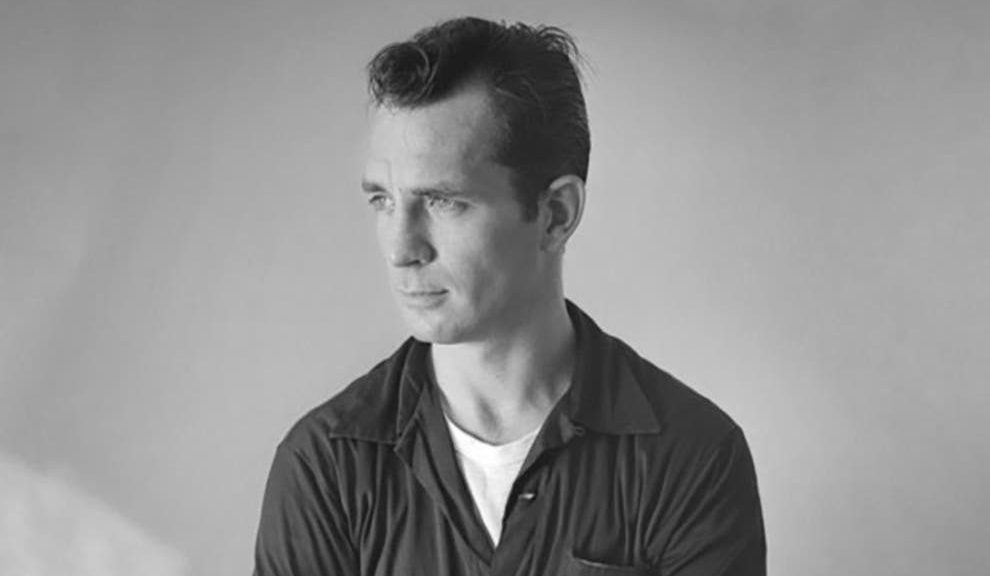
Jack Kerouac at 100: How a heady cocktail of trauma, faith and rotgut wine made a literary legend

David Amram started collaborating with Jack Kerouac before he even knew his name. The celebrated composer first met the novelist in 1956 at an artist’s party in Manhattan. “This guy came up to me in a red and black chequered shirt, looking like a French-Canadian lumberjack,” remembers Amram, now 91, from his New York home, which is littered with souvenirs of an illustrious career spent making music with everyone from Thelonious Monk and Dizzy Gillespie to Patti Smith and Bob Dylan. “He said: ‘I’m gonna read, you play.’” Amram took out his French horn and penny whistle and set about accompanying the stranger’s performance. “I just closed my eyes and listened to him,” he recalls. “I had no idea what he was going to do, and it was magical. I’m hesitant to use the phrase ‘ESP’, but not hesitant enough not to use it! That’s the best way to describe what it was like to get the feeling you’d known somebody your whole life, and that they were talking right to you and making sense.”

Afterwards, Amram still didn’t get an introduction. “He ran off to go dance with some fine young woman,” he says with a chuckle. “We were all out there flirting and drinking and having a good time.” It was only when they bumped into each other again at another party a couple of weeks later that Amram learnt Kerouac’s name, and that he was an author whose first major work, the 1950 novel The Town and the City had been published to a chorus of widespread indifference. That all changed in 1957 with the publication of his second book: On The Road.

A poetic and profound account of his years traversing America, often in the company of his irrepressible friend and inspiration Neal Cassady, On The Road made Kerouac a celebrity overnight. Its runaway success helped him to publish another dozen novels before he drank himself to death in 1969, at the age of 47, but he never enjoyed his sudden fame. “Most of the time, he was very quiet and very shy,” says Amram. “That’s one reason he used to drink, so that he could anaesthetise himself enough to be comfortable with people.”

Continue reading at The Independent.

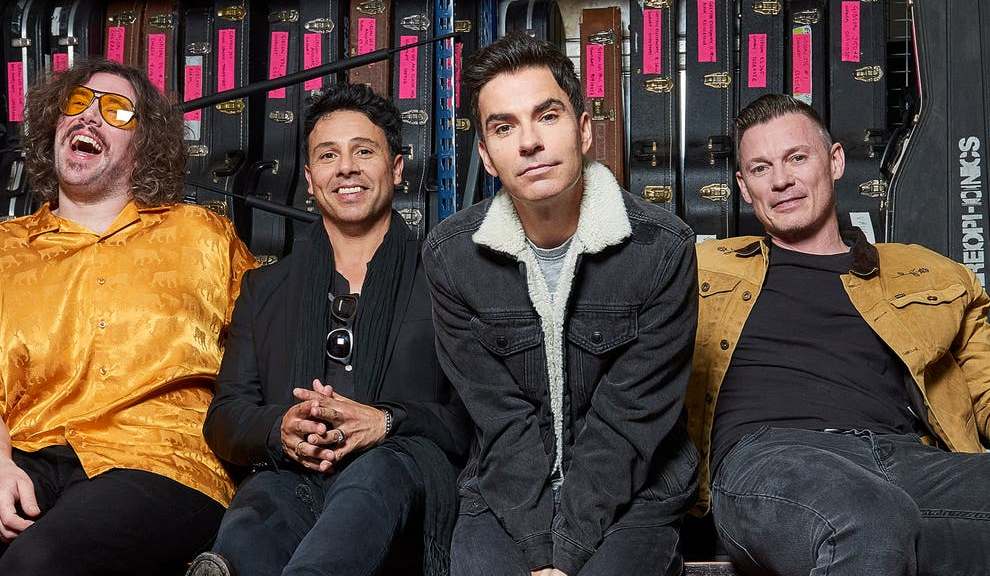
Stereophonics’ Kelly Jones: ‘We were playing to 90,000 people thinking: What are they all here for?’

On Thursday 12 March 2020, Kelly Jones, his Stereophonics bandmates and their crew gathered in front of a television screen to watch the prime minister address the nation. “That was the first day Boris Johnson went on telly with those scientist guys, and they said: ‘Nothing’s closing down. Everything continues as it is,’” recalls Jones from his studio in London. The announcement was met with relief, as it meant the band were clear to go ahead with a pair of headline shows at Cardiff’s Motorpoint Arena that weekend.

It was only after the gigs were done that Jones, who doesn’t use social media, realised he’d inadvertently found himself at the centre of a national controversy. “I got back to my house in Wales and someone said: ‘Piers Morgan’s been having a right pop at you, hasn’t he?’” he remembers. “I didn’t know what they meant, because I knew Lewis Capaldi was doing shows, and the West End was still running.”

That same weekend, Premier League fixtures were suspended, as was Wales’s Six Nations rugby match against Scotland, but Jones says even with hindsight he has no regrets about pressing on with his band’s performances. “I stand by what we did,” he says, matter-of-factly. “We followed the advice. I had my own family there, including my parents, my pregnant wife and my five-year-old. If we upset people, we upset people, but we followed the guidelines at the time.”

Continue reading at The Independent.

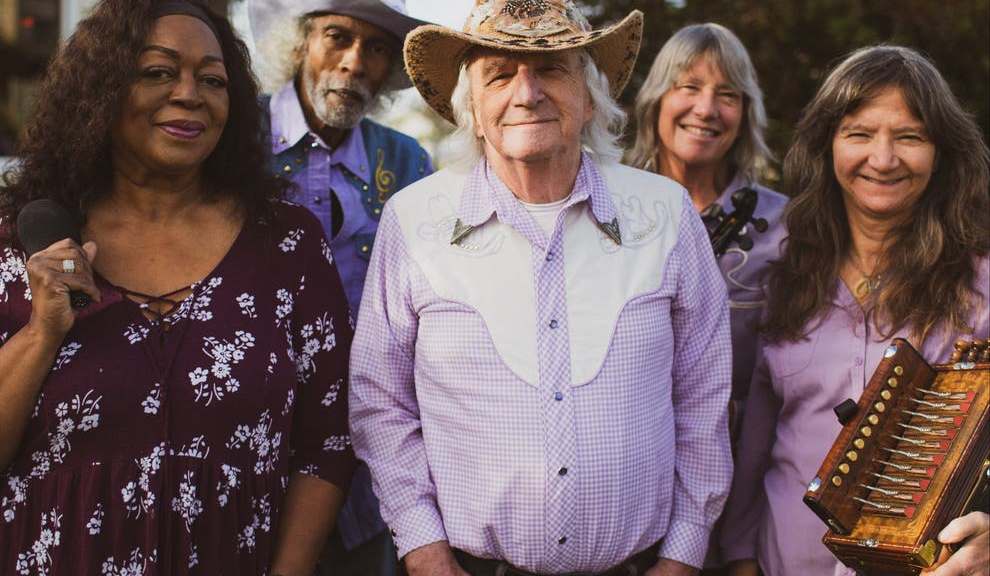
Lavender Country: ‘If I could do a show with Lil Nas X, I would gleefully die and go to Hell’

In 1973, Patrick Haggerty sat down to write a song about how pissed off he was with heterosexual men. “I wanted to write a song about straight white male supremacy and how fucked up it is,” recalls the 77-year-old, speaking over the phone from his home in Bremerton, Washington, across the bay from Seattle. He called the song “Cryin’ These Cocksucking Tears”, and included it on his band’s eponymous debut Lavender Country, the first country album ever recorded by an openly gay artist. “That song put a scarlet letter on my back and made me untouchable,” he explains. “I had to choose between being a screaming Marxist bitch or going back into the closet and going to Nashville to try to do something with country music. I made my choice with my eyes open and never regretted it.”

Just 1,000 copies of Lavender Country were pressed and sold via adverts in the underground gay press. When they were gone, they were gone. Haggerty spent a couple of years playing his songs to audiences of fellow gay activists, then got a job as a social worker and moved on with his life. “Lavender Country died unsung and unnoticed,” he says. “It was so dead that I was married to my husband for three years before he even knew I made it.”

That all changed in 2014, when Brendan Greaves, an American folklorist and co-founder of the record label Paradise of Bachelors, was forwarded a YouTube upload of “Cryin’ These Cocksucking Tears”. Greaves was fascinated. “He called me up and offered me a contract to re-release Lavender Country,” remembers Haggerty. “I didn’t believe him. I thought he was selling encyclopaedias and kept waiting for the shoe to fall.”

Continue reading at The Independent.

For a billion dollar show, why does the new Lord of the Rings trailer look so cheap?

Beside a vast waterfall, a woman dangles precariously from a frozen cliff face. As the wind whips around her, she leaps and drives a golden spike into the ice. When she looks up, towards the camera, we know in an instant that she will be alright from the look on her CGI-smoothed visage. There is no danger, because nothing here is real. The only place our new hero looks likely to fall is deep into the uncanny valley.

The trailer for Amazon’s much-anticipated new series The Lord of the Rings: The Rings of Power hit screens during the Super Bowl this weekend, giving fans an early glimpse at exactly what the world’s first billion dollar television show looks like. The answer? A cut scene from an old Final Fantasy computer game. It is hard to conjure up a sense of jeopardy when your characters, in this case Swedish-born Welsh actor Morfydd Clark’s young Galadriel, have ended up looking like one of Mark Zuckerberg’s creepy, dead-eyed Meta avatars wrapped in a billowing cloak of special effects. Sure, royal elves aren’t necessarily supposed to look human, but you’d think after spending all that money she’d at least look like she has a pulse.

Continue reading at The Independent.

Schwing! How Wayne’s World went from an SNL skit to a cultural phenomenon

Not long before his death in November 1991, ailing Queen frontman Freddie Mercury was visited at home in Kensington by his curly-haired bandmate Brian May. The guitarist had brought with him a VHS tape he’d been sent by Saturday Night Live comedian Mike Myers, who was hoping to get approval to use their music in his forthcoming film debut Wayne’s World. The pair sat and watched the tape together, dissolving into fits of laughter at the sight of five young men squeezed into a powder blue AMC Pacer headbanging their way through their operatic 1975 single “Bohemian Rhapsody”. “He loved it,” May told Myers and the rest of the Wayne’s World cast during an episode of Josh Gad’s Reunited Apart in 2020. “He just laughed and laughed. He was very weak, but he just smiled and laughed. How wonderful is that?”

Having received Mercury’s seal of approval, Wayne’s World arrived in US cinemas the following Valentine’s Day, 30 years ago tomorrow, and was an immediate hit. It went straight in at number one at the box office, eventually making over $183m globally against its $20m budget, and it remains the highest-grossing film ever to be made off the back of a Saturday Night Live sketch. Nobody was more surprised at this gargantuan success than the people who made it. “Honestly, we were just hoping it would get a five-theatre release,” recalls director Penelope Spheeris, down the line from her home in Laurel Canyon. “It was a total shock that it did as well as it did on the first weekend, and then the weekends after that, and then around the world. It was lightning in a bottle. We didn’t try to make a cultural phenomenon. We just did it.”

Continue reading at The Independent.

Black Panthers, overflowing notebooks and Scrabble: Inside LA’s new Tupac museum

The first thing visitors to Tupac Shakur: Wake Me When I’m Free will see is a towering 12ft bust of the Egyptian queen Nefertiti, the words “2 DIE 4” etched beneath her. Fans of Shakur will recognise this as a larger-than-life reproduction of one of the rapper’s chest tattoos, a tribute to his mother Afeni Shakur, who he referred to as a “Black queen”. On his 1993 track “Something 2 Die 4”, Shakur recalled the words of guidance she once offered him: “You know what my momma used to tell me / If ya can’t find something to live for / then you best find something to die for.”

It’s an apt introduction to the immersive new exhibition in downtown Los Angeles, which has been curated and assembled by Shakur’s estate, because as well as bringing together a remarkable collection of artefacts from the rapper’s short but explosive musical career, the exhibit also serves as a powerful reminder of the formative influence his mother’s experiences in the Black Panther Party had on his life and work. The 20,000sqft exhibition opened last Friday and is set to remain in Los Angeles for a limited time (tickets are currently on sale through to 1 May) with as-yet-unspecified plans for the show to eventually tour North America and cities around the world. Twenty-six years after Shakur was murdered in Las Vegas, the thought-provoking exhibition avoids gimmickry – there’s no sign of the Tupac hologram that appeared at Coachella in 2012, for example – in favour of foregrounding the rapper’s activism and politically conscious art.

Continue reading at The Independent.

Kiefer Sutherland: ‘When the FBI comes running through your house with guns drawn, you’re gonna remember it’

When Kiefer Sutherland was two years old, long before anyone had even conceived of the counter-terrorist operative Jack Bauer he would one day play in 24, his family’s home in Beverly Hills was raided by armed government agents. Although he was just a toddler, Sutherland remembers the shock of the moment all too well. “It doesn’t matter what age you are,” he says with a dry laugh, “when the FBI comes running through your house with their guns drawn, you’re gonna remember it.”

Sutherland, now 55, is speaking on a video call from his home in Los Angeles. He’s wearing thick-rimmed glasses and a dark blue T-shirt that shows off his tattooed forearms, while a vase of long-stemmed red roses provides his only backdrop.

One of the most successful actors of the Eighties, with a string of hits that included Stand by MeThe Lost Boys and Young Guns, Sutherland has spent much of the past six years establishing himself as a real-life country singer. After playing hundreds of live shows around the globe he has just released his third album, Bloor Street, the follow up to 2019’s Reckless & Me which bucked the dismal trend for actors-turned-musicians by hitting the Top 10 in the UK charts, a feat the likes of Steven Seagal never quite managed to pull off.

Continue reading at The Independent.

Can Jed Mercurio teach me to write the next ‘Line of Duty’?

When Jessica Raine joined the cast of Jed Mercurio’s smash-hit police drama Line of Duty for its second season, fans thought they were being introduced to an integral new member of beloved anti-corruption unit AC-12. Instead, her character DC Trotman hadn’t even made it through a single episode before she was unceremoniously bundled out of a hospital window – another surprise onscreen death added to the merciless Mercurio’s ever-lengthening rap sheet.

Fancy yourself ruthless enough to dream up a twist that shocking? If so, it’s time to put your money where your mouth is. Mercurio has turned teacher and is sharing the hard-won secrets of his 25-year career in a new online “Writing Drama for Television” course from BBC Maestro. For £80, you’ll get your hands on a 115-page PDF of course notes and access to 28 video lessons stretching over a total of seven hours. It’s a similar format to the screenwriting course taught by The West Wing creator Aaron Sorkin for rival e-learning platform MasterClass, although presumably with much less time dedicated to crafting the perfect walk-and-talk.

Mercurio’s shows – which also include the political thriller Bodyguard and medical drama Bodies – have won him millions of fans, even as critics have grumbled about his breathlessly twisting scripts stretching credulity. The gruff Lancashire bard has become something of a divisive figure, but the pertinent question is whether he can really teach you how to write a riveting top-flight drama in less time than it takes to watch Peter Jackson’s Beatles documentary Get Back. I dug out my notebook, hit record on my annoyingly whiny DIR, and settled in to find out.

Continue reading at The Independent.

Ronnie Spector: Farewell to the voice of all voices

Ronnie Spector has died, at the age of 78, but her voice will go on being heard for as long as we have recorded music and a way to play it. The lead singer of The Ronettes, she lent her unforgettable vibrato to their immortal 1963 single “Be My Baby” before marrying the song’s producer, Phil Spector. He was a cruel, macabre and jealous abuser, keeping her locked away from the world and forbidding her from performing. After escaping in 1972, Ronnie was encouraged by many of the musical icons she’d influenced and inspired to return to singing. “So that’s what I did,” she told Vice in 2016. “I went right back, because I had people like Keith Richards and John Lennon and Billy Joel and David Bowie – even Springsteen – telling me ‘Ronnie, you have the voice of all voices.’”

Born Veronica Yvette Bennett on 10 August 1943 in New York’s Spanish Harlem, Spector grew up surrounded by family and music. Her mother had six sisters, all hairdressers, who years later would help create and maintain The Ronettes’ signature towering beehives. On Saturday nights, their extended family would gather at Spector’s grandmother’s house, and the children would sing. “By the time I was eight,” Spector recalled in her 2004 memoir Be My Baby. “I was already working up whole numbers for our family’s little weekend shows.”

Continue reading at The Independent.

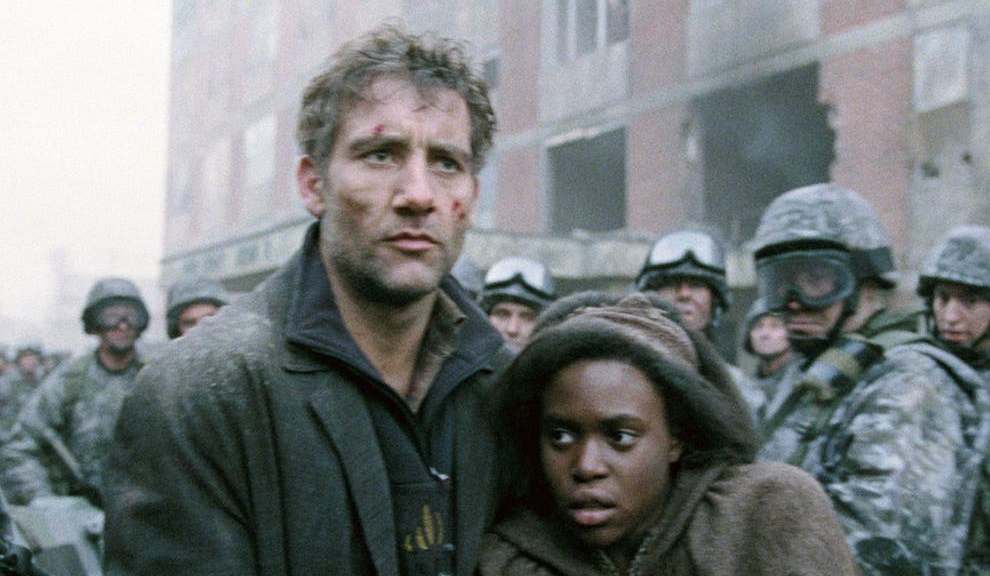
Children of Men at 15: ‘London in winter is a good place to imagine the end of the world’

Fifteen years ago this Christmas, Alfonso Cuarón’s Children of Men arrived in US cinemas to a deafening roar of indifference. For some reason the idea of visiting a gritty near-future dystopia in which women can inexplicably no longer have babies didn’t exactly entice audiences away from unwrapping their presents. The film bombed, failing to make back its $76m (£57m) budget at the box office. Critics weren’t sold, either. “One small problem: I didn’t believe any of it,” sniffed The Independent’s Anthony Quinn. “Not the fertility cataclysm, not the police state, not Michael Caine as a boho activist.”

Children of Men is harder to disbelieve in 2021, provided you have read the news or looked out of a window. The film has enjoyed a critical resurgence in recent years, at least in part because of how prescient its depiction of an immigration-obsessed, post-apocalyptic Britain now looks. Among the film’s avowed fans is the American political theorist Francis Fukuyama, who has said that Children of Men is “obviously something that should be on people’s minds after Brexit and after the rise of Donald Trump”. According to Cuarón’s writing partner, Timothy J Sexton, the reason many of the film’s predictions have proved so accurate is that they weren’t really predictions at all. “We were very much trying to make a movie about the present,” says Sexton over the phone from Los Angeles. “We weren’t trying to guess our way into some future. We just wanted to make it like the present, only more so.”

Continue reading at The Independent.

Joan Didion: Let me tell you, she was gold

Joan Didion, who died today in New York at the age of 87, was a writer all her life. Her work, whether fiction or journalism, was clear-sighted, precise and perceptive, and always peppered with her signature bone-dry wit. “Had I been blessed with even limited access to my own mind there would have been no reason to write,” she explained in her 1976 essay “Why I Write”. “I write entirely to find out what I’m thinking, what I’m looking at, what I see and what it means. What I want and what I fear.”

Born on 5 December 1934 in Sacramento, California, Didion was just five years old when she wrote her first story, at her mother’s encouragement. As a teenager she obsessively typed out the works of Ernest Hemingway, learning the rhythm and simplicity of clear, declarative writing. At 21, while studying for a degree in English at Berkeley, she wrote an essay about the San Francisco architect William Wilson Wurster and entered it into a competition sponsored by Vogue. She won first place, and her prize was a job as a research assistant at the magazine and the start of a new life in New York.

Continue reading at The Independent.

BTS: They came, they sang, they conquered

At last week’s American Music Awards, K-pop titans BTS were named Artist of the Year. This weekend, in front of 50,000 screaming fans at the Sofi Stadium in Los Angeles, they prove why they deserved it. Over the course of a thrilling two-and-a-half hour show, the band’s seven members deliver a sublime succession of pop hits, combining meticulously choreographed dance routines with clearly unrehearsed moments of heartfelt sincerity. To paraphrase another famous army leader: they came, they sang, they conquered.

BTS’s dedicated fan following, known as the ARMY, have flown in from all over the world to witness their heroes’ long-awaited return. They have been very patient. Due to the pandemic, 760 long days have separated the last BTS show in front of an audience in Seoul on 29 October 2019 and their return in Los Angeles on Saturday, the first of their four shows at the football stadium. During a press conference held at the venue on Sunday afternoon, singer Jimin said the pressure of returning to the stage after so long had left him feeling “very scared and nervous” the previous night, and he vowed that for their second show he would “take it easy” and try to “enjoy the experience” a little more. Judging by the cheeky smile spread across his face by the conclusion, he more than succeeded. He’s not the only one: 50,006 faces grin deliriously back at him.

Continue reading at The Independent.

James Patterson: ‘The Hollywood adaptations of my books suck’

At a time when reading for pleasure is on the decline, James Patterson knows better than anyone how to keep selling novels. Since his first thriller was published in 1976, the 74-year-old from upstate New York has gone on to sell more than 400 million books worldwide. He holds the record for the most appearances on The New York Times bestseller list, and the record for the most times topping that list. For the past 13 years in a row, Patterson has been the most borrowed author from British libraries. Last year, Forbes estimated he brought in around $80m (£59m), making him America’s highest paid author. He has built this empire on the back of a staggering production rate: this year alone, no fewer than 11 new James Patterson titles will hit bookshelves around the world.

Still, even bestselling authors aren’t averse to the odd publicity stunt. This Wednesday, at Bethnal Green Town Hall in London, Patterson will put his detective hero Alex Cross on trial for a gruesome triple murder in the author’s first ever interactive live event: “The Judge, The Jury and James Patterson.” Given that Cross, who first appeared in 1993’s Along Came A Spider, is now the star of the world’s bestselling detective series, it isn’t hard to guess the verdict his creator will be lobbying for. “I hope he gets off,” says Patterson with a chuckle when we speak over video call from his Mediterranean-style villa in Palm Beach, Florida. The event wasn’t Patterson’s idea, but he immediately saw the appeal. “Courtroom stuff is always really interesting, so the idea of putting Alex on trial and having a live jury there who are gonna vote on it seemed fun… it’s hard to draw attention to books these days.”

The event is being held to promote the publication of Fear No Evil, the 29th instalment in the Alex Cross series. In typical Patterson fashion, his new thriller is a breakneck, globe-trotting adventure that bounces Cross from Washington DC to LA, Paris, Mexico City and finally the wilderness of Montana, where he finds himself caught between a murderous drug cartel and a rogue group of vigilante soldiers who’ve gone to war with them. It’s all faintly implausible, of course, but Patterson argues that’s part of his style, too. “For the most part, I don’t do realism,” he says. “Every once in a while a critic will go: ‘This isn’t very realistic!’ Not that I compare myself to Picasso, but to me that’s like looking at a Picasso and saying: ‘Well, this isn’t very realistic!’ That’s not good criticism. You can say ‘I hate this’ or ‘I think it stinks’, but Fear No Evil is not realism. It’s over the top, more like movies, but you always hope there’s some emotional truth too.”

Continue reading at The Independent.

Whitesnake’s David Coverdale: ‘I wrote ‘Here I Go Again’ rat-arsed on white port and 7 Up’

David Coverdale wanted to retire from touring last year, when he was 69. The flamboyant Whitesnake frontman, blessed with the voice of a golden god and the innuendo-laden sense of humour of a naughty schoolboy, has instead been forced by the pandemic to reschedule his band’s last stand until next spring. “It’s unbelievable to me that I’m still working and active at 70,” he tells me, his rich, sonorous tones singing down the line from Hook City, his home studio on the outskirts of Reno, about 20 minutes from Lake Tahoe. “Reno-by-Sea!” he announces theatrically, then, “He wishes!” He’s in good spirits, despite having had his retirement plans pushed back. “I have bluebirds flying out of every orifice,” he trills happily in a way that suggests the sensation is less painful than it sounds. “That’s not too shabby for a man of my dotage.”

Coverdale didn’t expect to still be squeezing himself into leather trousers at 70 because he thought it was all over four decades ago. Back in 1981 he was living in a rented villa on the Algarve and sleeping in a separate room from his first wife Julia as their relationship crumbled. Whitesnake’s prospects didn’t look much rosier, with tensions rising to the point that within a year Coverdale would sack all his bandmates. Worst of all, he was fast approaching 30, surely over the hill for a rock’n’roll star. He couldn’t have known he was only then coming up with what would become their signature hit. “As I was writing ‘Here I Go Again’ and ‘Crying in the Rain’ about the breakdown of my first marriage, inconsolable, rat-arsed on white port and lemonade – actually, it was white port and 7 Up, let me give credit where it’s due – I thought: ‘The party’s over,’” he recalls. “In those days, nobody thought Jagger would still be touring at 78! Are you kidding? These guys keep raising the bar, the bastards!”

Continue reading at The Independent.

Jon Hopkins: ‘I would have a ketamine session and return with notes’

In August 2018, just days after playing a ravey headline set at Wilderness Festival in Oxfordshire, the visionary techno artist Jon Hopkins found himself attached to a thin rope being lowered 200ft into an ancient cave system deep in the Amazonian jungle of Ecuador. “I’m not really a rugged outdoors type,” admits the 42-year-old over the phone from his studio in Hackney. “But when I get unusual offers I usually just say ‘yes’ without really thinking. Before you know it, you’re descending on this rope into the abyss. It was really f***ing terrifying!”

Hopkins had been invited to the Tayos Caves by Eileen Hall, whose father Stan Hall led an expedition to explore them in 1976. After he died in 2008 Eileen took up his conservation mission, hoping that by raising awareness of the site’s remarkable biodiversity, it would be granted the protection of UNESCO World Heritage status. She put together a new expedition team, including scientists and artists, which is how Hopkins came to be dangling by a thread, journeying into the deep.

At that moment, Hopkins already knew he had reached a turning point in his musical career. His fifth album, Singularity, had been released three months previously, receiving widespread acclaim and a Grammy nomination for Best Dance/Electronic Album. Hopkins considers Singularity and its predecessor, his Mercury Prize-nominated 2013 record Immunity, to be “sister albums”, with a shared intricate, euphoric and beat-driven sound. For his next record, he wanted to move in a new direction, “far away from a cosmic party or a set of festival bangers”. So he turned his gaze inward, taking inspiration from meditation, which he has practised since he was 21, and his experiences with DMT, the active ingredient in ayahuasca, a powerful psychedelic brew that Amazonian tribes have been using in spiritual ceremonies for centuries. It was these influences, coupled with his time at Tayos, that led to the creation of a new album unlike any he’s made before, Music for Psychedelic Therapy, a gorgeous musical voyage that draws on ambient, drone and classical music – as well as the sounds of the natural world – and features not a single drum beat.

Continue reading at The Independent.

50 Years of Fear and Loathing: Was Hunter S Thompson a ‘Bad Art Friend’?

On Friday 19 March 1971, the journalist Hunter S Thompson and the lawyer Oscar Zeta Acosta were sitting in the Polo Lounge of the Beverly Hills Hotel – “in the patio section, of course” – drinking singapore slings and plotting the high-speed desert trip that would inspire Thompson’s most celebrated work, Fear and Loathing in Las Vegas. Fifty years and seven months later, I’m sitting on that same patio with the filmmaker Phillip Rodriguez, who made an incisive documentary about Acosta’s wild life and times, The Rise and Fall of the Brown Buffalo. Reading Thompson as a teenager made me want to write for a living, so my plan had been to mark the 50th anniversary of Fear and Loathing first appearing in Rolling Stone by having a few drinks and toasting the memory of these two icons of cultural rebellion. Rodriguez has other ideas. “We have to rethink a lot of our gods,” he tells me, a smile breaking through his short-cropped snowy beard but his eyes deadly serious. “We become conservative if we’re still trying to preserve the mythologies of our youth.” I almost spit out my singapore sling.
These days, Fear and Loathing in Las Vegas exists most powerfully in the popular imagination thanks to Terry Gilliam’s 1998 film adaptation, which starred Johnny Depp as Thompson’s alter ego Raoul Duke and Benicio Del Toro as Duke’s attorney, Dr Gonzo. On any given Halloween you will still find plenty of Raoul Dukes roaming the streets, cigarette holders clamped between their teeth, and a fair few Dr Gonzos trailing in their wake. In the film, as in the book, Acosta’s alter ego is essentially a sidekick, portrayed as a drug-crazed lunatic “Samoan”. When Acosta first read Thompson’s story, he had no problem being cast as a drug-crazed lunatic but was incensed that his identity as a proud leader of the Chicano civil rights movement had been erased. On top of that, Acosta believed he deserved credit for the work itself, in which much of the dialogue is reproduced verbatim from recordings Thompson made during their adventures in Vegas. “My God! Hunter has stolen my soul!” he wrote to Alan Rinzler, the editor who ran Straight Arrow, Rolling Stone’s books division. “He has taken my best lines and has used me. He has wrung me dry for material.”
Continue reading at The Independent.

Nick Kroll: ‘So much of Big Mouth is ripped off from Mel Brooks’

If the success of Big Mouth has taught Nick Kroll anything, it’s just how many people in the world have had sex with their pillows. When he and his childhood best friend Andrew Goldberg were first dreaming up their hit animated show about the growing pains of puberty, they based the character of Jay Bilzerian, who has deeply involved relationships with a wide variety of soft furnishings, on a specific friend they knew as kids. Countless fans have let Kroll know since that their friend was far from unique.

“It happens a lot,” says the 43-year-old, a smile playing at the corner of his mouth as he speaks over a video call from his home office in Los Angeles. “It tends to be men who’ve had sex with pillows, but then there’s a lot of women who talk about corners of couches, or long baths with the faucet on. Very little surprises me now. That’s the beauty of the show. It makes you realise that the weird thing you did, or that you heard about, was happening all over the place. It’s all pretty common.”
Big Mouth returns for its fifth season this week, bringing us another instalment of what The New York Times has called “the greatest work of puberty-themed art ever created”. The initial premise of the show was for Kroll and Goldberg, along with co-creators Jennifer Flackett and Mark Levin, to explore the confusion of their own adolescence by following semi-autobiographical characters named Nick (voiced by Kroll) and Andrew (John Mulaney) as they lurch towards adulthood under the erratic influence of Andrew’s Hormone Monster Maury, a suitably deranged personification of puberty itself (also voiced by Kroll).

Continue reading at The Independent.

The War on Drugs: ‘Springsteen gets a kick out of my son being named Bruce’

Naming a child can be a taxing task for any new parents, but for Adam Granduciel and his partner, the actor Krysten Ritter, one name for a boy stood out as a clear frontrunner. In 2018, the year before their son was born, the couple met Bruce Springsteen backstage at one of his theatre shows on Broadway. Springsteen is a longstanding hero of Granduciel’s, and a noted influence on the epic, road-trip-ready rock music he makes with his band The War on Drugs. No surprise then that Granduciel and Ritter decided to name their child Bruce, or that The Boss himself gave them his approval. “I didn’t tell him beforehand, but he knows now for sure,” says Granduciel of his son’s famous namesake. “He gets a kick out of it!”

In 2021, The War on Drugs are something of a rarity: a massively successful modern guitar band. Their last album, 2017’s A Deeper Understanding, won the Grammy for Best Rock Album, while their international tour next year will see them perform at some of the world’s biggest and most storied venues, including Madison Square Garden in New York and the O2 in London. Those grand arenas will provide a fitting home for the meticulously crafted rock songs that fill the band’s forthcoming new album, their fifth, I Don’t Live Here Anymore, which is set to be released on Friday. While their early records featured sprawling soundscapes emerging from a maelstrom of Seventies and Eighties classic rock influences, the songwriting on the new record is more direct, the lyrics more personal. It was to some extent inspired, Granduciel says, by the arrival of the younger Bruce in his world.

“Nothing will put your life into perspective like having a kid,” says the 42-year-old, speaking over the phone from Austin, Texas, where Ritter is currently filming the forthcoming HBO series Love and Death, from Big Little Lies creator David E Kelley. It’s a quirk of her celebrity that Granduciel has the curious distinction of being one of the very few grizzled, long-haired contemporary rockers to regularly be trailed by paparazzi around Los Angeles, often with Bruce under one arm. “I think it helped me understand what it means to grow up. It puts your place in your own life into a little bit of focus, and there were things that I wanted to write about as I entered fatherhood. It was a ripe opportunity to understand new facets of life.”

Continue reading at The Independent.

Where the Wildflowers grow: The inside story of Tom Petty’s greatest album

Tom Petty released a lot of great albums over the course of his four-decade career as one of the great American songwriters, but none meant more to him than 1994’s Wildflowers. “Even on the last tour, if we played a song from Wildflowers he’d say: ‘That’s the best record we ever made’,” remembers Benmont Tench, keyboardist and founding member of Petty’s backing group The Heartbreakers. “And I appreciated that he said ‘we’.”

Wildflowers is ostensibly a Petty solo record, although the majority of The Heartbreakers ended up playing on it anyway. It was recorded at a transitional time in his life; he was privately aware that his 20-year marriage was falling apart, and publicly separating from both his record label MCA and producer Jeff Lynne, who had been instrumental in the creation of his two previous albums, 1989’s Full Moon Fever and 1991’s Into the Great Wide Open. Lynne was a hero of Petty’s, and had been his bandmate in supergroup The Traveling Wilburys, but Tench says Petty was looking for a new sound. And it was easier, perhaps, recording the more personal, introspective songs on Wildflowers with Rick Rubin, a producer he barely knew when they started making the album. “People will tell their life story to a stranger, even when they won’t tell those things to a friend,” points out Tench. “I think emotionally it was great to have new blood around.”

Continue reading at The Independent.

How is it possible that The Rolling Stones are still in their prime?

There’s a moment during the Rolling Stones’ triumphant return to Los Angeles that stays with me long after the show is over. It comes right at the end, after the geriatric band blast through a straight two hours of the finest rock’n’roll songs ever written. They’re midway through a climactic “Satisfaction” and Mick Jagger – who is 78-years-old and by this point has done a marathon’s worth of strutting – is out at the end of his catwalk still giving his all. You can picture it: up on his tippy-toes with his arms flowing from side to side as though he’s performing an incantation. There is a reason people write songs dedicated to his moves.

He turns around to see that Keith Richards, a mere child of 77, has prowled his way down the runway to meet him. The guitarist lets his instrument go slack around his neck and with his pirate’s grin starts to mimic Jagger’s dancing in that matey, half-assed way a non-dancer does when faced with a pro. They’re only about a foot from each other, looking right in each other’s eyes, and they both just start laughing. Looking at the picture of pure joy splashed across their faces, I have to think: seriously, what are the odds?

Jagger and Richards, as any student of rock mythology can tell you, met on a platform at Dartford Station on the morning of 17 October 1961. Their next show at the SoFi Stadium, on Sunday night (17 October) will mark exactly 60 years of the prototypical rock partnership. Their diamond anniversary. Few marriages last this long, and even fewer bands. Throughout their turbulent relationship, Jagger and Richards have fought, feuded, sniped and publicly made fun of each other’s genitalia, but somehow they’ve always come back to each other. What’s even more remarkable is that by tonight’s evidence, impossibly, they’re still at the top of their game.

Continue reading at The Independent.

Jake Johnson: ‘I like tripping out under hypnosis and rewriting history’

Last year, in those uncertain early days of the pandemic, Jake Johnson feared his movie-making days might be behind him. Apple TV had just passed on a pilot for a Seventies-set sitcom about a cult named Habata that the 43-year-old had hoped to star inand back before a vaccine had been developed, Hollywood executives told Johnson there was no telling when – or indeed if – full-scale film productions might return. Troubled, Johnson decided to take matters into his own hands. “I called my friend Trent and said: ‘Let’s go make a movie, because we might be done in this business,’” he remembers, speaking over a video call from a trailer on set somewhere in California’s San Fernando Valley. “We said: ‘If this is our last one, let’s just go out and have a ton of fun.’”

Trent is Trent O’Donnell, an Australian director whom Johnson met when he was hired to work on New Girl, the sitcom that first hit screens a decade ago and transformed Johnson from a jobbing bit-part actor into a winning romantic lead. Over the course of the show’s seven-year run, Johnson won the heart of Zooey Deschanel’s Jess, and millions of fans, as Nick Miller, the lovably grumpy bartender who manages to become a successful author despite not being fully convinced he knows how to read.

O’Donnell joined the show as a guest director in its third season but quickly became such an integral part of the crew that Johnson remembers him being on set every day for the following four years. “He and I have spent hundreds of hours together,” he says. “For this movie, we were total partners. We wrote it together, paid for it ourselves and shot the entire movie in 12 days. To do that, we had to fully know how we work together, and all those years of New Girl really gave us that.”

Continue reading at The Independent.

We’re still here: The Drag Race queens taking on small-town America

For the past couple of years, three outrageously charismatic drag queens have been making one of the most revealing shows on TV. In each episode of the Emmy-nominated HBO docuseries We’re Here, Shangela, Bob the Drag Queen and Eureka O’Hara – who all rose to fame competing on RuPaul’s Drag Race – travel to a small town somewhere in the United States. When they arrive, often to an uncertain welcome, each queen adopts a local ‘drag daughter’ to mentor. After some careful coaching and fabulous makeovers, they all come together to perform a cathartic one-night-only drag show extravaganza in front of their community.

It’s a deceptively simple premise that could have become kitschy reality TV. But in fact, the sensitively handled series is deeply compassionate in the way it tells real life stories about people finding strength and self-expression, often in the face of heinous prejudice. In doing so, it also challenges a lot of preconceived ideas about the very real divisions that cut across America, including some of those held by the queens themselves.

“The big thing about We’re Here is breaking down stereotypes,” says Shangela, her infectious energy radiating across a video call from Paris, Texas. “Not only the stereotypes that people have about us in the queer community, but also the stereotypes that we have about others, whether it’s about them being from a small town, or being from a red or a blue state.”

Continue reading at The Independent.

It took the Academy 92 years to open a movie museum in LA. Was it worth the wait?

After creating the Oscars in 1929, the founders of the Academy of Motion Picture Arts and Sciences moved on to the next item on their agenda: the construction of a purpose-built museum dedicated to movies in their home town of Los Angeles. It seemed like a natural next step. While the Academy Awards honour achievements in filmmaking each year, a permanent museum would preserve and pay tribute to those throughout history.

Still, any jaded screenwriter in Hollywood will tell you that a good idea alone isn’t enough to get a project off the ground. After decades of infighting, delays and false starts, the Academy announced in 2012 that a suitable site had been found and the museum would be open by 2017. But that date came and went, with reports of further delays and spiralling costs appearing beneath increasingly concerned headlines, such as the one from Vanity Fair in 2019, which forlornly asked: “Will the Academy Museum of Motion Pictures ever actually open?”

It took a couple more years, not helped by the outbreak of a pandemic, but now, yes, the Academy Museum will finally open its doors this week. After almost a century of prologue, the pressure is on to deliver an experience that lives up to its own billing. “There are other cities with film museums,” observed Tom Hanks, who helped spearhead fundraising for the project, in a speech to the assembled world press at a preview event last week. “But with all due respect, in a place like Los Angeles, and created by the Motion Picture Academy, this museum has really got to be the Parthenon of such places.”

Continue reading at The Independent.

Kevin EG Perry is a writer for The Independent, The Guardian, GQ, NME, Empire, Wallpaper*, Vice, Lonely Planet Traveller and other reputable publications