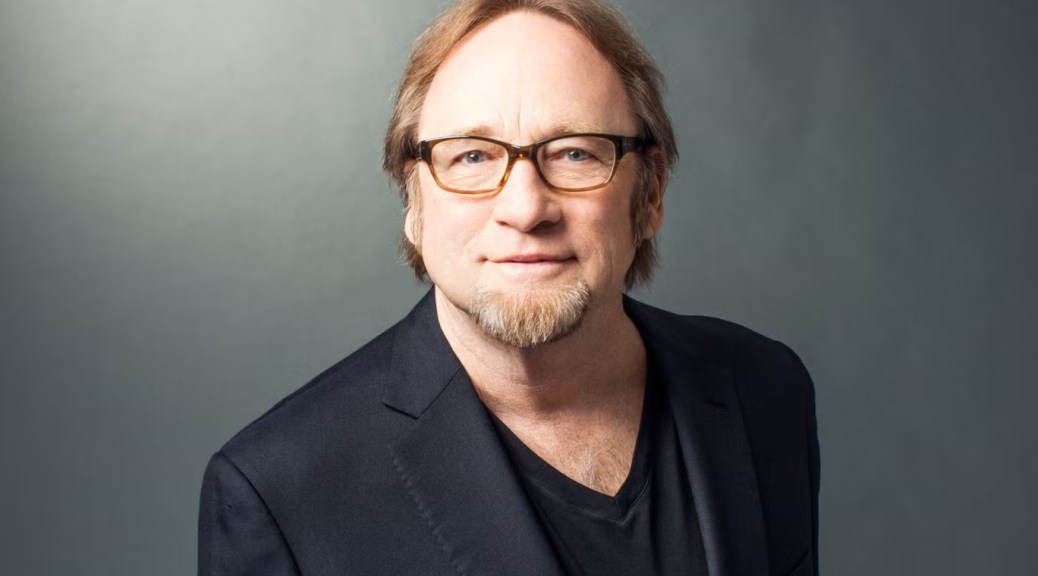
In August 1971, Stephen Stills arrived in Berkeley for the final dates of his first ever solo tour to be greeted by a surprise visitor: David Crosby. Just a year earlier their pioneering folk rock supergroup Crosby, Stills, Nash & Young had imploded in a blizzard of booze, cocaine, rampant egos and lopsided love triangles. That night, however, there were no hard feelings. “He came to see me in the dressing room before the show,” remembers Stills, who promptly invited his old friend to join him on stage. “I said: ‘Let’s do “The Lee Shore”’ and he said: ‘Alright!’ We didn’t run through it that many times – and it shows! But that’s the way we rolled back then. It was marvellous.”
Their heartfelt duet appears early on Stills’s new album Live at Berkeley 1971, which is drawn from recordings the former Buffalo Springfield guitarist recently unearthed during a deep dive into his archival vault. Now 78, Stills is speaking to me over a video call from his airy home in the hills above Los Angeles. The snowy white beard sprouting in a tuft from his chin may give him the appearance of a medieval friar but in conversation he’s mischievous and puckish, with an irreverent attitude towards his own music.
“There are some rather strange vocals,” he says of the live album, which features a solo-acoustic set followed by a full-throated electric performance backed by legendary Stax musicians the Memphis Horns. “I remind myself of… well, the term ‘barking mad’ comes to mind. We were very enthusiastic, and by the end of the shows I was literally barking because I couldn’t make the notes and everything was too fast!”
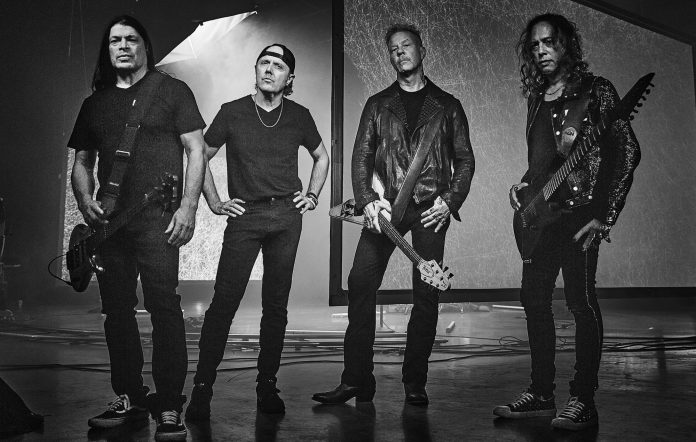
Even after four decades of blistering rock, Metallica show no sign of taking their fists off the throttle. On ‘72 Seasons’, their forthcoming eleventh studio album (April 14) and first since 2016, the heavy metal icons deliver the sort of driving riffs, machine-gun drums and angst-ridden lyricism that prove age has not wearied them. The title, as gravel-voiced frontman James Hetfield has explained, is a reference to the formative first 18 years of life. That doesn’t mean the veteran band spent too much time worrying about recapturing their adolescent energy.
“I don’t know if there was a purposeful chasing of the fountain of youth,” drummer Lars Ulrich tells NME with an impish laugh, speaking down the line from his home in San Francisco. “I can tell you I’m pretty comfortable with being 59 years old, and I don’t particularly feel a need to try to pretend either to myself, or to the Metallica fans out there, that I’m any different.”
So while there are nods on ‘72 Seasons’ to the band’s storied past – lead single ‘Lux Æterna’ includes the lyric “full speed or nothin’,” a line which also appeared on their 1983 debut ‘Kill ’Em All’ – in general Metallica seem intent to use the wisdom of age to find fresh perspective on the trials of youth. “I think certainly in James’s lyrics, and overall in this band right now, we’re quite comfortable with who we are, warts and all,” says Ulrich. “We’re putting things out there about our vulnerabilities and where we’re at because we’re still trying to figure all this shit out. If you think when you’re young that at some point later you’ll crack the code then I can say that, in my case, that’s definitely not what happens. You may end up with more questions as you get older!”
In Jury Duty, an inspired new docu-style comedy series that blurs fact and fiction, James Marsden plays an obnoxiously awful caricature of himself who boasts about auditioning for a soon-to-be-disgraced director, throws a hilarious tantrum at a birthday party and gets involved in a bizarre sex act known as “soaking”. Marsden stars alongside Ronald Gladden, very much the Truman in this blend of The Truman Show and The Office, and the two first encounter each other as they’re about to enter a jury room, with Gladden eventually twigging that he recognises Marsden from his X-Men role as Cyclops. Marsden then mentions his recent part in Sonic the Hedgehog. “Oh, I didn’t see that,” says Gladden. “I heard it’s a really bad movie.”
Marsden, the real Marsden, gives a hoot as he finishes telling me this story. “That’s comedy gold,” says the actor, who also played android gun-slinger Teddy in Westworld, and the poor guy Rachel McAdams dumps at the end of The Notebook. Marsden, it soon transpires, likes nothing better than getting a laugh at his own expense. We’re meeting at a fashionable hotel on the Sunset Strip, the actor’s LA base since moving to Austin, Texas, during the pandemic. He is still boyishly handsome at 49, all piercing blue eyes and cheekbones that could cut glass, but he insists that beneath the leading man looks, he’s a clown at heart. “I love playing the buffoon and the ass,” he says. “Someone who thinks they’re great at something but are clearly not. I’d much rather do that than play James Bond.”
Kevin EG Perry is a writer for The Independent, The Guardian, GQ, NME, Empire, Wallpaper*, Vice, Lonely Planet Traveller and other reputable publications



 Kevin EG Perry: Collected Works