Rita Wilson: ‘I’ve exhausted the canon of warm, nurturing wives. Give me crazy!’

There’s only one disappointment about Rita Wilson’s new album: she doesn’t rap. In March 2020, a week after her husband Tom Hanks sent shockwaves around the world by announcing the couple had come down with Covid, Wilson posted a video of herself in quarantine flawlessly rapping Naughty by Nature’s 1992 anthem “Hip Hop Hooray”. The clip has since racked up more than two million views on Instagram, earning praise from everyone from Kim Kardashian (“The best video EVER!!!!!!”) to Barack Obama (“Drop the mic, Rita!”). When news of this unlikely viral hit reached Naughty By Nature, the Grammy-winning trio released a remixed version of the single featuring Wilson on the mic to raise money for the MusiCares Covid-19 Relief Fund. Surely, then, the stage was set for Wilson to offer us her takes on Tupac and NWA? She howls with laughter. “I think that’s my next project!” she jokes. “It’s funny, Naughty by Nature said, ‘Any time you want to come up and rap that song live with us, we’ll do it!’ I’m like, ‘Oh, I’m gonna find them one day on tour and just show up.’”

Rather than spitting bars, Wilson’s new album Now & Forever: Duets captures the 66-year-old actor and musician singing a collection of Seventies soft rock favourites. She’s joined by some of the greatest voices in music. Smokey Robinson assists in delivering an impassioned version of Roberta Flack and Donny Hathaway’s “Where is the Love”, while Willie Nelson provides a spine-tingling counterpart on Paul Simon’s “Slip Slidin’ Away”. Elsewhere there are appearances from the likes of Keith Urban, Leslie Odom Jr and Elvis Costello, with the latter lending a soulful swagger to Bruce Springsteen’s “Fire”. Today, Wilson is in London looking positively angelic in a flowing white top with a small gold crucifix around her neck. She’s in town to perform on the BBC’s Later… with Jools Holland, where she’ll be singing her duet with Jackson Browne, a beguiling version of The Everly Brothers’ classic “Let It Be Me”“Jackson is the songwriter’s songwriter,” she says. “Singing with him is heaven.”

Wilson’s first album, 2012’s AM/FM, was also a collection of covers drawn from the Seventies. She’s since released three albums featuring her own songwriting, but she found herself drawn back to a decade that means so much to her. “These songs are 50 years old, so why are we still listening to them?” she asks rhetorically, before outlining her argument that the Seventies singer-songwriter scene produced material to rival the Great American Songbook, the canon of jazz standards and show tunes from the early 20th century that have been covered and reinterpreted for decades. “There’s something special about the point of view in those songs because a lot of them were written for characters in Broadway musicals,” she says. “In the late Sixties and early Seventies, with the emergence of singer-songwriters like Joni Mitchell, Carole King, Crosby, Stills and Nash, and Jackson, you started to feel again that these were songs which tell a story from a first-person point of view.”
Continue reading at The Independent

Davido: ‘Africa is beautiful, but we don’t have the best leaders handling the economy’

When Davido was growing up, everybody expected him to go into the family business. His father, Adedeji Adeleke, is the CEO of Pacific Holdings Limited and one of Nigeria’s wealthiest men, with a net worth estimated to be around $700m (£625m). After finishing school, Davido was supposed to take up a seat on the board. “When I went the other route, at the beginning, it was really, really rough,” the 29-year-old says, from his home in Lagos. That was over a decade ago.

His breakthrough hit “Dami Duro” arrived in 2011, a highlight of debut record Omo Baba Olowo. The album’s self-aware title is Yoruba for “son of a rich man”. Even the rich man in question was impressed. “When I started popping out the music and people actually loved it, he became a fan like crazy,” says Davido with evident pride. “I feel like he recognised, ‘He’s gifted, so why stop his dream?’ At the end of the day, every parent wants their child to win.” 

For Davido, winning looks like selling out huge shows at arenas like London’s O2 and racking up over a billion streams of his second album, 2019’s A Good Time. The record refined and perfected his buoyant, sun-kissed sound; a dancefloor-ready combination of jubilant party tunes and laidback love songs. The swaying rhythms and irresistible melodies, coupled with Davido’s own easy charisma, captured the world’s attention. Follow-up A Better Time, released 12 months later, drew enjoyable guest appearances from Nicki Minaj, Nas and Young Thug. He’s still working on the next one, saying its release has been pushed back until early next year. Before that there’ll be a single, “Flex My Soul”, in a couple of weeks. It’s another big party song. “You know ‘Livin’ La Vida Loca’?” he asks, referring to the massive hit that made Ricky Martin a global star in 1999. “It’s just like that, but an African version.”

Continue reading at The Independent

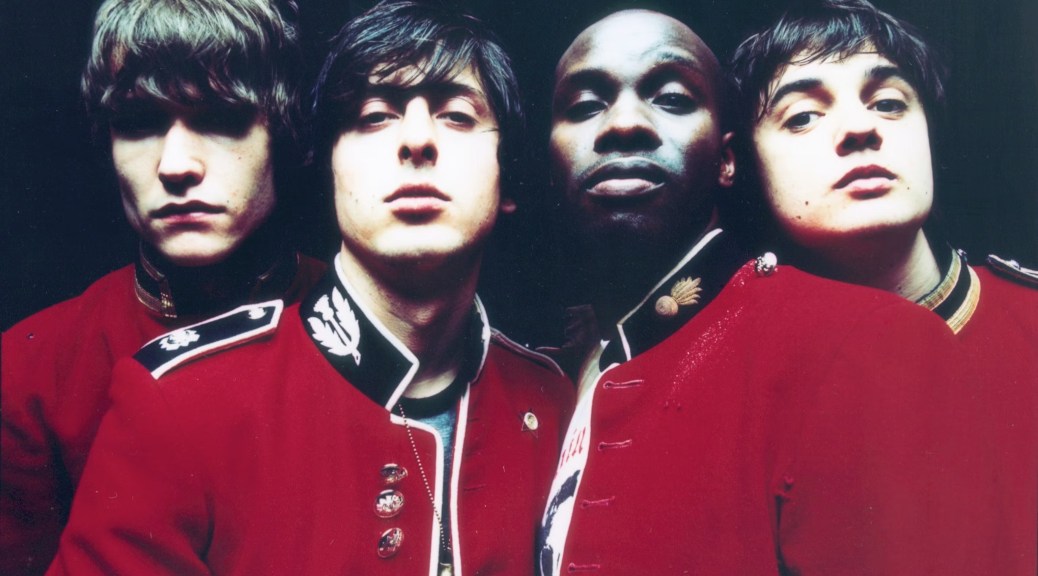
‘GEEEETTAAOUTTOFIT!’: Carl Barat on the story of The Libertines’ ramshackle, rebellious debut Up the Bracket

It started with a blood-curdling scream: “GEEEETTAAOUTTOFIT!” Pete Doherty’s visceral howl opens “Up The Bracket”, the lead single from The Libertines’ debut album of the same name. Released 20 years ago, on 21 October 2002, the record was an unruly, triumphant beast that revived British guitar music from its post-Britpop doldrums and gave the country an answer to the New Rock Revolution being led in the United States by The Strokes and The White Stripes. The accompanying music video made bright red military tunics an instant indie fashion staple, while a nondescript alleyway in Bethnal Green became a site of pilgrimage for dedicated fans. “That’s still going on now,” notes Carl Barât, whose volatile partnership with Doherty formed the nucleus of the band. “I think the council cover over [the graffiti] every year, but it keeps coming back. What a funny time that was. The video concept was, ‘We’ll bring the cameras round and leap around the house pretending to play guitars.’ Halcyon days!”

Barât is sat in the bar at The Libertines’ hotel and studio The Albion Rooms in Margate, sipping from a mug of tea. On “Death of the Stairs”, Up The Bracket’s second track – and still his favourite – he once sang: “Don’t bang on about yesterday, I wouldn’t know about that anyway”. Today, though, he’s in the mood to reminisce about Up The Bracket, which remains The Libertines’ finest half-hour. Marrying urgent, garage-rock guitar riffs with the idiosyncratic lyrical wit of The Kinks and The Jam, the record was delightfully ramshackle and boisterous, the sound of a band giddy on youthful rebellion. Their songs about drinkers, smokers and “good-time girls” gripped the cultural zeitgeist, cigarette in hand, and were full of endlessly quotable lines. Take “Time For Heroes”, on which Doherty observes that there are “few more distressing sights than that / Of an Englishman in a baseball cap”. Twenty years on, it still draws a wry smile of recognition.

The story of Up The Bracket began half a decade before its release. In the mid-Nineties, Barât heard about Doherty before he met him. While he was a drama student at Brunel University, he lived in student halls in Richmond and became close friends with Doherty’s sister Amy-Jo. “She kept saying how much he admired me and couldn’t wait to meet me,” recalls Barât. “I was expecting this little introvert, I didn’t expect him to be six foot three! I met this really enormous, towering, argumentative kid. We ended up bickering and sniping at each other, which obviously became a lifelong, beautiful friendship.” Their friendship, and their rivalry, was sealed at that first meeting when Barât said he had to go to an audition. “Pete said, ‘I’ll come with you’, then he auditioned and got the f***ing part!” says Barât with a laugh. “Then he announced that he didn’t go to the university, and everyone was roundly disappointed. Except me.”

Continue reading at The Independent

George Saunders: ‘This capitalism thing has got limits’

In 2017, George Saunders had a dream. The author – named “the best short-story writer in English” by Time – had just published his first novel, Lincoln in the Bardo, a profound and beautiful work about Abraham Lincoln’s grief over the death of his son Willie in 1862, unconventionally told by a chorus of spectral voices. It was to prove a Booker Prize-winning, internationally bestselling hit, but, for Saunders, there was one problem: he had no idea what to write next. “This is going well,” he remembers thinking. “Now I’ll f*** it up.” One night the answer came to him as he slept: a fully realised vision of his next major project. Rolling over, he scrawled down the title on his bedside table before peacefully returning to contented sleep. “When I woke up, it said: Custer in the Bardo,” recalls Saunders, chuckling ruefully. “I thought wait a minute, you can’t do that!”

The idea of doing a straightforward sequel featuring the famously doomed US cavalry commander General George Custer was hardly likely to tempt Saunders. A writer known as much for his formal inventiveness as the sharpness of his satirical wit, Saunders rarely repeats himself. His stories, such as 2010’s “Escape From Spiderhead”, which was recently adapted into the sci-fi thriller Spiderhead, build idiosyncratic worlds which take time to reveal their true nature. Still, the idea of writing about Custer stayed with him. He’s long been fascinated by the popular mythology that surrounds Custer’s Last Stand at the Battle of the Little Bighorn in 1876, where US troops were comprehensively defeated by the combined forces of Lakota Sioux, Northern Cheyenne and Arapaho Native Americans. Custer has become an evocative historical figure, despite the fact that he and his men were, as Saunders puts it, “slaughtered basically from inefficiency, disorganisation and hubris”.

For a time, “Custer” was also Saunders’ nickname. In the late Eighties, the author was studying for his master’s in creative writing at Syracuse University in New York, where he now teaches. Back then, a poetry teacher took to calling him by the name of the ill-fated general on account of his “long, mullet-ish haircut”, a look which set him apart from his Ivy League peers. When we meet for coffee on a blisteringly hot day in Santa Monica, I can still see the resemblance. Saunders is a youthful 63, with a neat chestnut beard and a black Chicago White Sox baseball cap in place of Custer’s wide-brimmed felt hat. He describes his writing process with the warmth and enthusiasm of a beginner. “I thought it would be fun to try and do something like the Lincoln book, where you present the whole day [of the battle],” says Saunders, “But if you already know what you want it to be like, it’s boring. You have to be open to the surprise.”

Continue reading at The Independent

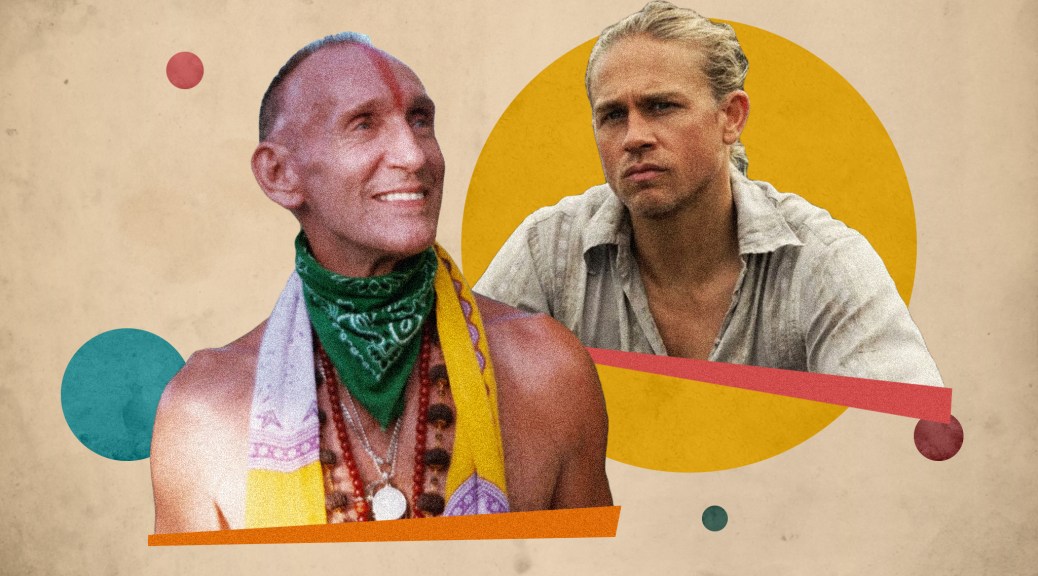
Shantaram: The incredible true story behind the outlaw epic

In the opening moments of the new Apple+ series Shantaram, Charlie Hunnam breaks out of prison the fast way. Not for him chipping away at a dank tunnel for 17 years like Tim Robbins in The Shawshank Redemption. He’s over the front wall and away before the guards in the machine gun towers even turn their heads. It’s an audacious, brazen escape, and at one o’clock on a July afternoon in 1980, it’s exactly how convicted bank robber Gregory David Roberts broke out of Melbourne’s Pentridge Prison. “If you’re planning an escape, you look for the place that’s least protected,” explains Roberts, now 70, at home in Jamaica. “They thought no one would be crazy enough to escape over the front wall.”

Today, Roberts looks more like a blissed-out holy man than either a bank robber or the bestselling author he became when Shantaram,an epic 936-page novel based on his own life, was published in 2003. It went on to sell more than 7 million copies worldwide. Greeting me topless except for a bright yellow and green scarf slung loosely around his neck, he still seems spry enough to scale a prison wall if it really came down to it. His hair is cropped short; the bright red streak of a tilaka splits his forehead in two. The Hindu marking, symbolising a spiritual third eye, goes well with his beatific smile.

It’s hard to overstate the transformative impact India had on Roberts as a young fugitive. He arrived in Mumbai, then called Bombay, on a forged passport shortly after his daring prison escape. He expected to stay for two days before travelling on to Germany. In the end, he was there for eight years, living for 18 months in the slums and establishing a medical clinic before finding himself drawn inexorably into the treacherous world of organised crime. Shantaram is a savage journey into the Indian underworld, but it’s a spiritual quest for redemption too. “That’s a reflection of the life I was in,” explains Roberts. “While I was committing crimes with a branch of the South Bombay mafia, I found that gangsters are very superstitious. They’d say to me, ‘I just met this holy man up in the hills and he gave me an amulet to protect me from bullets’. I’d get on my bike and go and find these different holy people, bring them hash and fruit, and from each one gain some little insight.”

Continue reading at The Independent

Angela Lansbury: Enduring appeal of Murder, She Wrote star was no mystery

The sad news of the death of Angela Lansbury, just a few days shy of her 97th birthday, brought to an end one of the longest and most storied careers in Hollywood history. While she will perhaps be best remembered for the 265 episodes (and four feature-length movies) she spent playing best-selling mystery writer Jessica Fletcher in Murder, She Wrote, a stint that earned her a place in the Guinness Book of World Records as the “most prolific amateur sleuth”, Lansbury packed her eight decades on stage and screen with a host of memorable roles. To each of them, she brought a whimsical humour and gentle warmth which could sometimes mask her deceptively sharp wit.

Born on 16 October 1925 in Regent’s Park, London, Lansbury left Britain with her family after the onset of the blitz in 1940. Her mother, the Belfast-born actor Moyna Macgill, moved Lansbury and her brothers Bruce and Edgar to New York, and then to Los Angeles. Her father, also named Edgar, was a British communist who had been Mayor of Poplar before his death from stomach cancer in 1935. While Lansbury’s time at school was cut short by the war, she would later say that her real education began when she signed a seven-year contract with MGM in 1944 at just 17.

She made her screen debut that same year, appearing opposite Ingrid Bergman and Charles Boyer in Gaslight. The film was a hit and went on to introduce the phrase “gaslighting” to the popular vernacular as a term for the sort of malicious manipulation depicted. Lansbury was perfectly cast as the conniving cockney maid Nancy Oliver, and earned an Oscar nomination for Best Supporting Actress at her first attempt.

Continue reading at The Independent

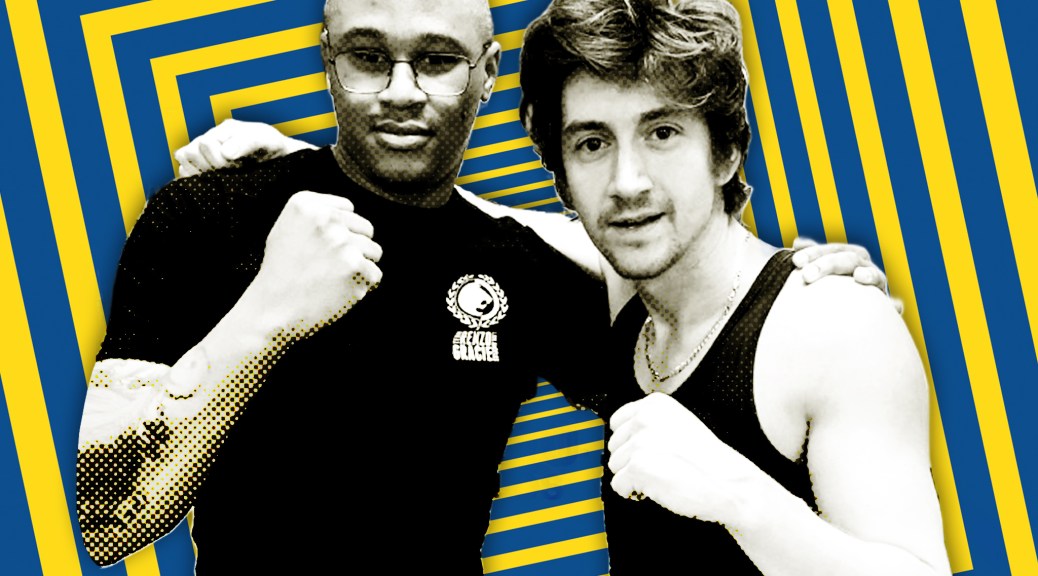
What I learnt about Arctic Monkeys by getting kicked in the head

Since he was thrust into the limelight at 20, Alex Turner has cast himself as a writer, not a fighter. Onstage the Arctic Monkeys singer may play the swaggering frontman, but off it he has the bookish air that comes with quoting John Cooper Clarke poems, extolling the virtues of Leonard Cohen and Scott Walker and dreaming up concept records about interstellar ennui.

It’s an image that suits the finest lyricist of his generation, but one that’s hard to square with a devotion to Muay Thai, the intense Thai kick-boxing style known as “the art of eight limbs”. In August, shortly before announcing the imminent release of seventh Arctic Monkeys album The Car, Turner told French paper L’Equipe he’d been practising the combat sport for more than a decade. “I discovered this discipline about 12 years ago, when I was in a nightclub in New York,” Turner said of Muay Thai, which is similar to Brazilian jiu-jitsu or MMA (mixed martial arts). “I was talking to a security guard from the north of England and he encouraged me to train with him. I really enjoy it; it’s good for your body and your head. During the sessions you don’t think about anything else.”

Turner is far from the only celebrity figure to fling himself into the ring. Venom actor Tom Hardy recently won three jiu-jitsu tournaments in the space of a month, while the late chef and travel show host Anthony Bourdain was also a regular competitor. In the L’Equipe interview, Turner played down the likelihood of him ever following Hardy’s Action Man-esque lead. “I have to be honest,” said Turner. “I will never have the level to fight one day in a cage like a UFC fighter.”

Still, even if he has no plans to challenge Conor McGregor to a dust-up there’s clearly something about Muay Thai that has helped Turner stay fighting fit. The singer and I are around the same age, yet the only forms of exercise I’ve ever excelled at have been hiking to and from the pub and crawling in and out of bed, often several times a day. Like many writers, my life has involved a lot more Mai Tais than Muay Thai. I struggle to think of much that appeals less than voluntarily getting kicked in the head by a stranger, yet I can’t help but wonder if this lack of discipline is the reason I’m yet to appear alongside Turner on the Sunday Times Rich List. Maybe there is something of value to be learned in the ring.

Continue reading at The Independent